







Cubes Slot Review
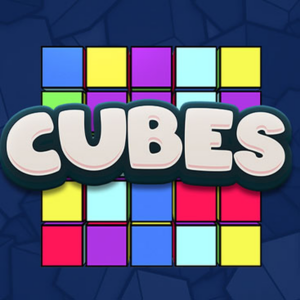
Wireframe boxes drift in a blue-grey void behind the playfield and a fat cream wordmark hangs above the reels; that’s the entire set. Cubes makes the case that a slot needs nothing else, because the grid itself is the entertainment: a flat 5×5 board that swells to 11×11 when your clusters are good enough, on a game that has stripped away every layer of costume its studio usually wears. That argument, one mechanic doing the work of five, is what makes it worth playing or worth skipping.
It’s a Hacksaw Gaming release from the Pocketz pocket-format range, running at 96.35% RTP with a top prize north of 3,000x the bet. Where sister titles like Cubes 2, Chaos Crew or Wanted Dead or a Wild pile on attitude, this one trusts the geometry. By the end, the question is whether plain coloured blocks can carry a whole game on their own.
Base Game & Features
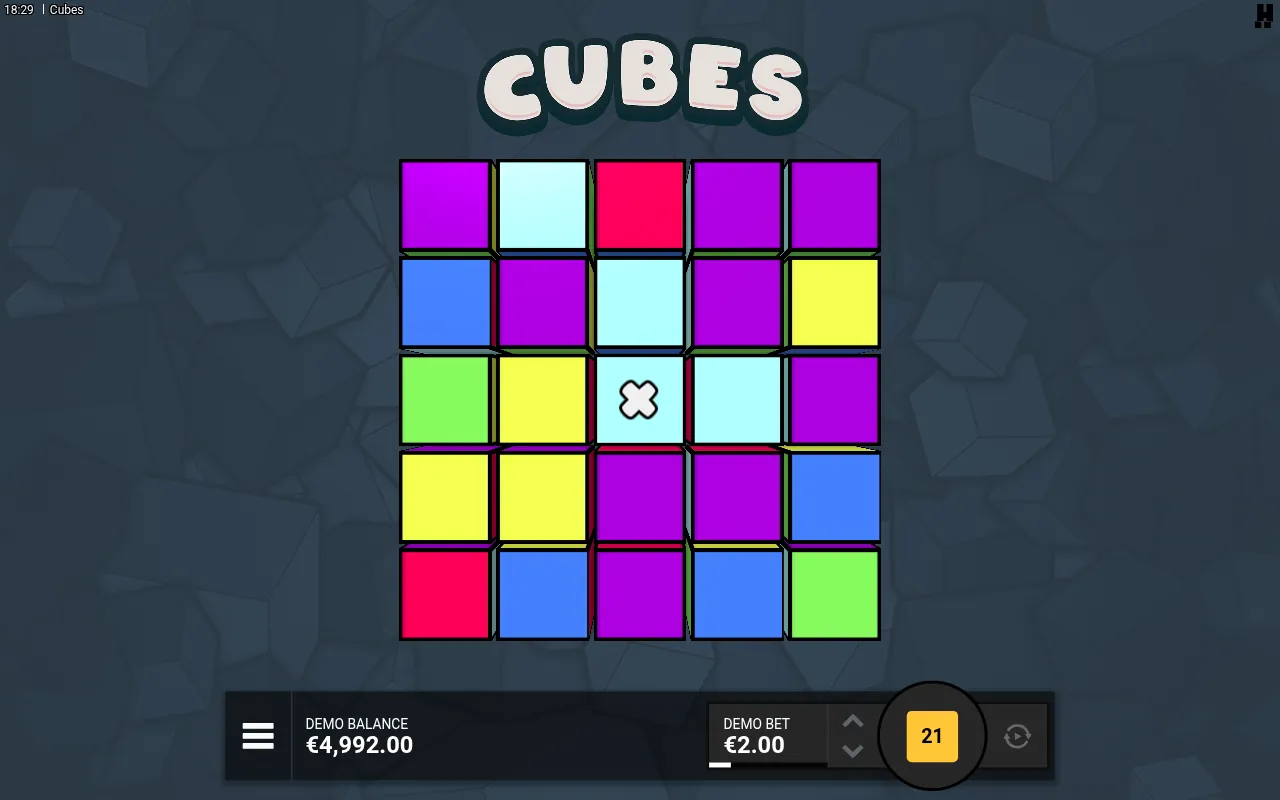
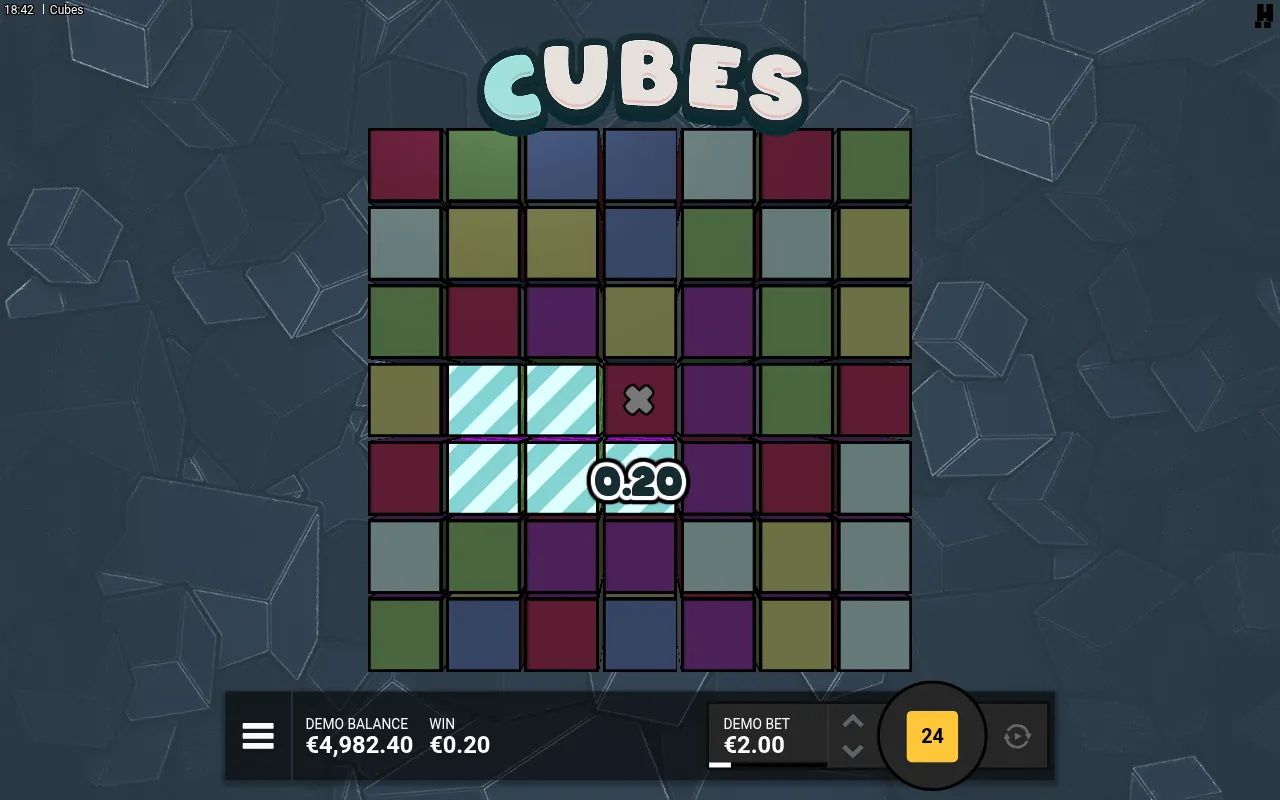
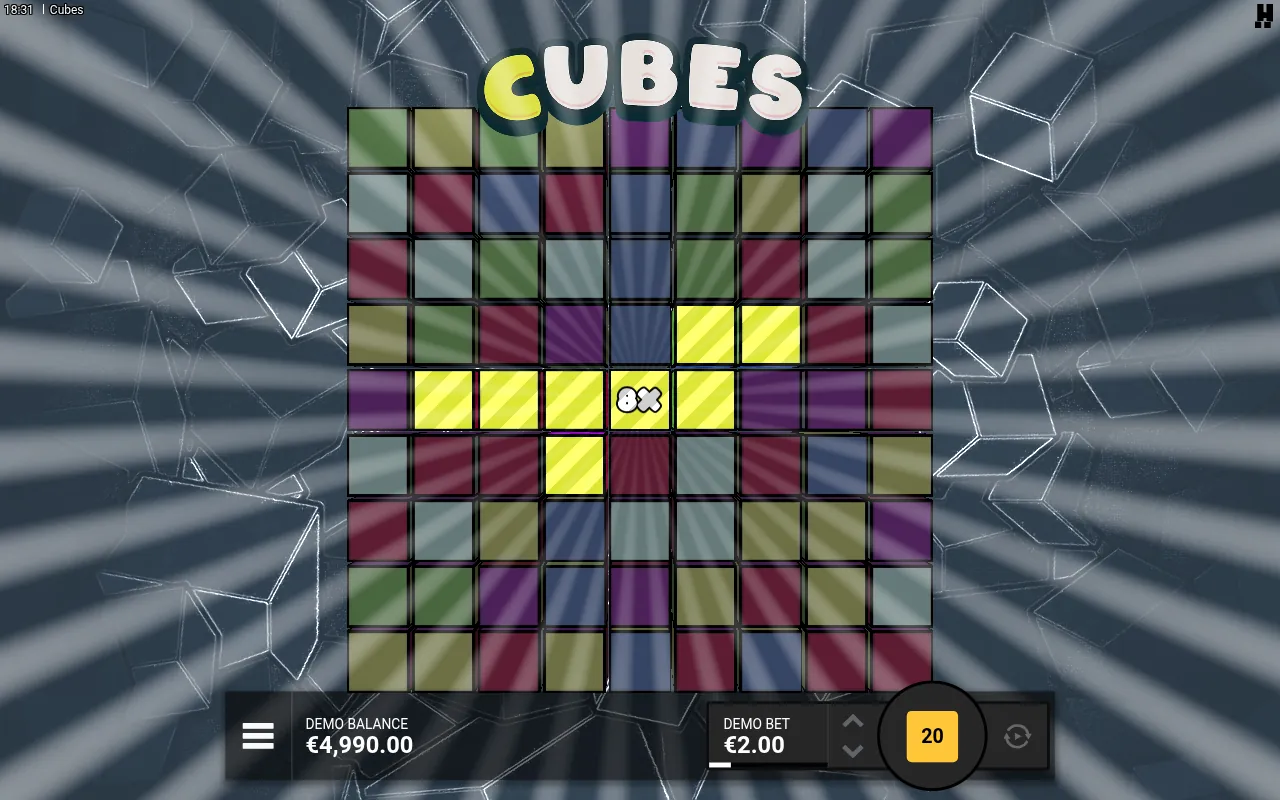
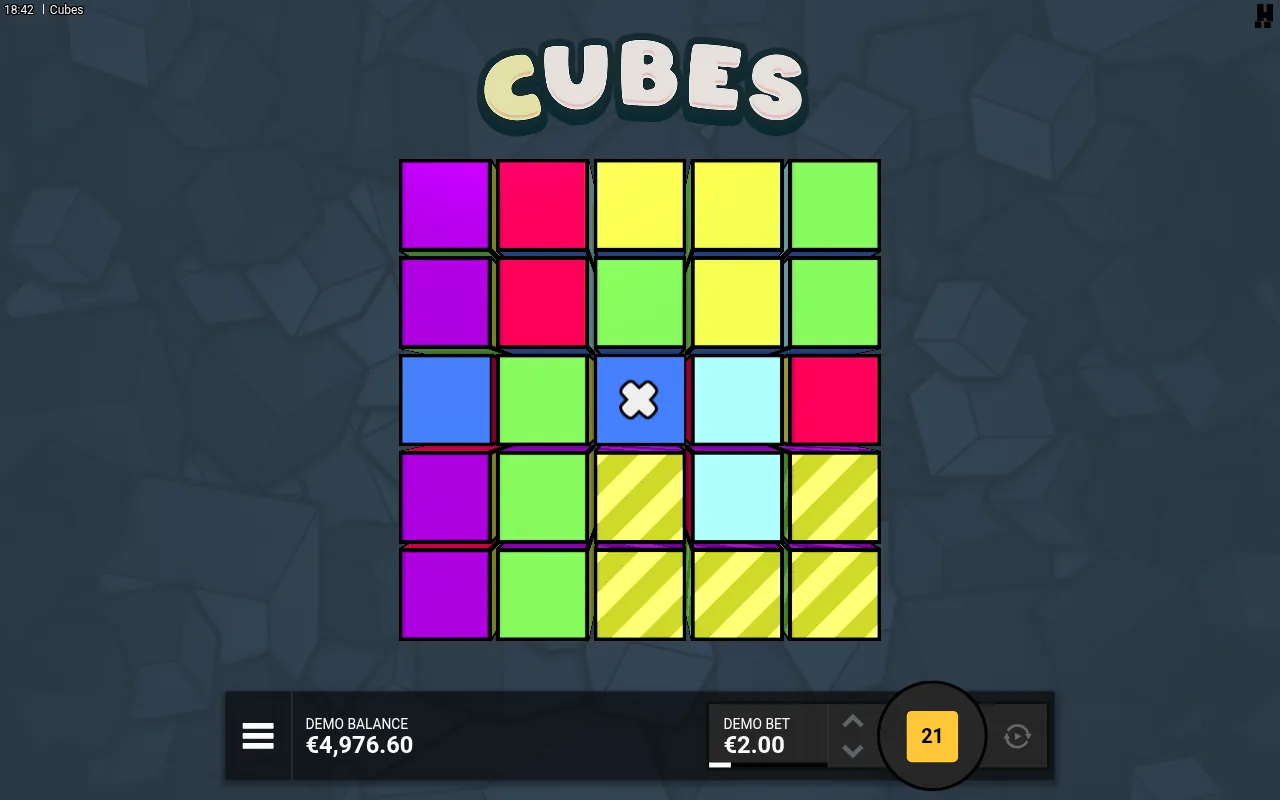
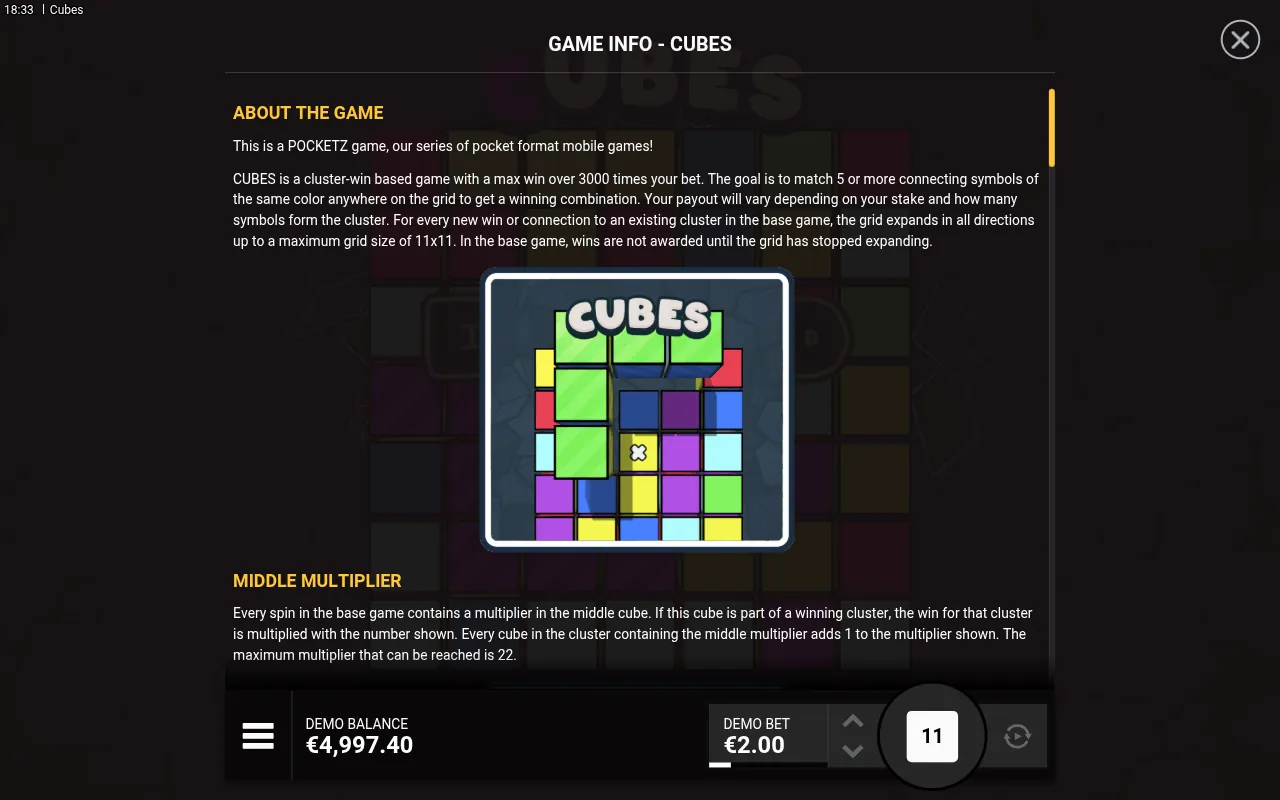
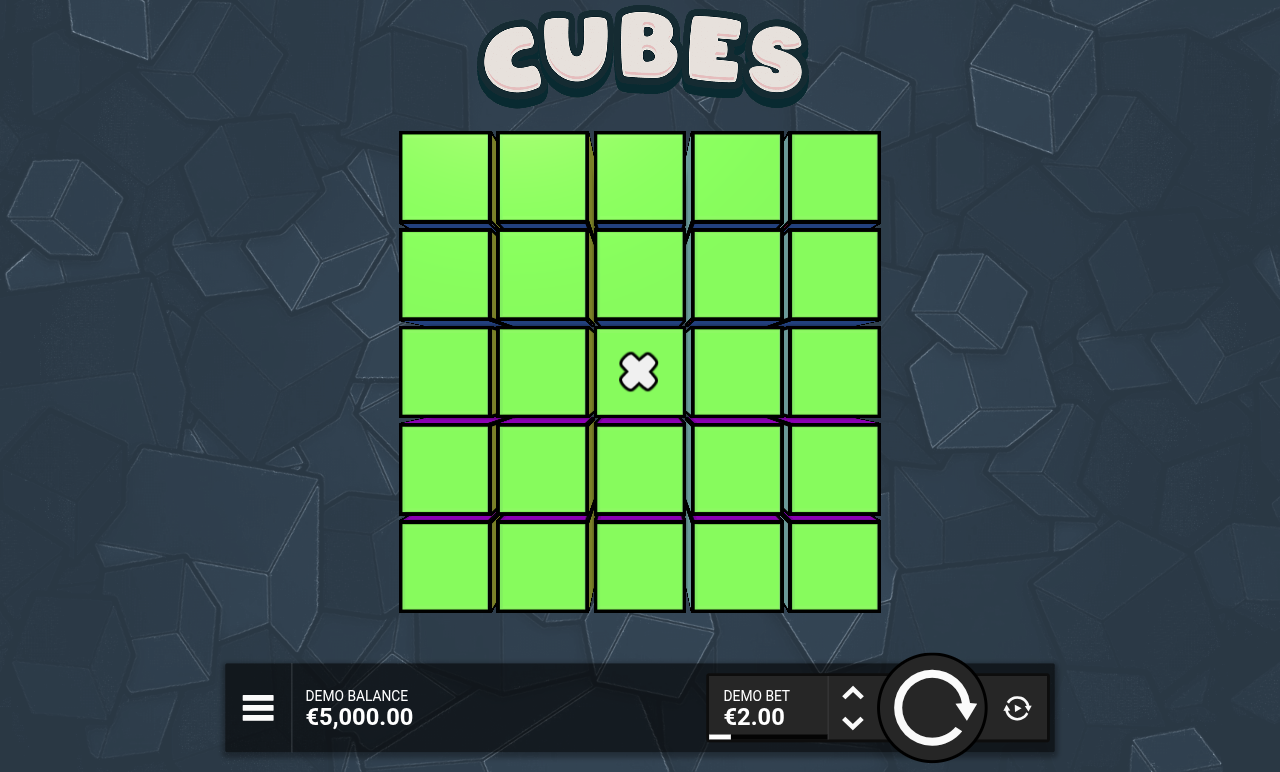
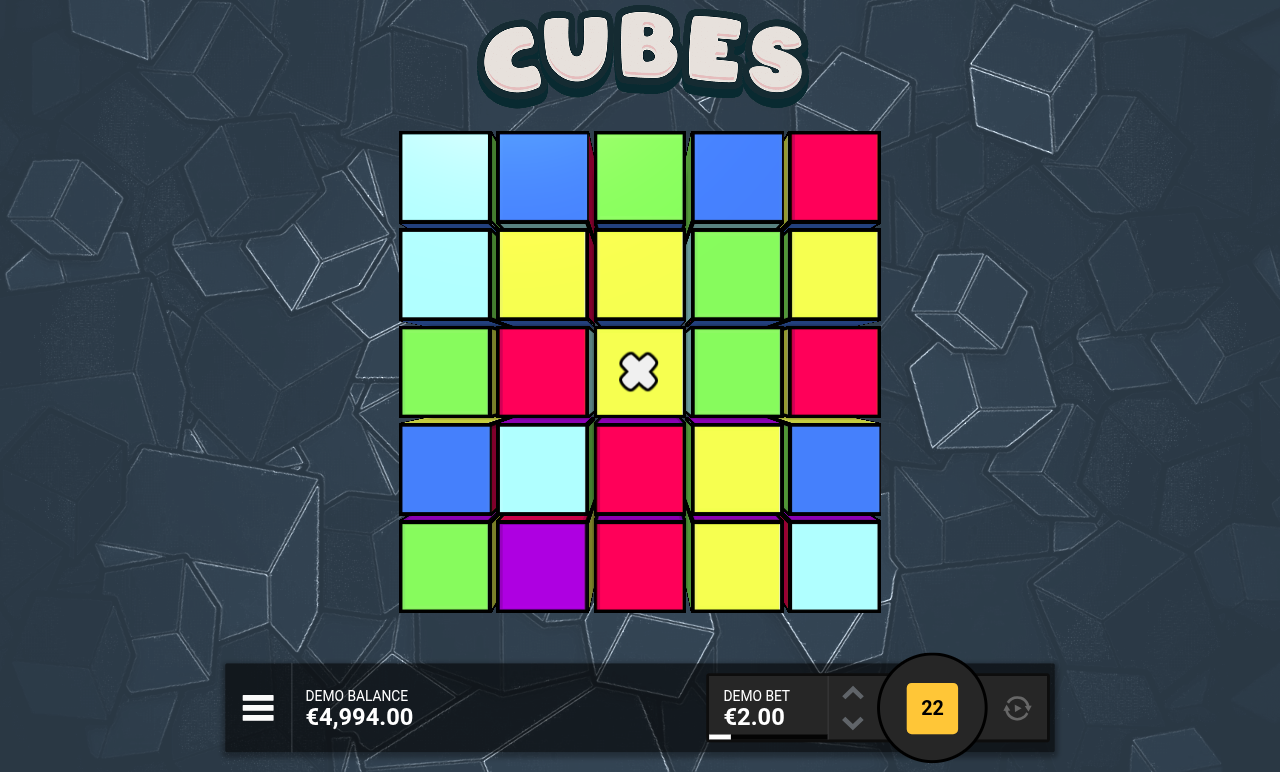
Cubes is a cluster-pays game. There are no reels spinning and no paylines: five or more connected symbols of the same colour anywhere on the grid form a win. Six colours do the work, green, yellow, red, cyan, magenta and blue, and every one of them pays to the same schedule. A winning cluster glows before the count, the highlighted cubes striped against the muted backdrop so the shape reads at a glance.
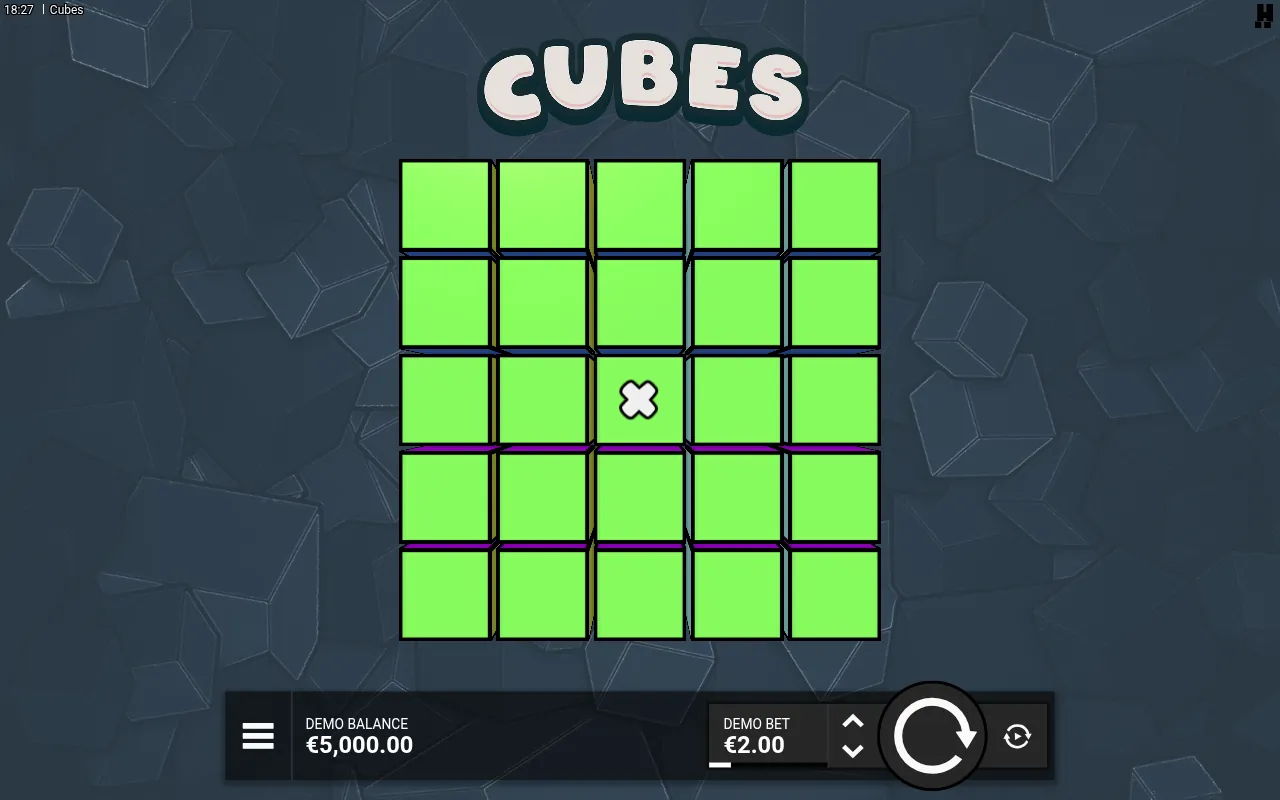
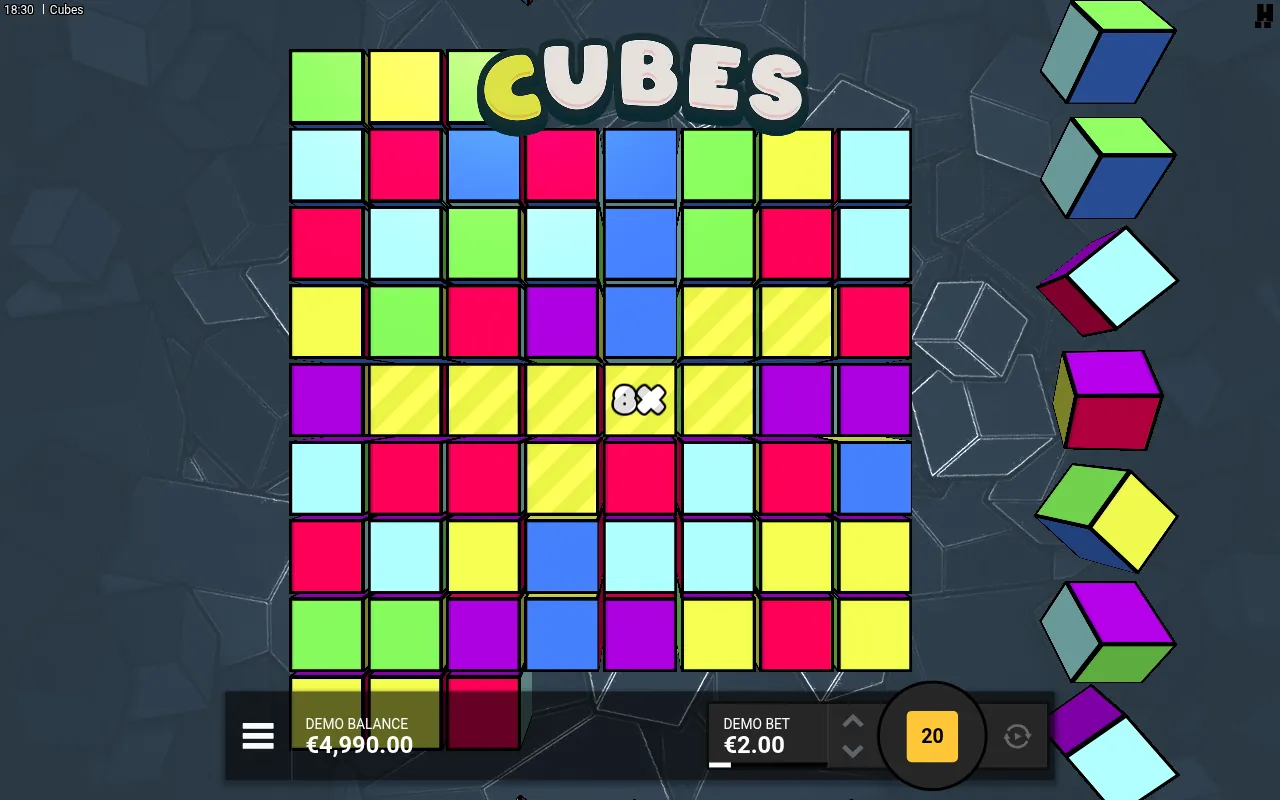
Each new win or connection to an existing cluster makes the grid expand in all directions, up to a maximum of 11×11. Wins aren’t paid until the grid has finished growing, so a single spin can snowball: one cluster forms, the frame pushes outward, and new symbols fall into play with a chance to join or start another cluster.
The expansion is announced on the frame itself, a banner reading “Expand 7×7” and upward as the grid steps through its sizes, and a 3D flip animation bridges each growth step. There’s never any doubt about how much room the next cascade has to work with.
A spin plays out in stages. The cubes drop, matching colours connect, and the frame grows if anything has linked up. Fresh symbols fill the new space, and if they extend an existing cluster the whole cycle runs again. Only when the grid settles does the win get counted, which means the payout on a good spin reflects the finished shape, not the first one that appeared.
Symbol Payouts
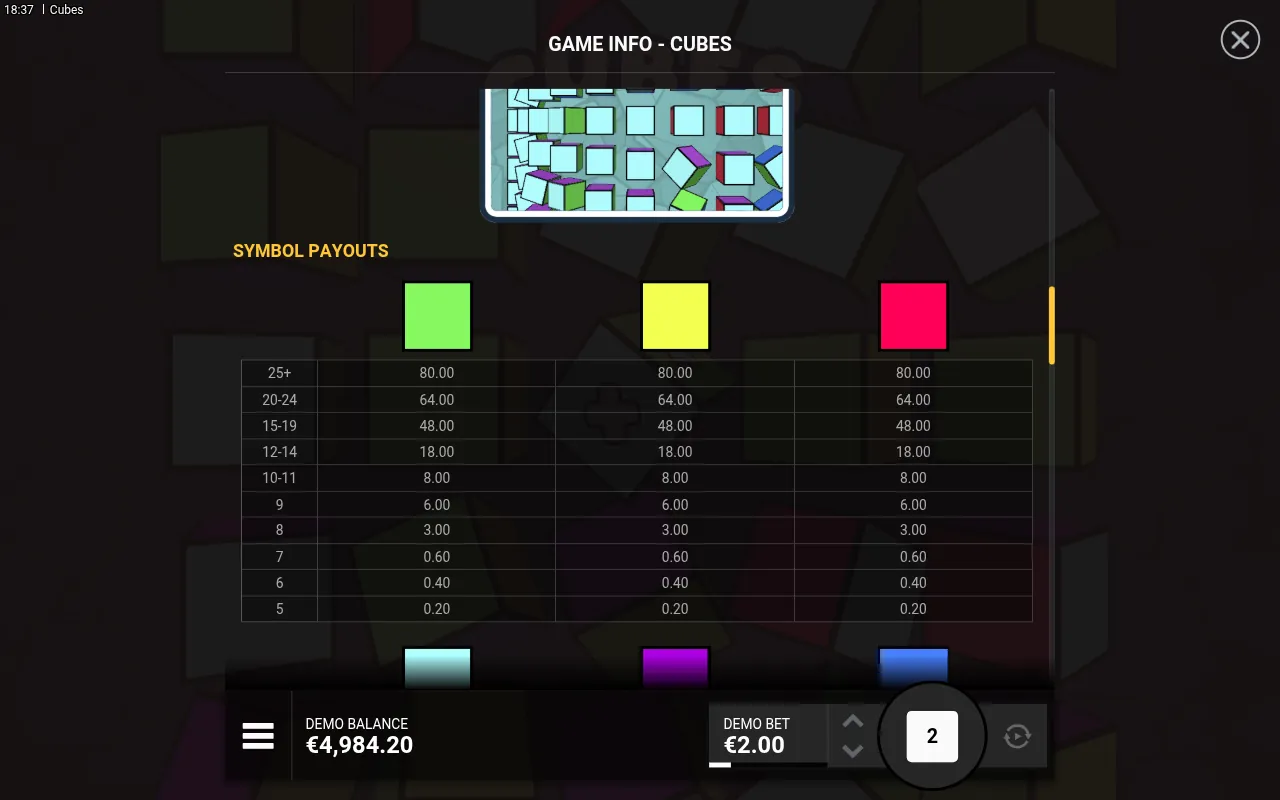
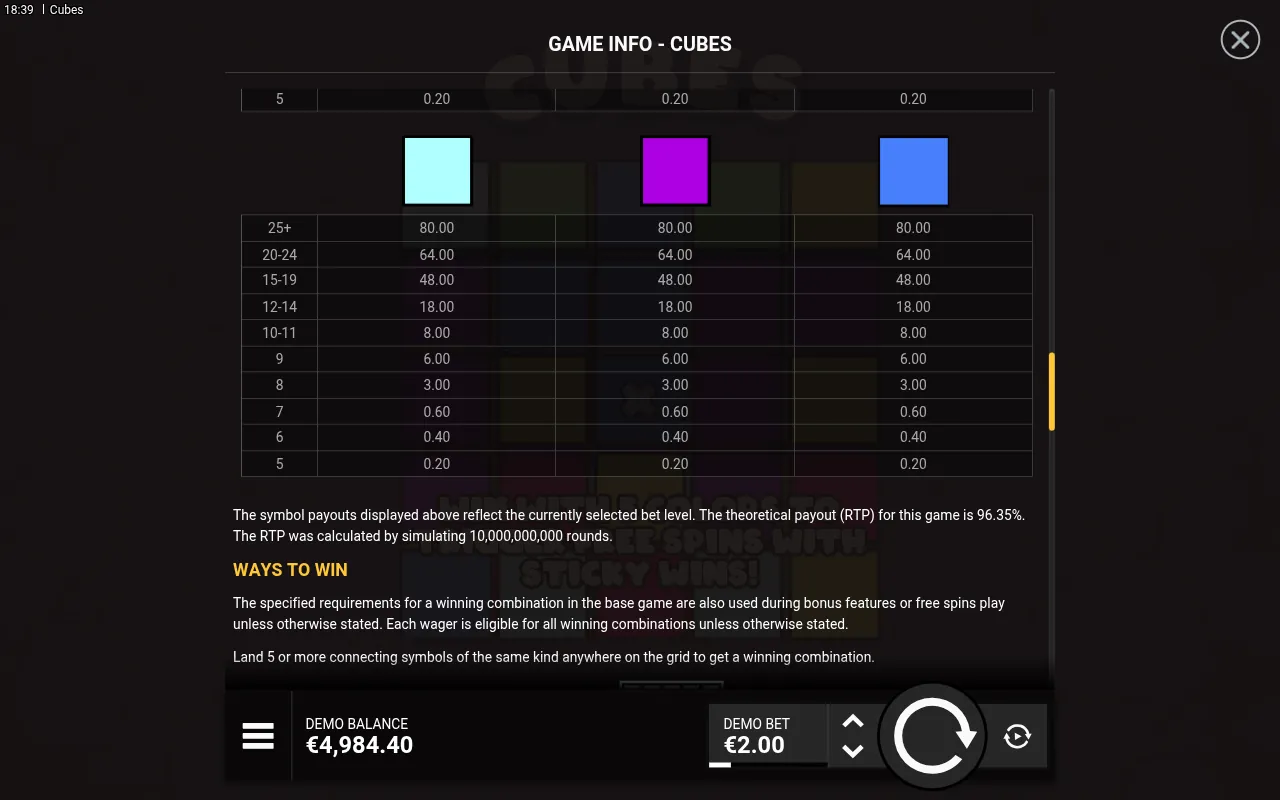
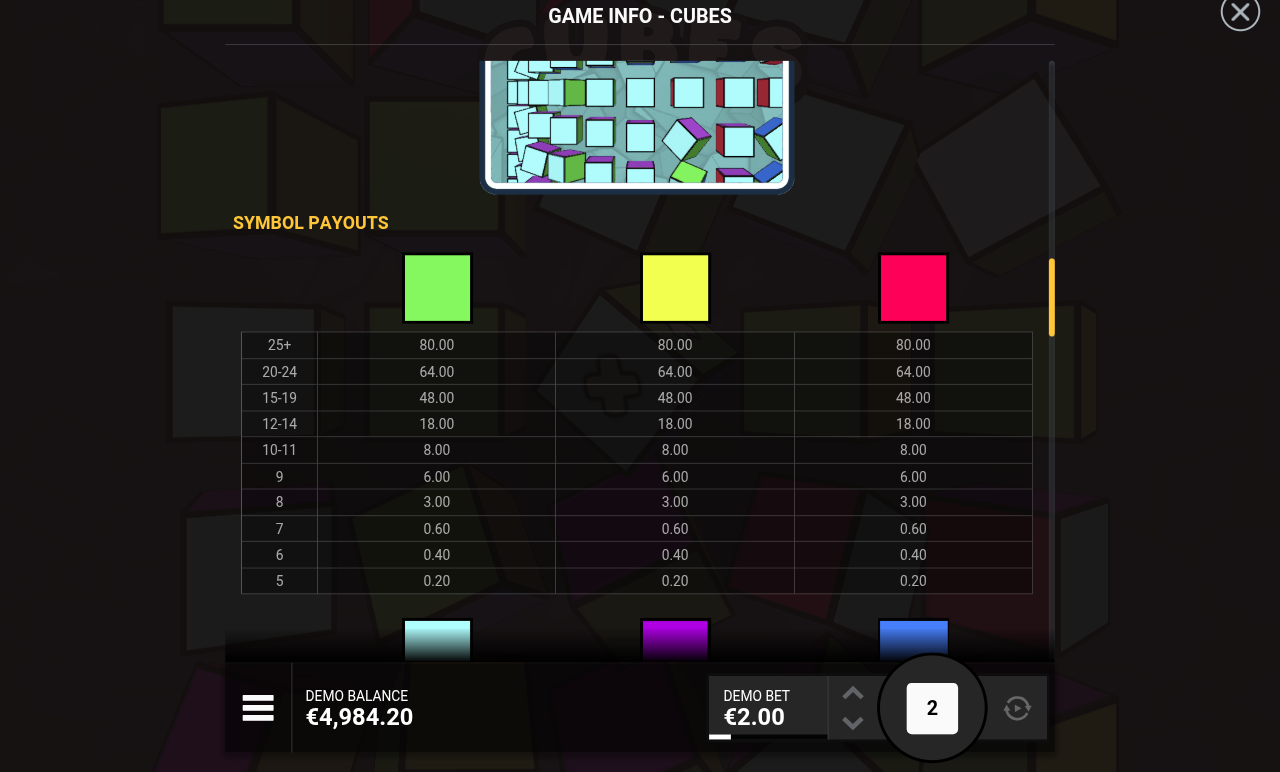
Payouts scale with cluster size, and they’re multiples of the total bet rather than a line stake:
- 5 cubes – 0.1x
- 6 cubes – 0.2x
- 7 cubes – 0.3x
- 8 cubes – 1.5x
- 9 cubes – 3x
- 10-11 cubes – 4x
- 12-14 cubes – 9x
- 15-19 cubes – 24x
- 20-24 cubes – 32x
- 25 cubes or more – 40x
The table is flat at the bottom and steep at the top, and the bend in the middle is where the game’s character sits. Small clusters are change; the money lives in the big connected shapes that only an expanded grid can hold.
Each wager is eligible for all winning combinations, so overlapping clusters on one settled grid all count. The jump from nine cubes to ten doubles nothing and adds a third again, but the leap from 14 to 15 nearly triples the pay, from 9x to 24x. The big shapes aren’t just worth more; they’re worth disproportionately more, which is why the expansion mechanic carries the whole base game.
Middle Multiplier
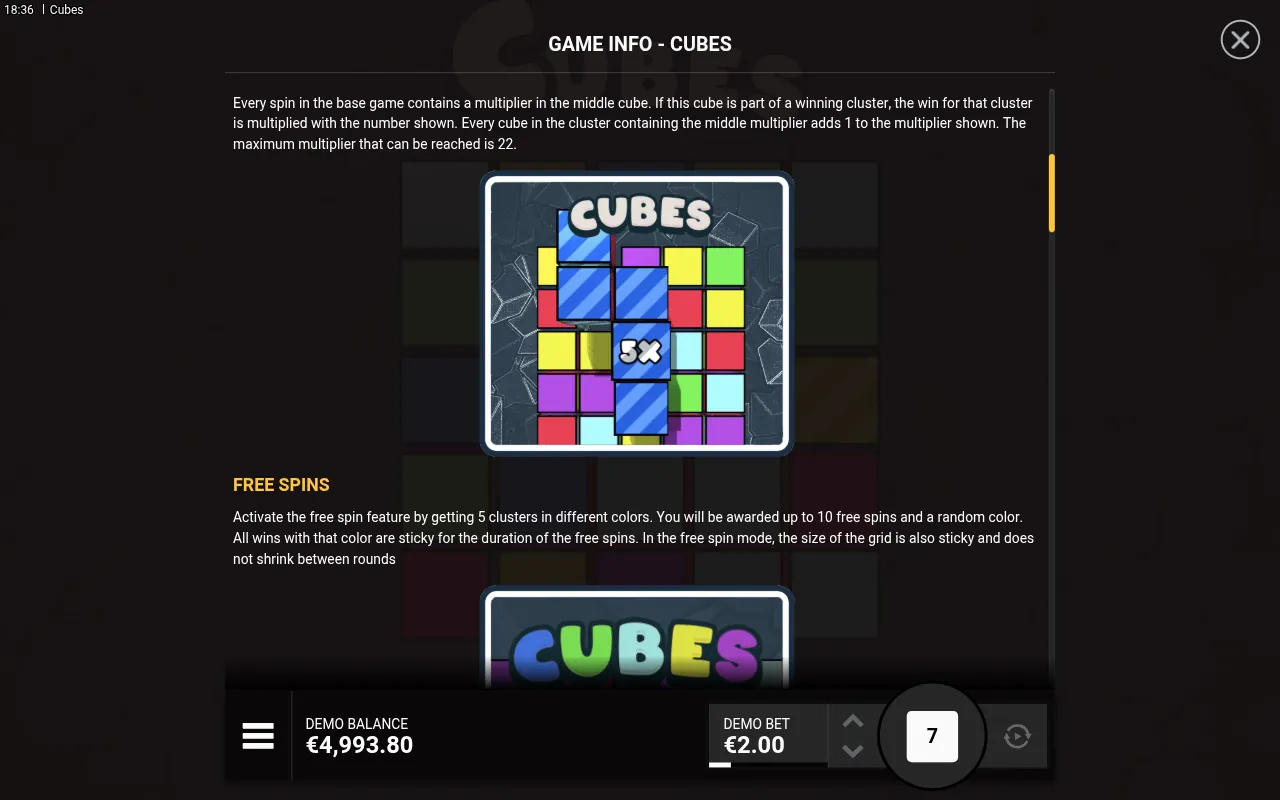
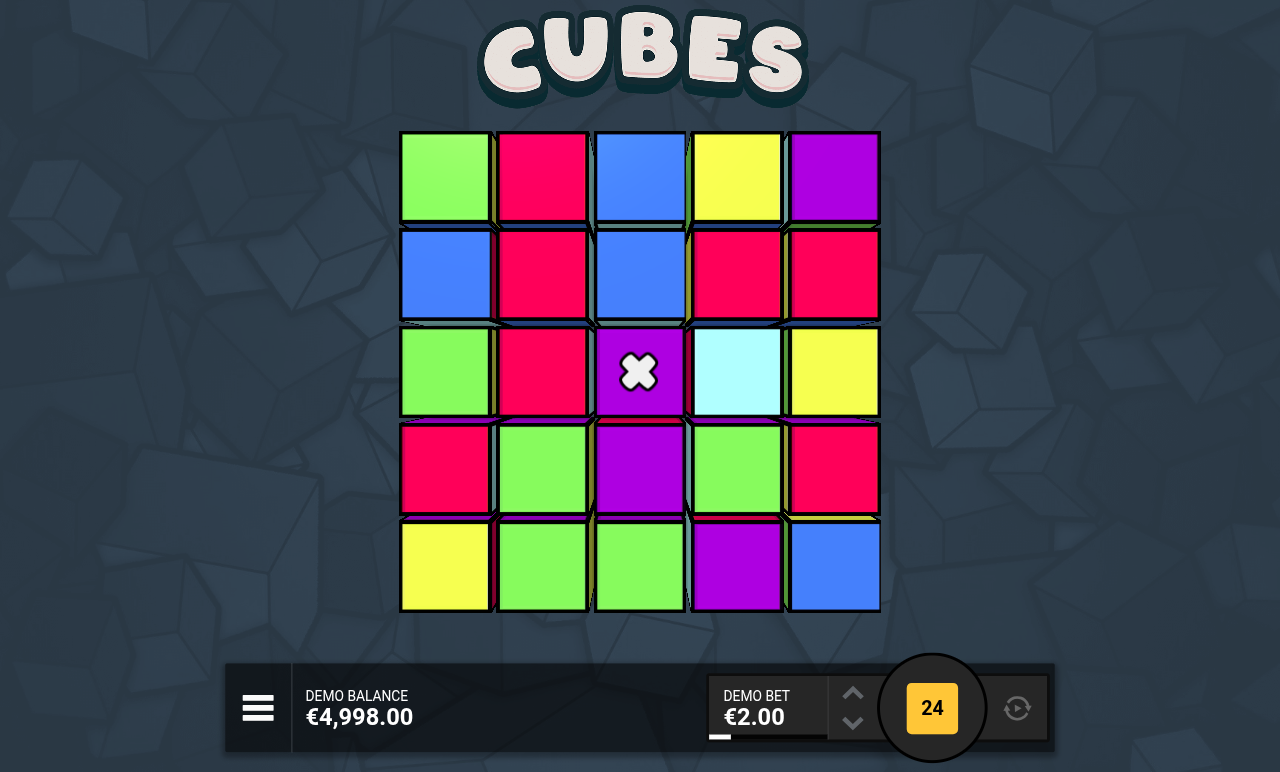
Every spin in the base game carries a multiplier in its centre cube. If that cube forms part of a winning cluster, the cluster’s win is multiplied by the number shown, and every cube in the cluster that contains the middle multiplier adds one to it. The multiplier tops out at 22.
It’s a quiet mechanic with sharp edges. A modest cluster crossing the centre can pay several times its face value, and because the grid grows outward from the middle, the big late-stage clusters are exactly the ones most likely to swallow the multiplier cube.
The size of the multiplier therefore matters most on the spins that matter most: the long, expanded ones where a cluster has had room to sprawl across the middle of the frame and pick up the multiplier cubes along the way. On the opening 5×5 frame the centre cube sits close to everything, but the clusters there are small and the pays thin. The real money arrives when a grid at 9×9 or beyond folds the centre into a 20-cube shape.
There’s no wild and no scatter in Cubes. The middle multiplier cube is the only special symbol on the grid, and the free spins trigger works off cluster colours rather than a dedicated symbol.
Cubes Free Spins & Colour Blast
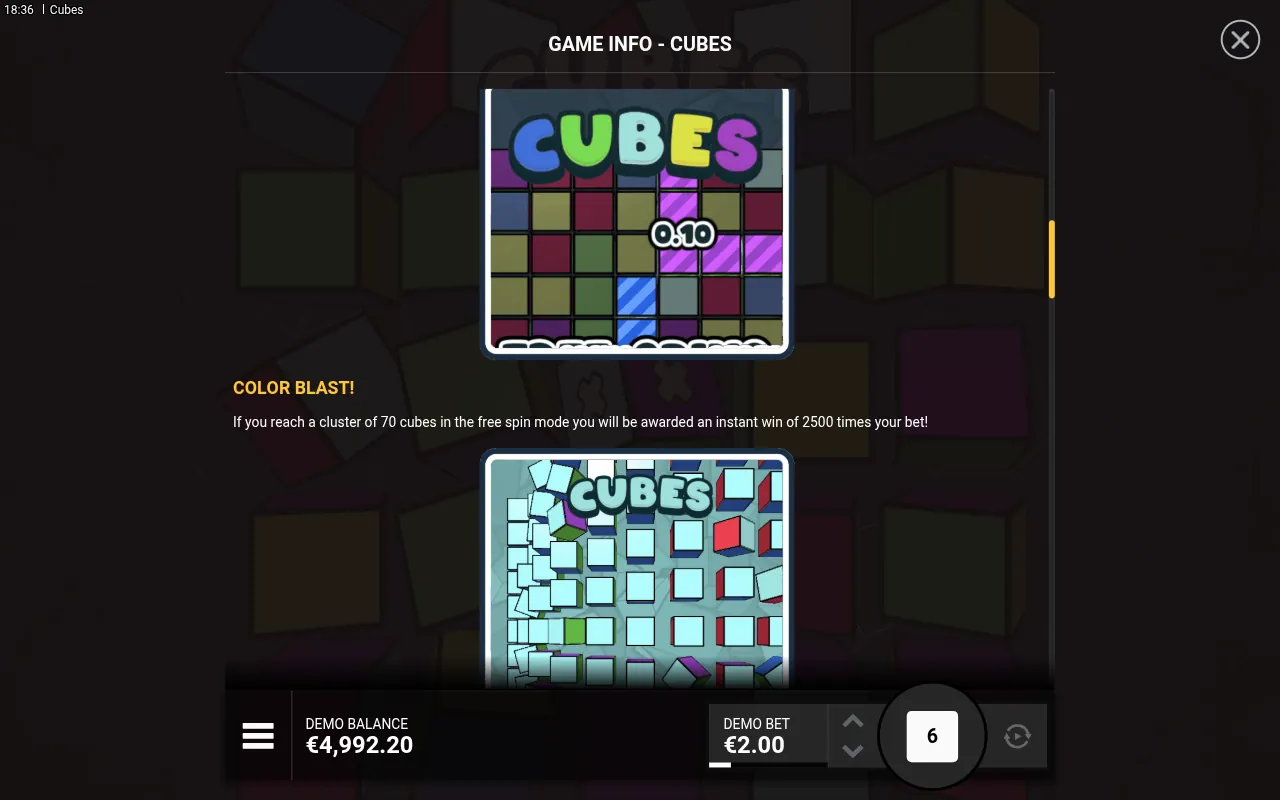
Getting clusters in five different colours switches the game into its bonus round, which awards up to 10 free spins and picks one colour at random. For the duration of the round, every win in that chosen colour is sticky: matching cubes lock in place and stay on the grid spin after spin.
The grid behaves differently here too. In the base game it expands and shrinks back between spins, but in free spins the grid size is sticky and never shrinks between rounds. Grow it with an early cluster and every remaining spin plays out on that full frame, with the sticky colour accumulating across them.
Two things compound instead of one: the locked cubes grow the shape, and the shape holds the grid at its largest. The base game’s winning requirements carry over unchanged, so five or more connected cubes of any colour still count during the round, and each wager remains eligible for every winning combination.
Colour Blast
Inside the free spins round there’s a fixed prize waiting. Build a single cluster of 70 cubes and Colour Blast pays an instant 2,500x the bet.
Seventy cubes is a huge shape, most of an 11×11 grid given over to one colour, and only the sticky-colour mechanic makes it reachable. The round’s whole design pushes towards it: the sticky wins accumulate, the grid holds its size, and the cluster creeps outward spin by spin. It’s the one moment where Cubes stops being gentle and shows its teeth.
Our Honest Verdict
Overall Rating: 7.8/10
Cubes is the quietest slot you’ll play all year, and the reason to choose it is exactly that: no characters shouting from the corners, no dressing, just six colours spreading across a frame that keeps making room for them. Time disappears into watching a shape grow.
The free spins round is its best work, because the sticky colour and the stubborn grid mean every spin genuinely adds to the last, and the Colour Blast prize gives the whole round somewhere to aim. The weakness is the walk there: small clusters pay crumbs, and the base game can run long between moments that matter.
This is a game for players who enjoy a slow, visible build and don’t need a mascot to enjoy it. Anyone wanting spectacle will find the void a bit too quiet. But in a market drowning in costume, the bare grid has a charm of its own, and the patient will see it.
Cubes FAQs
-
What is the RTP of Cubes?
The RTP is 96.35%, calculated across ten billion simulated rounds. -
What is the maximum win on Cubes?
The maximum win is over 3,000x your bet. -
Who makes Cubes?
Cubes is made by Hacksaw Gaming, as part of its Pocketz range of pocket-format mobile games. -
What is the grid size of Cubes?
The game starts on a 5×5 grid, which expands in all directions with each new win or cluster connection, up to a maximum of 11×11. -
How do you trigger free spins in Cubes?
You need clusters in five different colours. That awards up to 10 free spins plus one random sticky colour, which locks in place for the whole round. -
What does the Middle Multiplier do?
The centre cube of every base game spin holds a multiplier. A cluster containing it has its win multiplied by the value shown, and each cube of the cluster covering the middle adds one to that value, up to a maximum of 22. -
What is Colour Blast in Cubes?
Colour Blast is a fixed prize inside the free spins round. Build a cluster of 70 cubes and you’re awarded an instant win of 2,500x your bet. -
Does the grid stay expanded in free spins?
Yes. In the base game the grid shrinks back between spins, but in free spins the grid size is sticky and never shrinks between rounds, so an early expansion holds for the whole feature.