









Disco Danny Slot Review
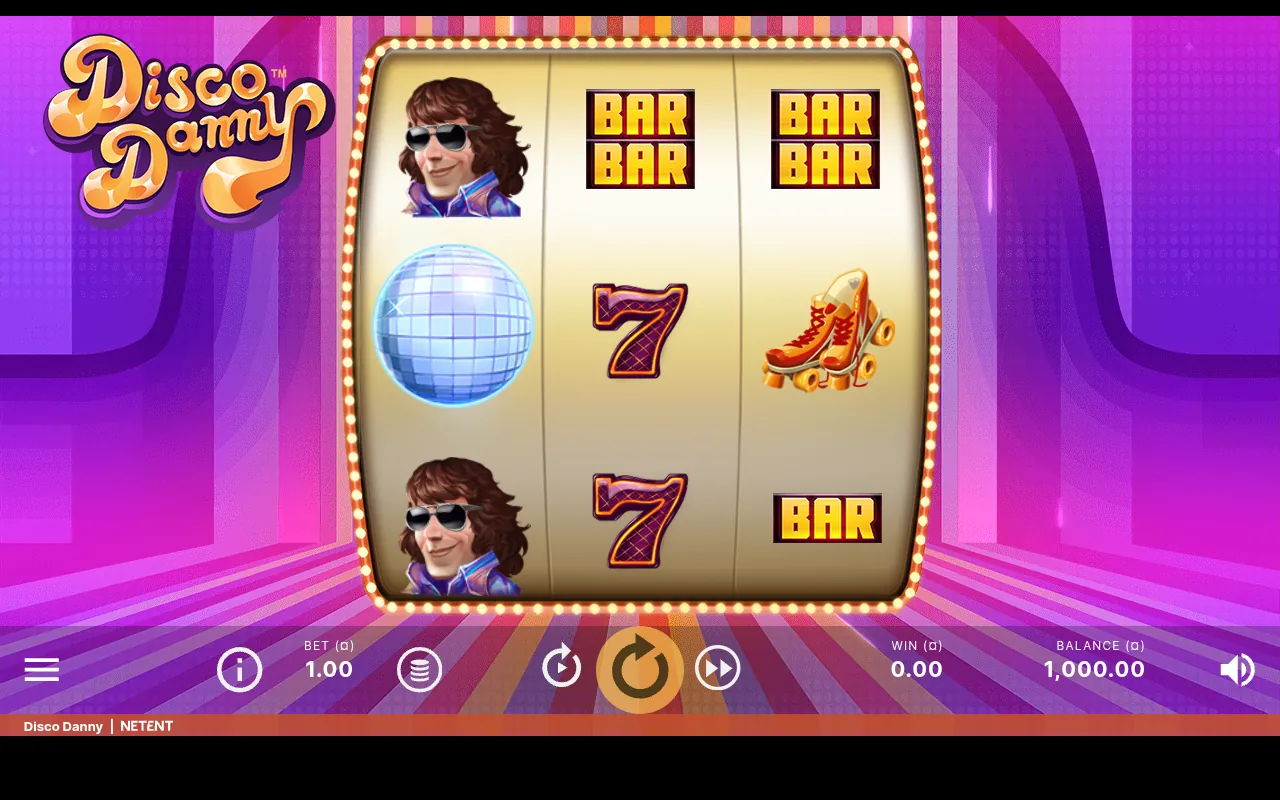
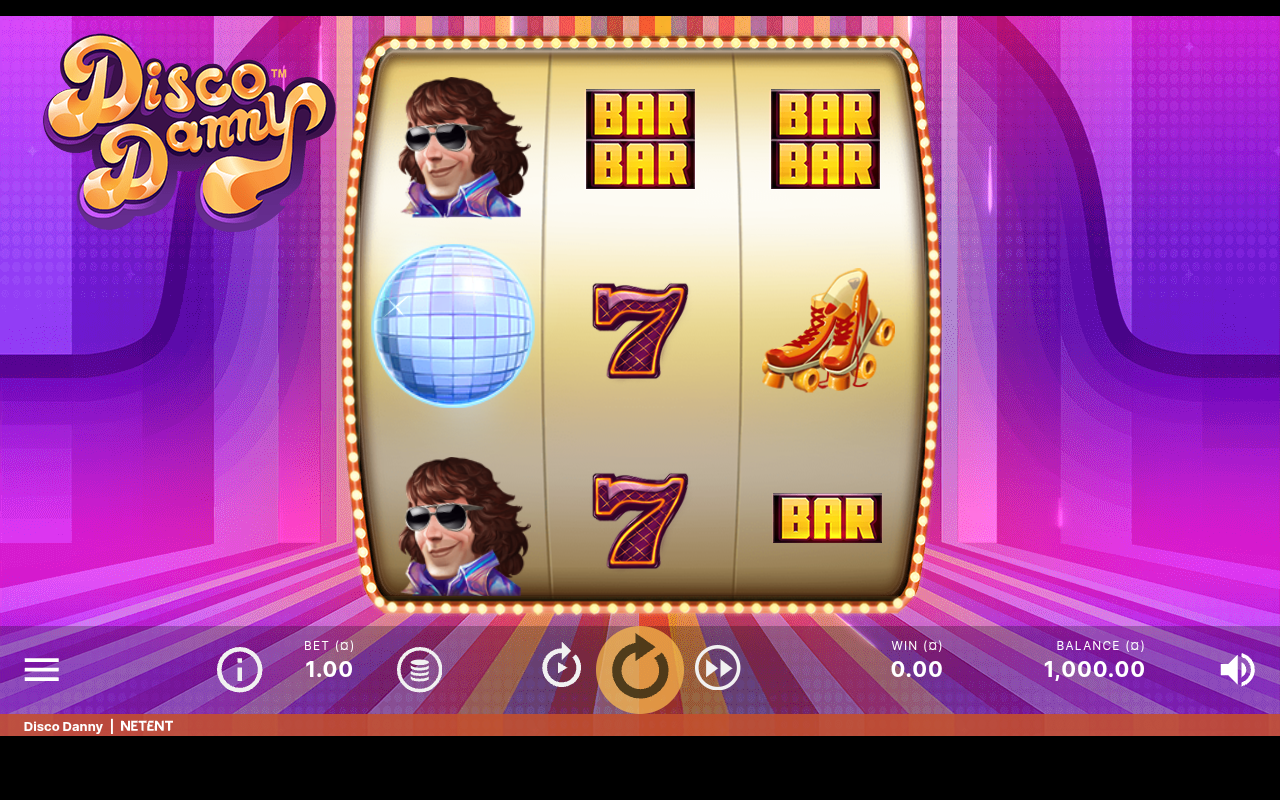
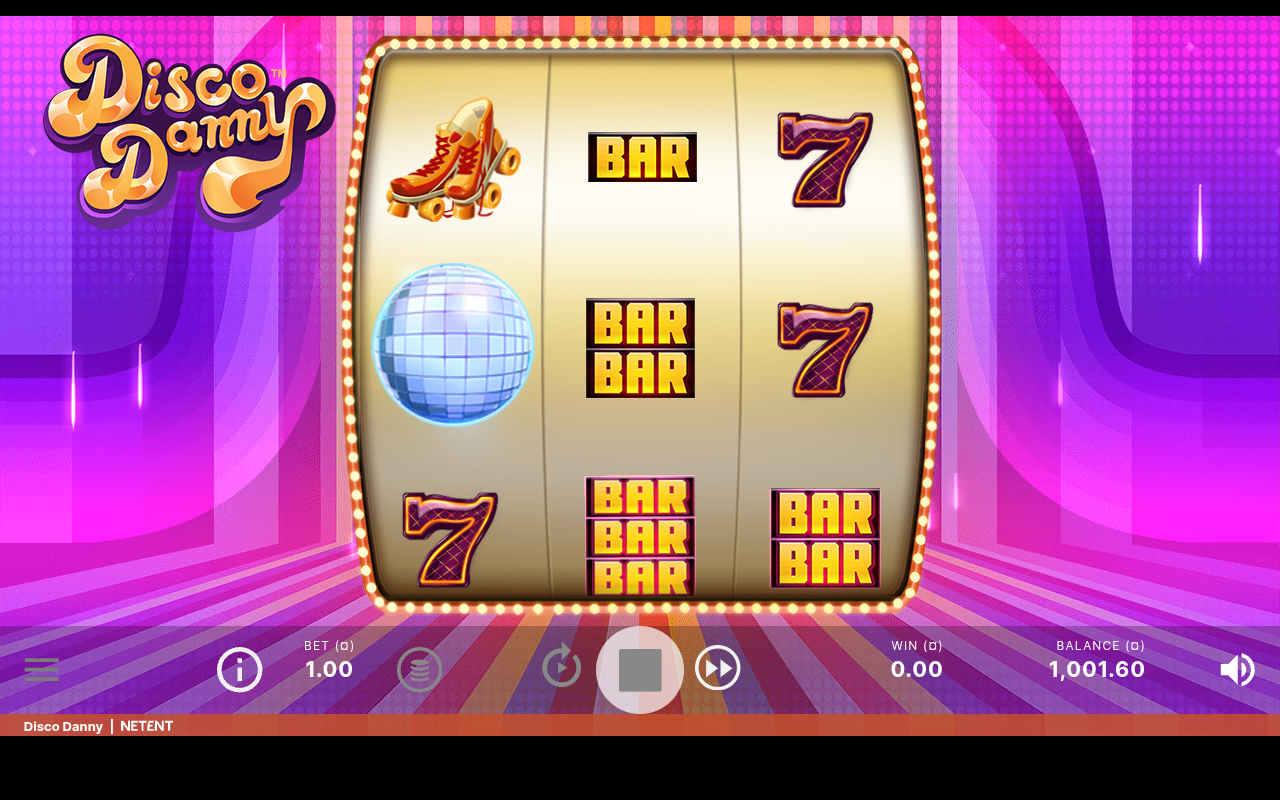
A striped dancefloor fans out in pink, orange and violet towards three small reels, ringed by warm marquee bulbs under purple neon. Disco Danny, NetEnt‘s three-reel disco cabinet, argues that a slot can be genuinely worth playing on five fixed lines alone; everything that makes it interesting fits between two features and a hit rate that gives nothing away.
It runs on a 3×3 grid with five fixed bet lines, an RTP of 96.04%, and a maximum win of 1,700x the bet. Two features carry the extra weight, one stacked on the line pays and one awarding spins at no further cost. Sister titles from the same studio, like Starburst and Twin Spin, show the same instinct for doing a little, well. Whether the mirrorball keeps spinning here is the question.
Three Reels, Five Lines
The game is a three-reel, three-row slot played across five bet lines, all fixed. There’s no choosing fewer lines to cheapen a spin; every bet covers all five. Wins pay left to right, and only the highest combination on a line counts.
Five lines on a 3×3 grid is a narrow field. Three reels by three rows gives nine symbol positions in total, and each line reads three of them, so a single spin either connects across all three reels on a line or it doesn’t. There’s no fourth or fifth reel to rescue a near miss, and no stacked expansion to fill the gaps.
There’s no wild and no scatter. Everything runs through the five lines and the symbols that land on them, a roster that mixes the old and the stage-worn:
- 7s
- BAR
- BAR BAR
- Coin stacks
- Roller skates
- Disco ball
- Disco Danny himself
It’s a classic cabinet roster wearing sequins. The 7s and BAR marks would sit happily on any pub machine; the skates and the mirrorball are where the theme does its work. With no wild to bridge gaps and no scatter to chase, the symbol set carries every payout the game makes.
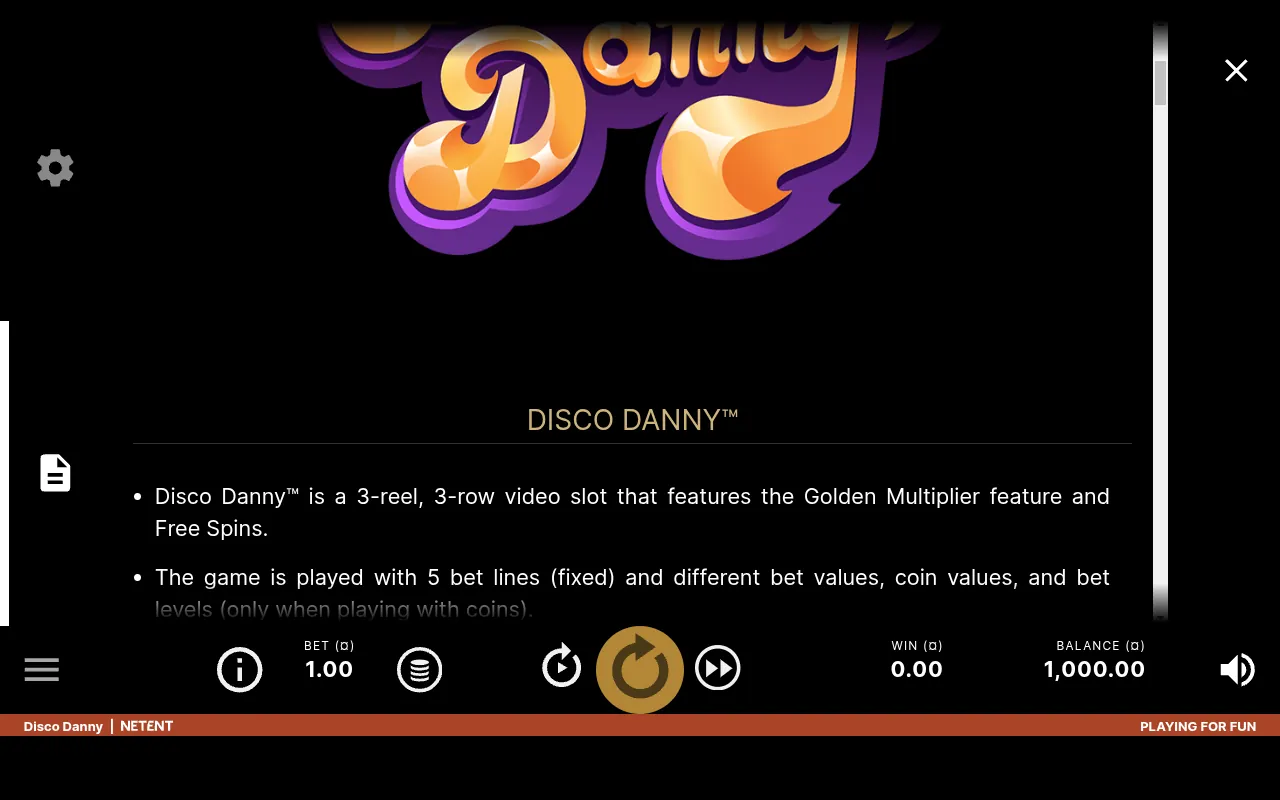
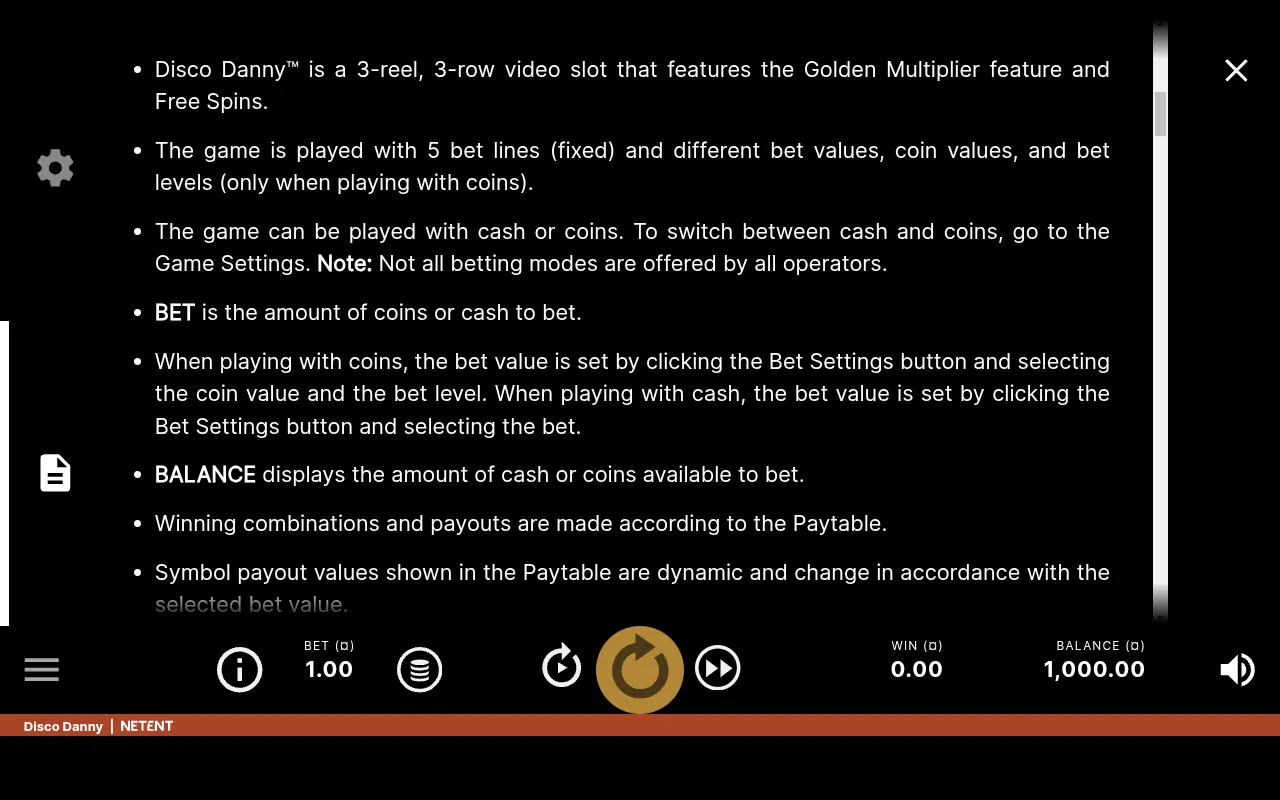
Betting is more flexible than the grid suggests. Bets run from 0.1 up to 250 per spin, and the game can be played in either of two modes, each with its own way of setting the stake:
- Cash mode – the bet value is set directly, and the balance shows the cash available to bet
- Coin mode – the stake is built from a coin value and a bet level chosen in the bet settings
The two modes are switched between in the game settings, and not every operator offers both. Whichever one is on offer, the payout values shown for each symbol move with the chosen bet, so the paytable always reads in terms of the stake actually set. A payout that reads small at minimum stake reads proportionally larger at higher bets; nothing about the game’s math changes between the two.
That stake-to-paytable relationship is worth understanding before a longer run. Because the displayed values are dynamic, the same combination of symbols is worth different raw amounts at different stakes, but always the same multiple of the bet. The 1,700x ceiling behaves the same way: it’s a multiple, not a fixed sum.
The arithmetic underneath is spikier than the artwork suggests. The hit frequency is 14%, which means a paying line lands roughly one spin in seven. That’s a lot of dead spins between wins, and it shapes every run on a grid this small. Six spins in seven end with nothing, and the game’s rhythm is built around that fact.
Presentation does real work here. The chrome-gold script of the title, the halftone texture in the purple walls, the warm bulbs around the reels: it’s a cohesive piece of retro-glam design, and it holds up spin after spin. Six of every seven spins end with nothing to show, and the stage is what fills them.
The Golden Multiplier
The Golden Multiplier is the first of the game’s two features. How it works isn’t stated; the rules name the feature and stop there. On a game with only five lines and a classic symbol set, it’s the one feature beyond the plain line pays.
The structure it operates inside is worth laying out plainly, because every piece of it bounds what the multiplier can do:
- Five fixed lines paying left to right
- A 3×3 grid, so every line is three symbols long
- No wild or scatter to build combinations around
- A ceiling of 1,700x the bet on any run of play
That ceiling is the figure to hold onto. On a grid this small, 1,700x is a genuinely tall ladder. Line pays alone on five three-symbol lines don’t climb that high; three matching symbols on a fixed line pay a fixed multiple, and the biggest fixed multiple in any classic cabinet is nowhere near four figures.
The multiplier is what turns a modest line win into something worth the wait. It’s also the game’s only source of variance beyond the raw symbol distribution: with the lines fixed and the grid small, the multiplier’s arrival is the swing factor between a flat session and a memorable one.
Free Spins
Free Spins is the second feature, and it pairs with the Golden Multiplier as the two things Disco Danny adds to a classic three-reel base. What the round represents is straightforward: a stretch of play where line wins stack without further stake.
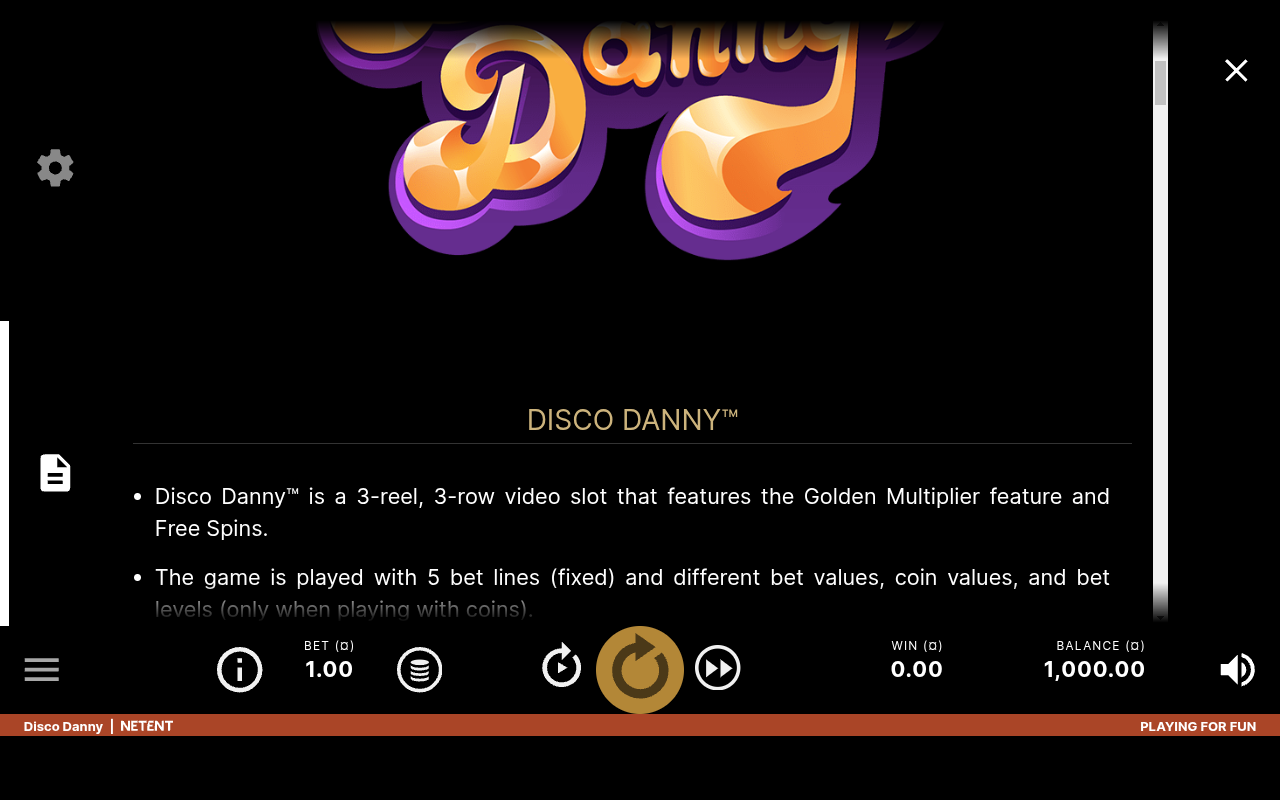
The number of spins awarded and the trigger that awards them aren’t given. The rules name the Golden Multiplier feature and Free Spins and stop there, so how the round plays out in detail is left to the game itself to show.
On a 14% hit rate, spins that arrive without further stake are welcome whenever they come.
For a game this compact, that’s the whole feature programme. Two additions, one grid, and a hit rate that makes each of them matter when they arrive. Both do the one job a three-reel game needs done: giving the long stretches between wins somewhere to go.
Our Honest Verdict
Overall Rating: 6.3/10
Playing Disco Danny is mostly standing on a beautifully lit dancefloor waiting for the band to start. One spin in seven pays, and the reels in between are pure atmosphere, so the reason to choose it is the dressing: NetEnt rarely finishes a three-reel cabinet this carefully, and the marquee bulbs and violet drapes make the quiet stretches easy to sit through.
The strength is that the two features pull real weight in a five-line game; the Golden Multiplier can take a modest line win somewhere it has no right to go. The weakness is the raw arithmetic: with a 14% hit rate and a 1,700x ceiling that a Megaways game would call a bad day, the game asks for a lot of patience relative to what it can hand back.
It’s for players who love the old three-reel shape and want it dressed for a night out, and it isn’t for anyone chasing busy boards or four-figure regulars. The floor here is quiet, the lights are warm, and for the right player that’s the whole appeal.
Disco Danny FAQs
-
What is the RTP of Disco Danny?
The RTP is 96.04%. -
What is the hit frequency of Disco Danny?
A winning combination lands on roughly one spin in seven, which makes the gaps between wins a defining part of the game. -
How many paylines does Disco Danny have?
Disco Danny is played across five bet lines, and they’re fixed, so every spin covers all five. -
What is the grid size of Disco Danny?
It’s a 3×3 grid: three reels and three rows, in the classic three-reel style. -
What is the minimum and maximum bet on Disco Danny?
Bets run from 0.1 up to 250 per spin, and the game can be played in cash or coin mode. -
When is Disco Danny released?
Disco Danny was released on 1 September 2020. -
Who makes Disco Danny?
Disco Danny is made by NetEnt. -
What is the maximum win on Disco Danny?
The maximum win is 1,700x the bet.