










Eye Of Horus Rise Of Egypt Slot Review
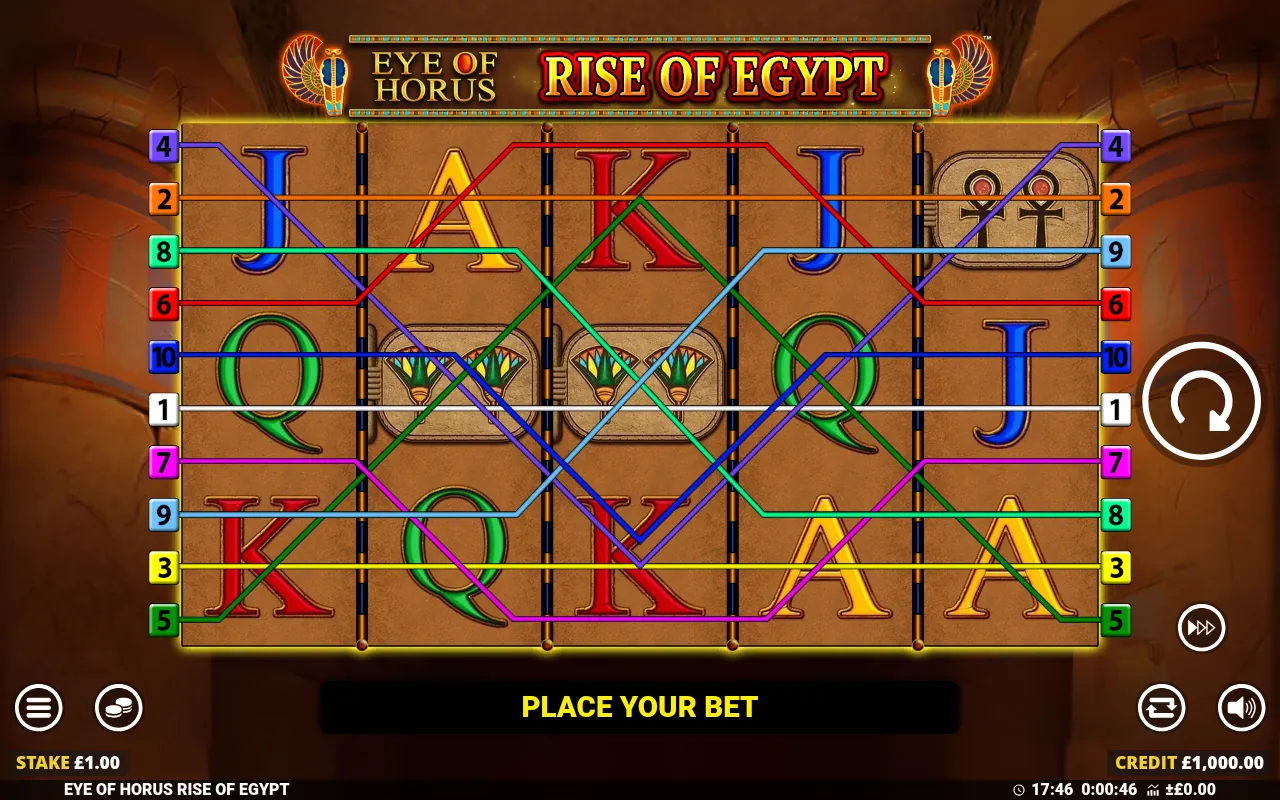
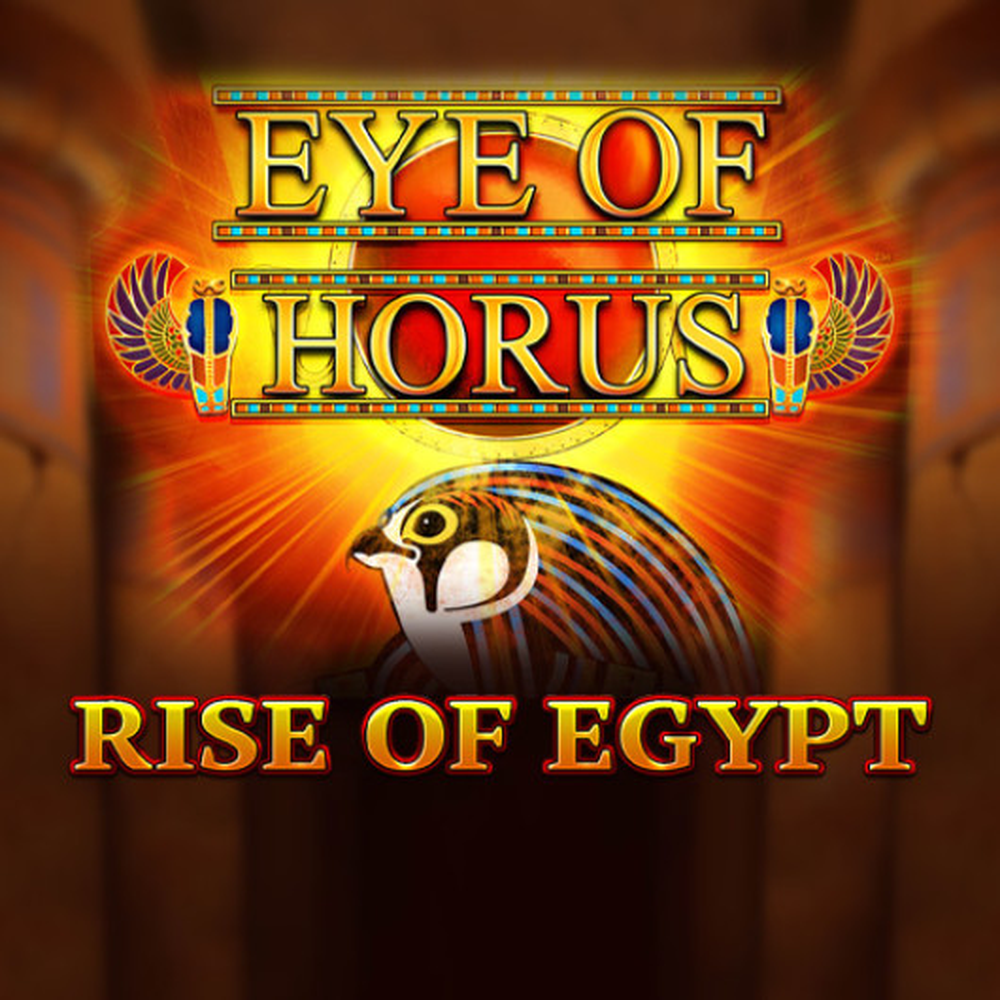
Inside a temple chamber of tall ochre pillars and a curved archway, everything washed in a sunset-orange glow that deepens to shadow in the upper corners, a matched pair of winged Egyptian deities in blue and gold flank the title banner. The setting is deliberately old and deliberately warm. But the game inside it is the quietest member of its family, and that quietness is its whole argument: ten winlines instead of thousands of ways, where a single stacked premium win across the pillars means more than twenty small ones would on a Megaways board.
Blueprint Gaming run this one on a 5×4 grid with 10 winlines, high volatility and a total RTP of 94.5%. It’s a conventional-line companion to Eye of Horus Megaways and Eye Of Horus Gold Spins Megaways: expanding wilds, 12 free games and a symbol-upgrade ladder, on ten lines instead of thousands of ways. The tomb doors are open either way.
Base Game & Features
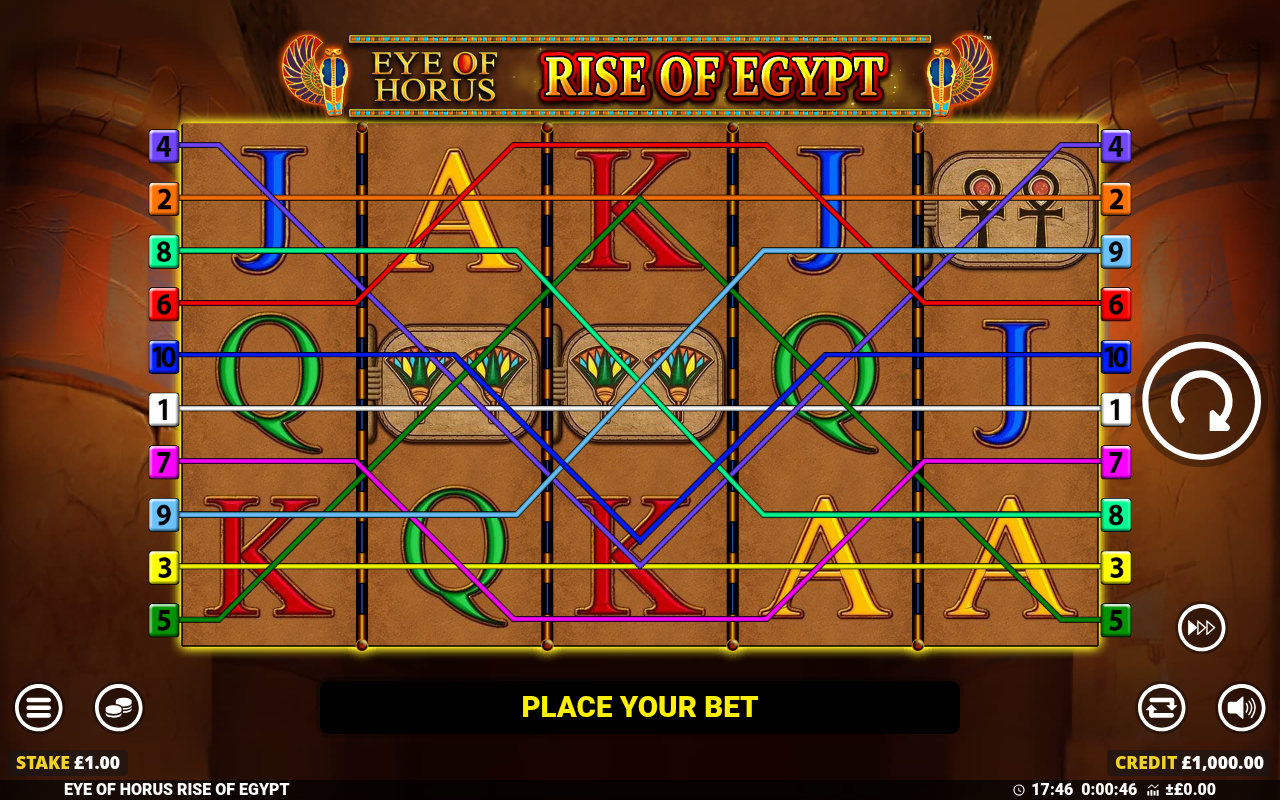
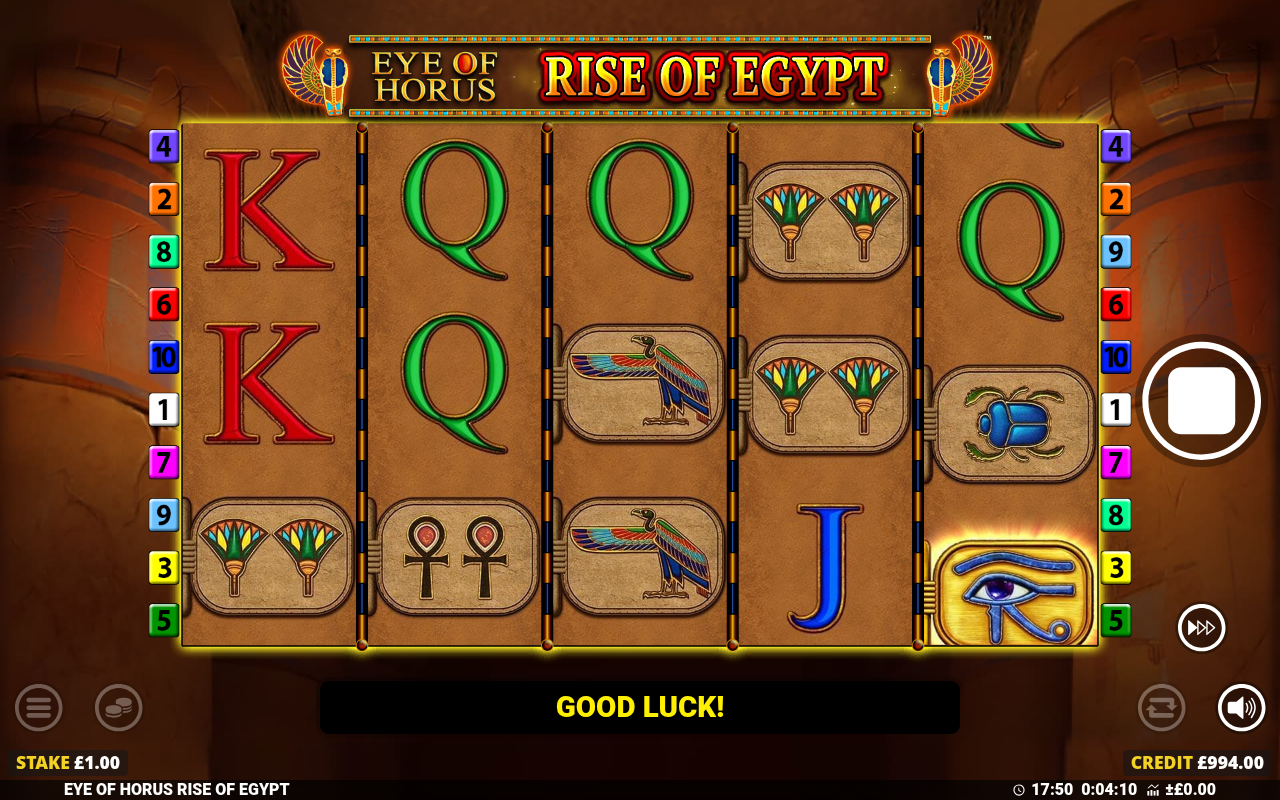
Ten fixed winlines run across the 5×4 reels, numbered 1-10 and paying left to right from the leftmost reel. Only the highest combination on each line counts. There’s nothing to configure beyond stake, which keeps the base game simple to read at a glance.
Four rows of symbols means four positions per reel for the premium Egyptians to stack up in, and stacked premium symbols across adjacent reels are where the bigger base-game line wins come from. With ten lines rather than dozens, a single full-width premium win is a meaningful event rather than one of many.
The reel area itself is outlined in a bright yellow-gold border and split by narrow striped columns pinned with gold rivets, mounted on bars of small turquoise tiles, so the frame carries as much of the Egyptian dressing as the backdrop does. It’s glossy, warm and workmanlike rather than lush. Nothing here is trying to reinvent the tomb.
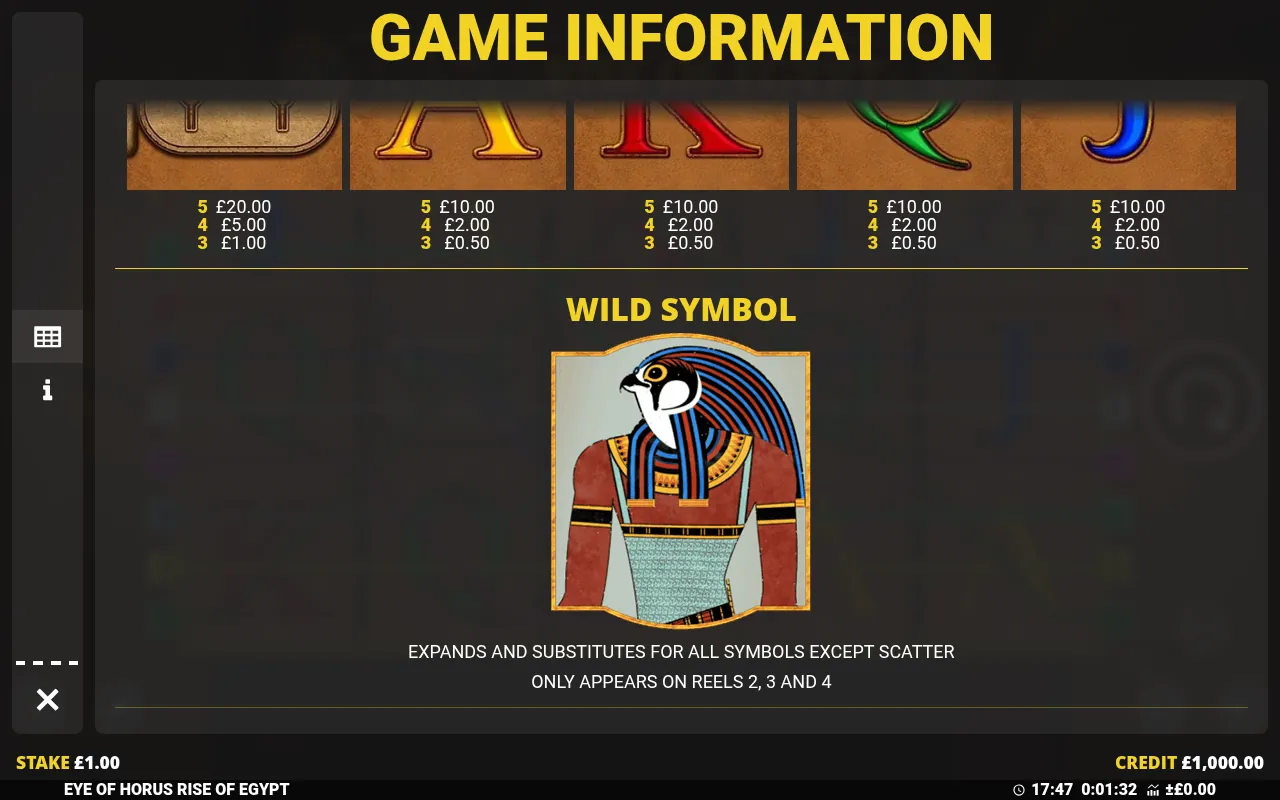
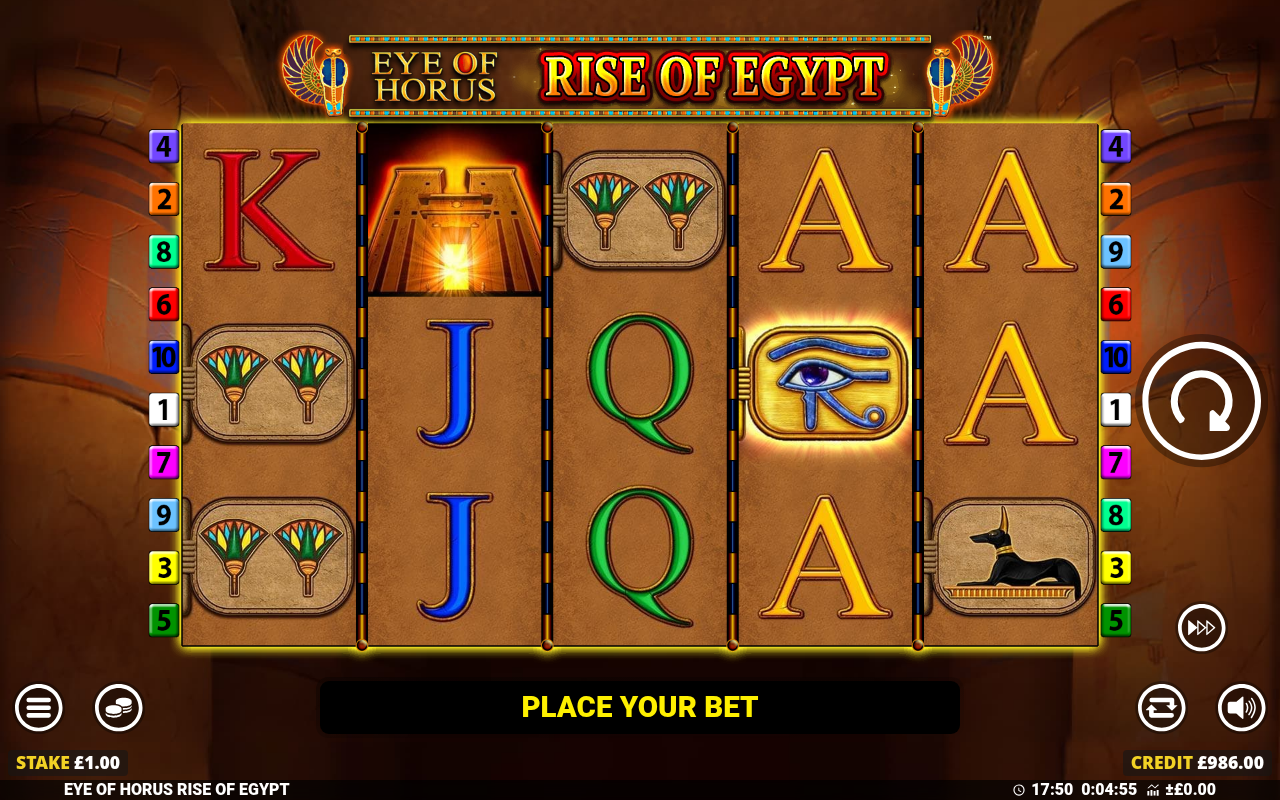
The wild appears on reels two, three and four, expands to fill its reel and substitutes for every symbol except the scatter. That’s the whole of the base-game toolkit. Between free games triggers, play is a matter of watching the middle reels and hoping the expansion lines up with something premium.
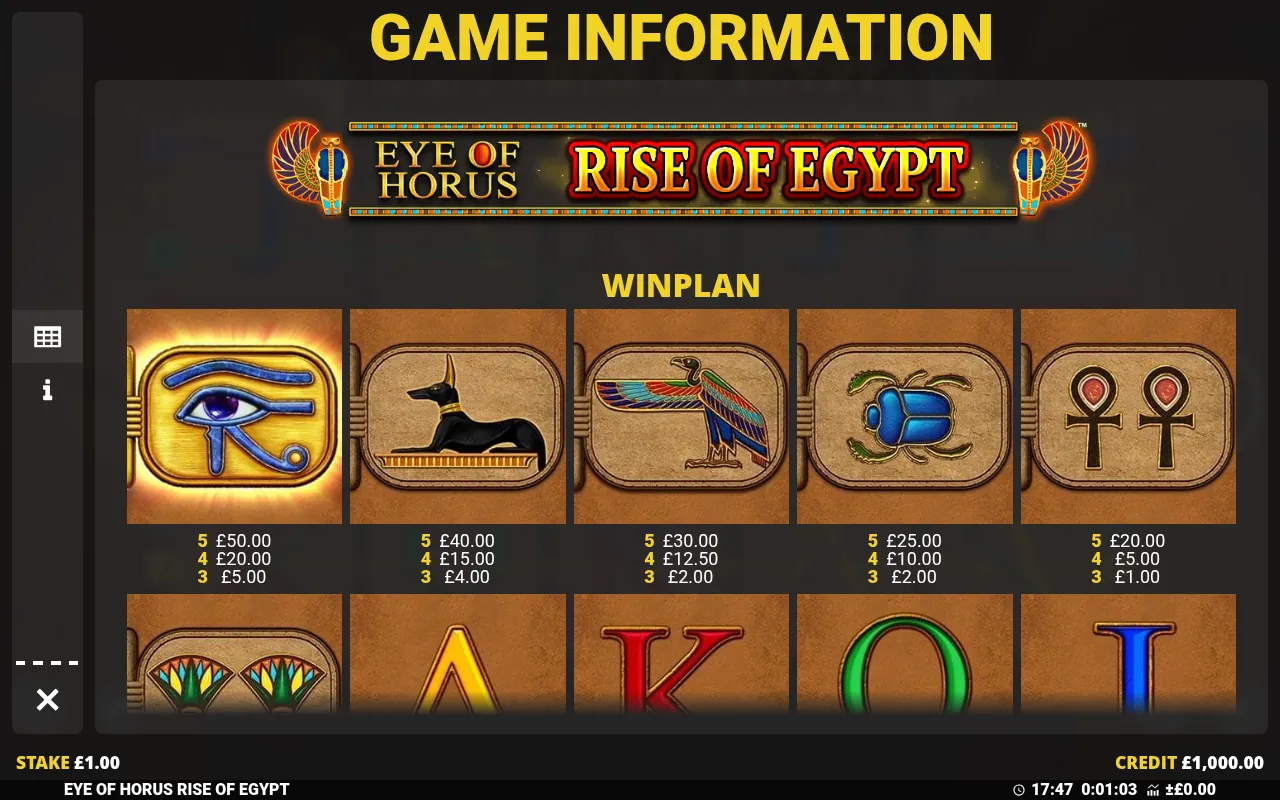
An expanded wild on its own pays nothing, which matters more here than it does on a wide-ways grid. On ten lines, the wild has to complete a line with symbols from the outer reels to be worth anything at all. The paytable below shows what it’s completing, with values as multiples of stake for three, four and five of a kind:
- Eye of Horus: 5x, 20x, 50x
- Anubis: 4x, 15x, 40x
- Falcon: 2x, 12.5x, 30x
- Scarab Beetle: 2x, 10x, 25x
- Ankh and Lotus: 1x, 5x, 20x
- A, K, Q and J: 0.5x, 2x, 10x
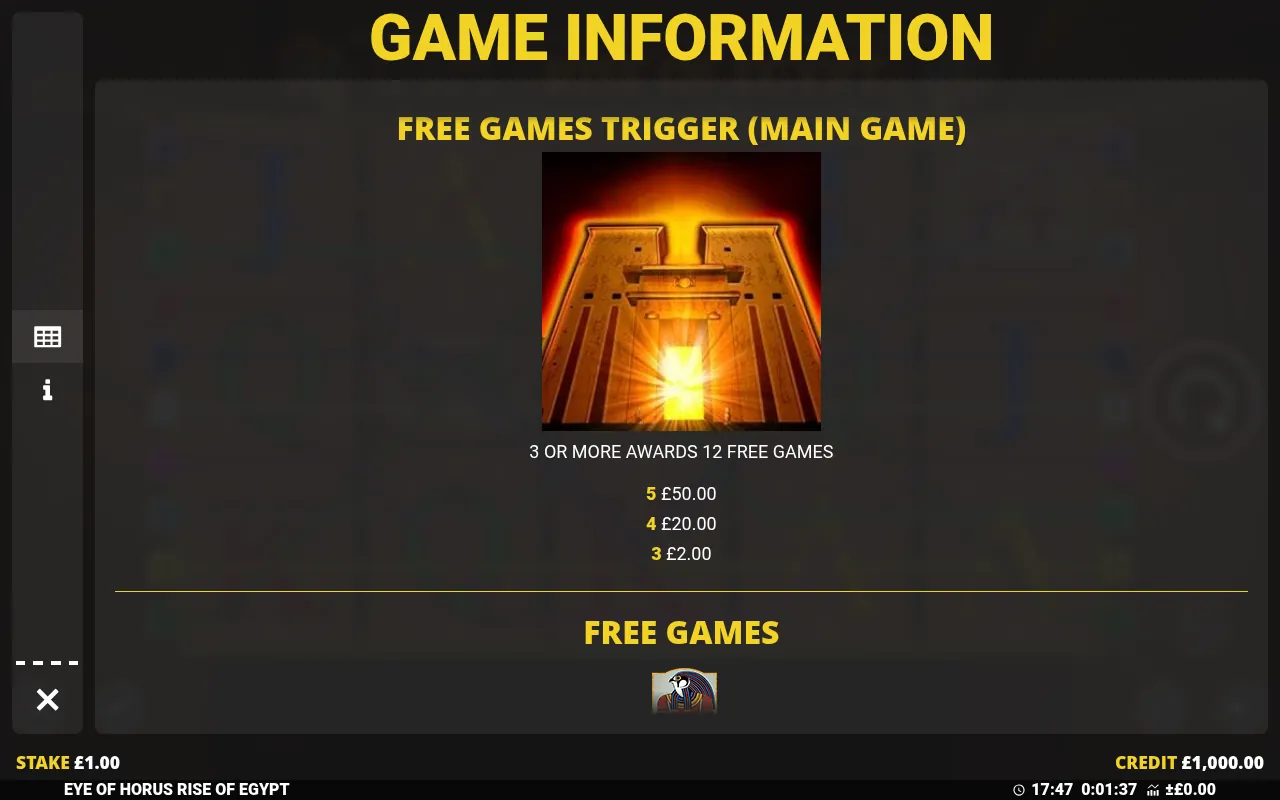
- Scatter (temple and pillars): 2x, 20x, 50x, paid anywhere rather than on a line
The scatter is the one symbol that ignores the winline layout entirely, and its pay lands on top of the free games it awards rather than instead of them. Two symbols at the top of the list share a paytable: the Ankh and the Lotus are worth the same at every count, as are the four royal cards.
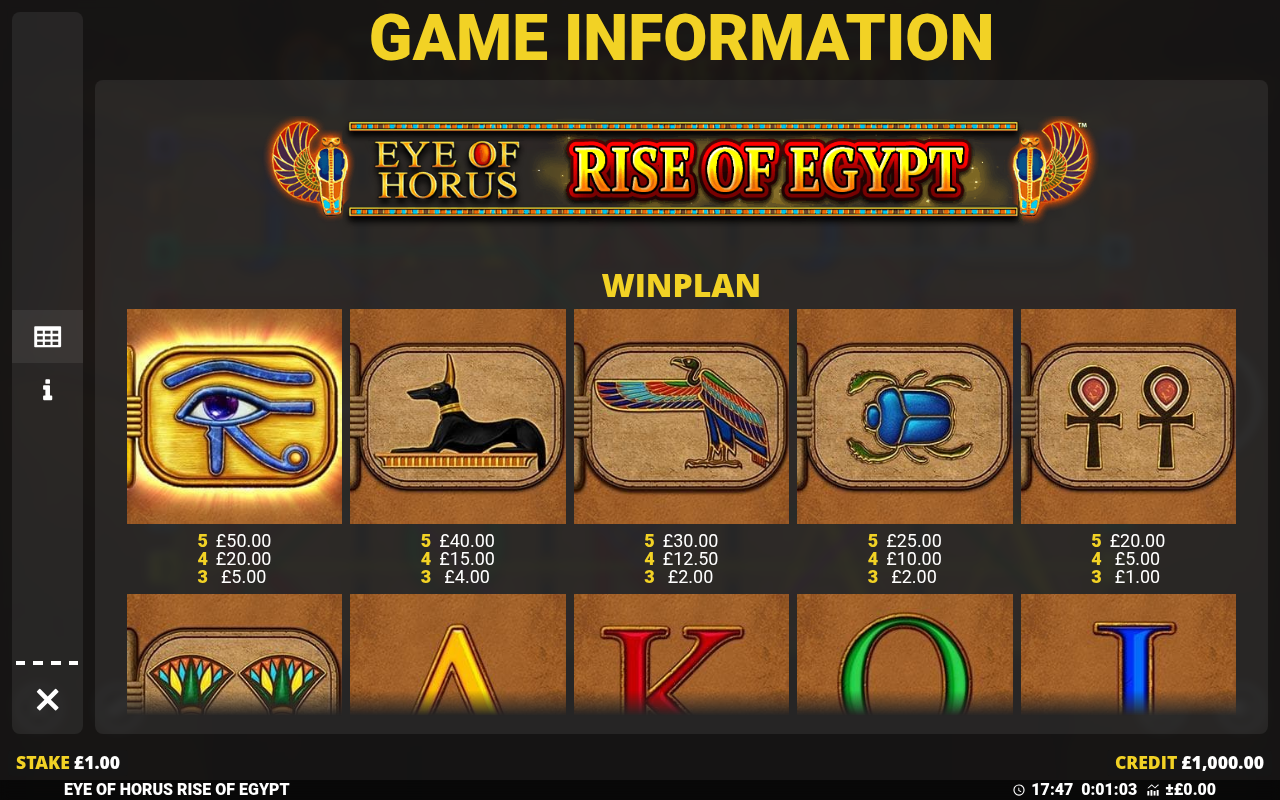
The structure of that list is the structure of the game. There’s a clear top tier of Egyptian symbols, a shared middle rung, and a flat royal tier at the bottom that exists mostly to fill the space between the symbols that matter. High volatility on a paytable shaped like this means the gaps between worthwhile wins can stretch, and the wild is the only thing in the base game built to shorten them.
Eye Of Horus Rise Of Egypt Bonus Features & Free Spins
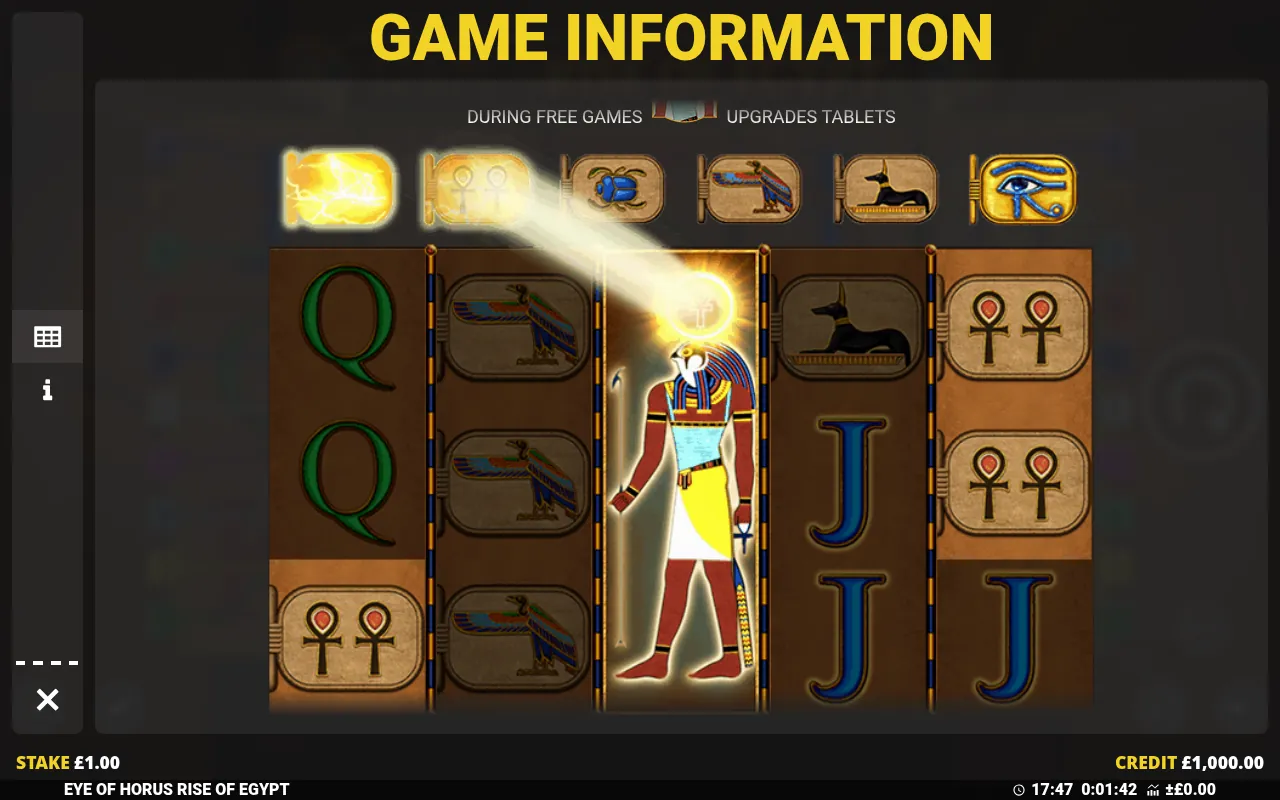
Three or more scatters award 12 free games, with the scatter pay landing immediately and the round starting straight after. Two things then happen during the round, and both are aimed at the same small set of symbols.
First, a lightning bolt upgrades the tablet symbols. The progression runs in stages, each one promoting a tablet to the symbol above it on the paytable:
- Ankh upgrades to Scarab
- Scarab upgrades to Falcon
- Falcon upgrades to Anubis
- Anubis upgrades to Eye of Horus
Every upgrade removes a low-paying symbol from the reels entirely and adds another of the premium ones. Over a long enough round, the reel set stops resembling the base game: the Ankh and Lotus disappear, the royal cards thin out, and what’s left is a grid stacked with the symbols at the top of the list.
The ladder only moves in one direction. Upgrades don’t reverse, so a round that has climbed to the Anubis stage keeps its Anubises for every remaining spin, and each subsequent upgrade applies to the whole reel set rather than a single position.
Second, tablet symbols landing during the round award extra games. The awards step up with the count:
- One tablet symbol: one extra free game
- Two tablet symbols: three extra free games
- Three tablet symbols: five extra free games
- Collect four tablets: further extra games plus wild multipliers
The wild multipliers are what the four-tablet collection is really for. They attach to the expanding wild, so a wild that completes a line in the late stages of a collected round pays several times what the same line would have paid in the base game. That’s the mechanism the whole round is built to reach.
The two systems feed each other. More spins mean more chances to collect tablets, and more collection pushes the upgrade ladder higher, which in turn makes each remaining spin worth more. A round that starts flat can compound into something the opening twelve games never promised.
That ladder is the round’s whole engine. Fully upgraded, the reels carry nothing but the top of the paytable, and the expanding wild still applies during free games, so a late-round expansion lands among premium symbols rather than royals. The maximum win is 50,000x the total bet.
Our Honest Verdict
Overall Rating: 6.4/10
Most of the time on this game is spent in a warm-lit tomb waiting for something to happen, and the reason to choose it is that when something does, you can actually see it matter. Ten lines make every win legible in a way thousands of ways never manage. The tablet ladder is the game’s best idea: two systems building at once, and a deep run that genuinely transforms the reels rather than decorating them.
Everything outside the bonus is thin. One expanding wild and a flat royal tier carry the base game, and the 94.5% return doesn’t reward the patience the gaps demand. This suits anyone who likes the Eye of Horus mechanic served plain, without the Megaways noise. Chasers of the series’ biggest ceilings will find the torchlight a little dim here.
Eye Of Horus Rise Of Egypt FAQs
-
What is the RTP of Eye Of Horus Rise Of Egypt?
The RTP is 94.5%, which sits below the more generous versions of this series. -
Is Eye Of Horus Rise Of Egypt high volatility?
Yes, it’s a high volatility game, so bankroll swings between feature triggers are part of the deal. -
How many paylines does Eye Of Horus Rise Of Egypt have?
Ten fixed winlines, numbered 1-10 across the 5×4 reels. -
What is the grid size of Eye Of Horus Rise Of Egypt?
The game plays on a 5×4 grid: five reels and four rows. -
Who makes Eye Of Horus Rise Of Egypt?
Blueprint Gaming, the studio behind the wider Eye of Horus series. -
How do you trigger the free games in Eye Of Horus Rise Of Egypt?
Land three or more of the temple scatter symbols anywhere on the reels. Three, four or five scatters award 12 free games, plus a scatter pay of 2x, 20x or 50x your stake respectively. -
How does the tablet upgrade work in the free games?
A lightning bolt promotes tablet symbols up a ladder, one symbol at a time: Ankh to Scarab, Scarab to Falcon, Falcon to Anubis, and Anubis to Eye of Horus. Each upgrade removes a low symbol and adds a premium one, and the changes don’t reverse for the rest of the round. -
Can the free games round be extended?
Yes. Tablet symbols landing during the round award one, three or five extra free games depending on how many appear, and collecting four tablets brings further games plus wild multipliers.