





Flippin’ Awesome Shields of Asgard Slot Review
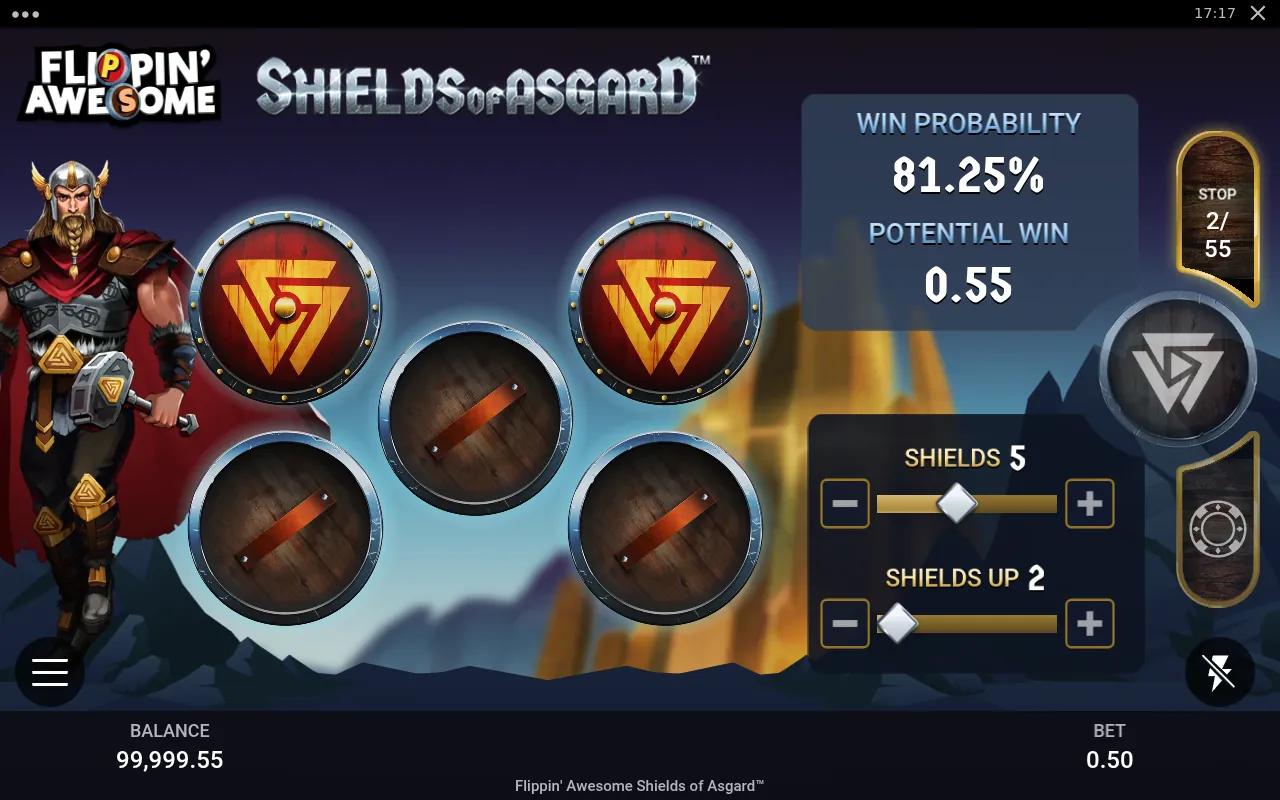
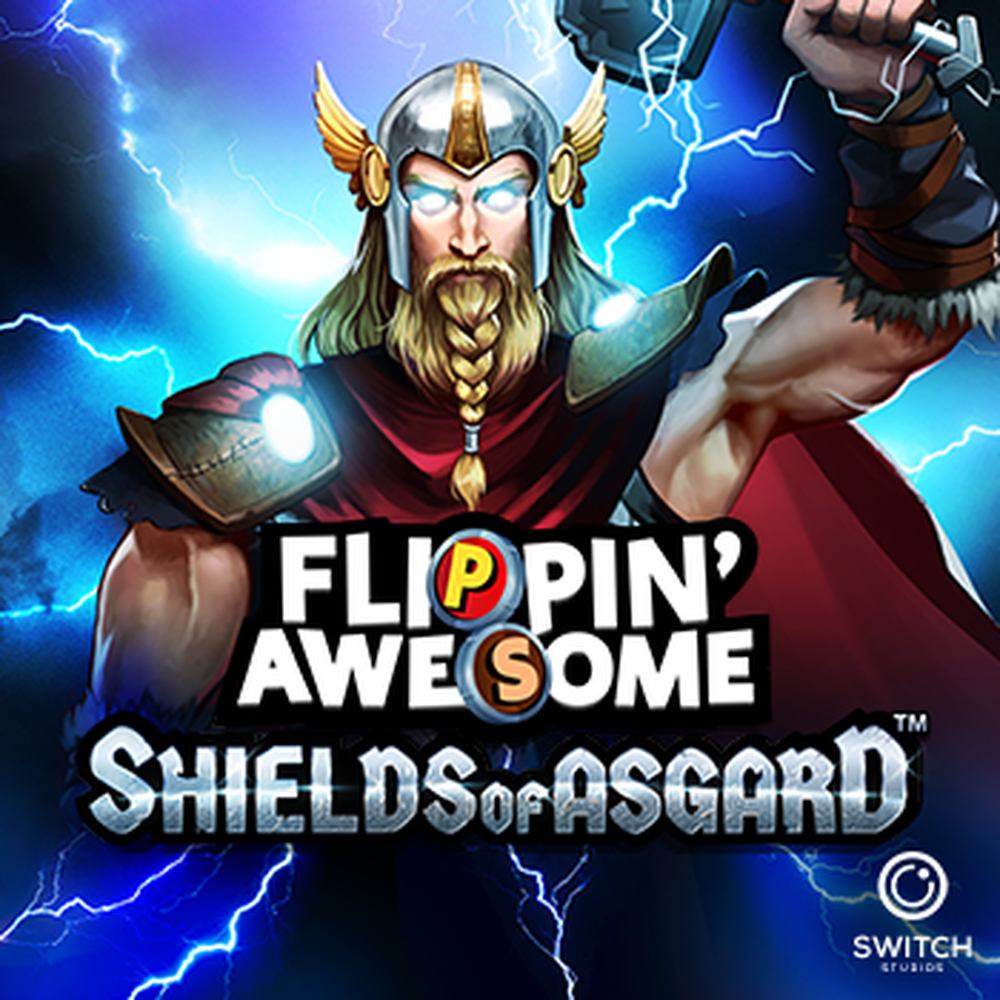
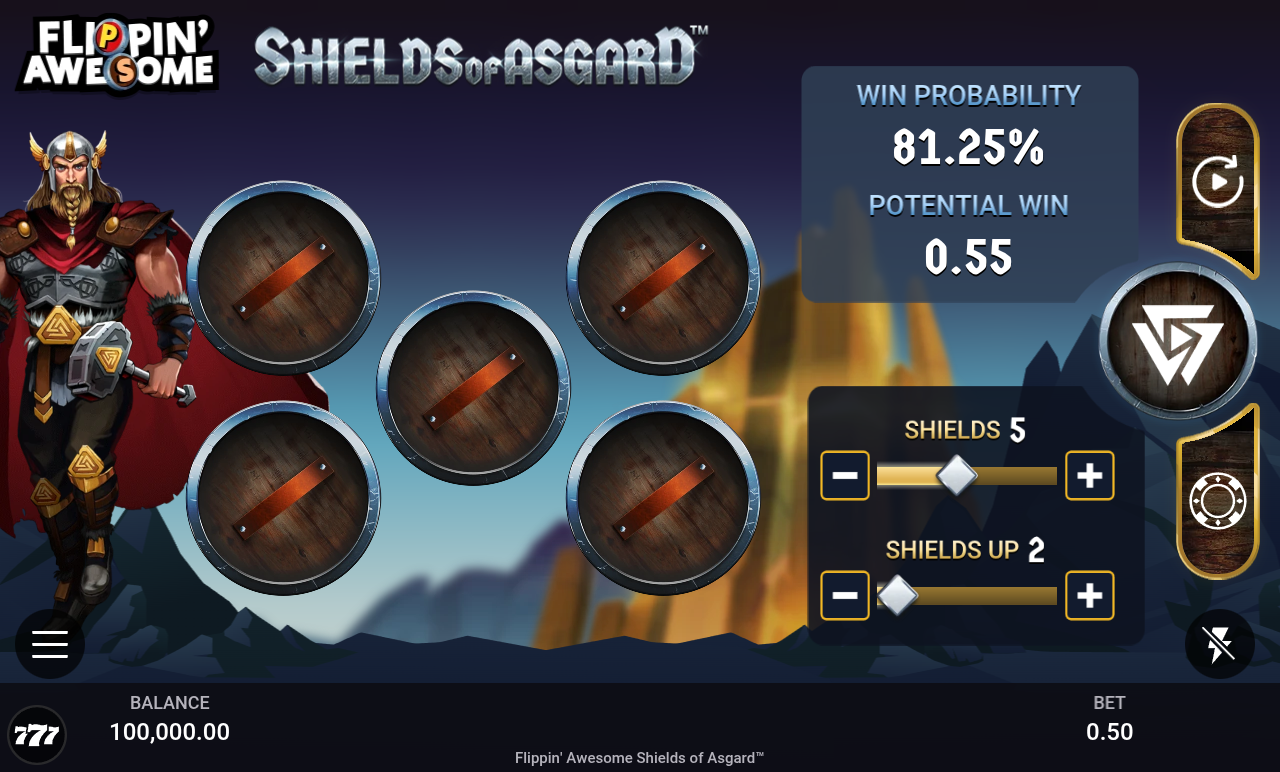
A horned-helmet Viking with a braided beard stands at the edge of a dusk-lit Norse valley, silver hammer at his hip, watching amber light spill over a jagged mountain ridge while the sky fades from deep indigo into purple haze. Behind him, Games Global is running the most honest betting shop in slots: Flippin’ Awesome Shields of Asgard publishes its exact win probability and potential payout before every round, then hands you the sliders that set both. Most slots hide their odds behind reels and ceremony; this one puts them on the table and lets you price your own risk.
The numbers sit at the honest end of the scale: 96.00% RTP, very high volatility, stakes from 0.10 to 250.00 per round, and a ceiling of 983x the bet. The name puts it beside Flippin’ Awesome Gold Chase in the studio’s flip-game family, and it shares Norse ground with Thunderstruck II and Avalon, even if it plays nothing like either.
How a Round of Shield Flipping Works
There are no reels, no paylines and no symbol matches. Each round, up to 10 shields are flipped, and you’re betting on how many land face-up showing the gold rune rather than face-down in plain wood. That’s the entire game, and it’s a sharper one than it first sounds.
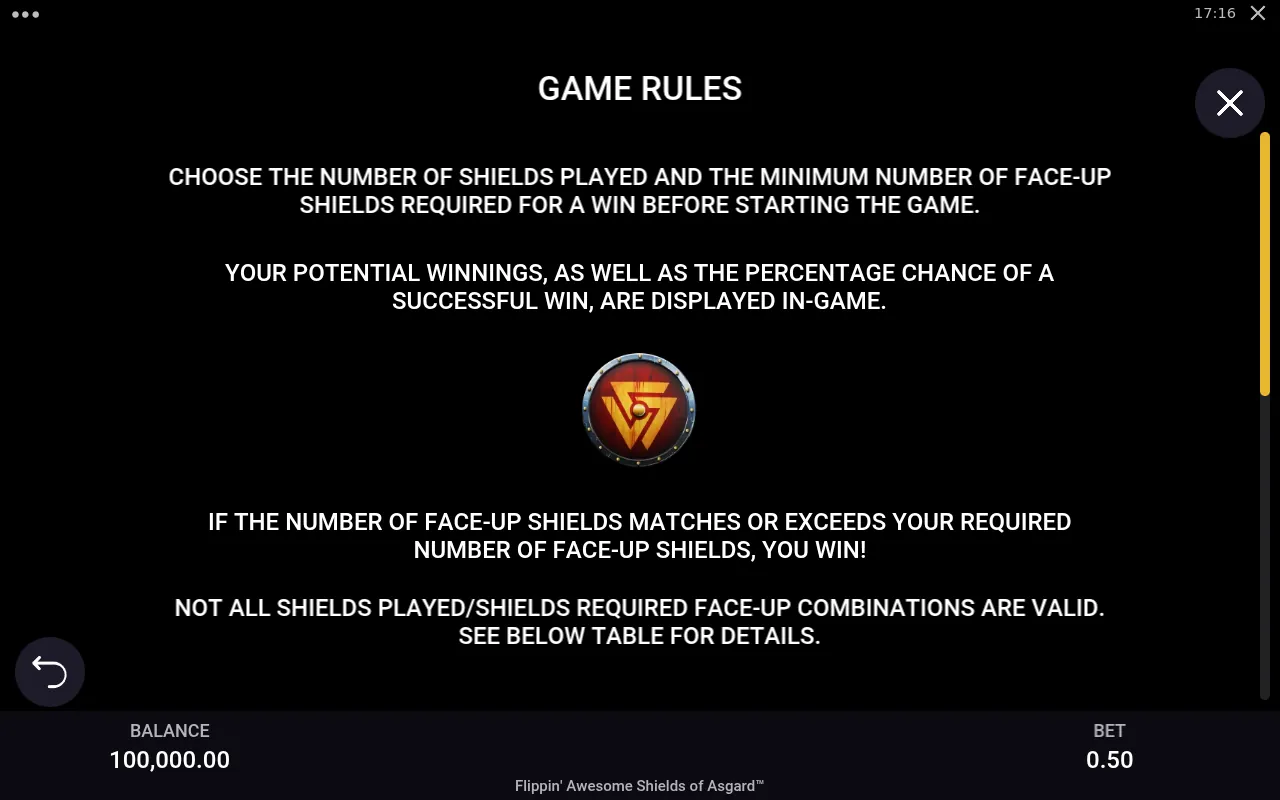
Before you play, you set two things, and everything else follows from them:
- How many shields go into the air, from one up to ten
- The minimum number that must land face-up for the bet to win
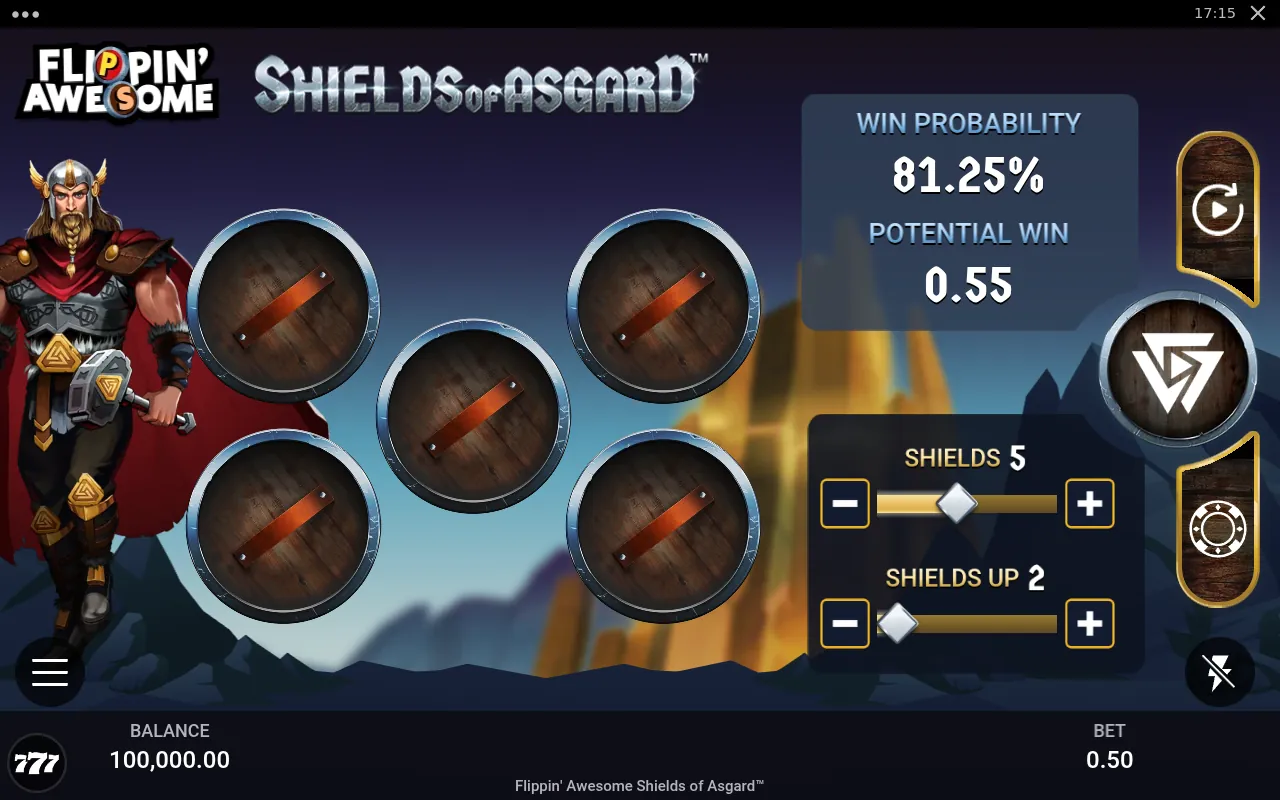
Those two settings together determine both your potential win and your probability of winning, and both figures are displayed before you commit to the round. Probabilities are rounded to two decimal places, so you’re never guessing at the odds. The potential win amount updates with every change to either slider, which means every point on the risk curve has a visible price.
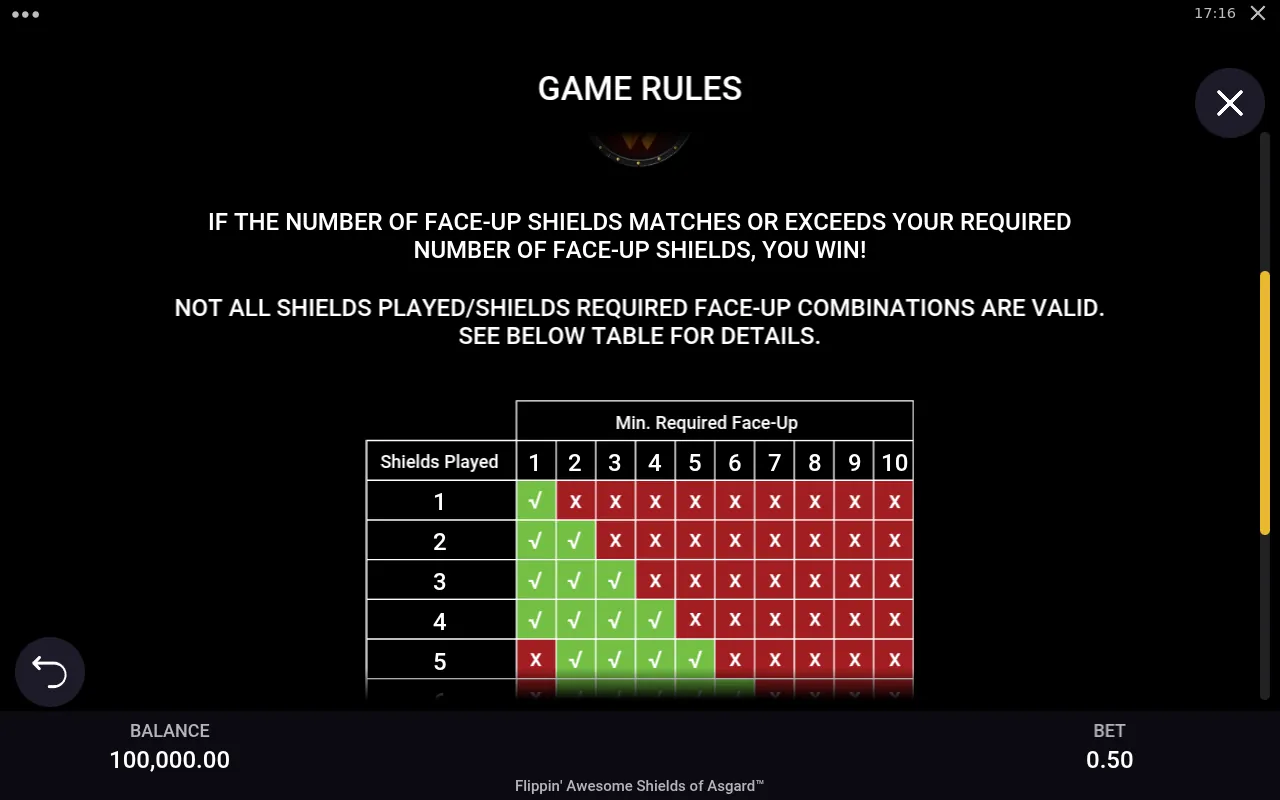
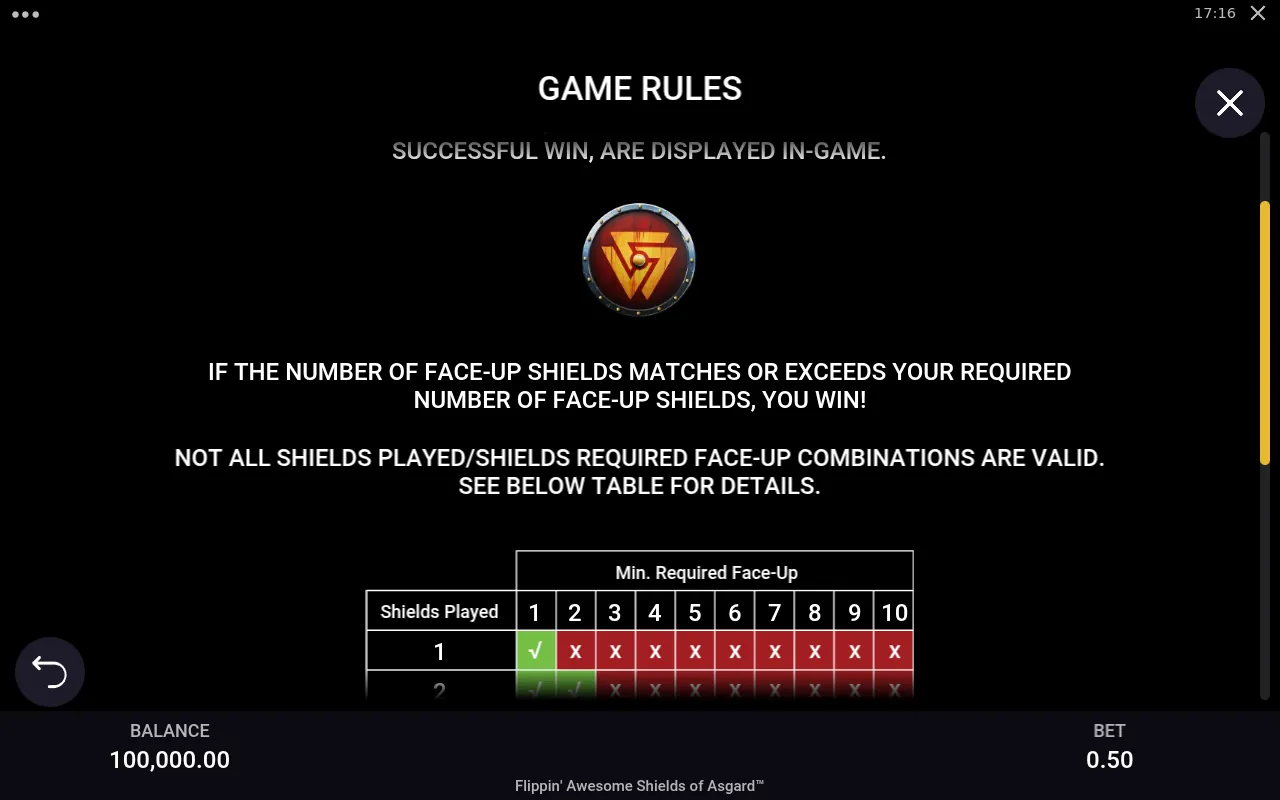
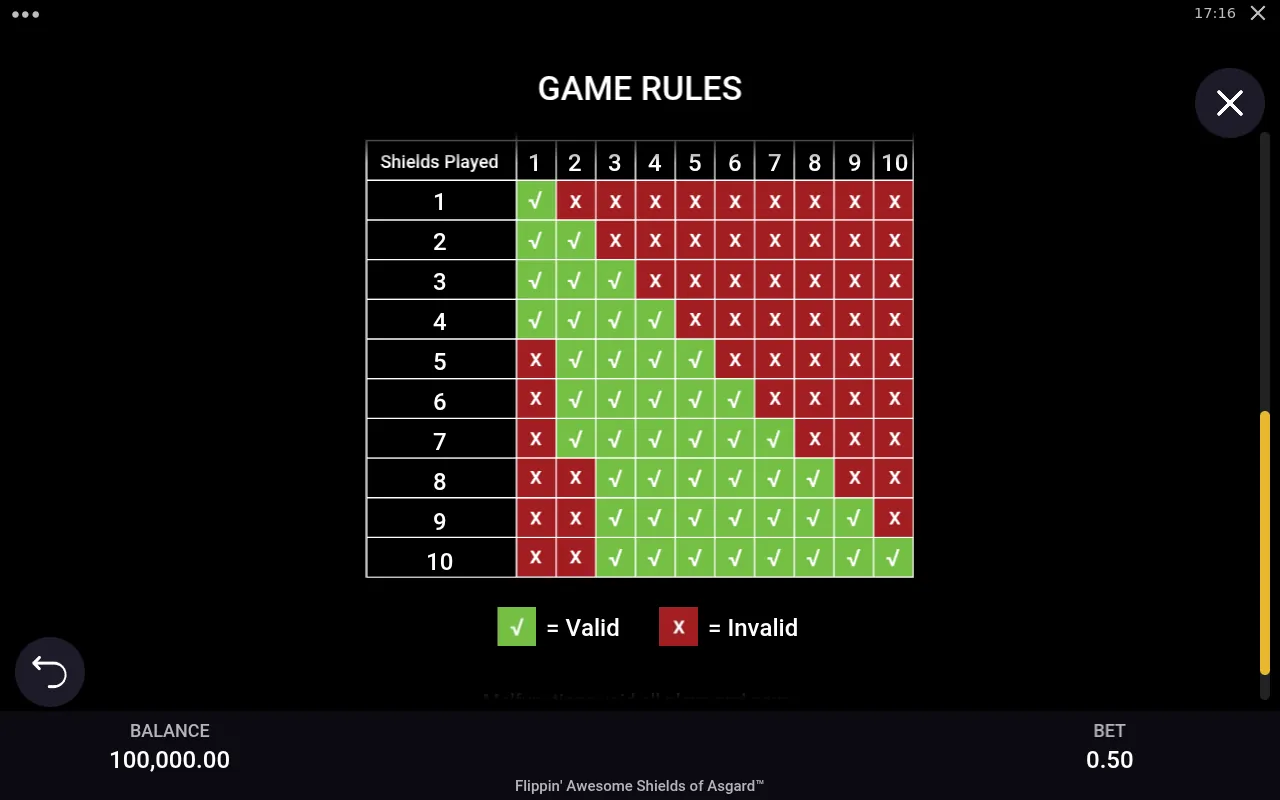
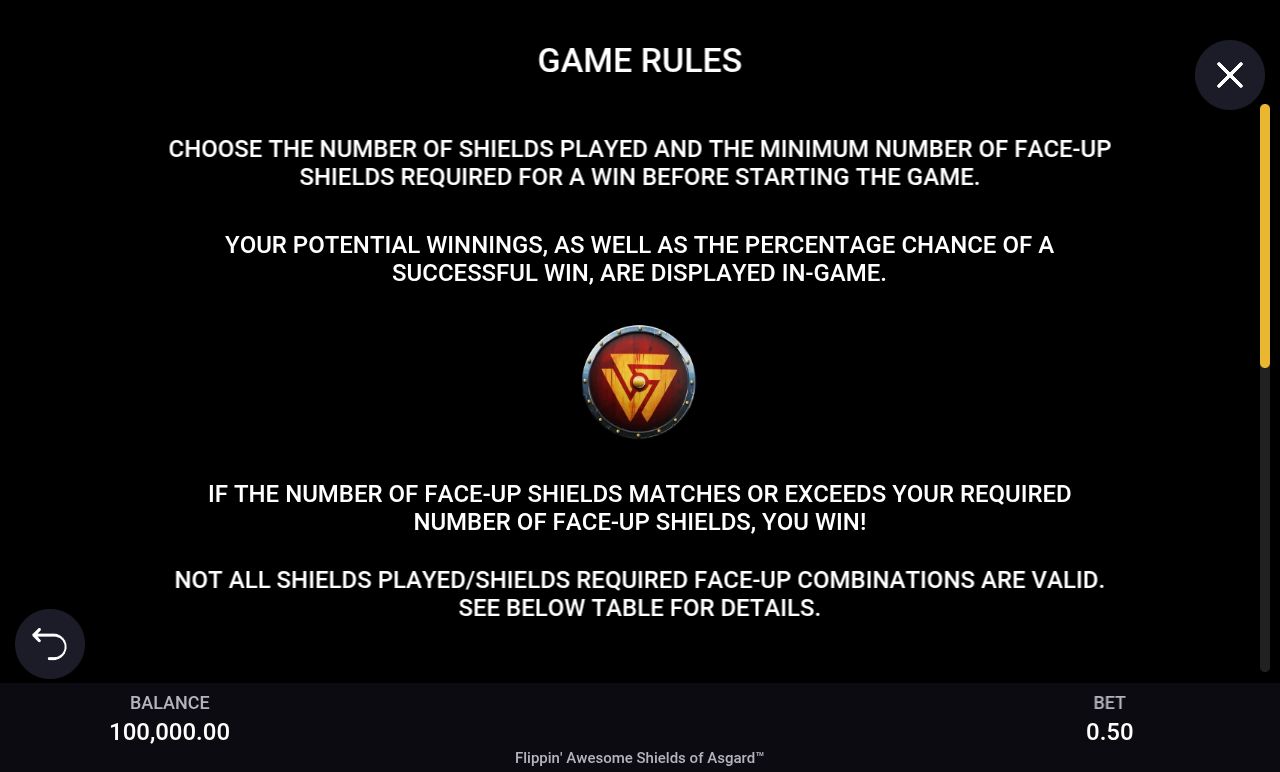
Not every combination is on the table. Some pairings of shields played and shields required simply aren’t valid selections, and the game won’t let you choose them. Within the valid range, the logic is transparent: demanding fewer face-up shields raises your chance of winning and flattens the payout, while demanding more lengthens the odds and lifts the prize.
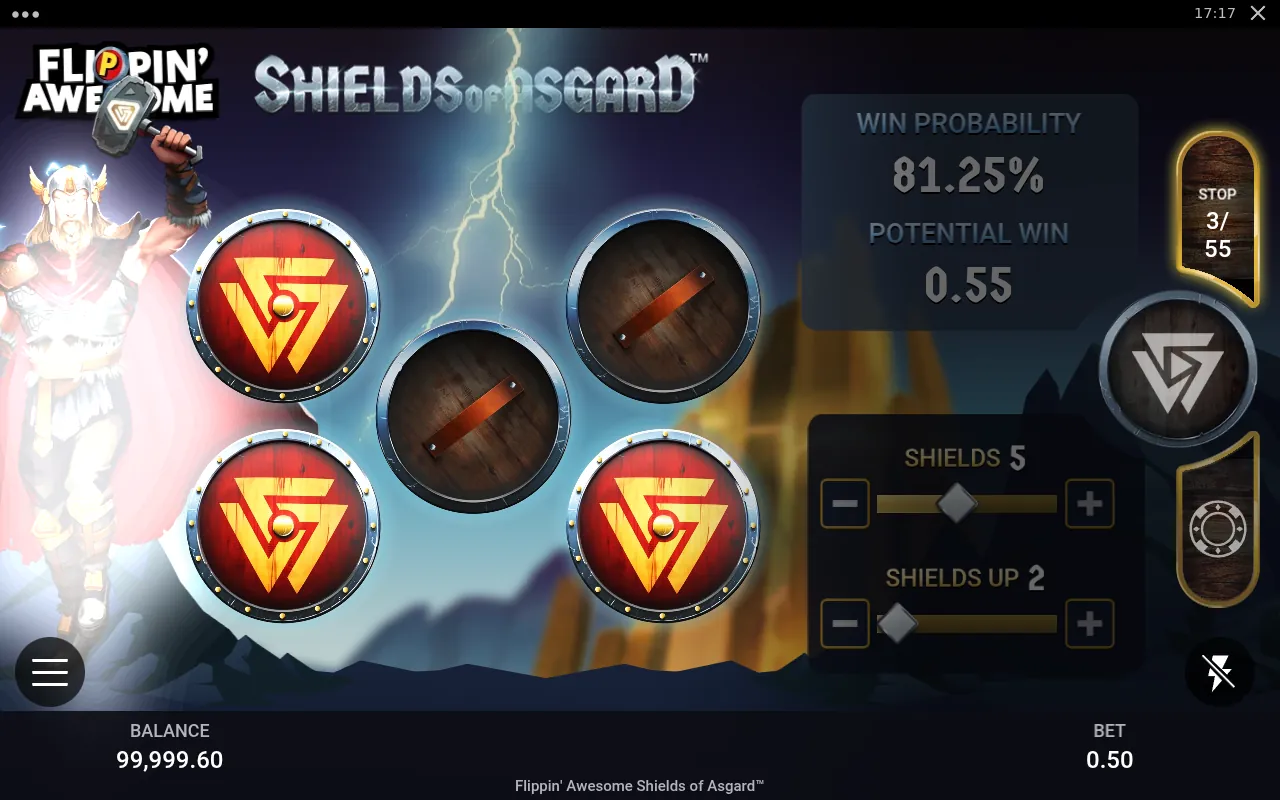
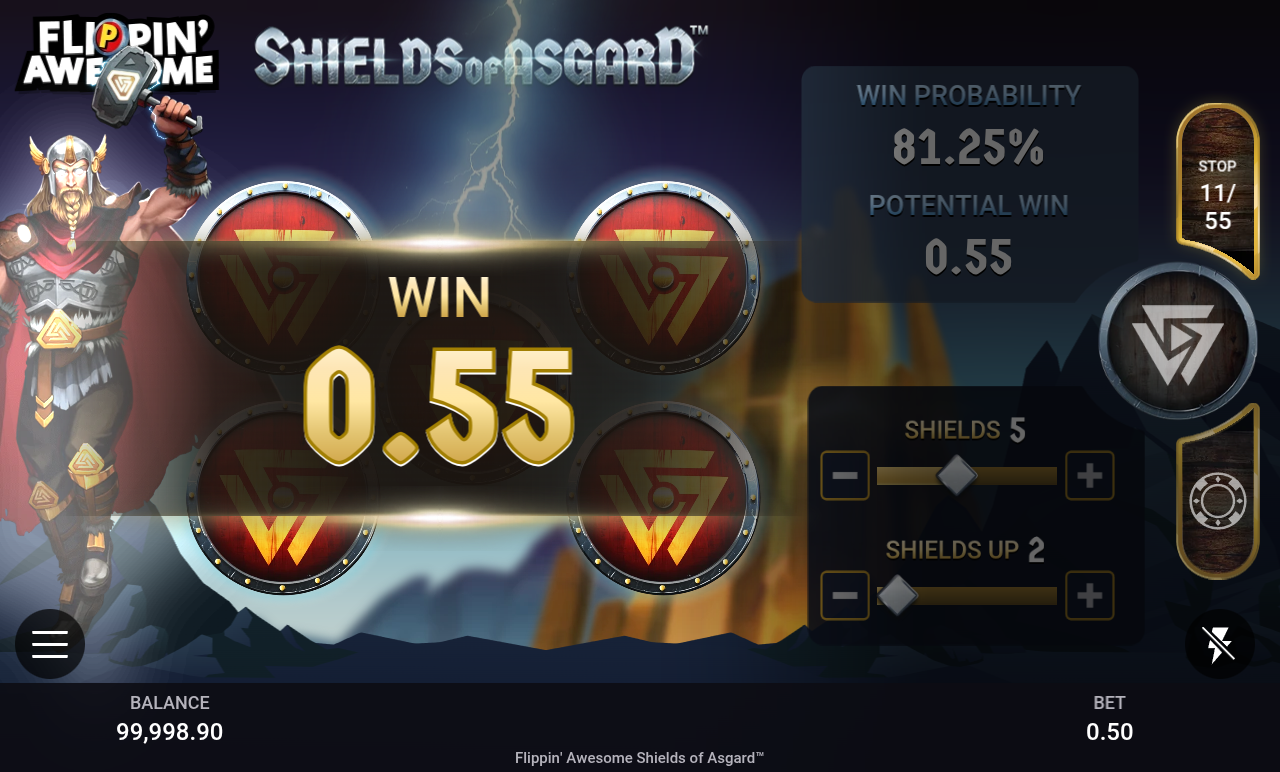
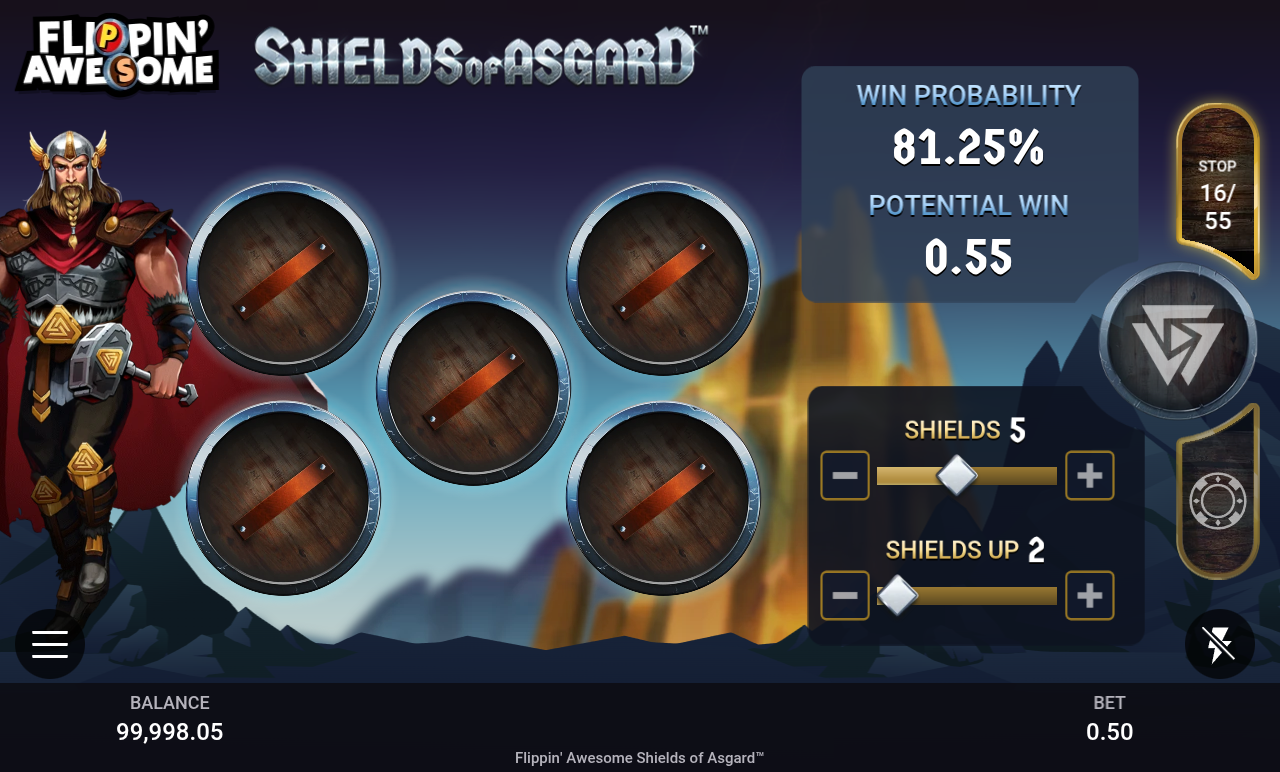
The shape of that curve is easiest to see at a mid-range setting. Play five shields and require only two face-up, and the win probability sits at 81.25%, with the potential win a small fraction of the stake. It’s a grind setting, winning far more rounds than it loses. Push the required count towards the number played and the probability collapses towards fractions of a percent, with the potential win climbing to match.
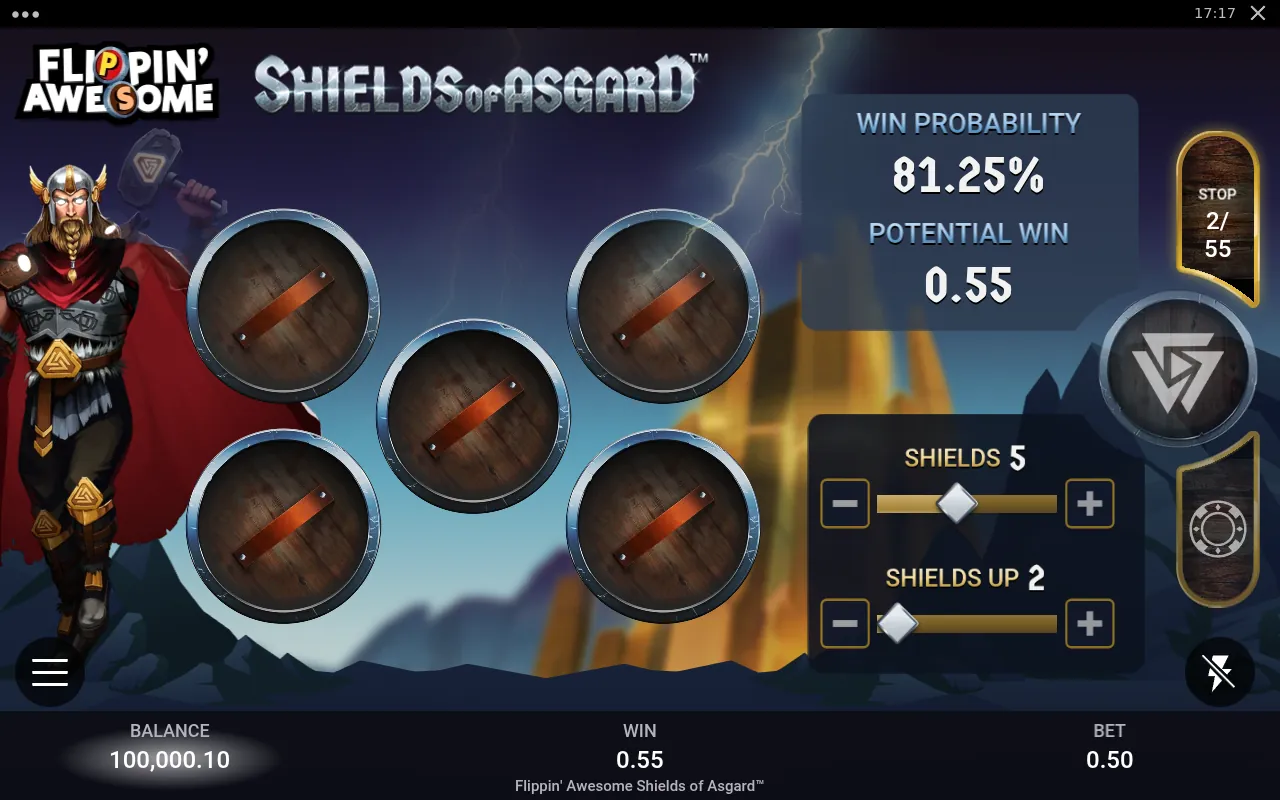
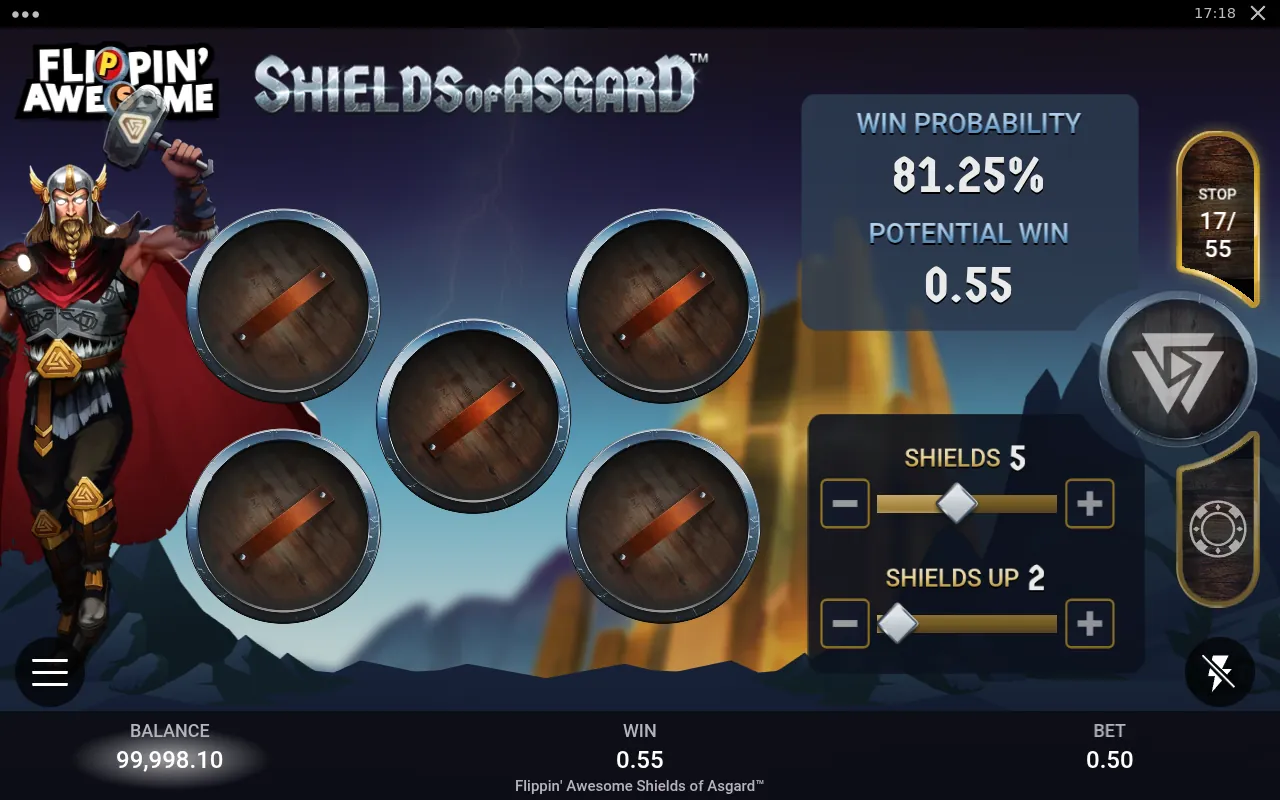
A round settles quickly. The shields flip, land, and the count of gold runes either meets your selected minimum or it doesn’t; a win banner confirms the payout and the balance updates with the amount won or lost. There’s no second stage, no hold-and-respin, no pick screen waiting behind the flip. The outcome you bet on is the outcome you see.
A gold-rune shield landing face-up is the only thing that matters to a round’s outcome. There’s no wild, no scatter and no substitution mechanic anywhere in the game: face-up is gold, face-down is wood, and the count settles the bet.
Stakes, Odds and the 983x Ceiling
Stakes run from 0.10 to 250.00 per round, a wide enough band for cautious punters and high rollers alike. The potential win figure always scales with exactly three inputs:
- Your current bet size
- The number of shields played
- The minimum number of shields required face-up for a win
Change any one of the three and the displayed figure moves with it, live, before the round begins. That instant feedback is what makes the sliders feel like a real betting instrument rather than a decoration. The probability display works the same way, though it responds to the shield settings rather than the stake.
The top of the curve is a 983x return, which comes from the studio’s maximum exposure divided by its maximum bet. It isn’t a reels-and-rows jackpot figure, but for a flip game it’s a tall ladder, and reaching it means taking the longest valid odds on the board. The overall hit rate sits at 0.1%, which tells you how the volatility is distributed: most of the payout weight is stacked at the top of the curve.
Controls and Autoplay
The control set is sparse, as it should be:
- Bet button: displays options to change the current stake
- Play: begins a round of the game
- Turbo: increases the speed of gameplay so results display quicker
- SHIELDS slider and + and – buttons: set the number of shields played
- SHIELDS UP slider and + and – buttons: set the minimum face-up count required to win
Autoplay is here too, and it behaves in the standard way:
- Sets a chosen number of rounds to play out automatically
- Runs every round at the currently selected stake
- Displays the spins remaining in the session
- Can be stopped at any time with the Autoplay stop button
Because both shield settings stay where you leave them, an Autoplay session is a fixed point on the risk curve repeated for as long as you let it run. Change the stake or the sliders mid-session and every subsequent round plays at the new settings. It’s a simple loop, and the game doesn’t complicate it.
A few settings may not be available depending on where you’re playing, which is operator territory rather than anything about the game itself. Disconnection handling follows the same pattern: the final game state appears on return, unfinished rounds can be completed, and any round not completed within 90 days is void with unconfirmed bets returned.
Our Honest Verdict
Overall Rating: 7.5/10
Playing this is sitting in that amber-lit valley with a set of sliders and a live odds board, making one decision over and over: how brave do I feel this round? That decision is the entire game, and it’s the reason to choose it over anything with reels. You set the risk, you see the exact probability before you commit, and no slot mechanic stands between you and the maths.
The best thing here is control – genuine, quantified control over your own odds, which almost nothing else in a casino lobby offers. The worst thing is what’s at the end of the brave end: 983x is a modest summit for odds this thin, so the long-shot settings cost a lot of losing rounds for a prize that won’t change your life.
This is for players who enjoy probability itself – setting a number, knowing the chance, living with it. Anyone after free spins, bonus rounds or a story won’t find any of that here, and that’s fine; the Viking on the mountain never promised them.
Flippin’ Awesome Shields of Asgard FAQs
-
What is the RTP of Flippin’ Awesome Shields of Asgard?
The RTP is 96.00%. That’s the total expected return over time, and it doesn’t change across the game’s bet settings. -
Is Flippin’ Awesome Shields of Asgard high volatility?
Yes. The game is rated very high volatility, with most of the payout weight stacked at the long-odds end of the shield curve. -
How do you win a round in Flippin’ Awesome Shields of Asgard?
You win if the number of shields landing face-up matches or exceeds the minimum face-up count you selected before the round. Your potential win and probability of winning are both displayed before you play. -
How many shields can you play in Flippin’ Awesome Shields of Asgard?
You can select up to 10 shields to play in each round, and you choose the minimum number that must land face-up for a win. Some combinations of shields played and shields required aren’t valid and can’t be selected. -
Does Flippin’ Awesome Shields of Asgard have wild or scatter symbols?
No. The only symbols are the shields themselves: face-up gold-rune shields and face-down wooden shields. There’s no wild, no scatter and no substitution mechanic anywhere in the game. -
What is the maximum win on Flippin’ Awesome Shields of Asgard?
The maximum win is 983x your bet, derived from the studio’s maximum exposure divided by its maximum stake. -
What is the minimum and maximum bet on Flippin’ Awesome Shields of Asgard?
Stakes run from 0.10 to 250.00 per round. -
What is the hit frequency of Flippin’ Awesome Shields of Asgard?
The overall hit frequency is 0.1%, reflecting how heavily the payouts are weighted towards the longest-odds shield combinations. -
Who makes Flippin’ Awesome Shields of Asgard?
Games Global. It sits in their flip-game family alongside Flippin’ Awesome Gold Chase.