
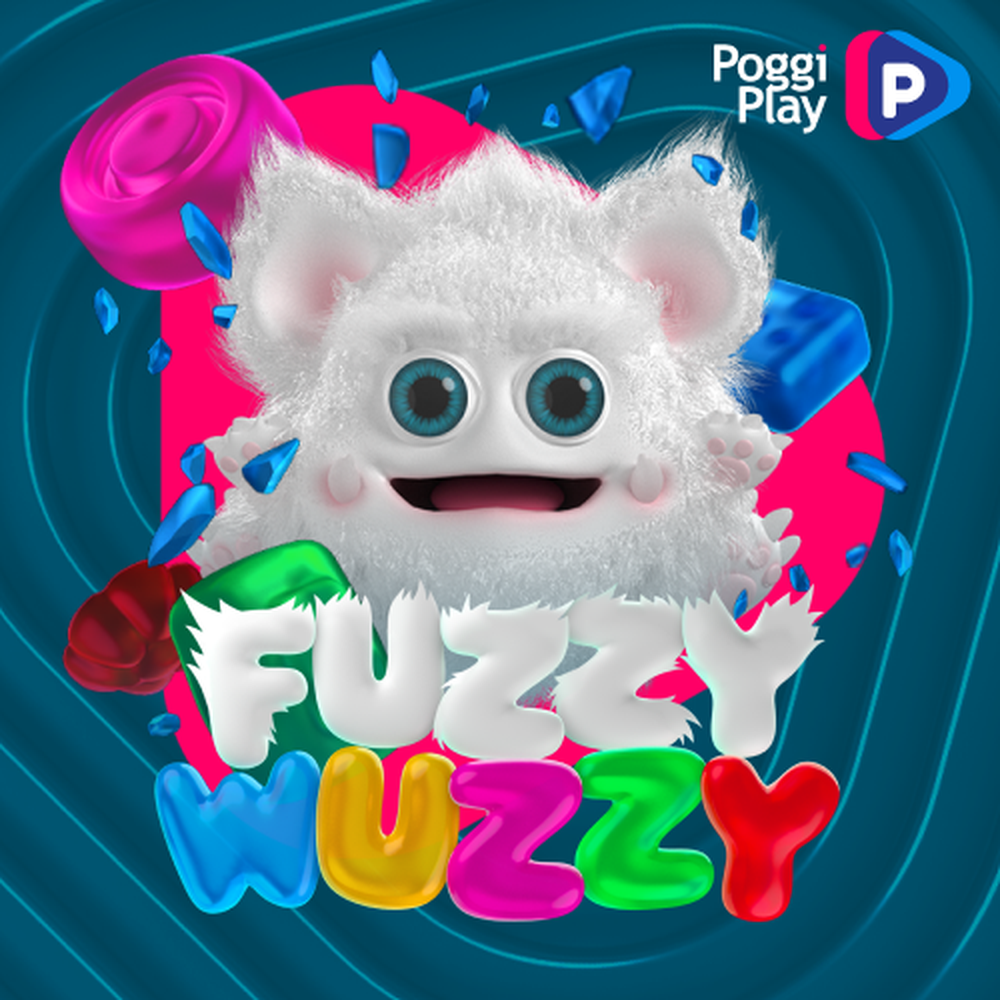







Fuzzy Wuzzy Slot Review
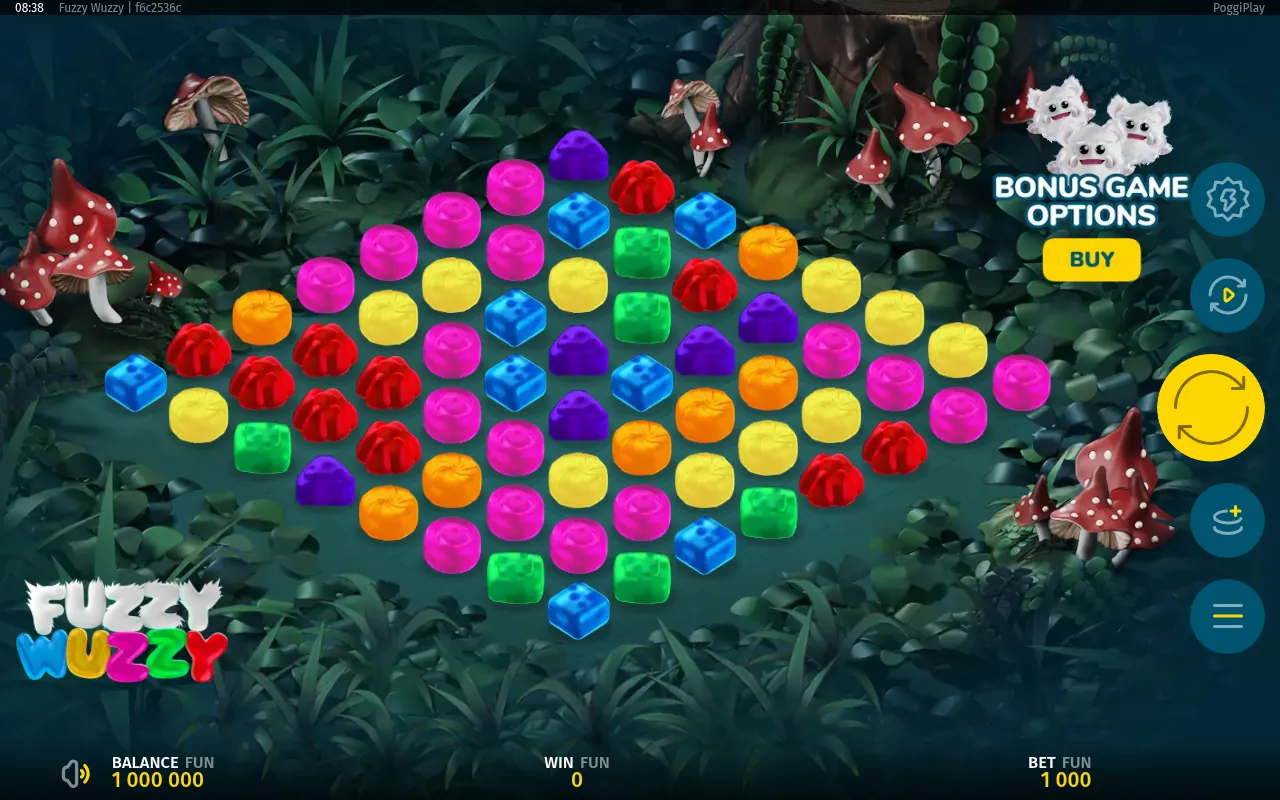
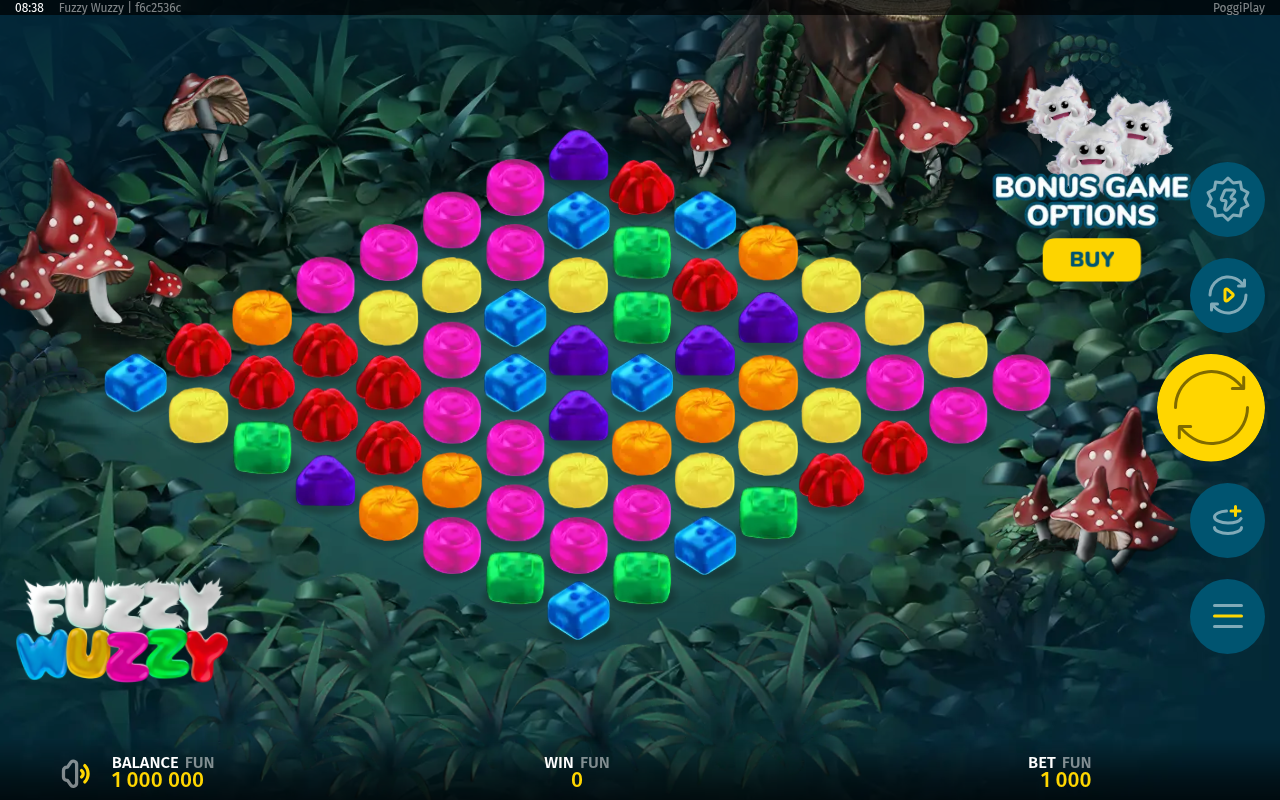
A dim forest floor washed in teal-green, toadstools spotted red and white clustered along the edges, and fuzzy white pom-pom creatures with tiny faces peeking in from the corner. PoggiPlay’s Fuzzy Wuzzy uses that woodland to soften one of the blunter maths models you’ll meet: a paytable where almost nothing pays until everything does, and one extra symbol can multiply a win several times over.
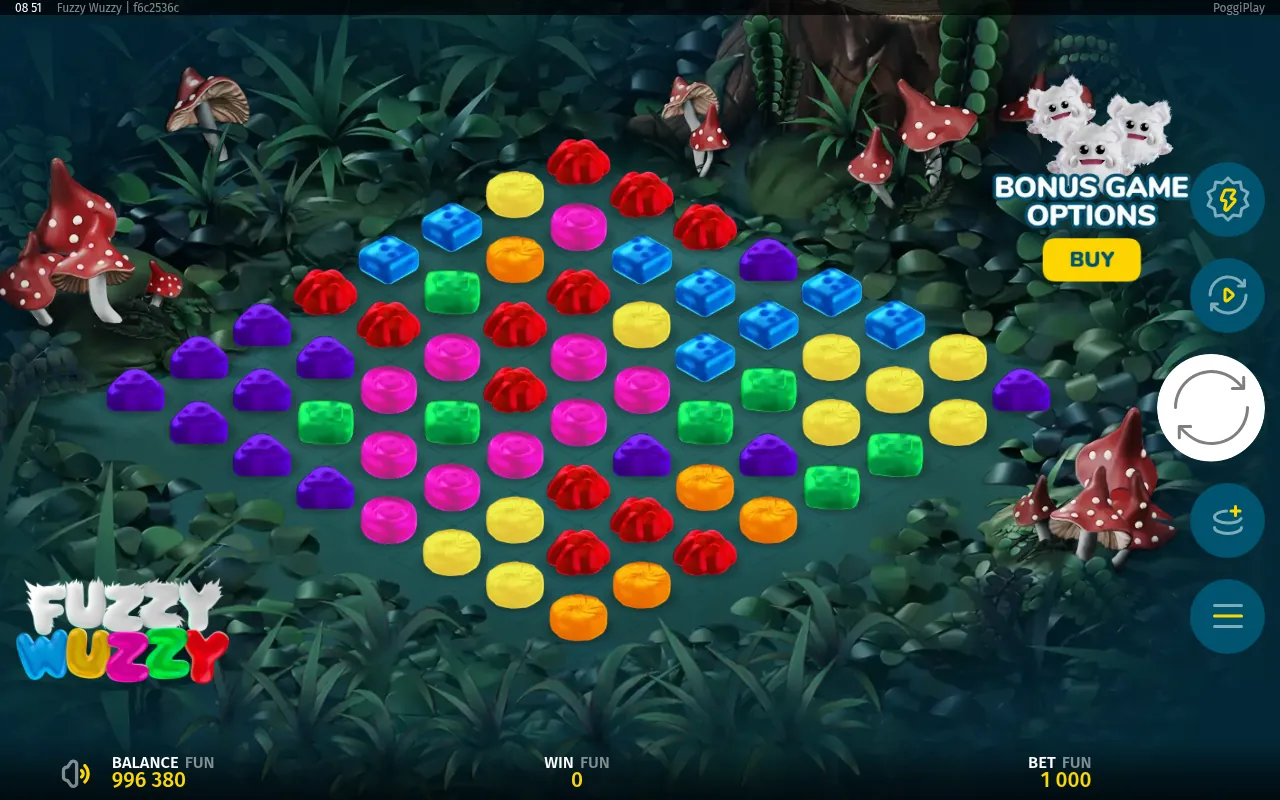
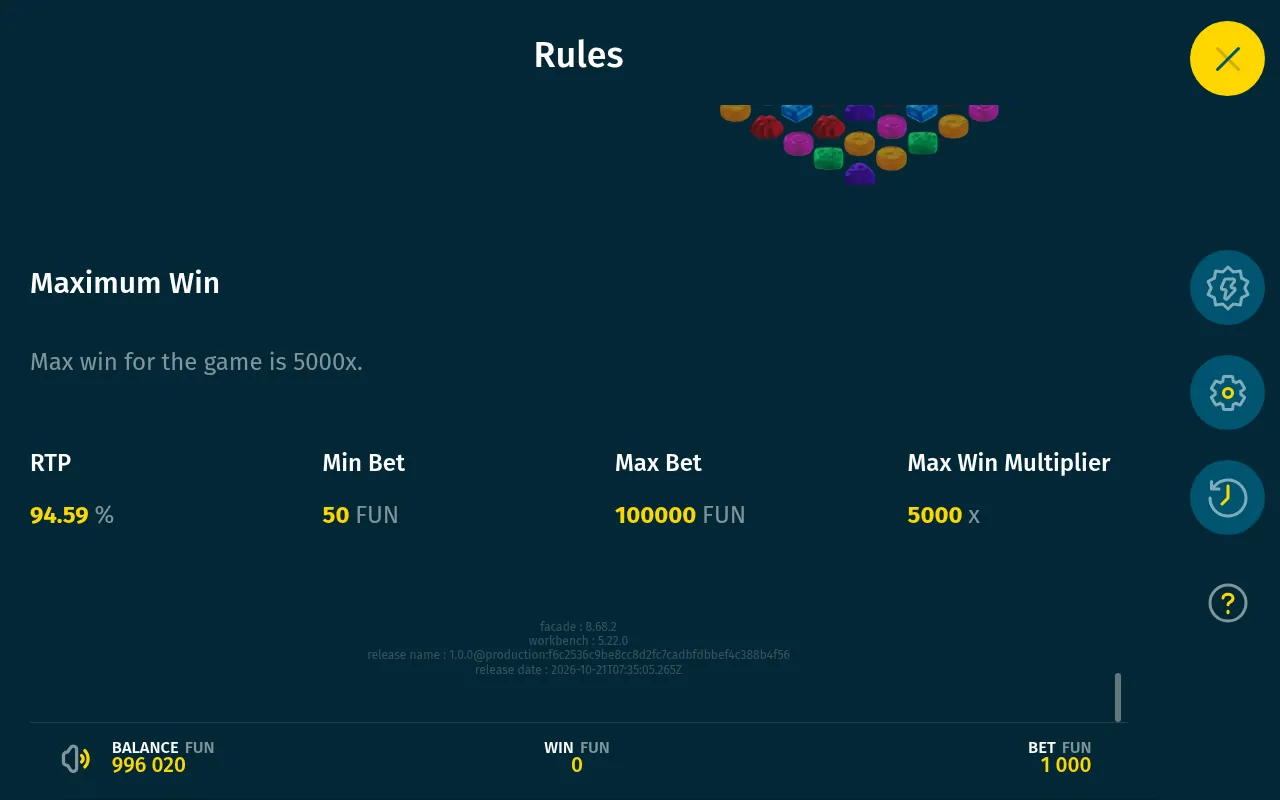
It plays out on an irregular diamond-shaped cluster board rather than a conventional reel grid, where blocks and blobs form matching groups to pay. The maths is high volatility with an RTP of 94.59% and a 5,000x maximum win, and stakes run from 50 up to 100,000. Studio stablemate Fortune Rico covers similar ground for PoggiPlay fans.
The Cluster Board and Its Symbols
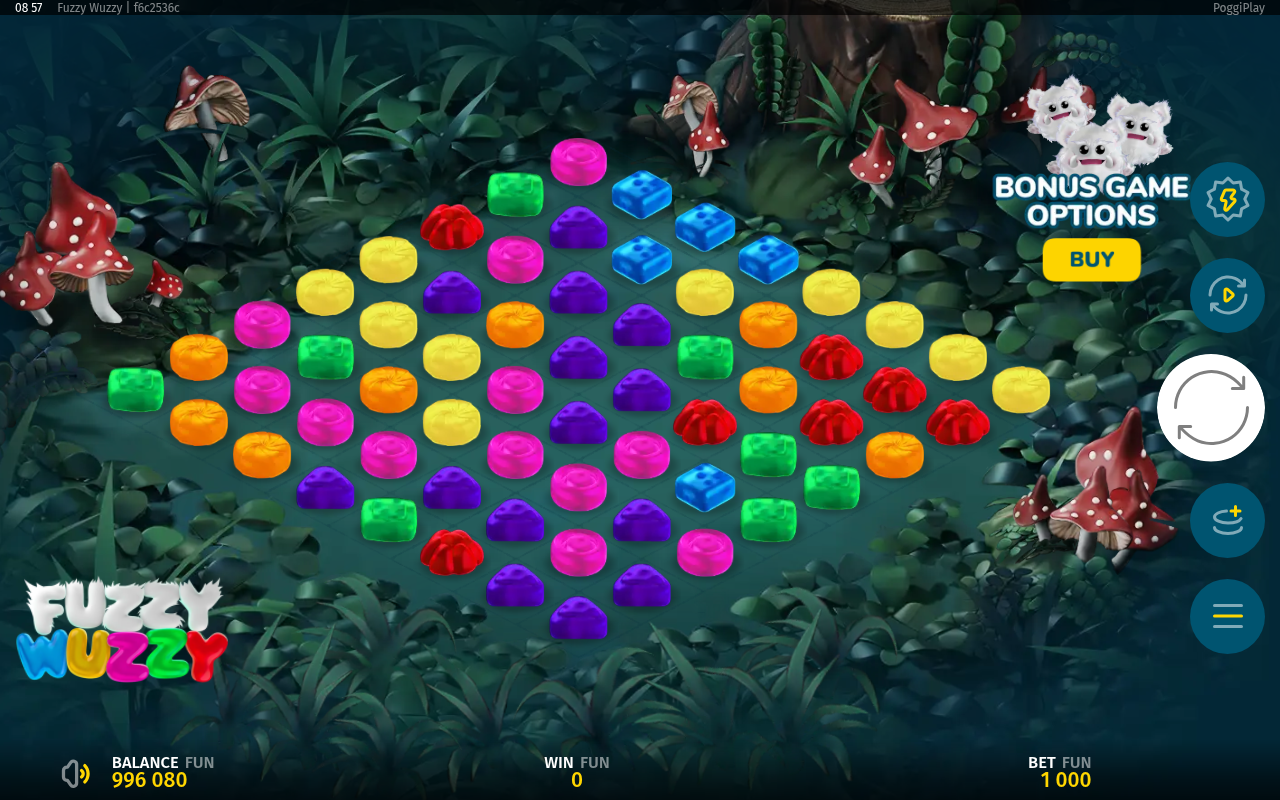
There’s no reel setup to describe here, and that’s the first thing to get your head around. The board is a diamond rather than a rectangle, widest across the middle and narrowing at the top and bottom. It’s the middle where the big groups have room to breathe. Winning symbols sit in connected blocks of nine or more.
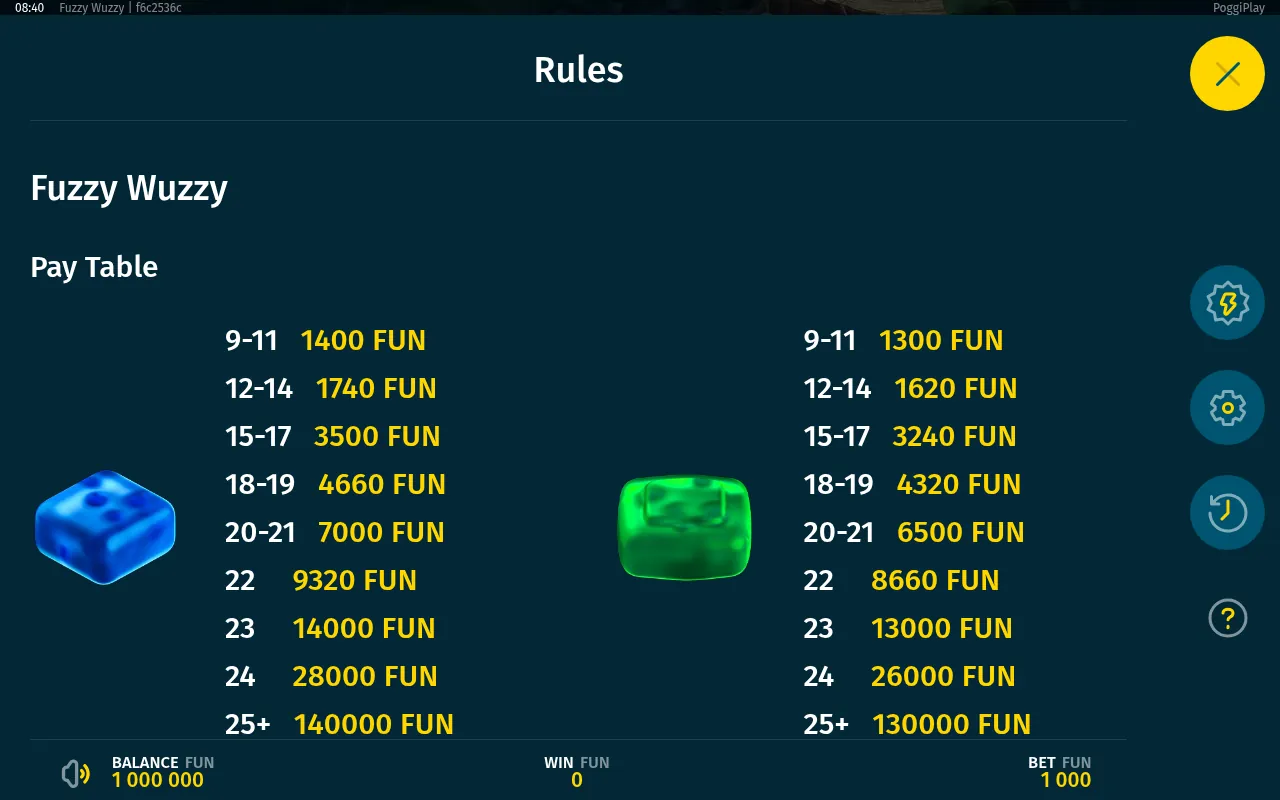
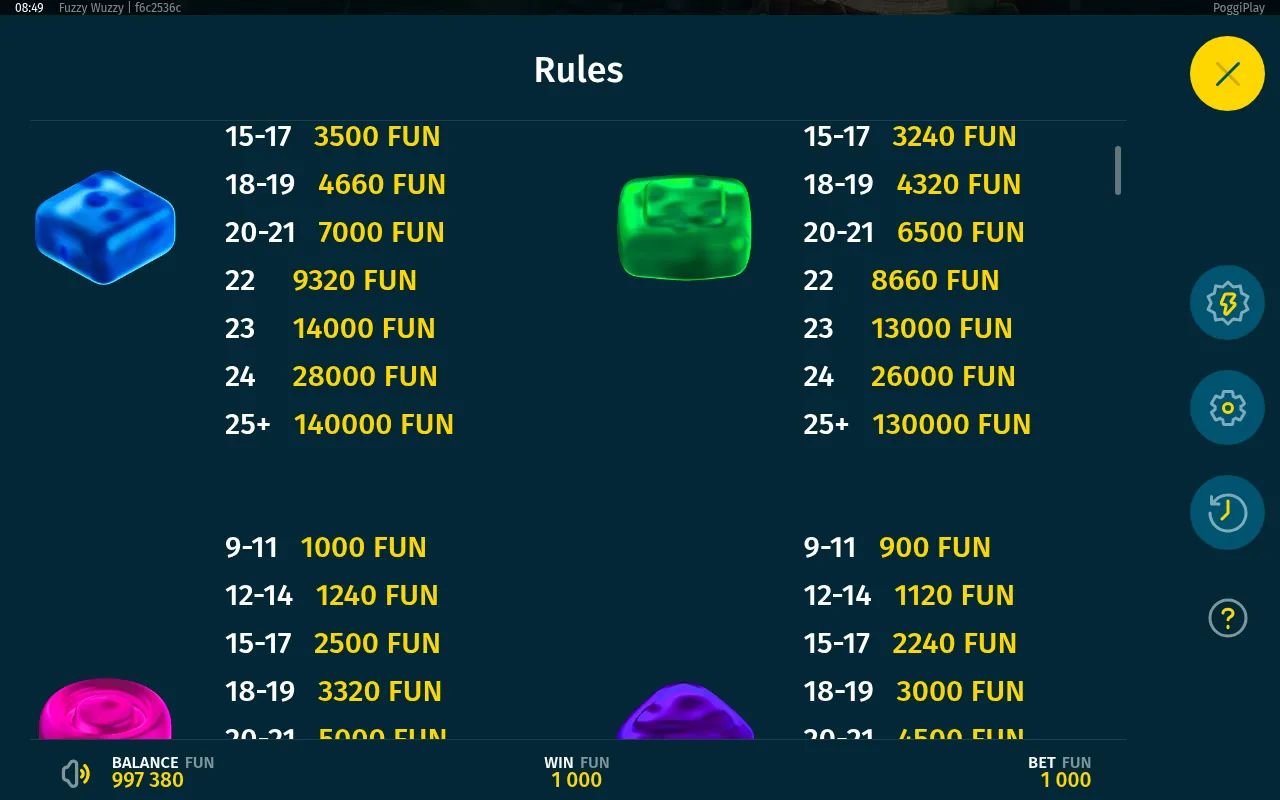
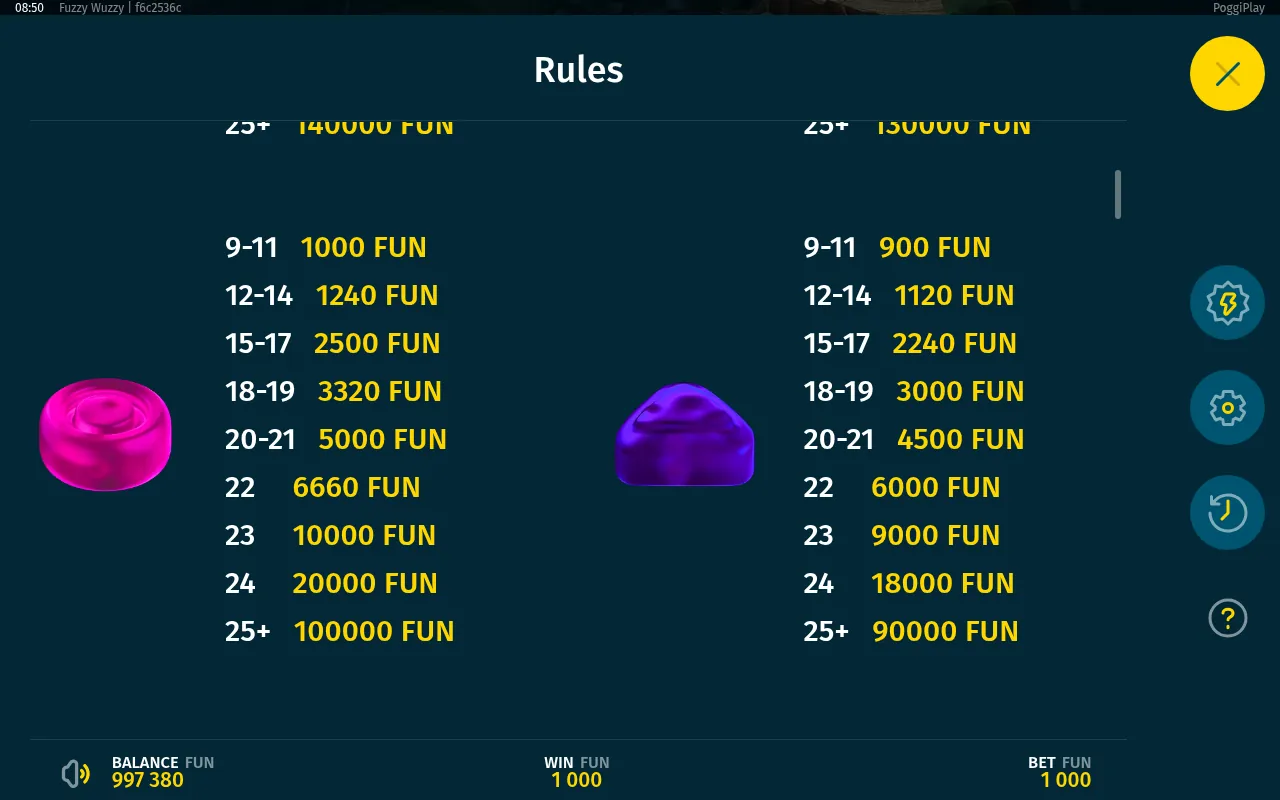
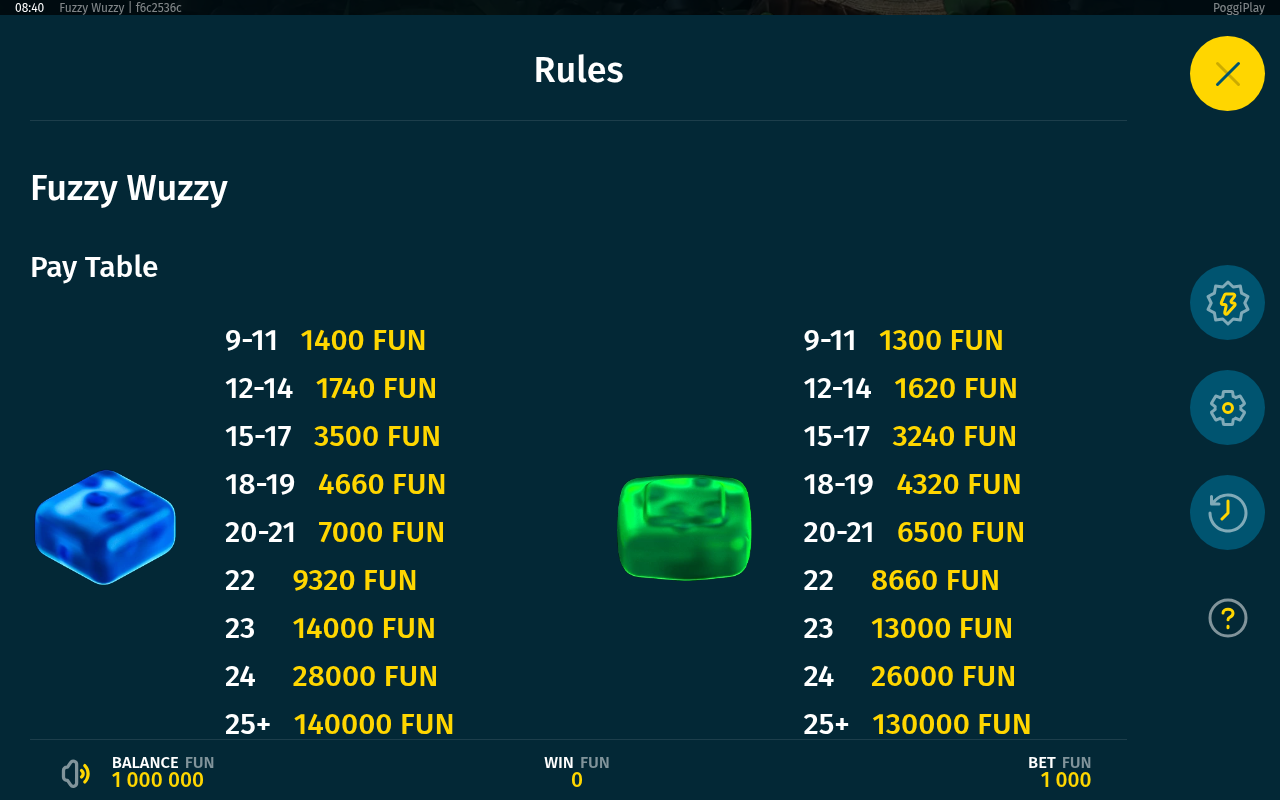
Four symbols carry all the paying weight: a blue block, a green block, a pink blob and a purple blob. There’s no wild and no scatter among them, so nothing intervenes between you and the raw cluster maths. Every symbol pays on the same nine cluster-size bands, from nine-symbol groups at the bottom to 25 or more at the top, and every value below is a multiple of the total bet.
- 25 or more symbols – Blue block 140x, Green block 130x, Pink blob 100x, Purple blob 90x
- 24 symbols – Blue block 28x, Green block 26x, Pink blob 20x, Purple blob 18x
- 23 symbols – Blue block 14x, Green block 13x, Pink blob 10x, Purple blob 9x
- 22 symbols – Blue block 9.32x, Green block 8.66x, Pink blob 6.66x, Purple blob 6x
- 20 to 21 symbols – Blue block 7x, Green block 6.5x, Pink blob 5x, Purple blob 4.5x
- 18 to 19 symbols – Blue block 4.66x, Green block 4.32x, Pink blob 3.32x, Purple blob 3x
- 15 to 17 symbols – Blue block 3.5x, Green block 3.24x, Pink blob 2.5x, Purple blob 2.24x
- 12 to 14 symbols – Blue block 1.74x, Green block 1.62x, Pink blob 1.24x, Purple blob 1.12x
- 9 to 11 symbols – Blue block 1.4x, Green block 1.3x, Pink blob 1x, Purple blob 0.9x
Read the bands top to bottom and one shape stands out: the top band pays several times what the band below it does, for a single extra symbol. Big clusters are what this game pays for. Everything below a 15-symbol group is pocket change.
The gaps between the symbols are small, too. The blue block tops out at 140x and the purple blob at 90x, so the worst symbol in the game still pays nearly two-thirds of the best one. On a paytable where every symbol shares the same bands, the choice of which group to chase matters less than the size of the group itself.
What the Base Game Actually Does
Beyond cluster pays, the base game runs on presentation and small touches. When a group matches, the symbols involved light up with a sparkle effect before clearing. The board’s symbols change colour and configuration between spins. It’s glossy, cartoonish 3D throughout, and the woodland dressing stays in frame on every spin.
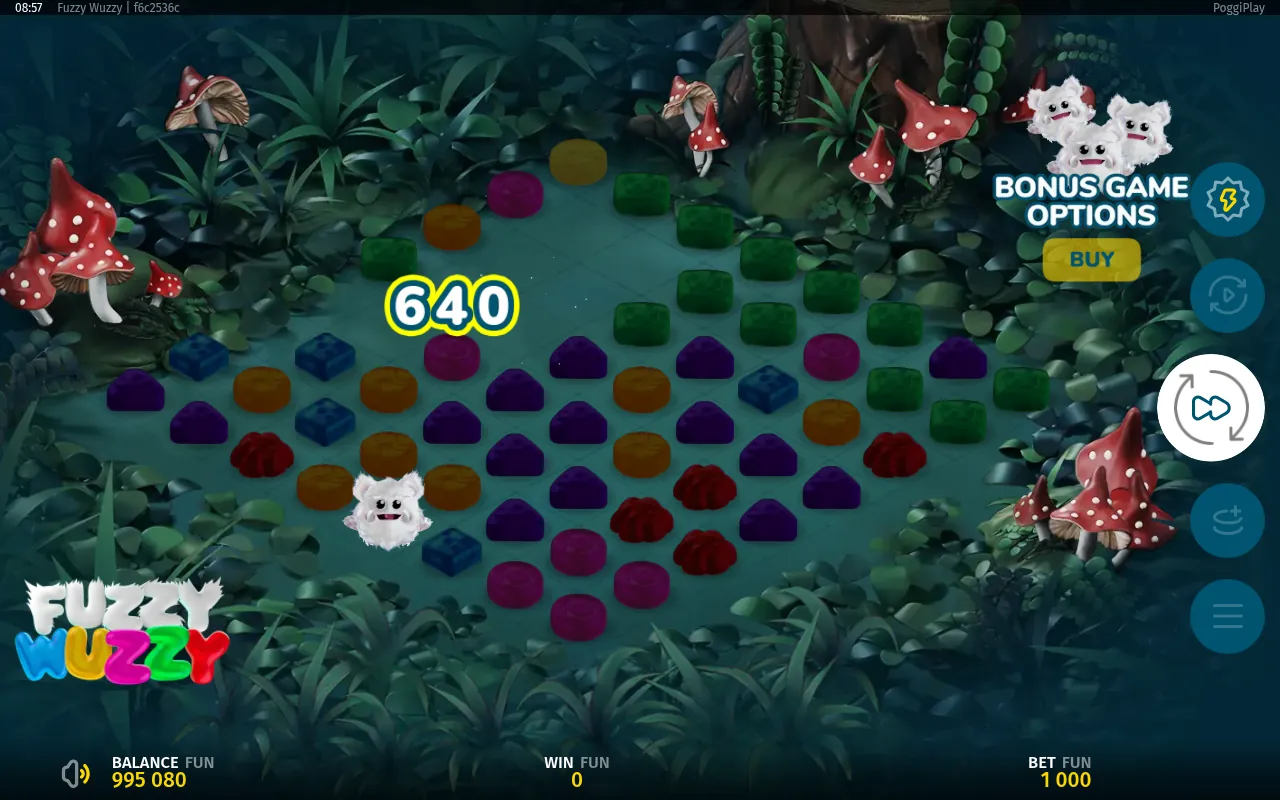
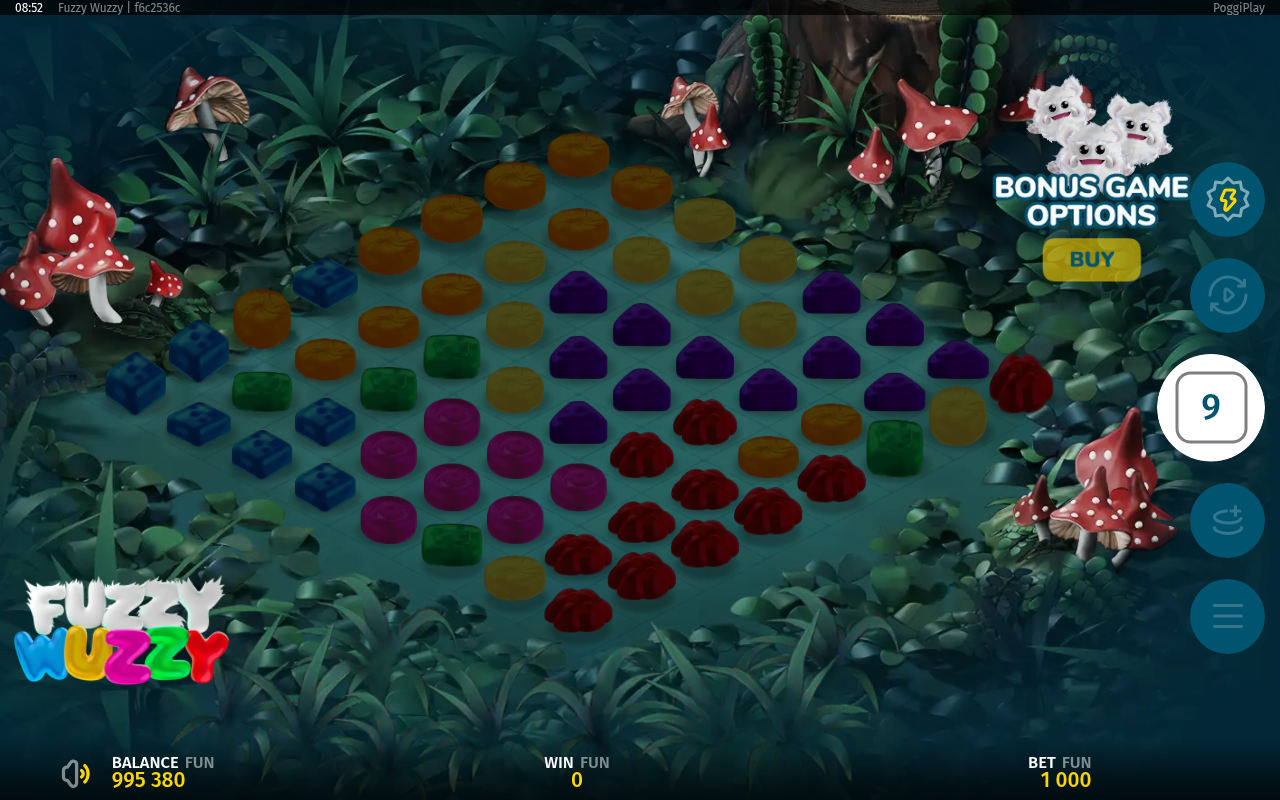
A white yeti-like figure appears on the board alongside wins, arms raised, doing the celebration work that a jingle does elsewhere. A counter also sits on the right side of the screen tracking progress during play. Neither touches the maths; both give the base game something to look at while the bigger clusters assemble.
The RTP of 94.59% is the total expected return, and it’s a modest figure for a game with this much volatility attached. High volatility means the pays that do arrive skew large. This is a game built around the 25-plus cluster, not around steady small returns.
Cluster Pays on a Diamond
The one mechanic that needs spelling out is the cluster rule itself. Symbols pay as connected groups of nine or more anywhere on the diamond, so the wide middle rows are where the value concentrates. A 24-symbol group is already a serious hit, and the 25-symbol threshold is the cliff edge the whole paytable is built around.
A spin plays out in a simple loop. The board settles, any connected group of nine or more same-symbol blocks lights up with a sparkle effect, and the win lands as a single figure over the cleared symbols with a match explosion. Only the matching symbols are highlighted, so it’s always clear which group paid.
Because the board narrows towards the top and bottom, the geometry does quiet work in the background. Groups that straddle the middle have the most room to grow, and a symbol sitting on the diamond’s edge needs help from its neighbours to reach the paying bands. Where the blocks land matters as much as how many of them land.
Bonus Game Options
Under a Bonus Game Options label, the game carries a BUY button that sits below the board in the base game. It’s the one route past the waiting, and it’s honest about what it is: a purchase point for the game’s bonus content.
That’s also where the feature list runs out. Fuzzy Wuzzy has no free spins round, no scatter trigger, no wild, no feature ladder. What’s on the board – the cluster pays, the celebration yeti and the buy button – is the entire game.
For a high-volatility release in a market where rivals stack modifiers, retriggers and collection meters into the base game, that’s a spartan hand to play. It puts all the weight on the cluster maths to hold a session together, and on the woodland charm to keep the quiet stretches pleasant.
Our Honest Verdict
Overall Rating: 6/10
Playing Fuzzy Wuzzy means long stretches of watching pom-poms tumble while nothing much happens, then the rare moment a group swells past 20 symbols and the paytable finally wakes up. That single pursuit, the giant cluster, is the reason anyone would pick it, and the forest is pleasant company while you wait for one.
The paytable is the best thing here: the jump from 24 symbols to 25 is steep enough that every spin carries a real target, and with only four symbols you always know what you’re building towards. The weakness is everything else. There’s no wild, no scatter, no feature round, and 94.59% is a thin return on a game this volatile, so the dead air between hits is both frequent and expensive.
This is one for cluster-pay players who value a sharp, legible paytable over bells and whistles, and who find charm enough in a well-dressed forest. If you need free spins and things to unlock between the big moments, the toadstools will only hold you so long.
Fuzzy Wuzzy FAQs
-
How do you win in Fuzzy Wuzzy?
Symbols pay as connected groups of nine or more anywhere on the diamond-shaped board. The bigger the group, the more it pays, with the top band starting at 25 symbols – a 25-plus group of blue blocks pays 140x the total bet. -
Does Fuzzy Wuzzy have free spins?
No, there’s no free spins round, no scatter symbol and no wild. The cluster pays, the bonus buy button and the presentation are the whole game. -
What is the RTP of Fuzzy Wuzzy?
The RTP is 94.59%, which is the total expected return of the game. It’s a modest figure for a high-volatility release, so the long-term return is on the weak side. -
Is Fuzzy Wuzzy high volatility?
Yes, Fuzzy Wuzzy is a high volatility slot. Wins skew towards larger cluster hits rather than frequent small returns, so bankroll swings are part of the deal. -
What is the grid size of Fuzzy Wuzzy?
Fuzzy Wuzzy doesn’t use a rectangular grid at all. Symbols land on an irregular diamond-shaped cluster board, and matching groups of nine or more symbols pay as clusters. -
What is the minimum and maximum bet on Fuzzy Wuzzy?
Bets run from 50 at the low end up to 100,000 at the top, so the range covers cautious players and high rollers alike. -
Can you buy the bonus on Fuzzy Wuzzy?
Yes, there’s a BUY button under the Bonus Game Options label in the base game, which opens a purchase route into the game’s bonus content. -
When is Fuzzy Wuzzy released?
Fuzzy Wuzzy’s release date is 2 March 2024. -
Who makes Fuzzy Wuzzy?
Fuzzy Wuzzy is made by PoggiPlay, the studio also behind Fortune Rico. -
What is the maximum win on Fuzzy Wuzzy?
The maximum win is 5,000x your bet. It’s a hard cap on the game, and reaching it would mean landing a top-tier cluster outcome on a high volatility model.