












Paco And The Popping Peppers Slot Review
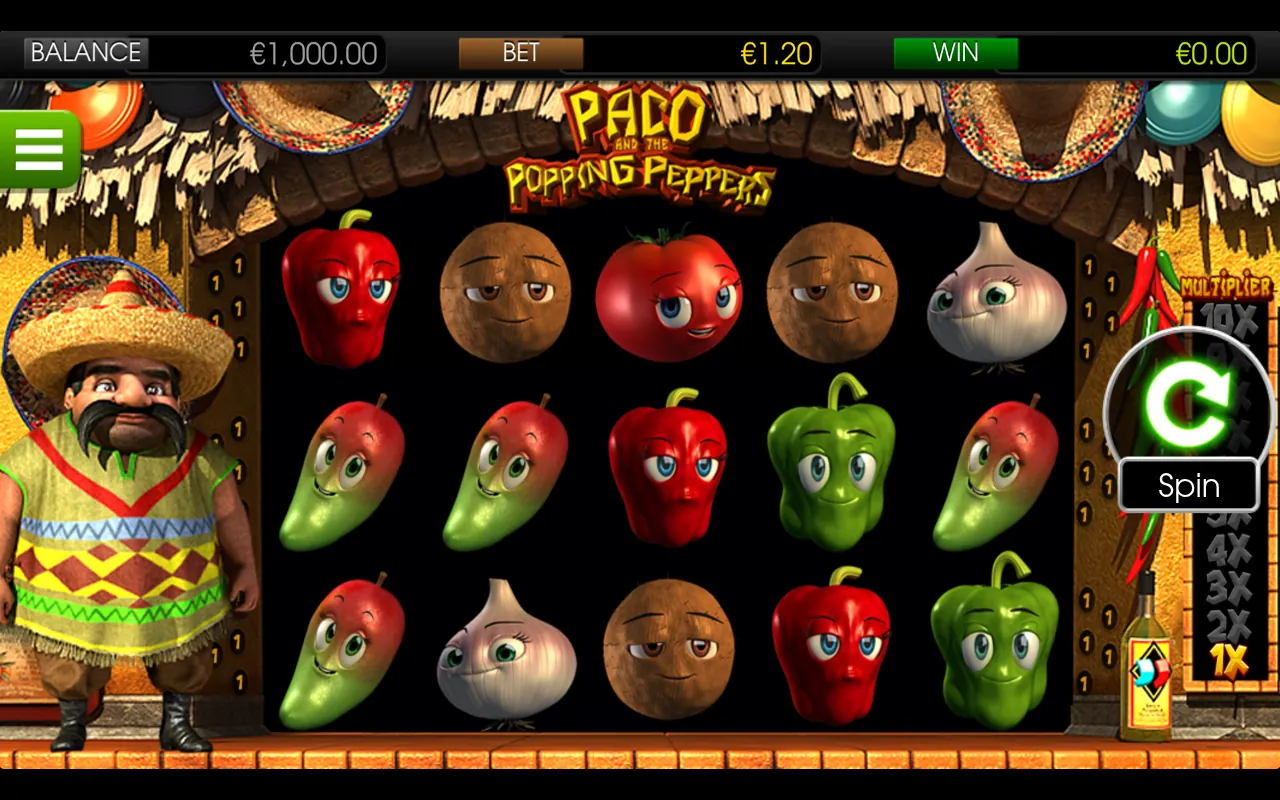
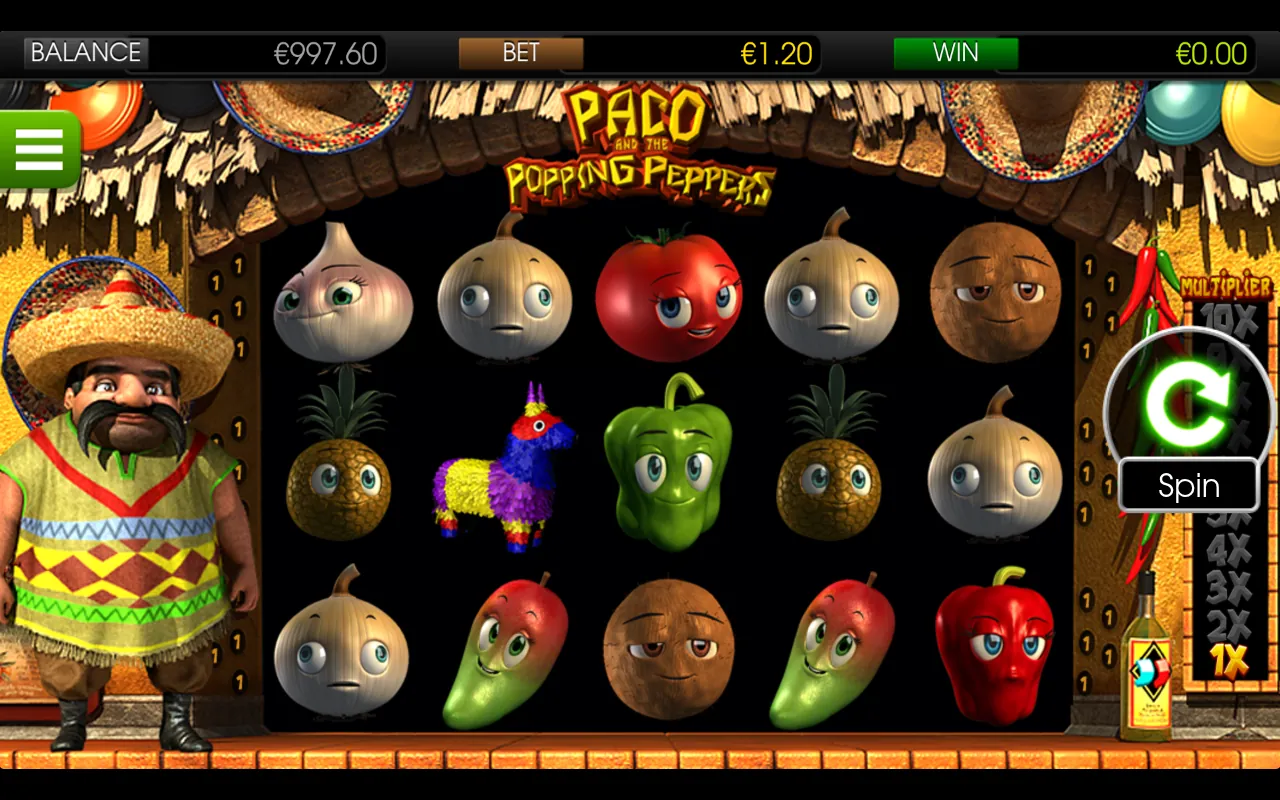
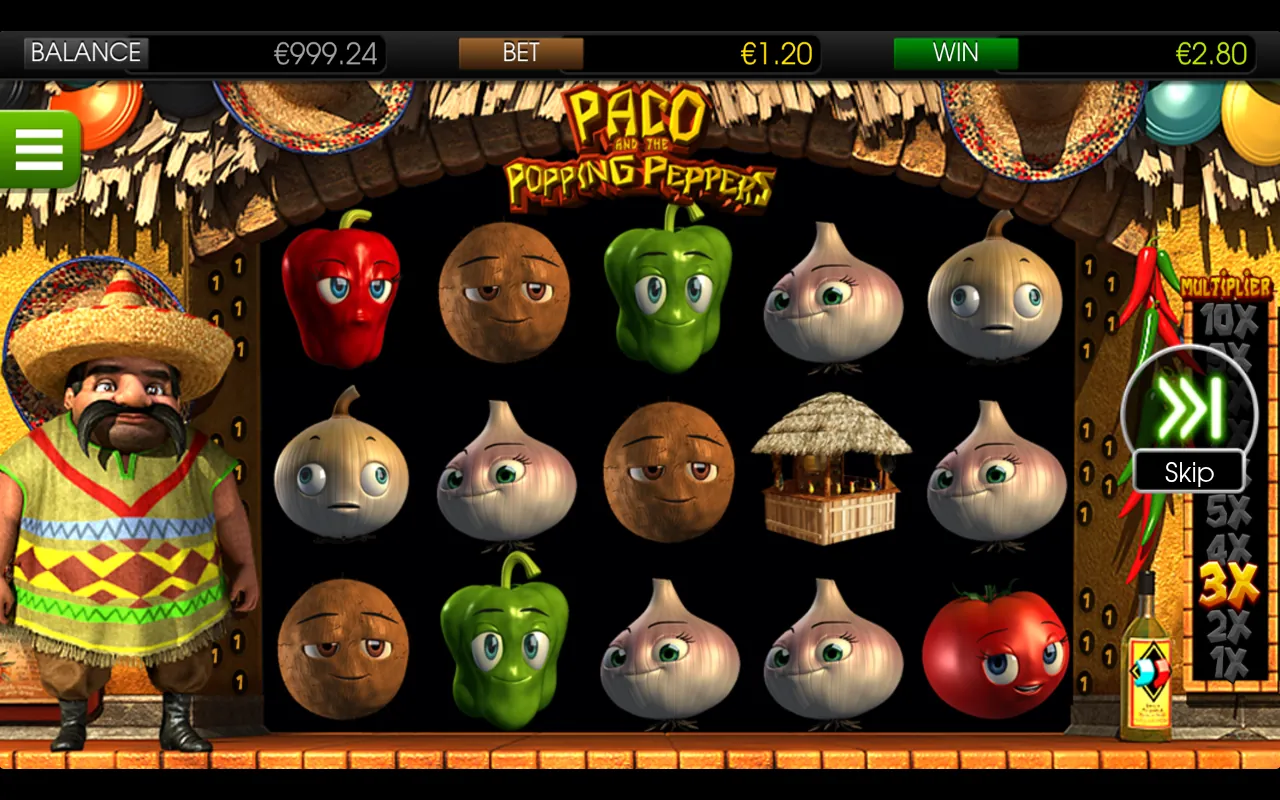
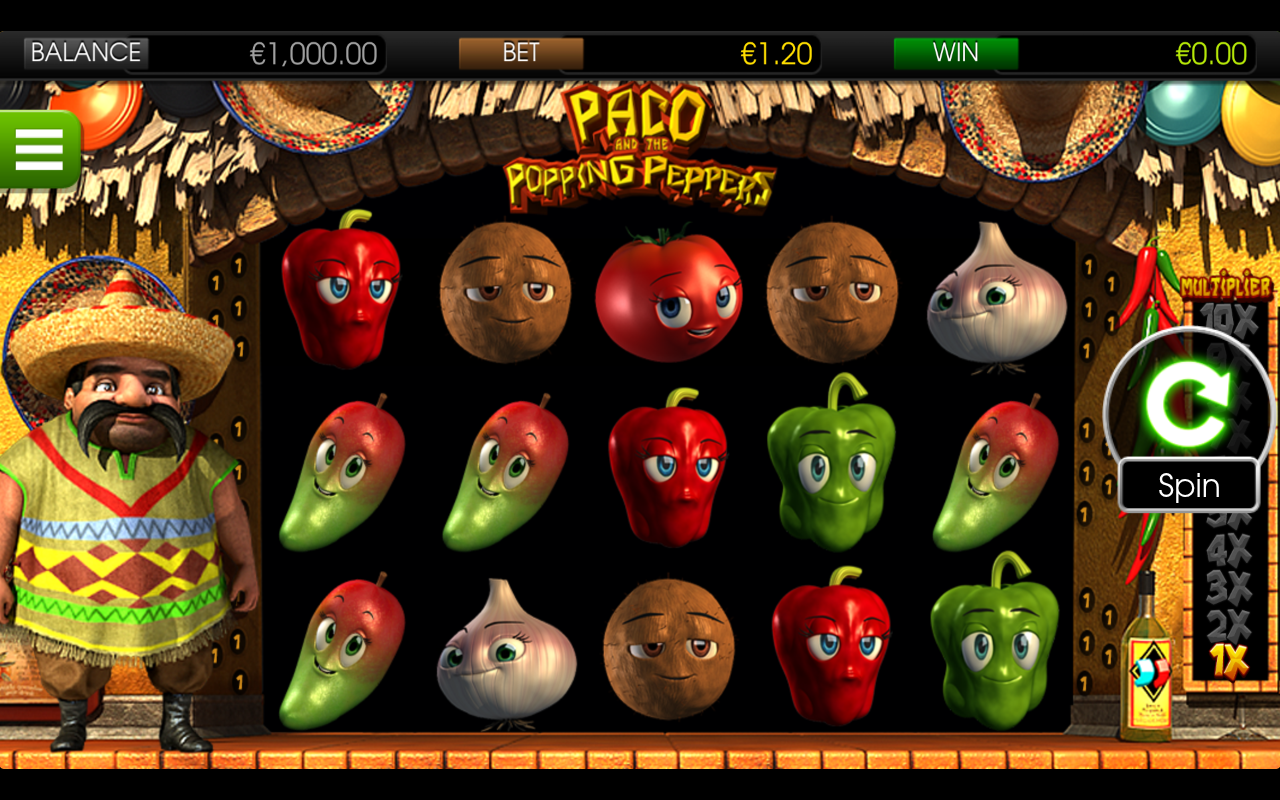
A thatched cantina front, sombreros pegged to the reel frame, strings of chillies drying at the side and Paco himself beaming in from the left in a striped poncho. Strip nothing away: this stall is the game. What makes it more than a market scene is that the popping reel isn’t decoration here – every single win bursts, the board refills, and the next combination pays more than the last, so a modest line win can turn into a five-step climb without the spin ever ending.
It runs on a 5×3 grid with 30 paylines, at an RTP of 94.29%, which sits below the modern norm. Betsoft were among the first studios to build a whole game around dropping symbols rather than bolting them on, and the family line runs through Monster Pop, SugarPop 2 Double Dipped and Fruit Bat Crazy. The chillies hang there regardless.
How the Base Game Pays
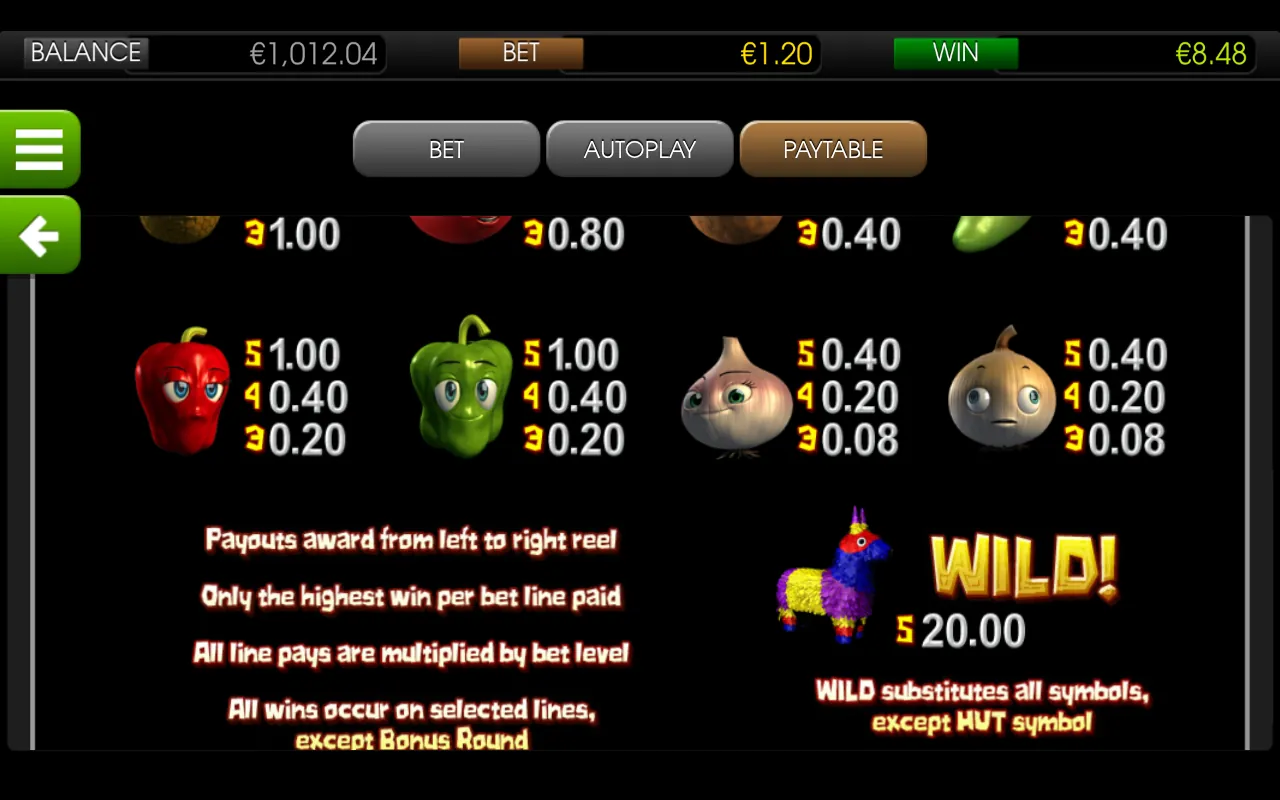
Wins pay left to right across the 30 selected lines, which are numbered one to thirty on the paytable, and only the highest combination on each line counts. All line pays scale with the bet level. The piñata wild substitutes for every symbol except the HUT, and it’s also the richest symbol on the board at five of a kind.
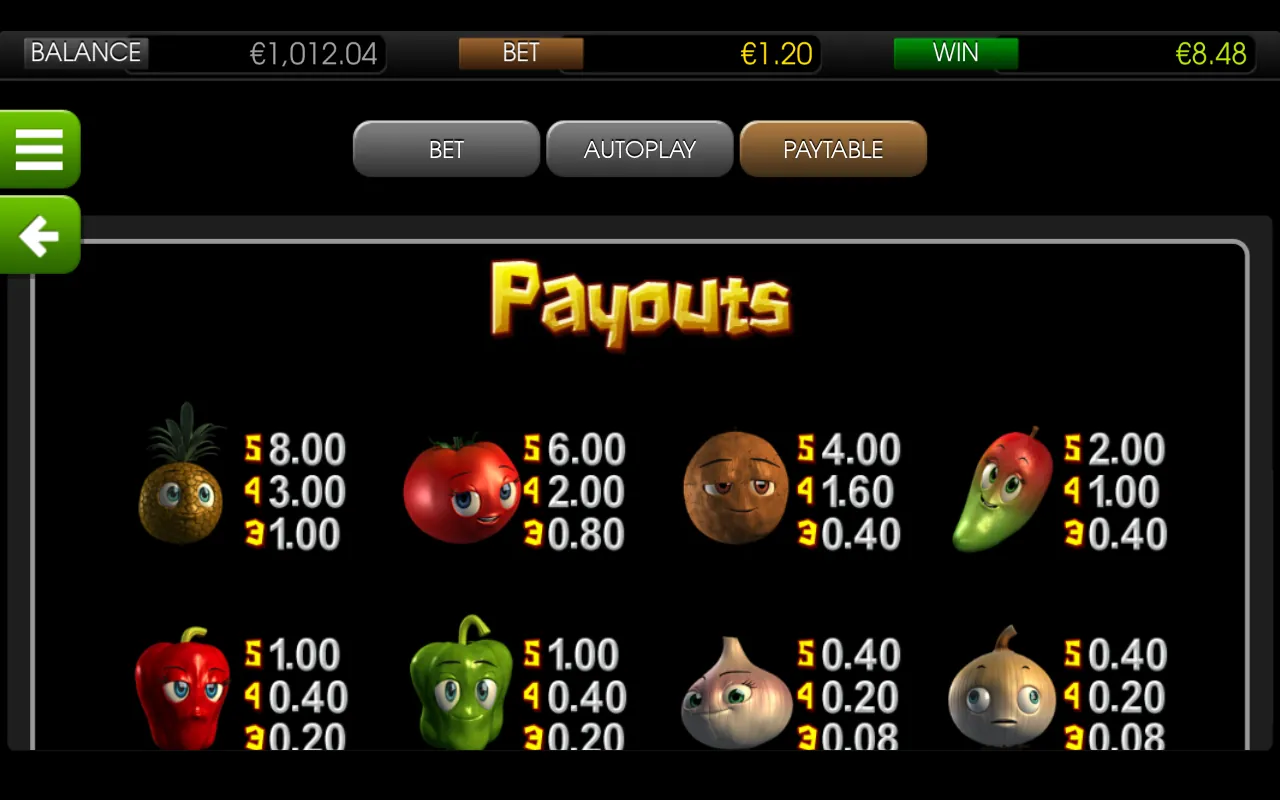
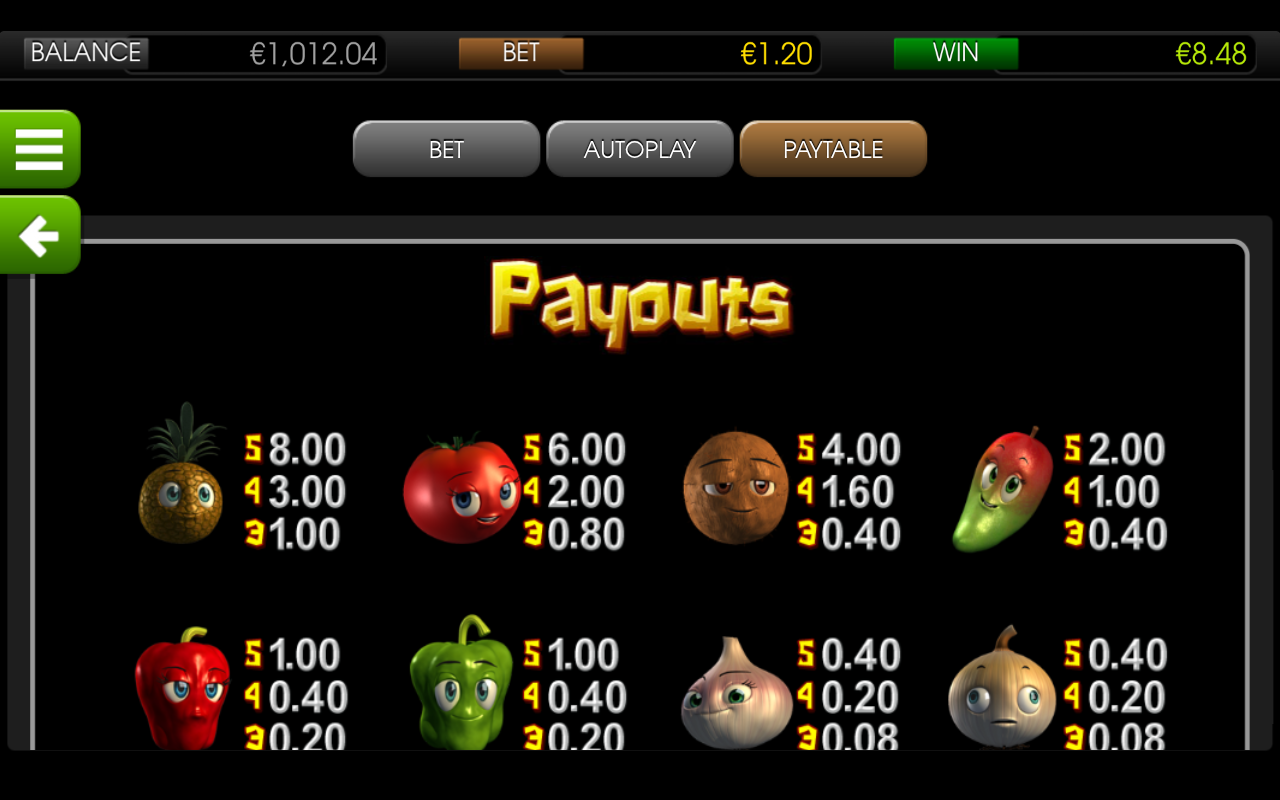
Pays are set at the values below, shown as multiples of the total bet:
- Piñata (wild) – five pays 16.6667x the total bet
- Pineapple – three pays 0.8333x, four 2.5x, five 6.6667x
- Tomato – three pays 0.6667x, four 1.6667x, five 5x
- Brown potato – three pays 0.3333x, four 1.3333x, five 3.3333x
- Green chili – three pays 0.3333x, four 0.8333x, five 1.6667x
- Red or green pepper – three pays 0.1667x, four 0.3333x, five 0.8333x
- Garlic or onion – three pays 0.0667x, four 0.1667x, five 0.3333x
Two symbols share each of the bottom three tiers, which is how a 30-line game keeps the low end of the board busy. Nothing here pays for two of a kind. The piñata only shows a five-of-a-kind value, so a wild landing as part of a shorter combination is working as a substitute, not as a payer in its own right.
Line wins are the floor of the game; the popping system stacked on top is what turns a modest hit into something more. A five-pineapple line at 6.6667x is the best the paytable offers on its own, and everything beyond that comes from chains rather than the board’s face values.
The Pop Multiplier
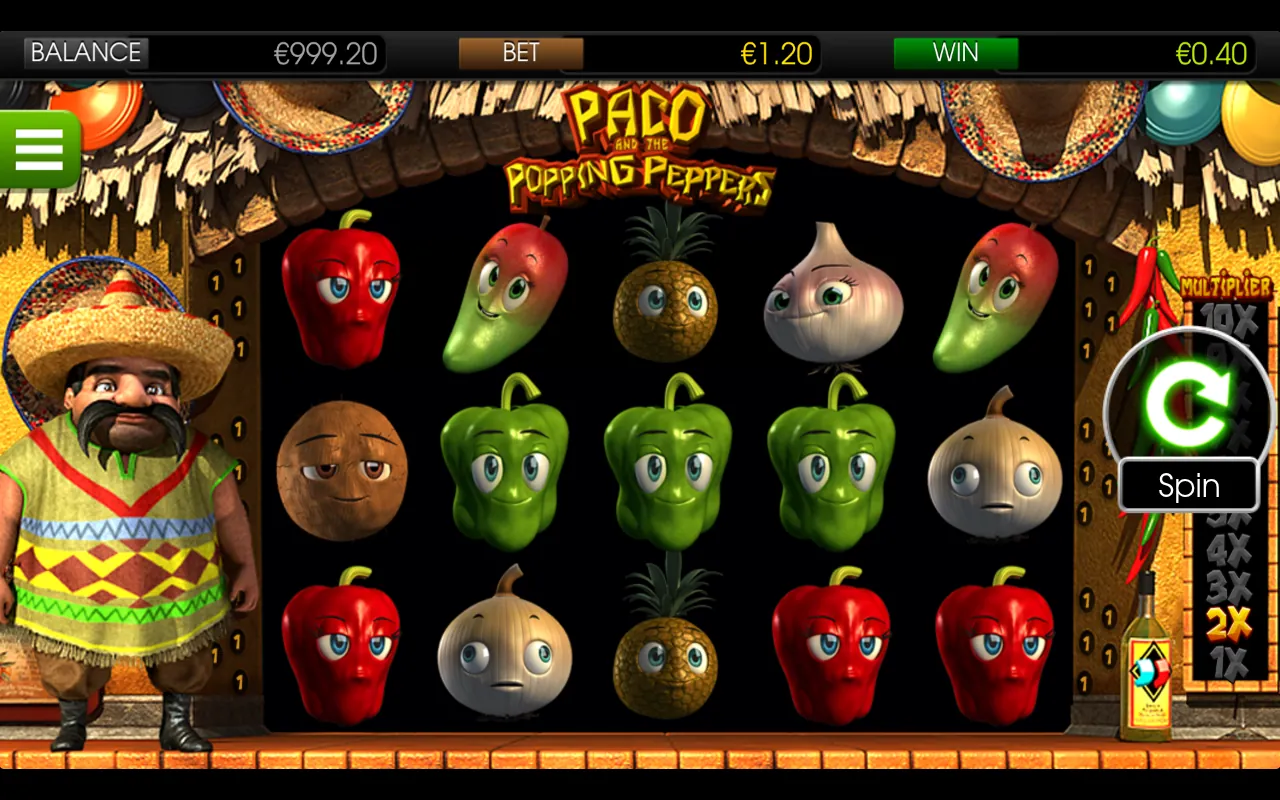
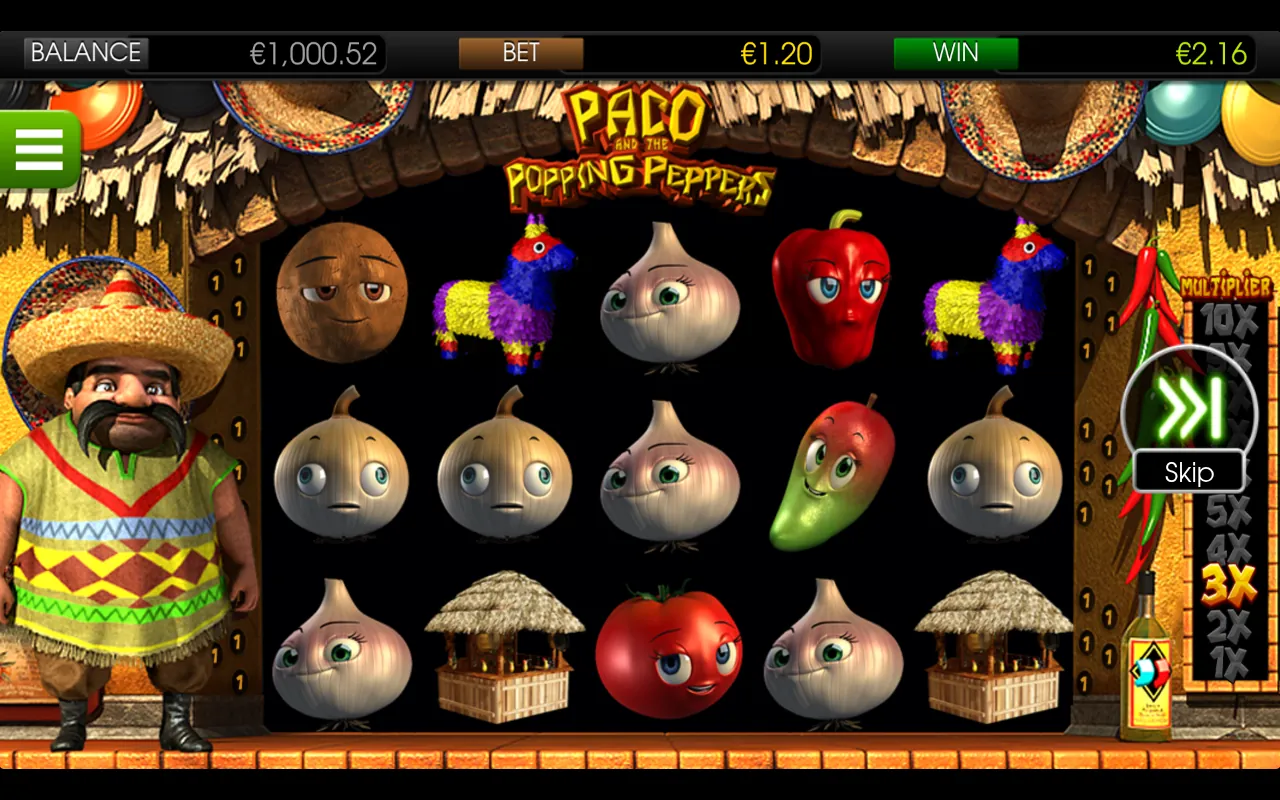
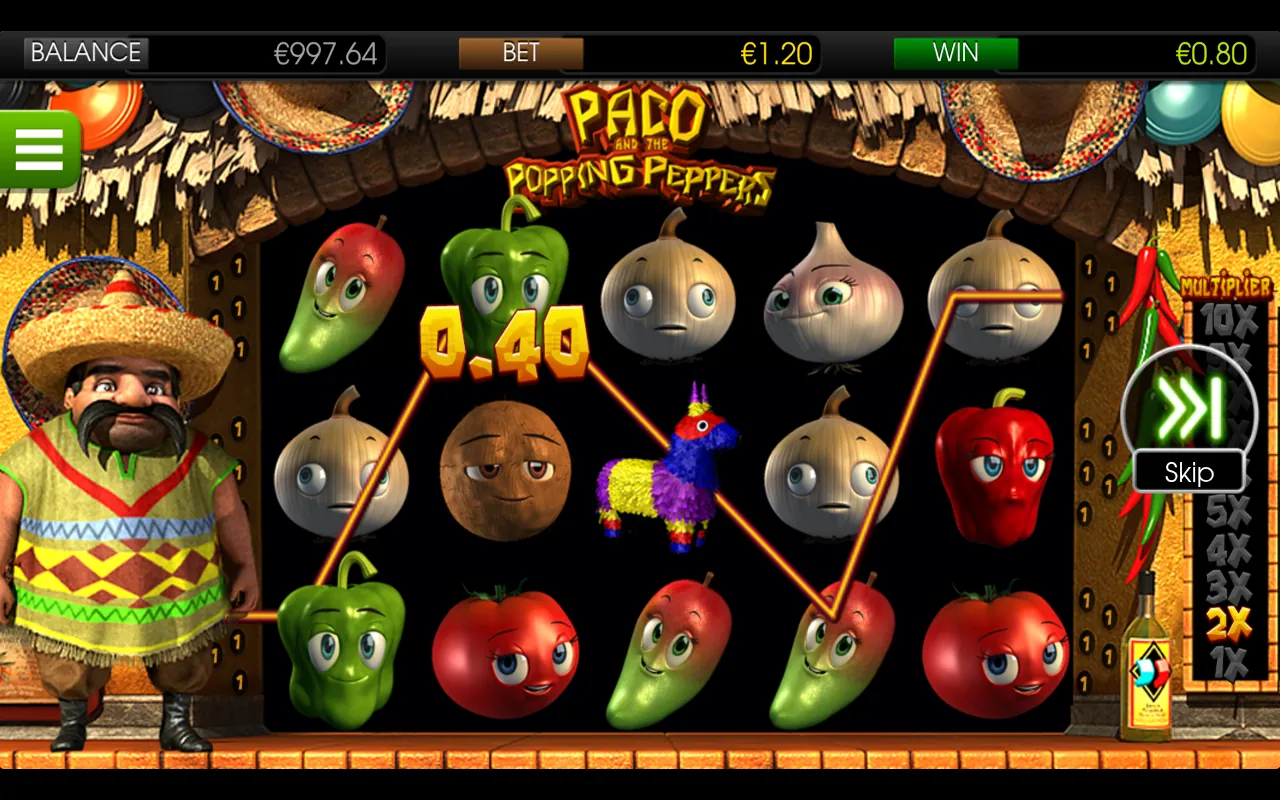
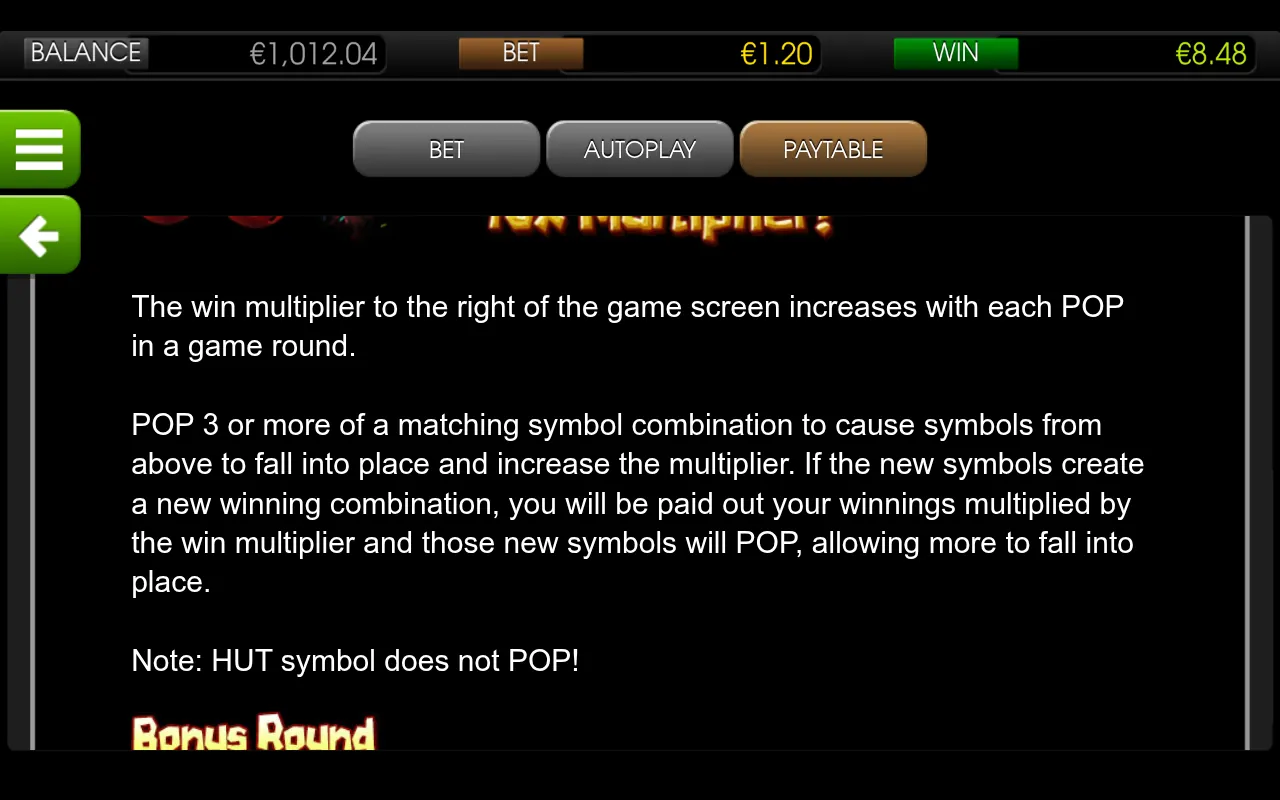
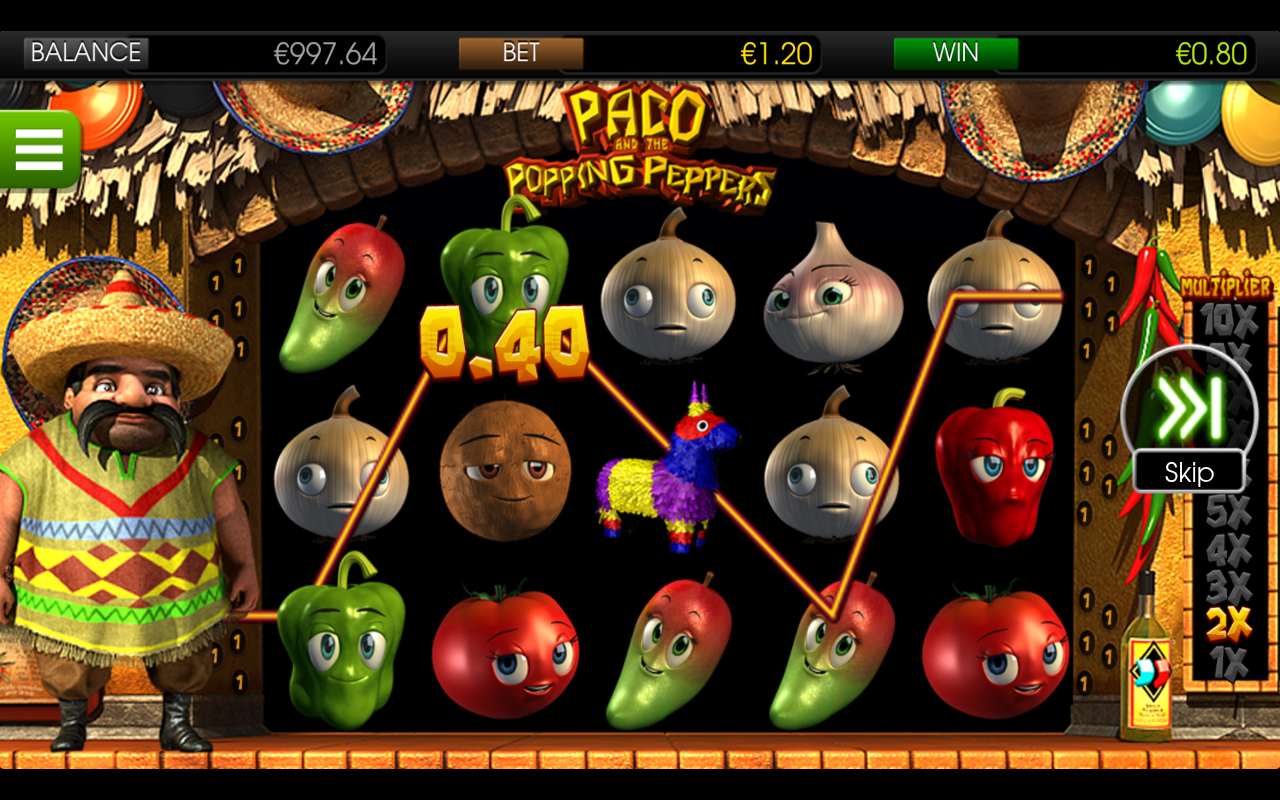
This is the engine of the game. When three or more matching symbols line up, they POP: the winning symbols vanish and symbols from above fall into the gaps. Each POP within the same round increases a win multiplier displayed beside the reels.
A chain works like this. The initial win pays at 1x and the winning symbols pop. The symbols that fall in are then checked against the paytable, and a new winning combination pays at the next multiplier step and pops in turn. The chain keeps going for as long as each fall creates another win.
The multiplier climbs through these steps, in order:
- 1x – the triggering win
- 2x – first follow-up combination
- 3x – second follow-up
- 4x – third follow-up
- 5x – fourth follow-up
- 10x – the top of the scale
One exclusion matters: the HUT symbol never pops, so it can’t be cleared away by a chain and it won’t drop out of the way for anything above it. Every other symbol on the board is fair game, wilds included. A piñata that forms part of a winning line pops like anything else, then falls back in fresh from above with the rest.
The jump from 5x to 10x is the interesting part of the scale. Five follow-up wins in a single spin is a long chain, and the doubling at the end means the difference between a five-POP chain and a six-POP chain is twice the payout on that final combination.
Because the multiplier applies to the win it’s attached to rather than to the round as a whole, a long chain pays each step at its own rate. The triggering combination pays at 1x, the follow-ups pay at 2x, 3x and upward, and only a combination formed at the top of the scale collects the full 10x. That top step is the game’s ceiling, and it takes a chain of five successful follow-ups to reach it.
The Higher or Lower Bonus Round
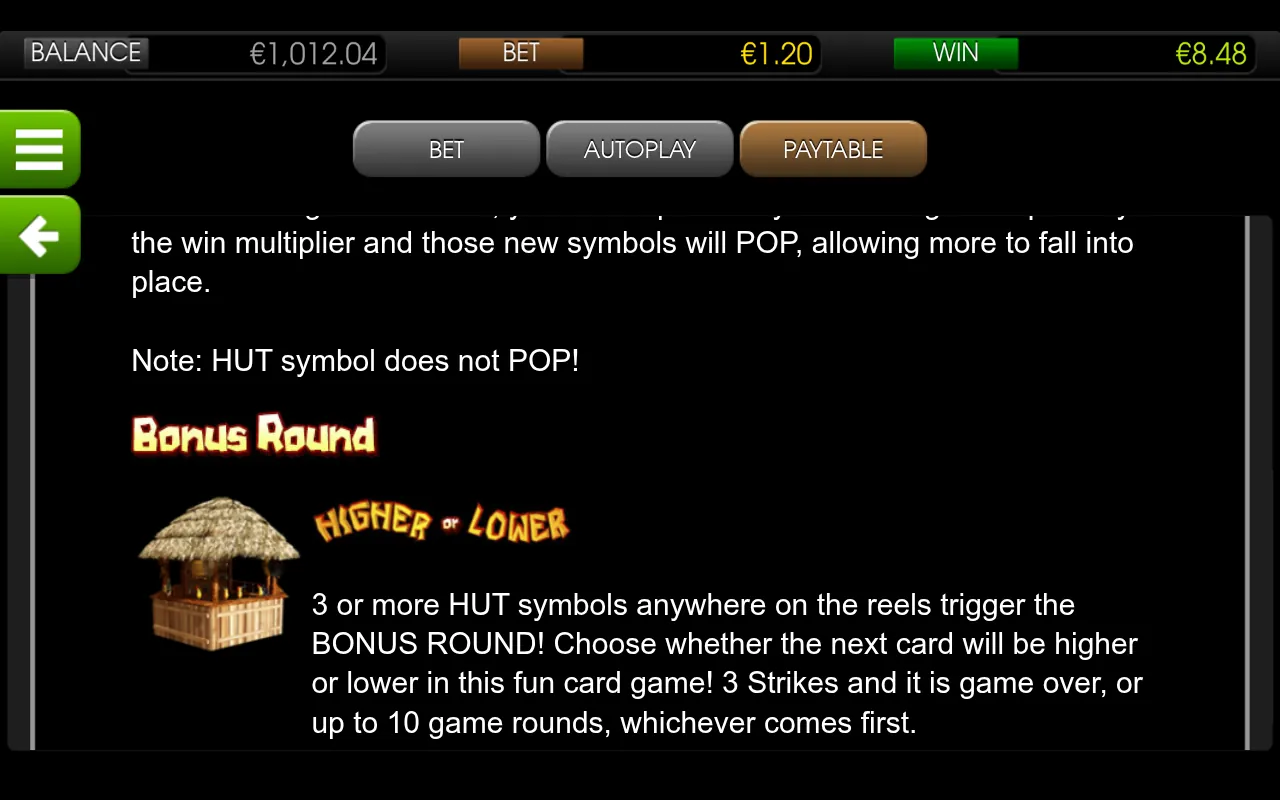
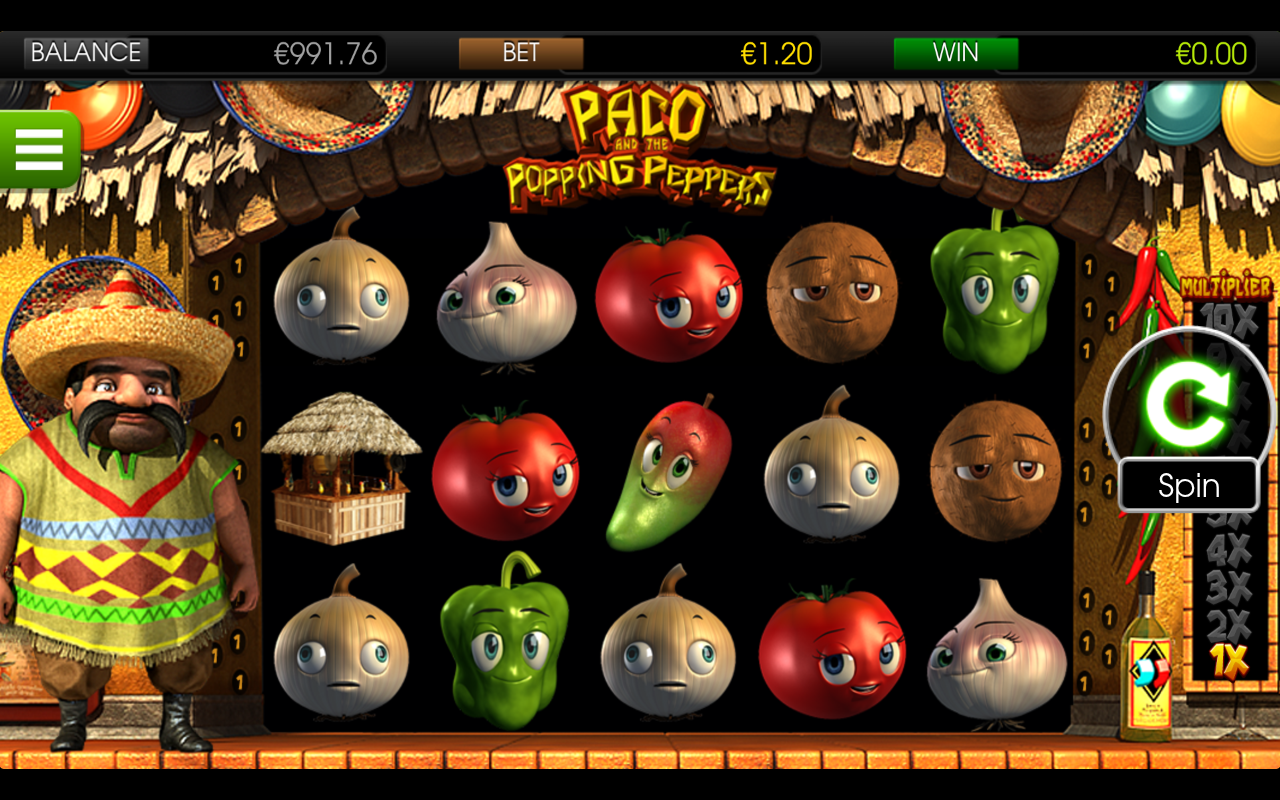
Three or more HUT symbols anywhere on the reels trigger the bonus round, and it’s the one part of the game that doesn’t pay on selected lines. Because HUTs don’t pop, they also can’t be part of a chain, so the scatter and the popping system never interact.
The round itself is a card game. You’re shown a card and call whether the next one will be higher or lower. The rules of the round are short:
- Call the next card higher or lower
- Correct calls keep the round going
- Three wrong calls end it
- Up to ten rounds, whichever limit comes first
A lives counter and a last-card prompt track your position in the run. There’s no skill to it beyond the odds on each card, so the round is a straight push-your-luck sequence: keep calling for another step, or run out of lives on the way to ten. A card near the middle of the deck leaves the call close to a coin flip, while a card at either end makes the next call close to a certainty, and the sensible play is to bank rather than gamble the near-certain ones.
Reaching the tenth round with your three lives intact is the round’s own finish line, and it’s the only way through the bonus that feels like an achievement rather than a payout. The card game sits apart from everything else the game does, a deliberate break from the reels rather than an extension of them.
Our Honest Verdict
Overall Rating: 6.1/10
Playing this one is mostly waiting on the stall to serve you a chain. The base game pays small, but a single spin can keep going and going as symbols burst and the multiplier climbs, and that loop – not the card game, not the artwork – is the reason to sit down at Paco’s stall at all. When a five-step chain hits the top of the scale, it earns its cheer.
The strength is that the multiplier pays every step of a chain at its own rate, so long runs build instead of just ending bigger. The weakness is what’s underneath it: a 94.29% RTP, a thin card bonus that comes down to coin flips, and no win worth chasing beyond what a chain can build.
This is one for players who enjoy the falling-symbol loop for its own sake, cheerful cartoon craft included. Anyone hunting big ceiling potential or a bonus round with depth to it will find both elsewhere in Betsoft’s catalogue. Paco’s market may be old, but the goods are still fresh.
Paco And The Popping Peppers FAQs
-
What is the RTP of Paco And The Popping Peppers?
94.29%. -
How many paylines does Paco And The Popping Peppers have?
30 paylines, with all wins occurring on selected lines except the Bonus Round, which is triggered by HUT symbols rather than line wins. -
What is the grid size of Paco And The Popping Peppers?
A 5×3 grid: five reels across three rows. -
Who makes Paco And The Popping Peppers?
Betsoft. -
When is Paco And The Popping Peppers released?
Paco And The Popping Peppers’ release date is 24 February 2011. -
How does the Pop Multiplier work?
Winning symbols pop and are removed, with symbols falling in from above. Each pop in the same round increases the win multiplier, up to 10x, and any new winning combination formed by the falling symbols is paid at that multiplier and pops again. -
How do you trigger the Higher or Lower bonus round?
Land three or more HUT symbols anywhere on the reels. It’s a card game where you call the next card higher or lower, ending after three strikes or ten rounds, whichever comes first. -
Does the HUT symbol pop in Paco And The Popping Peppers?
No. The HUT symbol never pops, so it can’t be cleared by a chain, and the piñata wild doesn’t substitute for it either. It exists purely to trigger the Bonus Round.