







Runaway Chicken Slot Review
A small white hen waits on the kerb of a suburban road, red comb up, rooftops behind her, and everything this game does serves a single question: does she cross, or do you take the money? Runaway Chicken, from Games Global, is that rare cash-out game where the nine decisions in a round genuinely differ from one another, because a ladder that roughly doubles at every stage turns each pause into its own calculation.
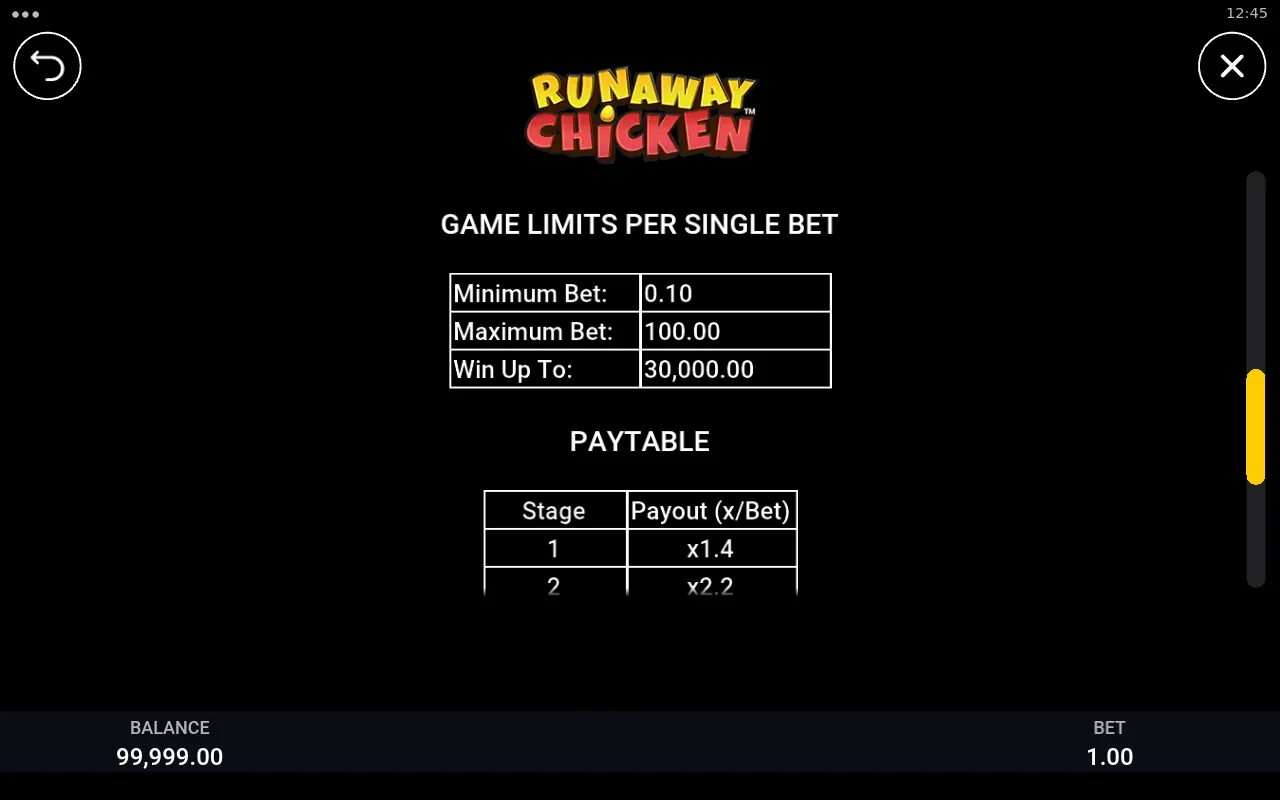
The specs are plain: 96.00% RTP, medium volatility, a hit frequency of 56.1%, stakes from 0.10 to 100, and a top round of 300x your bet. There’s no reel grid here at all, which sets it apart from studio favourites like Thunderstruck II and Immortal Romance, though Mega Moolah players will recognise the ladder logic. Whether one decision can carry a whole game is the question.
Crossing the Road
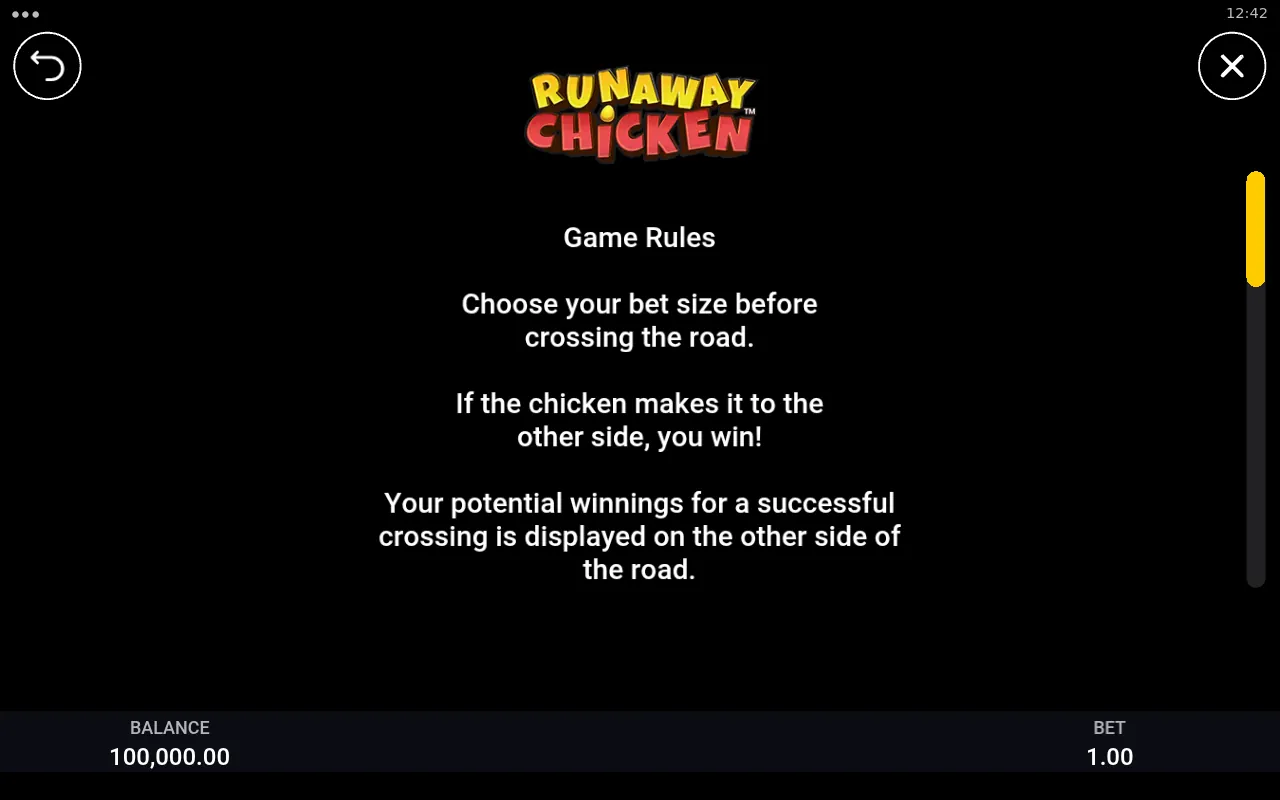
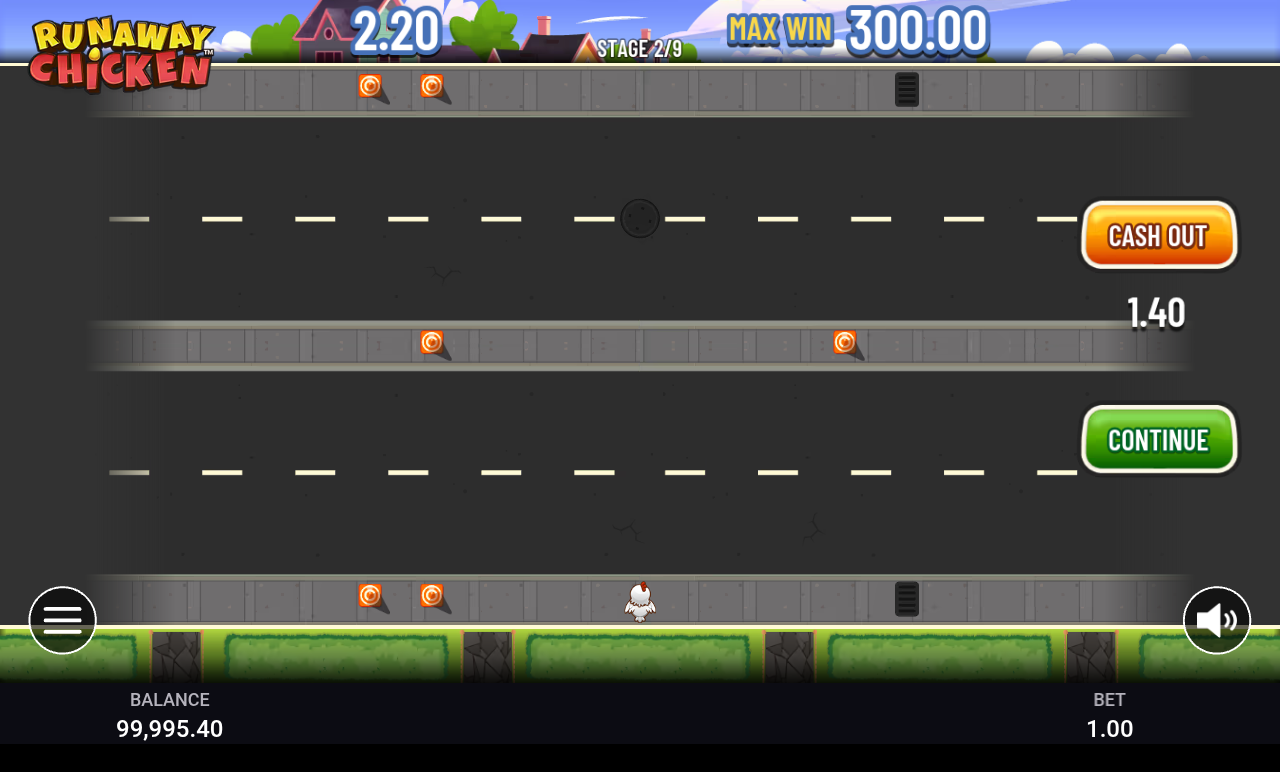
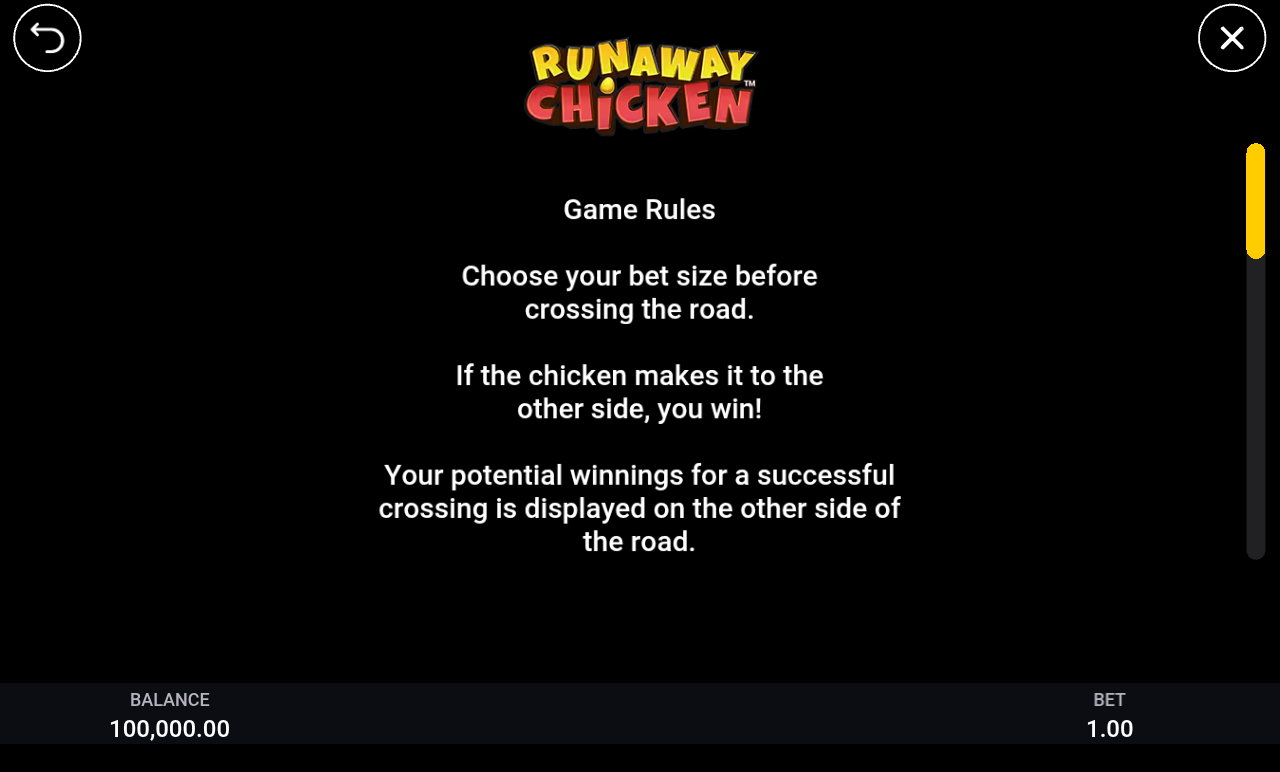
Each round is a single chicken and nine stages of road. You confirm your bet, press play, and she steps off the kerb. If she reaches the far side without touching traffic, the stage is won and the game moves on.
If a car or truck clips her, the round ends on the spot and all potential winnings from that round are lost. There’s no second chance and no partial payout. The next round starts her back at stage one, on the kerb, with a fresh bet.
That’s the entire engine, and it’s a clean one. The presentation is bright, flat, cartoon-arcade art, with the suburban skyline sitting behind the road like it has nothing better to do. The visuals don’t affect the outcome. They’re there to make the crossing legible and to give the crash its small sting.
Each stage starts the chicken at the edge of the road again, so a round is nine separate crossings rather than one long run. Traffic runs across multiple lanes, and a stage is only cleared when she’s fully on the far pavement. The game tracks your position in the round with a stage counter, from one in nine up to the final crossing.
There’s no symbol paytable to learn, because there are no symbols and no matching wins anywhere in the game. Every payout comes off the stage ladder and nothing else. That’s unusual for a Games Global title, and it removes the usual layer of small wins that fill the gaps between features in a reel game.
Cash Out or Continue
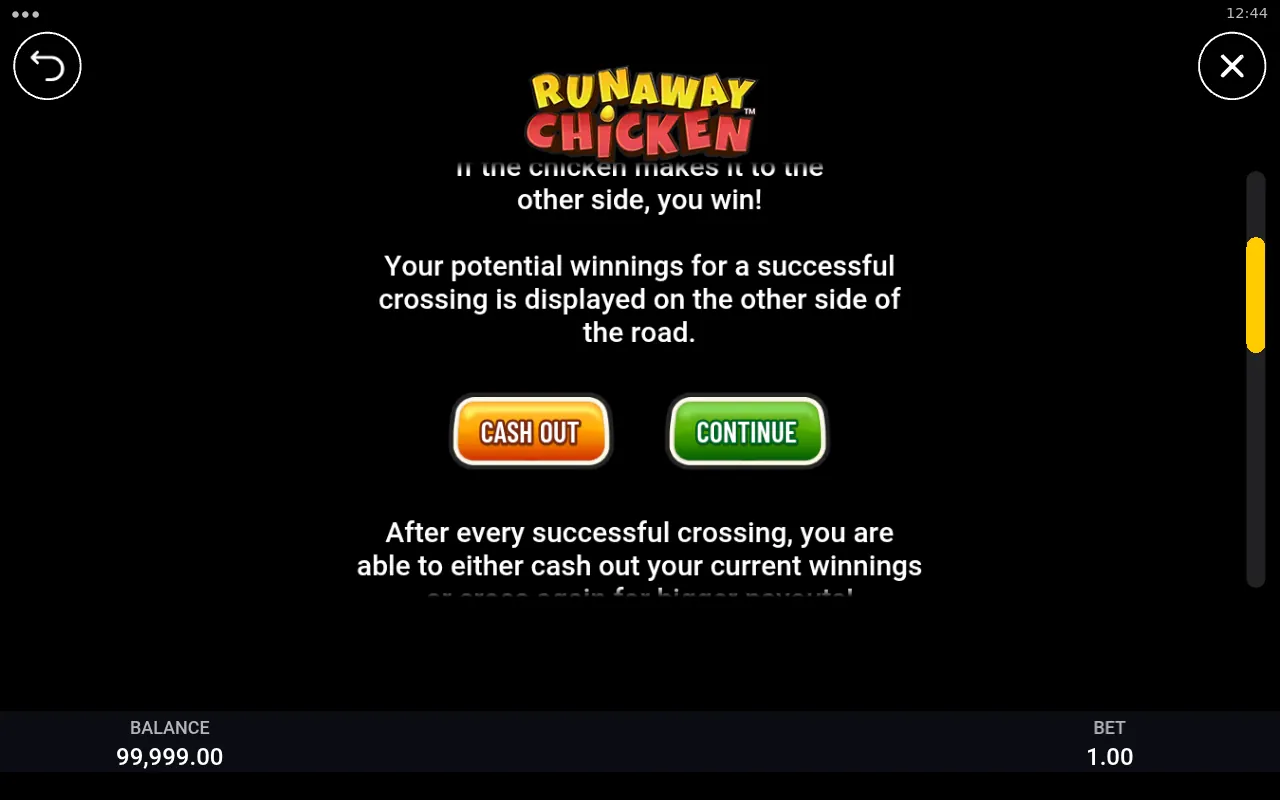
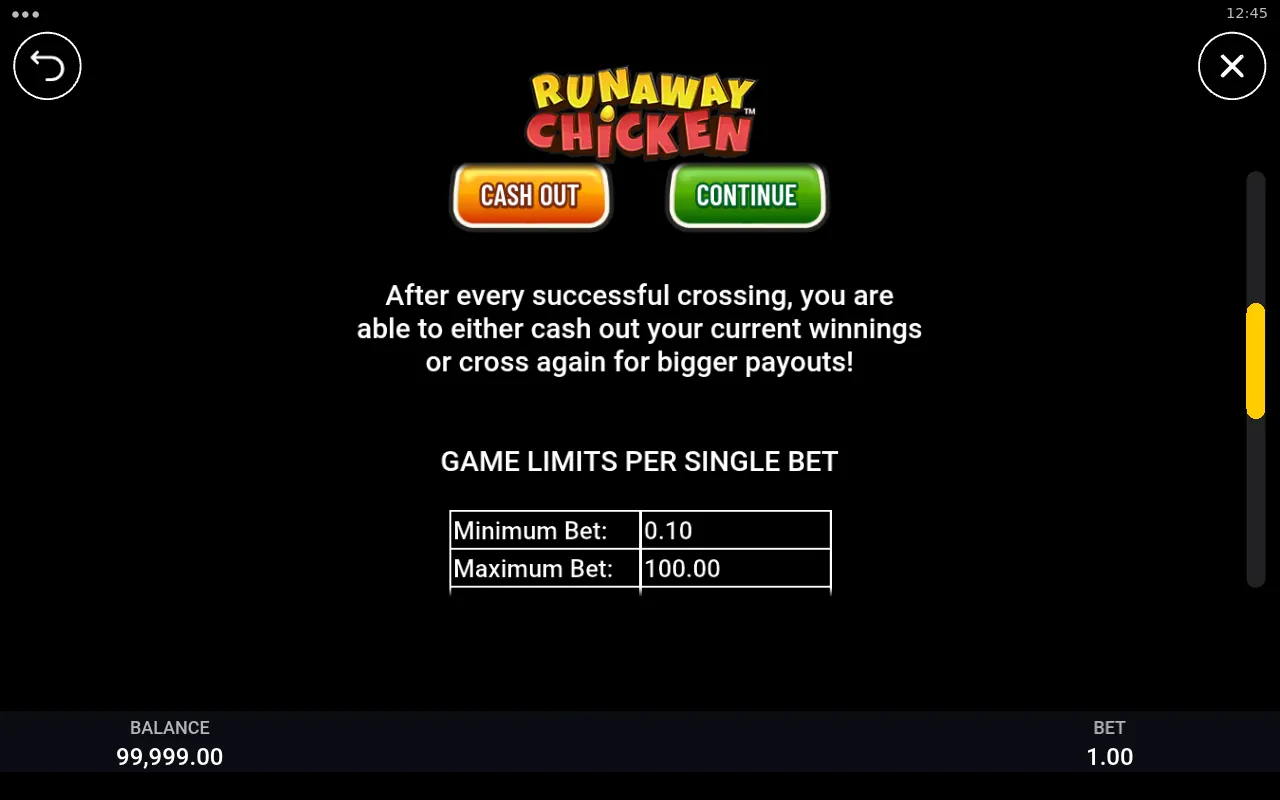
After every successful crossing the game pauses and offers a choice: cash out what you’ve earned so far, or continue to the next stage for a bigger payout. The cash out takes the money off the table and ends the round as a win. Continuing puts it all back on the road.
That decision is the game. Nothing else in Runaway Chicken asks you to do anything, so the whole design hangs on making each stage feel like a genuine choice between a sure thing and a bigger number. Clear stage two and you’re carrying 2.2x; one more crossing either banks 4.3x or hands the lot back.
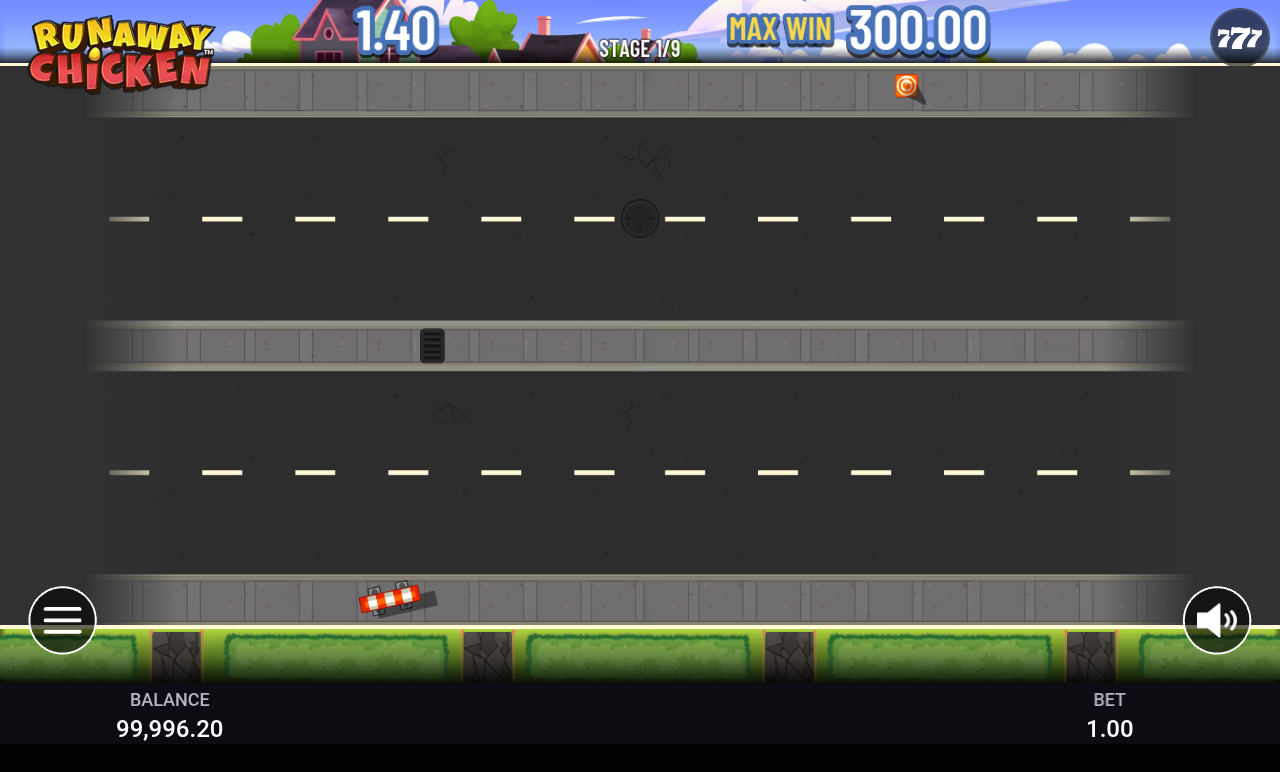
The staging matters too. A stage indicator counts your progress from one crossing to the next, and the win display shows the amount you’re currently carrying, so the choice is always framed with both numbers in front of you. It’s a small piece of interface design doing a lot of work.
The potential winnings grow exponentially with each successful crossing, which is what gives the later decisions their bite. The first couple of crossings are almost throwaways, worth 1.4x and 2.2x. By the middle of the ladder the cash out figure is large enough that pressing on stops being automatic.
The Payout Ladder
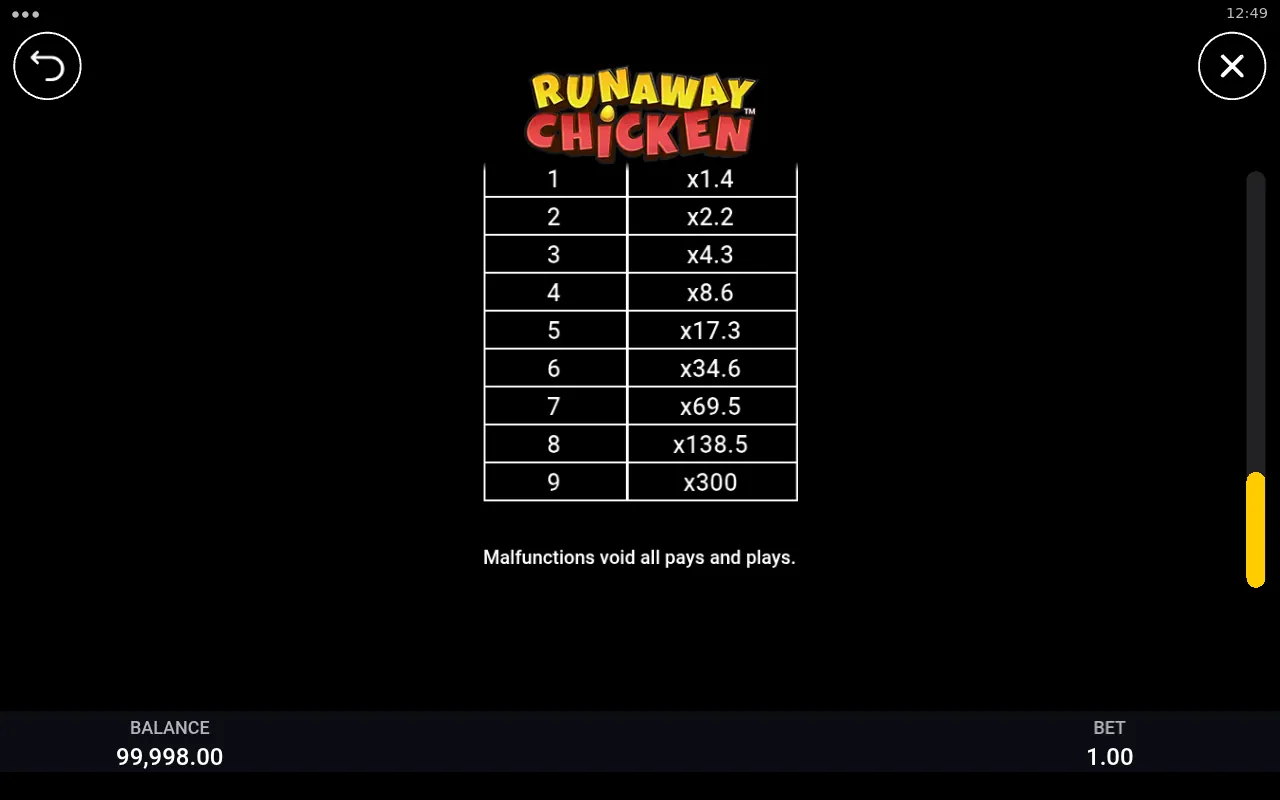
The nine stages pay as multiples of your bet, and the steps grow sharply as the chicken advances. It isn’t a progressive jackpot, just a fixed ladder:
- Stage 1 – 1.4x
- Stage 2 – 2.2x
- Stage 3 – 4.3x
- Stage 4 – 8.6x
- Stage 5 – 17.3x
- Stage 6 – 34.6x
- Stage 7 – 69.5x
- Stage 8 – 138.5x
- Stage 9 – 300x
The shape of that ladder is worth sitting with. Each stage roughly doubles the one before it, which means the early crossings pay very little relative to the risk and almost all of the round’s value sits in the final three stages. The maths pushes you deep, and it punishes you for going there half-heartedly.
Clearing stage seven means walking past a guaranteed payout worth nearly seventy times your bet in the hope of quadrupling it, and the two stages after that repeat the same squeeze with bigger numbers. Stage eight to stage nine is the sharpest version: 138.5x banked, 300x on the far kerb. Backing out is always available, and never comfortable.
Stakes and Controls
Stakes run from 0.10 to 100 per round, and the ladder scales with whatever you choose, so the multipliers stay the same at every bet size. The bet menu is on the main screen.
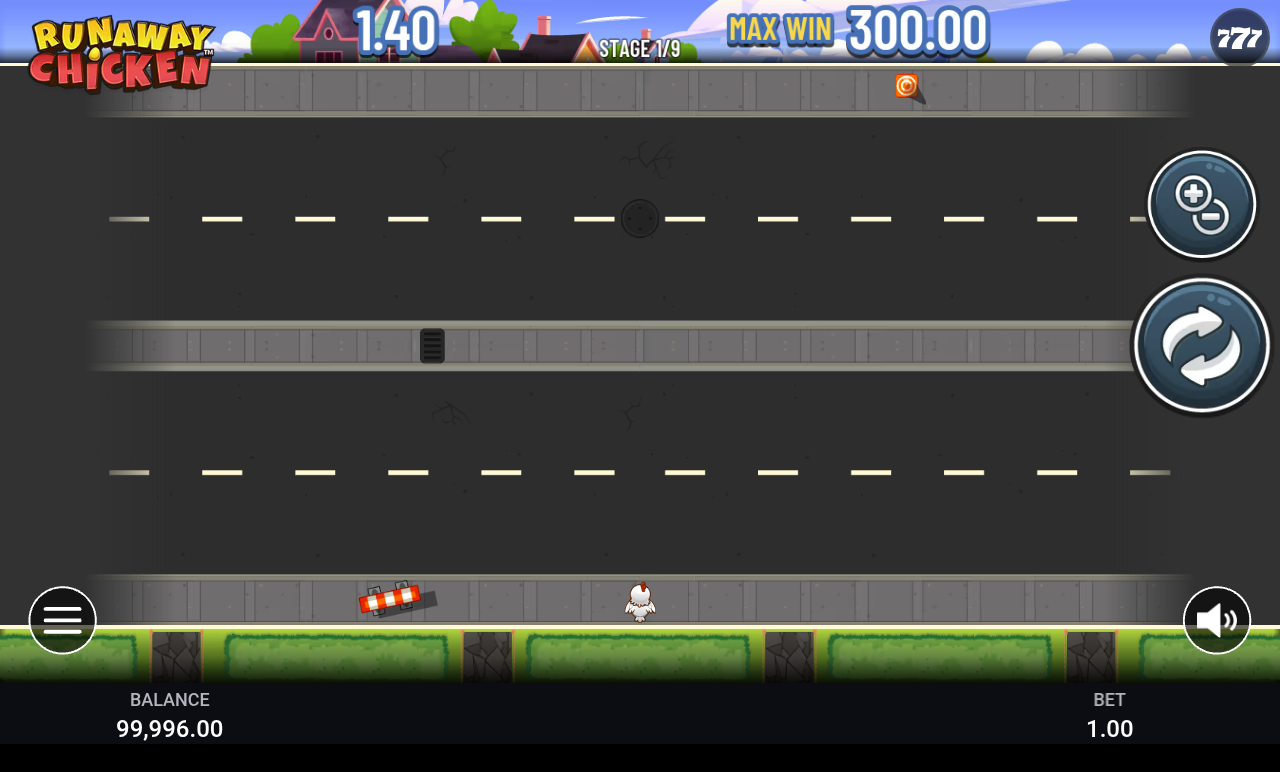
The rest of the interface is minimal. The balance sits alongside the most recent win, a menu button holds the additional options, and play starts a round. A handful of settings may not be available in every version, but nothing on the screen is decorative. Every control feeds the one decision the game is built around.
Medium volatility and a hit frequency of 56.1% mean a little over half of rounds produce a winning outcome. That’s a friendlier profile than the ladder’s steepness suggests, and it makes the early stages feel like small, survivable bets rather than a gauntlet.
One practical point worth knowing: if a round is interrupted, the game restores the state it was in and any crossing awaiting your cash out or continue choice can be finished on return. An unfinished round that’s left dormant for ninety days is void, with unconfirmed bets returned. Neither will cross the mind of most players, but it’s there.
Our Honest Verdict
Overall Rating: 7.1/10
Playing it is nine short held breaths with a cash out button between each, and the reason to pick it over other cash-out games is that the doubling ladder makes every pause a different decision rather than the same one with bigger numbers. Watching 2.2x become 4.3x is easy; walking away from 138.5x is not.
Its best quality is restraint. There’s nothing here but the crossing, no symbols, no filler features, and the game is better for it: the decision gets the whole screen and your whole attention.
The weakness is the payoff for that attention. 300x is a small ceiling for a game that asks you to risk a round nine times over, and most rounds end near the bottom of the ladder where the win barely clears the stake.
It suits people who like short, decision-led rounds and a bit of character in their gambling, and it’s a poor fit for anyone chasing features, free spins or a number worth shouting about. For the patient, the hen’s waiting on the kerb.
Runaway Chicken FAQs
-
What is the RTP of Runaway Chicken?
96.00%, which is right on the industry average. -
Is Runaway Chicken high volatility?
No, it’s a medium volatility game. Wins are reasonably frequent relative to the risk taken at each stage. -
What is the hit frequency of Runaway Chicken?
56.1%, meaning a little over half of rounds produce a winning outcome. -
What is the minimum and maximum bet on Runaway Chicken?
Stakes run from 0.10 to 100 per round. -
When is Runaway Chicken released?
Runaway Chicken’s release date is 20 October 2025. -
Who makes Runaway Chicken?
Games Global. -
What is the maximum win on Runaway Chicken?
300x your bet, awarded for completing all nine crossings in a single round. -
How does the cash out option work in Runaway Chicken?
After each successful crossing you can cash out your current winnings and end the round as a win, or continue to the next stage for a bigger payout. If the chicken hits traffic at any stage, the round ends and all potential winnings from that round are lost.