






Whale Rush Slot Review
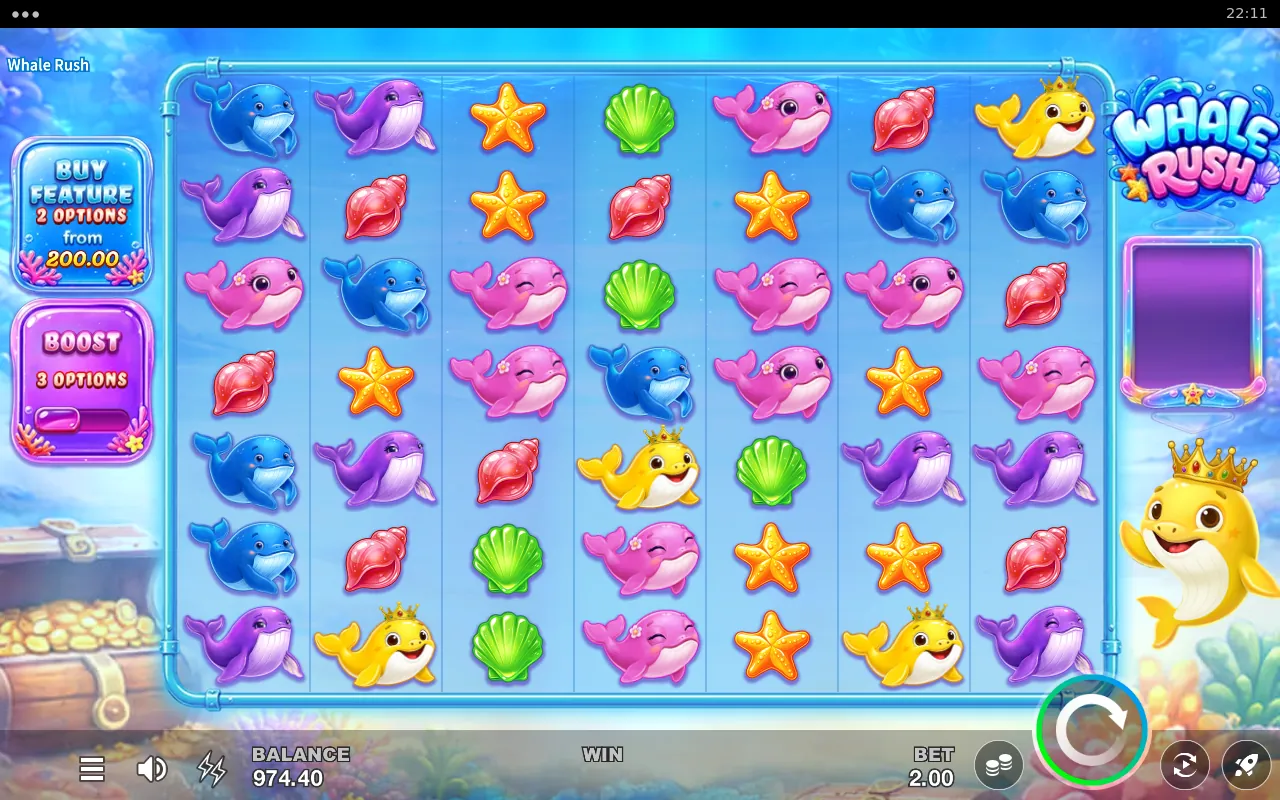
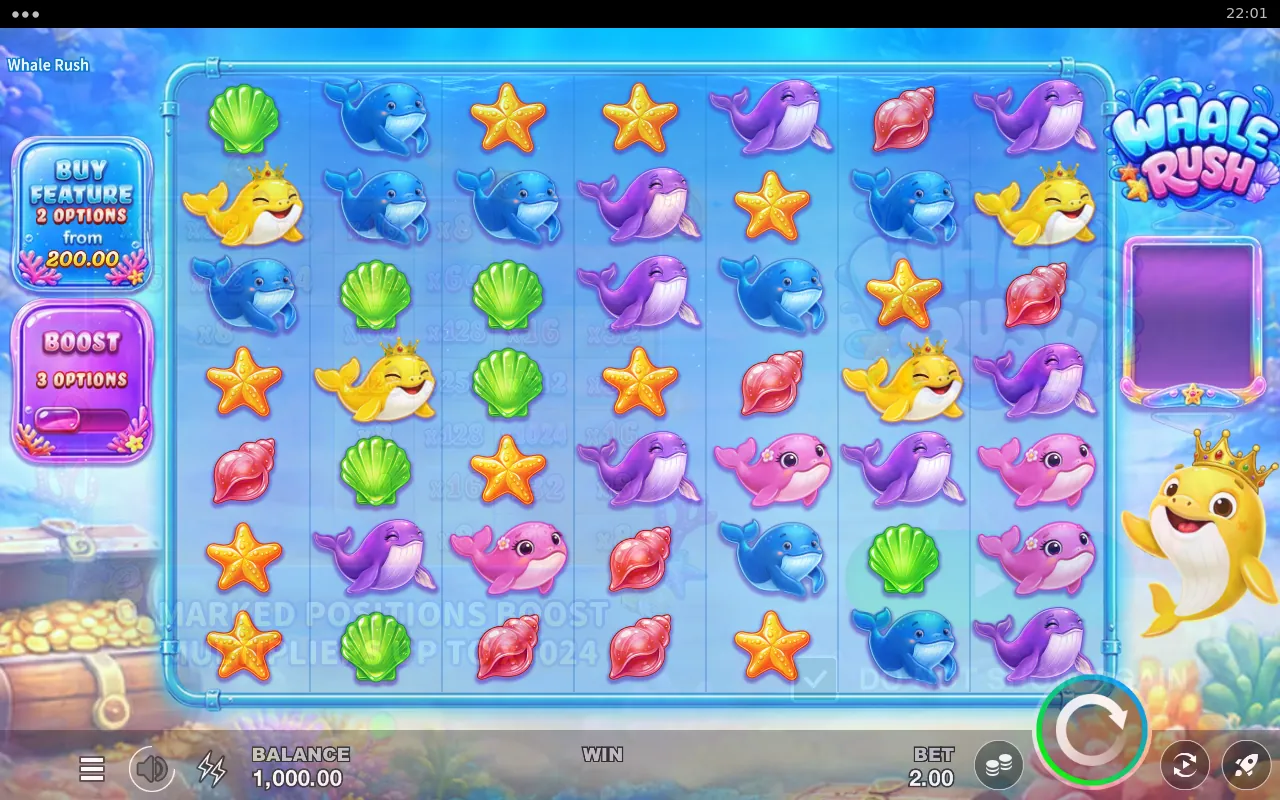
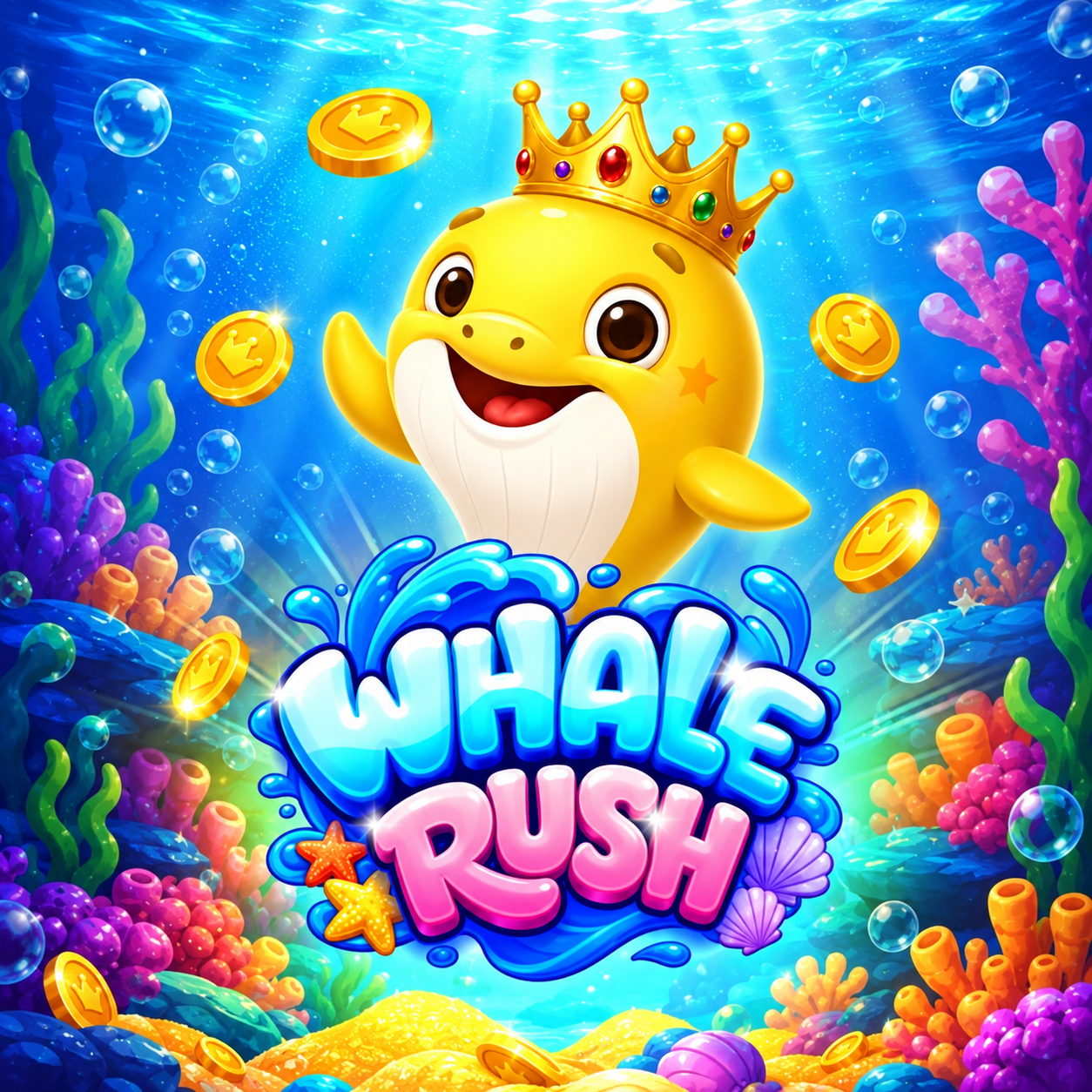
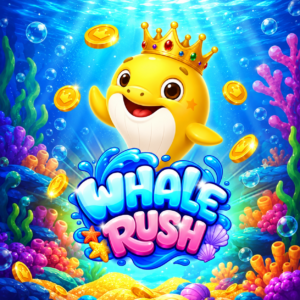
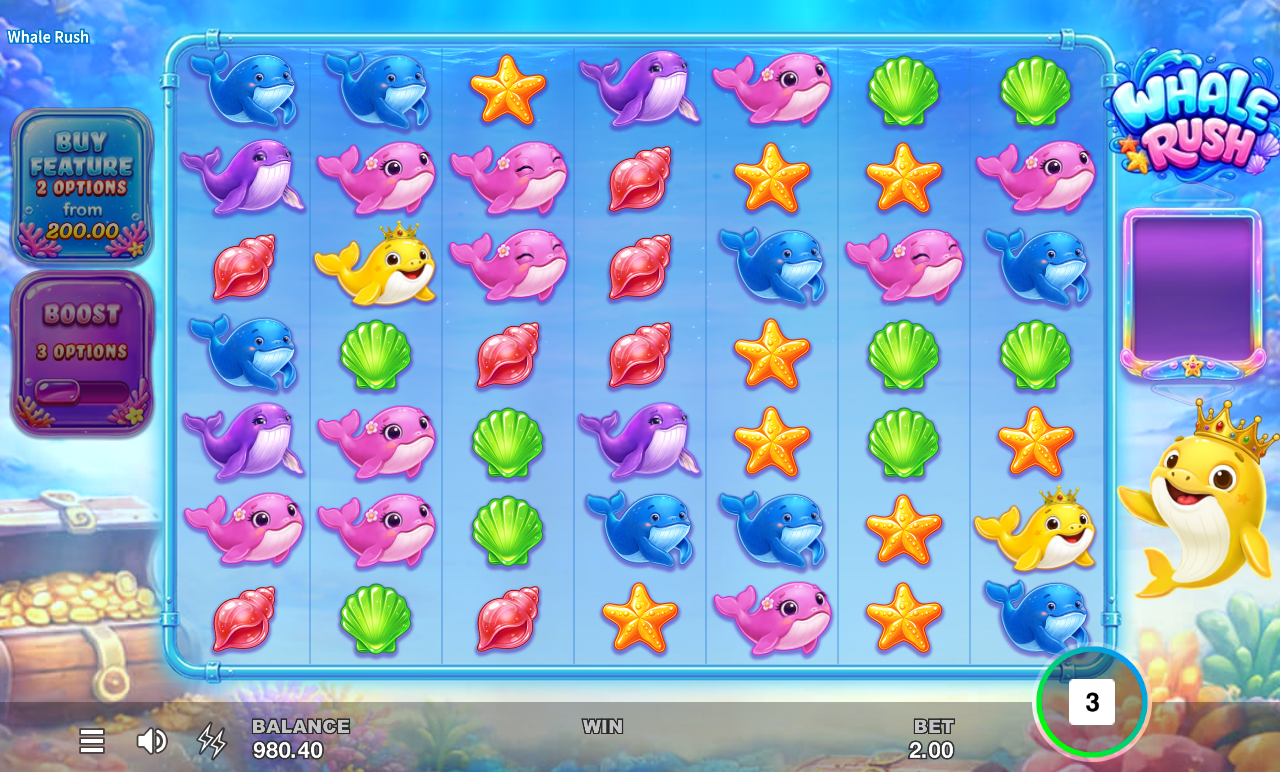
A crowned, grinning whale leans in from the edge of a candy-coloured reef, watching over a treasure chest that spills gold onto the seabed. Whale Rush hides one of the stingiest small-cluster paytables you’ll meet behind that friendly face: five of the top symbol returns just 0.4x the bet, and the money only arrives when a grid this crowded fills with one symbol from edge to edge. Microgaming have built it on a 7×6 grid with Cluster Pays, a 10,000x ceiling and a Boost meter that gives the waiting a direction. Cricket Century Kings and Mahjong Wilds Link&Merge play in the same unusual-grid territory, so the format has form. Whether this reef is worth the patience is what follows.
Cluster Pays on the 7×6 Grid
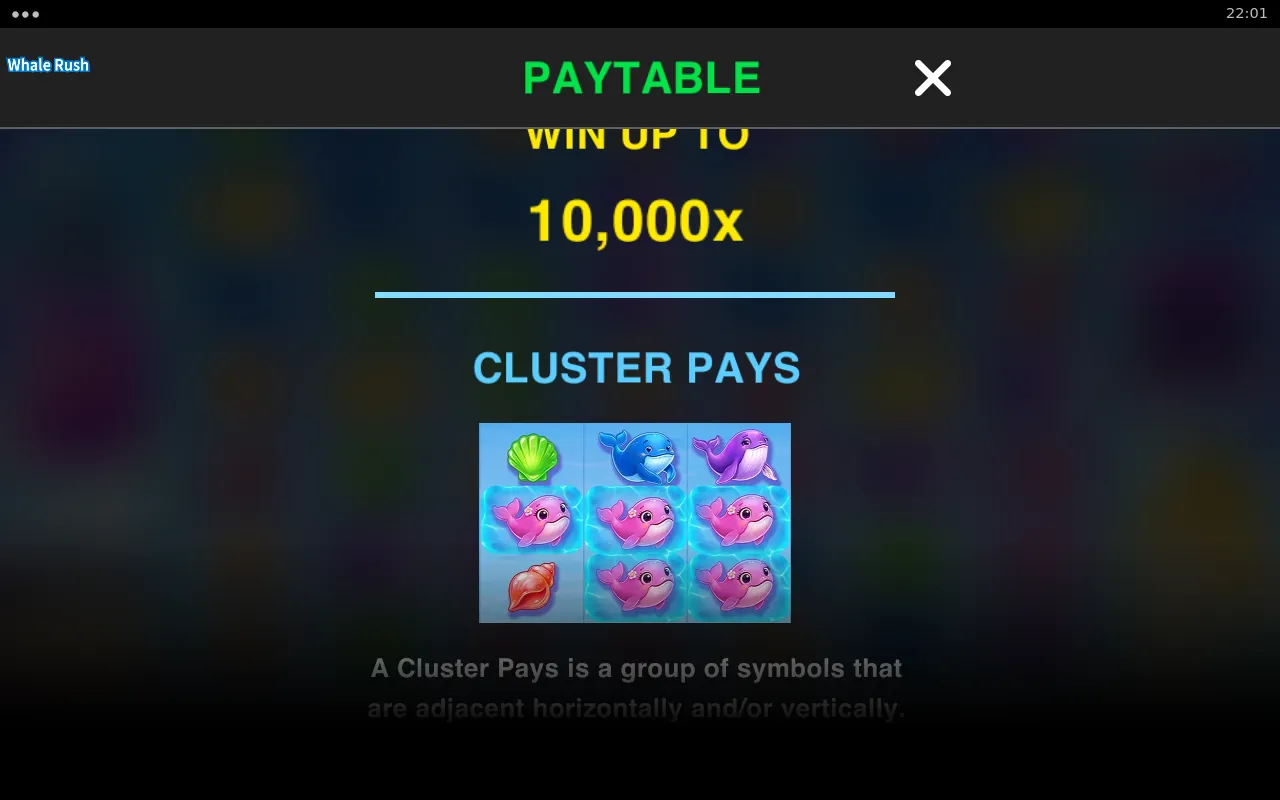
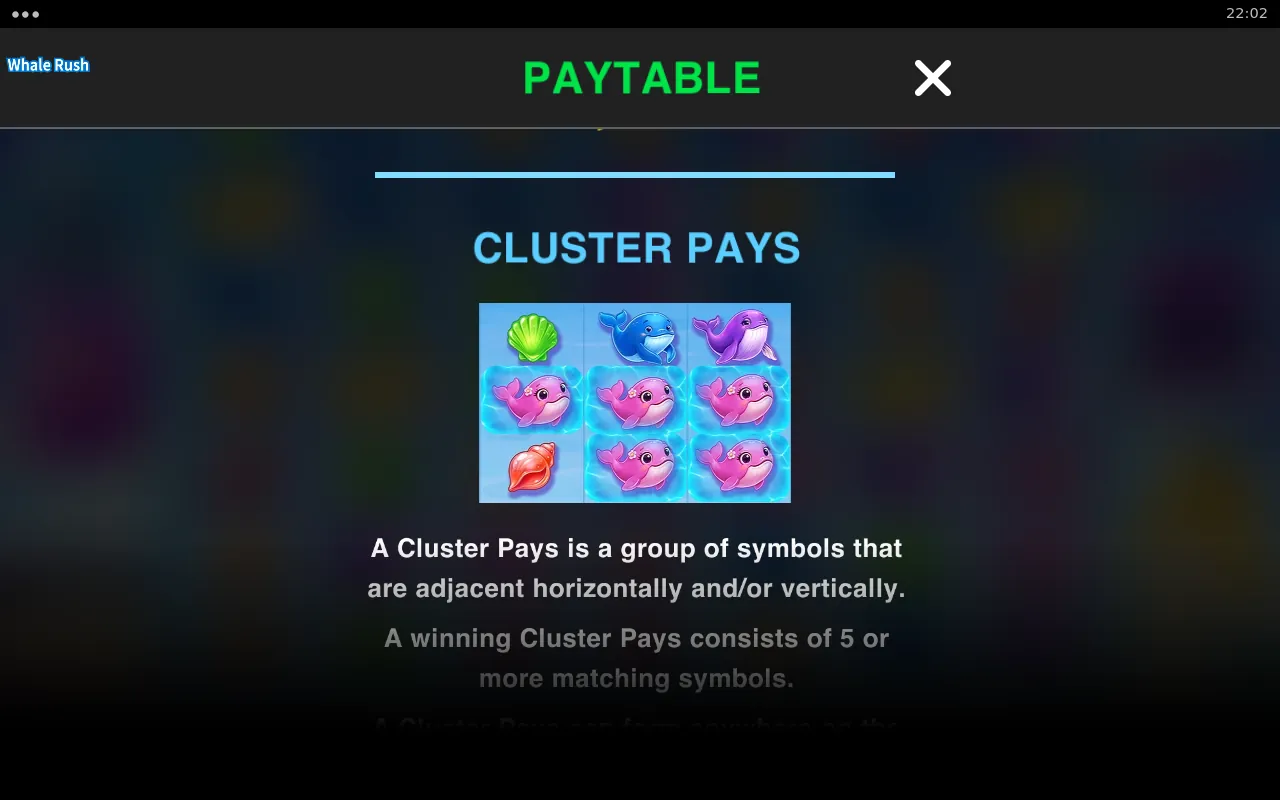
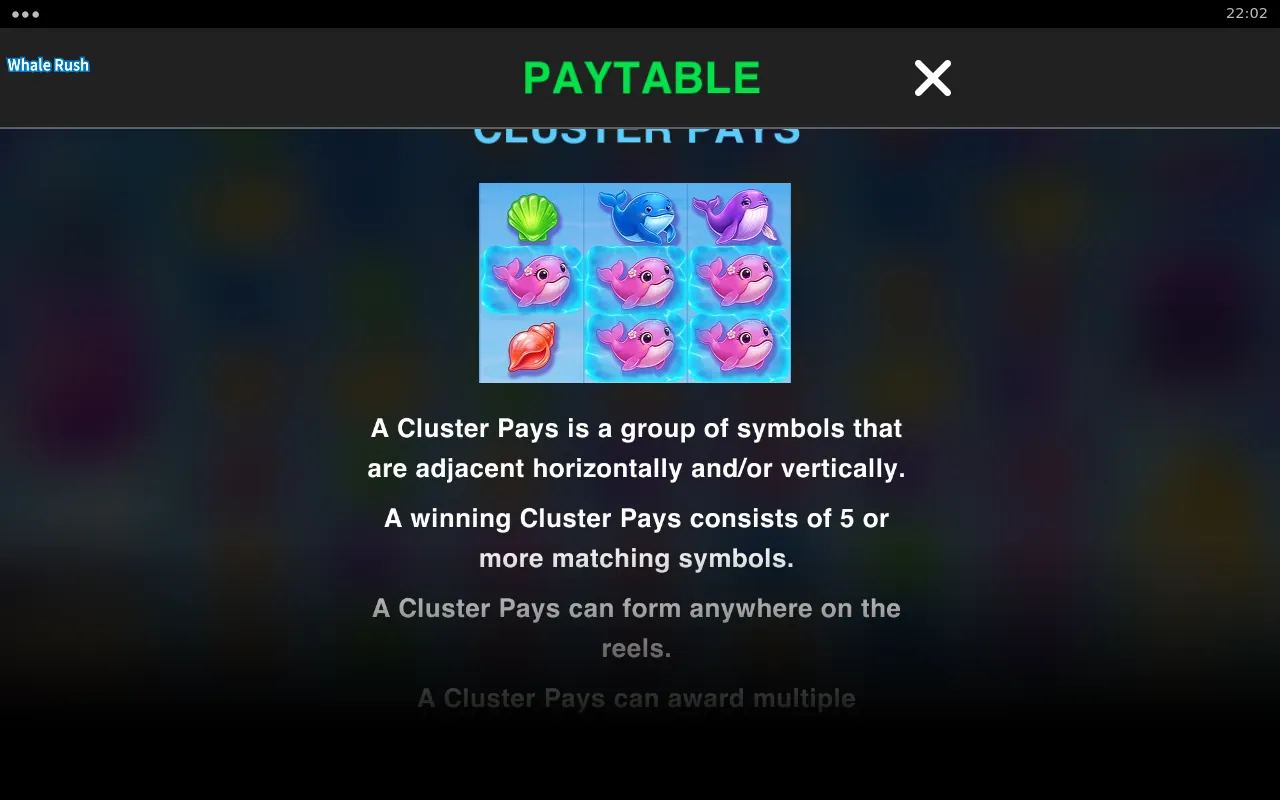
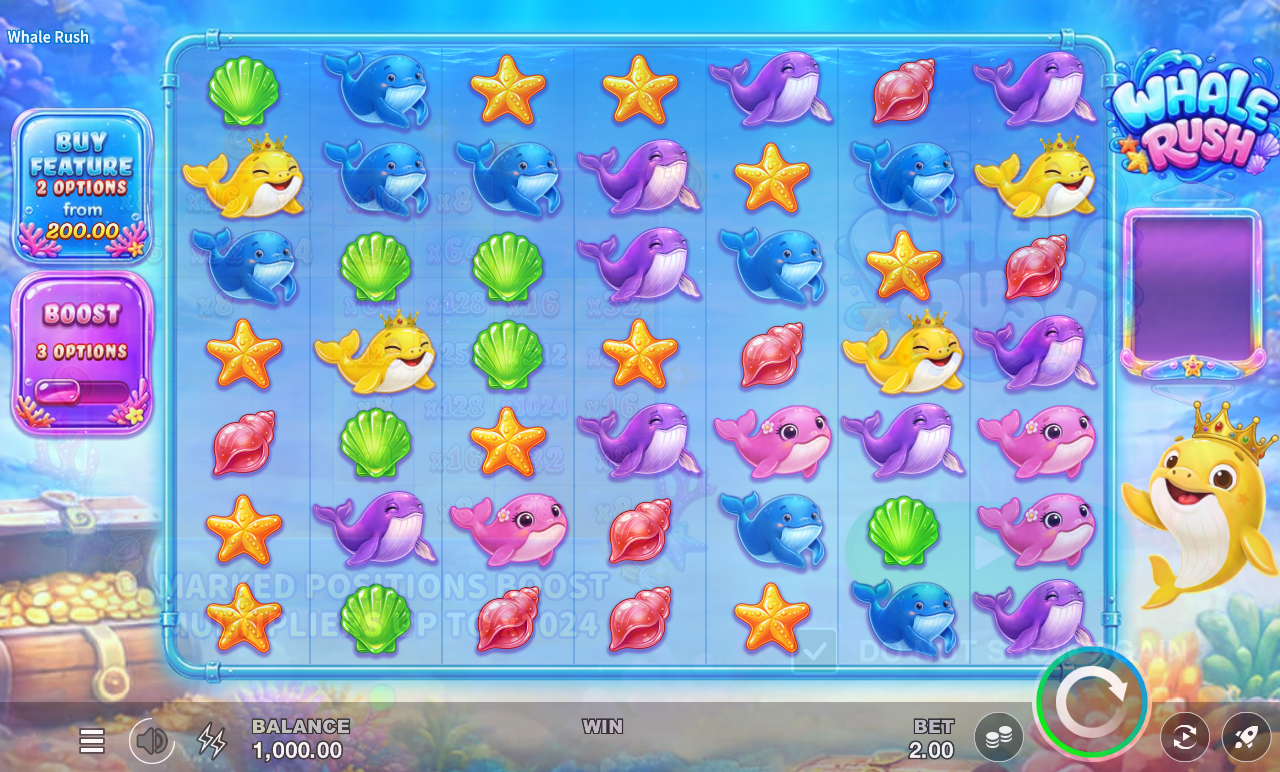
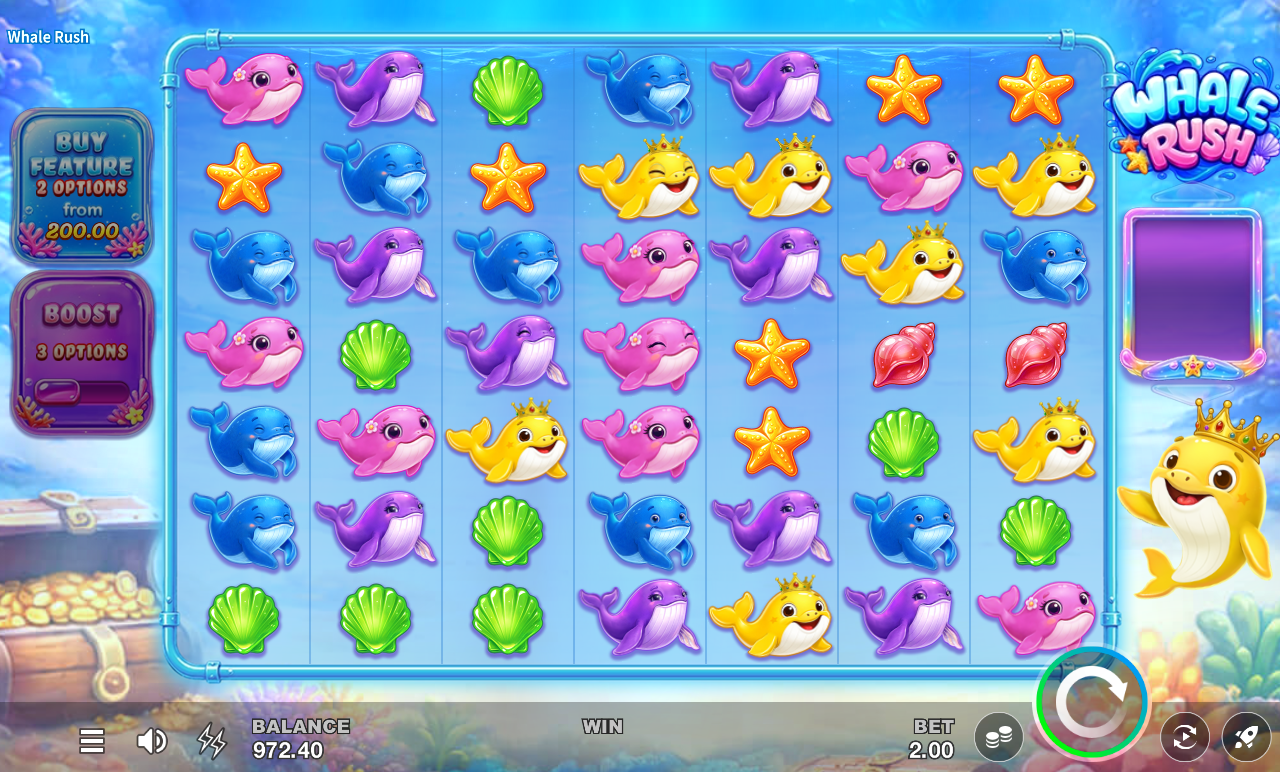
There are no paylines here at all. A win needs a Cluster Pays group: five or more matching symbols sitting next to each other, horizontally or vertically. Diagonal contact doesn’t count, so a diagonal chain of six is worth nothing unless part of it also connects across or down.
The group can form anywhere on the reels. It doesn’t need to touch a specific edge or sit in a particular spot, which means all 42 positions on the grid are live on every spin. Where the symbols land matters only in relation to each other.
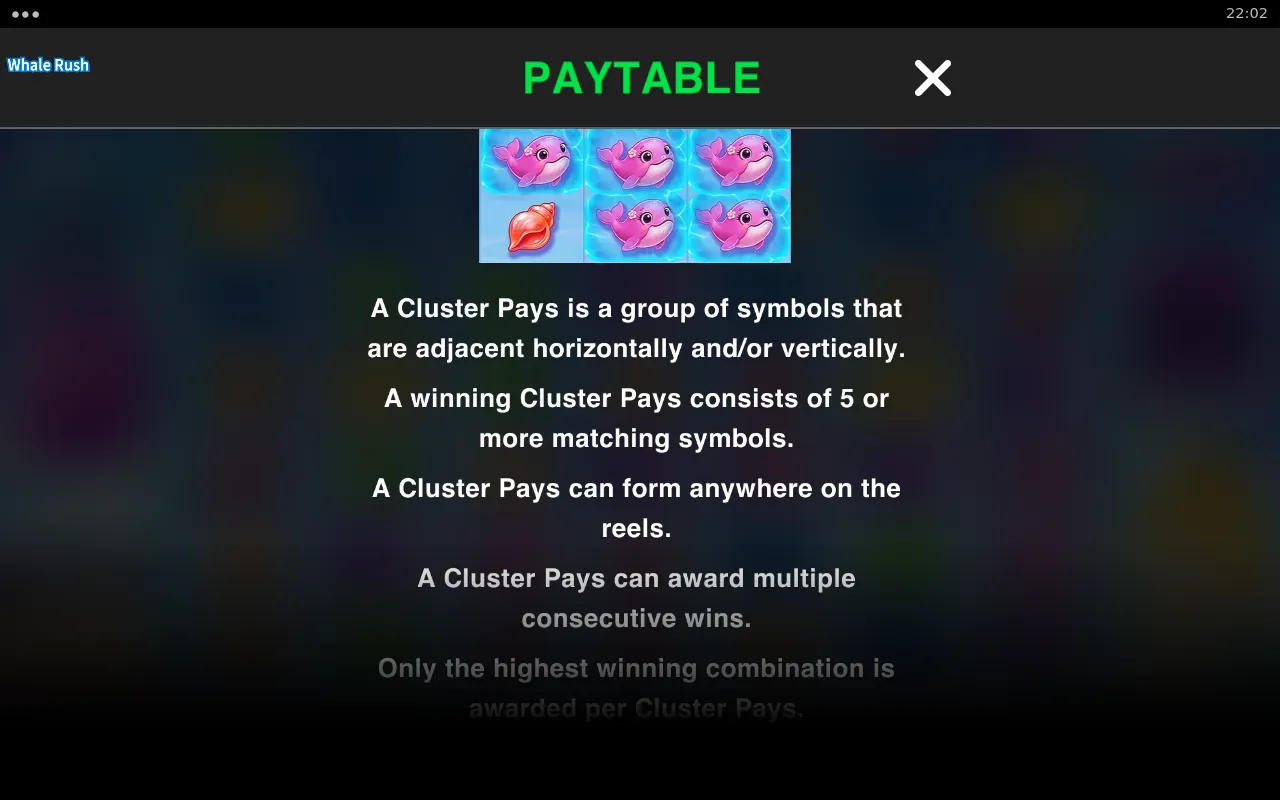
A cluster isn’t limited to one payout either. A Cluster Pays group can award multiple consecutive wins, so a single spin can chain results rather than settling for one. When a winning group pays, it clears from the grid and fresh symbols drop into the empty positions, giving the same spin another chance to form a paying group where the old one sat.
One limit keeps the chains honest: only the highest winning combination is awarded per cluster. Overlapping groups of the same symbol settle at their best value rather than stacking on top of each other, so the payout reflects the biggest shape the symbols made, not a count of every shape inside it.
It’s a system that rewards dense grids, and the 7×6 layout gives plenty of room for that. Forty-two positions is a lot of space to fill with one symbol, though, and that tension is what shapes the paytable below.
What the Whale Pays
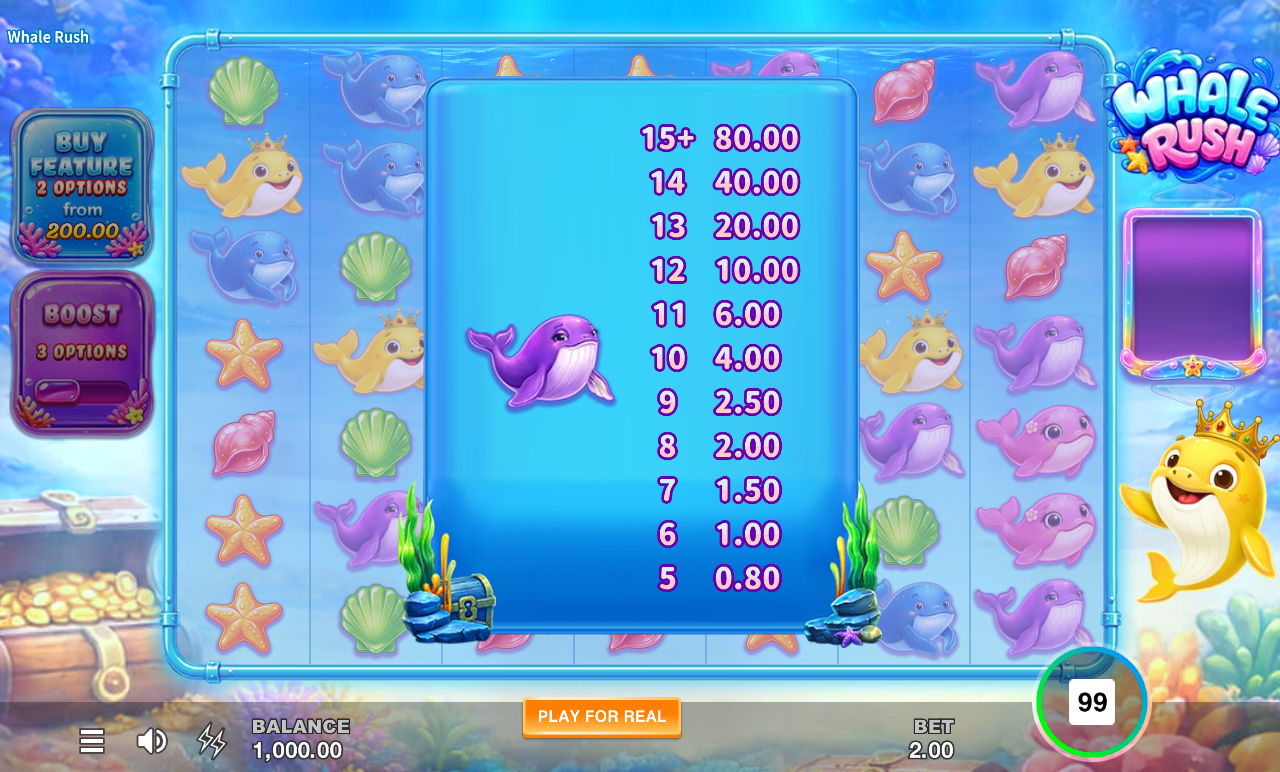
The purple whale is the paying symbol that matters, and its values are quoted as multiples of the total bet rather than a line stake, so they’re directly comparable to the stake you set. Small clusters are worth very little; it takes double-figure group sizes for the sums to get interesting.
- 5 symbols – 0.4x the total bet
- 6 symbols – 0.5x
- 7 symbols – 0.75x
- 8 symbols – 1x
- 9 symbols – 1.25x
- 10 symbols – 2x
- 11 symbols – 3x
- 12 symbols – 5x
- 13 symbols – 10x
- 14 symbols – 20x
- 15 symbols – 40x
Read the ladder bottom-up and the shape of the game is obvious. The bottom half of the table inches upwards, the top half climbs in great strides, and the single biggest step sits at the very end of the ladder.
That spread tells you where this game expects its big results to come from. Small clusters clear the board and keep things moving. The whale in bulk is what actually pays.
A 15-symbol cluster on a 7×6 grid is a genuinely crowded board, which is why the top step is capped where it is rather than reaching for something more spectacular. The 10,000x ceiling has to come from chains of consecutive wins rather than one giant group.
The Boost Meter
A Boost meter sits in the interface with three options attached to it, and play fills a visible progress gauge. The meter is on screen throughout, it tracks progress, and it unlocks in stages.
Beyond that, the mechanics of what each Boost stage does aren’t spelled out, so there’s nothing honest to add here. What can be said is that the meter gives the base game a running objective between clusters, something to watch while the grid churns.
That’s not a small thing in a cluster game. Without a meter or a trail, the stretches between meaningful clusters are just spins; with one, every result nudges a gauge somewhere. A three-stage meter also means the goalposts move twice: filling the first stage only points you at the second, and the second at the third. The build is the game, and the Boost meter is what structures it.
The three stages also give the base game a finish line of sorts, which is rare in a format that otherwise pays in dribbles. Whether the final stage rewards the climb is a question each bankroll will answer differently.
Buy Feature
For players who’d rather skip the wait, there’s a Buy Feature with two options, priced from 200.00. As with the Boost meter, the game doesn’t detail what separates the two options on the captured material, so the honest description stops at the price and the choice.
- Buy Feature – two options, from 200.00
A buy at that price is a serious commitment relative to a base spin, and it’s priced for players who already know what the feature round offers. Anyone else is buying blind, which is a fair reason to let the meter do the work instead.
The from-pricing matters too. Where a buy menu starts at 200.00, the second option sits above it, and the total cost of chasing the feature by purchase rather than by play climbs quickly. The base game’s cluster chain gives the patient route a path to the same destination.
Our Honest Verdict
Overall Rating: 7/10
Over a long session, Whale Rush is mostly watching a very pretty reef clear itself over and over while the meter inches forward, and the reason to pick it is exactly that: a grid game with somewhere to go rather than just a grid. The whale grins through every dry stretch, which is either charming or taunting depending on how a session is running.
Its strength is the paytable’s shape. Because the big money sits at 13, 14 and 15 symbols, every spin carries a real question – can this board fill? – and the answer is no often enough that a yes genuinely means something. The weakness is the buy menu: two options from 200.00 with nothing said about what you’re getting for the difference, in a game whose base spin costs a fraction of that.
It’s for players who like a long build and can shrug off a grid that pays in crumbs between feasts. Anyone chasing frequent bonus rounds will find this reef quiet. Those who stay for the meter’s slow fill are the ones the smiling whale is really waving at.
Whale Rush FAQs
-
How do wins form in Whale Rush?
Whale Rush uses Cluster Pays. A win needs five or more matching symbols adjacent to each other horizontally or vertically, and the cluster can form anywhere on the 7×6 grid. Diagonal contact doesn’t count. -
Can a single cluster pay more than once in Whale Rush?
Yes. A Cluster Pays group can award multiple consecutive wins, though only the highest winning combination is paid per cluster. -
Can clusters form anywhere on the grid in Whale Rush?
Yes. A Cluster Pays group doesn’t need to touch a particular edge or position – it can form anywhere on the 7×6 grid, so all 42 positions are live on every spin. -
What does the Boost meter do in Whale Rush?
The Boost feature has three options and fills a progress meter shown on the interface as you play. The game doesn’t detail what each Boost stage awards. -
Can you buy the bonus on Whale Rush?
Yes. There’s a Buy Feature with two options, priced from 200.00. -
What is the maximum win on Whale Rush?
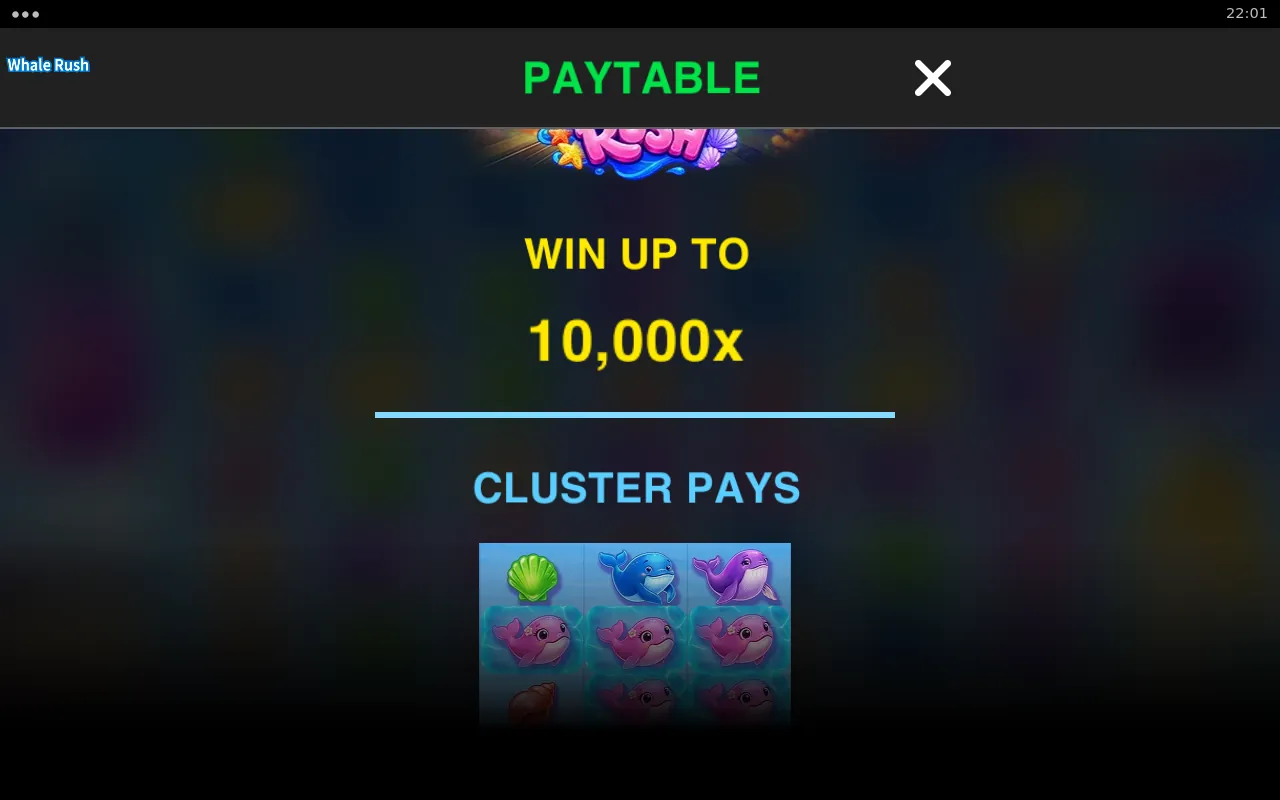
The maximum win is 10,000x your bet. -
Who makes Whale Rush?
Whale Rush is a Microgaming title. -
When is Whale Rush released?
Whale Rush’s release date is 25 November 2026.