





49 Spin Slot Review
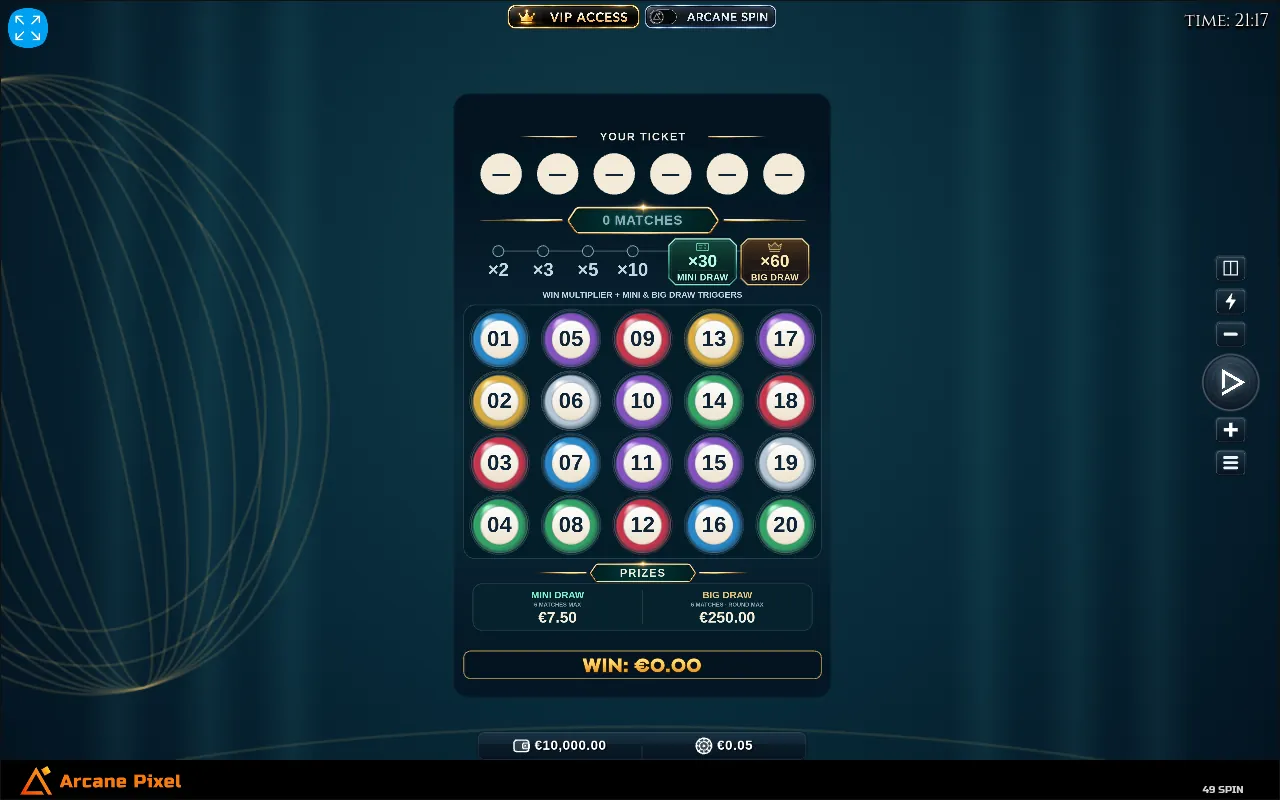
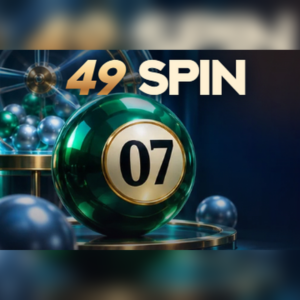
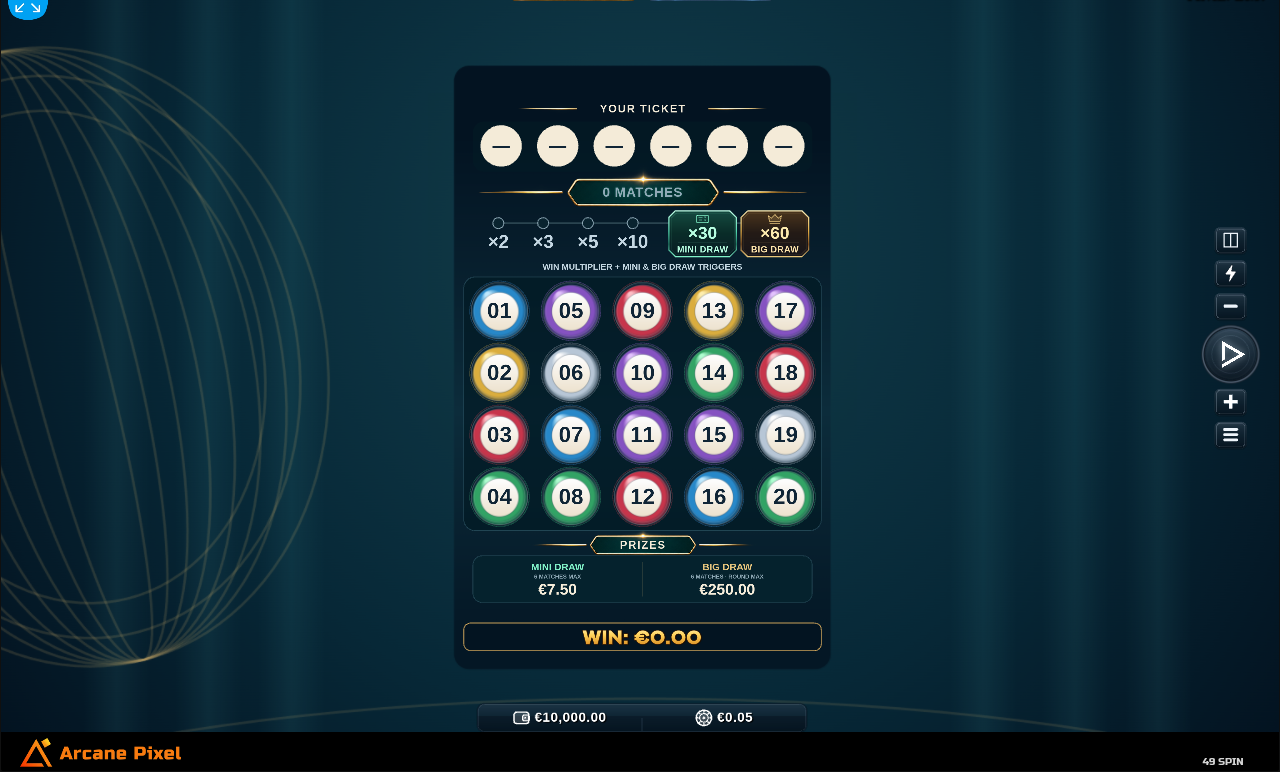
A dark teal void, a wireframe sphere of thin gold curves dissolving towards the centre of the screen, and a faint golden arc resting just below the reels like a horizon. 49 Spin from Arcane Pixel barely pays you for spinning. That’s not a complaint about the maths, it’s the design: the reels hand out small change, and nearly all of the real money is attached to the ticket sitting beside them, filling one number at a time.
The studio has form in tidy, mechanics-first titles like Fright Chain and Gems of Scaralith, and 49 Spin is their most single-minded effort yet. It plays on a 5×4 grid across 12 paylines, with a ticket multiplier that climbs as your matches stack up and a pair of draws waiting at the top of the ladder. Six balls, no wilds, and one idea pushed all the way.
Spinning Colours, Matching Numbers
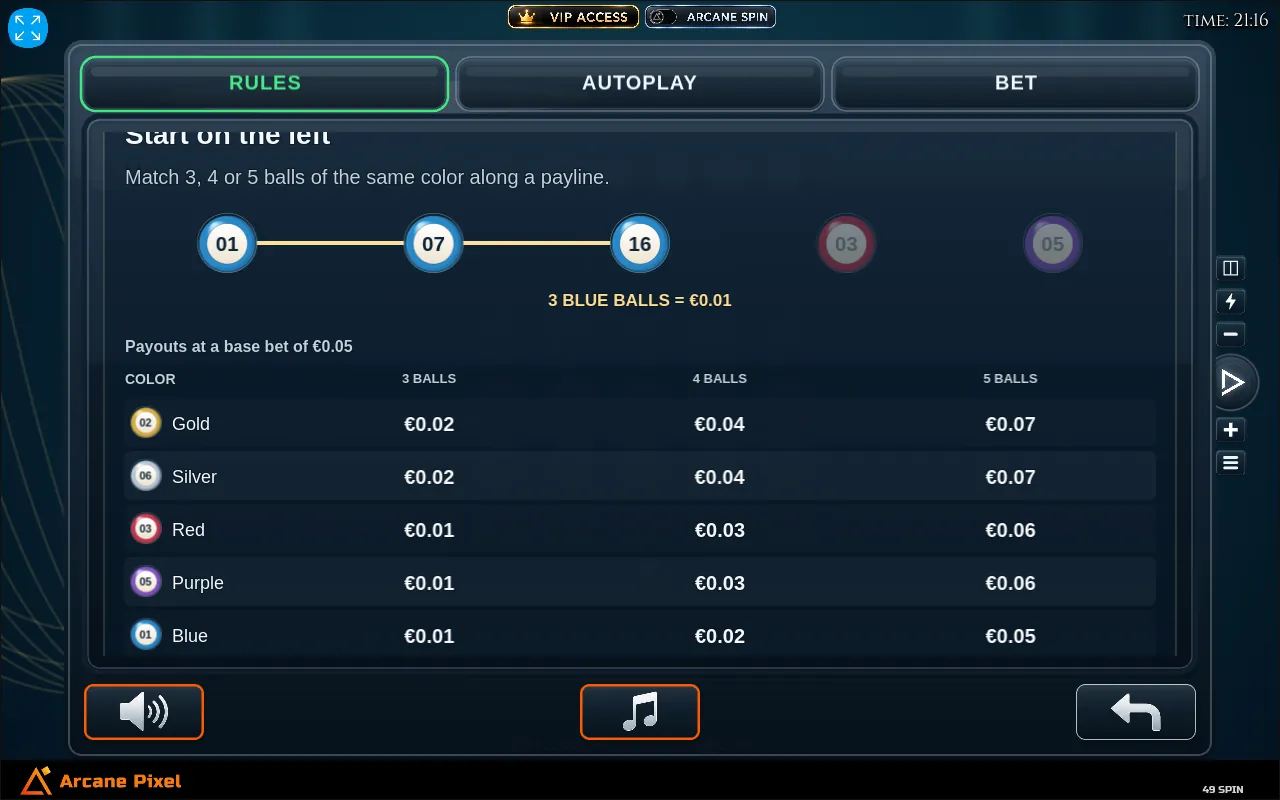
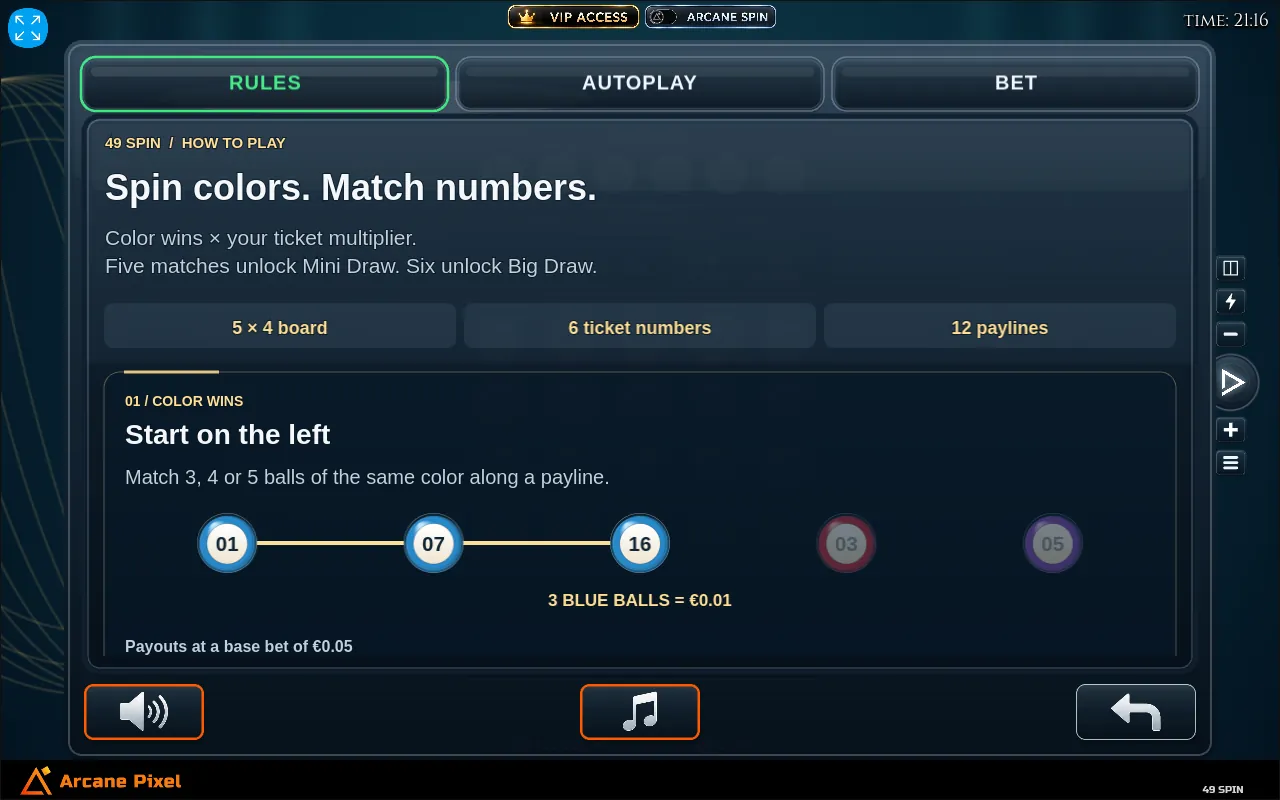
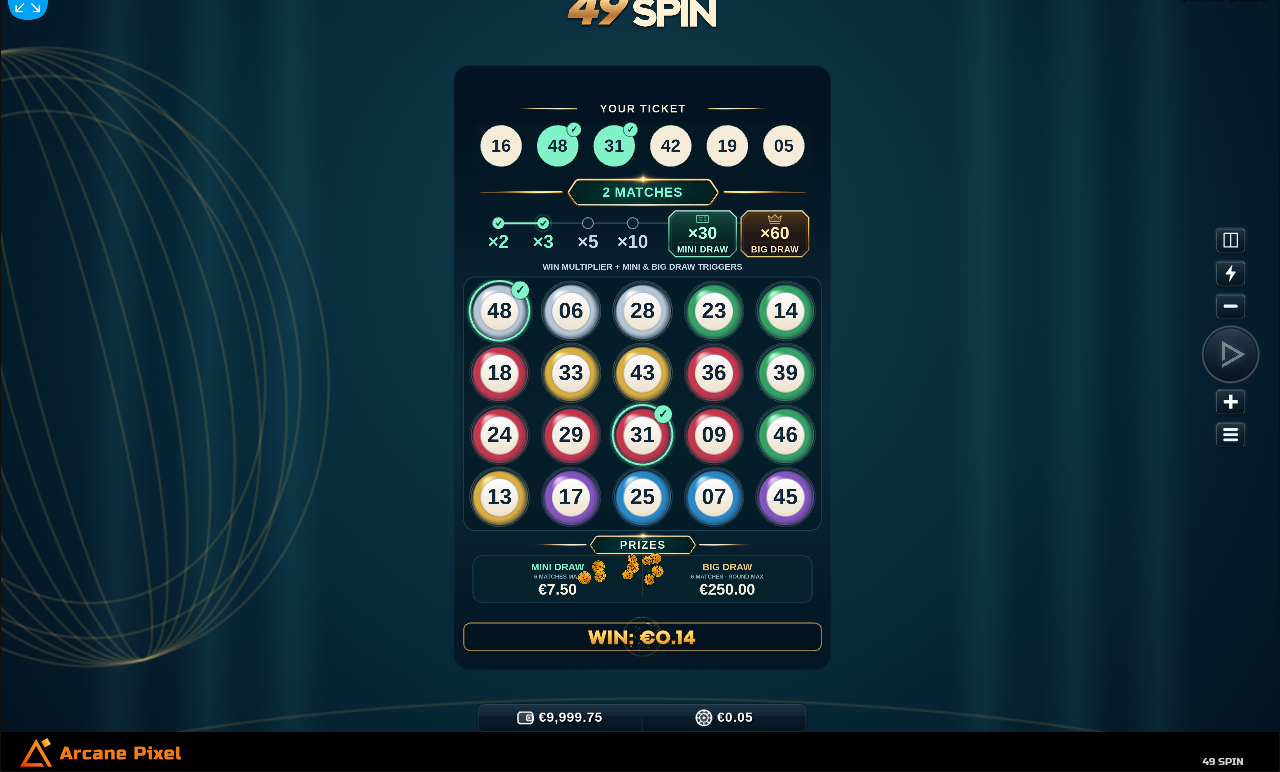
Each spin drops numbered, coloured balls onto the grid, and your ticket marks off the numbers that appear. Two things are happening at once, and they pay separately. Colour wins are the engine underneath: match three, four or five balls of the same colour along one of the 12 paylines, starting from the left, and the line pays.
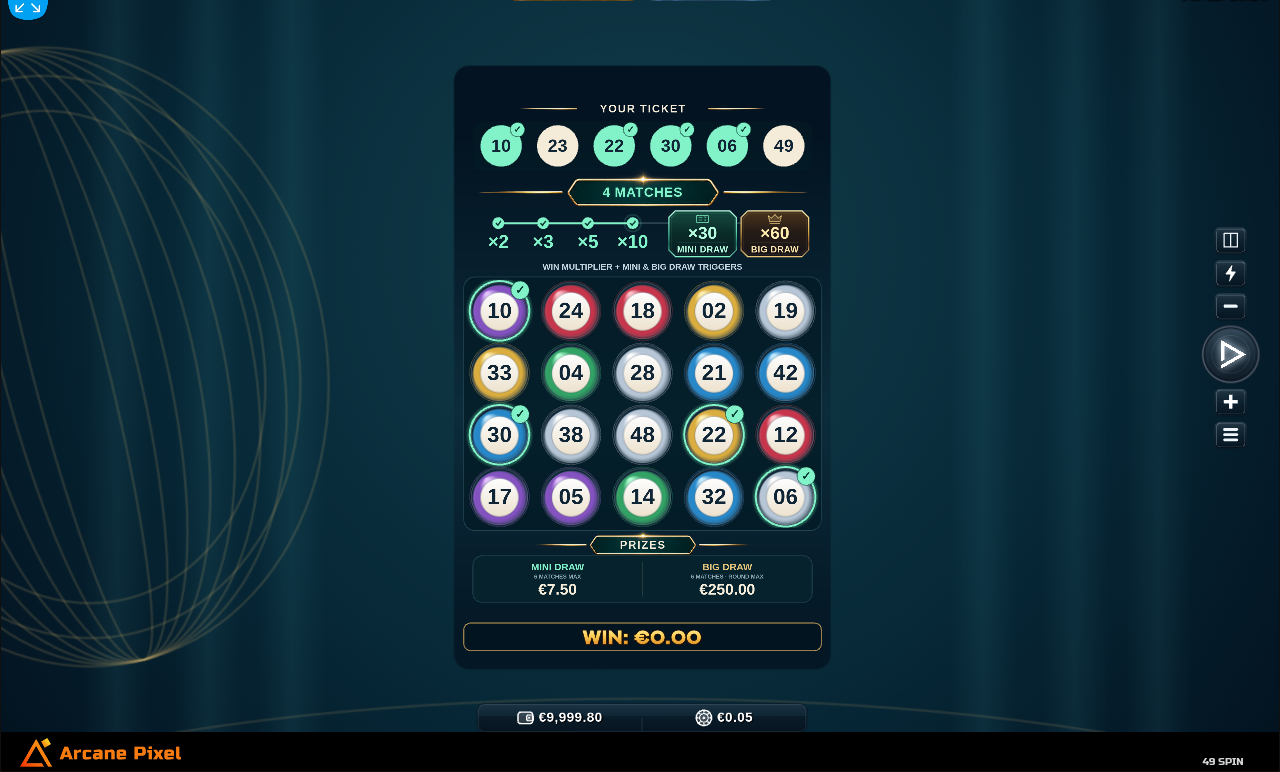
Ticket matches, on the other hand, don’t pay anything by themselves. A spin can finish with four numbers marked off and nothing to show for it on the reels, because the ticket’s job is different: matches feed the multiplier ladder and count towards the draws. The two systems run in parallel, and the game’s real tension comes from watching both boards at once.
How the Lines Pay
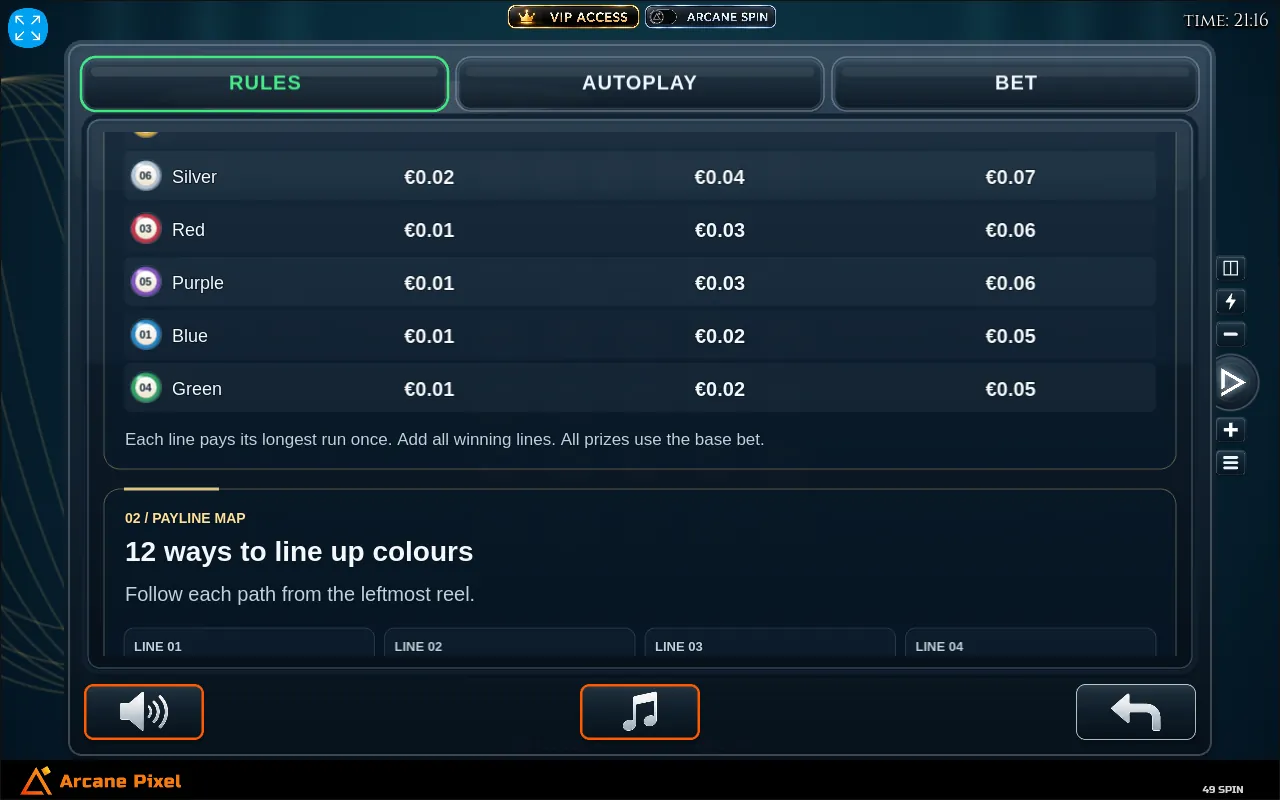
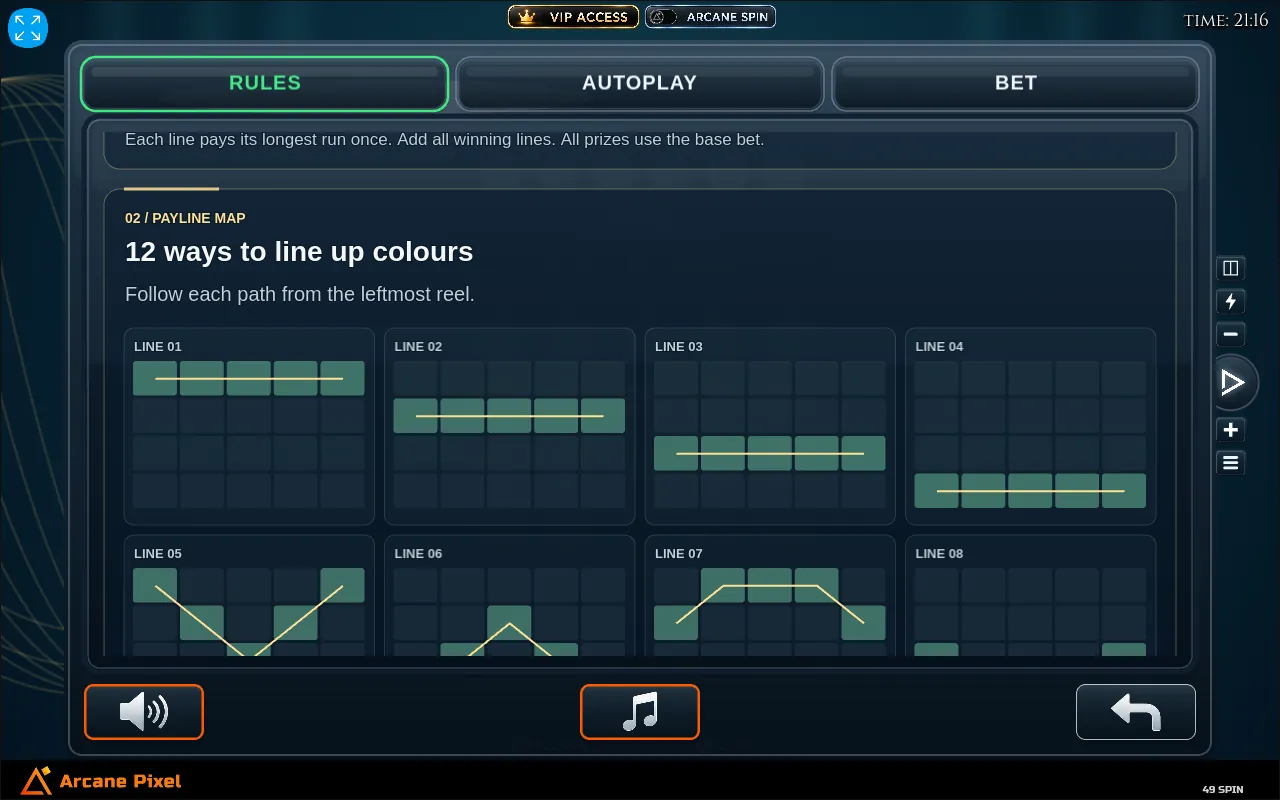
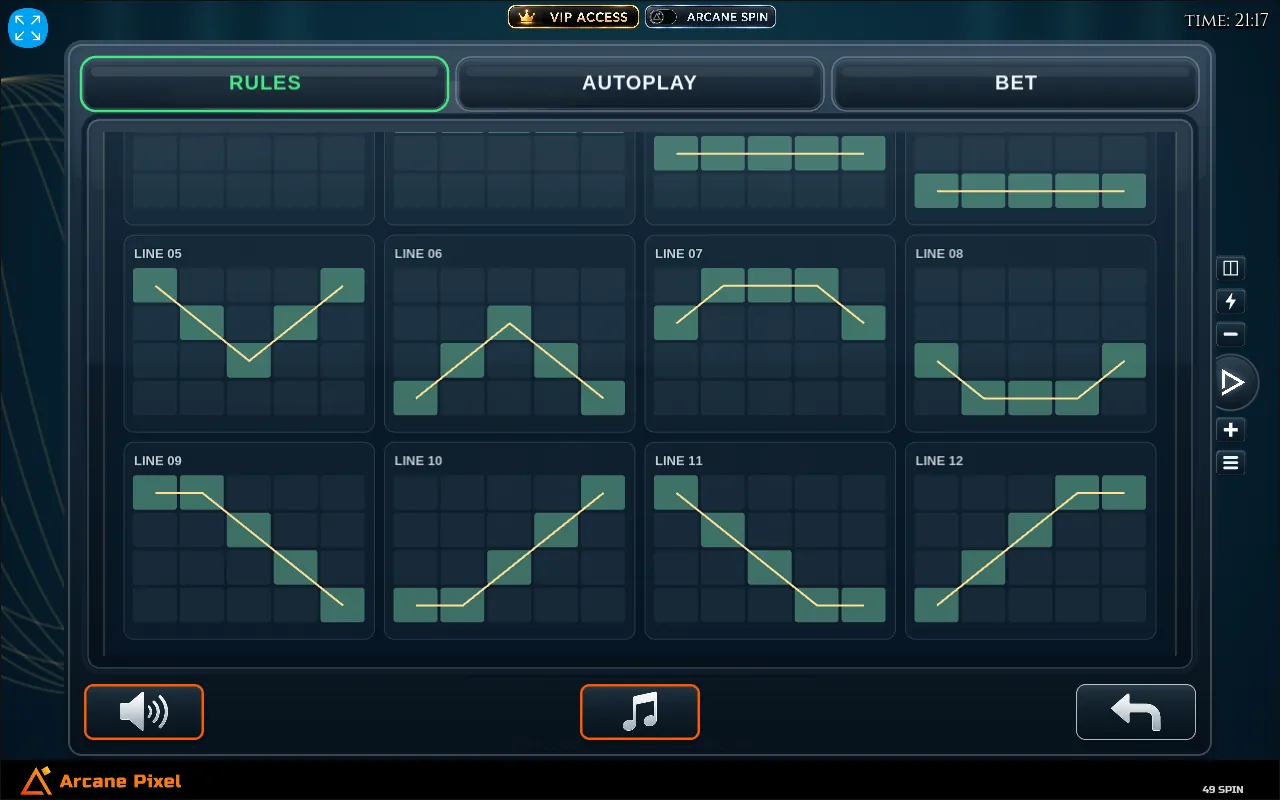
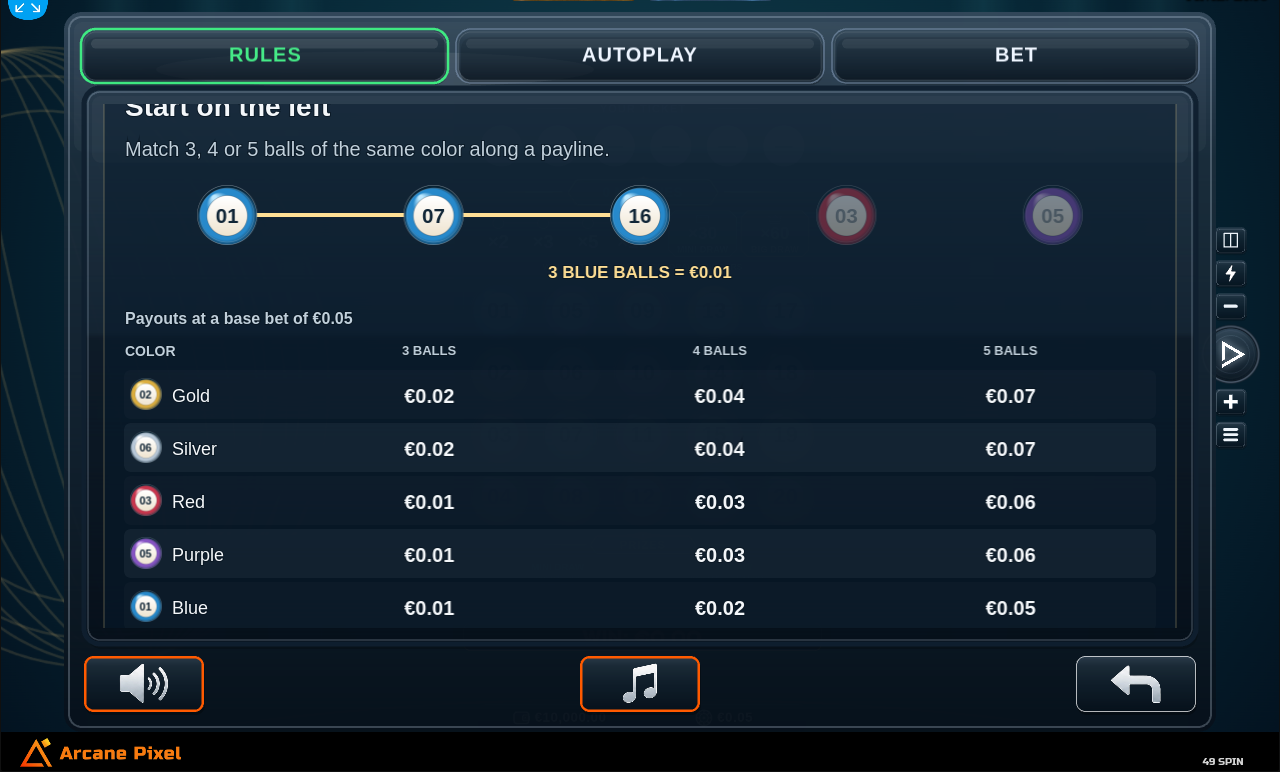
The 12 paylines are drawn as paths across the grid, and each one runs from the left. Only a line’s longest run pays, and it pays once, so five of a kind doesn’t also collect for the three inside it. All winning lines add together, and every prize is a multiple of the total bet, which keeps the arithmetic honest when the board gets busy.
That “longest run once” rule has a quiet consequence for how you read a full board. Because only the best stretch of a line counts, a payline littered with mixed colours is worth nothing even if it holds several short runs. You’re not collecting scraps; you’re looking for one unbroken stretch from the left, and everything after the break on that line is decoration.
What the Balls Pay
There are six paying balls, paired by colour, and the gaps between tiers are modest:
- Gold ball (02) and silver ball (06): 0.4x for three, 0.8x for four, 1.4x for five
- Red ball (03) and purple ball (05) pay a step less: 0.2x, 0.6x, then 1.2x at the top
- Blue ball (01) and green ball (04) hold the floor: 0.2x, 0.4x and 1x for a full line
The ceiling on any single line is 1.4x, and that number tells you most of what you need to know about how this game is built. Line wins are small change. They exist to keep the ticket ticking over while the matches accumulate towards the ladder above them.
There’s no wild and no scatter. The draws are triggered by ticket-match counts, not by symbols, so every ball on the grid is a paying symbol and nothing else. It’s a rarer design than it sounds: most studios would have bolted a special symbol onto a structure like this, and Arcane Pixel left it alone.
The Ticket Multiplier
Every colour win is multiplied by your ticket multiplier, and the multiplier climbs with the number of matches on your ticket. The ladder has four steps:
- ×2, the first step, which lights with as little as a single match
- ×3
- ×5
- ×10, the top of the ladder
Which match count lights each of the upper steps isn’t mapped anywhere the game spells out, so the shape of the ladder matters more than its exact graduations. What the shape says is this: the early steps come cheap, and the ×10 at the top asks for a ticket that’s nearly full.
That’s the loop. Numbers land, matches accumulate, the multiplier steps up, and the colour wins underneath grow with it. A modest line win under a ×10 multiplier stops being modest, which is the whole reason the base paytable can afford to be this thin.
The base paytable and the ladder only make sense as a pair. Read either one alone and 49 Spin looks thin; read them together and the thin lines are the price of a multiplier that can multiply them by ten. Nothing about the balls changes as the ticket fills. Only the ticket does.
Mini Draw and Big Draw
Two draws sit at the top of the ticket ladder, and they’re the reason to watch your match count rather than just the reels:
- Mini Draw: unlocked by five matches on the ticket, labelled ×30 on the prize ladder
- Big Draw: unlocked by six matches on the ticket, labelled ×60
Against a paytable that tops out at 1.4x per line, those two figures are where the game’s real upside lives. Five matches is a good ticket; six is close to a full one, and the jump from ×30 to ×60 rewards the difference heavily.
What happens inside either draw once it fires isn’t spelled out further, so the trigger and the prize are what you can plan around. The Big Draw’s ×60 is the highest label on the prize ladder.
The gap between the draws is worth sitting with. One extra match doubles the prize label, from ×30 to ×60, so the fifth and sixth matches are worth more to your ticket than any stretch of payline on the board. That’s a deliberate piece of pacing: the game wants the last two marks on your ticket to matter, and it prices them accordingly.
Our Honest Verdict
Overall Rating: 6.3/10
Playing 49 Spin is mostly watching a ticket fill up. Spin to spin, almost nothing lands: the colour wins are pennies, and the reason to keep going is that fifth and sixth match, the ones worth more than anything on the reels. It’s a lottery with reels attached, and that gold-on-teal stillness suits it.
Hanging every prize on the ticket is a committed, coherent piece of design, with the draws priced at ×30 and ×60 while the paytable tops out at 1.4x. The weakness is the wait between tickets: nothing on the board pays enough to keep a session interesting while the multiplier sits low.
It suits players who like a long, quiet build and a number to root for, and it’ll leave feature-hunters cold. For that patient kind of player, the sphere and the ticket are company enough.
49 Spin FAQs
-
How many paylines does 49 Spin have?
49 Spin has 12 paylines, drawn as 12 paths across the 5×4 grid, each running from the left. -
What is the grid size of 49 Spin?
49 Spin plays on a 5×4 grid: five reels across and four rows of coloured, numbered balls. -
When is 49 Spin released?
49 Spin’s release date is 7 December 2026. -
Who makes 49 Spin?
49 Spin is made by Arcane Pixel. -
How do you trigger the Mini Draw in 49 Spin?
Five matches on your ticket unlock the Mini Draw, which carries a ×30 label on the prize ladder. -
How do you trigger the Big Draw in 49 Spin?
The Big Draw needs six ticket matches, one more than the Mini Draw, and sits at ×60 on the ladder. -
Does 49 Spin have a wild or scatter symbol?
No. Every ball on the grid is a paying symbol, and the draws are triggered by ticket-match counts rather than by any special symbol. -
What does the ticket multiplier do in 49 Spin?
The ticket multiplier multiplies your colour wins, stepping up a ladder of ×2, ×3, ×5 and ×10 as your ticket matches accumulate. The first step can light with a single match. -
If a payline has more than one winning run, do both pay?
No. Each line pays its longest run once, and all winning lines are then added together. A five-of-a-kind line doesn’t also collect for the shorter run inside it.