












81 Multiways Premium Slot Review
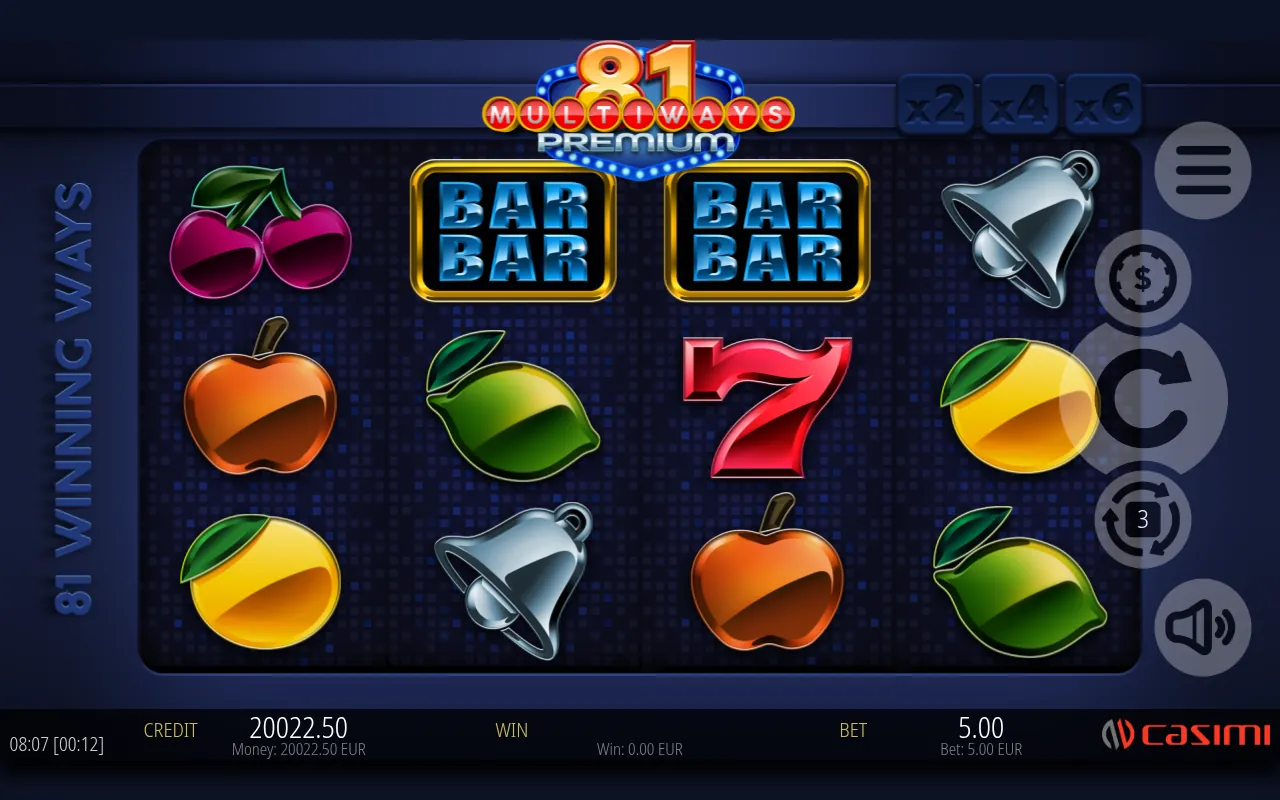
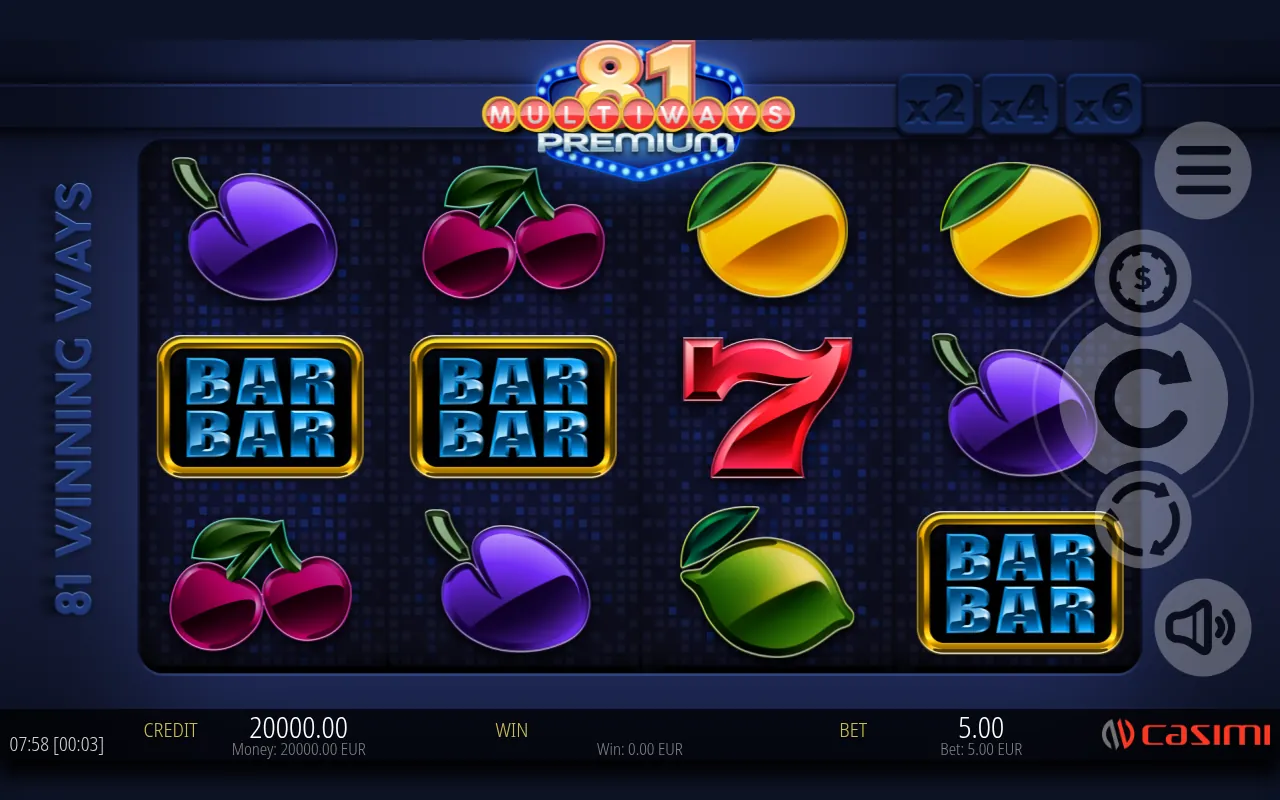
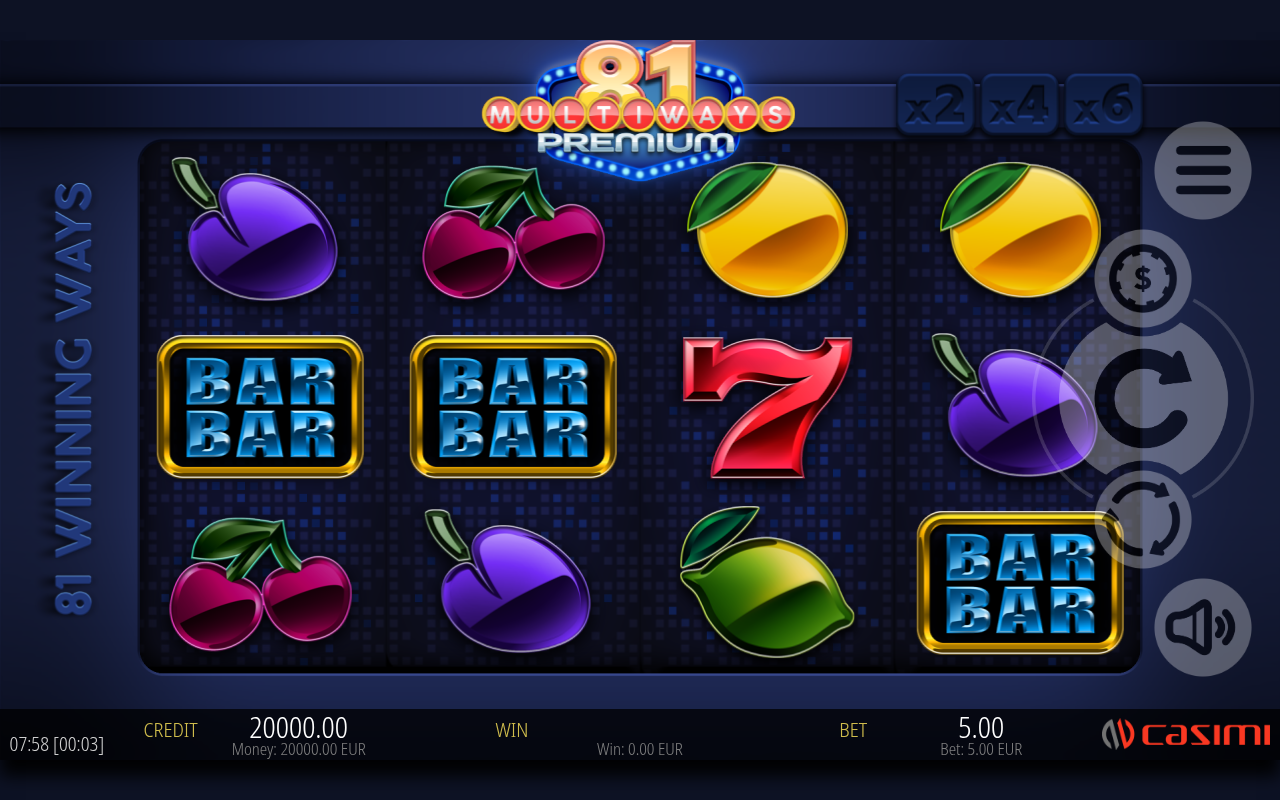
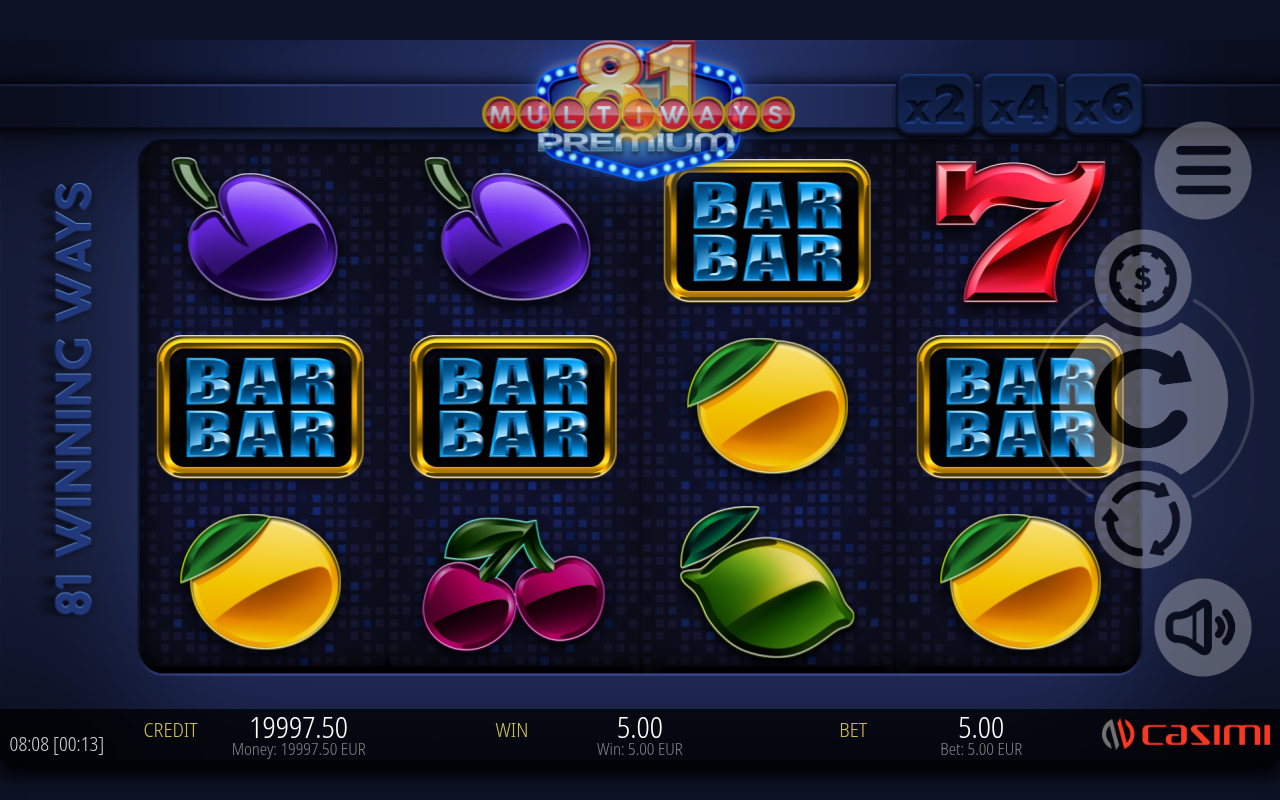
A dark navy cabinet under a marquee arc of small white-blue bulbs, tall dim lettering running up the frame, and a fine dot-grid texture behind the reels, like a backlit mesh panel in a late-night arcade. 81 Multiways Premium leans on that cabinet glow to sell a game that’s smaller than it looks: the printed pays are the weakest part of the build, and nearly every memorable win comes from the wilds stacked on top of them rather than the fruit themselves.
A classic doesn’t need many moving parts, and Casimi hasn’t given this one any. The whole game sits on a 4×4 grid with 81 win ways that pay crisscross, running at 95.87% RTP, and beyond a scatter-triggered free spins round and a wild with a multiplier ladder, there’s nothing else here. Spareness is the whole idea.
The 81 Win Ways
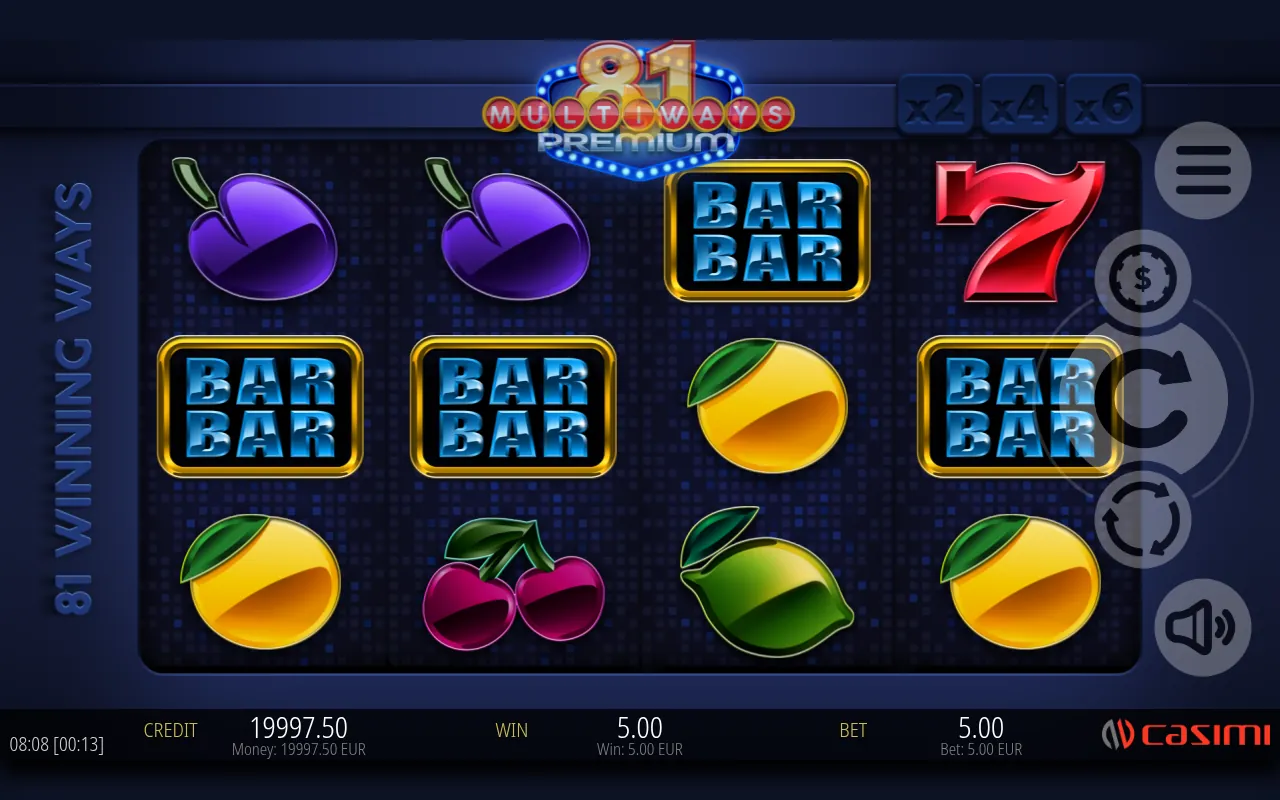
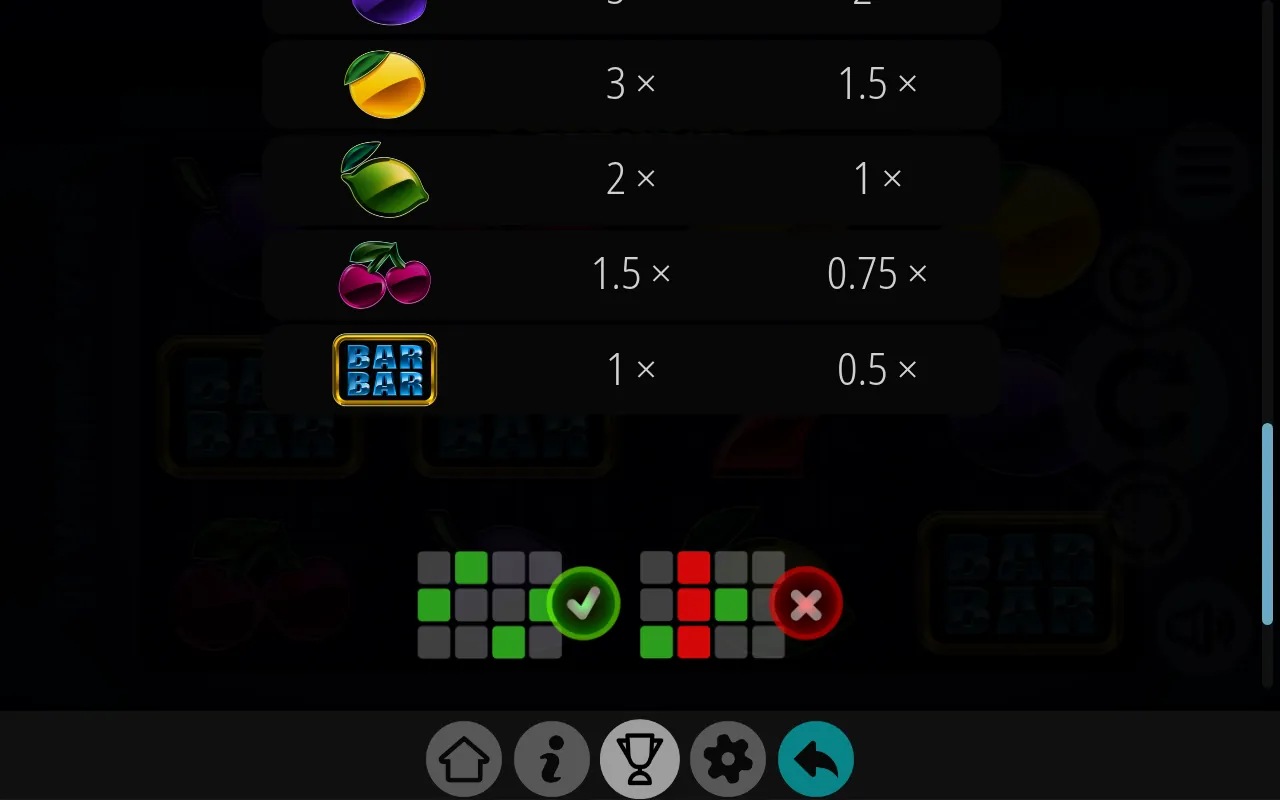
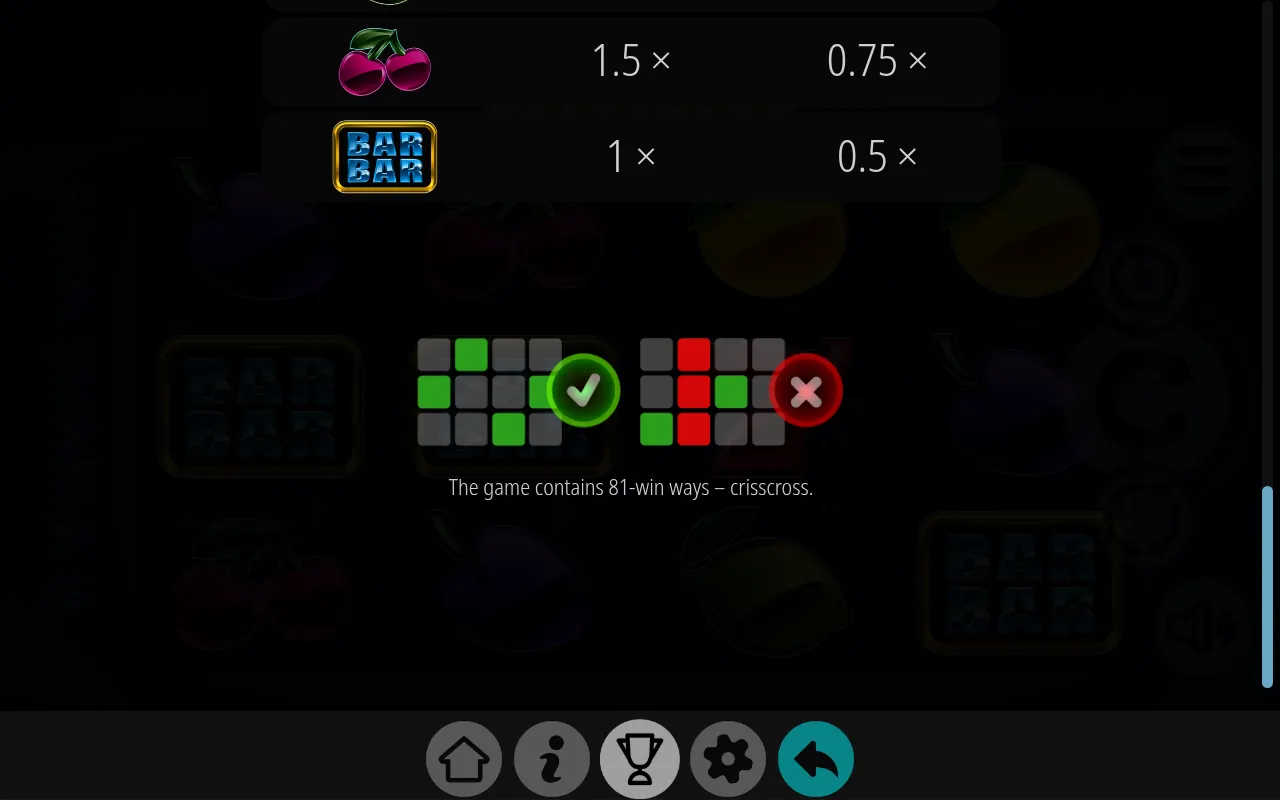
The grid is small but the ways aren’t. Four reels and four rows give every spin 81 win ways, and they pay crisscross rather than along fixed lines. A winning cluster can therefore land in directions a conventional payline game wouldn’t count, which is how a four-reel board avoids feeling cramped.
Ways-based scoring also changes what a symbol is worth. On a fixed-line game, one combination pays once. Here the same four matching symbols can complete several of the 81 crisscross ways at once, and each completed way pays separately. A centred cluster of premium symbols is worth considerably more than the same cluster pushed into a corner.
That positional element gives the board a geography a payline game doesn’t have. Edge positions sit on fewer ways than the centre, so two spins showing the same symbols can pay differently depending on where those symbols settled. It rewards attention: watching where a cluster forms matters as much as watching what it’s made of.
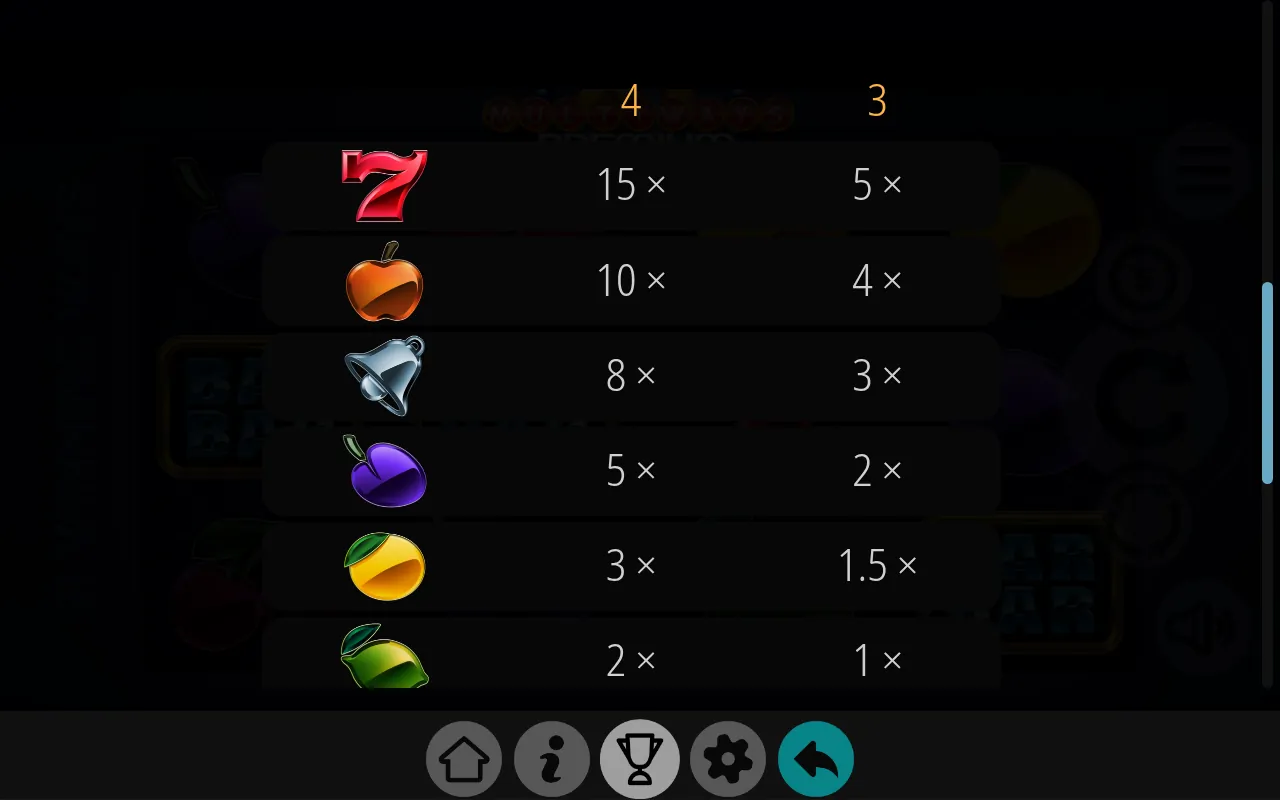
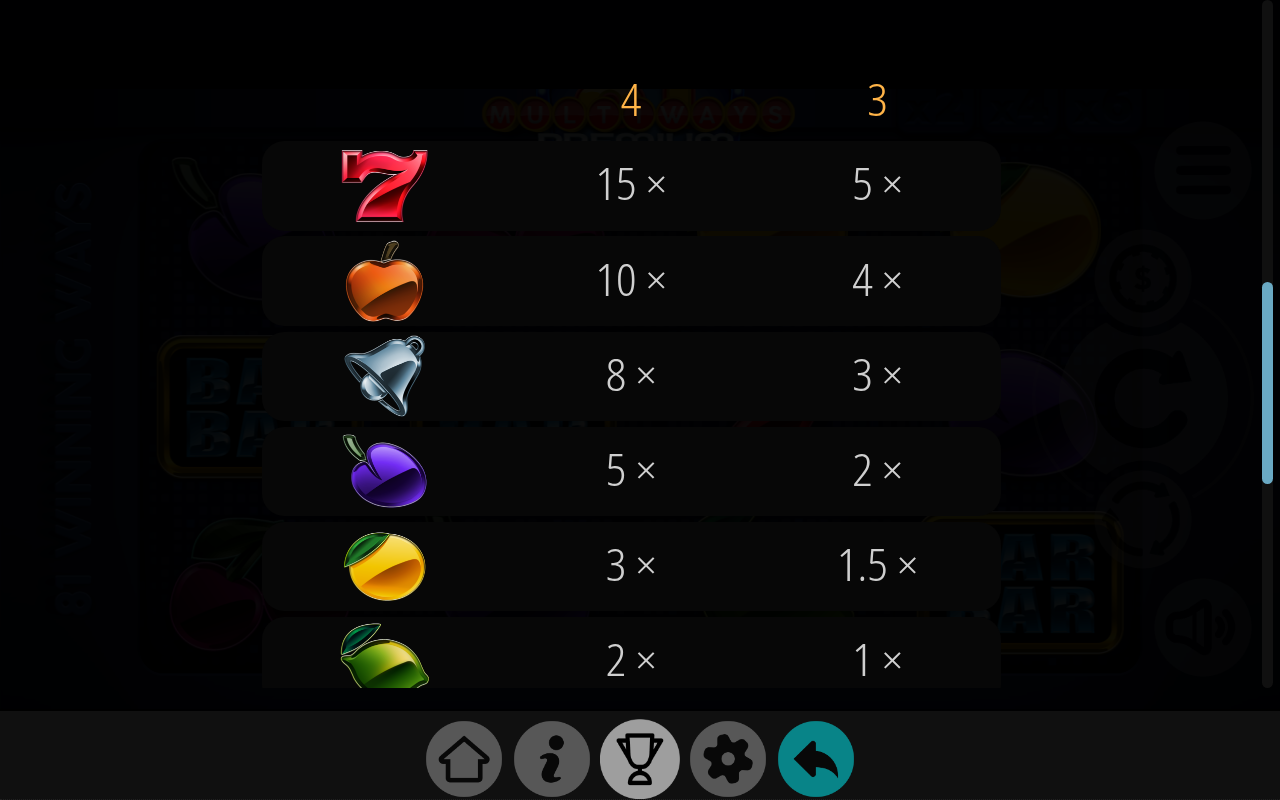
The symbol set is straight from the fruit shop. The paytable runs from a Red 7 at the top down to BAR BAR at the bottom:
- Red 7: 5x for three, 15x for four
- Apple: 4x for three, 10x for four
- Bell: 3x for three, 8x for four
- Plum: 2x for three, 5x for four
- Orange: 1.5x for three, 3x for four
- Lime: 1x for three, 2x for four
- Cherries: 0.75x for three, 1.5x for four
- BAR BAR: 0.5x for three, 1x for four
Those are modest numbers at the top and thin at the bottom. A four-of-a-kind Red 7 pays 15x the bet, and the fruit symbols tail off quickly from there. The 81 Wild carries the heavier lifting: it replaces every symbol except the scatter, and it brings its own multiplier ladder with it.
The 81 Wild Multiplier
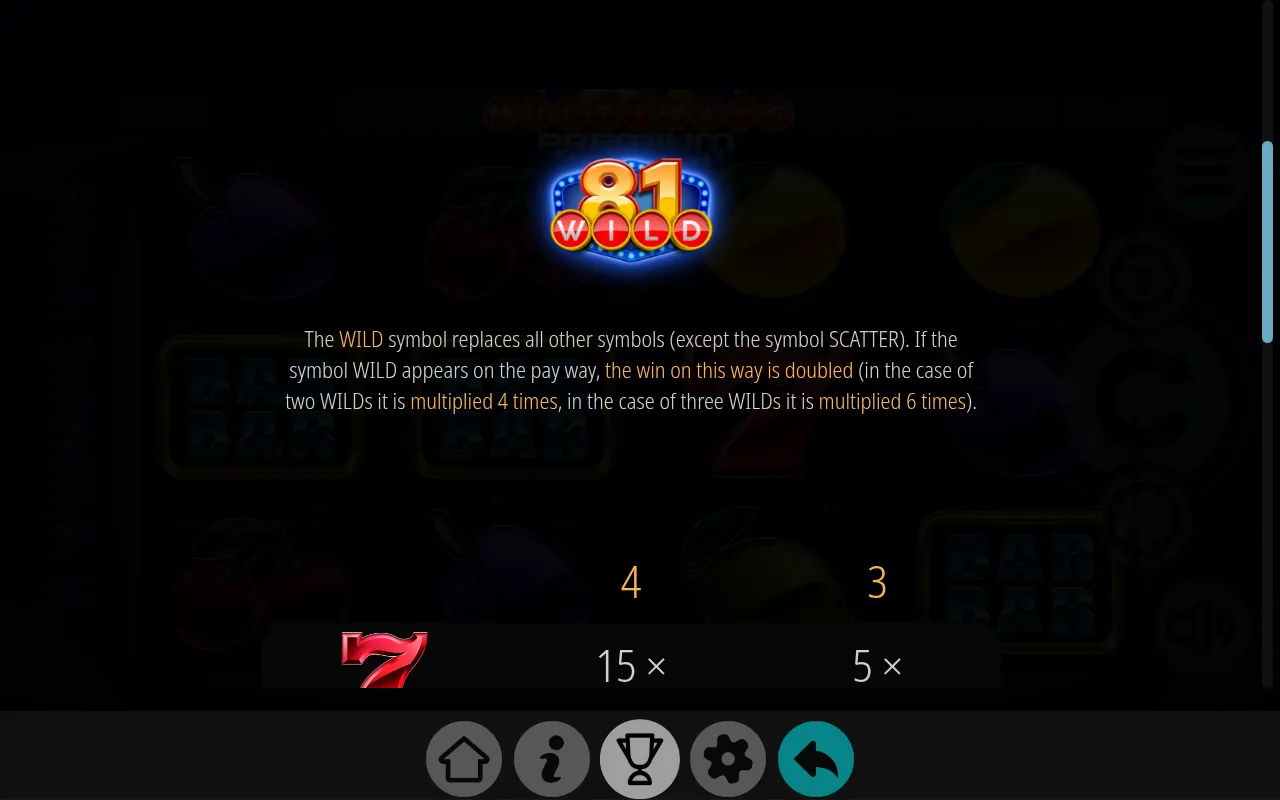
The 81 Wild substitutes for everything except the scatter. Any pay way it appears on gets its win doubled, and stacking wilds on a single way steps the multiplier up: one doubles, a pair quadruples, three together multiply the win six-fold.
On a grid this small, that ladder matters more than it first appears. A wild landing centrally can sit on a large number of the 81 ways at once, and each of those ways gets the multiplier applied to it independently. The best spot on the board is the middle of the grid, where a single wild touches the most crisscross paths.
The ladder compounds with the ways mechanic, too. Because a cluster of matching symbols can complete several ways simultaneously, one well-placed pair of wilds can multiply several separate wins in the same spin. That’s where the paytable’s real strength sits, well away from the printed symbol values.
What the wild doesn’t do is substitute for the scatter, so it can’t help build the free spins trigger. The two symbols stay in their own lanes: one earns in the base game, the other opens the bonus round.
Bonus Scatter Free Spins
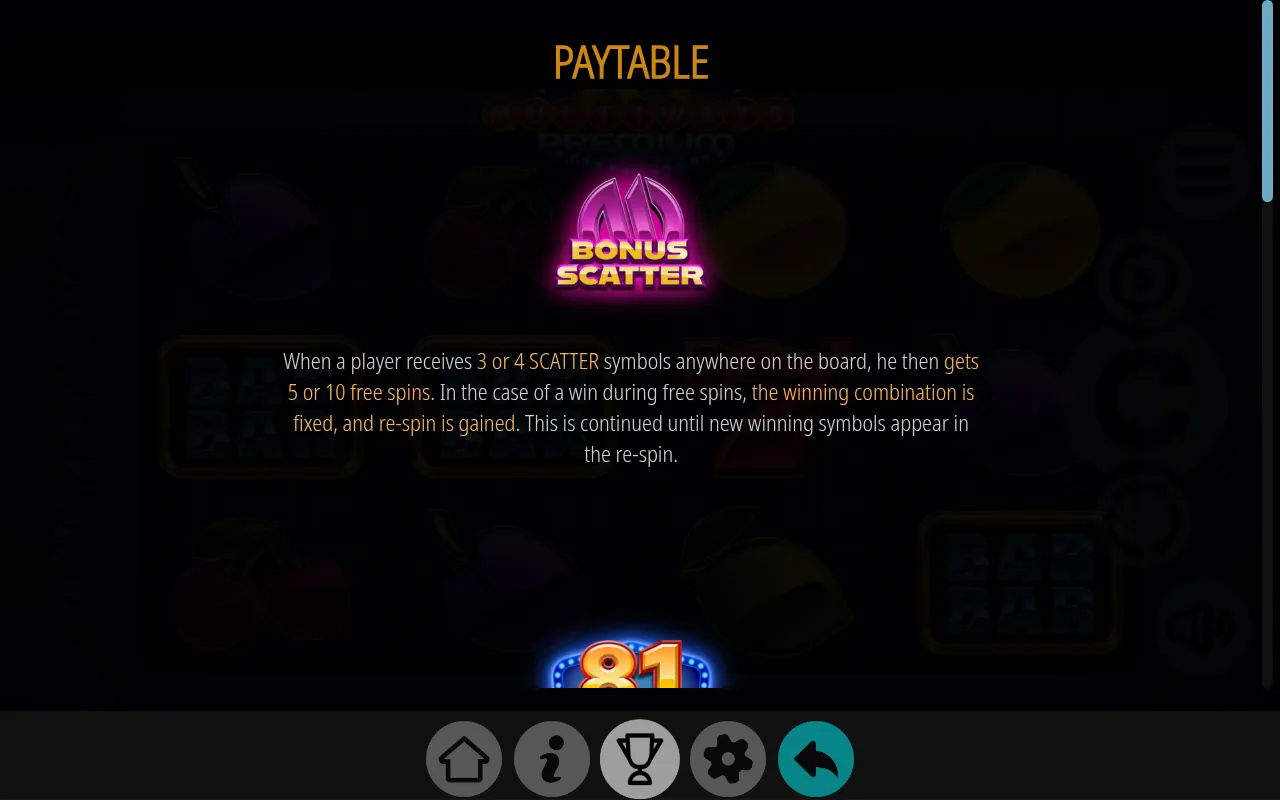
The scatter is the round’s key. Land 3 of them anywhere on the board and the game hands over 5 free spins; land 4 and that starting count doubles to 10.
The trigger is positional rather than payline-based, so the scatters count wherever they land on the 4×4 grid. There’s no need for them to line up or connect; three glowing anywhere is enough. That makes the fourth scatter a genuine bonus rather than a threshold requirement.
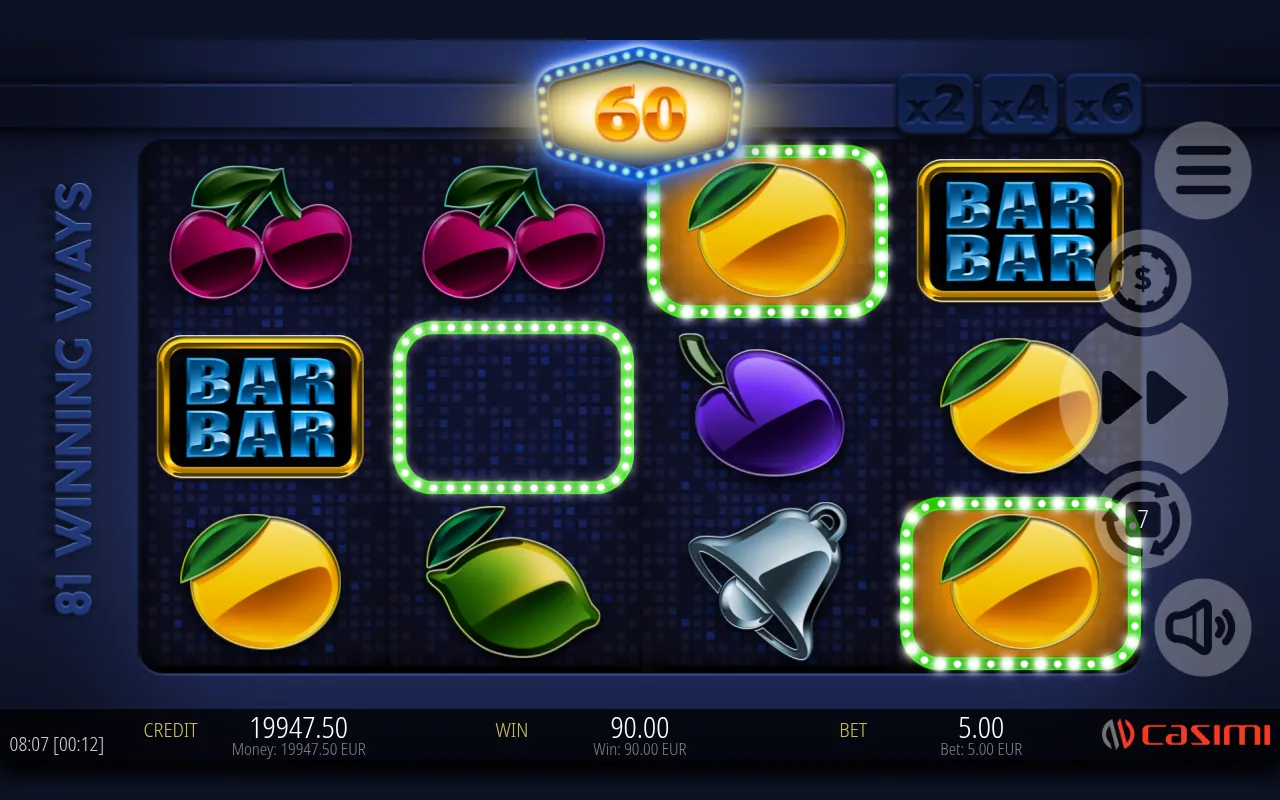
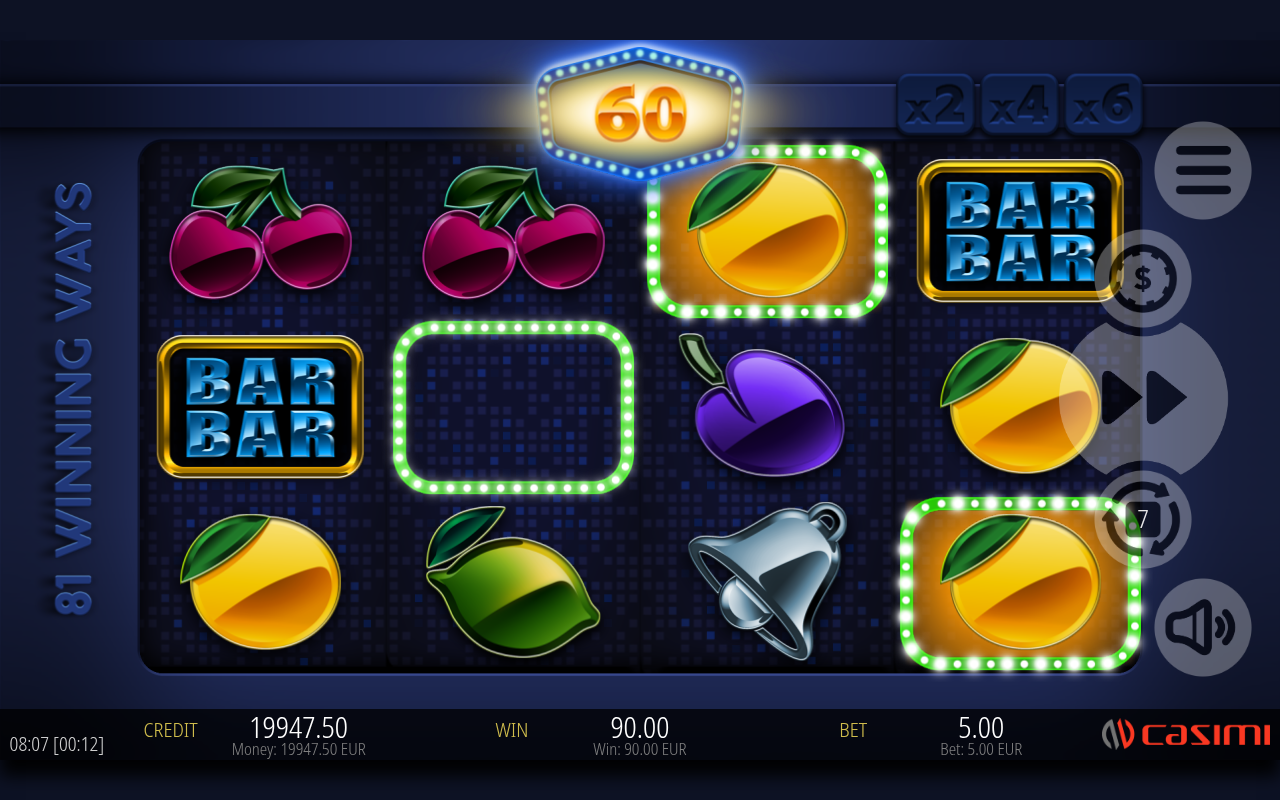
The round itself has one rule, and it’s a good one. A win during free spins locks its winning combination on the board and grants a re-spin of everything else. Each re-spin that adds new winning symbols grows the locked set and grants another, and the chain only breaks when a re-spin brings nothing new.
Run through it step by step. A win forms, and those symbols freeze in place. Everything else spins again. If that re-spin adds another winning symbol to the block, the block grows and the rest of the board spins again. The sequence repeats until a re-spin connects with nothing.
So a free spins win is never just its first combination. Every re-spin that lands grows the block, and the block keeps paying, meaning a single trigger can build through several rounds of the same spin. Drop a wild into a locked set and its multiplier applies to the whole growing combination.
The sequence ends only when the board stops feeding it, which gives the round a ratchet quality that the base game doesn’t have: wins accumulate rather than reset from spin to spin. That single mechanic is the difference between the two halves of the game.
Our Honest Verdict
Overall Rating: 7.1/10
Playing this is like standing at a proper old cabinet: quick spins, fruit you can read at a glance, and one good reason to keep feeding it, which is the free spins round. That’s the strength, and it’s a real one. Locked combinations that re-spin until the board stops adding to them give a single trigger a chance to build into something much bigger than its first win, and on a grid this small that’s a genuinely satisfying thing to watch happen.
The weakness is the paytable. A 15x top prize for four Red 7s is skinny, and without a wild in the winning way most payouts barely move the needle, so the game leans hard on those multipliers to make the fruit worth anything.
This one’s for the traditionalist who wants the old symbol set on a smarter grid and doesn’t need a feature every third spin. It isn’t for anyone chasing big ceilings or constant bonus rounds, and the printed pays won’t change their mind. But under the marquee bulbs, with a locked cluster growing spin by spin, it earns its place.
81 Multiways Premium FAQs
-
What is the RTP of 81 Multiways Premium?
81 Multiways Premium runs at an RTP of 95.87%. -
How many win ways does 81 Multiways Premium have?
The game contains 81 win ways, and they pay crisscross rather than along fixed paylines. That means winning combinations count in directions a conventional payline game wouldn’t recognise. -
What is the grid size of 81 Multiways Premium?
It’s a 4×4 grid: four reels and four rows. All 81 win ways cross that board, so a symbol’s position matters as much as its value. -
Who makes 81 Multiways Premium?
Casimi. It’s a spare build by their standards: one grid, one wild, one scatter round. -
How do you trigger free spins in 81 Multiways Premium?
You need 3 or 4 scatter symbols anywhere on the board. Three scatters award 5 free spins, and four award 10. The trigger is positional, so the scatters don’t need to line up on a pay way. -
How does the free spins re-spin mechanic work?
Whenever a win lands during free spins, the winning combination locks in place and the remaining positions re-spin. If the re-spin adds new winning symbols, those lock too and the rest re-spins again. This continues until a re-spin brings no new winning symbols. -
What does the 81 Wild do?
The 81 Wild replaces all other symbols except the scatter. If it appears on a pay way, the win on that way is doubled. Two wilds on the same way multiply the win 4 times, and three wilds multiply it 6 times. -
When is 81 Multiways Premium released?
81 Multiways Premium’s release date is 18 February 2024.