












Asian Ways Slot Review
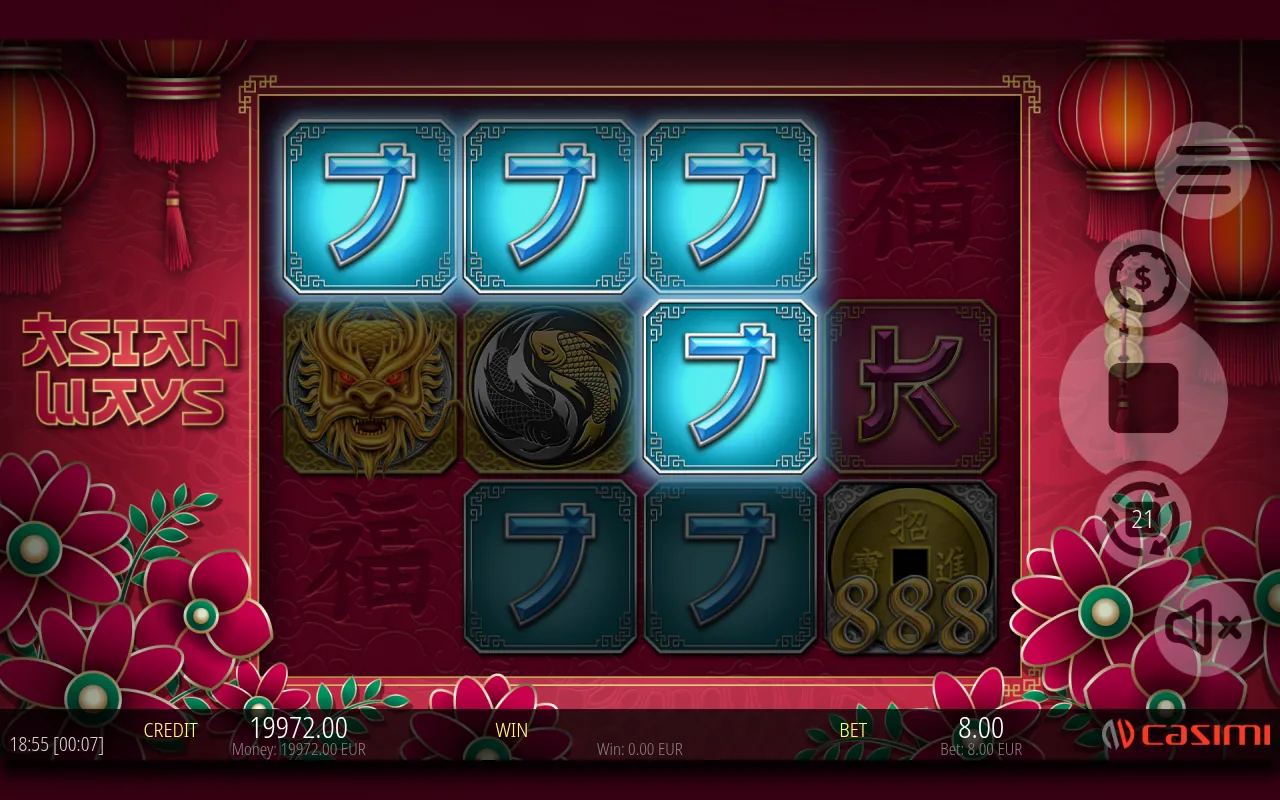
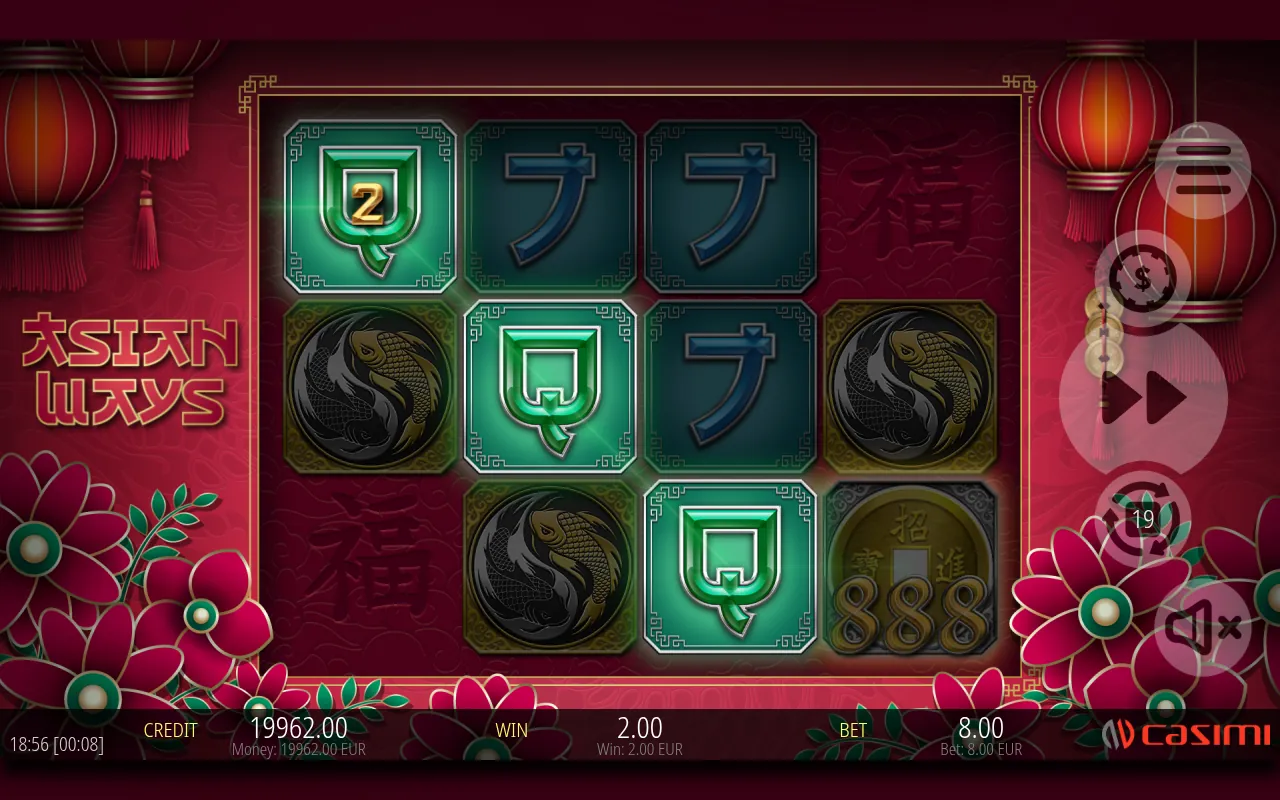
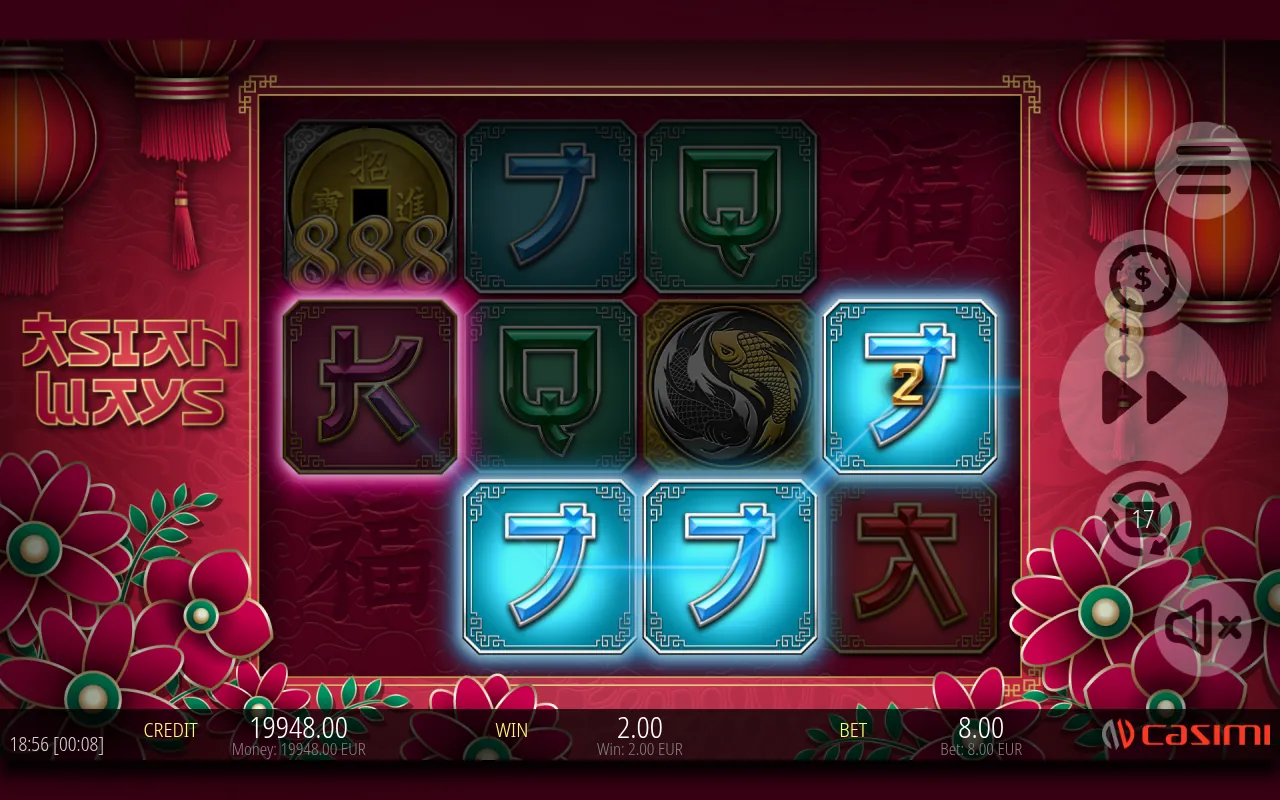
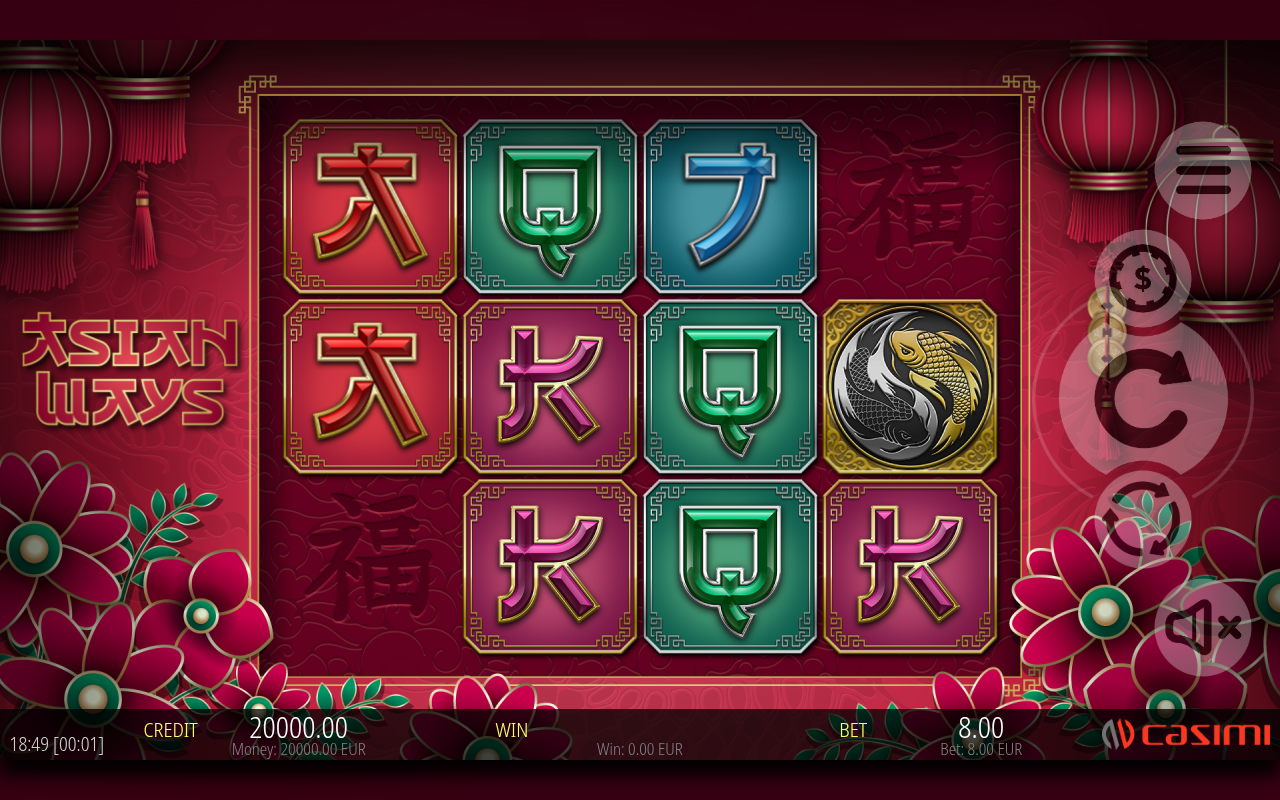
Faded 福 characters sit watermarked on crimson, gold-outlined blossoms crowd the bottom corners, and a fret-keyed gold border frames the reels against a cloud-pattern backdrop. Asian Ways is dressed for a Chinese festival, and a small game has rarely worn the costume this well. The interesting part isn’t the artwork, though. It’s that the shape of the grid does more work here than in almost any other four-reel slot, and that’s the argument for taking it seriously.
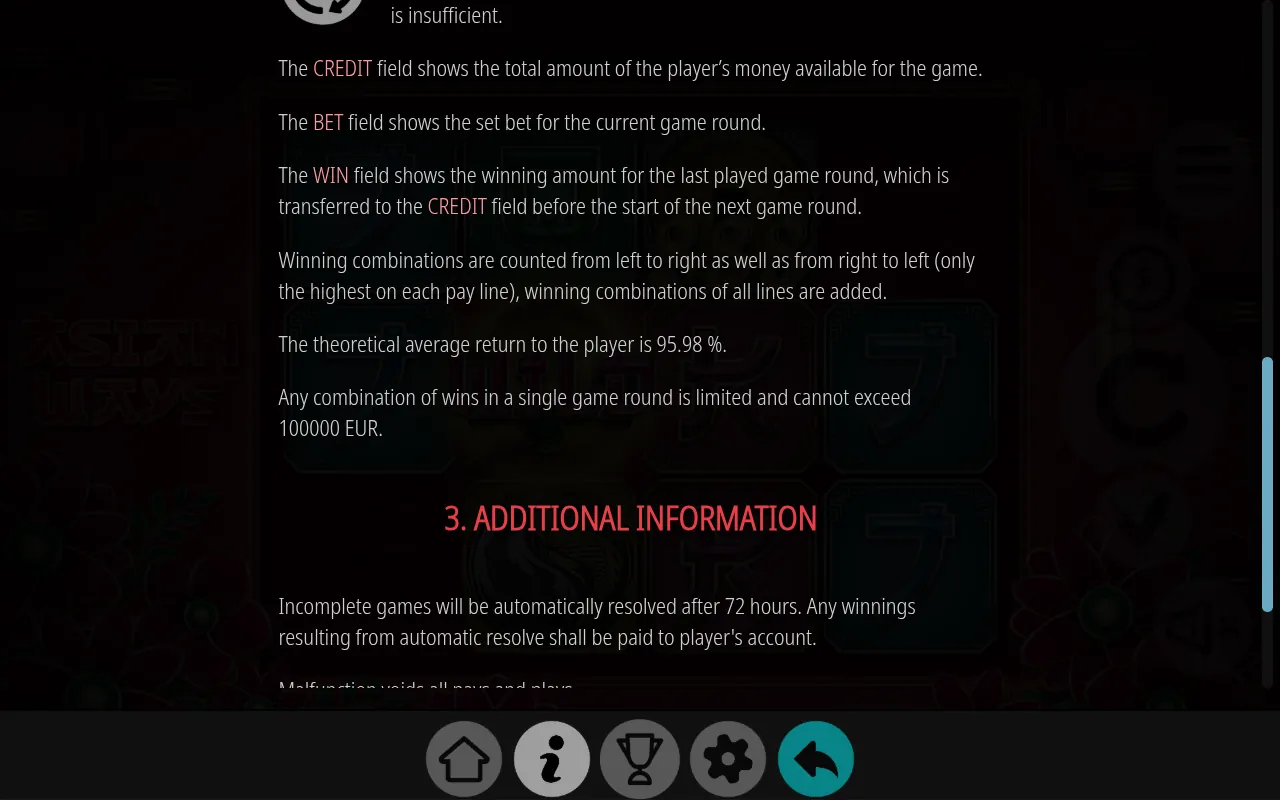
Built by Casimi, it runs a 4×3 grid with 12 paylines in the base game, paying wins from both directions, at a 95.98% RTP and low volatility. Wins in a single round are capped by the game, though no multiplier-style ceiling is printed anywhere. One feature carries the rest, and the grid is where it happens.
Symbols and Both-Way Pays
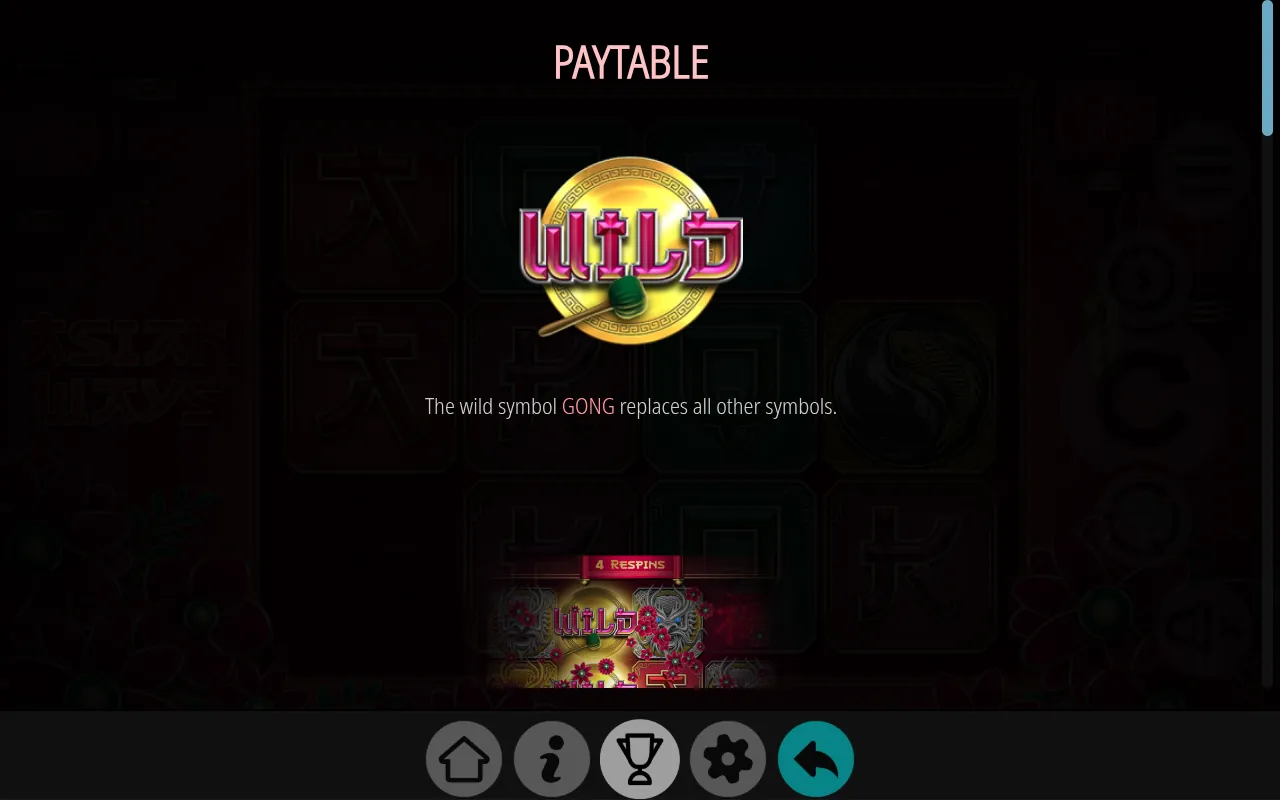
There are nine symbols in total. The wild Gong replaces all other symbols and is also the richest payer on the grid, sharing the top spot with the Gold Mask. Winning combinations count from left to right and right to left, with only the highest combination counting on each line, and all line wins added together.
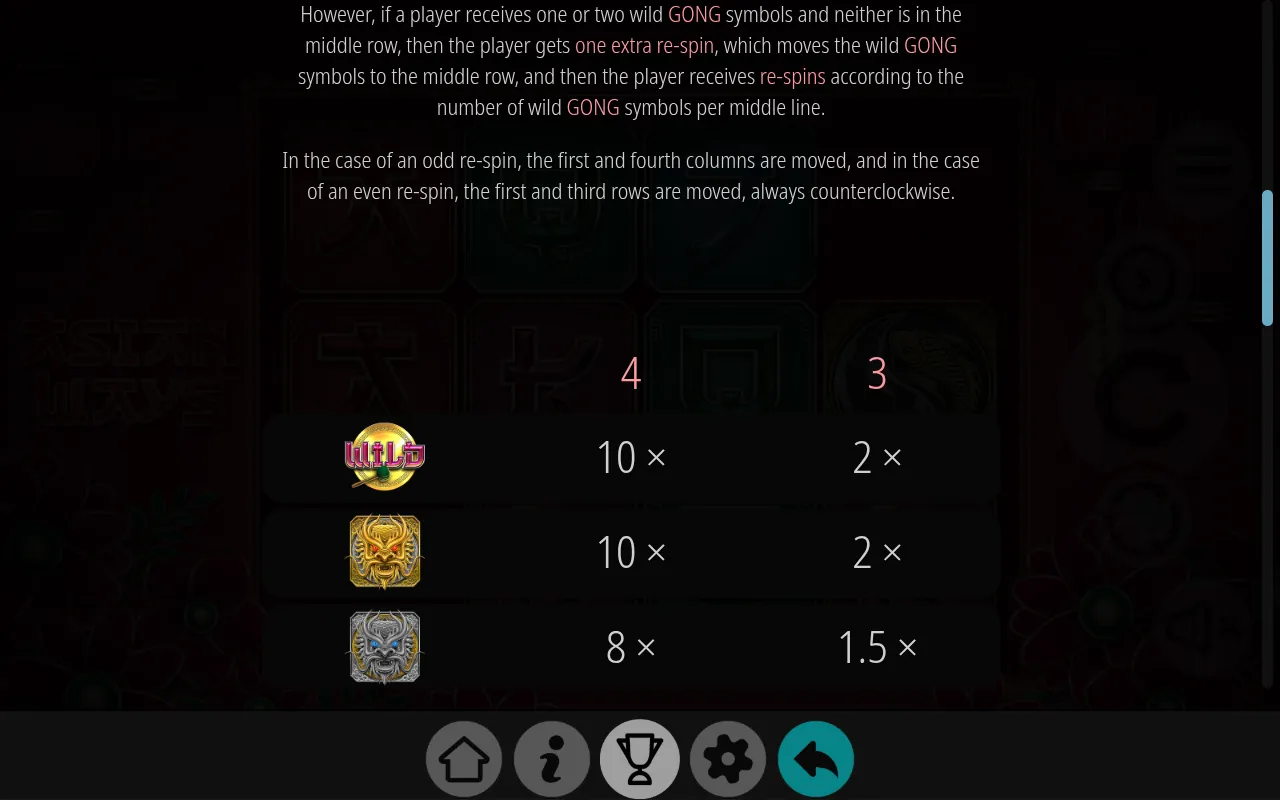
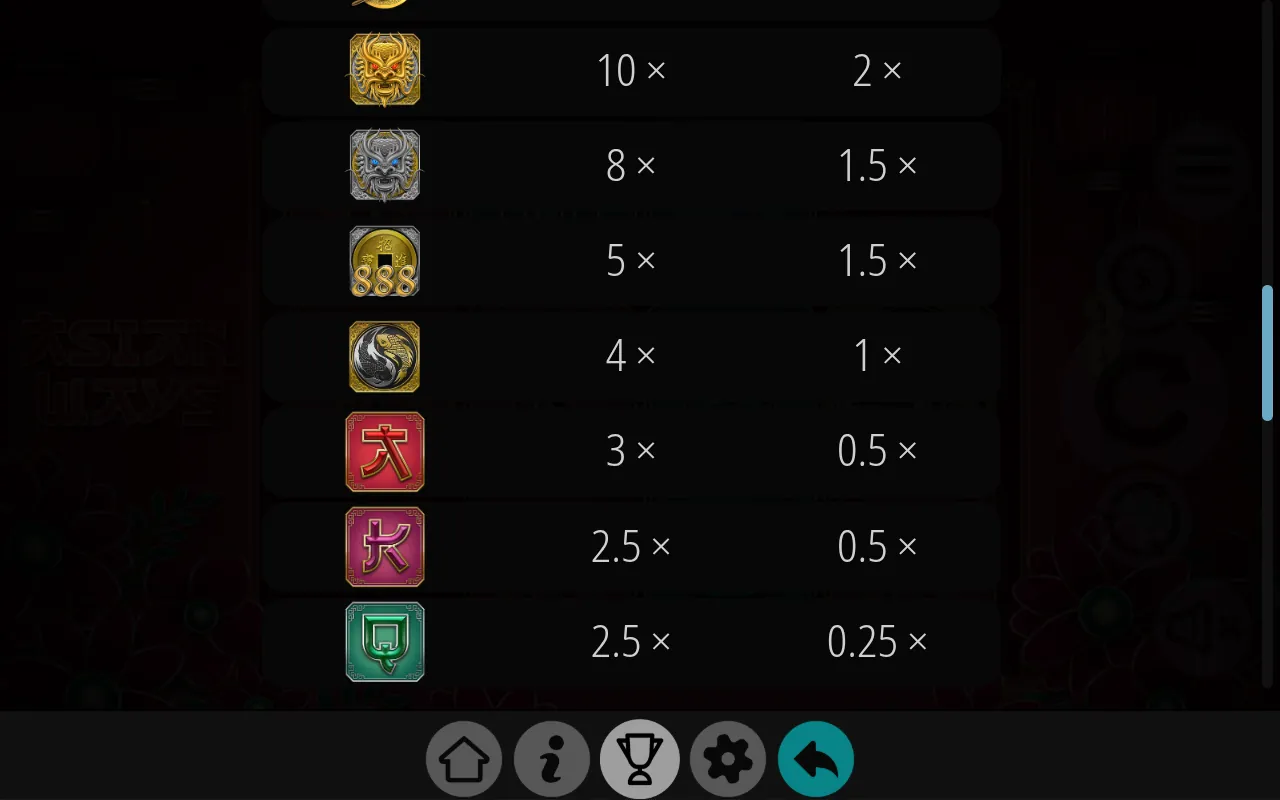
The paytable, as multiples of the line bet:
- Wild Gong: 10x for four, 2x for three
- Gold Mask: 10x for four, 2x for three
- Silver Mask: 8x for four, 1.5x for three
- 888: 5x for four, 1.5x for three
- Yin Yang: 4x for four, 1x for three
- Red Character (大): 3x for four, 0.5x for three
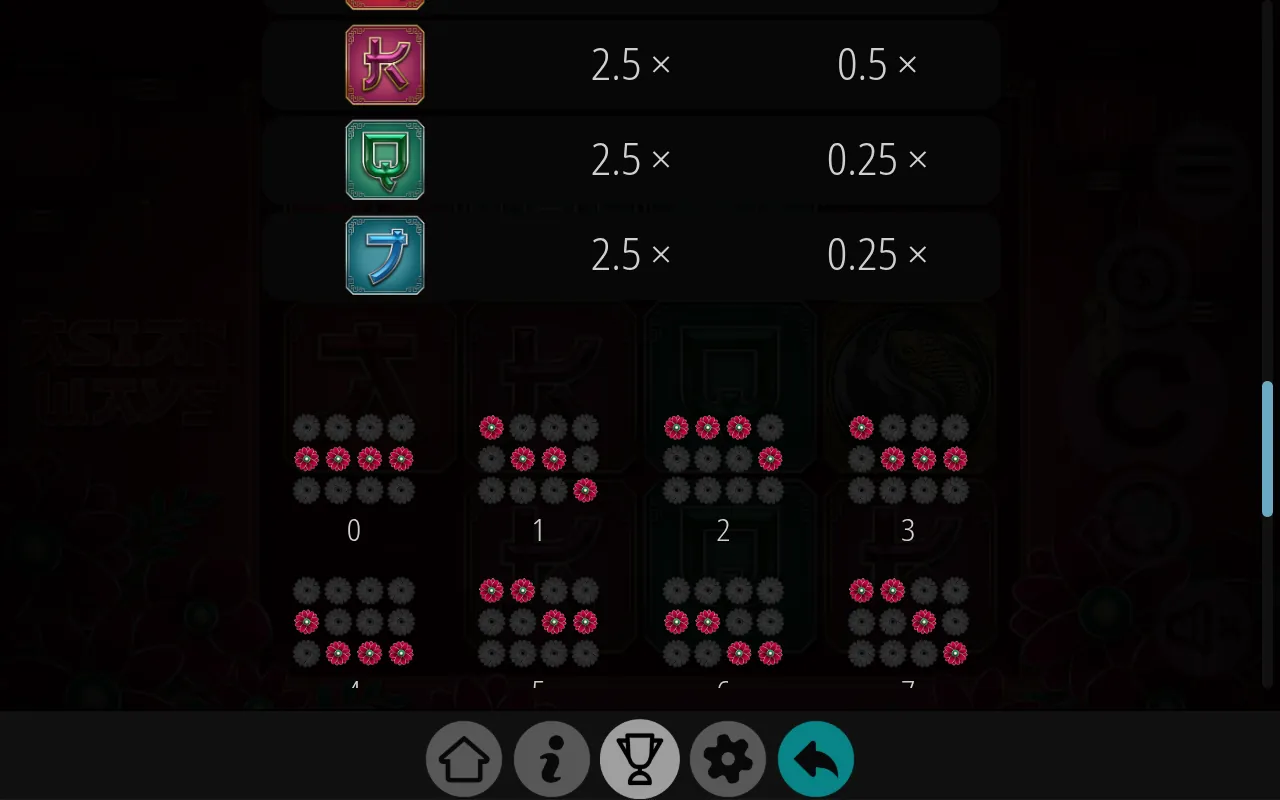
- Pink Character (K): 2.5x for four, 0.5x for three
- Green Character (Q): 2.5x for four, 0.25x for three
- Blue Character (ナ): 2.5x for four, 0.25x for three
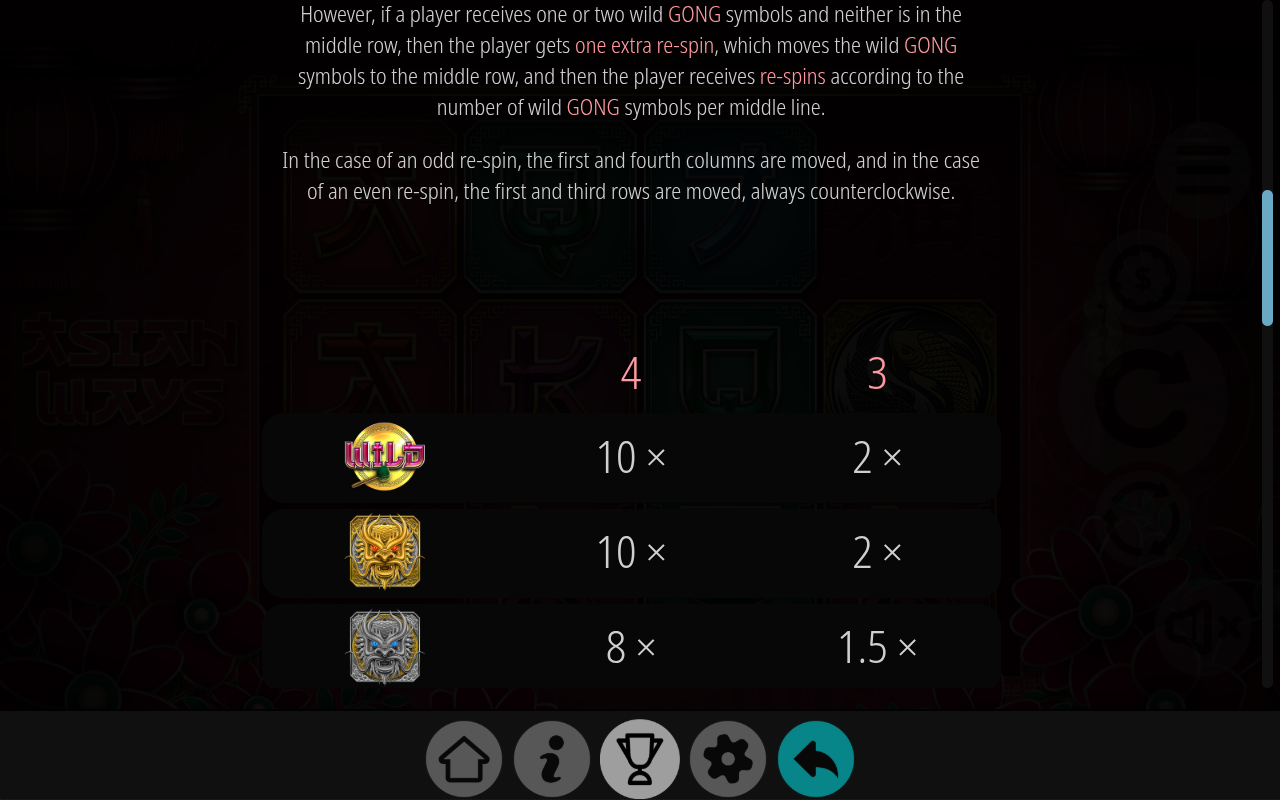
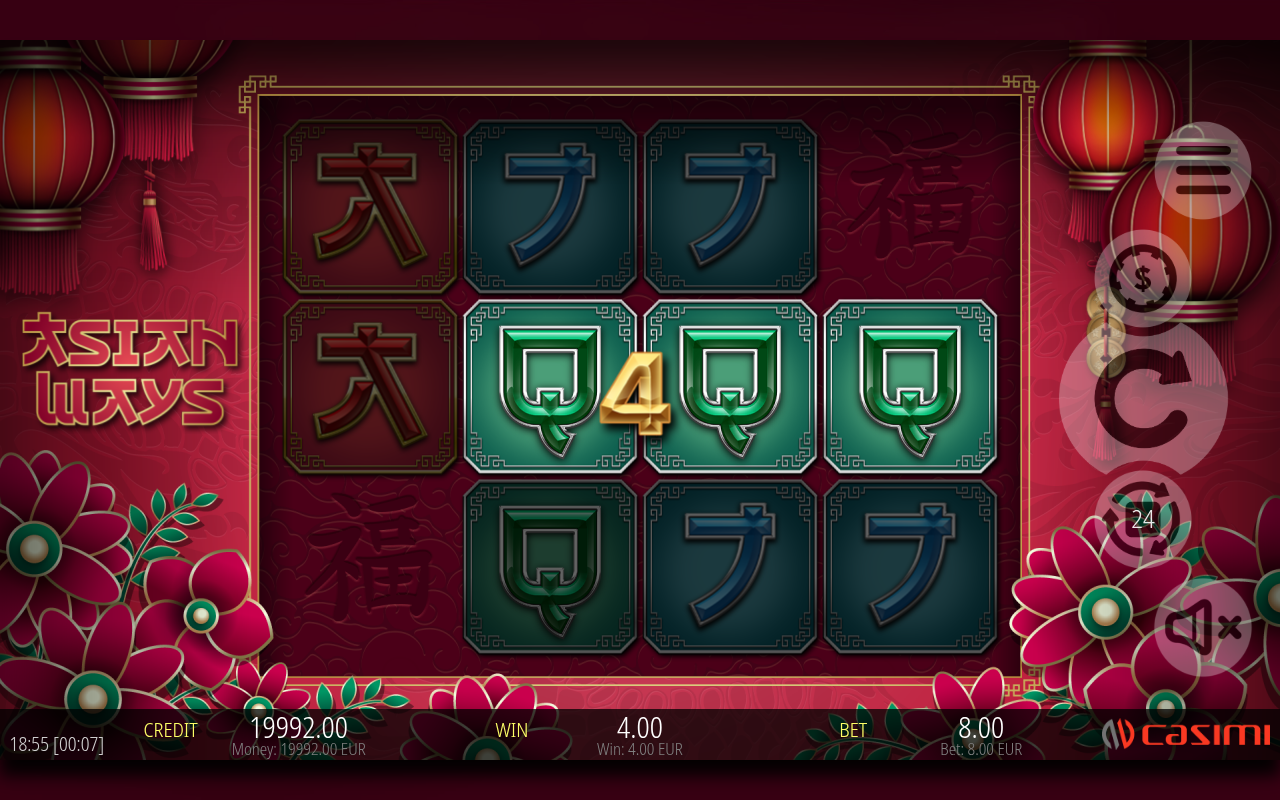
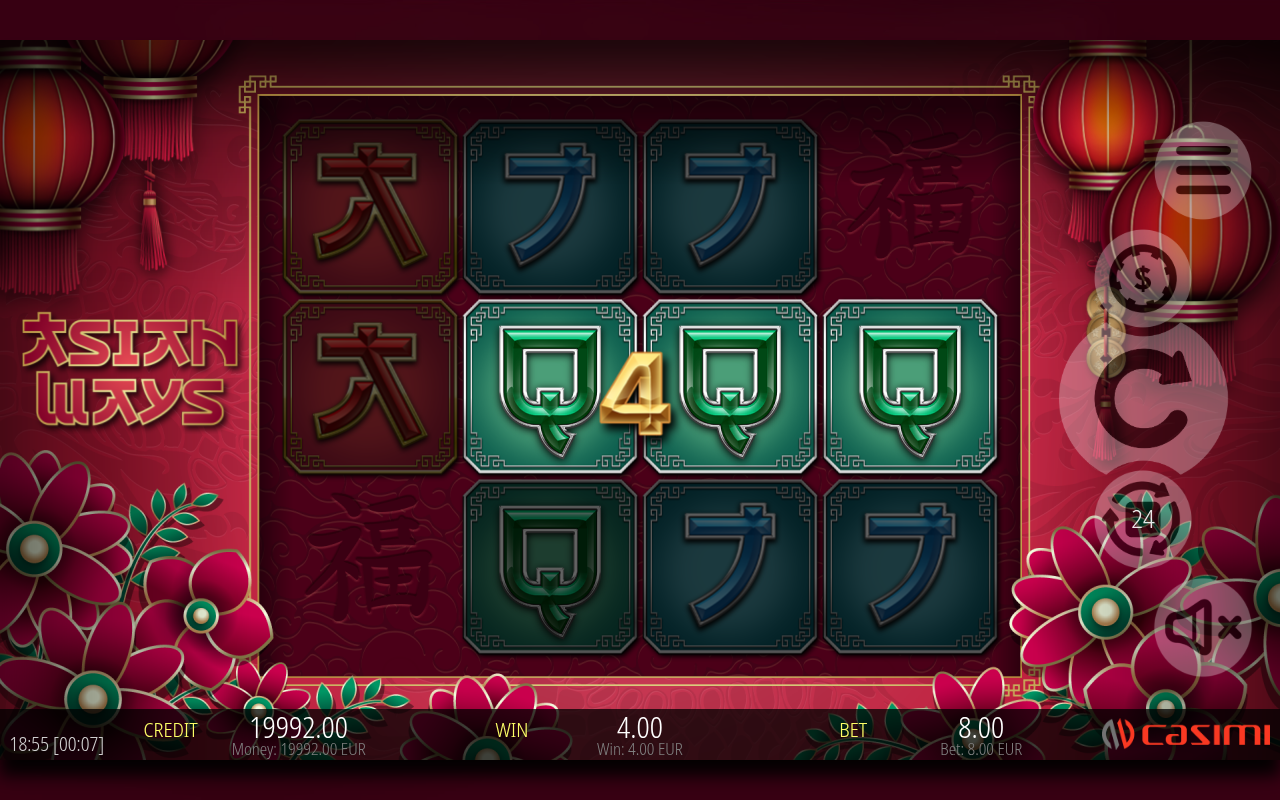
Both-way pays do a lot of quiet work on a 4×3 grid. With only four columns, a three-symbol run landing on the first or last reel becomes a win either way round, which softens the maths considerably for a low variance game.
Four of a kind is a different matter. It has to fill an entire column plus one more position on a very short grid, so the 10x top prizes stay rare treats rather than regular events. The both-way rule helps most at the three-symbol end of the table, where the character symbols live.
The symbol set splits neatly in two. Up top sit the masks, the 888 and the Yin Yang, all carrying the lucky-number and fortune imagery the theme is built on. Below them, the character symbols step down through the multiples.
The two lowest payers, the Green Q and the Blue ナ, share identical values, so the game makes no distinction between them on the payslip. The middle of the table is flat, too. The Silver Mask and the 888 both pay 1.5x for three, and the three character symbols above the bottom pair all sit within half a multiple of each other for four.
On a low volatility game that flatness is the point: the gaps between tiers are small, so wins cluster in a narrow band rather than swinging between trivial and spectacular.
Gong Re-Spins and the Rotating Grid
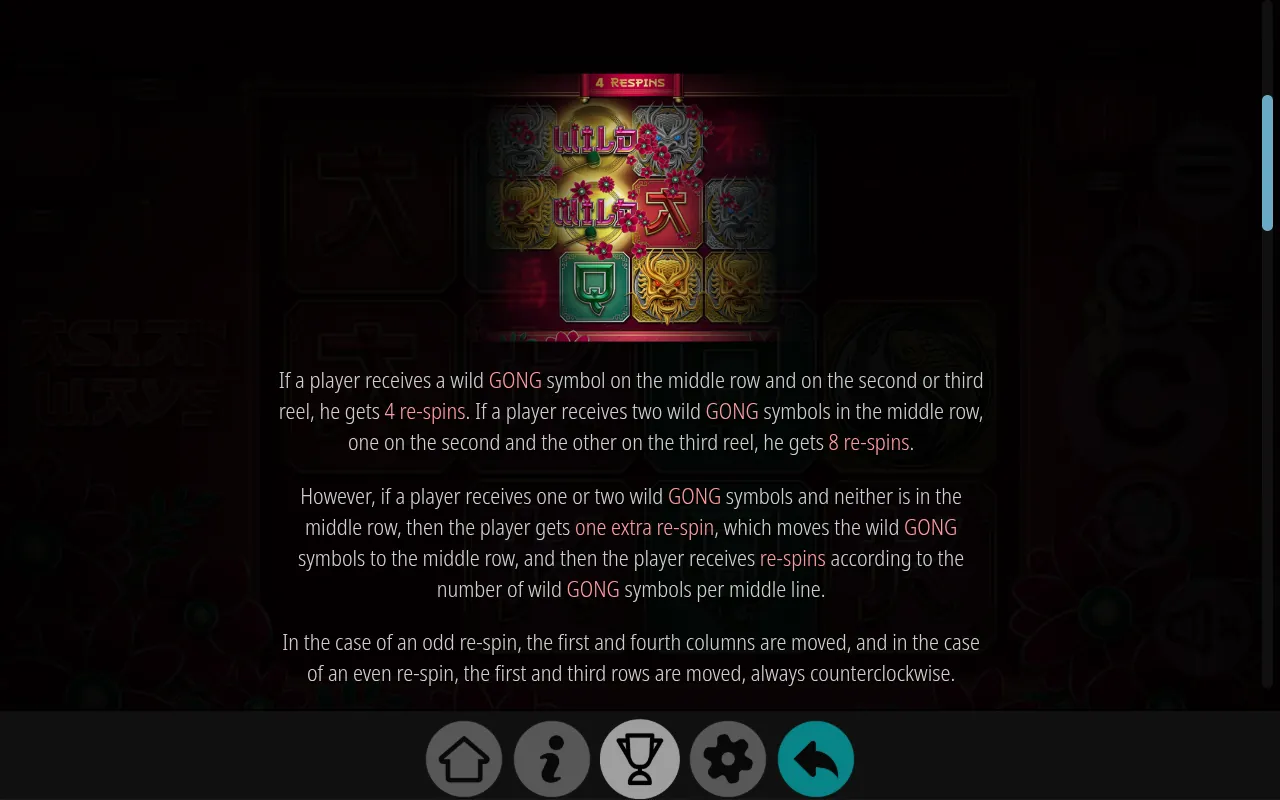
The re-spin round is what Asian Ways is actually about. The trigger is specific: a wild Gong needs to land on the middle row, on either the second or third reel. One Gong in position awards four re-spins. Two Gongs, one on reel two and one on reel three, award eight.
There’s a nudge built in for near misses. If one or two Gongs land but none is on the middle row, a single extra re-spin plays first, moving the wilds onto the middle row. The full count of re-spins then follows, based on how many Gongs sit on that middle line after the move.
That set-up re-spin is worth tracing through, because it changes what a “miss” means. A Gong on the top row of reel two isn’t a wasted landing; it’s a delayed trigger. The move happens automatically, the wilds settle onto the middle line, and the round proper begins from there.
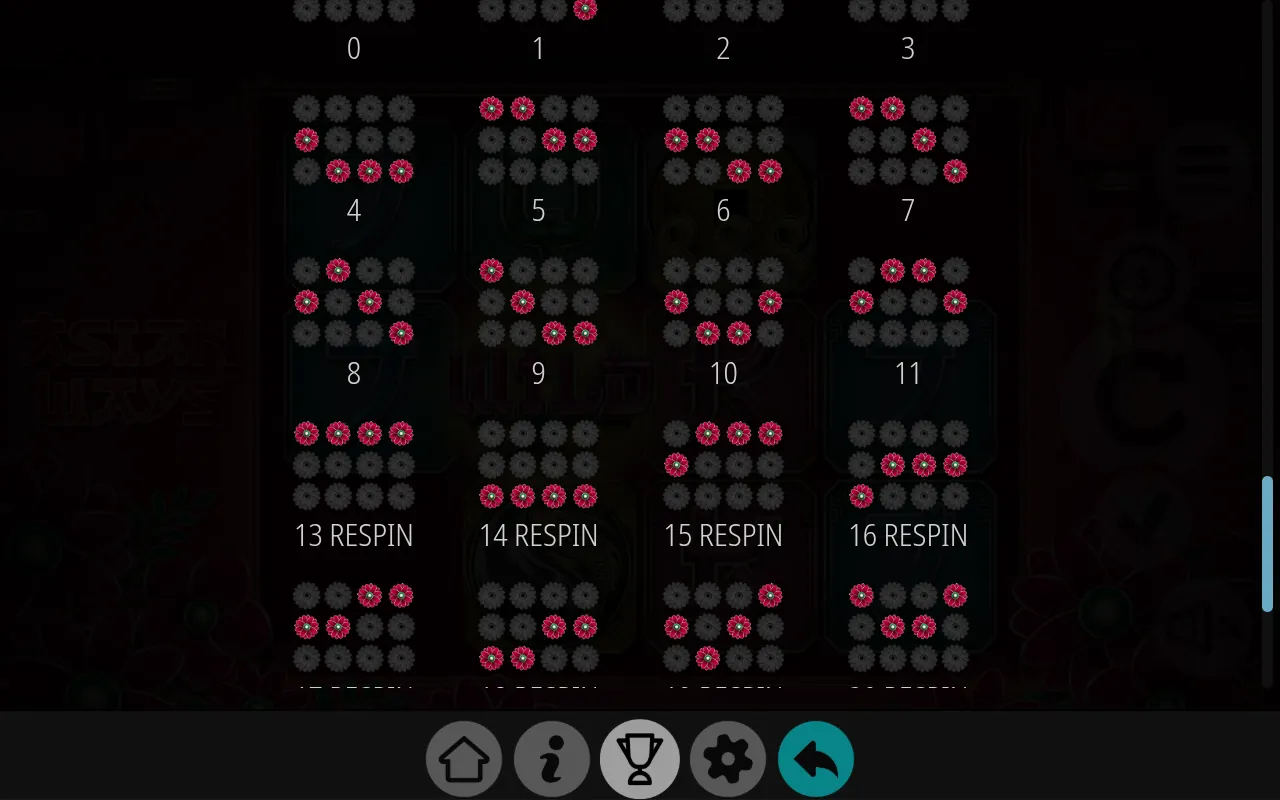
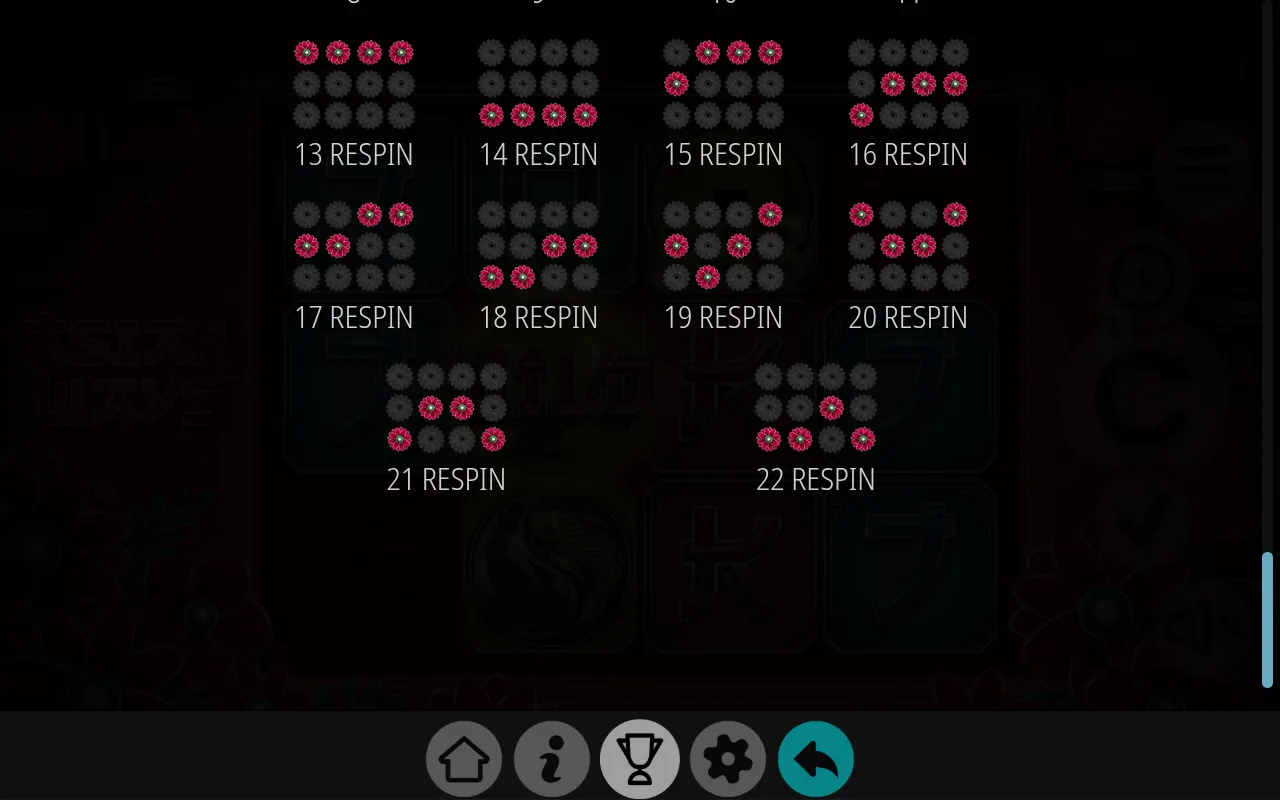
During the round, the grid itself behaves unusually. On odd re-spins, the first and fourth columns move. On even re-spins, the first and third rows move instead, always counterclockwise. The layout keeps shifting under the symbols, and the payline count expands from 12 to 22, the extra ten lines being the re-spin lines.
- One wild Gong on the middle row of reel 2 or 3: four re-spins
- Two wild Gongs across reels 2 and 3, both on the middle row: eight re-spins
- Gongs landed off the middle row: one set-up re-spin moves them into position first
- Odd re-spins rotate columns one and four; even re-spins rotate rows one and three, counterclockwise
- Paylines expand from 12 to 22 for the duration of the round
It’s a clever piece of design for a three-row grid. Because the wilds are locked to the middle row and the columns and rows rotate around them, every re-spin reshuffles the surrounding symbols while the Gongs keep substituting. With wins paying both ways across 22 lines, a sticky pair of wilds in the middle of the action can build several paying lines at once.
The alternating pattern deserves a closer look, because it changes what each spin is for. A column rotation drags whole stacks sideways across the wild row, which is where new three-symbol connections form. A row rotation instead slides symbols along the middle row itself, shuffling what sits directly beside the Gongs.
The two moves alternate strictly, so a round of eight plays out as four of each. One practical consequence: symbol positions at the start of a re-spin tell you very little about how it ends.
On most slots a locked wild means the reels around it simply spin again. Here the geometry itself is the variable, which is a rare thing to say about a four-reel game, and it’s the reason the round stays interesting across the full eight re-spins rather than just the first couple.
Our Honest Verdict
Overall Rating: 7.2/10
Playing Asian Ways is steady spinning in festival lighting, with the grid tearing itself up and rebuilding whenever the wilds land right, and that reshuffle is the one reason to choose it over any other low-variance four-reeler. The re-spin round is the strength. Rotating rows and columns around sticky middle-row wilds is a genuinely unusual mechanic, and the 22-line expansion gives it real room to pay.
The weakness is that everything hangs on one trigger. A four-re-spin round from a single Gong is over almost as soon as it starts, and between rounds the base game just ticks over politely.
It suits players after low variance with something worth watching: modest, regular wins, and one mechanic that earns the patience. Big-ceiling hunters won’t find what they’re after under these lanterns. For everyone else, this is a small game that knows how to ring.
Asian Ways FAQs
-
What is the RTP of Asian Ways?
The RTP is 95.98%, which is a shade above the usual benchmark for a low volatility slot. -
Is Asian Ways high volatility?
No, it’s a low volatility game. Wins tend to be smaller and more regular, with the re-spin feature providing the bigger moments. -
How do you trigger the re-spins in Asian Ways?
Wild Gongs landing in the right place start the round. One Gong on the middle row of reel 2 or 3 gives four re-spins; two Gongs, one on each of those reels, give eight. Gongs that arrive off the middle row get shifted there by a single set-up re-spin first. -
What does the wild Gong do in Asian Ways?
The Gong replaces all other symbols and is jointly the top payer, worth 10x for four of a kind and 2x for three. It’s also the key to the re-spin round. -
How do the rotating reels work in the re-spins?
On odd re-spins the first and fourth columns rotate, and on even re-spins the first and third rows rotate, always counterclockwise. The middle-row wilds stay put while the grid shifts around them. -
How many paylines does Asian Ways have?
There are 12 paylines in the base game, expanding to 22 during the re-spin round. Wins are paid from both ends of a line, with only the best combination on each one counting. -
What is the grid size of Asian Ways?
It’s a 4×3 grid: four reels and three rows, which is what makes the both-way pays and the rotating re-spin mechanics unusual. -
Who makes Asian Ways?
Asian Ways is made by Casimi, and its release date is 6 October 2021.