









Crazy 7 Slot Review
Glossy blue orbs drift across a purple void while magenta ribbons tumble through the backdrop, and Crazy 7 is happy to sit inside that glow doing almost nothing. The bet this game makes is that a single prize can carry a whole slot: three orange sevens, worth around 27 times the mixed line and towering over everything else on the sheet.
Playtech built it very small. It runs on a 3×2 grid at 96.98% RTP, with three coloured sevens and a mixed line doing all the paying, and no wild, scatter or bonus round anywhere in it. That’s a long way from the same studio’s loudest entries, Buffalo Blitz or Fire Blaze: Jinns Moon, where every spin dangles a second mode. Here the sevens either line up or they don’t, and that’s the whole event.
The Sevens and What They Pay
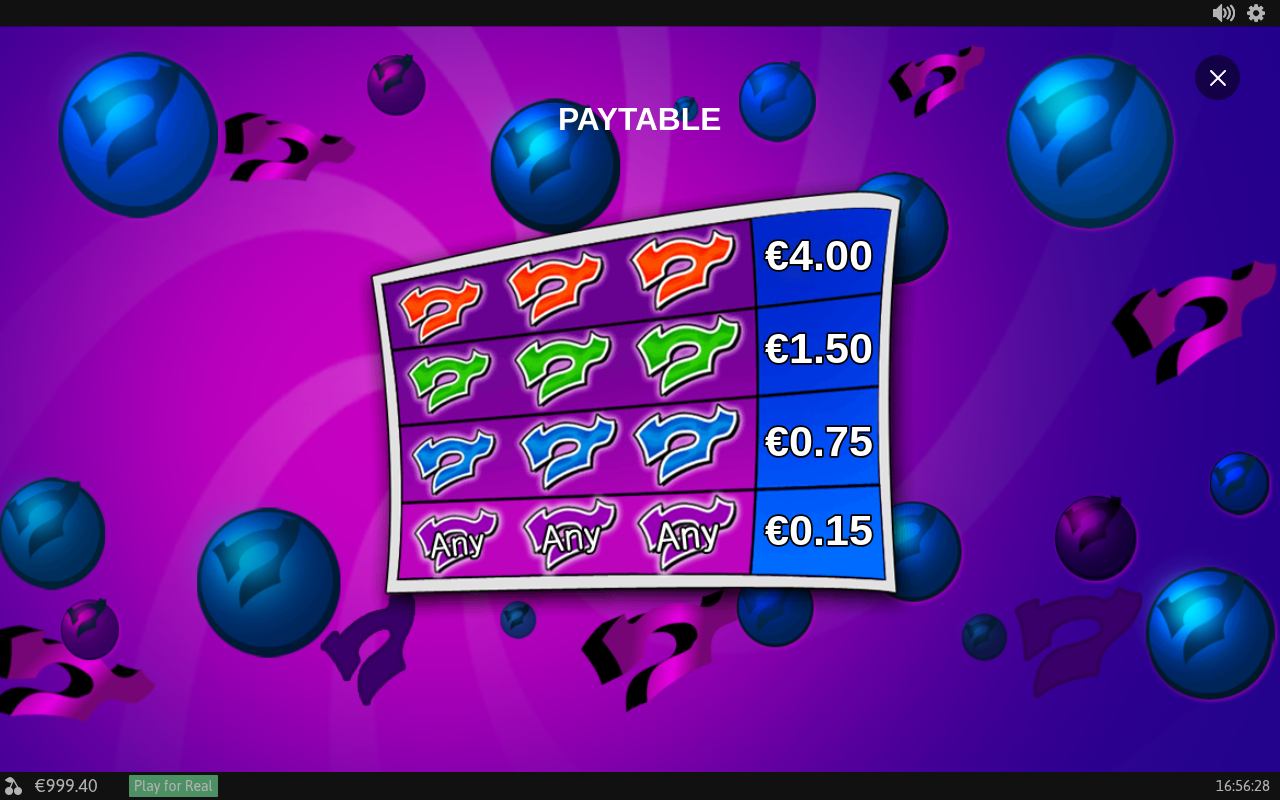
Everything that pays in Crazy 7 is a seven, and there are only three of them: orange, green and blue. Line up three of a kind across the grid and the colour decides the prize. Beyond those three colours there’s a fourth way to win, on any mixed line of sevens, which is the smallest pay on the sheet.
The whole paytable is built on that hierarchy. Judged against the mixed line, the prizes step up sharply as the colours change:
- Three orange sevens – the top prize, worth around 27 times the mixed line
- Three green sevens – ten times the mixed line
- Three blue sevens – five times the mixed line
- Any three mixed sevens – the base pay every other prize is measured against
The gap between the orange line and everything else is where the game’s character sits. A blue or mixed line is pocket change; the orange three is the spin you’re actually waiting for. Nothing on the sheet sits between those two extremes in spirit – each step up the colour ladder is a multiple of the one below it, and the orange line towers over the lot.
Each colour is a distinct symbol rather than a variant of one. That matters for the mixed line: it doesn’t matter which sevens make up the three, only that all three positions fill with some combination of them. A green, a blue and an orange in a row pays the same small amount as three blues and a green would in any other order.
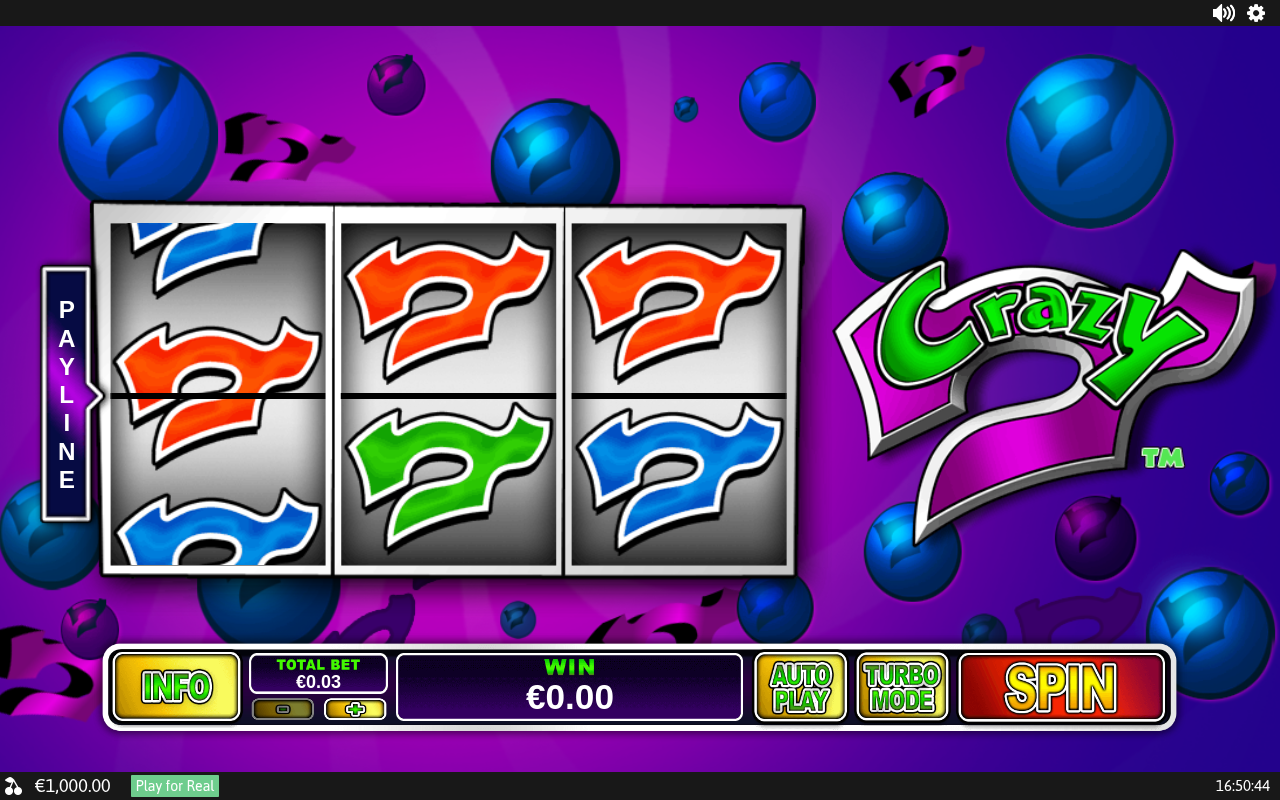
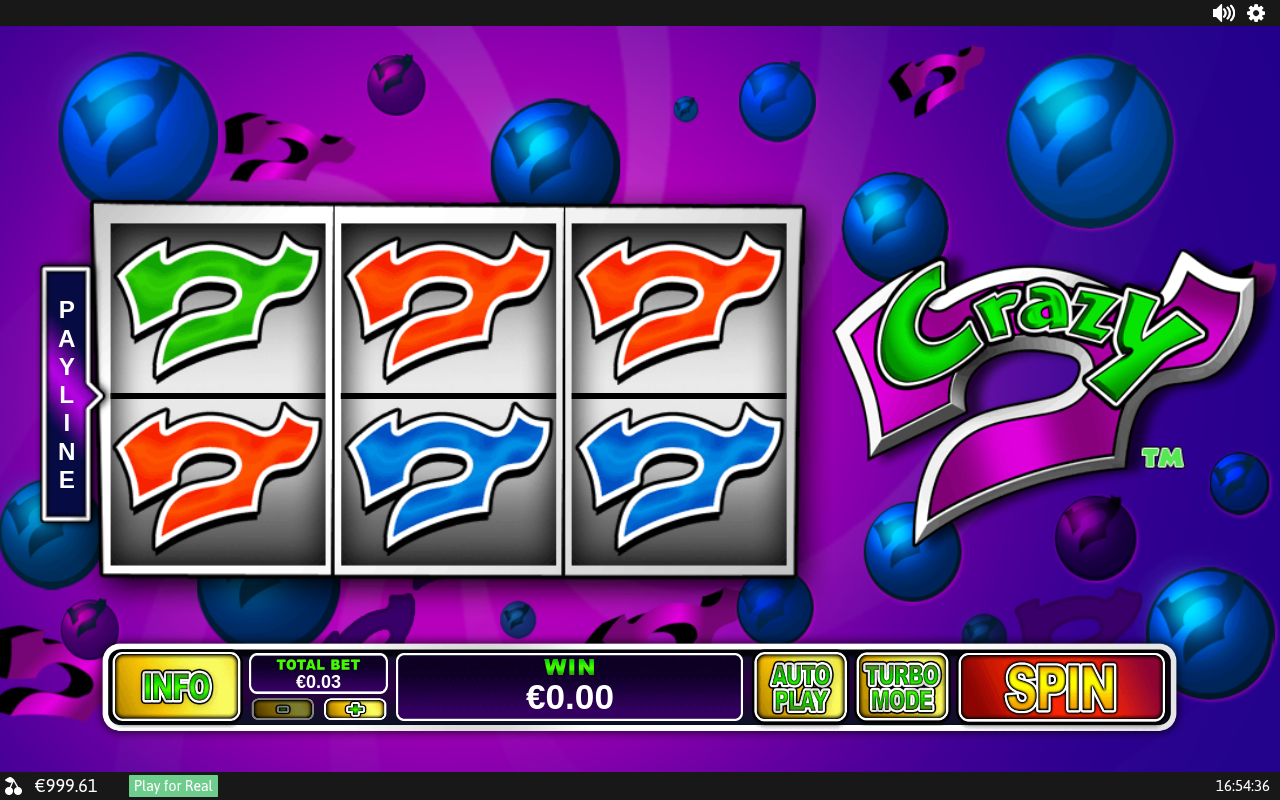
Wins are formed from lines of three, which on a 3×2 grid means filling a full row. Two of a kind pays nothing here; a partial line is just decoration until the third seven arrives. Because only three positions count, every spin resolves almost instantly, and there’s no second stage to wait through once the reels stop.
The paytable itself is a single tier deep. There are no secondary prizes for different bet levels, no progressive counter ticking away in the corner, and no symbol carrying a second job beyond its colour. What the four rows show is everything the reels can do, and the game never adds a fifth way to win.
What Crazy 7 Doesn’t Have
The absences define this game as much as the sevens do. The list of things it leaves out is longer than the list of things it includes:
- No wild symbol, so nothing substitutes for anything
- No scatter symbol, so nothing triggers anything
- No bonus round of any kind
- No free spins
- No feature buy or shortcut into a mode that doesn’t exist
- No jackpot, fixed or progressive
- No retrigger, because there’s nothing to retrigger
Every spin is therefore the same spin: the grid fills, the sevens either line up or they don’t, and that’s the whole event. There’s no second mode waiting behind the base game and no symbol carrying a secret second job. What you see on the first spin is the entire game.
Even the framing around the reels stays out of the way. No payline count is printed on the frame, no win direction is spelled out, and the only guidance on the mixed line is its own row on the sheet. A game built this small doesn’t leave much room for the small print.
The best result the reels can produce is the orange line, and its size is relative to the stake rather than a set prize. Volatility isn’t stated either. With a four-row paytable and no features to stretch the distribution, the shape of the game is easy enough to read: frequent small mixed-line hits, rarer coloured lines, and a top prize that has to arrive on its own.
Spinning and Auto Spin
Play is a single decision: set a stake and spin. The bet menu is worth a look before you start, as stake levels on a game this simple are the only real lever you have. There’s no bet-level bonus to aim for and no reason to vary stakes chasing something, so the number you pick is simply the number you’re comfortable with.
An auto spin option sits alongside the manual control, with a stop function to bring a run to a halt mid-sequence. The control flips between AUTO SPIN and STOP while a sequence runs, so a long session of quiet spins can be cut short the moment an orange line lands. On a game with no decisions inside a spin, it’s the closest thing to a feature the interface offers.
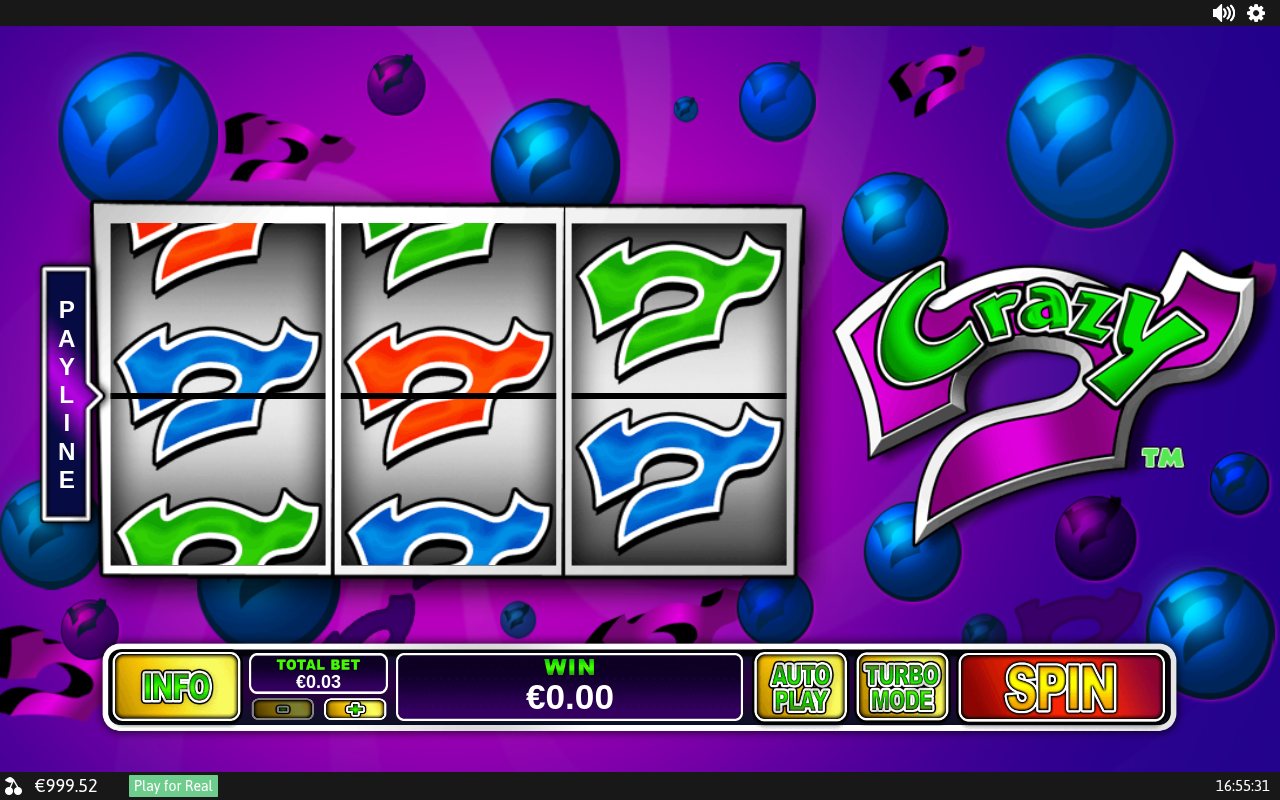
Spins themselves are quick. Three positions resolve, the win display updates if a line has landed, and the game is ready for the next one immediately. Sessions here move at whatever pace you set, and the auto spin control is the only way to change that pace once you’ve started.
Our Honest Verdict
Overall Rating: 6/10
A session on Crazy 7 is a string of quick, quiet spins inside that purple glow, and the one reason to pick it is exactly that quiet: nothing to learn, nothing to wait for, every spin finished in a second. It’s the sort of game you can play with half your attention while something else happens in the room.
What makes it work is the orange line. At roughly 27 times the mixed line, it’s the only result on the sheet that means anything, and chasing it gives the game its whole shape: long stretches of pocket change, then one spin that either lands the oranges or doesn’t.
That’s also where it runs out. Everything below the orange line is small enough to barely register, and once you’ve seen the top prize land there’s nothing new left to discover, which limits how long a session stays interesting. It suits anyone after a short, old-school session with no mechanics to think about, and it will leave feature-chasers cold. As a lava lamp with a paytable, it does its one job and glows quietly while it does it.
Crazy 7 FAQs
-
What is the RTP of Crazy 7?
Crazy 7 runs at an RTP of 96.98%, which is a generous return for a classic three-reel style game. -
What is the grid size of Crazy 7?
Crazy 7 uses a compact 3×2 grid, with three coloured sevens and a mixed-sevens line making up the entire paytable. -
Does Crazy 7 have a wild or scatter symbol?
No. There’s no wild and no scatter in Crazy 7 – nothing substitutes for anything and nothing triggers a feature. -
Is there a bonus round or free spins in Crazy 7?
No. Crazy 7 has no bonus round, no free spins and no second mode of any kind – every spin is played on the base grid. -
Which symbols pay in Crazy 7?
Only sevens pay. Three orange sevens is the top prize, followed by three green and three blue, and any three mixed sevens pays the smallest amount. -
What does a mixed line of sevens pay?
Any combination of three different coloured sevens on a line pays the smallest prize on the sheet. It doesn’t matter which colours make up the three, only that all three positions fill with sevens. -
Is there a maximum win in Crazy 7?
The best result the reels can produce is three orange sevens, and its value scales with your stake. There’s no fixed jackpot on top of that. -
When is Crazy 7 released?
Crazy 7’s release date is 15 June 2010.