












Hexagona Slot Review
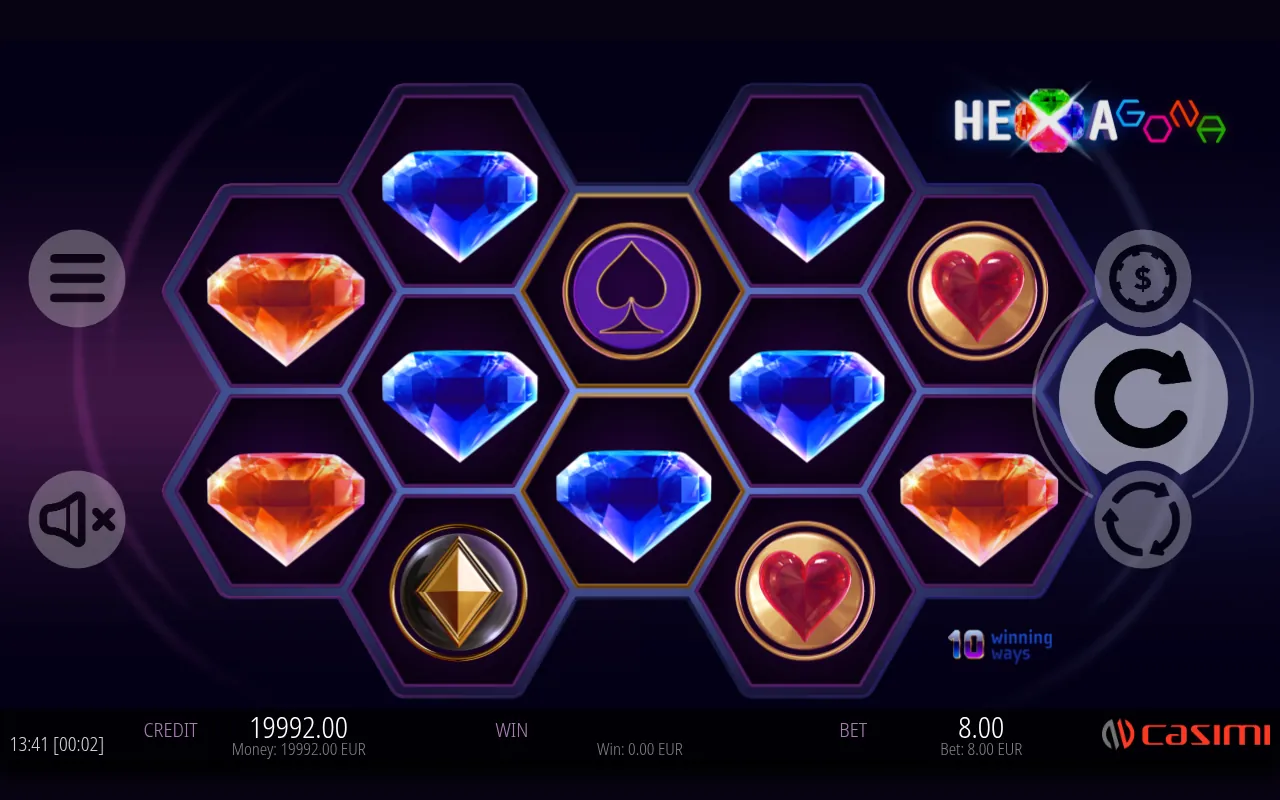
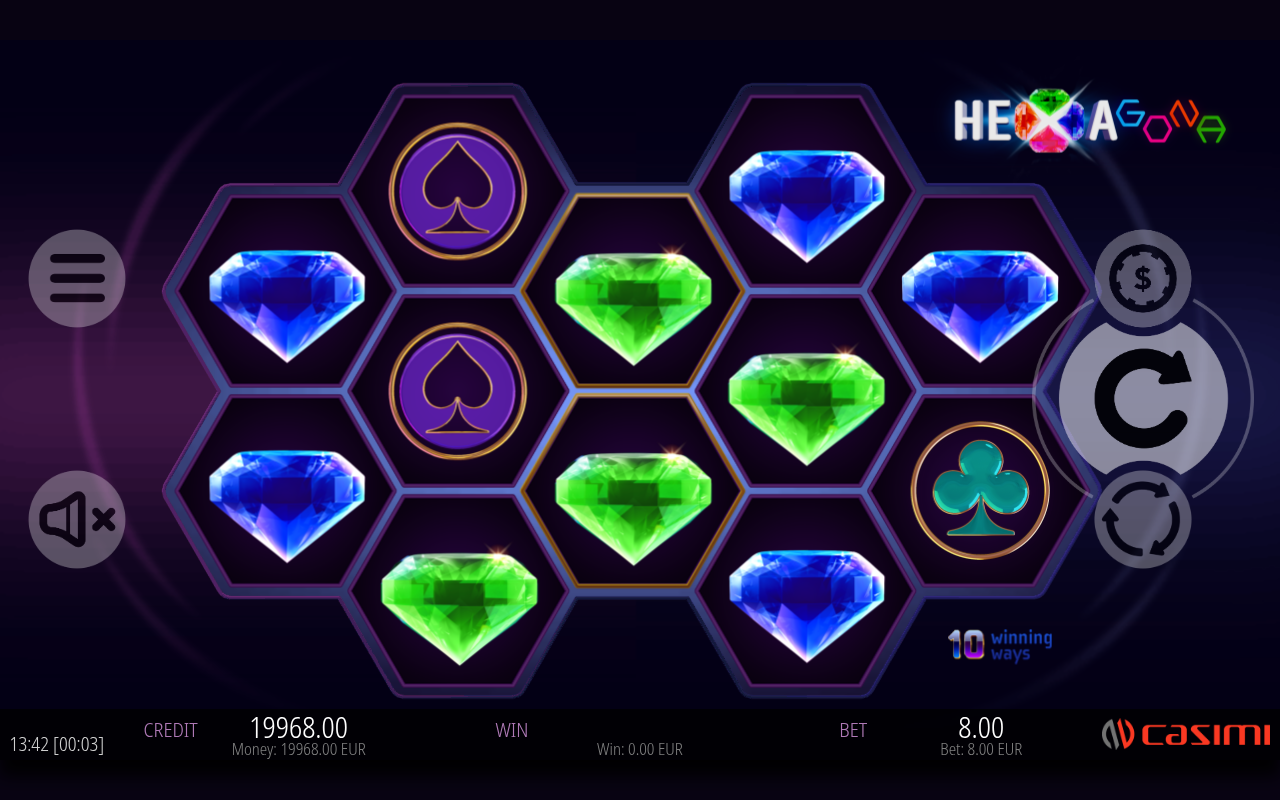
A hexagon of violet light hangs in an unlit void, thin arcs sweeping around it like orbit rings, and at its centre sits the whole of Casimi‘s Hexagona. Ten symbol positions in a honeycomb lattice, lit purple at every edge, with the title flaring out of a white starburst in the corner.
Hexagona is the rare slot that earns its unusual shape. Plenty of games arrange their reels in a novelty grid and then pay out exactly like a five-reeler; this one builds its single feature on the geometry itself, and strip the hexagon away and the game collapses with it. The maths is a 96% RTP across ten winning ways, with five paying symbols and no jackpot. But it makes the shape mean something, which is more than most novelty grids can say.
The Honeycomb and Its Ten Ways
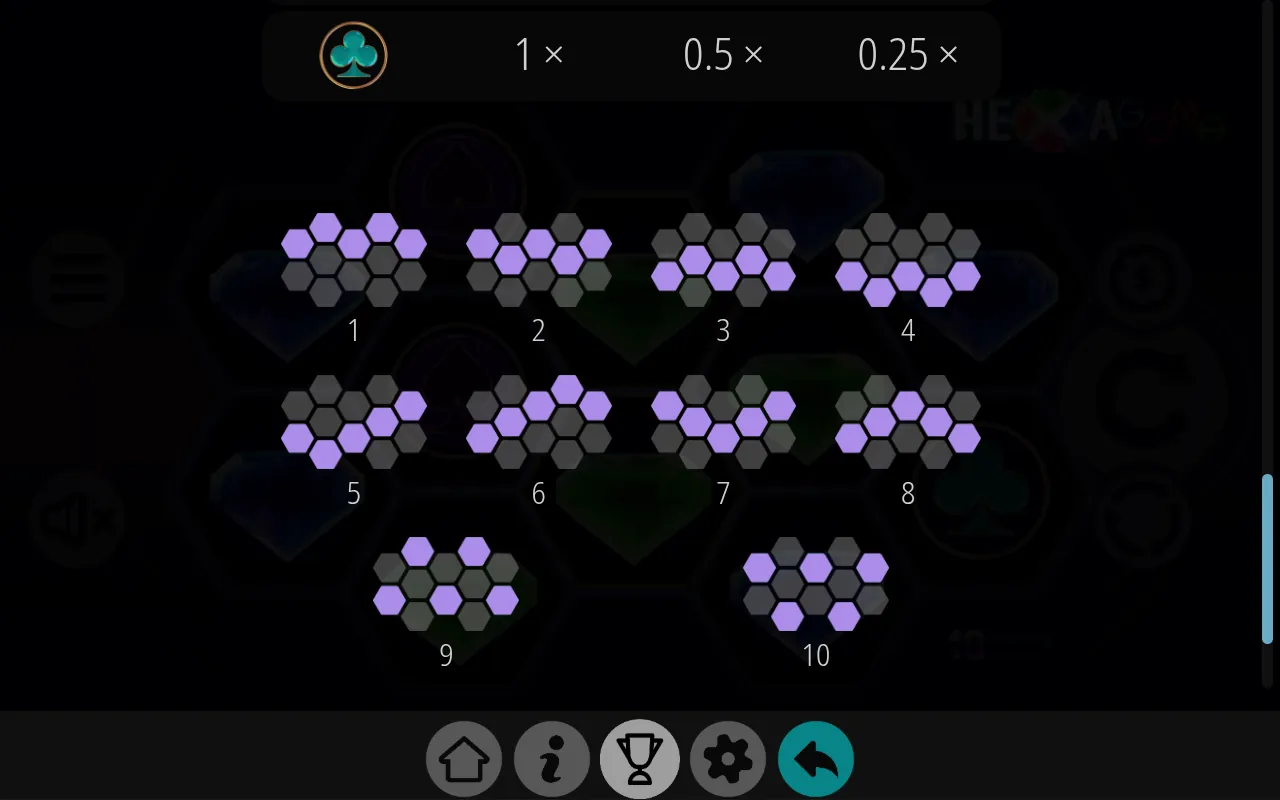
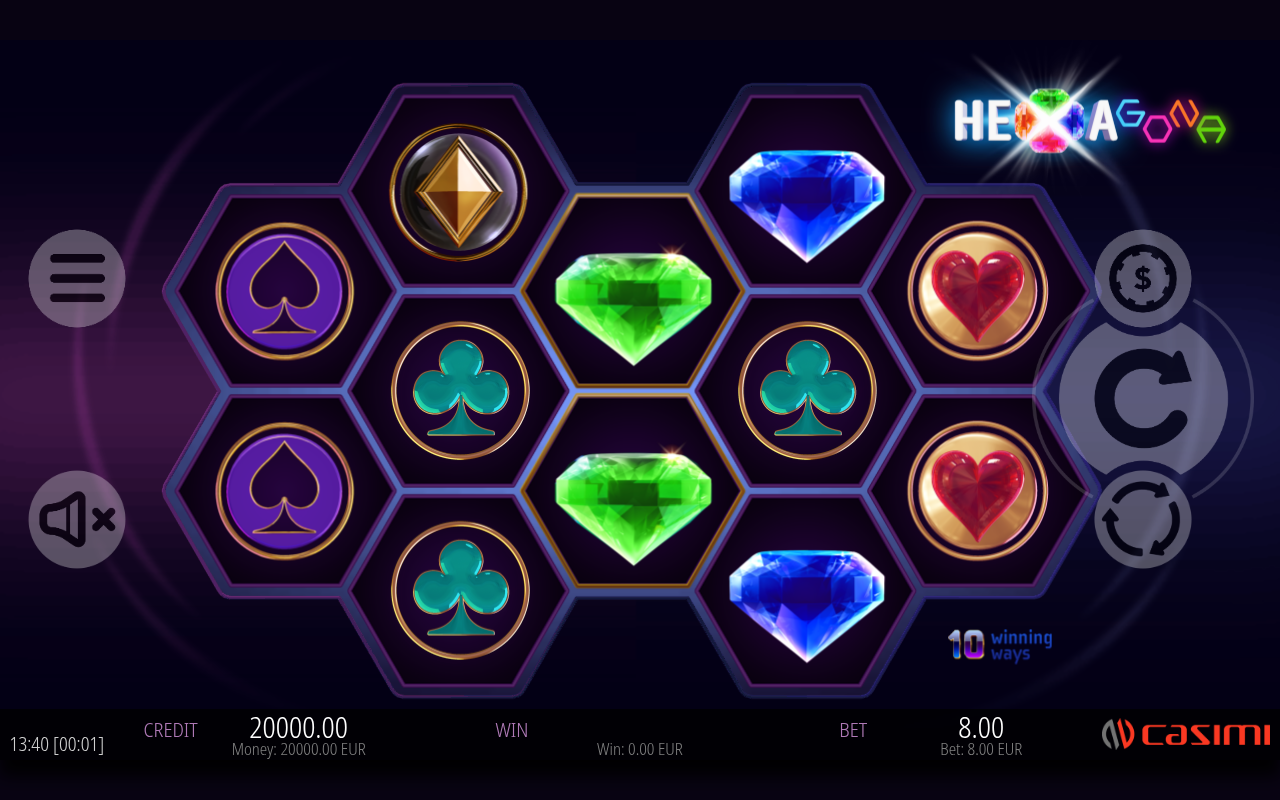
The grid isn’t rows and columns. It’s a hexagon built from individual hexagonal cells, ten of them, arranged around a central reel, and the paylines run as ten winning ways. The layout matters more than the count: symbols sit in a ring rather than a strip, which is what allows the left and right sides to rotate independently.
Each side of the honeycomb forms its own wheel. In normal play both turn together as a spin, stopping to leave a fresh arrangement of symbols around the centre, and every completed layout is checked against the winning table. It’s only during the re-spin round that the two halves are driven separately, and that distinction is where the game’s one feature lives.
Position matters more here than it would on a flat grid. The middle reel sits at the pivot of the whole shape, touching more of the honeycomb than any other spot, and it’s the only place the wild can start its work. A symbol in the centre is part of more lines than a symbol out at the rim, so where a diamond lands around the ring counts for nearly as much as which diamond it is.
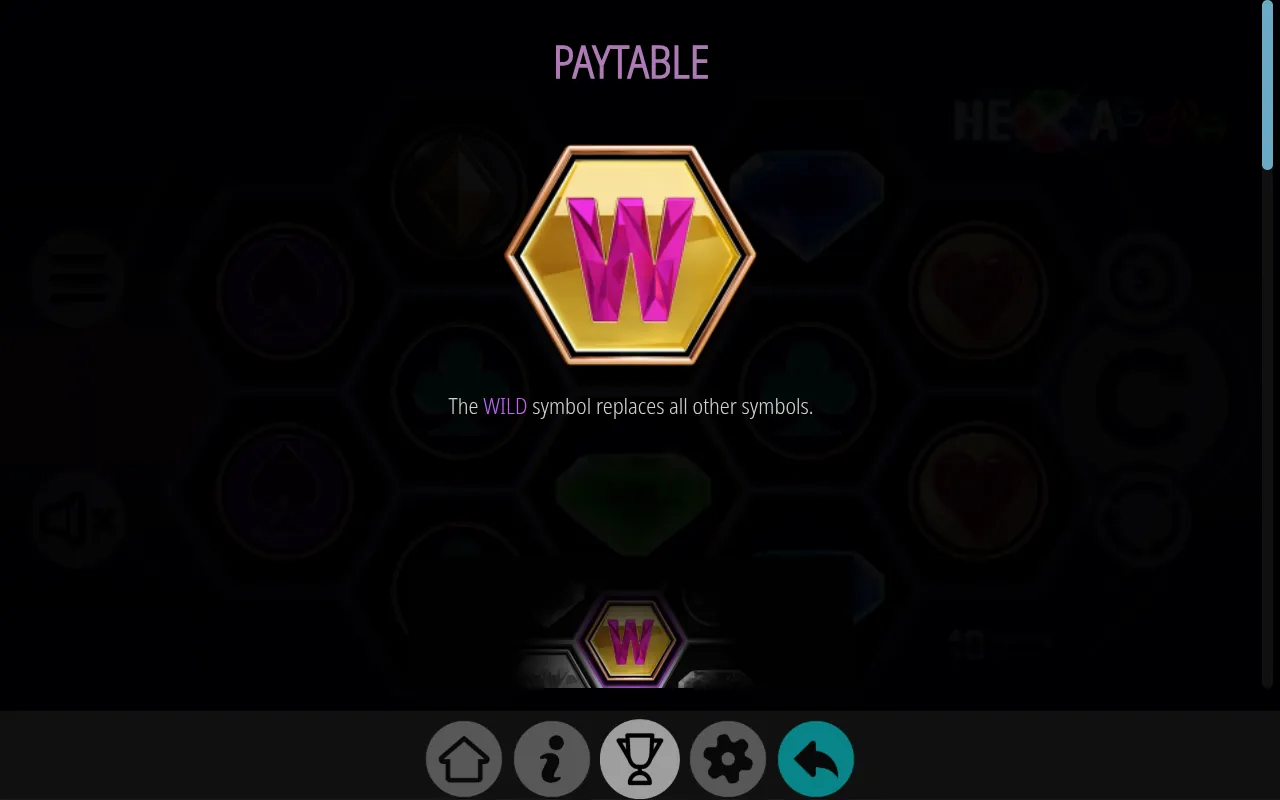
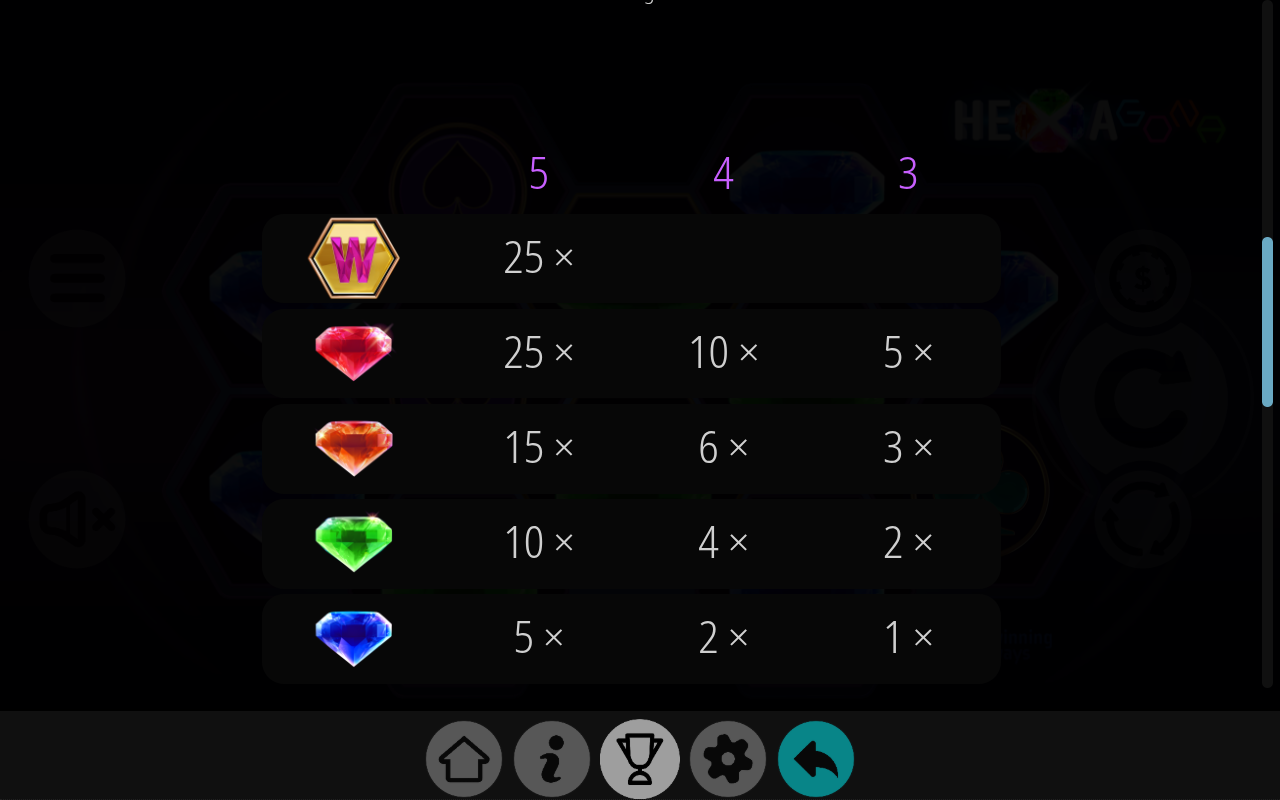
The symbols are a simple set. Four coloured diamonds, running red, orange, green and blue in descending value, plus a club as the low payer. The WILD symbol replaces all other symbols, and it pays too: five wilds are worth 25 times the bet, matching the red diamond as the joint richest symbol on the board.
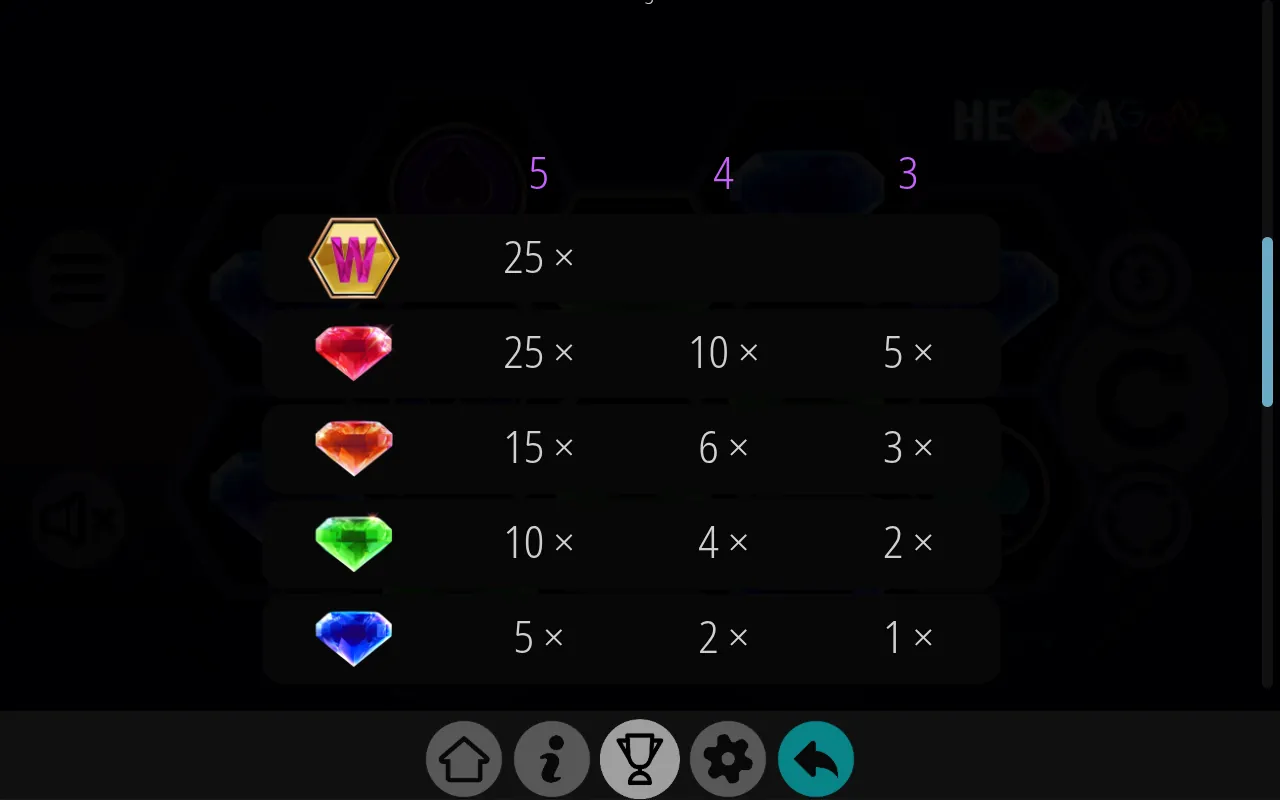
The paytable, at multiples of the stake:
- Red diamond: three pay 5x, four pay 10x, and a full five pay 25x
- Orange diamond: 3x, 6x and 15x for three, four and five symbols
- Green diamond: 2x / 4x / 10x as the count climbs from three to five
- Blue diamond: 1x, 2x and then 5x at a complete line
- Club: a fraction of the rest, from 0.25x up to 1x for five
- WILD: 25x, but only at a full line of five
It’s a short ladder, and it steps down evenly from one rung to the next before dropping off a cliff at the club. The wild’s own pay only registers at five of a kind, so its real job is standing in for whatever’s missing on a line rather than paying directly.
There’s a practical consequence to that spread. With the bottom rung paying a fraction of the blue diamond’s rate, the difference between an average result and a poor one comes down to which of the four diamonds fills a line. The club is close to a dead symbol unless it’s all that’s available. Wins, in other words, are diamond-shaped, and the wild decides which diamond you get.
Expanding Wild and the Nine Re-Spins
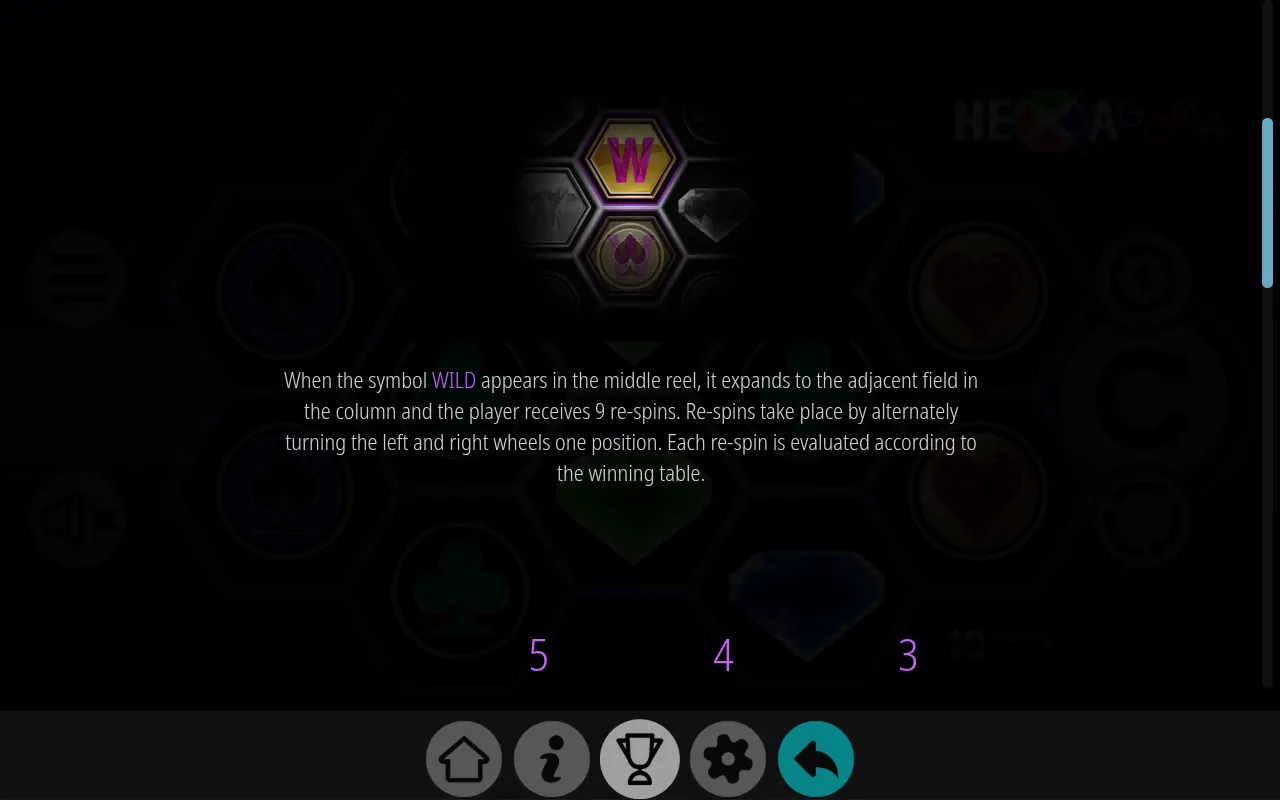
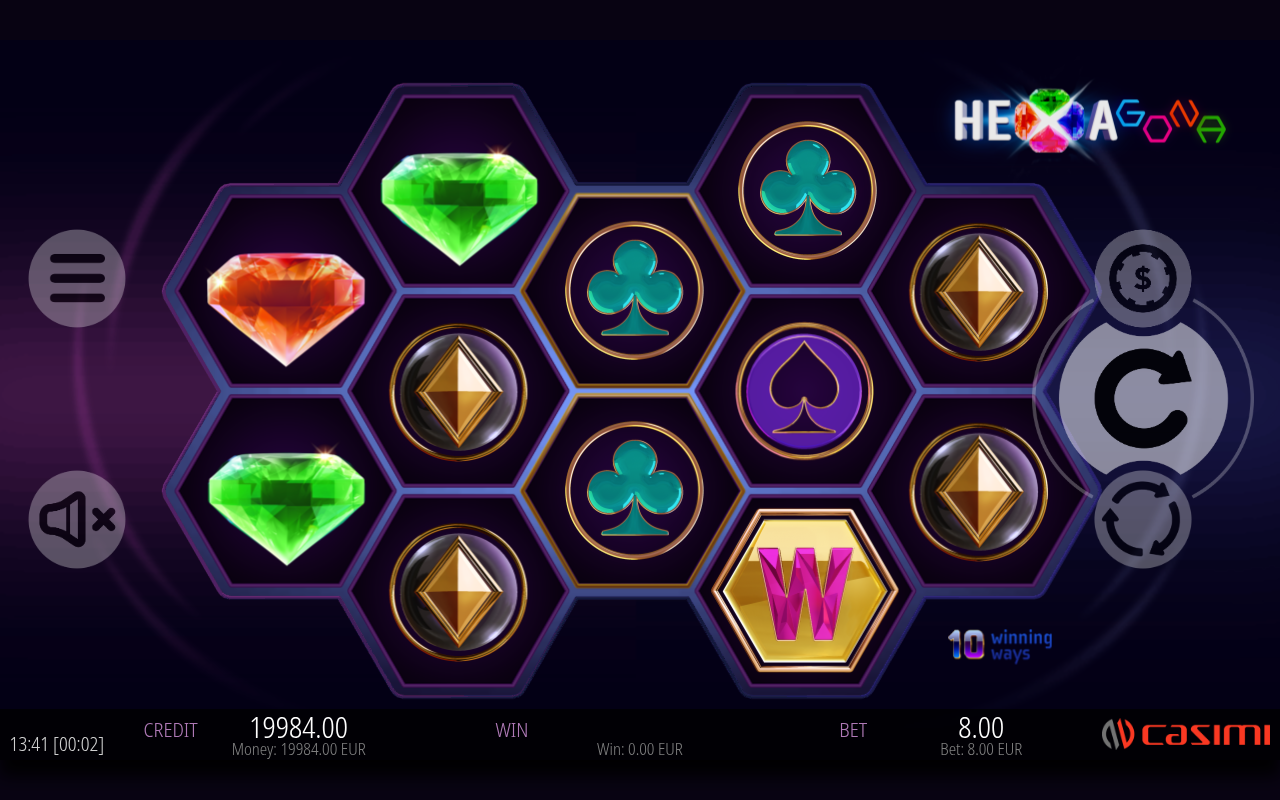
There is one feature in Hexagona, and it does all the work. When the WILD symbol appears in the middle reel, it expands to fill the adjacent field in its column, and nine re-spins follow. That’s the entire trigger: land the wild in the centre, collect nine goes.
The expansion is worth dwelling on, because it’s what turns a single symbol into a fixture. The wild doesn’t just sit in the cell it landed in; it spreads to cover the neighbouring field in the same column, so its column effectively belongs to it for the duration of the round.
Any line that passes through that column has a wild standing in it, and the wild completes whichever combination the surrounding symbols allow. That’s a lot of ground for one symbol to cover, and it’s why the trigger only fires from the middle reel.
The round itself is where the hexagon earns its shape. Rather than spinning the whole board, the game alternately turns the left and right wheels one position, shifting each side of the honeycomb around the locked wild in the middle. The sequence runs like this:
- The wild lands in the middle reel and expands into the field beside it
- Nine re-spins begin, with the left and right wheels turning one position each, in turn
- Every new arrangement is checked against the winning table on its own
- Any line completed by the expanded wild pays at the normal symbol values
Because the two halves rotate rather than re-spin from scratch, the wild stays put at the pivot while fresh symbols keep passing across its column. One expanded wild can therefore produce up to nine separate paid results, each judged on its own arrangement.
Nothing in the round is random beyond the starting layout; after that, it’s rotation, and rotation is deterministic. That’s an unusual thing for a modern slot to do. Most bonus rounds redraw the board wholesale and hope for the best, whereas here every re-spin is a known step away from the last one, and each line can be watched assembling itself as the wheels tick around. The tension is in the geometry rather than the RNG.
The wild substitutes for everything, so during the round it’s working as a completion symbol nine times over. With the red diamond at the top of the ladder and the club at the bottom, the value of each re-spin swings on which symbols the rotation drags into line, and on whether the wild’s column sits in the middle of the action or at the edge of it.
Our Honest Verdict
Overall Rating: 7.1/10
This is a game you play for one reason: to watch nine rotations play out around a locked wild in the violet dark. Everything outside that moment is thin on purpose, and if the geometry doesn’t grab you, nothing else will.
The strength is that the hexagon is load-bearing. The two wheels genuinely turn, the wild genuinely holds the middle, and the presentation and the mechanic are the same object. Most grids this decorative are set dressing; this one runs the show, and the re-spin round is genuinely involving for it.
Five symbols and a 25x top line leave very little between the rotations, so long stretches pass with nothing to look at but the glow. It suits players who enjoy one well-made mechanic and don’t measure a session by its feature count; anyone who wants layered bonuses will find it bare. For the patient, the honeycomb still glows.
Hexagona FAQs
-
What is the RTP of Hexagona?
Hexagona runs at an RTP of 96%. -
How does the Expanding Wild work in Hexagona?
Land the WILD symbol in the middle reel and it grows into the neighbouring field in its column, then nine re-spins begin. The wild stands in for every other symbol, and a full line of five wilds pays 25x the bet. -
How do the nine re-spins work?
Instead of a full spin, the left and right wheels of the honeycomb rotate one position each, taking turns, for nine re-spins in total. Each new arrangement of symbols is scored on its own against the winning table. -
How many winning ways does Hexagona have?
Hexagona has ten winning ways. -
What is the grid size of Hexagona?
Hexagona uses a hexagonal honeycomb layout of ten symbol positions rather than a standard rows-and-columns grid. -
Does Hexagona have a free spins round?
No. The nine re-spins from the Expanding Wild are the game’s only feature, and there is no separate free spins round. -
What is the most valuable symbol in Hexagona?
The WILD symbol and the red diamond share the top spot: a full line of five of either pays 25x the bet. The wild also replaces all other symbols, so it can complete any line it sits in. -
Who makes Hexagona?
Hexagona is made by Casimi. Hexagona’s release date is 5 November 2021.