










Jewel Scarabs Slot Review
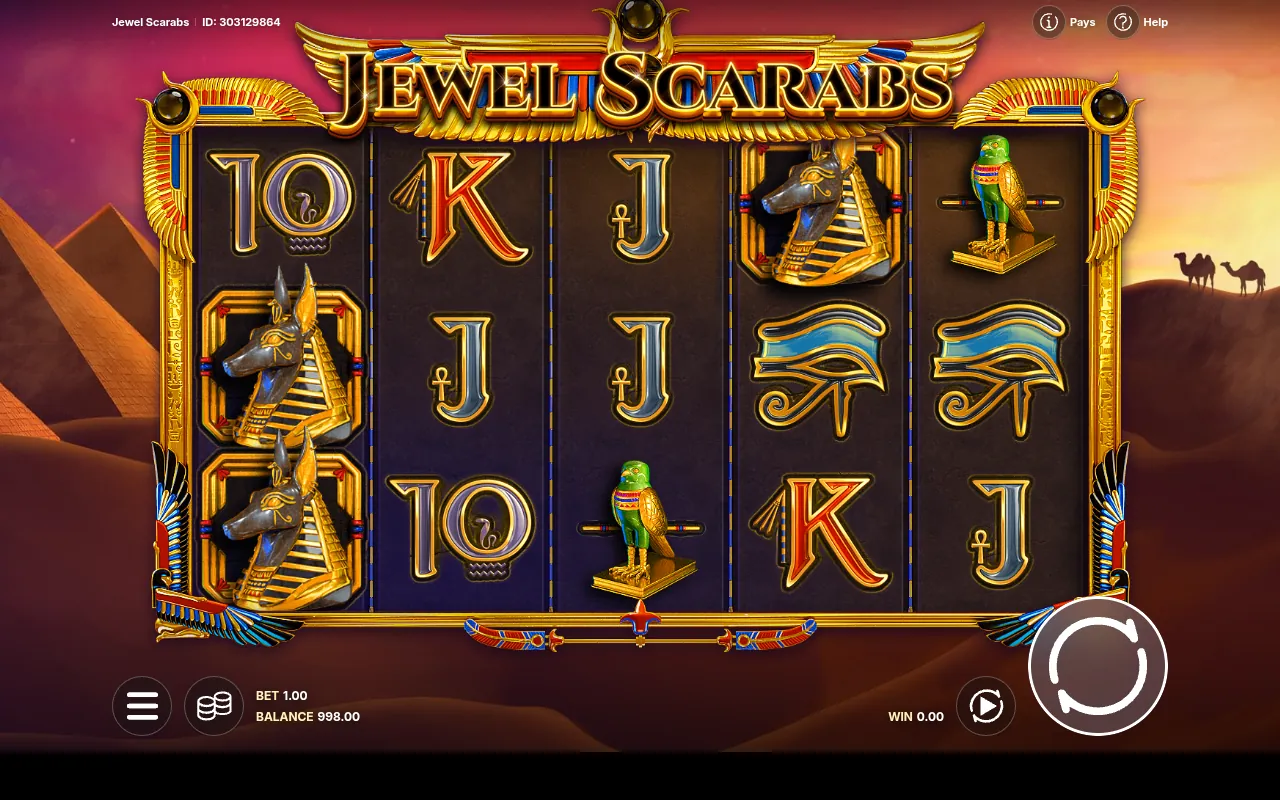
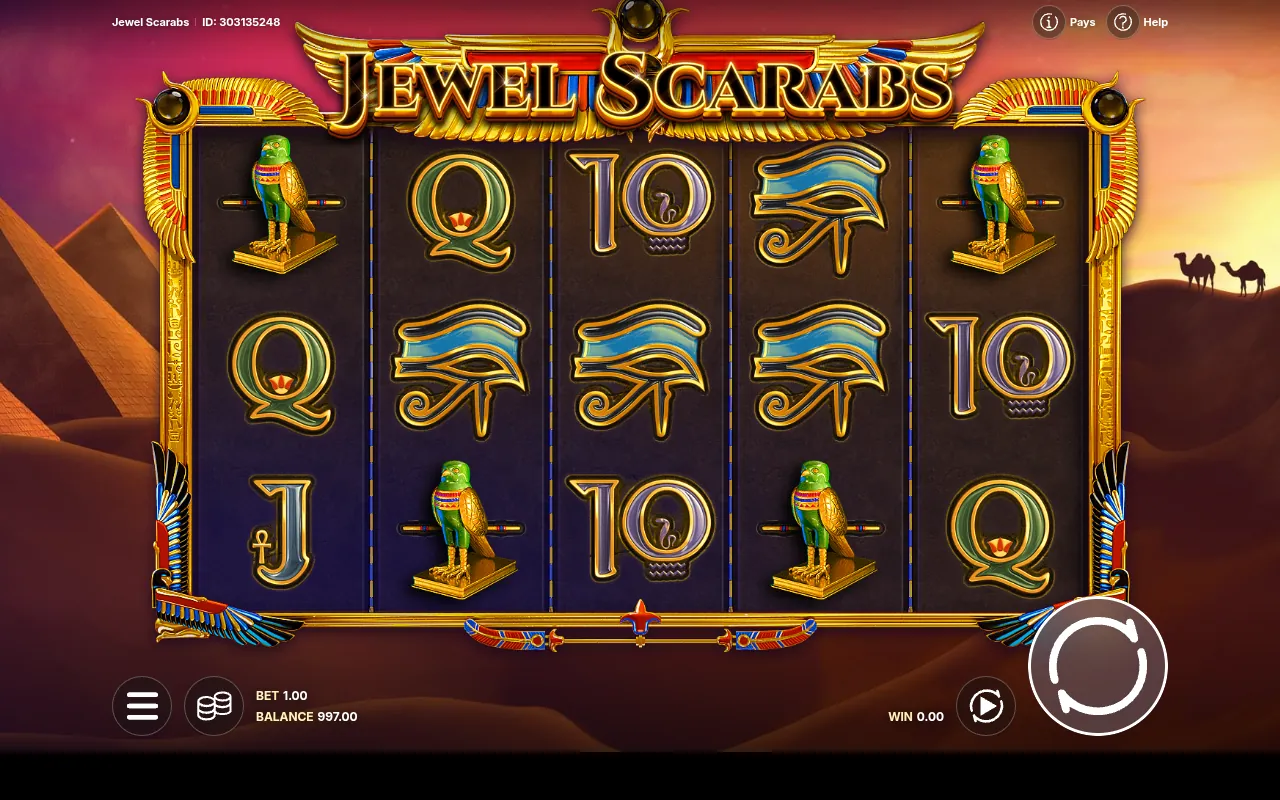
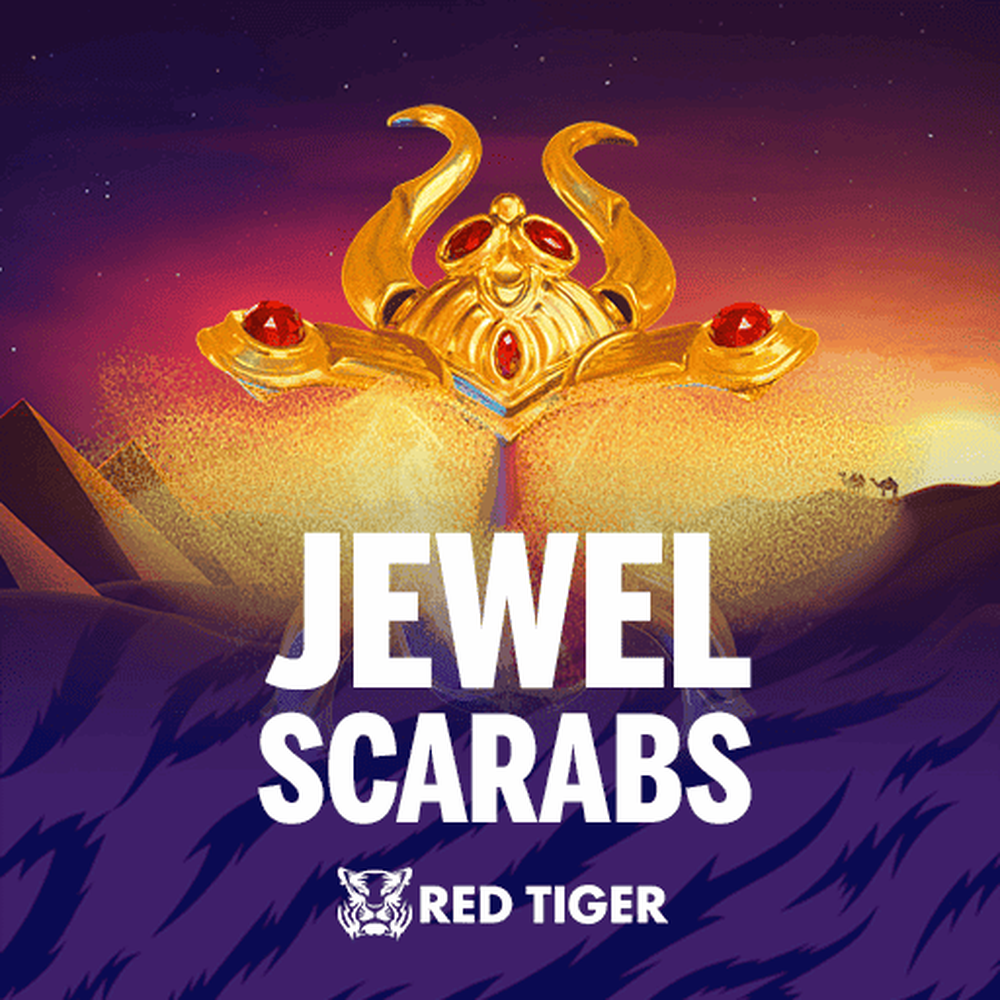
Against a desert sunset, with pyramids going purple in the haze and two camels standing watch on a dune, Red Tiger has built a slot that shouldn’t work: five lines, three rows, one feature. Strip the dressing from most modern slots and you find a dozen mechanics holding each other up; strip it from Jewel Scarabs and there’s a single beetle holding everything, and somehow that’s enough to make it worth a look.
Underneath that sunset, this is a stripped-back affair: a 5×3 grid, five win lines, and one symbol doing all the interesting work. Where Egypt Megaways and Wings of Ra Megaways pile on ways to win, Jewel Scarabs bets everything on a single wild that refuses to sit still. It runs at 95.77% RTP with a 5,245x maximum win and stakes from 0.1 to 50 per spin. Can one well-built beetle carry a whole slot?
How the Base Game Pays
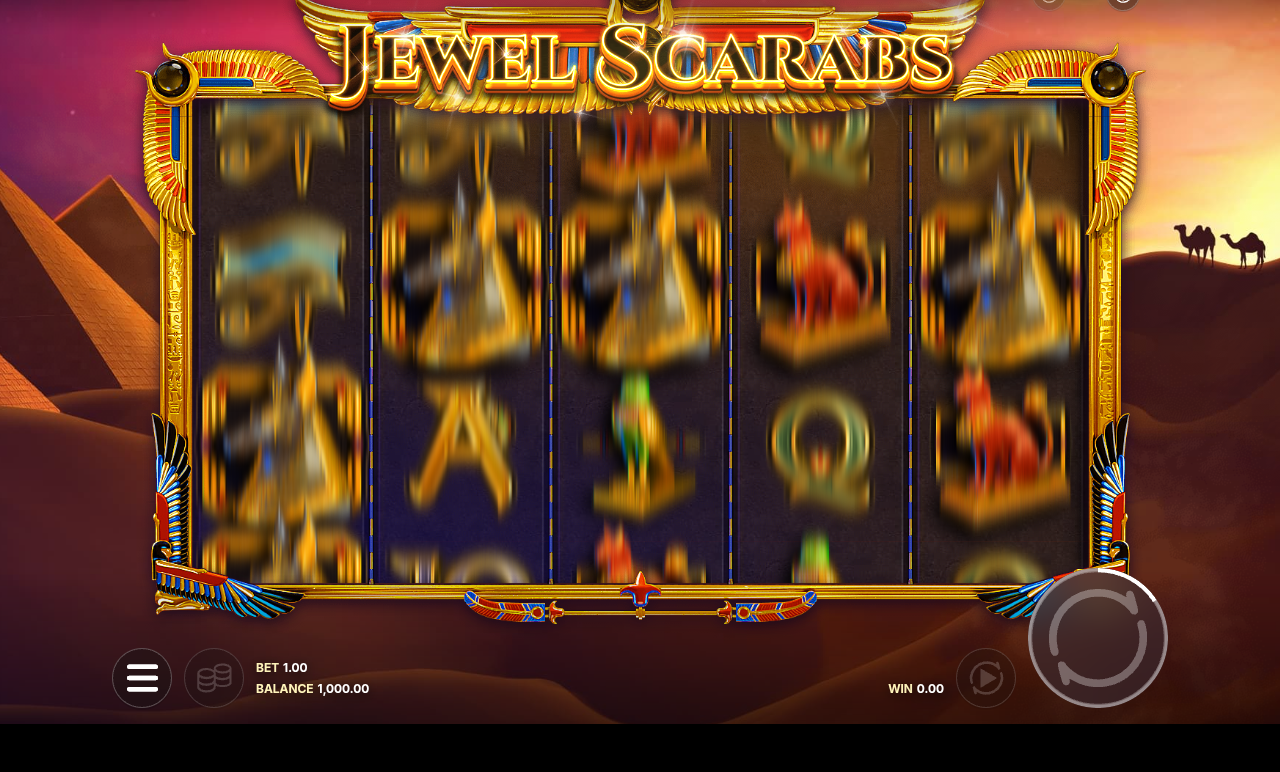
This is classic five-line territory. Wins land left to right across the grid on five fixed lines, and only the highest combination on each line counts. There’s no cluster system, no expanding ways, no tumble. What you see is what pays.
The hit frequency sits at 38.63%, so something pays out on roughly four spins in ten. That keeps the reels moving, though on a paytable this steep most of those hits will come from the bottom half. The gap between a full Anubis line and a full 10 line is a factor of ten.
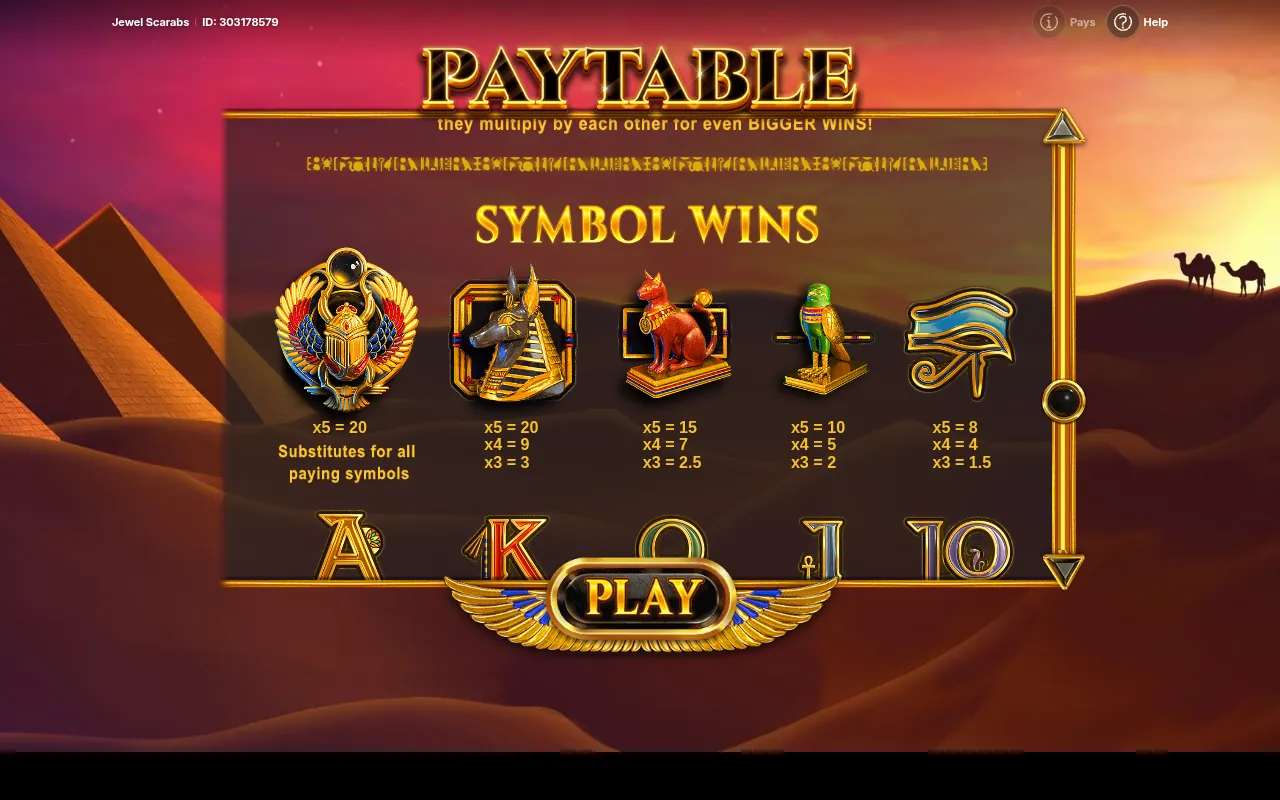
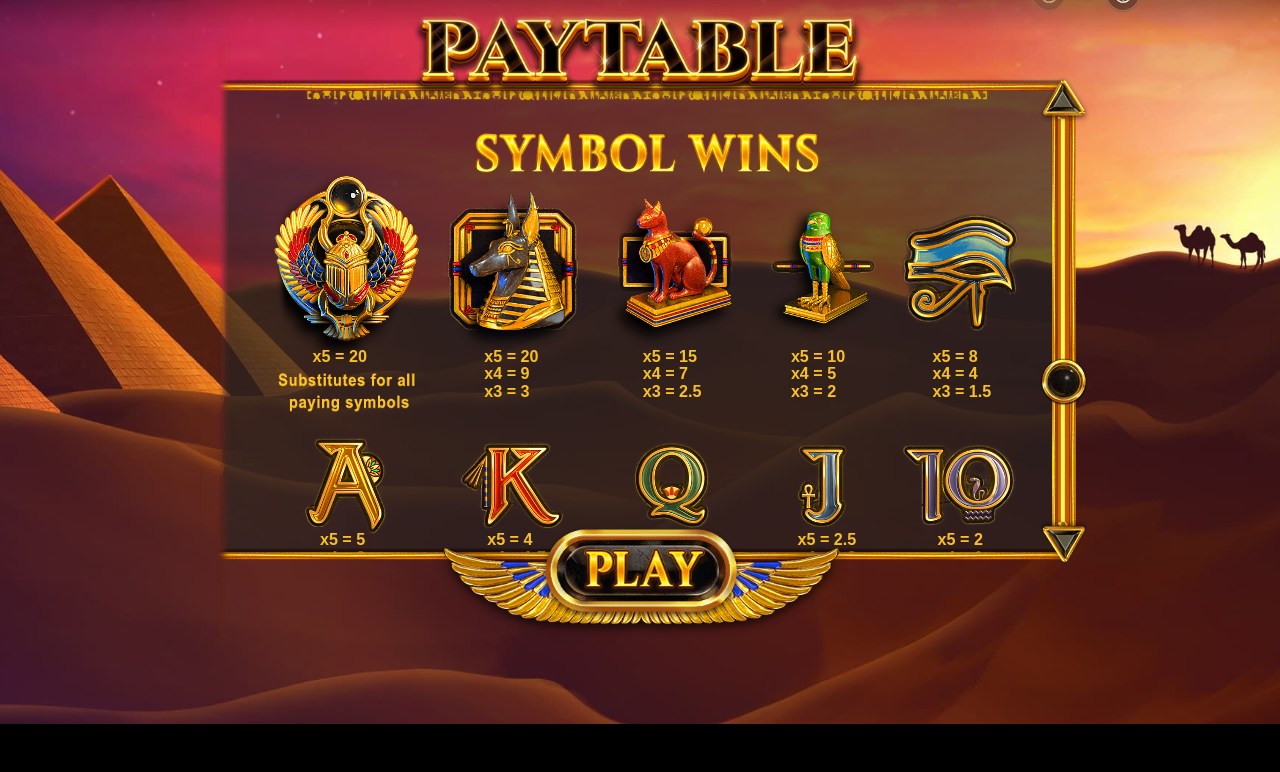
Four Egyptian figures sit above five card royals. Symbol pays for three, four and five of a kind:
- Anubis: 3x, 9x, 20x
- Cat: 2.5x, 7x, 15x
- Falcon: 2x, 5x, 10x
- Eye of Horus: 1.5x, 4x, 8x
- A: 0.8x, 2x, 5x
- K: 0.7x, 1.7x, 4x
- Q: 0.6x, 1.5x, 3x
- J: 0.5x, 1.2x, 2.5x
- 10: 0.4x, 1x, 2x
Look at the shape of that table. Every royal pays less for five of a kind than Anubis pays for three. The picture symbols carry the game, and the royals exist to keep the hit rate honest.
The steps within each symbol tell their own story. Anubis more than doubles from three to four of a kind, then more than doubles again from four to five. That pattern holds down the whole table: the jump to a five-of-a-kind line is always the big one.
On a 5×3 grid, five matching symbols across all three rows is a genuinely rare sight. Four of a kind is where most real money lives. The four picture symbols also separate cleanly at the top of the table.
The royals are a different matter. None of them returns your stake at the bottom of the table, and three of a kind never comes close. A win isn’t always a profit here.
The Scarab
The Scarab is the wild, and it substitutes for every paying symbol on the board. Five Scarabs on a line pay 20x, which ties it with Anubis as the richest symbol in the game. It’s no coincidence that the game is named after it.
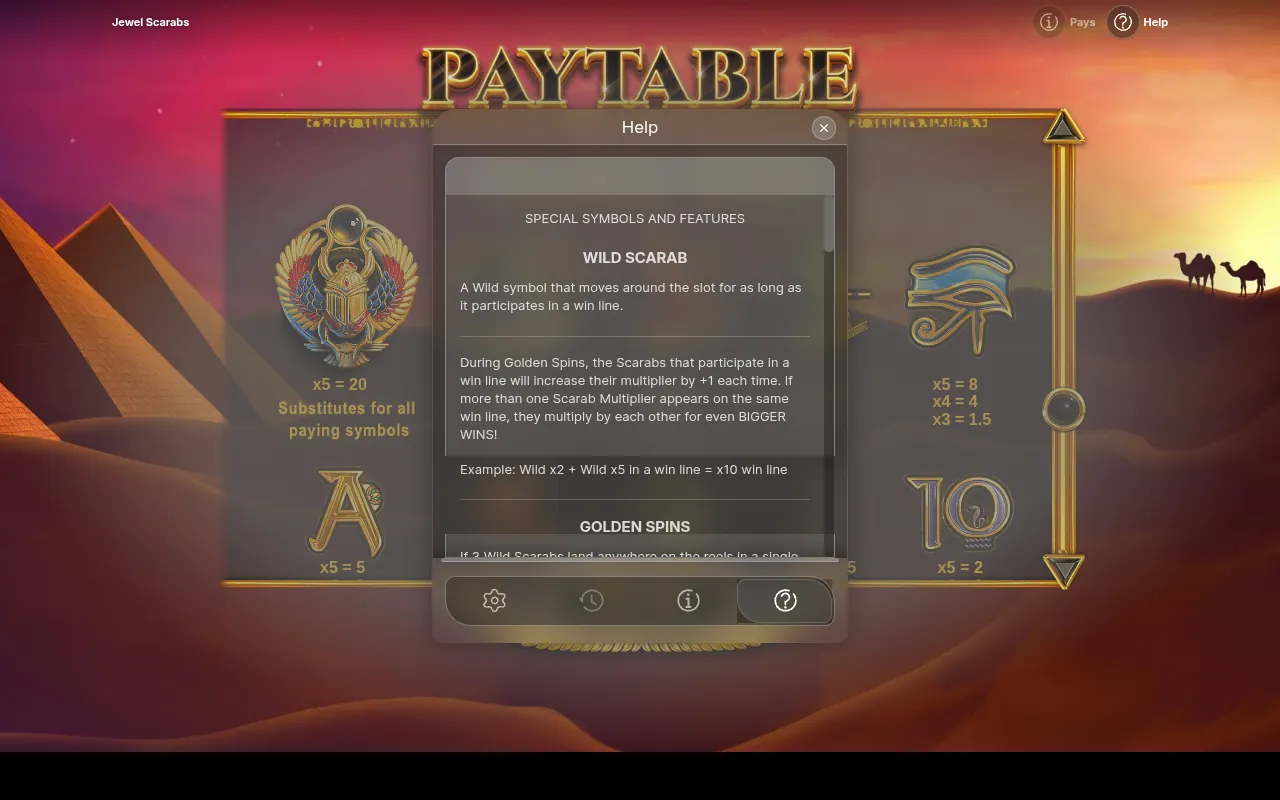
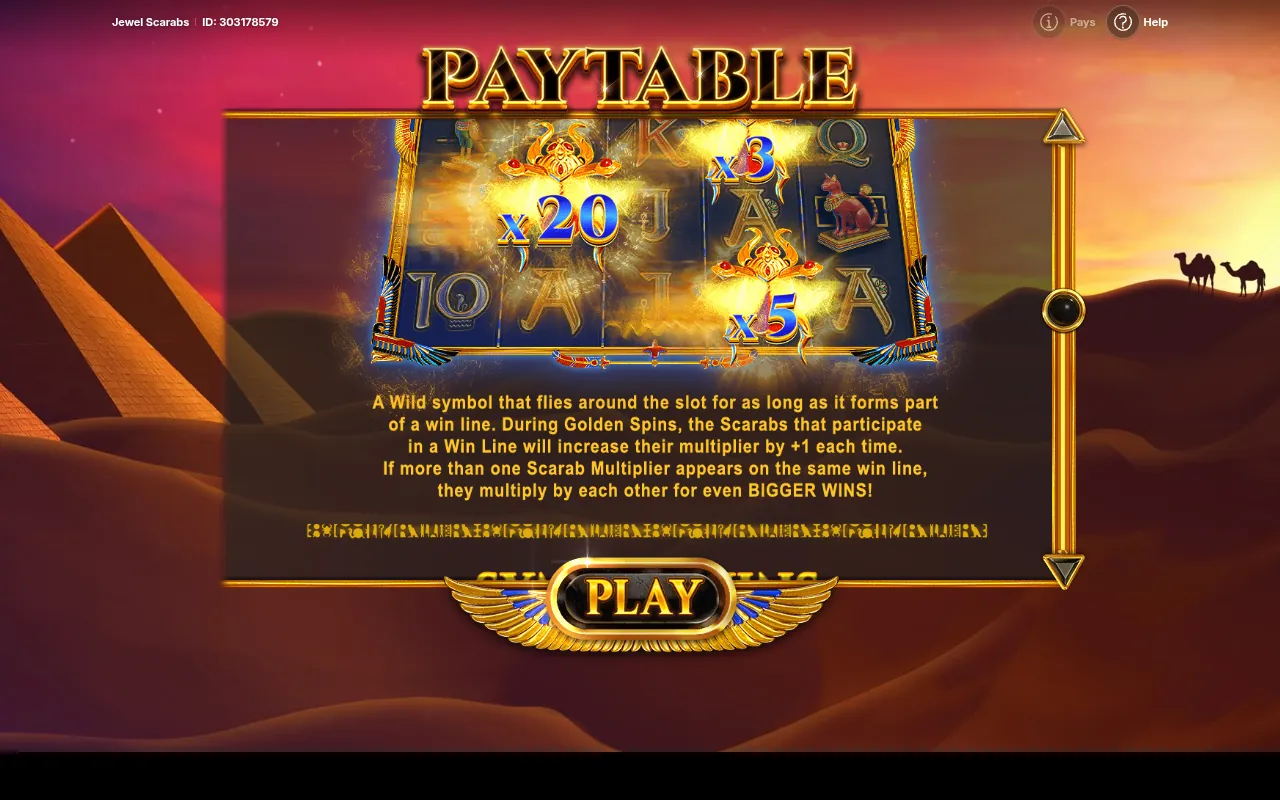
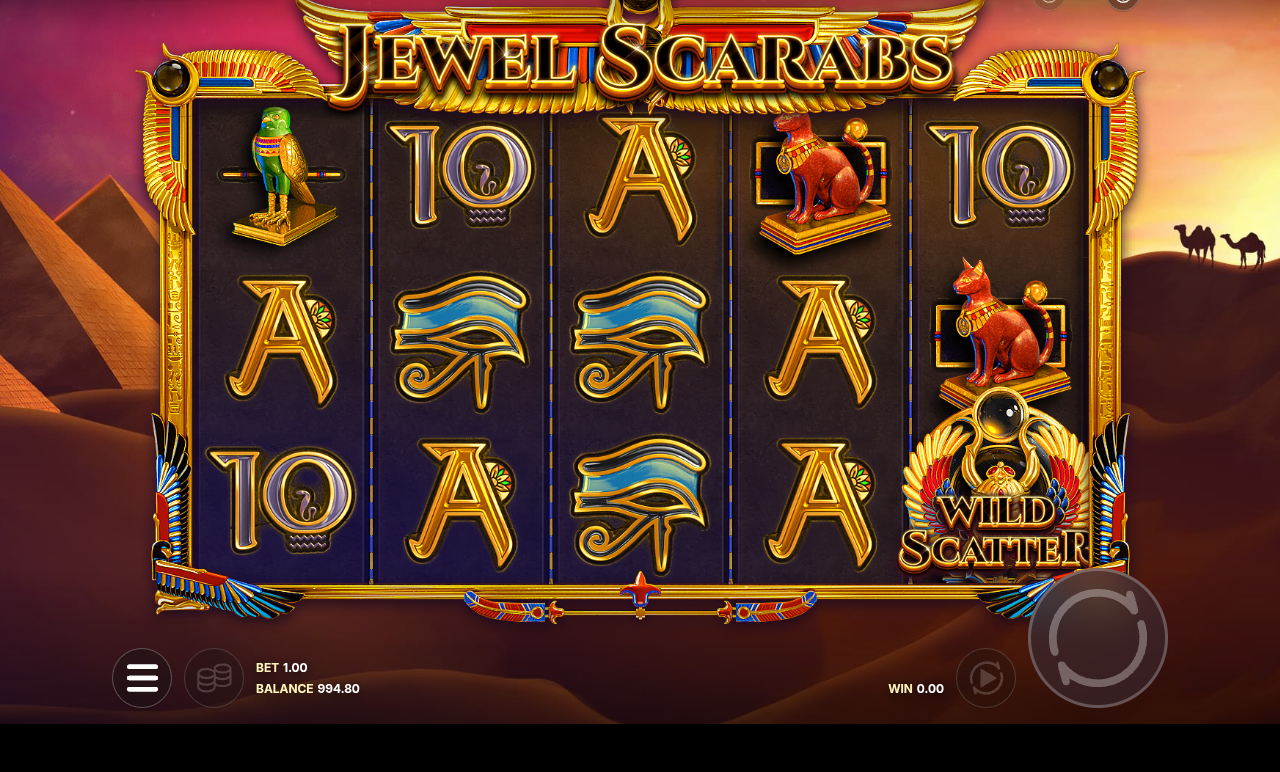
What makes it unusual is that it moves. The Scarab flies around the slot for as long as it forms part of a win line, shifting position rather than sitting where it landed. A wild that stays alive across consecutive wins is rare enough; on a five-line grid, one travelling wild changes which lines are live from spin to spin.
Because it substitutes for everything, a Scarab sitting next to two matching symbols completes any line it touches. That makes its flying behaviour practical rather than cosmetic. A beetle drifting towards the centre reels, where more lines cross, is worth more than one parked on the edge.
Position matters on a five-line game far more than on a ways-to-win board. The Scarab carries a double role, too: it’s both wild and scatter, and the scatter half of that job is what opens the game’s one feature round.
Golden Spins
Three Scarabs landing anywhere on the reels in a single spin is the whole trigger. No scatters to collect, no meter to fill. The round that follows is built entirely around those three beetles.
The triggering Scarabs stay locked on the board for the full duration of Golden Spins, and they don’t just sit there. Every time a Scarab participates in a win line, its multiplier increases by one. Each beetle therefore has its own counter, climbing independently as the round goes on.
Follow one spin of the round through. A Scarab with a x3 multiplier lands on a winning line alongside a Cat combination. The line pays, the Cat’s value multiplied by three, and the Scarab’s counter ticks up to x4 for whatever comes next.
On the following spin, the same beetle lands on a different win line, and the process repeats: pay, then grow. The second rule is the one that matters. If more than one Scarab multiplier appears on the same win line, they multiply by each other rather than adding.
A wild carrying x2 next to one carrying x5 on the same line pays that line at x10, not x7. That’s the worked example the game gives, and it’s the whole appeal of the round in one line.
That stacking rule is where the game’s 5,245x ceiling lives. A round that keeps feeding the same lines can push two or three growing multipliers onto one combination, and the numbers compound quickly. The longer a Scarab survives and keeps winning, the harder it works. It’s a simple system with sharp teeth.
There’s no bonus buy here, so the route to Golden Spins is the reels themselves. Three Scarabs is the only door in, and with five lines feeding the base game, the round has to arrive on its own terms. Because the trigger needs them anywhere on the reels rather than on a win line, the scatter role and the wild role don’t compete with each other: a beetle can be mid-flight on a paying line and still count towards the three.
Our Honest Verdict
Overall Rating: 7.2/10
Playing Jewel Scarabs is a quiet game of waiting for the desert to move. The reels turn, the sunset holds, and every so often a beetle takes flight and briefly everything matters. The reason to choose it over its flashier siblings is exactly that focus: one idea, given room to breathe, wrapped in some of the warmest artwork this theme has had in years.
The multiplier stacking is the best thing here, because two grown Scarabs landing on one line don’t add, they compound, and a lucky round can outrun the paytable’s modest top end entirely. The worst thing is the day-to-day grind: most base game wins come from royals paying under your stake, so long stretches cost more than they return.
It suits players who enjoy one well-made mechanic and the patience it asks for, and it will leave anyone who wants constant features or big grids cold. If that sounds like your kind of evening, the desert is waiting.
Jewel Scarabs FAQs
-
How do you trigger Golden Spins in Jewel Scarabs?
Golden Spins starts when three Scarabs land anywhere on the reels in a single spin. The triggering Scarabs then stay on the board for the whole round. -
What does the Wild Scarab do?
The Scarab is a wild that substitutes for all paying symbols, and it flies around the slot for as long as it forms part of a win line. Five Scarabs on a line pay 20x. -
How do the Scarab multipliers work in Golden Spins?
During Golden Spins, every Scarab that participates in a win line increases its multiplier by one. If more than one Scarab multiplier appears on the same win line, they multiply by each other, so a x2 and a x5 Scarab on one line pays that line at x10. -
Do the Scarabs stay on the reels during Golden Spins?
Yes. The Scarabs that triggered the round remain on the board for its full duration, and their multipliers keep climbing whenever they take part in a win line. -
Can you buy the bonus in Jewel Scarabs?
No. There’s no bonus buy, so Golden Spins can only be reached by landing three Scarabs on the reels. -
What is the maximum win on Jewel Scarabs?
The maximum win is 5,245x your bet. -
What is the RTP of Jewel Scarabs?
The RTP is 95.77%, and the hit frequency is 38.63%, so a winning spin lands roughly four times in ten. -
What are the betting limits and paylines in Jewel Scarabs?
Stakes run from 0.1 to 50 per spin on a 5×3 grid with five fixed win lines. Jewel Scarabs is made by Red Tiger.