









Jingle Bell Bingo Slot Review
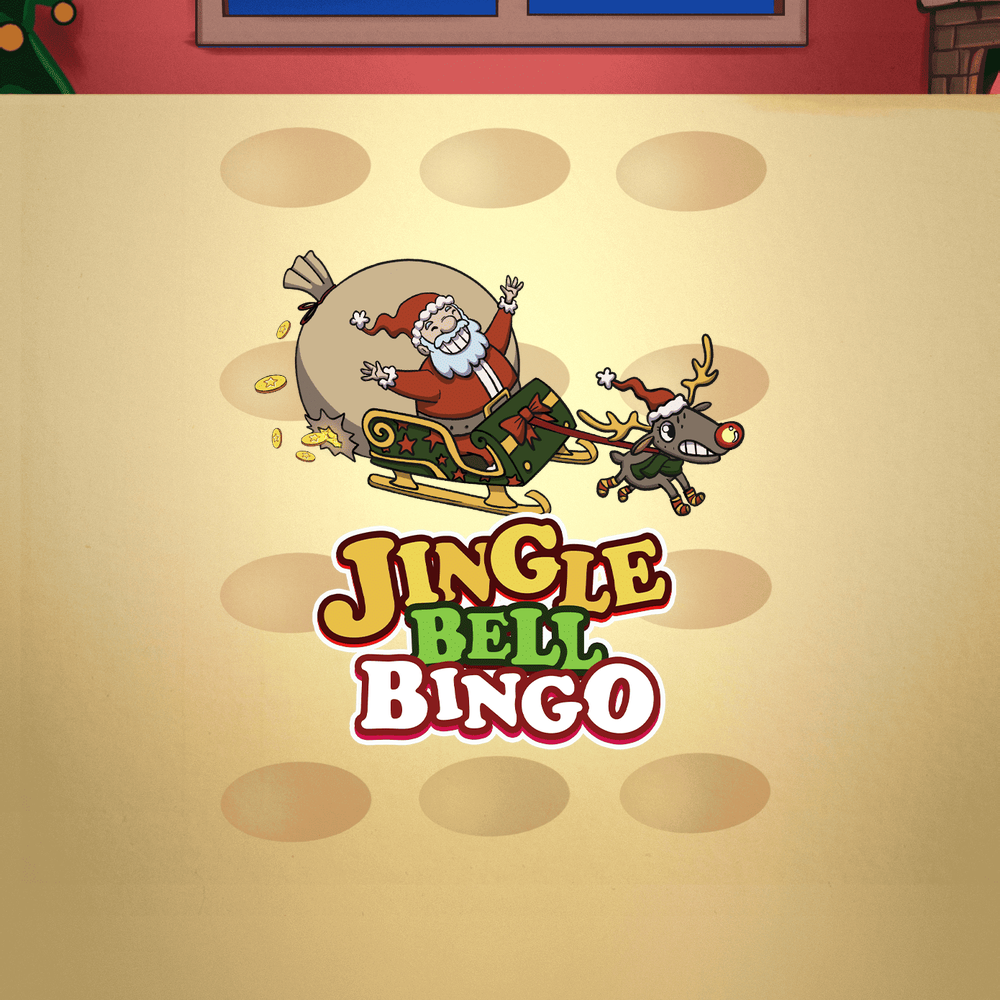
Santa’s stuck on a rooftop, bent double under a sack with a reindeer poking out of the top, and he’s not going anywhere until the balls stop rolling. It’s a charming scene, but the interesting thing about Jingle Bell Bingo is how little of the game happens on those reels-free cards: almost everything it pays out rides on a single priced decision after the draw, not on the draw itself.
Caleta Gaming have taken the classic bingo format, wrapped it in Christmas wrapping and made the draw itself the whole game, which is a rarer thing than it sounds. The maths are straightforward: a 96.12% RTP, four bingo cards of five columns by three rows, and 11 possible winning combinations on each card. It sits alongside Hallowins and High Bounty in Caleta’s range, and like them it’s built around pattern play rather than spinning reels.
The Cards and the Patterns
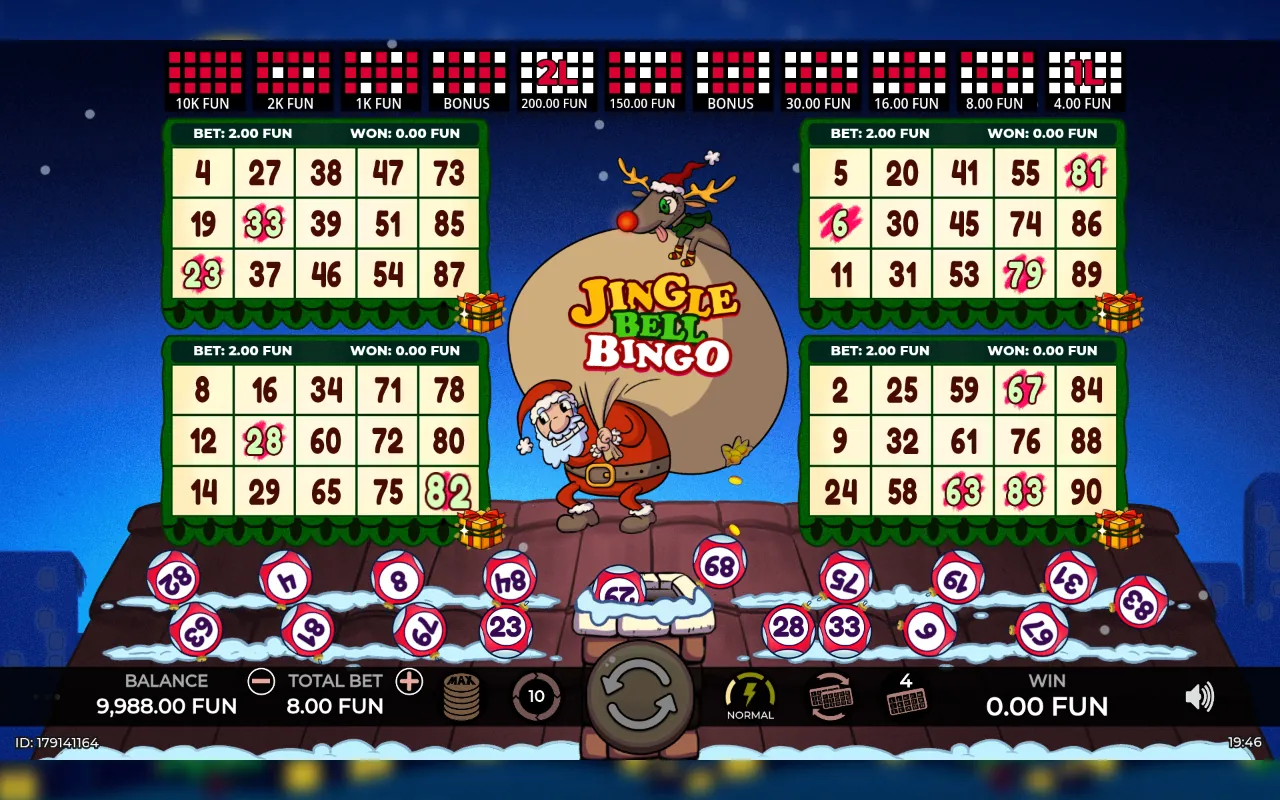
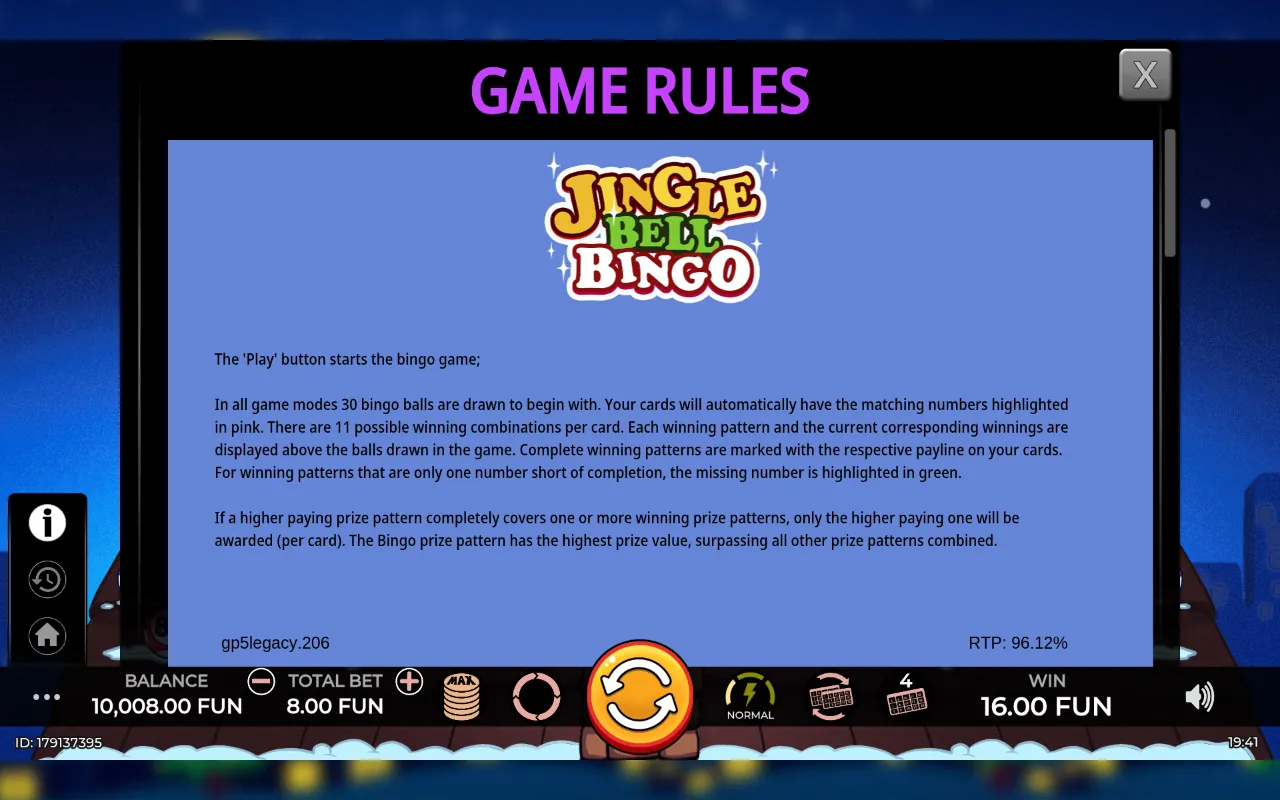
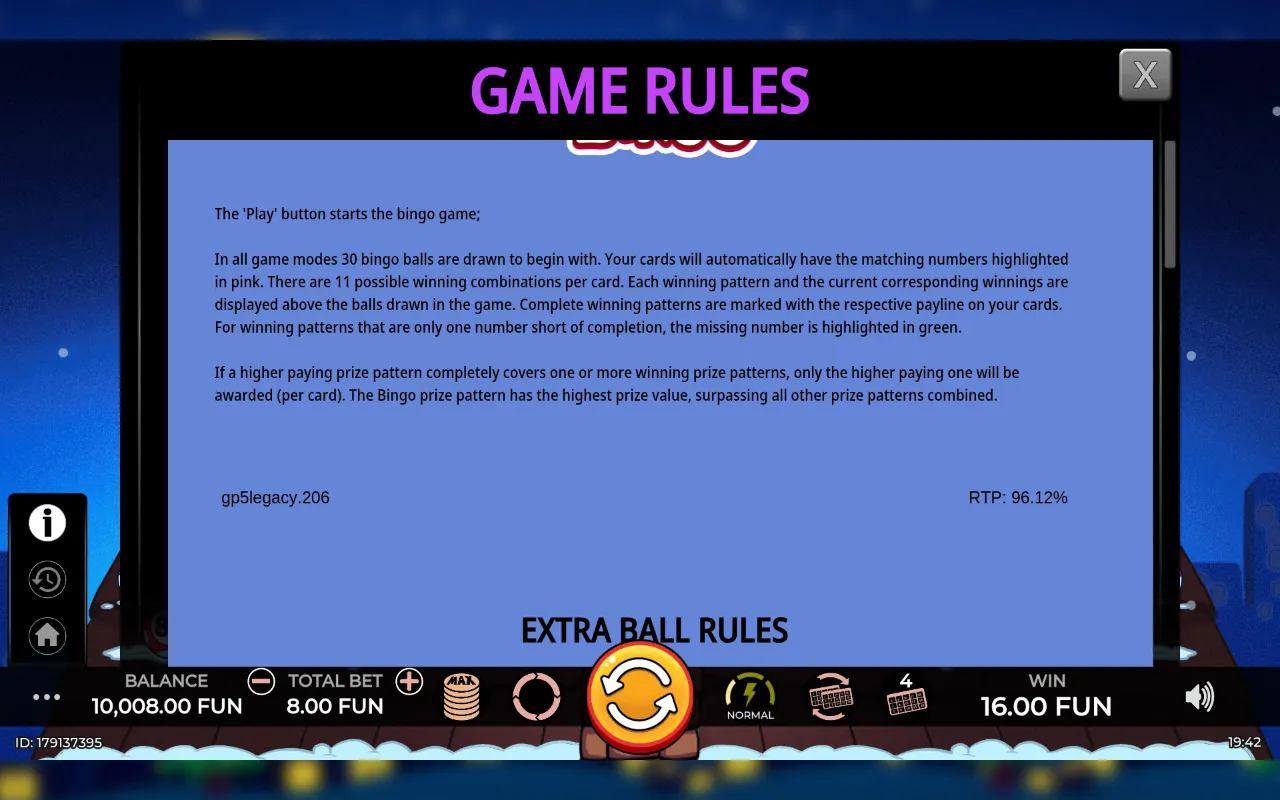
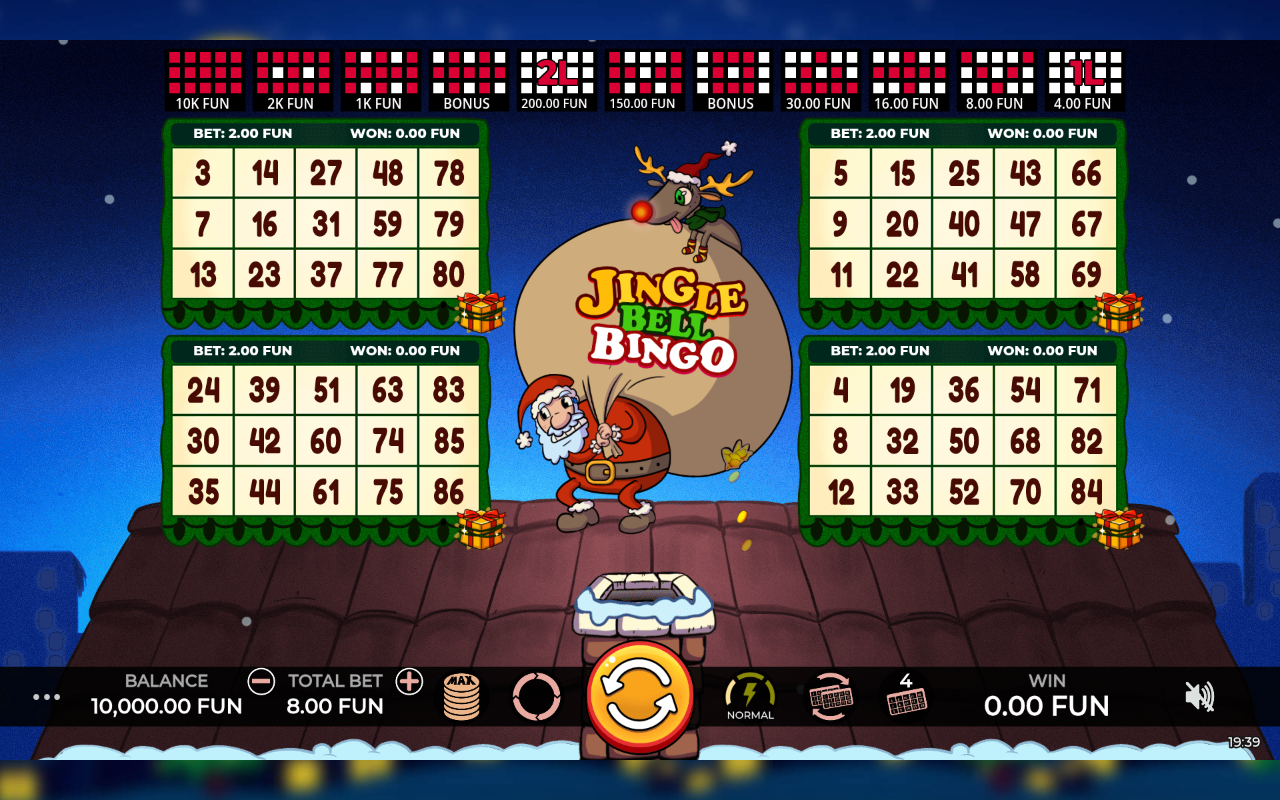
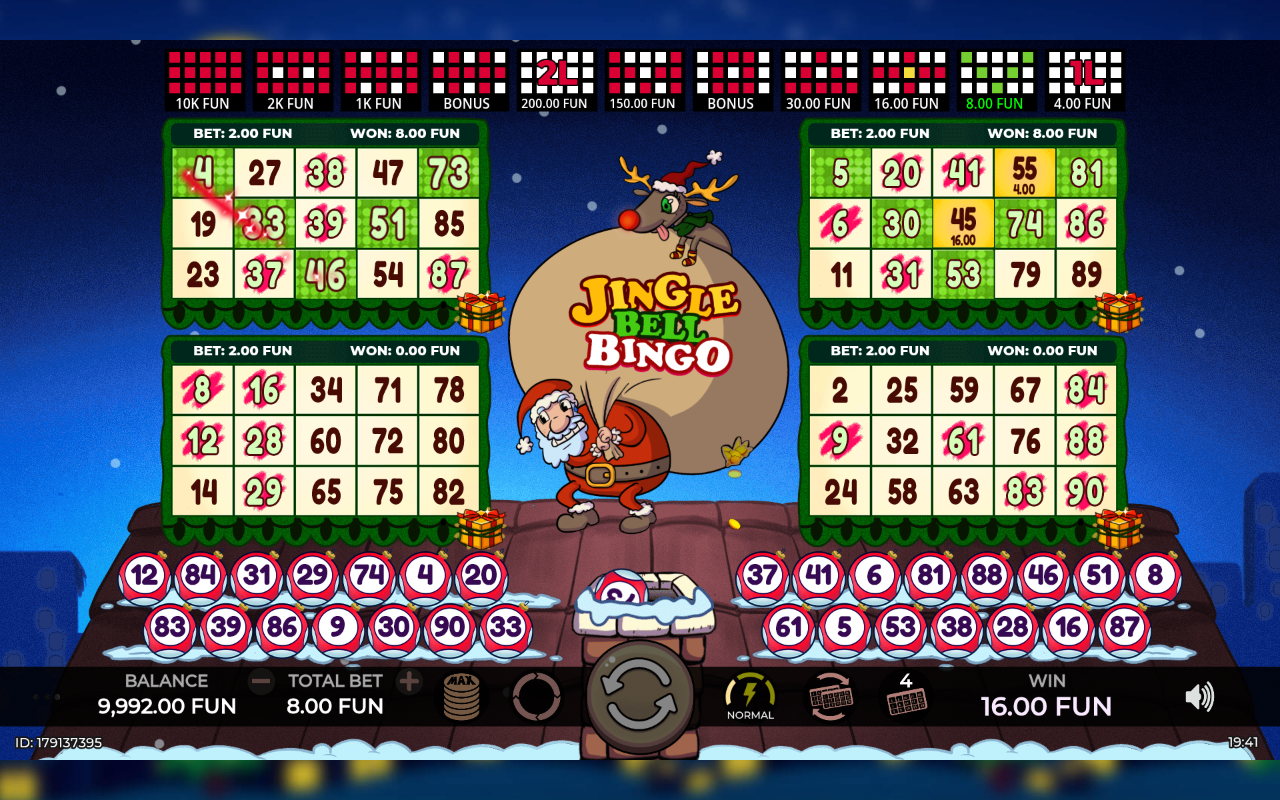
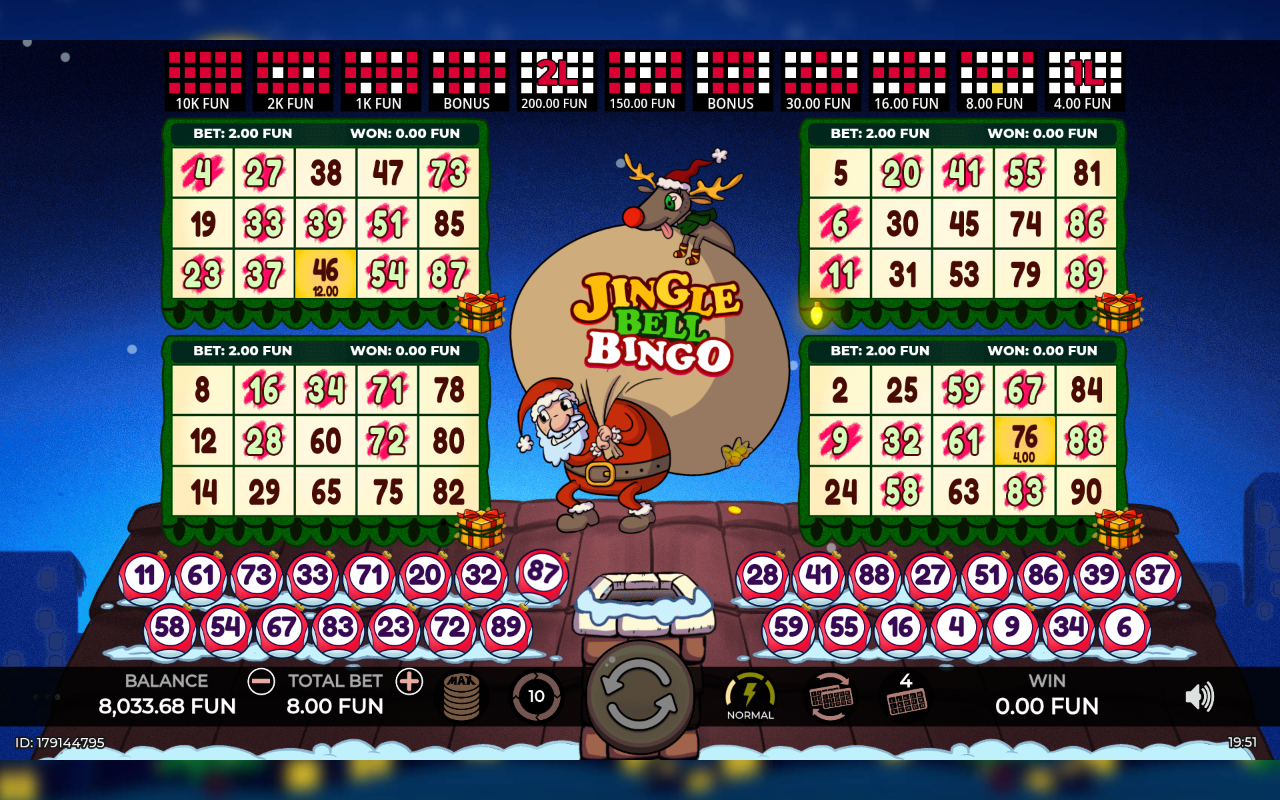
Every round starts the same way: 30 bingo balls are drawn, and any matching numbers on your cards are highlighted automatically. With four cards in play there’s a lot to watch, and the game helps out by marking completed patterns with their payline. Any pattern that’s one number short gets flagged too, with the missing number lit up in green.
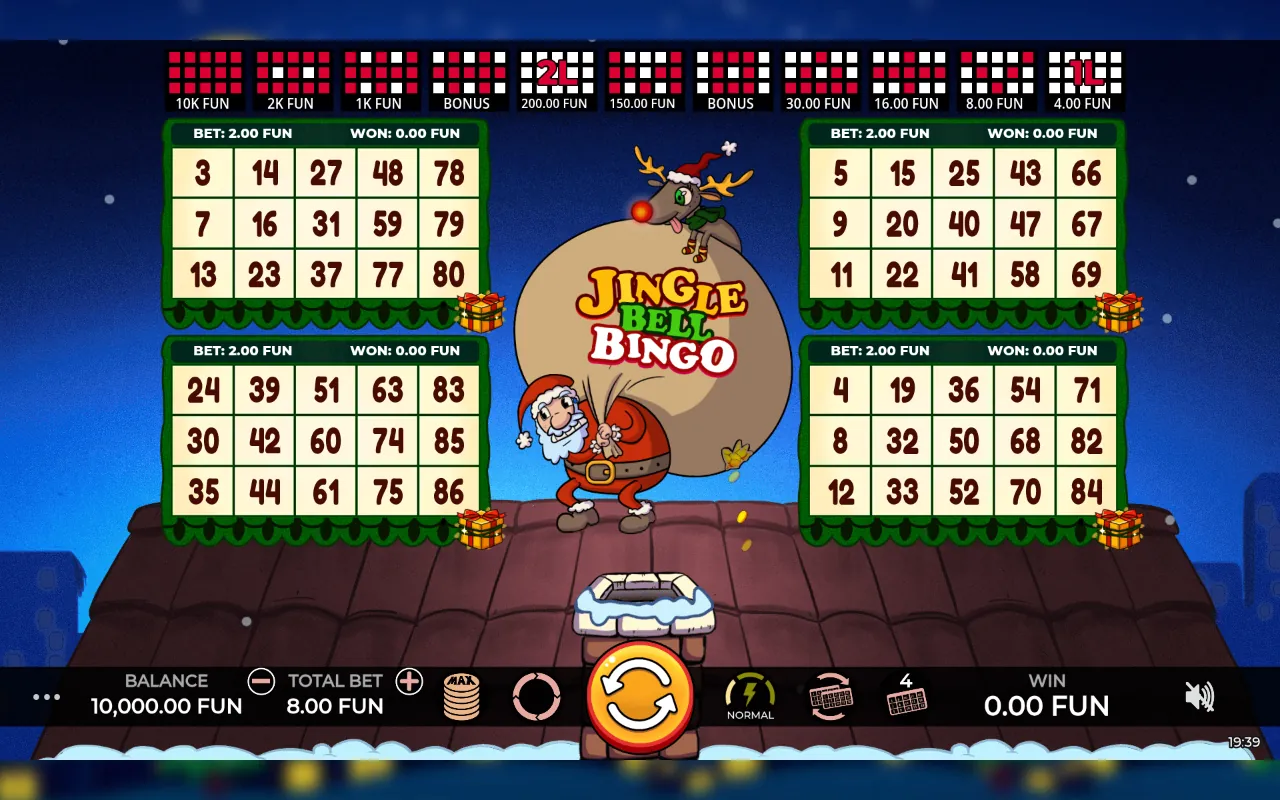
Each card carries 15 numbers and 11 possible winning combinations, with the current prize for every pattern displayed above the drawn balls. That display is live: it updates with the round, so you always know what each pattern is currently worth before you decide anything. Numbers come off in pink as the draw runs.
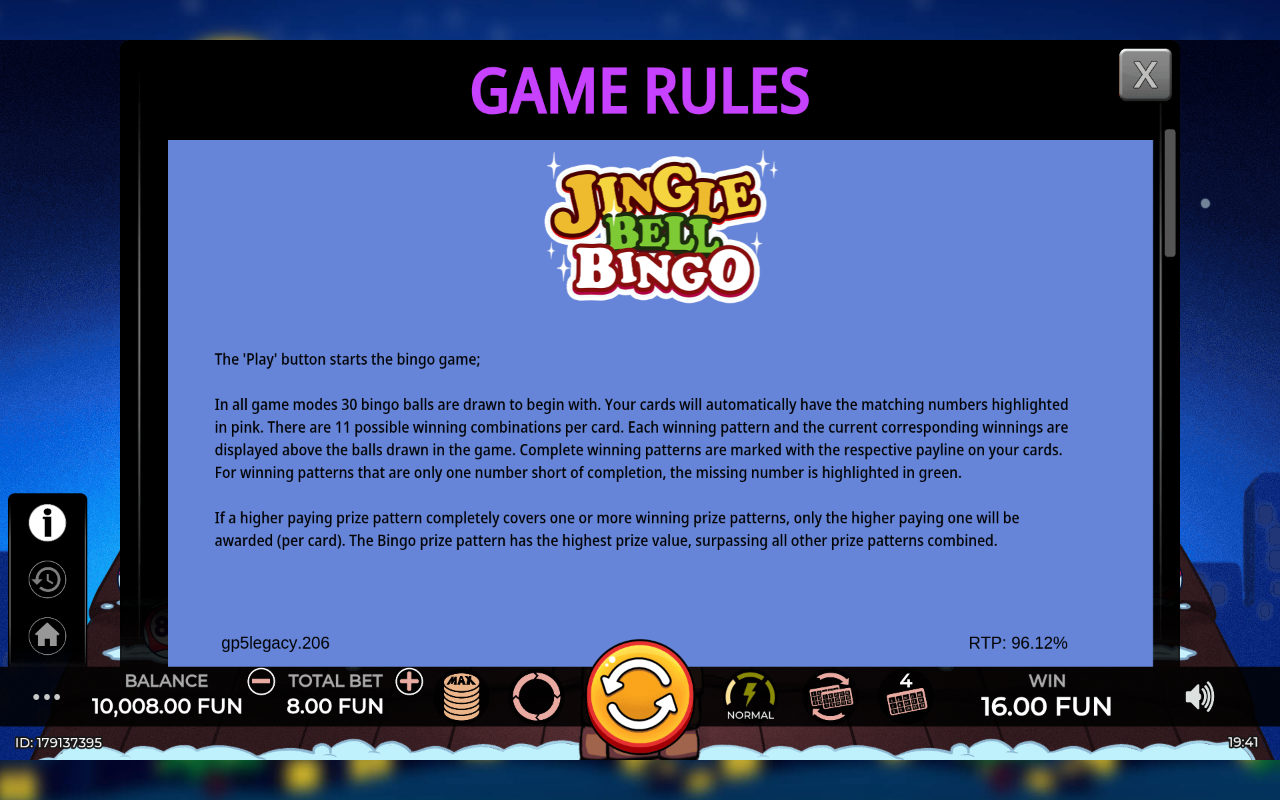
Wins are posted per card, so a good draw can pay on several cards at once while a weak one pays on none. One rule does a lot of quiet work here: when a higher-paying pattern completely covers one or more lower ones on the same card, only the highest pays out. A completed pattern isn’t automatically a payday – it’s a payday only if nothing bigger sits on top of it.
The full-house Bingo pattern is the big one, worth more than every other pattern on the card combined. The prize ladder above the balls shows all 11 categories at once. These are the values as they stood with 2.00 staked per card:
- Bingo (full pattern) – the top tier, worth more than every other pattern on the card combined
- 10,000 in demo credits at the 2.00 per-card stake
- 2,000 in demo credits at the 2.00 per-card stake
- 1,000 in demo credits at the 2.00 per-card stake
- BONUS
- 200 in demo credits at the 2.00 per-card stake
- 150 in demo credits at the 2.00 per-card stake
- BONUS
- 30 in demo credits at the 2.00 per-card stake
- 16 in demo credits at the 2.00 per-card stake
- 8, then 4, in demo credits at the 2.00 per-card stake
Those figures scale with the stake, so they’re a snapshot rather than fixed values – the shape of the ladder is the point, dropping steeply from the full house down to the smallest patterns. There’s no reel set underneath any of this; what the two BONUS entries on the ladder represent isn’t spelled out by the game.
Each win lands on the card that earned it, posted as a per-card amount alongside the draw. Four cards running at once means the wins stack up independently rather than feeding a single meter.
The Extra Ball
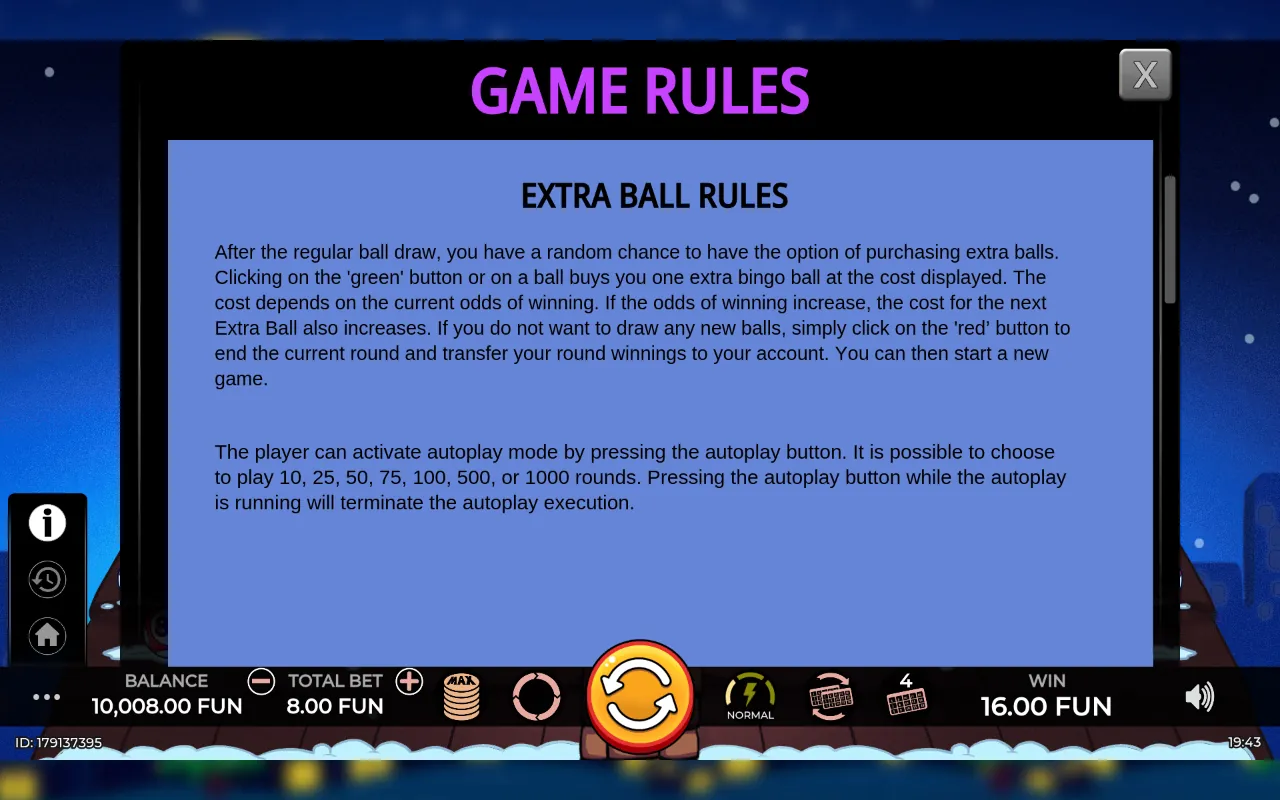
After the regular 30-ball draw, there’s a random chance you’ll be offered the option to buy extra balls. It’s the game’s one interactive decision point, and it arrives with a priced choice: green to buy, red to end the round and bank what you’ve won. The offer doesn’t come every round, and there’s no way to force it.
The pricing is where it gets interesting. Each extra ball costs whatever the current odds of winning justify, so the price climbs as your position improves. One number short of a big pattern means an expensive ball; a dead card means a cheap one, if the offer appears at all.
The odds move with every ball you buy, so consecutive purchases in the same round can each carry a different price. Buying is simple in execution: click the green button, or click a ball, and one extra ball is drawn at the cost displayed. Declining is just as simple – the red button ends the round, transfers your winnings to your balance and clears the table for a new game.
You can keep buying balls as long as the option stays available and you keep paying, or stop at any point and walk away with what the round has paid so far. Stocking icons tumble across the screen while the decision is on the table, a nice touch of theatre around the only moment that matters.
There’s no fixed price list for any of this – it’s priced per round, against the live odds, and it’s the closest thing Jingle Bell Bingo has to a bonus buy.
Pacing Controls
Because the draw is the game, how fast it plays out matters more than it would on a reel slot. A round is 30 balls plus any you buy, and watching each one land adds up. Jingle Bell Bingo gives you three speeds and an autoplay system to control it:
- Normal – the default speed, full animations
- Turbo – faster, but the animations still play out
- Instant – results appear immediately, no waiting
- Autoplay – runs 10, 25, 50, 75, 100, 500 or 1,000 rounds automatically, and pressing the button again stops it
Autoplay handles the round starts, not the extra ball decisions – those priced choices stay with you, which keeps autoplay from becoming a fully hands-off grind. Instant mode with autoplay running is about as fast as bingo gets. Normal speed is the one that shows off the artwork, and the rooftop scene earns the slower look.
Our Honest Verdict
Overall Rating: 7.1/10
Playing Jingle Bell Bingo is mostly watching, punctuated by one moment of real thinking. Thirty balls land, your cards light up or they don’t, and then occasionally the game asks whether you’ll pay for one more number while a reindeer looks on from the top of Santa‘s sack. That question, and the answer you give it, is the whole reason to sit down at this rooftop.
At its best, the extra ball pricing makes this one of the more honest purchases in casino gaming – the cost tracks your actual odds, so every buy is informed rather than blind. At its worst, everything else is thin: one feature, no second round, and a lot of dead air between offers. The festive artwork fills some of that gap, but only some.
This is for bingo players who like a decision they can price up, and for slot players tired of watching features they can’t influence. Anyone chasing free spins and climbing multipliers will find the sack fairly empty under the tree. For the right player, though, there’s a genuinely tense little game up on that roof, and it’s worth unwrapping.
Jingle Bell Bingo FAQs
-
What is the RTP of Jingle Bell Bingo?
The RTP is 96.12%, the total expected return for the game. -
How many paylines does Jingle Bell Bingo have?
Each card has 11 possible winning combinations, and a full Bingo pattern pays more than all the other patterns on that card combined. -
What is the grid size of Jingle Bell Bingo?
The game plays on four bingo cards, each with five columns and three rows, giving 15 numbers per card. -
How many balls are drawn in Jingle Bell Bingo?
30 balls are drawn to begin every round, in all game modes. After that draw you may randomly be offered the chance to buy extra balls. -
What happens if two winning patterns complete on the same card?
Only the higher paying one is awarded – a bigger pattern that completely covers a smaller one doesn’t also pay the smaller one out. -
Can you buy the bonus on Jingle Bell Bingo?
There’s no traditional bonus buy. After a draw you may be offered the chance to purchase extra balls at a price that depends on your current odds of winning, with an accept or decline choice. -
When is Jingle Bell Bingo released?
Jingle Bell Bingo’s release date is 30 November 2023. -
Who makes Jingle Bell Bingo?
Jingle Bell Bingo is made by Caleta Gaming.