








Luck & Magic Scratch Slot Review
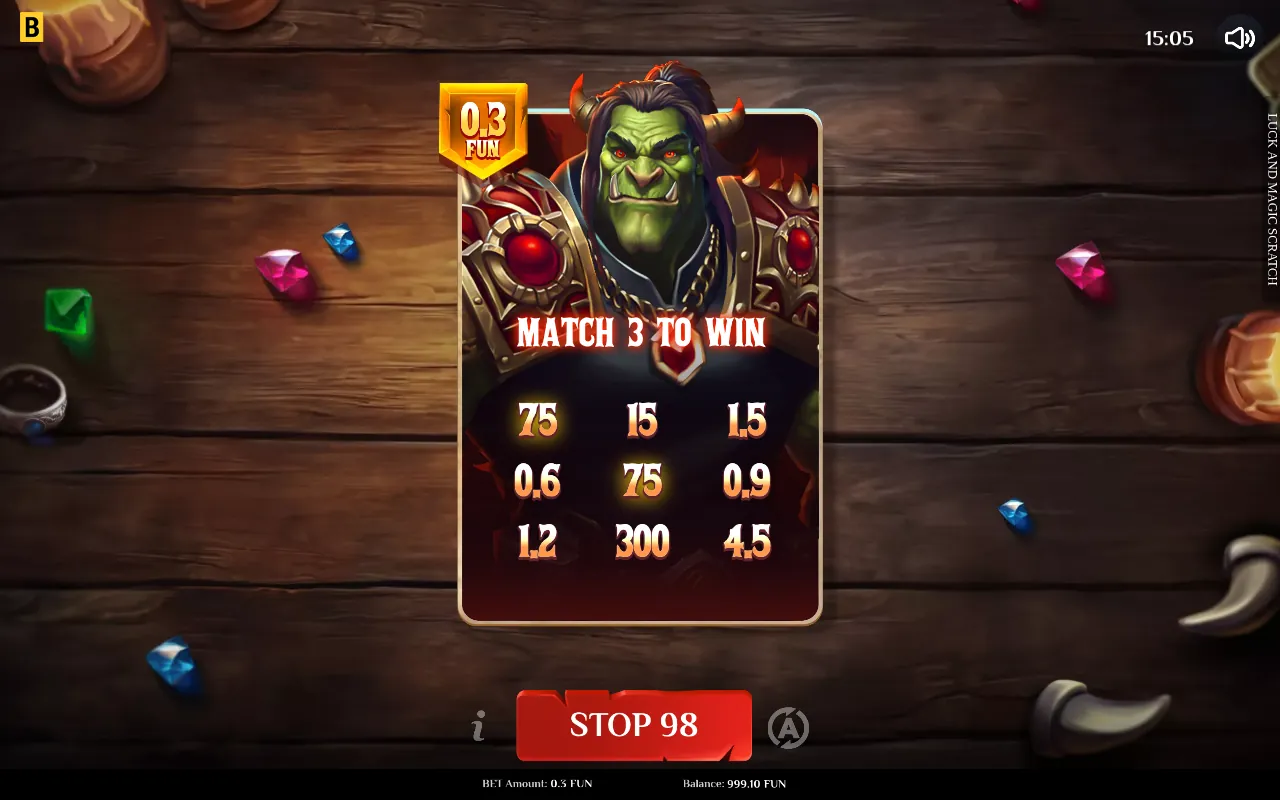
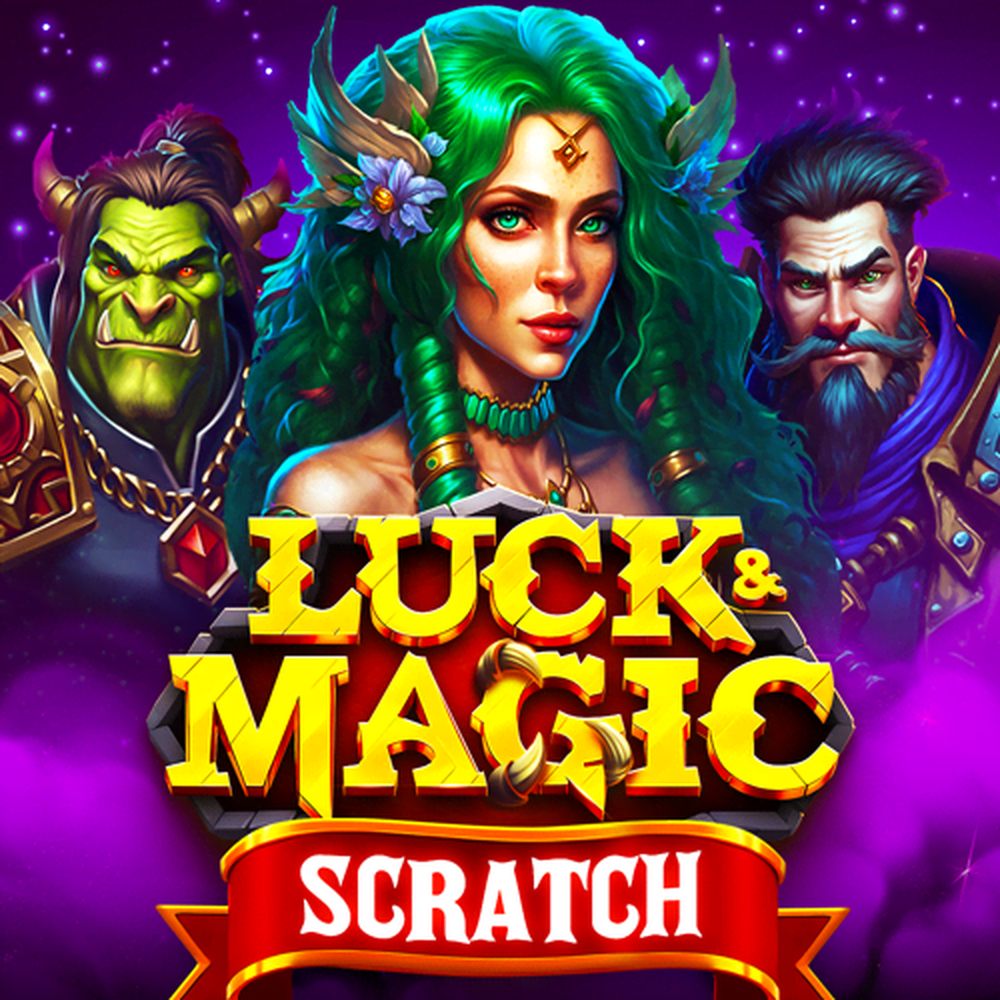
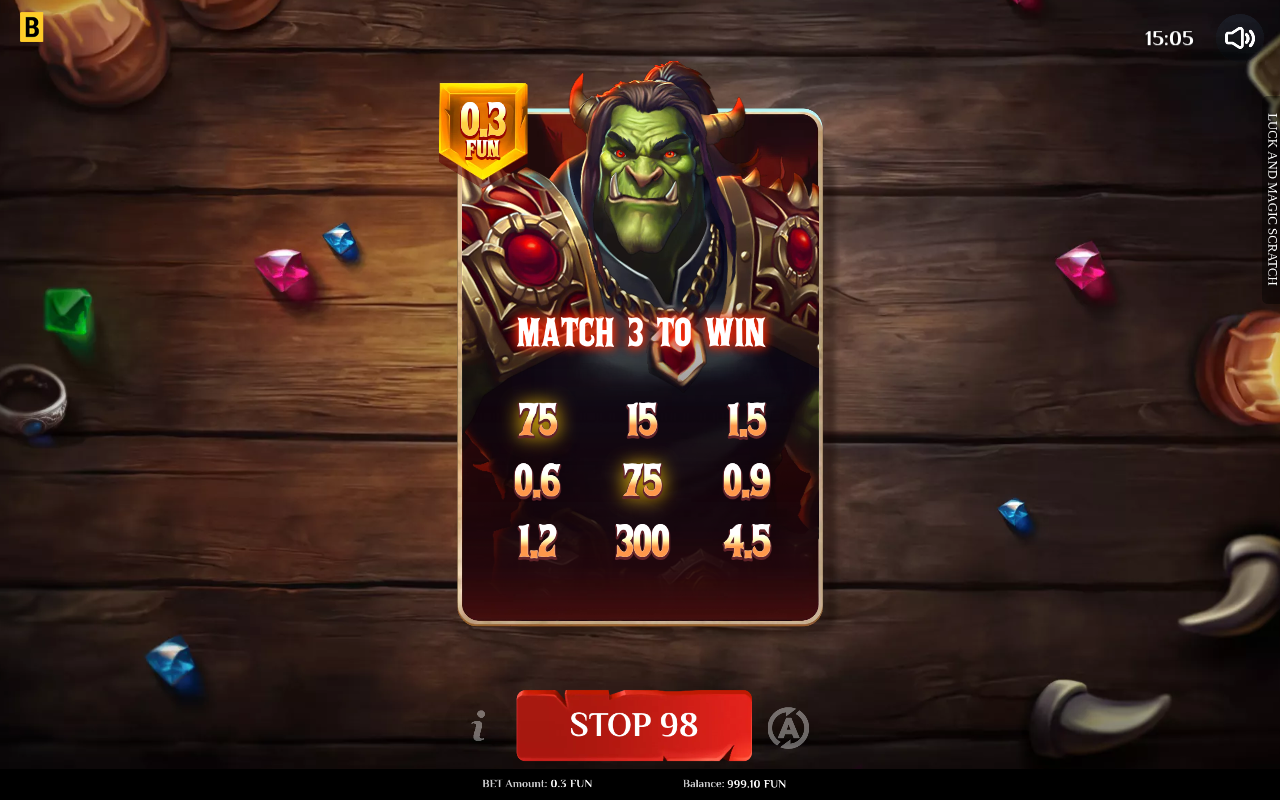
BGaming have spent more on the orc than on the game he’s guarding. That’s not a complaint: Luck & Magic Scratch is a fantasy-tabletop scene of weathered planks, glowing gems and bronze urns wrapped around one of the simplest propositions online, and the artwork is doing real work. Most scratch cards are a logo and a grey field; this one has a red-armoured warrior watching you scratch, and it makes a two-minute game feel less throwaway than it otherwise would.
Luck & Magic Scratch runs on a 3×3 grid, carries an RTP of 90% with mid volatility, and caps its winnings at 1,000x the cost of the card. That RTP sits below what most reel slots offer, though it’s normal for the scratch format. The studio’s reel work ranges from Fruit Million to Snoop Dogg Dollars and Witchcraft Riches, so a straightforward scratch card sits in unfamiliar territory for them.
How the Card Works
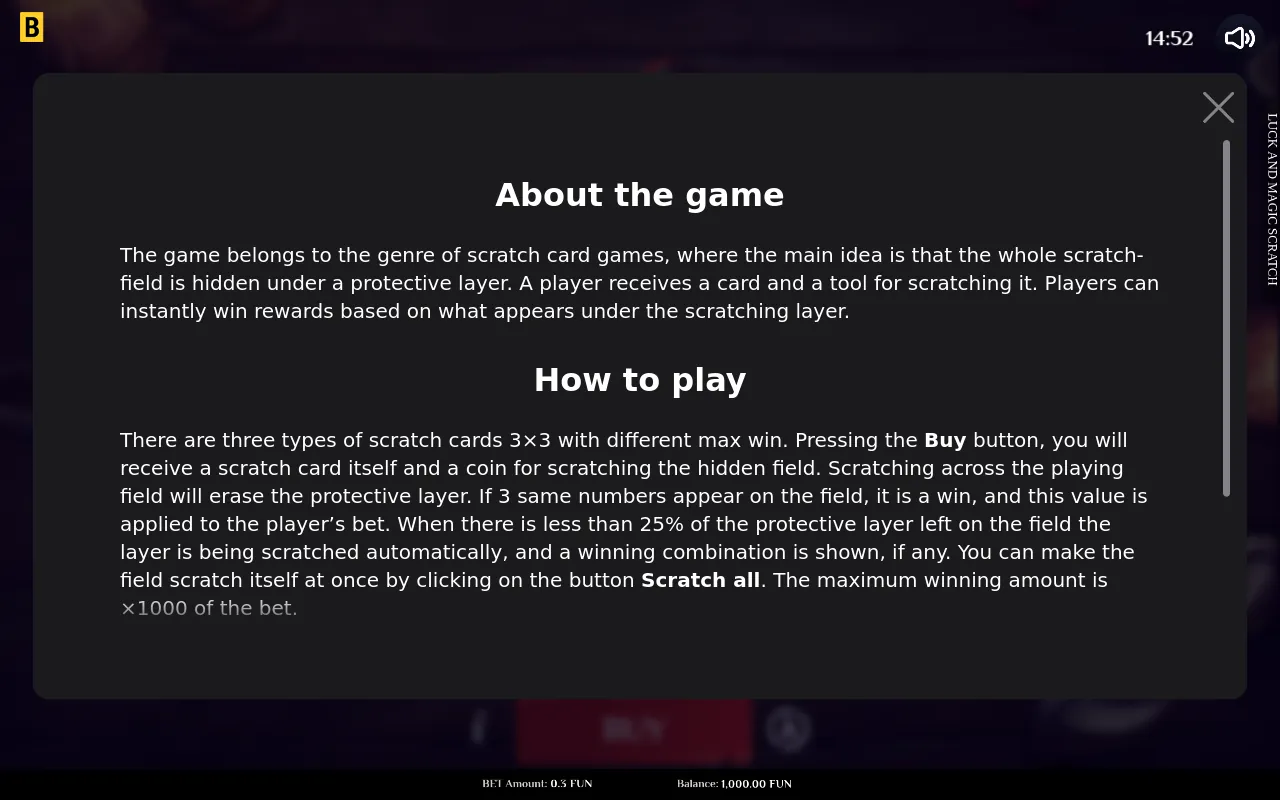
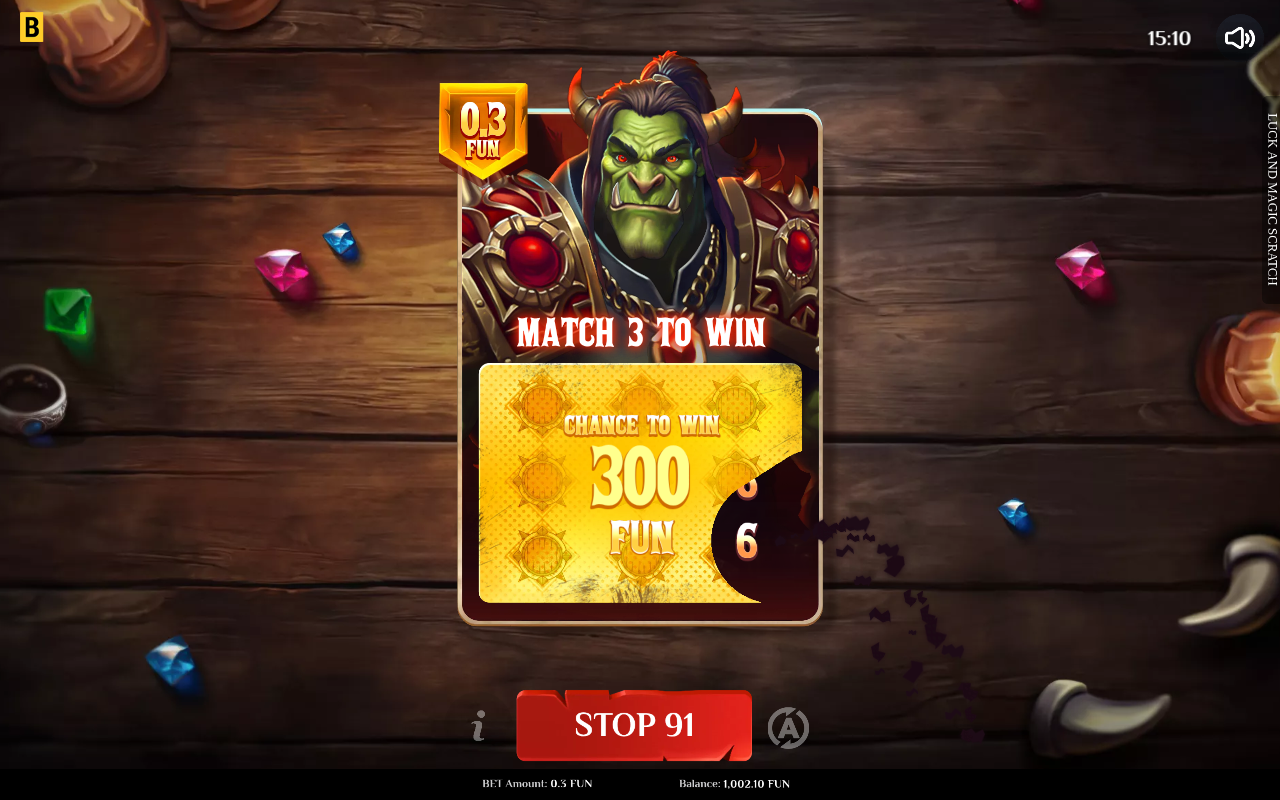
The whole playfield is hidden under a protective layer when a card arrives. Pressing the buy button gets you a fresh card plus a coin for scratching it, and dragging the coin across the field erases the layer to reveal what’s underneath. It’s the physical ritual of a paper scratch card, recreated faithfully.
A round from start to finish runs in a fixed order:
- Buy a card, which arrives together with the scratching coin.
- Drag the coin across the field to erase the protective layer, or let convenience features do it for you.
- Watch for three matching numbers appearing on the nine cells.
- If a match lands, the matched value is applied to the cost of the card and paid to your balance.
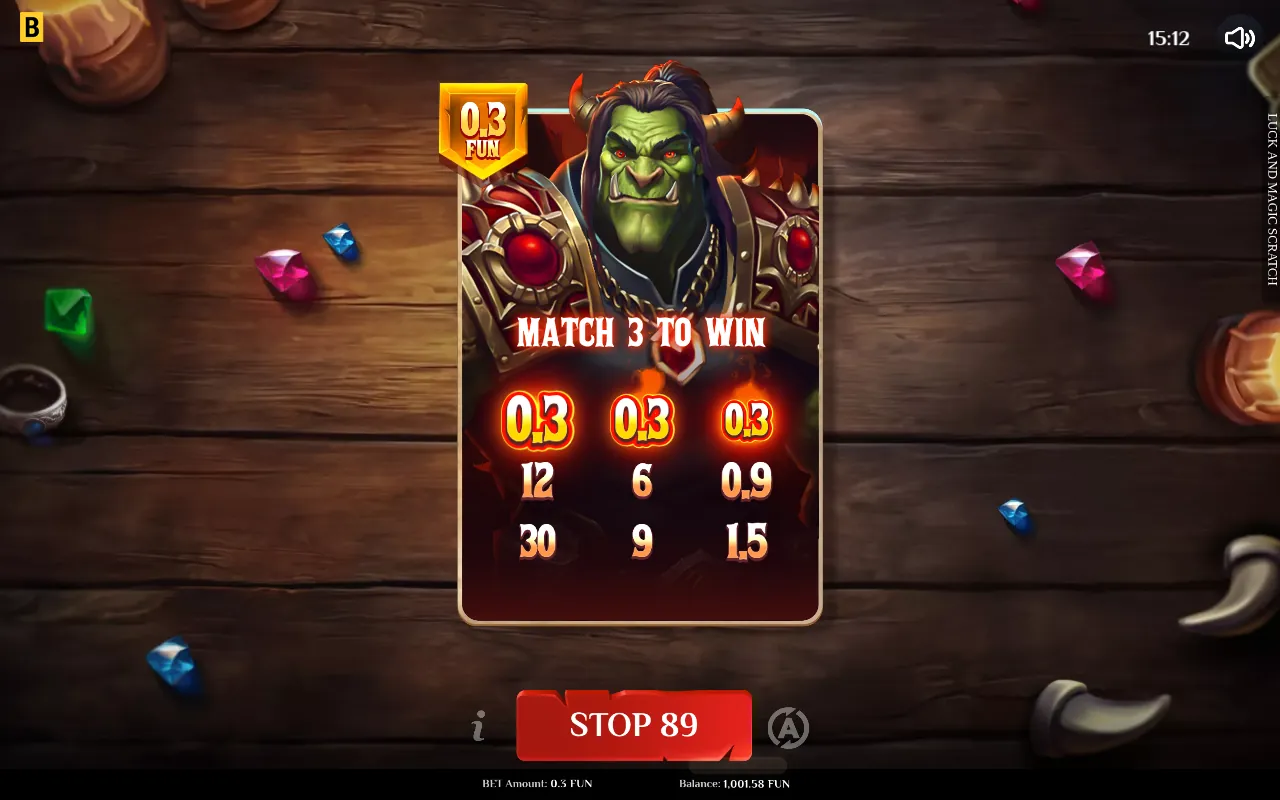
The win condition couldn’t be simpler: if three matching numbers appear anywhere on the 3×3 field, the card pays, and that number is applied to your stake. There are no paylines to trace and no symbol combinations to memorise. Nine cells, one rule.
Scratch All and Auto-Scratch
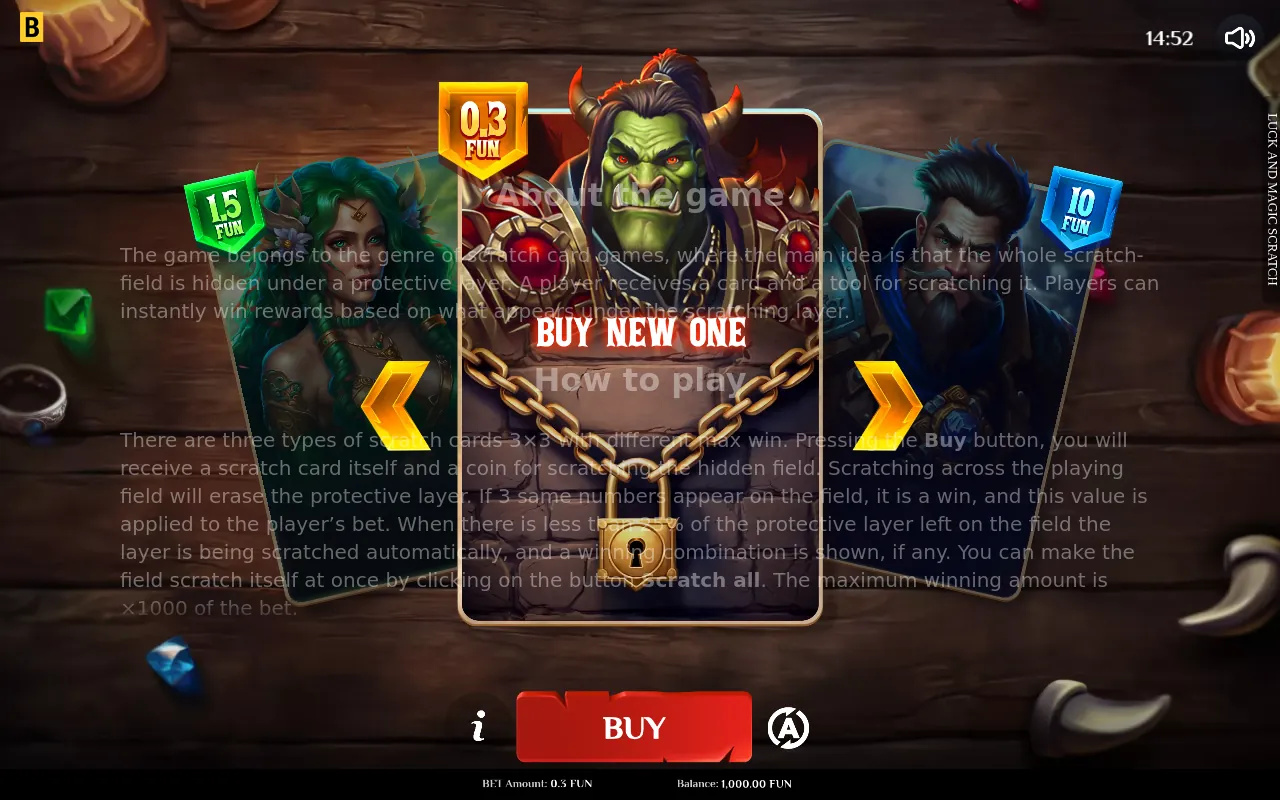
Three convenience features speed things up. The first is the Buy New One flow: each purchase delivers the card itself and the coin, so a new round is never more than one button press away. The second is Scratch All, which makes the entire field reveal itself at once for players who’d rather skip the ritual entirely.
The third is the automatic finish. Once less than 25% of the protective layer remains on the field, the game scratches off the rest by itself and shows any winning combination. It’s a small touch, but it means you never have to chase the last corner of silver off a card.
Autoplay sits alongside these, running consecutive cards without you touching anything between them. Set it going and the game buys, reveals and settles each card in sequence, with a visible counter ticking down the remaining cards. Stop it manually at any point and the current card still plays out to its result.
What the Numbers Pay
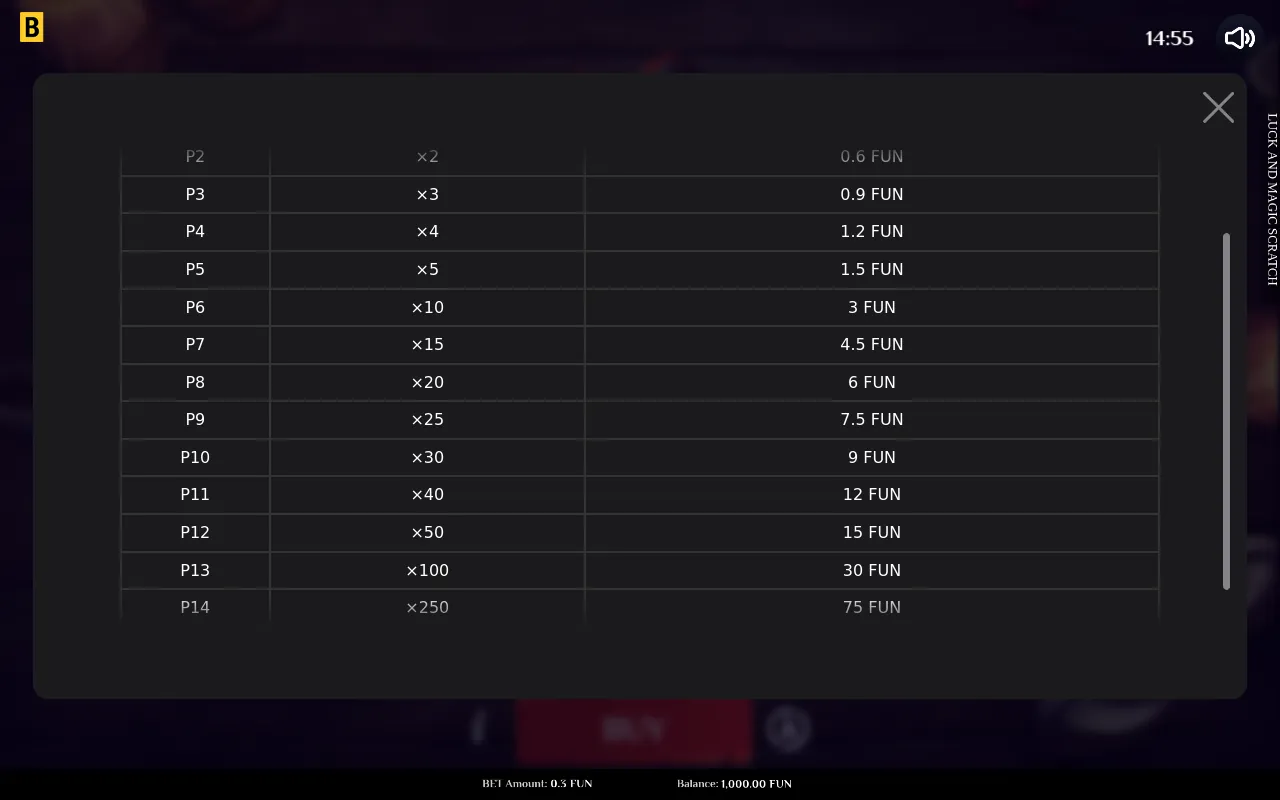
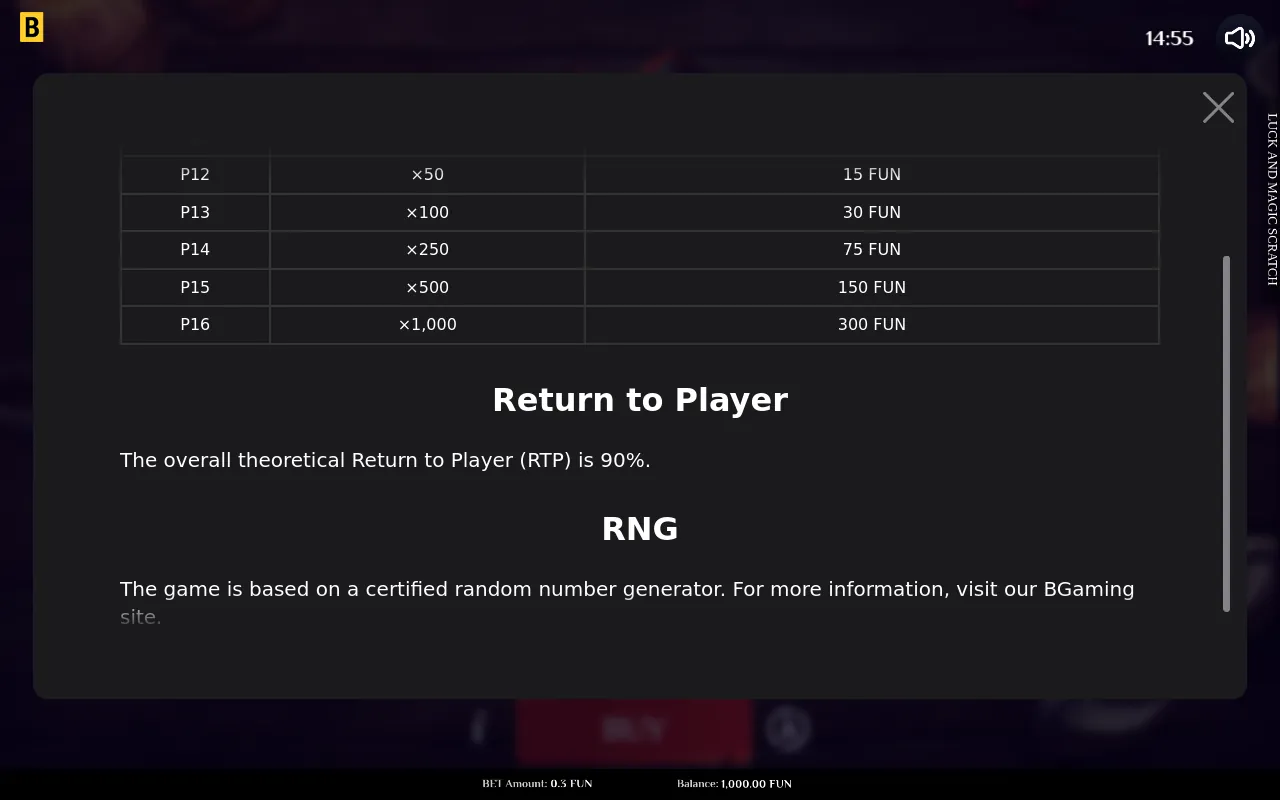
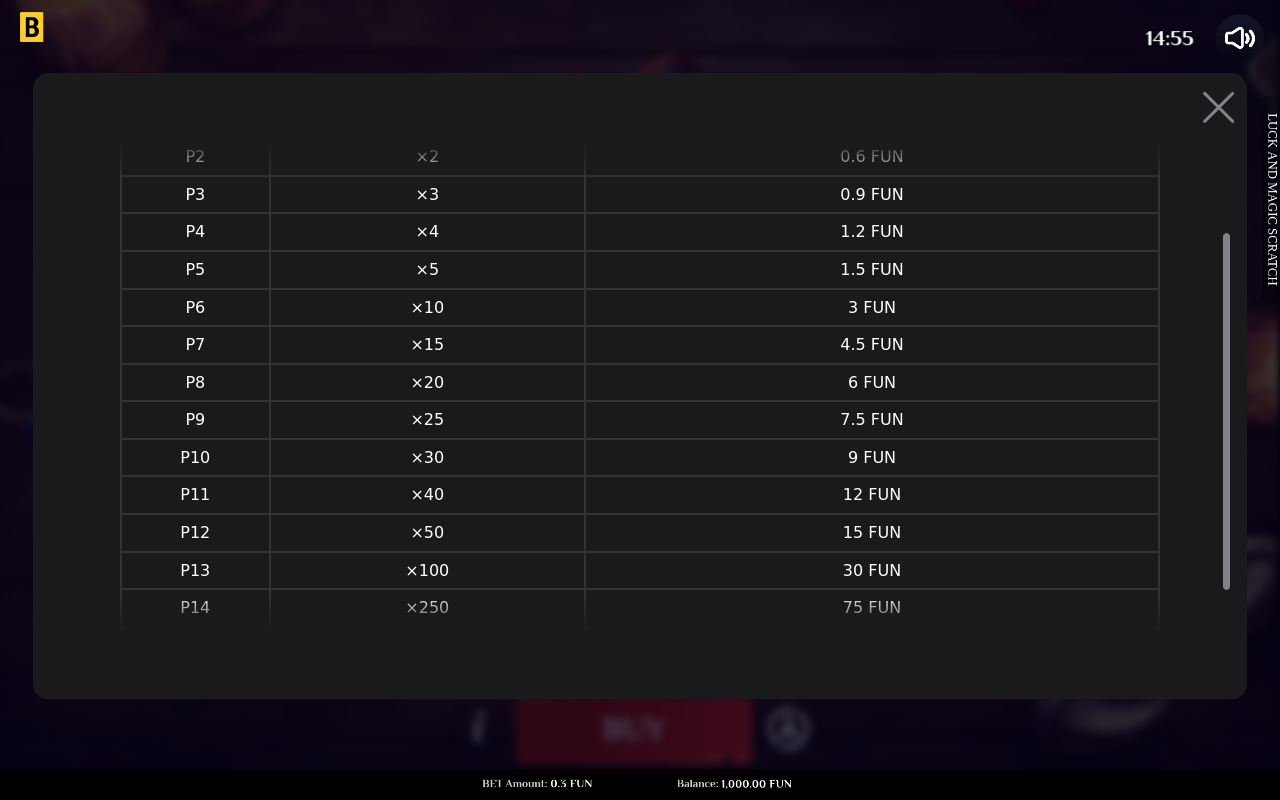
Fifteen values can appear on the field, and the top of the ladder is steep relative to the bottom. The full paytable for matching three of the same number:
- Top number: 1,000x the card’s cost
- 500x
- 250x
- 100x
- 50x
- 40x
- 30x
- 25x
- 20x
- 15x
- 10x
- 5x
- 4x
- 3x
- Lowest number: 2x
The shape of that ladder matters more than its length suggests. The middle and lower reaches tighten into a dense cluster, where a winning card barely returns more than it cost. The gaps between the top tiers, by contrast, widen sharply, so each step up the upper half of the table is worth noticeably more than the one before it.
The single largest jump on the table sits between the two top tiers, and it’s the difference between a good card and the best one the game can produce. All of the game’s real appeal lives above the cluster. Getting there is the whole point of scratching.
Card Types and Buying
There are three types of 3×3 scratch card available, each with a different maximum win. The buy menu shows all three, and each purchase delivers a new card of that type along with the scratching coin. Choosing between them is the only real decision the game asks you to make.
Because each card is a separate purchase rather than a spin, there’s no bet range in the usual sense. Your stake is whatever the chosen card type costs, and every prize on the paytable is a multiple of that cost. The 1,000x ceiling belongs to the top of the ladder, so the priciest card type carries the game’s full winning potential.
That makes the card choice a straight question of appetite. The cheaper types cost less per round and cap out lower, while the top type puts the full ladder in play on every purchase. Nothing else about the game changes between them: same grid, same match-three rule, same scratching ritual.
Fair Play and Round Handling
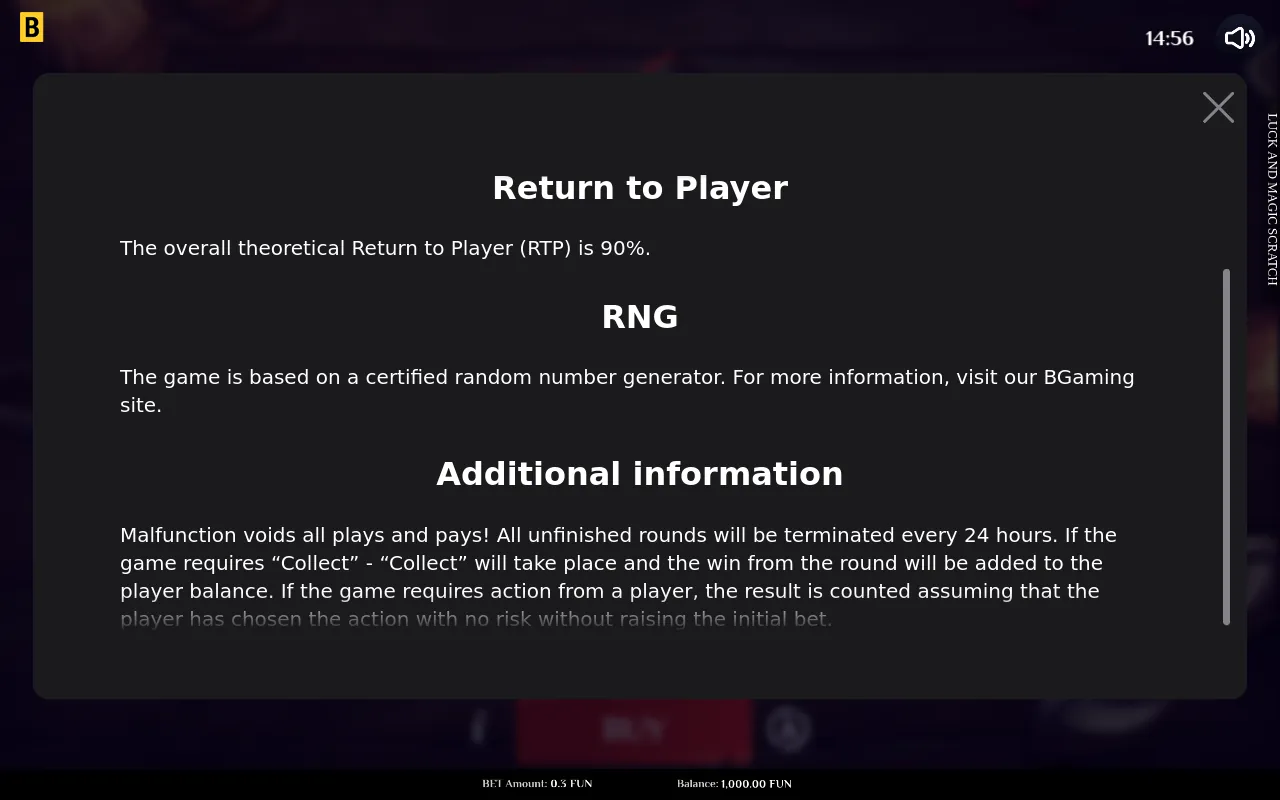
The game runs on a certified random number generator, with each card’s outcome fixed at the point of purchase. A malfunction voids all plays and pays on the affected card. Unfinished rounds are terminated every 24 hours.
Disconnection handling is player-friendly. If a round is left mid-play, the collect takes place automatically and any win from that round is added to the balance. Where the game would otherwise wait on a player choice, the result is counted as the no-risk option without raising the initial bet.
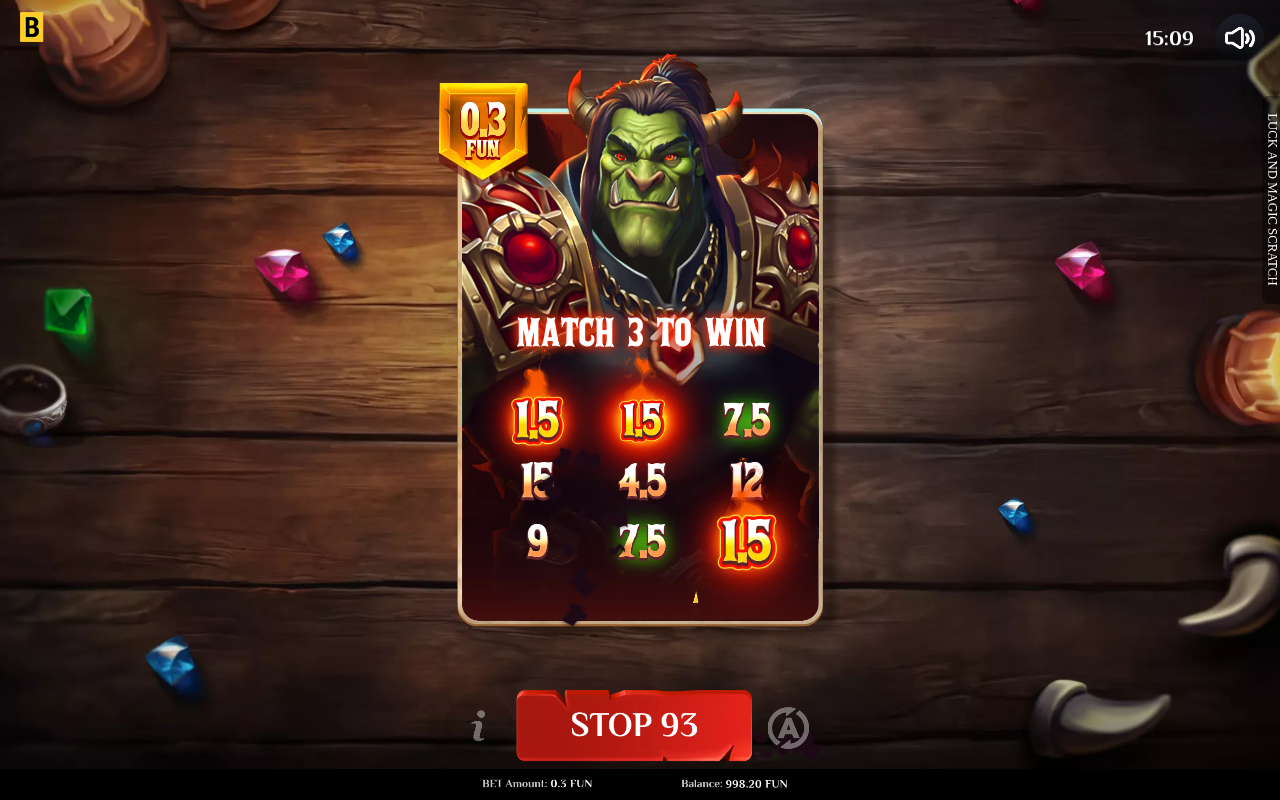
For a scratch release, the presentation is unusually deliberate. The orc watching from the side of the frame, the glowing stones and the heavy chain at his neck give the game a fantasy-tabletop identity it didn’t strictly need, and it’s better for having one. Plenty of scratch cards ship with a static logo and nothing else; this one has a setting.
Our Honest Verdict
Overall Rating: 6/10
This is a game of thirty-second rounds, and the orc’s hoard is the reason to pick it over the plainer scratch cards it sits beside. The presentation is genuinely the strength here: a full fantasy scene, a proper scratching ritual and a polish the format almost never gets.
The weakness is the returns. The paytable clusters so tightly in its lower half that most winning cards barely clear their own cost, and the 90% RTP does the rest. A run of cards can pass with very little to show for it.
It suits someone who wants a quick, handsome scratch between sessions rather than a session itself; anyone after features, free spins or a long build belongs on BGaming’s reel side of the shelf. The treasure is mostly in the frame around the card, but the orc guards it well, and he makes a modest game pleasant company.
Luck & Magic Scratch FAQs
-
What is the RTP of Luck & Magic Scratch?
The overall theoretical Return to Player is 90%, which is on the low side even for a scratch card. -
Is Luck & Magic Scratch high volatility?
No, it’s a mid volatility game. Wins are decided card by card, so the pacing is steadier than a high volatility slot. -
How do you win on Luck & Magic Scratch?
You win by matching three of the same number anywhere on the 3×3 field. The matched value is then applied as a multiple of the card’s cost. There are no paylines. -
What is the grid size of Luck & Magic Scratch?
The card is a 3×3 grid, with all nine cells hidden under a protective layer until you scratch. -
Can you buy cards on Luck & Magic Scratch?
Yes. Every card is a purchase: the buy button delivers a new scratch card and the coin for scratching it, and there are three card types with different maximum wins to choose from. -
What is the maximum win on Luck & Magic Scratch?
The maximum winning amount is 1,000x the cost of the card. -
How does auto-scratch work on Luck & Magic Scratch?
Once less than 25% of the protective layer is left on the field, the game scratches off the remainder automatically and shows any winning combination. You can also reveal the whole field at once with the Scratch All button. -
Does Luck & Magic Scratch have free spins or bonus rounds?
No. It’s a pure scratch card with no free spins, no bonus rounds and no side features beyond the convenience options like Scratch All and auto-scratch. -
Who makes Luck & Magic Scratch?
BGaming, the studio behind titles like Fruit Million and Snoop Dogg Dollars.