











Pay Dirt Slot Review
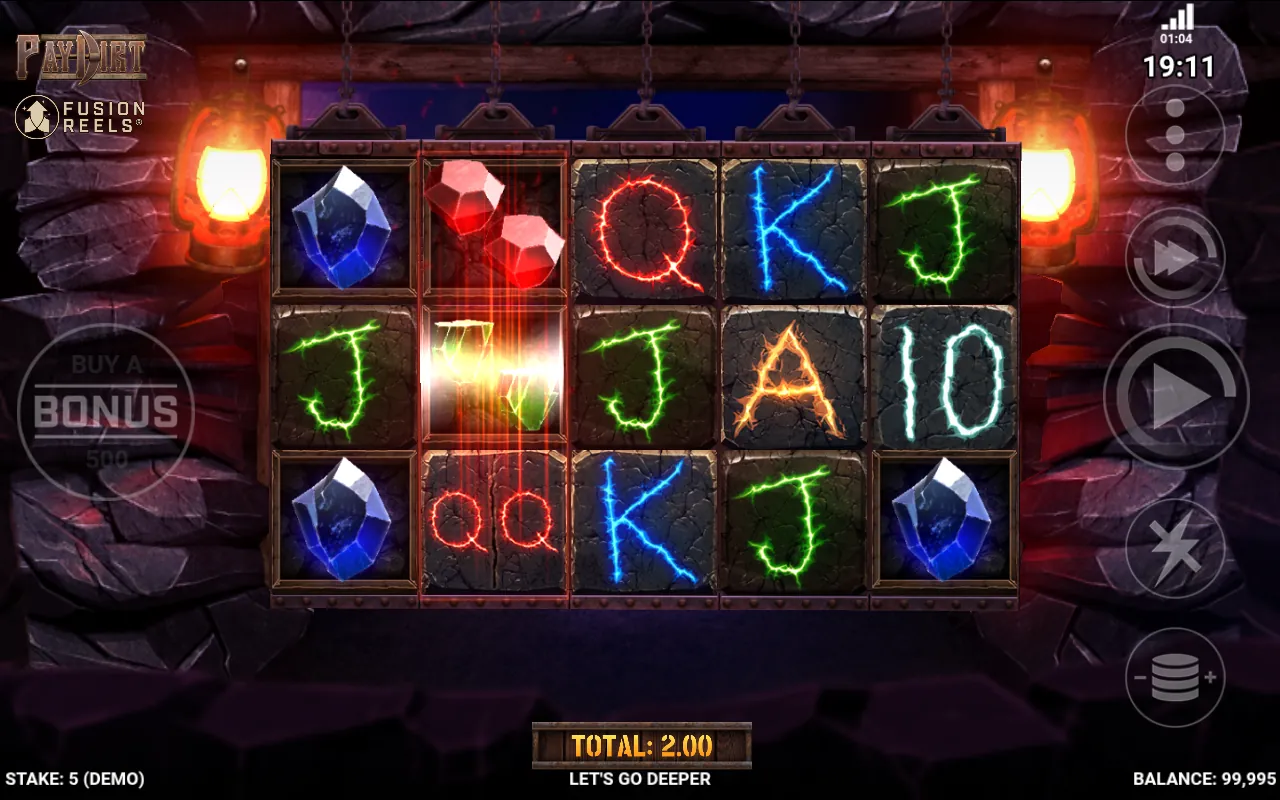
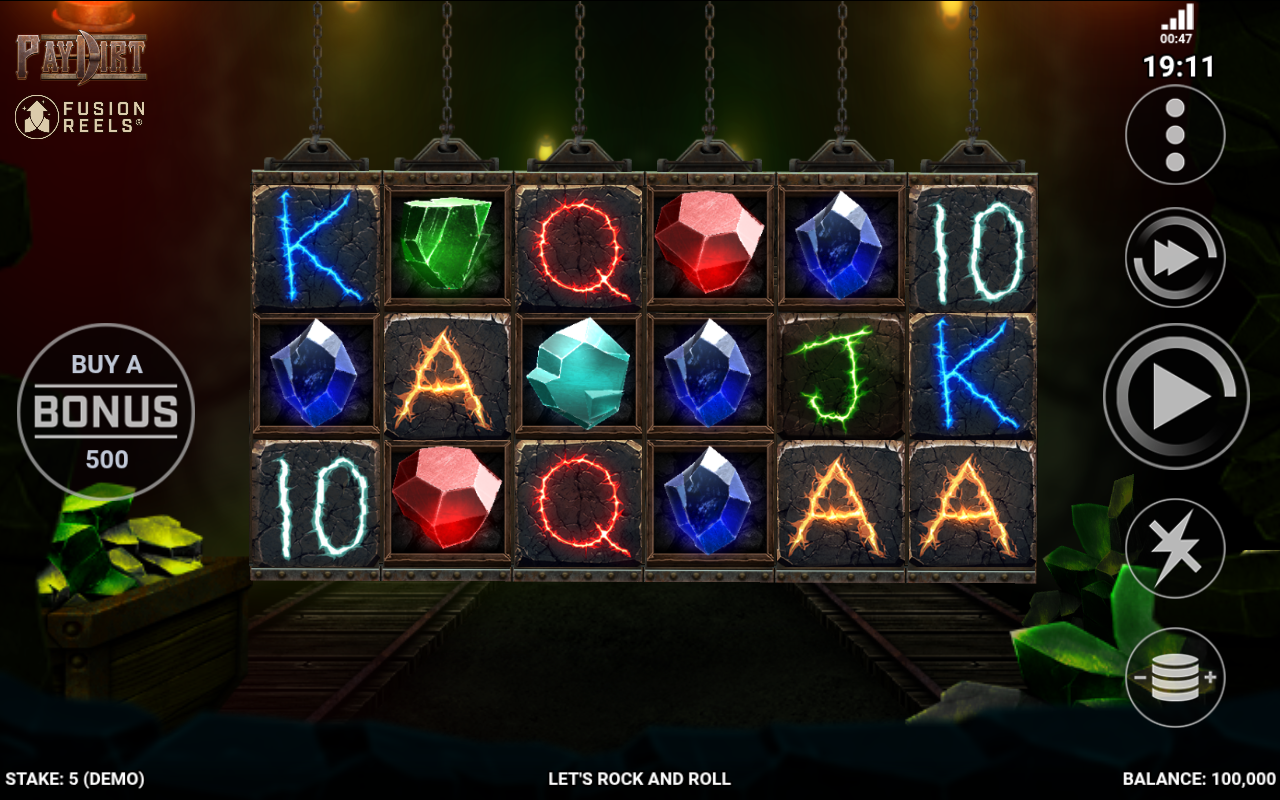
Rails run down into a mine shaft, a crate overflows with gold ore, and the reels hang from iron chains against cracked stone. Rogue’s Pay Dirt is one of the few line-pay games where losing is the only thing that costs you: every win buys a free respin at a better set of reels, so a streak pays for itself. The studio, also behind Chaos Coins, Gold Runner and Piggy Prize Pots, has built a 6×3 line-pay game running at 93.97% RTP, well below what you’d want from a modern release. The bonus round gives the multipliers the same treatment: each spin’s multiplier is always higher than the last, up to 100x. Whether that escalation is worth the weak return is the question this game asks.
Fusion Reels: The Mine Shaft Ladder
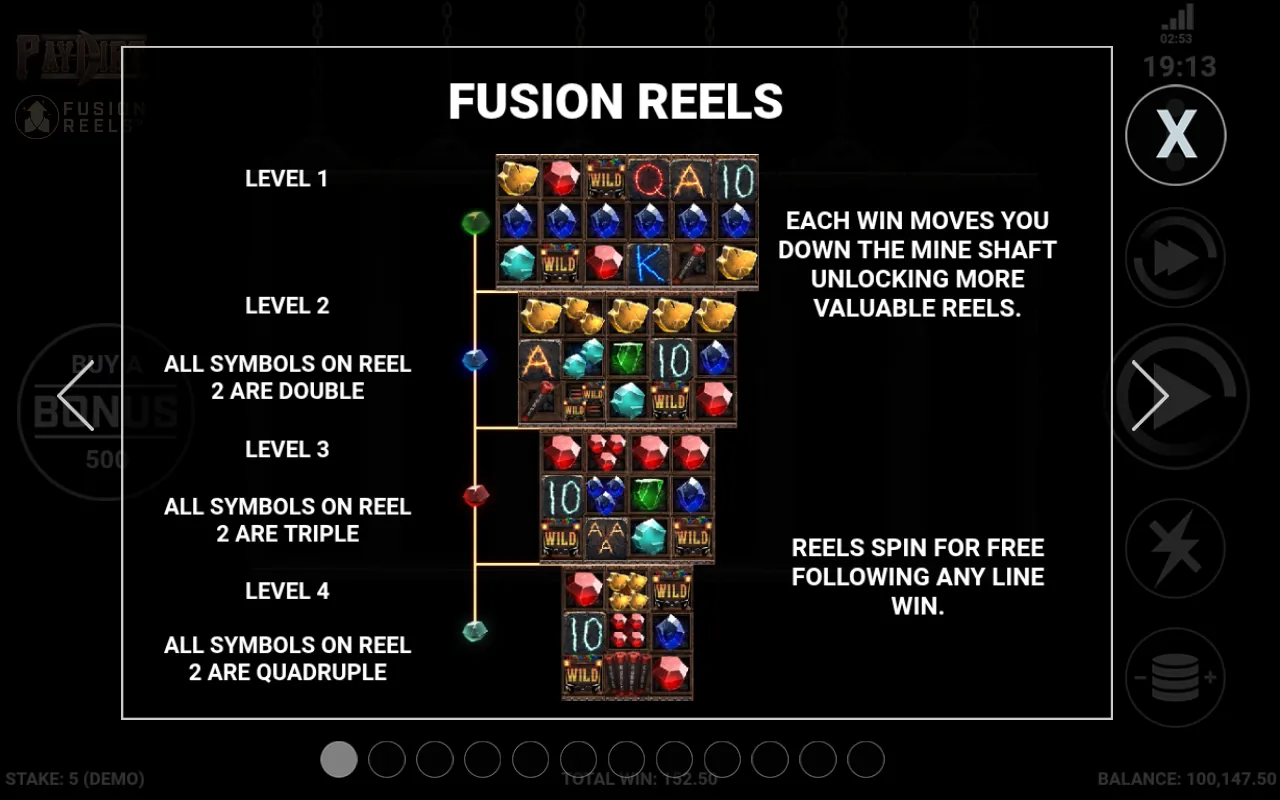
The core system sits in the base game. Any line win moves you up a level and the reels spin again for free, and each level makes the shaft’s lower reels more valuable. It’s a simple escalation loop: keep winning and the game keeps paying you to continue.
- Level 1 – the base reels
- Level 2 – all symbols on reel 2 are double
- Level 3 – all symbols on reel 2 are triple
- Level 4 – all symbols on reel 2 are quadruple
Those free respins follow any line win, so a hot streak compounds itself. Each win drops you further down the shaft, and the ladder only resets once the wins stop coming. Wins are multiplied by the current base stake throughout, at every level.
Because the multiplier applies to reel 2 only, a run of small wins can climb the ladder without ever paying much. The doubling, tripling and quadrupling all live on that one reel, so the system’s ceiling is tied to how often reel 2 lands in a winning line. A quadrupled second reel with a Gold Rock across it is where the ladder pays properly.
The ladder also feeds itself in a subtler way. A win on the base reels at Level 1 might be made of royals worth fractions of the stake, but it still counts as a line win, still earns the free respin, and still moves you down the shaft. What looks like a throwaway 0.2x result is really the first step of a climb, which is why the game’s small pays matter even when they don’t pay much.
Symbols and Pays
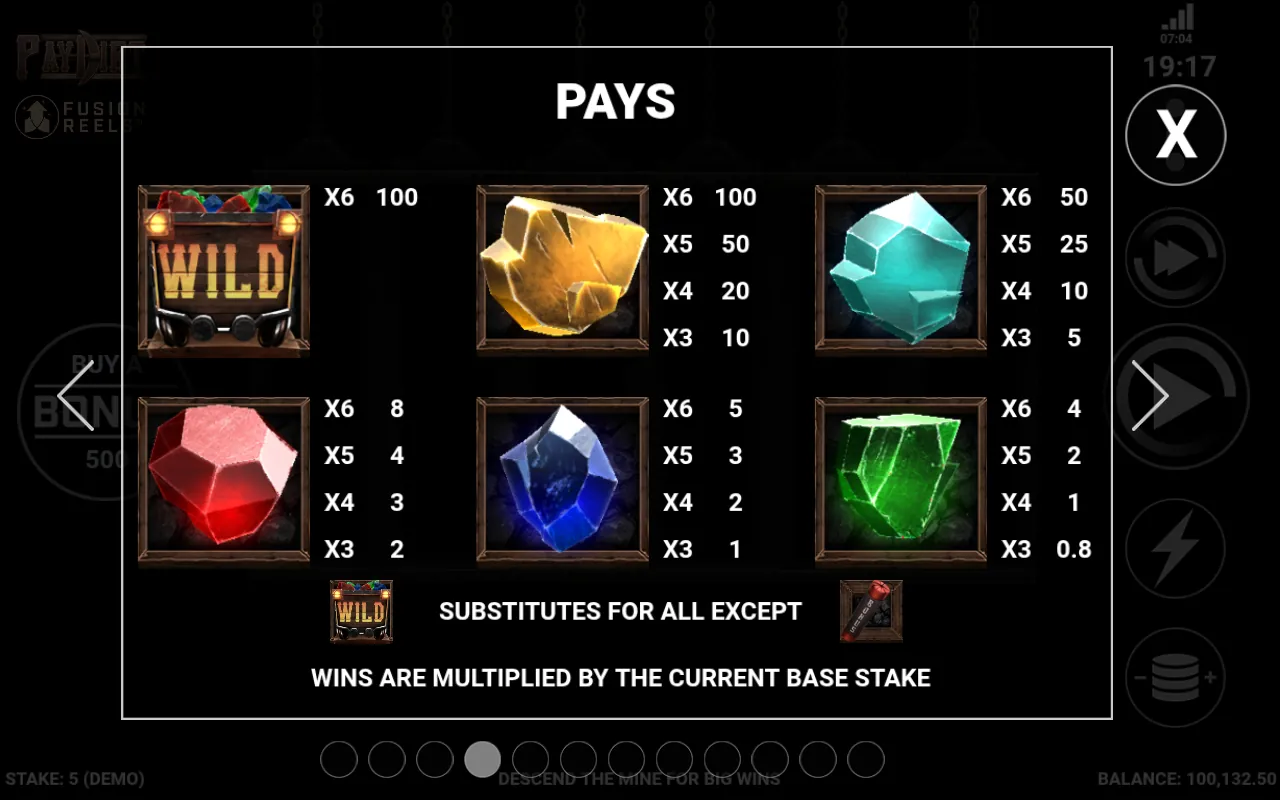
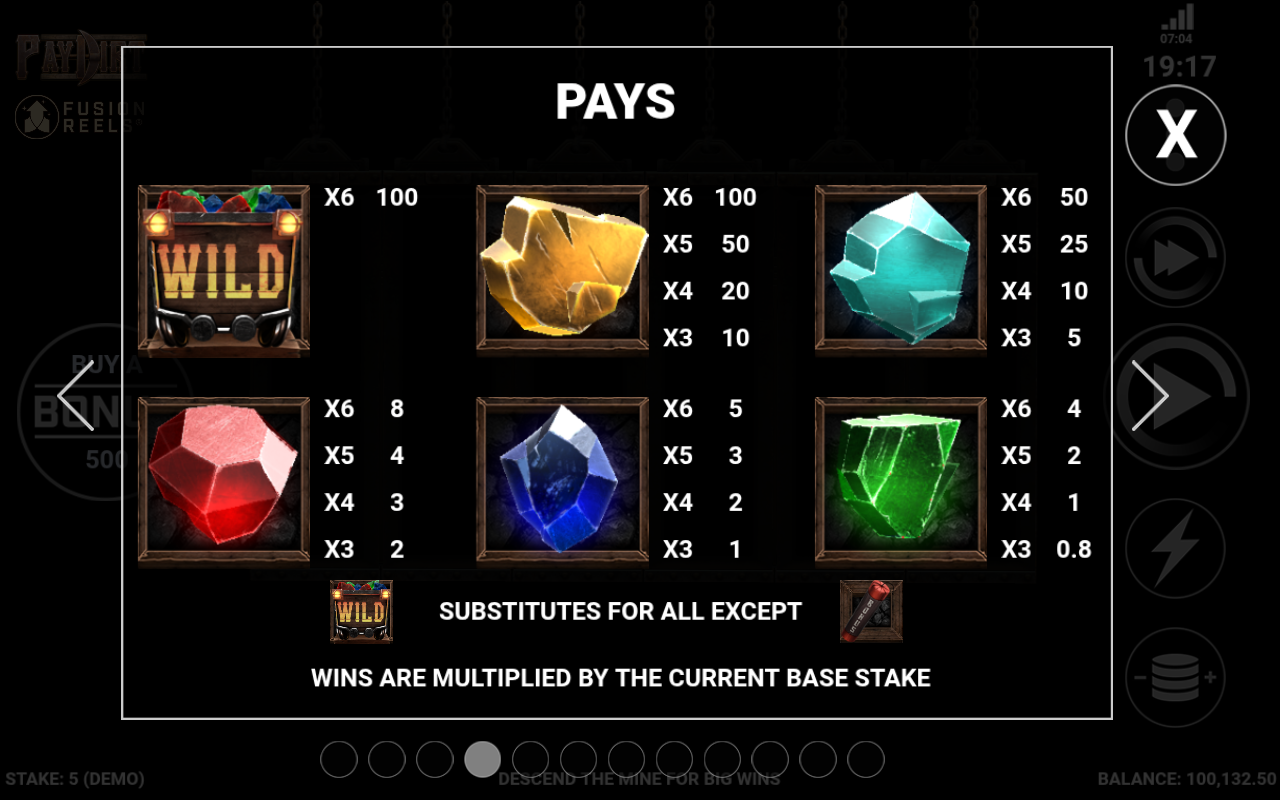
The paytable is gems, ore and royals, with six-of-a-kind the top line on most rows. The wild is a mine cart, substituting for everything except the dynamite bonus symbol, and it’s tied with the Gold Rock as the richest symbol on the grid at 100 for six. Wins pay left to right across the game’s lines.
- Gold Rock – 10, 20, 50, 100 for three to six
- Teal Gem – 5, 10, 25, 50
- Red Gem – 2, 3, 4, 8
- Blue Gem – 1, 2, 3, 5
- Green Gem – 0.8, 1, 2, 4
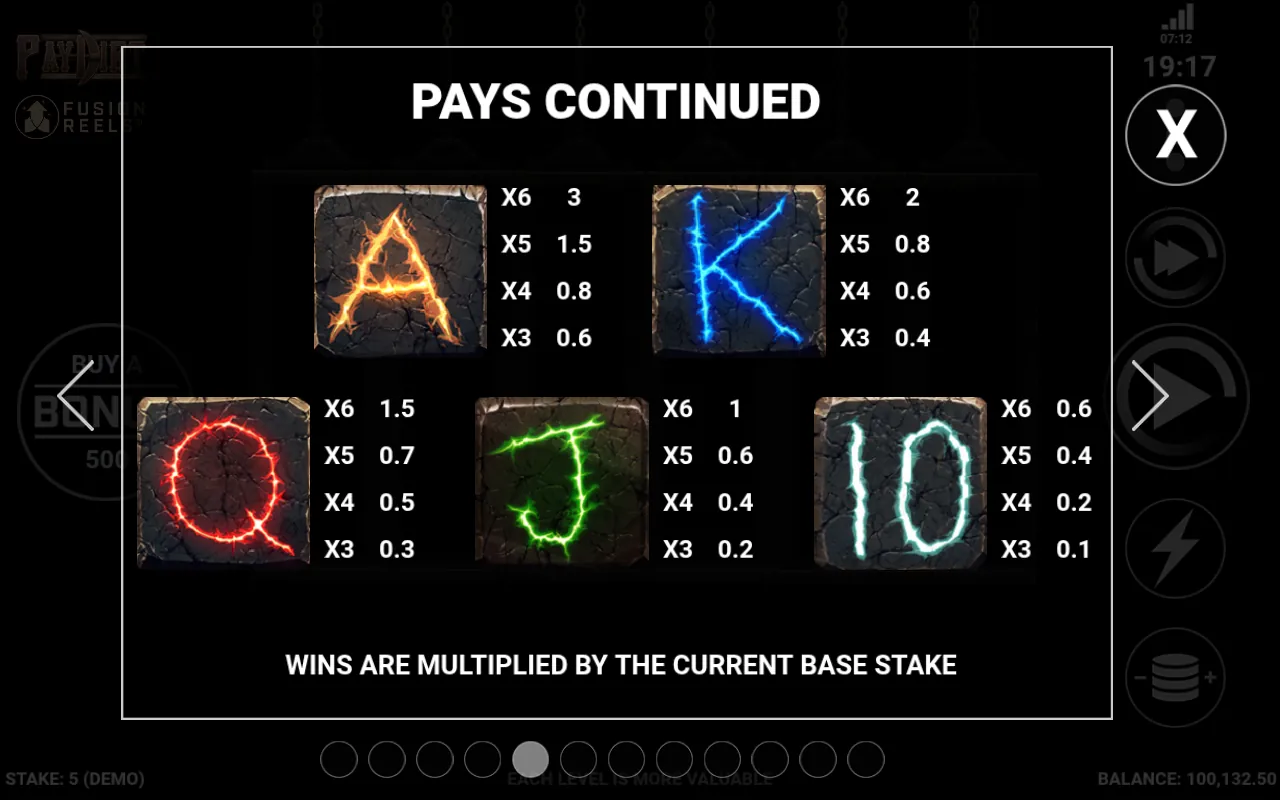
- A – 0.6, 0.8, 1.5, 3
- K – 0.4, 0.6, 0.8, 2
- Q – 0.3, 0.5, 0.7, 1.5
- J – 0.2, 0.4, 0.6, 1
- 10 – 0.1, 0.2, 0.4, 0.6
There’s a steep drop after the Teal Gem: the top two rows pay in double figures for six, everything below them pays single digits. The royals are thin change by design, worth landing mostly as ladder fuel to keep the respins rolling.
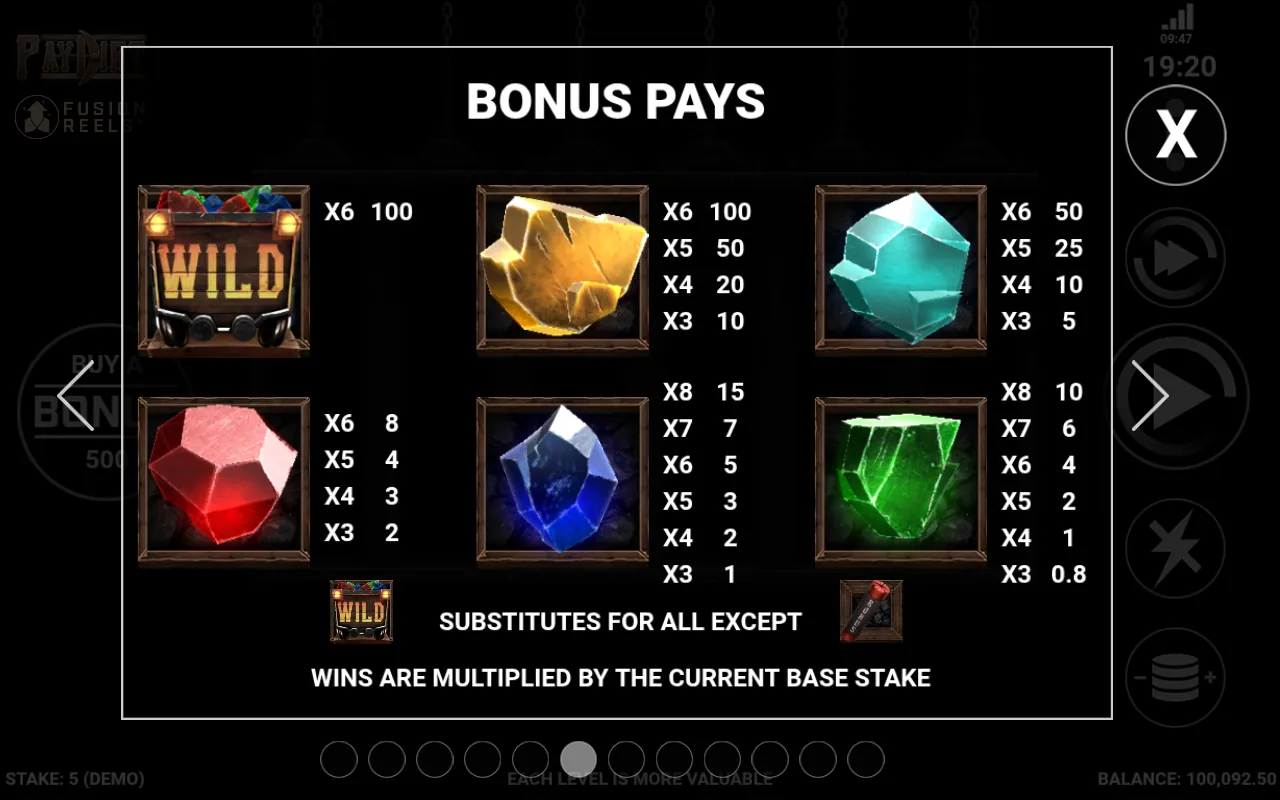
In the bonus round, the Blue and Green Gems extend their pay ladders to seven and eight of a kind, reaching 15 and 10 respectively at the top. Those longer rows only exist during the feature, which is part of why the round pays differently to the base game.
The Dynamite Bonus
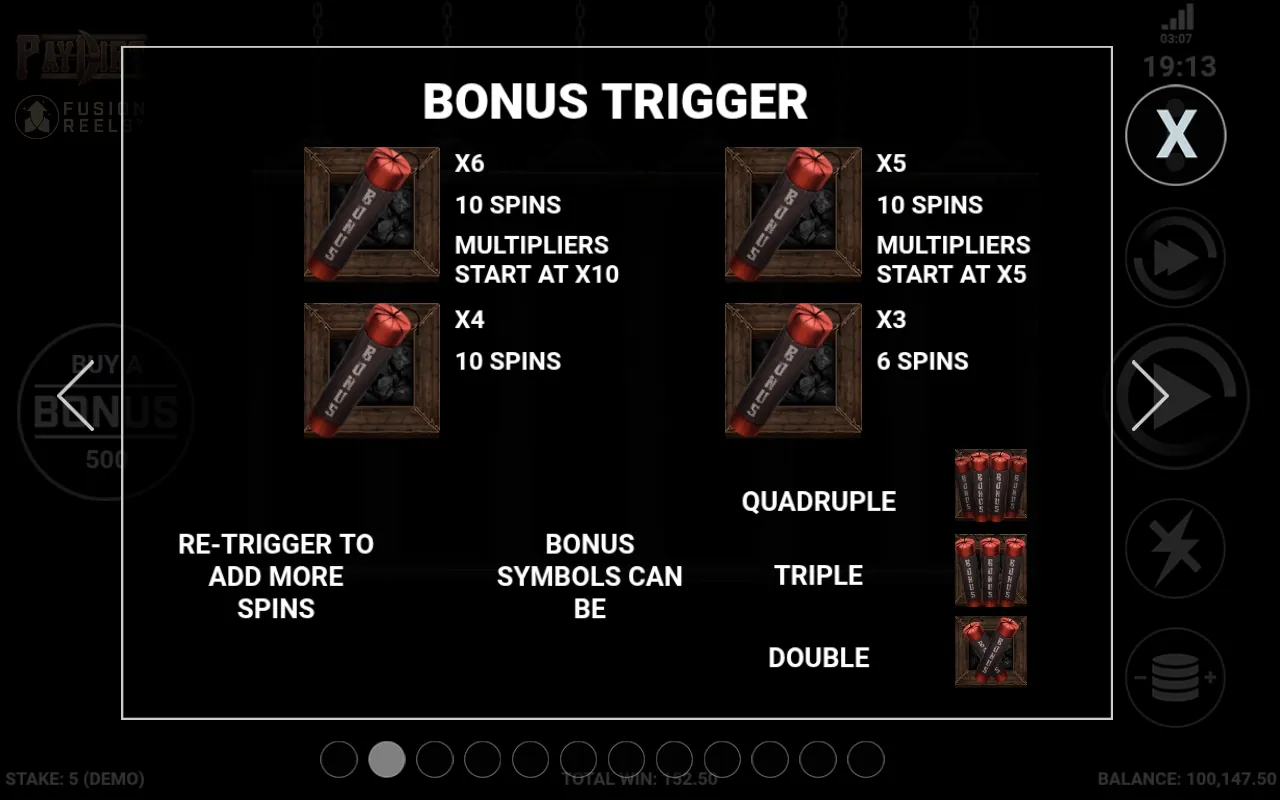
The bonus symbol is a stick of dynamite, and it can land doubled, tripled or quadrupled, which is how you reach the bigger triggers. Three to six of them start the free spins, with the bigger triggers paying out better starting conditions.
- X6 dynamite – 10 spins, multipliers start at 10x
- X5 dynamite – 10 spins, multipliers start at 5x
- X4 dynamite – 10 spins
- X3 dynamite – 6 spins
Because the dynamite itself can carry a multiplier of its own, the gap between a minimum trigger and a maximum one is wide. Six quadrupled symbols and three singles are the same symbol doing very different jobs. Landing more of them during the round retriggers it and adds more spins.
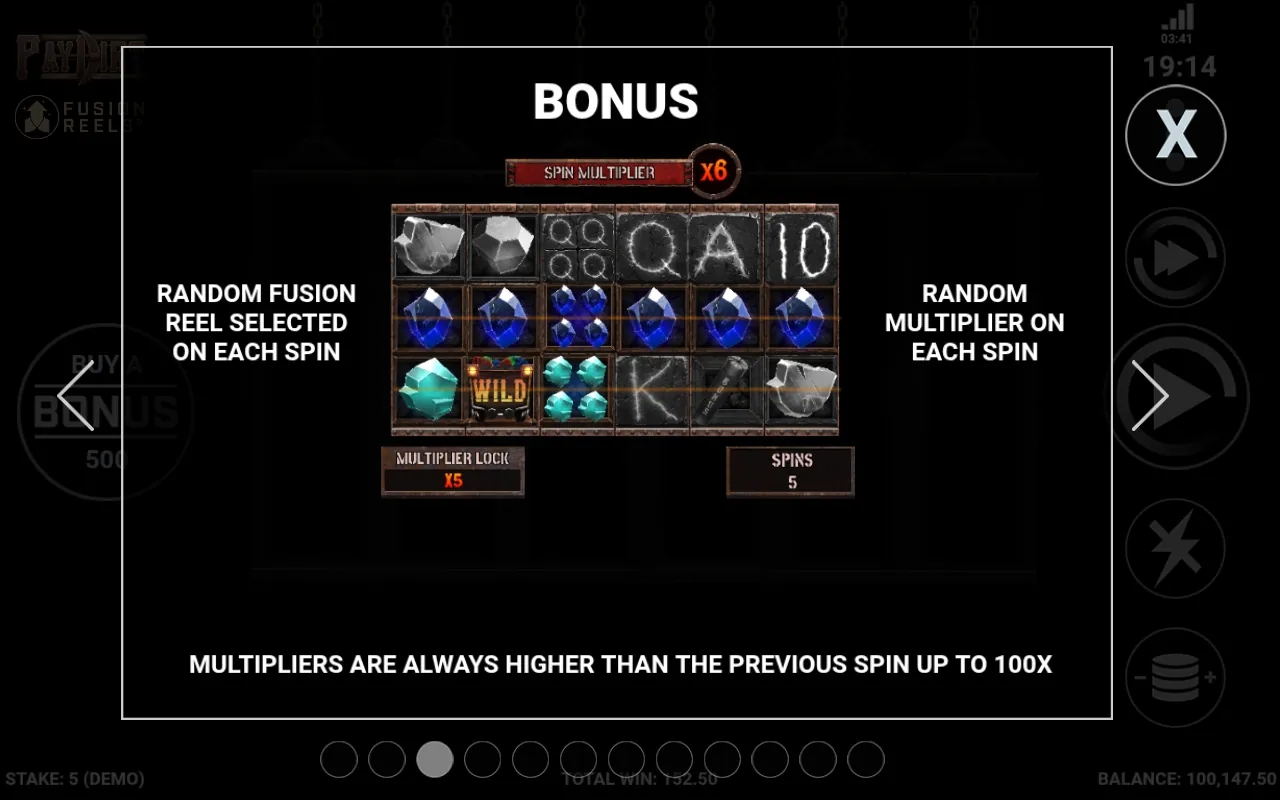
Inside the round, two things happen on every spin. A random Fusion Reel is selected, and a random multiplier is applied, with the multiplier always higher than the previous spin’s, climbing up to 100x. A Multiplier Lock value sits on screen so you can see where the floor currently stands.
That rising structure is the round’s whole character. Early spins pay modestly by design, and the value concentrates at the back end, where the guaranteed-ascending multipliers meet a quadrupled Fusion Reel. A round that starts its multipliers at 10x from an X6 trigger is already halfway up the mountain before its first spin lands.
The extended gem ladders matter here too. With seven and eight-of-a-kind rows active and reel multipliers climbing, the round’s biggest wins come from rows that don’t exist in the base game. The Multiplier Lock means each spin’s floor is the previous spin’s level, so a late retrigger lands you back at the top of the climb with fresh spins to use it.
The two systems also talk to each other. The Fusion Reel selected on each bonus spin uses the same doubling-through-quadrupling ladder the base game climbs, so a player who understands the shaft levels already understands what the bonus spins are doing to reel 2. The round simply applies that ladder at random, spin by spin, instead of making you earn it with consecutive wins.
Buy A Bonus
There’s a single buy option, priced at 500x the bet, which is steep for a round whose entry-level trigger is only 6 spins. What you’re paying for is skipping the base game’s ladder and going straight to the ascending multipliers. The buy also removes the dynamite lottery entirely: no hoping for a quadrupled X6 trigger, because the round simply starts.
Our Honest Verdict
Overall Rating: 7.1/10
Pay Dirt is a slow walk down a shaft where every step pays a little more than the last. The base game’s respin ladder gives even a 0.2x royal win a job to do, and a bonus round that can only climb makes its ten spins feel like one long build rather than ten separate results. That’s the reason to choose it: nobody else structures a round so that the last spin is always the most valuable one on screen.
The strength is coherence. The ladder, the wild, the extended gem rows and the Multiplier Lock all push in the same direction, so nothing here feels bolted on. The weakness is the price of admission: 93.97% RTP is a long way below the modern standard, and the 500x buy is a lot to stake on a round that might open with six spins. The game takes more than it gives back on paper.
For anyone who enjoys a build and doesn’t need the maths to be generous, the shaft is well lit and the ladder works exactly as promised. Anyone chasing returns per pound will want to stay near the surface.
Pay Dirt FAQs
-
What is the RTP of Pay Dirt?
Pay Dirt runs at 93.97% RTP, which is on the low side for a modern slot. -
What is the grid size of Pay Dirt?
Pay Dirt plays on a 6×3 grid with line pays across the reels. -
How does the Fusion Reels feature work in Pay Dirt?
Any line win moves you up a level for a free respin. At Level 2 all symbols on reel 2 are double, at Level 3 they’re triple, and at Level 4 they’re quadruple. -
How do you trigger the bonus in Pay Dirt?
Landing three or more dynamite bonus symbols triggers the free spins. Three gives 6 spins, four gives 10, five gives 10 with multipliers starting at 5x, and six gives 10 with multipliers starting at 10x. Bonus symbols can land doubled, tripled or quadrupled. -
Can the Pay Dirt free spins retrigger?
Yes. Landing more dynamite bonus symbols during the round retriggers it and adds more spins. -
What is the Multiplier Lock in Pay Dirt’s bonus round?
On every bonus spin a random multiplier is applied that’s always higher than the previous spin’s, up to 100x. The Multiplier Lock shows the current floor, so each spin is guaranteed to start from where the last one left off. -
Can you buy the bonus on Pay Dirt?
Yes, there’s a Buy A Bonus option priced at 500x your bet. -
When is Pay Dirt released?
Pay Dirt’s release date is 21 May 2023. -
Who makes Pay Dirt?
Pay Dirt is made by Rogue, the studio behind Chaos Coins and Gold Runner.