












Plinkgoal Slot Review
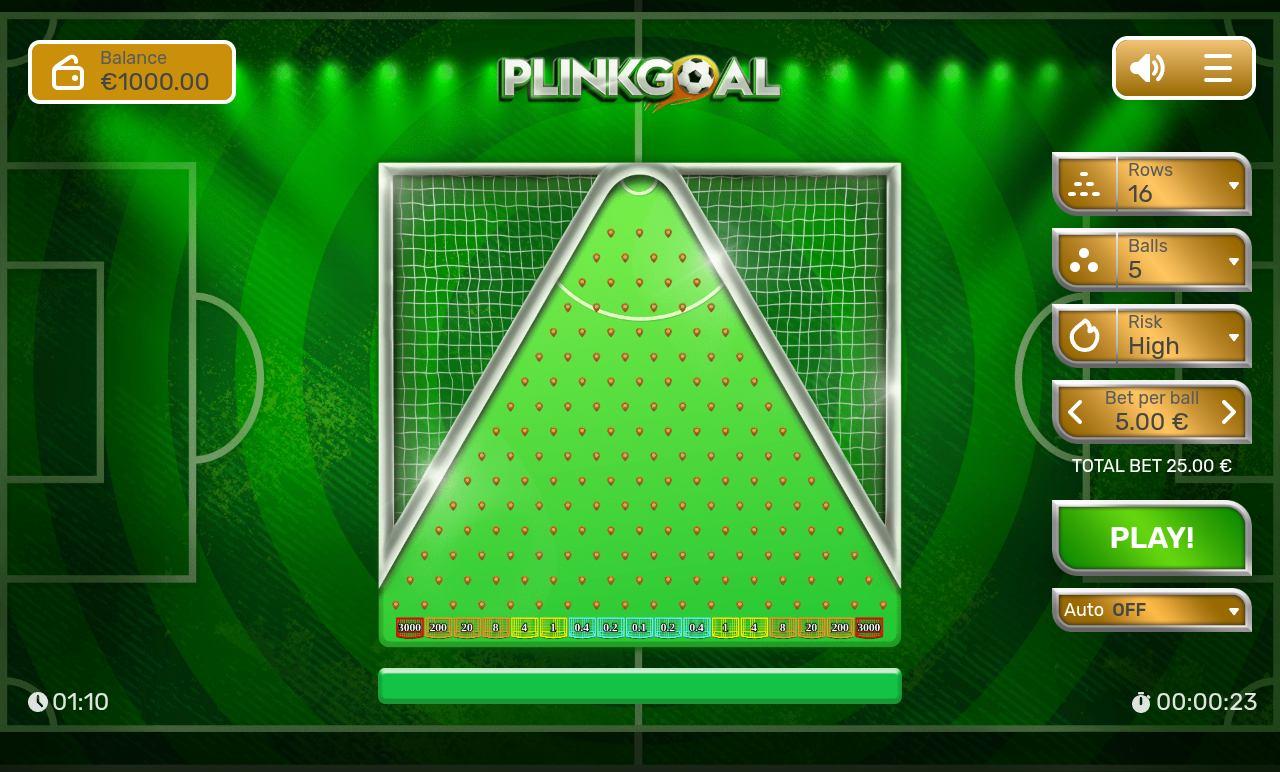
A floodlit pitch at night, a goal net strung with white mesh, and where the keeper should be standing there’s a chrome-framed peg board. That’s Plinkgoal, and the joke lands better than it has any right to: a football goal turned plinko machine is somehow the most honest piece of game design Gaming Corps could have made here, because a penalty shoot-out was always just a ball bouncing somewhere unpredictable. This one simply shows you the odds before you take the kick.
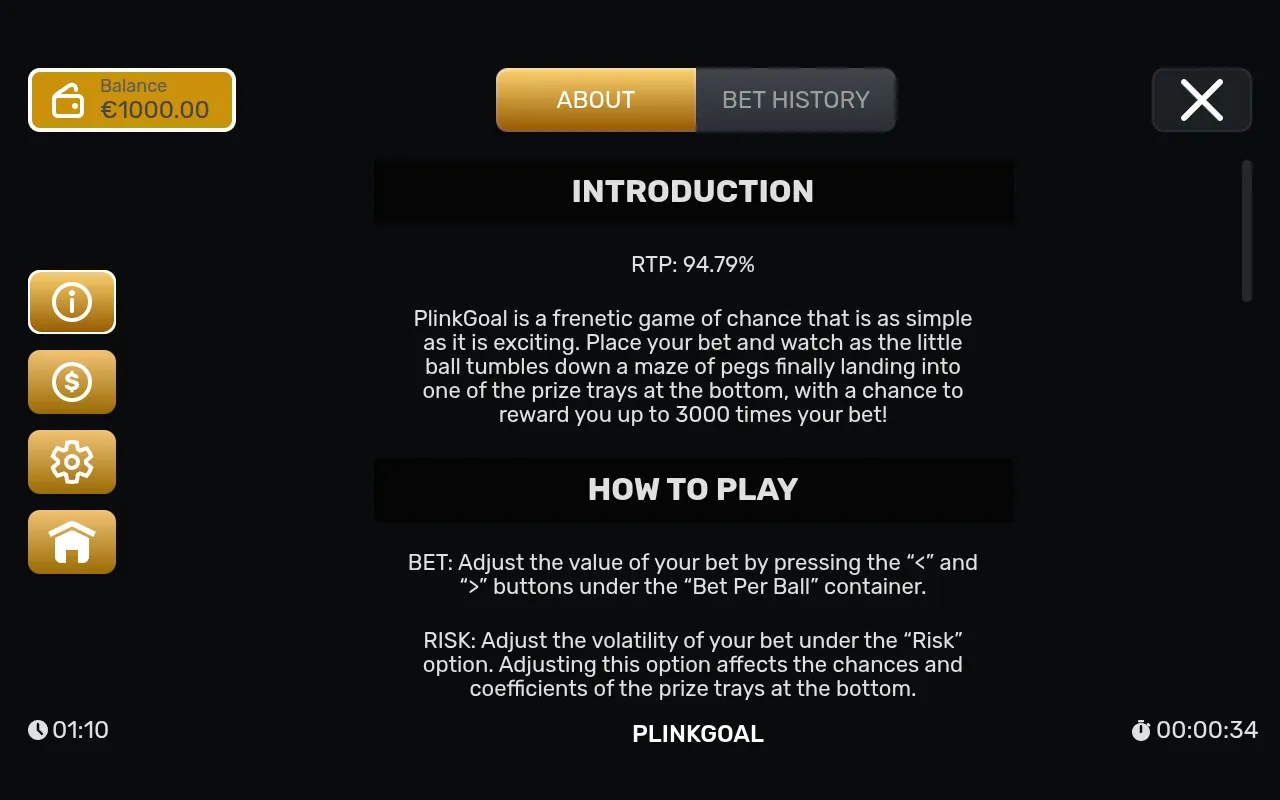
The game runs at an RTP of 94.79%, with a top prize of 3,000x the bet waiting in one of the trays at the bottom of the board. There are no reels, no paylines and no symbols, and the volatility is yours to choose rather than the designer’s. It sits alongside the studio’s other plinko titles, including Easter Plinko and Xmas Plinko, but drops the seasonal wrapping for the pitch.
The Goal-Mouth Board
Plinkgoal is a game of chance in the most literal sense. You place a bet, press play, and watch a little ball tumble down a maze of pegs until it lands in one of the prize trays at the bottom. Each tray carries a multiplier, and the win is your bet per ball multiplied by whatever tray the ball finds. That’s the entire game.
A round plays out in four steps:
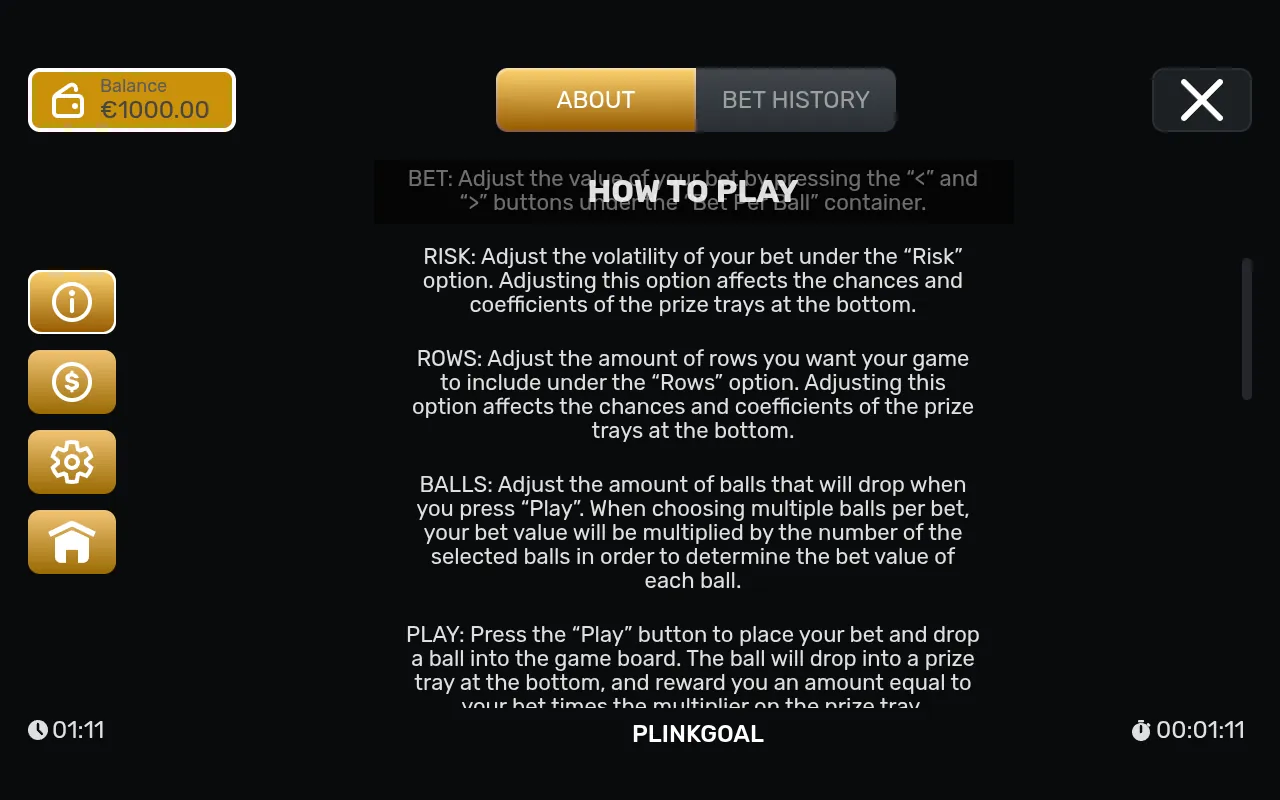
- Set your bet per ball with the “<" and ">” buttons under the Bet Per Ball container.
- Choose your Rows, Balls and Risk settings.
- Press Play to drop the ball or balls into the board.
- Collect whatever the tray multipliers pay when the balls settle.
There are no wild symbols and no scatters, because there’s nothing for them to do. There’s no paytable of symbols to learn, no reel layout to study, and no feature round to wait for. Everything the game has is on screen from the first drop.
What gives the game its shape is the set of trays running along the bottom of the board. The multipliers there range from small fractions of your stake up to the 3,000x top tray, and the values shift every time you change your settings.
The trays are the whole economy of the game, and the four options around them exist to move those numbers around. Each one works differently:
- Rows – how many rows of pegs the board contains
- Balls – how many balls drop each time you press Play
- Risk – the volatility of your bet
- Auto – automatic bets without pressing Play each time
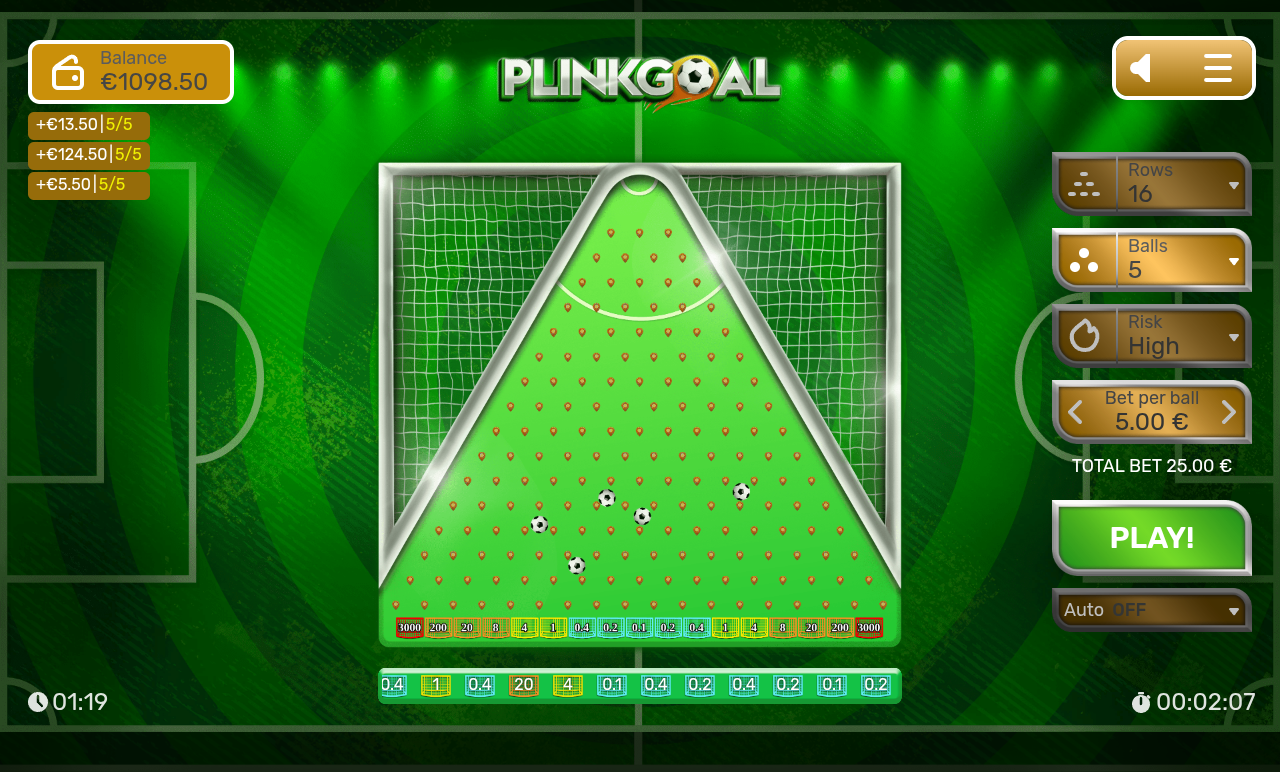
Rows, Balls, Risk and Auto
Rows
The Rows option adjusts how many rows of pegs the board contains. Changing it changes the chances and the coefficients of the prize trays at the bottom, so a board with more rows plays differently to a shorter one, with different odds of the ball reaching either edge.
More rows means more pegs for the ball to bounce off on its way down, which spreads the possible landing positions wider. Fewer rows concentrates the action towards the middle trays. Neither choice is better in itself; they’re different boards.
Balls
The Balls option sets how many balls drop each time you press play. Your total bet is multiplied by the number of balls selected, so each ball carries its own stake and its own outcome. A five-ball drop gives you five independent results at once, with each win shown as it lands.
The number of balls in play for a single bet is displayed next to the win amount, so it’s always clear how many results make up the total. Wins accumulate on the balance side of the display as each ball settles rather than waiting for the whole drop to finish.
Risk
The Risk option is where the volatility lives. Adjusting it reshapes the chances and coefficients across the prize trays, so the same board can play as a steady grind or a chase for the outer trays. It’s a more honest version of a volatility choice than most slots offer, because you can see the tray multipliers change as you move it.
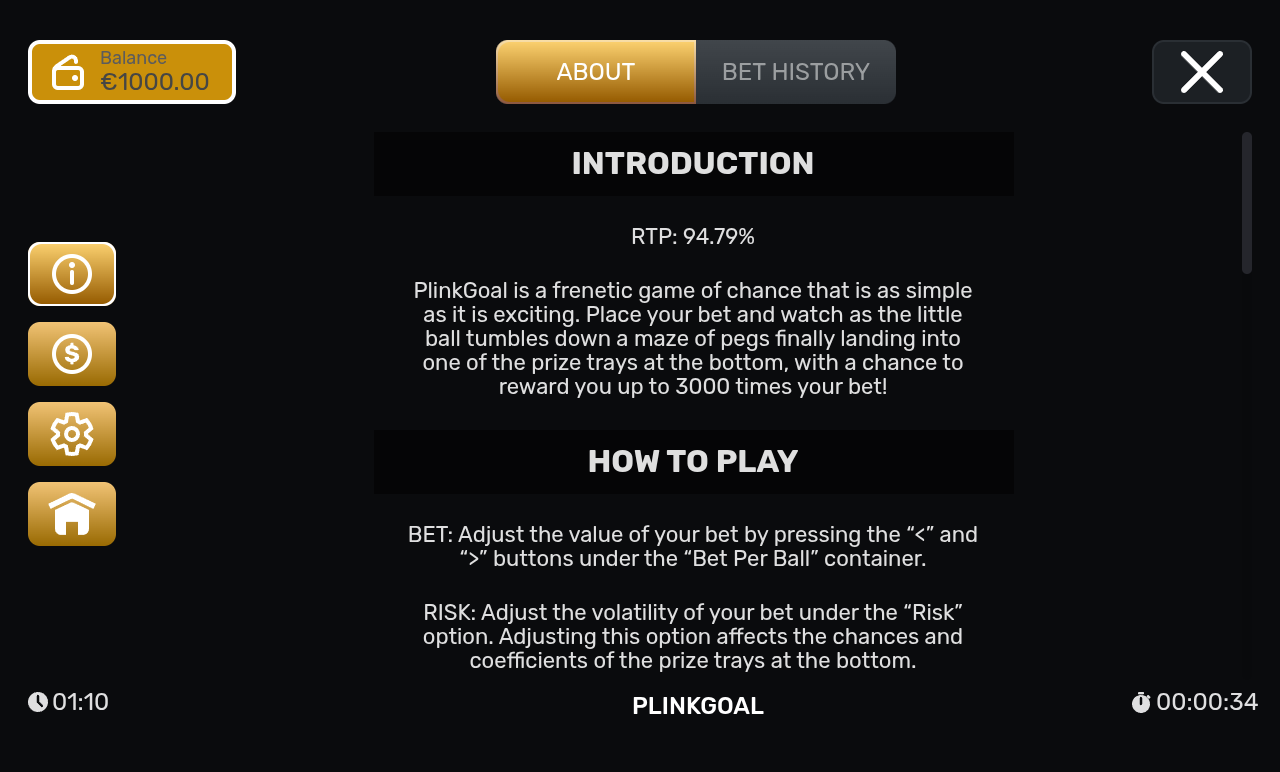
One setting matters more than the rest. The maximum RTP of 94.79% is only available on the Low Risk setting with 14 rows. Play any other combination and you’re taking a worse return than the figure suggests, so check the setup before you chase the bigger outer trays.
Auto
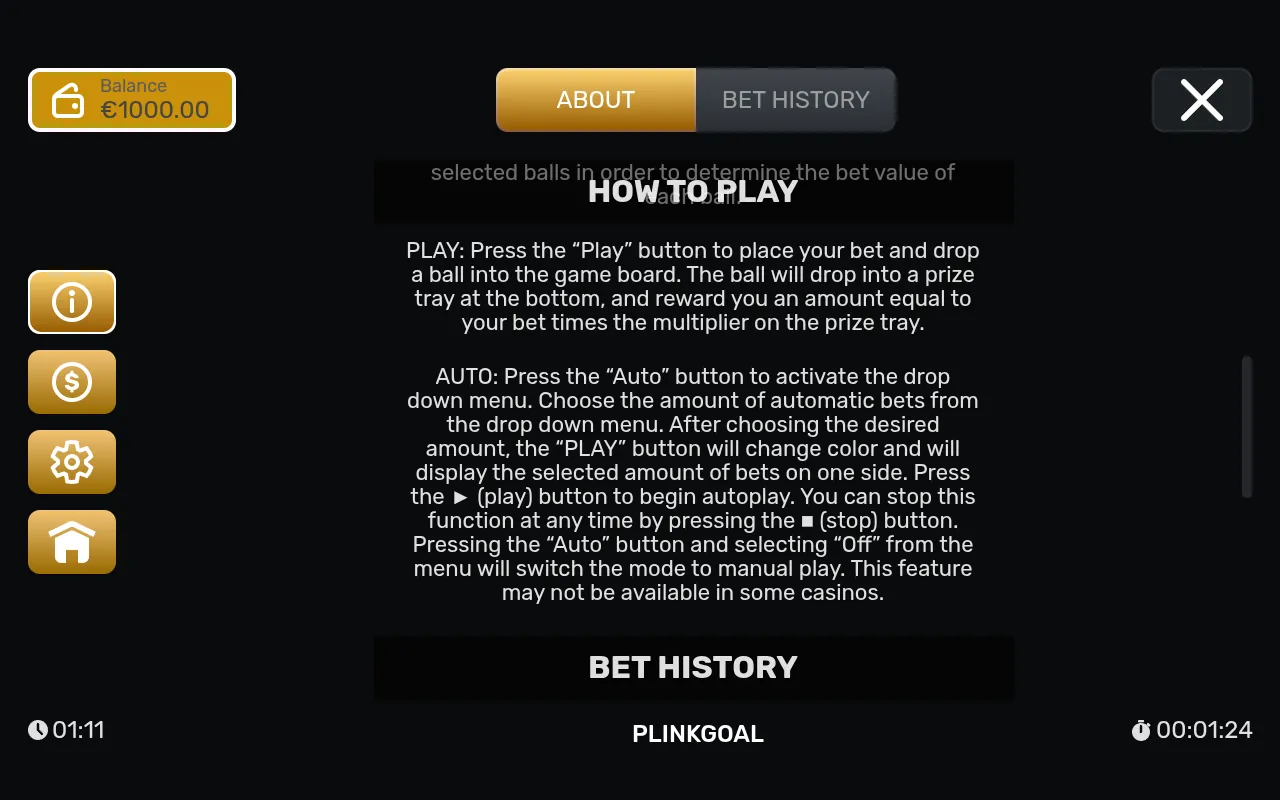
The Auto button opens a menu for automatic bets. Pick the number of drops you want, and the play button changes to show the selected amount before you start. Autoplay can be stopped at any point, and switching the option back to off returns the game to manual play. It isn’t available at every casino that stocks the game.
The settings menu handles music and sound effects separately, so you can keep one on and the other off. If a round is interrupted by a lost connection or anything else, it completes automatically, and the result stands.
Bet History and Results
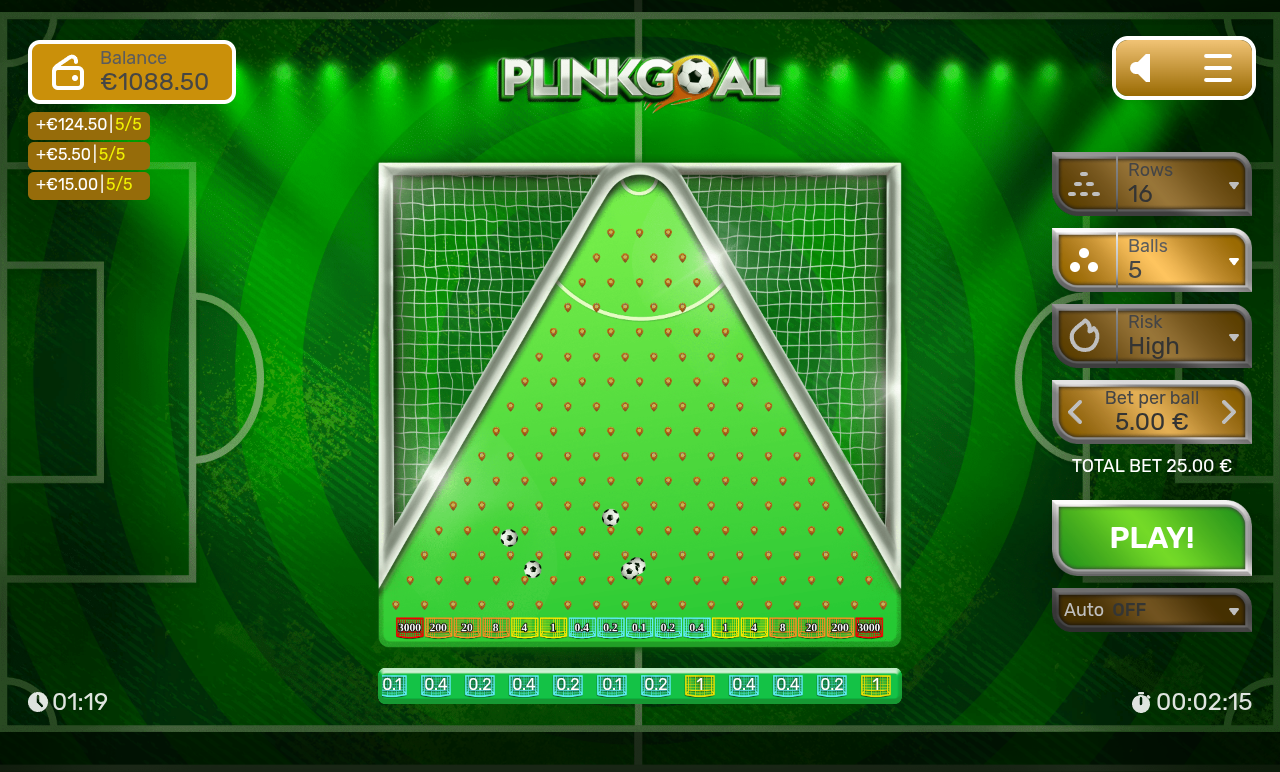
Every drop leaves a record. The bet history menu can be reached two ways, and both take a single press:
- Press the multiplier results displayed beneath the game board
- Open it through the options menu
The multiplier results beneath the board show the most recent tray values, including the fractions on the inner trays and the bigger numbers towards the edges. It’s a small thing, but on a game this fast it’s the only way to keep track of where your balls have been landing.
Our Honest Verdict
Overall Rating: 6.8/10
Playing Plinkgoal feels less like a slot and more like taking penalties on your own terms: you set the board, you take the kick, and the net either pays or it doesn’t. The reason to choose it over the studio’s seasonal plinko games is that the goal-mouth framing gives the format a proper identity instead of a coat of paint.
The best thing here is that every dial is visible. Move the Risk slider or add rows and the tray multipliers shift in front of you, so you’re never guessing what your settings cost you. The worst thing is that the full 94.79% return only exists on Low Risk with 14 rows, which is precisely the flat, unexciting setup most people won’t leave the game on.
It’s a game for players who want results in seconds and don’t need free spins to justify opening something. Anyone who measures a slot by its bonus rounds won’t find one to love here. But for a fast, legible flutter under the floodlights, Plinkgoal is an easy game to come back to.
Plinkgoal FAQs
-
What is the RTP of Plinkgoal?
Plinkgoal runs at an RTP of 94.79%. That figure is only fully available on the Low Risk setting with 14 rows, so other configurations return less. -
What is the maximum win on Plinkgoal?
The top prize tray pays up to 3,000x your bet. It sits at the edge of the board, and the chances of reaching it depend on your Rows and Risk settings. -
Who makes Plinkgoal?
Plinkgoal is made by Gaming Corps, a studio that also produces other plinko-style titles such as Easter Plinko and Xmas Plinko. -
When is Plinkgoal released?
Plinkgoal’s release date is 4 August 2023. -
How does the Risk setting work in Plinkgoal?
The Risk option adjusts the volatility of your bet by changing the chances and coefficients of the prize trays at the bottom of the board. Higher risk shifts the payouts towards the outer trays, while Low Risk flattens the distribution. -
What does the Rows option do?
Rows changes how many rows of pegs the board includes. Adjusting it affects the chances and coefficients of the prize trays, so more or fewer rows gives a different spread of outcomes. The maximum RTP requires 14 rows. -
How do multiple balls affect my bet?
When you select multiple balls, your bet value is multiplied by the number of balls to determine the stake of each ball. Every ball is an independent drop with its own win, shown as it lands. -
Does Plinkgoal have autoplay?
Yes. The Auto button opens a menu where you choose the number of automatic bets, and you can stop the function at any time. It may not be available at every casino.