













Plinko Rush Slot Review
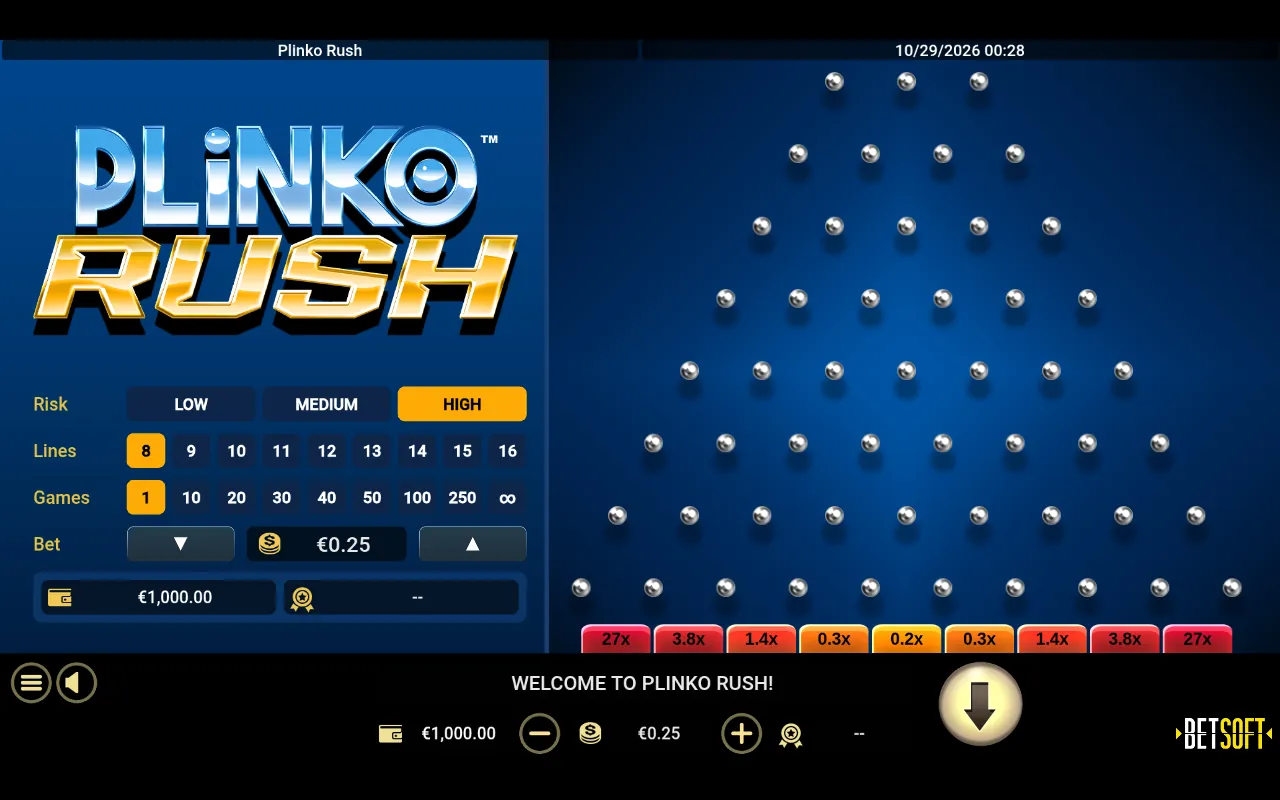
A pyramid of pins floats in a deep navy-to-black field, a soft blue glow behind the centre of the board, chrome-and-gold lettering off to the left, and nothing else. That emptiness is the point: Plinko Rush bets the entire game on one falling ball, where most slots would scatter a dozen features across the void. Betsoft has stripped the format down past the bone, and the result is a game where the only thing between your bet and a payout is gravity.
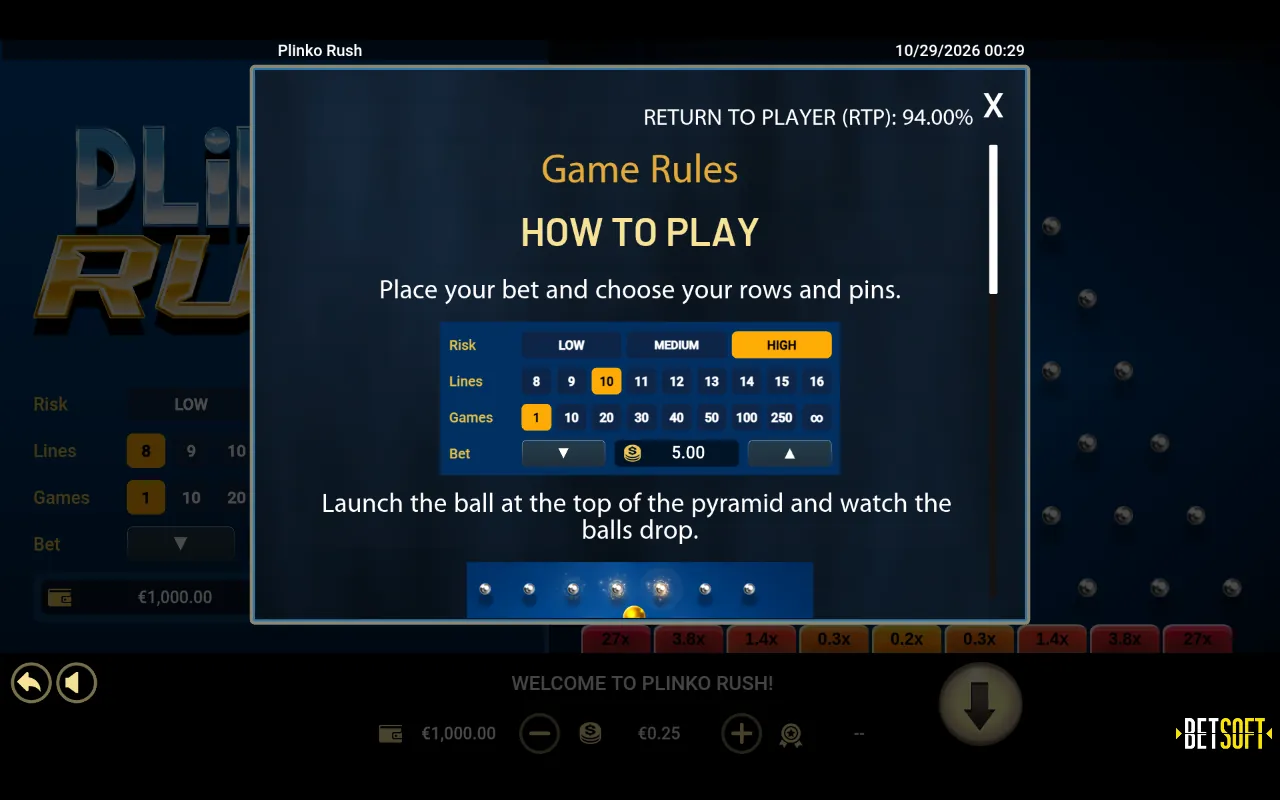
The maths are plain. It runs at an RTP of 94.00%, volatility sits at mid to high, and the board ranges from 8 to 16 rows depending on how you set it up. Betsoft’s rush-family stable is better known for reels than pins – Carnival Rush and Gold Nugget Rush 2 among them – but this one shares nothing with them but a surname. No reels, no paylines, no symbol matches. Just gravity.
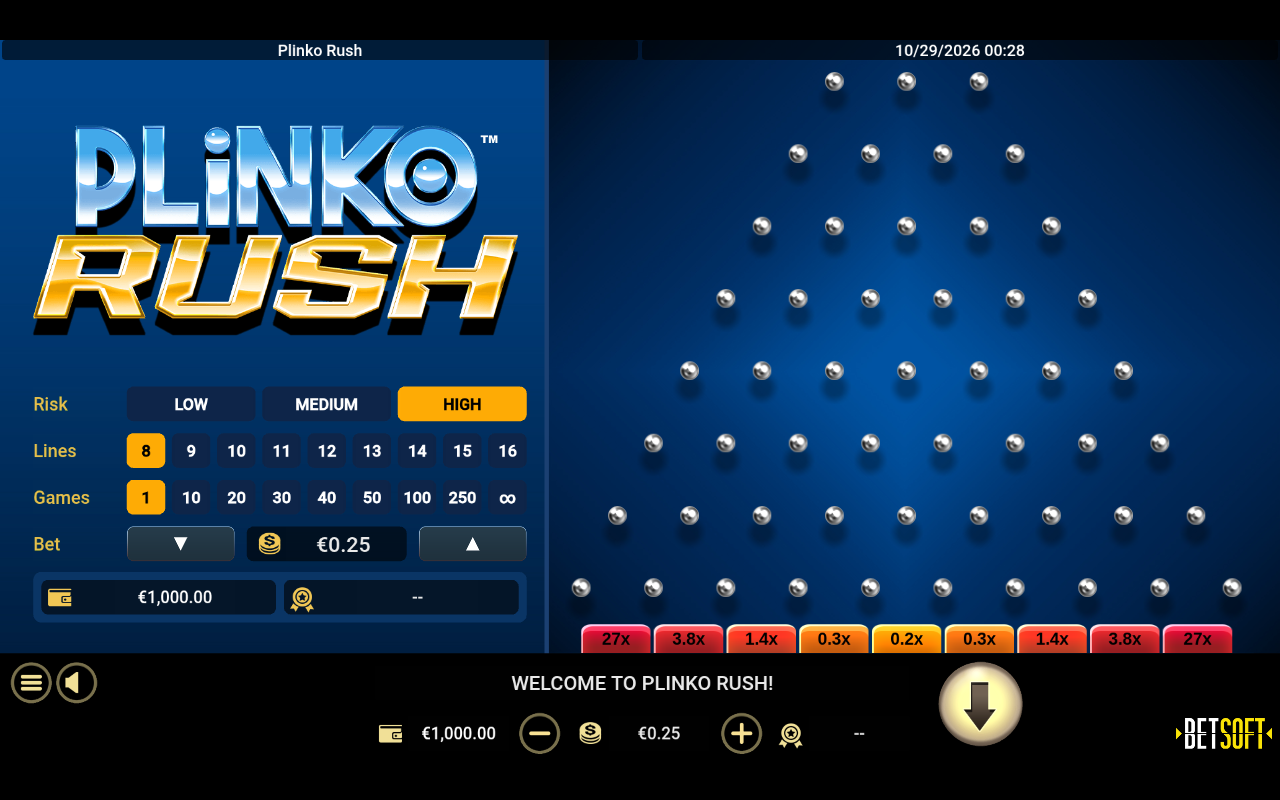
How the Board Works
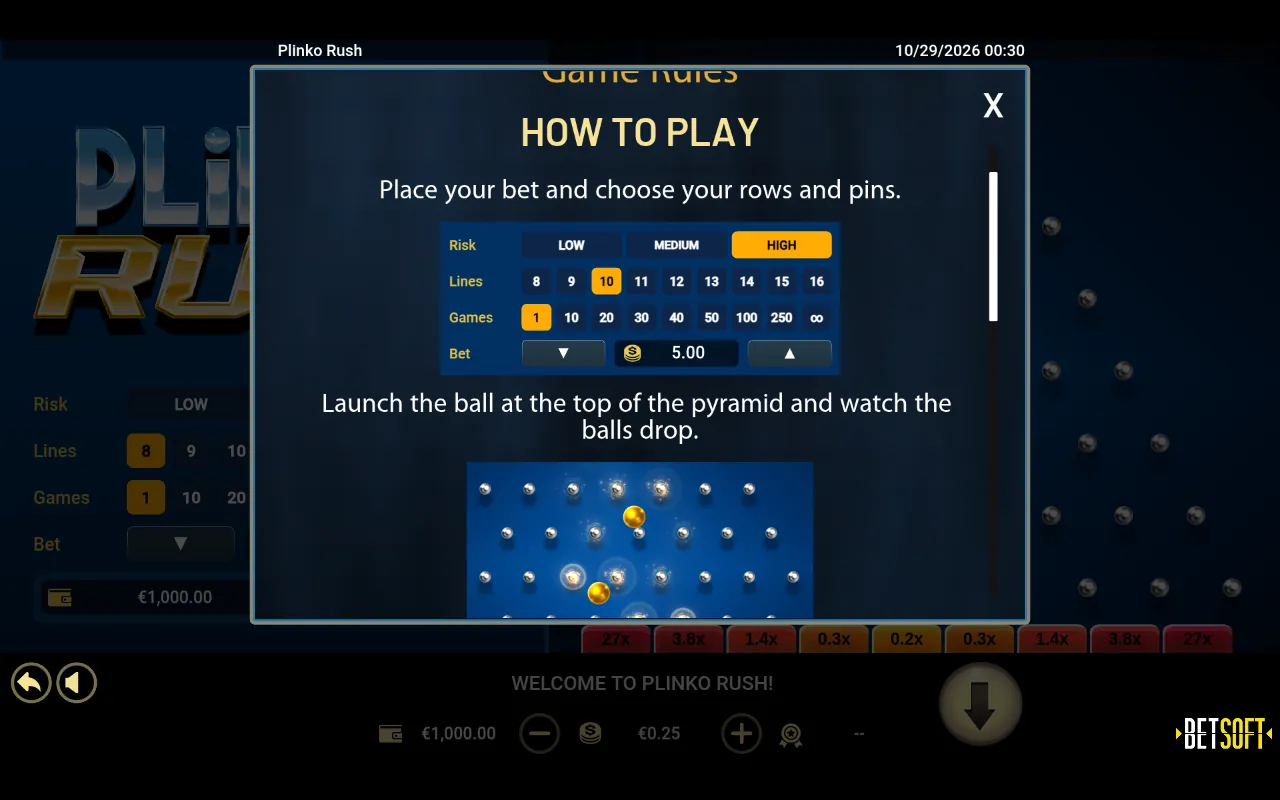
Before a single ball drops, you make three choices. Between them, these settings are the entire strategy layer of the game.
- Your bet amount
- The number of rows on the board, from 8 to 16
- Your risk level: Low, Medium or High
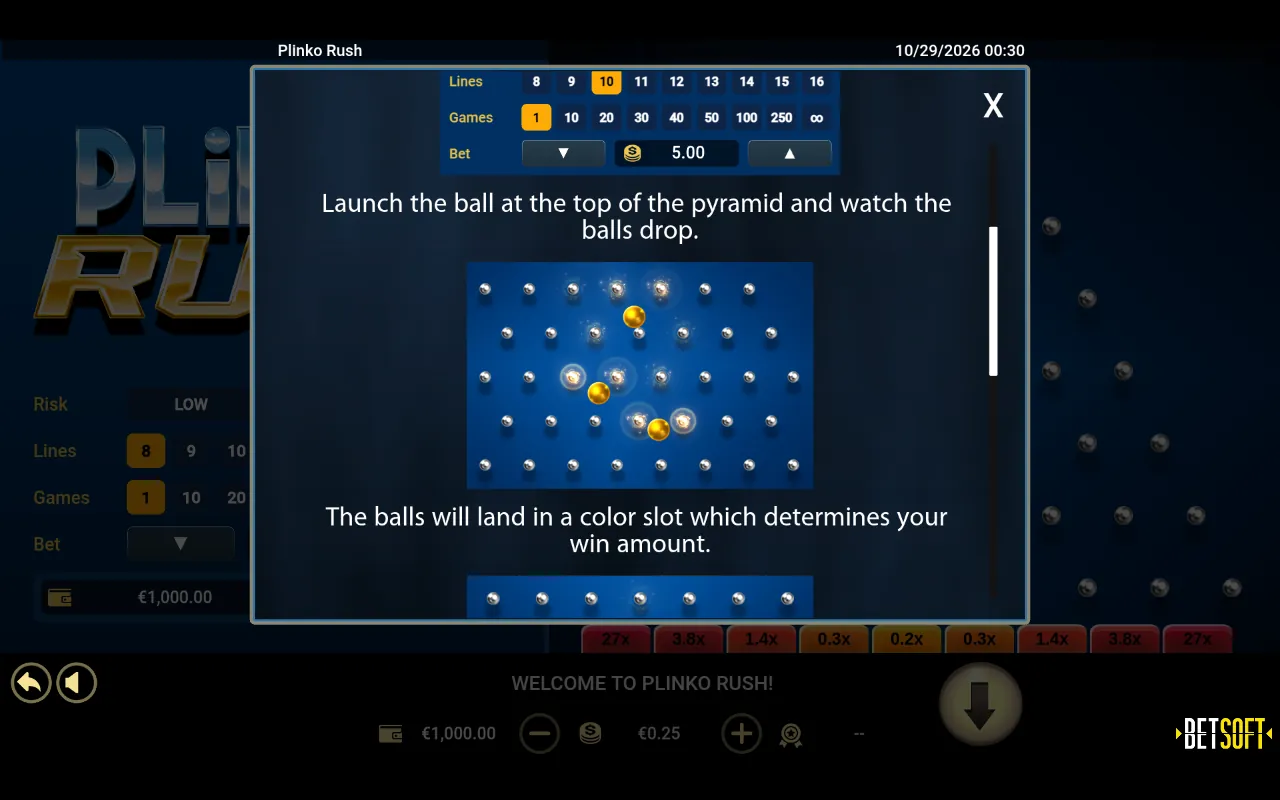
Once that’s set, you launch a ball from the top of the pyramid and watch it fall. Each ball bounces down through the field of pins, deflecting left or right at every row it meets, and where it lands is the whole story.
The bottom of the board is a row of coloured slots, and the slot the ball finishes in determines your win amount. Some slots pay back less than your stake, some pay multiples of it, and the spread between them is what the risk setting controls.
There’s no per-symbol paytable to speak of, because there are no symbols, no wilds and no scatters. The multiplier slots at the bottom of the board are the closest thing this game has to a paytable, and they rearrange themselves every time you change the rows or the risk.
A single round, start to finish, runs through the same few steps every time:
- Choose your bet amount
- Choose your rows and pins
- Choose your risk level
- Launch the ball at the top of the pyramid
- Watch it drop through the pins into a coloured slot
- Collect whatever that slot pays on your bet
After the ball settles, the win is paid and the board is immediately ready for the next drop. There are no second chances, no re-drops and no decisions after the launch. Everything you control, you control before the ball leaves your hand.
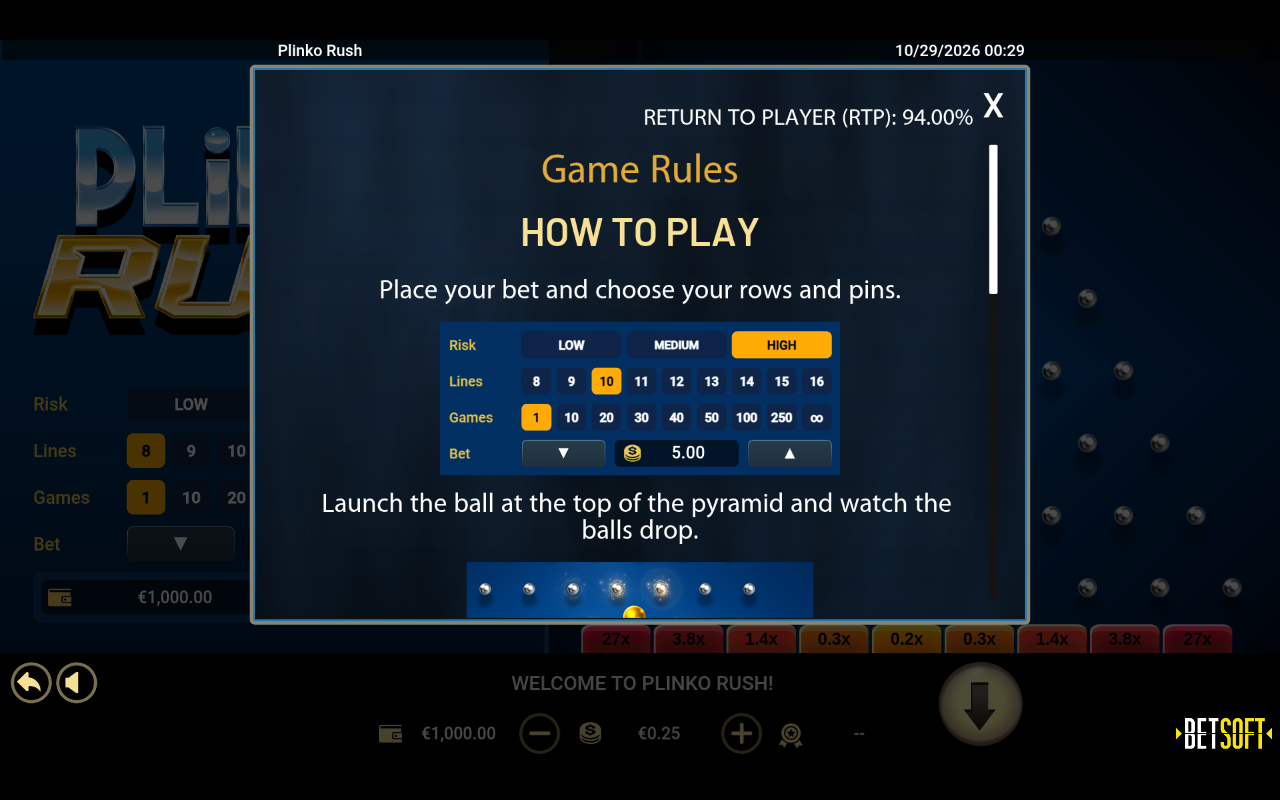
Risk, Lines and Auto Play
Risk Setting
The risk level is a direct dial on the game’s variance. The three options work like this:
- Low – the gentlest spread of slot values, with wins easier to land and smaller payouts at the edges
- Medium – a middle spread, leaning slightly towards the higher multipliers
- High – the hardest wins to land, and the largest payouts when a ball finds an edge slot
What the dial actually changes is the value spread across the slots at the bottom of the board, not the odds of any single bounce. Per the game’s own rules, the higher the Risk setting, the harder it is to win, but the higher the potential payout.
That’s a cleaner distinction than it sounds. On a Low board, the middle slots cluster close to your stake, so most balls finish somewhere near break-even. Step up to High and the middle drops away while the edge slots climb, so the same indifferent bounce that returned your stake on Low now costs most of it.
Lines Setting
The Lines setting controls how many rows of pins stand between the launch point and the slots. The range:
- 8 rows – the shortest board, the fewest pins and the narrowest set of outcomes
- 12 rows – a mid-height board
- 16 rows – the full pyramid, the longest drop and the most multipliers in play
Every step between 8 and 16 is available, not just those three. As the row count climbs, more multipliers become available at the bottom, which widens the range of possible outcomes. A short board is a tighter, faster game; a tall one spreads the possibilities further apart.
The two settings interact. High risk on a 16-row board produces the wildest spread of outcomes the game can offer, while low risk on 8 rows is the quietest ride it can give you. Most of the interesting territory sits between those extremes.
Automatic Play
Automatic play mode drops a set number of balls without further input, or you can set it to play continuously until you stop it. The Stop button cancels the mode whenever you press it.
For a game built on repeating one small decision, it’s the one genuine convenience. On a tall board with a low risk setting, it turns Plinko Rush into a steady stream of drops that runs itself while you watch.
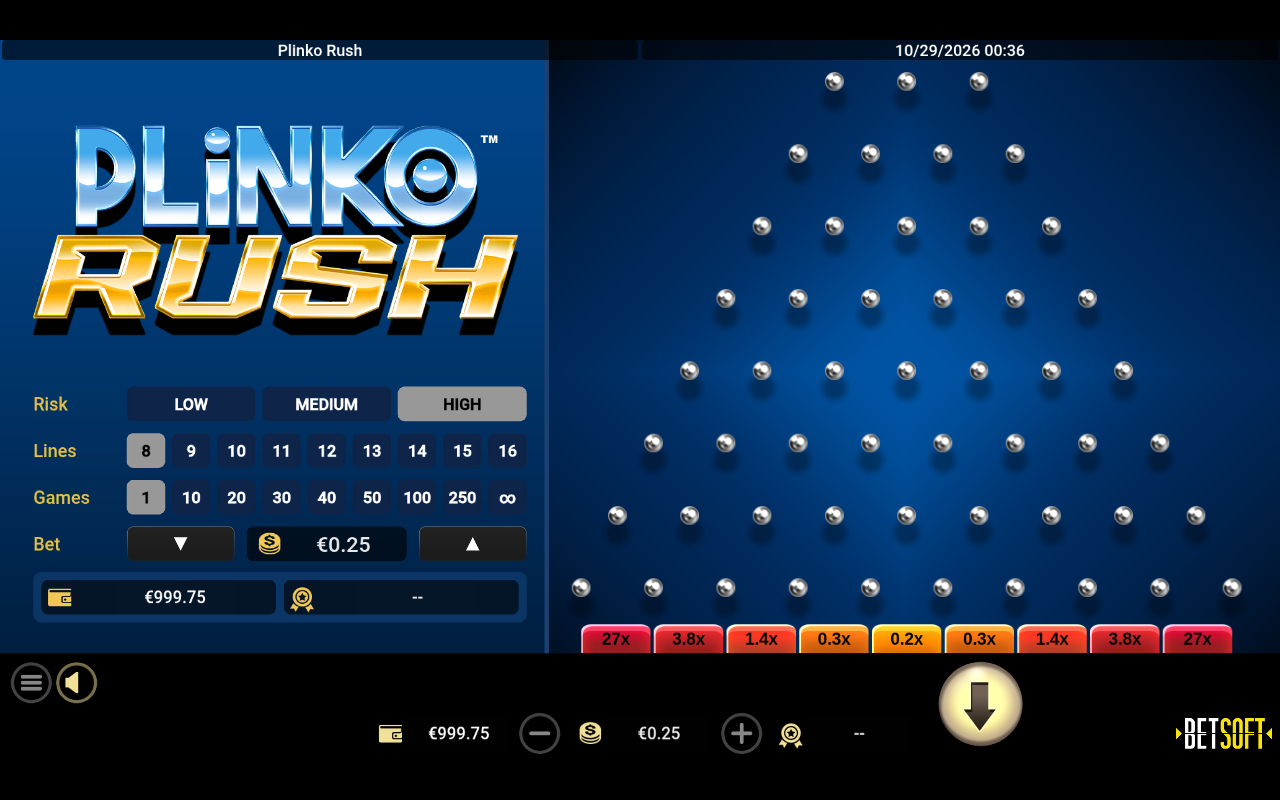
Because the ball’s path is fixed at launch, there’s nothing to react to mid-drop and nothing the automatic mode takes away from you. The settings you chose at the start govern every ball in the run; if you want a different spread of outcomes, you stop, adjust, and start again.
Our Honest Verdict
Overall Rating: 6.8/10
Playing this is staring at a pin pyramid in the dark, waiting to find out what one ball is worth. That’s the whole reason anybody picks it: every drop is a small, complete bet with an answer four seconds later, and on a tall High-risk board the wait genuinely tightens.
The control is the strength. The risk dial and the row count change the game more than any bonus round would, and you can dial a session from placid to vicious without changing games. The weakness is arithmetic: 94.00% is a thin return for a format that gives you nothing to do between drops, and no board setting improves it.
It’s a good fit for players who like their gambling reduced to its cleanest parts – a stake, a bounce, a payout – and a poor one for anyone who wants features to chase. The navy void suits it, though. Nothing here is pretending to be anything else.
Plinko Rush FAQs
-
What is the RTP of Plinko Rush?
The RTP is 94.00%, which sits below the level most modern releases offer. That figure is the game’s total expected return. -
Is Plinko Rush high volatility?
It’s rated mid to high volatility, and the risk setting lets you push it either way before you start. -
When is Plinko Rush released?
Plinko Rush’s release date is 18 January 2024. -
Who makes Plinko Rush?
Betsoft, the studio behind titles like Carnival Rush and Gold Nugget Rush 2. -
How does the Risk setting work in Plinko Rush?
It’s chosen before play begins and reshapes the values across the bottom slots. Stepping up the risk makes winning balls harder to land while raising the payouts waiting at the edges. -
What does the Lines setting change?
It sets how many rows of pins the board has, anywhere from 8 to 16. Taller boards unlock additional multipliers at the bottom. -
Can you use automatic play in Plinko Rush?
Yes. You can queue a set number of balls or run it continuously, and Stop ends the mode whenever it’s pressed. -
How much can you win on a single ball in Plinko Rush?
The top prize depends on the multiplier slots on your chosen board, which in turn depend on your row and risk settings. High risk on a 16-row board carries the largest edge multipliers.