










Pyramid of Light Slot Review
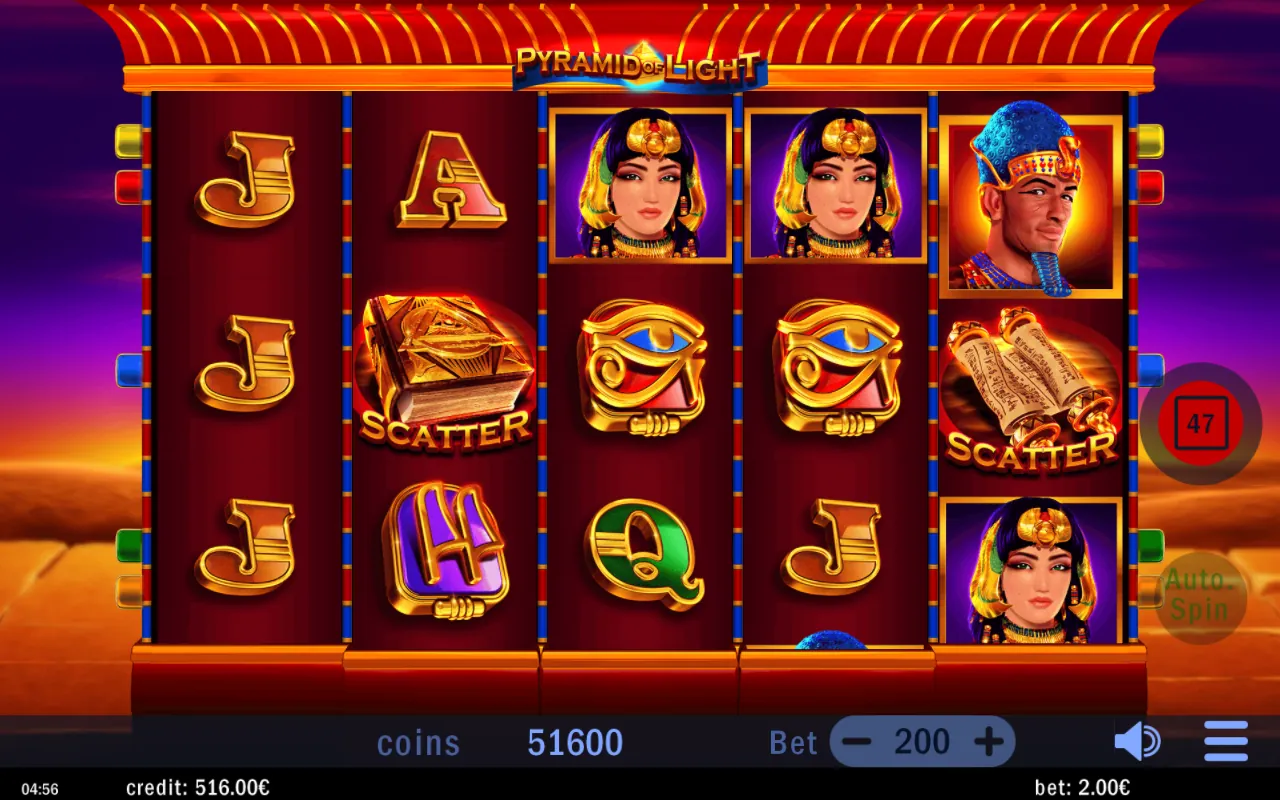
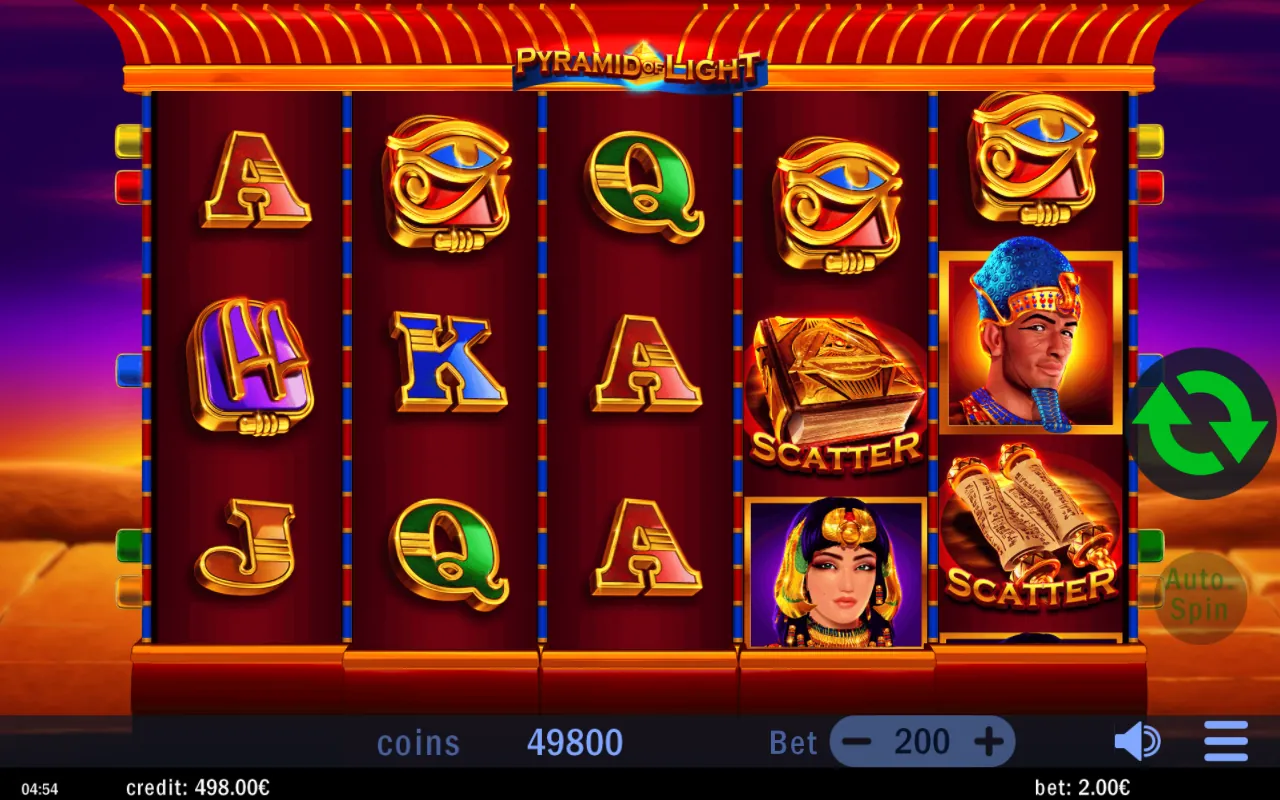
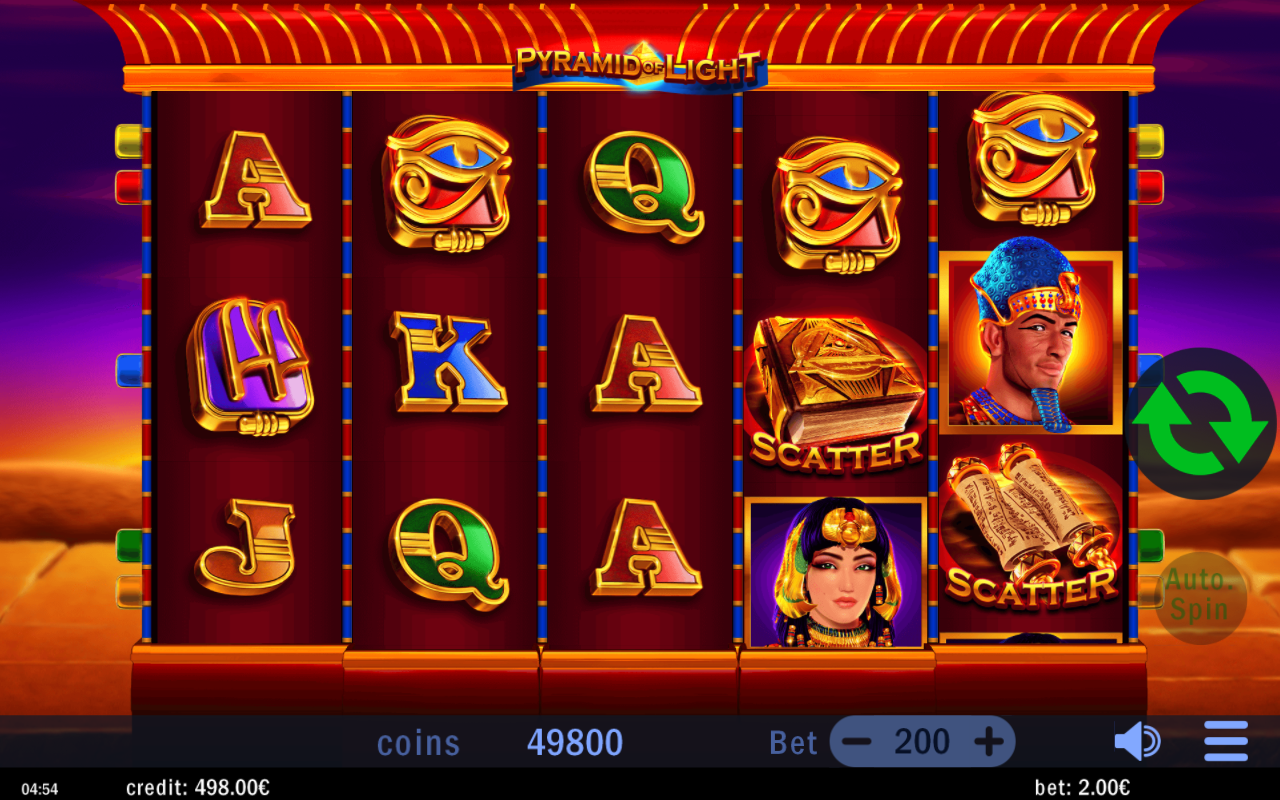
A red-and-gold cornice arches over the reels, deep pillars trimmed in blue and gold stand either side, and a purple-to-orange sky burns out over the desert horizon behind them. The artwork is rich, painterly 3D with a glossy finish, all sun-baked stone and warm haze.
Pyramid of Light spends more care on its setting than its maths strictly needs, and that mismatch is the honest way to describe it: underneath the lush frame sits one of the plainest feature sets an Egyptian slot has ever carried. There’s no free spins round here at all – everything the game pays, it pays through wilds and scatters in the base game.
Swintt has kept the rest simple too: a 5×3 grid, low volatility and an RTP of 95.06%, steady company alongside Egypt King Multi and Crystalium in the studio’s catalogue, and a quieter machine than Book of Dino. The desert at dusk is patient; the reels have to earn the same reputation.
Five Reels and the Expanding Wild
Pyramid of Light runs on a 5×3 grid. There’s no ways-to-win engine underneath and no cascading mechanic on top – wins land on fixed lines, the reels stop, and the next spin begins. For a game carrying this much visual detail, the skeleton underneath is deliberately plain.
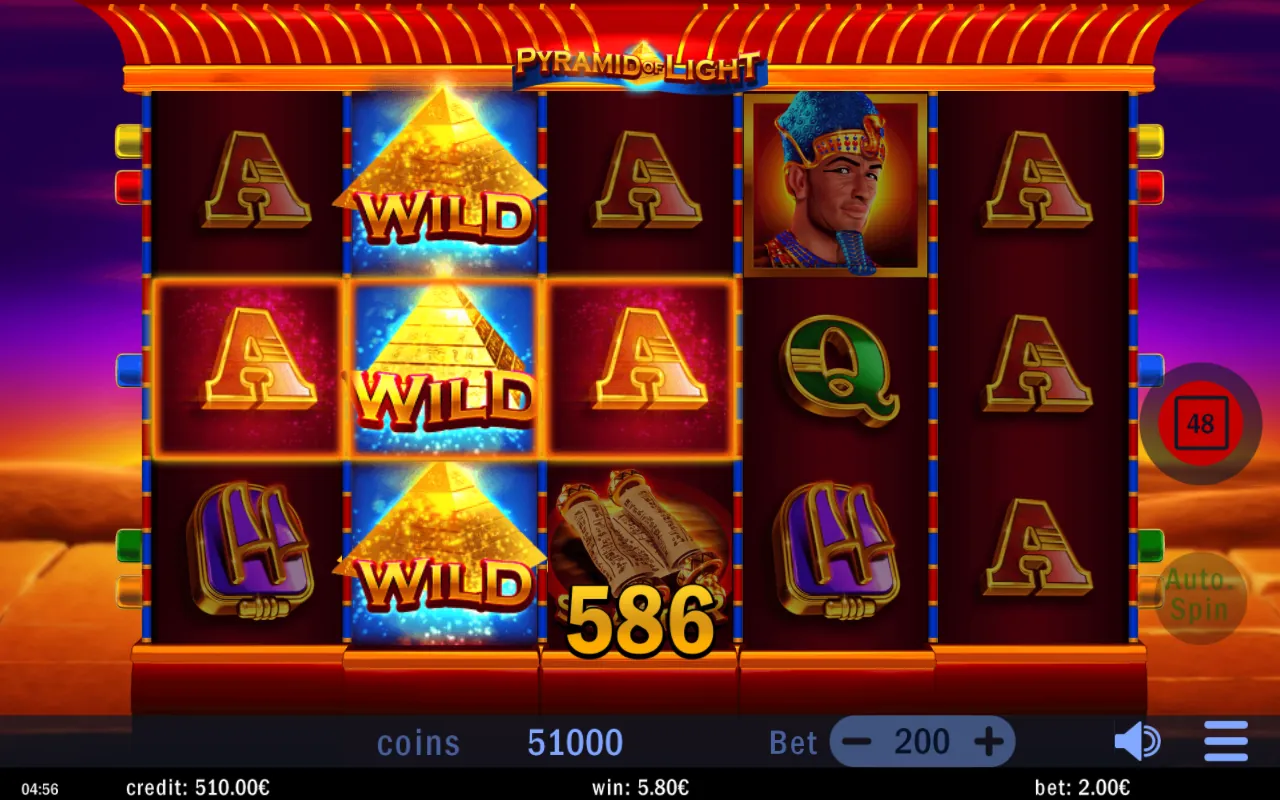
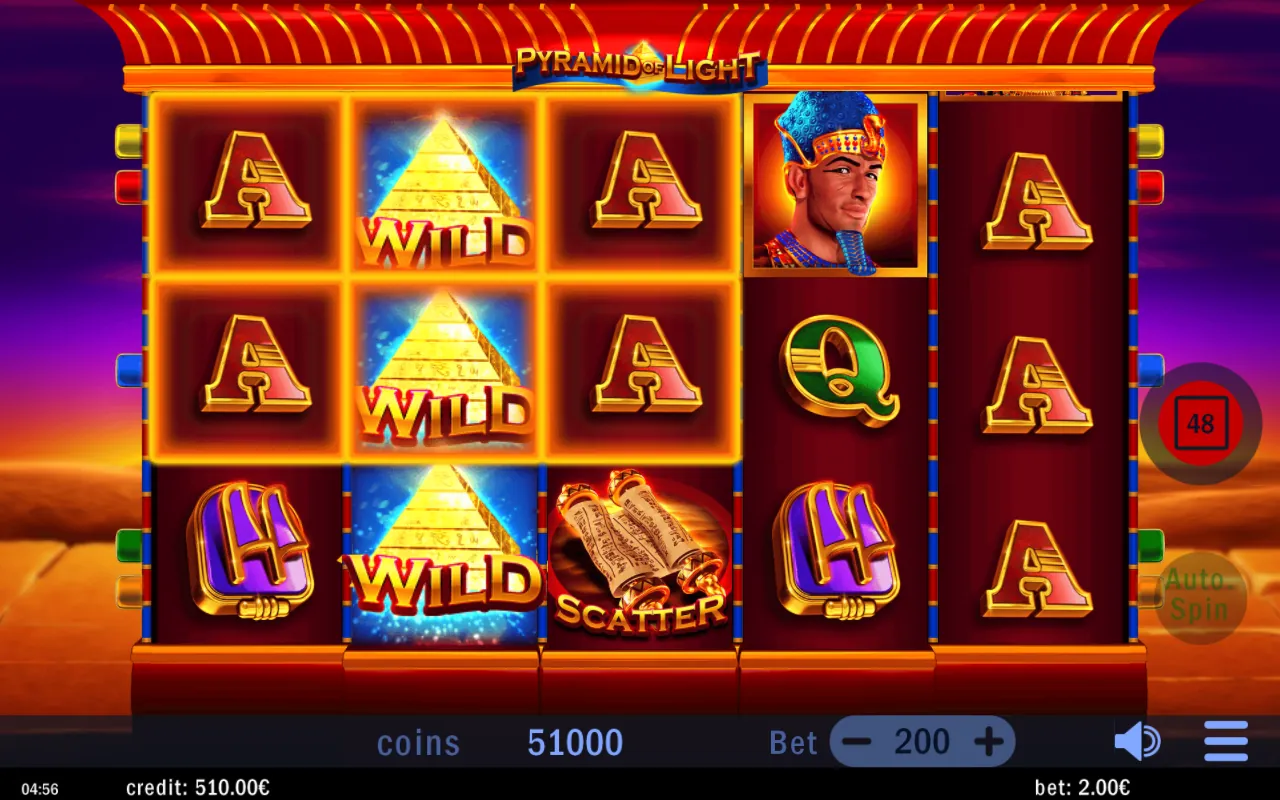
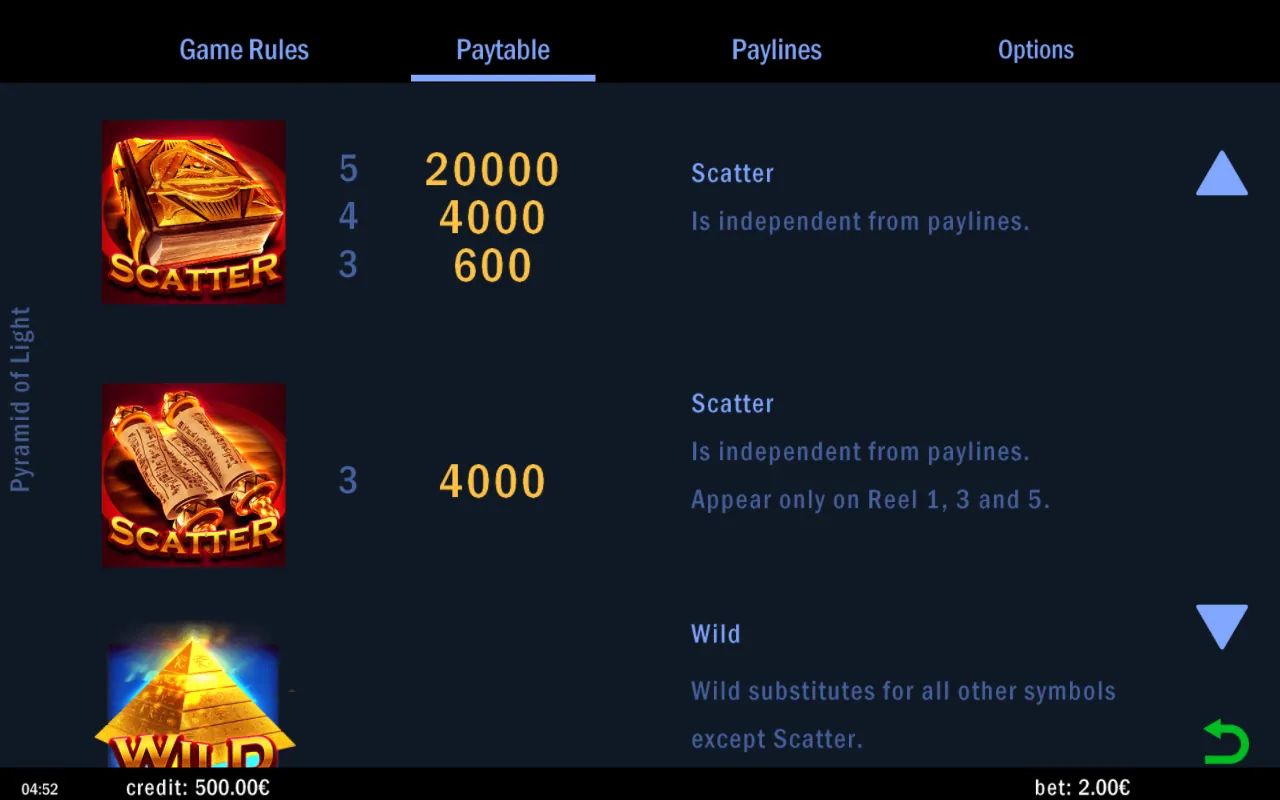
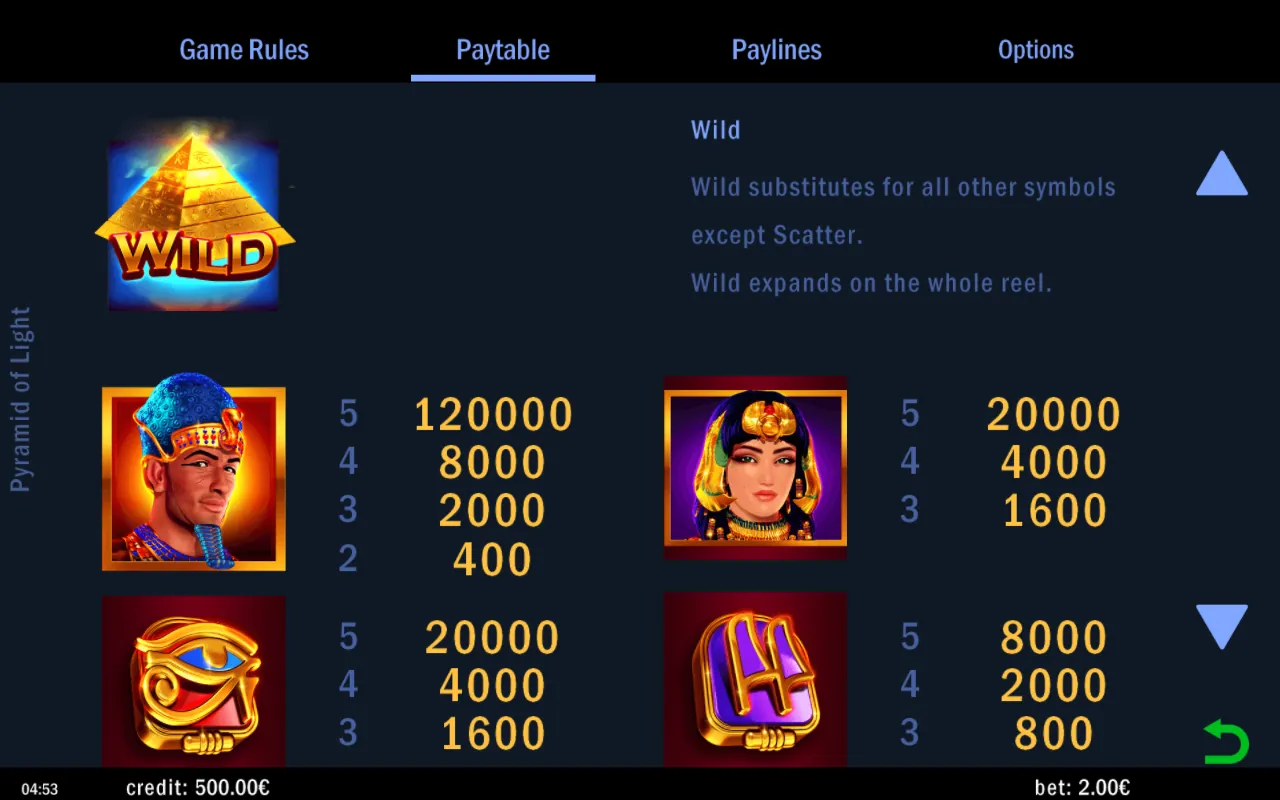
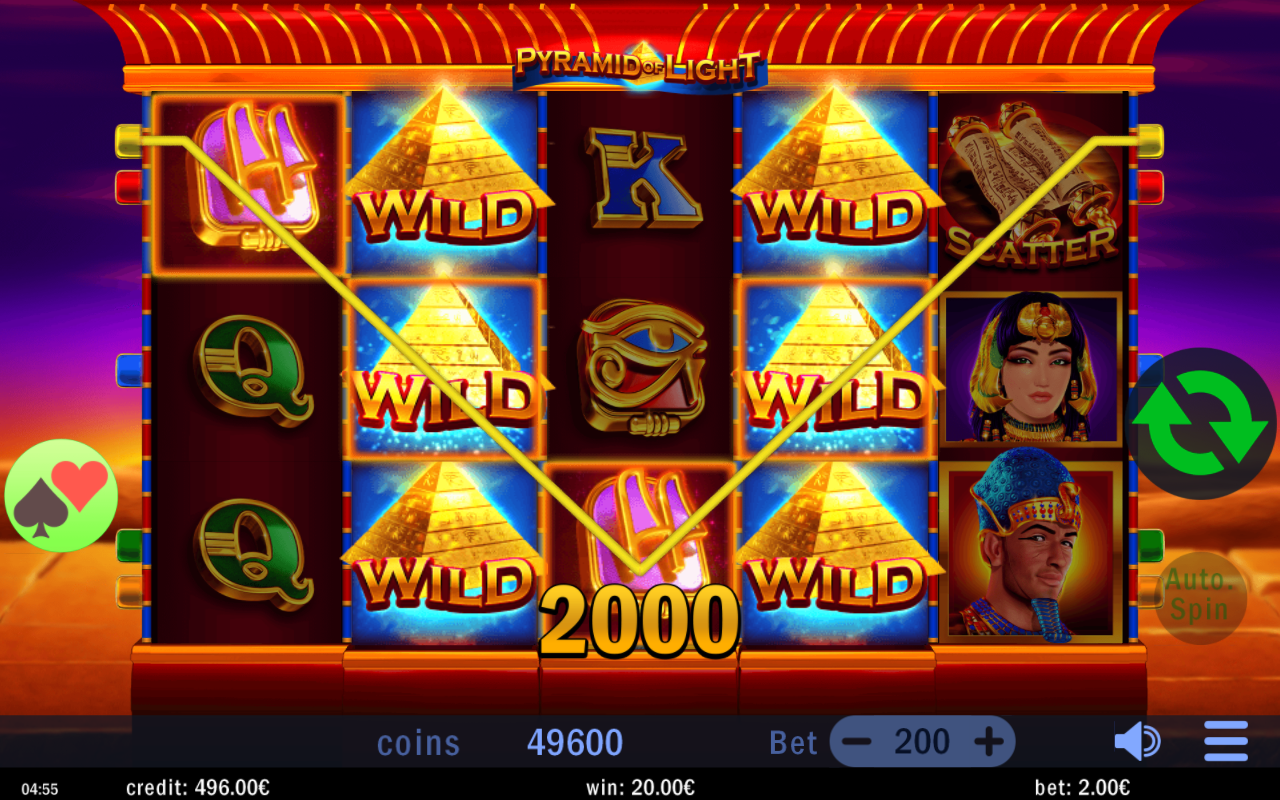
The pyramid icon is the wild, and it does two jobs. It stands in for every symbol except the scatters, and it stretches to fill all three rows of its reel whenever it lands. Because the expansion covers the whole reel, a single wild on a middle reel can complete several different paylines at once.
That’s where the bigger base-game results come from. Two wilds at once – one on reel two, one on reel four, say – are when the grid lights up properly. Every line passing through both reels has the full substitute working for it, and a premium symbol on the remaining reels can turn a quiet spin into the best result the game offers outside the scatters.
Placement matters more here than it would in a ways-to-win game. A wild on reel one or reel five can only help lines that start or end there, while the same wild on a middle reel touches every line that crosses the grid’s centre. The game doesn’t weight where the wilds land, but when two arrive together on the middle reels, the difference in what they’re worth shows up on the win display at once.
The wild is also the only symbol on the grid with any behaviour attached to it. Everything else is a flat payer – it lands, it matches, it pays or it doesn’t. That puts the entire mechanical personality of the game on one icon, which is a lot of responsibility for a single symbol to carry.
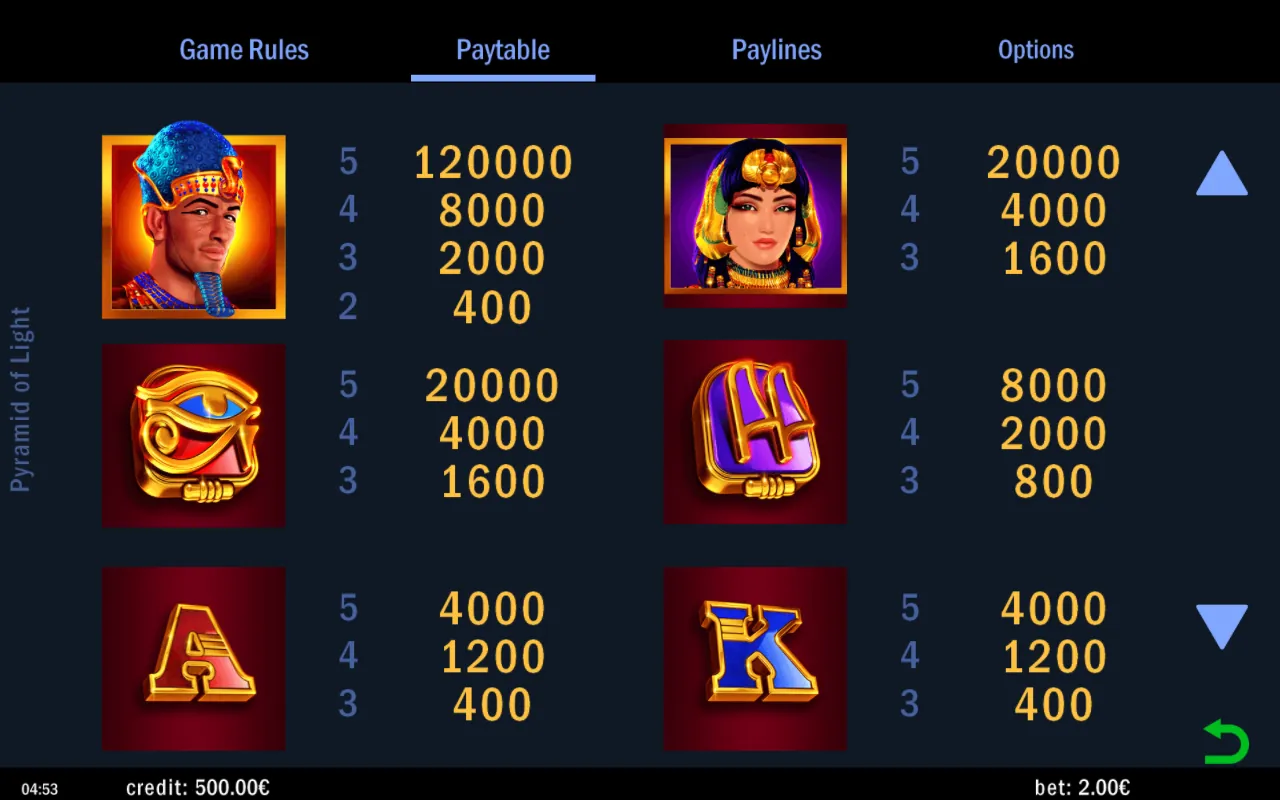
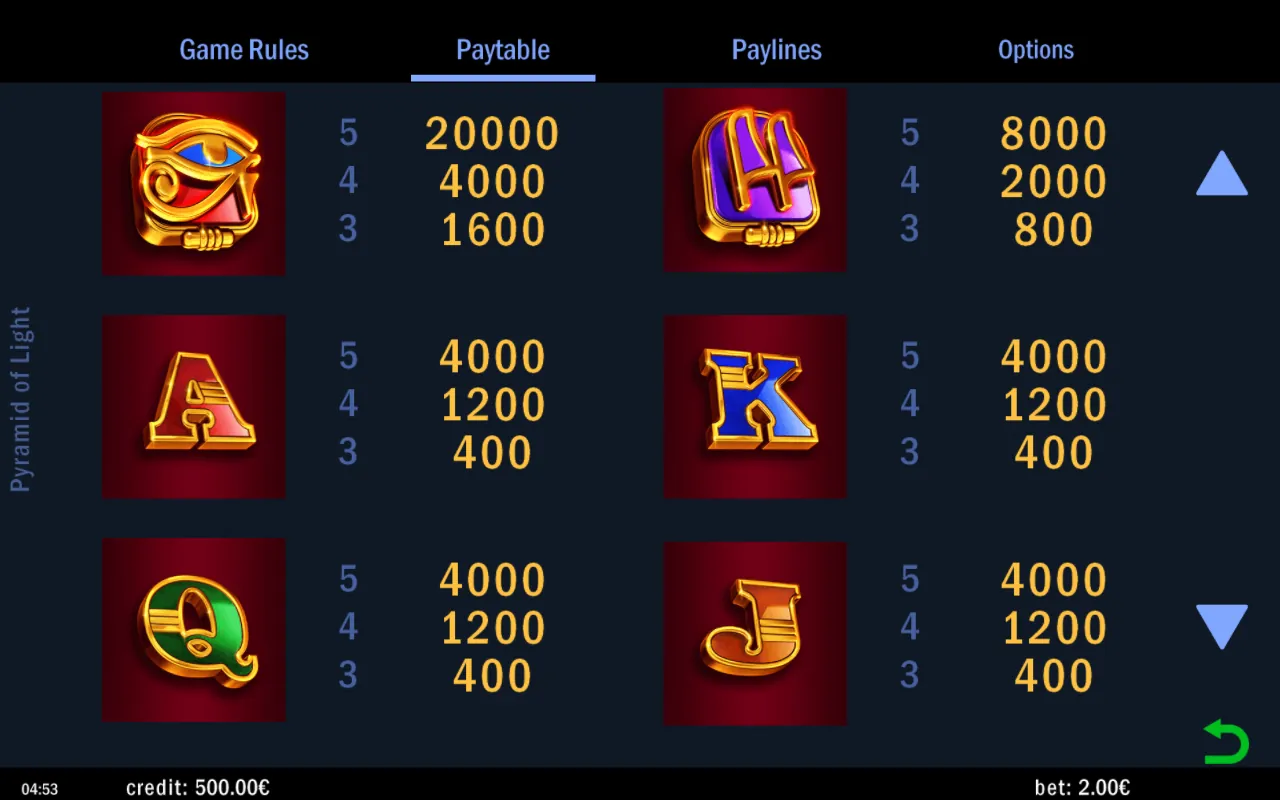
The symbol ladder is a classic four-tier structure: a dominant Pharaoh at the top, two premium mid-tiers, a single high-paying royal, then the rest of the card suits carrying the small wins. Every value is a multiple of the total bet, not the line bet, so the tiers compare directly:
- Pharaoh: 2x for two, 10x for three, 40x for four, 600x for five
- Cleopatra: 8x for three, 20x for four, 100x for five
- Eye of Horus: 8x for three, 20x for four, 100x for five
- H: 4x for three, 10x for four, 40x for five
- A, K, Q and J: 2x for three, 6x for four, 20x for five
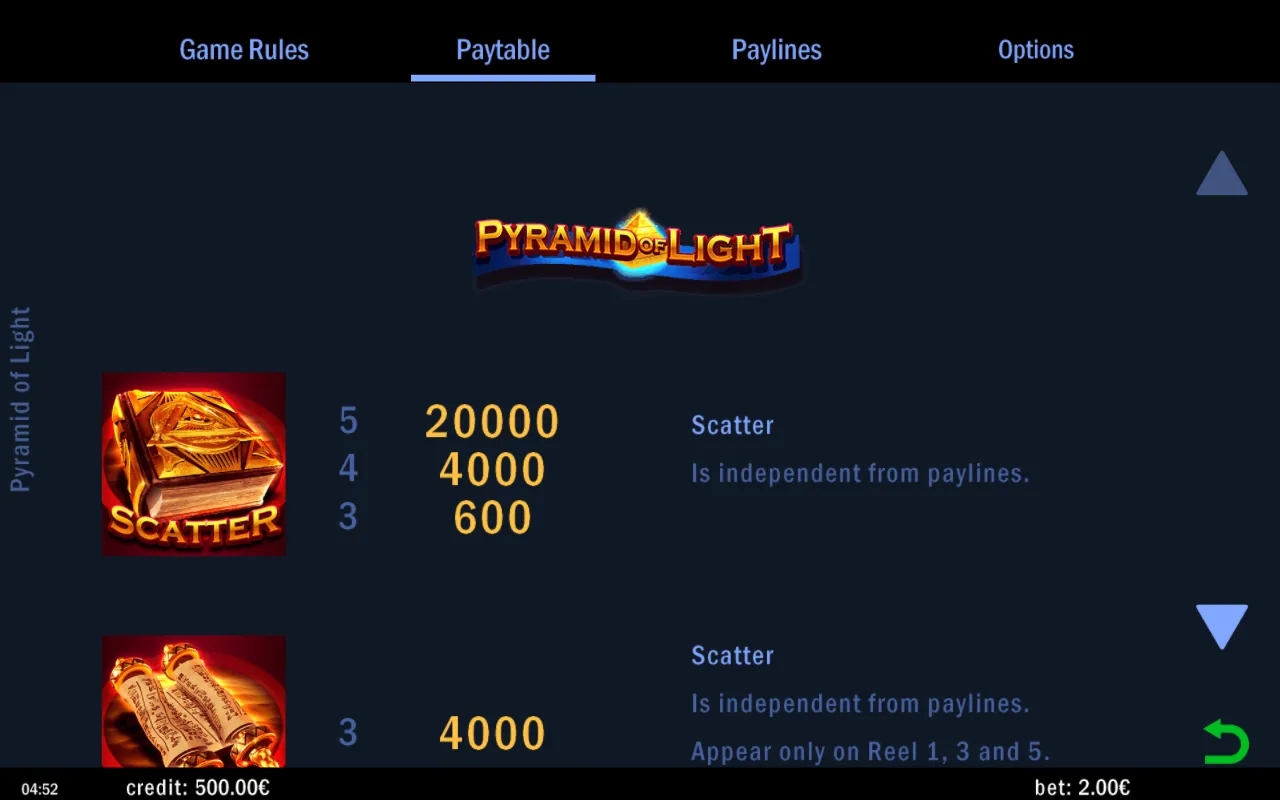
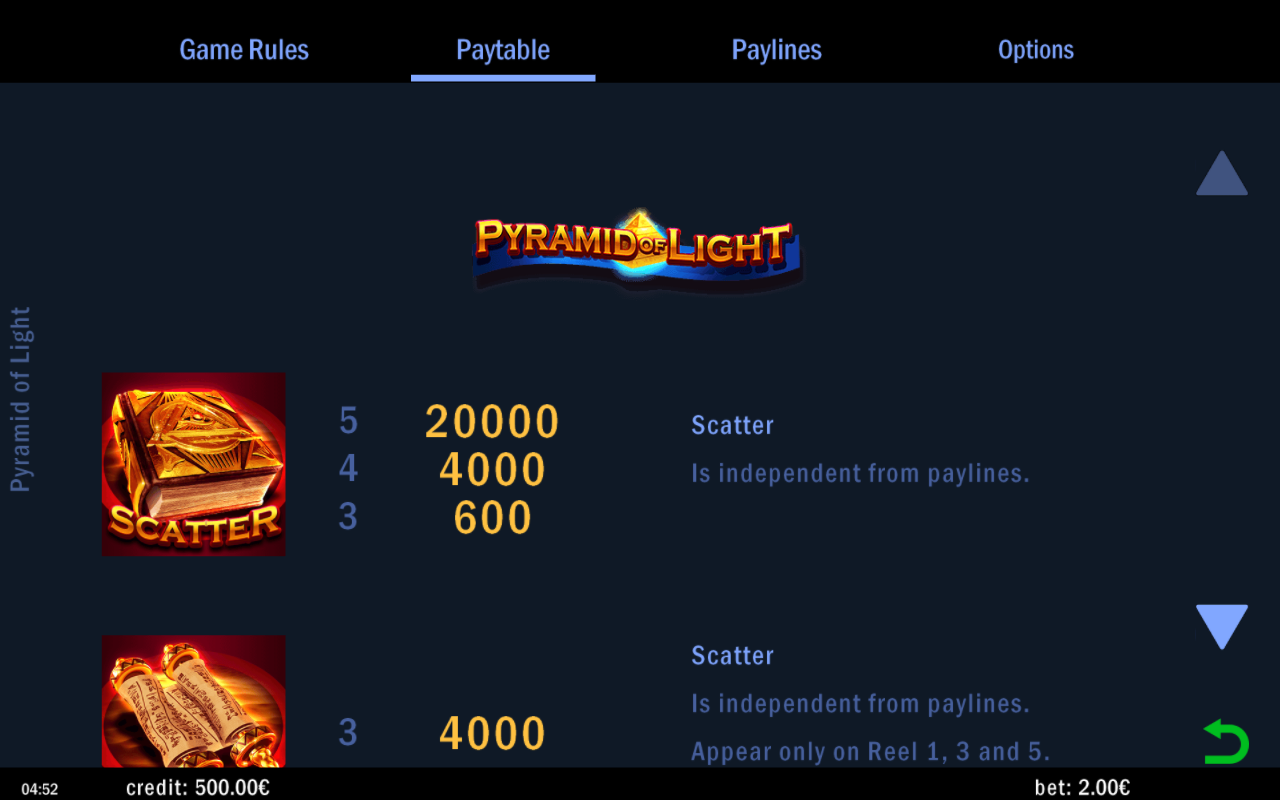
- Treasure chest scatter: 3x for three, 20x for four, 100x for five
- Scroll scatter: 20x for three
Two things stand out from that ladder. The Pharaoh is the only symbol that pays for two of a kind, which softens the drop between tiers at the bottom of a near-miss. And the treasure chest scatter pays on the same level as Cleopatra and the Eye of Horus, without needing to sit on a payline to do it.
The gap between the Pharaoh and everything else is wide. Five Cleopatras or five Eyes of Horus pay a sixth of what five Pharaohs do, and the H sits alone in between – closer to the royals than to the premiums it’s grouped with visually.
The royals do the daily work. Three A, K, Q or J returns double the total bet, which in a low volatility game is the kind of result that keeps the balance moving between the bigger hits. The Pharaoh combinations are the rare spikes rather than the plan.
Scatters That Ignore the Paylines
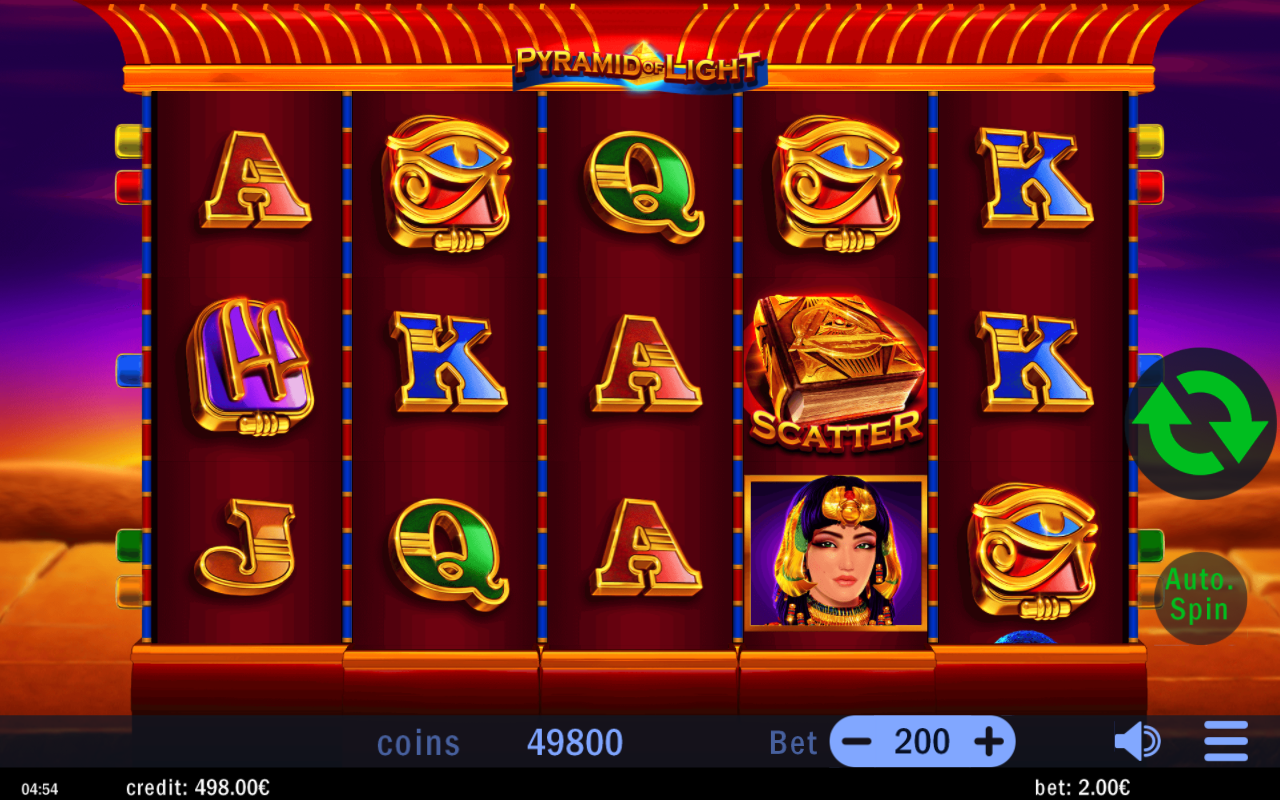
There are two scatters, and neither has anything to do with the paylines. The treasure chest pays from three of a kind anywhere on the grid, in the same multiples-of-total-bet terms as everything else. A scatter that pays top-tier money from any position is a genuinely useful thing to have landing on the reels, and it’s the game’s most interesting maths decision.
The chest also changes what the even-numbered reels are worth. Because it counts from anywhere, a chest on reel two or four contributes to a scatter win just as a chest on the outer reels does – those middle reels stop being purely payline territory whenever one shows up.
The scroll is the narrower of the two. It appears only on reels 1, 3 and 5, which means three of a kind needs all three of its eligible reels to cooperate at once – and that’s also the only combination it pays for. It’s a rarer hit than the chest by construction, and it exists mainly to give the odd-numbered reels something extra to carry.
Splitting the scatter work across two symbols is an unusual choice, and it changes how the grid reads. The chest can land anywhere and count, so it’s always live; the scroll only matters on three reels out of five, and only in threes. Between them, every reel on the grid can host something the paylines don’t explain.
Neither scatter triggers anything. No free spins, no pick’em round, no bonus wheel – the scatters pay and vanish, and the expanded wild is the only modifier in the game. Here’s the complete feature set:
- Pyramid wild: stands in for every symbol except the scatters, stretches to fill its whole reel
- Treasure chest scatter: pays anywhere on the grid, independent of paylines
- Scroll scatter: reels 1, 3 and 5 only, pays for three of a kind and nothing else
That’s the whole machine, and for a low volatility game it’s a coherent one: everything it pays, it pays on the spin that’s on screen, with nothing held back for a round that never comes.
Our Honest Verdict
Overall Rating: 6/10
Playing Pyramid of Light is a lot like dusk in that desert hall: warm, unhurried, and never in a hurry to change the view. The one reason to choose it over a busier Egyptian slot is exactly that – low volatility, small steady wins, and an expanding wild that makes the odd spin feel bigger than the maths around it.
The treasure chest scatter is the best thing here. It pays premium-symbol money from anywhere on the grid, so a spin that misses every line can still be a good one. The weakness is just as clear: past that, there’s nowhere to go. No round, no ladder, nothing to build towards – the base game is the whole game.
If long calm sessions and a beautiful frame are what you’re after, this one will suit you well. Anyone who needs a bonus round to chase will be out the door before the sun sets.
Pyramid of Light FAQs
-
What is the RTP of Pyramid of Light?
Pyramid of Light has an RTP of 95.06%. -
Is Pyramid of Light high volatility?
No. Pyramid of Light is a low volatility slot, so wins tend to be smaller and more regular than in high volatility games. -
What is the grid size of Pyramid of Light?
Pyramid of Light plays on a 5×3 grid with five reels and three rows. -
When is Pyramid of Light released?
Pyramid of Light’s release date is 24 August 2022. -
Who makes Pyramid of Light?
Pyramid of Light is made by Swintt. -
What does the wild do in Pyramid of Light?
The pyramid icon is the game’s wild. It substitutes for every paying symbol except the two scatters, and whenever it lands it expands to cover all three rows of its reel. -
How do the scatters work in Pyramid of Light?
There are two scatters and both pay independently of the paylines. The treasure chest pays 3x, 20x or 100x the total bet for three, four or five of a kind, while the scroll appears only on reels 1, 3 and 5 and pays 20x for three. -
Does Pyramid of Light have a free spins bonus round?
No. Pyramid of Light has no free spins round or bonus game of any kind. The expanded wild and the two scatter pays are the game’s only features.