





Rage of Thor Slot Review
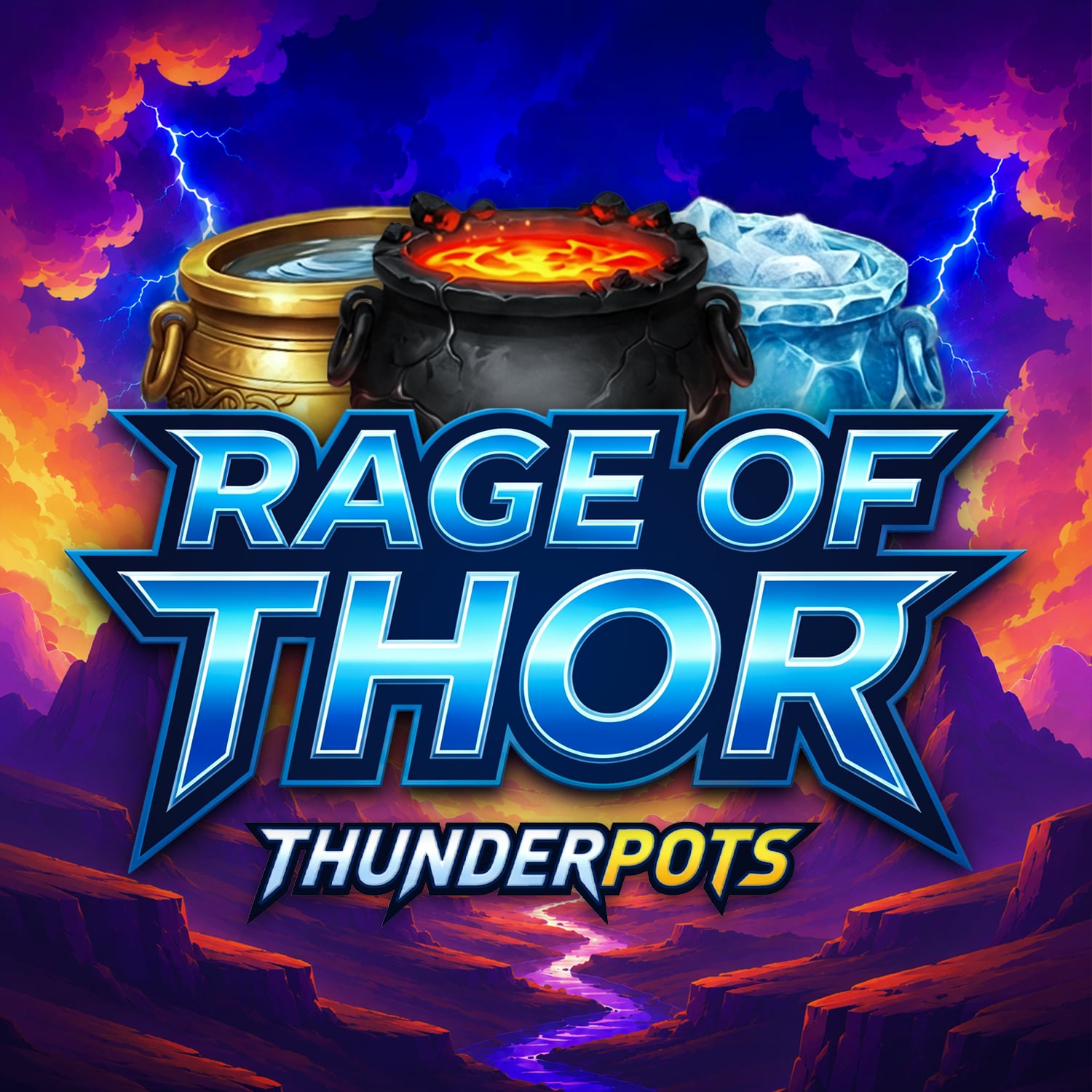
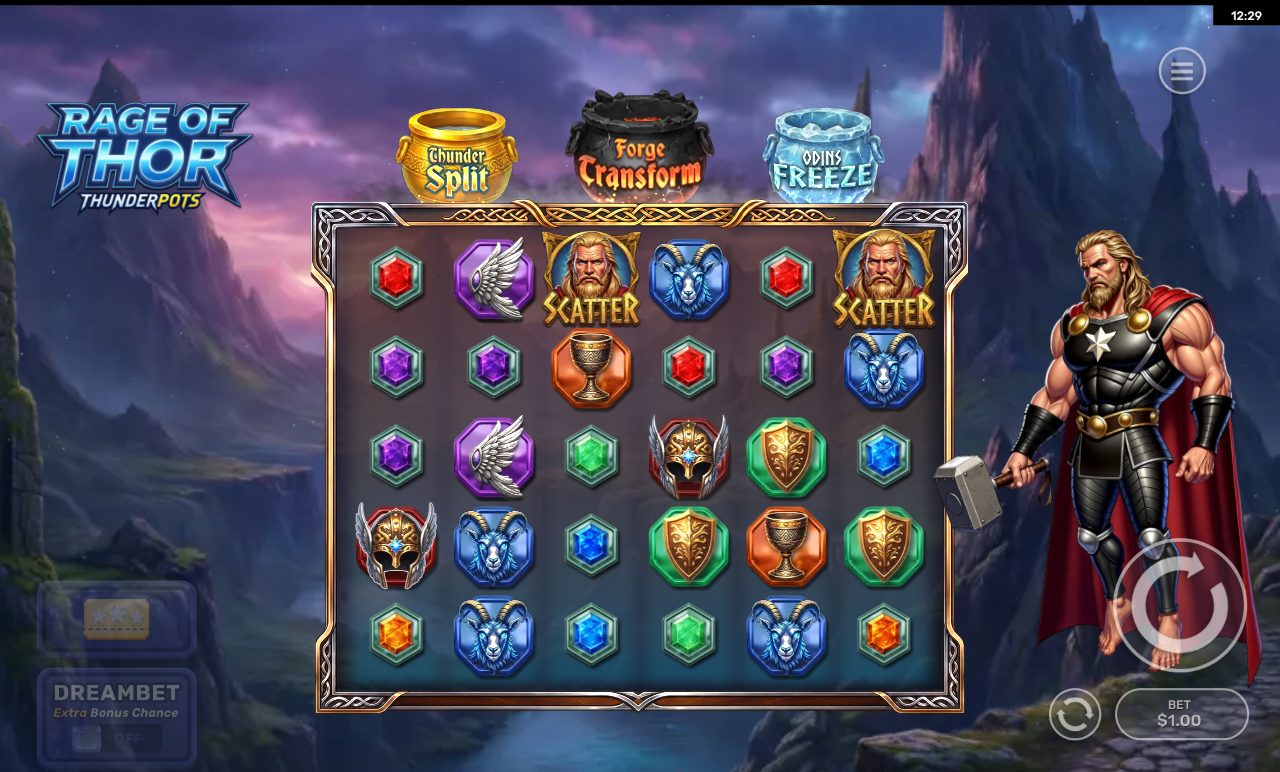
Thor looms beside the reels in a violet dusk valley, stone hammer resting against his leg, and for once the god of thunder is the calmest thing on screen. The rage in Rage of Thor lives entirely in the maths: DreamSpin have built a game where seven or more matching symbols anywhere in view on a 5×5 grid is the price of any win, and the temper only shows when multiplier symbols start stacking.
That volume-based maths is the whole game, and it’s a better idea than another hammer-swinger would have been. The paytable and the multiplier logic have to earn the slot on their own. It sits alongside Alchemaniac and Aztec Tower in the studio’s catalogue. The valley is quiet; whether the maths raises any thunder is the question.
Base Game & Features
Seven matching symbols is the entry price for any win, and they can sit anywhere on the 5×5 grid. Position doesn’t matter at all. Only the count does, and the grid holds 25 positions, so a full screen of one symbol is 25 of a kind.
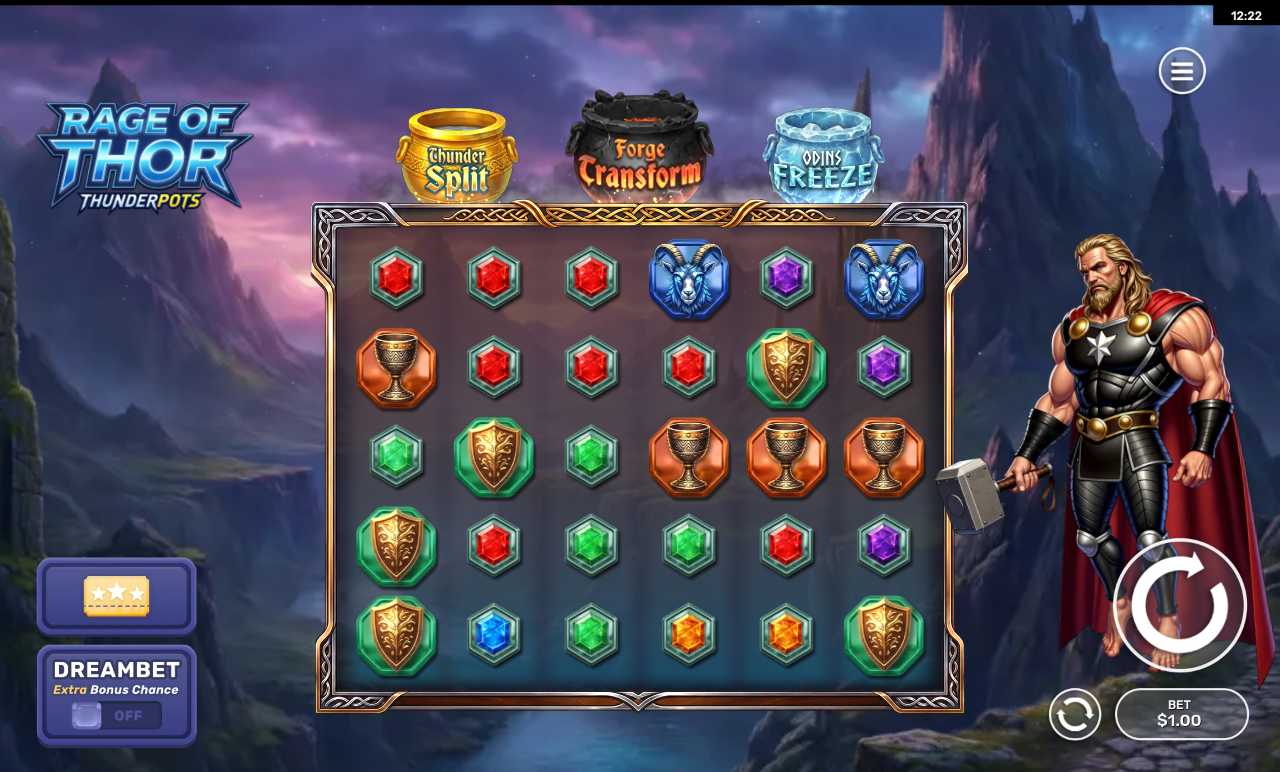
Pays scale with volume in three bands: 7-8, 9-10 and 11 or more of a kind. The full table, per symbol and at multiples of stake:
- Helmet: 20x for 11+, 15x for 9-10, 3x for 7-8
- Wings: 15x for 11+, 7x for 9-10, 2x for 7-8
- Chalice: 10x for 11+, 2x for 9-10, 1x for 7-8
- Shield: 10x for 11+, 2x for 9-10, 1x for 7-8
- Green Gem: 2x for 11+, 0.75x for 9-10, 0.2x for 7-8
- Blue Gem: 1x for 11+, 0.75x for 9-10, 0.2x for 7-8
- Goat: no standalone pay value
- Red Gem: no standalone pay value
- Multiplier symbol: no standalone pay value
Those bottom bands are thin. Seven or eight gems returns a fifth of the stake, so small clusters are consolation prizes rather than wins. The real money starts at the 9-10 band, and the Helmet at 11-plus is the only route to a serious base game payout: 20x, which is three times what the Wings pay at the same count.
Chalice and Shield are worth a note, because they pay identically. That’s unusual; most games space their mid-tier symbols out. Here they behave as a single effective tier, which slightly flattens the table: land nine of either and it’s 2x all the same.
Thunderpots
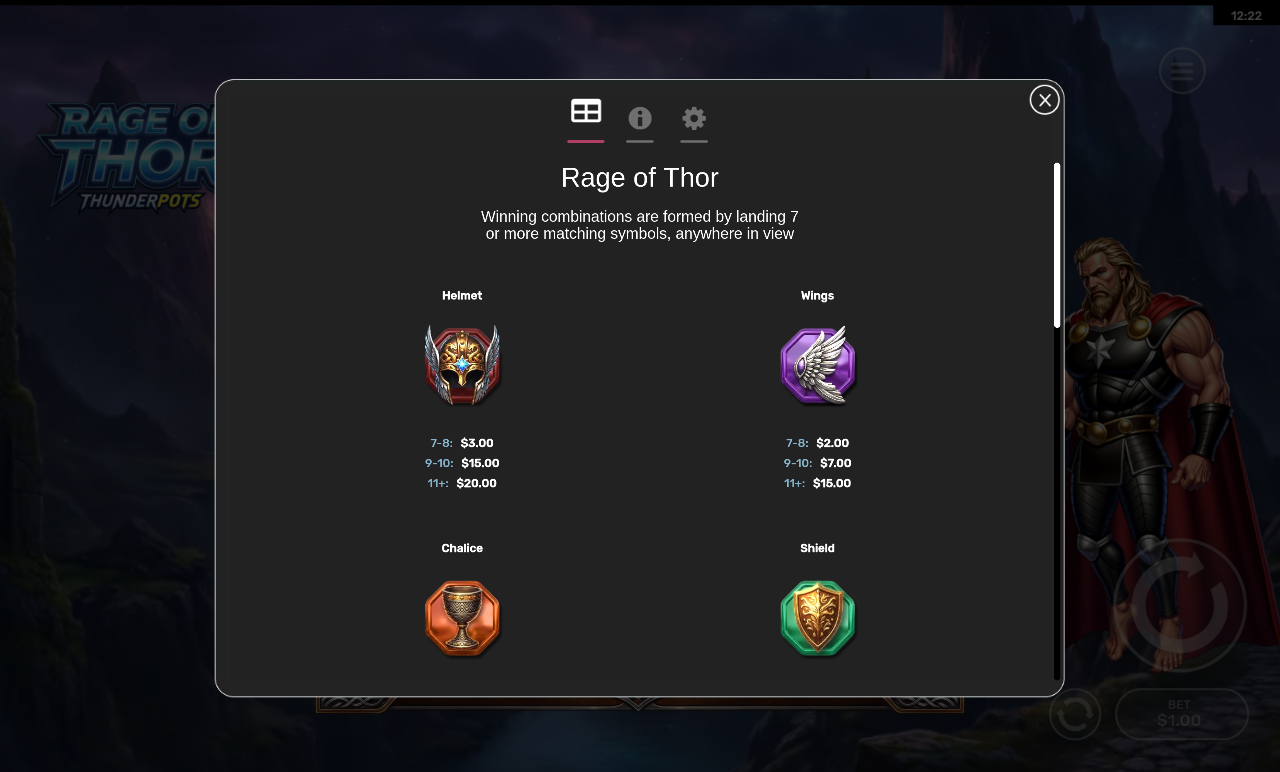
Three pot icons sit above the grid, and they’re the game’s modifier layer. Their names are worth the price of admission alone:
- Chunder Split
- Forge Transform
- Odins Freeze
When a pot fires, its effect runs across the reels before the spin settles. Between the three of them, there’s usually something moving on screen while the clusters assemble, which matters in a game whose ordinary spins resolve one count at a time.
Multiplier Symbols
Multiplier symbols land in view like any other symbol, but they don’t pay on their own. Instead, their values are added together and applied to all winning combinations on that spin.
One multiplier lifting one cluster is a decent spin. Two or three landing together is where it stops being polite: the values stack first, then the total lands on every winning combination in view. A healthy cluster arriving alongside a pair of multipliers can leave the base game’s modest paytable far behind.
It’s worth being clear about what that means for the gems. A 7-8 cluster of Blue Gems pays 0.2x on its own, and that figure is fixed no matter how the symbols are arranged. The multiplier symbol is the only thing in the base game that can turn a minimum cluster into something approaching a real return, which puts a lot of weight on a symbol that carries no pay value of its own.
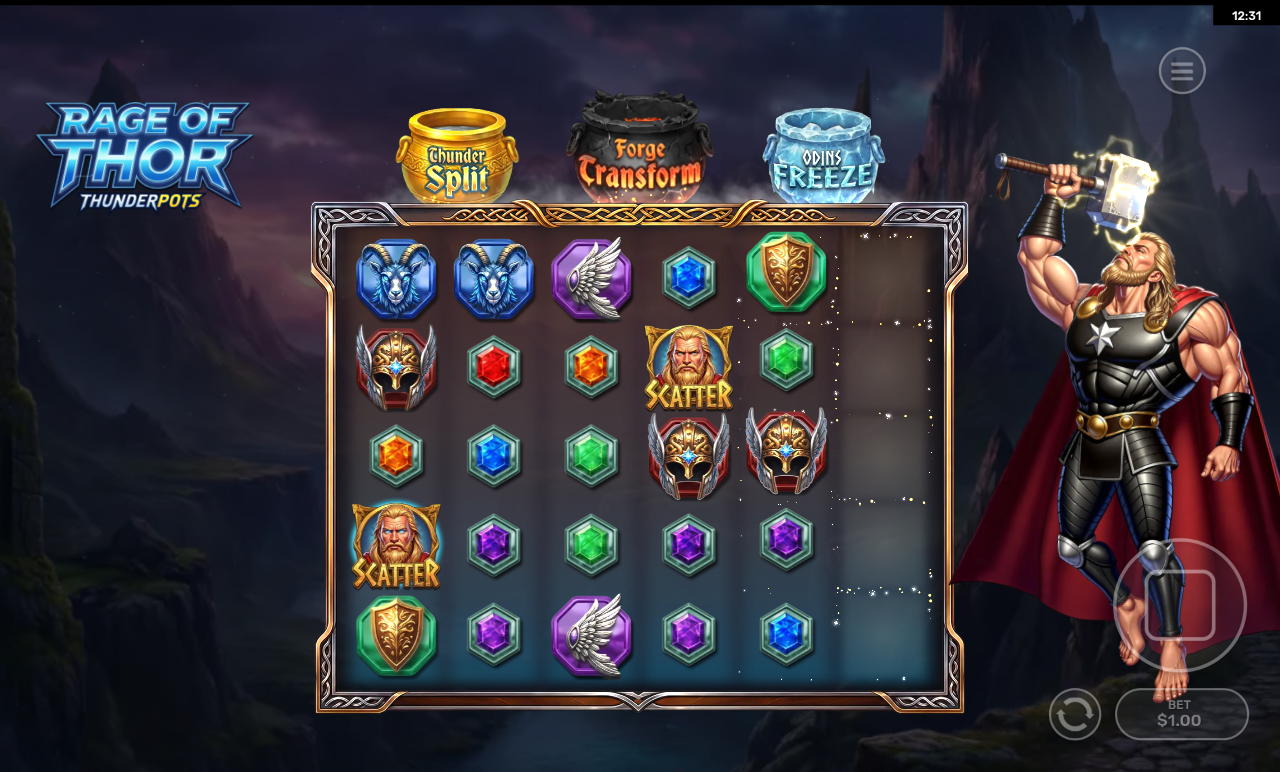
Scatters appear in the base game too, and Thor raises his hammer while any are in view. Three is the number that matters. Two is just weather.
Rage of Thor Free Spins & Multipliers
Land three Scatters and the free spins round triggers. What the round changes is precise and small: multiplier values are added to a total multiplier on winning spins, and that total carries across the round instead of resetting.
The difference from the base game is the memory. Outside the round, a multiplier is a one-spin event; inside it, the meter only knows how to grow. A late-round cluster lands on everything the round has counted before it, not just on its own spin’s additions.
That build has a natural rhythm to it. Early spins add small amounts and often feel uneventful. The tension arrives with the total already sitting at a meaningful number, when any cluster at all is worth several times what the base game would pay for it.
Put concretely: a 9-10 Helmet cluster is worth 15x wherever it lands. In the base game that’s the whole story. In the round, the same cluster pays 15x multiplied by whatever the meter has banked, and the meter doesn’t spend itself when it pays.
The cluster logic and the paytable carry into the round unchanged, so it’s the same game with a rising number attached. For a slot built on stacking multipliers, letting the stack persist through the bonus is the right call: the round rewards what the game is already about.
Our Honest Verdict
Overall Rating: 7.1/10
This is a patient game dressed as an angry one. The one reason to pick it is the free spins meter, a total that only ever grows, so the final spins carry everything the round has banked. The quiet valley setting suits that far better than the title does.
The stacking multipliers are its best idea, because they turn a symbol with no pay value of its own into the most important thing on the grid. The floor beneath them is the problem: seven or eight gems returns 0.2x, so most small clusters hand back a fraction of the stake and the base game drifts between the wins that matter.
It’s a good fit for players who enjoy a long build and are happy to judge a game by what it does rather than by numbers on a sheet. Anyone chasing big printed figures won’t find them here. Thor waited by his river for this one, and the audience that suits it can wait for the meter too.
Rage of Thor FAQs
-
How does Rage of Thor form winning combinations?
Winning combinations are formed by landing seven or more matching symbols, anywhere in view on the 5×5 grid. Symbols don’t need to sit on paylines or in connected positions; the count is all that matters. -
What is the grid size of Rage of Thor?
Rage of Thor runs on a 5×5 grid. Wins are cluster-based rather than line-based, so all 25 positions are in play on every spin. -
How do multiplier symbols work in Rage of Thor?
When multiplier symbols land in view, their values are added together and the combined total is applied to all winning combinations on that spin. Multiple multipliers on the same spin stack before applying. -
What triggers the free spins in Rage of Thor?
Landing three Scatters triggers the free spins round. The spin count depends on the trigger. -
What is different about multipliers during Rage of Thor’s free spins?
During free spins, multiplier values are added to a total multiplier on winning spins. Unlike the base game, that total carries across the round rather than resetting each spin, so the meter builds as the bonus runs. -
What are the three pots above the reels in Rage of Thor?
They’re the game’s modifiers: Chunder Split, Forge Transform and Odins Freeze. Each one runs its own effect across the reels when it fires. -
Do the Chalice and Shield symbols pay differently in Rage of Thor?
No. They pay identically at every count: 10x for 11 or more, 2x for 9-10 and 1x for 7-8, so they work as a single mid-tier. -
When is Rage of Thor released?
Rage of Thor’s release date is 26 November 2026.