










Shah Mat Slot Review
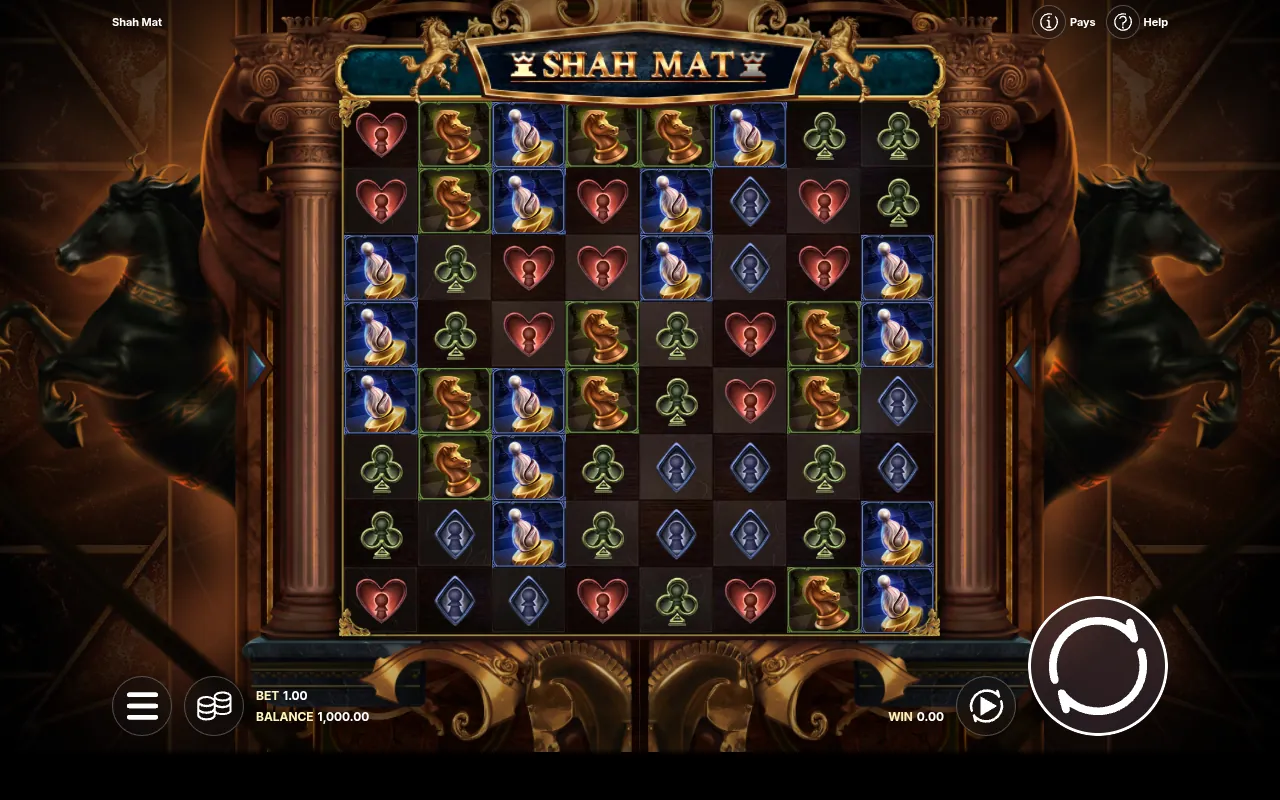
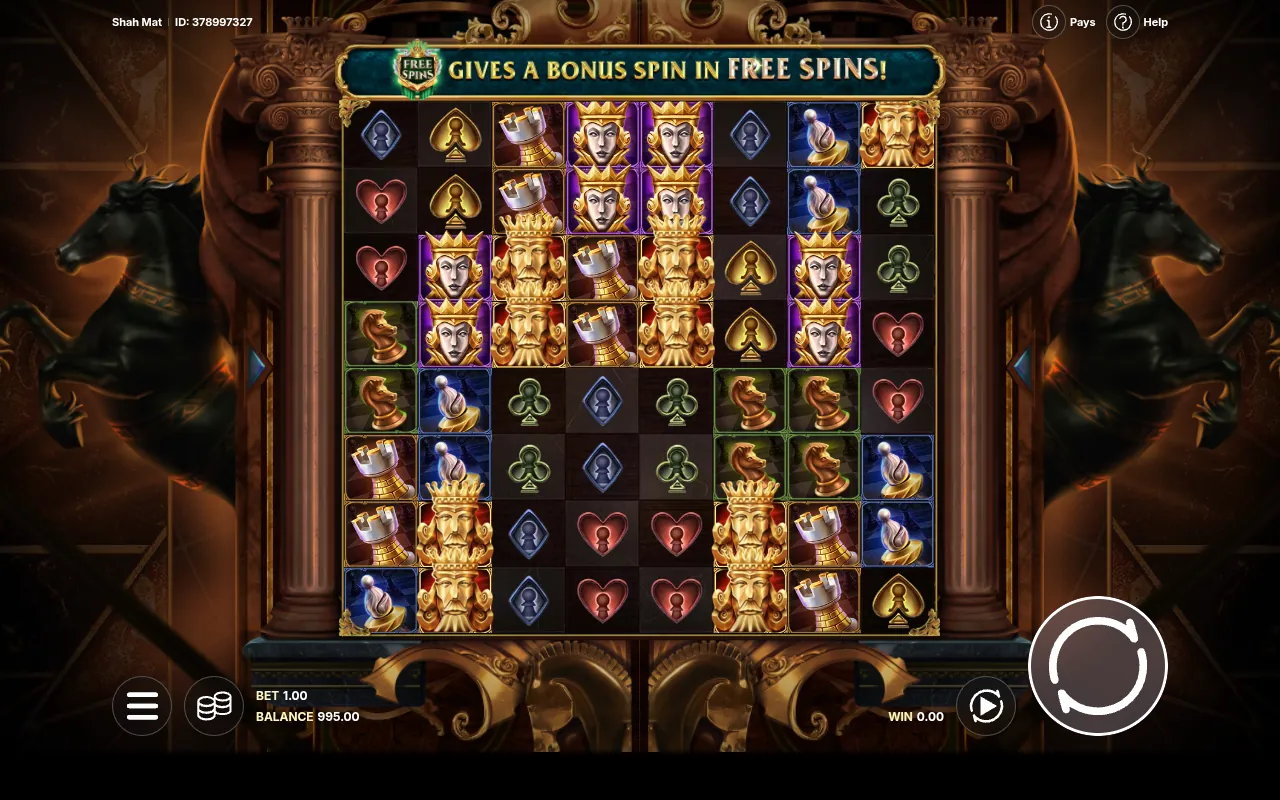
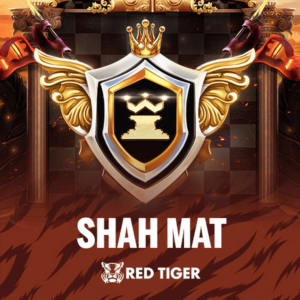
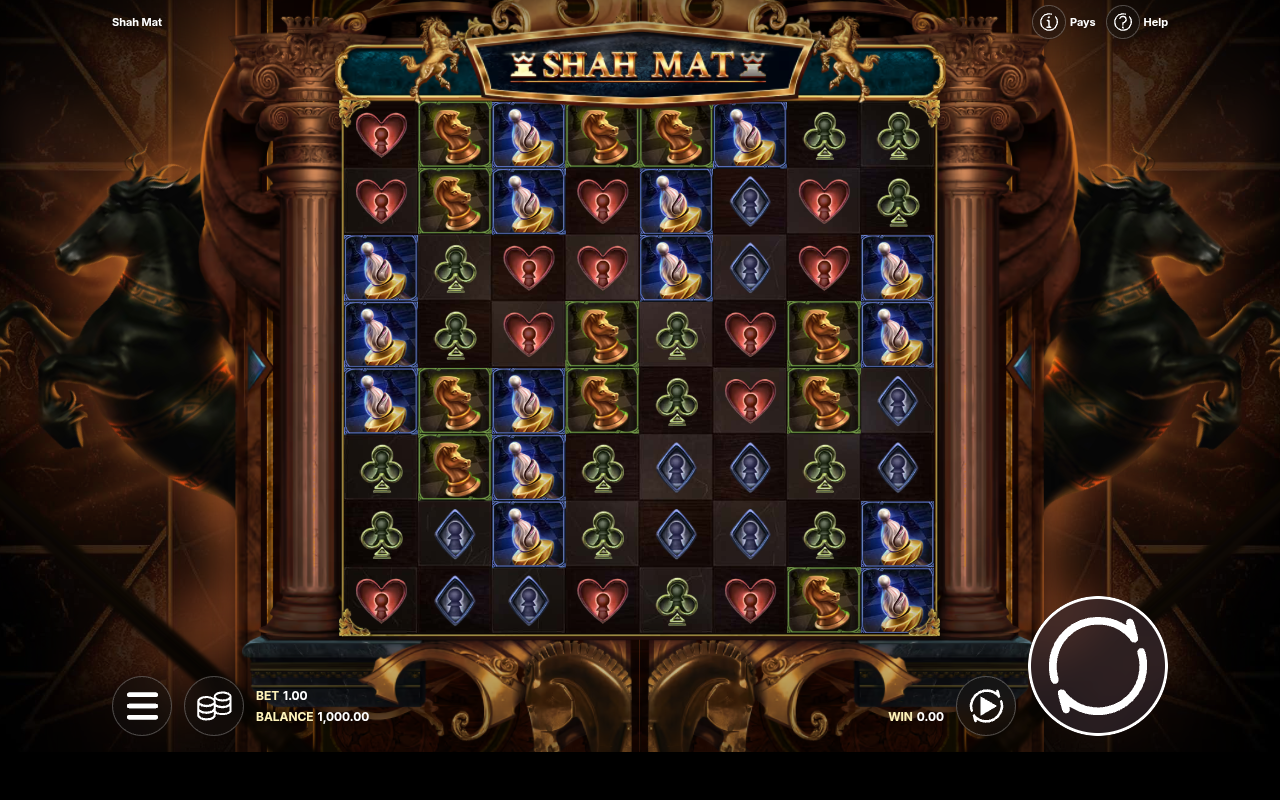
Two black horses rear up either side of a gilded reel frame, amber light picking out their edges against dark marble, and a teal-and-gold plaque reading Shah Mat across the top. The name is Persian for checkmate, but this is a game about pieces that refuse to leave the board. Red Tiger have built their 7×7 cluster-pays entry around wilds that survive their own wins, and that persistence is what makes it worth more than a passing glance.
It runs at 95.79% RTP with a 4,323x top prize and stakes from 0.10 to 50 per spin, sitting in the cluster-pays lane the studio has worked before alongside Dragons Clusterbuster, Egypt Clusterbuster and Gemtastic. Whether one sticky-wild idea is enough to carry a game this patient is the question the rest of this copy answers.
Clusters, Cascades and the Court
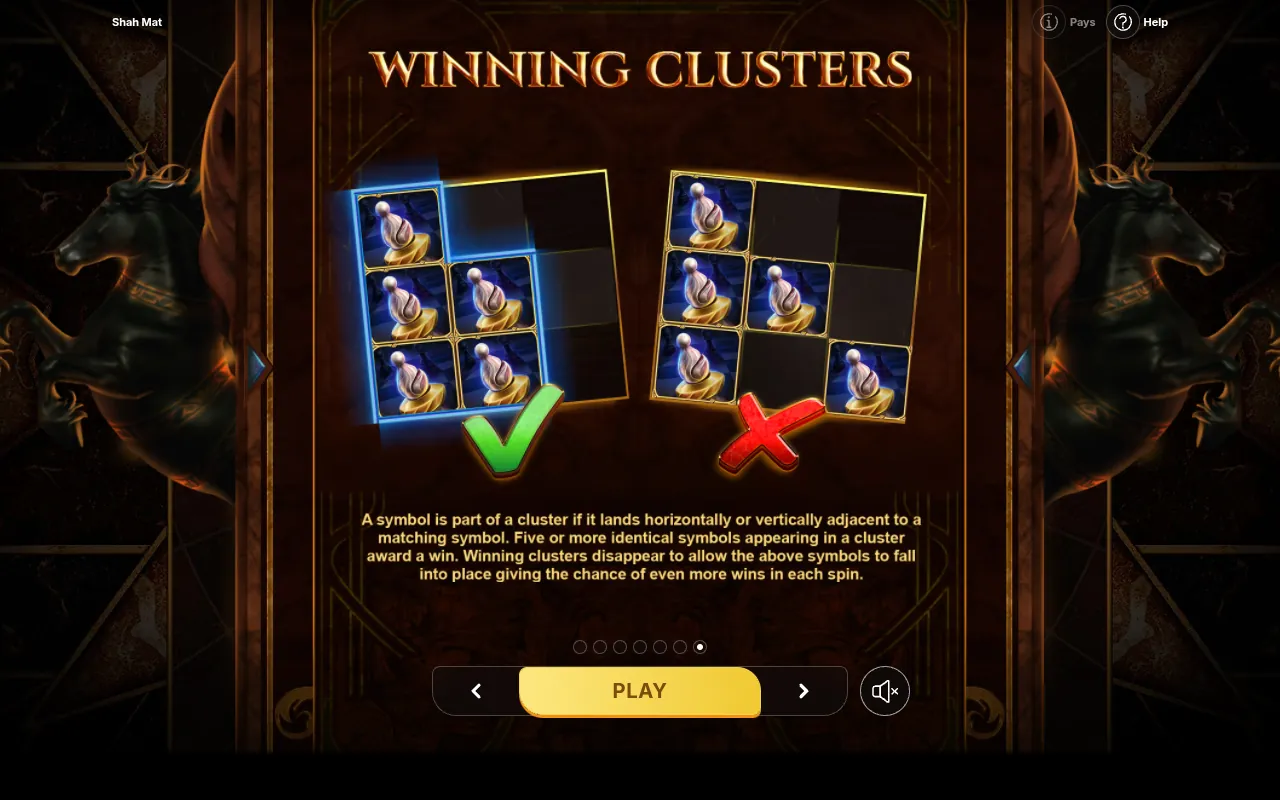
There are no paylines here. A symbol counts as part of a cluster if it lands horizontally or vertically adjacent to a matching symbol, and five or more identical symbols in a cluster award a win.
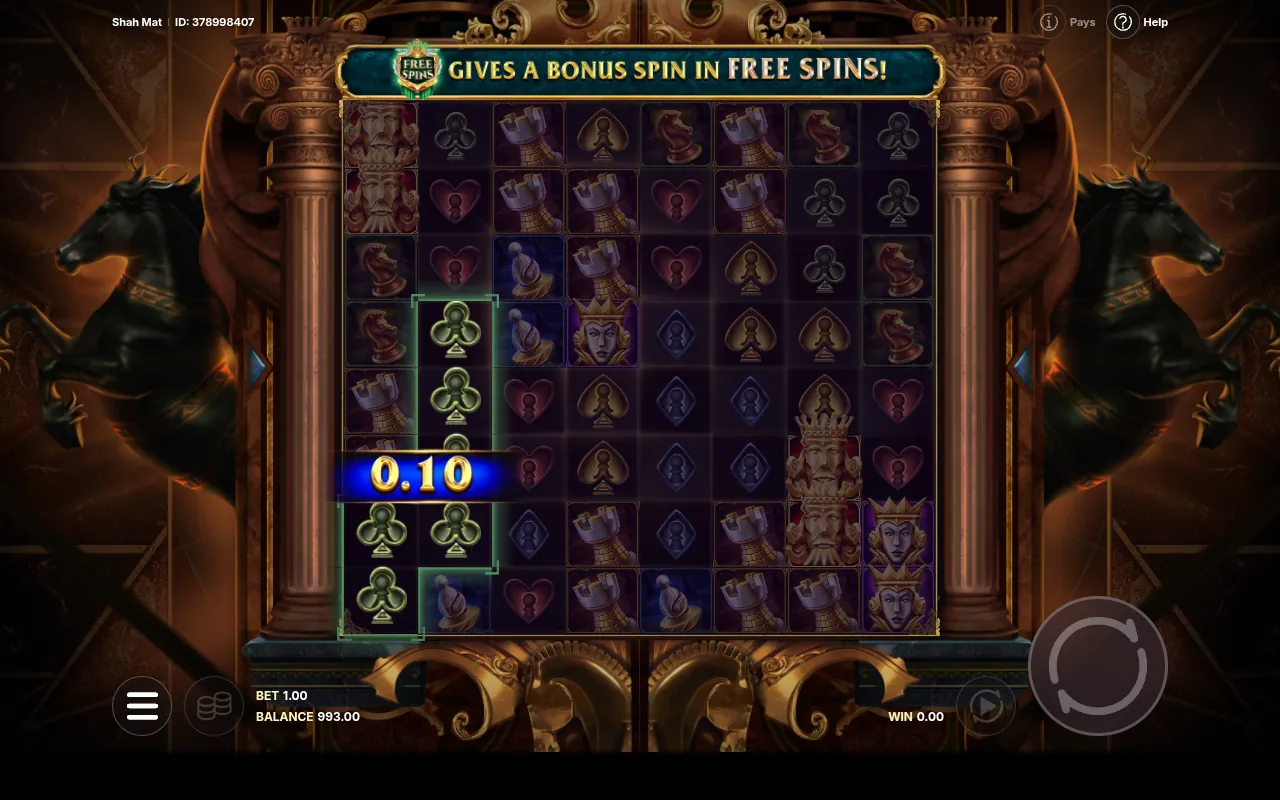
Winning clusters then disappear, letting the symbols above fall into place. That’s a second chance from a single spin: a fresh grid settles, new clusters can form, and the cascade keeps running until no further win appears. On a 7×7 board there’s room for that to run a while.
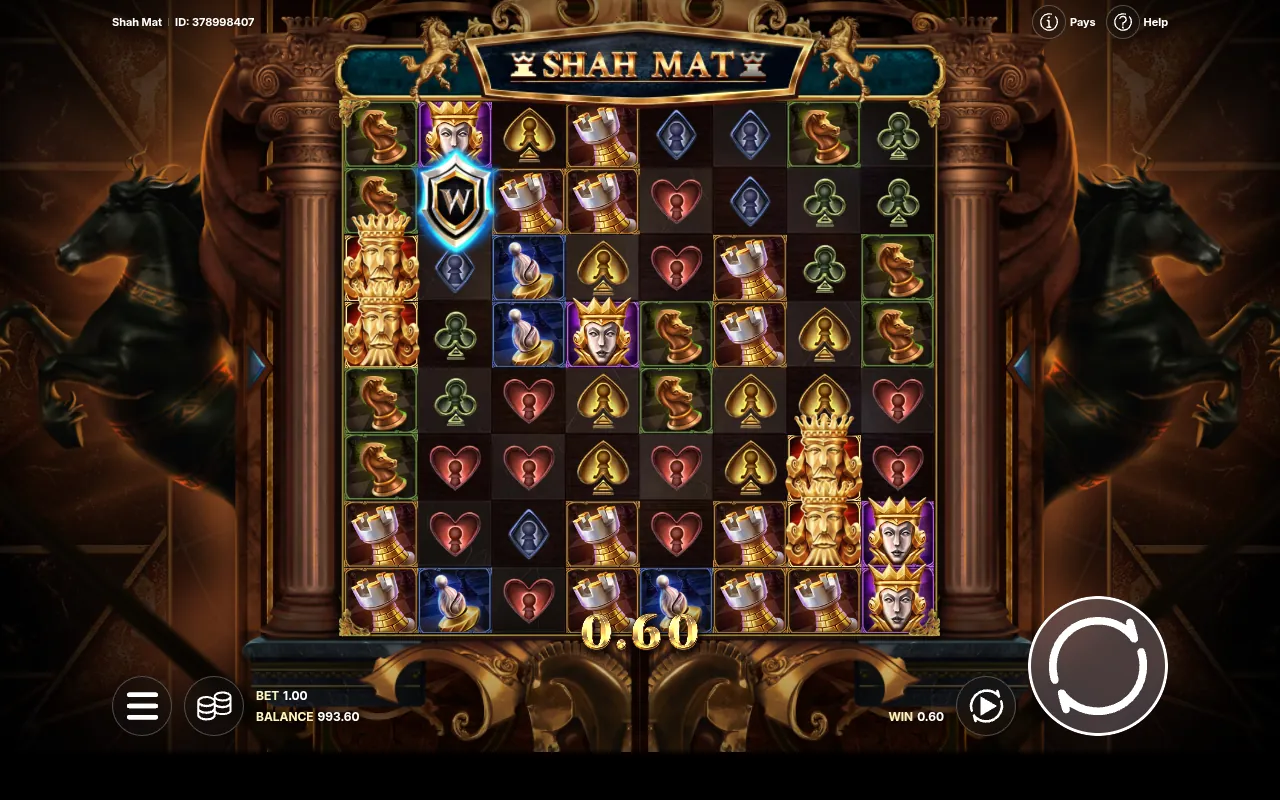
The cast is the royal court itself. The King, Queen, Rook, Bishop and Knight pay as the high symbols, with the four card suits making up the low end. The wild is a shield that substitutes for all paying symbols, and it sticks around after taking part in a winning cluster rather than disappearing with it.
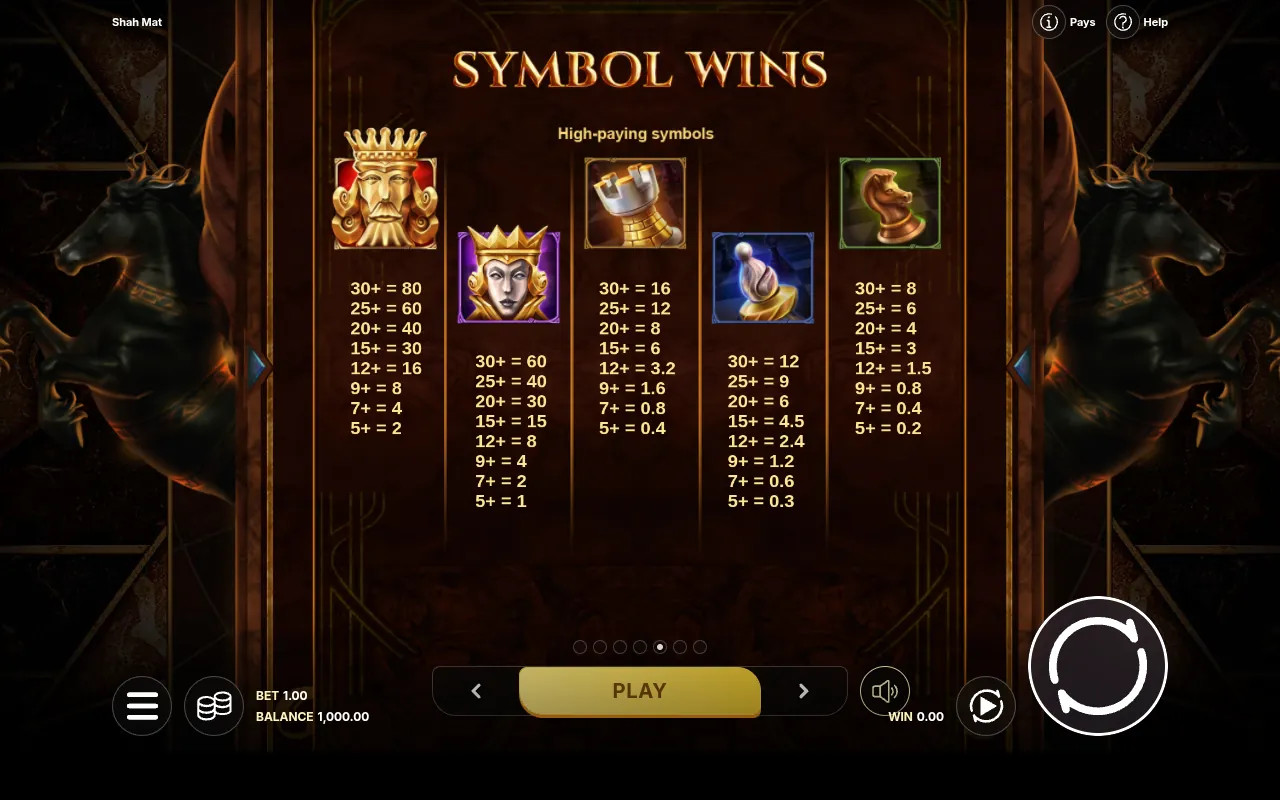
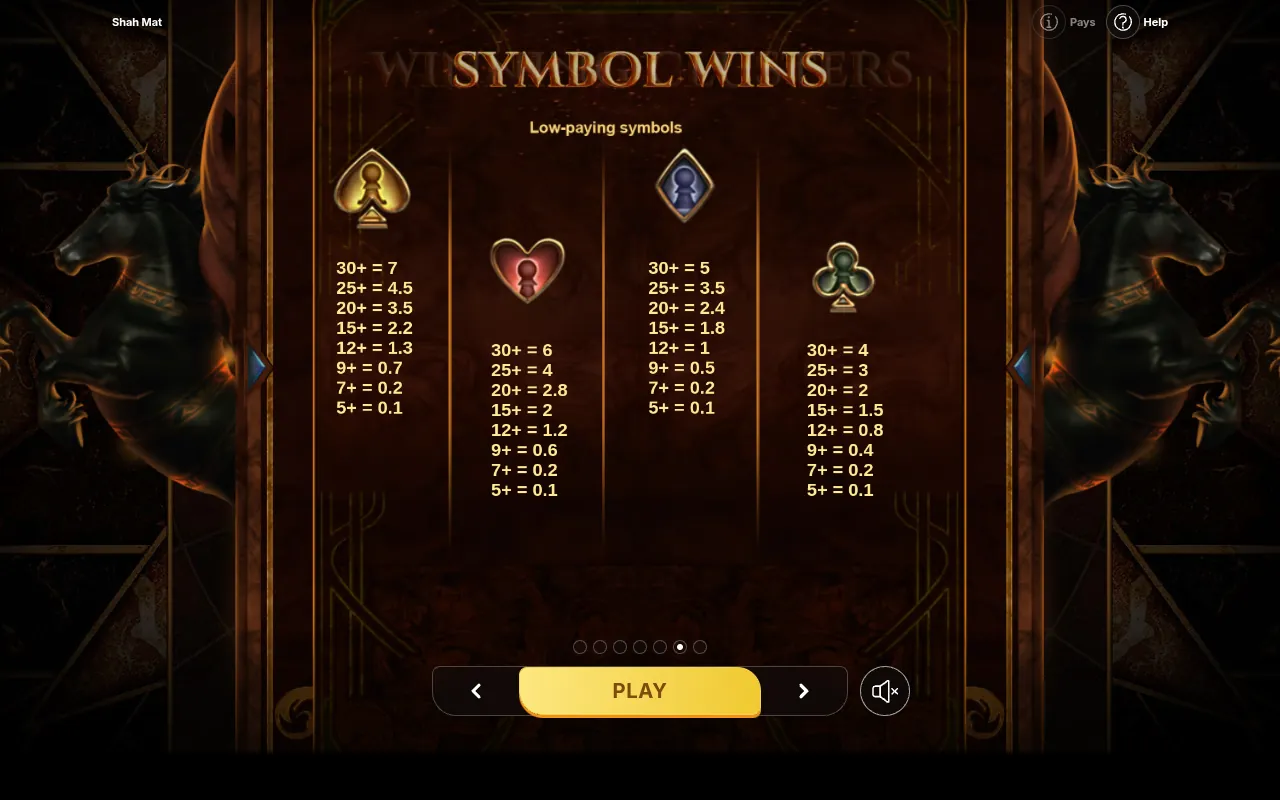
Wins land on 18.82% of spins. All pays are multiples of the total bet, scaling with cluster size across eight tiers:
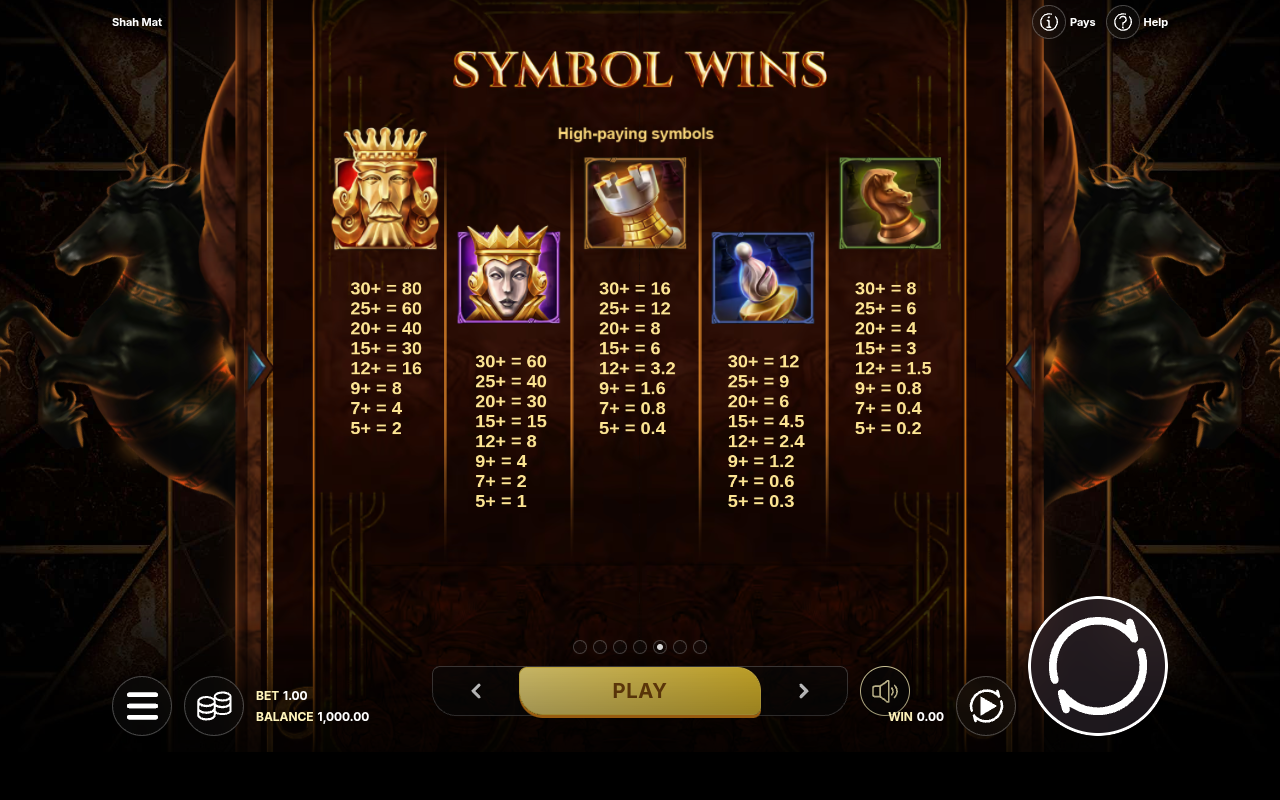
- King: 2x for 5, 4x for 7, 8x for 9, 16x for 12, 30x for 15, 40x for 20, 60x for 25, 80x for 30
- Queen: 1x for 5, 2x for 7, 4x for 9, 8x for 12, 15x for 15, 30x for 20, 40x for 25, 60x for 30
- Rook: 0.4x for 5, 0.8x for 7, 1.6x for 9, 3.2x for 12, 6x for 15, 8x for 20, 12x for 25, 16x for 30
- Bishop: 0.3x for 5, 0.6x for 7, 1.2x for 9, 2.4x for 12, 4.5x for 15, 6x for 20, 9x for 25, 12x for 30
- Knight: 0.2x for 5, 0.4x for 7, 0.8x for 9, 1.5x for 12, 3x for 15, 4x for 20, 6x for 25, 8x for 30
- Spade: 0.1x for 5, 0.2x for 7, 0.7x for 9, 1.3x for 12, 2.2x for 15, 3.5x for 20, 4.5x for 25, 7x for 30
- Heart: 0.1x for 5, 0.2x for 7, 0.6x for 9, 1.2x for 12, 2x for 15, 2.8x for 20, 4x for 25, 6x for 30
- Diamond: 0.1x for 5, 0.2x for 7, 0.5x for 9, 1x for 12, 1.8x for 15, 2.4x for 20, 3.5x for 25, 5x for 30
- Club: 0.1x for 5, 0.2x for 7, 0.4x for 9, 0.8x for 12, 1.5x for 15, 2x for 20, 3x for 25, 4x for 30
Reading the ladder top to bottom tells you how the game is shaped. The King is worth twice the Queen at every tier, and the Queen out-pays the whole low end combined at the top tiers. Below the Knight, the four suits cluster within a fraction of a multiple of each other, so it’s the court symbols doing the paying.
The jump from five symbols to thirty is where the money is, and the ladder is steep right across the cast. Since cascades grow clusters mid-spin rather than starting from scratch, the bigger tiers are reachable within a single run of wins.
Super Symbols
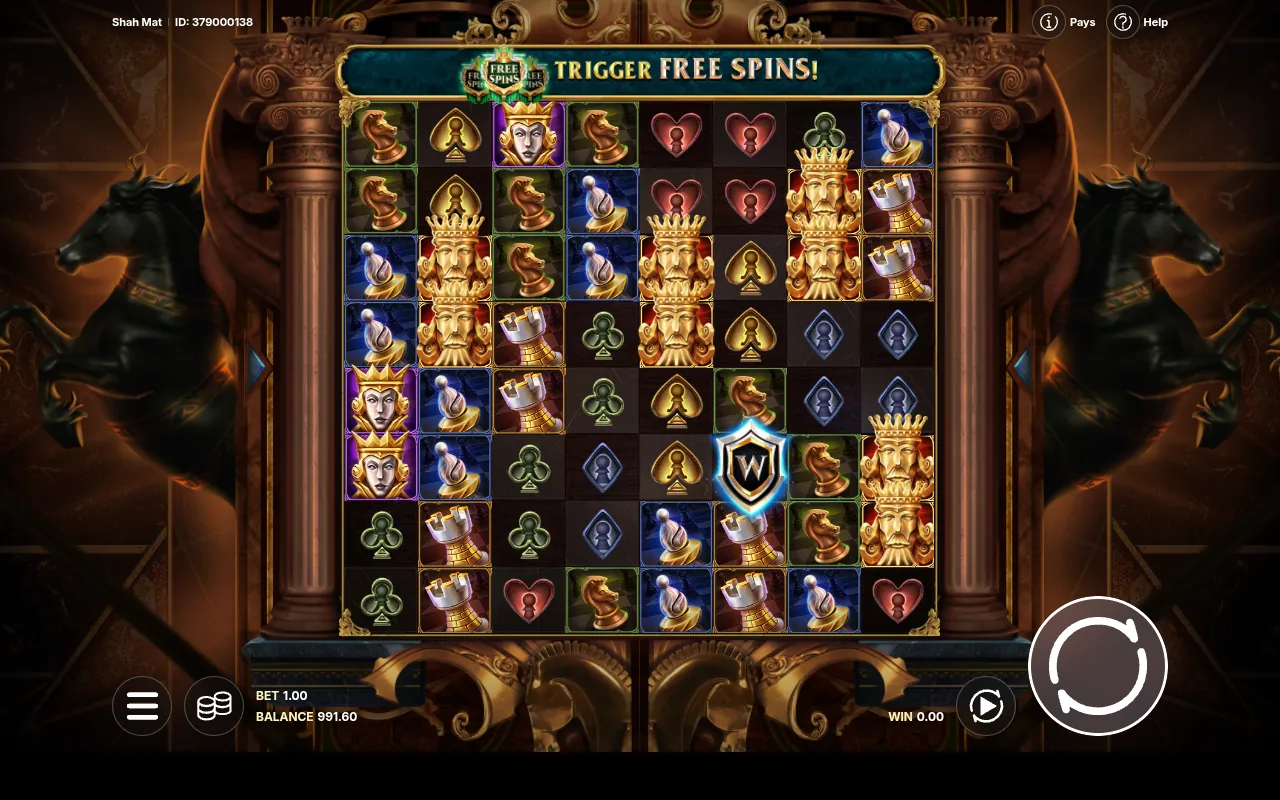
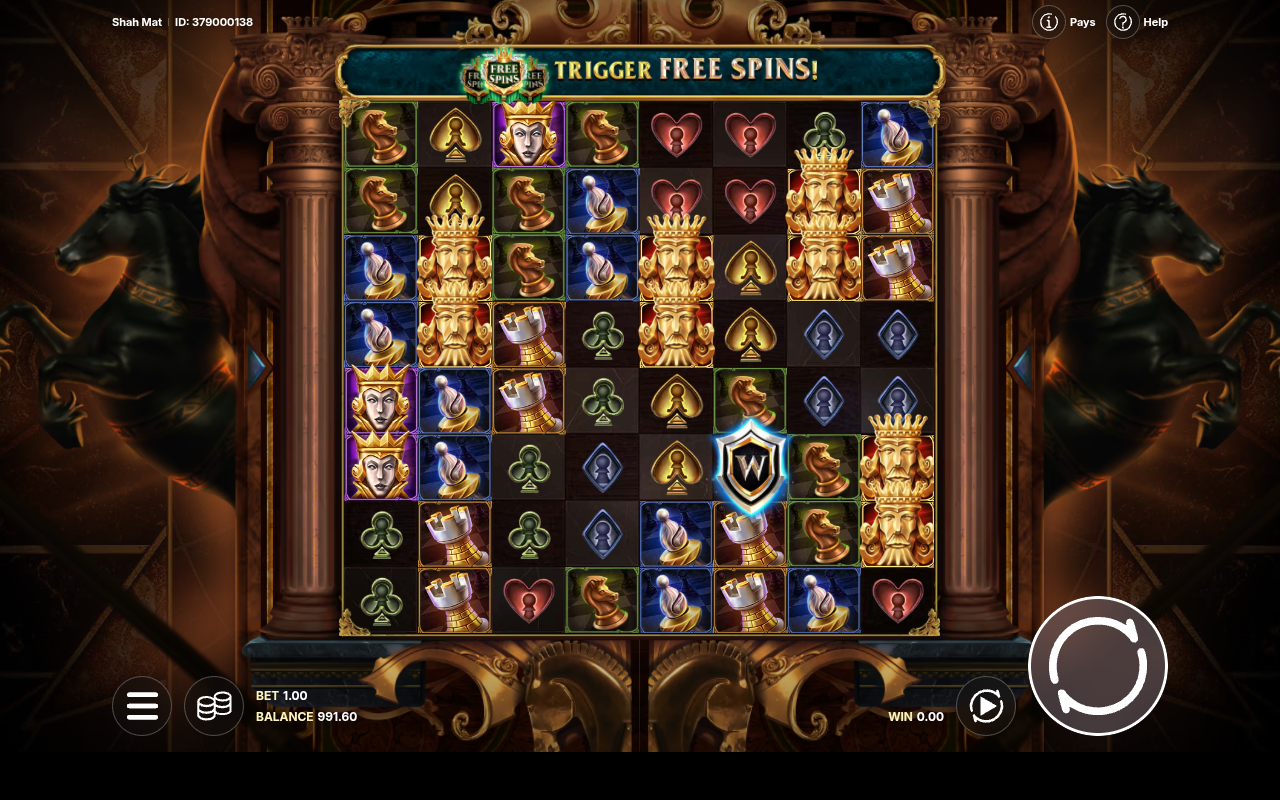
Every high-paying symbol can also appear in oversized form. The King, Queen, Rook, Bishop and Knight each come in 2×2, 3×3 and 4×4 Super versions, which cover more of the 7×7 grid and make larger clusters considerably easier to assemble.
The scaling is dramatic. A 3×3 Rook puts nine symbols on the board where a regular one puts a single tile, and a 4×4 Super covers sixteen.
That size feeds straight into the cluster tiers. One 4×4 King plus a handful of regular Kings is already close to the 20-symbol tier, a cluster that would take most of the grid to build from singles.
Wild Merge
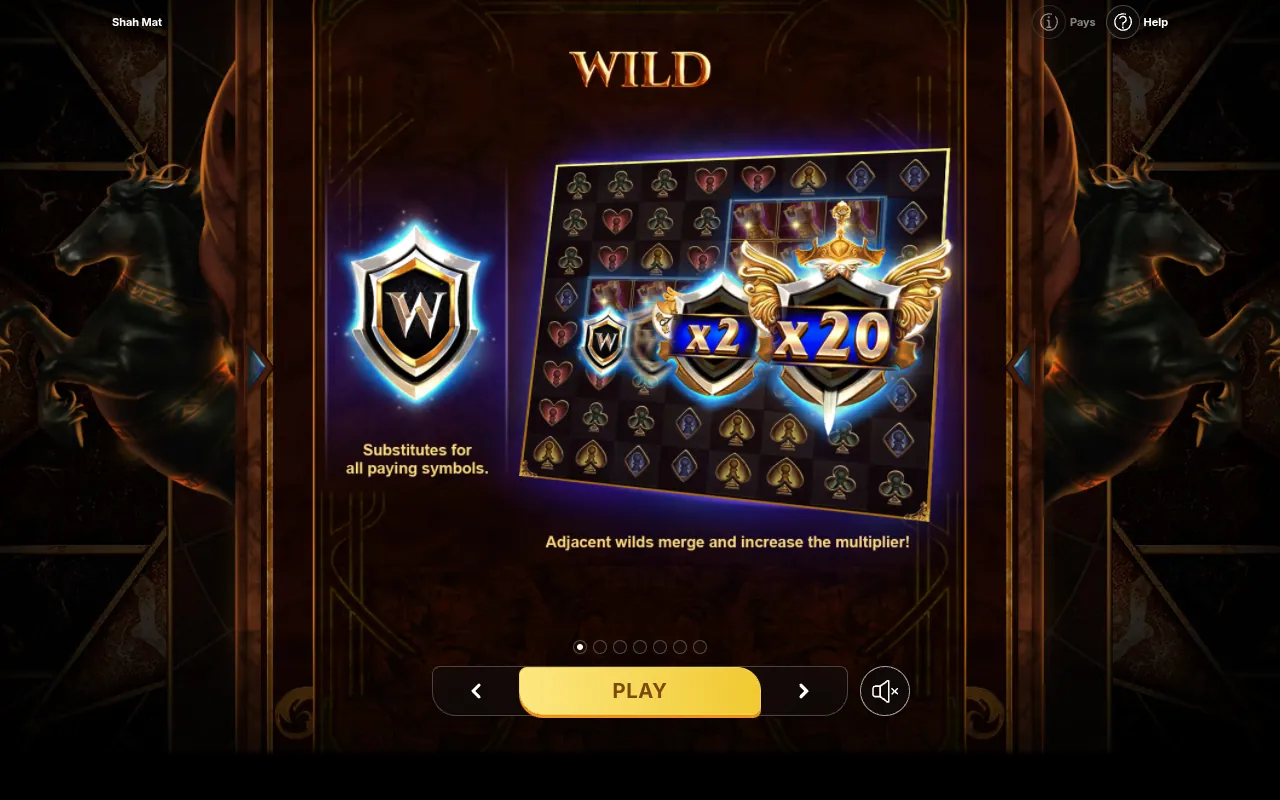
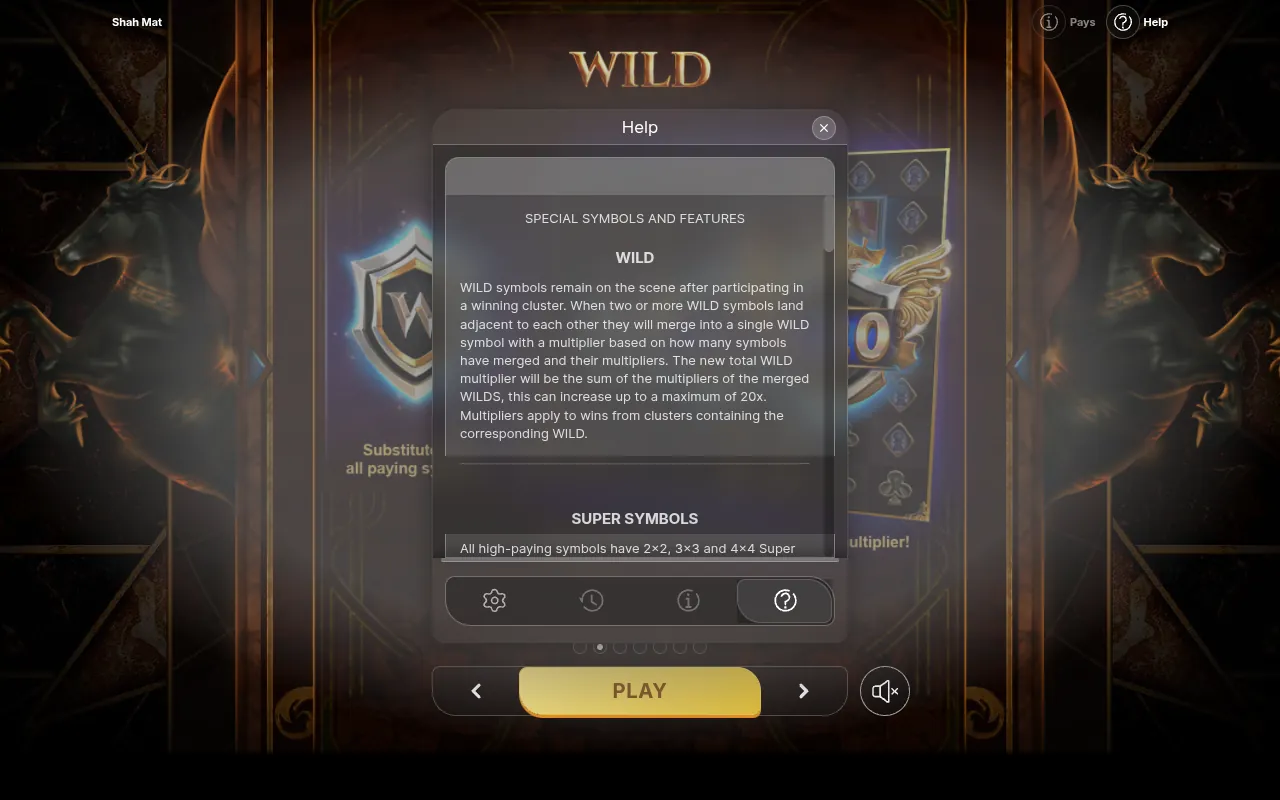
This is the feature the game is built around. Wilds don’t vanish once they’ve helped pay a cluster; they stay on the grid. When two or more wilds land adjacent to each other, they merge into a single wild carrying a combined multiplier.
The new total multiplier is the sum of the merged wilds’ multipliers, and it can climb as far as 20x. That boosted value then pays out on any win formed by a cluster containing the merged wild, instead of the flat one-for-one substitution a single wild gives.
Cascades are what make the merging reachable. Each clearing drops fresh symbols over the surviving wilds, and wilds left sitting near each other after a settle combine on the spot.
A long run of wins can therefore end with one fat, multi-merged wild in the middle of the board, applying its total to whatever cluster it joins next. That’s the game’s best trick.
The cap matters more than it looks. A 20x multiplier riding the top King cluster would blow past the game’s ceiling on its own, so the 4,323x maximum is doing the real limiting. Most merges are far smaller, which keeps the arithmetic honest.
Free Spins and Bonus Spins
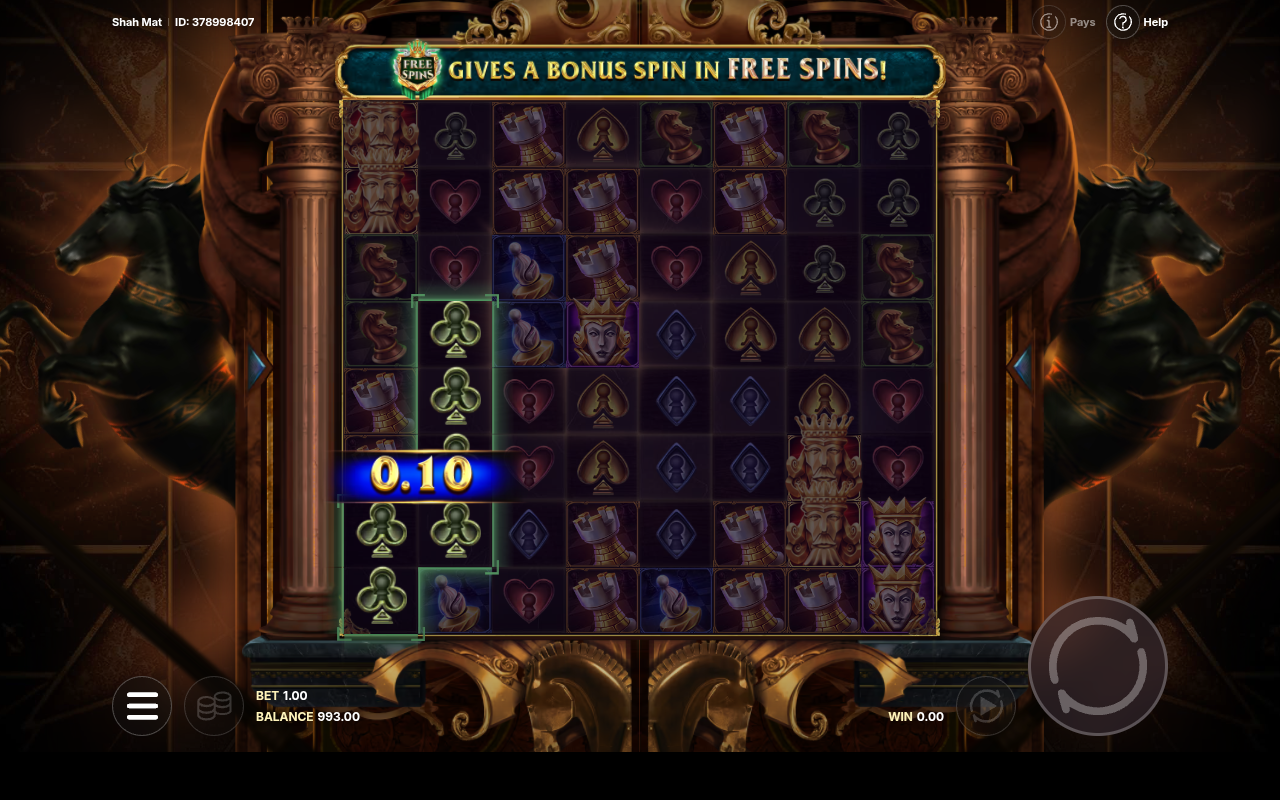
Shah Mat also runs a free spins round, and within it a dedicated FREE SPINS symbol can appear. When it does, it awards an additional bonus spin on top of the round’s tally, extending the session without needing a fresh trigger.
The round plays on the same 7×7 grid with the same cluster and cascade rules, so everything the base game teaches carries over. Super Symbols still land, and the wild merge mechanic still runs underneath the round.
The bonus spin symbol is the round’s own twist. Free spins rounds usually end on a fixed count; here every appearance of the symbol adds one more, so a lucky run of them stretches the round further than the triggering tally alone.
Our Honest Verdict
Overall Rating: 7/10
Playing Shah Mat is a long game in the chess sense: patient, mostly quiet, and then a run of cascades where the board suddenly turns in your favour. The reason to choose it is that moment when a surviving wild soaks up a second and a third, and every fall of the symbols carries a little more weight.
The Wild Merge is the best thing in it, and by some distance. A multiplier you build across a run of wins, rather than one you’re handed, gives the base game a shape most cluster slots don’t have. The weakness is everything around it. The free spins round adds almost nothing beyond a bonus-spin symbol, and a 4,323x ceiling is small for a game built on escalation.
This suits players who enjoy the slow build and don’t need a big number at the end of it to justify the session. Anyone chasing large max wins or a bonus round with its own identity will find the court here a bit too quiet. For the patient, though, the amber-lit board rewards sitting down properly, like a chess player who plans past the opening.
Shah Mat FAQs
-
What is the RTP of Shah Mat?
95.79% -
How does the Wild Merge feature work in Shah Mat?
Wilds stay on the grid after taking part in a winning cluster. When two or more wilds land next to each other they merge into one wild whose multiplier is the sum of the merged wilds’ multipliers, up to a maximum of 20x. The boosted value pays on any win formed by a cluster containing that wild. -
How do winning clusters form in Shah Mat?
A symbol is part of a cluster if it lands horizontally or vertically adjacent to a matching symbol. Five or more identical symbols in a cluster award a win, and winning clusters disappear so the symbols above can fall into place for further wins. -
What are Super Symbols in Shah Mat?
All of the high-paying symbols, the King, Queen, Rook, Bishop and Knight, can appear as oversized 2×2, 3×3 and 4×4 Super versions covering more of the 7×7 grid. -
What is the maximum win on Shah Mat?
4,323x your total bet. -
What is the hit frequency of Shah Mat?
18.82%. -
What is the grid size of Shah Mat?
A 7×7 grid with cluster pays rather than paylines. -
Who makes Shah Mat?
Red Tiger.