





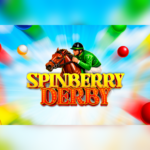
Spinberry Derby Slot Review
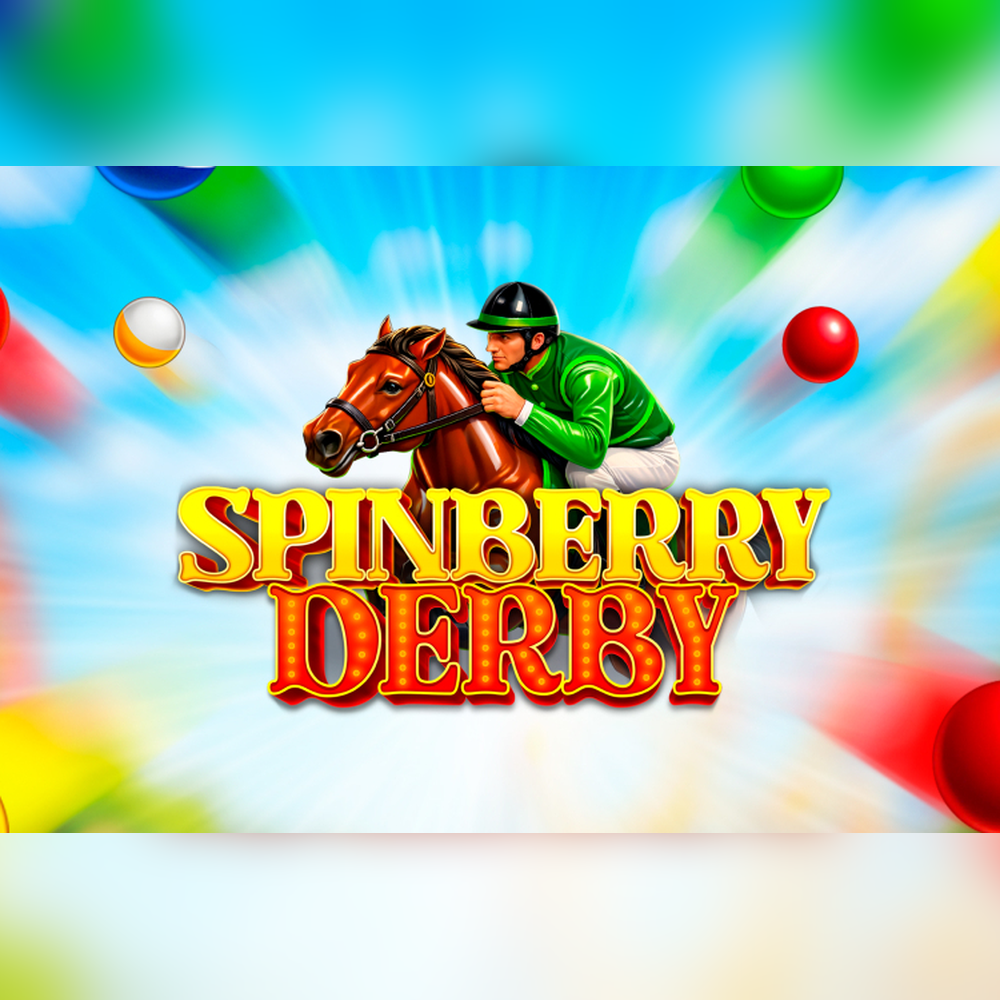
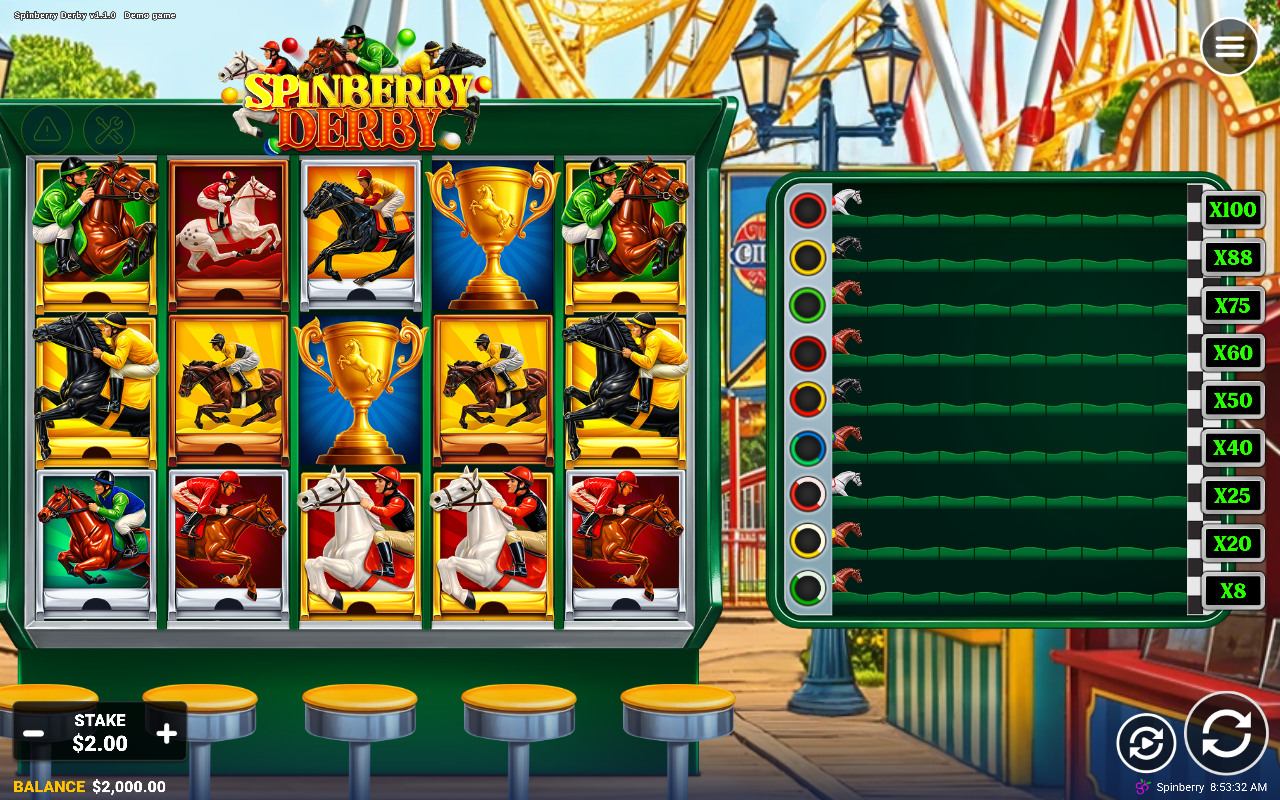
A wooden rollercoaster loops across the sky behind a green-painted sideshow stall, bar stools lined up on the boardwalk as if the punters just stepped away. It’s a lovely pier to look at, but Spinberry Derby’s real trick is what it does with the small wins: every one moves a horse down the track beside the reels, so even the cheapest line counts towards something.
It’s a Spinberry build, from a catalogue that also includes Oktoberfest Take It or Build It and Super Hot Flaming Jesters. The game runs on a 5×3 grid with 10 independent win lines, and there’s no free spins round anywhere in it. Instead, the Derby Feature pays a ladder of multipliers climbing to 100x, and no maximum win figure is published, so that ladder is the ceiling.
Base Game & Features
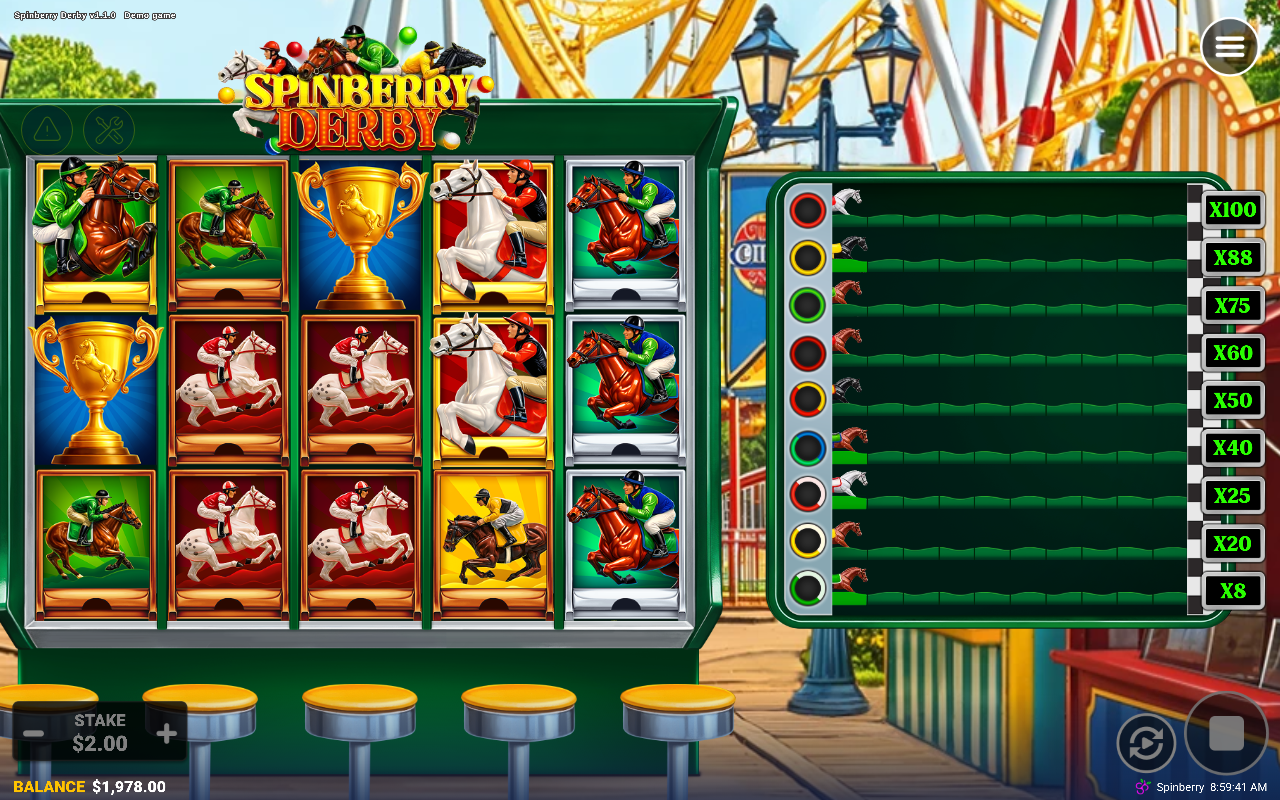
The reels sit inside the sideshow cabinet, and the symbols are the race itself. Rather than card royals, the paytable is built from horse and jockey pairs, each combination carrying its own colour scheme, and some shown mid-jump. Wins pay left to right across the 10 lines, with only the highest combination on each line counting.
There’s no wild in the traditional sense. The jumping symbols are simply higher-value versions of their standing counterparts, so the closest thing to a special symbol is the top-paying trio of horse and jockey combinations that also happen to be the runners on the racetrack.
Two of those top symbols from the left is enough to get paid, which is unusual for a five-reel layout and softens the base game considerably. It also means the premium tier has two entry points: a cheap two-of-a-kind nudge and the full five-of-a-kind payout. The lower tiers still need three matches minimum.
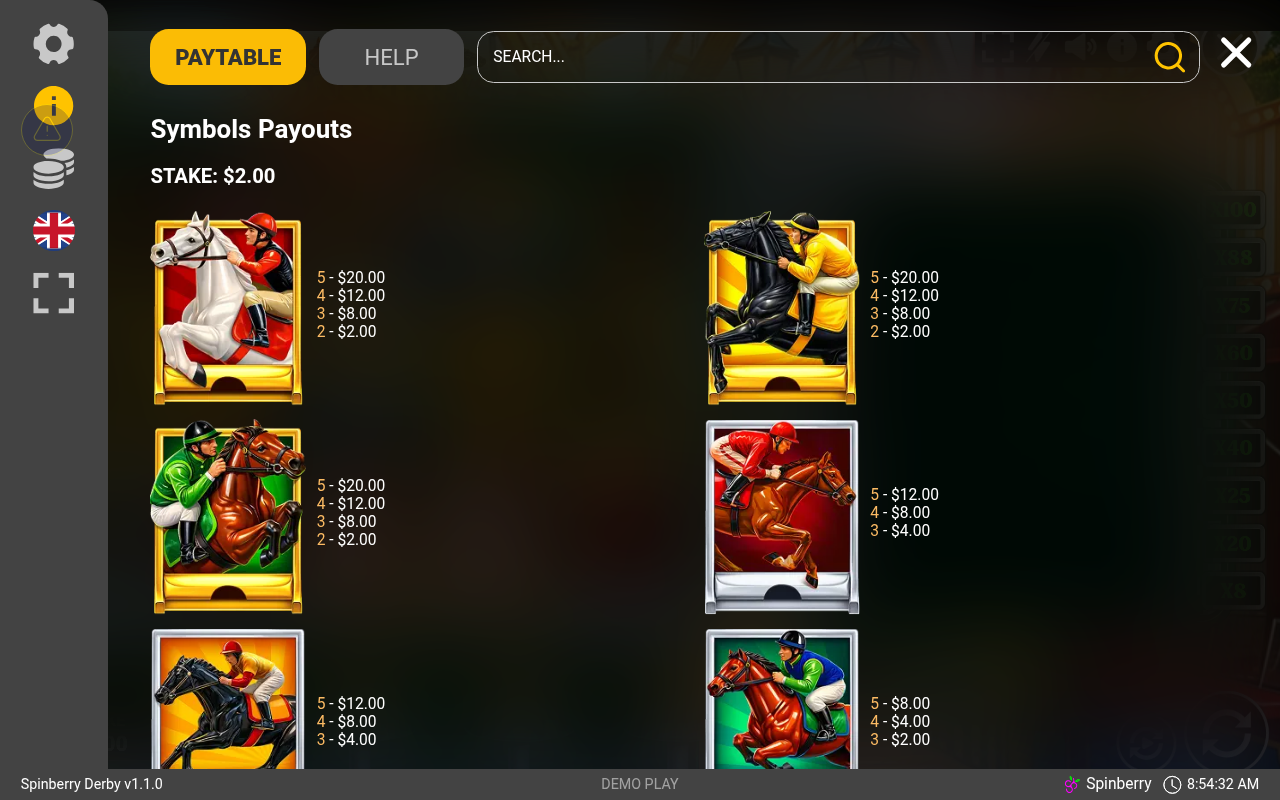
The paytable, as multiples of the line stake:
- White Horse/Red Jockey, Black Horse/Yellow Jockey, Brown Horse/Green Jockey: 1x for two, 4x for three, 6x for four, 10x for five
- Brown Horse/Red Jockey (jumping), Black Horse/Red Jockey: 2x for three, 4x for four, 6x for five
- Green Jockey/Blue Horse, White Horse/Red Jockey (jumping): 1x for three, 2x for four, 4x for five
- Yellow Jockey (jumping), Green Jockey (jumping): 0.5x for three, 1x for four, 2x for five
The gap between tiers is modest. The top symbol pays five times what the bottom tier does for a full line, which is a flat ladder by modern standards, and it tells you the base game isn’t where the money in this release lives. That job belongs to the racetrack on the right of the cabinet, which brings every win into play whether it’s big or small.
Even the lowest-tier three-of-a-kind moves its horse forward. A 0.5x win is still a win, and the race doesn’t care about size, only frequency. That reframes what a low-value line is worth here: the paytable looks flat until you notice that every symbol is also a vote for one of the runners.
Because the two-of-a-kind rule applies only to the top trio, the cheapest route into the race is also the most lucrative per line. A single White Horse/Red Jockey pair returns the line stake and nudges its runner forward, while three of the bottom-tier jumping jockeys return half the stake and do nothing for the board at all.
The premium symbols are doing three jobs at once: paying the most, starting earliest, and driving the only feature the game has. Symbol choice becomes less about value and more about which runner you’re backing.
Spinberry Derby Bonus Features
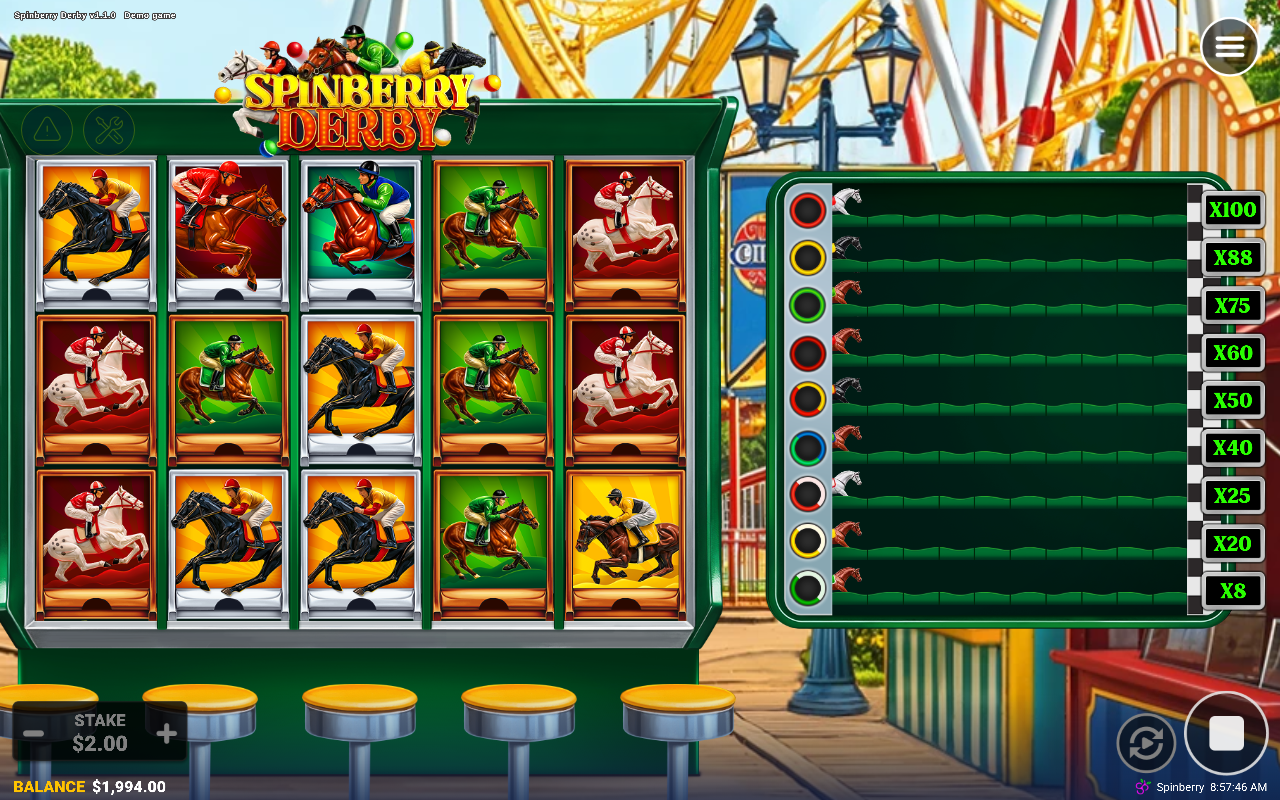
The Derby Feature is the game. Each time a win line occurs, the horse corresponding to that line’s symbols moves forward on the racetrack mounted beside the reels. It’s a persistent-progress system running continuously through normal play rather than a triggered round, so the race is always on.
A horse needs 10 winning lines of its own to cross the finish line. When one does, the multiplier attached to that horse is awarded and applied to the current stake. The possible multipliers are:
- x100
- x88
- x75
- x60
- x50
- x40
- x25
- x20
- x8
Ten wins to trigger means the feature is a long build. The top three symbols on the paytable are also the horses on the board, so the animals that pay best per line are the ones you’re trying to stack wins on. The cheaper jumping jockeys that fill the bottom tier don’t advance any runner at all.
Every spin is therefore doing one of two things: feeding a horse or paying pocket change. That split shapes the whole session rhythm. When the premium symbols dry up, the race stalls entirely, no matter how many small jockey wins land.
The race pays one multiplier on one stake when it resolves, and then the board resets for the next running. Because the award applies to the current stake rather than accumulating line wins, the feature rewards consistency far more than it rewards any single big hit.
There’s no bonus buy, no free spins, no second screen. The Derby Feature is the entire event programme, and everything else on the cabinet exists to feed it. That single-feature focus will read as thin to anyone used to a wheel, a hold-and-win and a pick’em in the same game, but it does mean nothing here is filler.
The ladder itself is worth a close look. It isn’t evenly spaced: the gaps between rungs widen as it climbs, with x8 and x20 at the bottom, a cluster of x25 through x60 in the middle, and x75, x88 and x100 at the top. Which horse carries which multiplier isn’t fixed by the paytable order, so the race board matters as much as the reels when you’re deciding where a lucky streak is heading.
Our Honest Verdict
Overall Rating: 7.1/10
A session here feels like standing at a seaside race booth with a pocket of small change: you’re not waiting on a jackpot, you’re waiting on a horse you’ve been feeding to finally come in. That’s what would draw somebody to this one, and it’s a real pull, because the always-moving board gives even a quiet run something worth watching.
The racing is also the best thing about it, because it makes a paytable that shouldn’t matter feel urgent. Ten wins into a race, a two-of-a-kind pair turns into the most important symbol on the screen. The flip side is that one horse crossing the line is the entire show: collect the multiplier and the board resets, the same race starts again, and there’s no second act anywhere in the cabinet.
It suits a slow, visible build and doesn’t need a feature menu to justify itself. Anyone after volatile bonus rounds will find it thin, but as a lazy afternoon on the pier goes, this booth runs a fair race.
Spinberry Derby FAQs
-
How does the Derby Feature work in Spinberry Derby?
Each time a win line occurs, the corresponding horse moves forward on the racetrack. A horse needs 10 winning lines to cross the finish line, and when it does, the multiplier attached to that horse is applied to the current stake. Possible multipliers range from x8 up to x100. -
How many winning lines does a horse need to finish the race?
Ten. You must accumulate 10 winning lines for the same horse for that horse to reach the finish line and award its multiplier. -
Does Spinberry Derby have free spins?
No. The Derby Feature is the game’s only feature, and it runs continuously through normal play rather than as a triggered free spins round. There’s no bonus buy either. -
Which symbols advance a horse on the racetrack?
The top three symbols on the paytable, the horse and jockey combinations. The cheaper jumping jockey symbols at the bottom of the paytable don’t advance any runner, so only premium symbol wins make progress in the race. -
What happens after a horse crosses the finish line?
The multiplier attached to that horse is applied to your current stake, and the board resets for the next running. The award is a single multiplier on your stake, not an accumulation of the line wins that got the horse there. -
How many paylines does Spinberry Derby have?
Spinberry Derby has 10 independent win lines across its 5×3 grid. Only the highest combination on each line counts. -
When is Spinberry Derby released?
Spinberry Derby’s release date is 8 October 2026. -
Who makes Spinberry Derby?
Spinberry. It sits alongside their titles like Oktoberfest Take It or Build It and Super Hot Flaming Jesters.