
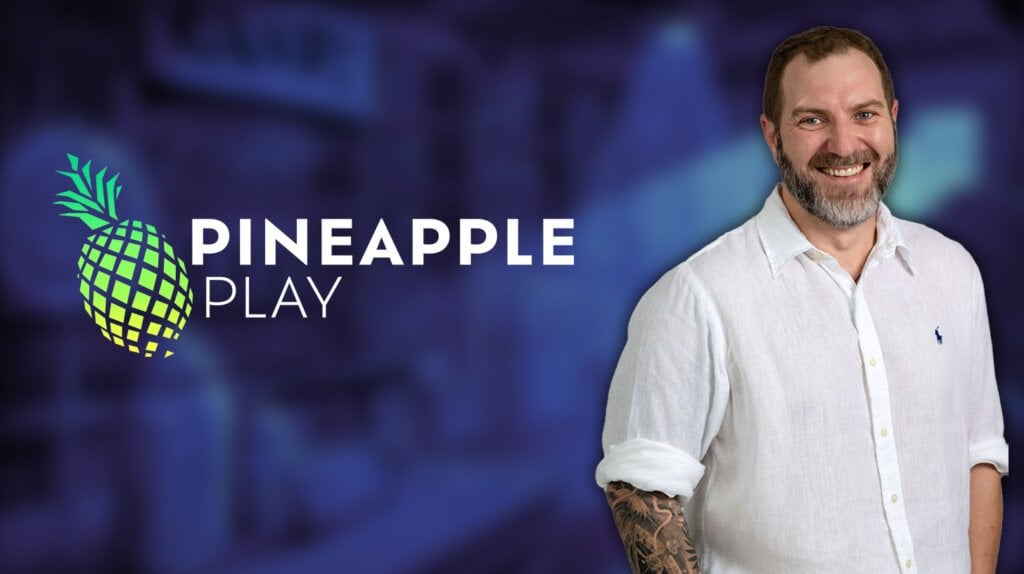








Maya: Thanks for chatting with us today! For players who haven’t come across Pineapple Play yet, who are you?
Cameron: Pineapple Play is an independent slot studio based in Brisbane. Our fourth game release Hangovers & Holidays, is out on 28 October 2026, following Coconut Chaos, Midnight Mirage and Toothrot Tilly which was released in September 2026.
Every game we make starts with a story. We build the world and the characters first, then design features that belong in that world. That way, each release is a game that takes you somewhere, not just a set of features on a grid.
Maya: Being a young independent studio on a platform alongside Hacksaw’s own titles is great exposure. How has that partnership played out for you so far?
Cameron: Distribution is one of the biggest challenges a new studio faces as you can have the best game in the world but players need to be able to find it. When we met with Hacksaw, we knew they were the right distribution partner for us. We have a similar culture, appreciation for originality, and we retain full creative freedom over game design.
Having had the benefit of Hacksaw’s extensive distribution reach has been a game changer for a small studio like ours.
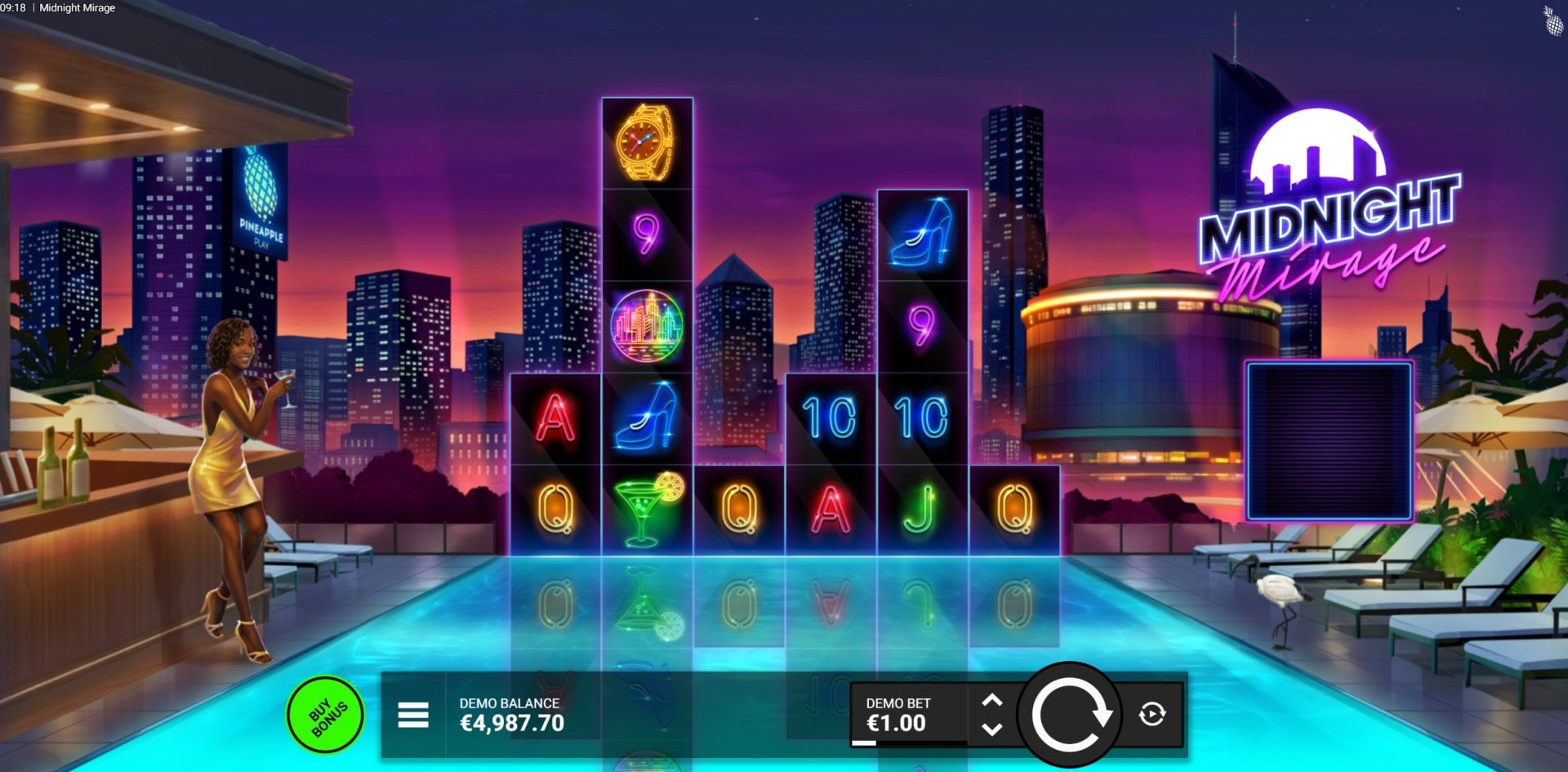
Maya: So far, you’ve done a tropical island in Coconut Chaos, a neon roof-top bar in Midnight Mirage, and recently, Toothrot Tilly. Every game feels totally different. Is jumping between worlds part of the Pineapple Play plan, and what’s the common thread that makes them all feel unmistakably yours?
Cameron: Yes, it’s very much on purpose. We design each game to be unique but make sure that our games can be recognised.
This is by the characters that have a bit of attitude, a sense of humour that runs through the theme, and the quality of the production with art, animation and audio all built from scratch for every game. Every game also carries a nod to our tropical roots.
There’s a deeper thread connecting our games too, and it’s more deliberate than it might look from the outset. We’ll share more on that soon!
Maya: Midnight Mirage went to 25,000x with high volatility, while Toothrot Tilly and Hangovers & Holidays both sit at 10,000x. How do you decide on the maximum win and volatility for each release?
Cameron: All our games start with an origin story, and that story largely drives the design of the features and feel of the game.
Decisions on max win and volatility are part of that wider design process. When a game’s big moments come from stacking higher value features, it may mean longer gaps between wins, with bigger payout potential when they land leaning to higher max win and higher volatility. Ultimately, the decision is made in the context of the game.
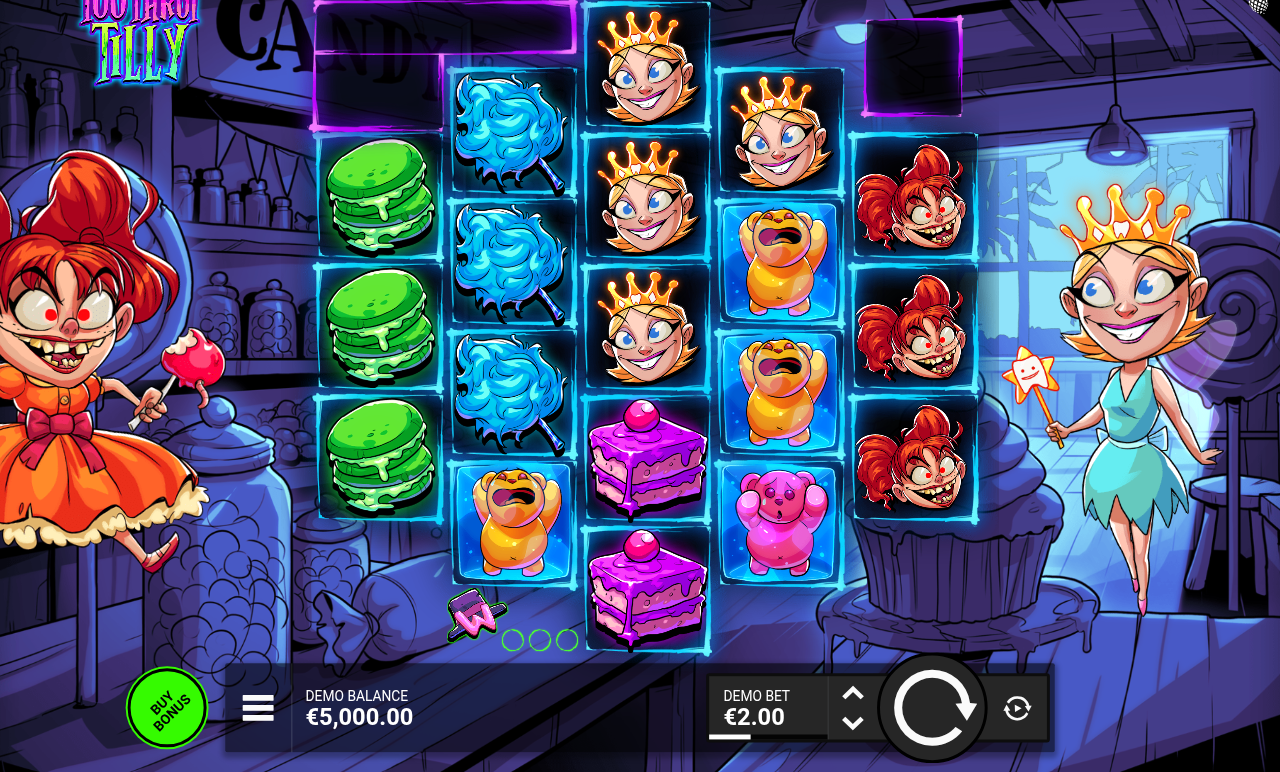
Maya: Toothrot Tilly is actually probably my favourite release so far! Where did that idea come from, and how did you go about building mechanics like the Molar Reel around the dental theme?
Cameron: That’s so good to hear, thank you! Tilly started with a market full of candy games and us wanting to do something different. We wanted to bring some fun to the theme and take players on a journey. We followed the sugar far enough and ended up at teeth. Teeth lead us to the Tooth Fairy who needed a sweet tooth rival, Tilly.
Once we had our characters, they drove the features. We wanted players to pick a side and cheer on their favourite, and that’s where the beam battle in the bonus really shines. It also gave each character their own features. Sticky Fingers is Tilly’s move, grabbing every Wrapped Candy and Wrapped Chocolate on the grid. Fairy Flick and Sugar Swirl belong to the Tooth Fairy, flicking symbols off the grid or turning them into other symbols.
There’s a lot going on visually, so the Molar Reel helps players see exactly what’s happening on the grid. And if we were adding a reel, it had to be a tooth.
Maya: Your upcoming release, Hangovers & Holidays, is packed with personality and some pretty chaotic mechanics. What was the inspiration behind it?
Cameron: Every summer, half of Australia packs up the backyard and heads off on holiday. Hangovers & Holidays is inspired by that great Aussie tradition. It’s a story about mates, love, family and the holiday spirit, led by Billy, a laid-back, fun-loving Aussie. We wanted a game that captured that feeling: cheeky, warm and full of fun.
The base game is Billy’s suburban backyard in the middle of summer, with the barbecue sizzling and a car in the driveway. The mechanics grew straight out of that story, with the people in Billy’s life bringing the features to life.
Maya: There’s a lot going on in Hangovers & Holidays with layered mechanics that can interact with one another. How did you go about making sure all these features worked together, rather than feeling disjointed?
Cameron: The theme and story tie everything together. Every feature belongs to someone in Billy’s world, so none of the features were just bolted all. Because each feature has its own clear trigger through the Character Reel and Trigger Reel, players can always see what’s happening and why.
And we played it, a lot. Combinations like Burnout and Spread the Love in the same spin are where the game is at its best, so we spent a lot of time making sure those moments read clearly on screen.
Maya: The Character Reel gives us a Friend, a Girlfriend and Dad, why those three characters, and how did you decide which character and trigger went with what feature?
Cameron: Together they cover the heart of the story, which is mates, love and family. Once we had them, the pairings picked themselves. We matched each character with the item that says the most about them.
The Friend and the car keys, triggering Burnout, where a whole reel turns Wild. The Girlfriend and a heart, for Spread the Love, where multipliers of up to 100x can appear across the grid. The Dad and plane tickets, triggers the Daddy’s Dime bonus game, and it’s why the free spins are Billy’s tropical getaway.
The pairings also make the features easy to read. When a character lands with their item, players know straight away which feature is coming, and why.
Maya: The Cooler Box counts every Beer symbol that lands. What made you decide to reward players for collecting beers rather than going down the more traditional route of a standard win multiplier?
Cameron: The Cooler Box accumulates a spin multiplier where every beer that lands on the grid is counted, whether it’s part of a win or not. The total builds up across the whole spin. Land eight beers and the total win for that spin is multiplied by 2x. Every two beers after that adds another 1x, so ten beers gives 3x, twelve gives 4x, and so on.
Rather than a standard multiplier, we let Billy’s esky do the counting. It’s a bit of fun, and it fits right in with the backyard bbq.

Maya: Finally, once the hangover has worn off, can you give us a sneak peek into what’s coming next from Pineapple Play? Will we need paracetamol?
Cameron: We’ve got a busy roadmap and some very different games on the way that we’re excited to share, so there’ll be plenty more to discover. No paracetamol required, we promise!
About Pineapple Play
Pineapple Play is an independent studio based in Brisbane, Australia, founded in 2024 and led by co-founder and CEO Cameron Fraser. The team brings more than 25 years of combined experience to the table, with art, animation, audio, and software all handled in-house.
With the tagline ‘games that take you somewhere,’ Pineapple Play prioritises engaging experiences that take players on a journey, with early releases like Coconut Mirage, Midnight Mirage, and Toothrot Tilly paying homage to the studio’s tropical roots while pushing bold ideas and creative mechanics.
For our full reviews, demos, and more on the studio’s background, head to our Pineapple Play provider page.


Comments