










Chronos Joker Slot Review
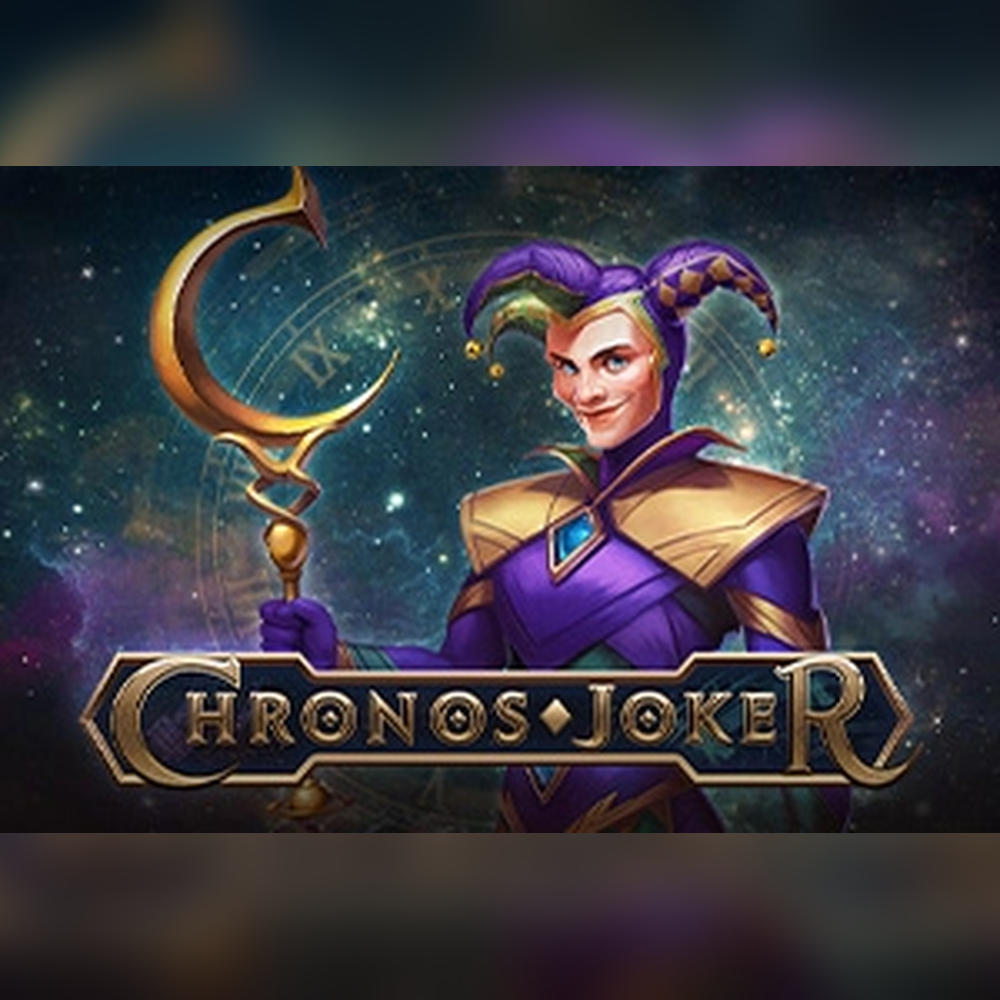
A brass cabinet floats in deep space, framed against a violet nebula, its corners curling outward like the whole machine has been bolted into the side of some cosmic clocktower. Chronos Joker looks like a pocket watch that learned to gamble, and the strange part is how seriously the game takes its own theme: the multipliers here aren’t random bonuses, they’re arranged along a timeline, and the weakest one on the panel is secretly the most valuable.
The studio behind it is Play’n GO, and it’s a compact 3×3 grid running at 96.54% RTP with mid to low volatility. It sits in the same joker family as Fire Joker Freeze and Ice Joker, though its multipliers work differently from either, and the clockwork theme is the reason why.
The Clockwork Cabinet
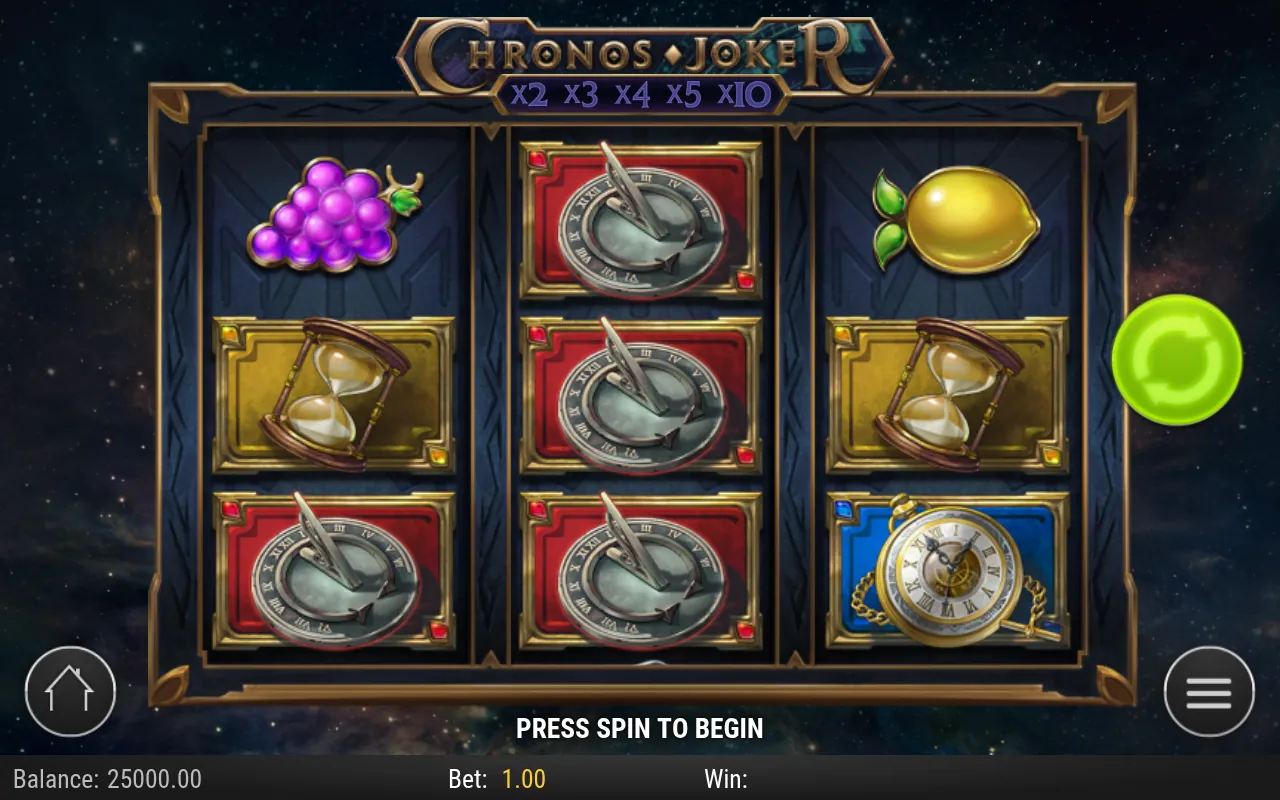
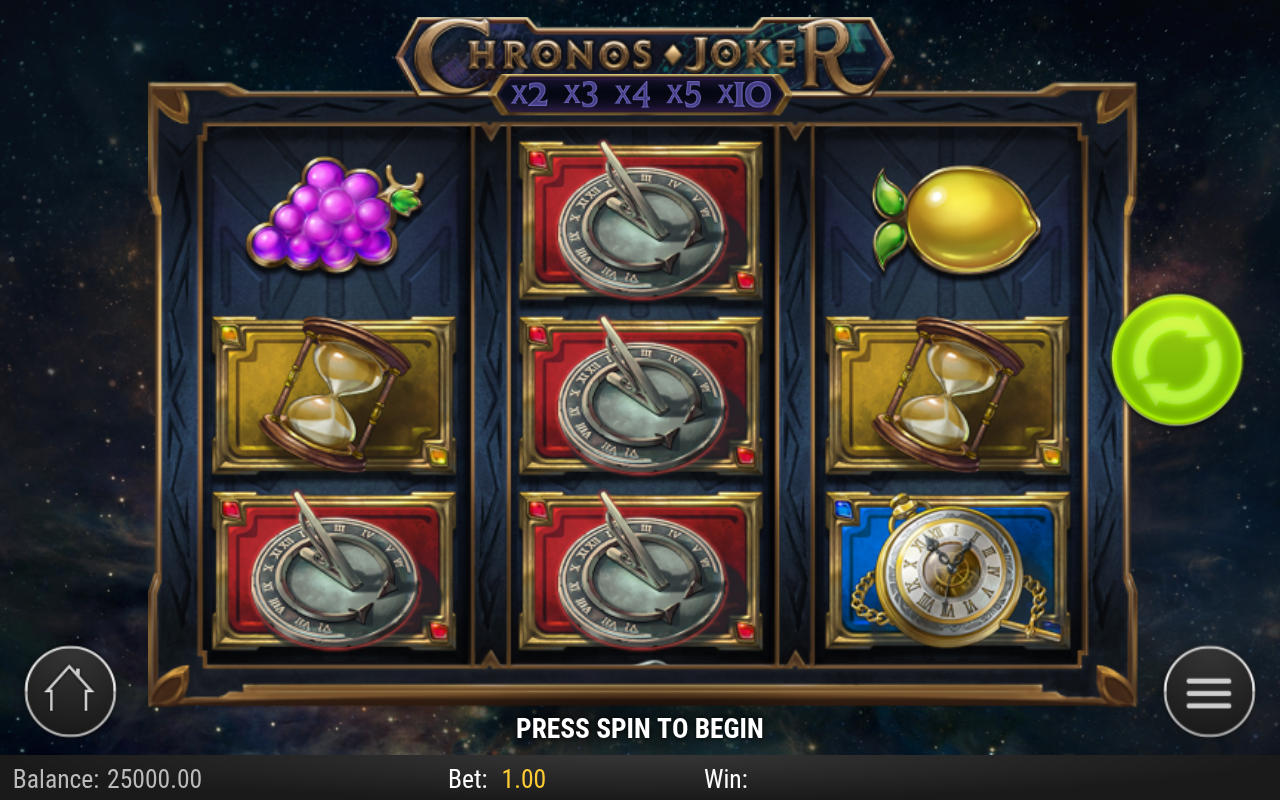
The presentation does more work than a 3×3 grid usually gets. Behind the reels, a deep blue-violet haze fades into black, scattered with pinpoint stars, and the cabinet itself is framed in bronze-gold with beveled edges and corner brackets that flare outward in curled metal ornaments. Dark navy inner walls carry a faint chevron etching running up the sides of the reels.
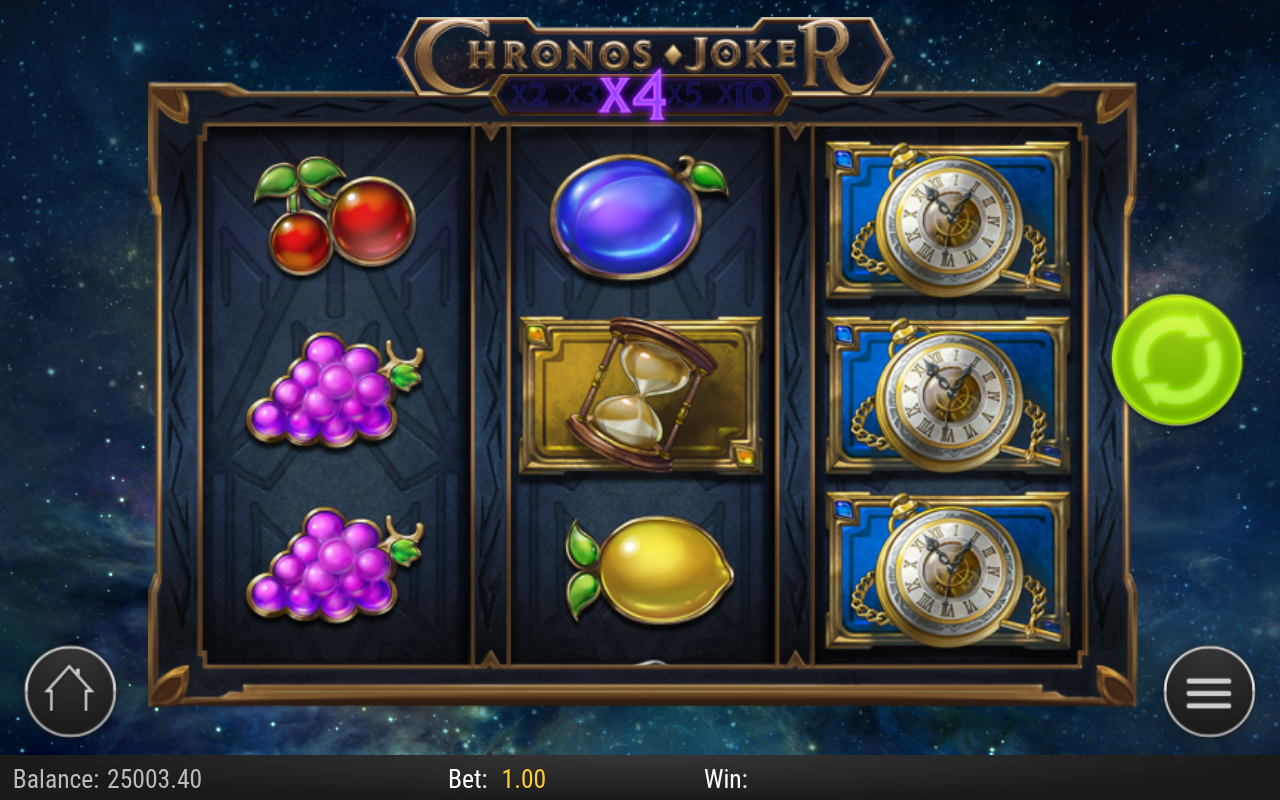
A thin bronze ledge runs along the bottom, with a ridge of gold trim sitting directly beneath the reels. Above them, the multiplier panel keeps watch: whatever multiplier is active on a spin shows there, so you always know what’s in play before the reels stop. It’s a small touch, but on a game built entirely around multipliers it matters.
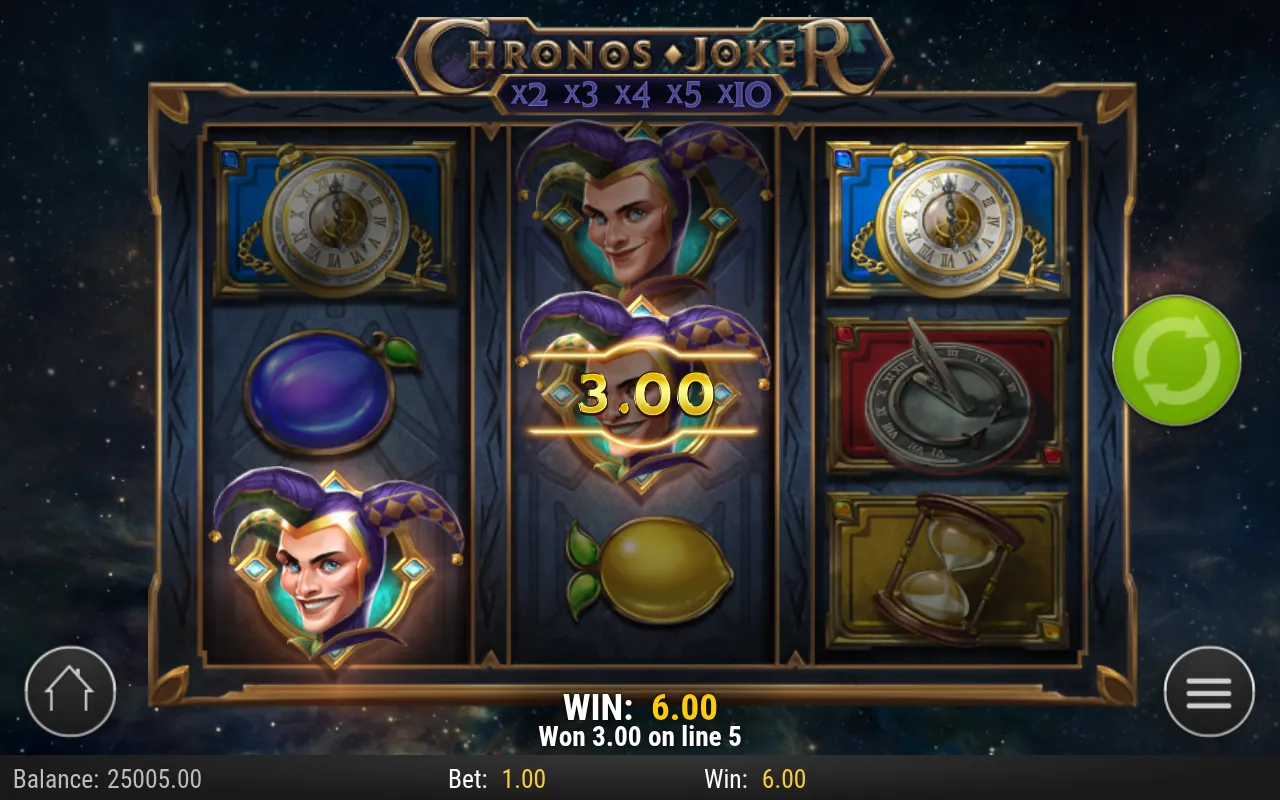
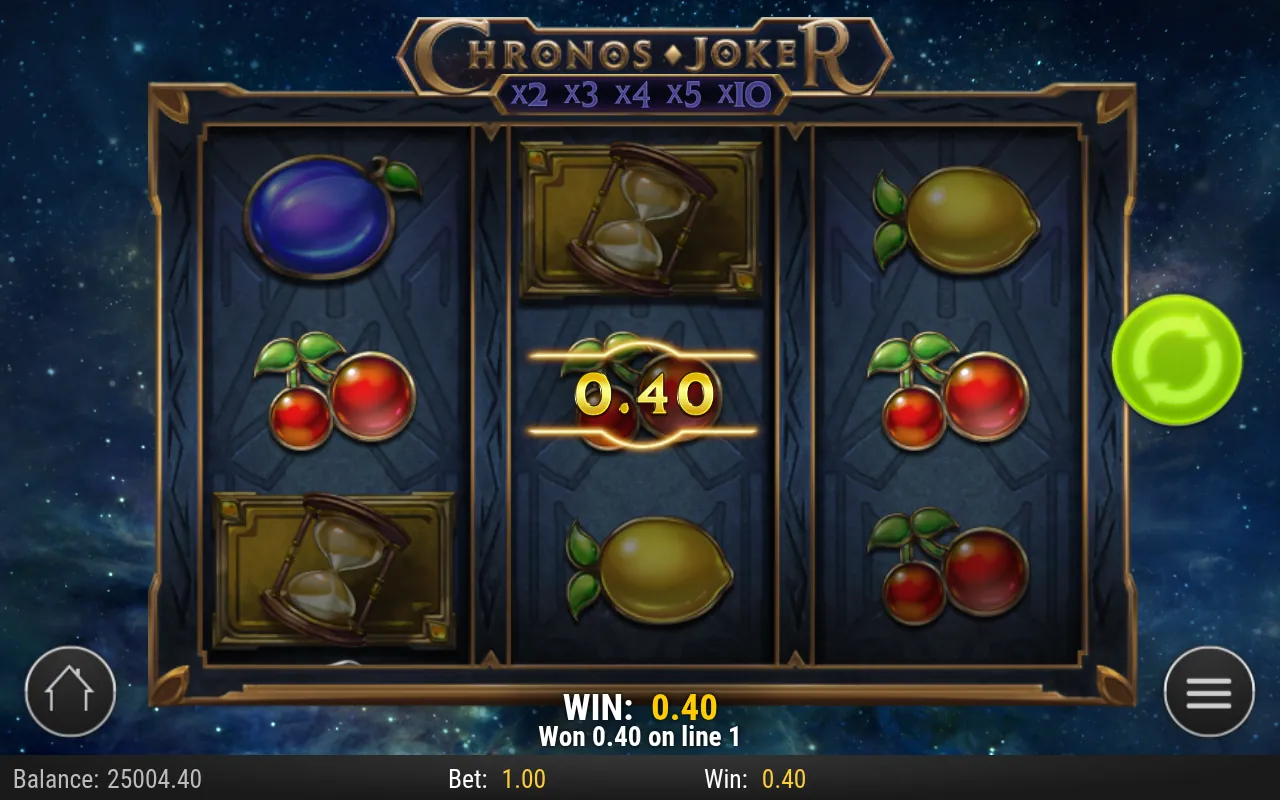
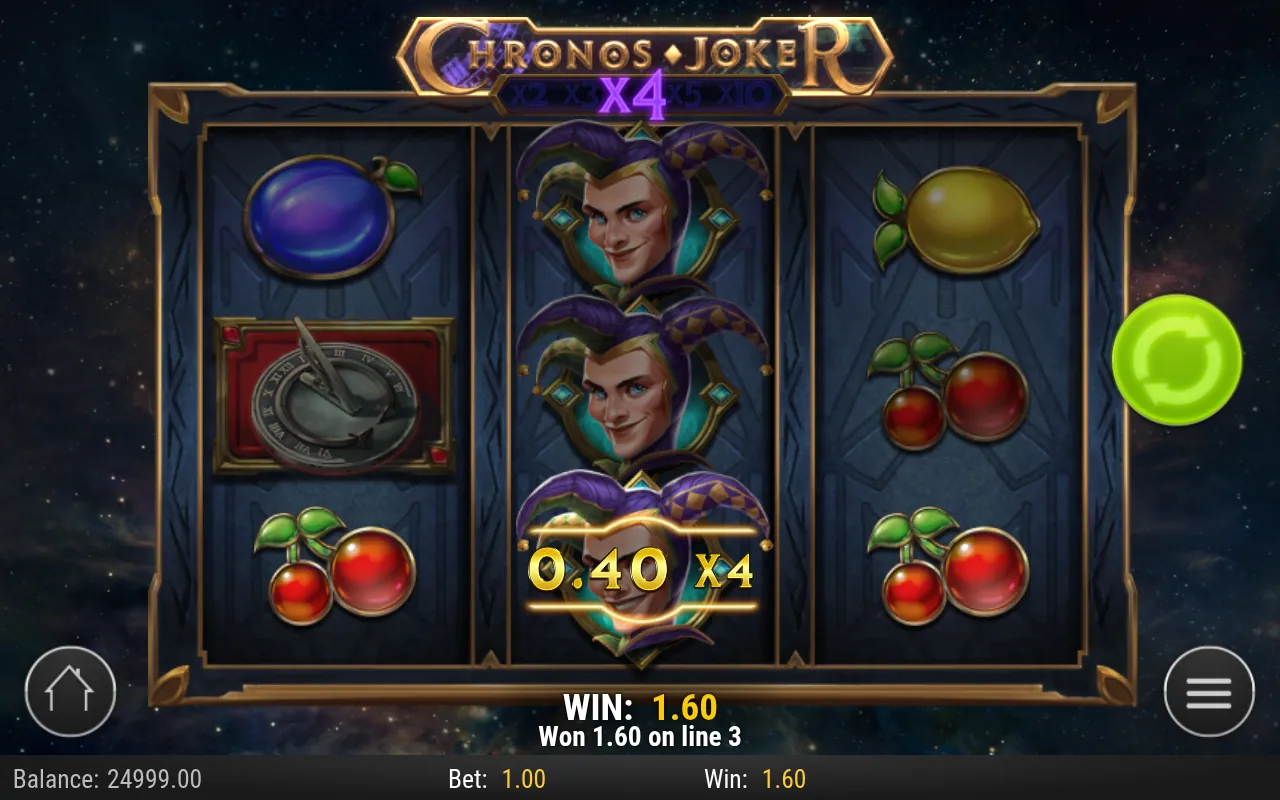
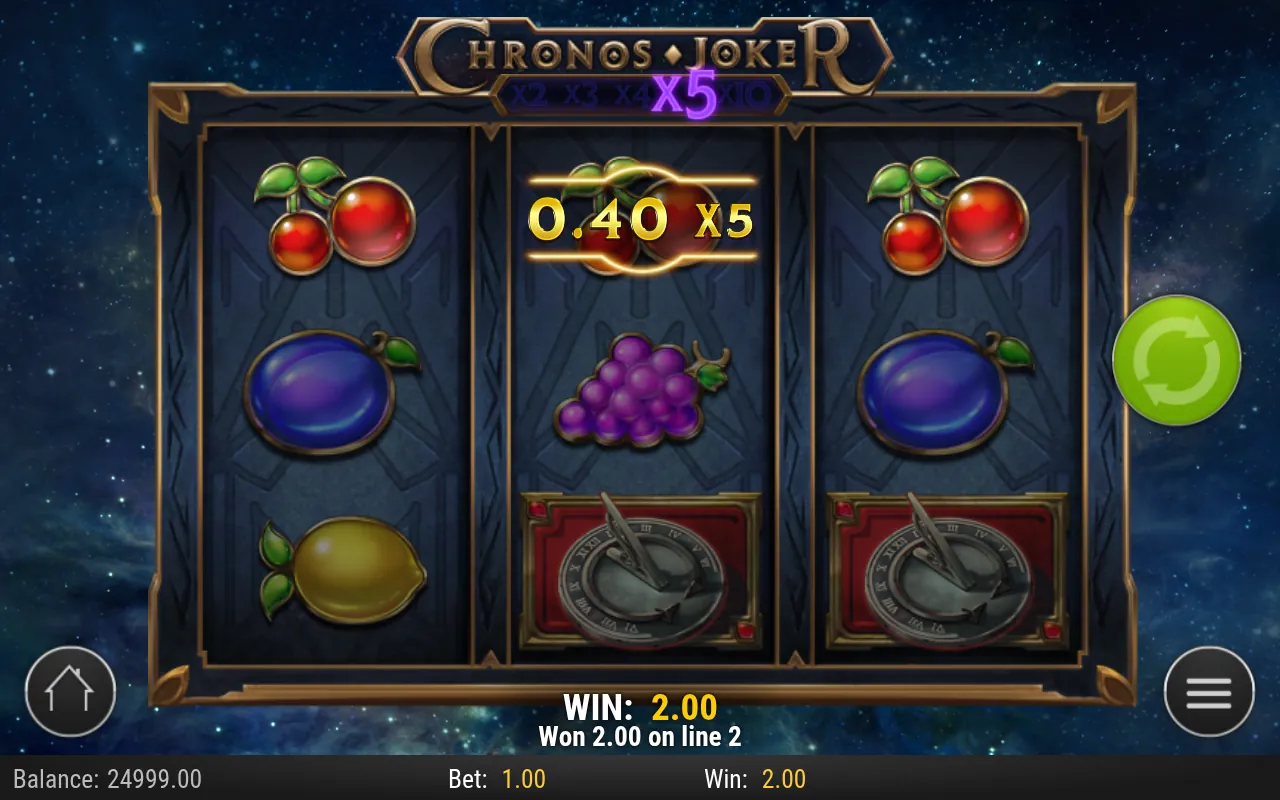
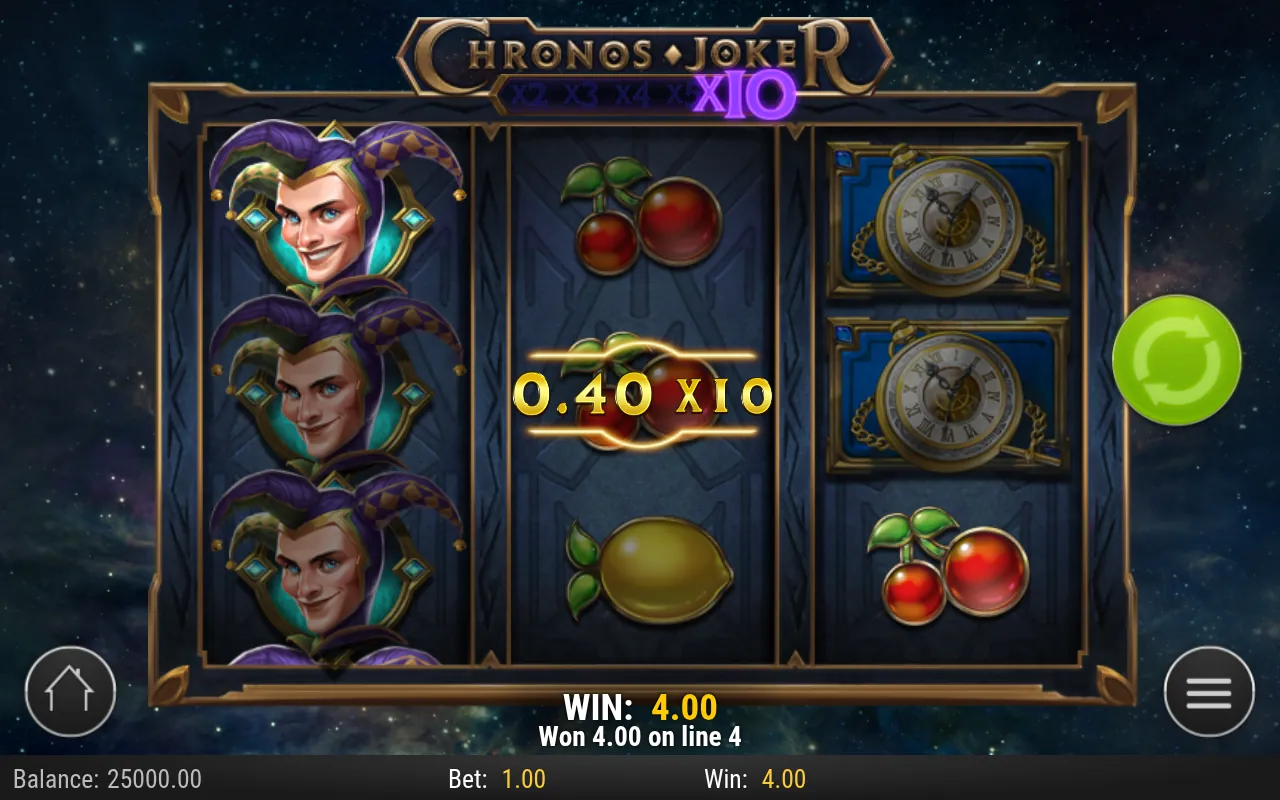
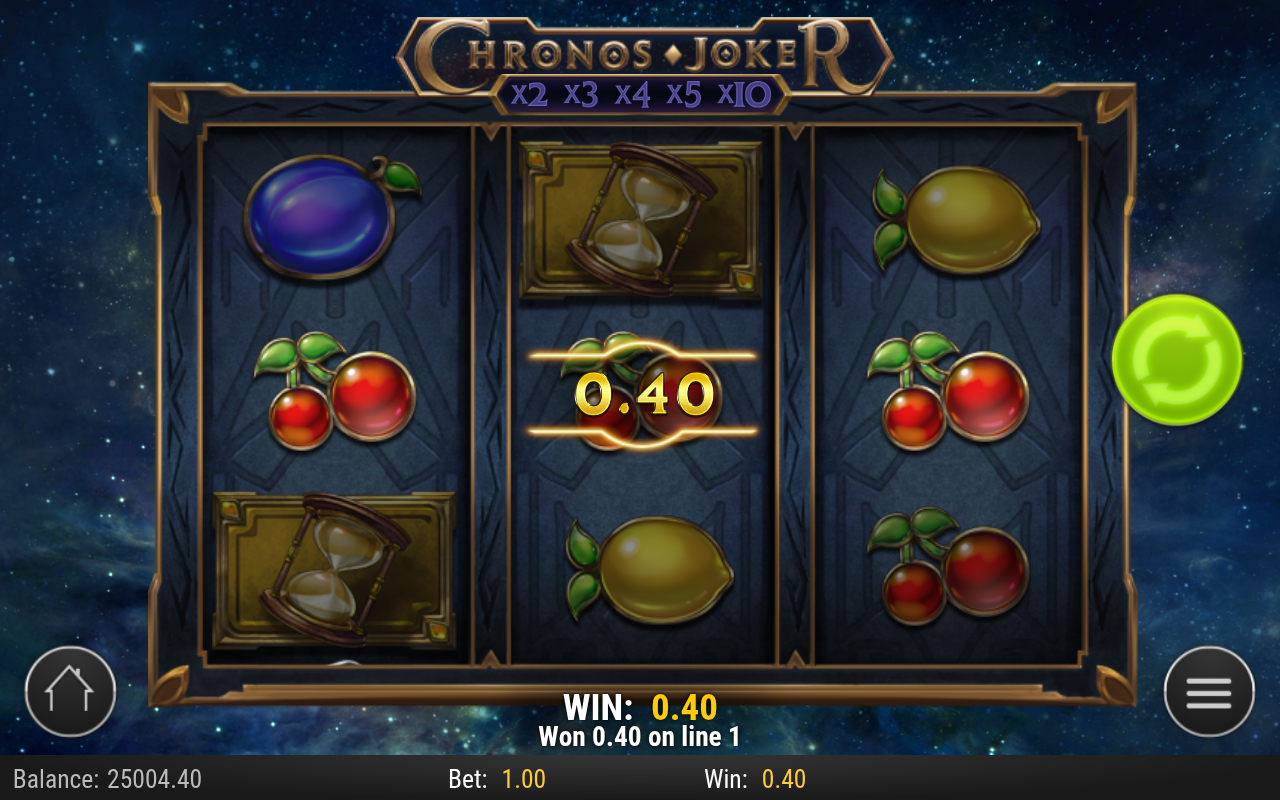
With three reels and three rows, every symbol occupies one of nine positions, and all symbols can appear stacked. Wins are marked on the reels themselves with a label naming the line they landed on. There’s no free spins round, no pick’em game, no wheel – everything beyond the base spins flows from two systems: the multiplier panel above the reels and the stacks on them.
The Multiplier Panel
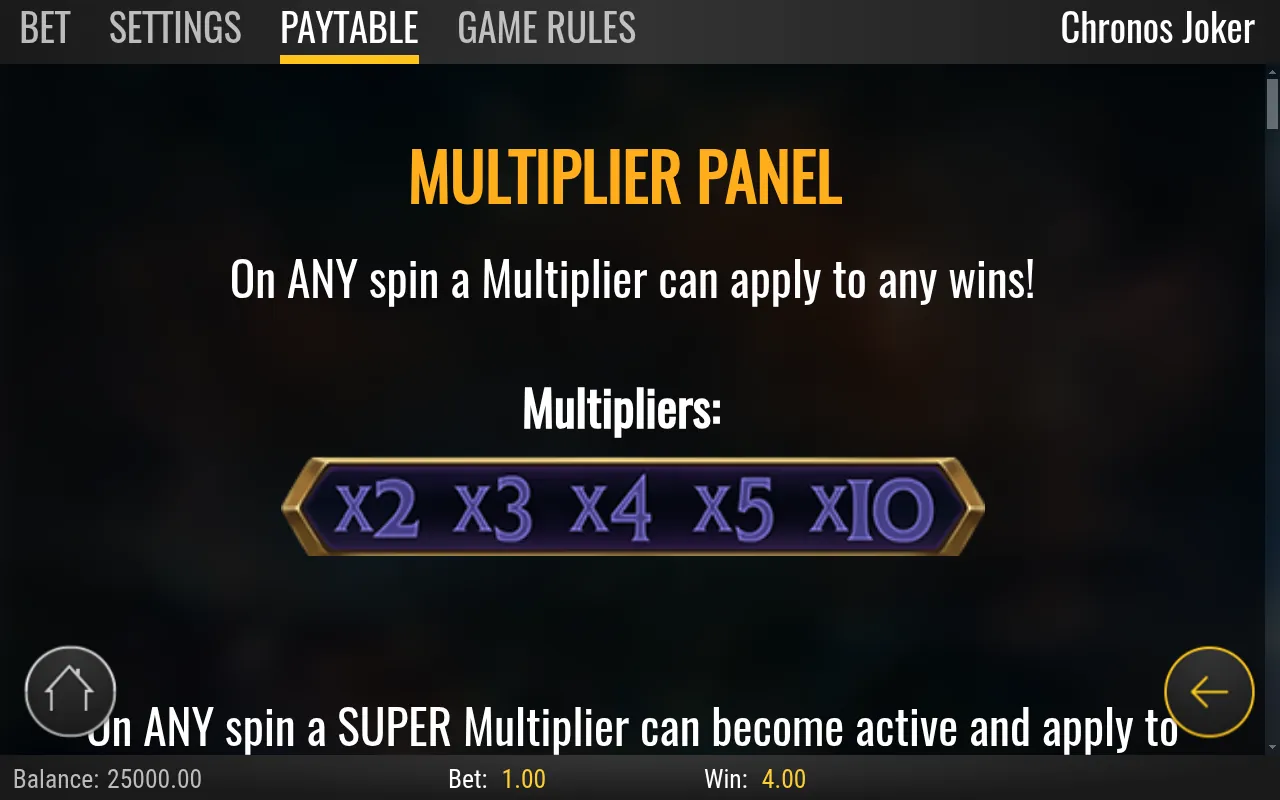
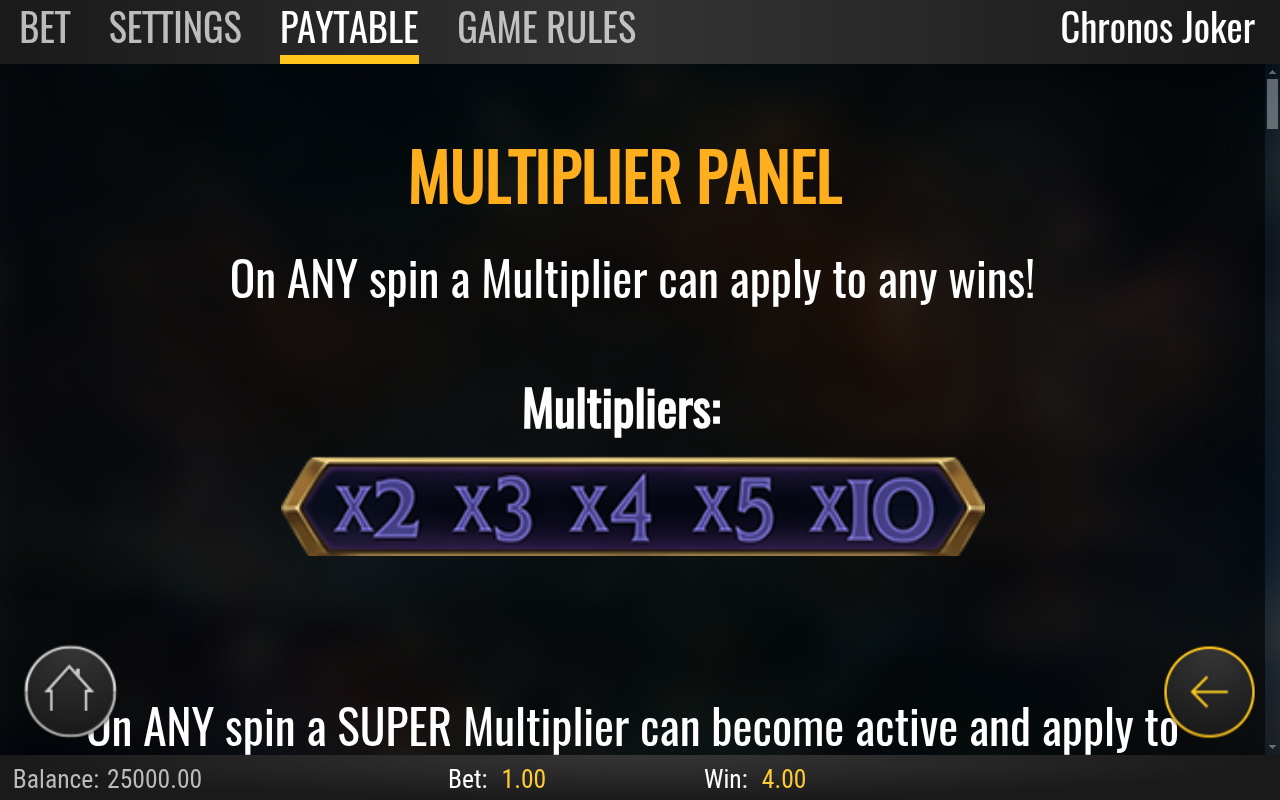
On any spin, a multiplier can become active and apply to any win. There’s no symbol to collect and no meter to fill; the panel simply wakes up or it doesn’t. When it does, the win it touches can grow several times over.
- Standard multipliers – x2, x3, x4, x5 and x10, any of which can land on any spin.
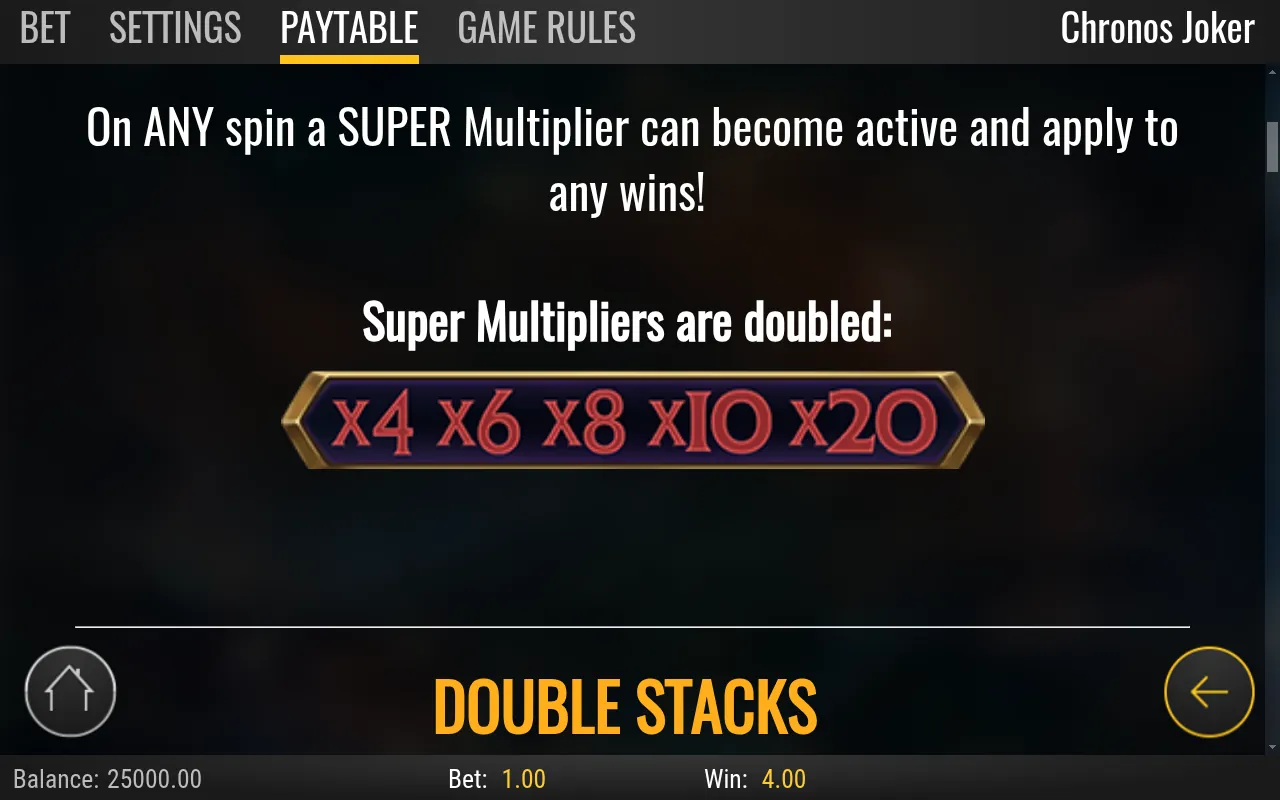
- Super Multipliers – the standard set doubled: x4, x6, x8, x10 and x20.
- Top value – a multiplier of up to x20 can apply to a single win.
The Super set works exactly like the standard one: no separate trigger, no different route, it can simply activate on any spin. On a three-reel game where wins are naturally modest, an active x20 is doing most of the heavy lifting.
Double Stacks and Re-Spins
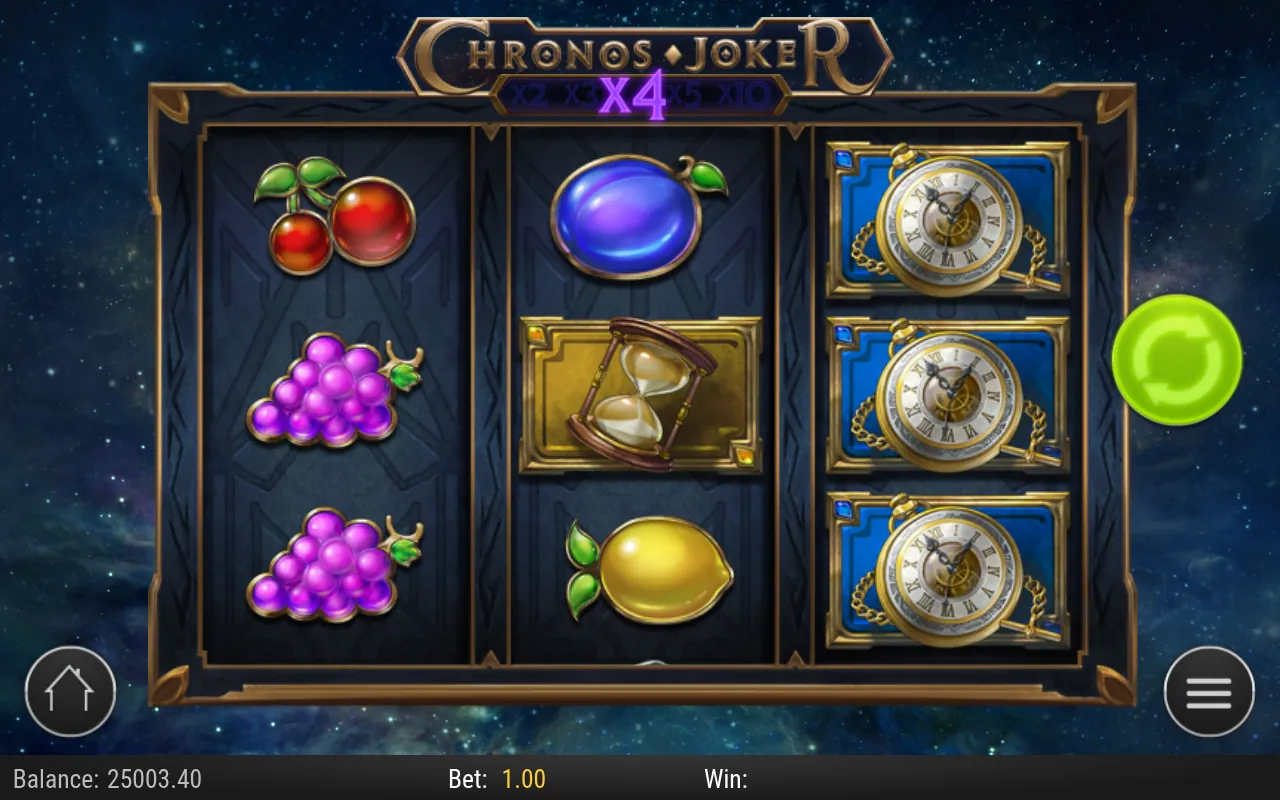
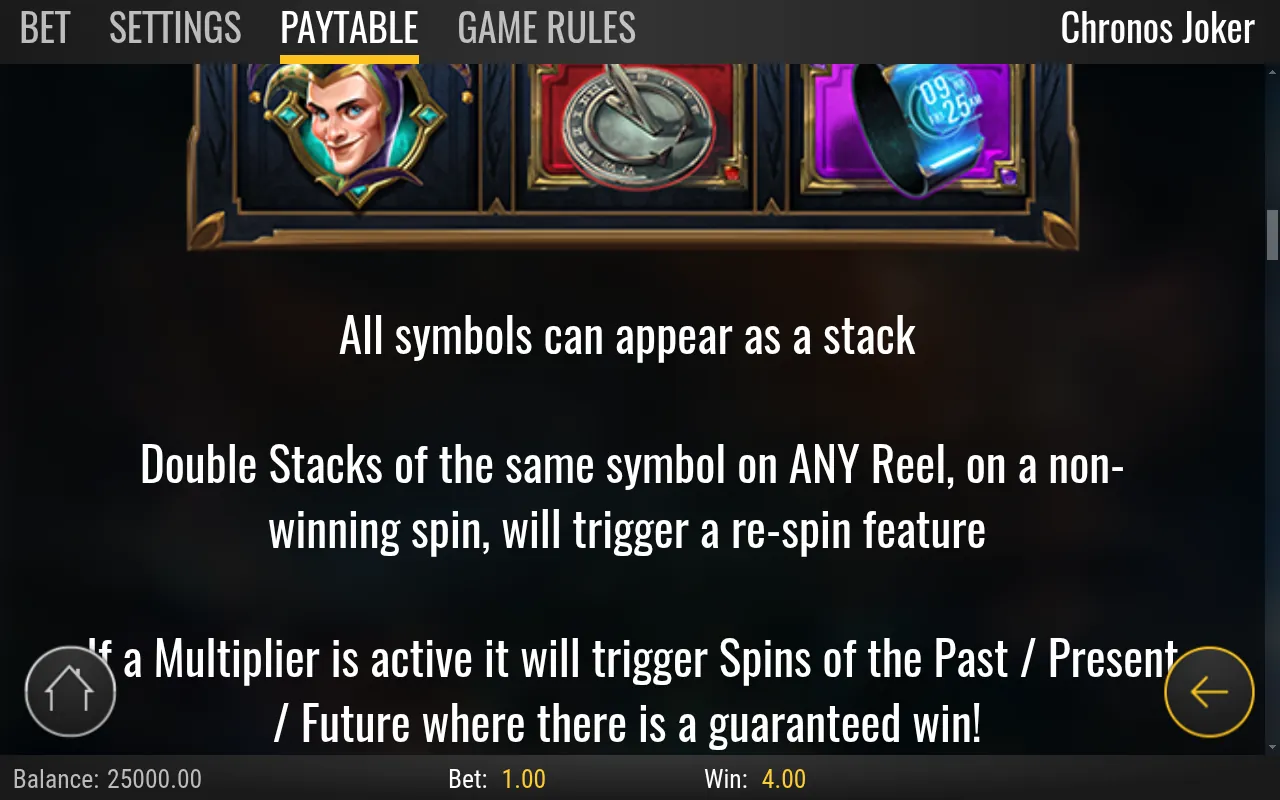
All symbols can appear as stacks, and when two or more of the same symbol stack on any reel on a non-winning spin, a Double Stack triggers the re-spin feature. The stacks stay put and the remaining reels spin again, looking to turn the near-miss into something.
What happens next depends entirely on the multiplier. If no multiplier is active, the Double Stack awards a re-spin with a second chance at creating a win or activating a multiplier. It’s a simple rescue mechanic, and on a game this size one that keeps dead spins from staying dead.
Play it out step by step: the spin lands no win but shows a stacked pair, the re-spin fires, the stacked symbols hold their reel while the rest turn over, and whatever arrives either pays, activates a multiplier for the next spin, or ends the sequence quietly. Either way, the game has given the spin a second chance without asking anything of you.
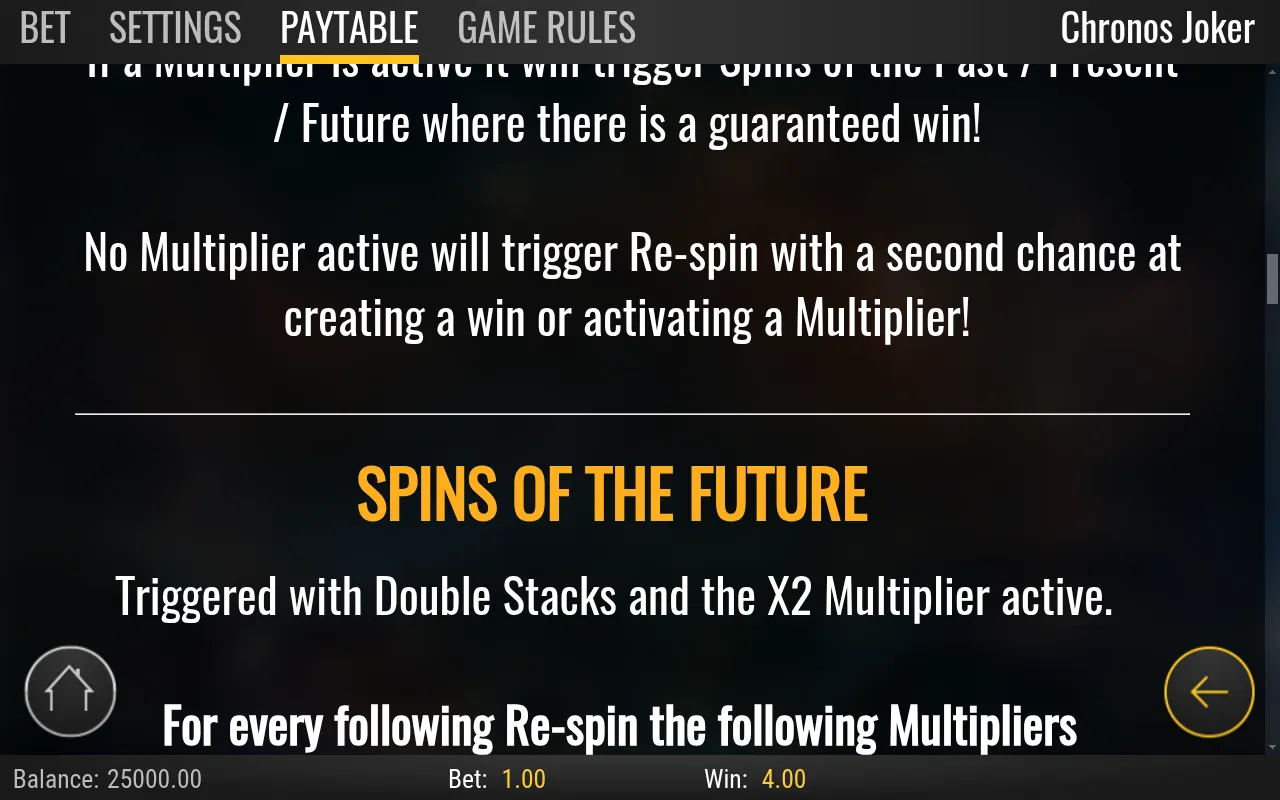
If a multiplier is active when the Double Stack lands, the game skips the plain re-spin entirely and launches one of its three named rounds – Spins of the Past, Present or Future – each of which carries a guaranteed win.
Spins of the Past, Present and Future
Which of the three rounds you get depends on which multiplier was active when the Double Stack landed. The naming is the game’s own bit of theatre – the joker decides whether you’re moving forward, standing still or winding back.
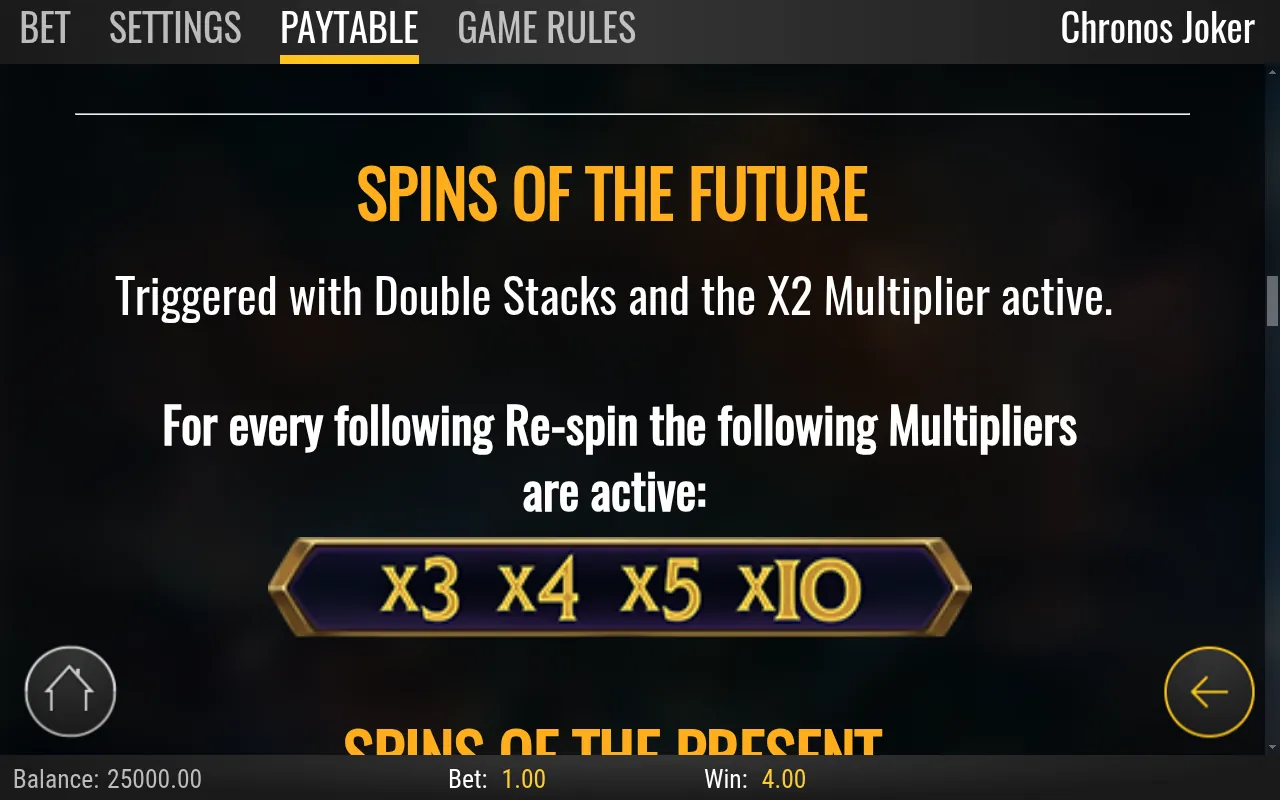
- Spins of the Future – triggered with the x2 multiplier active. Every following re-spin runs with the multipliers x3, x4, x5 and x10, so the smallest of the standard set buys you a shot at the bigger ones.
- Spins of the Present – triggered with the x3, x4 or x5 multiplier active. The multiplier holds at the same value for every re-spin.
- Spins of the Past – triggered with the x10 multiplier active. Every following re-spin runs with x5, x4, x3 and x2 active, and the round keeps re-spinning until you win.
The Super Multipliers have their own pair of rounds, built on the same logic but with the doubled values:
- Super Multiplier Spins of the Future – triggered with the x4 Super Multiplier active. Every following re-spin runs at x6, x8, x10 and x20.
- Super Multiplier Spins of the Present – triggered with the x6, x8 or x10 Super Multiplier active. The multiplier holds across every re-spin.
The structure is neater than it first looks. Small multipliers escalate, middle ones hold, and the biggest one decays but can’t end without paying. Every named round guarantees a win, so a Double Stack with an active multiplier is never a dud.
There’s a logic to the naming, too. The Future rounds push values upwards, the Present holds them where they are, and the Past counts the multiplier down step by step – which fits a game named after the Greek personification of time rather better than a random scatter bonus would.
Notice, too, what the Future rounds are really offering. An x2 is the weakest multiplier on the standard panel, yet landing a Double Stack with it active converts the weakest result into the strongest route: re-spins carrying x3, x4, x5 and x10, with x20 in the Super version. The rounds you’d least expect to celebrate are the ones that climb highest.
Our Honest Verdict
Overall Rating: 7.7/10
This is a game you play in the gaps – short sessions, three reels, a brass cabinet drifting through the stars. The reason to pick it is the guarantee: whenever a Double Stack lands with a multiplier up, you’re not leaving empty-handed, and that promise is rarer than it sounds.
Its best trick is escalation. Landing the smallest multiplier and watching it convert into a run at the big ones gives this tiny grid an arc most three-reel games never manage. Its worst habit is the ceiling – the wins stay polite, the re-spins recycle rather than rocket, and nobody’s bracing for a life-changing hit.
It suits players who like frequent small action and a tidy, well-made machine, and it will leave volatility chasers cold. For a game named after time itself, it spends it pleasantly.
Chronos Joker FAQs
-
What is the RTP of Chronos Joker?
Chronos Joker runs at 96.54% RTP, which sits comfortably above the average for an online slot. -
Is Chronos Joker high volatility?
No. Chronos Joker is a mid to low volatility game, built around frequent smaller wins rather than rare large payouts. -
What is the grid size of Chronos Joker?
Chronos Joker uses a compact 3×3 grid with three reels and three rows, and the same layout is kept during all of its re-spin features. -
When is Chronos Joker released?
Chronos Joker’s release date is 28 November 2019. -
Who makes Chronos Joker?
Chronos Joker is made by Play’n GO, the Swedish studio behind the wider joker family that includes Fire Joker Freeze and Ice Joker. -
How do the Spins of the Past, Present and Future trigger?
They trigger when a Double Stack lands on a non-winning spin while a multiplier is active. The active multiplier decides which round you get: x2 launches Spins of the Future, x3 to x5 launch Spins of the Present, and x10 launches Spins of the Past. Every named round guarantees a win. -
What are Super Multipliers in Chronos Joker?
Super Multipliers are doubled versions of the standard multipliers, running from x4 up to x20. Like the standard set, any of them can become active on any spin and apply to any win. They also have their own feature rounds, Super Multiplier Spins of the Future and of the Present. -
What happens when Double Stacks land with no multiplier active?
You get a plain re-spin with a second chance at creating a win or activating a multiplier. The stacked symbols stay in place while the other reels spin again, so a dead spin isn’t necessarily the end of it.