













Super Slot Review
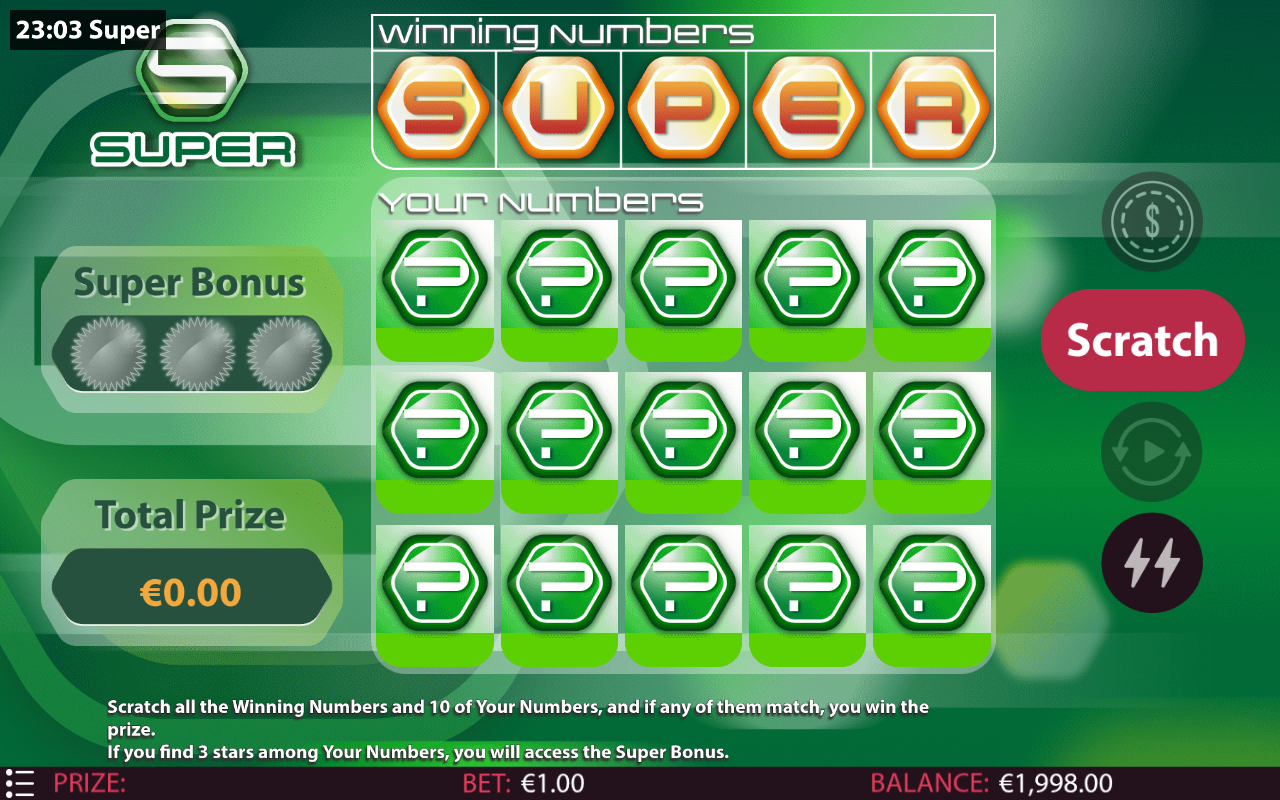
Soft green light sweeps diagonally across the screen, past blurred hexagons glowing at the edge of the frame, and behind all of it sits a ticket with fifteen numbers on it. Triple Cherry‘s Super argues that a scratchcard needs almost nothing: no reels, no symbol hierarchy, no cast of characters, just numbers, stars and one bonus phase. It’s right, mostly, because what the game strips away it replaces with the one thing the format usually lacks, a decision that matters.
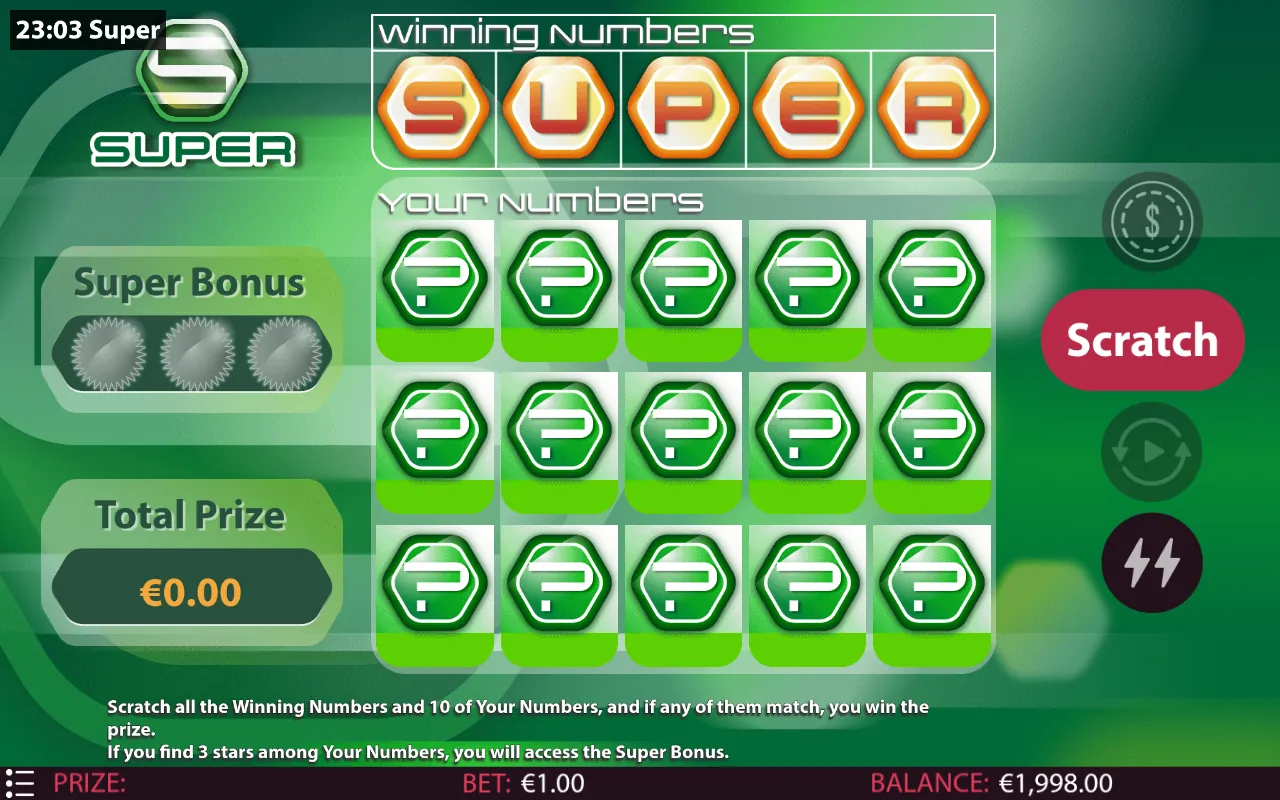
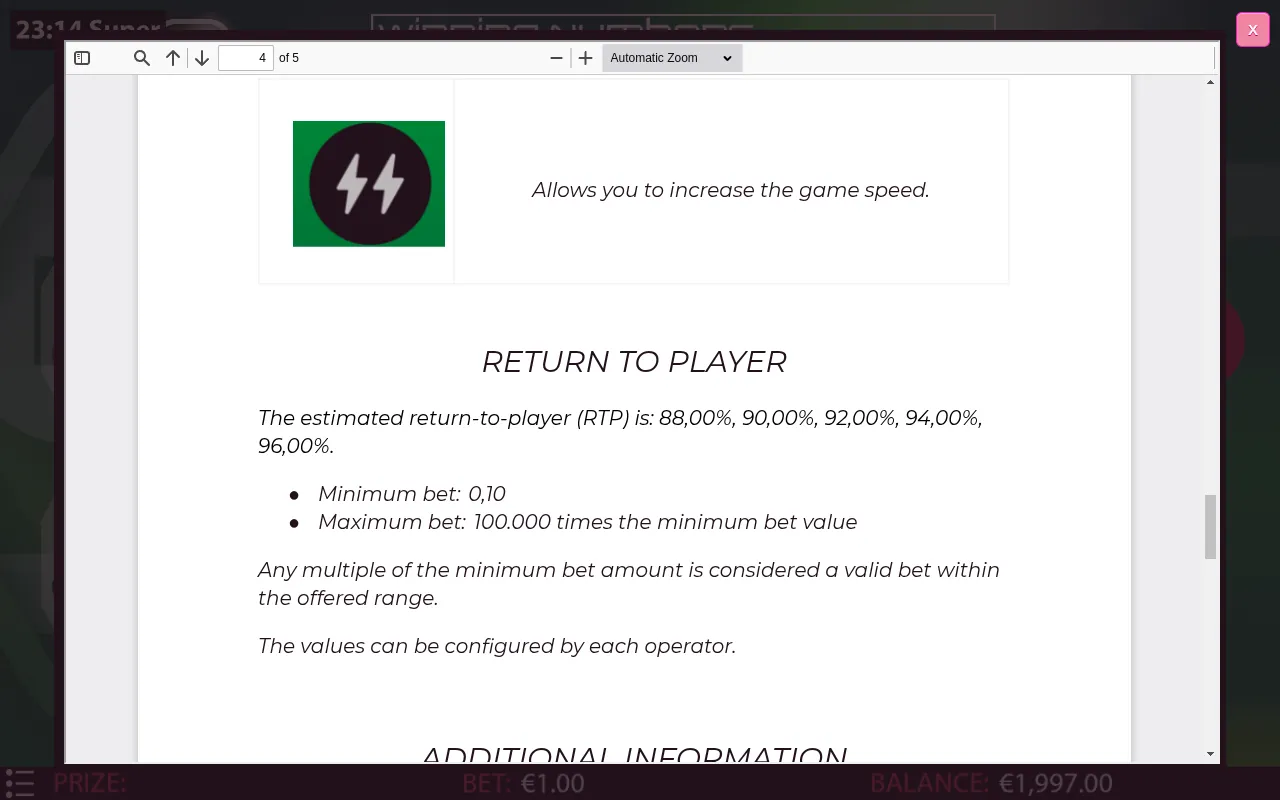
Each round works from a 5×3 grid of fifteen numbers, with five winning numbers drawn in a separate row above. It runs at 94% RTP in its default setting, though operators can configure it anywhere from 88% up to 96%. Volatility sits mid to high. Stakes start at 0.10, and the top stake is 100,000 times the minimum, which makes for an unusually wide ladder for a scratchcard.
The Ticket and How It Pays
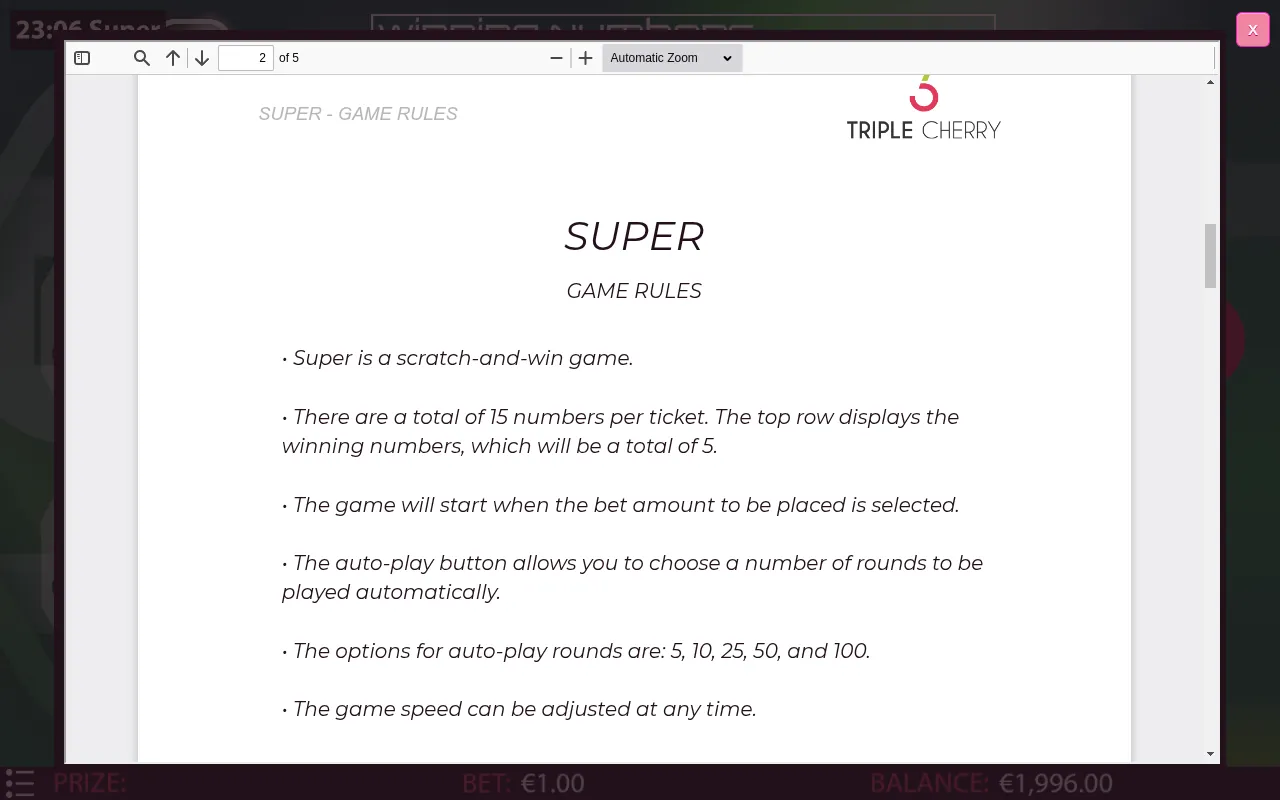
A round begins once you’ve set your bet and pressed play. The whole ticket is in play from the first scratch, and every round follows the same three-step shape:
- Fifteen numbers sit on your ticket in a 5×3 grid, each hiding a prize or a star
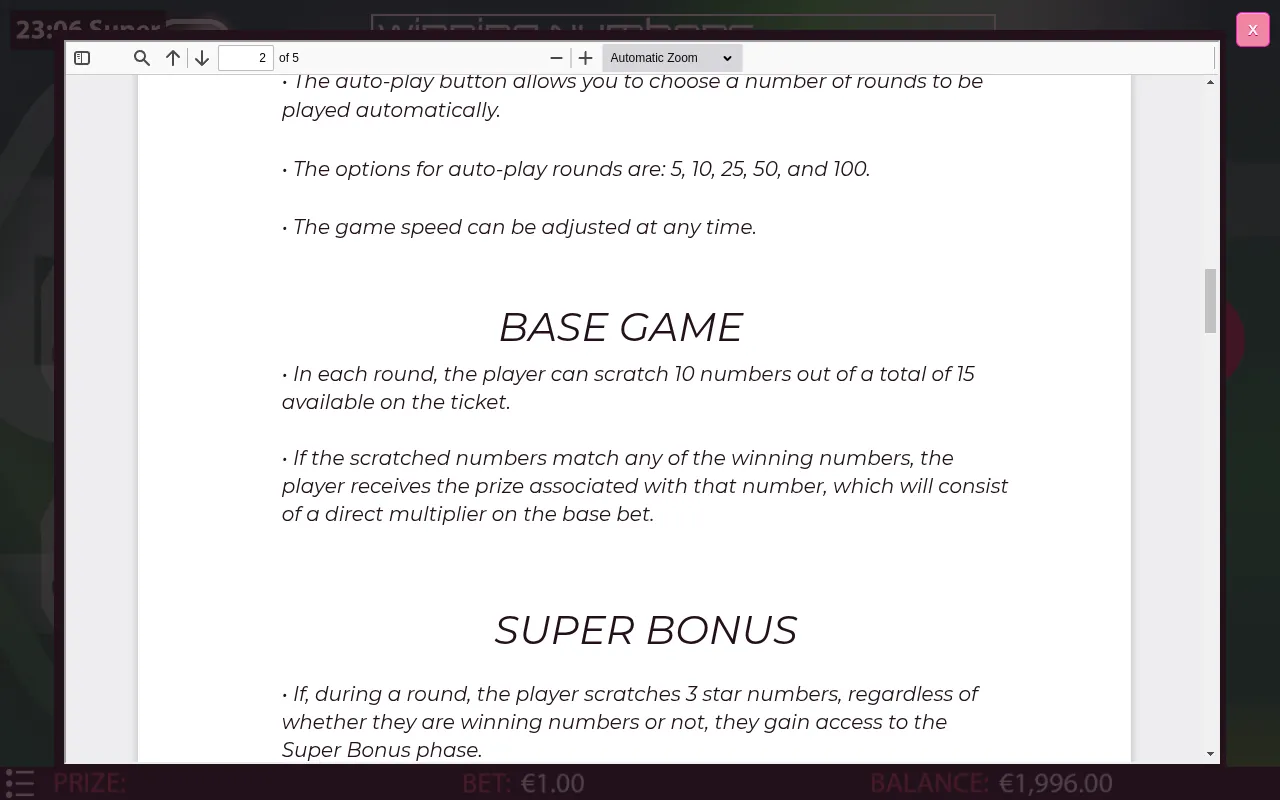
- You scratch ten of the fifteen, choosing freely as you go
- Five winning numbers sit in a separate row along the top, and any scratch that matches one of them pays out
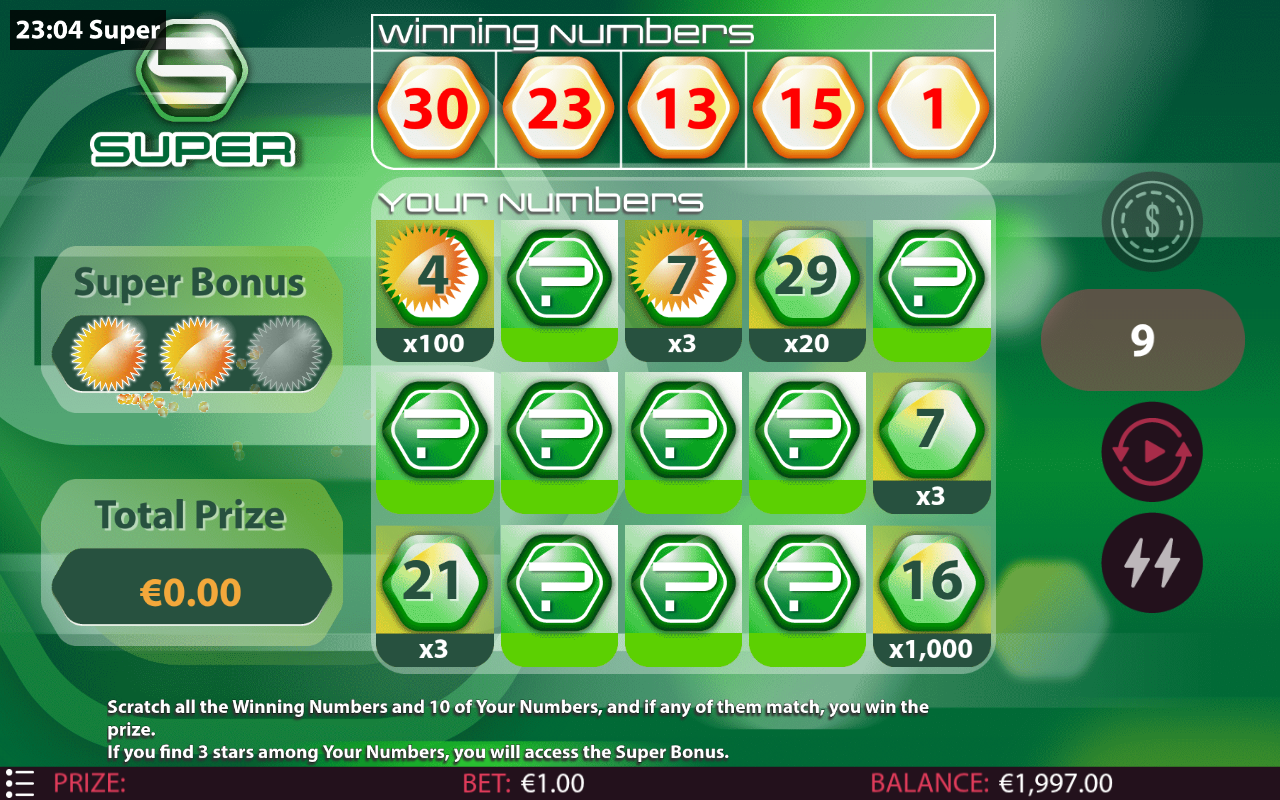
Every prize is a direct multiplier on the base bet, so what you win scales with what you staked. The multipliers are assigned per round rather than fixed to specific numbers, so no two tickets carry the same layout of values. A number that hides x3 in one round can hide x100 in the next, and a single ticket can carry anything from x3 entries up to an x1,000 panel sitting alongside them.
Before you scratch, the numbers show as question marks and the total prize reads zero. The layout underneath is decided at the start of the round, so the choice of which ten to reveal is yours, but what’s under them never is. Match nothing and the round simply ends, with the ticket resetting for the next one.
Payments update dynamically with the selected bet, so the prize panel reflects your stake at all times rather than recalculating at the end of a round. Any multiple of the minimum bet counts as a valid stake within the offered range. That gives the game a finer betting ladder than most scratchcards bother with.
The RTP Settings
Super ships with several RTP settings, and the casino picks which one you get. The available figures are:
- 88%
- 90%
- 92%
- 94%
- 96%
That’s a spread of eight percentage points between the meanest and most generous setting, which is wide enough to matter. Since the game doesn’t tell you at the table which figure is running, it’s worth checking the return-to-player figure at your casino before settling in, especially at higher stakes where the difference compounds.
Auto-Play and Speed
Auto-play handles the rounds for you if you’d rather not scratch manually, with five batch sizes to choose from:
- 5 rounds
- 10 rounds
- 25 rounds
- 50 rounds
- 100 rounds
Game speed can be adjusted at any point, mid-batch included, so a 100-round run can be sped up once the rhythm settles. A round left unfinished doesn’t lose you anything: completed cycles pay out automatically, and rounds still waiting on your input are stored and resumed the next time you open the game.
If an error occurs during a round, the affected bets and payments are cancelled rather than played out. It’s a small detail, but it means a malfunctioning round won’t produce a phantom result, and the game picks up from a clean state on the next play.
Star Numbers
Among the fifteen numbers on each ticket are star numbers, and these are the ones to watch. They’re the only route out of the base game, and they don’t need to match anything to count. A star that’s also a winning number pays its prize and still ticks the bonus counter, which is the one place the two systems overlap.
Because you only scratch ten of the fifteen numbers, the three stars you need have to sit under the ones you pick. A round can hide its stars among the five you left alone, and you’ll never know. That’s the game’s one real decision: chasing stars and chasing winning numbers are the same physical action, but the odds of each are shaped by which panels you uncover.
The Super Bonus
Scratch three star numbers during a round and you’re into the Super Bonus phase, regardless of whether those stars are winning numbers or not. It’s a simple condition, and it’s the only one. Three stars among your ten scratches is all the game asks.
Inside the phase, the rules change shape. There’s no ticket and no winning-number row, just a field of panels to scratch, one at a time:
- Most panels hide a direct multiplier, which adds to a running total
- One type hides a red cross, which ends the phase immediately
- The phase runs until you hit that cross, with no set number of picks
Each multiplier you scratch is banked as you go, so the total only ever climbs. The tension lives in the choice of whether to keep scratching, though the panels give no clue what’s underneath, so every pick is a blind one. There’s no second chance and no partial retry, the round can stop after one multiplier or run for several.
The final prize is the accumulated multiplier from the phase applied to the base bet you entered it with. Every multiplier you scratched before the cross counts, and the cross itself costs nothing, it simply closes the round. A phase entered at a higher stake scales the whole accumulated total accordingly.
The stake you entered on is the one the total multiplies, nothing more and nothing less. The multiplier you build is independent of what you were betting, so a modest run at a high stake can outpay a long run at a low one. What the phase doesn’t do is carry anything between rounds, each Super Bonus starts from zero and stands alone.
Our Honest Verdict
Overall Rating: 7.1/10
Playing Super is a series of small, tidy rounds against that soft green glow, over in seconds, and the reason to pick it is the only thing most scratchcards never give you: a choice that feels like yours. Ten scratches, one bonus condition, and the satisfyingly mean little drama of a multiplier run that can stop dead on a cross.
The Super Bonus is the game’s best idea, because everything banked before the cross is yours, so the push never feels punished. The weakness is everything around it, the base rounds are the same decision repeated, and there’s not enough variety to hold a long session, just a very wide betting ladder with nowhere to take it.
This is a game for players who want something quick and honest between longer sessions, and for scratchcard fans after a bonus phase with real tension. Anyone after depth or a theme to live in won’t find it under the green sheen. For everyone else, fifteen numbers and three stars make a better five minutes than the format usually manages.
Super FAQs
-
What is the RTP of Super?
The RTP is 94% in its default configuration. Operators can set the game to run anywhere from 88% to 96%, so the figure at your casino depends on which setting it has chosen. -
Is Super high volatility?
Volatility sits in the mid to high range, so wins can be spaced out and the bonus phase carries most of the game’s prize potential. -
What is the grid size of Super?
Your numbers sit on a 5×3 grid of fifteen numbers, with a separate row of five winning numbers displayed along the top of the ticket. -
What is the minimum and maximum bet on Super?
Bets start at 0.10, and the maximum bet is 100,000 times the minimum value. Any multiple of the minimum bet counts as a valid stake within that range. -
How do you trigger the Super Bonus in Super?
Scratch three star numbers among your fifteen numbers during a round. They don’t need to be winning numbers, and three stars is all it takes to enter the Super Bonus phase. -
What happens if you scratch a red cross in the Super Bonus?
The red cross ends the Super Bonus phase immediately. You keep every multiplier you accumulated before it, and the total is applied to the base bet you entered the phase with. -
Can you leave a Super round unfinished and come back to it?
Yes. Completed cycles pay out automatically, and rounds still waiting on your actions are stored and resumed the next time you play. -
Does Super have auto-play?
Yes. Auto-play offers batches of 5, 10, 25, 50 or 100 rounds, and the game speed can be adjusted at any point.