












Double Bonus Poker Slot Review
A blue spotlight burns at the centre of the screen and fades into maroon at the corners, with the title stacked in gold script and outlined red letters above the felt. Behind that lighting sits the least decorated game you’ll meet on a slots site: Genii‘s Double Bonus Poker is five-card draw and nothing more, with no reels, no paylines and a single feature to its name. That spareness is the point. The machine does almost nothing for you here, and every result belongs to the cards you chose to hold.
What you’re actually buying into is a prize ladder that pays four of a kind hands far more heavily than the standard game, and splits them into tiers that reward knowing the difference. The return lives in that paytable and in your holds, as much as in the machine.
Dealing and Drawing
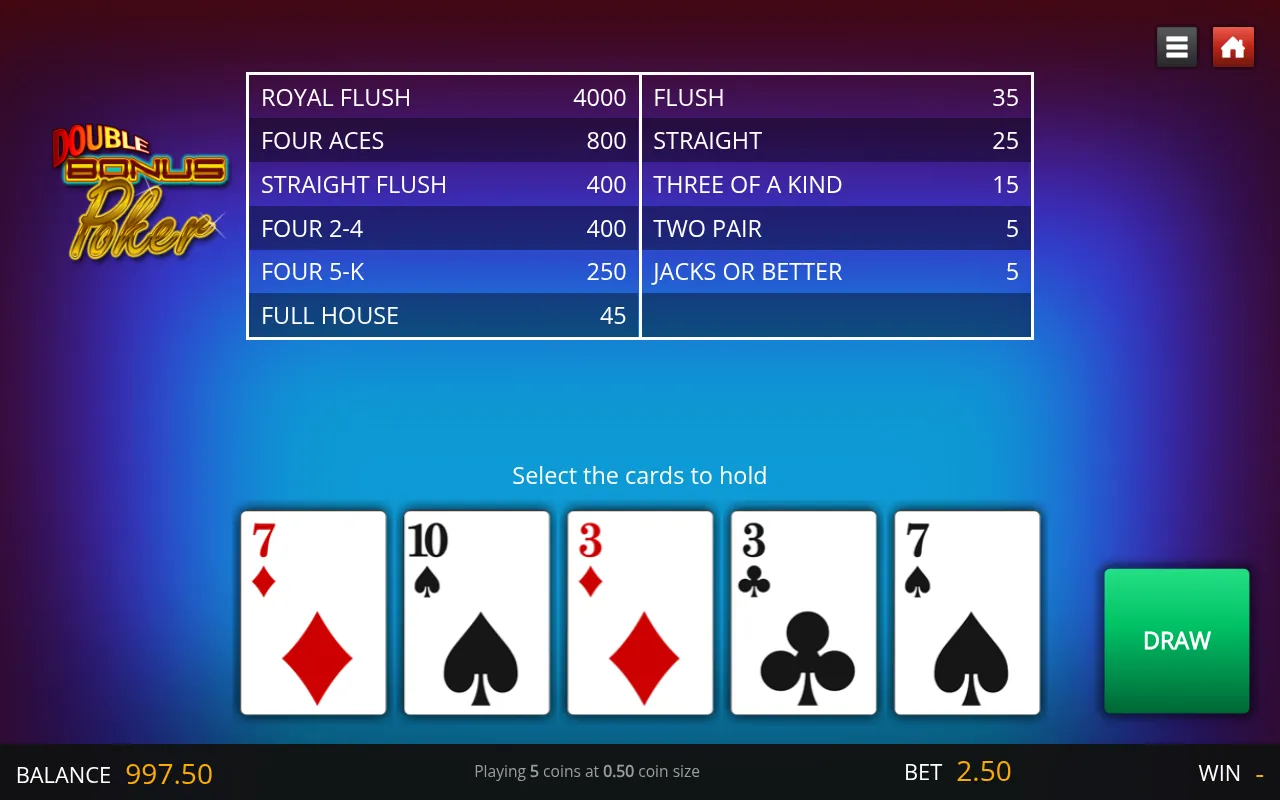
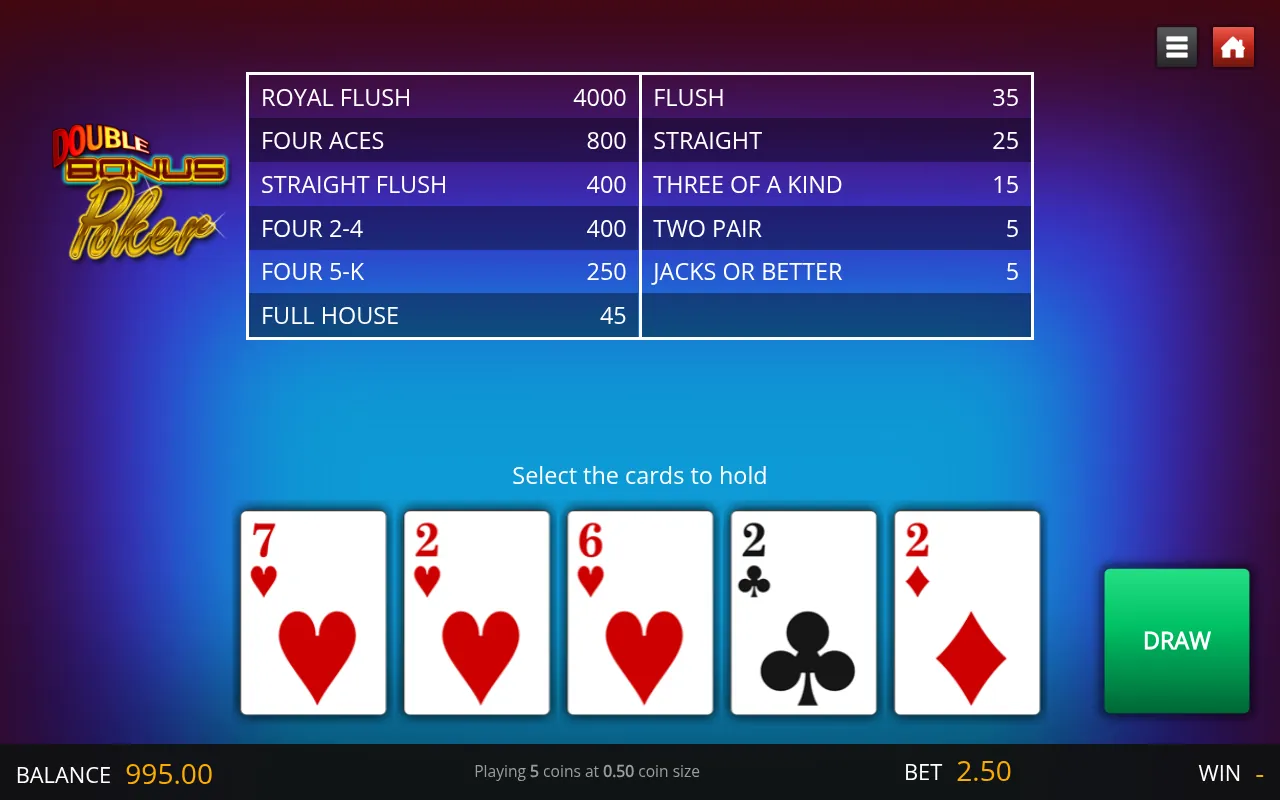
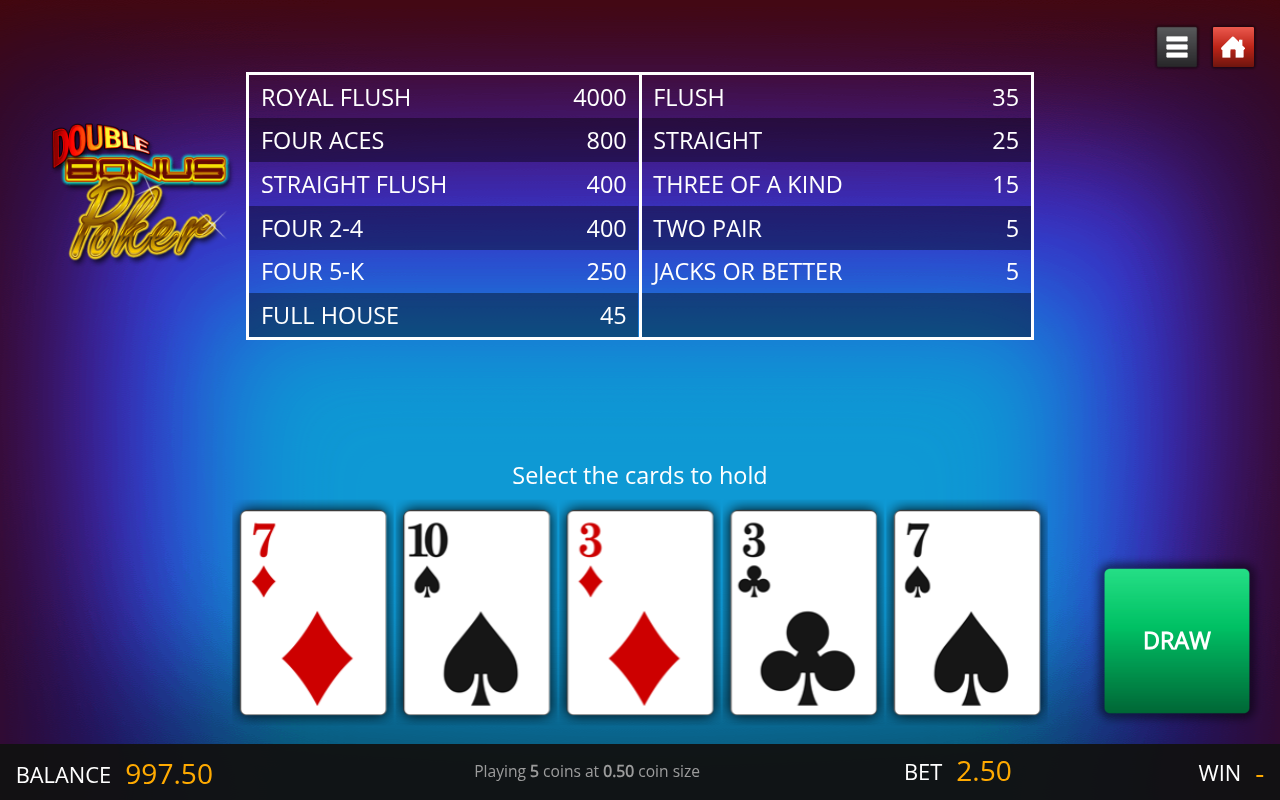
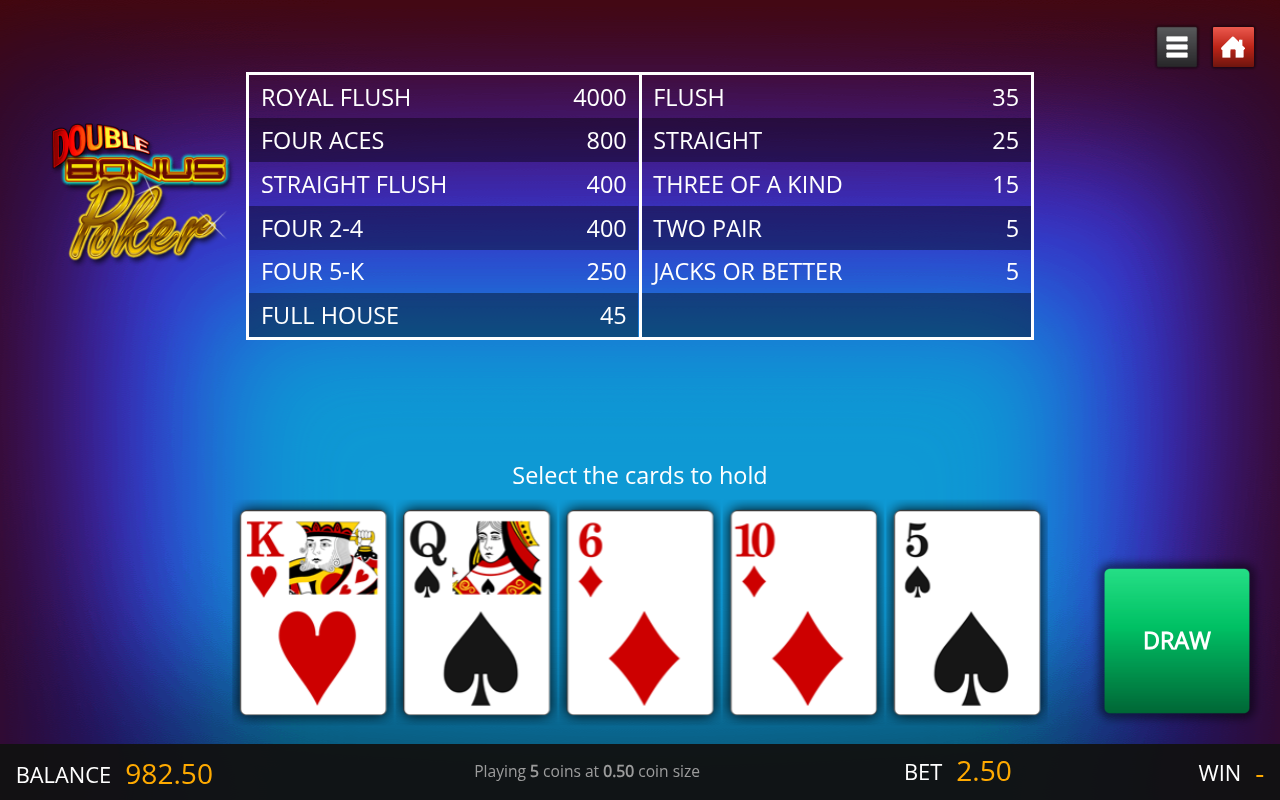
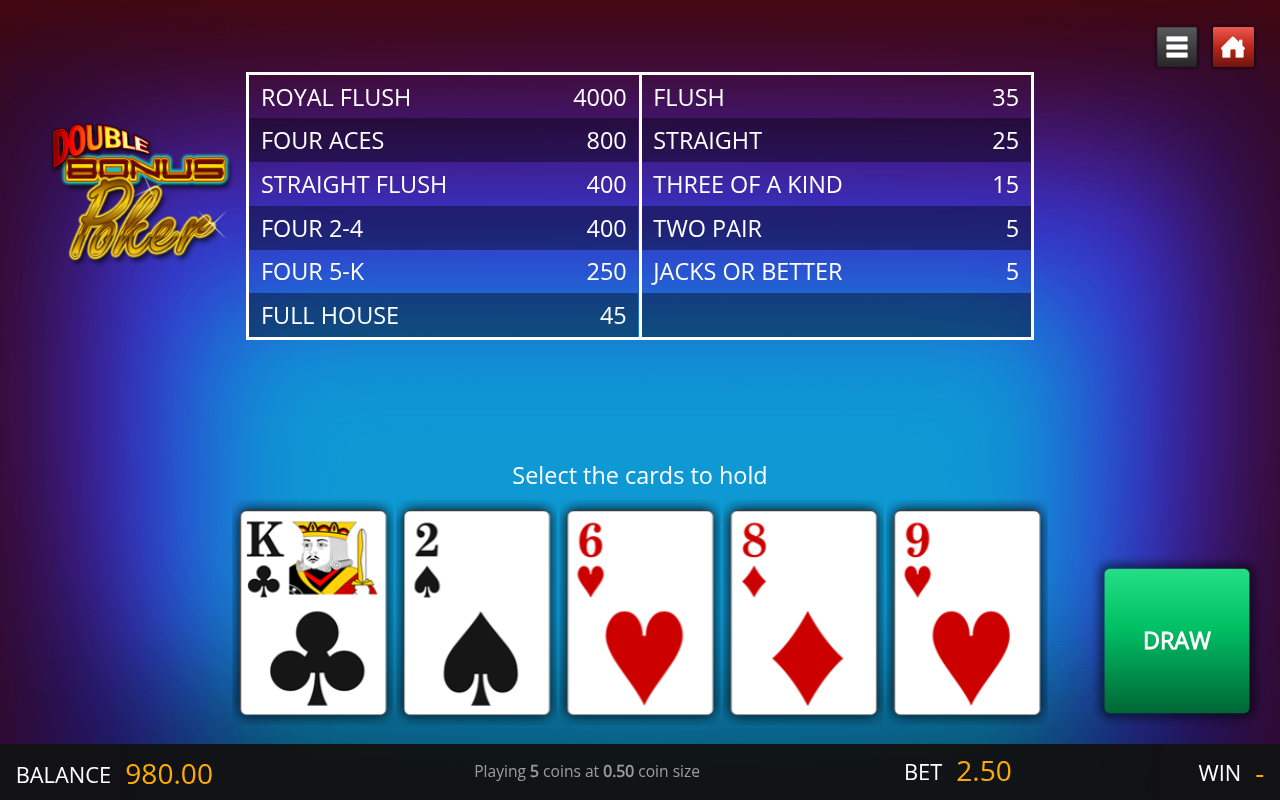
Play follows the classic five-card draw shape. Five cards arrive face up, and the hold screen lets you keep any of them before pressing DRAW to replace the rest. The final five-card hand is then scored, and only poker hands from Jacks or Better upward pay anything at all.
That decision point is the whole game. Unlike a reel slot, there’s no spin-to-spin variance in what the machine does; the variance is in which cards land and how well you play them. A dealt pair of queens is a guaranteed small win if held. Break it up chasing a flush and you’re gambling the certain thing for a long shot.
The holds come in tiers of difficulty. Holding a made winning hand is the obvious play and always pays something. Holding four cards to a flush or an outside straight means drawing to a hand that’s mathematically defined, and the paytable prices both outcomes differently. The hardest decisions sit in the middle: a low pair against four to a flush, or a single high card against two to a royal, and the right answer changes with this variant’s premium on low quads.
The middle tiers are where most hands land. Two pair and three of a kind come around steadily enough, and they pay 1x and 3x respectively, which keeps the balance ticking over between the premium hands. The full house sits at 9x, the flush at 7x and the straight at 5x, a tight cluster that means the difference between a good session and a flat one is usually a single quad.
The presentation stays out of the way. Glossy card faces, the blue glow behind the felt, and buttons limited to hold, draw, double and collect. Nothing else competes for attention.
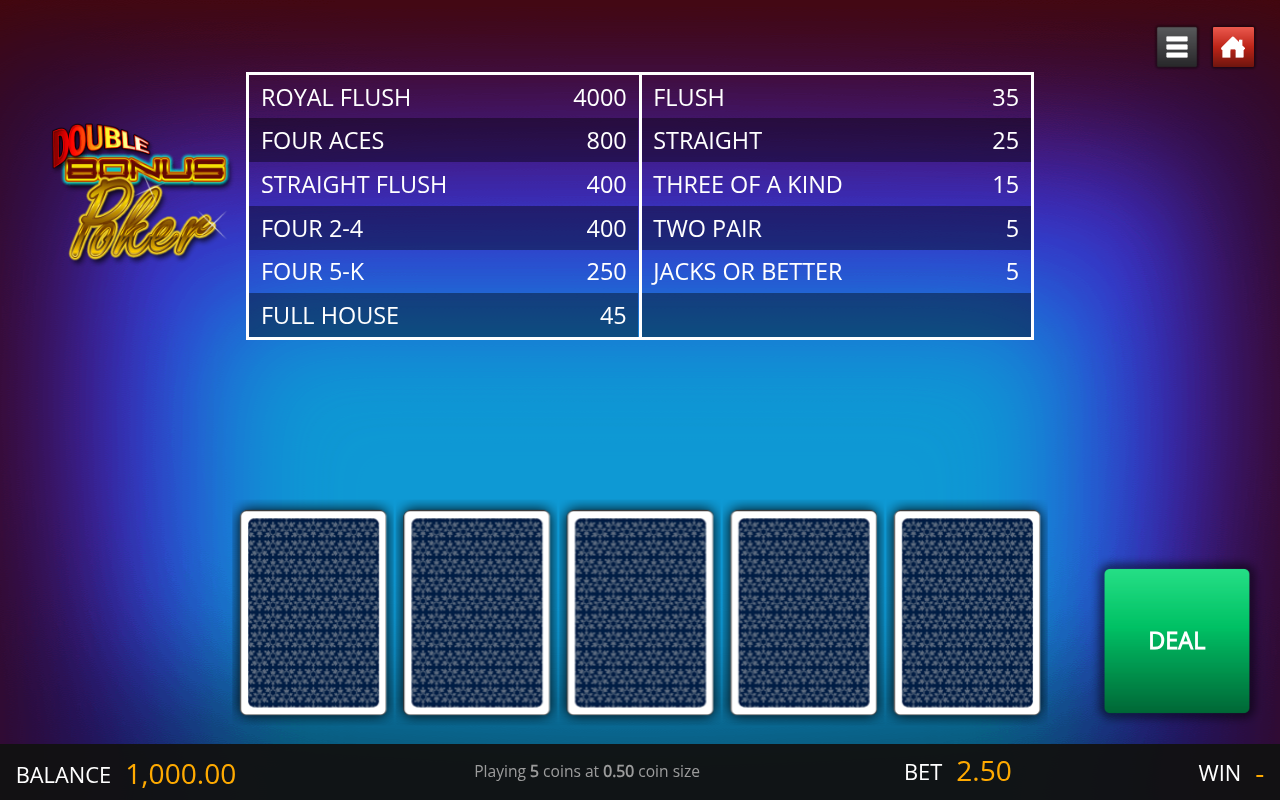
The Paytable
Prizes are shown at the five-coin bet, and the values below are multiples of the total bet at that level. The “double bonus” in the name shows up in the gap between the four of a kind tiers: aces pay more than three times what four kings pay.
- Royal Flush: 800x the total bet
- Four Aces: 160x
- Straight Flush or Four 2s through 4s: 80x
- Four 5s through Kings: 50x
- Full House: 9x
- Flush: 7x
- Straight: 5x
- Three of a Kind: 3x
- Two Pair or Jacks or Better: 1x
The shape of that ladder matters more than any single row. Nine of the ten tiers sit at 9x or below, so the bulk of hands pay back roughly the stake, and the real money is concentrated in the top four tiers. That concentration is what gives Double Bonus its reputation for steeper swings than Jacks or Better.
The premium on low quads is the game’s signature. Four deuces through fours paying 80x, level with a straight flush, is generous by the family’s standards, and it changes correct hold strategy: drawing to a low pair sometimes beats holding a made pair of jacks.
It works the other way at the top of the deck, too. Four 5s through kings at 50x is a step down from the 80x tier, so the variant doesn’t simply inflate every quad – it splits them into a hierarchy that has to be learned. Knowing which side of the split your pair sits on is part of playing this one well.
The royal at 800x is the ceiling of the ladder, and like everything else in video poker it’s a poker probability, not a slot’s engineered hit rate. It’s a hand you’ll see a handful of times in a lifetime of correct play, which is exactly why the tiers beneath it do the everyday work. Between the royal and the quads sits the straight flush at 80x, the only non-quad hand in the premium band, and one that correct strategy draws to aggressively when four to it appear.
Double or Collect
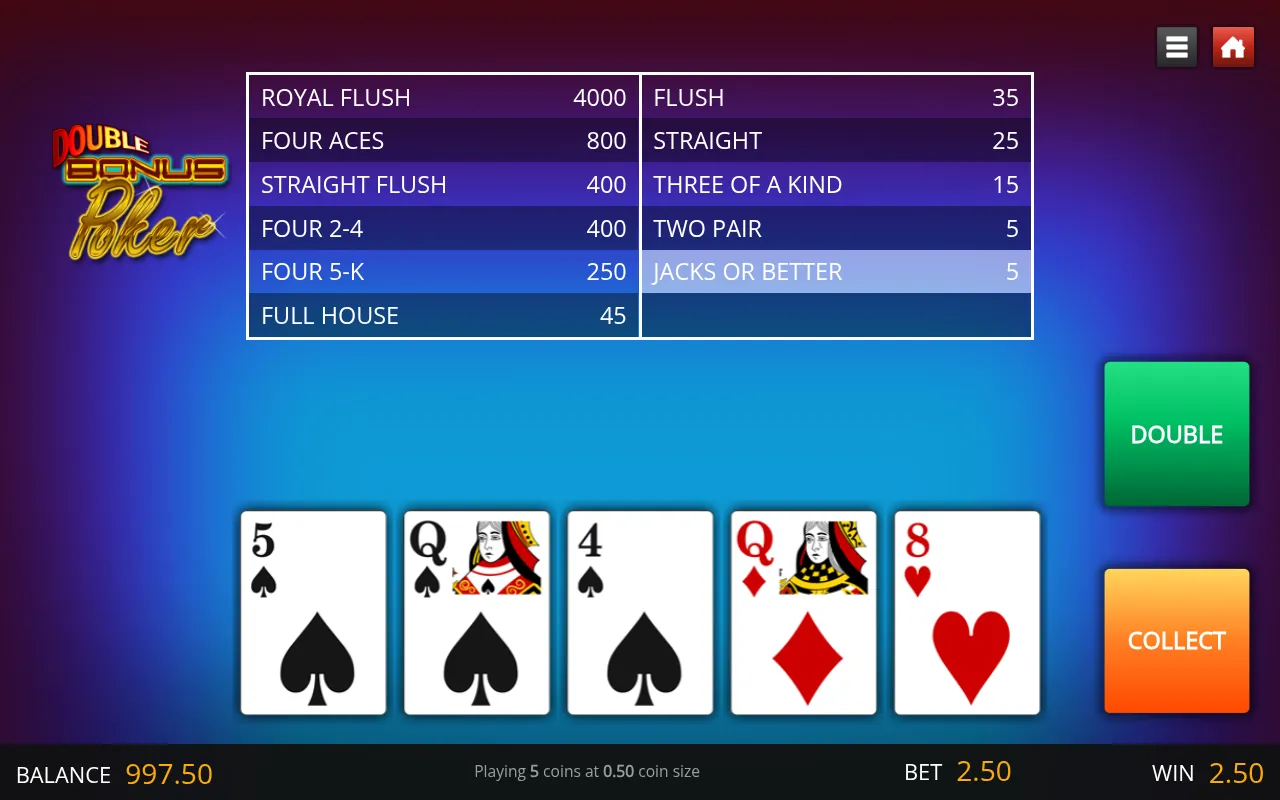
After any winning hand, the screen offers DOUBLE and COLLECT buttons. Collect banks the win and deals the next hand. Double stakes the entire amount on a single gamble, in the traditional video poker style, and a losing gamble forfeits the lot.
It’s the only feature in the game, and it’s an optional one. Never touch the double button and you get the full paytable experience. Use it and you’re adding a second layer of risk on top of every winning hand, with the whole banked amount riding each time.
Where it bites hardest is on the small wins. Doubling a 1x two-pair payout is a cheap thrill; doubling a 160x four-aces hand puts a genuinely large amount on a single coin flip. The button doesn’t distinguish, and neither does the maths – each double is an all-or-nothing proposition whatever the size of the win behind it.
The timing of the choice is its own small strategy. The offer arrives the moment the win is shown, before the next hand is dealt, so there’s no banking part of the amount and gambling the rest. It’s the full win or nothing, every time, which makes the collect button the more disciplined half of the pairing.
There’s no bonus round, no free spins and no feature buy. The gamble is the only departure from straight five-card draw, and the paytable carries everything else the game has to say.
Our Honest Verdict
Overall Rating: 6.8/10
Playing this is sitting at a quiet table under that blue glow, hand after hand, with nothing to watch but the cards and nobody to blame for a bad one but your own holds. That’s the reason to pick it: the decisions are real, and drawing to a low pair instead of banking two jacks is a choice that actually costs something.
Its best quality is the split quad ladder. Paying four 2s through 4s at 80x rewards exactly the hands Jacks or Better underprices, and knowing that split is a genuine edge over the machine. Its worst is the same ladder seen from below: nine of ten tiers pay 9x or less, so the stretches between quads run flat, and there’s nothing else on screen to fill them.
It suits players who want their returns to depend on how they play, not on how patient an animation is. Arrive wanting a show and you’ll find a very well-lit card table – which, for the right person, is precisely the draw.
Double Bonus Poker FAQs
-
When is Double Bonus Poker released?
Double Bonus Poker’s release date is 6 June 2023. -
Who makes Double Bonus Poker?
Double Bonus Poker is made by Genii. -
How do you play Double Bonus Poker?
You’re dealt five cards, choose which to hold, then press DRAW to replace the rest. Your final hand pays out from Jacks or Better upward. -
What is the highest-paying hand in Double Bonus Poker?
A Royal Flush, which pays 800x the total bet at the five-coin level. -
What does Double Bonus Poker pay for four aces?
Four Aces pay 160x the total bet, making them the second-highest tier behind the Royal Flush. -
What does the DOUBLE button do?
After a winning hand, DOUBLE lets you gamble the entire win on the double-up feature. A losing gamble forfeits the amount, while COLLECT banks it and deals the next hand. -
Why do four 2s, 3s and 4s pay more than four kings?
That’s the ‘double bonus’. Four 2s through 4s pay 80x, level with a straight flush, while four 5s through kings pay 50x. It’s a premium on low quads that distinguishes this variant from standard video poker. -
Does Double Bonus Poker have a bonus buy or free spins?
No. The double-up gamble after a winning hand is the only feature in the game; there’s no free spins round and no bonus buy.