







Kaiser Slot Review
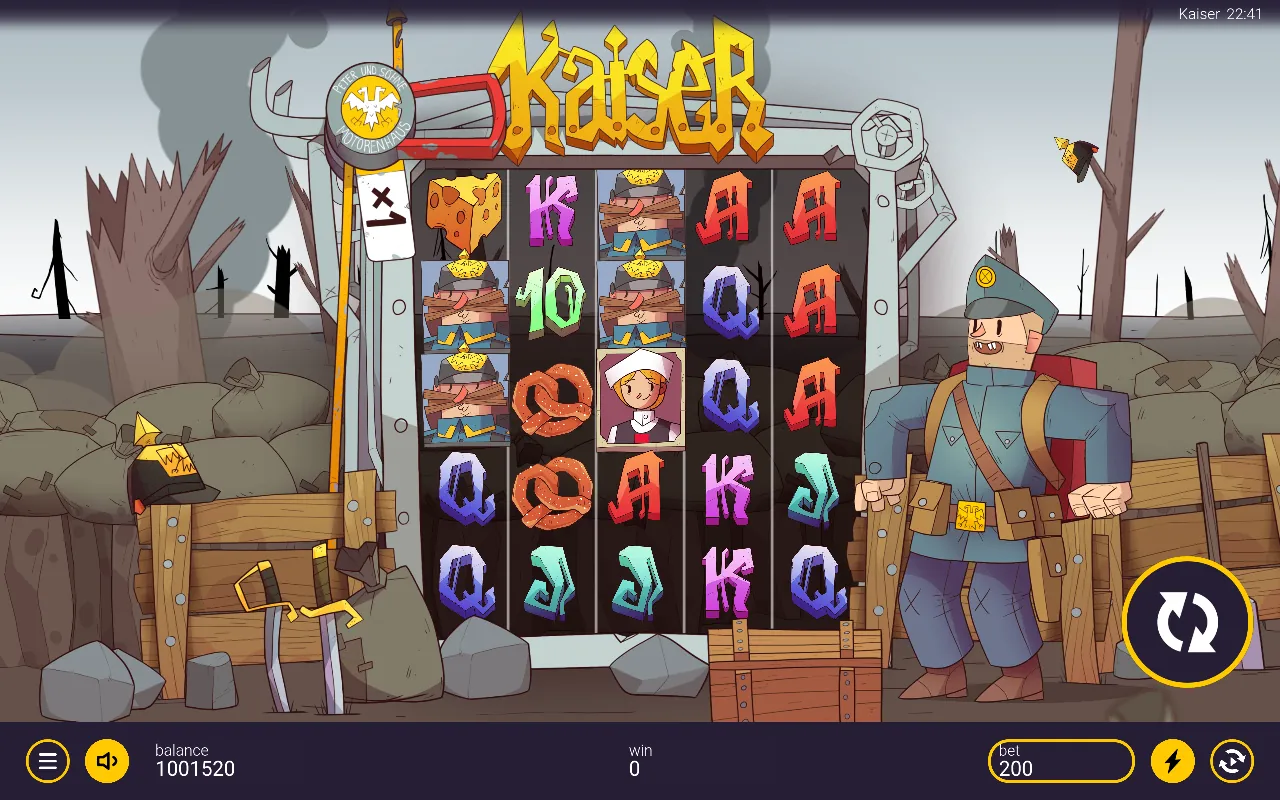
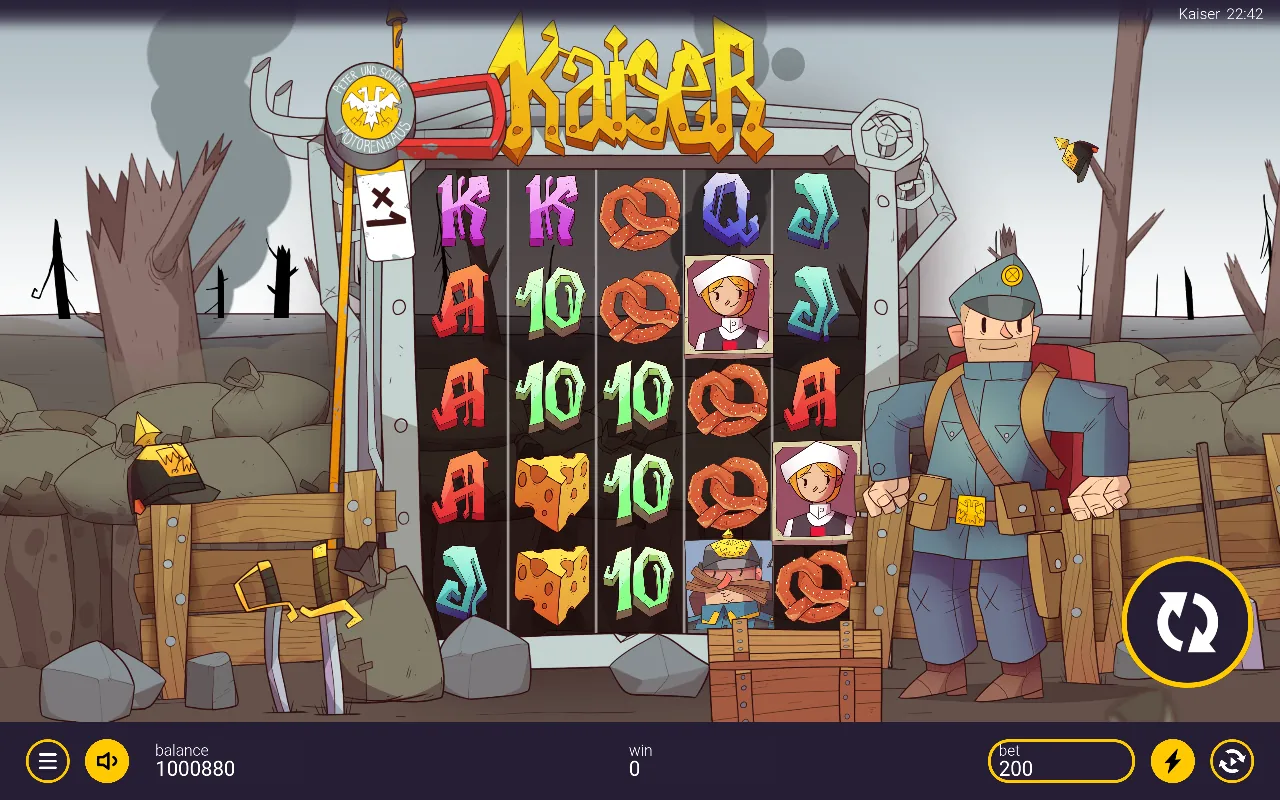
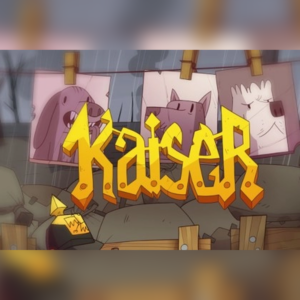
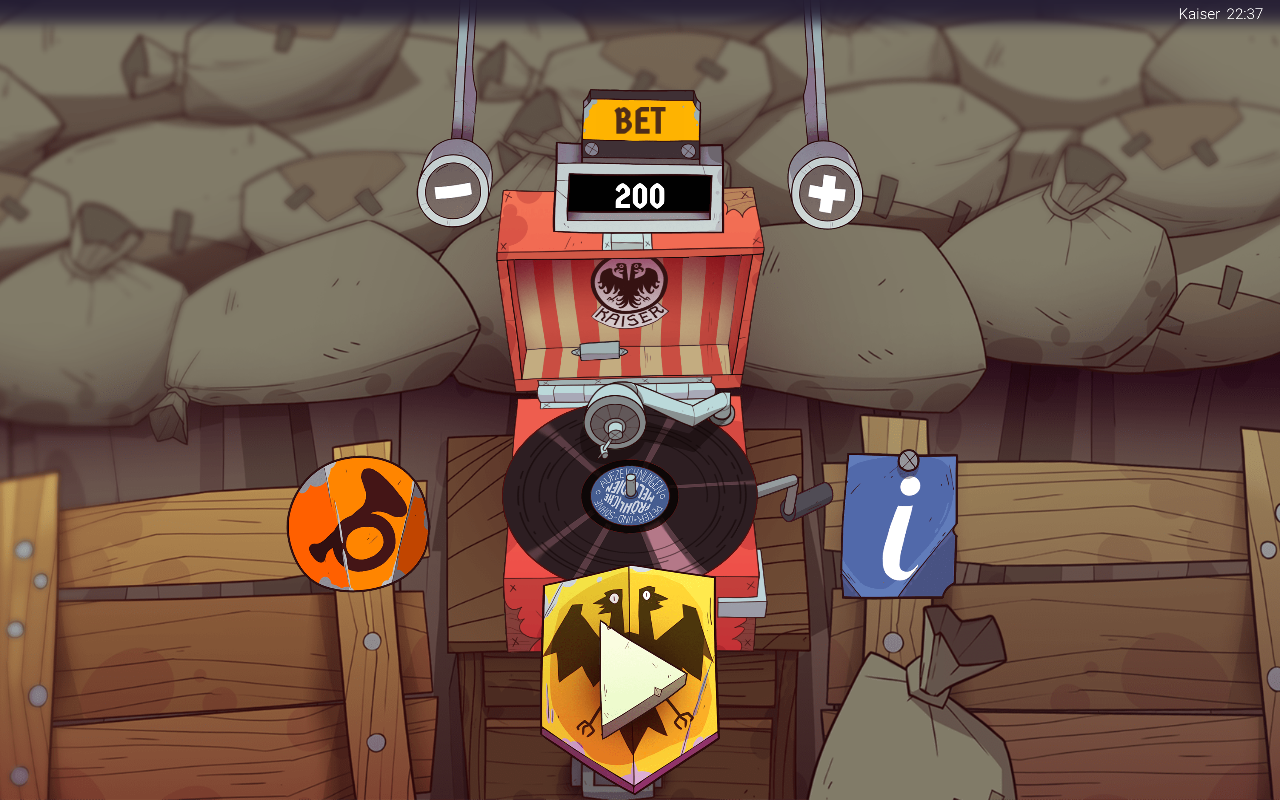
Burlap sandbags stitched with twine, plank barricades riveted with iron, and a black imperial eagle stamped beneath the title: Kaiser sets its reels inside a First World War trench dugout, hand-drawn, grubby and painterly in a way few war-themed slots attempt. Peter & Sons have gone bleaker here than in Animafia or Bad Santa, and the grimy, earthy palette suits them.
The game runs on a 5×4 grid with a 97.00% RTP, a figure well above the industry average and the strongest number the game has. Everything else rests on wilds: they arrive in bunches, they multiply, and collecting scatters pushes both systems further. It’s a lean feature set doing all of its work in one direction.
Symbols and Pays
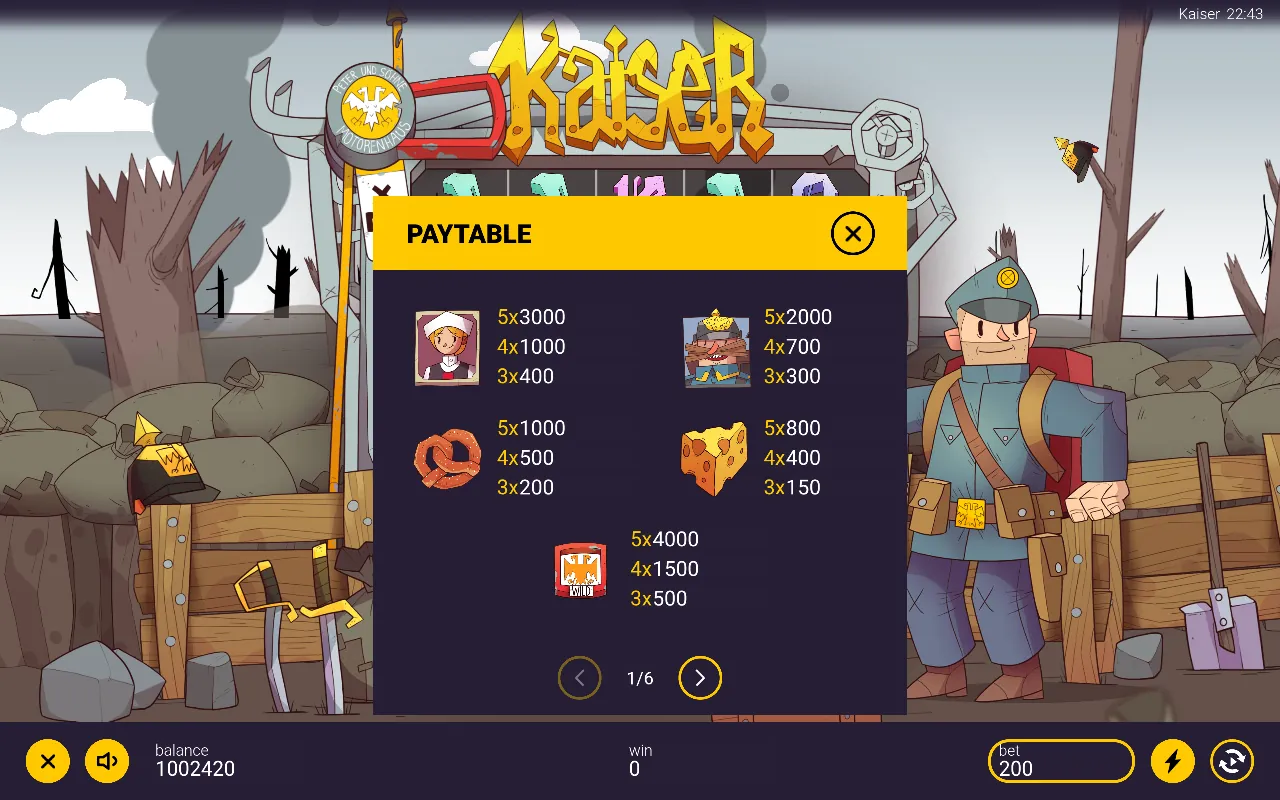
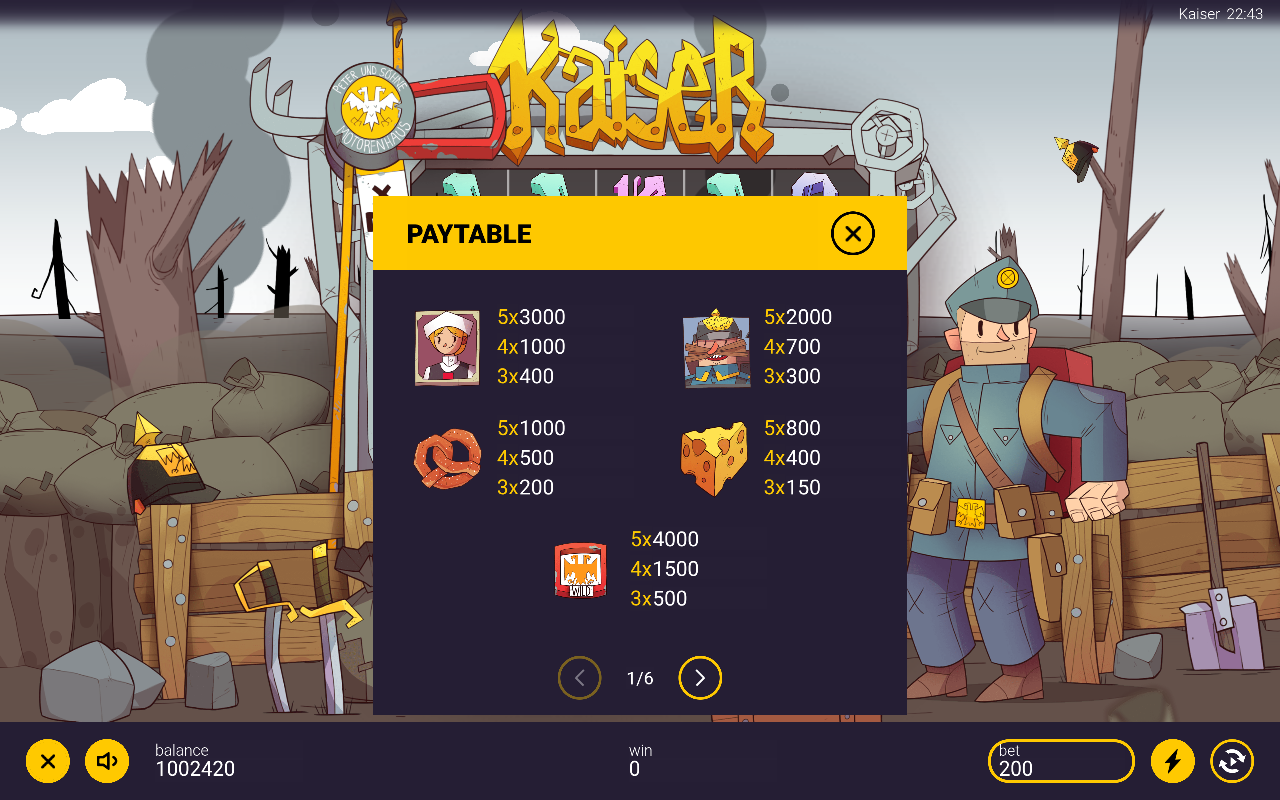
The paytable stays on theme. The Kaiser Emblem leads, followed by a Woman, a Crown Platter, a Pretzel and a Cheese, with every win paying as a multiple of the total bet. The values below are for three, four and five of a kind respectively.
- Kaiser Emblem – 2.5x, 7.5x, 20x the total bet
- Woman – 2x, 5x, 15x the total bet
- Crown Platter – 1.5x, 3.5x, 10x the total bet
- Pretzel – 1x, 2.5x, 5x the total bet
- Cheese – 0.75x, 2x, 4x the total bet
That’s a modest ladder, and it descends in even steps rather than dramatic drops. The pretzel and the cheese are the trench rations of the board: frequent, filling, and never going to make anybody rich. The more interesting reading is what the ladder doesn’t contain. There’s no premium tier waiting above the Emblem, no jackpot symbol, no bonus-pays row outside the free spins round.
In practical terms the top of the game is the top of that ladder: 20x the total bet for five Emblems, with everything above that built by the wild system stacking wins the base pays can’t reach alone. The ceiling on any single spin is therefore whatever the random wilds, the multiplier and the free spins round can assemble together, and the game itself sets no fixed figure above the paytable. The wilds are the only visible route to anything resembling a headline result, which is exactly how the rest of the game is built.
The wild is an orange shield marked with its own name. It substitutes for the paying symbols, and everything else it does belongs to the feature system covered below. The scatter, a bird-and-pig icon, doesn’t pay on its own either: its whole job is to be collected.
Random Wilds and the Wild Multiplier
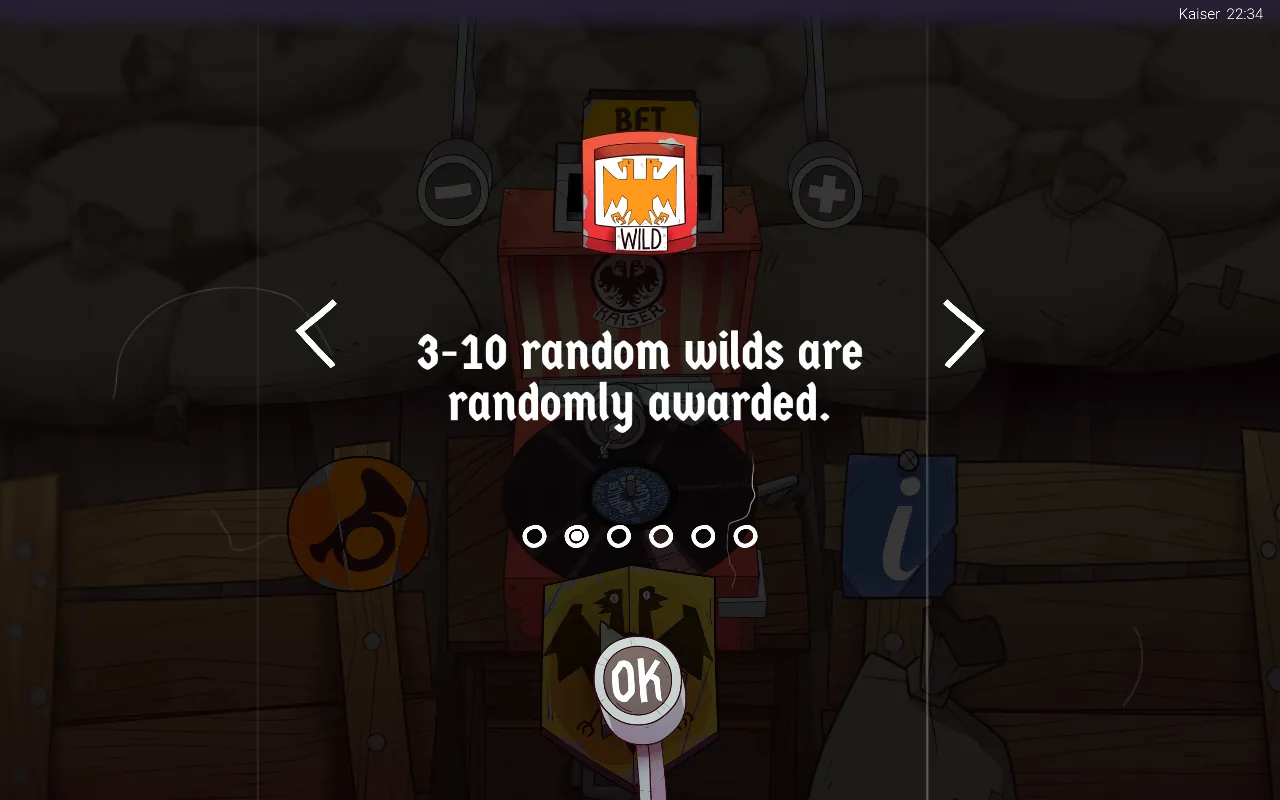
Wilds in Kaiser don’t sit on fixed reel positions. They’re awarded at random, with between three and ten of them landing at once. A shower of ten wilds across a 5×4 grid can cover serious ground, and even a small drop of three changes what any given spin can connect.
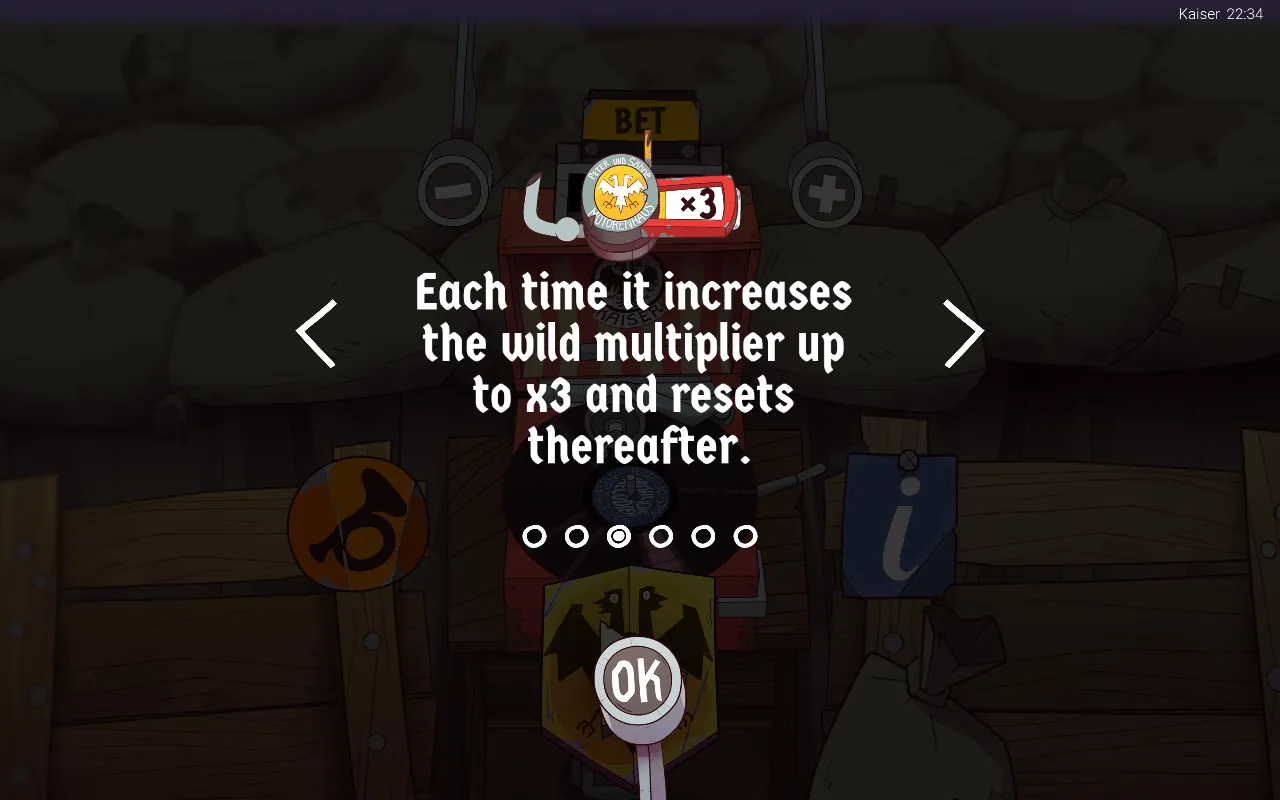
Every wild that appears also pushes a running wild multiplier upward, to a cap of x3. Once that cap is reached the multiplier resets, and the count starts again from the next wild. The reset is the built-in brake on the system: multipliers climb, peak, and start over rather than compounding indefinitely.
Put as a sequence, one cycle of the system runs like this:
- Wilds land on the reels, anywhere from three to ten at a time.
- Each wild that appears nudges the wild multiplier up by one step.
- The multiplier climbs to its cap of x3.
- On reaching the cap, the multiplier resets and the climb begins again.
The practical effect is that the multiplier’s value depends on timing. A wild-heavy stretch that lands while the counter sits at x2 or x3 pays noticeably more than the same stretch arriving right after a reset. The system rewards streaks of wilds rather than any single one, and a reset arriving mid-streak is the difference between a good run and a great one.
Scatter Multiplier Boost
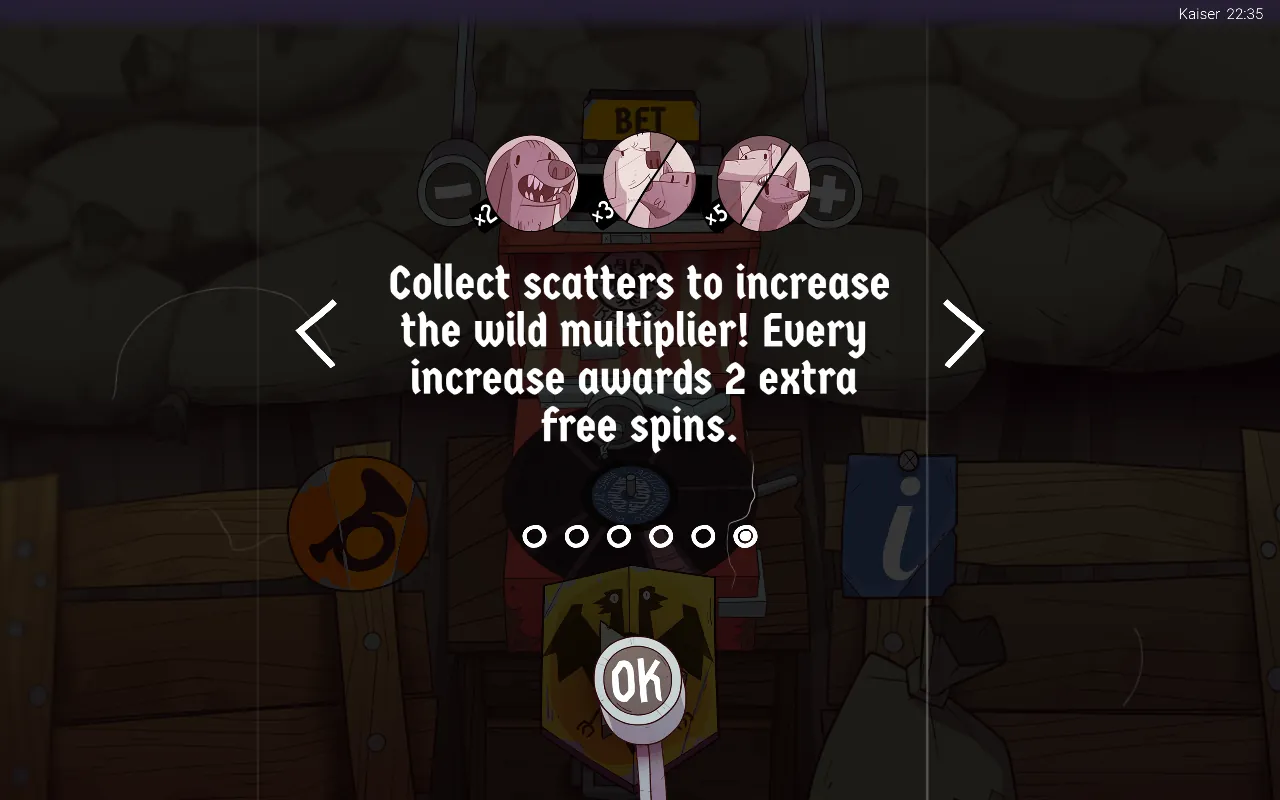
The scatter is the other half of the design. Collecting scatters raises that same wild multiplier, and every increase pays out an immediate reward: two extra free spins added to the round. Each increase is a double benefit, lifting the multiplier of the feature while extending the time you spend inside it.
The three systems feed each other in a loop. Scatters raise the multiplier, the multiplier makes the random wilds worth more, and the extra spins give both more room to work. Nothing in Kaiser exists outside that loop, which is a compact way to build a game but leaves little variety for players who like a mixed feature diet.
It also means the scatter is carrying more weight than a scatter usually does. In most slots it’s a trigger and nothing more; here it’s a trigger, a multiplier fuel source and the round’s only route to more spins, all at once. The design puts a lot of the game’s interest onto one symbol, and how much a session gives back tracks closely with how often that symbol shows up.
Free Spins
The round opens with seven free spins once a third scatter is collected. Seven is a short round by any standard, and the scatter boost is what stops it feeling thin: every multiplier increase during the round adds two more spins, so a scatter-rich round can grow well past its starting count.
Inside the round, the same machinery runs harder. Random wilds still land in bunches of three to ten, the multiplier still climbs to x3 before resetting, and the scatters still feed both systems. The round retriggers in effect through that scatter collection, with no separate retrigger mechanic layered on top.
The round’s shape, in short:
- Trigger: three scatters collected
- Starting award: seven free spins
- Retrigger route: every scatter-multiplier increase adds two extra free spins
- Active systems: random wilds (three to ten) and the wild multiplier, capped at x3
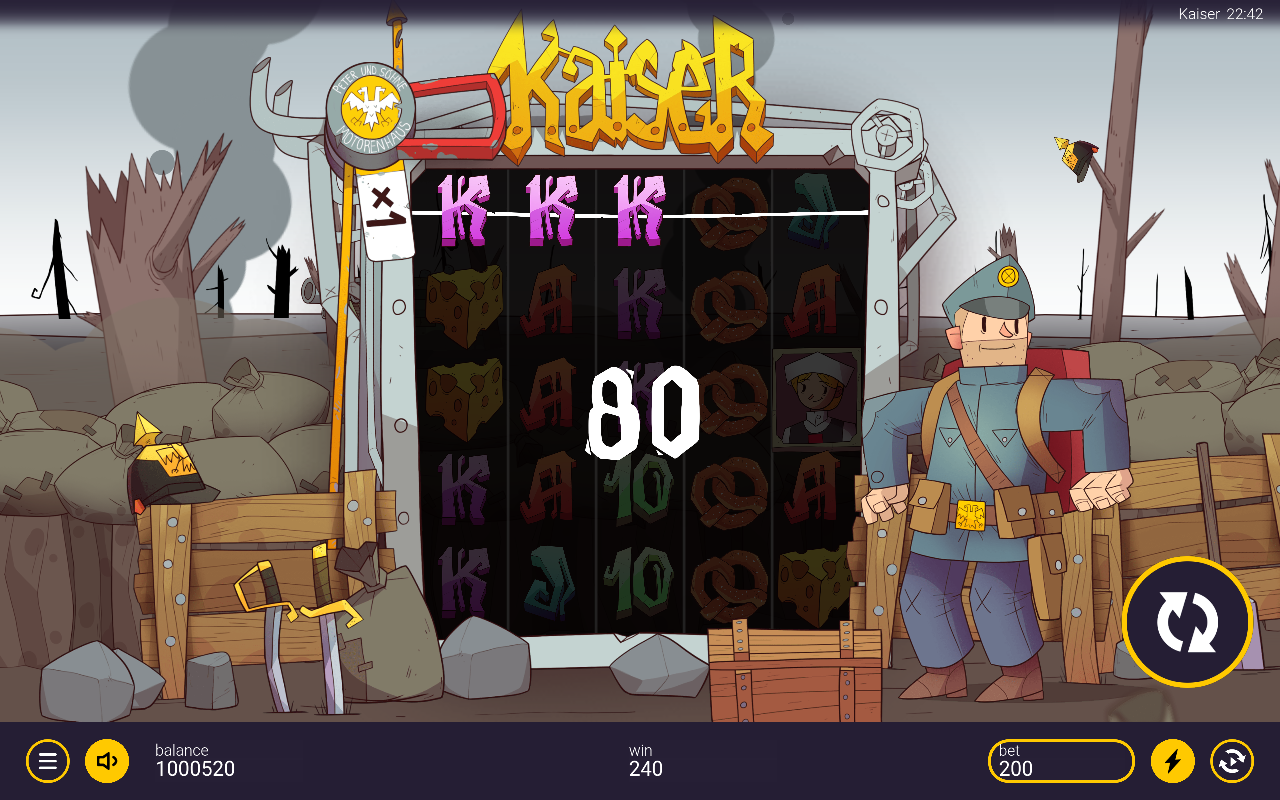
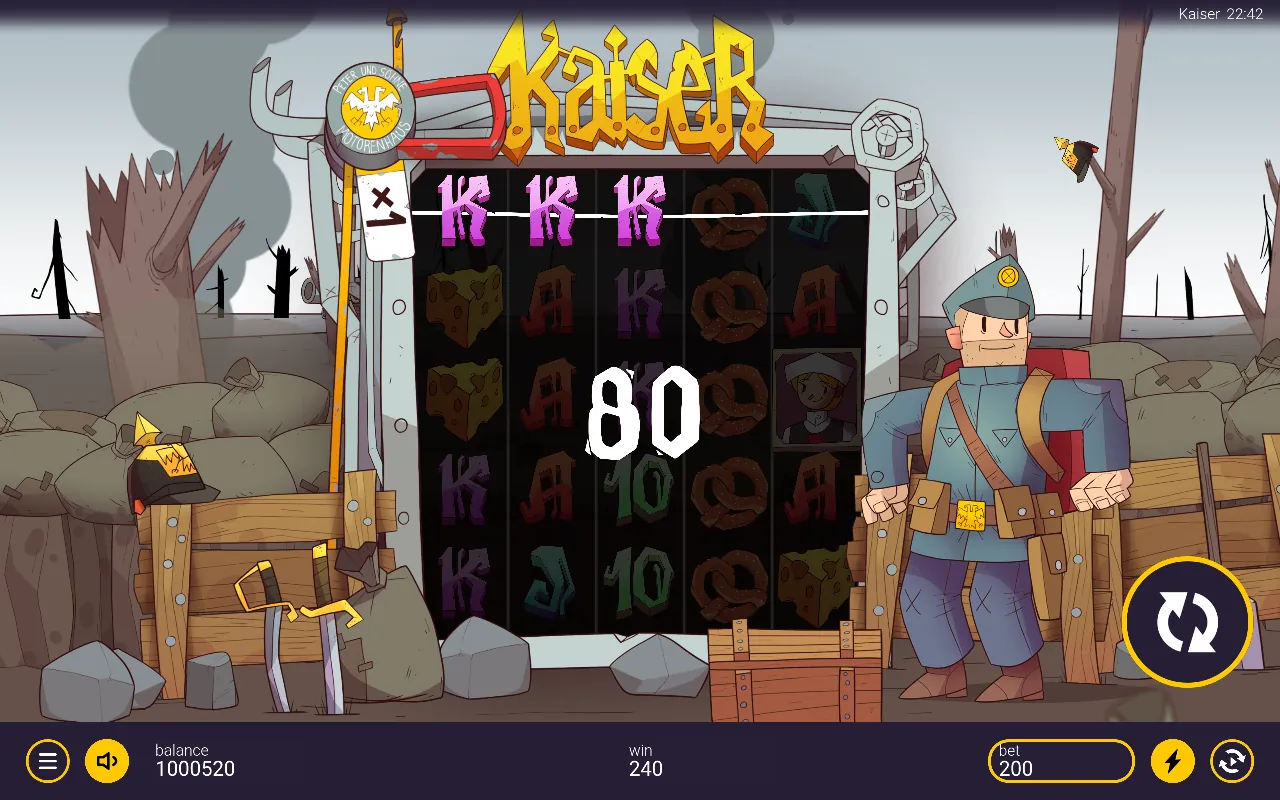
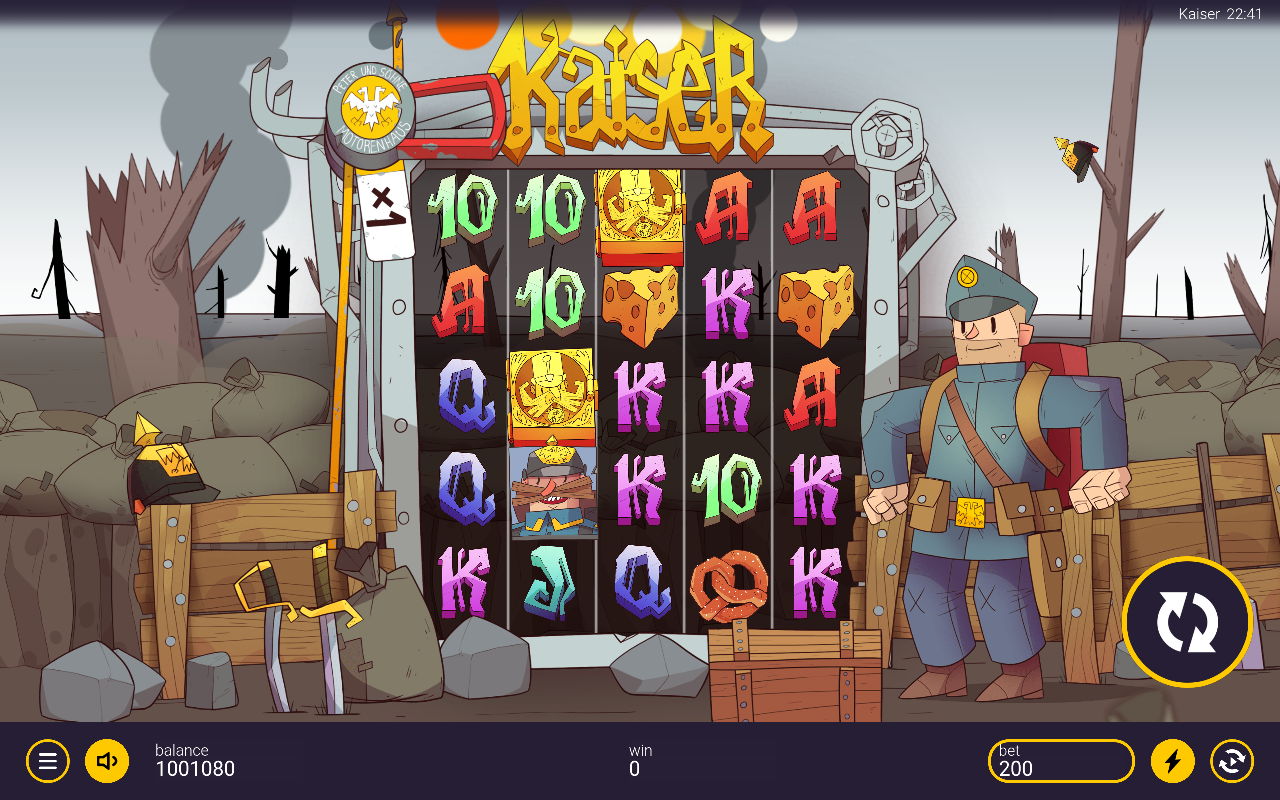
That frame is the shape of the game’s bigger moments. A 766-credit win on the 200-credit default bet, built from a cluster of wild-labelled symbols across the reels while the multiplier indicator still sits at x1. Wins of that kind come from wilds stacking into lines the paytable’s standard symbols can’t reach on their own, and they’re the clearest picture of what this engine produces when it fires.
Our Honest Verdict
Overall Rating: 7.8/10
Playing Kaiser is like holding a quiet post in that dugout: mostly small movements, then a burst of ten wilds and everything happens at once. The one reason to choose it is that burst, plus a look nobody else in the studio’s catalogue has. Everything you do here feeds the same loop, and the loop pays out at 97.00%, which is a genuinely rare return.
The strength is focus. Scatters, wilds and the multiplier all push one another, so the game never wastes a mechanic. The weakness is the x3 cap with the reset: just as a streak builds momentum, the counter drops back to nothing, and a paytable topping out at 20x gives the floor no rescue.
It’s a good fit for players who enjoy watching a system tick over and bank a generous long-run return. Anyone chasing the big four- and five-figure multiples won’t find them in this trench. For everyone else, Kaiser’s little war of attrition is well worth garrisoning.
Kaiser FAQs
-
What is the RTP of Kaiser?
Kaiser has an RTP of 97.00%, which is well above the industry average and one of the game’s strongest selling points. -
Who makes Kaiser?
Kaiser is made by Peter & Sons, the studio behind titles such as Animafia and Bad Santa. -
What is the grid size of Kaiser?
Kaiser plays on a 5×4 grid of reels. -
When is Kaiser released?
Kaiser’s release date is 22 August 2023. -
How do you trigger free spins in Kaiser?
Collect three scatters to trigger the free spins round, which awards seven free spins. -
What does the wild do in Kaiser?
Wilds are awarded at random, with three to ten landing at once. Each wild that appears increases a wild multiplier up to x3, after which the multiplier resets. -
What happens when you collect scatters in Kaiser?
Collecting scatters increases the wild multiplier, and every increase awards two extra free spins on top. -
Can free spins retrigger in Kaiser?
Yes, in effect. Beyond the initial three-scatter trigger, every increase in scatter count raises the wild multiplier and adds two extra free spins to the round.