









King’s Mask: Eclipse of Gods Slot Review
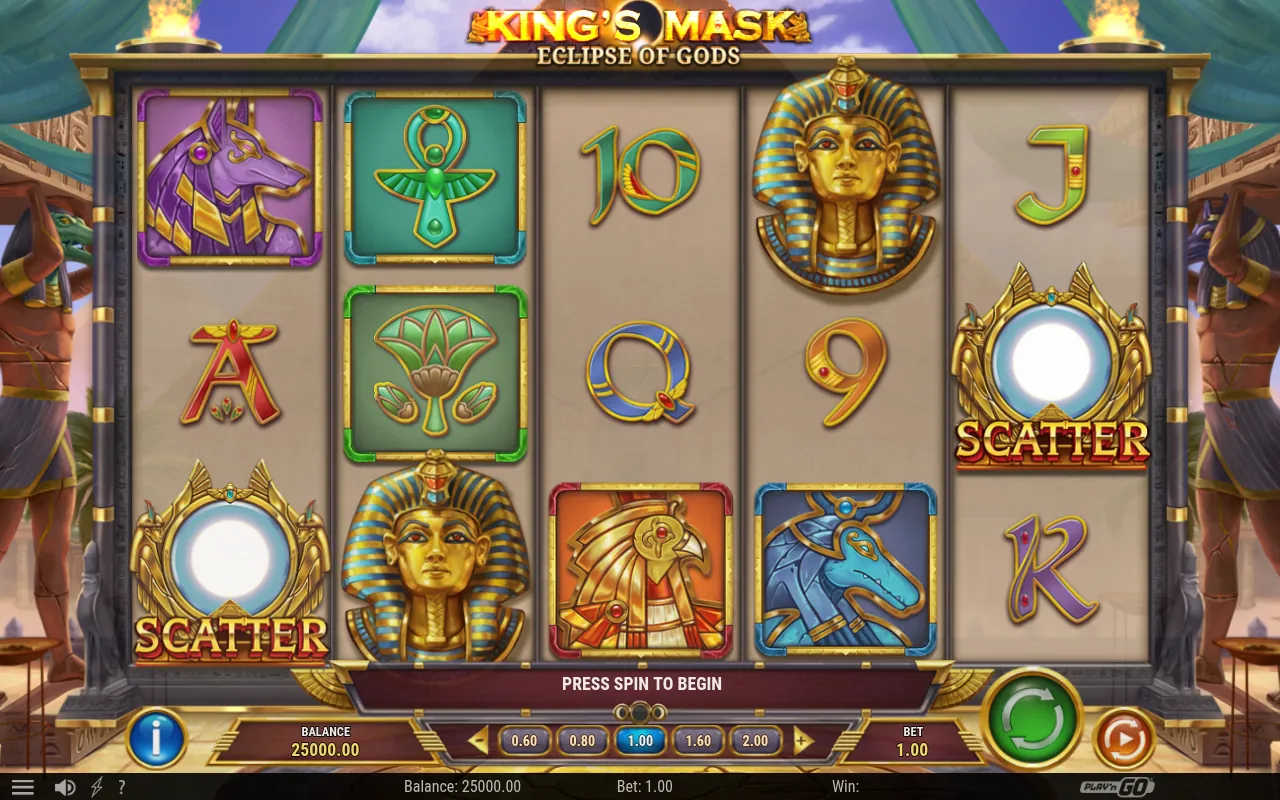
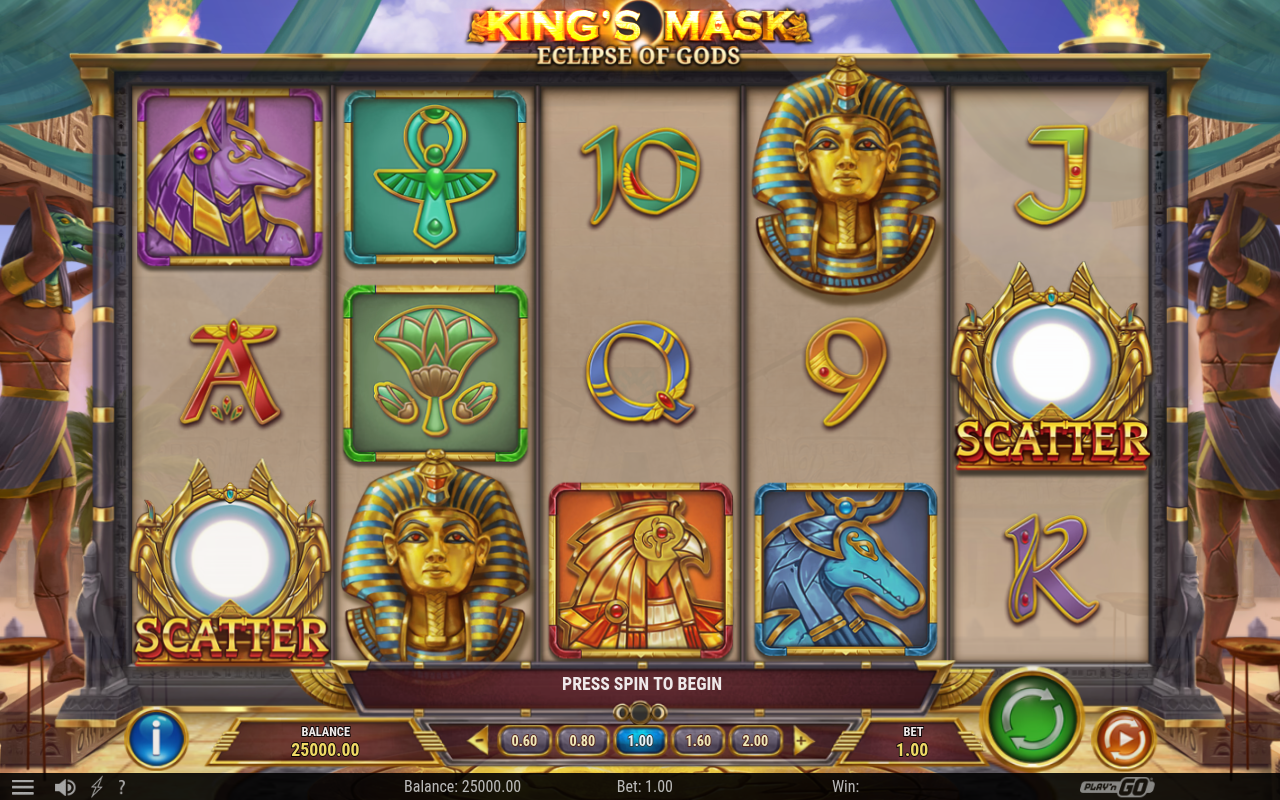
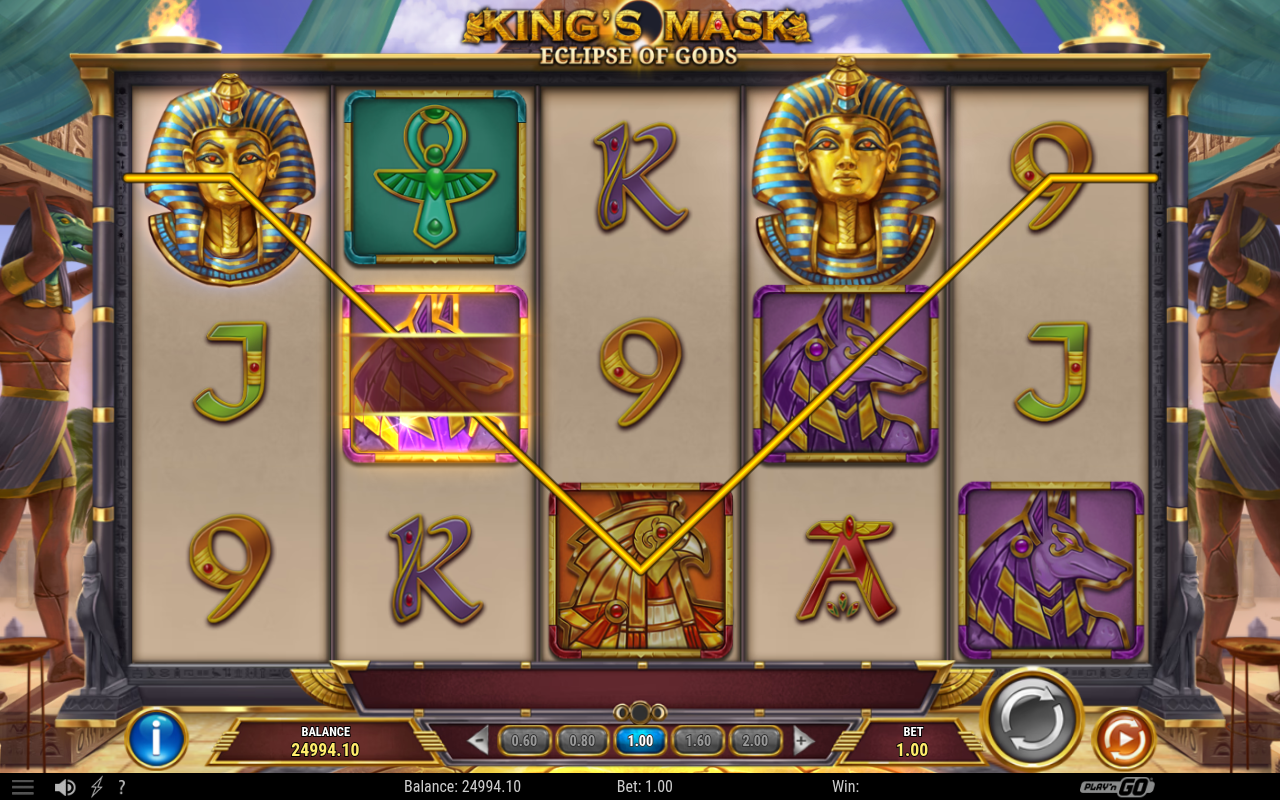
An Egyptian temple courtyard sits under a pale blue sky, braziers burning on gold-trimmed stands, a jackal-headed statue watching from the right-hand edge and a pyramid faint behind it. King’s Mask: Eclipse of Gods is a follow-up to a mask we first covered in 2022, and Play’n GO has painted this one in some of its richest colours. The maths underneath is another matter entirely.
The figure doing the damage is 84.28% RTP, paired with high volatility on a 5×3 grid with 20 fixed paylines. That return sits well below where this studio usually pitches even its budget Egyptian titles, and it colours everything else the game does. Neighbours like Rich Wilde and the Tome of Madness and Doom of Egypt keep this stretch of the catalogue busy, and both give you a fairer price of admission.
Symbols and Pays
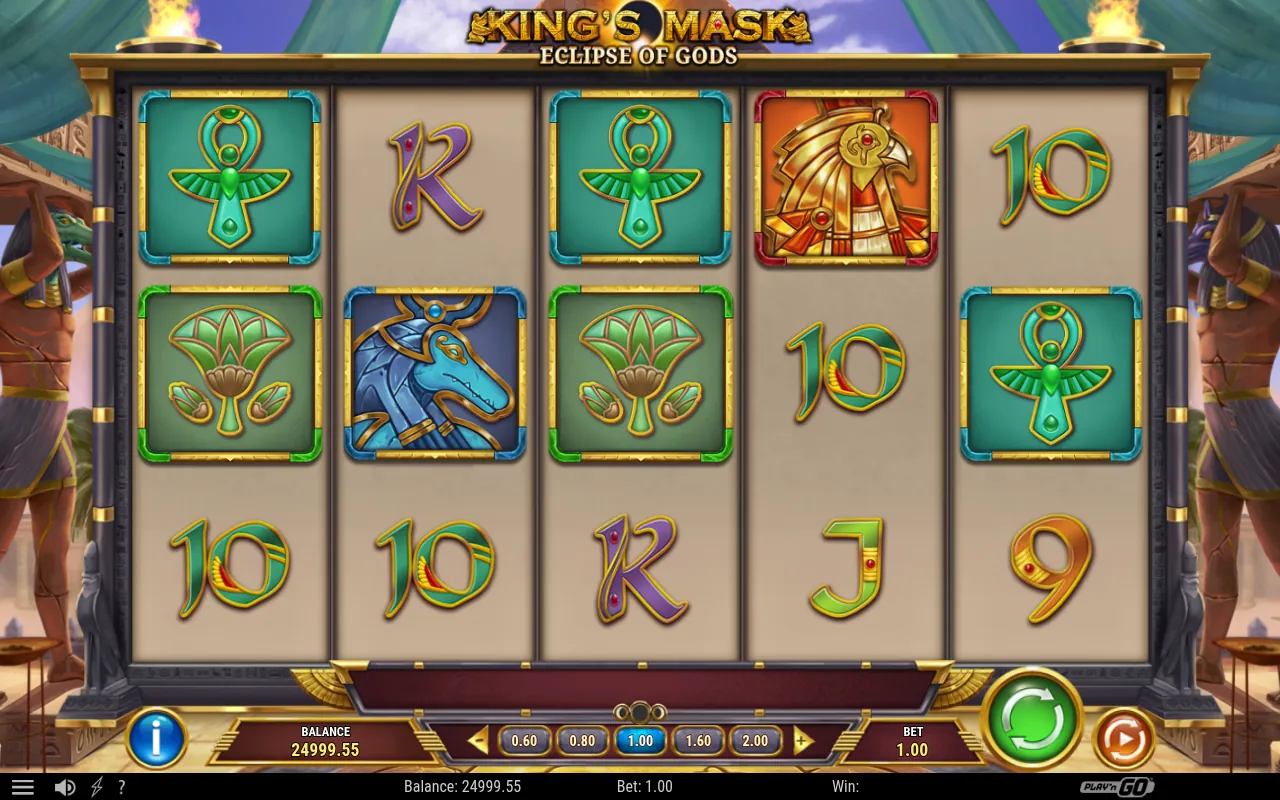
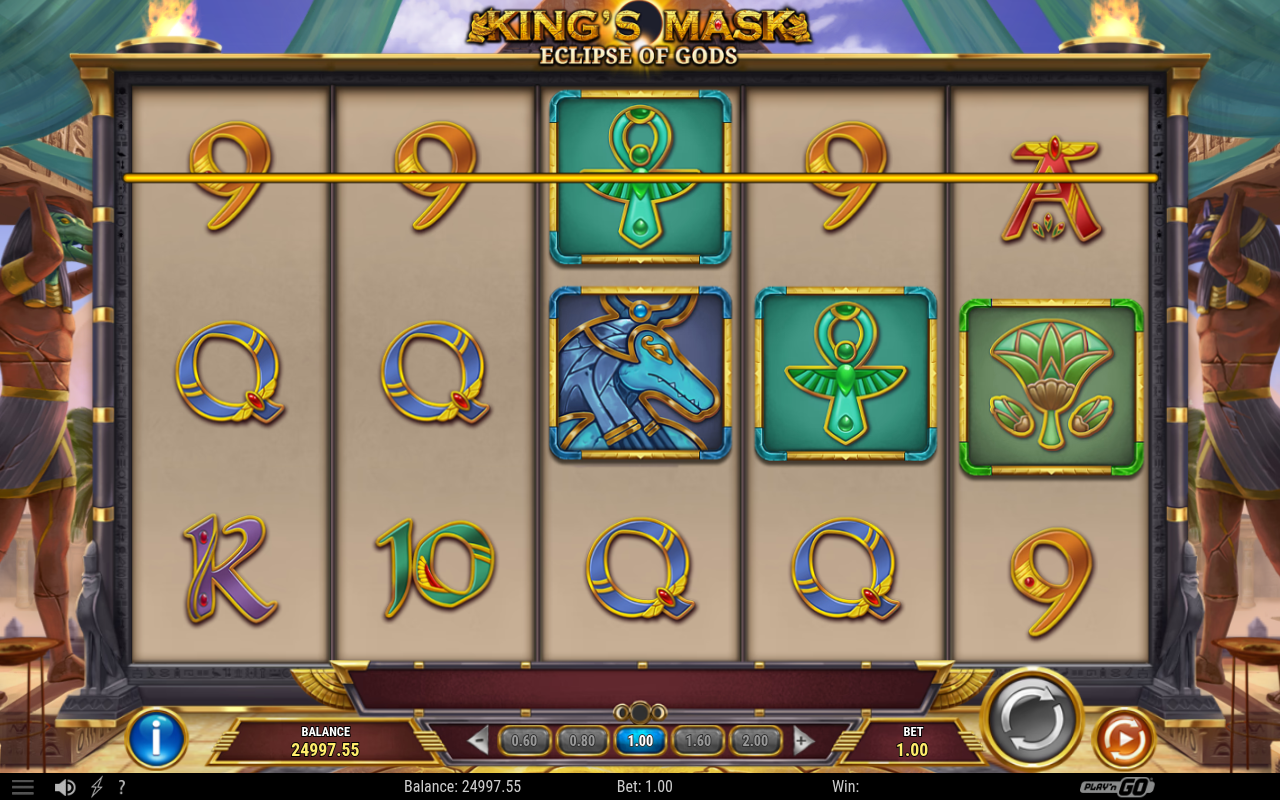
Wins pay left to right from the leftmost reel, and only the highest combination counts on each active line. Multiple line wins in a single round are added together, as are any wins from features or Scatters. It’s a conventional payline setup, and the game doesn’t complicate it.
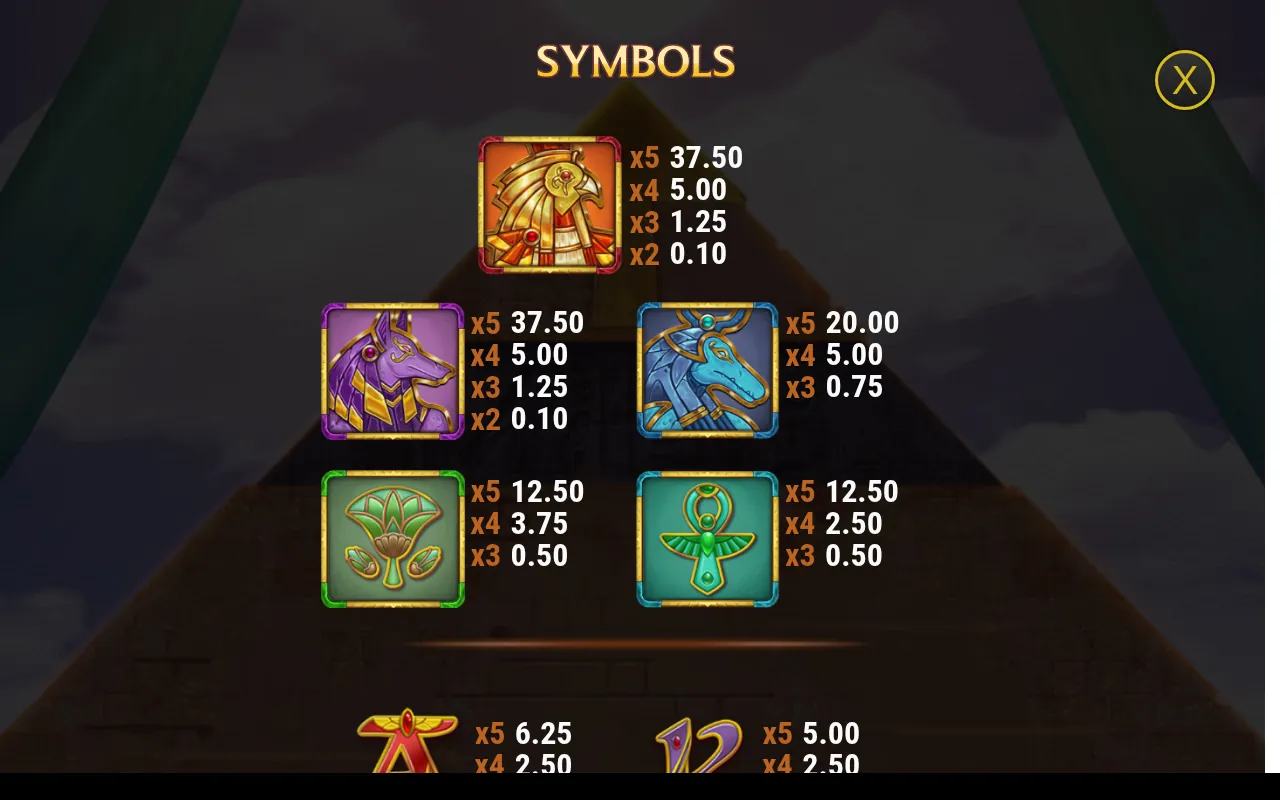
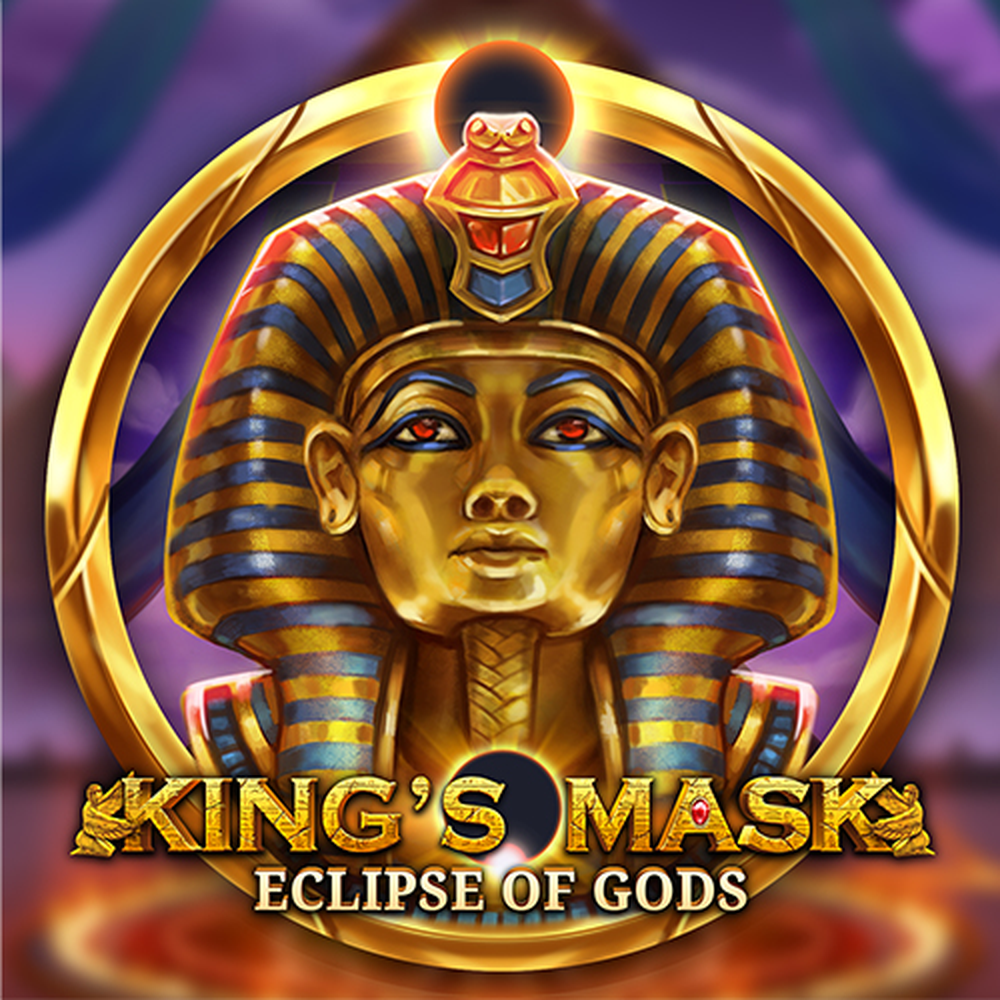
The premium tier is drawn straight from the pantheon: an orange bird wearing the Horus headdress, a purple Anubis, a blue wolf, then the green lotus and teal ankh below them. The royals are the Ace, Ten and Jack, and they pay only from four of a kind. It’s a steep pyramid.
Two quirks stand out at the top. The bird and Anubis both pay from just two of a kind, a small mercy in a high volatility game where early reels usually decide everything. And the premiums aren’t equal among themselves: the bird and Anubis share a row, but the wolf, lotus and ankh each step down on their own.
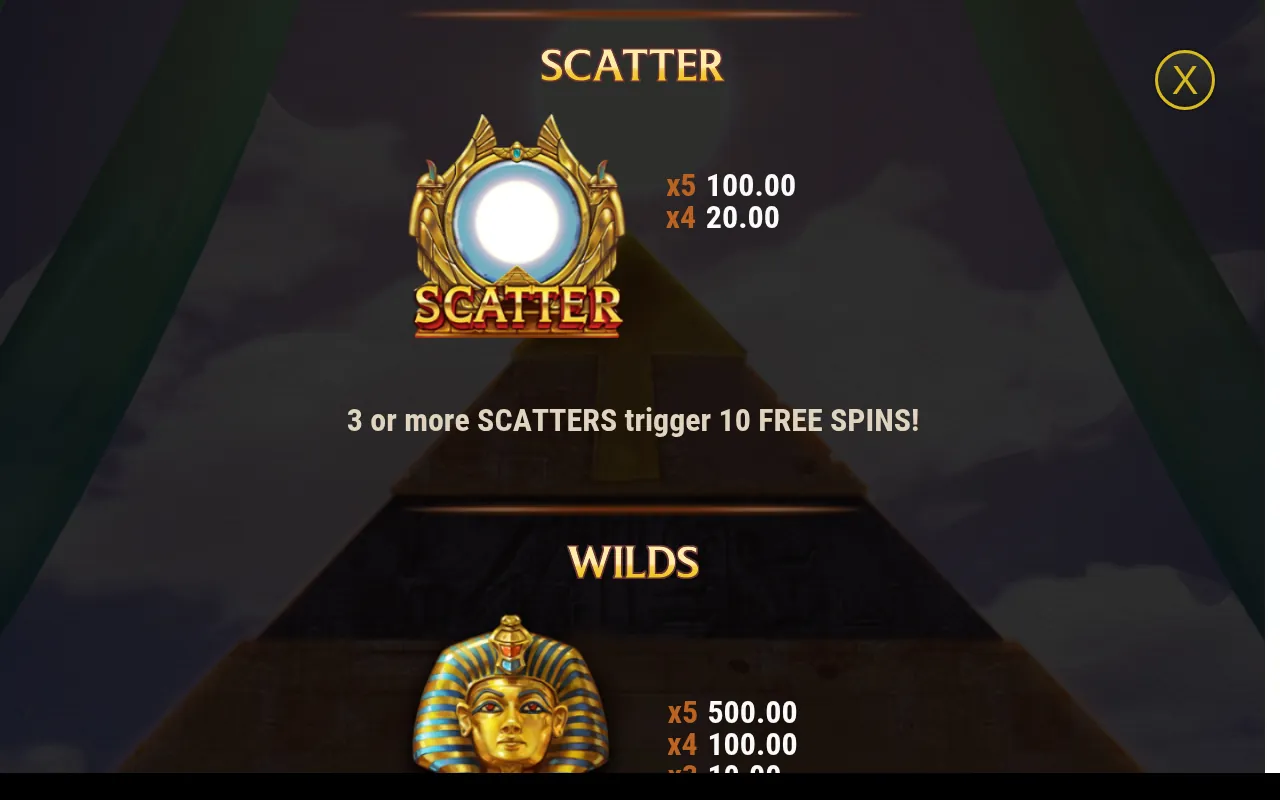
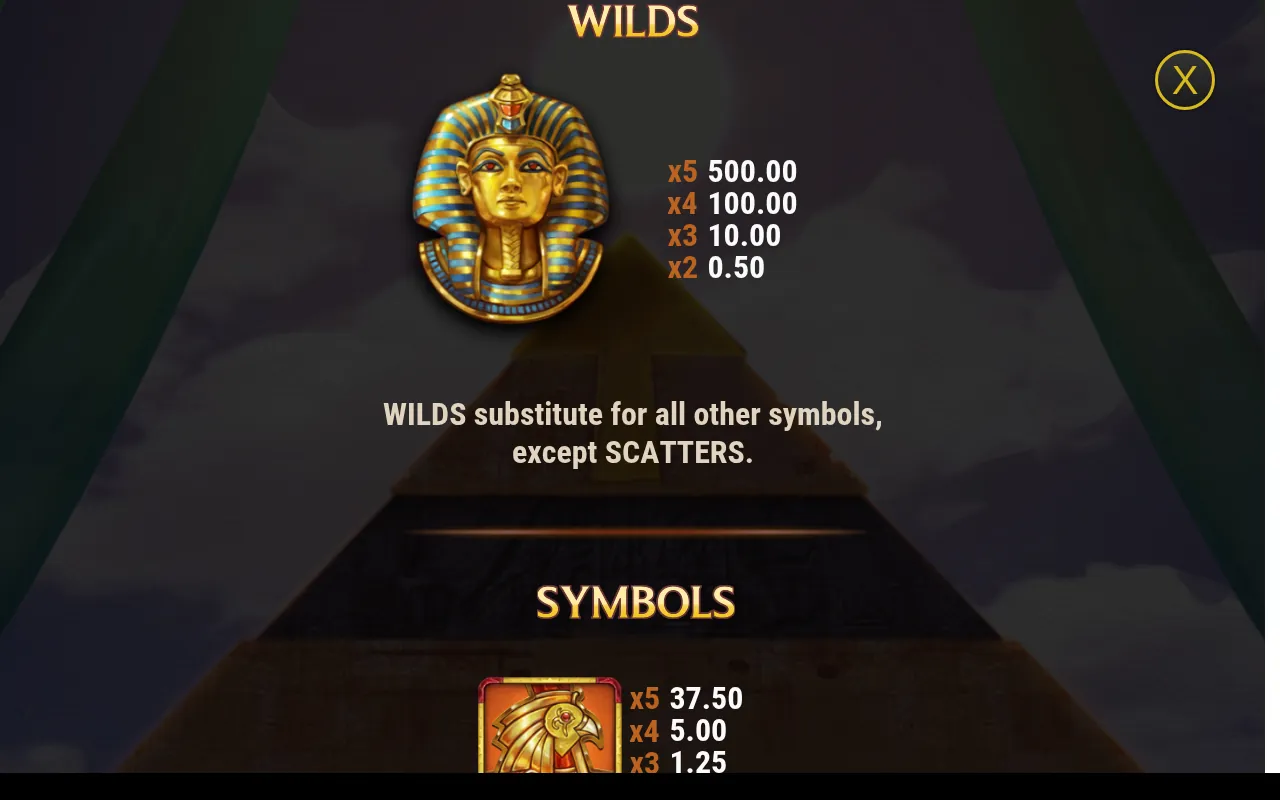
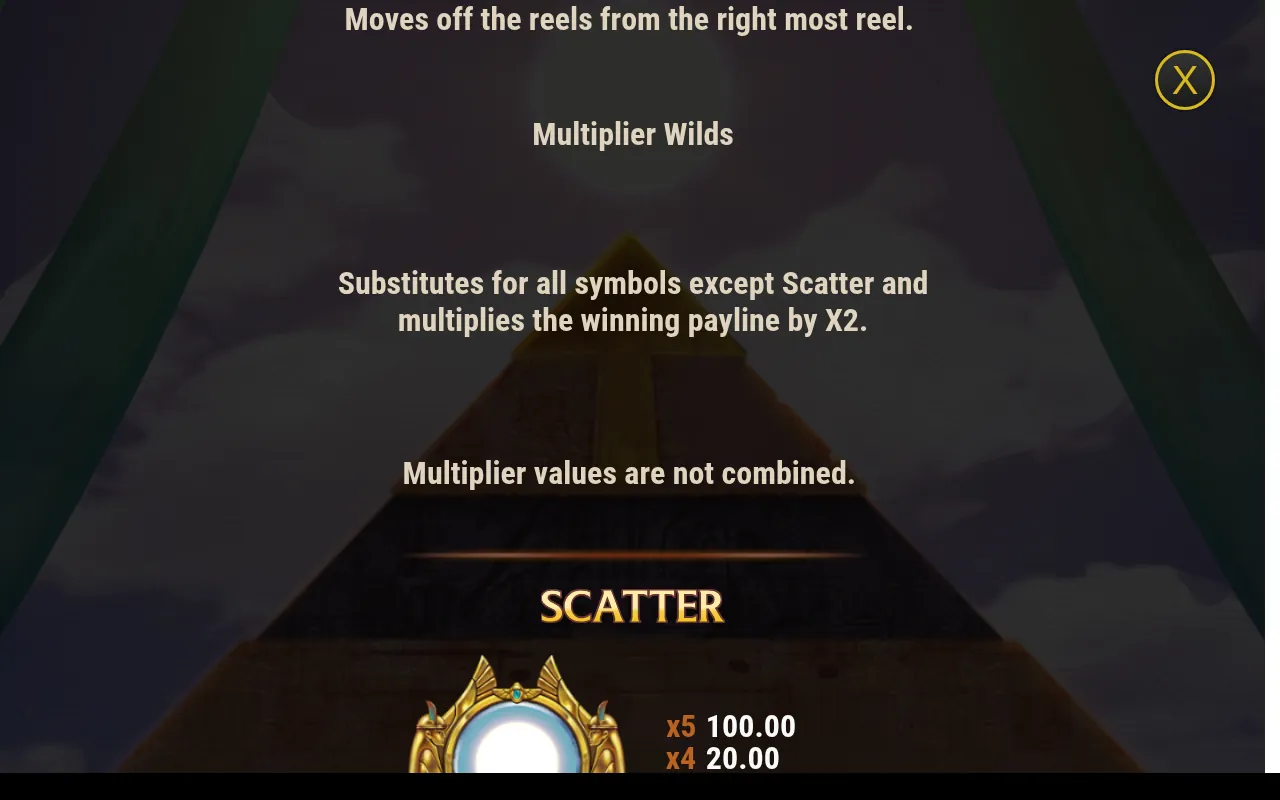
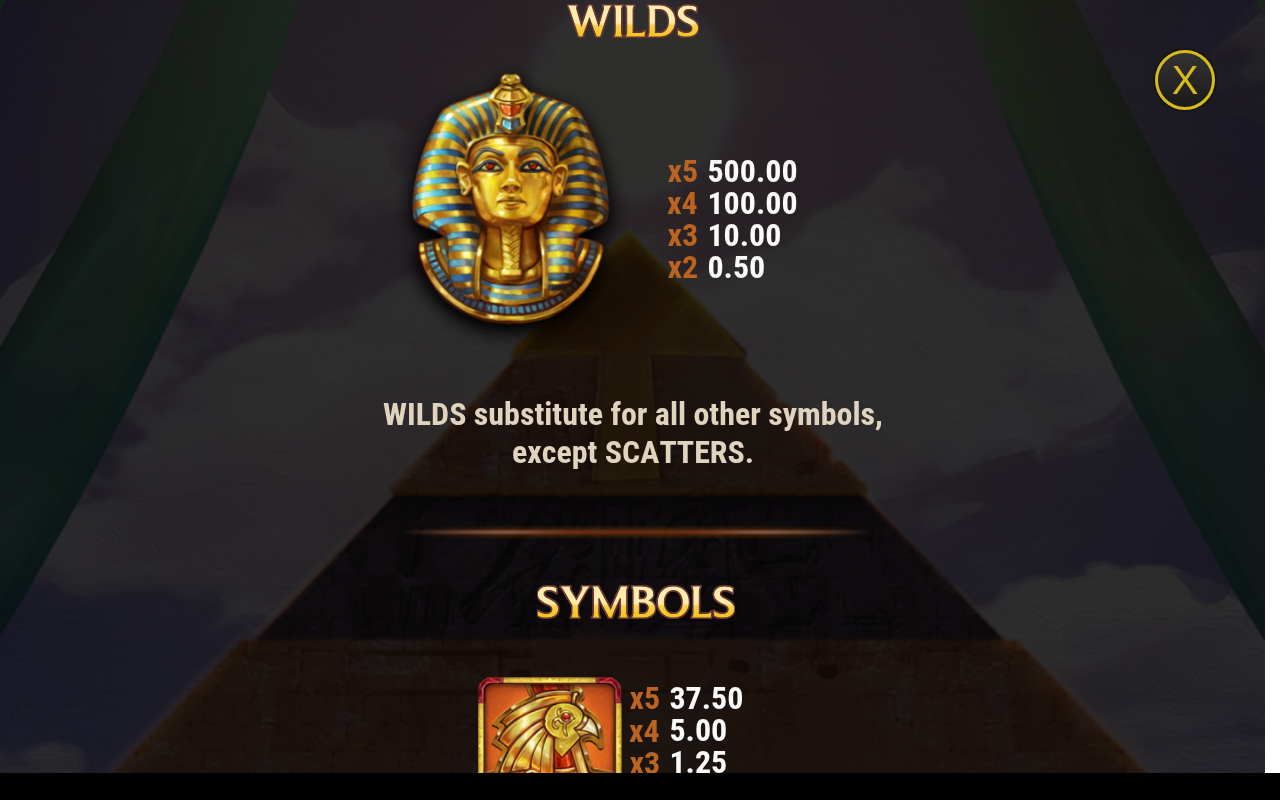
The Pharaoh mask Wild substitutes for every symbol except the Scatter, and it’s also the richest symbol on the reels by some distance. The golden winged-orb Scatter triggers the free spins at three or more and pays on its own, regardless of paylines.
The paytable, in coin values:
- Wild (Pharaoh mask): 0.50 for two, 10.00 for three, 100.00 for four, 500.00 for five
- Orange bird (Horus headdress) and Anubis: 0.10 for two, 1.25 for three, 5.00 for four, 37.50 for five
- Blue wolf: 0.75 for three, 5.00 for four, 20.00 for five
- Lotus: 0.50 for three, 3.75 for four, 12.50 for five
- Ankh: 0.50 for three, 2.50 for four, 12.50 for five
- Ace: 2.50 for four, 6.25 for five
- Ten and Jack: 2.50 for four, 5.00 for five
- Scatter: 20.00 for four, 100.00 for five
That top-heavy spread is classic high volatility: the Wild carries most of the ceiling, and the royals barely register. Four of a kind Aces pays barely more than a five-symbol Jack. The gaps between tiers are wide, and the game is built around them.
Scale tells the story. Five Wilds pay 500.00 coins; five of the next-best symbol, the bird or Anubis, pay 37.50. Everything above the royals is a step on a ladder that only the Wild tops, and a full Wild line is what the whole paytable leans towards.
The Eclipse: Random Wild Features
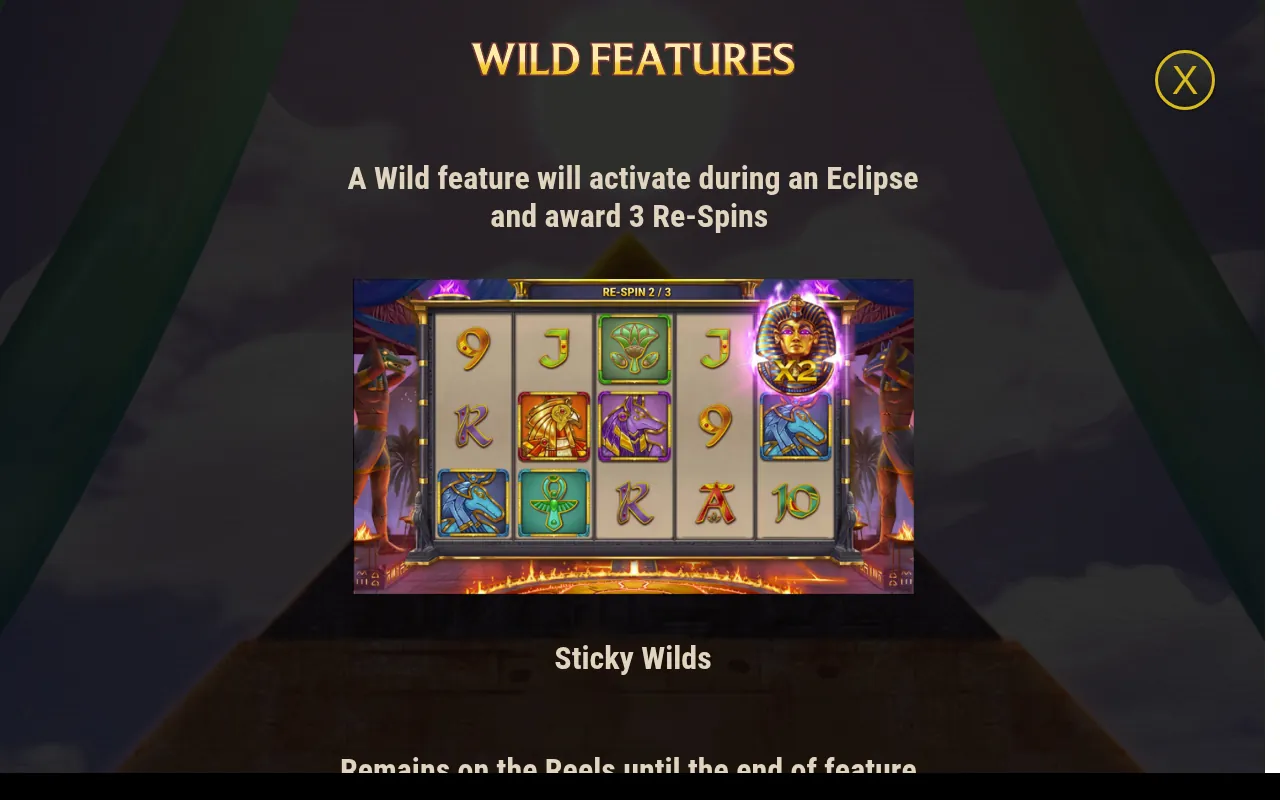
The heart of the game is its trio of Wild behaviours. During an Eclipse, which can strike at random on any base-game spin, a Wild feature activates and awards 3 Re-Spins. You can’t influence which of the three arrives; the pick is random and out of your hands.
Each behaves differently:
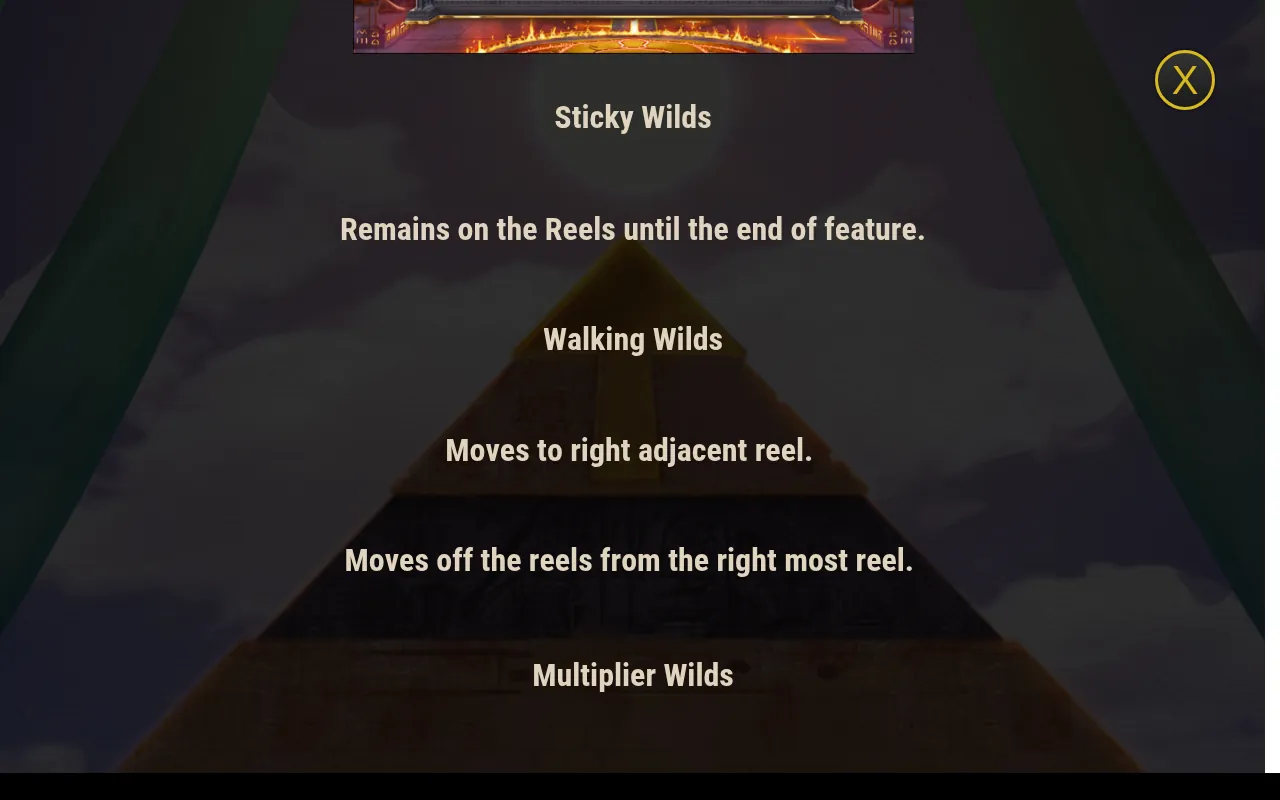
- Sticky Wilds hold their position on the reels until the feature ends
- Walking Wilds shift one reel to the right on each new Re-Spin, eventually stepping off the rightmost reel
- Multiplier Wilds substitute for everything except the Scatter and multiply the winning payline by x2; multiplier values don’t combine
Three Re-Spins isn’t much runway. A Walking Wild landing on the leftmost reel gets its full journey; one arriving on reel four is gone almost immediately. Where the Wild lands matters as much as which flavour it is.
The sequence runs on rails once it starts. The feature spins play out one after another, wins are totted up at the end of the round, and the bet can’t be changed while it’s running. All 20 paylines stay active throughout, and any Wild wins follow the usual left-to-right, highest-combination-only rules. Whatever the Eclipse hands you is what you play.
Because Multiplier Wilds never stack, a payline crossed by two of them still pays double rather than quadruple. That single rule caps what the feature can do in a way Sticky and Walking Wilds aren’t capped: their value depends on how long they survive, not on a ceiling.
Free Spins and Choosing Your Wild
Land three or more Scatters and the free spins round begins with 10 spins. Before a single one plays out, you’re asked to pick which of the three Wild features the round will run with. The initial spin count is the same whichever you choose, so the choice is purely about how you want the Wilds to behave.
The round runs with the same bet and the same number of selected lines as the spin that triggered it. Wilds in free spins follow the same rules as their base-game counterparts: Sticky versions hold, Walking versions march rightwards on each Re-Spin, and Multiplier versions double the payline without stacking.
Each choice writes a different session. A Sticky Wild parked on reel one can sit inside winning lines for the full 10 spins, quietly collecting small pays. A Walking Wild crosses four reels before it leaves, and pays best while it sits over the middle ones, where it lands in more lines at once. Multiplier Wilds don’t persist at all; they’re worth one doubled payline each, and the round only pays big if several arrive together.
That choice is the most interesting decision the game offers. Multiplier Wilds suit a chase for one big line; Sticky and Walking Wilds grind out smaller wins across the full 10 spins. There’s no retrigger rule for the round, so what you pick at the door is what you live with.
Our Honest Verdict
Overall Rating: 6.2/10
The free spins pick is what the whole game hangs on: choosing your Wild, then seeing whether it lands where the choice can pay. The random Eclipse re-spins keep the base game awake, and the temple itself is lovely. It’s a quiet, patient kind of session.
The Wild trio is the best thing here, because all three behave differently enough that the choice genuinely matters. The worst thing isn’t a mechanic at all: 84.28% is a return that costs you real money over any session long enough to notice, and high volatility makes the lean stretches between features stretch further.
For fans of Egyptian slots who want their wilds to do more than substitute, there’s a real game here. For anyone comparing returns before they spin, the maths answers first. The braziers burn beautifully, but the temple keeps a slice of every offering.
King’s Mask: Eclipse of Gods FAQs
-
What is the RTP of King’s Mask: Eclipse of Gods?
The RTP is 84.28%, which is well below the typical range for modern online slots. -
Is King’s Mask: Eclipse of Gods high volatility?
Yes, it’s a high volatility game, so wins tend to be less frequent but larger when they land. -
How many paylines does King’s Mask: Eclipse of Gods have?
It’s a 5-reel game with 20 fixed paylines, and wins pay left to right from the leftmost reel. -
What is the grid size of King’s Mask: Eclipse of Gods?
The game plays on a 5×3 grid of reels and rows. -
How do you trigger the free spins in King’s Mask: Eclipse of Gods?
Three or more Scatter symbols start a round of 10 free spins. Before the round starts, you choose which of the three Wild features to play with. -
What’s the difference between Sticky, Walking and Multiplier Wilds?
Sticky Wilds stay in place until the feature ends, Walking Wilds move one reel to the right on each Re-Spin before leaving the rightmost reel, and Multiplier Wilds double the winning payline, with multiplier values never combining. -
Can you choose which Wild feature activates in the base game?
No. During an Eclipse in the base game, the Wild feature that activates is random and can’t be influenced. The choice only applies to the free spins round. -
Who makes King’s Mask: Eclipse of Gods?
It’s made by Play’n GO, and its release date is 18 July 2024.