














Max The Mathmagician Slot Review
A stage magician’s first rule is never to explain the trick. Max The Mathmagician’s wizard breaks it on purpose, because in his world the sums are the spell. Nor is the theme just decoration: the entire slot revolves around increasing five numbers and multiplying the relevant ones together.
The headline figures: a 96.34% RTP in its default configuration, with a reduced 94.32% version that operators can choose to run instead. Volatility is High, rated four out of five, and the maximum win is 10,000x your stake, a ceiling that sits comfortably mid-table next to modern releases pushing 15,000x and 25,000x. It plays out on a 5×3 grid with 243 ways to win, stakes from 0.10 to 100.00 per spin, and cascades that keep a single spin alive long after it starts.
The studio behind it is Kitsune Studios, a UK outfit distributing its games through Hacksaw Gaming’s OpenRGS platform. It’s a workshop we’ve covered before: The Jack & Rose is also a Kitsune release. So is Henry 8th Calves of Steel, with The Library Overdue alongside it.
Mechanically there are echoes of Reactoonz’s cascades and the multiplier anticipation of Gates of Olympus, though Max keeps things more structured and positional than either. Whether five climbing multipliers can multiply into something special, without the base game’s resets getting in the way, is the question this review sets out to answer.
Base Game & Features
Max The Mathmagician runs its 243 ways across a 5×3 grid, and the provider’s figures put the hit rate at 24.7%, so roughly one spin in four connects. Wins set off cascades, and cascades are where the arithmetic starts earning its keep.
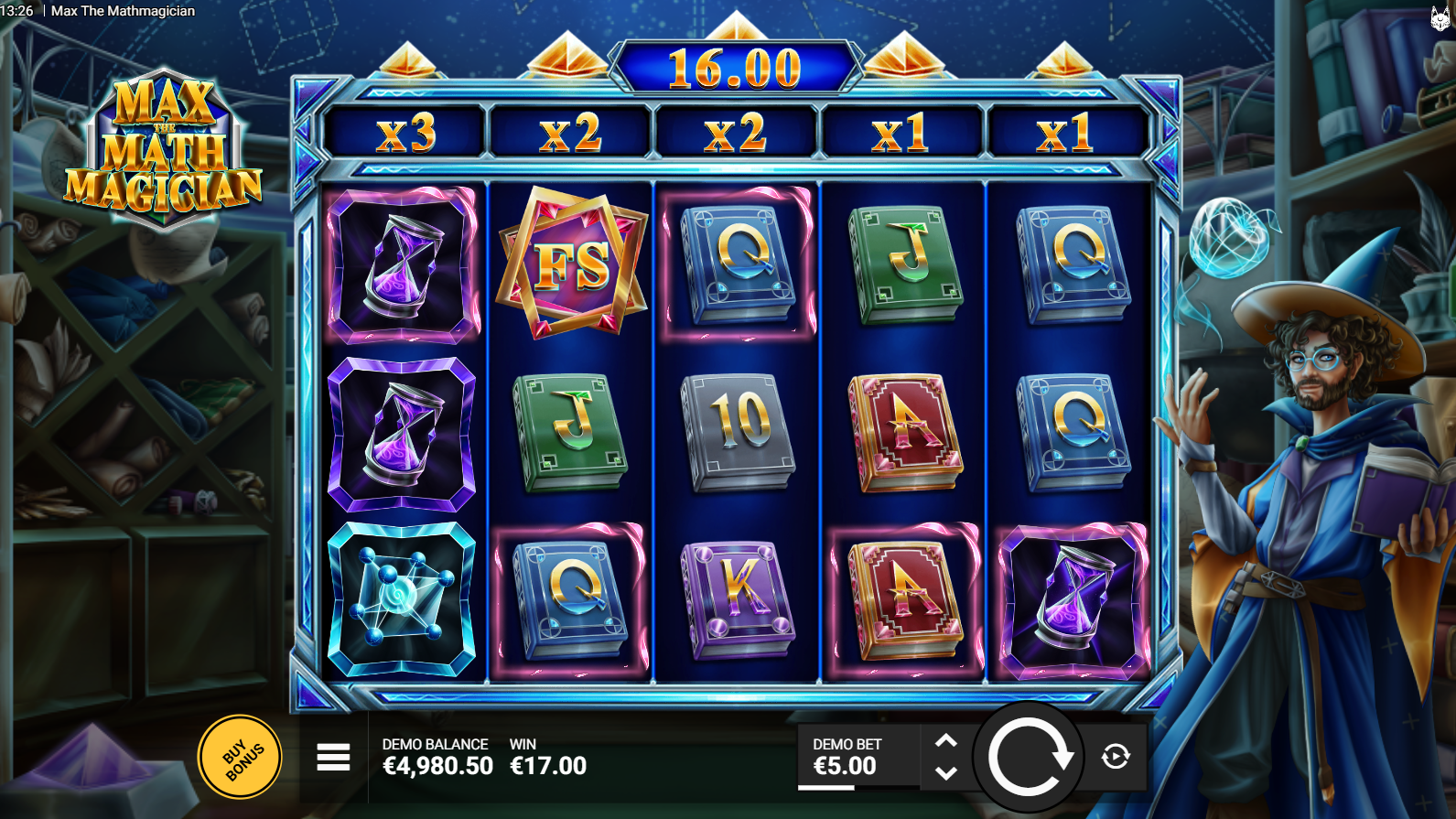
Cascading Wins
Every winning combination is removed from the grid, and new symbols drop into the gaps. If those form further wins, the process repeats, letting a single spin chain several payouts together before the reels settle.
Reel Multipliers
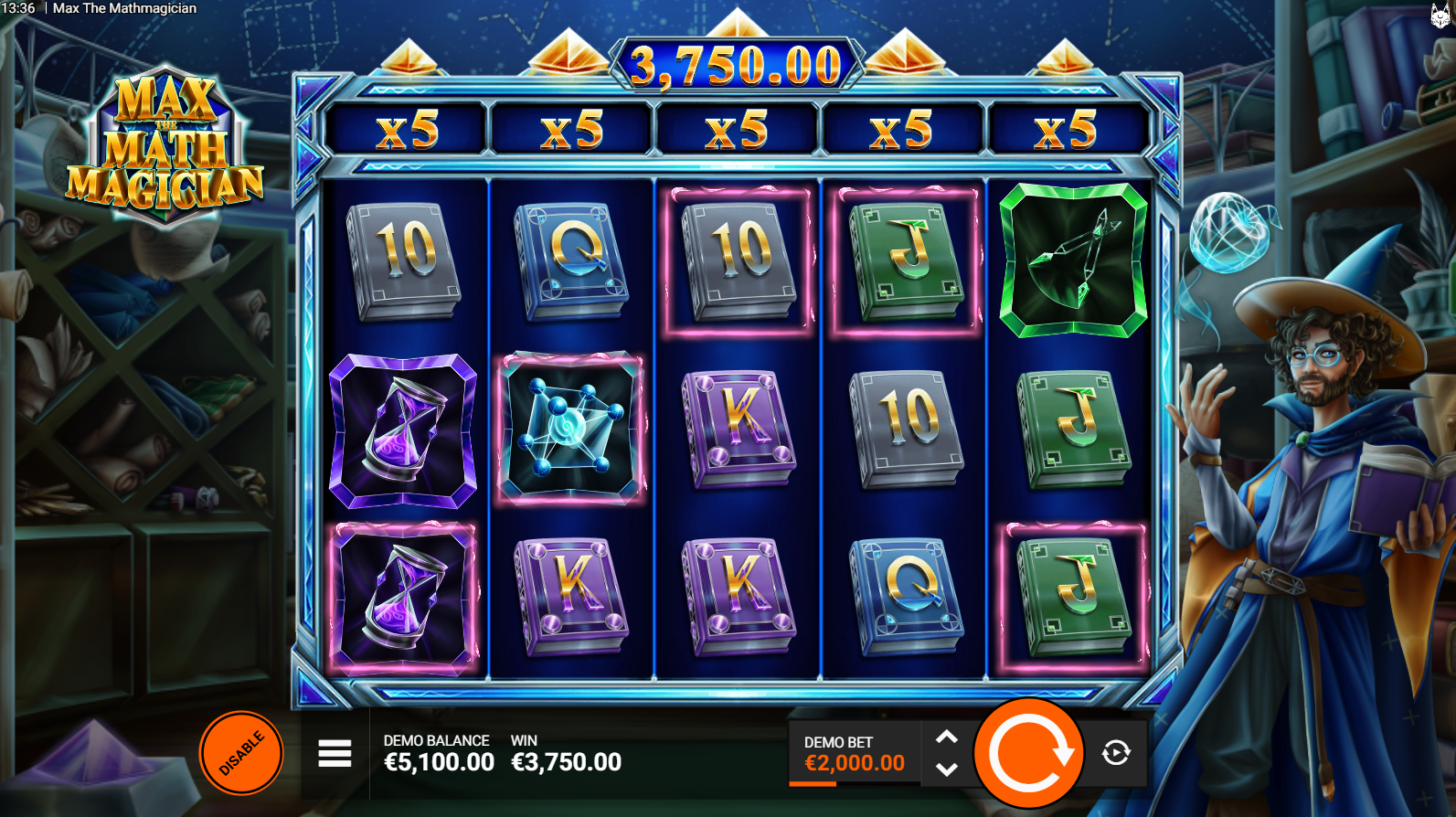
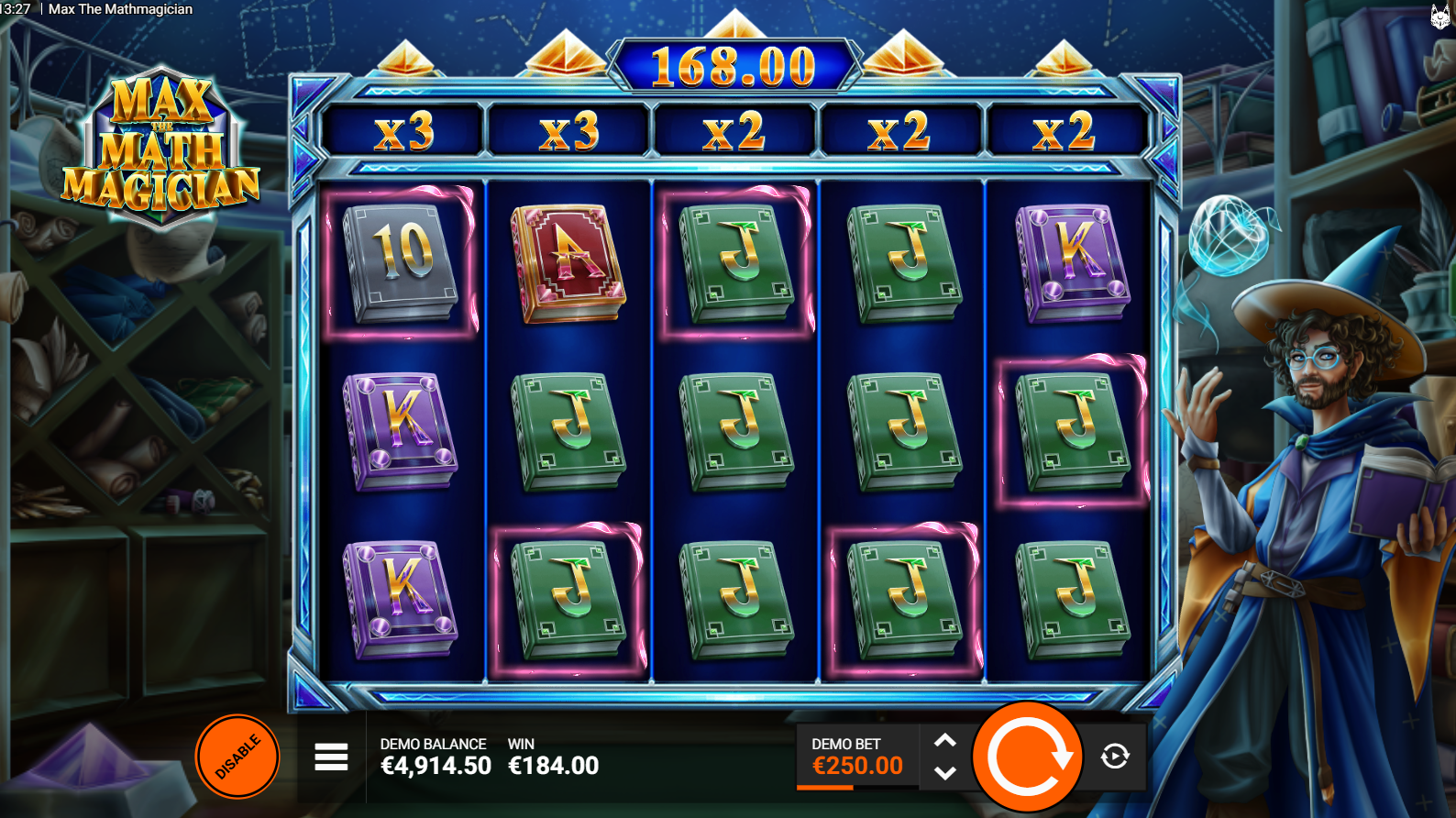
Above the reels sit five Reel Multipliers, one per reel, and every base game spin starts them all at x1. When a win lands, the multipliers above the reels that contributed to it are multiplied together, and the combined figure is applied to that win.
It’s multiplication rather than addition, and the difference compounds quickly. Multipliers of 2x, 3x and 2x across three contributing reels don’t make 7x; they make 12x.
There’s a timing quirk worth knowing, too. The current win always uses the multipliers’ existing values first, and any +1 increase earned by a Catalyst hit is applied afterward, benefiting the next winning step rather than the one that earned it.
All five multipliers then reset to x1 at the start of the next base game spin. In the bonus rounds they carry over between spins instead, which is where the system starts behaving very differently.
Catalyst Zones
One position on each reel is designated a Catalyst Zone every spin, giving five marked positions in total, and those positions stay fixed while cascades run. When a winning symbol lands in a Catalyst Zone, the multiplier above that reel increases by +1.
Several zones can contribute within a single cascade, so one long chain can lift multiple reels at once. The zones are framed visibly, making it easy to see which reel is about to be rewarded.
Wild Symbols
The Wild substitutes for every paytable symbol except the FS Scatter, and it can only appear on reels two to five. Reel one never carries a Wild.
Bonus Features and Free Spins
Three, four or five FS Scatter symbols award one of three free spins rounds, and all three share the same bones: eight free spins, one Catalyst Zone per reel, and Reel Multipliers that no longer reset between spins. What separates them is where those multipliers start, and none of the rounds import your base game values.
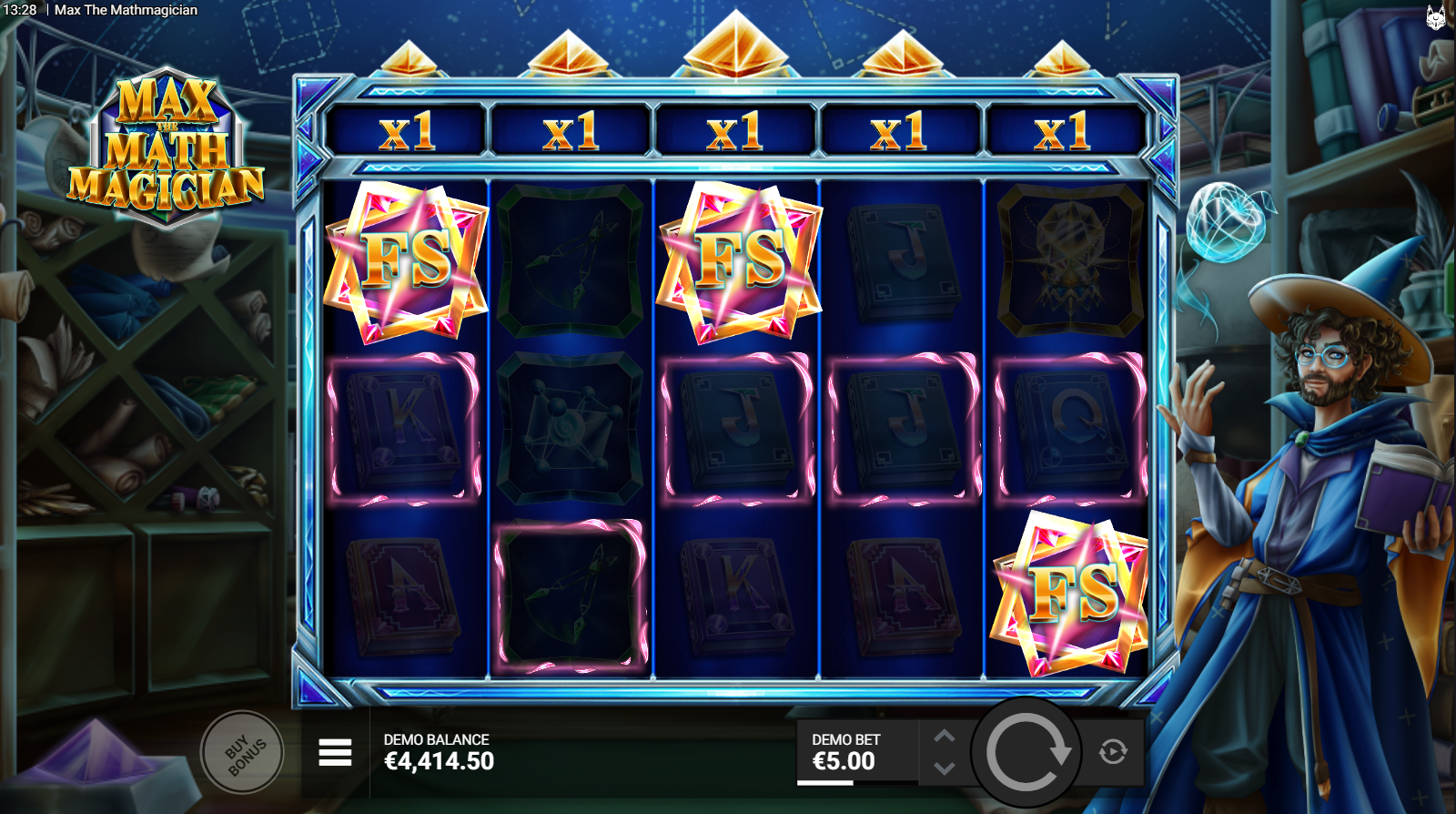
The distinction between the rounds is worth spelling out, because it’s the whole ladder:
- E = mc² Bonus: three scatters, all five multipliers start at x1
- Eureka Bonus: four scatters, all five multipliers start at x2
- Hidden Infinity Bonus: five scatters, all five multipliers start at x3
Those starting levels look like small steps, and they’re anything but, because the five values multiply together rather than add.
A round that begins at x2 or x3 isn’t merely one or two points ahead, either; on any win that uses several upgraded reels together, the gap compounds with every reel that joins in.
E = mc² Bonus
Landing three FS Scatter symbols awards eight free spins with all five Reel Multipliers starting at x1. The core base game mechanics stay active, and because nothing resets here, every increase you earn sticks for the rest of the round.
Extra scatters during the round retrigger it: two scatters add two spins, three add three, four add four, and five add five.
Eureka Bonus
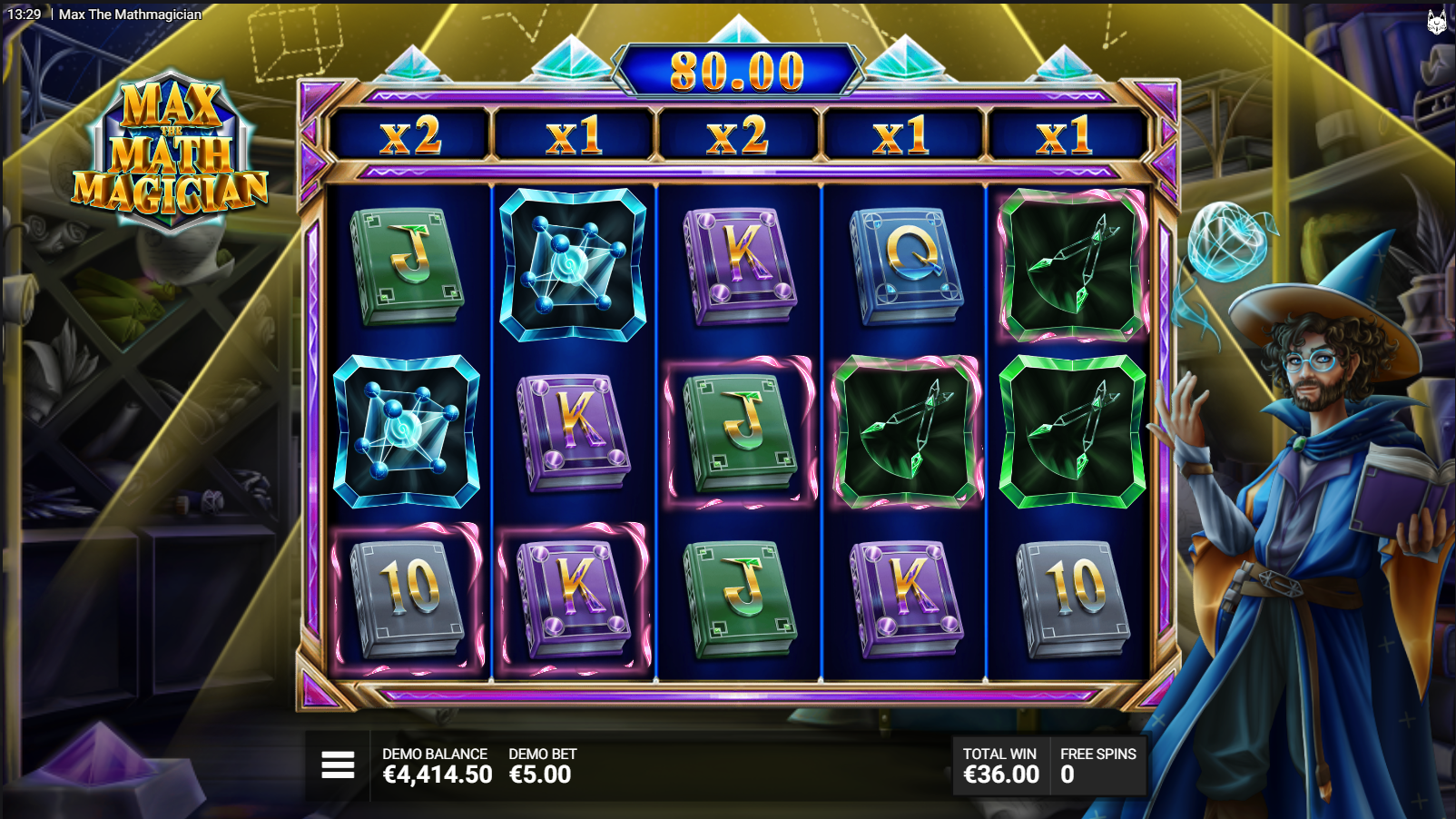
Landing four scatters upgrades the round to Eureka, which keeps the E = mc² rulebook but starts all five multipliers at x2 instead of x1. It’s the identical structure on a stronger foundation, and the difference shows up from the first winning cascade.
Retriggers award two extra spins for two scatters, three for three, and four for four.
Hidden Infinity Bonus
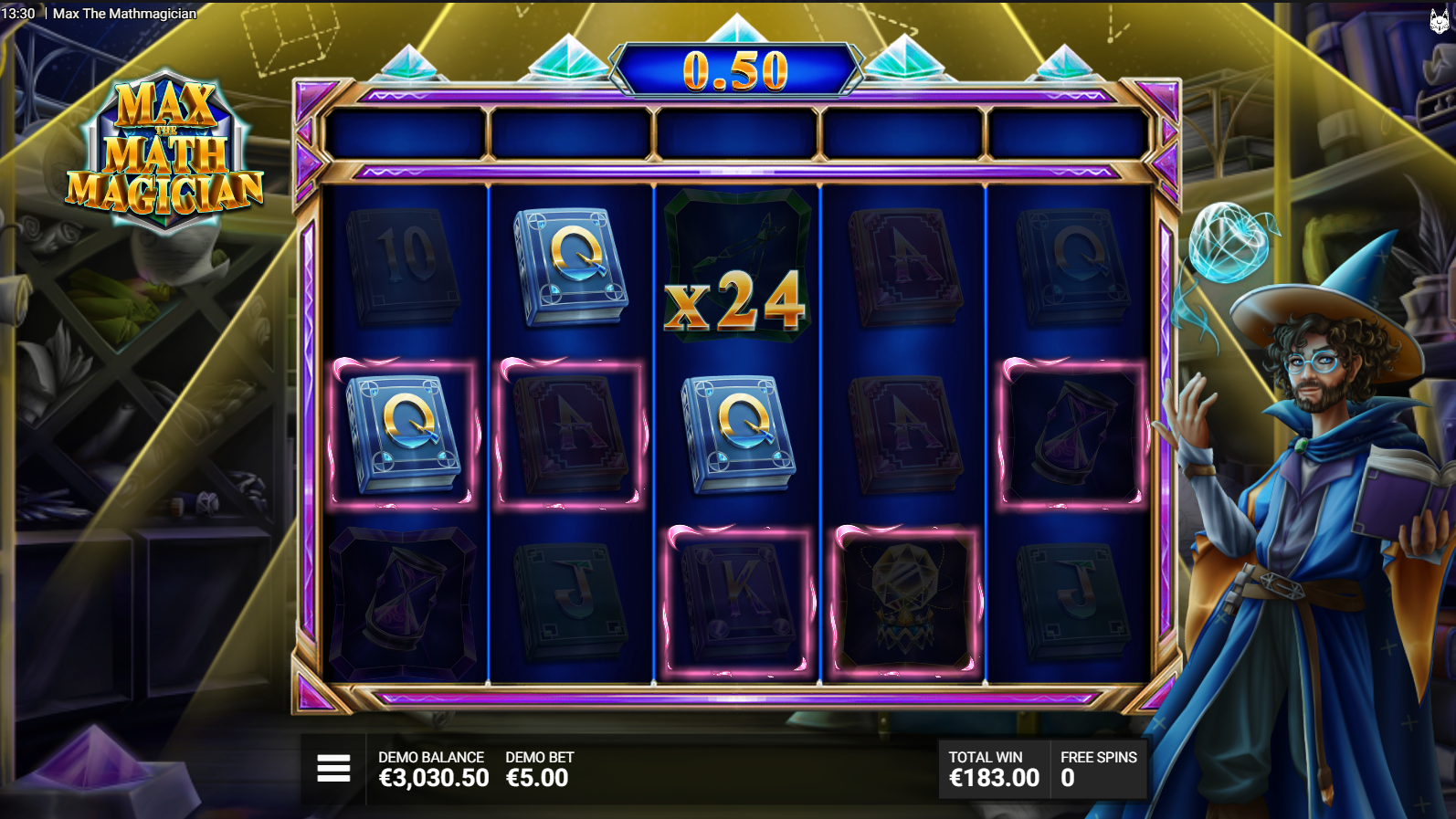
Five scatters unlock the top tier, which starts all five multipliers at x3. Retriggers run from two extra spins for two scatters up to five for five.
Despite the name, there’s nothing secret about it: the game information lists Hidden Infinity openly alongside the other two bonuses.
FeatureSpins and Bonus Buy
Away from the scatters, the game offers a FeatureSpins system and direct bonus buys. Activated FeatureSpins guarantee certain features on every spin, stay on until you switch them off, and cost a set amount based on your current bet level.
The menu covers five options, and purchases can exceed the standard 100.00 top stake. The headline figures, with each option’s RTP:
- BONUSHUNT FeatureSpins: RTP 96.31%
- Do The Math FeatureSpins: RTP 96.3%
- MAX-IMUM FeatureSpins: RTP 96.31%
- E = mc² direct buy: RTP 96.29%
- Eureka direct buy: RTP 96.31%

Our Honest Verdict
We came away giving Max The Mathmagician 6.7 out of 10. The base game keeps you watching all five numbers, but the resets stop it feeling genuinely progressive.
A cascade can push several Reel Multipliers higher, the next spin snaps them back to x1, and that wipe is the one thing holding the game back.
In the bonuses, where the multipliers persist and build spin after spin, the same system delivers a genuinely satisfying sense of build-up. Eureka produced the standout moment: a long cascade hit Catalyst Zones on two already-upgraded reels, both values ticked up, and the win that followed used several upgraded reels together, jumping far beyond what two +1 steps suggested.
The naturally triggered E = mc² round was the quiet one, starting from x1 with eight spins that disappear quickly if the Catalyst Zones don’t cooperate. Hidden Infinity, with its x3 start, is the one worth coming back for.
If you enjoy cascades and visible progression, and you like knowing why a win became valuable, it’s worth your time. If you want constant action or resent a reset, look elsewhere. Max has done his homework, and on this evidence the sums mostly add up.
Max The Mathmagician FAQs
-
What is the RTP of Max The Mathmagician?
The default RTP is 96.34%, with a reduced 94.32% variant that operators can choose to run instead. Both figures appear in the game’s paytable, so it’s worth checking which version your casino is running. -
What is the maximum win in Max The Mathmagician?
The maximum win is 10,000x your stake. The ceiling is mechanically believable: the rules state no limit on how high individual Reel Multipliers can grow, and several of them multiply together on qualifying wins. -
How volatile is Max The Mathmagician?
Volatility is High, rated four out of five. The hit rate sits at 24.7%, so wins land on roughly one spin in four, with the heavier results coming from long cascades and the bonus rounds. -
How do Reel Multipliers work in Max The Mathmagician?
Each of the five reels carries its own multiplier, starting at x1 on every base game spin. Winning symbols that land in Catalyst Zones push the relevant multiplier up by +1, and the multipliers above the reels contributing to a win are multiplied together and applied to it. They reset on the next base game spin but persist between spins in the bonus rounds. -
What is the difference between the three bonus rounds?
All three award eight free spins and run the same mechanics; only the starting Reel Multipliers change. E = mc² starts at x1, Eureka at x2, and Hidden Infinity at x3. Because the values multiply together rather than add, those starting gaps are far larger than they sound. -
Do the Reel Multipliers apply before or after a Catalyst Zone activates during a cascade?
The current win uses the existing multiplier values first, then the relevant Reel Multiplier increases by +1 afterward. A Catalyst hit does not immediately increase the multiplier for the win that triggered it; that increase applies from the next winning step onward. -
What bet range does Max The Mathmagician offer?
Stakes run from 0.10 to 100.00 per spin. FeatureSpins and feature buys cost a set amount based on your current bet level and can exceed the standard 100.00 limit. -
When is Max The Mathmagician’s release date?
Max The Mathmagician’s release date is 26 October 2026. The game comes from Kitsune Studios and distributes through Hacksaw Gaming’s OpenRGS platform.