





Odin Protector of Realms Slot Review
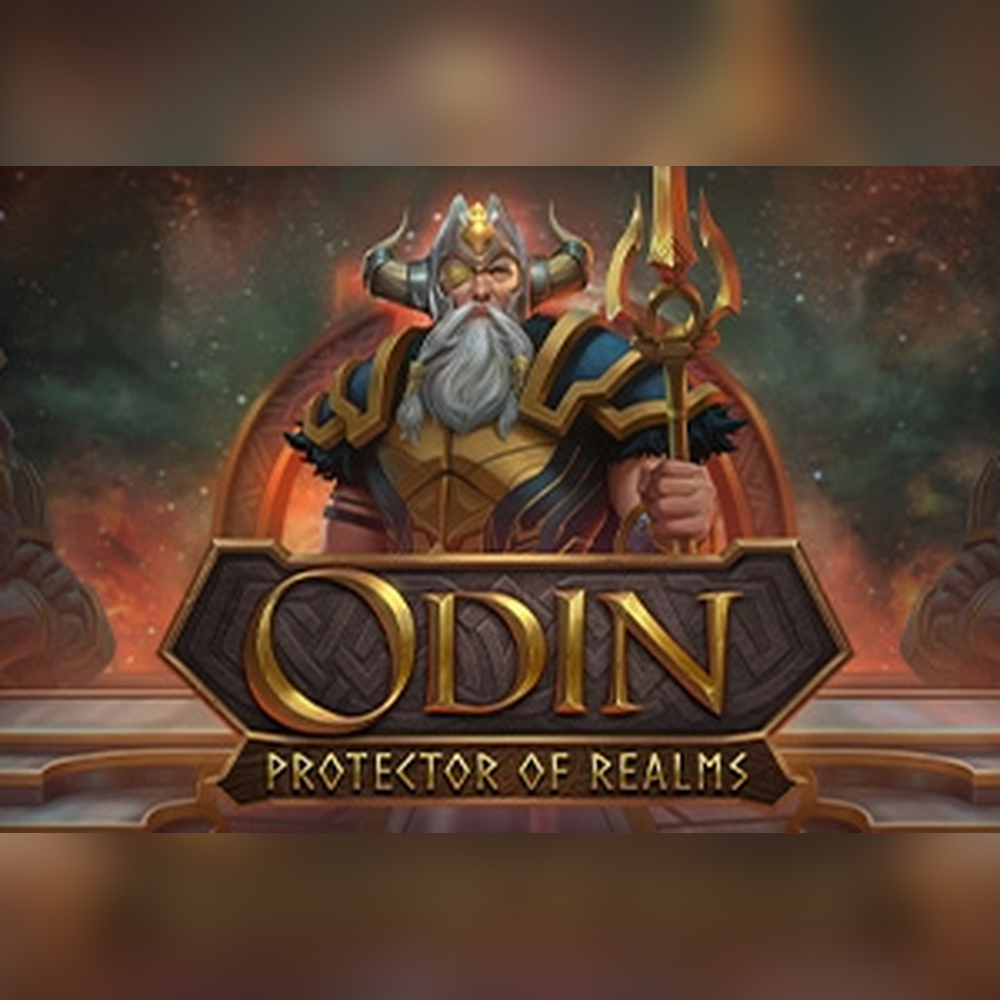
Odin’s hall floats in open space, a red-and-violet nebula where a ceiling ought to be, and the Allfather himself stands guard at the frame’s edge in blue and gold armour, spear in hand. It’s fitting staging, because Play’n GO have built a game where nothing pays much until the god decides it does: the symbols themselves are worth remarkably little, and the entire design pushes you towards the Ring Meter, where winning symbols are hoarded rather than cashed and spent.
The game runs at 96.2% RTP with mid to high volatility on a hexagonal cluster grid. It sits in the same Nordic, grid-based family as Viking Runecraft, Rise of Olympus 100 and Honey Rush, though the meter system gives it a rhythm all of its own. Worth a spin to see whether the gods are listening? Read on.
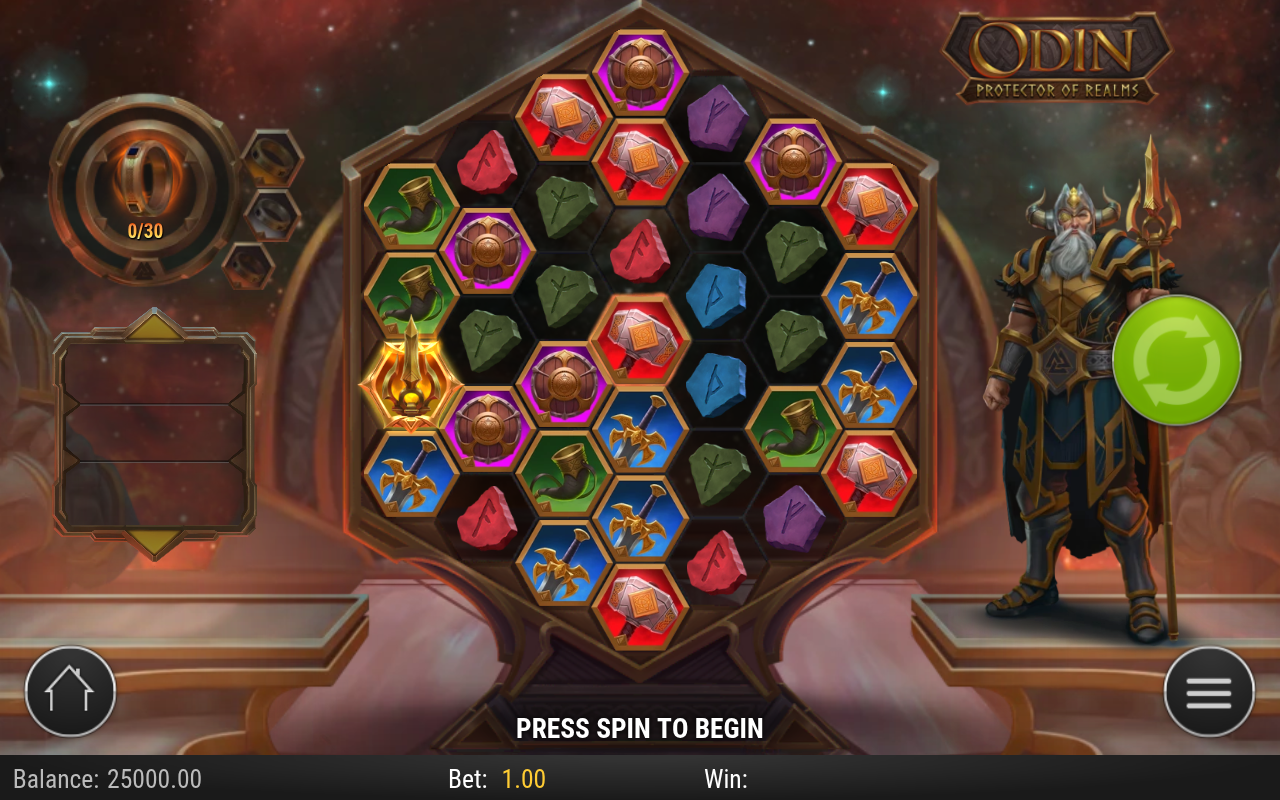
The Hexagonal Grid and Cluster Pays
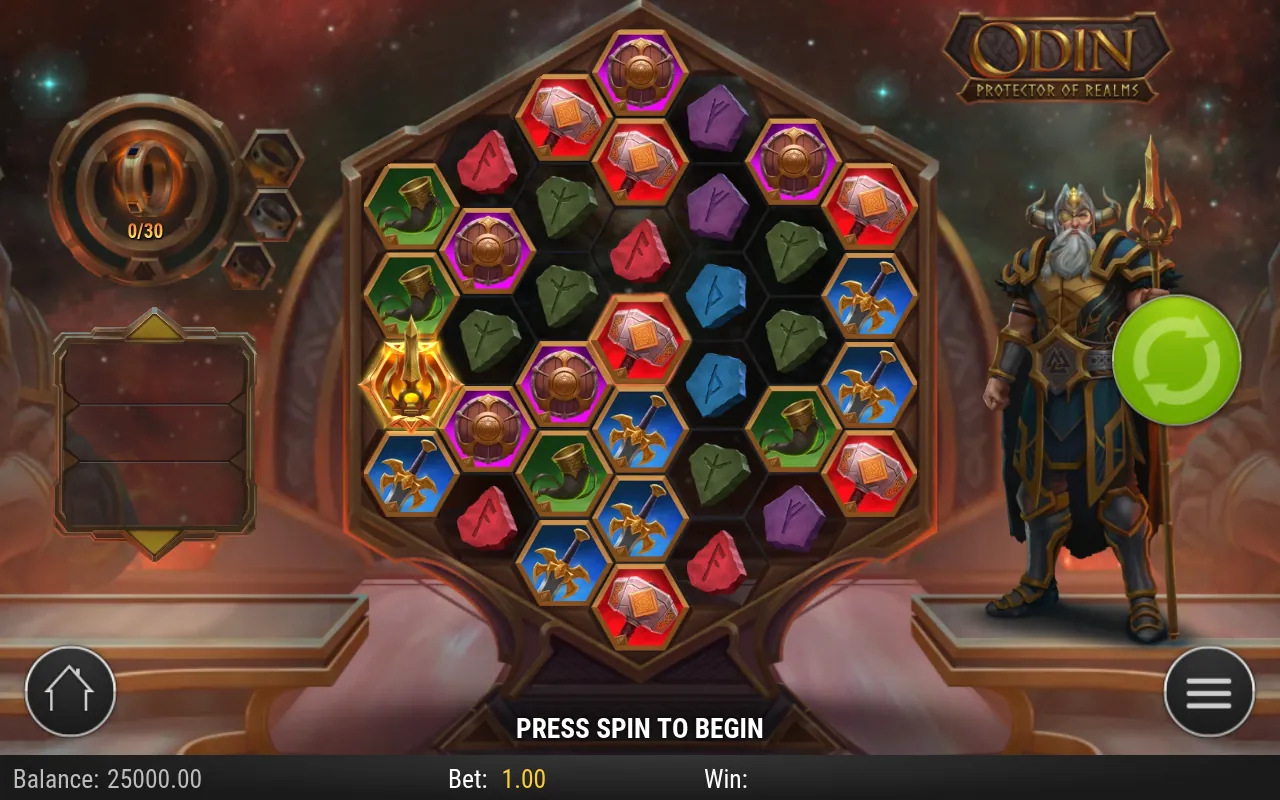
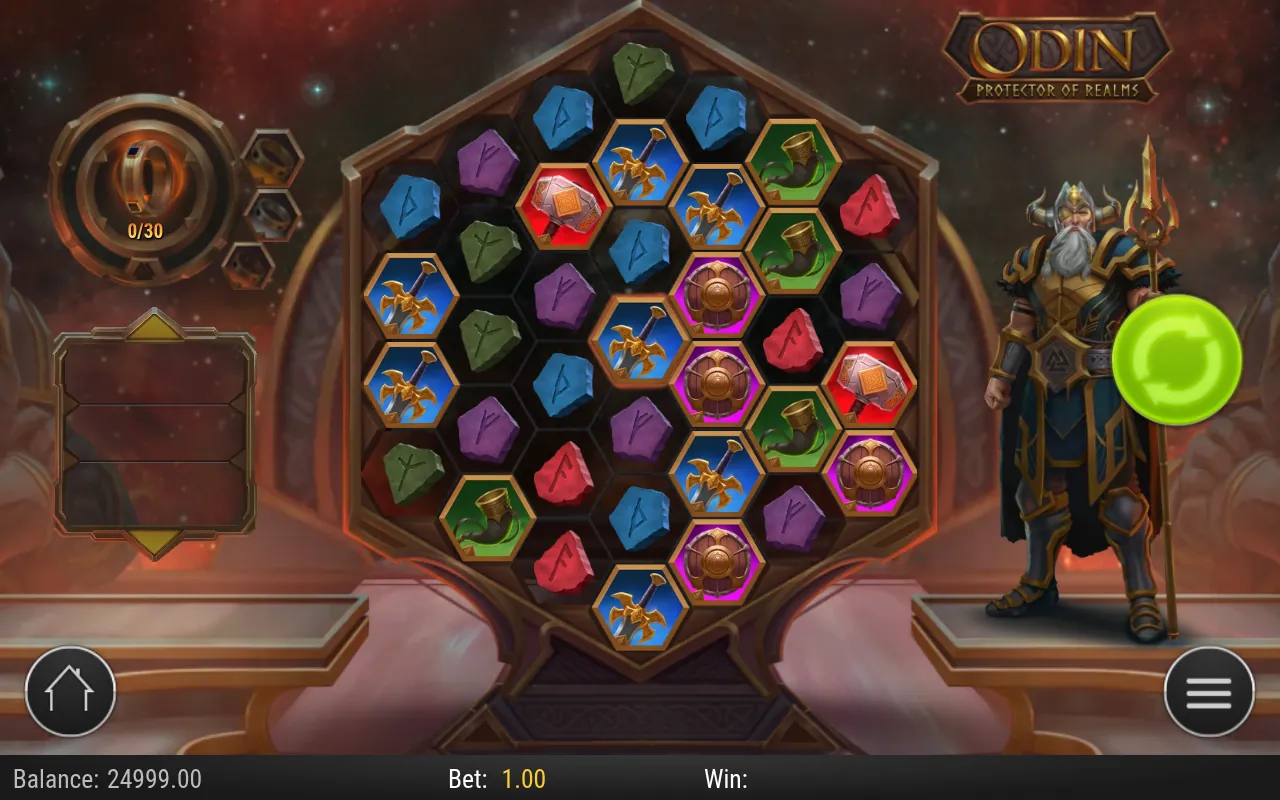
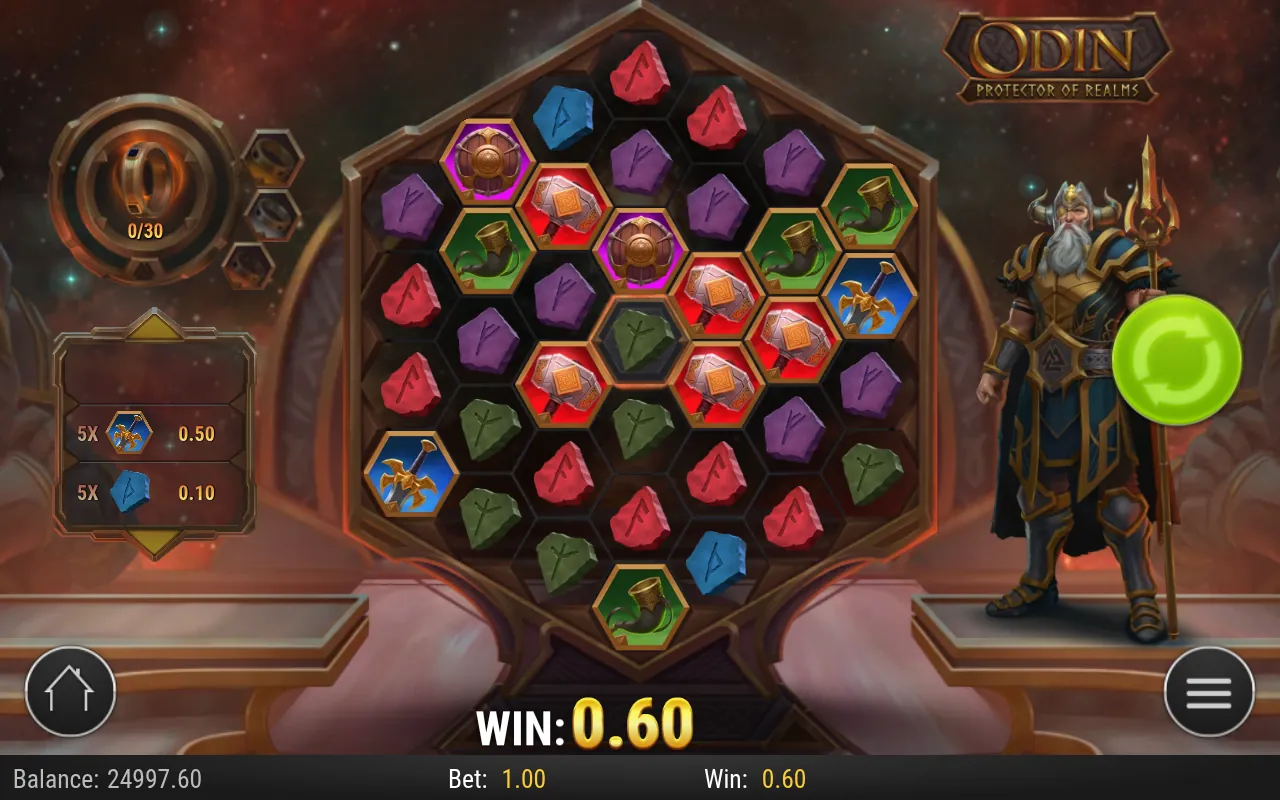
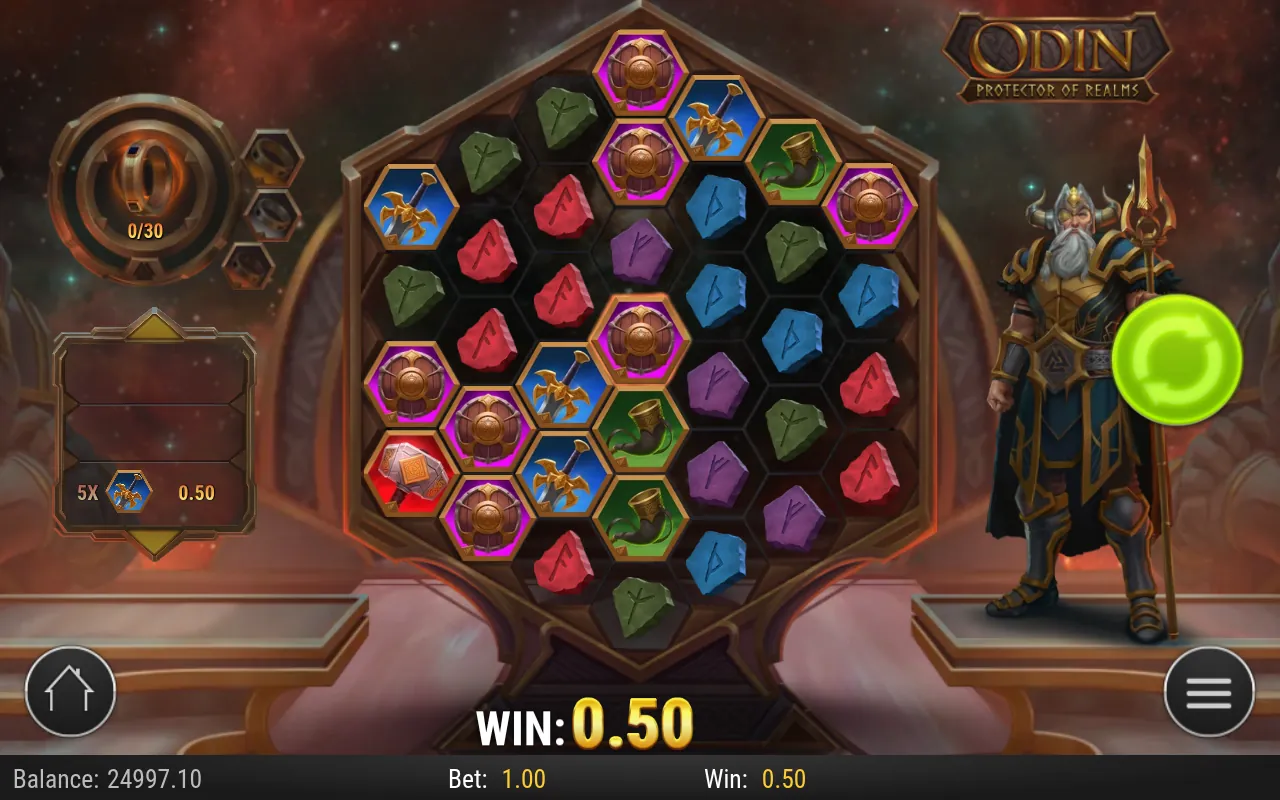
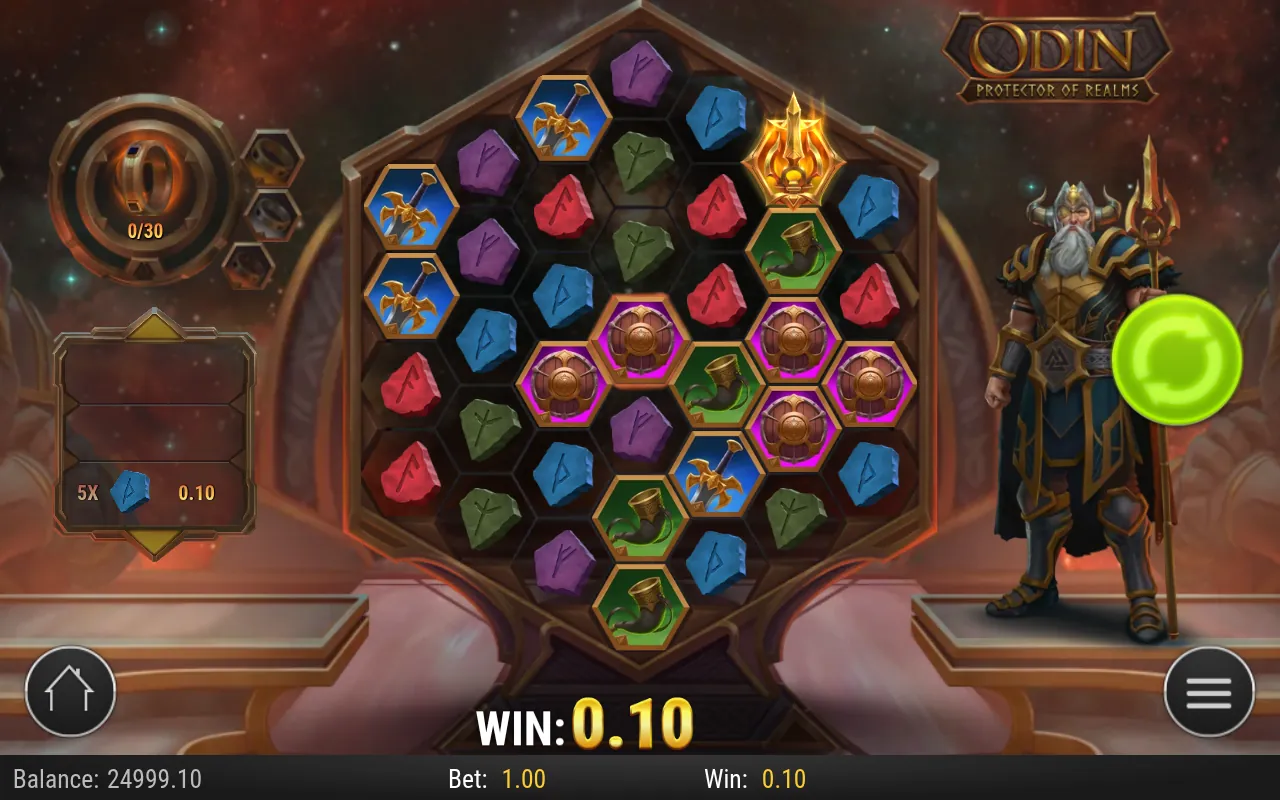
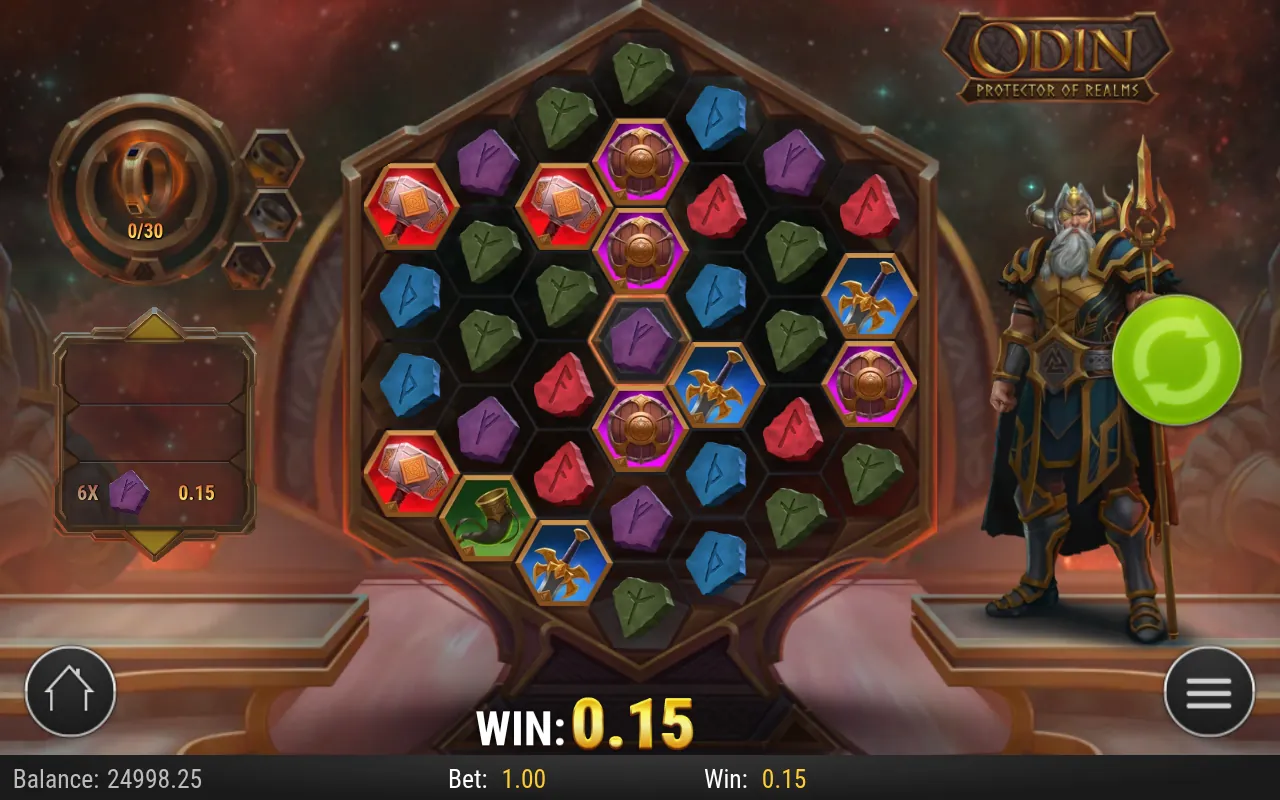
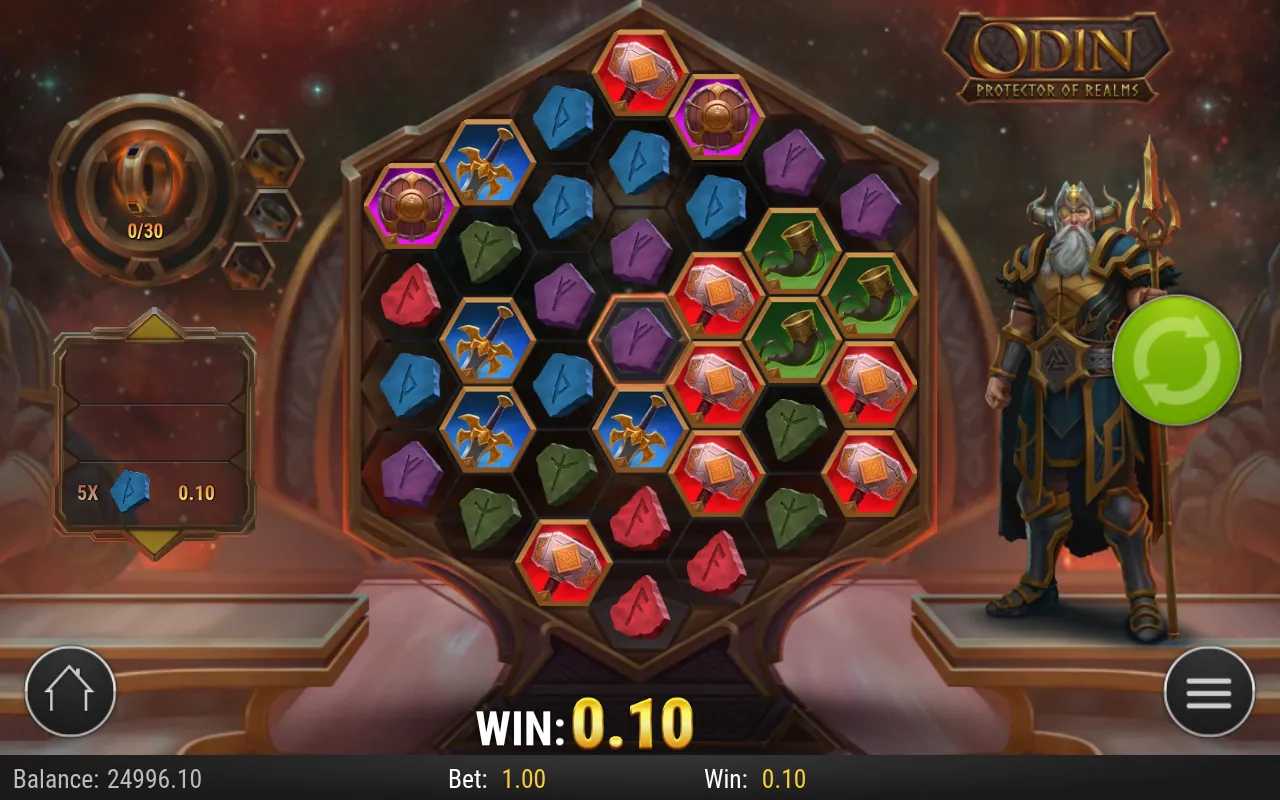
Forget reels. Odin Protector of Realms plays on a hexagonal grid, arranged in a diamond shape, and symbols drop into it rather than spinning. A win needs five or more matching symbols connected to each other horizontally, vertically or diagonally, with no gaps. Clusters can start anywhere on the grid.
When a cluster lands, the winning symbols are removed and new ones fall into the gaps. Separate clusters of the same symbol that aren’t touching are paid as individual wins. Only the highest win per symbol combination counts.
All winnings are added together, including anything from features, and paid out at the end of the game round. A single round can therefore chain several waves of wins together, each drop creating fresh cluster opportunities before the round closes. The diagonal connections matter more than they might on a square grid, because the diamond layout gives corner-adjacent symbols paths that a reel set never could.
There’s no scatter in this game, and wilds arrive only through Odin’s abilities. Symbol values are modest at the top end, paid as multiples of the total bet:
- Gold hammer symbol – 0.5x the bet for a 5-symbol cluster
- Purple rock symbol – 0.15x the bet for a 6-symbol cluster
- Blue rune symbol – 0.10x the bet for a 5-symbol cluster
Small cluster pays are the shape of the game. The real money comes from the cluster-building features rather than the raw symbol values, and the whole design points that way from the first drop. Even the best possible five-symbol cluster of the top symbol returns half your stake, which tells you where the game expects its wins to come from.
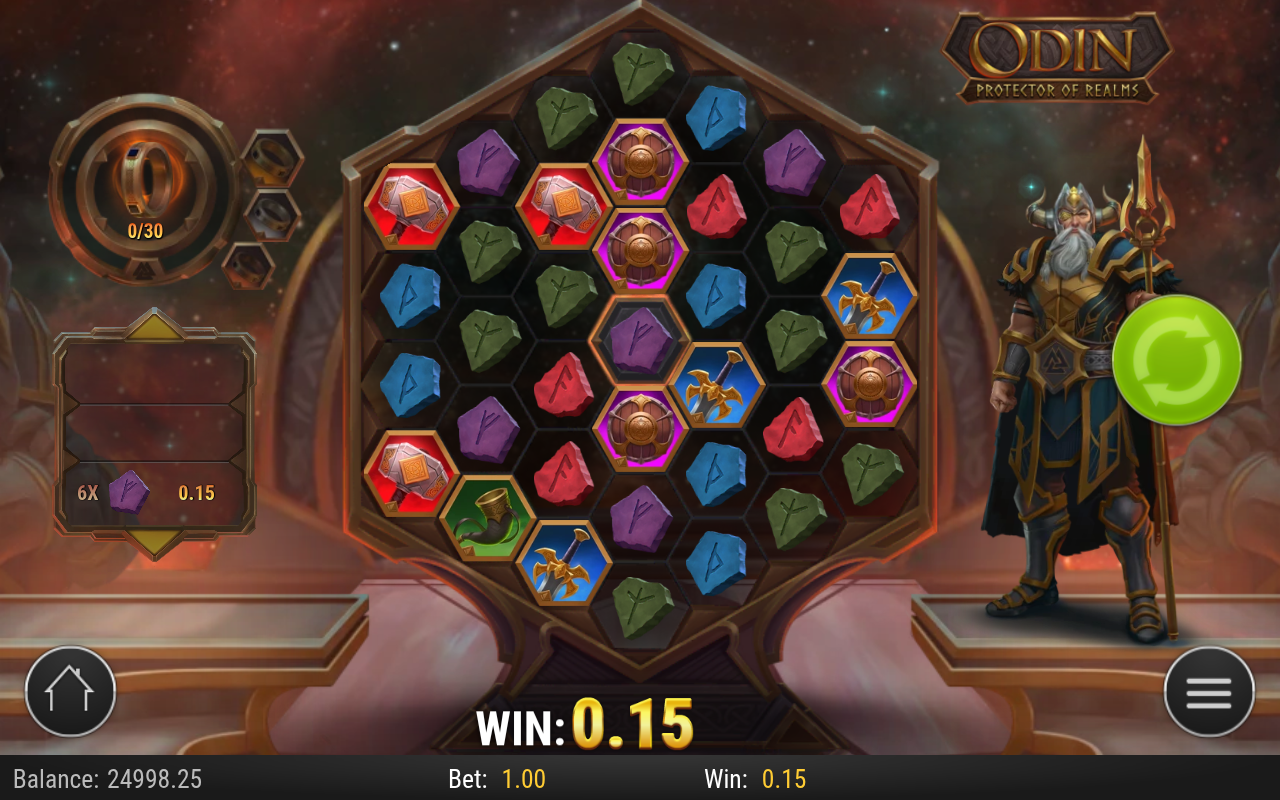
The Ring Meter and Forged Ring Features
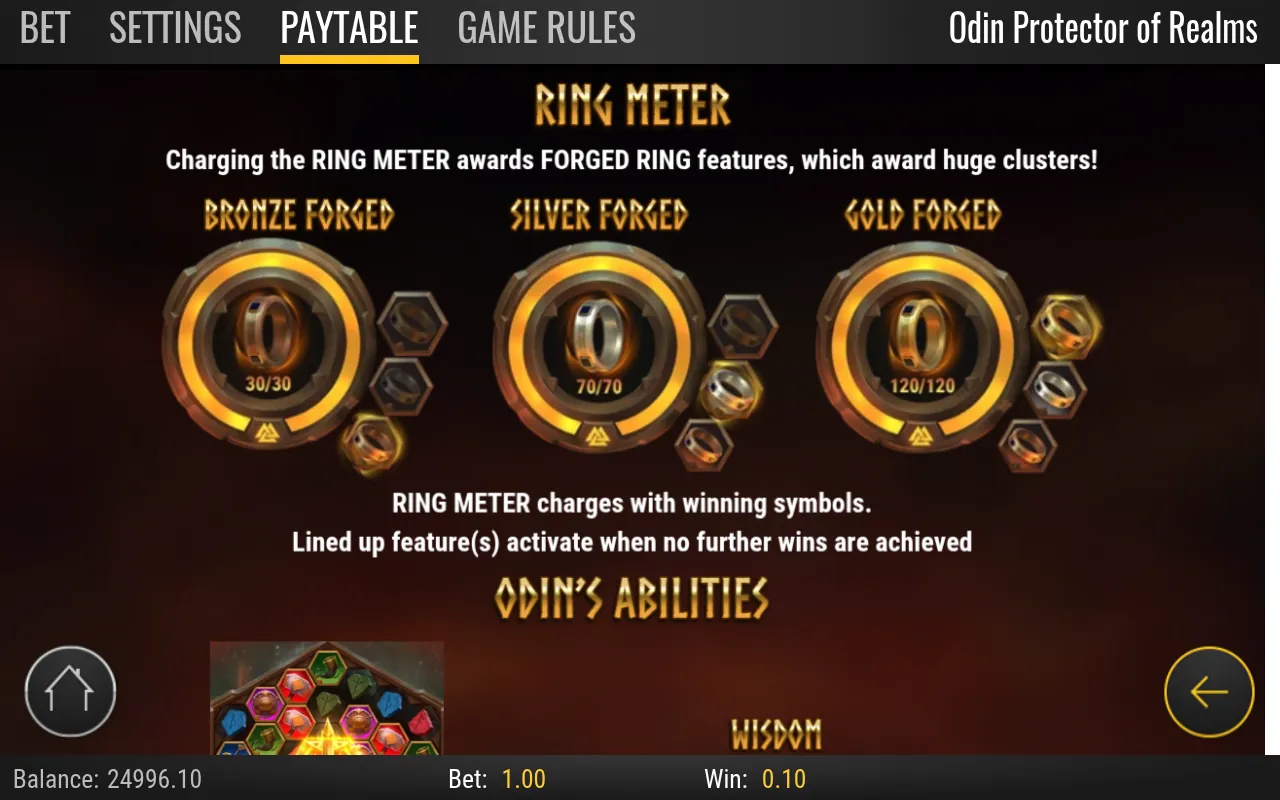
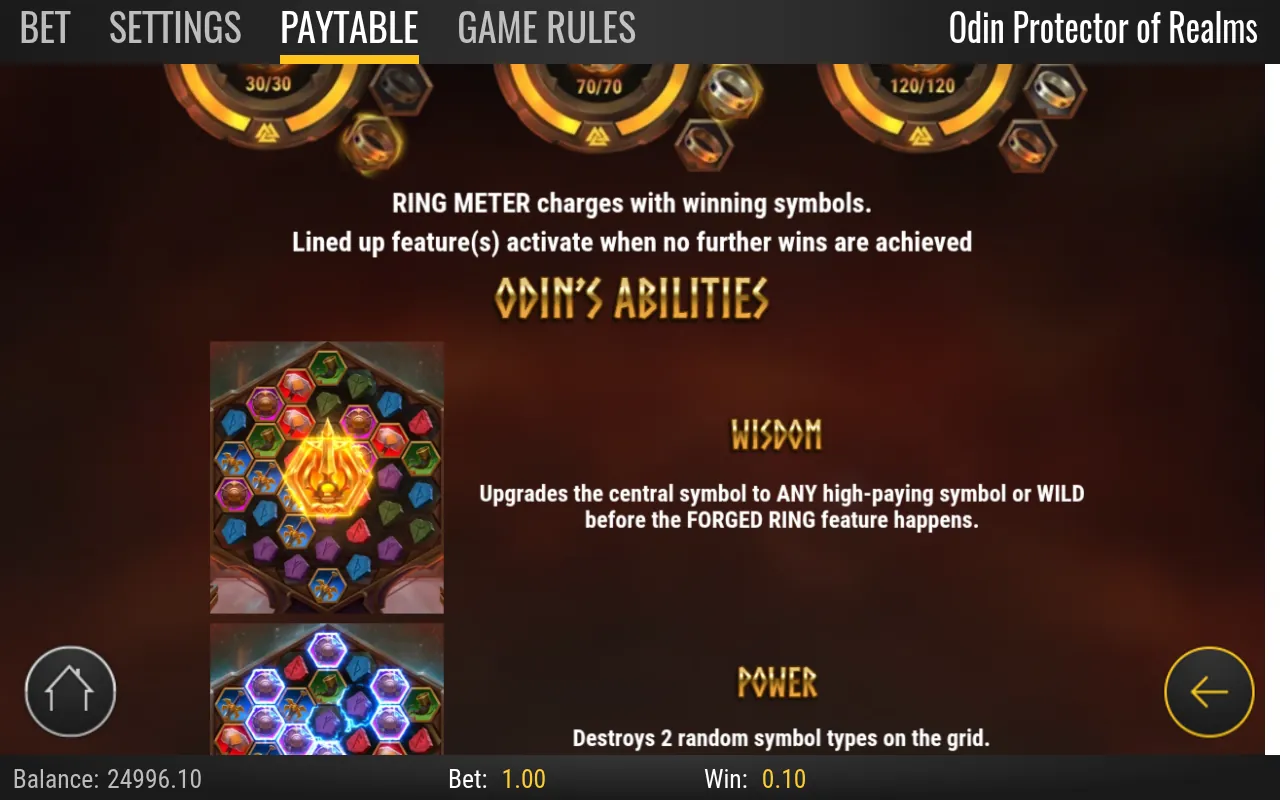
Every winning symbol charges the Ring Meter. It’s the engine of the whole game, turning a chain of modest cluster wins into something much bigger. The meter has three charge levels:
- Level 1 – 30 winning symbols, activating the Bronze Forged feature
- Level 2 – 70 winning symbols, activating the Silver Forged feature
- Level 3 – 120 winning symbols, activating the Gold Forged feature
When a charge level completes, that feature is added to a queue. The queued features fire once no further wins land in the round. Each Forged Ring feature fills a pattern on the grid with the central symbol, converting a chunk of the board into one large cluster.
The round then continues as normal, so a forged cluster can itself trigger wins, and those wins charge the meter further. A round plays out like this:
- Symbols drop and clusters of five or more pay out
- Winning symbols vanish and new ones fall into the gaps
- Every winning symbol adds to the Ring Meter
- Completed charge levels queue their Forged Ring features
- When the wins stop, queued features fire in order, and the round resumes
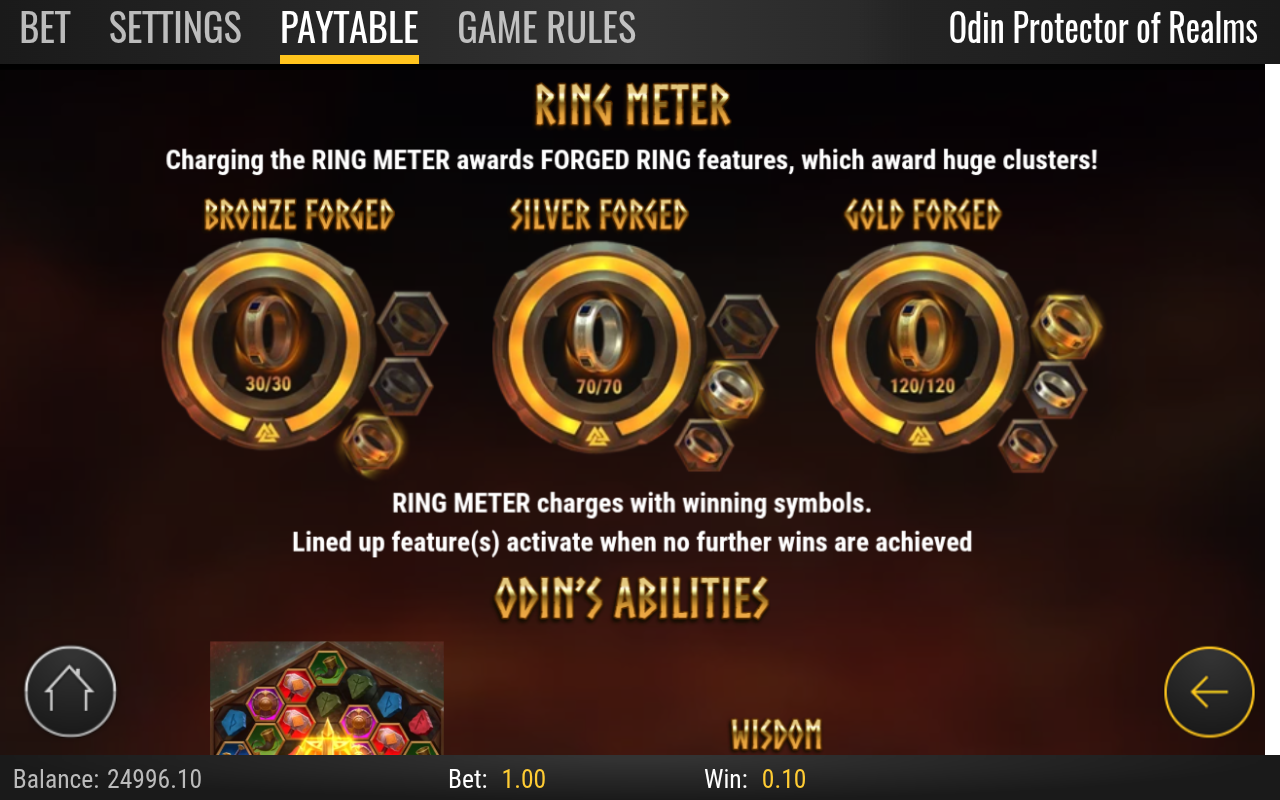
The meter resets at the end of each game round, so progress is a single-round affair. Hit 120 winning symbols within one cascade sequence and all three features line up in sequence, which is where the game’s biggest moments come from. Reaching Gold Forged takes a serious chain reaction, which is what the mid to high volatility is built around.
The gaps between the levels are uneven by design. Bronze asks for 30 symbols, Silver for another 40 on top, and Gold for a further 50, so the deeper you climb the more each level demands. That rising cost is why the meter so often stalls partway.
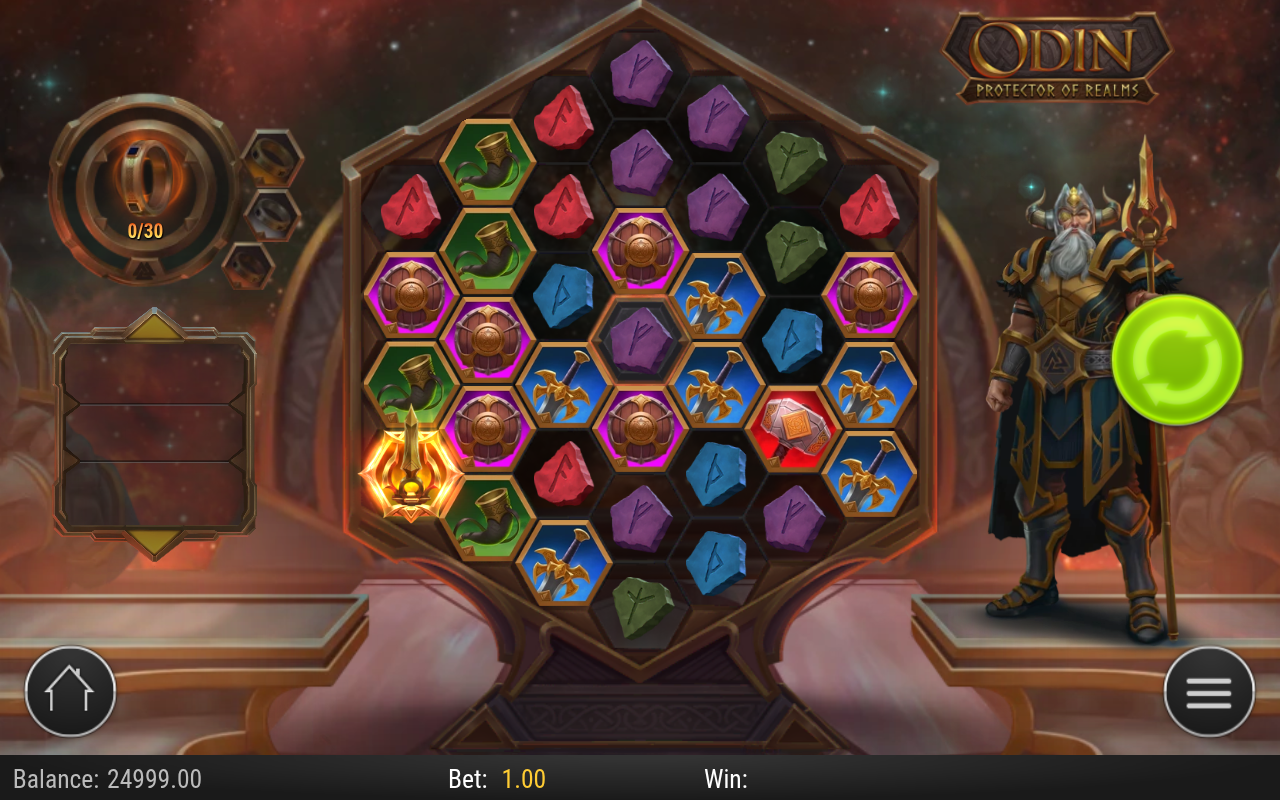
Odin’s Abilities
Between the meter and the forged clusters sit three of Odin’s own interventions. Each one nudges the grid at a specific moment, and each is named for one of the god’s attributes. In short:
- Wisdom – upgrades the central symbol before a Forged Ring feature fires
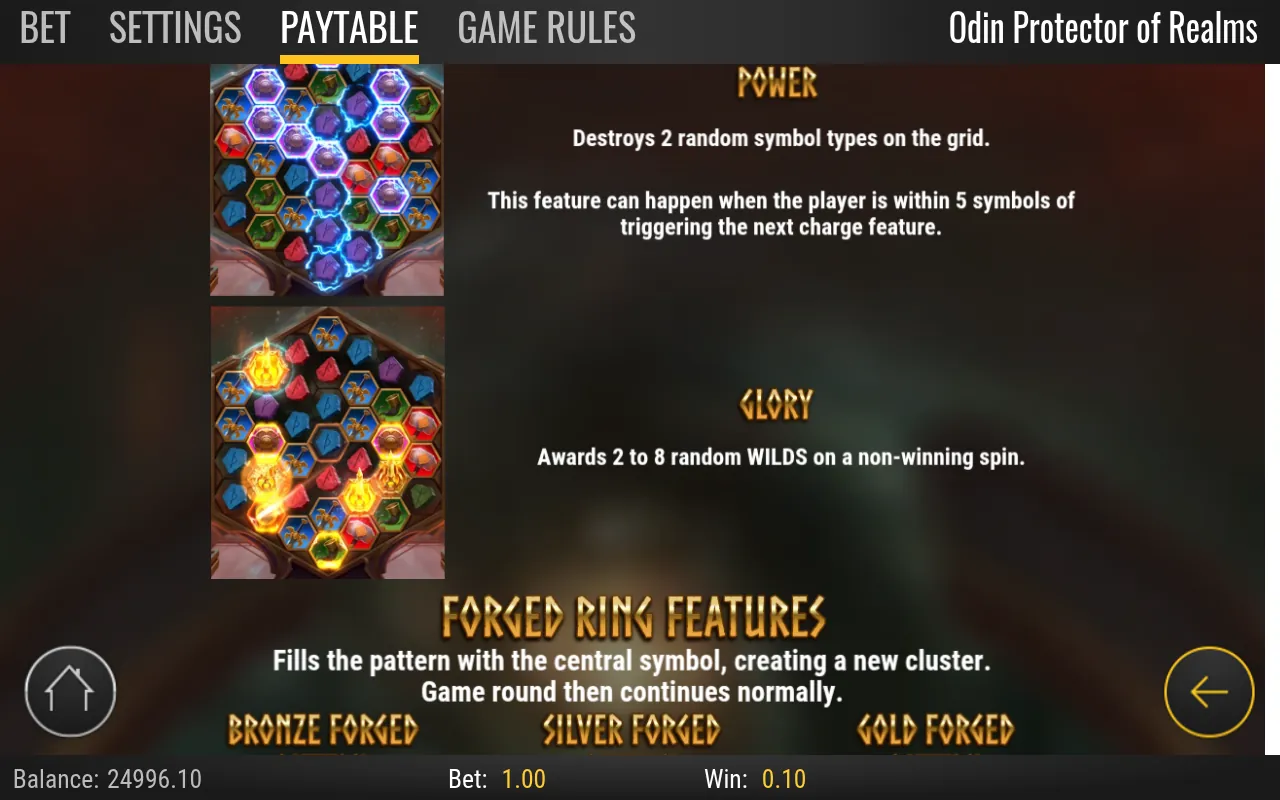
- Power – destroys two random symbol types when you’re close to a charge level
- Glory – adds two to eight random wilds on a non-winning spin
Wisdom
Wisdom can occur before a Forged Ring feature fires. It upgrades the central symbol to any high-paying symbol or a wild, which means the cluster the feature is about to build can be made from something far more valuable than whatever sat at the centre.
It’s a one-move ability with a big say in how much a forged cluster is worth. Timing is everything: the upgrade lands only at the moment of forging, never during ordinary play.
Power
Power can happen when you’re within five symbols of triggering the next charge level. It destroys two random symbol types from the grid entirely, clearing space and forcing new symbols to fall. It’s the game giving you a shove towards the next Forged Ring feature at the exact moment you’re close to it.
Because two whole symbol types vanish at once, the refill that follows is unusually dense with whatever’s left. If the remaining symbols happen to match, clusters form fast, and those wins count towards the meter like any others.
Glory
Glory is the consolation prize. On a non-winning spin it can award two to eight random wilds on the grid. With no scatter in the game, wilds only ever arrive this way or through Wisdom, so Glory is the main route to a grid suddenly full of substitutes and the fresh clusters that follow.
Our Honest Verdict
Overall Rating: 7.2/10
Playing this is a game of patience dressed in Norse finery. You choose it for the build: every win feeds the Ring Meter, every drop feels like progress, and a long cascade can queue all three forged clusters behind one another.
The strength is how the abilities work together. Wisdom decides what a forged cluster is made of, Power pushes you over a threshold you were nearly at, Glory rescues dead spins with wilds. They’re one system, not three bolted together. The weakness is what happens in between: the symbol pays are so small that plenty of rounds end with a half-charged meter and barely a return on the stake.
It’s a game for players who like a long build and don’t need a win every third spin, and fans of the Viking Runecraft family will feel right at home in the hall. Players after steady cluster action will find the Allfather guards his realms a little too carefully.
Odin Protector of Realms FAQs
-
What is the RTP of Odin Protector of Realms?
Odin Protector of Realms runs at an RTP of 96.2%, which sits comfortably above the typical industry average. -
Is Odin Protector of Realms high volatility?
It’s rated mid to high volatility, so wins can be irregular and feature-led rather than steady. It rewards longer sessions and a bankroll that can absorb quiet spells. -
What grid does Odin Protector of Realms use?
It’s played on a hexagonal, diamond-shaped cluster grid rather than a standard reel set. Symbols drop into the grid, and wins are formed by clusters of five or more connected symbols. -
Who makes Odin Protector of Realms?
Odin Protector of Realms is made by Play’n GO, the Swedish studio behind Book of Dead and the wider Rich Wilde series. -
When is Odin Protector of Realms released?
Odin Protector of Realms’ release date is 29 July 2021. -
How does the Ring Meter work?
Every symbol that forms part of a win adds a charge to the Ring Meter. It has three levels: Bronze Forged at 30 winning symbols, Silver Forged at 70 and Gold Forged at 120. Completed levels queue a Forged Ring feature, which fires once no further wins land in the round. The meter resets at the end of the game round. -
What does Odin’s Glory ability do?
Glory can trigger on a non-winning spin and awards between two and eight random wilds on the grid, giving the round a second chance at forming clusters. -
What do the Forged Ring features do?
When a queued feature fires, the pattern around the grid’s centre is filled with the central symbol, turning that area into a single large cluster. The round then resumes, and any wins the new cluster creates continue playing out as normal.