





Ore No Konbini Slot Review
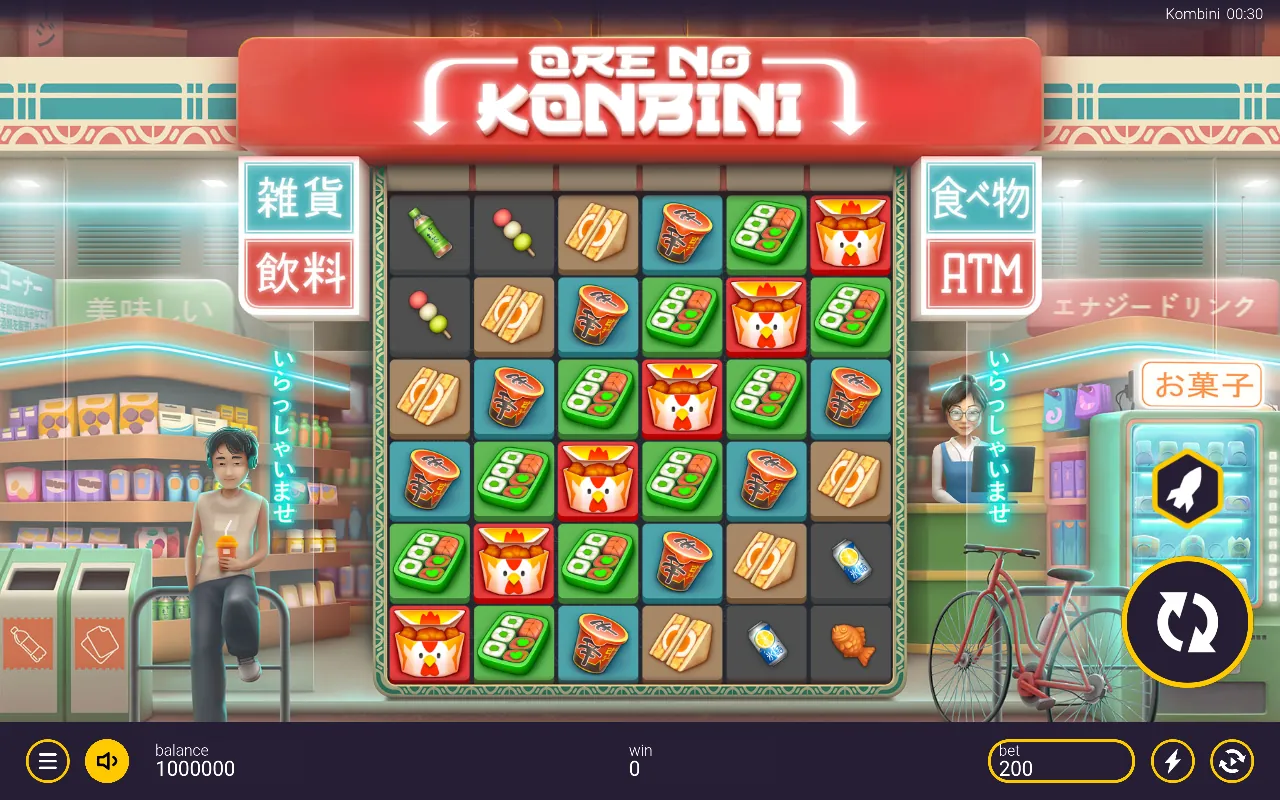
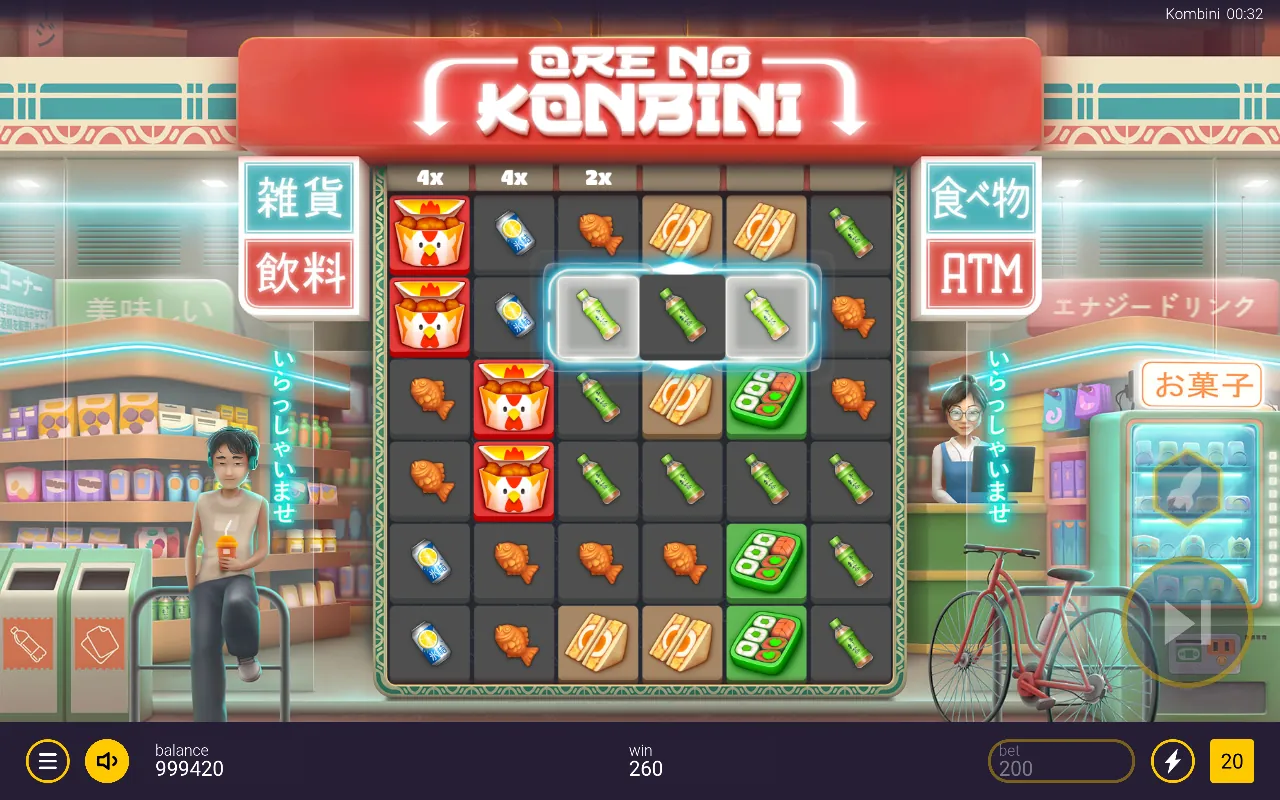
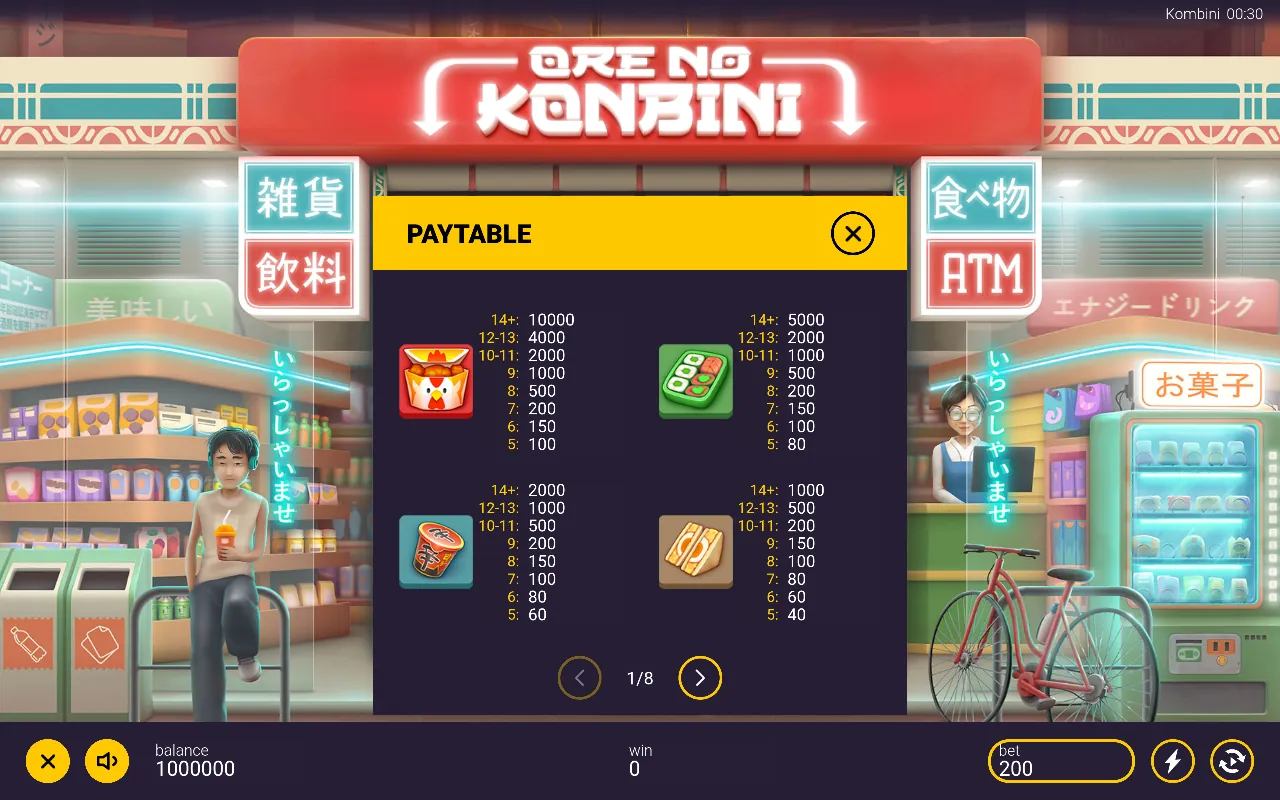
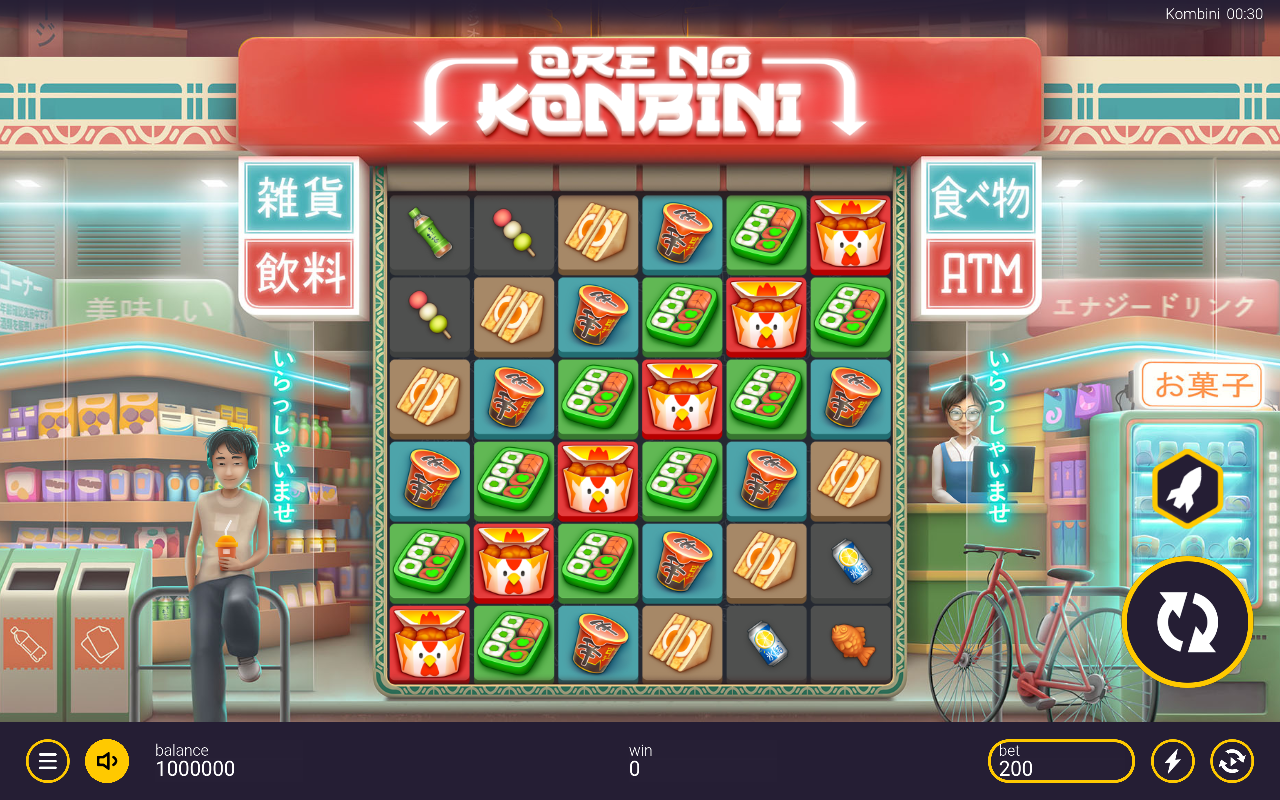
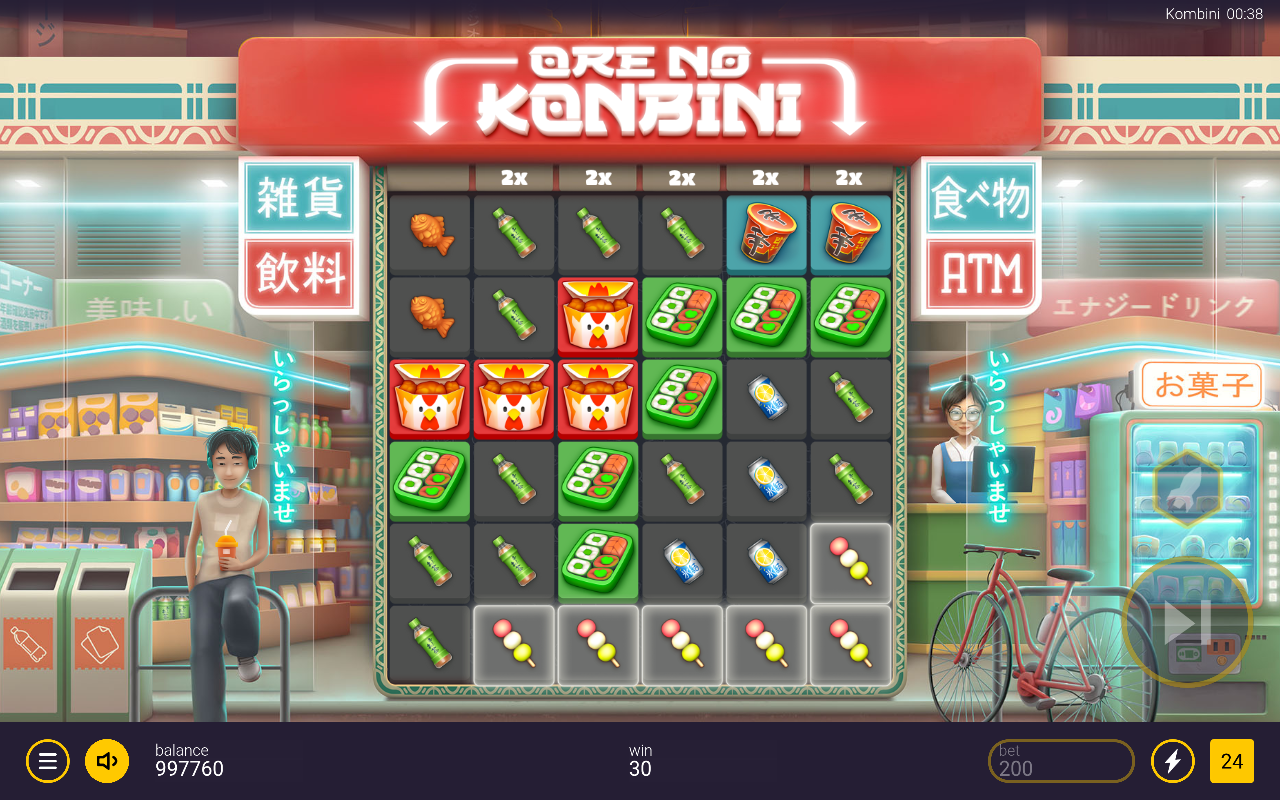
Neon kanji strips glow down the pillars of an open shopfront – drinks, food, sundries, ATM – while a clerk in a blue apron waits behind her counter and a kid in headphones nurses an orange drink by the recycling bins. It’s the warm, glossy late-night convenience store of a thousand Tokyo street corners, and Peter & Sons have built their newest slot entirely inside it.
The argument here is that a slot can survive on counting alone. There’s no bonus round, no wild standing in for anything – just a 6×6 grid where five or more of a kind pays, clears and refills, and everything rides on how far one chain carries. It sits in the studio’s catalogue alongside Animafia and Bunny Heist, running 96.6% RTP, very-high volatility and a 20,000x max win. That’s a lot of weight to put on a shelf of snacks.
Snacks on the Grid: How Ore No Konbini Pays
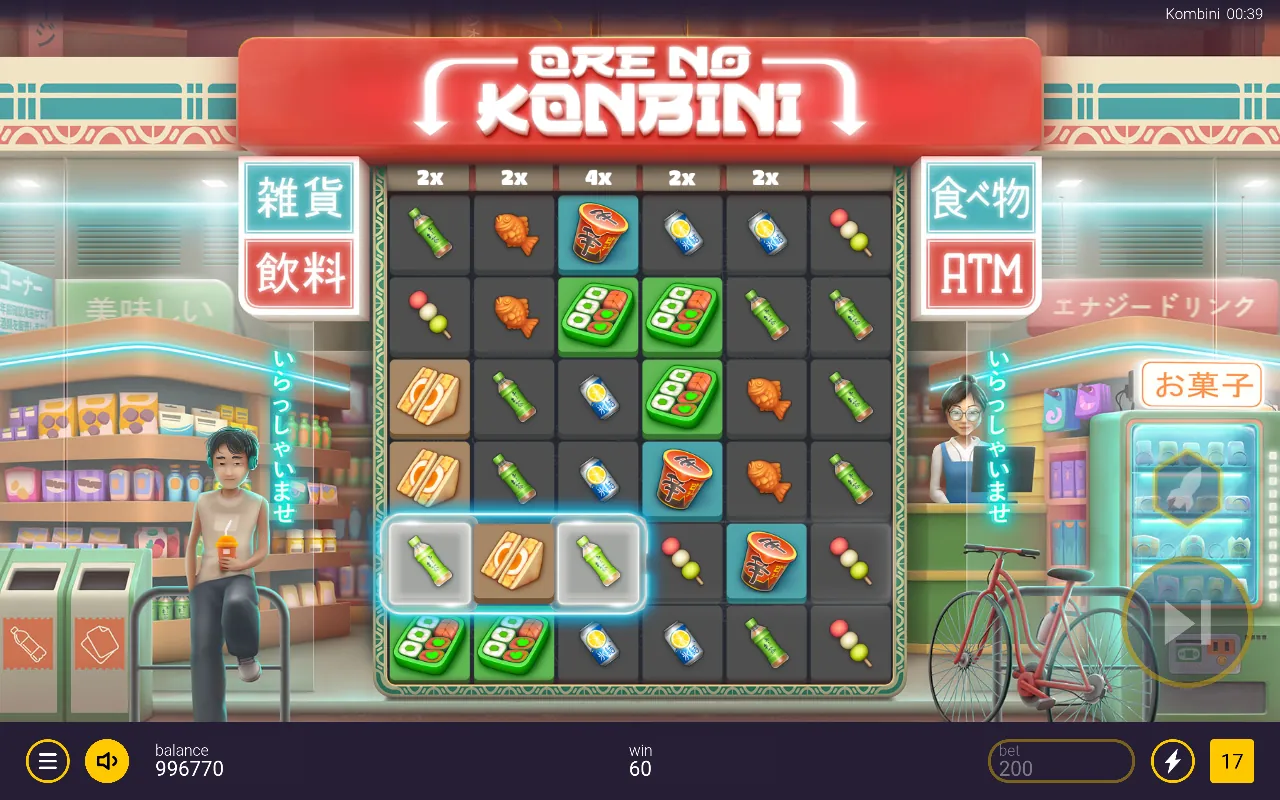
Wins are a matter of numbers, not lines. Matching symbols land on the 6×6 grid in counts from five upwards, and the more of a kind you gather, the steeper the pay climbs. There’s no wild standing in for anything here; a win is the real symbol, in quantity, or it’s nothing.
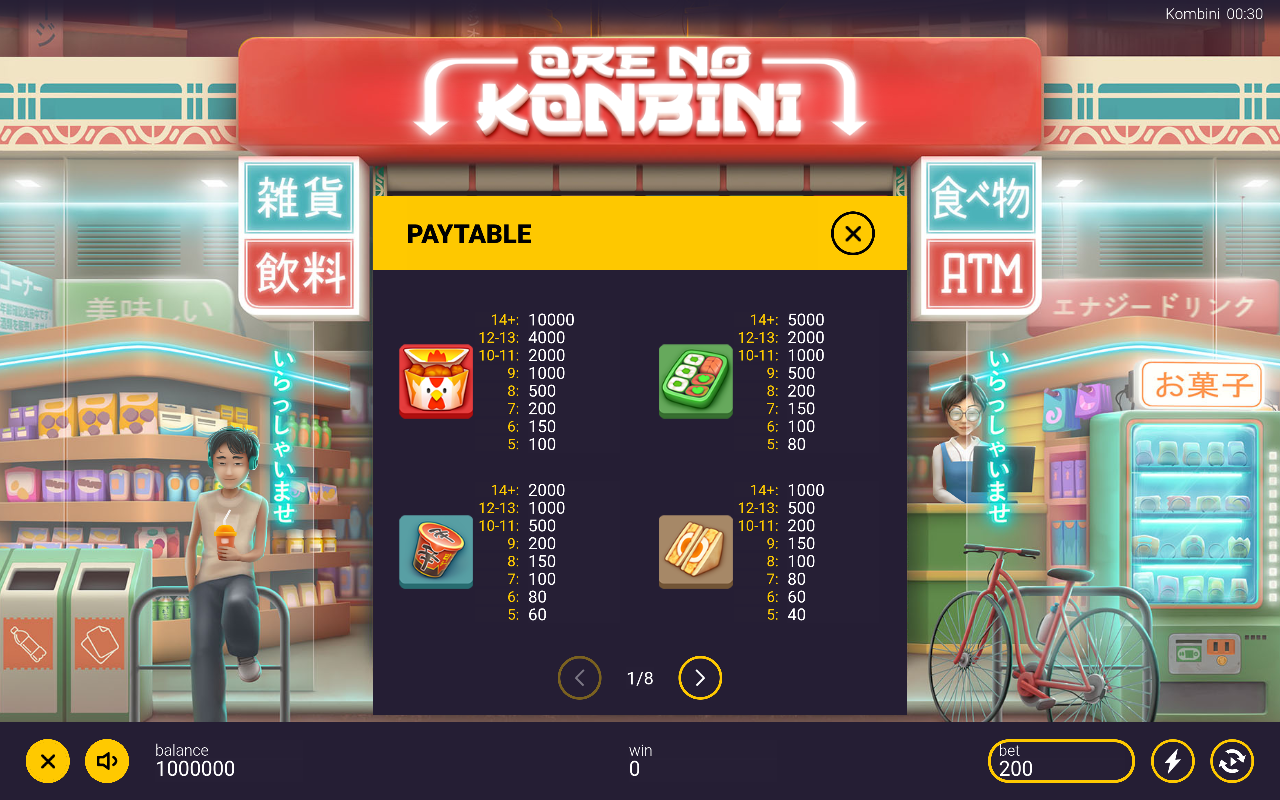
The counts are bracketed rather than stepped one by one. Five, six, seven, eight and nine of a kind each carry their own multiple, then the tiers widen: ten and eleven of a kind share a value, twelve and thirteen share the next, and fourteen or more – the top bracket, with no upper limit printed – carries the biggest pay of all. Symbol pays as multiples of the total bet:
- Red fox-face takeaway box – 0.5x for five, 0.75x for six, 1x for seven, 2.5x for eight, 5x for nine, 10x for 10-11, 20x for 12-13, 50x for 14 or more
- Green maki/sushi roll pack – 0.4x for five, 0.5x for six, 0.75x for seven, 1x for eight, 2.5x for nine, 5x for 10-11, 10x for 12-13, 25x for 14 or more
- Cup noodle – 0.3x for five, 0.4x for six, 0.5x for seven, 0.75x for eight, 1x for nine, 2.5x for 10-11, 5x for 12-13, 10x for 14 or more
- Wrapped sandwich – 0.2x for five, 0.3x for six, 0.4x for seven, 0.5x for eight, 0.75x for nine, 1x for 10-11, 2.5x for 12-13, 5x for 14 or more
- Dango skewer – 0.1x for five, 0.15x for six, 0.2x for seven, 0.3x for eight, 0.5x for nine, 0.75x for 10-11, 1.5x for 12-13, 2.5x for 14 or more
- Green drink bottle – 0.1x for five, 0.15x for six, 0.2x for seven, 0.3x for eight, 0.5x for nine, 0.75x for 10-11, 1.5x for 12-13, 2.5x for 14 or more
- Fish-shaped cake – 0.1x for five, 0.15x for six, 0.2x for seven, 0.3x for eight, 0.5x for nine, 0.75x for 10-11, 1.5x for 12-13, 2.5x for 14 or more
- Blue canned drink – 0.1x for five, 0.15x for six, 0.2x for seven, 0.3x for eight, 0.5x for nine, 0.75x for 10-11, 1.5x for 12-13, 2.5x for 14 or more
The bottom four symbols – the skewer, the bottle, the fish-shaped cake and the can – pay identically at every count. Below the top four, symbol identity doesn’t matter at all; only the number of matching items on the grid does. The shelf is decorated, but the maths only counts.
The shape of that table is the shape of the game. The low tiers are petrol-station prices, and the real money is stacked at the top, in counts a single drop of symbols never reaches on its own. Every paying spin is a question of how far the refills will carry it.
The Refill Chain
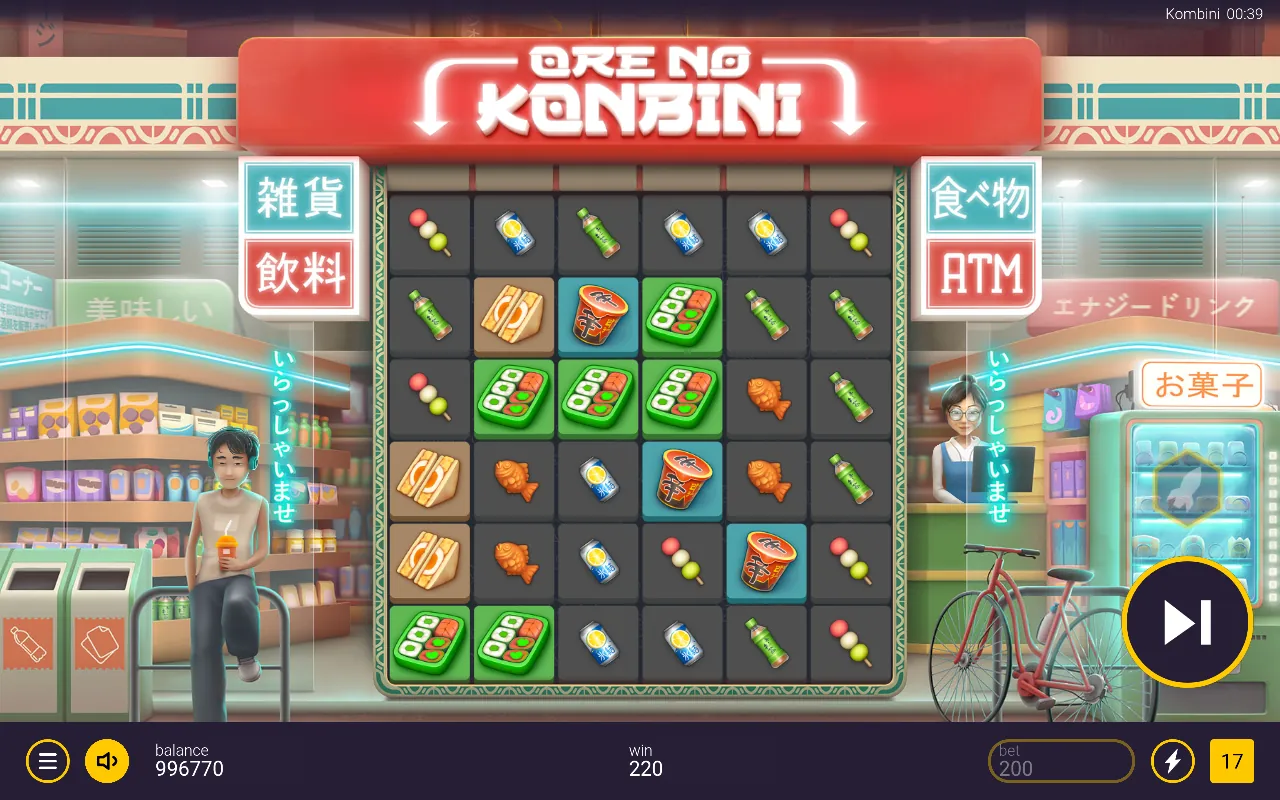
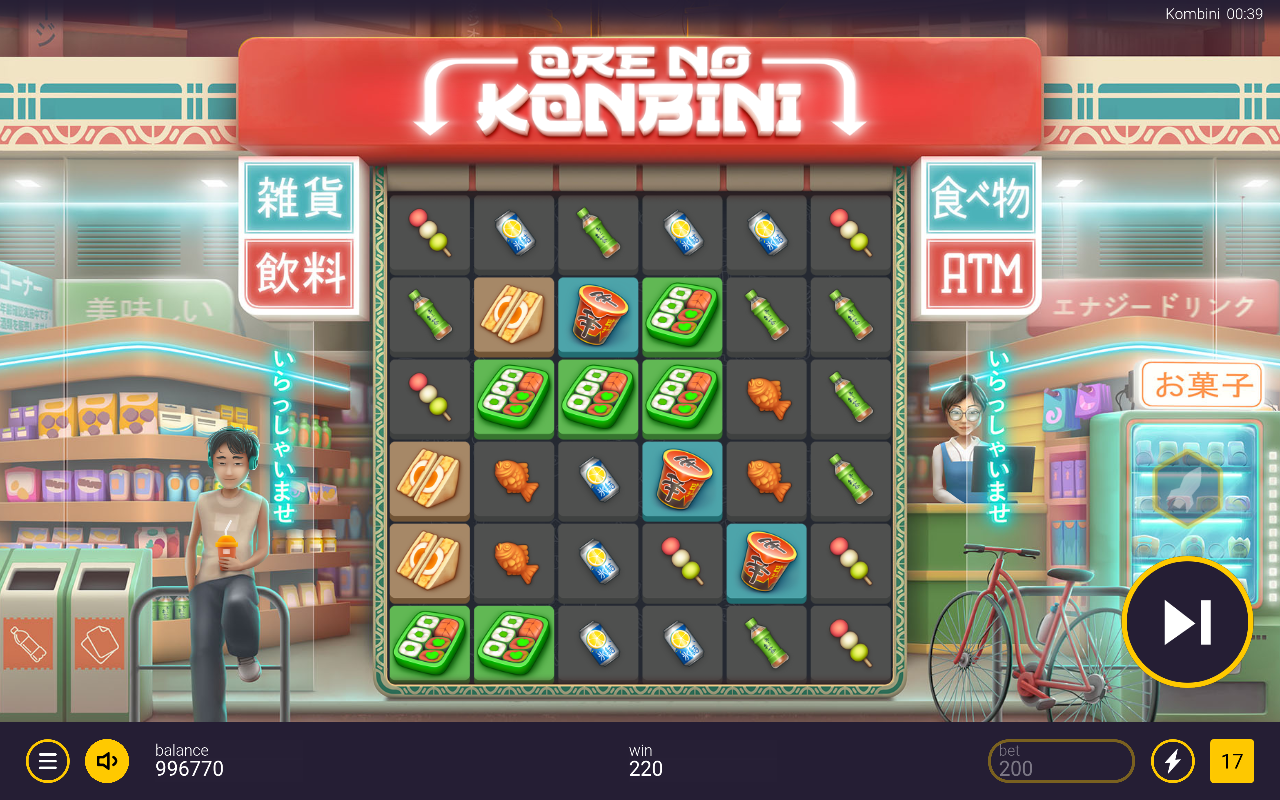
Because removed symbols are replaced, one spin can chain several wins together. A modest five-of-a-kind can, with the right refills, grow into a nine or a ten-of-a-kind before the grid settles. Every removal is a small lottery on what the shelf restocks.
That matters most in the wide brackets. The jump from nine to ten of a kind doubles the fox box pay from 5x to 10x, and the jump from eleven to twelve doubles it again to 20x. A chain that keeps the same symbol running is worth more than two separate wins of half the size.
A single spin plays out in a fixed order, and each step feeds the next:
- Symbols drop onto the 6×6 grid
- Five or more of a kind anywhere on the grid pays
- The winning group is removed from the grid
- The gaps refill from above
- New counts are checked, and any new five-plus group pays and clears again
- The spin ends when no new winning count can be formed
That loop is the whole game, and it’s a good one. Because the refill only happens after a win, every paying group is also a fresh draw, and the tension sits in watching a chain build rather than in waiting for a scatter. The base game never idles between events; it either pays or it resets.
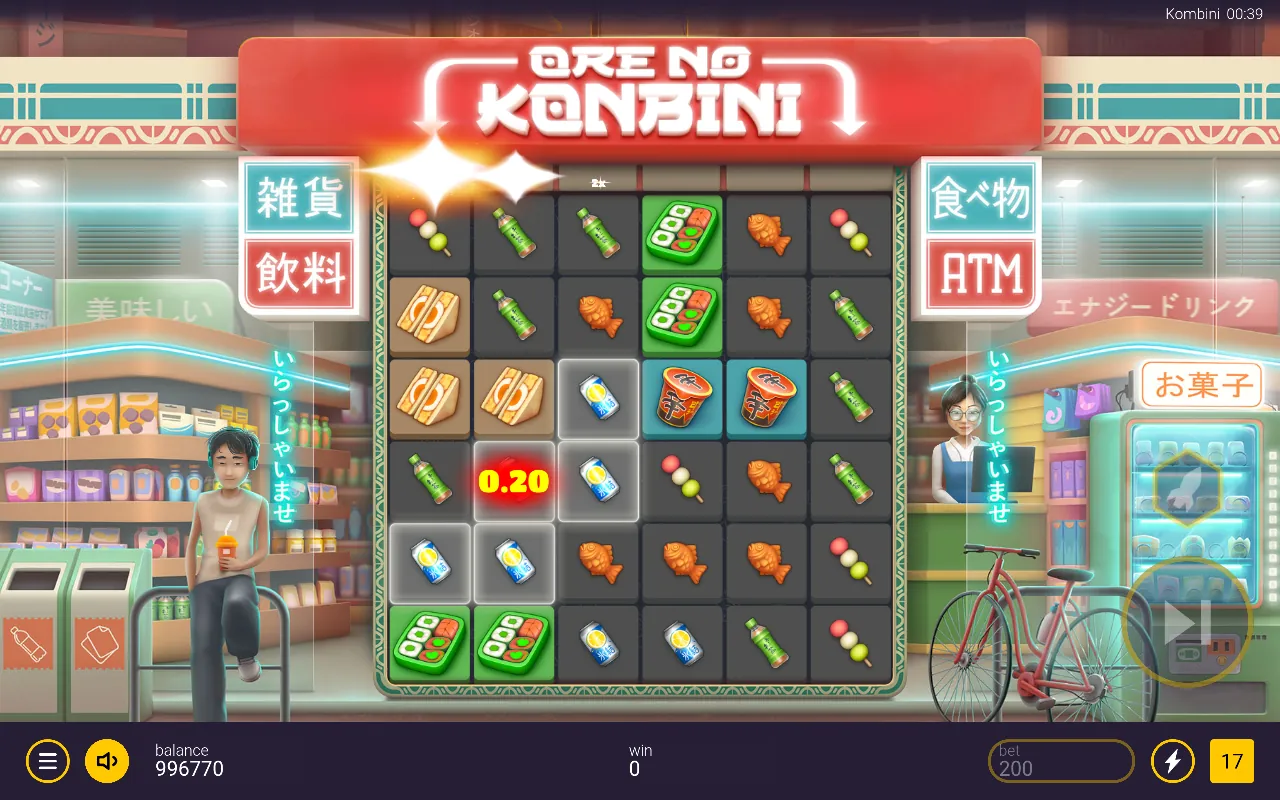
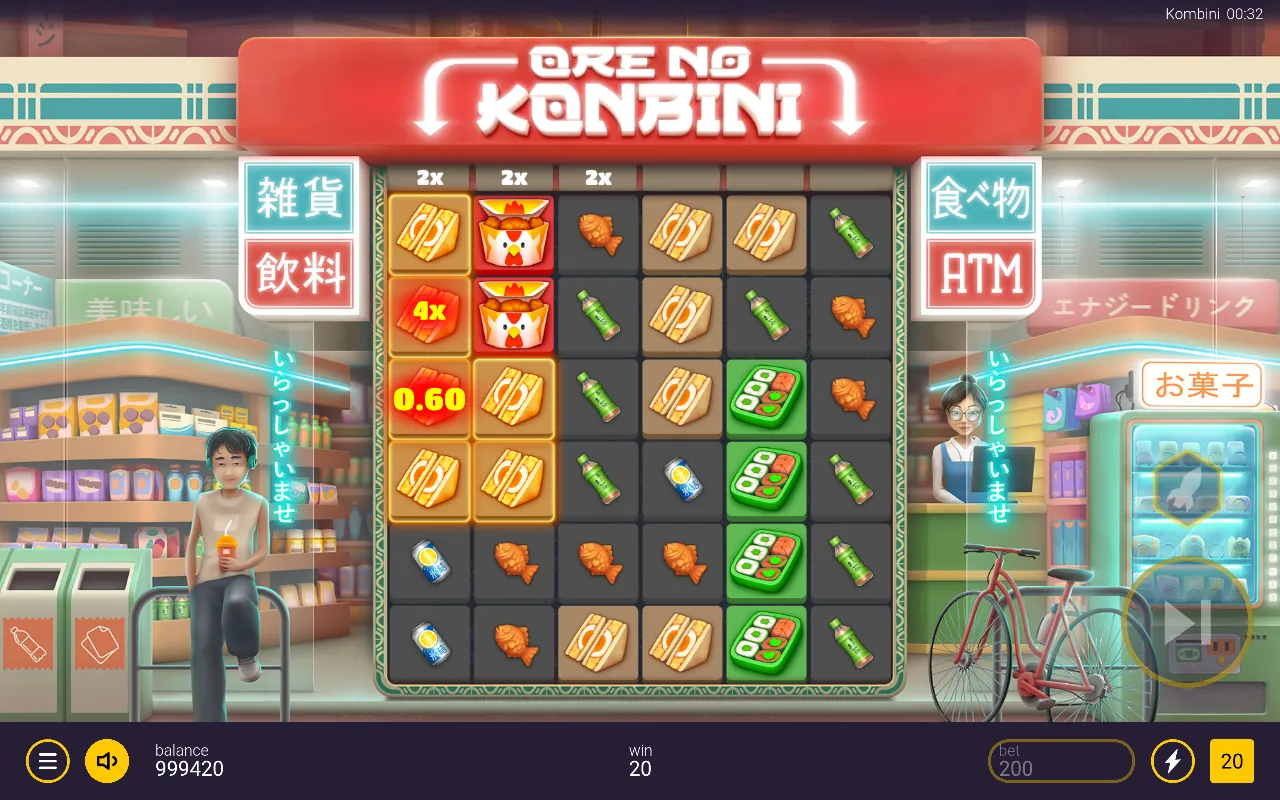
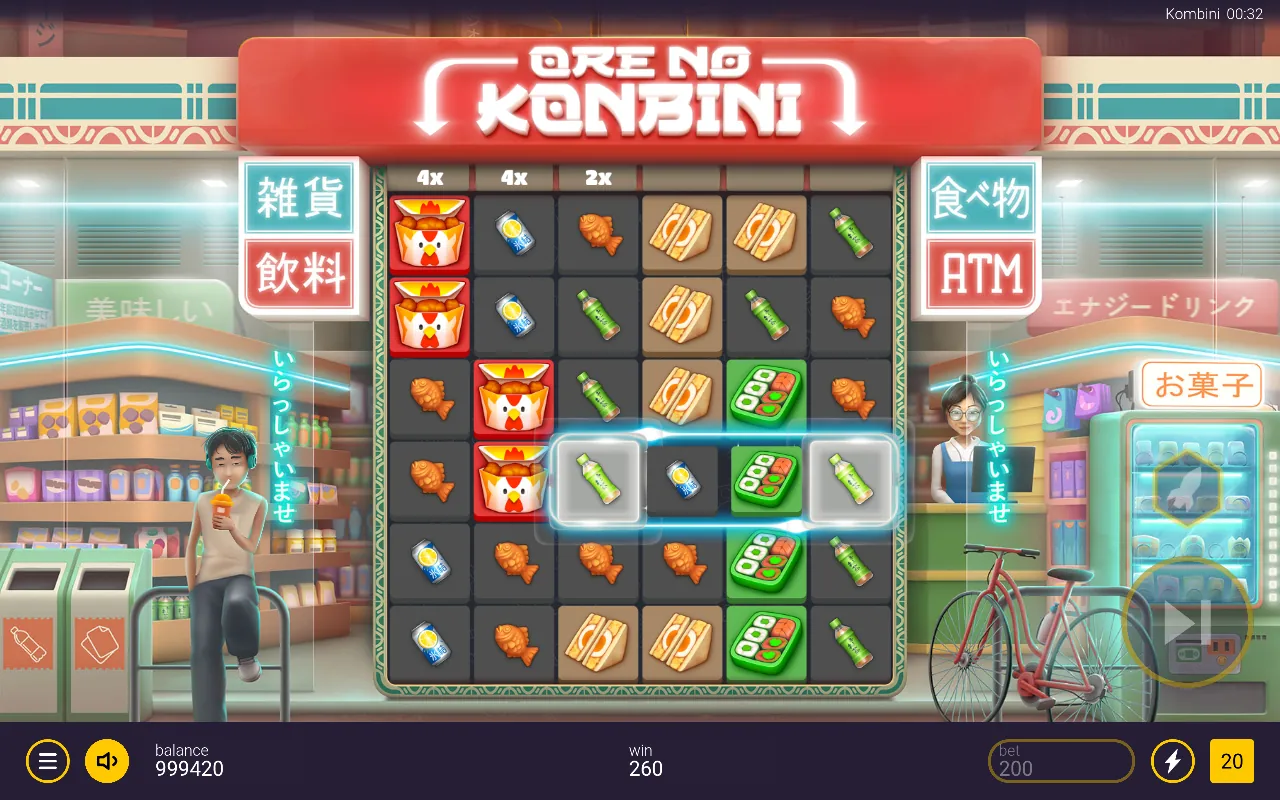
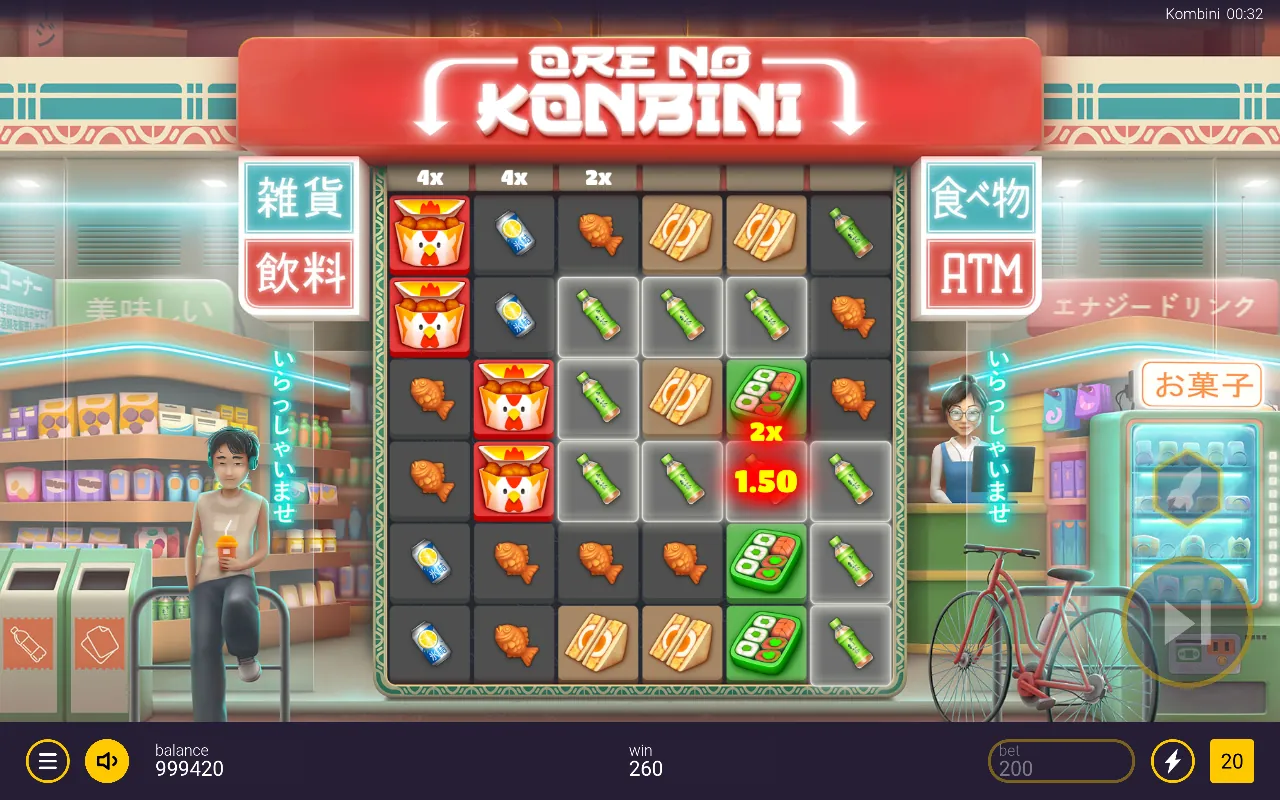
Some columns carry a 2x label overhead, and some cells are marked 0.20. What those markers do isn’t obvious from the symbols alone, and there’s more going on in this grid than plain counting.
Volatility and What It Means Here
Very-high volatility sits oddly next to a shop that sells cup noodles, but the maths makes it obvious. The value is concentrated in the big counts, and big counts on a 6×6 grid need both luck and refill chains to assemble.
Small wins exist, but they’re priced like snacks, not meals. A five-of-a-kind on the bottom tier returns a tenth of the bet; even the fox box pays back only half. The mid tiers only start to matter once a chain is running, and the top brackets need a grid that keeps clearing and restocking in one direction.
That shape makes session length matter. A short run sees the low tiers tick over while the top of the table stays a rumour. A long one is a slow accumulation of almosts until a chain lands. It’s a patient game wearing a brightly lit, impatient costume.
Our Honest Verdict
Overall Rating: 6.9/10
This is a shop you visit for one thing, and you’ll know within a hundred spins whether that one thing is enough. There’s no bonus round to break up the shift; the refill chain is the entire product, and a good chain – one that keeps clearing and restacking – is worth sitting through a lot of quiet tills for.
The strength is that every spin can still be building something. A five-of-a-kind that turns into twelve is the best moment this game has, and nothing else on the shelf manufactures that kind of suspense from plain counting. The weakness is the floor: most chains die at six or seven of a kind, and the pay down there barely covers the bus fare home. The 2x column labels and 0.20 cell markers look like they matter, too, and the game never explains them.
It suits players who like a long build and are happy to let the base game do all the work, and fans of Peter & Sons’ cartoon polish will enjoy the shopfront even through the quiet spells. Anyone who needs a free spins round to feel like a slot is paid is shopping in the wrong store.
Ore No Konbini FAQs
-
What is the RTP of Ore No Konbini?
Ore No Konbini runs at 96.6% RTP. -
Is Ore No Konbini high volatility?
Yes. Ore No Konbini is rated very-high volatility, so wins are geared towards large symbol counts rather than frequent small payouts. -
What is the grid size of Ore No Konbini?
Ore No Konbini plays on a 6×6 grid where wins are formed by gathering matching symbols in counts from five upward. -
When is Ore No Konbini released?
Ore No Konbini’s release date is 19 November 2026. -
Who makes Ore No Konbini?
Ore No Konbini is made by Peter & Sons, the studio behind titles such as Animafia and Bunny Heist. -
What is the maximum win on Ore No Konbini?
The maximum win on Ore No Konbini is 20,000x your bet. -
Does Ore No Konbini have a wild symbol?
No. There’s no wild or scatter substitution in Ore No Konbini; every win is made of real symbols in counts of five or more. -
How do wins work in Ore No Konbini?
Wins pay for five or more matching symbols anywhere on the 6×6 grid. Winning groups are then removed and the grid refills from above, so one spin can chain several wins together.