












Raiders of the East Dice Slot Review
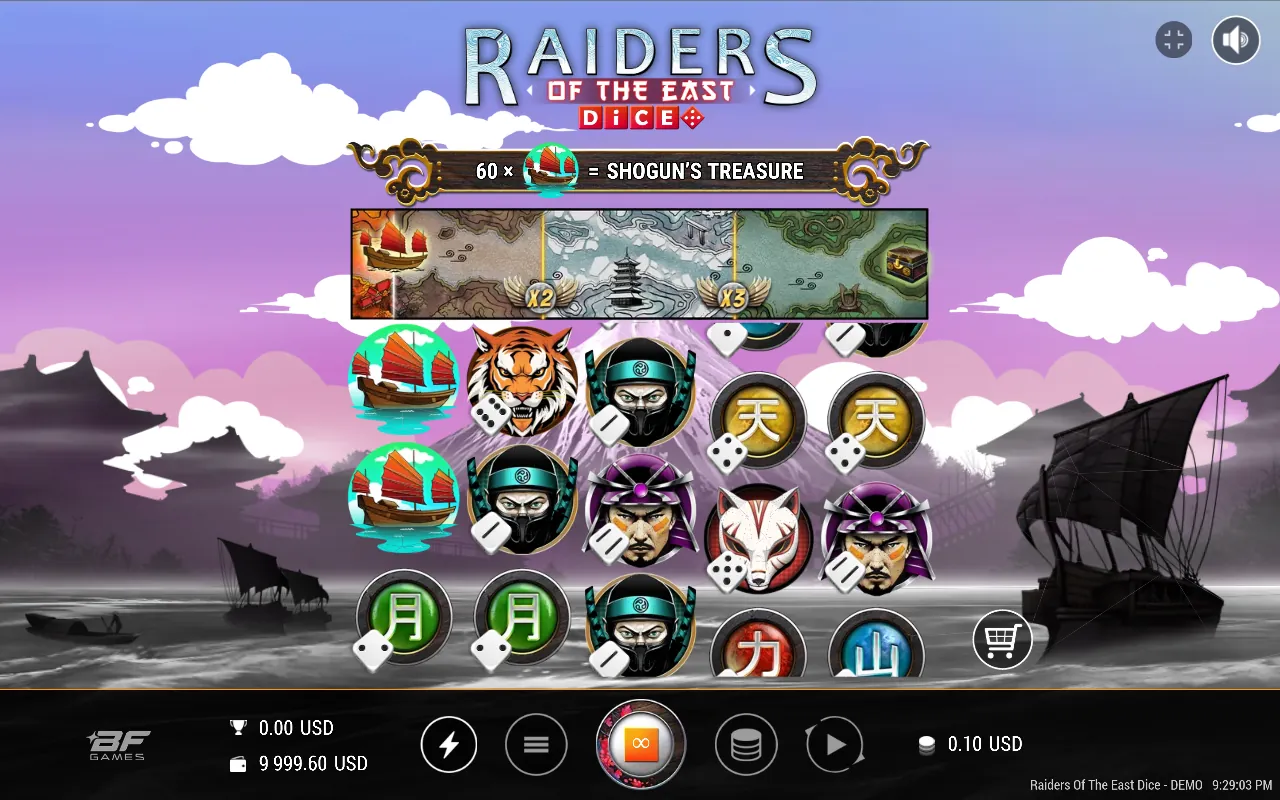
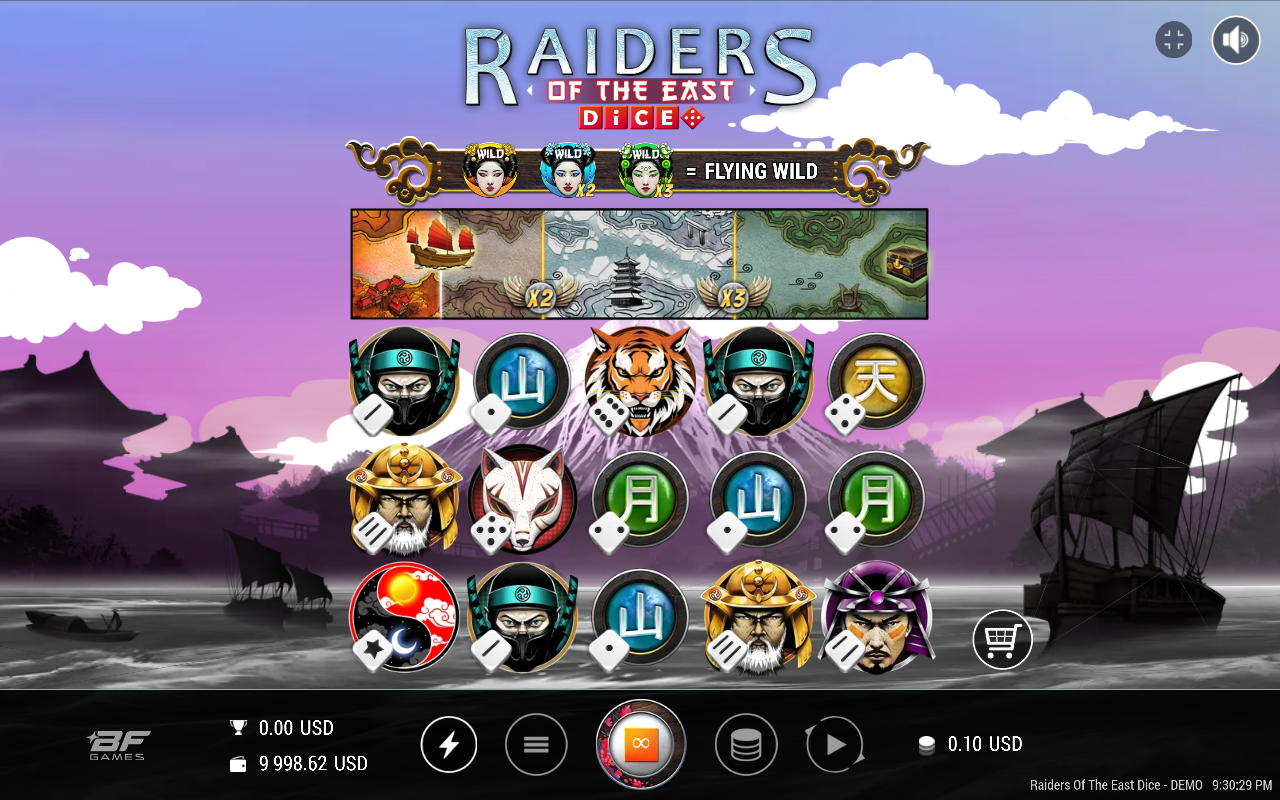
A tiger mid-snarl, a samurai in full armour and a round-eyed Daruma doll share these reels with rune-carved dice, and BF Games have made the pairing cohere where most hybrids would just stack the two themes. The interesting decision isn’t the art, though – it’s the banner. Raiders of the East Dice puts every feature trigger on permanent display above the reels, in symbols rather than words, and that one choice changes how the whole game reads.
It’s a 5×3 reel set from the studio behind Honey Beast, with a banner sitting above the reels that carries most of the game’s identity. The banner isn’t decoration; it’s where the feature triggers live, spelled out in plain symbol combinations. That combination of a familiar grid and an unusual trigger display is what makes this one worth a closer look.
Base Game & Features
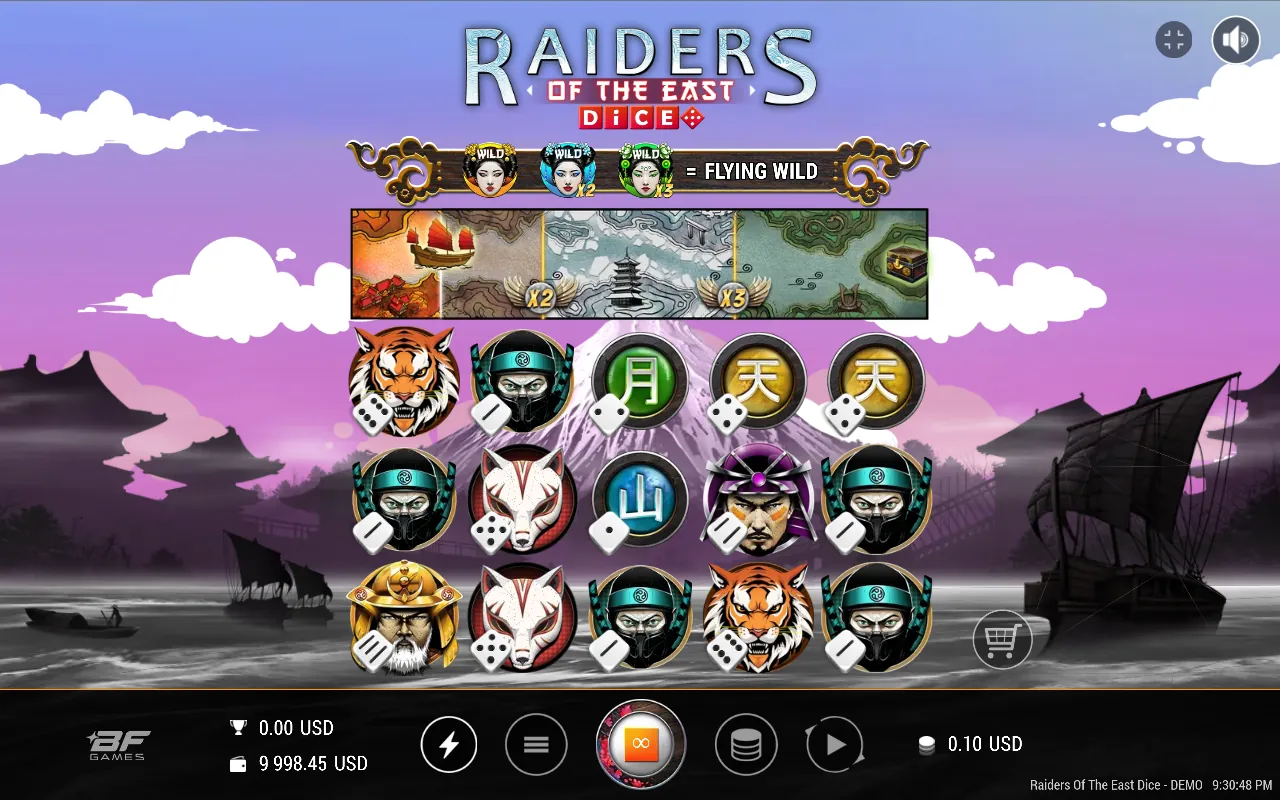
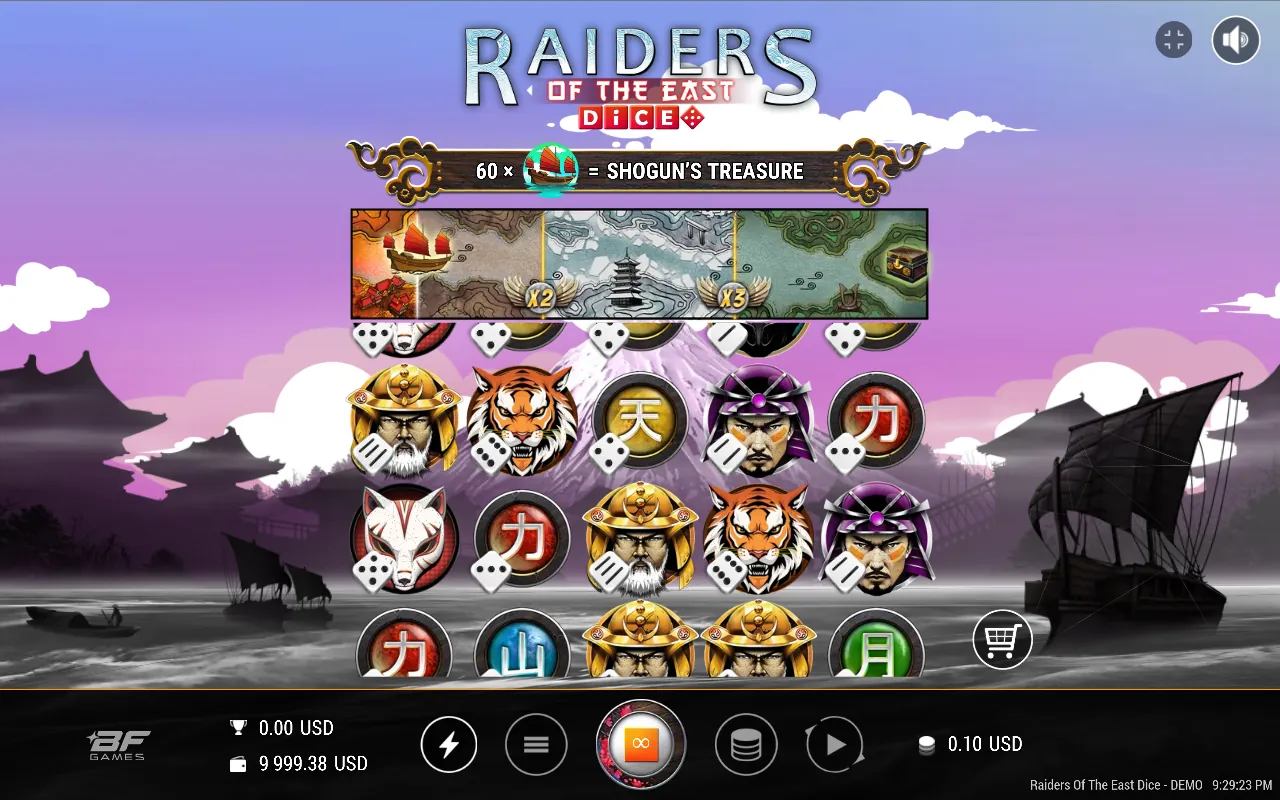
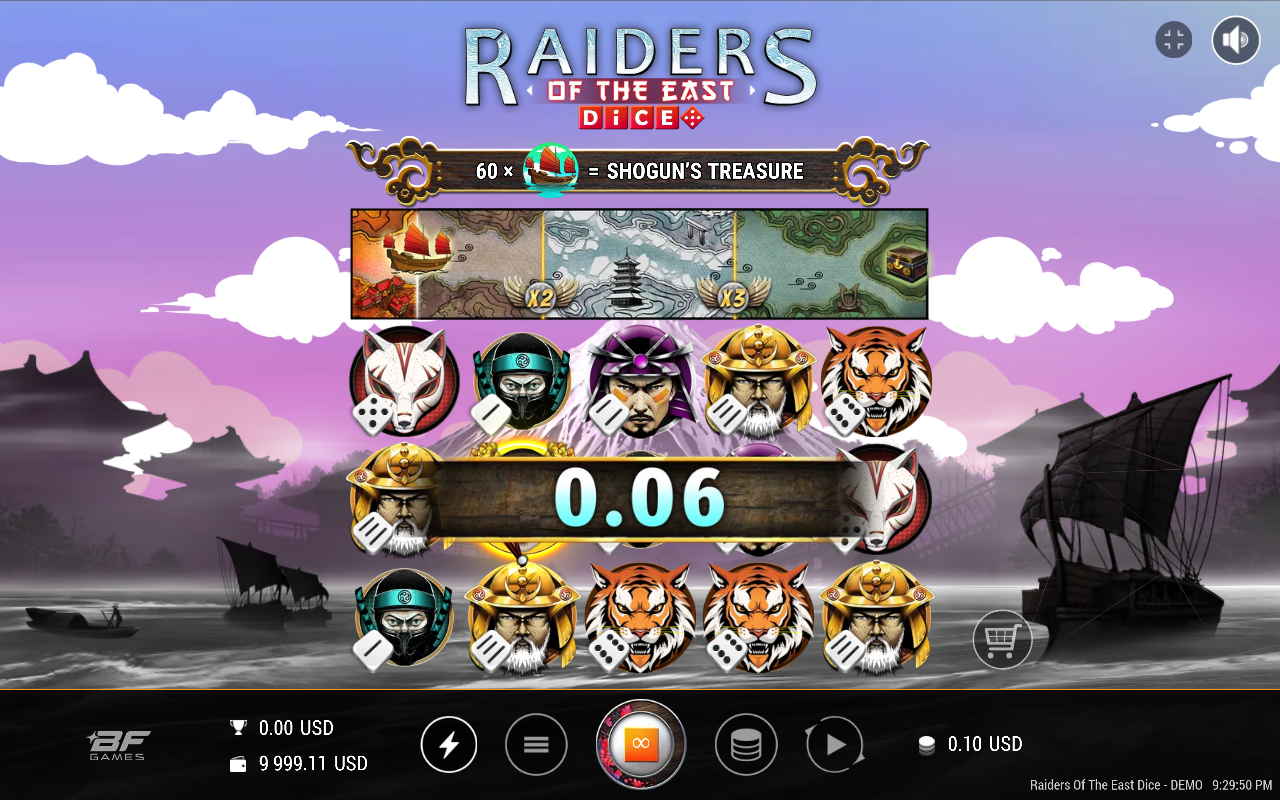
The reels run on a 5×3 grid, and the symbol set tells the theme’s story in two halves. The premium side is pure Edo-period Japan, drawn in a bold, poster-like style. The other half is the dice half, with rune-dice symbols carrying the lower-value combinations.
- Samurai – the highest-tier Japanese premium symbol
- Tiger – premium symbol, rendered mid-snarl
- Fox – premium symbol, completing the Edo trio
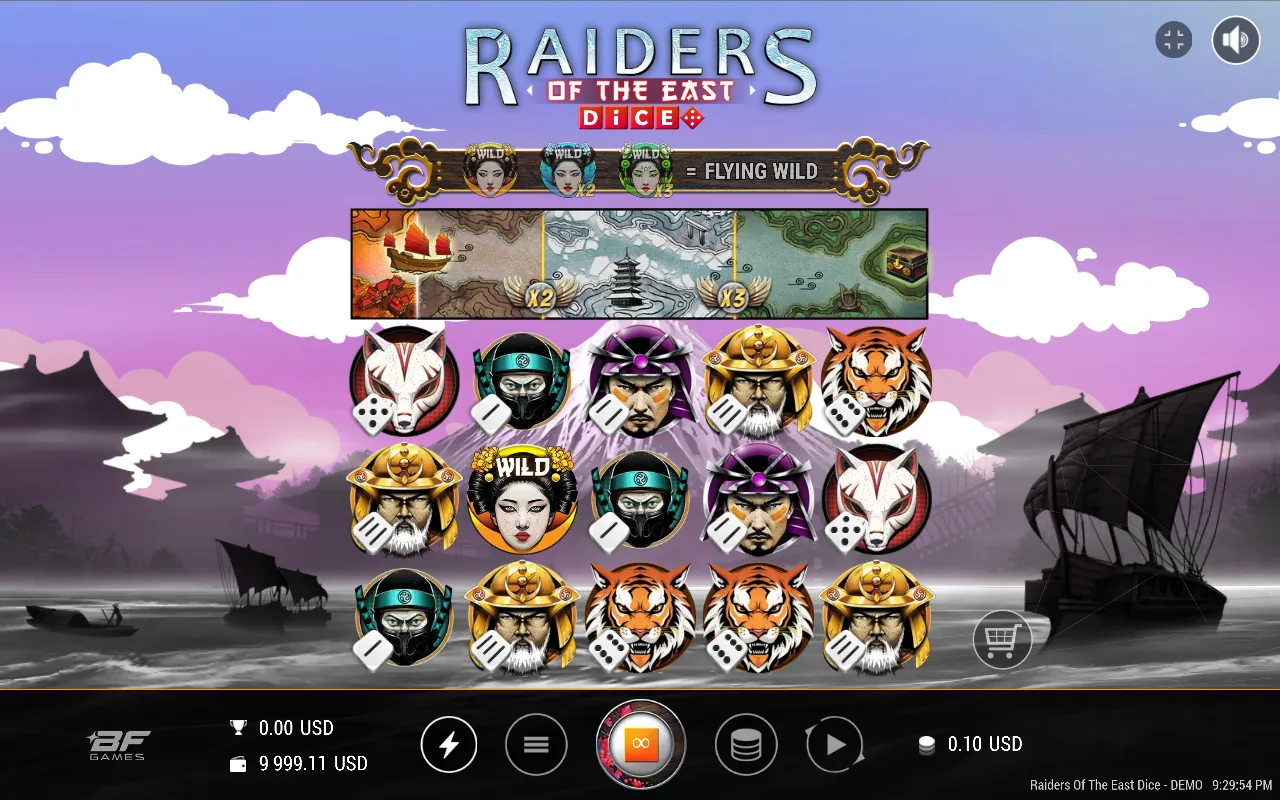
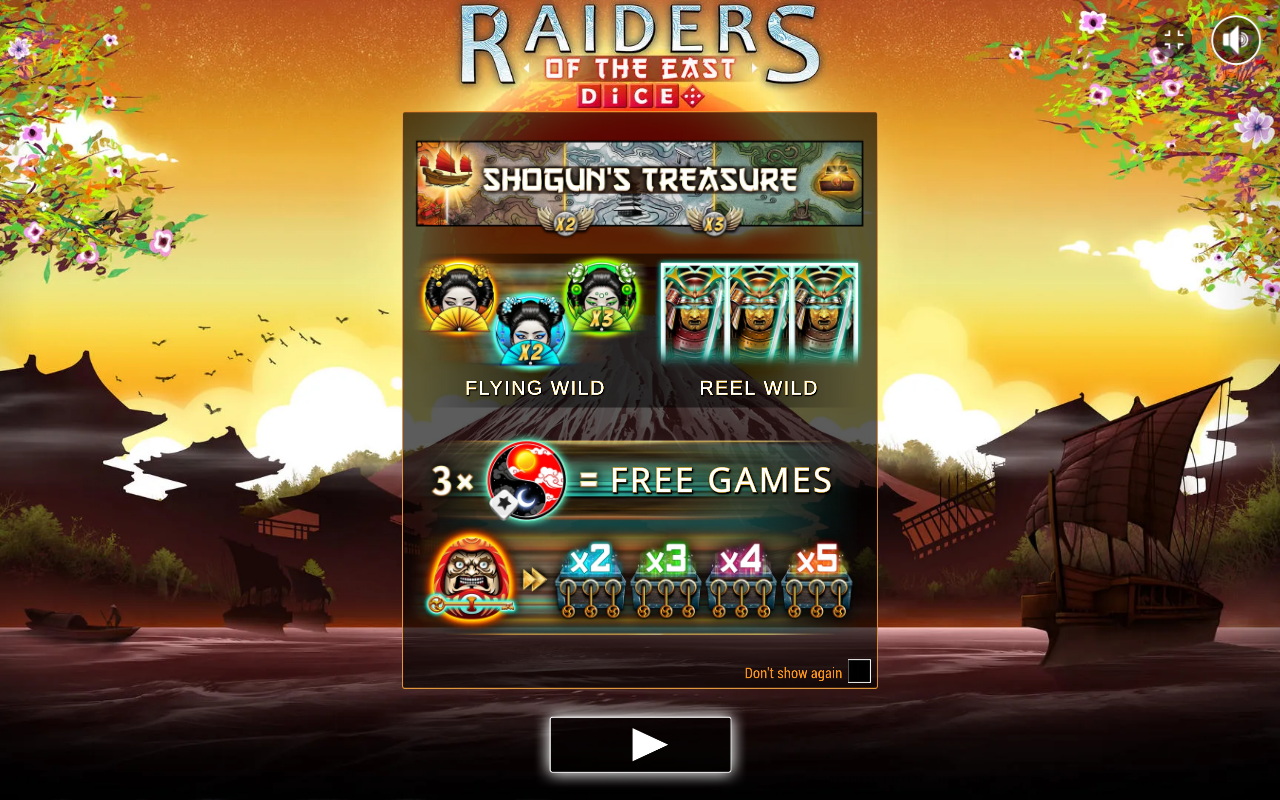
- Geisha – the Flying Wild trigger symbol
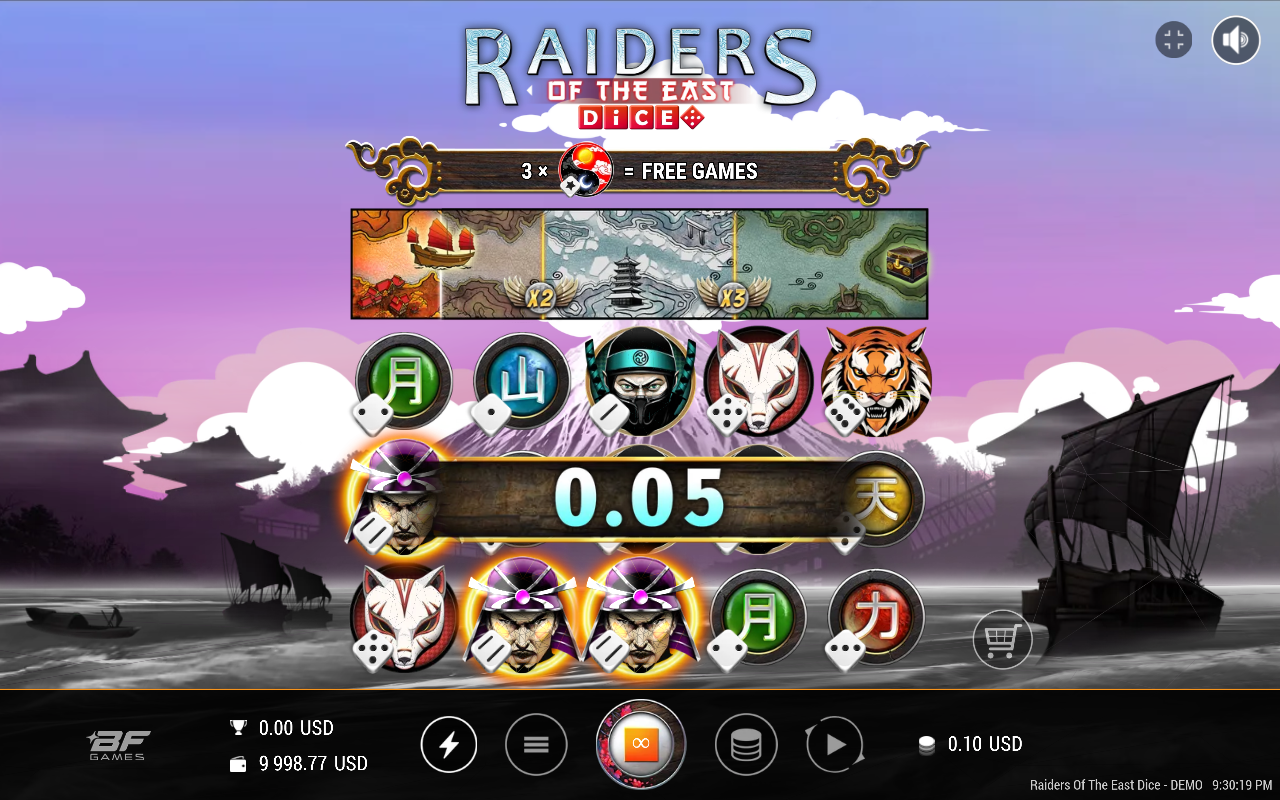
- Yin-Yang coin – the scatter that triggers Free Games
- Rune dice – the lower-value symbol set
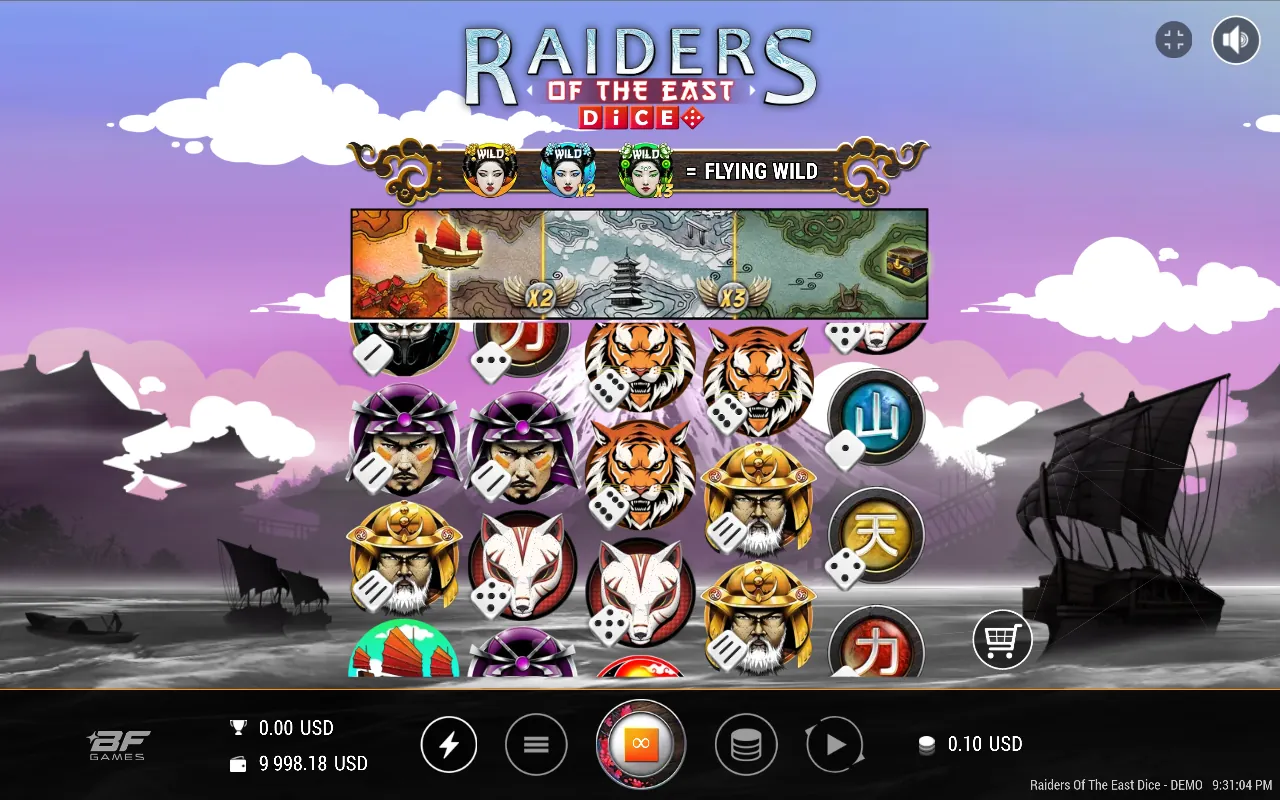
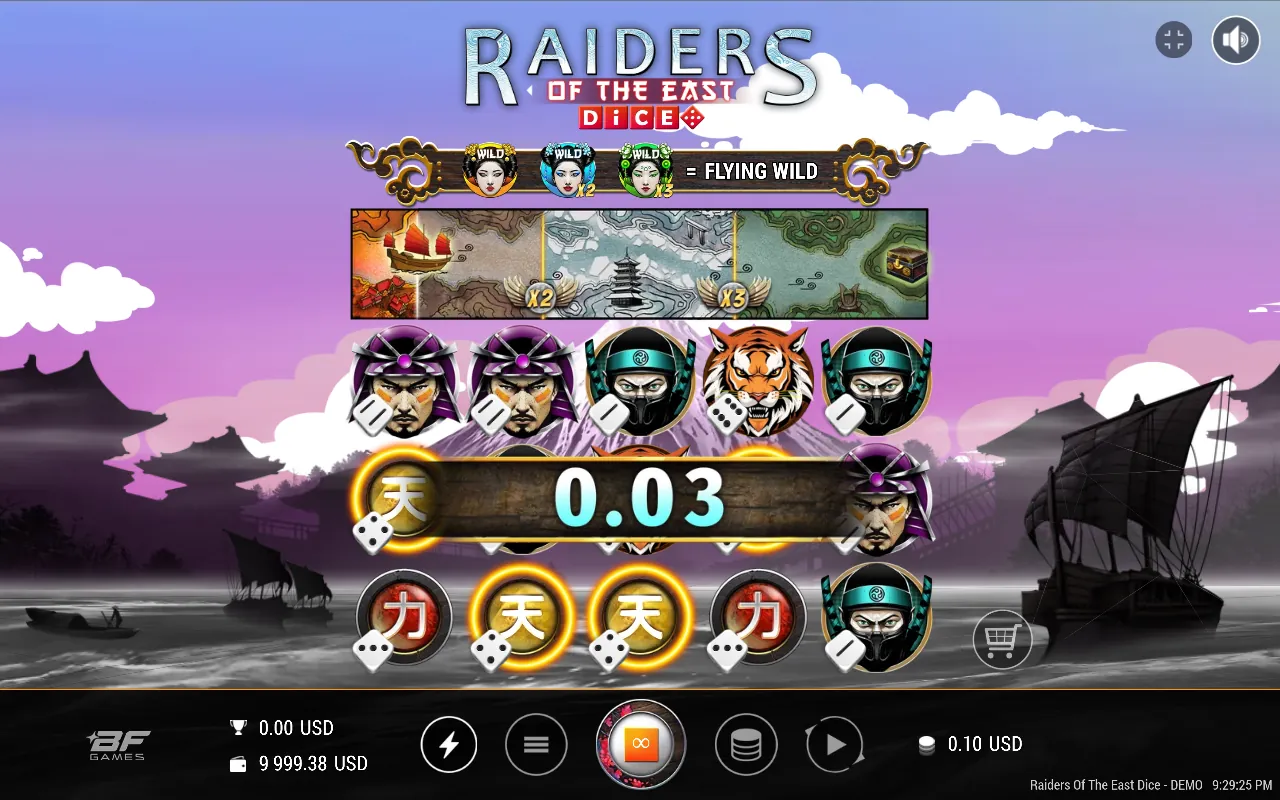
The unusual part sits above the reels. A permanent banner strip displays the game’s feature combinations, each written as symbols and a result rather than in words. It works as a live reference: everything the game can do is written on that strip, in the same icon language the reels use.
- Three Geisha symbols shown in the banner trigger Flying Wild
- The Reel Wild symbol appears with an x3 value
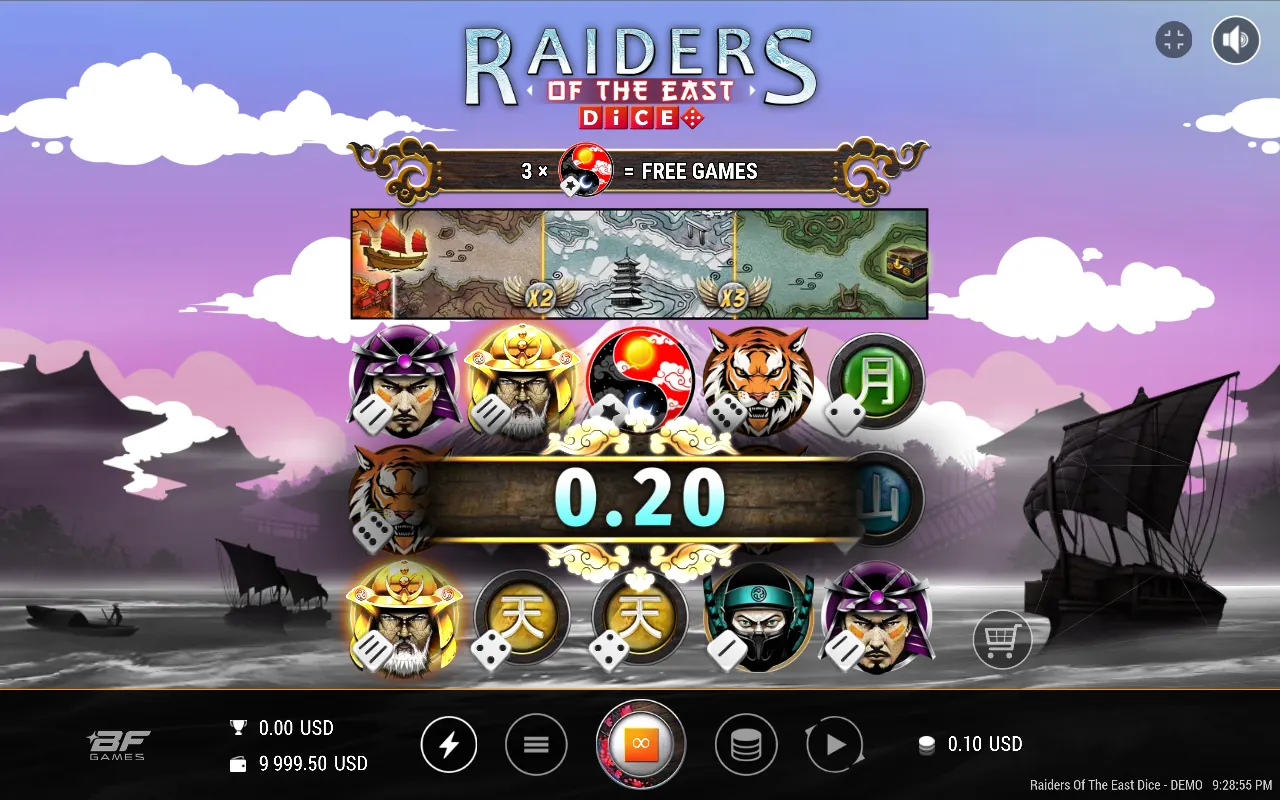
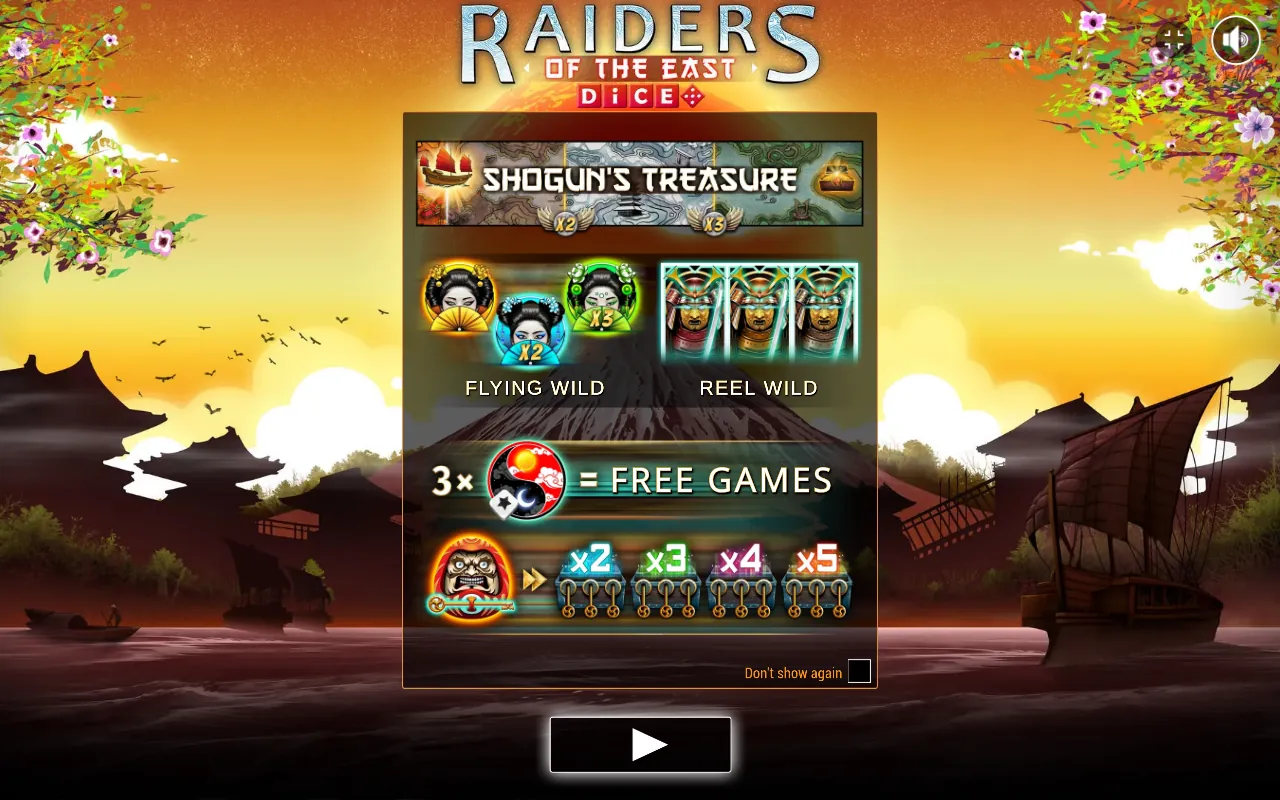
- Three Yin-Yang coin symbols trigger Free Games
- 60 of the banner icon triggers Shogun’s Treasure
Reading the banner is simple once you know its grammar. Each entry puts the symbols on the left and the reward on the right, so a glance up tells you which combination is in play and what it pays out. The Geisha and Yin-Yang entries use three-symbol counts, while Shogun’s Treasure asks for 60 of its icon, a far taller order and priced accordingly.
Flying Wild
Flying Wild is the banner’s headliner. Land three Geisha symbols and wild modifiers come into play, carrying x2 or x3 values and appearing on the first three reels. As a wild mechanic it’s straightforward: the symbol substitutes for others, and the attached multiplier lifts whatever combination it completes.
The two multiplier values give the feature a small range of outcomes. An x2 wild on a completed line doubles the pay; an x3 wild triples it. Where more than one wild lands in the same combination, the multipliers stack their effect, which is where the modest-looking values stop looking modest. Two x3 wilds in one win put the pay at nine times its base value, all from a pair of symbols.
Reel Wild
Where Flying Wild drops wilds into single positions, the Reel Wild covers a full reel at once. Its x3 value applies across everything that reel helps complete, so a fully wild reel can turn a modest line into something worth watching. It’s the quieter of the two wild treatments, and the simpler one.
The trade in scope is straightforward. Flying Wild can appear in more places but only one position at a time, while the Reel Wild concentrates its whole effect into a single reel. One fills gaps; the other guarantees them closed. Which one you’d rather see depends entirely on what the rest of the grid is doing.
Shogun’s Treasure
Shogun’s Treasure is the banner’s big-ticket line: 60 of the banner icon is the stated combination. It’s shown alongside a Daruma doll – the round-eyed good-luck figure that gives the event its name – and a multiplier ladder that climbs through fixed tiers.
- x2 – the first step of the ladder
- x3 – the second step
- x4 – the third step
- x5 – the top of the ladder
Because the ladder steps upward rather than paying a flat figure, the event is built around progression: the further up it goes, the more each winning combination is worth. There’s no maximum win figure for this one, so the top of the ladder is the closest thing to a ceiling the game offers.
The wild, in plain terms: Geisha and Reel Wild symbols both substitute for other symbols, with multipliers attached. Beyond that, the base game’s rhythm is set by the banner combinations and the rune-dice fills.
Raiders of the East Dice Free Games & Bonus Rounds
Free Games is the scatter-triggered round. Three Yin-Yang coin scatters anywhere on the grid is the combination, written on the banner in the same symbols-and-result format as everything else. The Yin-Yang coin is the game’s one immediately recognisable scatter symbol, and it stands apart from both the Japanese premiums and the rune-dice.
Once triggered, the round runs on the same 5×3 grid. What the free games layer on top of the base game is the banner modifiers working together rather than one at a time, which is where the multiplier ladder and the wilds can stack into the round’s bigger results.
Each modifier keeps its own rules inside the round. The Flying Wild multipliers still attach to single positions, the Reel Wild still covers its full reel at x3, and the Shogun’s Treasure ladder still climbs its four steps. The difference is timing: with all of them live at once, a single spin can carry several modifiers at the same time.
That overlap is what the round is really selling. In the base game you get one banner event and wait for the next; in the free games, a Flying Wild landing beside a climbing ladder multiplies on top of a multiplier, and the round’s headline results come from those collisions rather than from any single feature acting alone.
Our Honest Verdict
Overall Rating: 7.1/10
This is a slot you play with your eyes up. Most of the time the reels are just ticking over while you watch the banner, and the reason to pick it is exactly that: a samurai-and-dice game where you always know what you’re chasing, because it’s written on the wall above your head the whole time.
The Shogun’s Treasure ladder is the best thing here – four steps that give the long grind an actual destination, which is more than most 5×3 games bother with. The wilds are the thin part. Two multiplier values across three reels is a small palette, and once you’ve seen a couple of Flying Wilds land, there’s nothing left in them to surprise you.
It’s one for players who like a clearly drawn theme and features they can read at a glance, and there’s real craft in both. Anyone who wants a stated ceiling to aim at will find the silence on that front frustrating. For everyone else, the shogun keeps his door open.
Raiders of the East Dice FAQs
-
What is the grid size of Raiders of the East Dice?
Raiders of the East Dice runs on a 5×3 grid: five reels and three rows. -
When is Raiders of the East Dice released?
Raiders of the East Dice’s release date is 2 September 2026. -
Who makes Raiders of the East Dice?
Raiders of the East Dice is made by BF Games, the studio behind Honey Beast. -
How do you trigger Free Games in Raiders of the East Dice?
Free Games are triggered by landing three Yin-Yang coin scatter symbols anywhere on the reels. The combination is displayed on the banner above the reels. -
What is the Flying Wild in Raiders of the East Dice?
Flying Wild is a wild modifier triggered by three Geisha symbols shown in the banner. The wilds carry x2 or x3 values and appear on the first three reels, substituting for other symbols and multiplying the combinations they complete. -
What is the Reel Wild in Raiders of the East Dice?
The Reel Wild turns an entire reel wild rather than single positions, and it comes with an x3 multiplier attached to whatever wins it helps complete. -
What is Shogun’s Treasure in Raiders of the East Dice?
Shogun’s Treasure is the banner’s headline event, triggered by 60 of the banner icon. It is shown with a Daruma doll and a multiplier ladder stepping through x2, x3, x4 and x5. -
What symbols appear in Raiders of the East Dice?
The premium symbols are the samurai, tiger and fox, with a Geisha symbol triggering Flying Wild and a Yin-Yang coin acting as the scatter. Rune-dice symbols carry the lower-value combinations.