











Retro Trader Slot Review
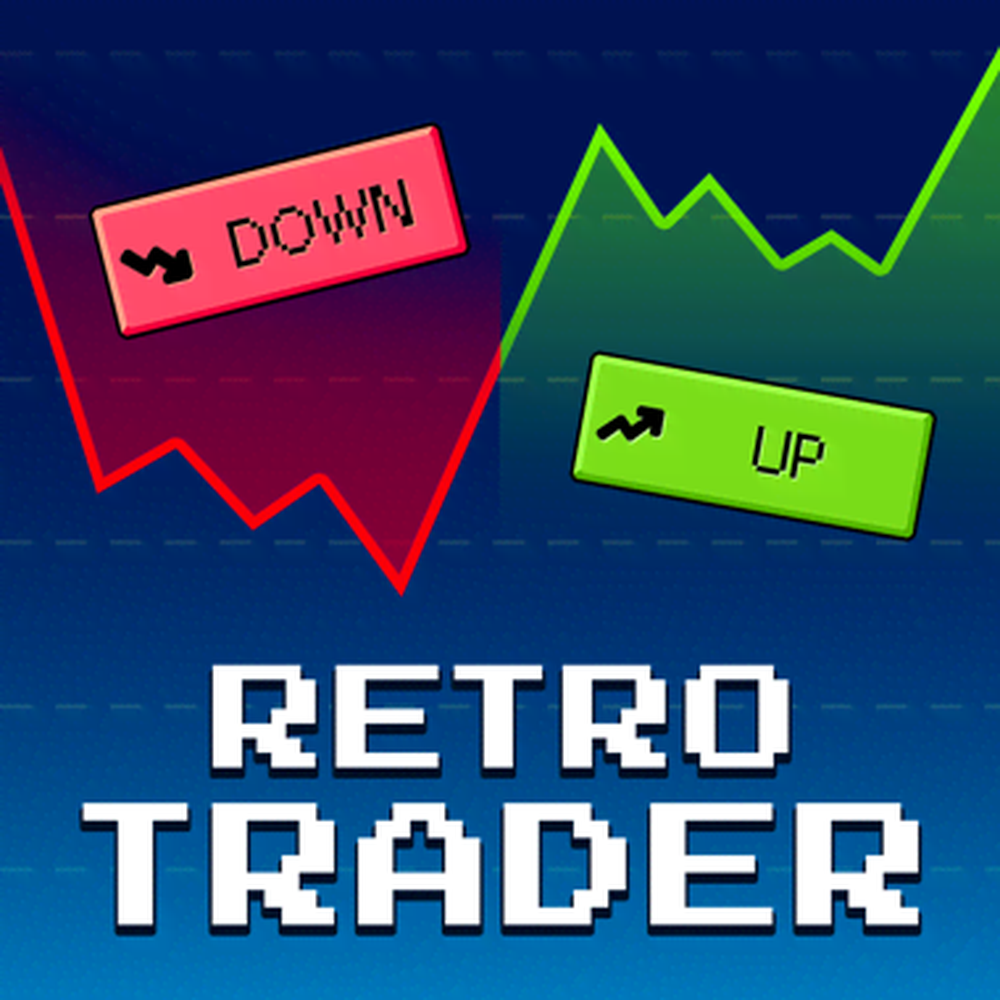
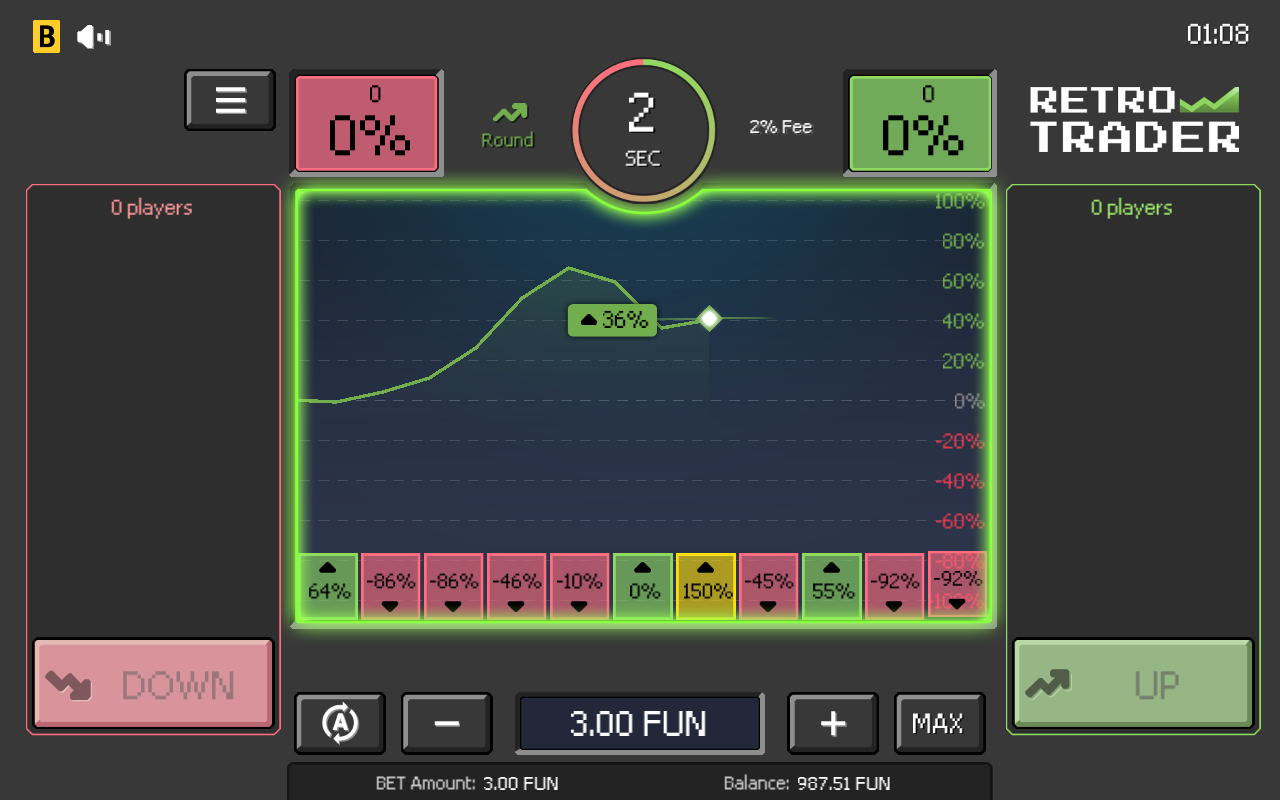
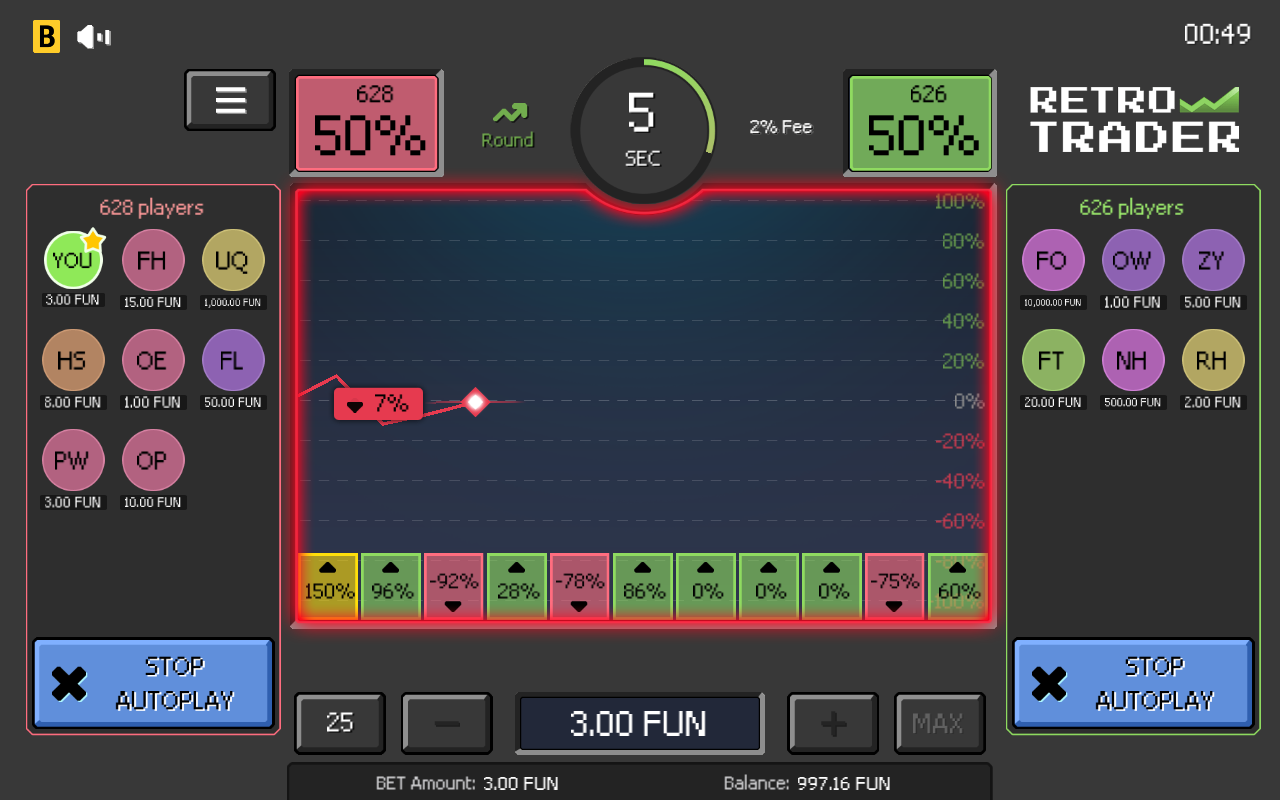
A market chart glows behind a bright green neon border, dashed gridlines and percentage labels stacked down the right edge, all of it rendered in chunky pixels like an old handheld arcade cabinet. Retro Trader lives on that screen, and it makes its edge visible in a way almost nothing else in a casino lobby does: two percent of the payout, taken after every round, and a balance that moves percentage for percentage with the line while you watch.
BGaming has built the whole game around a single call, up or down, and priced it at 99.06% RTP with low volatility. Conventional fare from the same studio is easy to find, including Fruit Million, Snoop Dogg Dollars and Alien Fruits 3. Here, the market is the machine.
How a Round Works
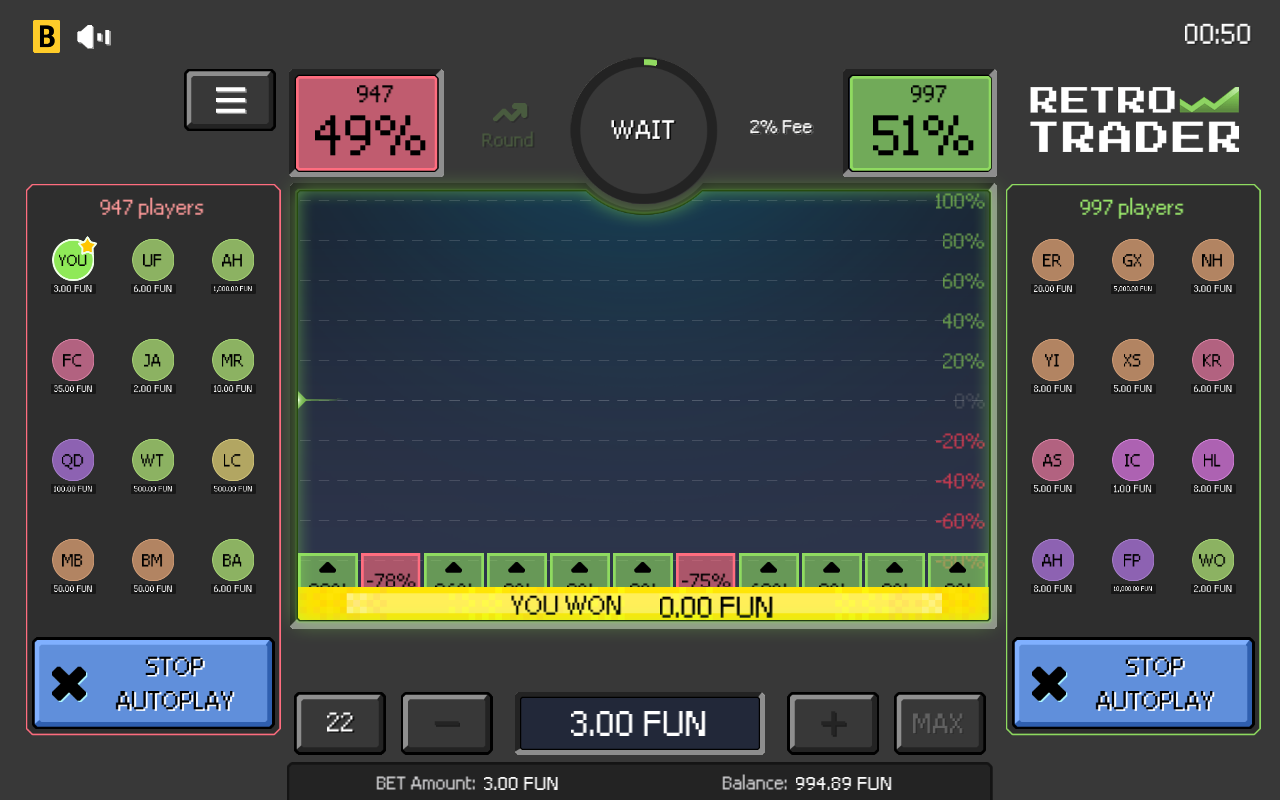
Each round has a betting stage and a result stage. During the betting stage you set a stake and pick a direction for the stock value: up or down. Once the round locks in, the graph starts moving, and your money rides on the call you made.
The graph is the entire game. Green percentage labels stack up the right edge above zero, red below, and the line ticks through them in real time until the round closes. Whatever is left when it ends is cashed out to your balance automatically.
There’s no collect button to worry about and no decision to make mid-round. The only choice you get is the one you made before the line started moving. Every round settles into one of three shapes:
- The graph runs your way, and the balance climbs
- The graph runs against you, and the balance bleeds down
- The graph drifts near flat, and you get most of your stake back
Payouts, Percentages and the 2% Commission
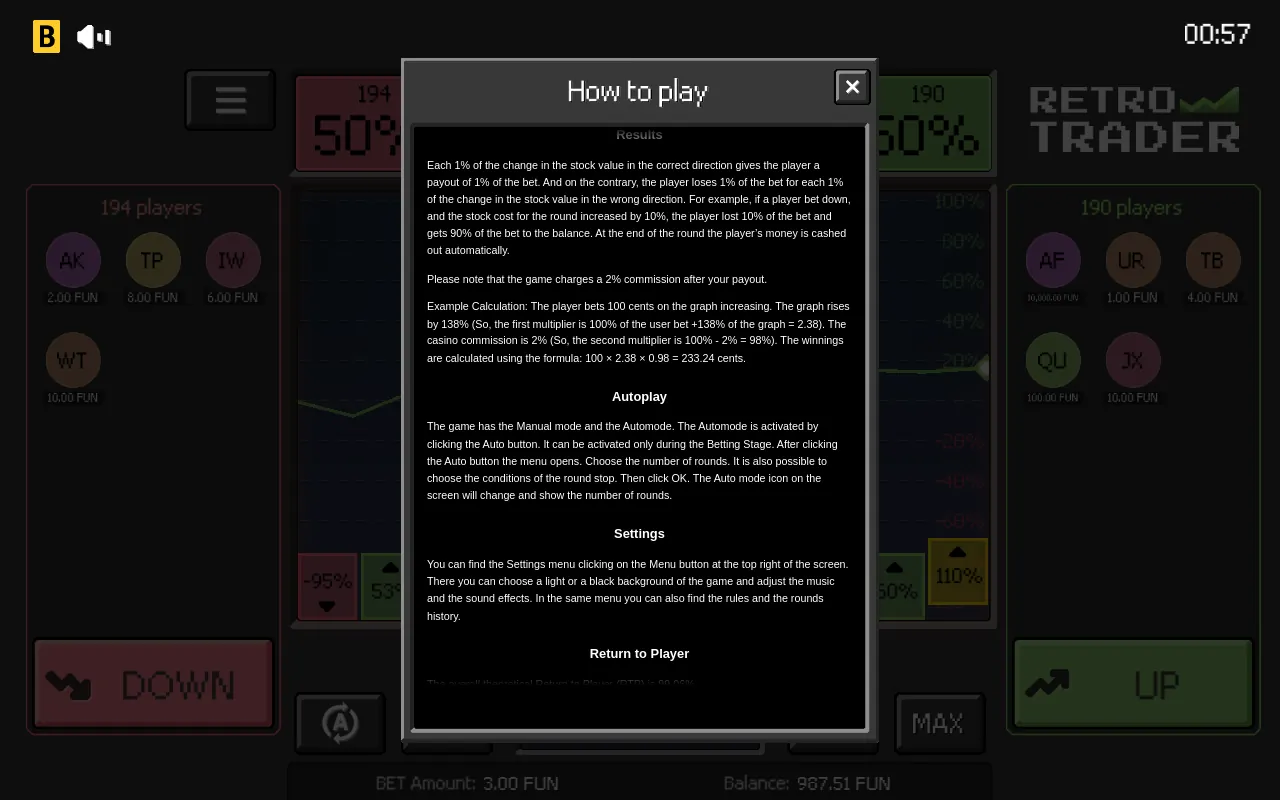
The payout maths is linear, which is unusual for anything sitting in a slots lobby. Nothing multiplies, nothing cascades, nothing retrigger. The graph moves, and your balance follows it percentage for percentage:
- Every 1% the stock moves in your chosen direction pays 1% of the bet
- Every 1% it moves the wrong way costs 1% of the bet
- Whatever remains is cashed out automatically at the end of the round
- A 2% commission is charged on the payout after each round
The wrong-direction rule is worth spelling out. Bet down and the stock climbs 10%, and you lose 10% of the stake, keeping 90%. Bet down and it climbs 100%, and the stake is gone entirely.
There’s no floor rescue and no partial refund. The graph can take the full bet in a single bad round, and it will do it without ceremony. That’s the whole risk model: linear losses, matching the linear wins.
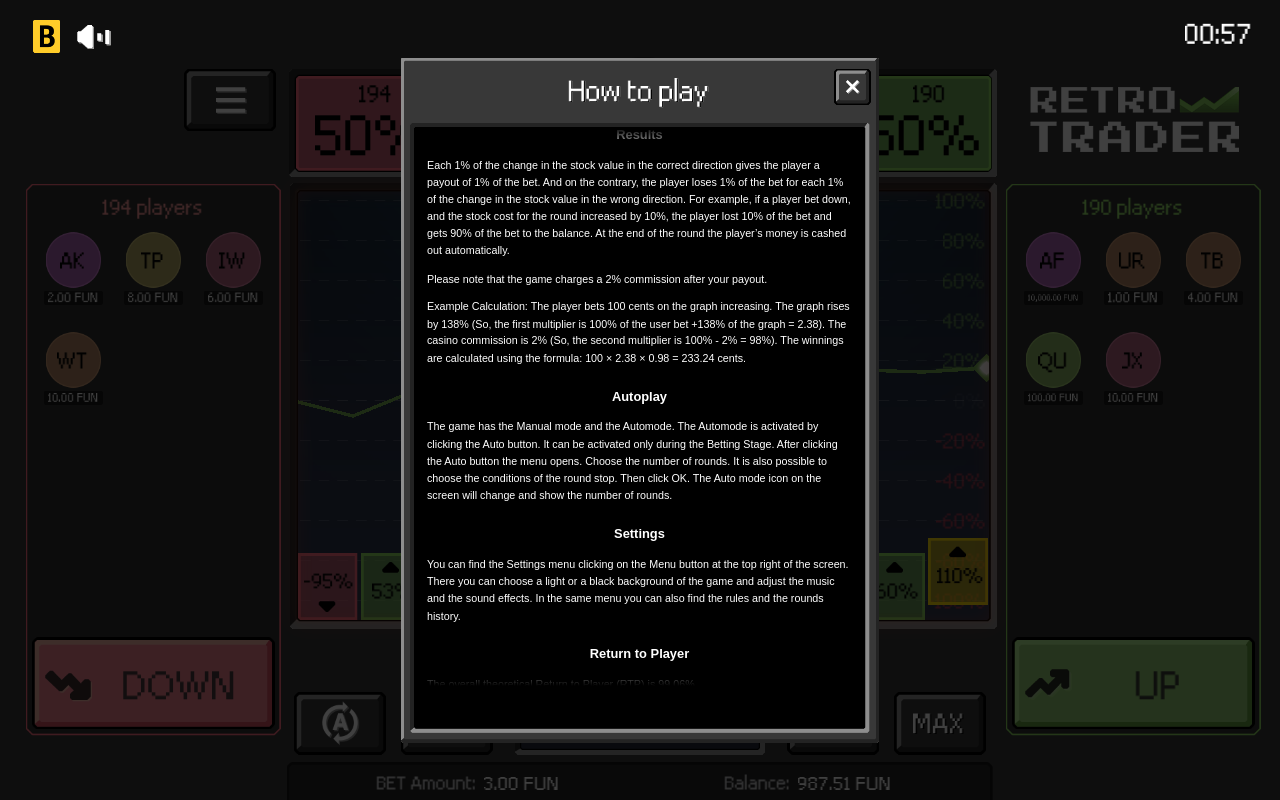
The upside runs on the same arithmetic. Bet on the graph rising and it climbs 138%, and the return is the stake plus 138%, a multiplier of 2.38. The commission is then applied as a second multiplier of 0.98, so the payout is the stake multiplied by 2.38 and then by 0.98.
That second multiplier is the only place the game takes its cut. Two percent of the payout, applied after every round, is the entire house edge, and it’s what separates this from an even-money market.
The randomness behind the graph comes from a certified random number generator, the same standard of certification reel games are held to. A market chart it may look like, but every round’s movement is drawn the way any other game draws its reels.
Low volatility and a 99.06% return tell most of the story anyway. This is a game of small, frequent swings, not jackpots, and it’s built for players who’d rather win a little often than a lot never.
Autoplay, Settings and Cash-Out
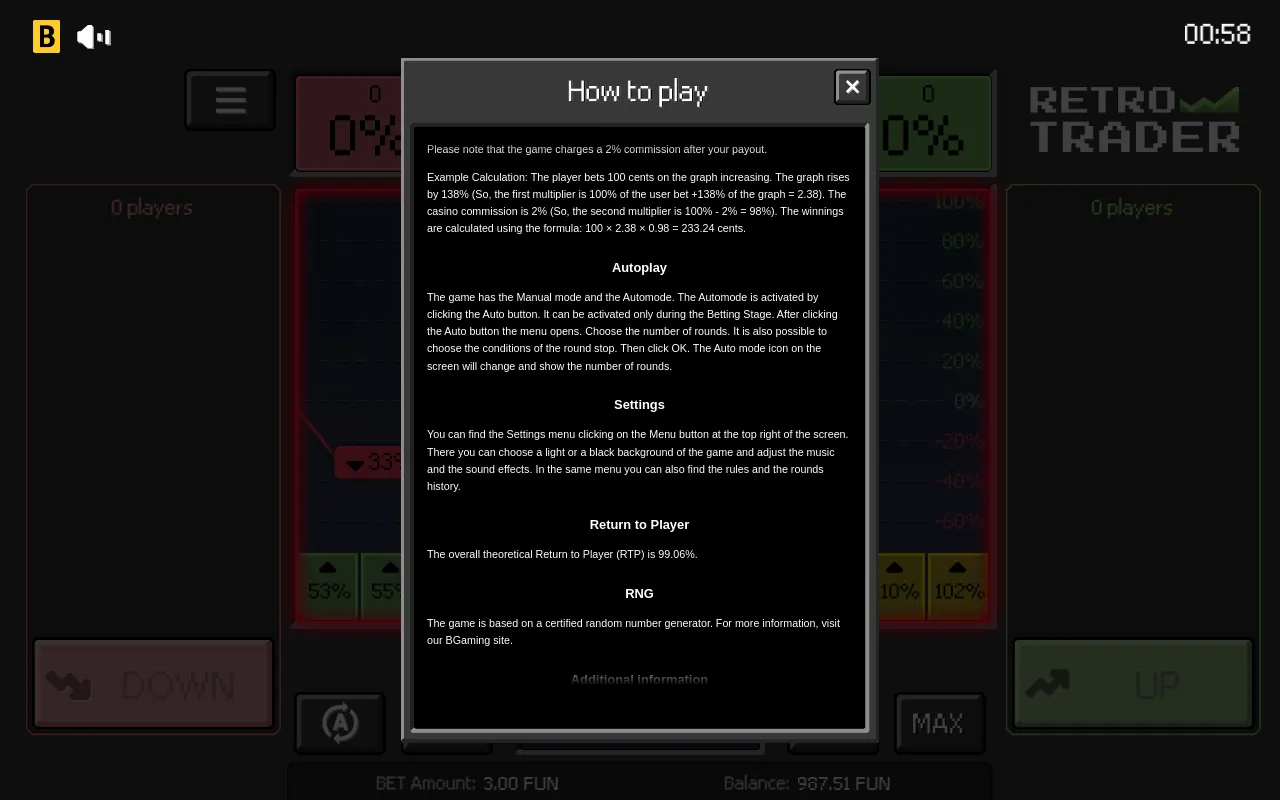
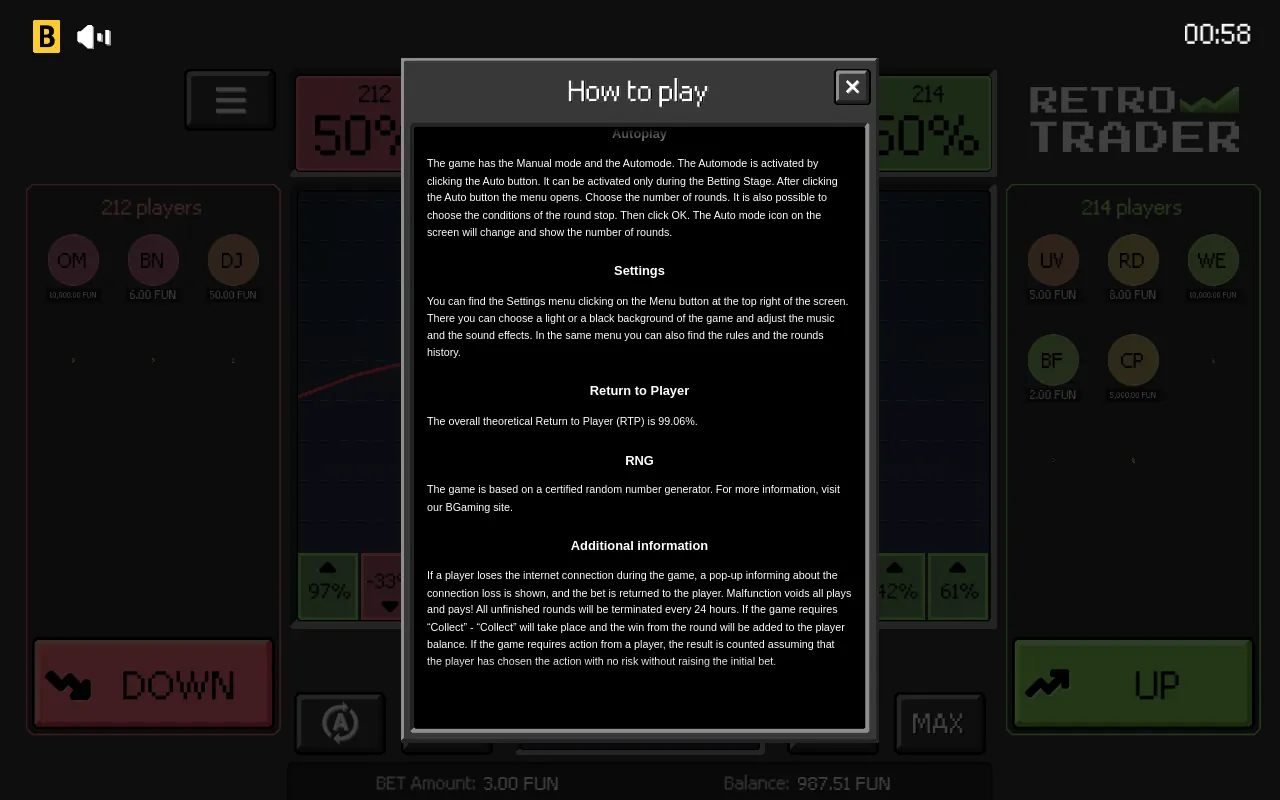
There’s a manual mode and an auto mode, and the auto mode can only be started during the betting stage. Clicking Auto opens a menu where you choose the number of rounds and can set conditions for stopping the run. The icon then sits on screen counting down the rounds you have left.
Running the game automatically doesn’t change the rules. Each auto round is still a full betting stage and result stage, with the direction and stake you set. The stop conditions are your safety net if a session drifts the wrong way.
The settings menu, reached from the top right corner, is more generous than most. Everything a round-by-round game needs is in there:
- A choice of light or black background
- Separate sliders for music and sound effects
- The full rules
- The complete round history
The history feed is a genuinely useful touch in a game where past graphs are the only data you have. Every round you’ve played is logged there in full, ready to revisit, which is more than most reel games ever offer.
Cash-out needs no management. Rounds settle themselves, and anything unfinished is closed out automatically every 24 hours, with any win from a round that required a collect added to the balance untouched. Lose your connection mid-round and the bet is returned rather than left hanging.
One more edge case is covered: if a round ends while the game is waiting on an action from you, the result is counted as though you’d chosen the no-risk option without raising the bet. Nothing about a dropped connection can cost you more than you’d already staked.
Our Honest Verdict
Overall Rating: 7.7/10
Playing Retro Trader is waiting on a line, which sounds thin until you realise how much of your usual session is spent waiting on nothing at all. It moves fast, it settles fast, and the reason to pick it is that you can watch your money being right or wrong in real time, second by second, on that little neon chart.
The return is the best thing here by a distance. Two percent per round is a smaller cut than nearly anything else in the lobby takes, and low volatility means the balance erodes slowly even when the calls keep missing.
What it can’t do is surprise you. A perfect round pays exactly what the graph paid, and no round ever will. That’s the honest weakness, and it’s structural, not a quibble.
For players who enjoy short, controlled rounds and odds that are nearly fair, it’s a quiet little terminal worth keeping open in a tab. Anyone hunting a big multiplier won’t find one here, and the graph will tell them so quickly enough.
Retro Trader FAQs
-
What is the RTP of Retro Trader?
The overall theoretical return to player is 99.06%, which is among the highest figures you’ll find in a casino lobby. -
Is Retro Trader high volatility?
No. Retro Trader is a low volatility game, built around small percentage swings rather than large, rare payouts. -
How do payouts work in Retro Trader?
Each 1% the stock moves in your chosen direction pays 1% of your bet, and each 1% it moves the other way costs 1% of your bet. Whatever remains is cashed out automatically when the round ends, and a 2% commission is charged on the payout. -
What happens if the stock moves against my bet?
You lose 1% of your bet for every 1% the stock moves in the wrong direction. Bet down and the stock rises 10%, and you get 90% of your stake back. If it moves 100% against you, the stake is gone entirely. -
What is the 2% commission in Retro Trader?
After each round’s payout, the game charges a 2% commission. A winning round worth 2.38x your bet pays out the stake multiplied by 2.38 and then by 0.98 once the commission is applied. -
Is Retro Trader a slot?
Not in the traditional sense. It’s a graph-based betting game where you wager on whether a stock value will rise or fall, with no reels, paylines or symbol pays. The outcome is driven by a certified random number generator, just like a reel game. -
Does Retro Trader have autoplay?
Yes. Auto mode is activated during the betting stage, where you choose the number of rounds and can set conditions for the run to stop. -
What happens if I lose my connection during a round?
A pop-up informs you of the lost connection and the bet is returned to your balance. Unfinished rounds are terminated automatically every 24 hours, and if a round ends waiting on an action from you, it’s settled as though you’d chosen the no-risk option without raising the bet. -
Can I change how Retro Trader looks and sounds?
Yes. The settings menu offers a light or black background plus separate controls for music and sound effects, and it also holds the full rules and your round history. -
When is Retro Trader released?
Retro Trader’s release date is 2 May 2025.