







Sea Fortune Saga Slot Review
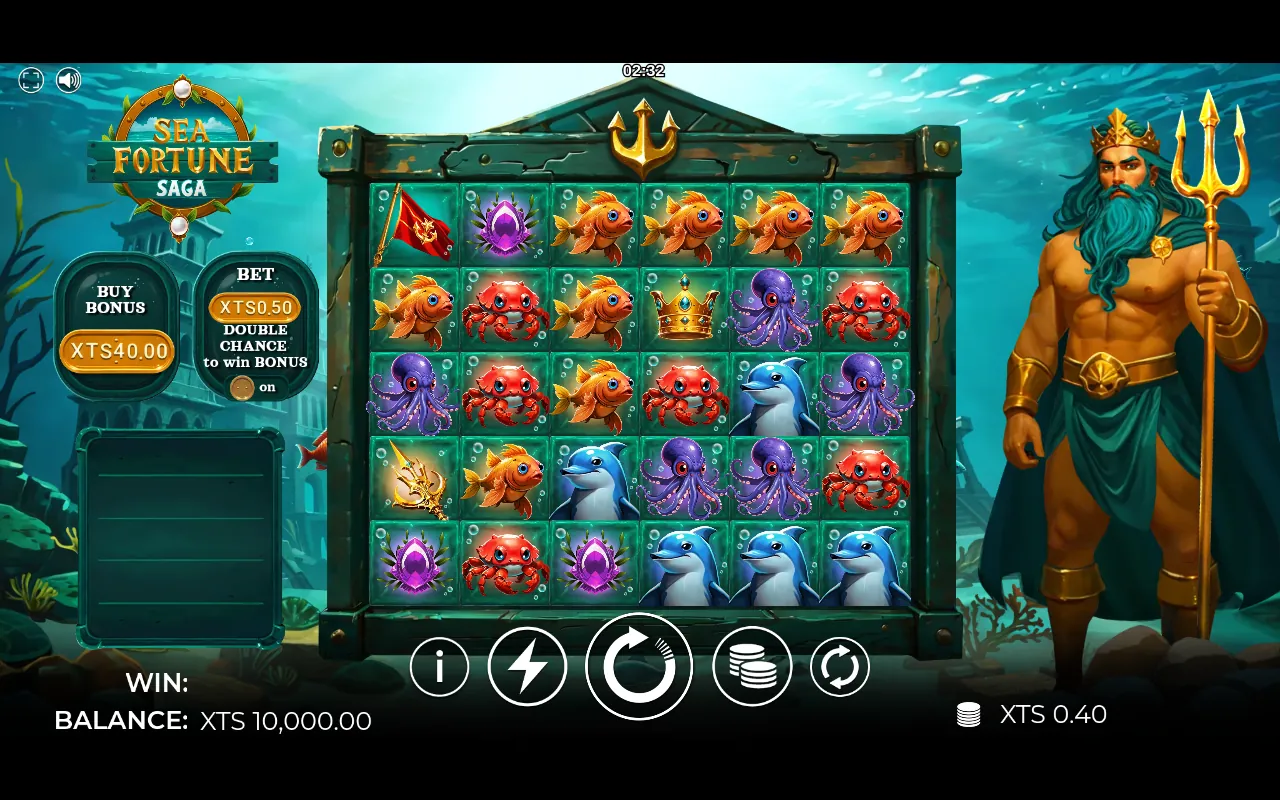
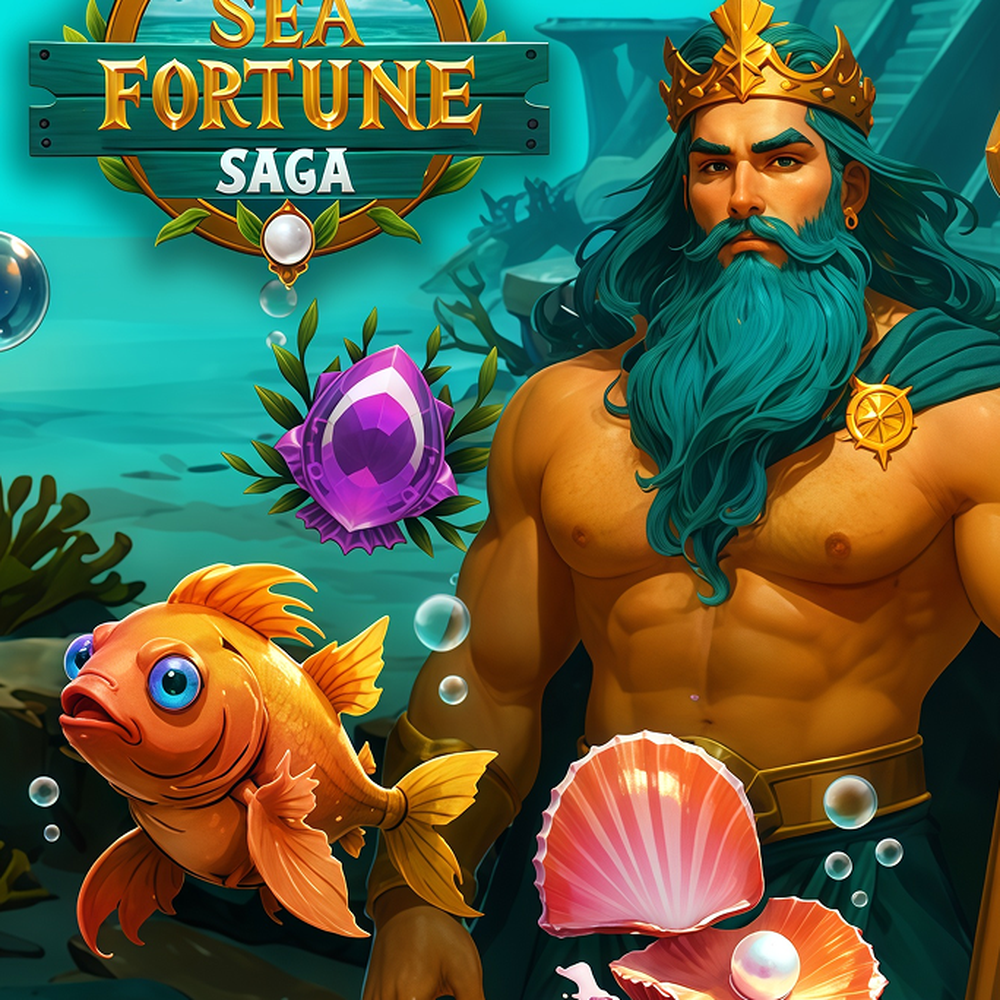
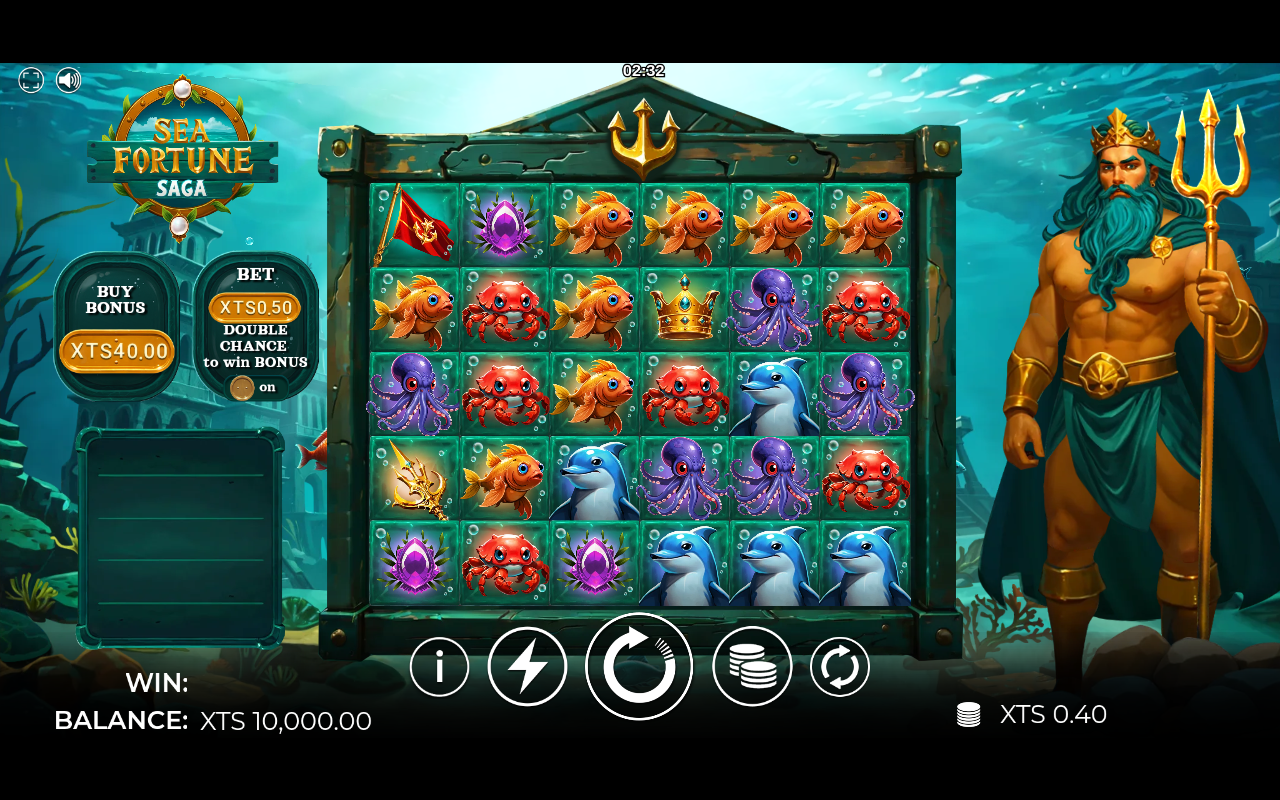
A crowned, teal-bearded Poseidon guards the right side of the reels, trident in hand, while a drowned city ghosts through the turquoise water behind him. Strip away the artwork and Sea Fortune Saga is one of the barest cluster games you’ll come across, and I’d argue it’s better for it: everything on the 5×5 grid is legible in a single glance, because there’s almost nothing layered on top.
HeronBYTE have kept the mathematics honest and simple. Symbols pay in clusters of eight or more, with no paylines to trace and no win direction to worry about. No RTP or volatility figures are published for this one, which is unusual, and the feature set is lean: a bonus buy and a Double Chance toggle, and that’s the lot. The shipwreck frame, the sunlit shallows and the sunken ruins are doing the work the mechanics decline to.
Base Game & Features
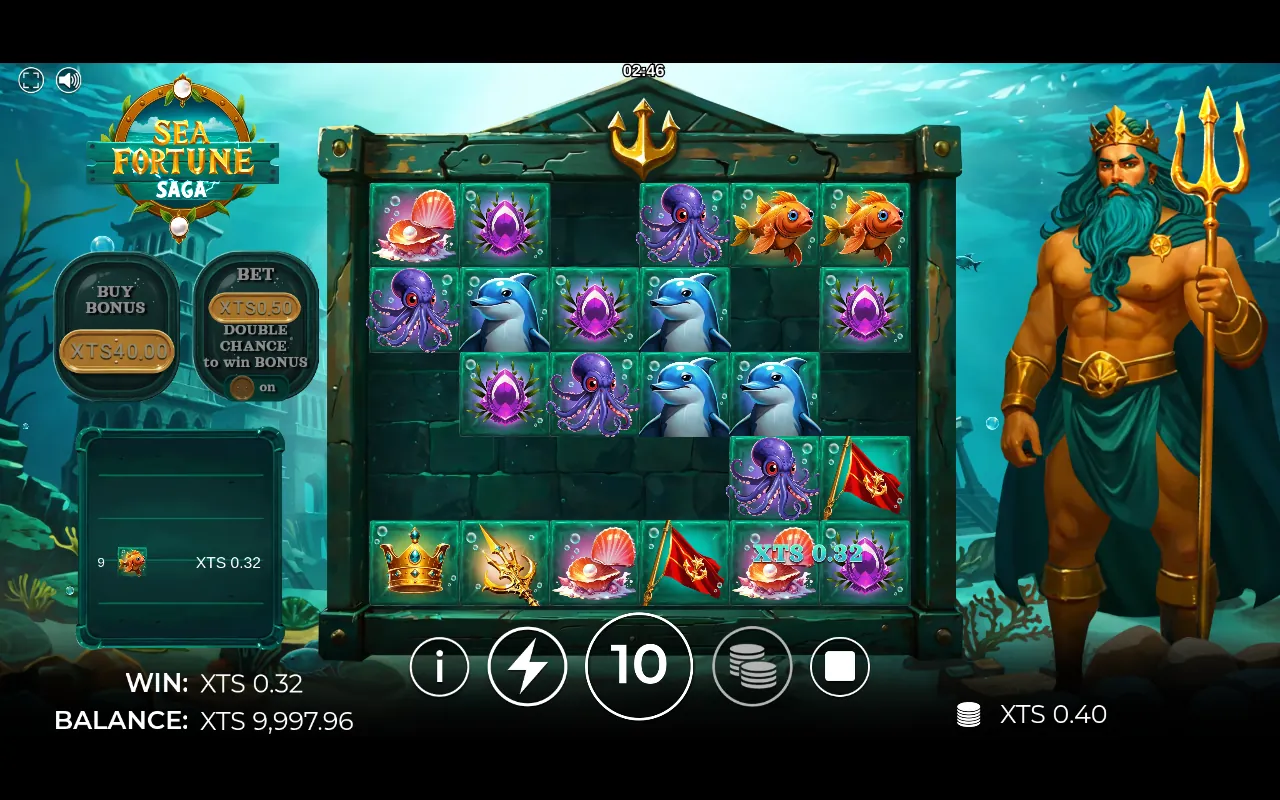
The base game is a cluster-pays setup. Wins need eight or more matching symbols anywhere on the 5×5 grid, and the paytable steps up at ten and twelve of a kind. That’s the whole evaluation rule, and it makes spins easy to read: you’re counting symbols, not hunting lines.
Three pay tiers per symbol gives the grid a natural rhythm. Eight and nine of a kind sit in the entry tier, ten and eleven in the middle, and twelve is the ceiling. With twenty-five positions on the board, a twelve-symbol cluster takes up nearly half the grid, which is why the top tier pays what it does.
Because the grid holds twenty-five positions and only nine paying symbols plus the scatter, clusters build through symbol density rather than lucky alignments. A spin that loads up on one symbol can bridge from the entry tier to the middle tier with a single extra landing, and the pay jump between tiers is where the money moves: the Pearl more than doubles between eight of a kind and ten, then doubles again at twelve.
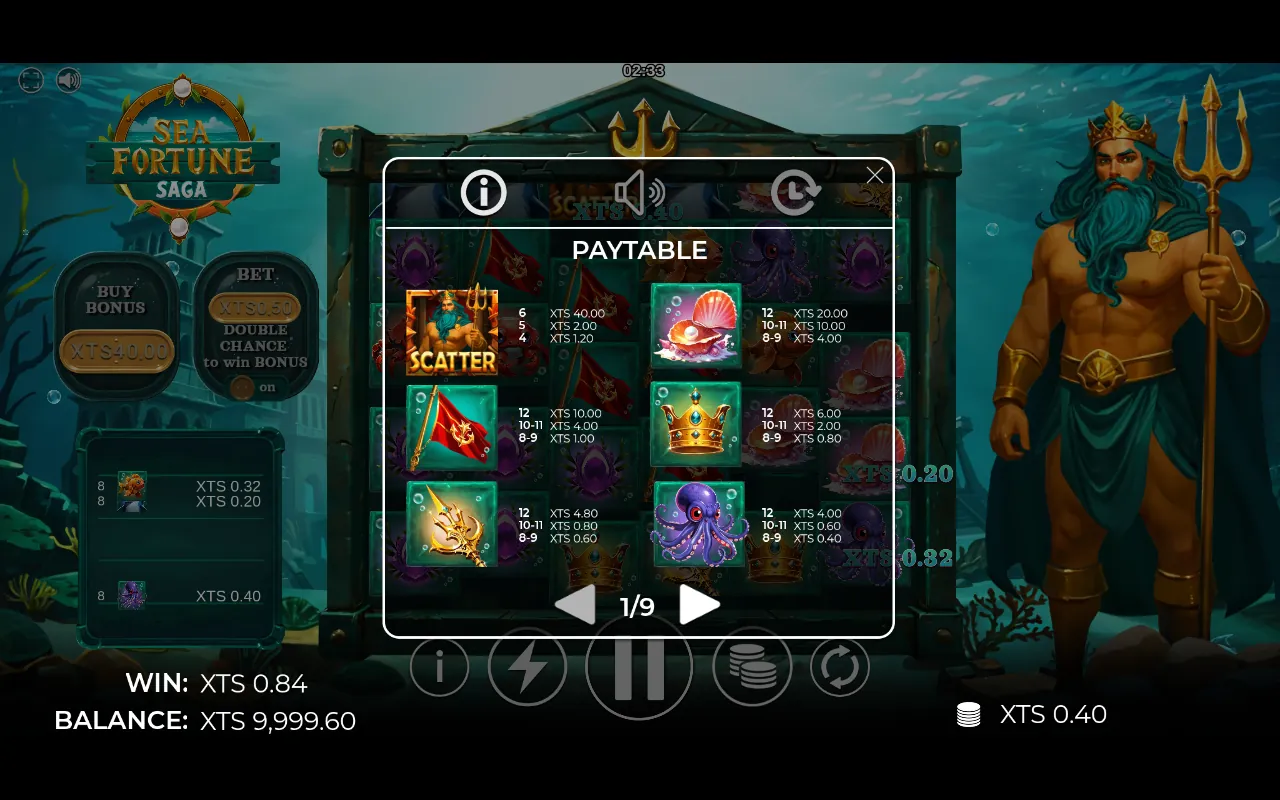
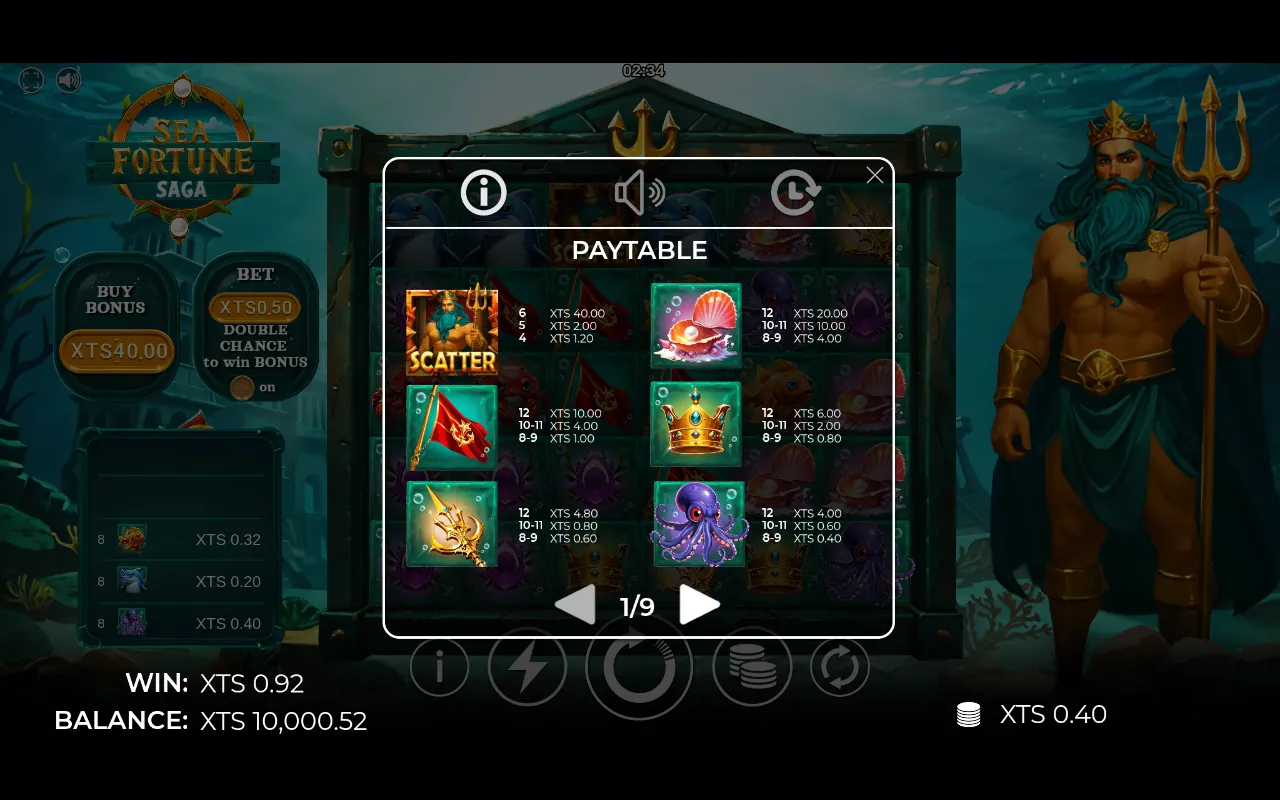
The scatter is a King figure gripping a trident, and it carries its own pay scale, separate from the cluster symbols. At the 0.40 bet the paytable is quoted against, four scatters pay 1.20, five pay 2.00, and six pay 40.00. It’s the only symbol with a role beyond its face value.
Symbol Pays
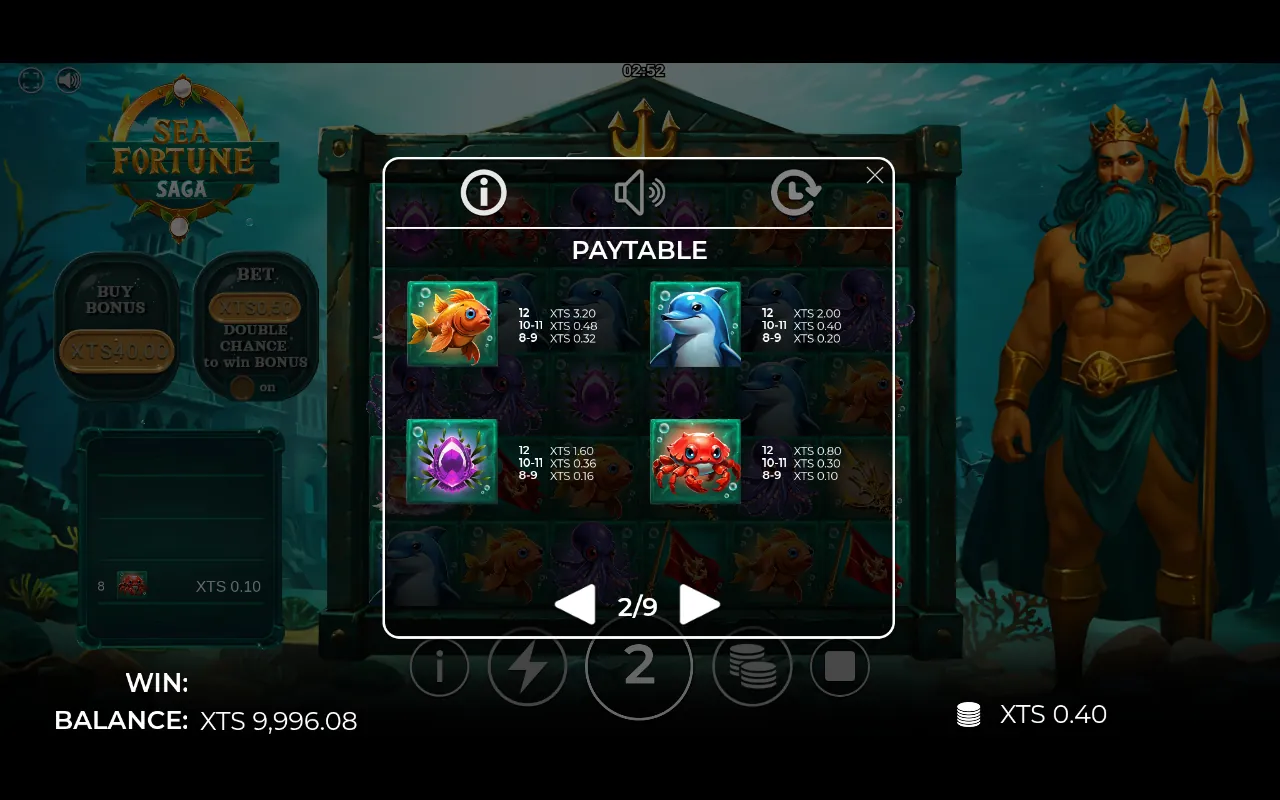
Pays below are credit values at the 0.40 stake the paytable is quoted against:
- Pearl/Shell: 12 pays 20.00, 10-11 pays 10.00, 8-9 pays 4.00
- Red Flag: 12 pays 10.00, 10-11 pays 4.00, 8-9 pays 1.00
- Crown: 12 pays 6.00, 10-11 pays 2.00, 8-9 pays 0.80
- Gold Trident: 12 pays 4.80, 10-11 pays 0.80, 8-9 pays 0.60
- Octopus: 12 pays 3.20, 10-11 pays 0.48, 8-9 pays 0.32
- Goldfish: 12 pays 2.00, 10-11 pays 0.40, 8-9 pays 0.20
- Dolphin: 12 pays 1.60, 10-11 pays 0.36, 8-9 pays 0.16
- Purple Clam: 12 pays 0.80, 10-11 pays 0.30, 8-9 pays 0.10
- Crab: 12 pays 4.00, 10-11 pays 0.60, 8-9 pays 0.40
The Pearl is the clear top symbol, and the drop from it to the Red Flag is steep: twelve pearls pay double what the same count of flags returns. Below the Crown, the mid-tier symbols bunch together tightly, so most of the paytable’s character lives in its top three rows.
One quirk of the ordering: the Crab outpays the Purple Clam and the Dolphin at twelve of a kind despite sitting at the bottom of the on-screen list. Rank by the top tier rather than by where a symbol appears and you’ll get the true hierarchy.
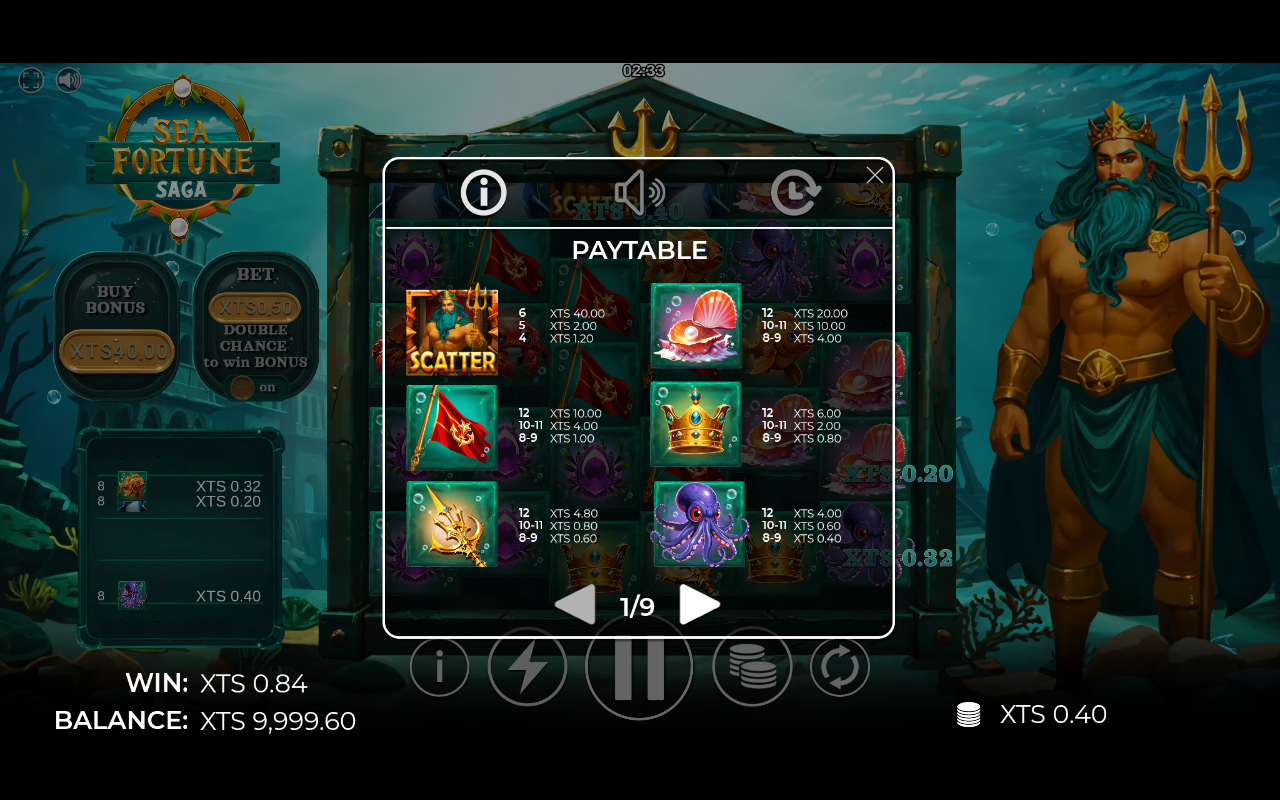
Six scatters at 40.00 outpay everything except a full cluster of pearls, which makes the scatter the most valuable single row on the board once you’re past four of them. Scatters are also what the bonus structures are built around, so they’re the ones to watch during ordinary spins.
There’s no wild symbol in the game. Every cluster has to be built from matching symbols on their own, with nothing bridging the gaps, so near-miss counts stay near-misses.
Sea Fortune Saga Bonus Features
The feature set here is deliberately thin. There are two modifiers in total, both aimed at getting you into the bonus round faster, and nothing else sits on top of the base game. Neither one changes how the grid evaluates a win.
Double Chance to Win Bonus
Next to the bet controls sits a toggle labelled Double Chance to win Bonus. Switch it on and your odds of triggering the bonus improve; that’s its entire function.
Buy Bonus
There’s a Buy Bonus button in the base game, priced at 40.00 on the 0.50 bet. Buying takes you straight past the scatter-waiting and into the round itself. The price is fixed against the base bet, so it scales as you change stakes.
Against the 0.50 base bet, that 40.00 price works out at eighty times the stake for one guaranteed entry. That’s the number to hold in your head when deciding between the buy and the Double Chance route: the toggle costs nothing stated and improves the odds on every spin you take, while the buy spends eighty spins’ worth of stake in one press. How the two compare in practice depends on how the bonus round pays, and the game leaves you to judge that for yourself.
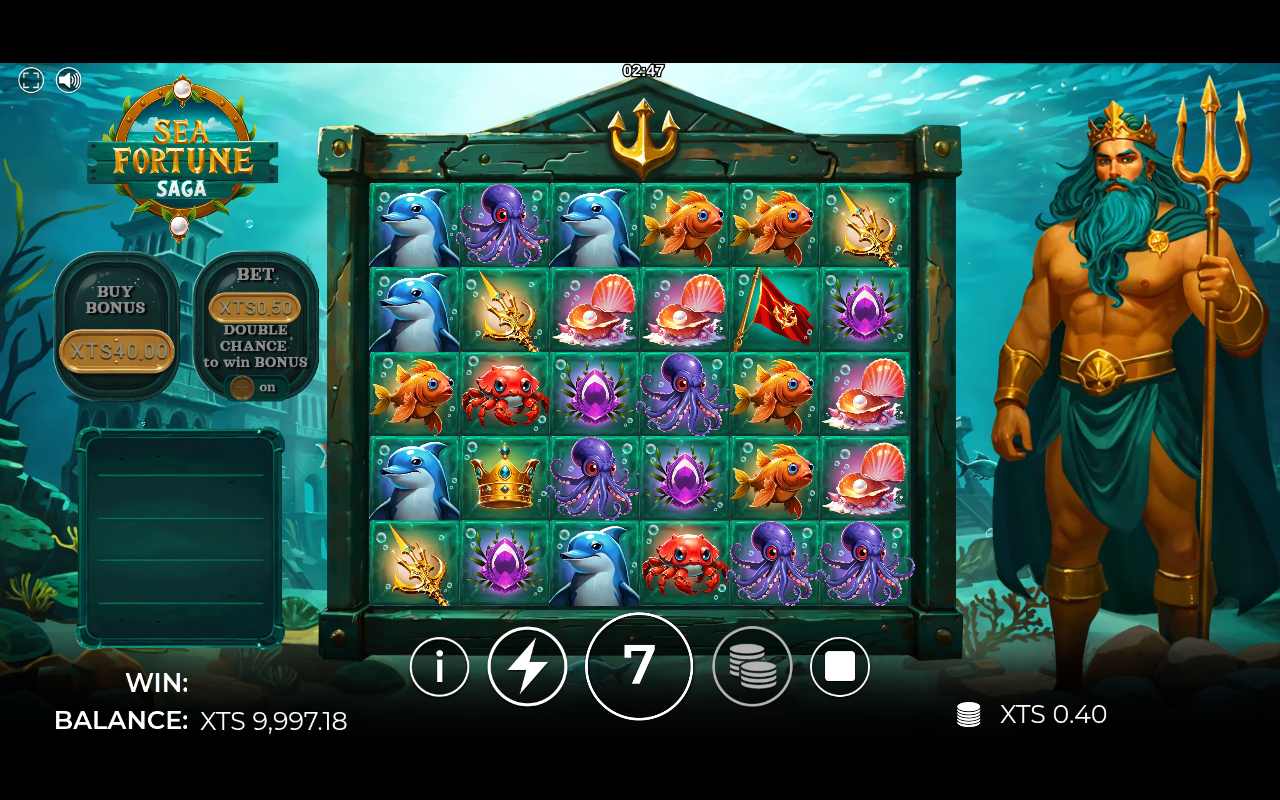
Scatters that land during play feed the same system the buy button shortcuts.
The two modifiers stack in intent if not in effect. Double Chance shortens the wait on the way there; the buy removes it entirely. Between them they frame the whole feature story of the game, which is otherwise a straight counting exercise.
Our Honest Verdict
Overall Rating: 6.1/10
This is a slow, clean count beneath a very pretty sea. You spend your spins watching one symbol fill the grid and hoping it doesn’t stop at nine, and the reason to pick it over a louder cluster game is exactly that calm: Poseidon’s kingdom is better company than most underwater slots manage.
The scatter scale is the best thing here. Six King symbols outpay everything except a full pearl cluster, which gives ordinary spins a second thing to root for and makes the mid-tier wait feel less empty than it otherwise would.
The worst thing is the ceiling on the excitement: with no wild and only two modifiers, a session is the base game and nothing else. The people who’ll get the most from it are the ones happy to count quietly and wait for the scatter; anyone who wants constant feature hits will find the seabed still. For the patient, it’s a genuinely pleasant place to sink some spins.
Sea Fortune Saga FAQs
-
What is the grid size of Sea Fortune Saga?
Sea Fortune Saga runs on a 5×5 grid. Symbols pay in clusters rather than on paylines, so wins don’t depend on where the symbols land. -
Who makes Sea Fortune Saga?
Sea Fortune Saga is made by HeronBYTE. -
Can you buy the bonus on Sea Fortune Saga?
Yes. A Buy Bonus button sits in the base game, and it costs 40.00 when the base bet is 0.50. The price scales with the stake. -
How many symbols do you need for a win in Sea Fortune Saga?
Eight matching symbols anywhere on the grid is the minimum. The pays step up at ten symbols and again at twelve, with twelve of the top symbol paying the most. -
What does the Double Chance toggle do in Sea Fortune Saga?
Double Chance to win Bonus is a toggle next to the bet controls. Switching it on improves your chances of triggering the bonus round. -
Is there a wild symbol in Sea Fortune Saga?
No. Every cluster has to be built from matching symbols on their own, with nothing substituting for anything else. -
What does the scatter pay in Sea Fortune Saga?
The scatter is a King figure with a trident, and it has its own pay scale. On the 0.40 bet, landing four pays 1.20, five pays 2.00 and six pays 40.00. -
How does the Buy Bonus price compare to the stake in Sea Fortune Saga?
The buy costs 40.00 against a 0.50 base bet, which is eighty times the stake for one guaranteed bonus entry. The Double Chance toggle is the cheaper route to better odds, but it doesn’t guarantee anything. -
What is Sea Fortune Saga about?
It’s an underwater kingdom slot. Poseidon stands at the side of a 5×5 grid set inside a shipwreck frame, with kelp, rocks and a drowned city behind the reels.