









Zillard King Megaways Slot Review
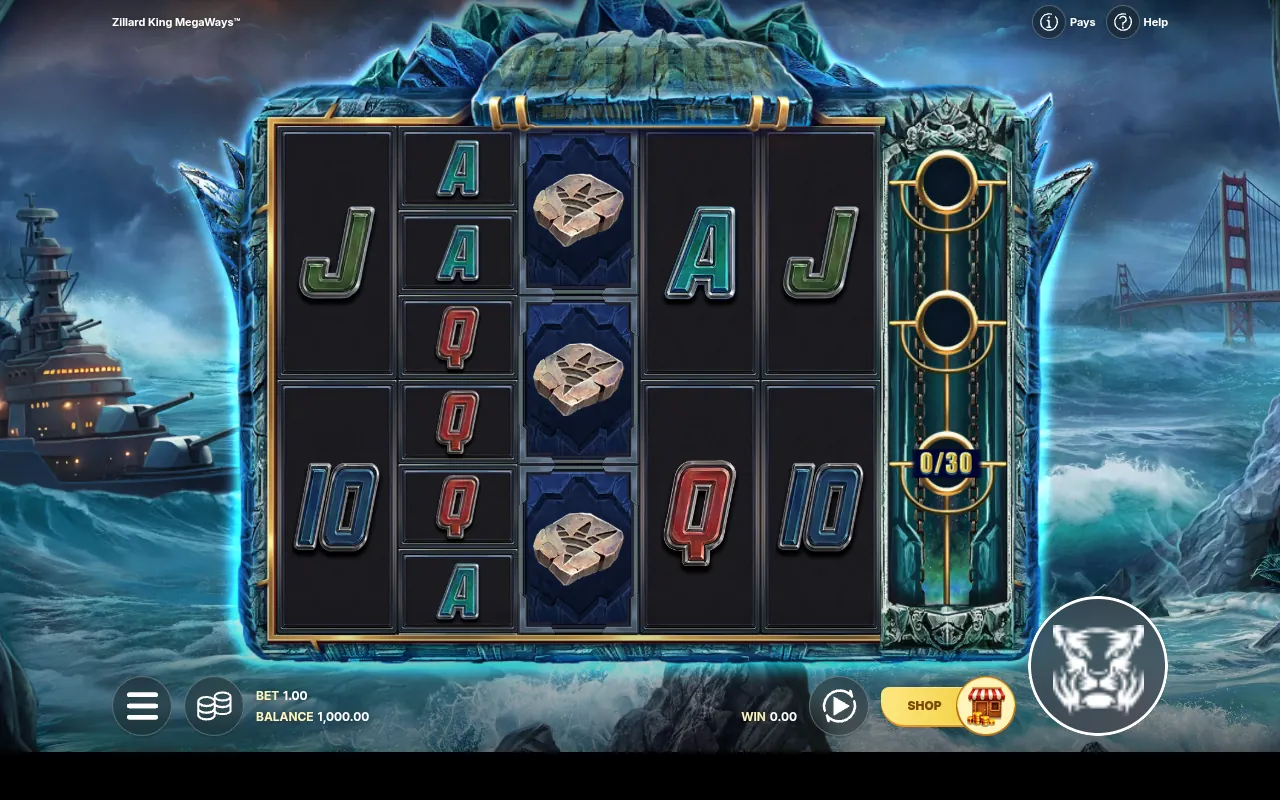
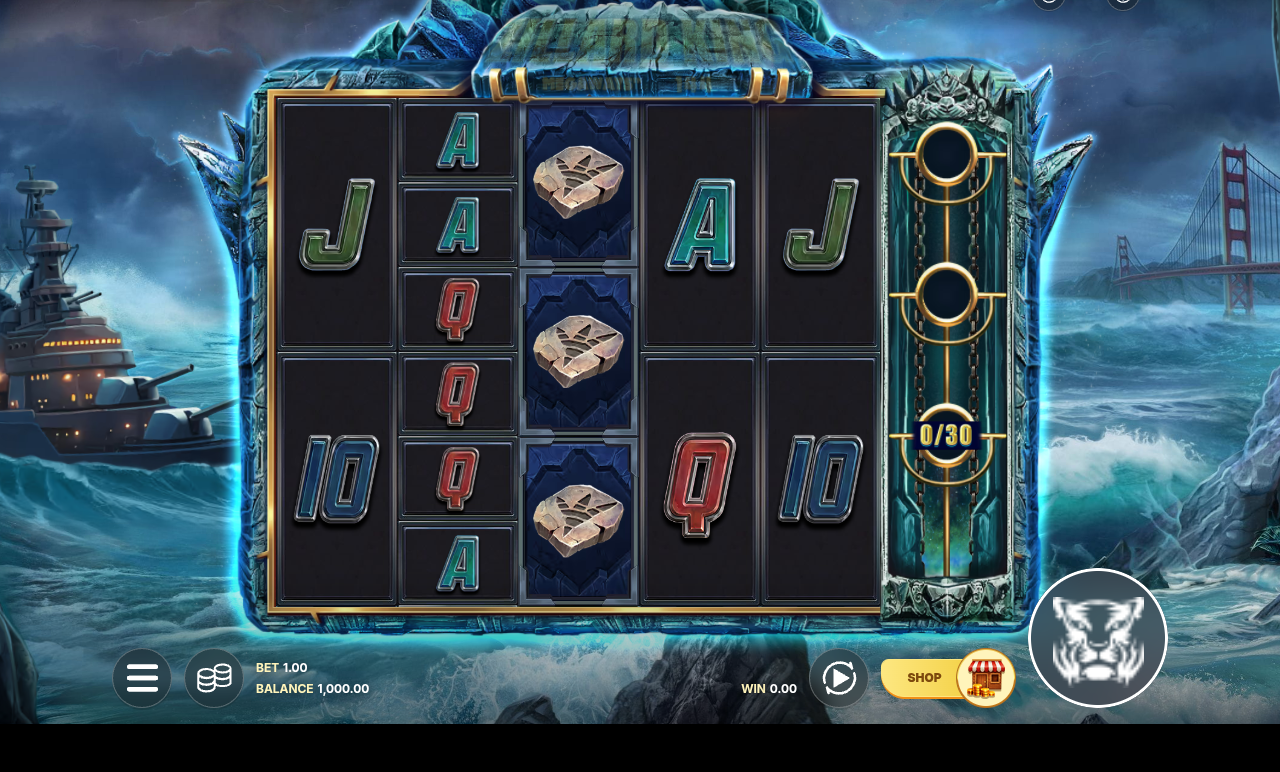
A grey warship rides low in a churning night sea, the Golden Gate Bridge fades into the fog behind it, and the reels are bolted into a slab of rock that glows electric blue at the edges. Zillard King Megaways spends its money on the monster and starves the paytable to pay for it. Almost nothing on the symbol list is worth landing on its own; the game only pays when one win is allowed to become three or four, and that’s a deliberate way to build a slot, not an accident.
Red Tiger runs it across five reels with a varying row count, up to 117,649 ways to win, an RTP of 96.08% and a hit frequency of 31.79%. Stakes run from 0.2 to 50 per spin. The studio’s dragons and kings, from Dragon’s Fire Megaways to Primate King Megaways, have walked this ground before.
How the Base Game Pays
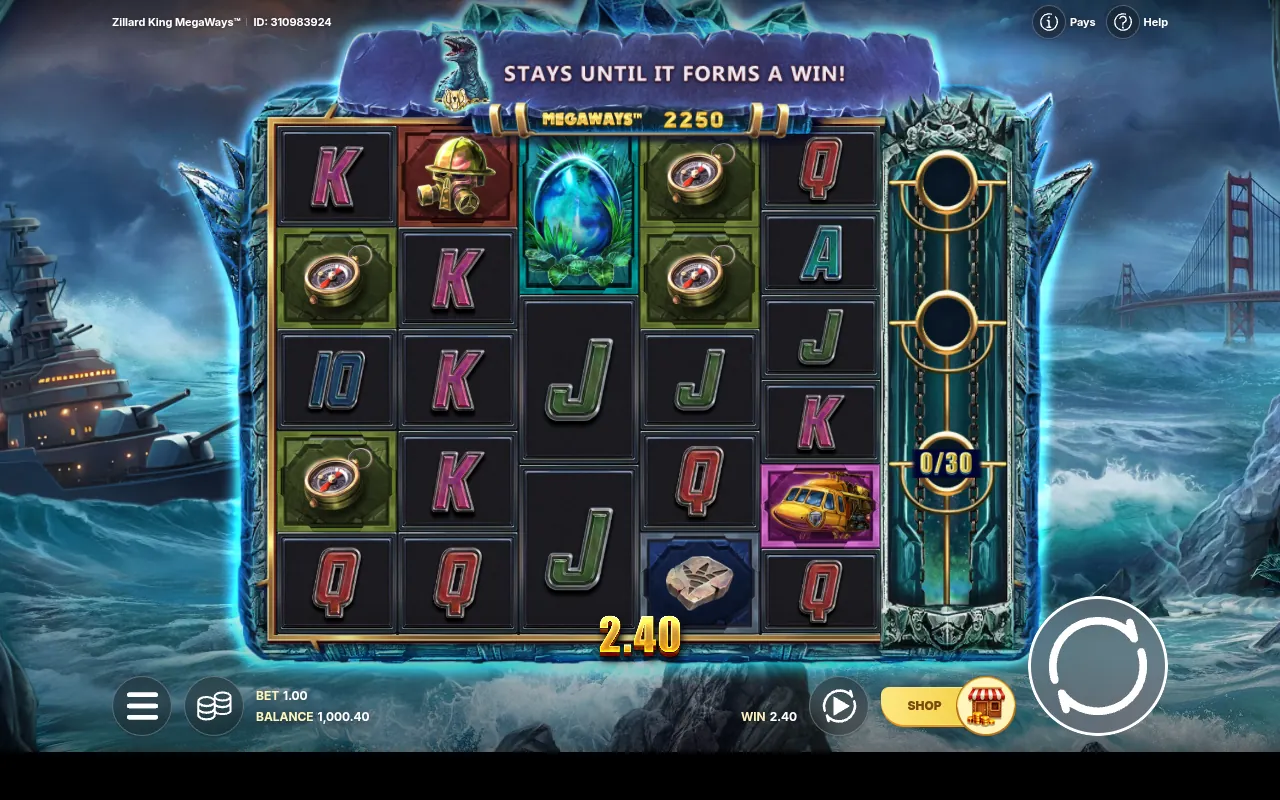
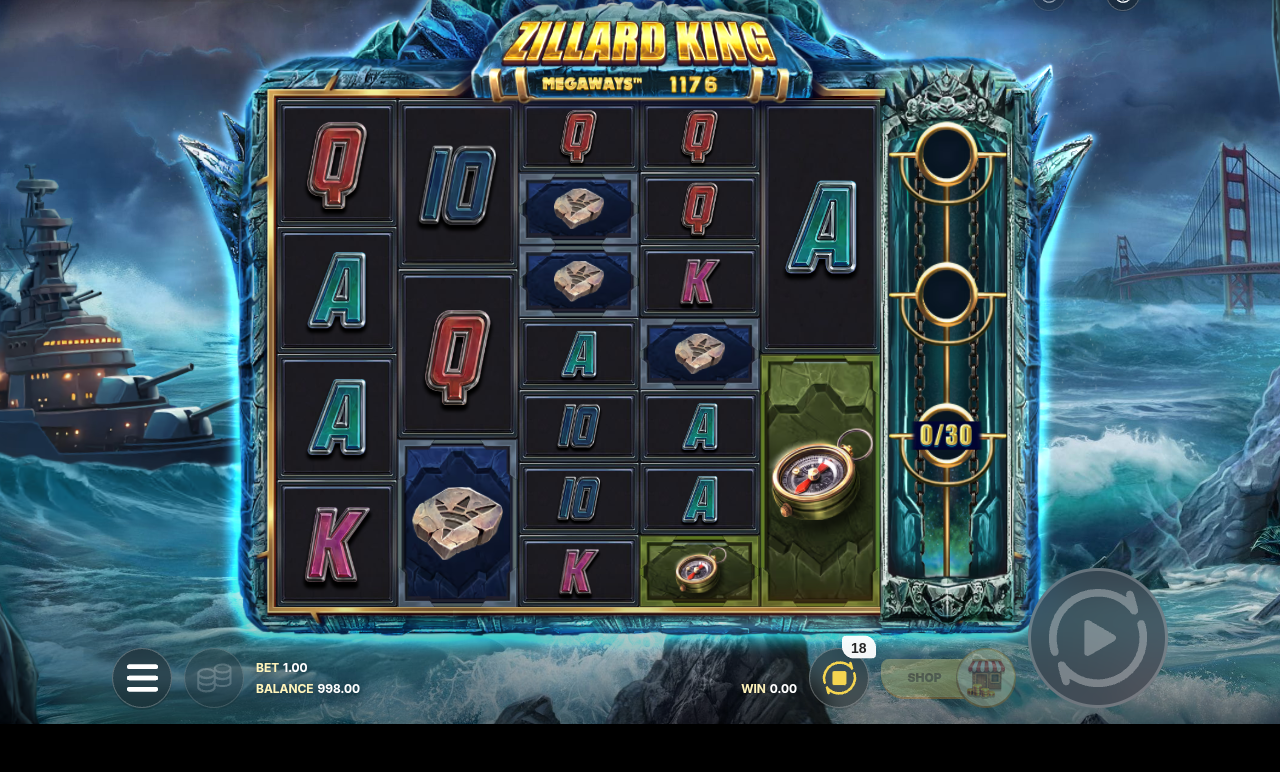
Each spin deals a different number of rows per reel, so the ways to win shift constantly. The count is tracked at the side of the grid, and the swings are wide: a handful of consecutive spins can deal anything from single-digit ways to well over two thousand. A full layout of six rows across all five reels reaches the 117,649 maximum.
Any three or more matching symbols on adjacent reels from the left form a win, regardless of position on the reel. Wins then trigger the Chain Reaction: the symbols that formed the win disappear, new symbols drop into the gaps, and any new wins those create are paid too. There’s no limit to how far a chain can run. The wild substitutes for all paying symbols.
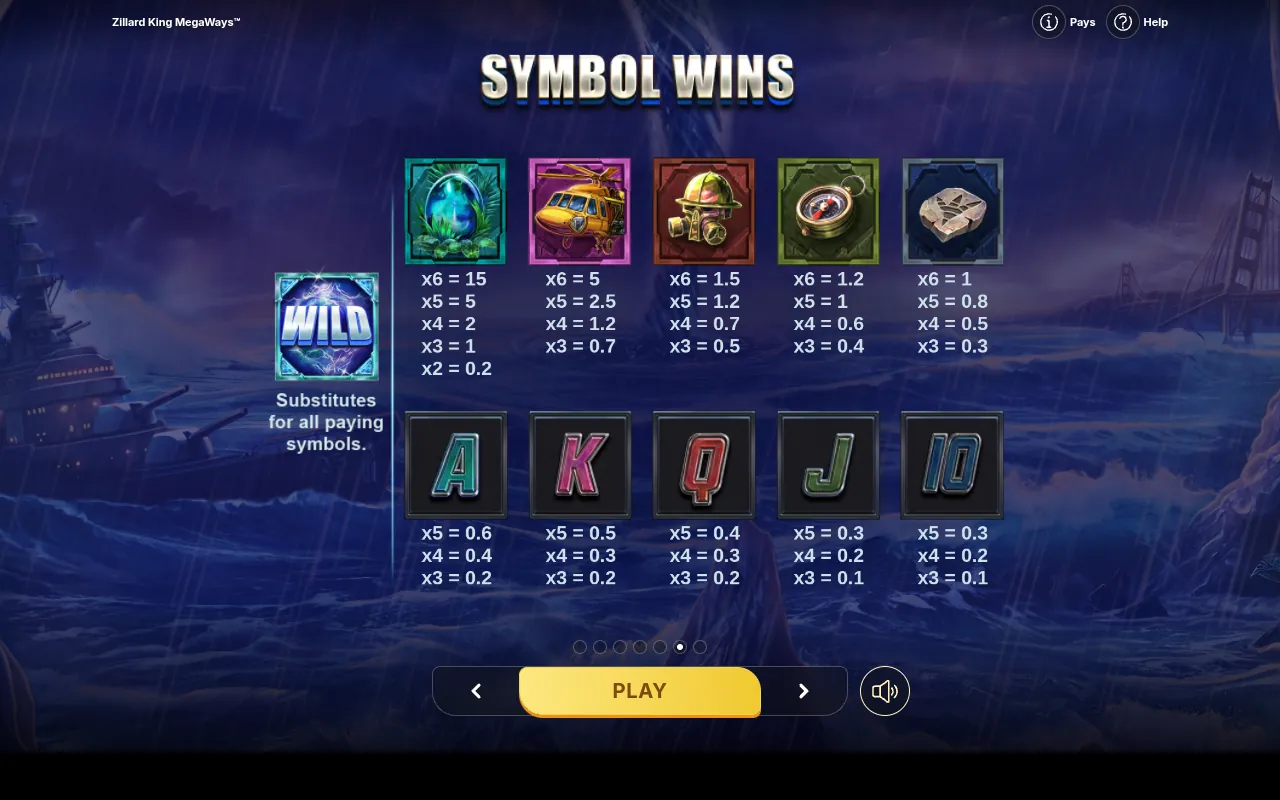
The paytable is where the game’s modest side shows. Values are multiples of the stake:
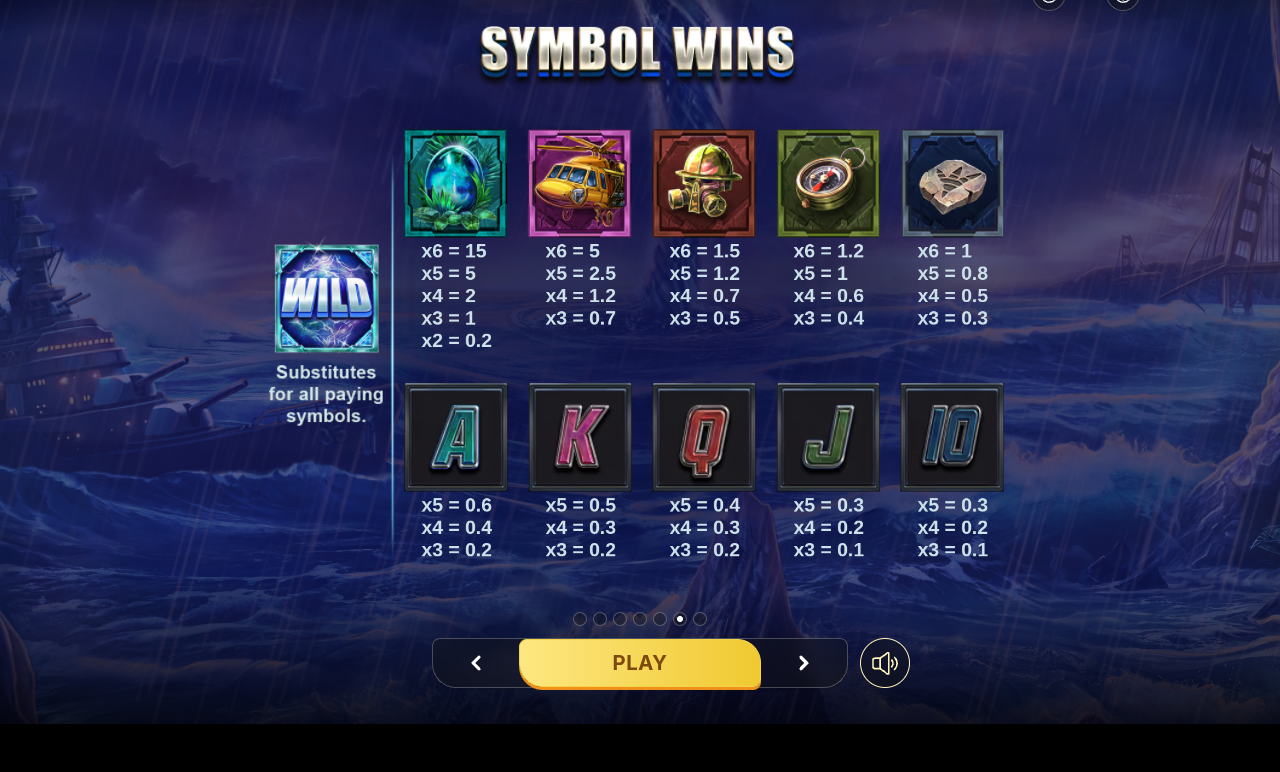
- Blue/green gem: 0.2x for two, 1x for three, 2x for four, 5x for five, 15x for six
- Helicopter: 0.7x for three, 1.2x for four, 2.5x for five, 5x for six
- Gas mask figure: 0.5x for three, 0.7x for four, 1.2x for five, 1.5x for six
- Compass: 0.4x for three, 0.6x for four, 1x for five, 1.2x for six
- Dog-tag: 0.3x for three, 0.5x for four, 0.8x for five, 1x for six
- A: 0.2x for three, 0.4x for four, 0.6x for five
- K: 0.2x for three, 0.3x for four, 0.5x for five
- Q: 0.2x for three, 0.3x for four, 0.4x for five
- J and 10: 0.1x for three, 0.2x for four, 0.3x for five
The premium symbols are a military expedition set: helicopter, gas mask figure, compass and dog-tag, topped by the blue-green gem. Fifteen times the stake for a six-of-a-kind gem is a low ceiling for a top symbol, and the royals pay pocket change. The gem is also the only symbol that pays for a two-of-a-kind, which tells you who it’s meant to be.
With just under a third of spins producing a hit, the base game leans on chains rather than individual wins to keep the balance moving. A single three-of-a-kind royal win isn’t going to move anything. It’s the reactions stacking on top of each other that carry the game.
The Zillard Wild
The game’s name rests on one symbol. The Zillard Wild is a super wild, and everything about the presentation treats it as the main event: it gets the banners, the framing and the medallion in the corner of the screen. Its full rule isn’t spelled out in full anywhere, which is an odd gap for a symbol carrying the title.
What the play itself shows is a symbol with presence. When the Zillard appears, banners announce its effects: one marks it as sticky until it forms a win, another counts up a multiplier. It behaves less like a substitute and more like a slow-burning centrepiece the rest of the game orbits around.
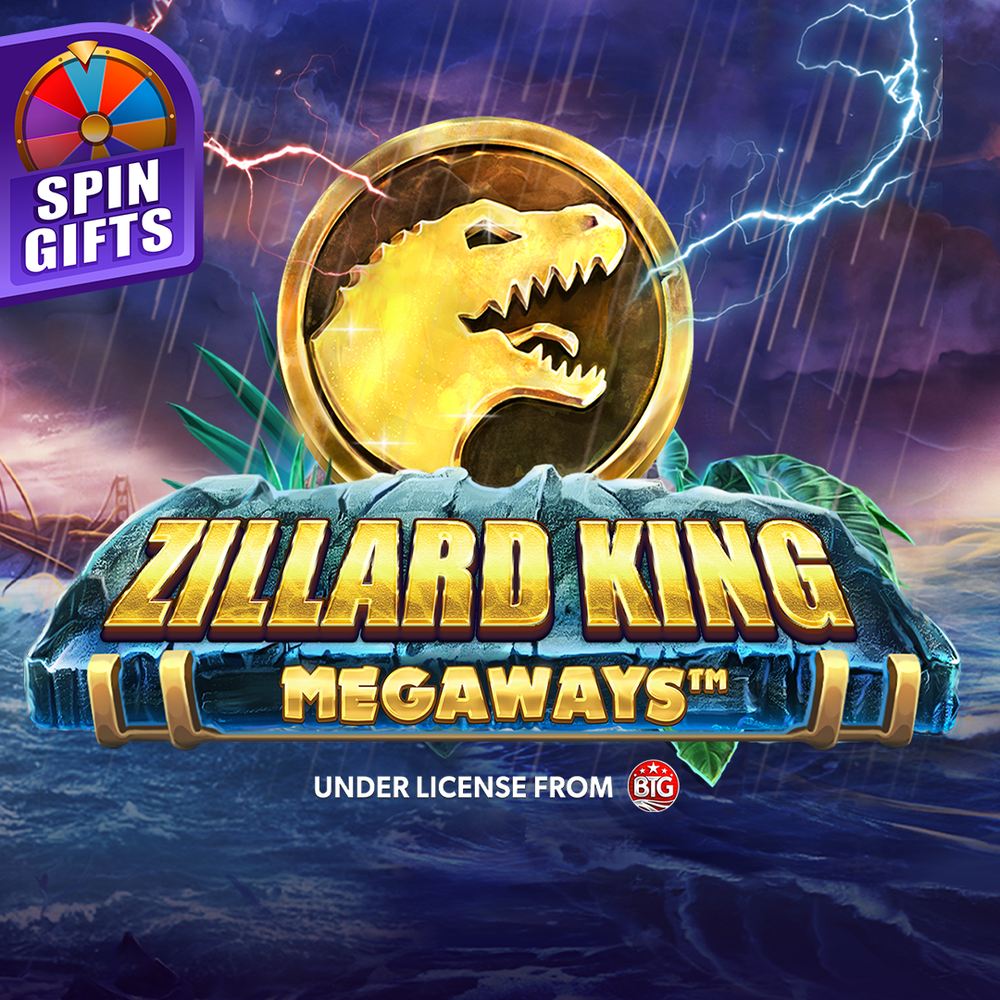
The medallion in the corner of the frame tells you who’s in charge here: a stylised beast head in white line art, stamped onto the game like a crest. The regular wild does the unglamorous work. The Zillard gets the mythology.
Multipliers and Sticky Symbols
Two modifiers do the heavy lifting in the base game. The first is the win multiplier. Every win in a chain bumps the multiplier by one, and the counter sits on the reels where you can’t miss it, climbing as reactions stack.
A chain that runs four or five wins deep arrives at the end carrying a multiplier built by its own length. Because the multiplier only grows while wins keep coming, its value at any moment is a running record of how the chain has gone. A weak spin resets the story.
The second is the sticky symbol mechanic. Some symbols, once landed, stay in place until they form a win. It’s a simple rule with a real effect on pacing: a symbol can sit on the reels for several spins, visibly waiting, and the game keeps pointing at it. When the win finally lines up, it triggers a Chain Reaction like any other.
The two systems feed each other. A sticky Zillard that finally connects can start a chain, and every link in that chain pushes the multiplier higher. That loop, rather than any single stated payout, is where the game’s win potential actually lives. How far a run can go is measured only by the multiplier counter climbing, spin after spin, with nothing printed above it to cap or promise.
Our Honest Verdict
Overall Rating: 7/10
Playing Zillard King Megaways feels like standing on that warship’s deck waiting for something to surface. Most spins are quiet. Then a sticky symbol connects, a chain runs, and the multiplier climbs one step at a time until the quiet spin is suddenly worth having. That build is the whole reason to be here, and it’s the best version of it Red Tiger has shipped in a while, because the sticky symbols and the climbing counter give every spin a stake in the next one.
The cost is the paytable underneath. A 15x top symbol means the individual wins barely register, so when the chains don’t come, there’s nothing to soften it.
This is one for players who enjoy the waiting as much as the payout, the ones who like watching a run assemble itself. Anyone who wants their wins up front and their ceilings printed in bold won’t find it here. For the patient, the bay is worth a visit.
Zillard King Megaways FAQs
-
What is the RTP of Zillard King Megaways?
The RTP is 96.08%. That’s the total expected return, so it’s the figure that matters when comparing games. -
How does the Chain Reaction feature work?
Whenever you land a win, the symbols that formed it disappear and new symbols drop into the gaps. If those create another win, the process repeats. There’s no limit to how many chain reactions can run in a single spin. -
What does the win multiplier do?
Each win during play adds one to the multiplier, which is displayed on the reels. As chain reactions stack, the multiplier keeps climbing, so longer chains are paid at increasingly valuable rates. -
What does sticky until it forms a win mean?
Some symbols that land stay in place on the reels until they become part of a winning combination. Until then they simply hold their position, sometimes across several spins, before triggering a Chain Reaction like any other win. -
What is the Zillard Wild?
The Zillard Wild is a super wild symbol, a step above the regular wild that substitutes for all paying symbols. When it appears, banners flag its effects, including sticking in place until it forms a win and building the win multiplier. -
What is the grid size of Zillard King Megaways?
It’s a five-reel Megaways game, so the number of rows varies per spin and per reel. That’s what produces the shifting ways to win, up to a maximum of 117,649. -
What is the minimum and maximum bet on Zillard King Megaways?
Stakes run from 0.2 to 50 per spin, which covers casual play without stretching into high-roller territory. -
How often does Zillard King Megaways pay out?
The hit frequency is 31.79%, so roughly one spin in three produces a win. Chains can extend those wins considerably, which is where the bigger results come from. -
Who makes Zillard King Megaways?
Red Tiger. It sits alongside their other Megaways titles, including Dragon’s Fire Megaways and Primate King Megaways.