








Candy Trouble Slot Review
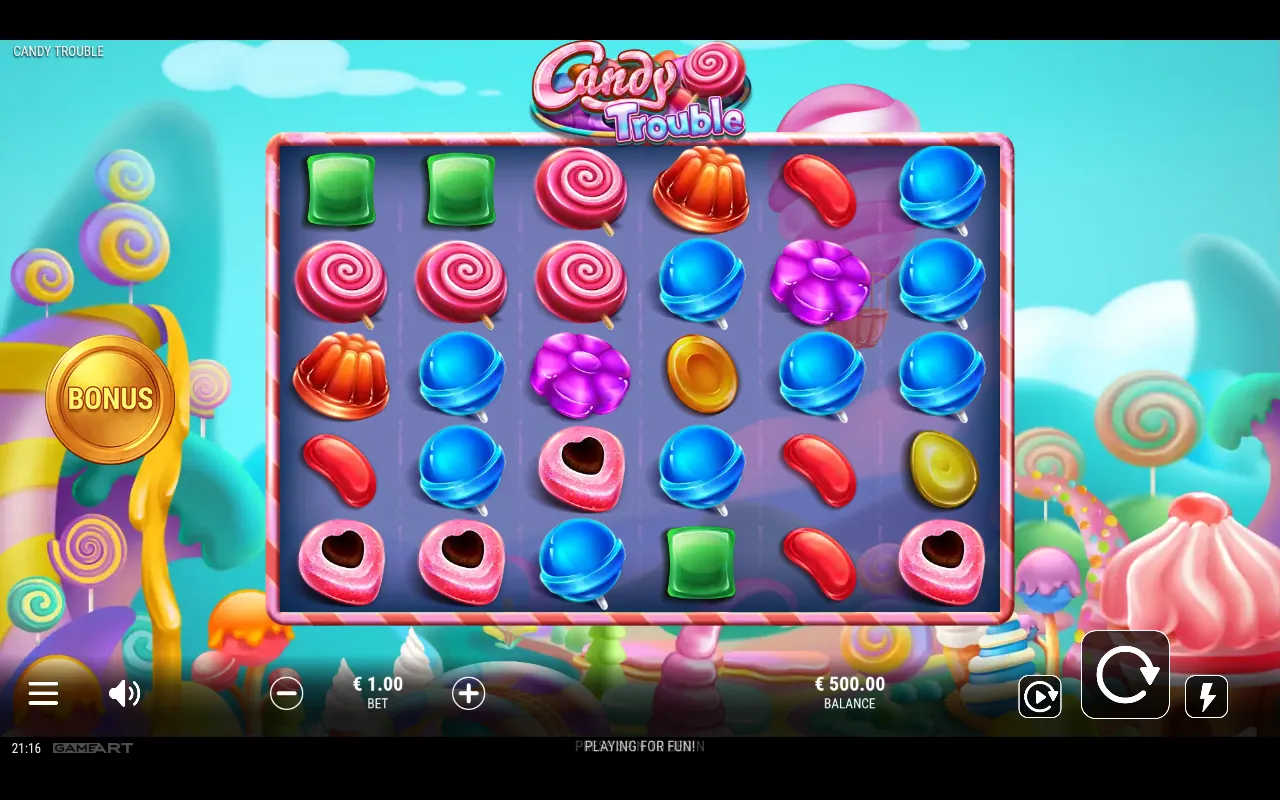
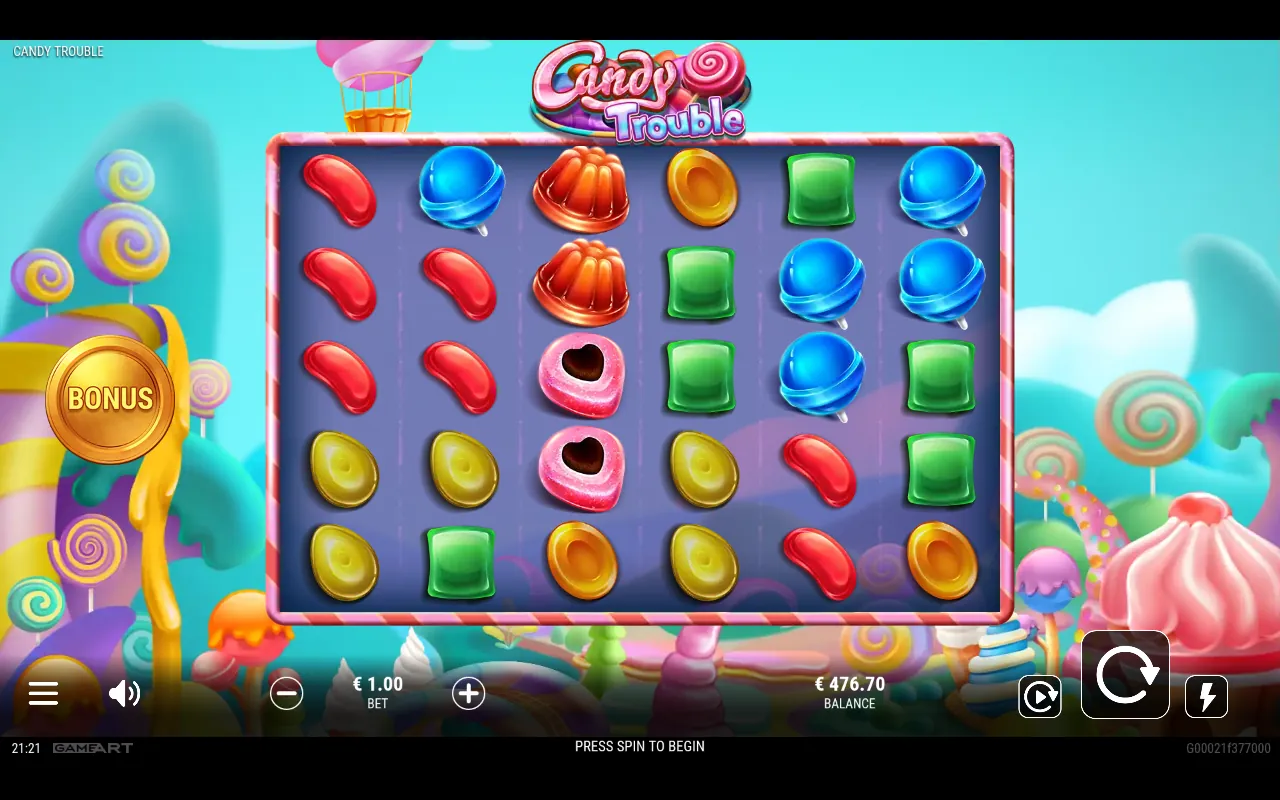
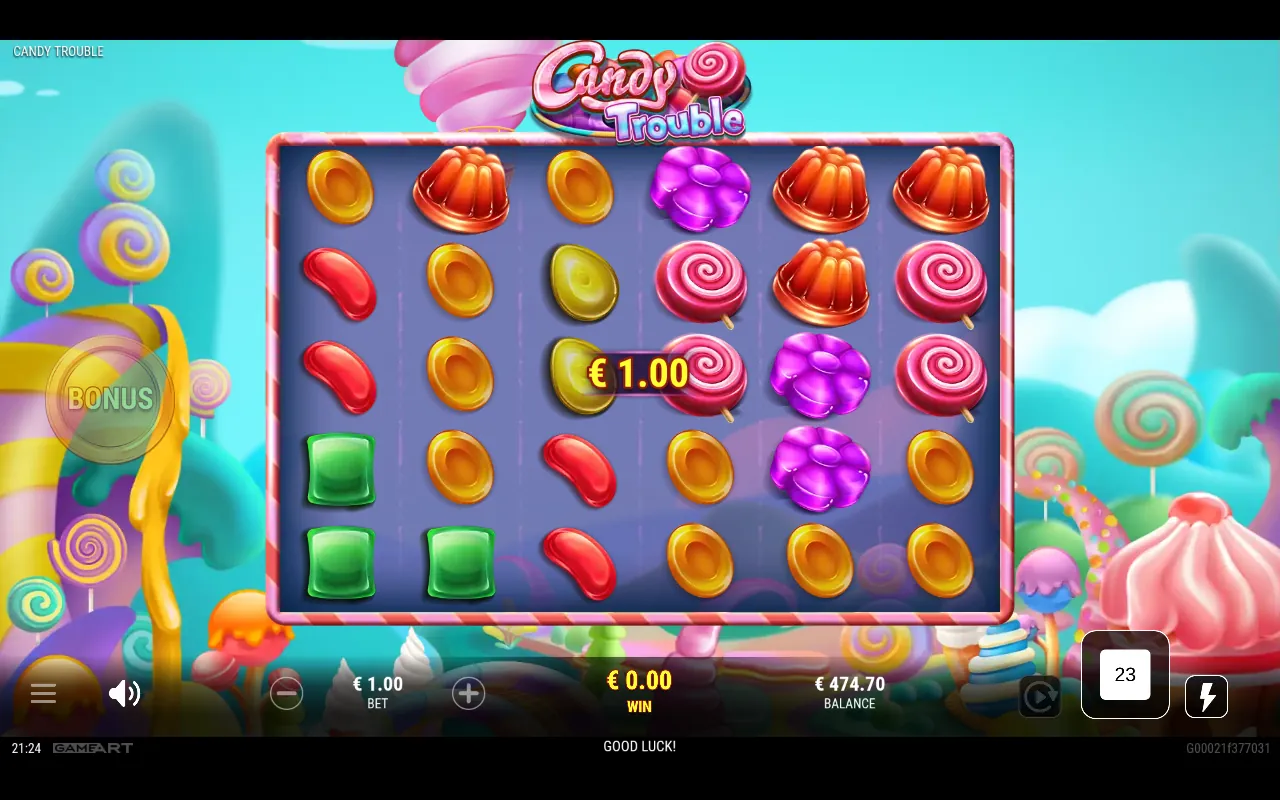
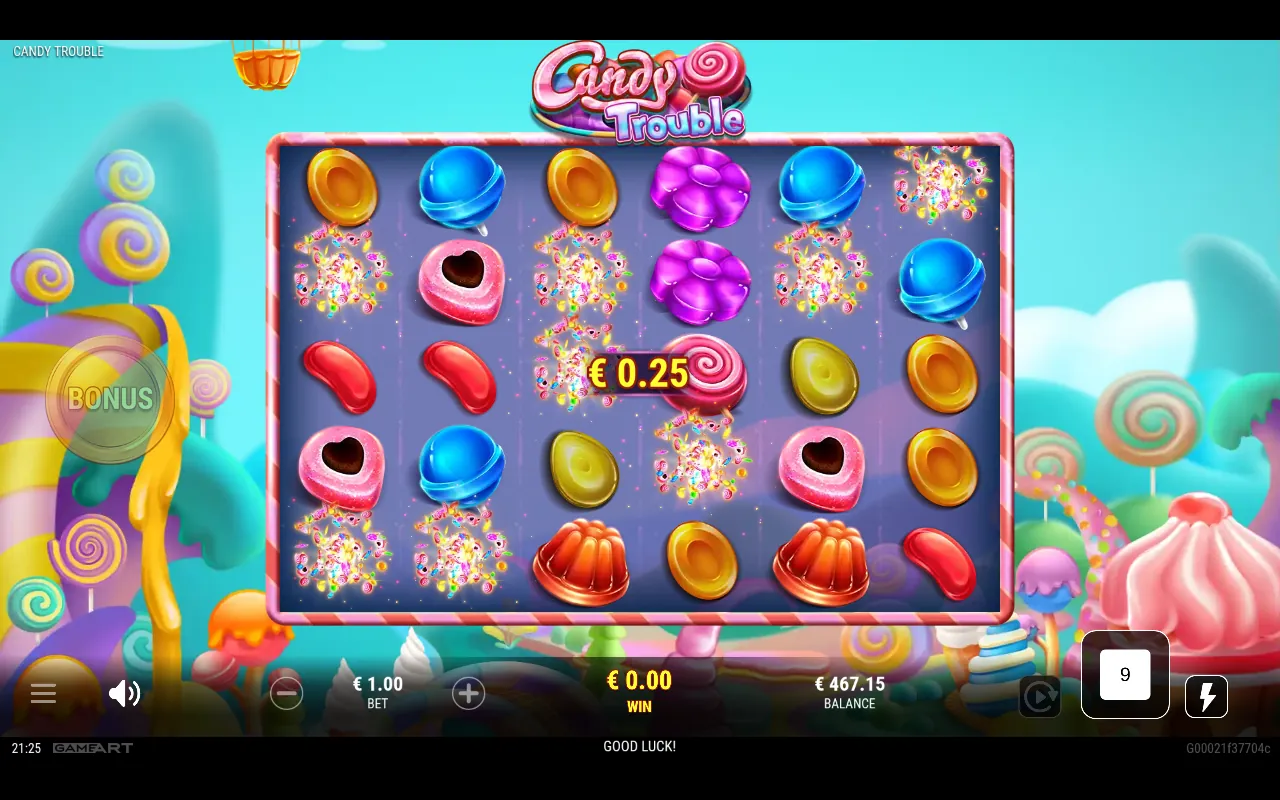
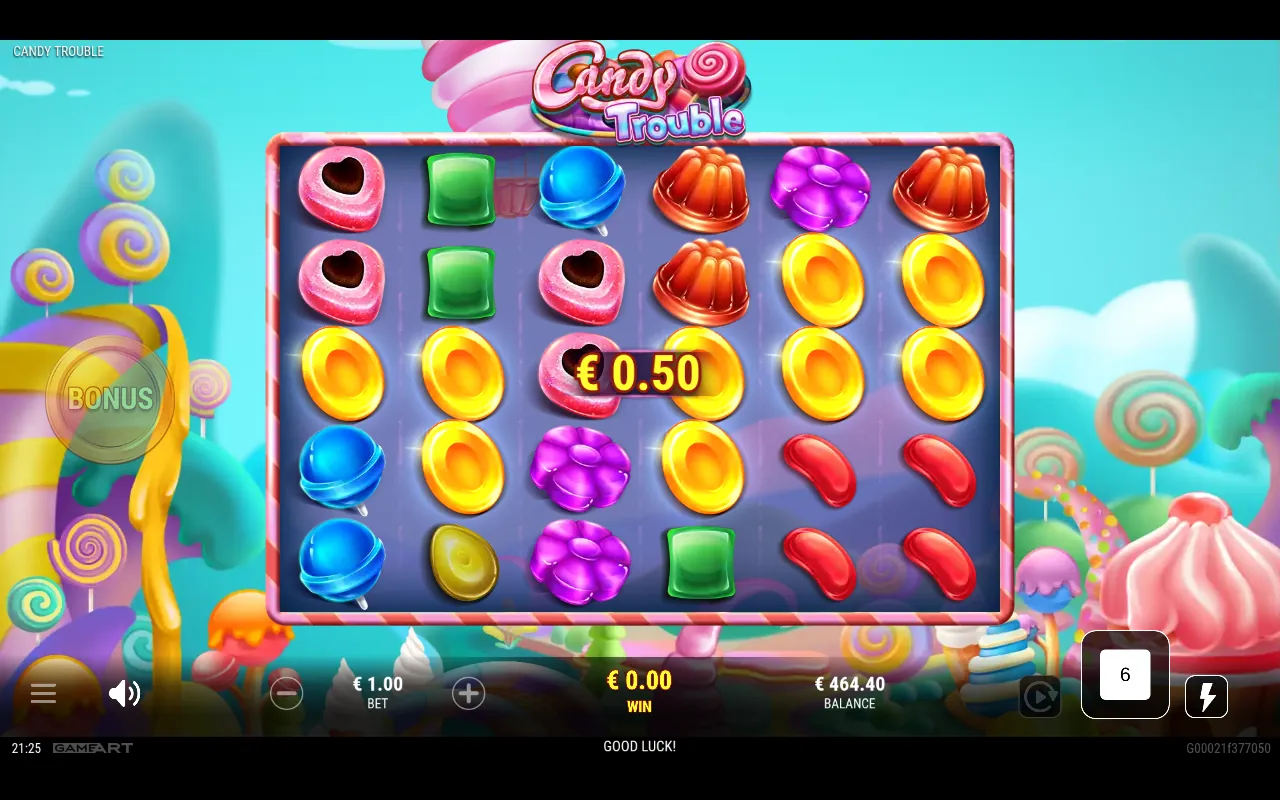
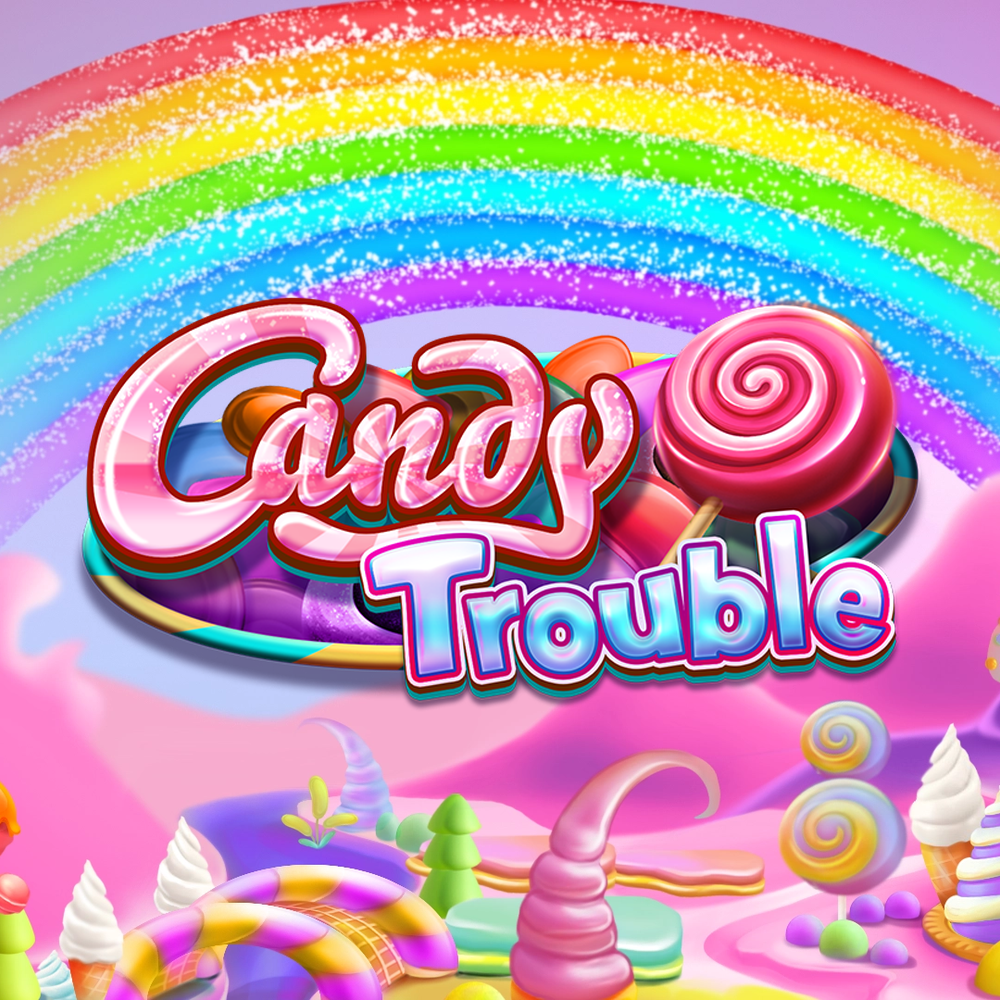
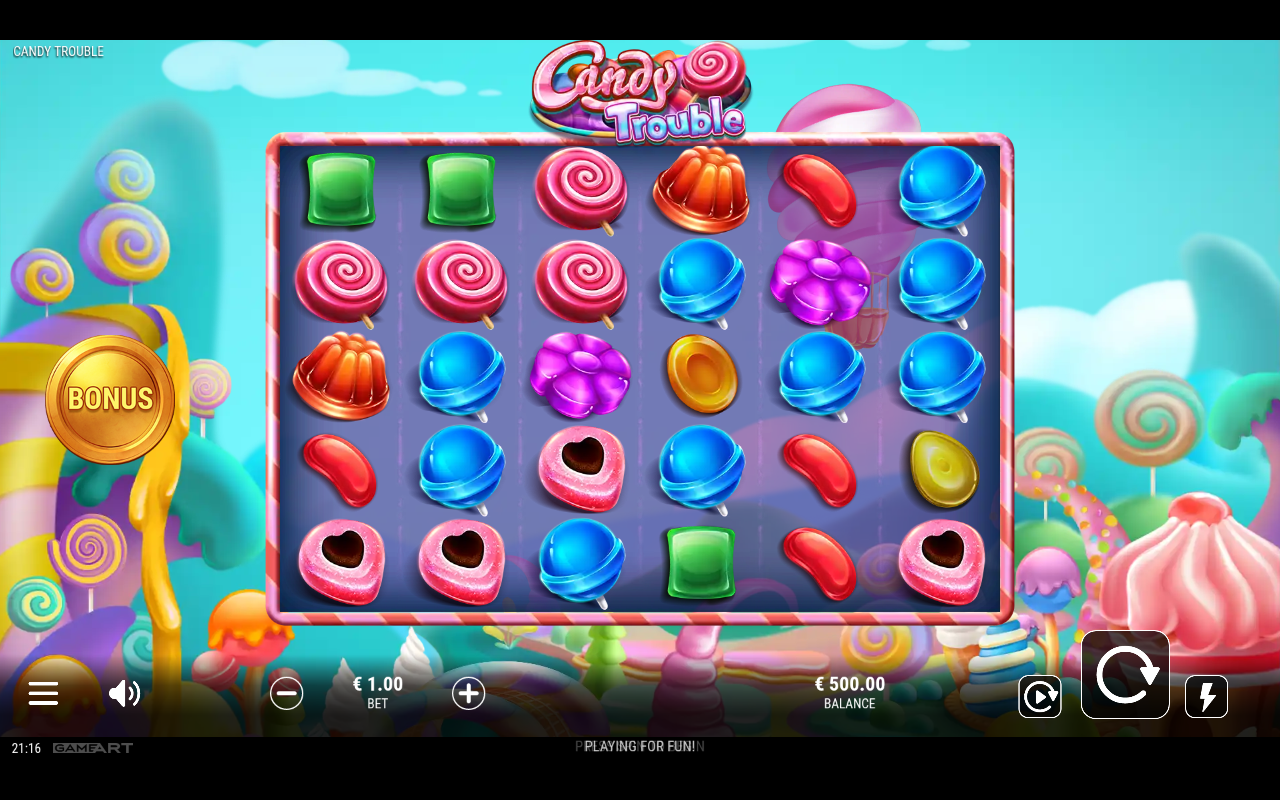
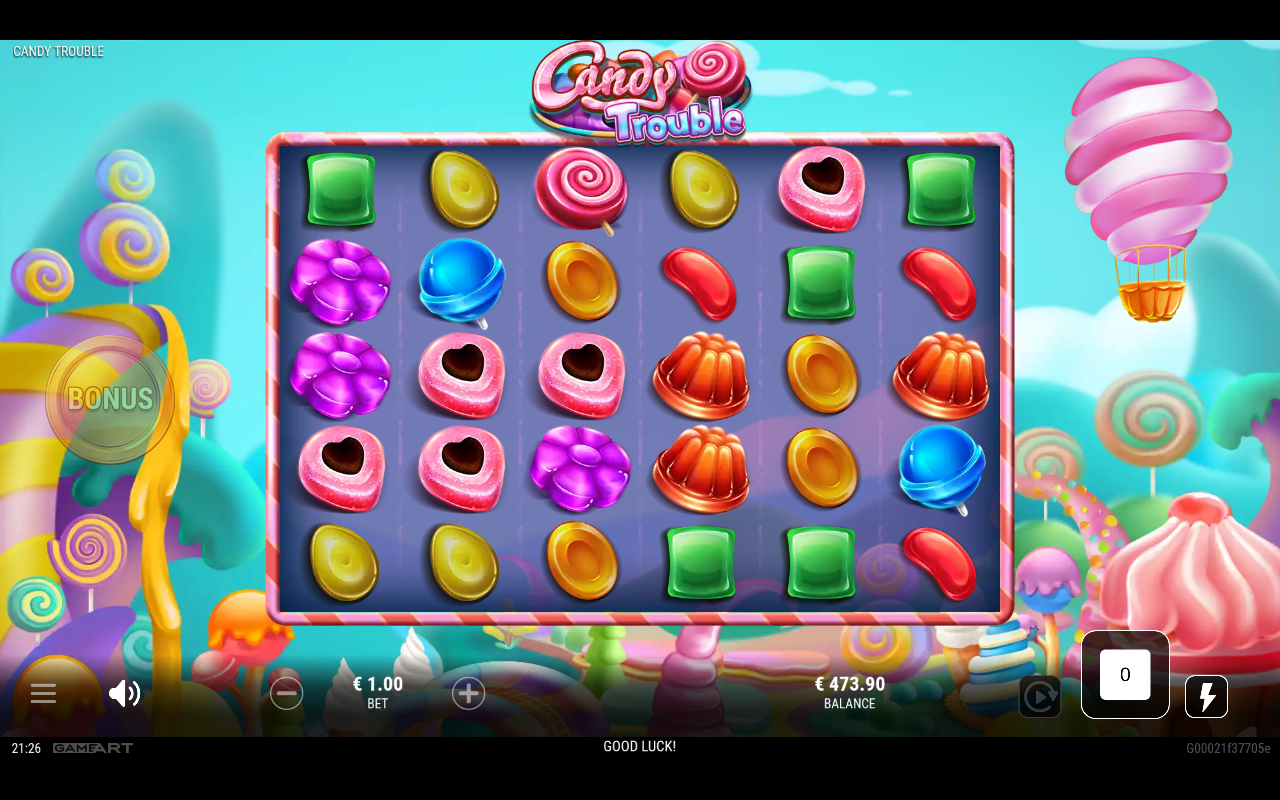
Lollipop trees spiral up from pastel hills, a frosted cupcake the size of a cottage sits on the right of the screen, and the reels sit inside a candy-cane frame like a stick of striped rock. The prettiness is a front, though: Candy Trouble is one of the meanest paytables you’ll meet in a candy-themed slot, with everything below the top three symbols paying fractions of your stake. It’s a 6×5 grid from GameArt running at 96.55% RTP on high volatility, and the sugar-coated setting is doing a lot of work to soften a deliberately thin game.
It’s a 6×5 grid running at 96.55% RTP, and rather than fixed paylines it pays on symbol counts, from eight of a kind upward. Everything beyond the paytable routes through a single bomb-triggered multiplier, and whether one mechanic can carry a game this volatile is what Candy Trouble turns on. For more from the same studio there’s 40 Splendid Sevens and Bursting Crowns 20, with Sugar Loot Spark covering similar sugary ground.
Symbols and Pays
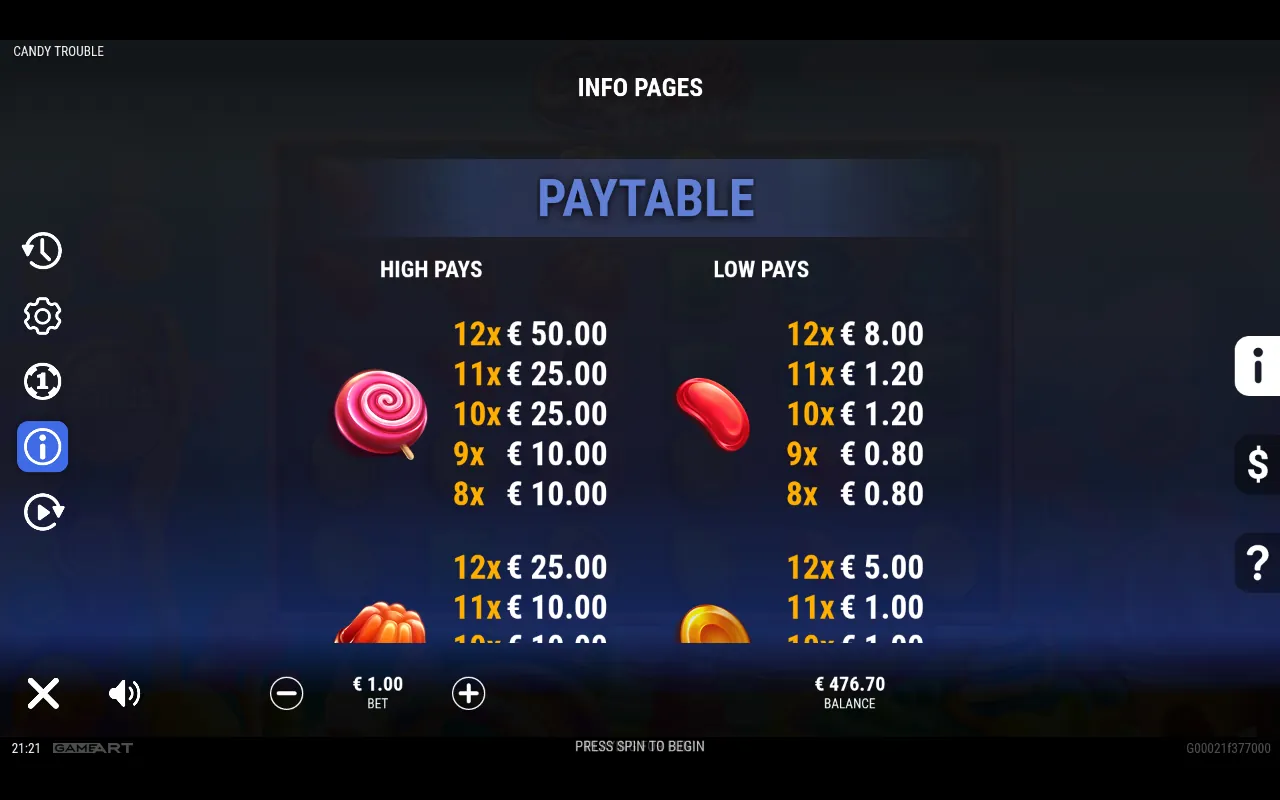
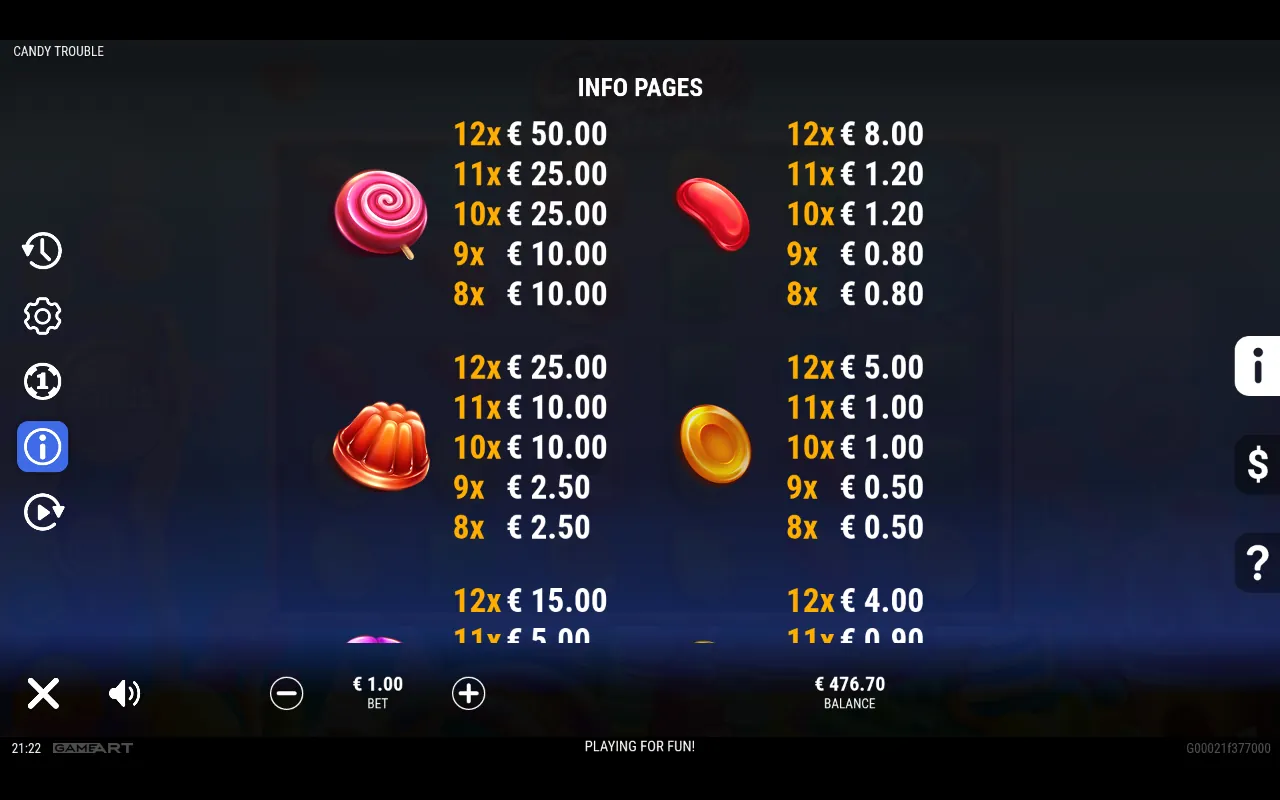
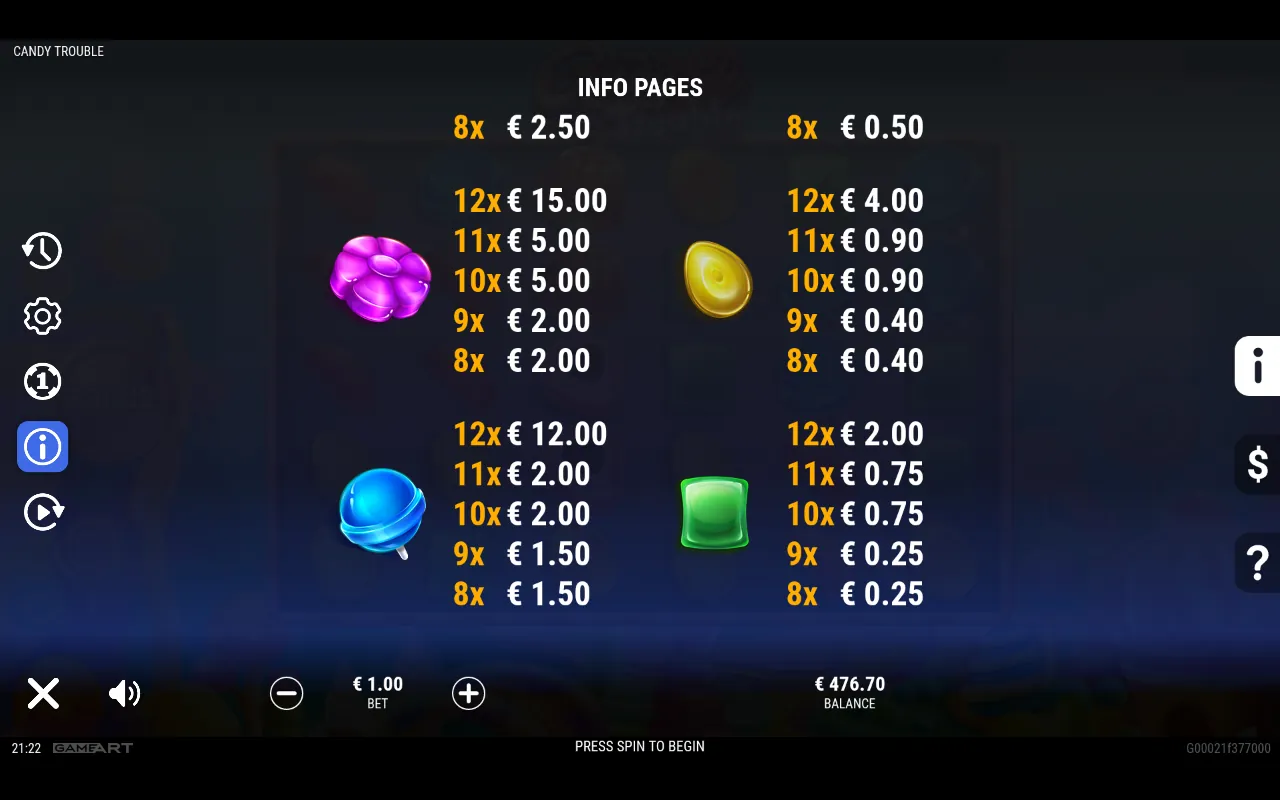
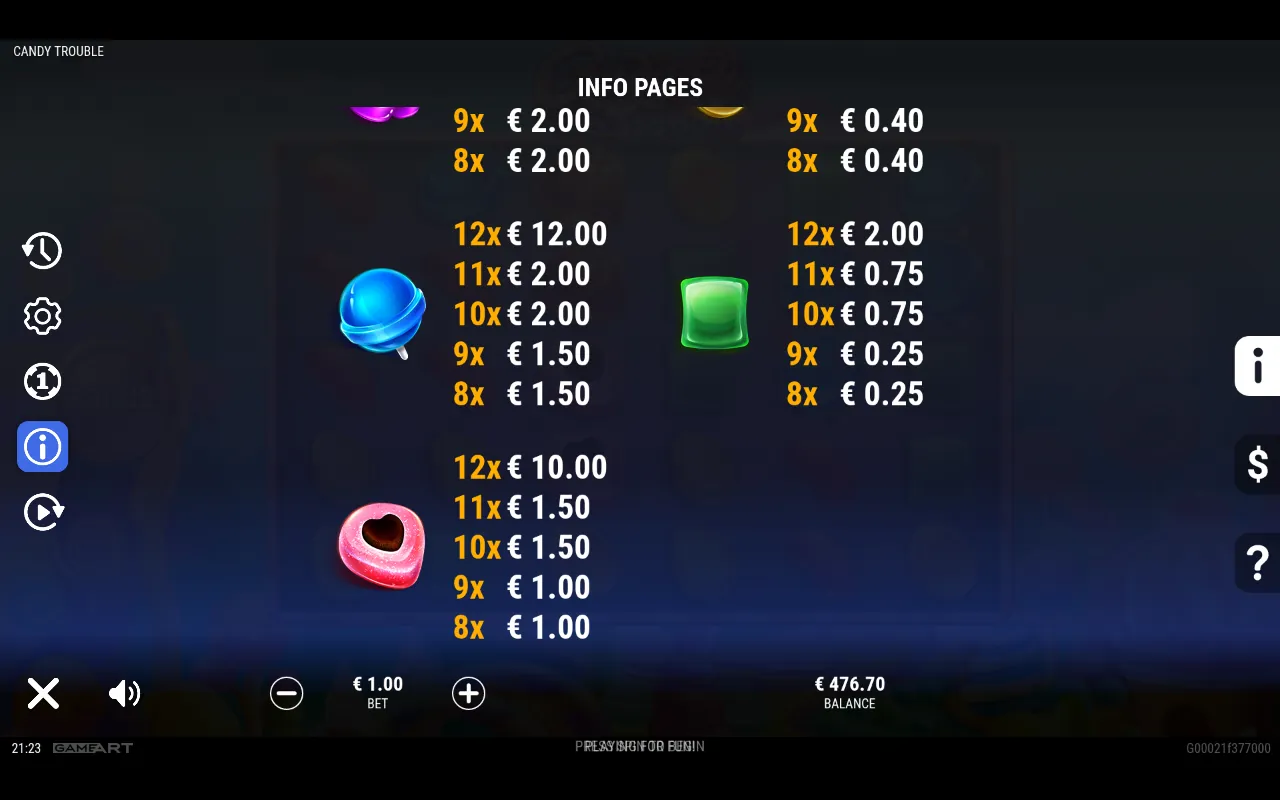
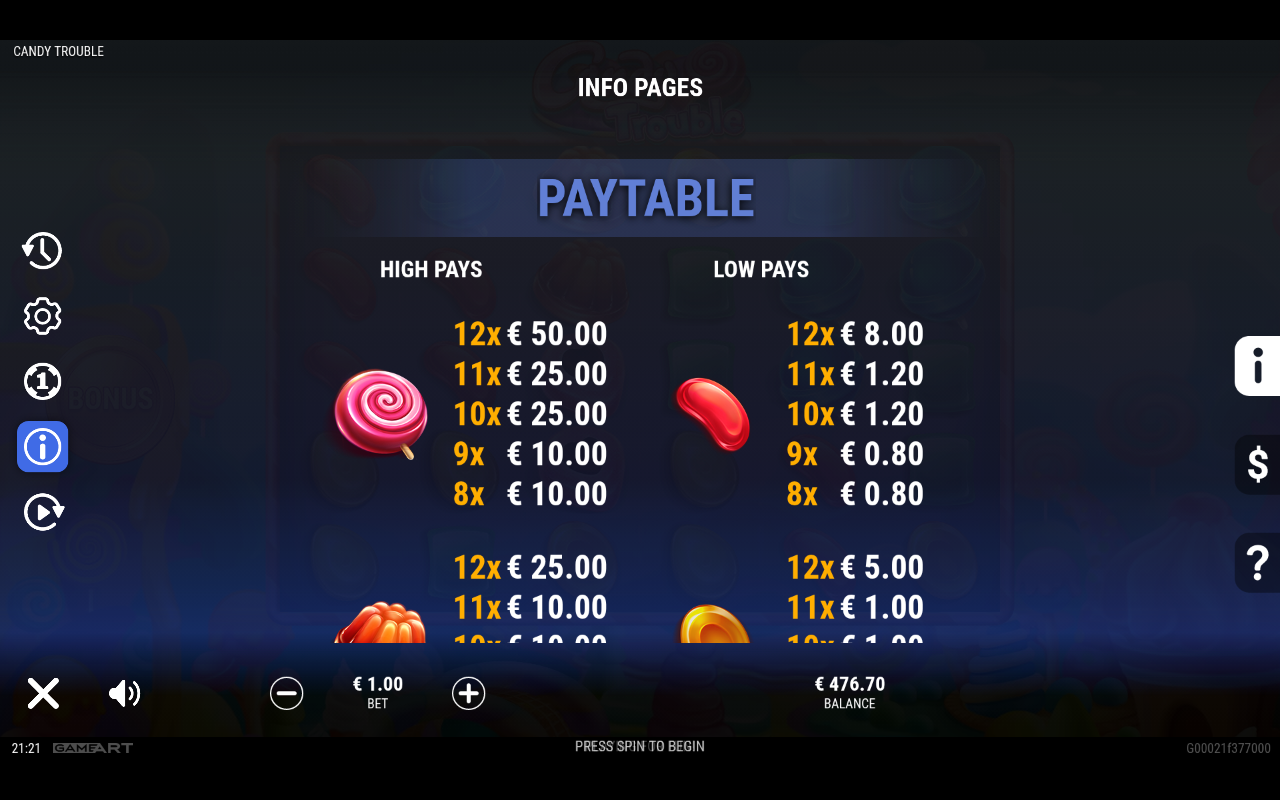
Paying symbols land in nine flavours, from the Pink Swirl Lollipop at the top down through jellies, candies and coins. Wins are awarded on counts rather than paylines: land eight or more matching symbols anywhere on the grid and the paytable’s smallest tier kicks in. The steps rise at ten, eleven and twelve of a kind.
Every value is a multiple of the total bet, so the figures below are what each symbol returns as a share of your stake. Twelve-of-a-kind is the ceiling of the ladder, and on a grid holding thirty positions it’s a rare enough event that the top tier functions almost as the game’s jackpot.
- Pink Swirl Lollipop – 10x for 8-9, 25x for 10-11, 50x for 12
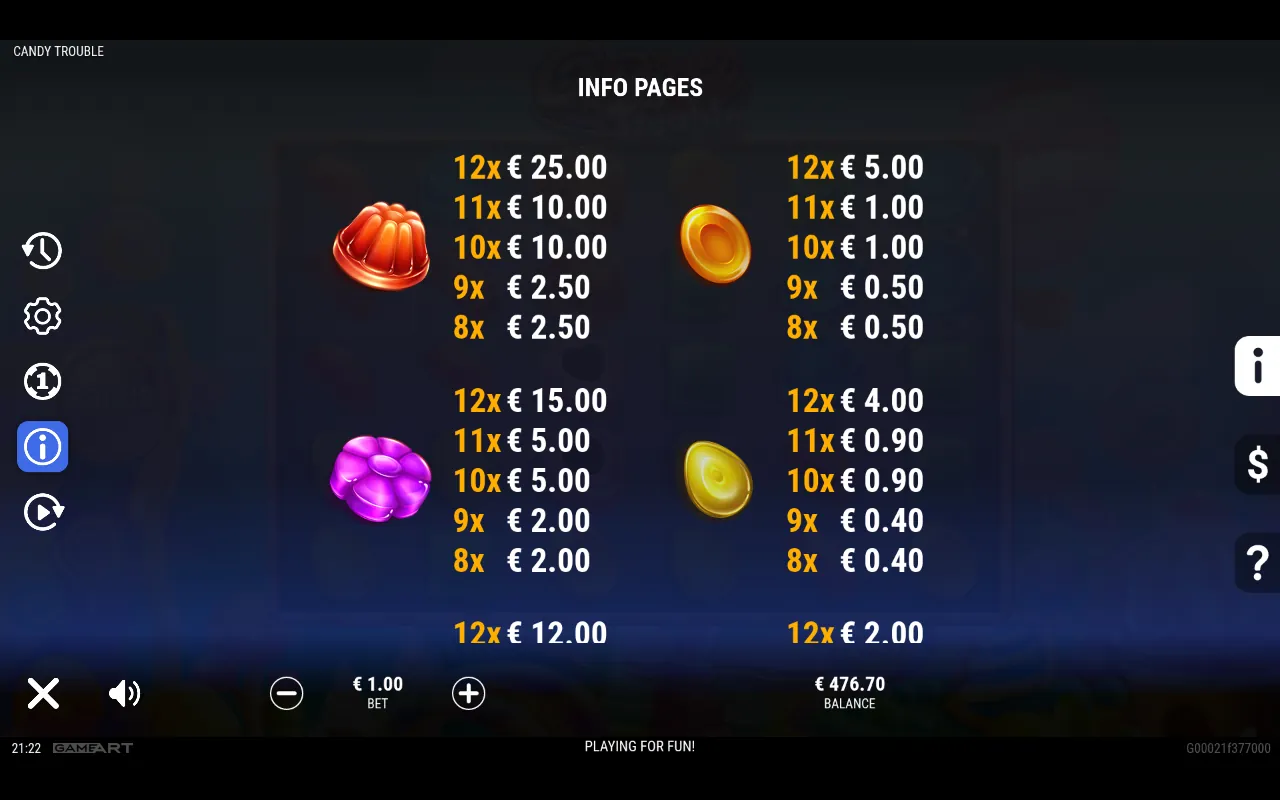
- Orange Jelly – 2.5x for 8-9, 10x for 10-11, 25x for 12
- Purple Jelly – 2x for 8-9, 5x for 10-11, 15x for 12
- Blue Bell – 1.5x for 8-9, 2x for 10-11, 12x for 12
- Pink Heart Candy – 1x for 8-9, 1.5x for 10-11, 10x for 12
- Red Candy – 0.8x for 8-9, 1.2x for 10-11, 8x for 12
- Gold Coin – 0.5x for 8-9, 1x for 10-11, 5x for 12
- Yellow Coin – 0.4x for 8-9, 0.9x for 10-11, 4x for 12
- Green Square – 0.25x for 8-9, 0.75x for 10-11, 2x for 12
The shape of that ladder matters more here than in most games. The top three symbols pull far clear of the rest at the twelve-of-a-kind mark, where the Lollipop pays 50x while the Purple Jelly pays 15x. The bottom half of the table pays fractions of the stake even at its best.
Note too that the eight and nine symbol tiers pay identically across every symbol, so the count has to reach ten before the ladder steps up at all. The gap between the middle tier and the top is where the money sits. A twelve-symbol Purple Jelly win at 15x is beaten only by the top three symbols’ biggest steps.
One further symbol sits outside the ladder. The Candy Bomb carries its own multiplier value, and it doesn’t pay on count like the rest. It exists purely to feed the feature, and it’s the only route to a win bigger than the paytable’s own numbers.
The 3 Candy Bombs Feature
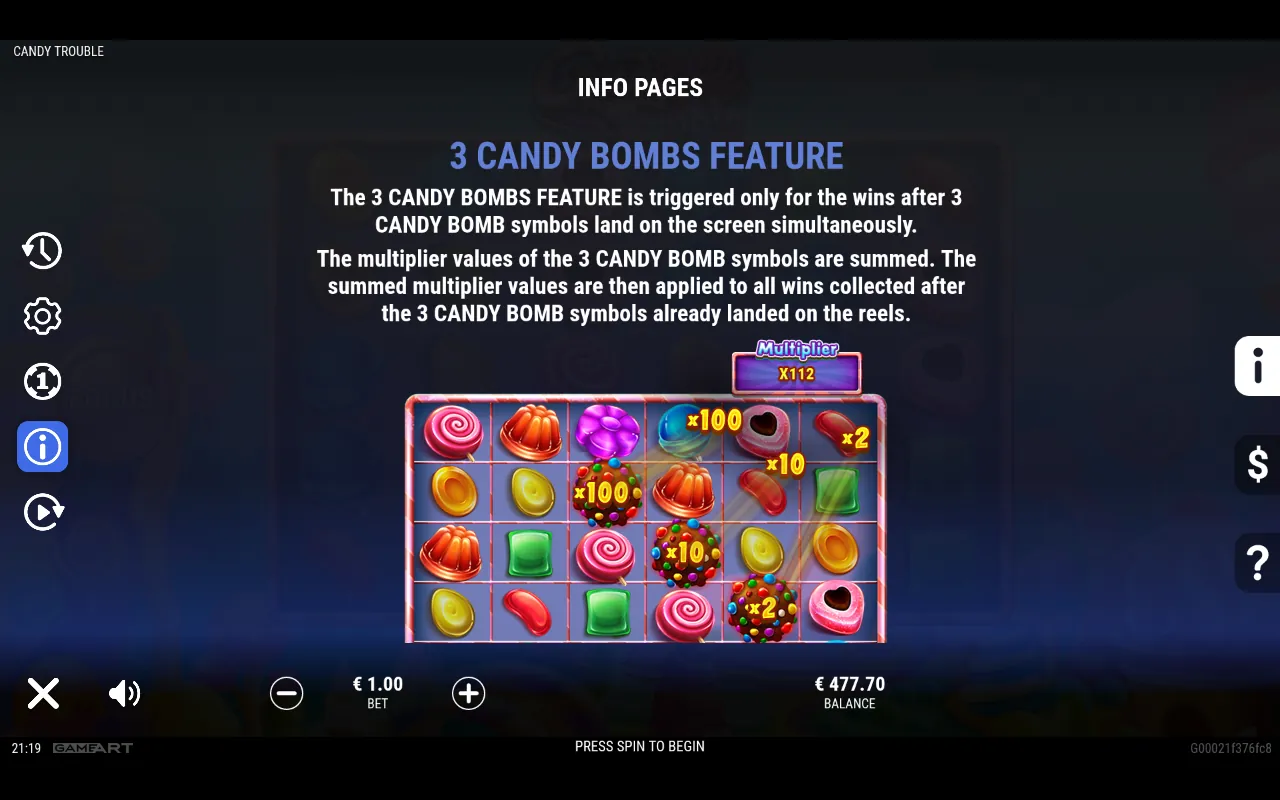
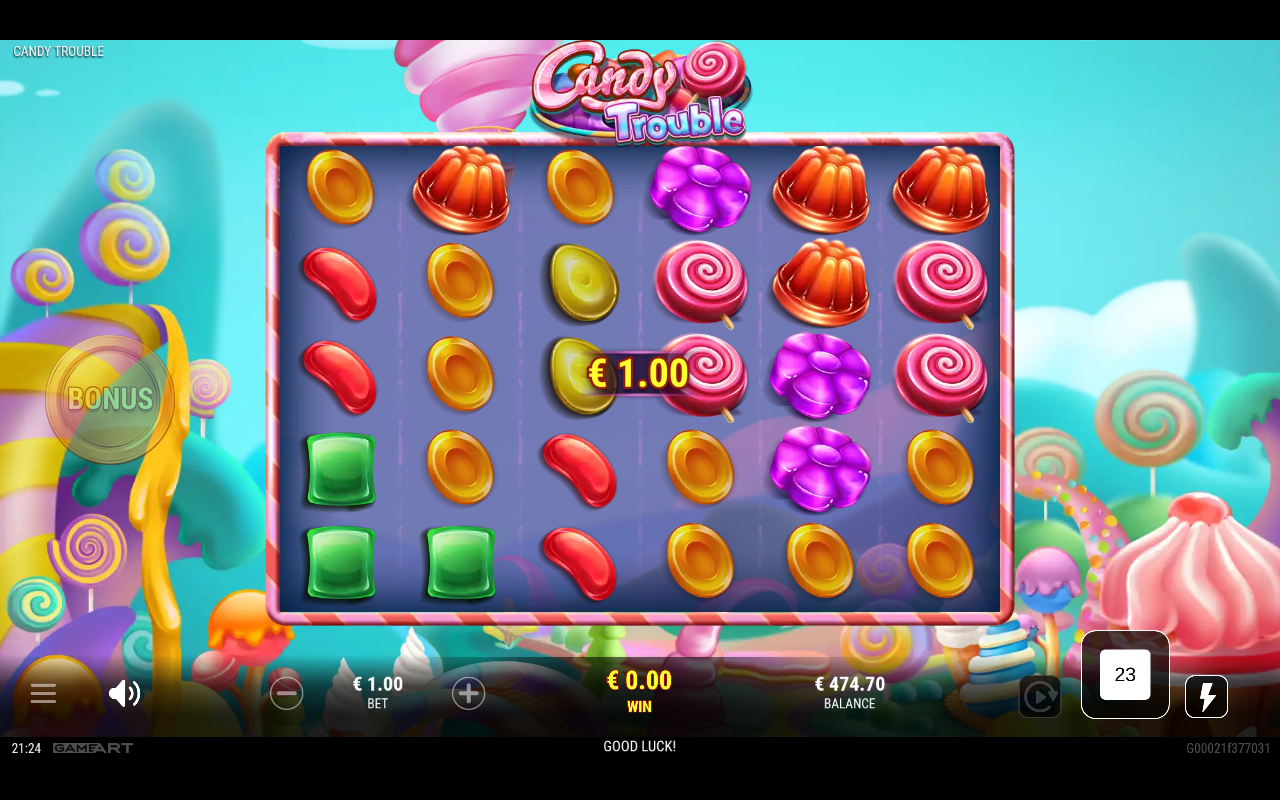
Three Candy Bomb symbols on the screen simultaneously is the whole trigger condition. Nothing less counts, and nothing else in the game starts a feature. It doesn’t award spins and it doesn’t open a separate round: the trigger applies to the wins collected after the bombs have landed, in the base game itself.
Once they’ve landed, the multiplier values shown on the three bombs are summed into a single figure. That summed multiplier is then applied to every win collected from that point. The mechanics are simple: three individual values become one, and that one value rides on everything the grid pays out afterwards.
Because the summed multiplier attaches to wins rather than replacing them, the size of a feature hit depends on what the grid produces alongside it. A strong bomb sum landing over a thin run of wins pays modestly. The same sum over a cluster of high-count symbol wins is where the paytable’s upper tiers stop being the limit.
The timing is what makes it interesting. The bombs must land first and the wins must come after, so a grid full of bombs with nothing following them pays nothing extra. The feature rewards grids that keep producing once the multiplier is live, which on a count-based 6×5 grid means clusters building across consecutive moments rather than a single burst.
Put step by step: first the three bombs land together, then their multiplier values are added up, then every win the grid collects from that moment on is multiplied by the total. The order is fixed: wins that landed before the bombs are untouched.
That’s the entire feature list. There’s no free spins round, no second bonus, no buy menu. Candy Trouble is a one-mechanic game, and everything it offers routes through those three bombs.
Our Honest Verdict
Overall Rating: 7.1/10
Most of the time, Candy Trouble is a pretty grid handing back coins. Then three bombs land at once and the whole thing flips: one summed multiplier hanging over every win that follows is the best moment this game has, and the only real reason to choose it over the studio’s fruitier output.
That single mechanic is also the strength, because it’s built with real care. The bombs have to land before the wins, so a feature hit always feels earned rather than gifted, and the payout rides on what the grid does next instead of paying a flat prize. The weakness is everything else: with no free spins, no second round and no buy menu, the gaps between features are just you and a steep paytable.
It’s a good pick for players who like one big mechanic done properly and don’t need a feature carousel to stay interested. Anyone who wants variety, retriggers or a shortcut to the action will find the wait sour. For the rest, there’s a solid game under all that frosting.
Candy Trouble FAQs
-
What is the RTP of Candy Trouble?
Candy Trouble runs at an RTP of 96.55%, which sits slightly above the typical online slot average. -
Is Candy Trouble high volatility?
Yes, Candy Trouble is a high volatility slot, so wins tend to be less frequent but with a higher ceiling when they arrive. -
What is the grid size of Candy Trouble?
Candy Trouble plays on a 6×5 grid, and pays are awarded on symbol counts from eight of a kind upward rather than on fixed paylines. -
How do you trigger the 3 Candy Bombs feature?
You need three Candy Bomb symbols on the screen at the same time. The feature then applies to wins collected after those bombs have landed, and nothing less than three bombs will trigger it. -
How does the 3 Candy Bombs multiplier work?
The multiplier values shown on the three Candy Bomb symbols are summed into a single figure, and that summed multiplier is then applied to all wins collected after the bombs landed on the reels. -
Does Candy Trouble have a free spins round?
No. The 3 Candy Bombs feature is the game’s only feature, and it doesn’t award free spins. There’s no separate bonus round or bonus buy option. -
Do wins in Candy Trouble need to land on a payline?
No. Candy Trouble pays on symbol counts, so matching symbols pay wherever they land on the 6×5 grid once you have eight or more of a kind. -
What is the highest paying symbol in Candy Trouble?
The Pink Swirl Lollipop. It pays 10x your total bet for eight or nine of a kind, 25x for ten or eleven, and 50x for a full twelve. -
Who makes Candy Trouble?
Candy Trouble is made by GameArt, a studio whose other titles include 40 Splendid Sevens, Bursting Crowns 20 and Sugar Loot Spark.