










Dungeon Quest Slot Review
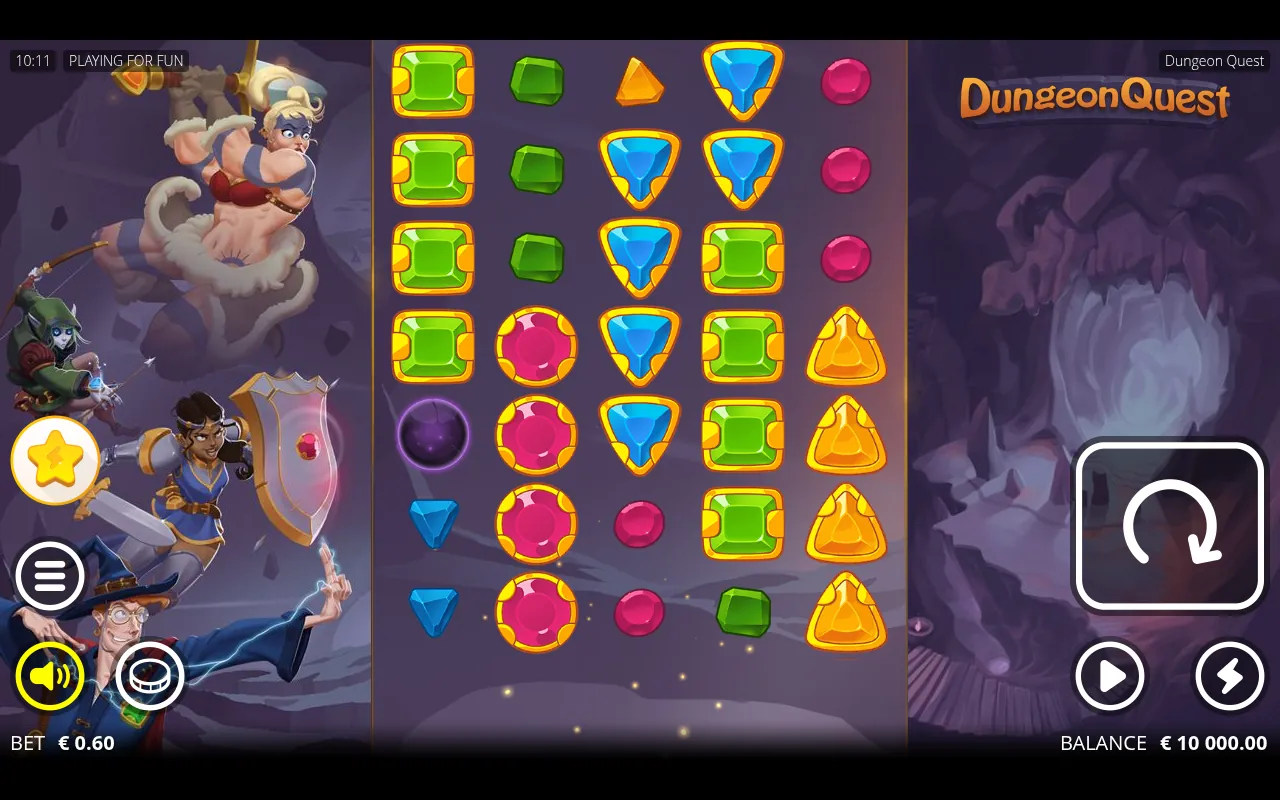
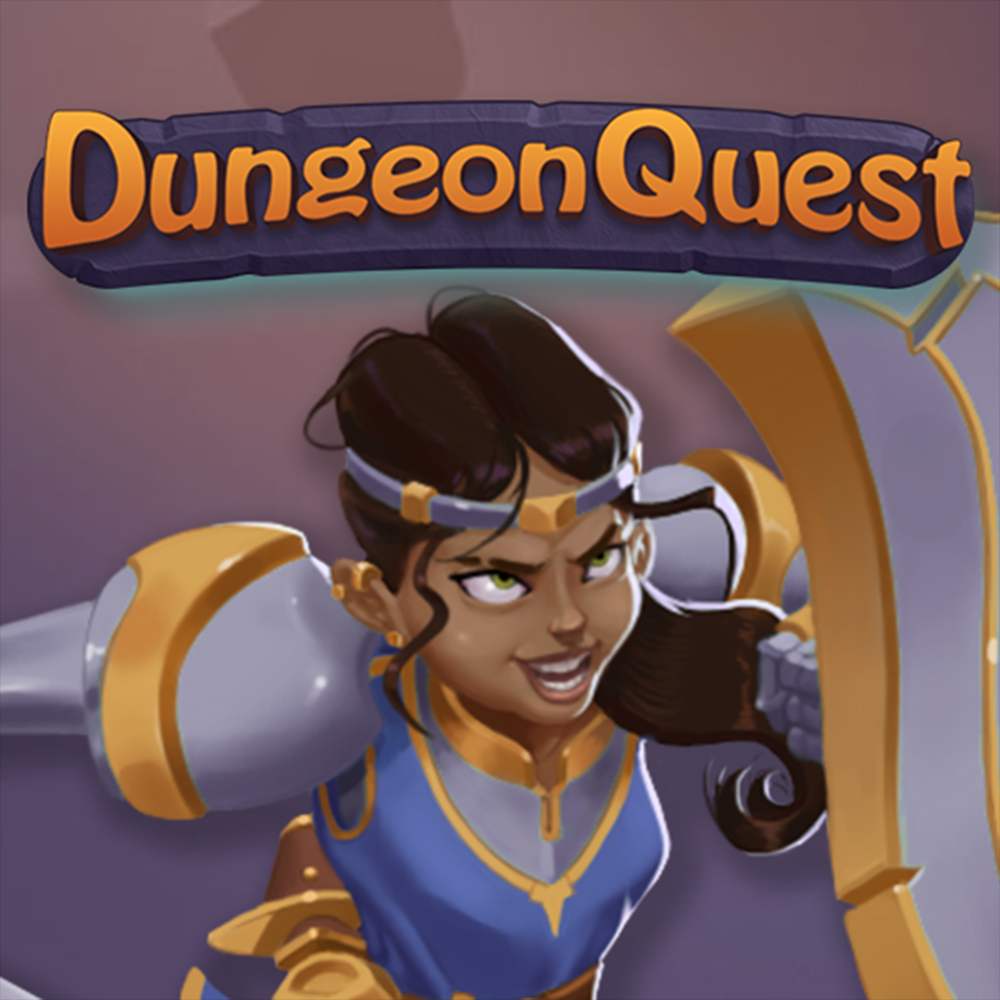
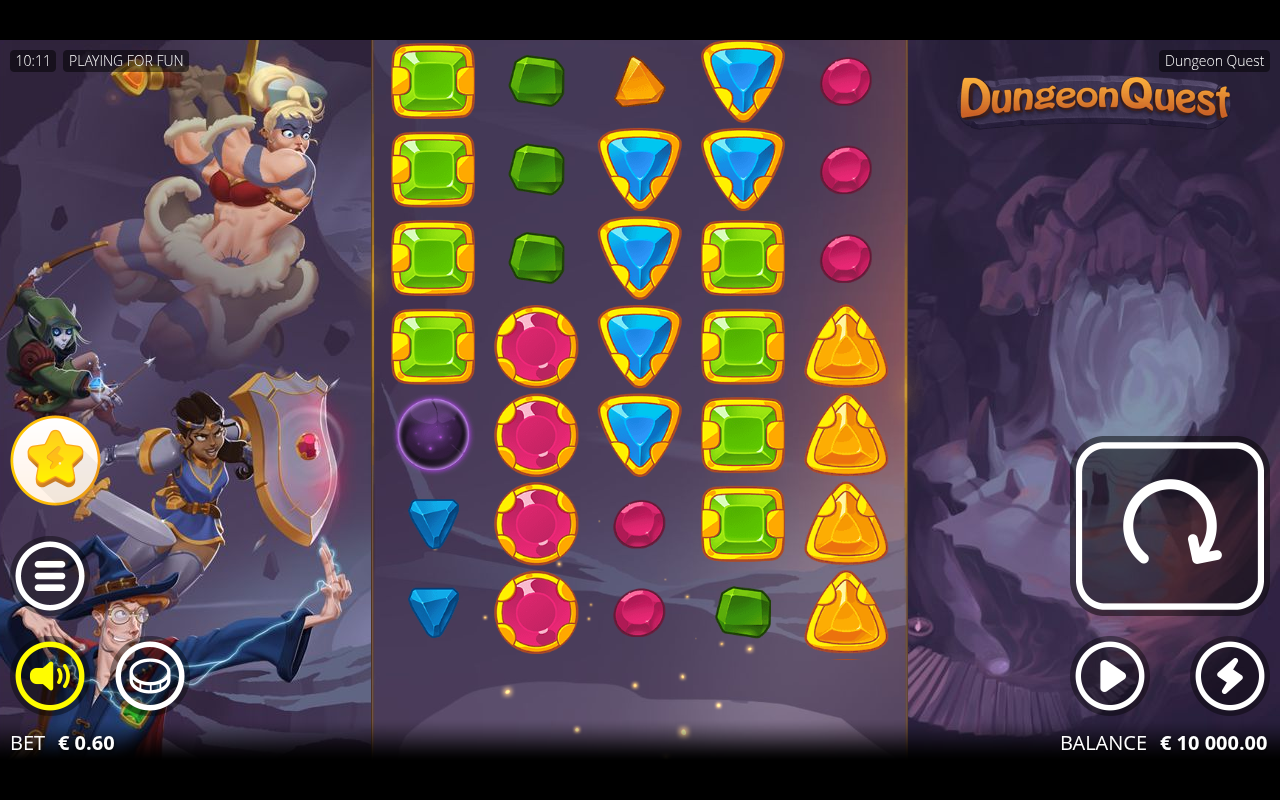
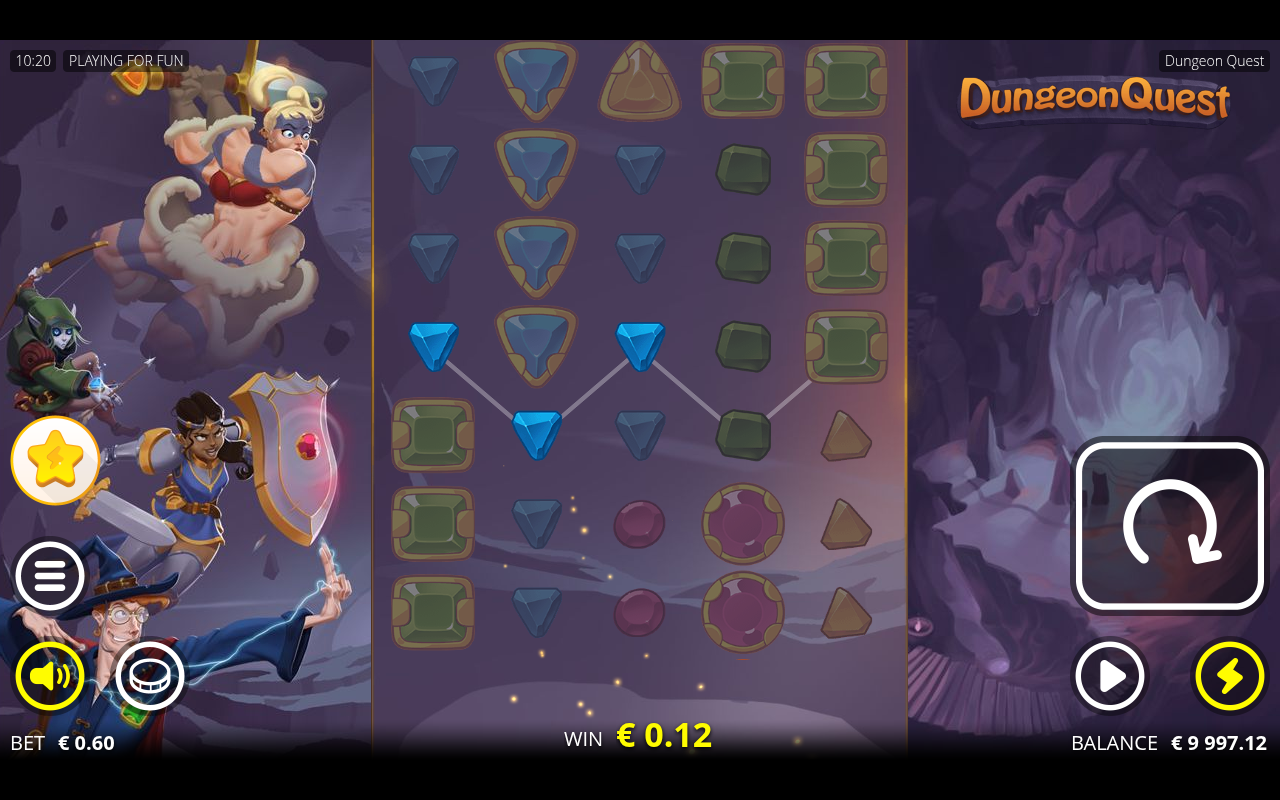
A wizard hurls a lightning arc across a purple stone cavern, an elf nocks her arrow, and a warrior leaps overhead with her blade raised, all of them frozen mid-quest around the reels. The party has come for a dungeon crawl, but Dungeon Quest never opens the door: this is a game that puts every last coin in its main game and leaves the bonus round out entirely.
That’s a rarer build than it sounds, and Nolimit City commits to it: two random main-game modifiers carry all the drama there is. It runs on a 4×7 grid at 96.27% RTP, hits at a rate of 28.46%, and caps its maximum win at 450x the bet – modest numbers beside Tombstone, Deadwood and the studio’s later, louder output. Stakes run from 0.2 to 100 per spin, so the party is open to most bankrolls.
Gems, Ores and Wilds
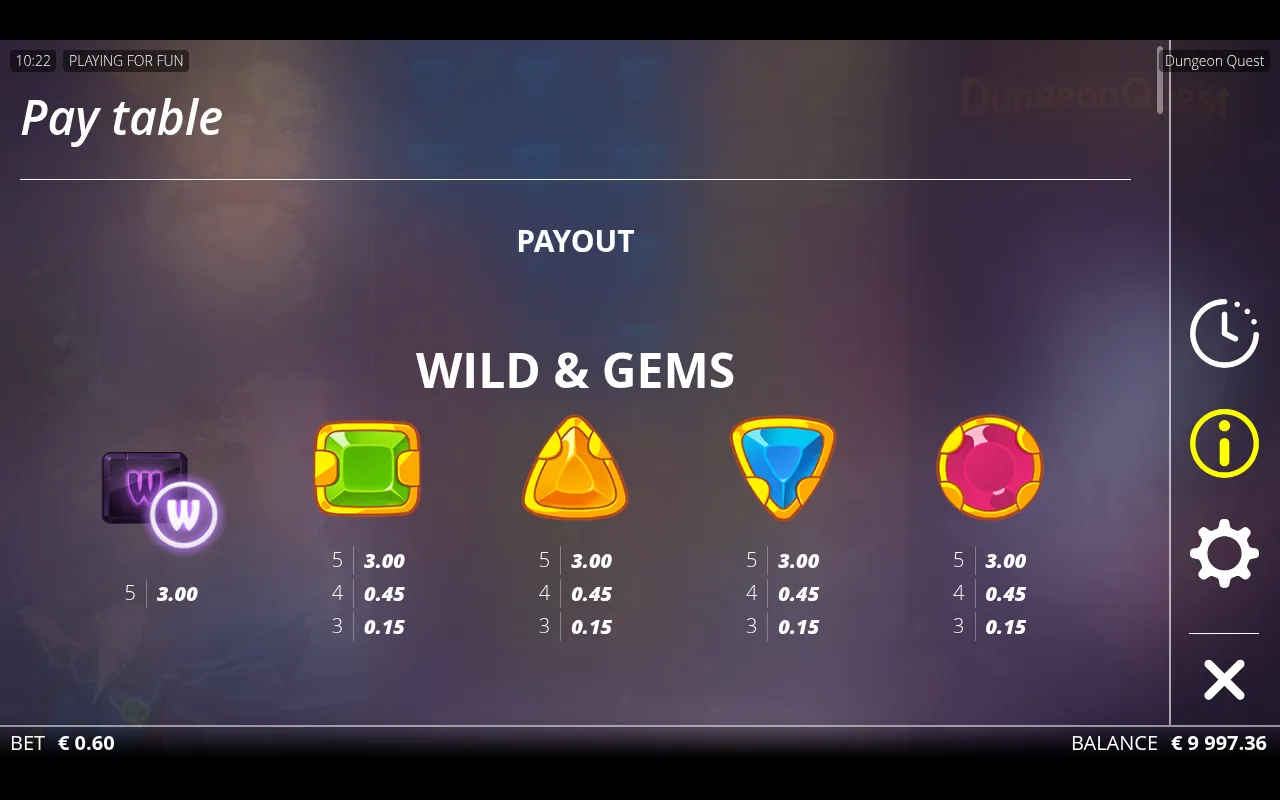
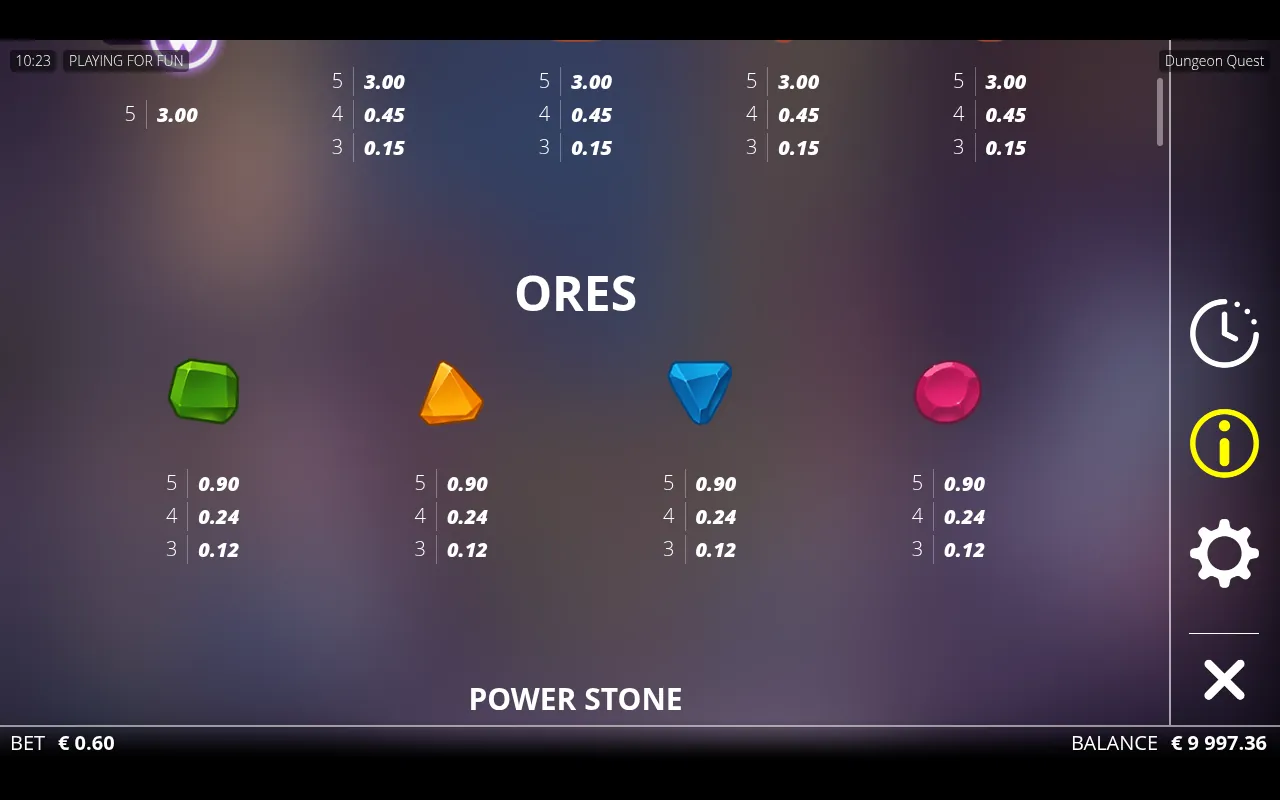
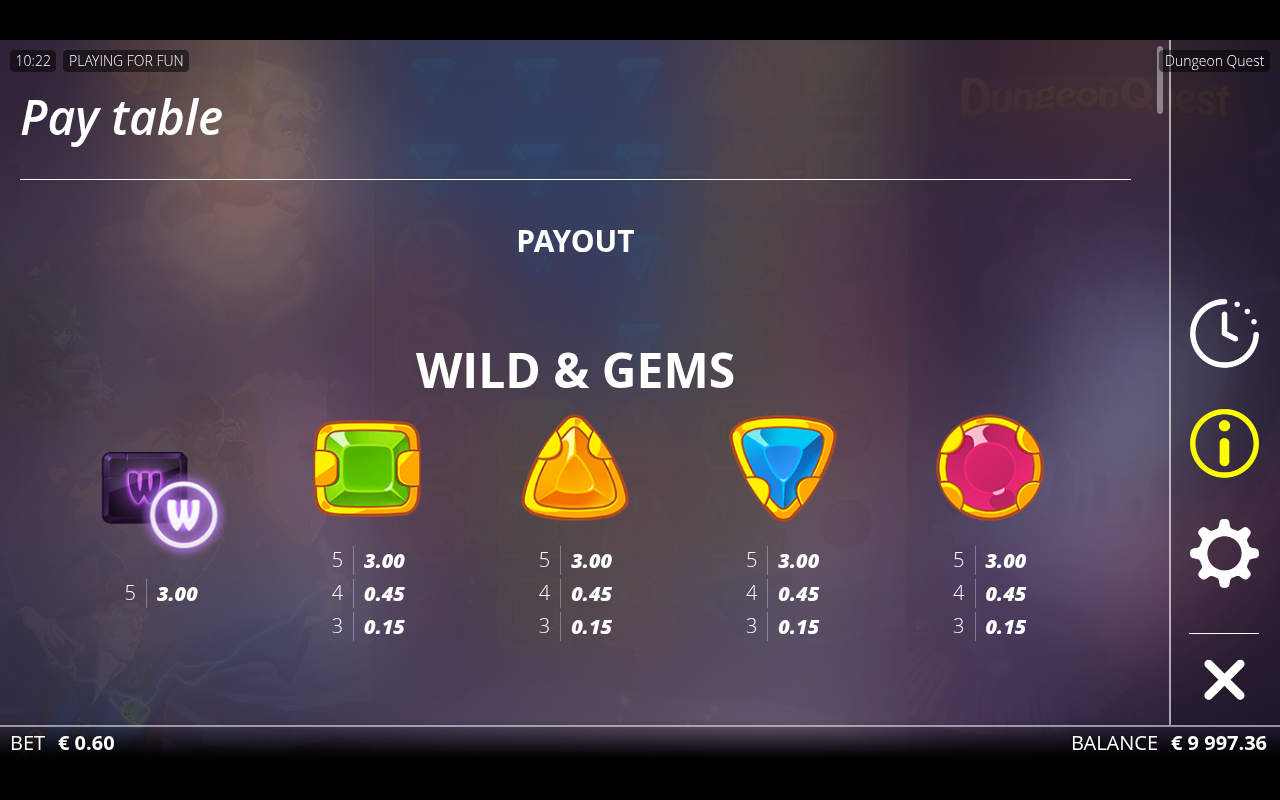
The symbols split into two families of four. The gems, in green, orange triangle, blue triangle and pink, form the premium tier. The ores sit beneath them in matching colours, and the gap between the tiers is wide: at five of a kind, the gems pay more than three times what the ores manage.
All wins are multiples of the total bet rather than a line bet, which keeps the arithmetic honest on a grid this shape. It also means the values below read exactly as they pay – no mental conversion from a line stake to a total one.
- Green Gem: 5x for five, 0.75x for four, 0.25x for three
- Orange Triangle Gem: top pays 5x, stepping down to 0.75x and 0.25x
- Blue Triangle Gem: same as its orange cousin – 5x, 0.75x, 0.25x
- Pink Gem: 5x at five of a kind, 0.75x at four, 0.25x at three
- Green Ore: worth 1.5x, 0.4x or 0.2x from five down to three
- Orange Ore: the ore rates – 1.5x for a full house, 0.4x and 0.2x below that
- Blue Ore: 1.5x at five, 0.4x at four, 0.2x at three
- Pink Ore: mirrors the others at 1.5x, 0.4x and 0.2x
- Wild: 5x for five, matching the gems, and it substitutes for any other symbol
Every symbol within a family pays identically, so there’s no chasing a particular colour for value: a pink gem counts exactly what a green one does. The tiers are what matter, and the jump between three and five of a kind is steep on both. Four of a kind is the awkward middle – a single gem row of four returns less than the stake, so a win isn’t necessarily a profit.
That shapes what a session on the 4×7 grid feels like. A hit rate of 28.46% means roughly one spin in three connects, but the small end of the paytable is where most of those connections live, and the family structure does it no favours: with each tier paying as a block, there’s no rare symbol to lift a modest run of spins. The ore tier exists to pay small and often.
The wild pays the same 5x as the gems at five of a kind. Its substituting matters more than its payout: with ore symbols converting to wilds elsewhere in the game, the wild is less a symbol than a currency.
Power Stone
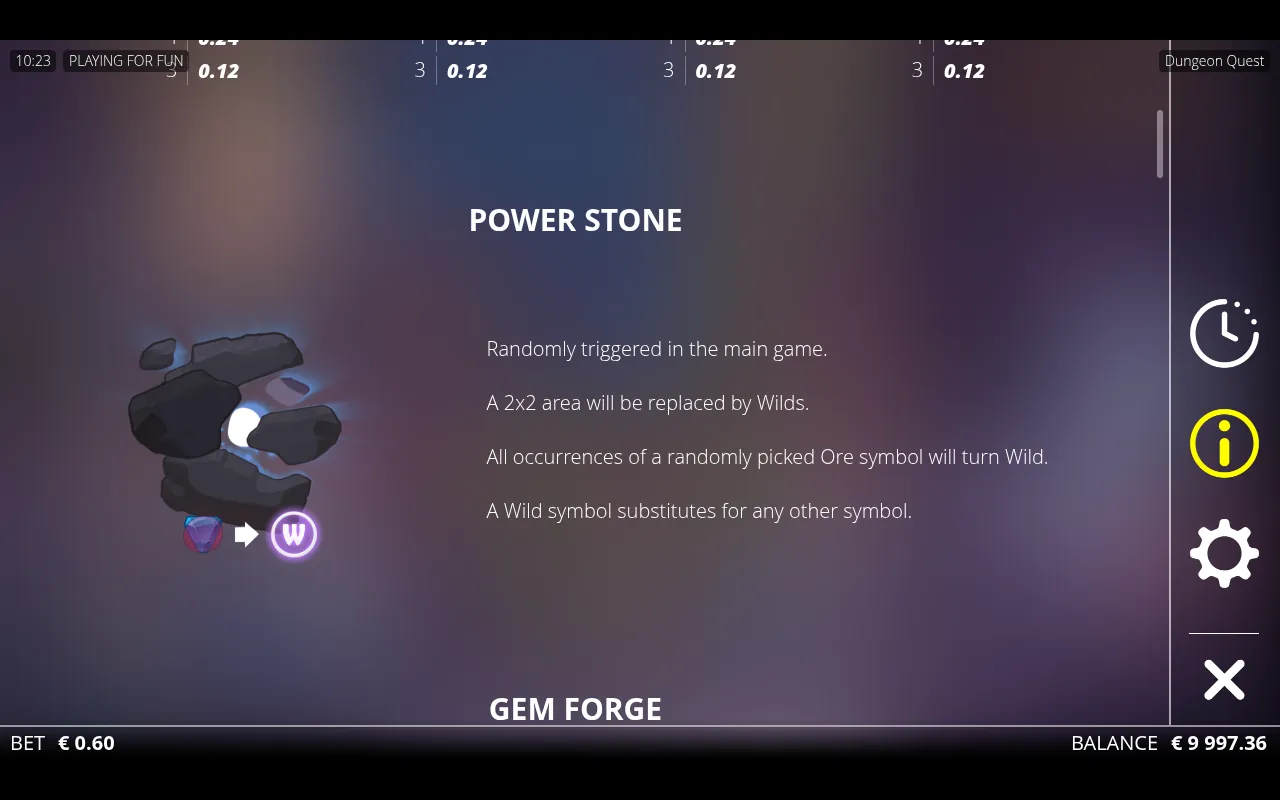
Power Stone arrives unannounced in the main game. There’s no symbol to collect and no meter to fill; the feature simply turns up between spins, which fits a game with nothing else to wait for.
When it lands, two things happen at once. First, a 2×2 area of the grid is replaced by wilds – four substitute symbols in a solid block. Second, every occurrence of one randomly picked ore symbol across the whole board turns wild as well.
On a 4×7 grid, that block already covers a meaningful share of the playing area. A full colour conversion can add several more wilds on top, and because the converted ore is chosen at random, the size of the outcome varies a lot from one trigger to the next.
The win that follows is built from whatever gems happen to sit near that wild mass, with the wild standing in for anything it needs to. A spin where the picked colour barely appears on the reels produces a modest block. A spin where it’s everywhere can clear a grid of gems in a single resolve.
Neither part of the trigger is conditional on the other, and neither can be influenced. The block lands whether or not the converted colour is present in numbers, and the conversion applies whether or not it sits next to anything worth connecting. It’s a feature that rewards the board you can’t see coming rather than the one you can.
Gem Forge
Gem Forge is the game’s second named feature. What it does, what triggers it and what it pays go unpublished – the name exists, and nothing beyond it. That’s the honest position, and it’s an unusual one.
What can be said is structural. Dungeon Quest’s entire feature set lives inside the main game: there’s no free spins round to build towards, no pick’em bonus waiting behind the ore, no scatter counting down to anything. Power Stone, and whatever Gem Forge turns out to be, are the whole of it.
That makes them the reason to keep spinning rather than a reason to wait. Every spin carries the same odds of the modifier arriving, so there’s no rhythm of build and release, no ladder to climb. The game pays its biggest moments out of nowhere and goes straight back to the gems afterwards.
The knock-on is a game with an unusually flat tempo. Nothing accumulates from one spin to the next, and nothing you do on a spin – stake size included – changes what the modifiers are worth when they arrive. Sessions rise and fall on the modifiers alone.
Our Honest Verdict
Overall Rating: 6.2/10
An evening here is flat gem-stacking punctuated by one flash of blue lightning: Power Stone lands, half the board goes wild, and the cavern pays out. That flash is the whole reason to visit – nothing else in the game is trying to hold your attention.
The good part is how clean the idea is. A wild block on top of a full colour conversion can turn a nothing spin into the best the game has to offer, and it does so without any waiting around or meter-watching first.
The problem is what’s left once the flash fades. 450x is a small top for a studio now famous for four and five-figure ceilings, and with no bonus round there’s nowhere to go when the modifiers stay quiet. This suits players who want steady, undramatic spins with an occasional surprise – anyone hunting a life-changing hit will find this dungeon’s treasure chest already looted.
Dungeon Quest FAQs
-
How does Power Stone work in Dungeon Quest?
Power Stone triggers at random in the main game. A 2×2 area of the grid is replaced by wilds, and every occurrence of one randomly picked ore symbol turns wild too. A wild substitutes for any other symbol. -
What does the wild substitute for in Dungeon Quest?
The wild substitutes for any other symbol, and it’s also the game’s top payer at 5x the bet for five of a kind. -
Does Dungeon Quest have a free spins round?
No. The game has no separate bonus round; its features, Power Stone and Gem Forge, live inside the main game. -
What do five gems pay in Dungeon Quest?
Five of any gem pay 5x the total bet, the same as five wilds. All wins in the game are multiples of the total bet rather than a line bet. -
How big is the 2×2 wild area in Power Stone?
Four positions in a solid 2×2 block turn wild at once, and every occurrence of one randomly picked ore symbol elsewhere on the board converts too. -
What is the RTP of Dungeon Quest?
The RTP is 96.27%. -
What is the minimum and maximum bet on Dungeon Quest?
Bets run from 0.2 to 100 per spin. -
When is Dungeon Quest released?
Dungeon Quest’s release date is 27 September 2018.