








Tombstone Slot Review
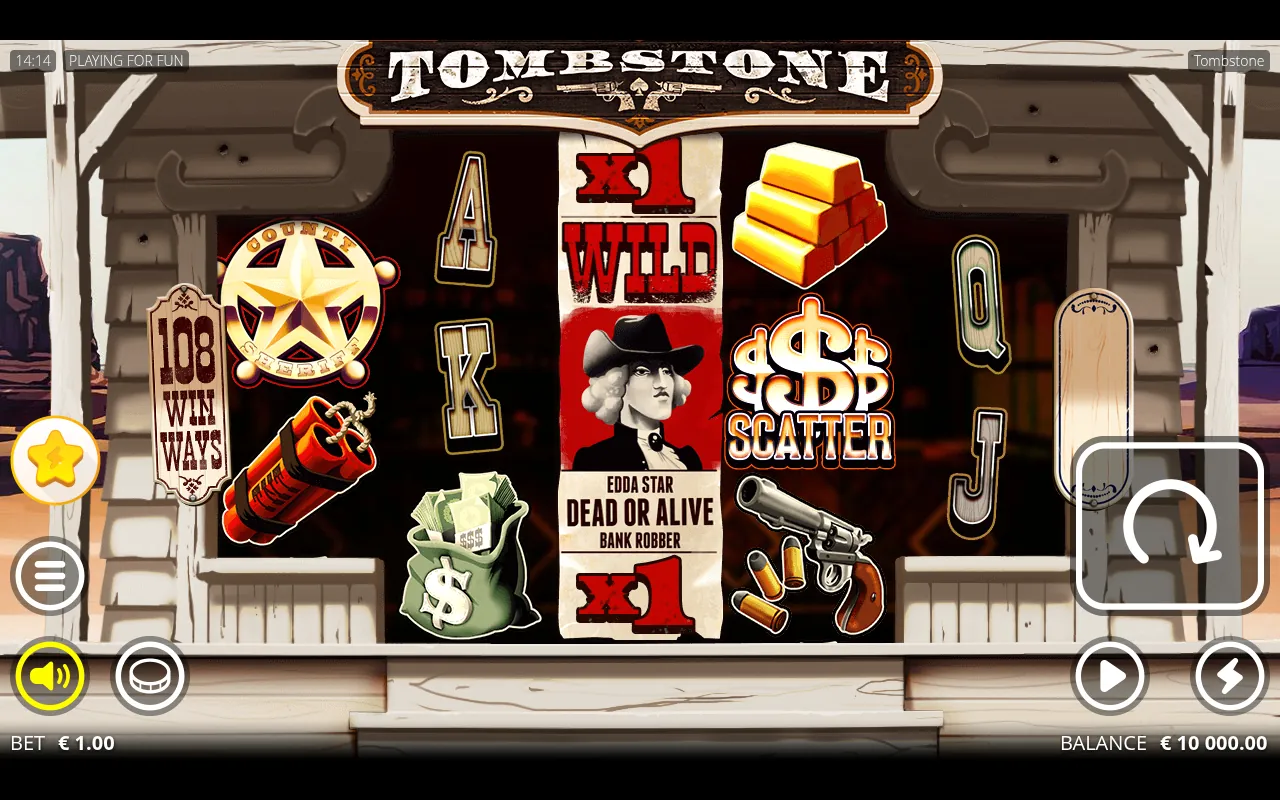
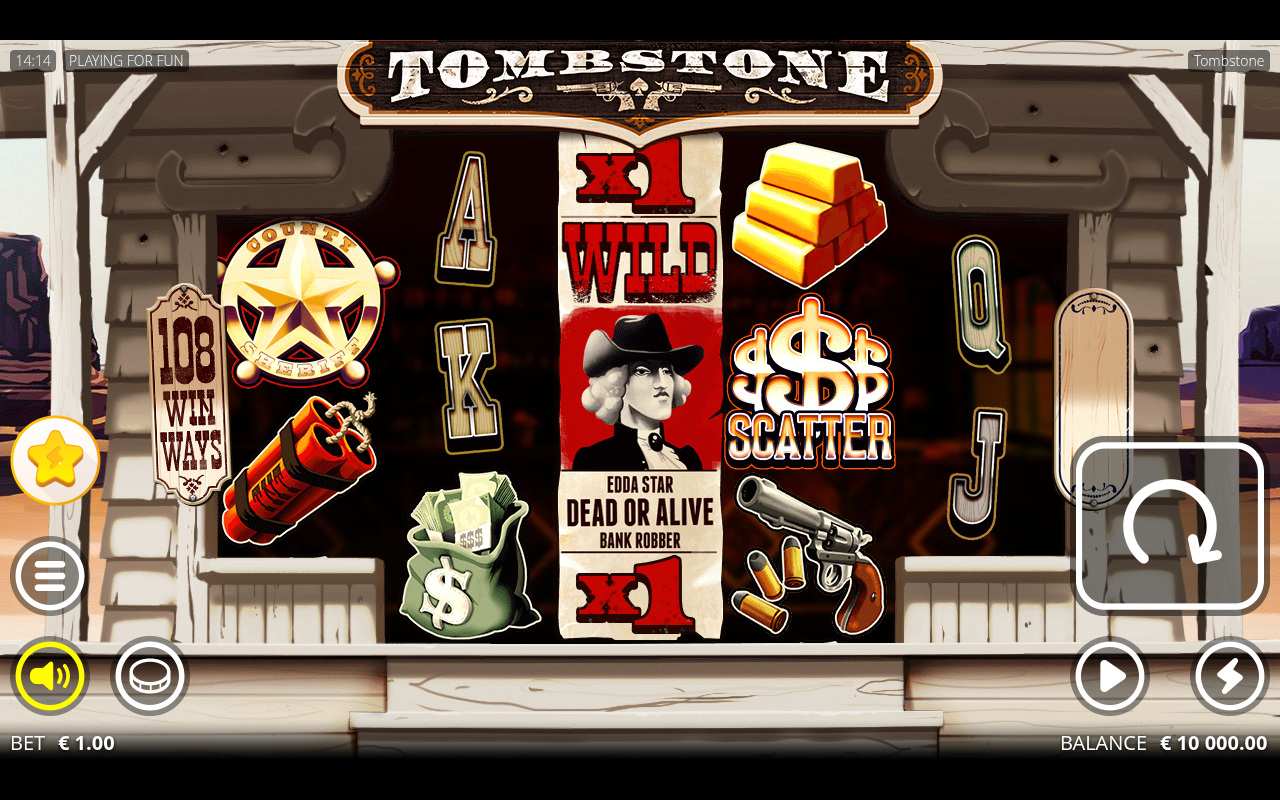
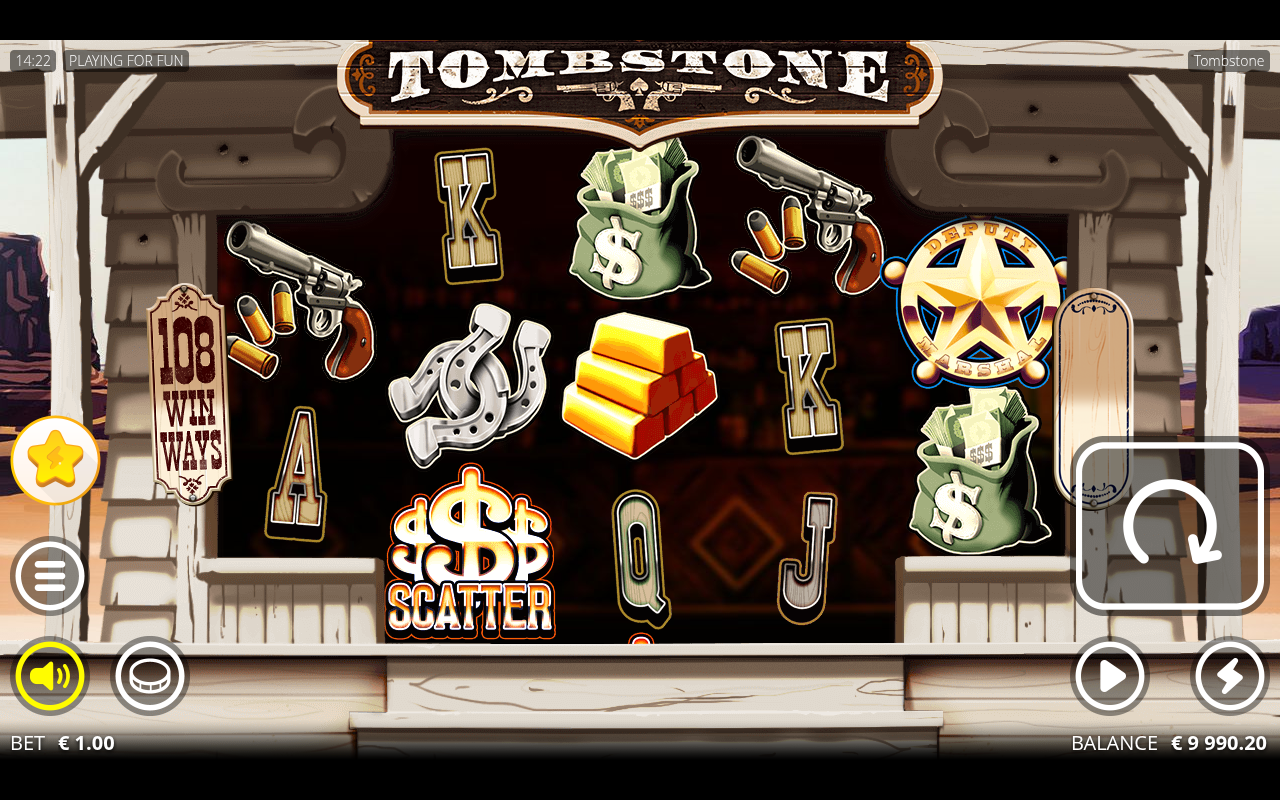
A whitewashed storefront porch somewhere in the Old West, its posts riddled with bullet holes, a varnished signboard burnt with the town’s name and crossed revolvers underneath. In Tombstone, the best wild is the one that lands badly. A clean drop gets you a substitute; an awkward one has to nudge its way onto the board and picks up multiplier with every step, and that single twist is what the whole game is built to serve.
Nolimit City runs it on a 5×4 grid with 108 win ways, a 96.18% RTP, bets from 0.10 to 100, and a maximum win of 11,456x the stake. Fans of the studio’s westerns will recognise the territory from Deadwood and El Paso Gunfight xNudge.
How the Base Game Pays
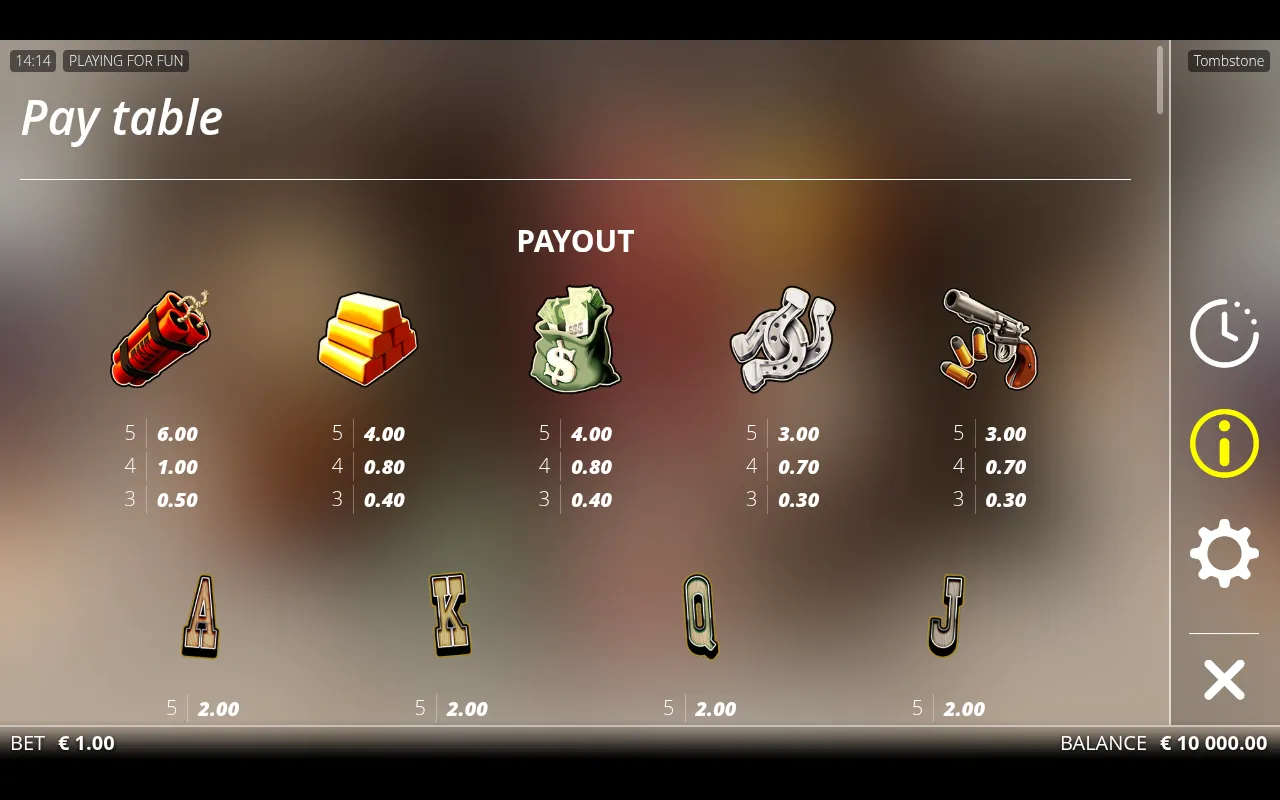
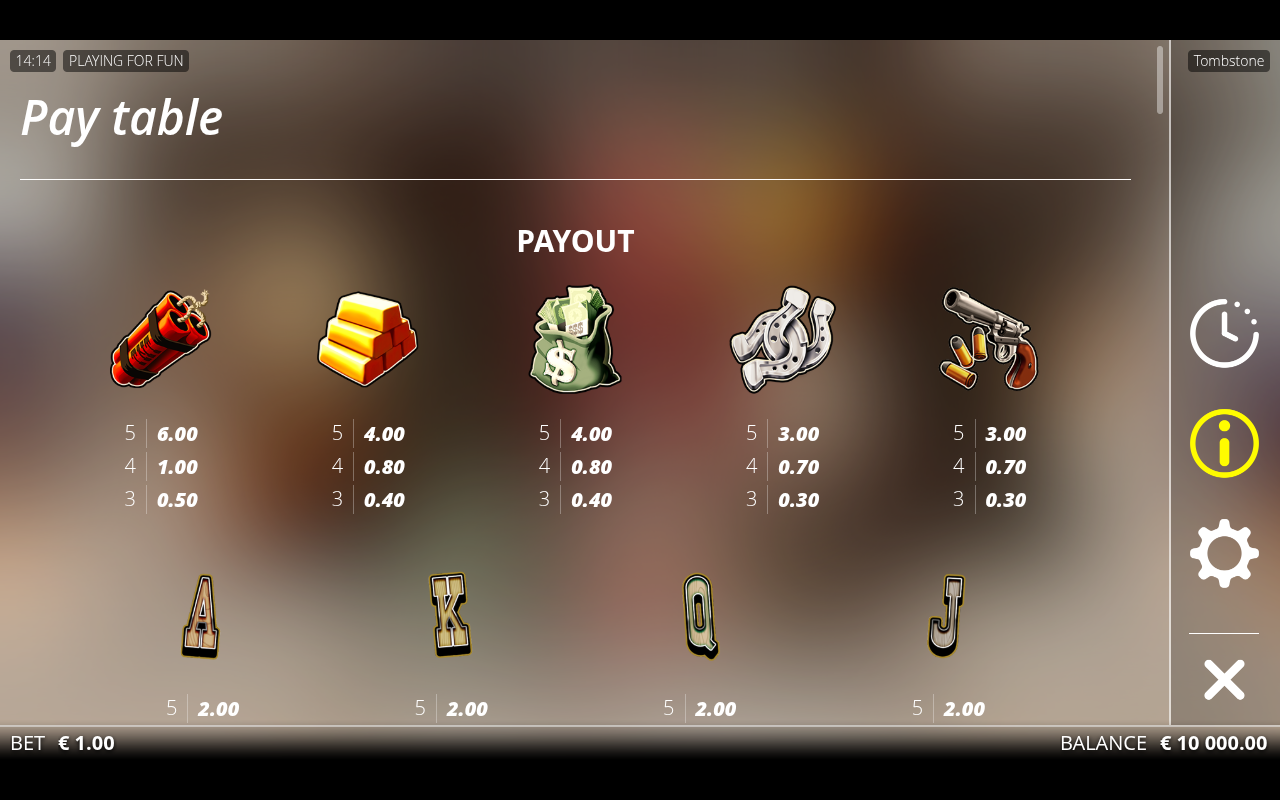
Wins connect across 108 win ways, and 20.44% of spins produce a winning combination – roughly one in five. Every payout in the game is a multiple of the total bet, and the ladder runs shallow from top to bottom:
- Dynamite – 0.5x for three, 1x for four, 6x for five
- Gold Bars – 0.4x for three, 0.8x for four, 4x for five
- Money Bag – 0.4x for three, 0.8x for four, 4x for five
- Horseshoe – 0.3x for three, 0.7x for four, 3x for five
- Gun & Bullets – 0.3x for three, 0.7x for four, 3x for five
- A, K, Q and J – 0.2x for three, 0.5x for four, 2x for five
There’s a deliberate shape to that ladder. The best symbol in the game pays just 6x, and five royals return only twice the stake, so line wins on their own won’t carry a session. The real money is in the multipliers stacked on top of them.
The gaps between tiers are small, too. Dynamite pays three times what the royals do for a five-of-a-kind, and from three-of-a-kind to five, every symbol in the game multiplies its value by between ten and twelve. It’s a compressed paytable by design – the ladder exists to feed wins through the wilds, not to hand out big line hits.
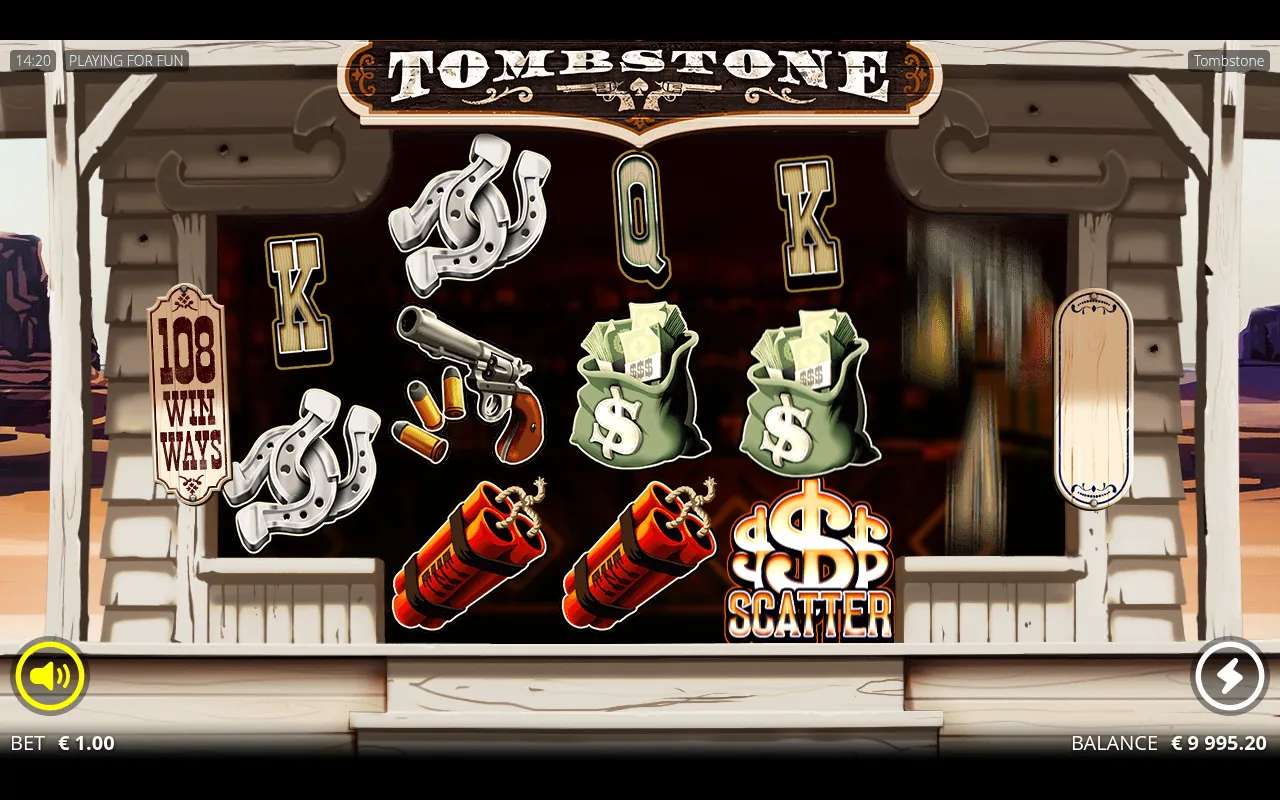
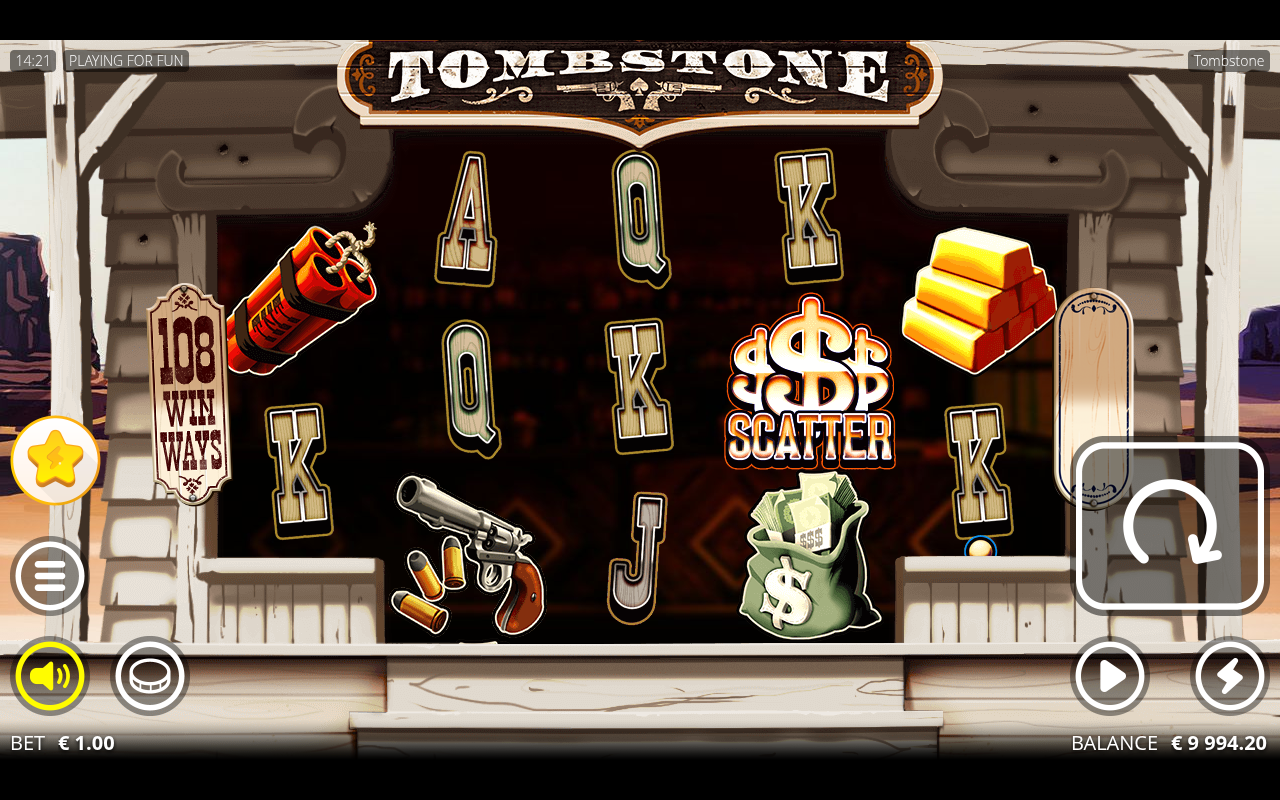
The Wild substitutes for every symbol except the Scatter and the Badges. That exclusion matters more than it sounds, because the badges have work of their own to do further down. The Scatter, marked with dollar signs, pays nothing on its own either: its whole job is landing in threes to open the free spins, and in ones or twos to keep them running.
Four rounds and modifiers sit on top of the base game, each with its own trigger:
- Outlaw Wilds – any Wild landing on reels two, three or four
- Justice Spins – a Sheriff Badge on reel one and a Marshall Badge on reel five
- Gunslinger Spins – three Scatters
- Bounty Spins – a Sheriff Badge, three Scatters and a Marshall Badge together
The four aren’t isolated, either. Features and spin results affect each other within a game round, so a wild already standing when a feature triggers keeps doing its work inside it.
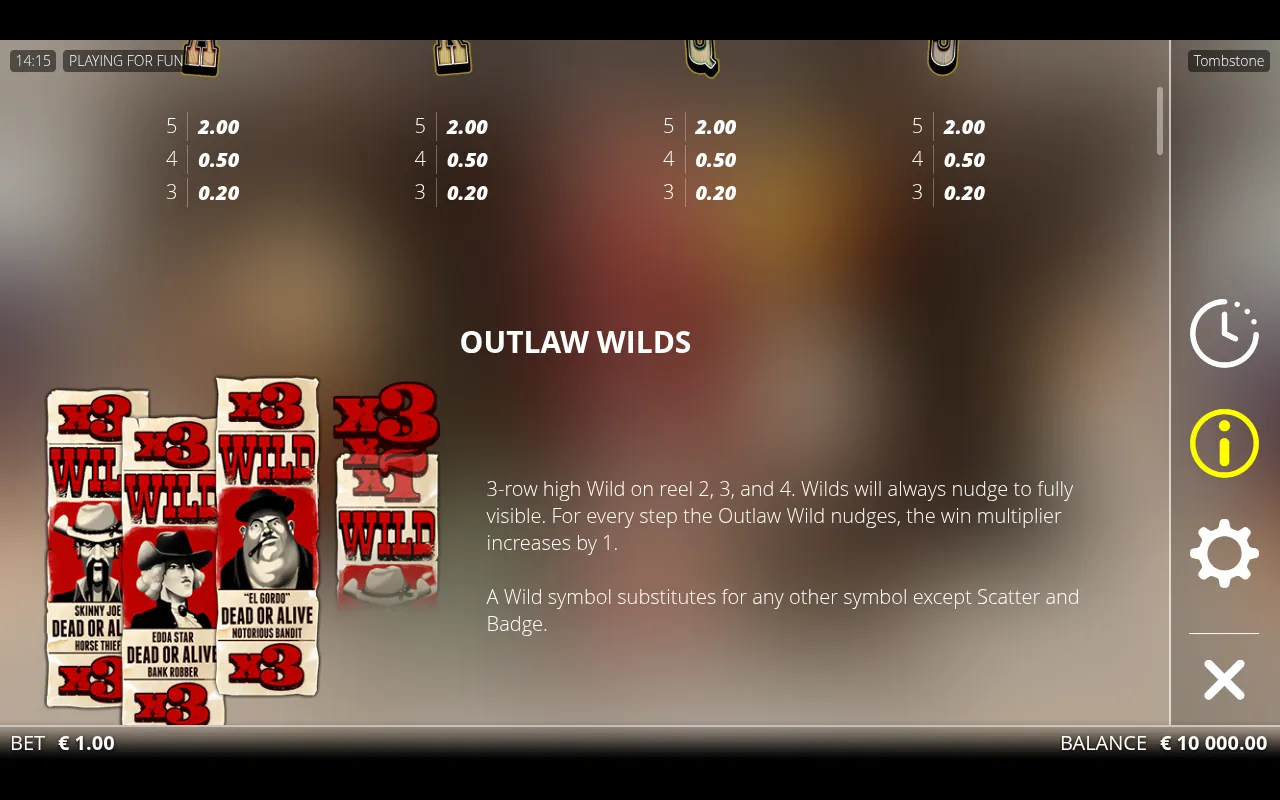
Outlaw Wilds
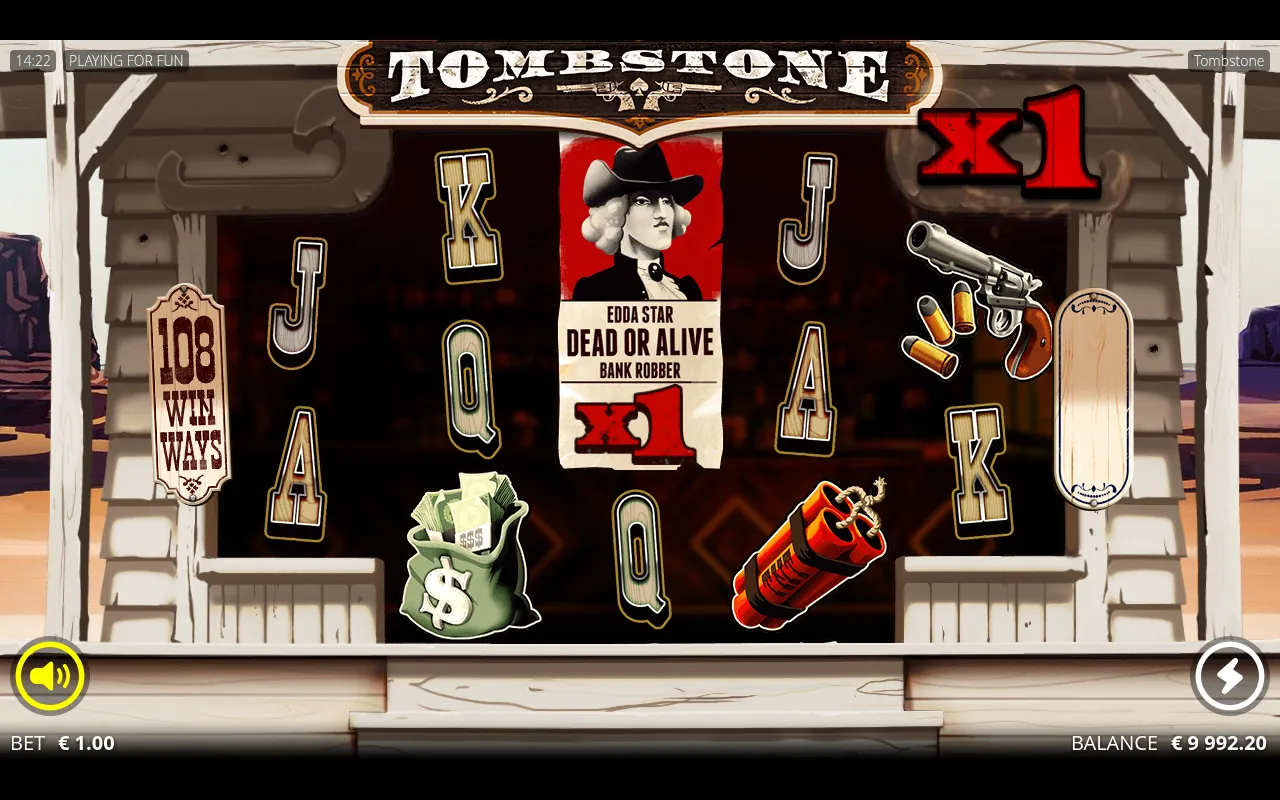
Outlaw Wilds are stacked three rows high across the middle reels, and a partial landing will always nudge until the full figure is visible. Every step of that nudge adds 1 to the win multiplier, so a wild that arrives awkwardly pays better than one that drops in clean. A wild that lands two steps low nudges twice and arrives carrying a 2x multiplier; one that’s flush from the start takes nothing extra with it.
An additional Outlaw Wild landing during a nudge sequence bumps the multiplier by another 1. In the base game the multiplier applies to the round’s wins and then clears; the features treat it very differently.
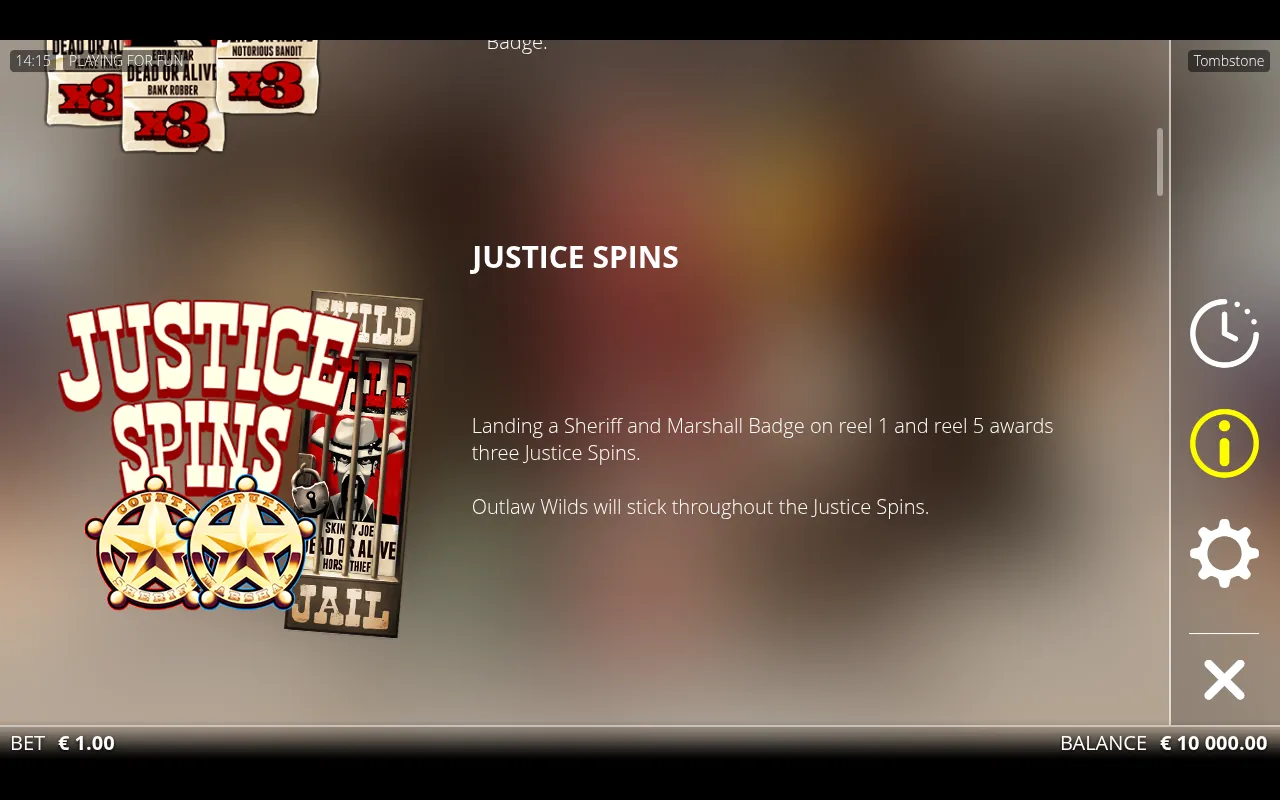
Justice Spins
Both badges landing at once – one on the first reel, one on the fifth – awards three Justice Spins. The round turns on one rule: any Outlaw Wild that arrives during those three spins sticks in place for the remainder.
Each sticky wild keeps the multiplier it nudged in with, and the two mechanics compound fast. A wild that sticks early is on the board for every remaining spin, substituting across all three of its rows while later wilds stack up alongside it. By the third spin the middle reels can be carrying a serious multiplier between them – or nothing at all, if the badges arrived on a quiet spin. Three spins is all the room the round gets.
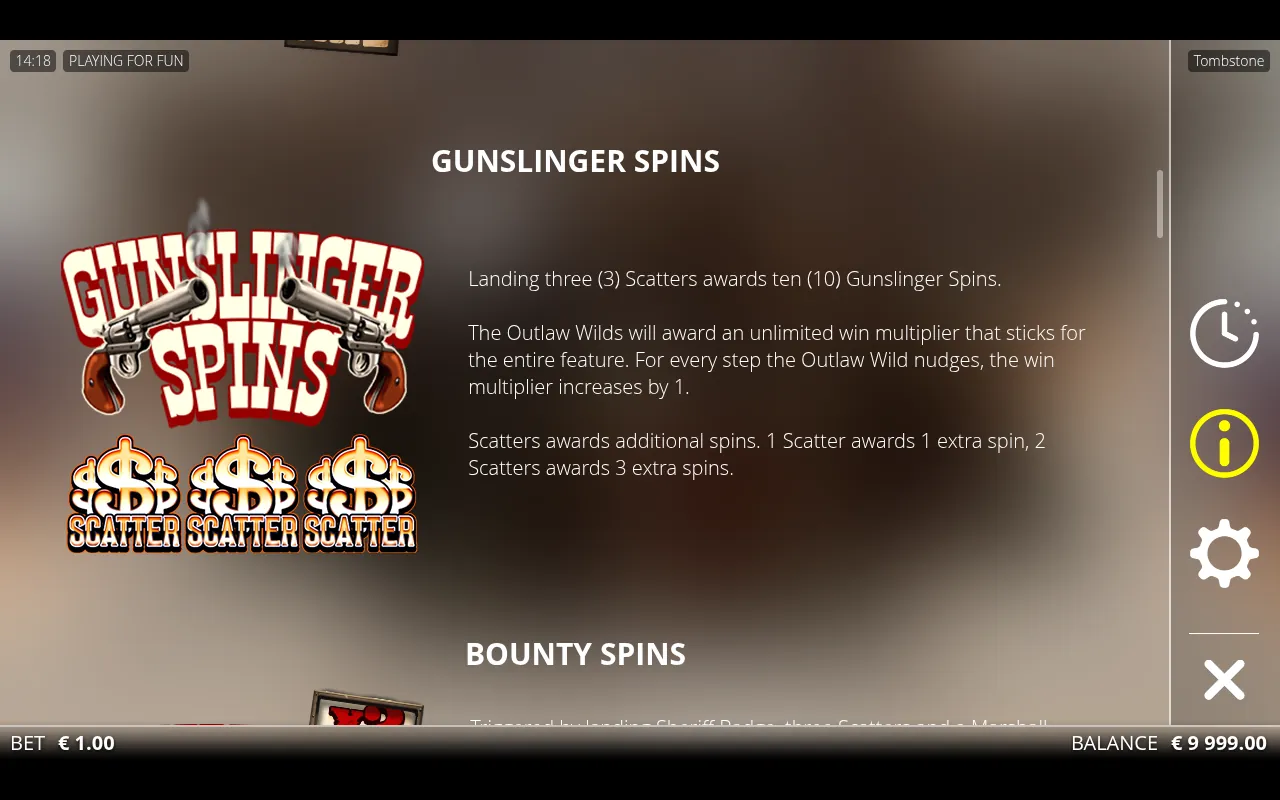
Gunslinger Spins
Three Scatters award ten Gunslinger Spins. Here the Outlaw Wilds carry an unlimited win multiplier that holds for the entire feature, and every nudge step still adds 1 to it. An extra Outlaw Wild pushes it up by 1 again.
Scatters extend the round while it runs:
- One Scatter – 1 extra spin
- Two Scatters – 3 extra spins
Unlike Justice Spins, the wilds don’t stick here – what sticks is the multiplier. A wild that nudges three steps early in the round leaves a 3x behind that never comes back down, and every wild after it adds to the same running count. That’s what separates the two badge rounds: Justice freezes the symbols, Gunslinger freezes the number.
Bounty Spins
Bounty Spins asks for the most elaborate trigger in the game: a Sheriff Badge, three Scatters and a Marshall Badge, all in one spin. That combination awards twelve spins blending the Gunslinger and Justice rules into a single round.
Outlaw Wilds stick once they’ve landed, every nudge step still adds 1 to the win multiplier, and the multiplier is unlimited and carries through the whole feature. Scatters retrigger exactly as they do in Gunslinger Spins, one for a single spin and three for a pair. Stack that on a board which keeps its wilds, and you can see where the 11,456x ceiling comes from.
Our Honest Verdict
Overall Rating: 7.1/10
Playing Tombstone mostly means waiting on a porch. The base game’s job is to keep you seated until the badges and Scatters show up, and the one reason to choose it over flashier westerns is how completely every feature feeds the same idea – one stacked wild, one rising multiplier, four different ways to make them count.
Its strength is Bounty Spins, where sticky wilds and a multiplier that never resets genuinely earn that 11,456x ceiling. Its weakness is everything between features: with a top symbol paying 6x, the quiet stretches are genuinely quiet, and Justice Spins’ three rounds often end before the idea gets going.
It’s for players who like one mechanic done properly rather than five done thinly, and for Nolimit City loyalists most of all. Anyone chasing regular decent-sized hits from the base game will find the town deserted. Everybody else should sit tight on that porch: when the badges finally line up, so does everything else.
Tombstone FAQs
-
How do you trigger Justice Spins in Tombstone?
Both badges need to land together – the Sheriff on the first reel and the Marshall on the fifth. Three Justice Spins follow, and any Outlaw Wild arriving during them stays locked to the reels until the round ends. -
How do you trigger Bounty Spins in Tombstone?
Bounty Spins need a Sheriff Badge, three Scatters and a Marshall Badge in a single spin. The round awards twelve spins combining the Gunslinger and Justice Spins rules: sticky Outlaw Wilds with an unlimited multiplier that never resets during the feature. -
How many Gunslinger Spins do three Scatters award, and can you retrigger them?
Three Scatters award ten Gunslinger Spins with an unlimited win multiplier that holds for the whole feature. During the round, one Scatter adds one extra spin and two Scatters add three extra spins. -
What does the Outlaw Wild do in Tombstone?
It’s a stacked wild covering three rows on the middle reels. It always nudges into full view, and each nudge step raises the win multiplier by 1, with an extra Outlaw Wild adding another 1 on top. -
What does the Wild not substitute for in Tombstone?
The Wild doesn’t stand in for the Scatter or either Badge. Those symbols only do their own jobs – the Scatter triggers and retriggers the free spins rounds, while the Sheriff and Marshall Badges trigger Justice Spins and Bounty Spins. -
What is the RTP of Tombstone?
The RTP is 96.18%. Wins land on 20.44% of spins, so roughly one spin in five connects. -
What is the maximum win on Tombstone?
The maximum win is 11,456x the total bet, achievable through the stacked multipliers in the feature rounds, most plausibly in Bounty Spins. -
How many win ways does Tombstone have?
Tombstone pays across 108 win ways on every spin. -
What is the bet range on Tombstone?
Bets run from 0.10 to 100 per spin, covering both small-stakes players and those who want to push the multipliers harder.