










Gustav Minebuster Slot Review
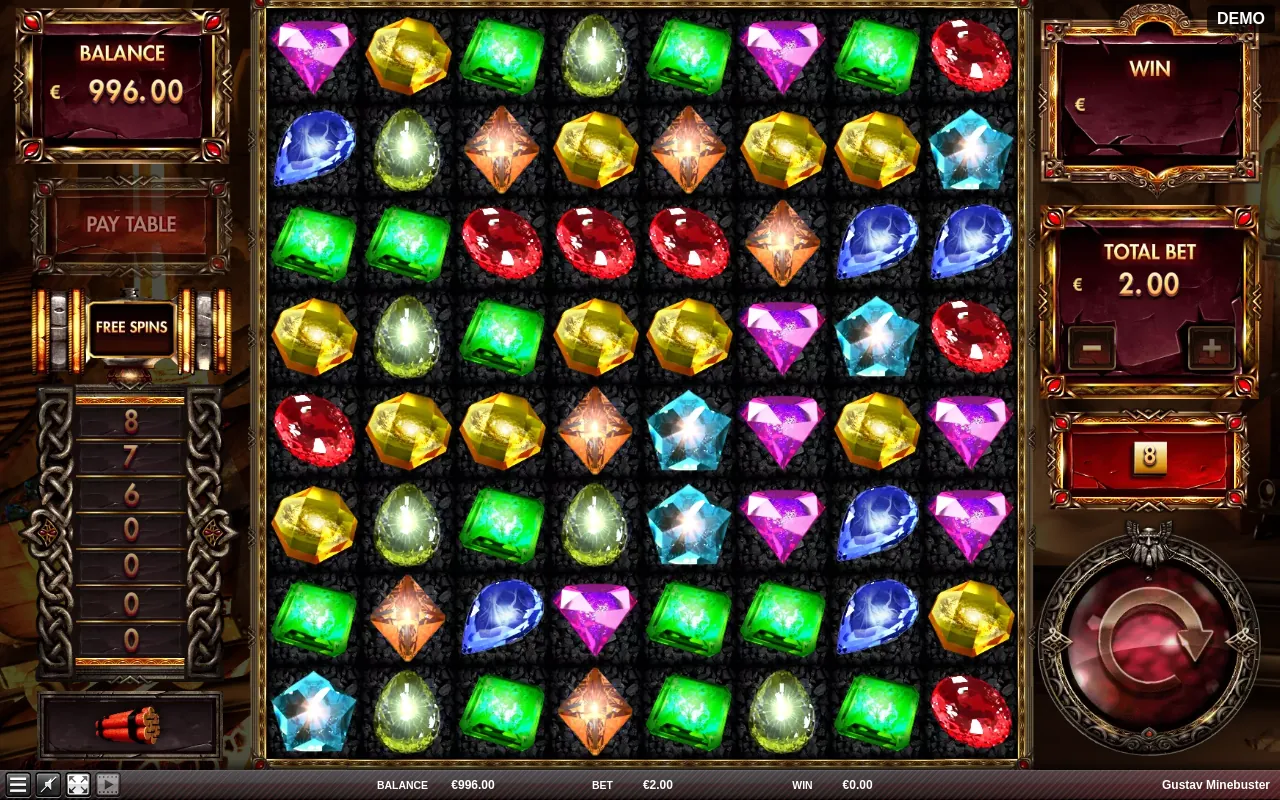
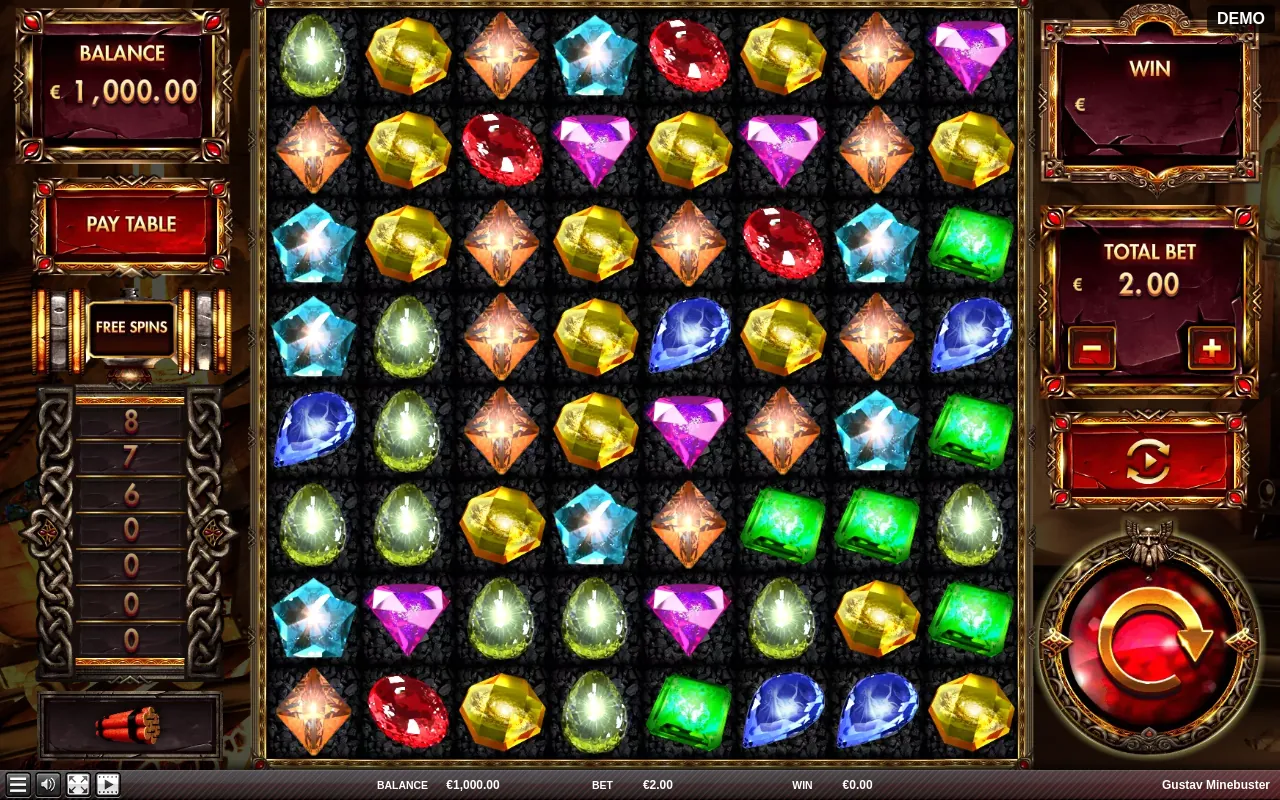
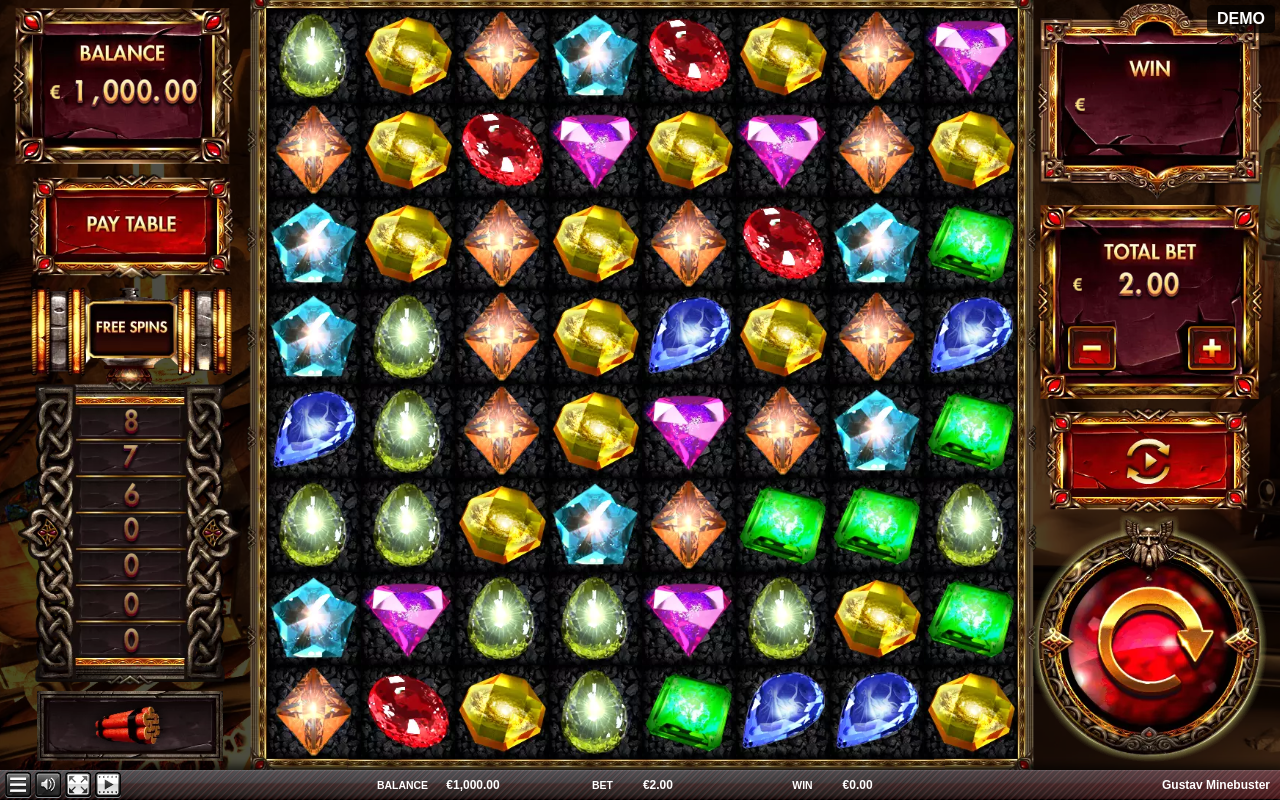
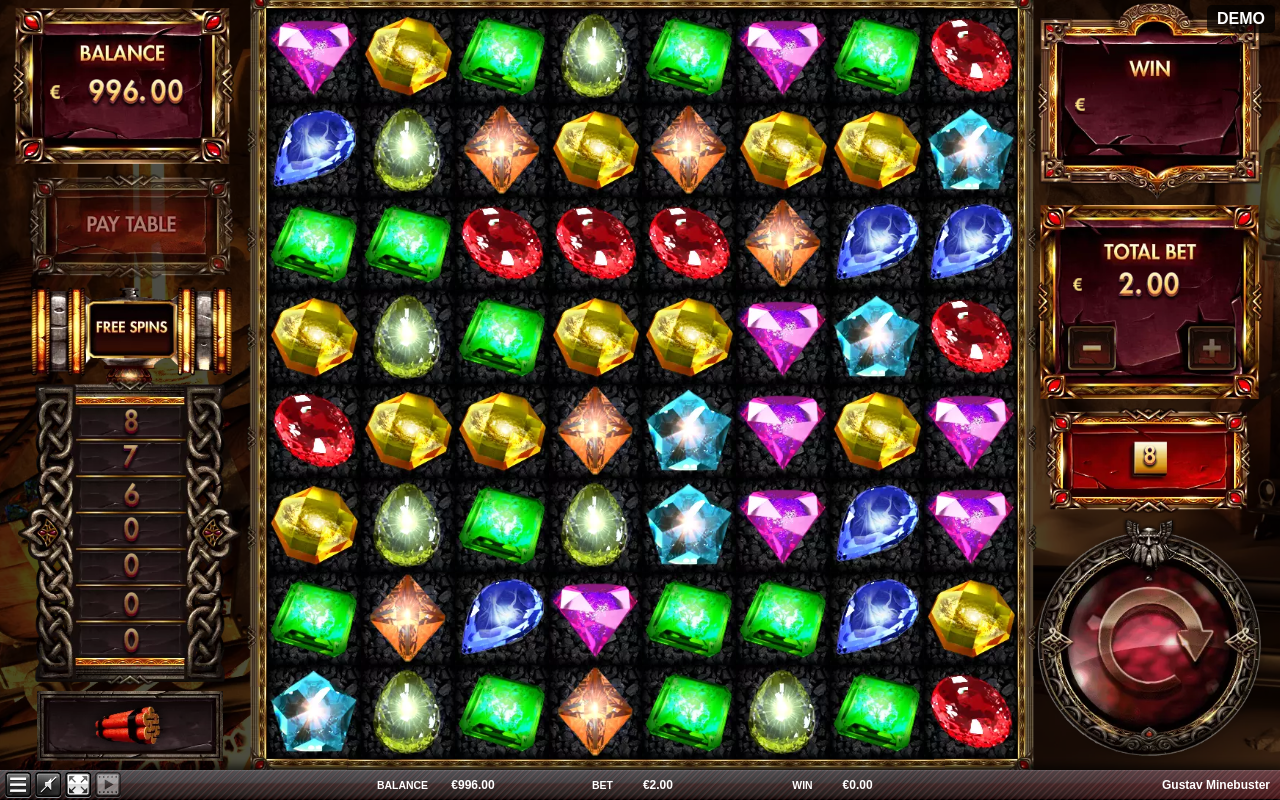
Deep in a lantern-lit mine shaft, gold frames studded with red jewels hold an 8×8 grid against a rock wall streaked dark as coal, timber props and carved knotwork columns bracing the whole workings. That’s the world of Gustav Minebuster, a cluster slot from Red Rake Gaming, a studio whose catalogue runs from Gold Rush Riches to Boomerang Jack’s Lost Mines.
Plenty of cluster slots treat every win as an ending. This one treats every win as a beginning: the grid never settles, and the moments that matter come after a cluster pays, not when it lands. Wins form from groups of five or more matching symbols touching vertically or horizontally, with no paylines. The RTP is 95.5% and volatility is high.
Cluster Wins and the Paytable
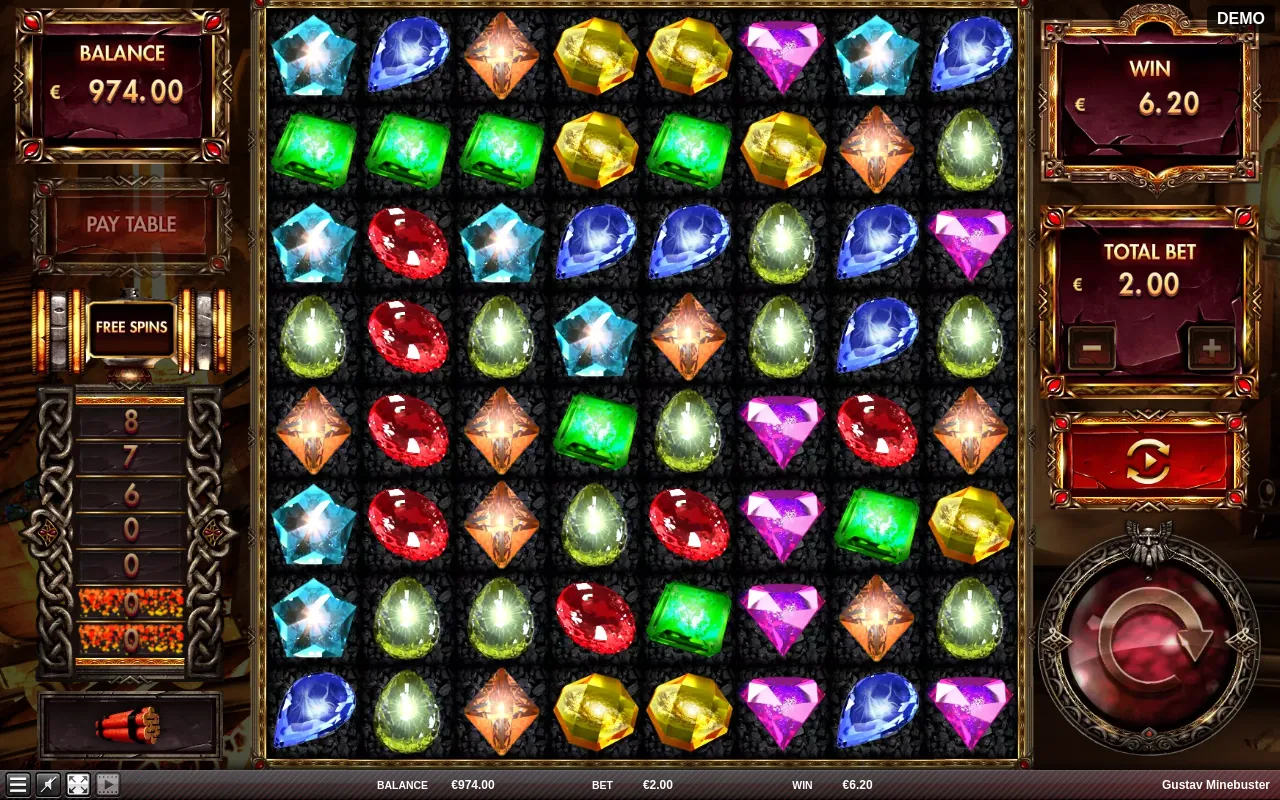
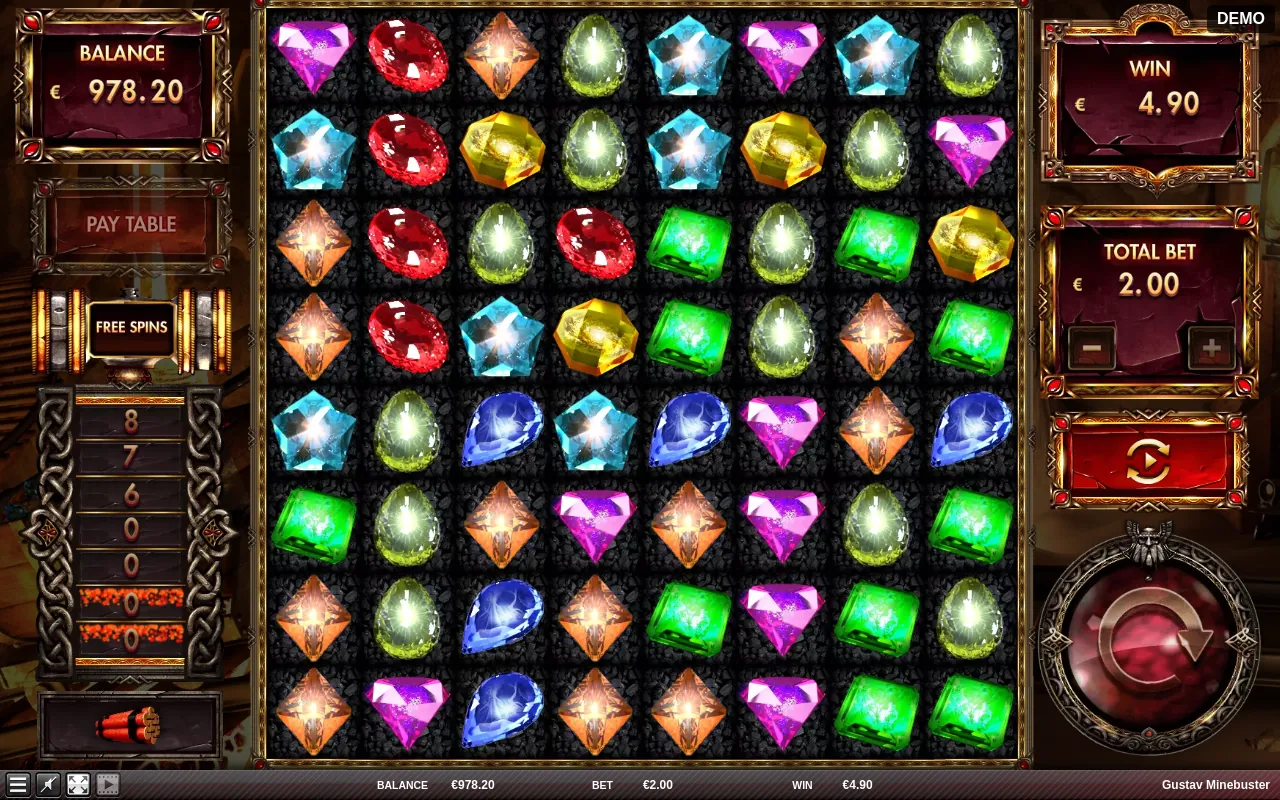
There are no paylines and no reels in the traditional sense. A win needs five or more identical symbols touching each other, vertically or horizontally, anywhere on the grid. Every symbol in a winning group then disappears, the gaps fill with new symbols, and the board is re-evaluated. Any new clusters add to the same spin’s total.
That chain of collapses is how the game builds momentum. It’s how respins accumulate, and respins are how the bonus round is reached. The symbols are all gems, and the paytable is a straight ladder from ruby down to a plain green square.
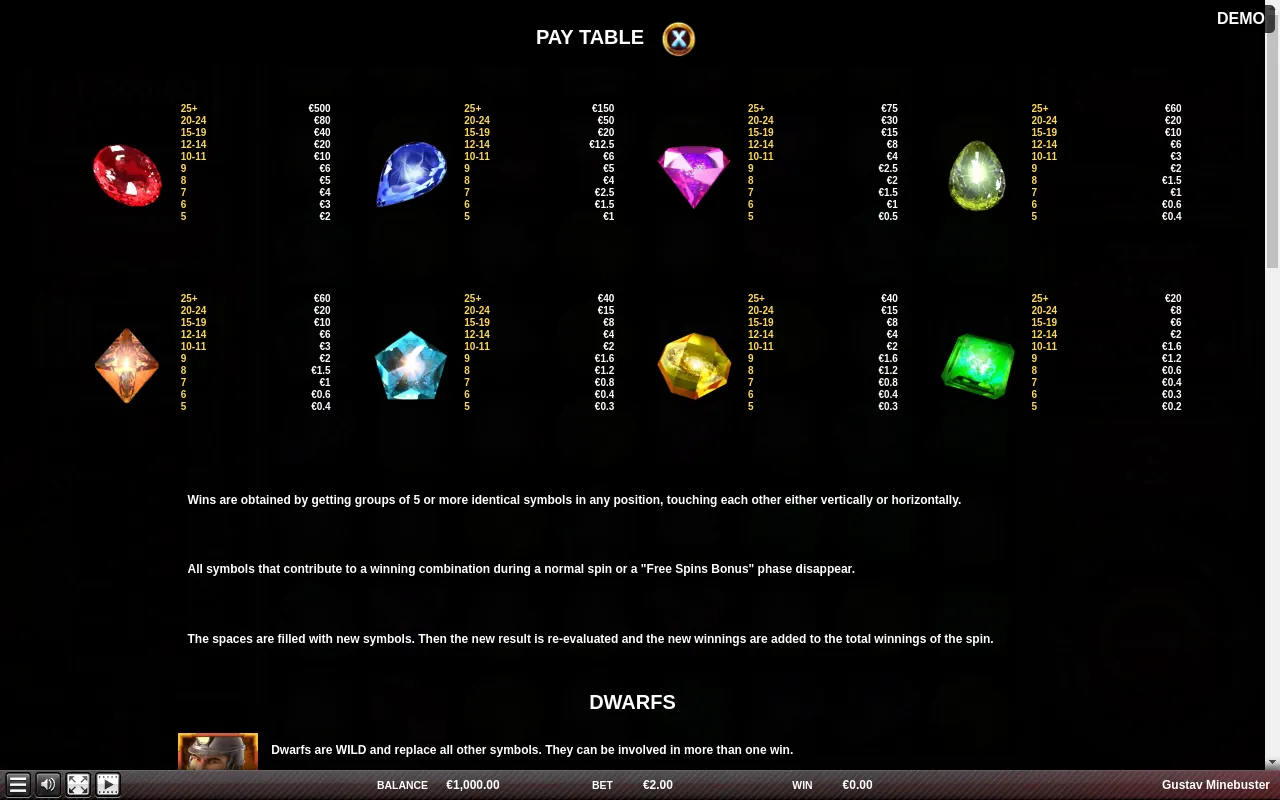
All pays are multiples of the total bet, at the bottom and top of the cluster range:
- Red gem (ruby): 1x for a cluster of 5, up to 250x for 25 or more
- Blue gem (sapphire): 0.5x for 5, up to 75x for 25+
- Purple gem (amethyst): 0.25x for 5, up to 37.5x for 25+
- Green oval gem (emerald) and orange diamond: 0.2x for 5, up to 30x for 25+
- Cyan gem and yellow gem: 0.15x for 5, up to 20x for 25+
- Green square gem: 0.1x for 5, up to 10x for 25+
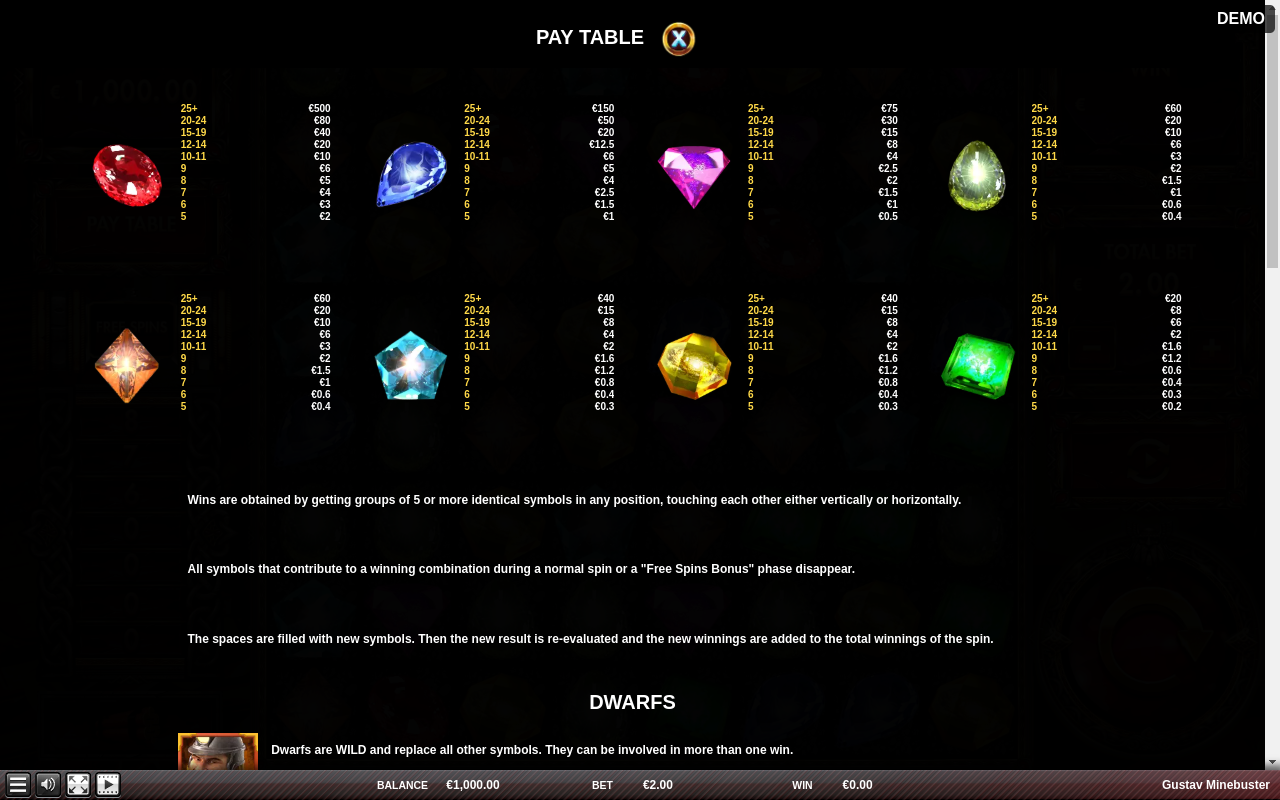
The gap between the top and bottom rungs is wide. A full ruby cluster pays 250 times the bet, while the green square tops out at 10x. Bigger clusters pay disproportionately more, so the long collapse chains matter far more than the first win that starts them.
A single spin, played out, runs like this:
- The initial grid lands and any clusters of five or more matching gems pay
- Those symbols vanish and new ones drop into the gaps
- The refreshed board is checked again, and any new clusters pay and clear
- The sequence repeats until a refill produces no win, and the total is added up
Each step in that sequence counts as a respin, and the respin count is what drives the bonus. So a spin that opens with a modest cluster can still run for several payouts if the refills keep connecting.
The Dwarf Wilds
The dwarf is the wild, and it behaves unlike a standard substitute. In full:
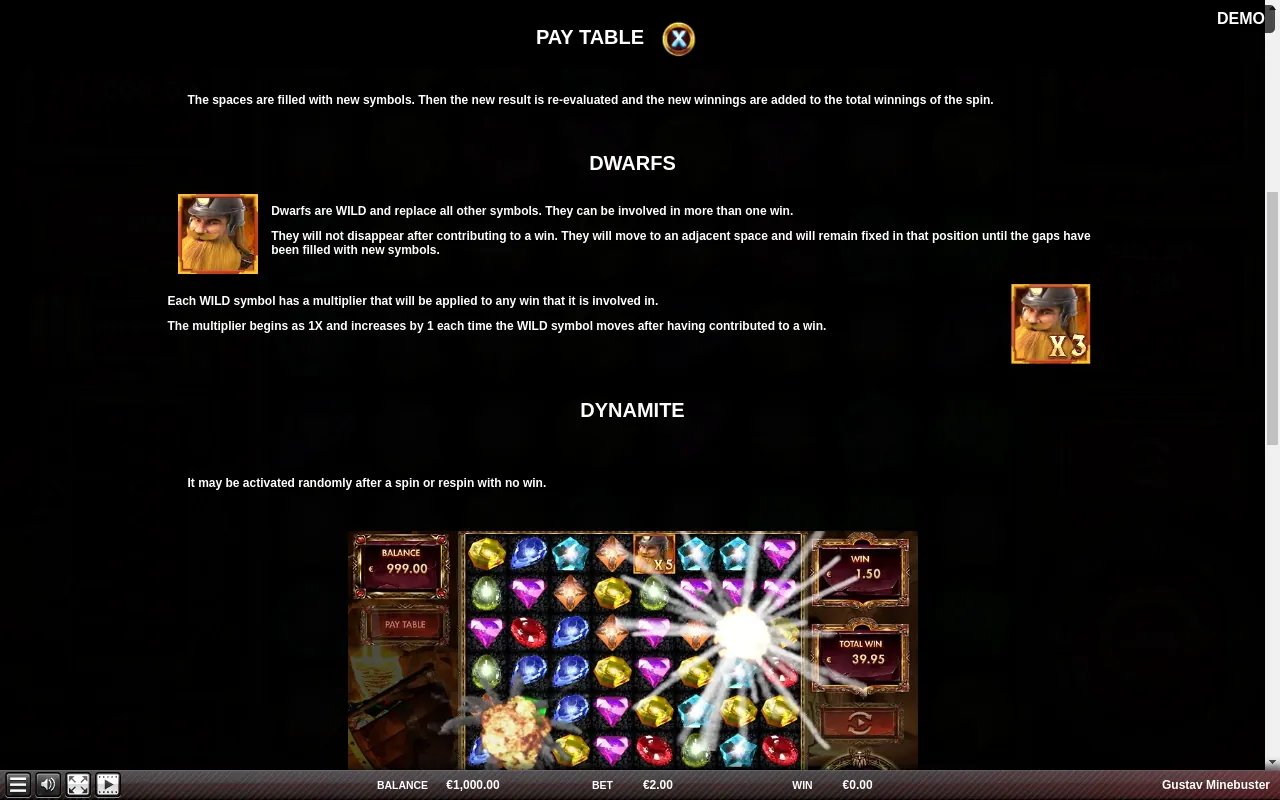
- It replaces all other symbols and can contribute to more than one win
- It doesn’t disappear after contributing to a win
- It moves to an adjacent space and stays fixed there until the gaps have filled with new symbols
- It carries its own multiplier, applied to any win it’s involved in
- That multiplier starts at 1x and increases by one every time the dwarf moves after a win
The compounding is the point. A dwarf caught in a long chain keeps climbing, and a late spin with several grown wilds on the board is where the money sits in this game. A cluster the wilds help complete can pay several times its base value once the multipliers have built.
Dynamite
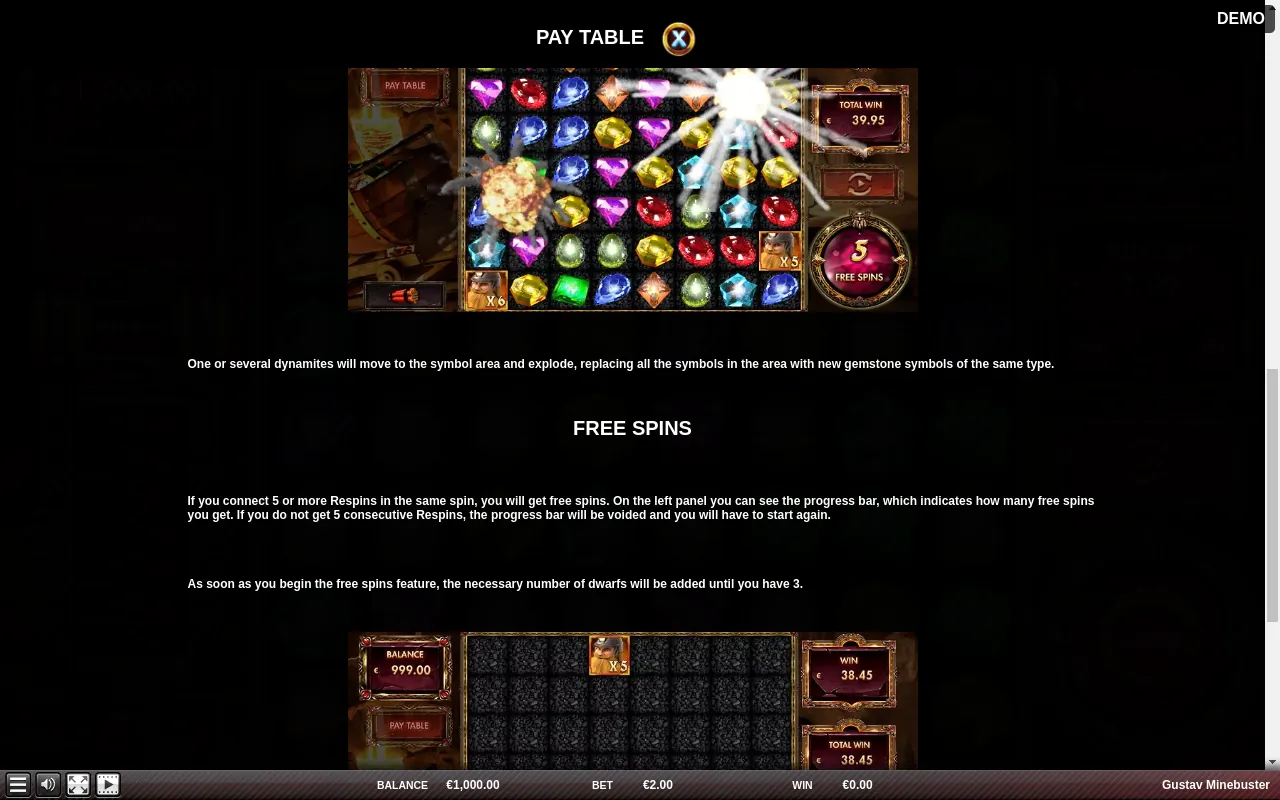
Dynamite can activate at random after any spin or respin that produces no win. One or several sticks move onto the symbol area and explode, replacing the symbols in that area with new gemstones of a single type.
It’s a mechanic for dead boards. A respin chain dies the moment no new cluster forms, and the dynamite is what can restart a stalled grid, sometimes seeding a large same-symbol area in the process. On an 8×8 board, a well-placed blast can assemble a cluster that no spin would have produced.
The replacement gems are all of one type, which is what makes the blast useful. Scattered singles become a block, and a block of five or more touching symbols is a paying cluster the instant it settles. From there the usual collapse rules take over, and a dynamite-seeded cluster can start a respin chain of its own.
Respins and Free Spins
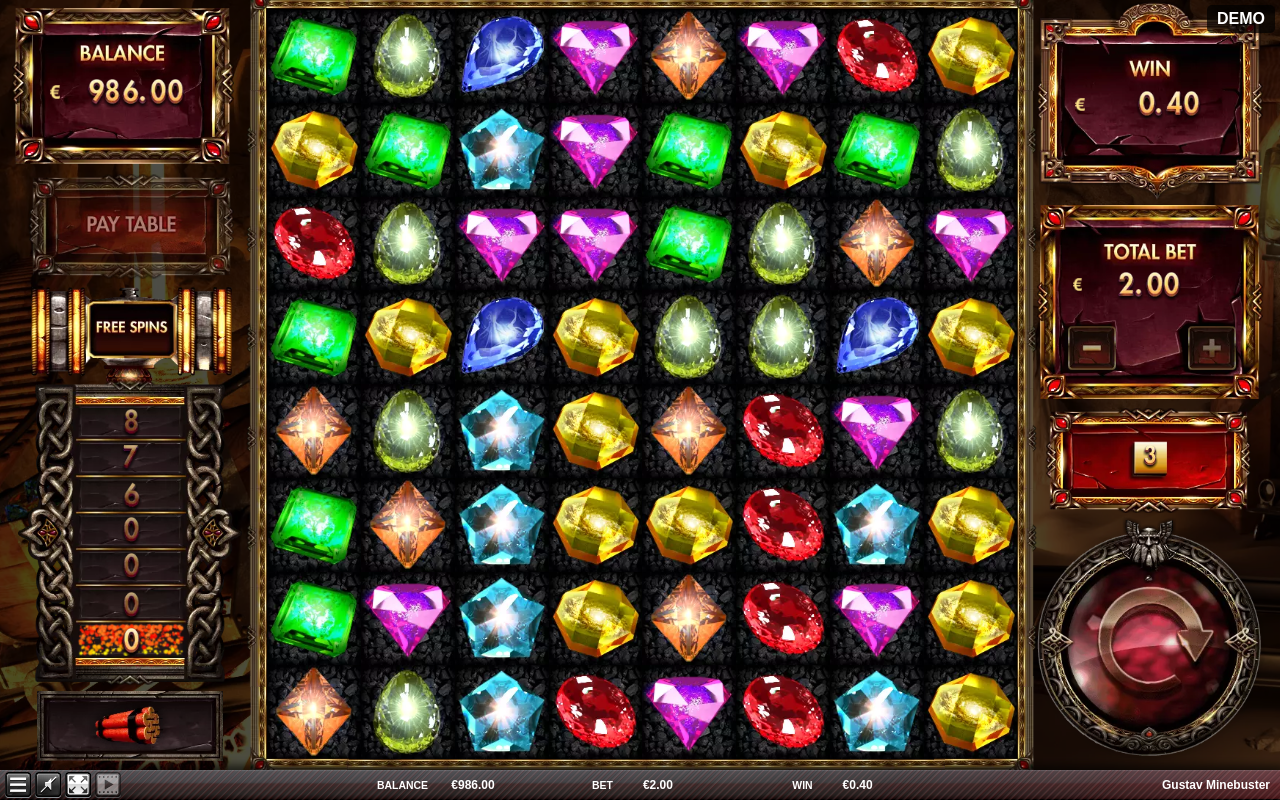
Every collapsing win is a respin, and a progress bar on the left panel counts them. Connect five or more respins in the same spin and free spins are awarded. The bar shows the number of free spins on offer as it fills, with five and six visible along its length as the count grows.
The chain has to be unbroken. If it breaks before five, the bar voids completely and the count resets from zero. Getting there needs one continuous run of collapse after collapse, and on a high volatility game that’s a tall order by design.
Once the free spins begin, the round works differently from the base game:
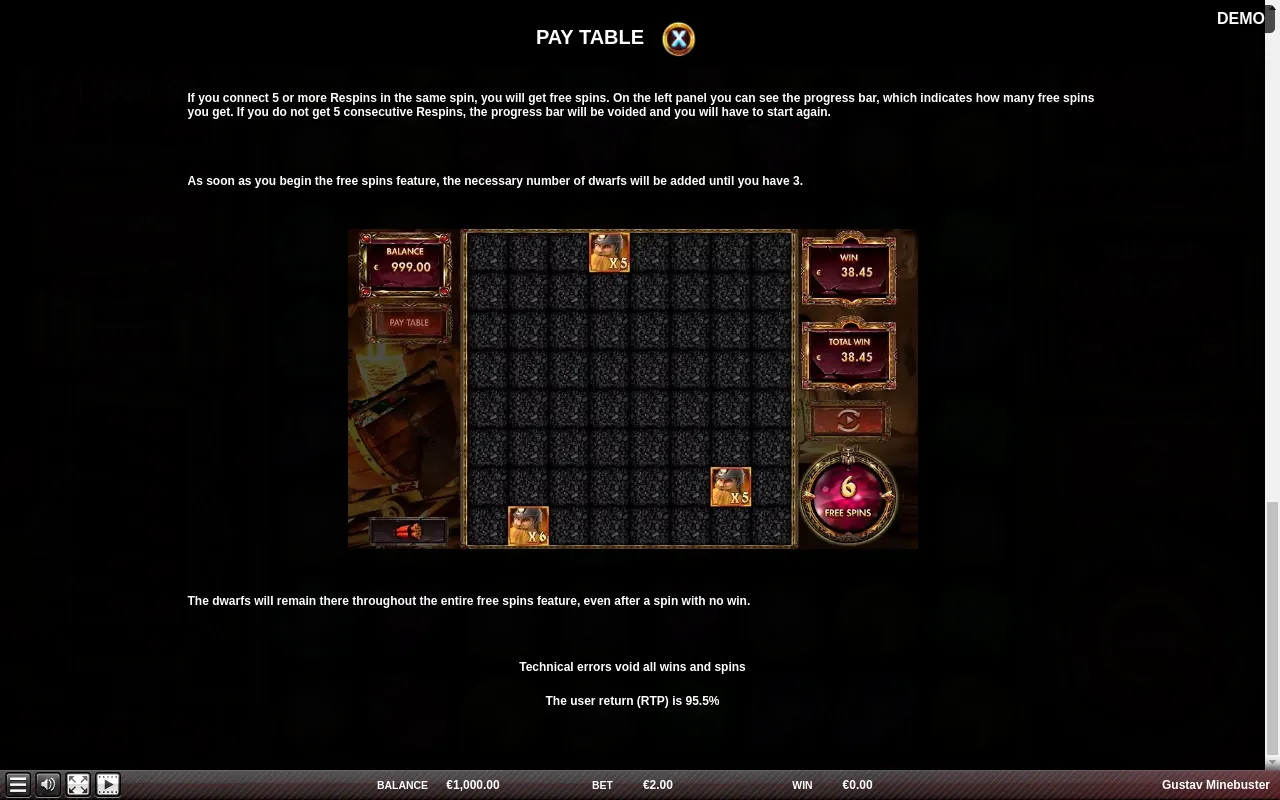
- Dwarfs are added until there are three on the grid
- They stay there for the entire feature, even after a spin with no win
- Each dwarf’s multiplier still increases by one every time it moves after a win
- The round plays out over a 6-column, 5-row reel area with the dwarfs placed on it
That persistence is the whole prize. Three wilds that can’t be lost, each stacking multipliers every time they shift, can turn a run of ordinary clusters into something the base game never manages. The round is the payoff the collapse chains exist to reach.
The smaller reel area changes the maths too. A 6×5 board holds thirty symbols against the base game’s sixty-four, so clusters are easier to complete and the dwarfs have less room to drift away from the action. Everything in the feature pushes the same three wilds into as many wins as possible.
Our Honest Verdict
Overall Rating: 7.2/10
Playing Gustav Minebuster is a long dig with the payoff at the bottom of the shaft. Most of a session is spent watching clusters collapse, hoping one more refill connects, because a chain that holds together is worth far more than the wins that start it. That tension is the reason to load it at all.
The free spins are the richest seam in the mine. Three dwarfs that stay put and keep growing through every win turn ordinary clusters into payouts the base game can’t match, and a long round there pays for a lot of digging. The digging itself is the problem, though. The progress bar voids entirely when a chain fails to reach five consecutive respins, so long stretches can go by building towards a round that never arrives, and the game prints no maximum win to tell you what the top of the shaft looks like.
The right player for this one likes a slow build and wilds that reward patience. Anyone after frequent bonuses or gentler variance will find this mine too stingy with its riches to be worth the lantern.
Gustav Minebuster FAQs
-
What is the RTP of Gustav Minebuster?
The RTP is 95.5%. -
Is Gustav Minebuster high volatility?
Yes, it’s a high volatility game, so wins can be infrequent and the respin chains needed for the bonus can take time to arrive. -
How many paylines does Gustav Minebuster have?
None at all. Wins pay as clusters instead: five or more matching symbols connected side to side, anywhere on the grid. -
What is the grid size of Gustav Minebuster?
The base game plays on an 8×8 grid. For the free spins, the action moves to a 6-column by 5-row reel area where the three dwarf wilds sit. -
When is Gustav Minebuster released?
Gustav Minebuster’s release date is 10 January 2020. -
Who makes Gustav Minebuster?
Gustav Minebuster is made by Red Rake Gaming. -
How do the dwarf wilds work?
Dwarfs substitute for every symbol and can join more than one win. Instead of vanishing, a dwarf shifts to a neighbouring space after helping complete a cluster and holds there until the board refills. Its multiplier begins at 1x and climbs by one with every move it makes after a win. -
How do you trigger the free spins in Gustav Minebuster?
You need five or more consecutive respins in the same spin, tracked on the left-hand progress bar. If a respin fails to produce a new cluster before you reach five, the bar empties and the count starts again. Once triggered, the round adds dwarfs until there are three, and they stay for the whole feature.