












PopX Slot Review
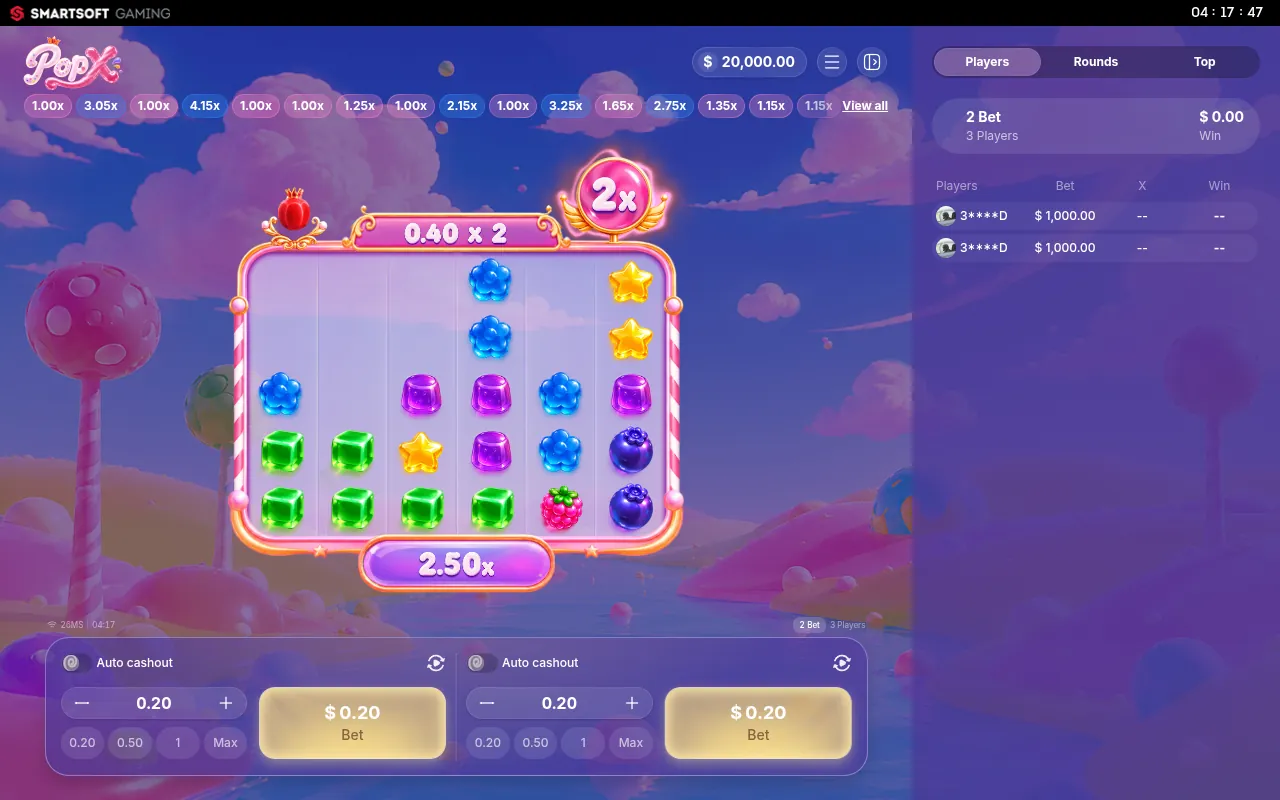
Lollipop trees lean over a pink-and-magenta countryside, candy-cane pillars frame the reels, and pale bubbles drift across a still little pool. For all that sweetness, PopX is a game where the symbols barely matter and the timing of one button matters entirely: the cash-out decision, not what lands on the board, decides whether a round pays you anything. SmartSoft Gaming has bolted a crash-style cash-out onto a cascading symbol board, and the result is one of the stranger mash-ups you’ll spin.
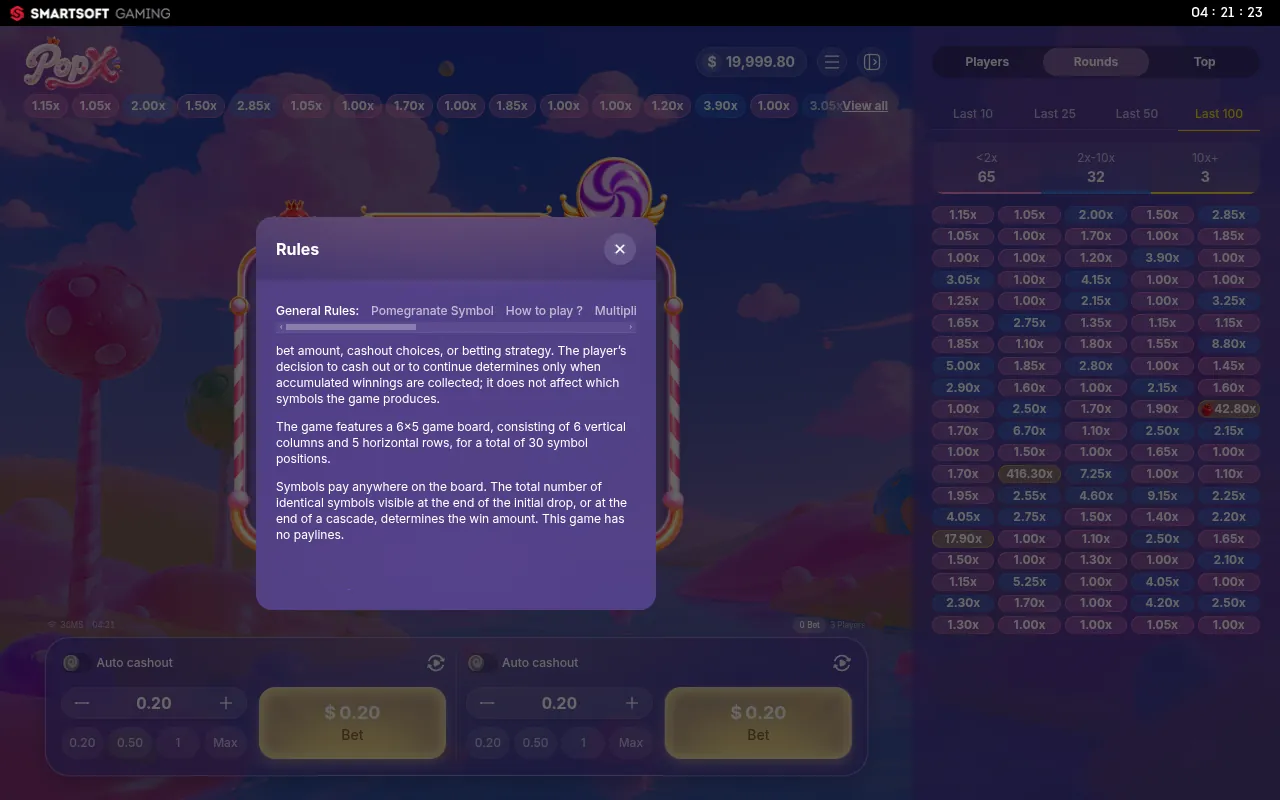
It runs on a 6×5 board with 30 symbol positions and no paylines at all: symbols pay anywhere, and the more of them you can see at the end of a drop, the more you win. The RTP is 97%, a strong figure by any standard. Fans of the studio’s other oddballs, Crash Duel X and Mine Island 2, will recognise the willingness to colour outside the lines here too.
The Board and the Symbols
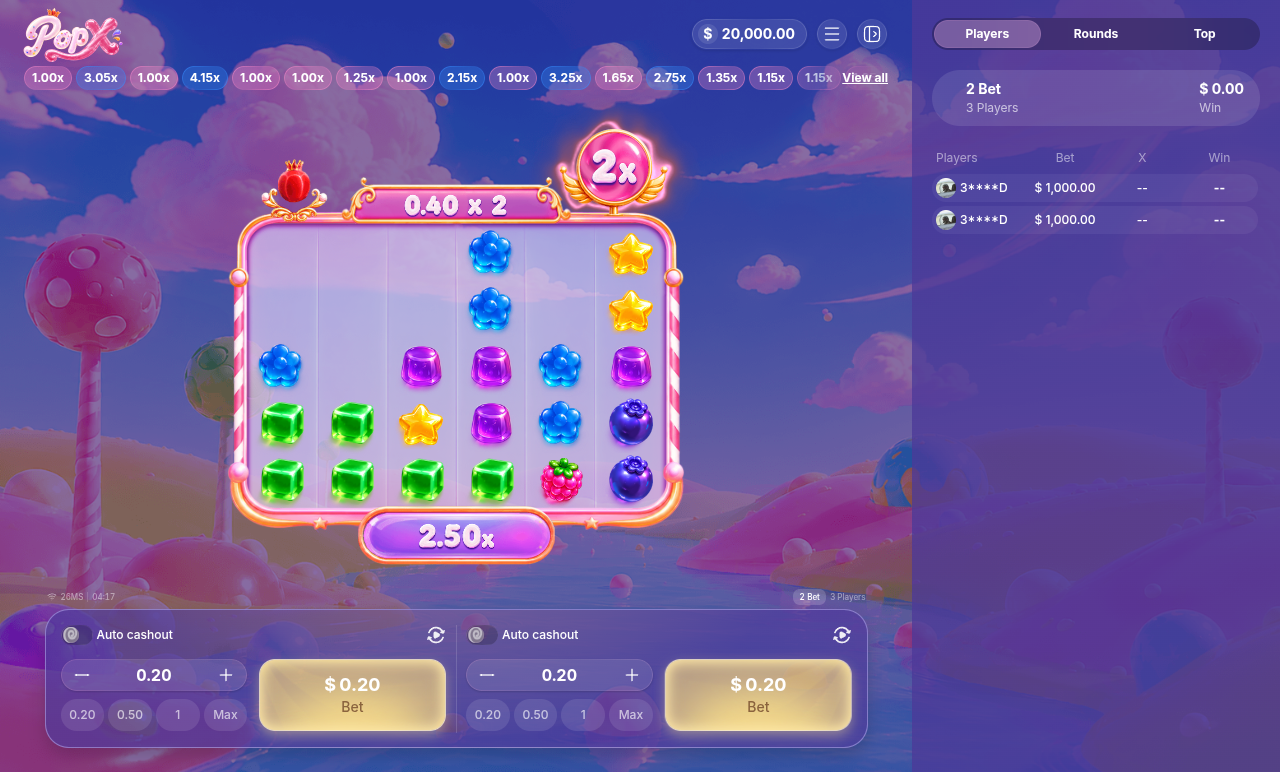
The board fills with jewels and fruit: gems, hearts, clovers, oranges and stars in sugary colours. Wins are counted at the end of the initial drop and again at the end of every cascade, with identical symbols paying from anywhere on the board. There’s no wild and no scatter; the only special symbol is the Pomegranate, which we’ll come to.
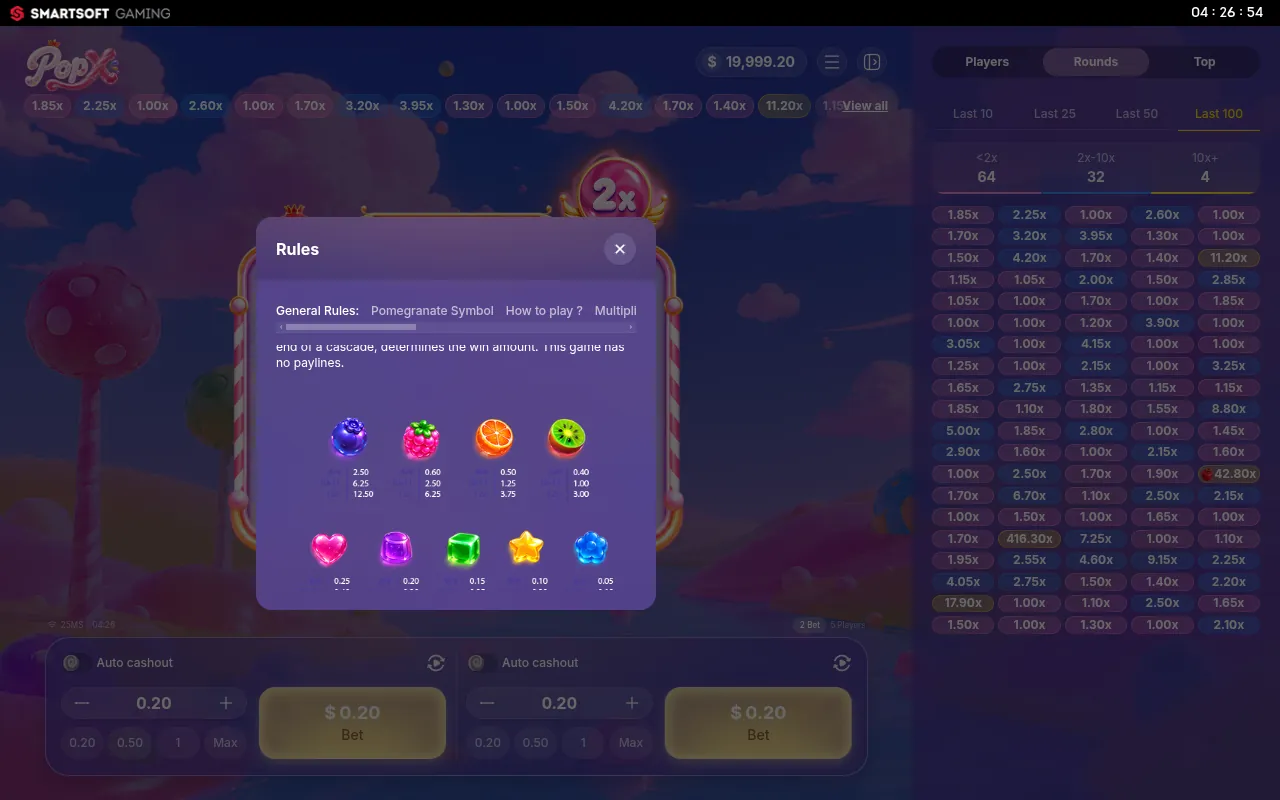
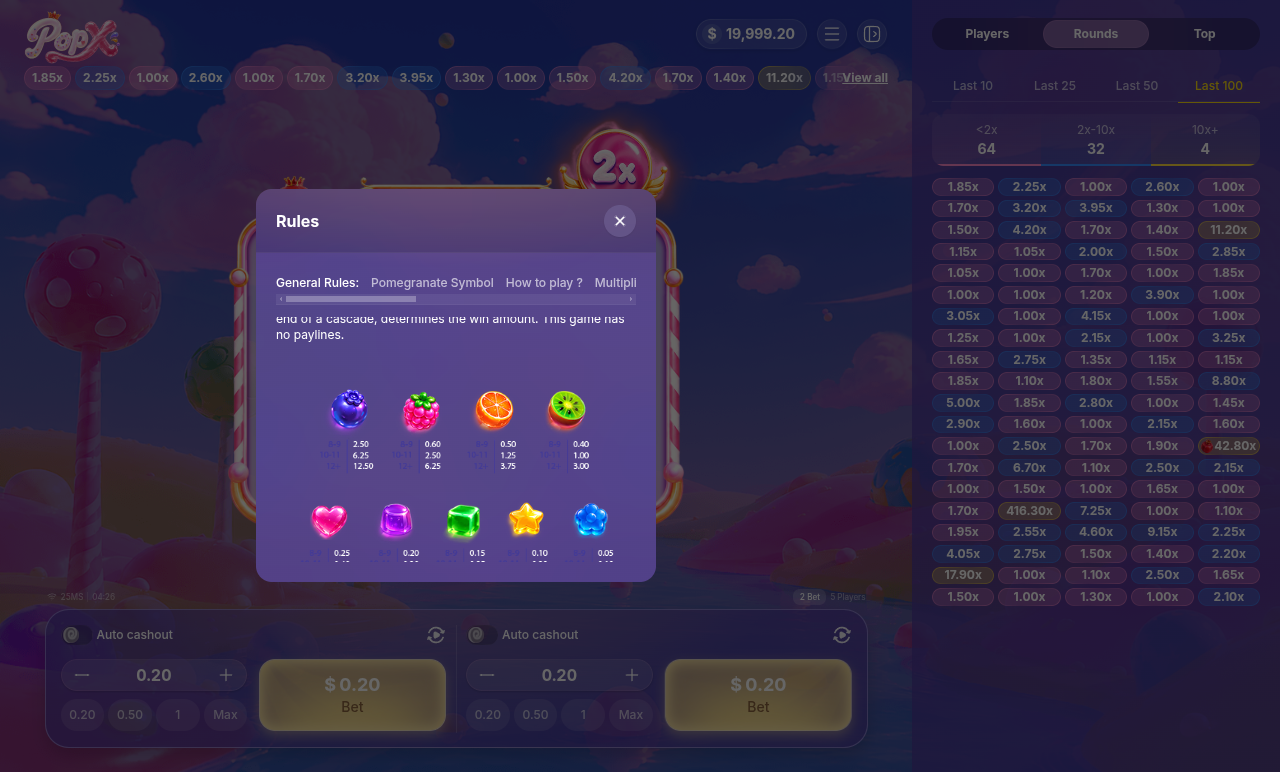
Pays are multiples of the total bet, and the ladder is steep at the top:
- Blue gem – 12.5x for three, 21.25x for four, 60x for five
- Pink heart – 46.25x for three
- Green clover – 2x for three, 15x for four
- Pink flower – 3x for three, 12.5x for four
- Orange – 2.5x for three, 6.25x for four
- Purple gem – 1x for three
- Green cube – 0.75x for three
- Star – 0.5x for three
- Blue diamond – 0.25x for three
Those top two symbols are doing something unusual. Three blue gems pay more than four of almost anything else, and five of them pay 60x in a single drop. Most of the ladder sits at small change, so the blue gem and the heart carry the payout structure on their own.
The gap between them is worth a closer look. The heart is a spike rather than a rung: it pays 46.25x for three and nothing for any other count, so landing four or five hearts earns exactly the same as landing three. The blue gem is the only symbol with a full three-step ladder, which makes it the one worth watching for as the cascades stack up.
Below the middle of the ladder, the orange and the clover offer the only two-step climbs, and everything beneath them pays a single flat rate for three. The star and the blue diamond are effectively filler, at 0.5x and 0.25x for a triple. Wins from these symbols will barely shift the running multiplier, which is what pushes the cash-out decision onto the bigger symbols landing in numbers.
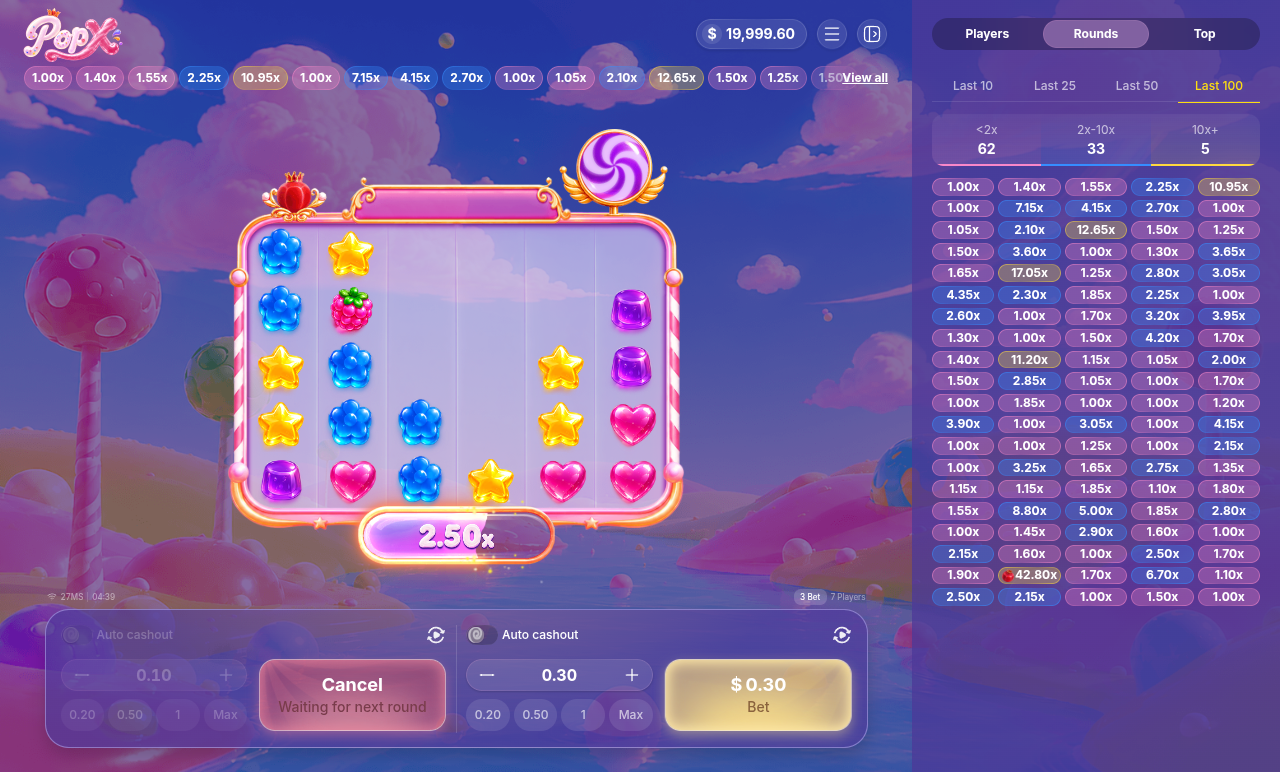
Below the board, a running multiplier tracks the current cascade value as it climbs. A separate multiplier badge is displayed above the reels during play, so both figures sit in view at once while you’re weighing up whether to stay in.
Cascades and the Cash-Out Decision
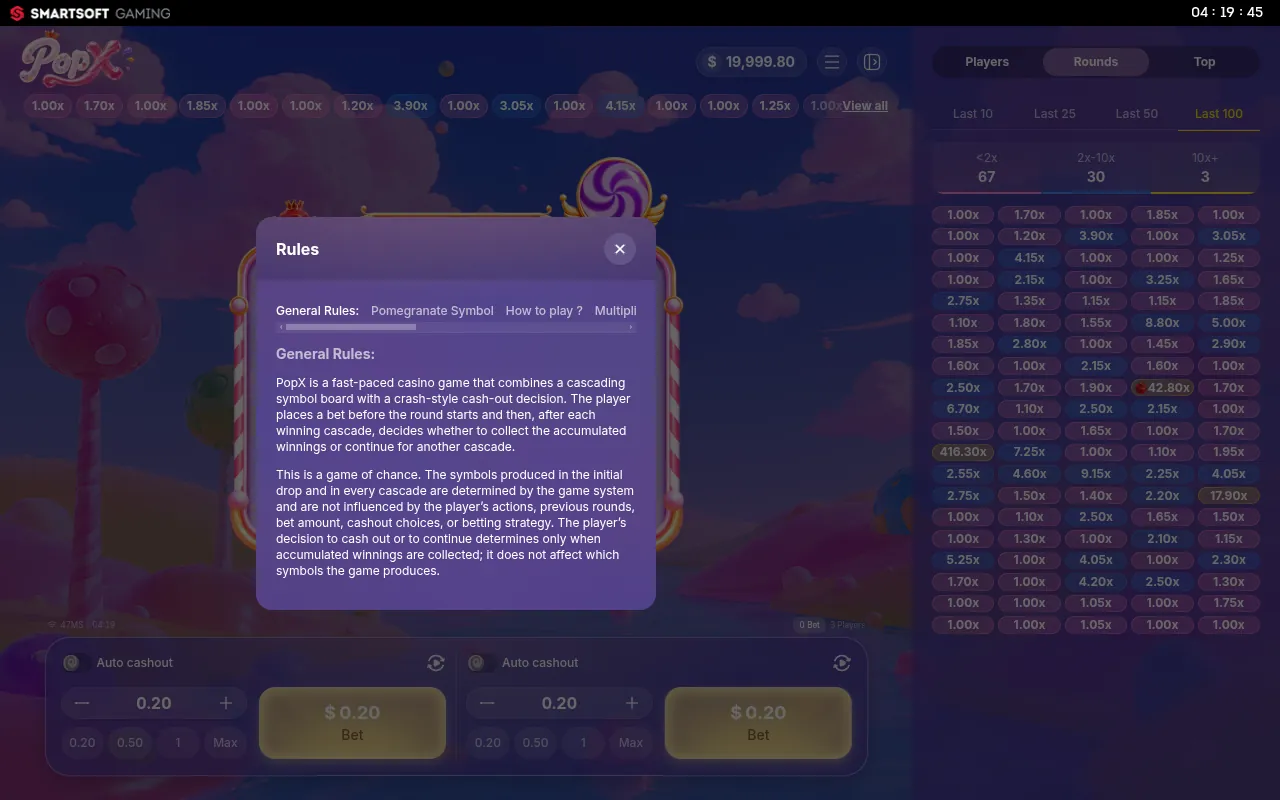
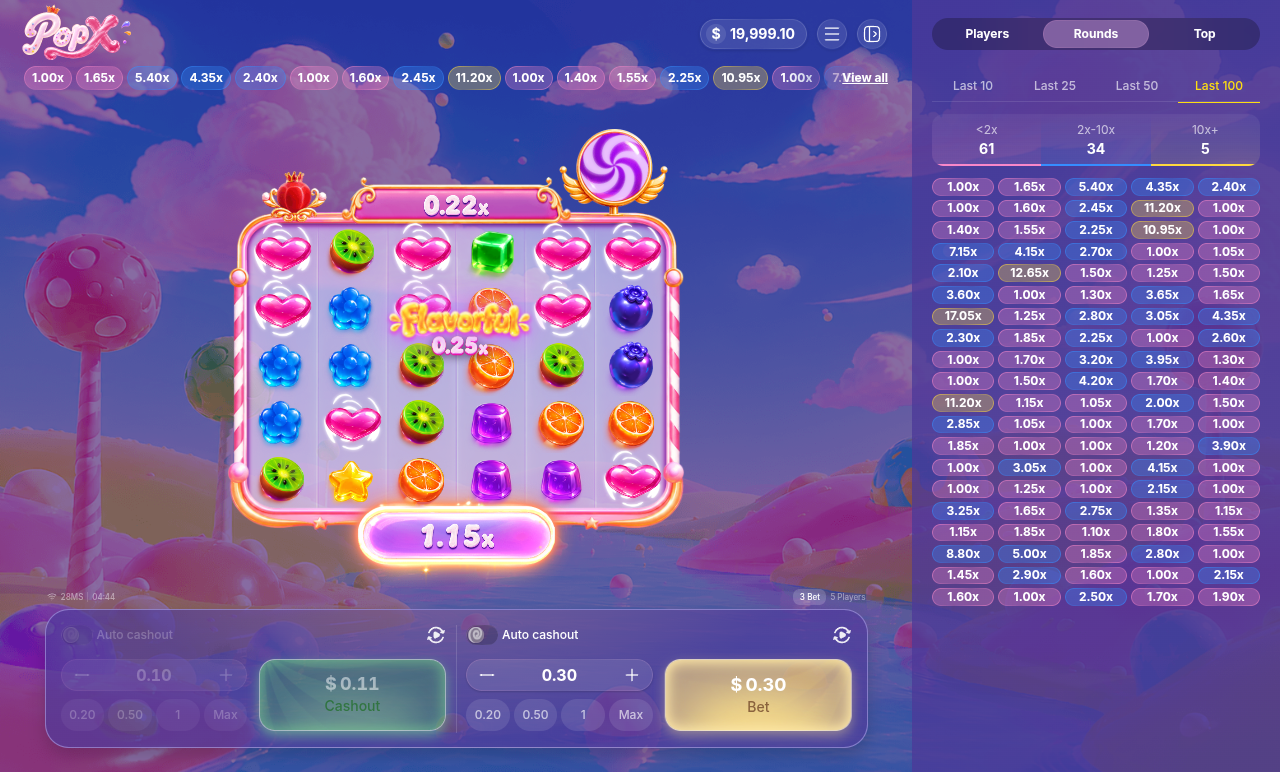
A round starts with a bet, placed before the drop. Once symbols land, every winning cascade adds to an accumulating total, and the whole design of the game hangs on one repeated question: take the money, or let it ride for another cascade.
Collecting pays out everything accumulated so far and ends your involvement in the round. Continuing keeps the bet active, with the running multiplier climbing as wins chain. If a cascade fails to produce a winning combination, the round would normally end there, and anyone still holding an active bet loses it.
It’s worth being clear about what the decision does and doesn’t control. The symbols in the initial drop and in every cascade are determined by the game system alone – not by previous rounds, bet size, cash-out choices or any strategy. Your only decision is when to collect; it never affects which symbols come next.
A cash-out button appears once a bet is active, showing the amount currently on offer, and a separate Bet button sits alongside it for a second bet slot.
No ceiling is stated for what a round can pay. The payout grows only as long as the winning cascades keep coming, and whether a round pays anything at all comes down to how long a chain holds together before a cascade comes up empty.
The Pomegranate Symbol
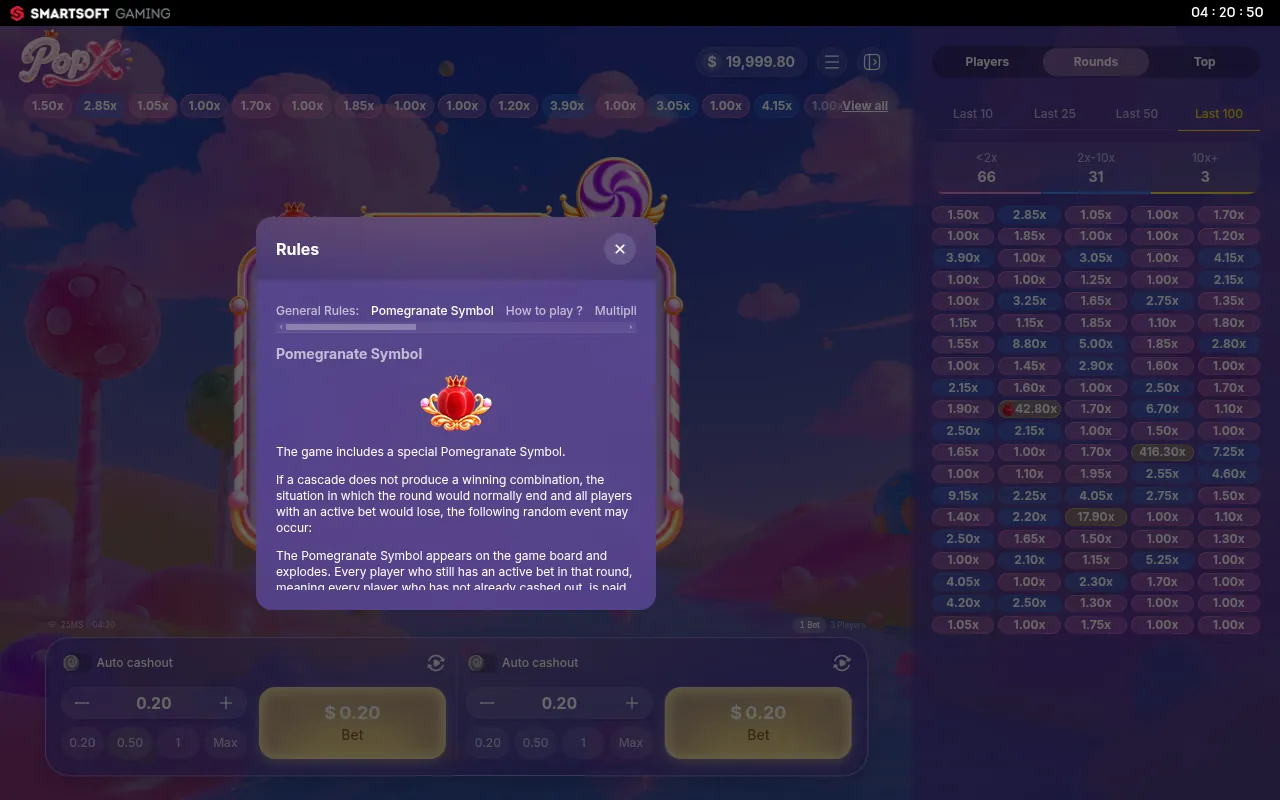
When a cascade fails to produce a win – the point where the round would normally end with active bets lost – the Pomegranate Symbol may appear on the board and explode. When it does, everyone who still has an active bet is paid out at the multiplier accumulated up to and including the previous cascade, and the round ends.
In other words, it’s a rescue. The one moment you’d expect to lose everything is the moment the pomegranate can hand you the multiplier you’d built before the losing cascade. Anyone who had already cashed out gets nothing extra; the payout goes only to bets still riding.
It’s worth spelling out the timing, because it’s easy to misread. The payout covers the multiplier reached on the previous cascade, not the one the losing cascade would have added. A player who watched the multiplier climb to 4x and then saw a dead drop gets 4x if the pomegranate fires; there’s no partial credit for the cascade that failed.
The pomegranate is a random event, and a tightly fenced one:
- It’s not guaranteed to occur, and doesn’t trigger on every losing cascade
- It can’t be influenced or predicted by anything you do
- It’s awarded at most once per round
- It can’t occur after the round has already ended
- It can’t occur if the initial drop itself doesn’t produce a win
That last rule matters more than it looks. If the very first drop is a dud, there’s no accumulated multiplier to rescue, so the round simply ends. The pomegranate only has meaning once a chain has been built and a losing cascade threatens it.
Our Honest Verdict
Overall Rating: 7.7/10
Playing PopX is a string of small decisions dressed in sugar. A round lasts exactly as long as a chain of cascades, and the only thing you control is when to bank it – that rhythm of drop, climb, decide is the whole reason to choose it over a prettier board with nothing to do.
Its best idea is the pomegranate, paying the full multiplier you’d built on a dead drop and asking nothing for it. The weakness is the ladder underneath: two symbols pay properly and seven barely register, so most chains crawl until a blue gem shows up.
It’s for players who’d rather make a choice every few seconds than watch free spins roll past. Anyone after a big feature set will find the candyland hollow; anyone who enjoys deciding under pressure will find the lollipops earn their keep.
PopX FAQs
-
What is the RTP of PopX?
The RTP of PopX is 97%, which is well above the industry average. -
How many paylines does PopX have?
PopX has no paylines at all. Symbols pay anywhere on the board, and the number of identical symbols visible at the end of the initial drop or at the end of a cascade determines the win amount. -
What is the grid size of PopX?
PopX uses a 6×5 board: six vertical columns and five horizontal rows, for a total of 30 symbol positions. -
When is PopX released?
PopX’s release date is 2 November 2026. -
Who makes PopX?
PopX is made by SmartSoft Gaming. -
How does the Pomegranate Symbol work?
When a cascade fails to produce a win, the round is normally over and active bets are lost. At that moment the Pomegranate Symbol can randomly appear and explode, paying every bet still active at the multiplier reached on the previous cascade. It happens at most once per round and can’t be predicted. -
Can my cash-out decisions affect which symbols appear?
No. Every drop of symbols is generated by the game system, with no regard for what’s come before or how you’re betting. Cashing out decides only when accumulated winnings are collected, never what lands on the board. -
What happens if the first drop doesn’t win?
If the initial drop produces no winning combination, the round ends and active bets are lost. The Pomegranate Symbol can’t occur in this situation, as there’s no accumulated multiplier to pay out.