












Striker Goes Wild Slot Review
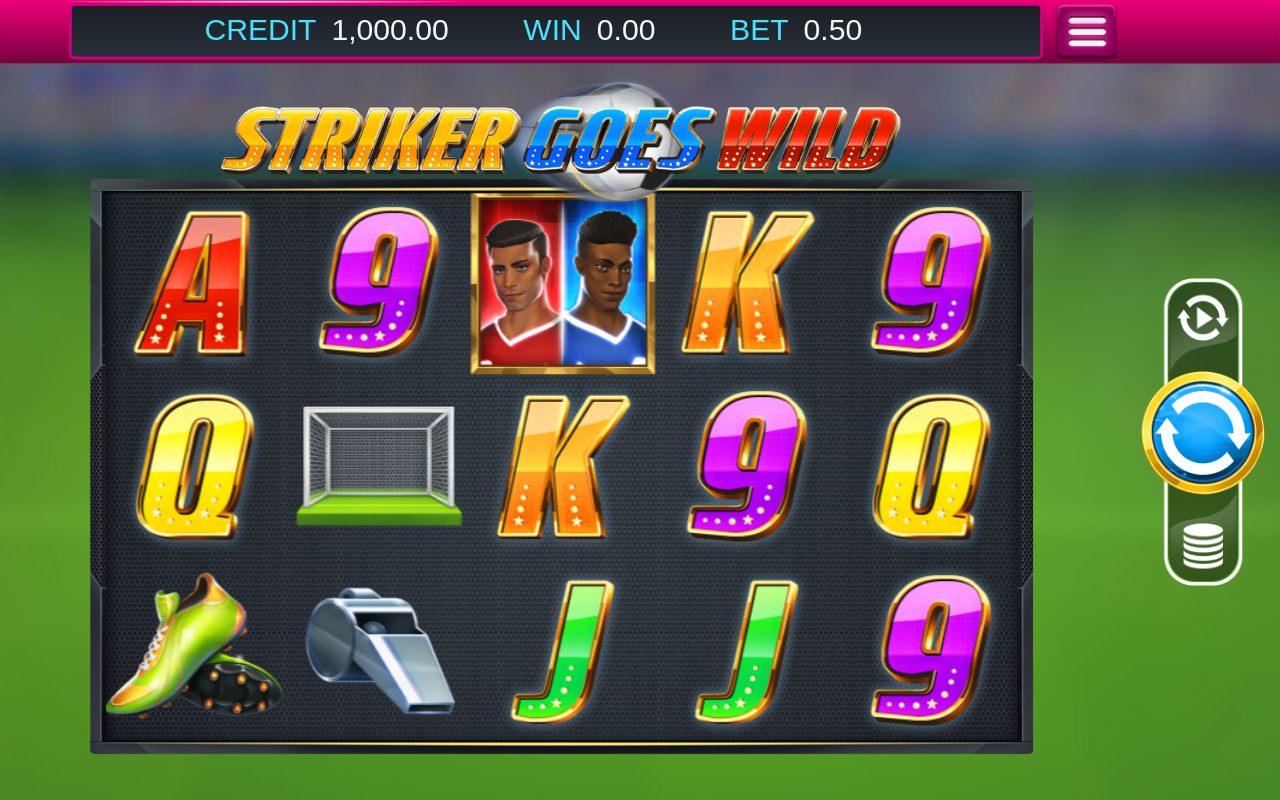
A floodlit pitch, turf fading to dark green at the edges, a stand of blurred fans behind it, and a real-looking ball tucked behind the title lettering so the logo sits on top of it. Striker Goes Wild commits to that world – and then withholds its star symbol. There is no wild anywhere in the base game. The Ball only exists inside the feature, and when it finally shows up, it arrives a dozen-at-a-time across whatever Goal pattern lands.
That’s a bolder structure than it looks, because the whole game rests on one trigger rather than a stack of rounds. This is an Eyecon build, part of the same catalogue as Fluffy Favourites and Temple of Iris. It runs on a 5×3 grid with 25 fixed paylines, at high volatility with an RTP of 96.502%. Here’s how the pieces fit together.
The Pitch: Grid, Paylines and Symbols
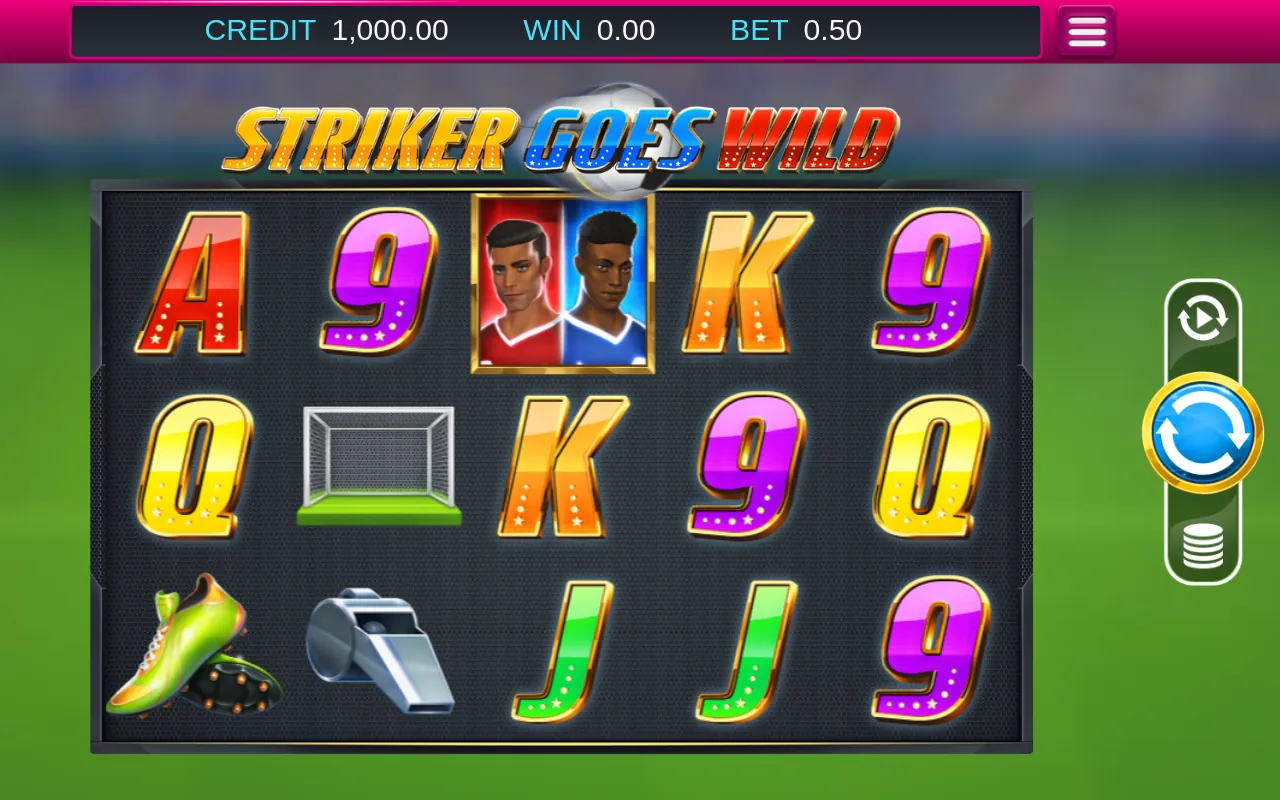
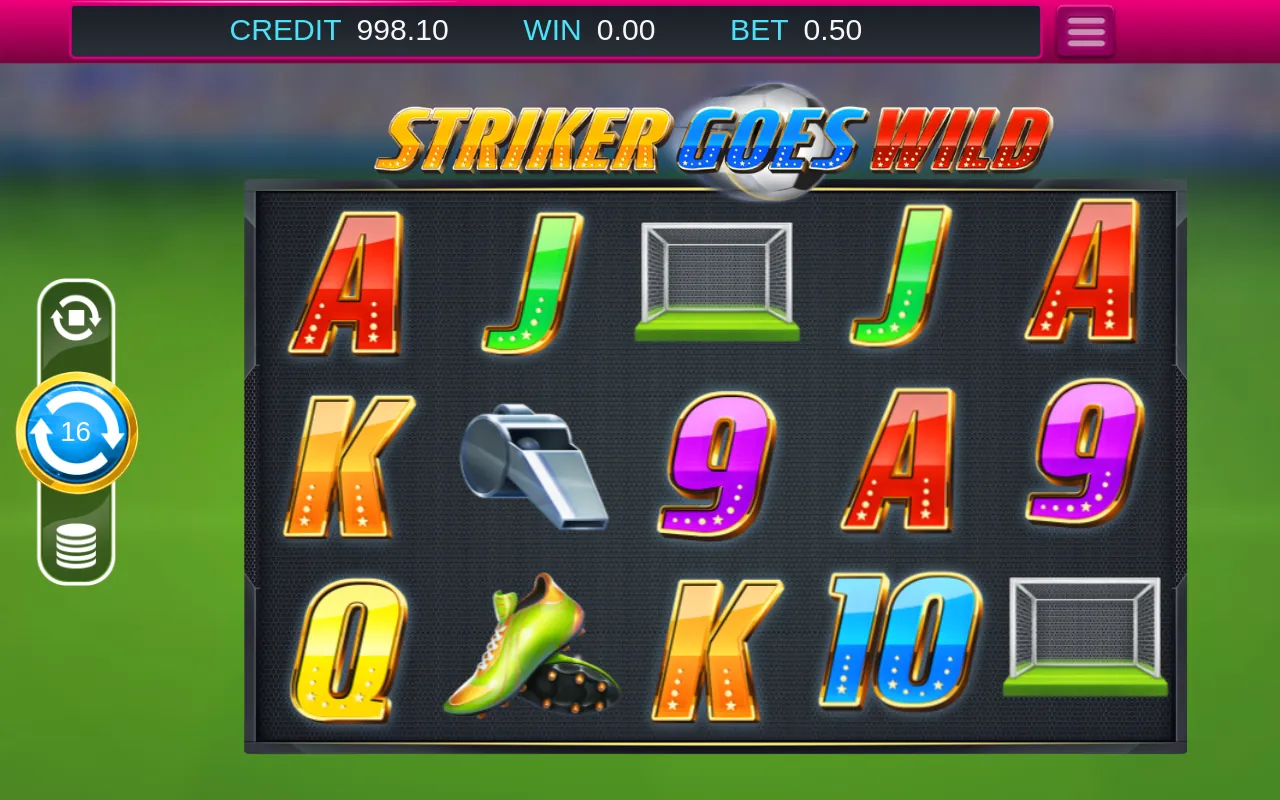
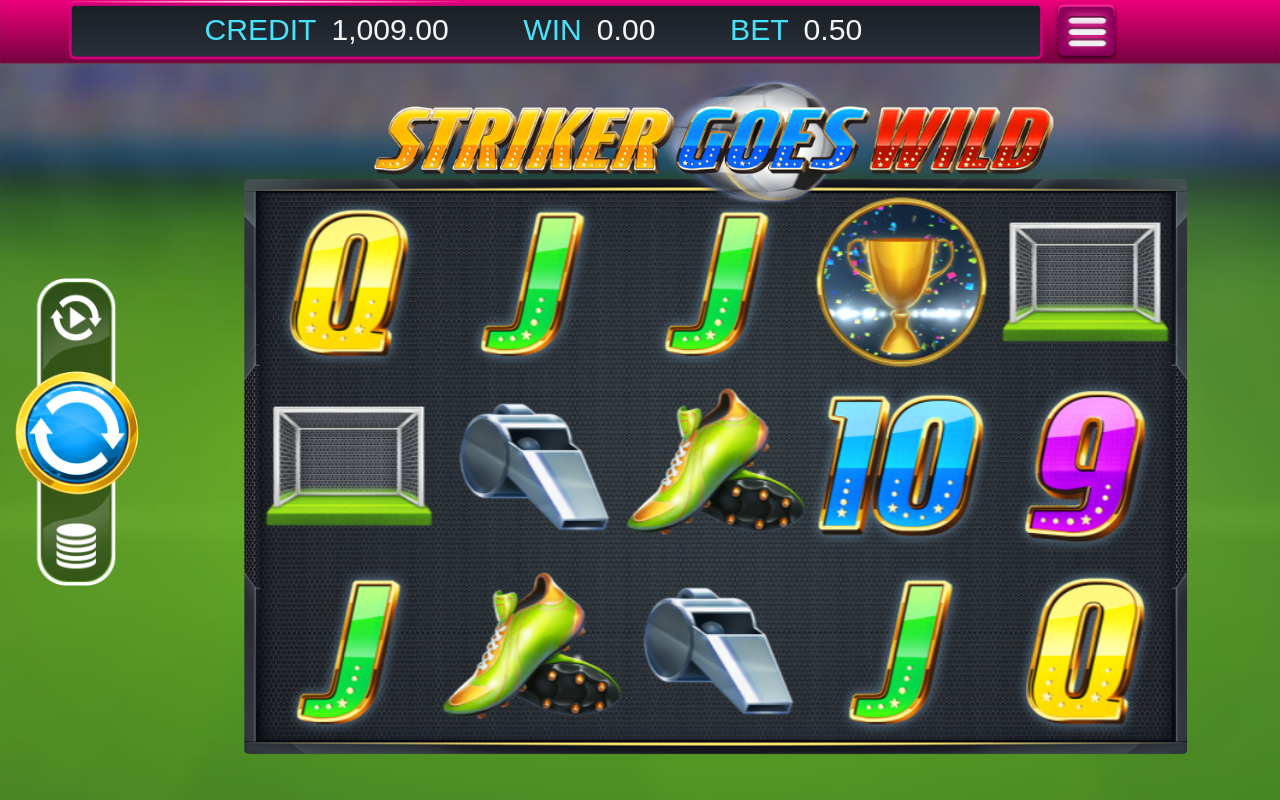
The reels sit inside a dark, perforated metal panel that reads as a stadium fixture rather than a painted backdrop, with bright green turf filling the frame around it and fading towards the edges. It’s a polished, cartoonish look that suits the theme without shouting about it.
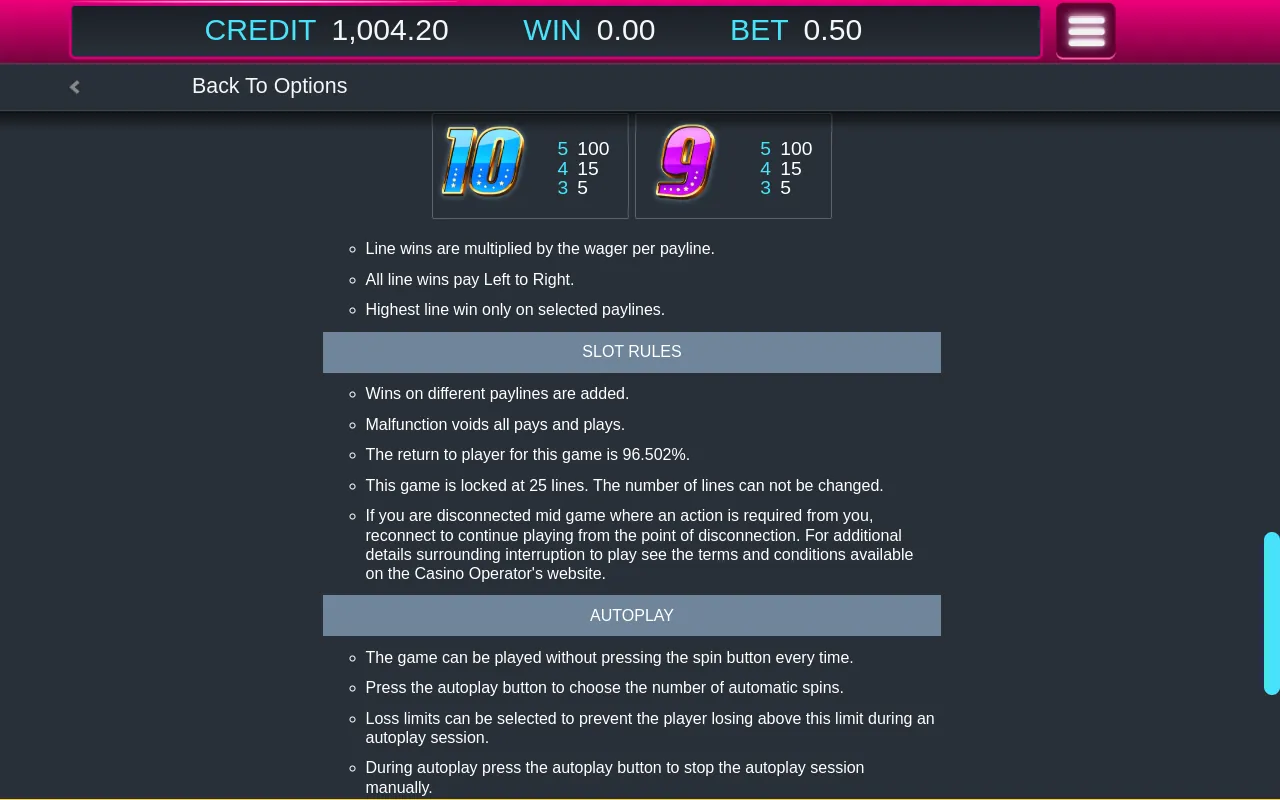
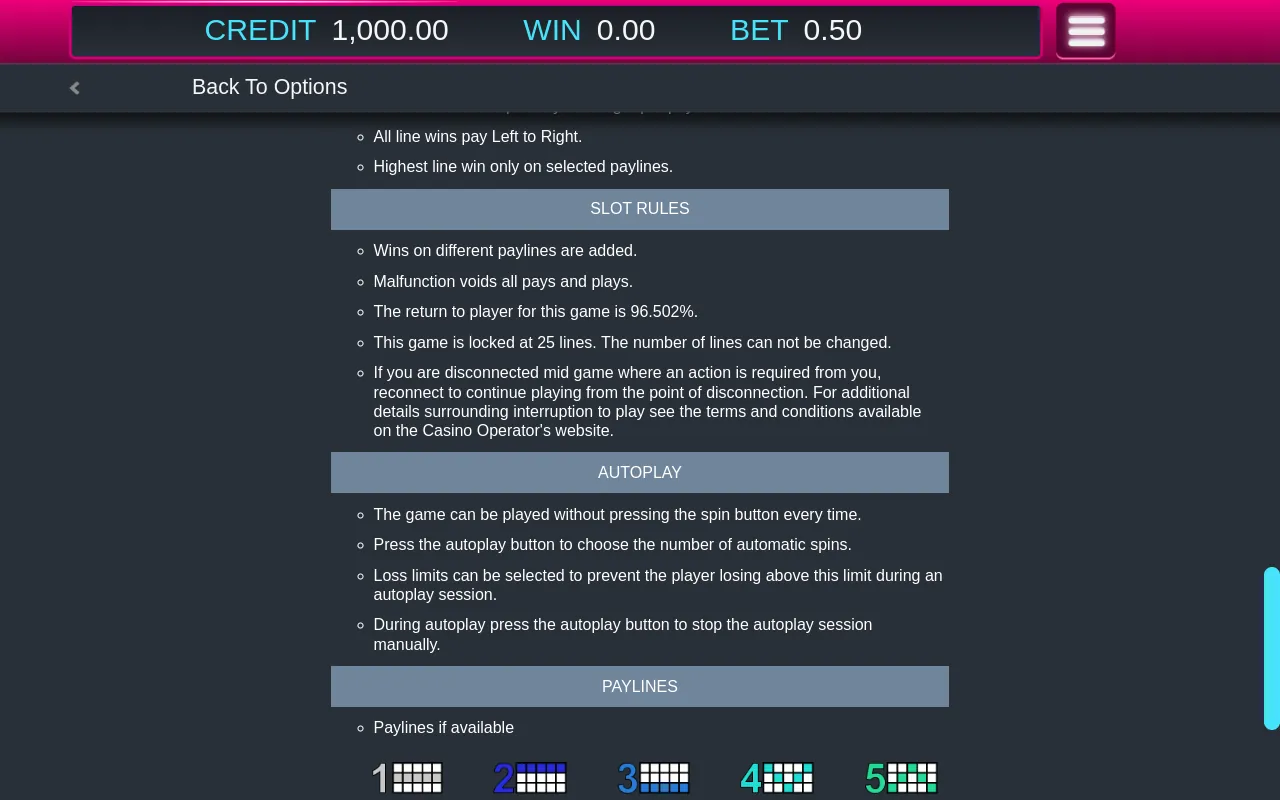
Underneath the presentation, this is a classic fixed-line layout. All 25 paylines are permanently in play, and the line count can’t be changed. Line wins pay left to right across adjacent reels, each one multiplied by the wager on that payline, and only the highest win per line counts.
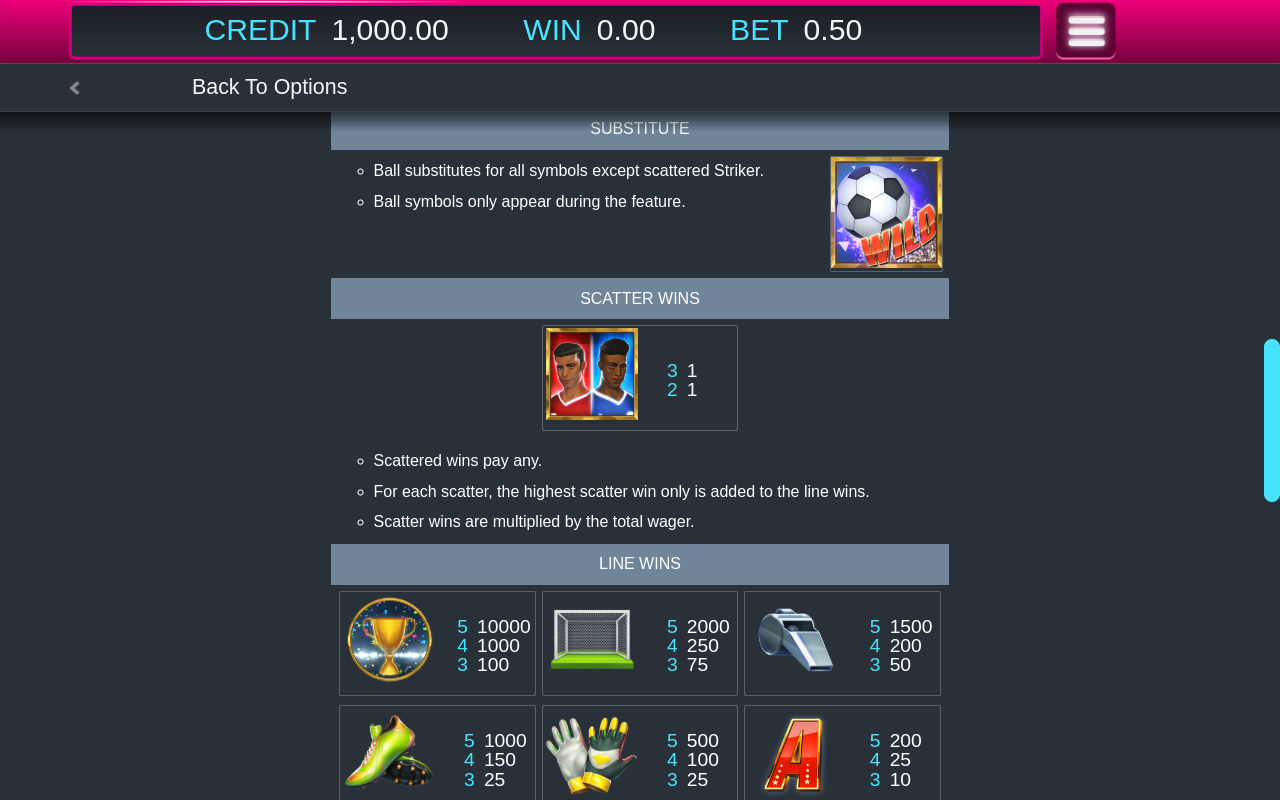
Wins on different lines are added together. Scatter wins behave differently: they pay in any position, only the highest scatter win is added to the line wins, and the total is multiplied by the whole wager rather than a single line bet.
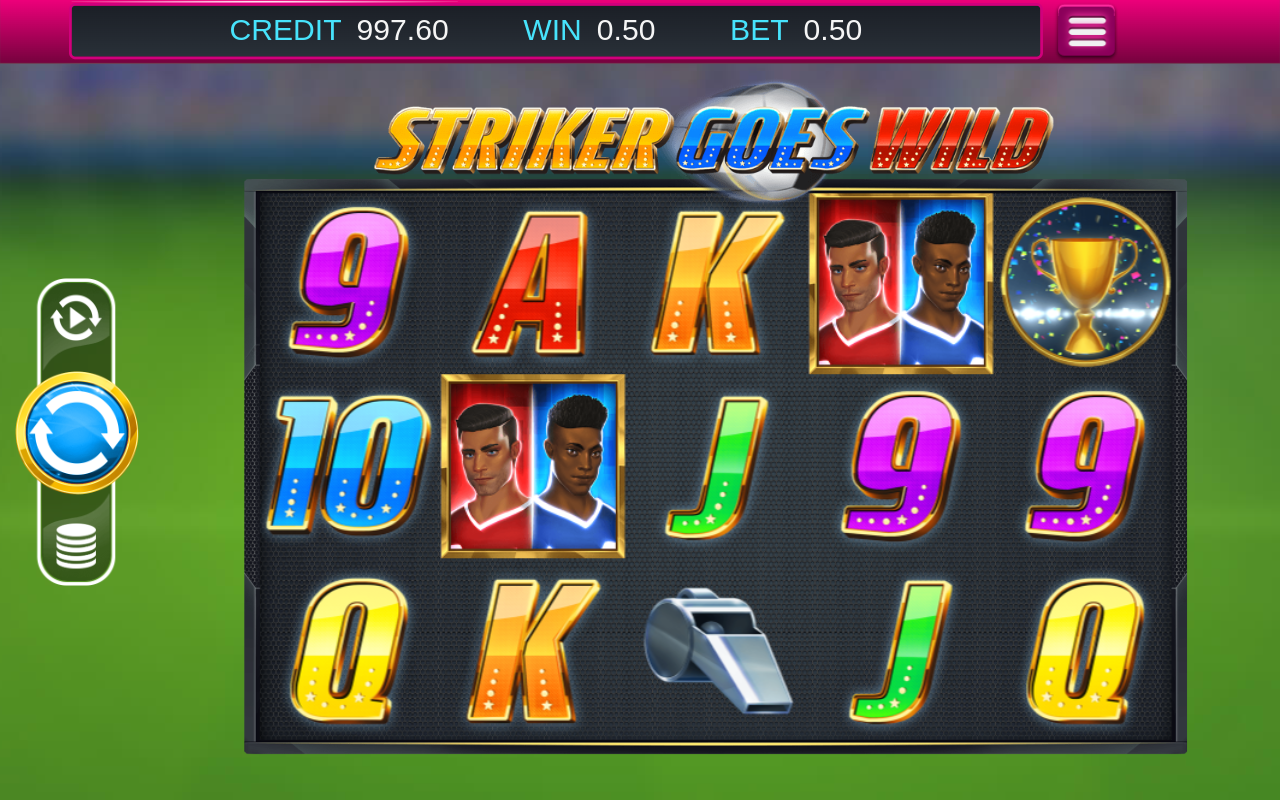
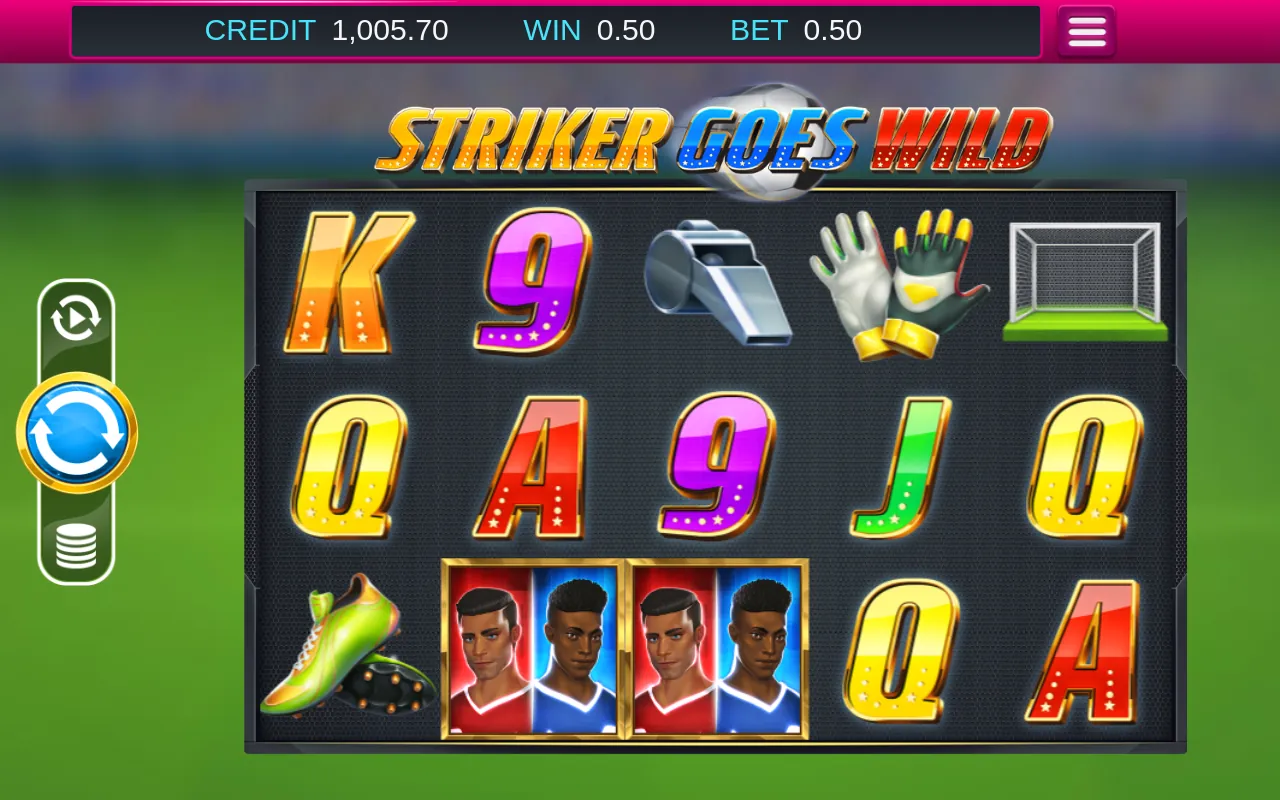
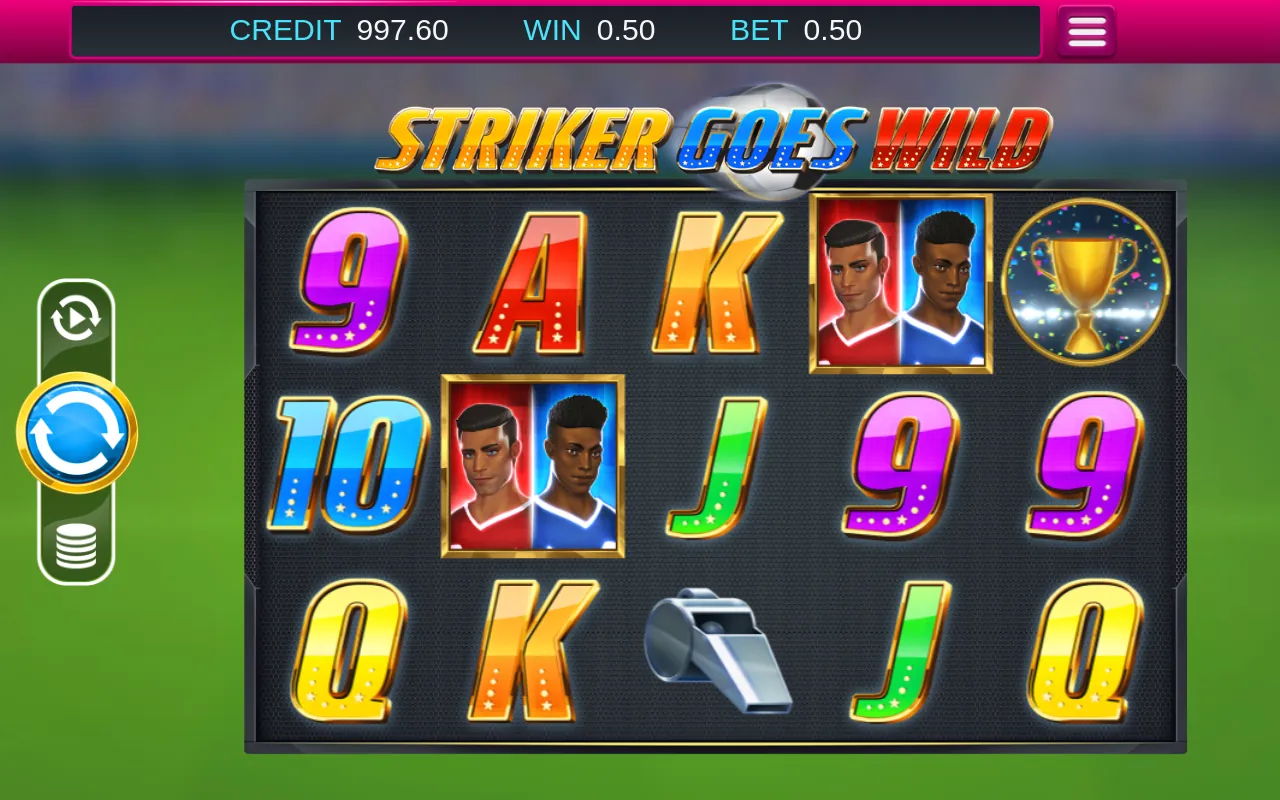
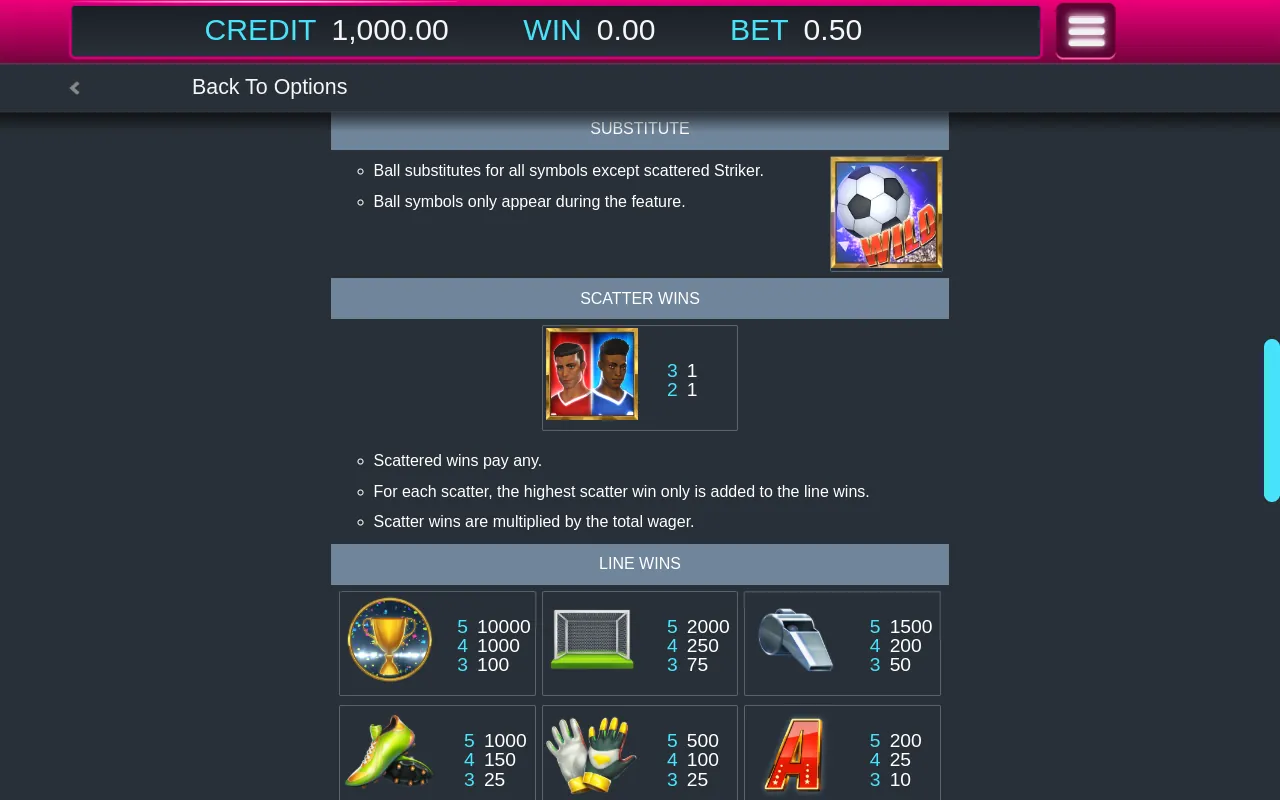
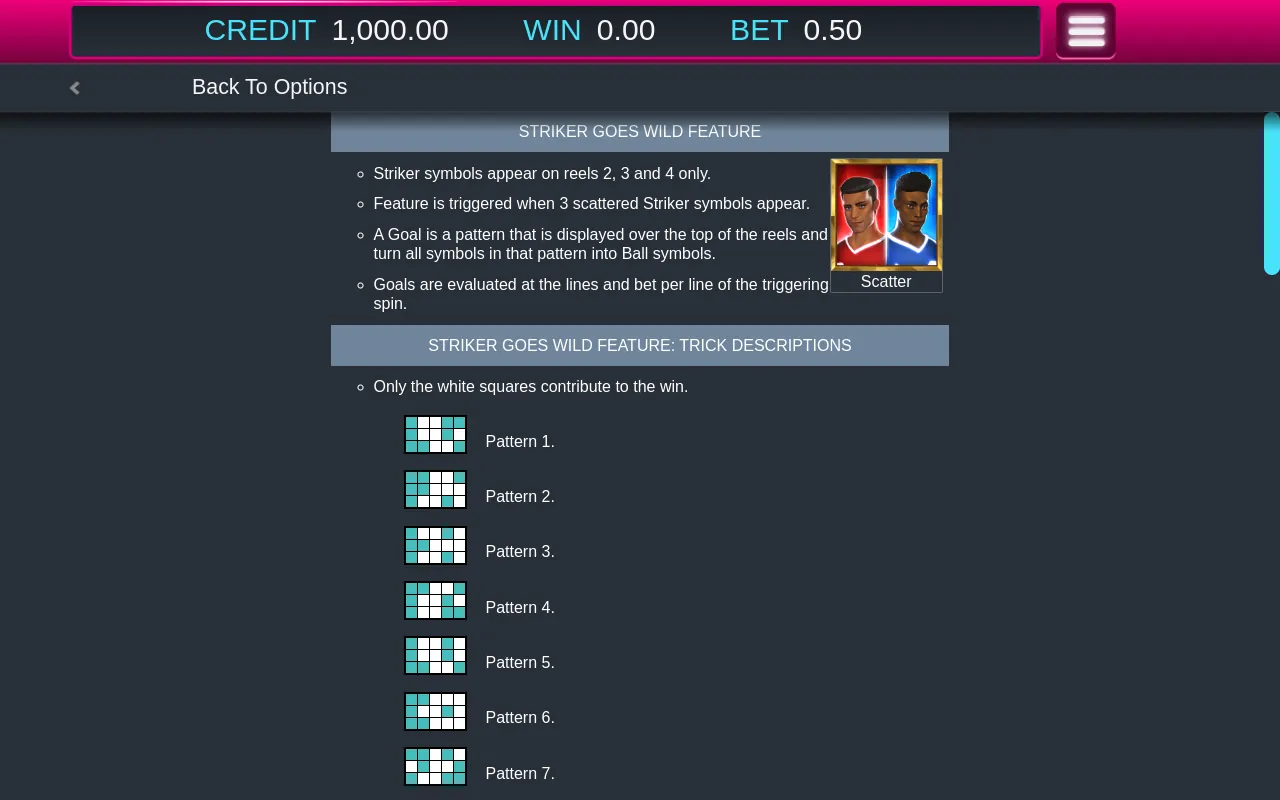
The symbols keep the football theme running end to end. The Striker is the scatter, appearing on reels 2, 3 and 4 only; two or three of them pay a token 1x the total wager, and three of them trigger the feature. The Ball is the substitute, but it only appears during the feature, so the base game runs without a wild at all.
That absence shapes every base-game spin. With nothing standing in for anything, each line pays only what its own symbols are worth, and the gap between the Trophy and the royals is felt on every losing reel stop. The scatter is the only symbol doing anything unusual before the trigger lands.
Paytable
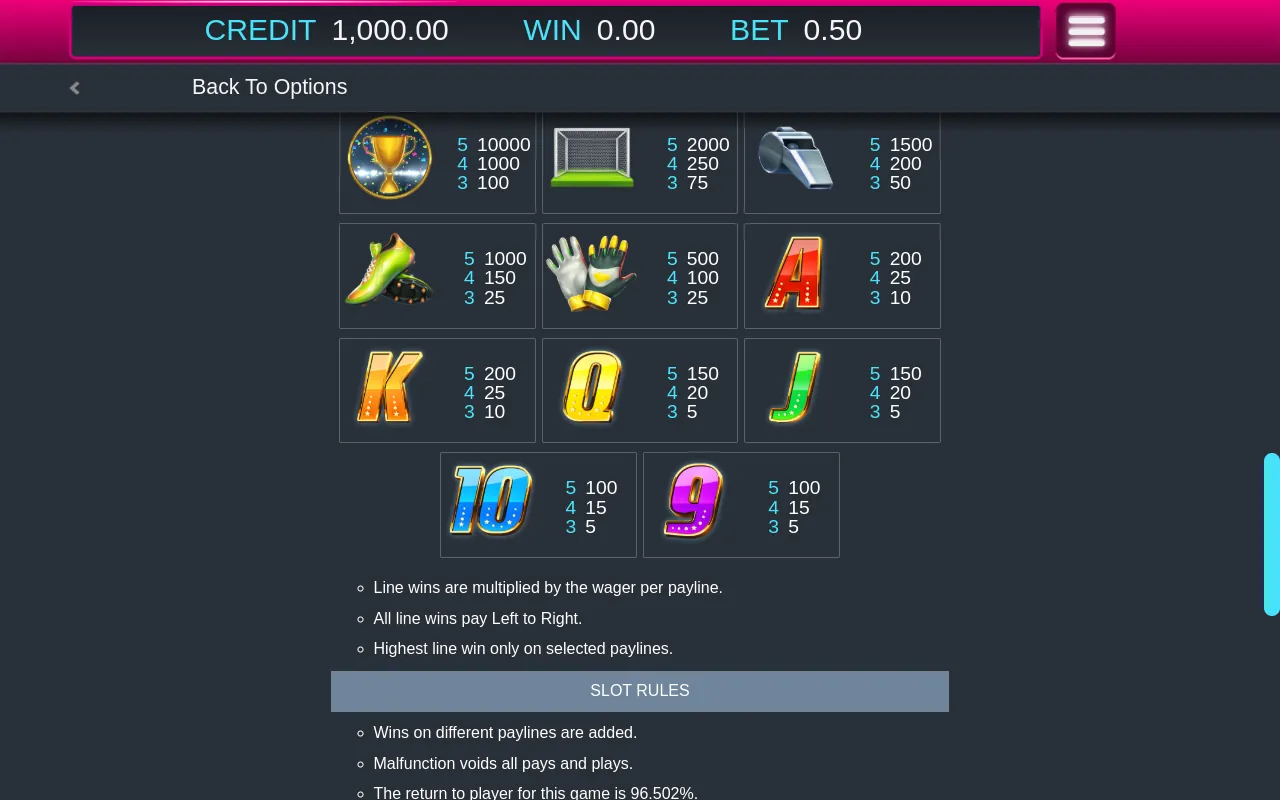
Line wins pay the following multiples of the wager per payline:
- Trophy – 100 for three, 1,000 for four, 10,000 for five
- Goal – 75 for three, 250 for four, 2,000 for five
- Whistle – 50 for three, 200 for four, 1,500 for five
- Boot – 25 for three, 150 for four, 1,000 for five
- Gloves – 25 for three, 100 for four, 500 for five
- A / K – 10 for three, 25 for four, 200 for five
- Q / J – 5 for three, 20 for four, 150 for five
- 10 / 9 – 5 for three, 15 for four, 100 for five
The Trophy is the clear prize symbol, and the drop below it is steep: the Goal, the second-best symbol, pays five times less for five of a kind. The middle of the table falls away quickly too, with the Whistle and Boot worth a fraction of the top line. Only the Trophy is worth chasing.
The royals sit at the bottom of the ladder and pay as filler. Five nines returns 100x the line bet, which keeps small wins ticking over between triggers but never moves the needle on its own. That top-heavy spread is what a high-volatility 25-liner looks like on paper.
The Striker Goes Wild Feature: Goals and Balls
Three scattered Striker symbols on reels 2, 3 and 4 set the feature off. What follows isn’t a free-spins round at all – it’s a single conversion played out over the reels that are already there, in one evaluation rather than a run of spins.
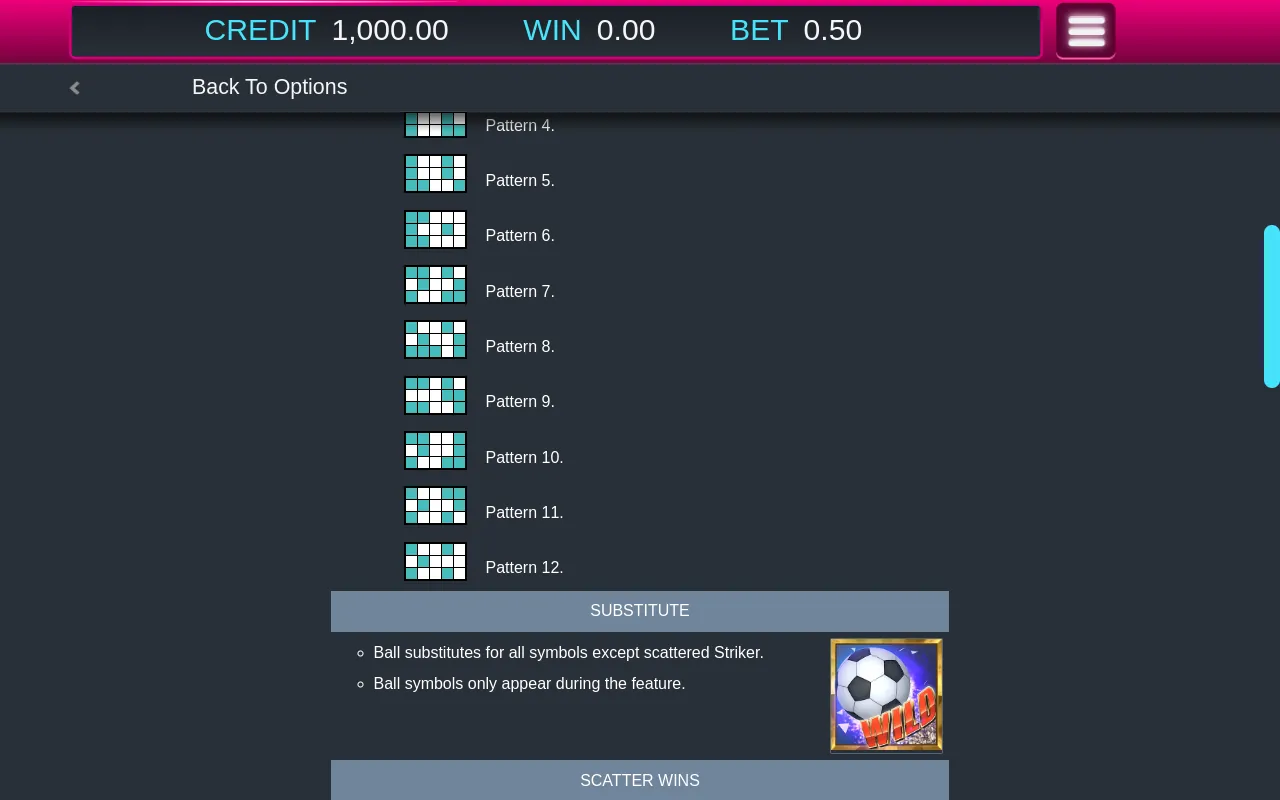
A Goal is a pattern displayed over the top of the reels, and there are twelve different Goal patterns. Every symbol inside the pattern turns into a Ball symbol. The Ball substitutes for all symbols except the scattered Striker, which makes it a full wild – and Ball symbols never appear outside the feature, so this is the only time wilds exist in the game.
A Goal pays out at the lines and bet per line of the spin that triggered it, and only the pattern’s white squares count towards the win. That last detail matters: a pattern can look large while only part of it pays, so the shape that lands decides how much of it counts.
Which of the twelve patterns arrives is the game within the game. A compact pattern might stitch together one decent line, while a sprawling one can drop wilds across several paylines at once. With the Ball standing in for everything except the scatter, a generous pattern towards the Trophy end of the paytable is where the big results live.
Because Goals are evaluated once and the reels then return to normal, there’s no ladder to climb and nothing to build on. Each trigger is a self-contained event: scatters land, a pattern appears, wilds fill its white squares, and the lines pay out at the triggering bet. Then it’s back to the turf.
That’s the entire feature inventory. There are no free spins, no multipliers and no second bonus round – one trigger, one Goal pattern, one evaluation, then back to the base game. The scatter pays its token award when it lands in twos or threes, and that’s everything the reels can do on their own.
Our Honest Verdict
Overall Rating: 7.1/10
This is ninety minutes of tidy passing followed by one set-piece. Most of the session is a plain 25-liner with no wild, no multiplier and a scatter that pays a token 1x, and the only reason to sit through that is the Goal pattern – the one moment where the game stops being ordinary and converts half the pitch at once.
Its strength is that no two triggers are the same. Twelve patterns, each turning a different slice of the grid wild, means the feature keeps its surprise long after the base game has given everything away. Its weakness is how little there is to do between them: with the Ball locked inside the feature, a quiet spell is just spin after spin of raw paytable.
It suits fans of the old fixed-line school who want one well-built moment rather than a menu of rounds, and it’ll lose anyone who needs something happening on every spin. Played in short spells, with the volume of a Saturday afternoon on it, the patience pays off.
Striker Goes Wild FAQs
-
How is the Striker Goes Wild feature triggered?
Three scattered Striker symbols appearing anywhere on reels 2, 3 and 4 trigger the Striker Goes Wild feature. Striker symbols only appear on those three reels. -
What does a Goal do in Striker Goes Wild?
A Goal is a pattern displayed over the reels that turns every symbol inside it into a Ball symbol. The Ball substitutes for all symbols except the scattered Striker, and only the white squares of the pattern contribute to the win. There are twelve Goal patterns in total. -
Does the Ball wild appear in the base game?
No. Ball symbols only appear during the Striker Goes Wild feature. The base game runs without a wild symbol of any kind. -
Can the Striker Goes Wild feature retrigger?
No. The feature is a single Goal pattern evaluation rather than a free-spins round, so there is no retrigger mechanic. Each trigger plays out one Goal and returns to the base game. -
How is a Goal pattern evaluated?
A Goal is assessed using the lines and bet per line of the spin that triggered it, and only the white squares of the pattern count towards the win. Any winning lines produced by the converted Ball symbols are then added together. -
What is the RTP of Striker Goes Wild?
The return to player is 96.502%. -
How many paylines does Striker Goes Wild have?
Striker Goes Wild has 25 fixed paylines. The game is locked at 25 lines and the number of lines cannot be changed. -
Who makes Striker Goes Wild?
Striker Goes Wild is made by Eyecon, the studio behind Fluffy Favourites and Temple of Iris.