












Jolly Poker Slot Review
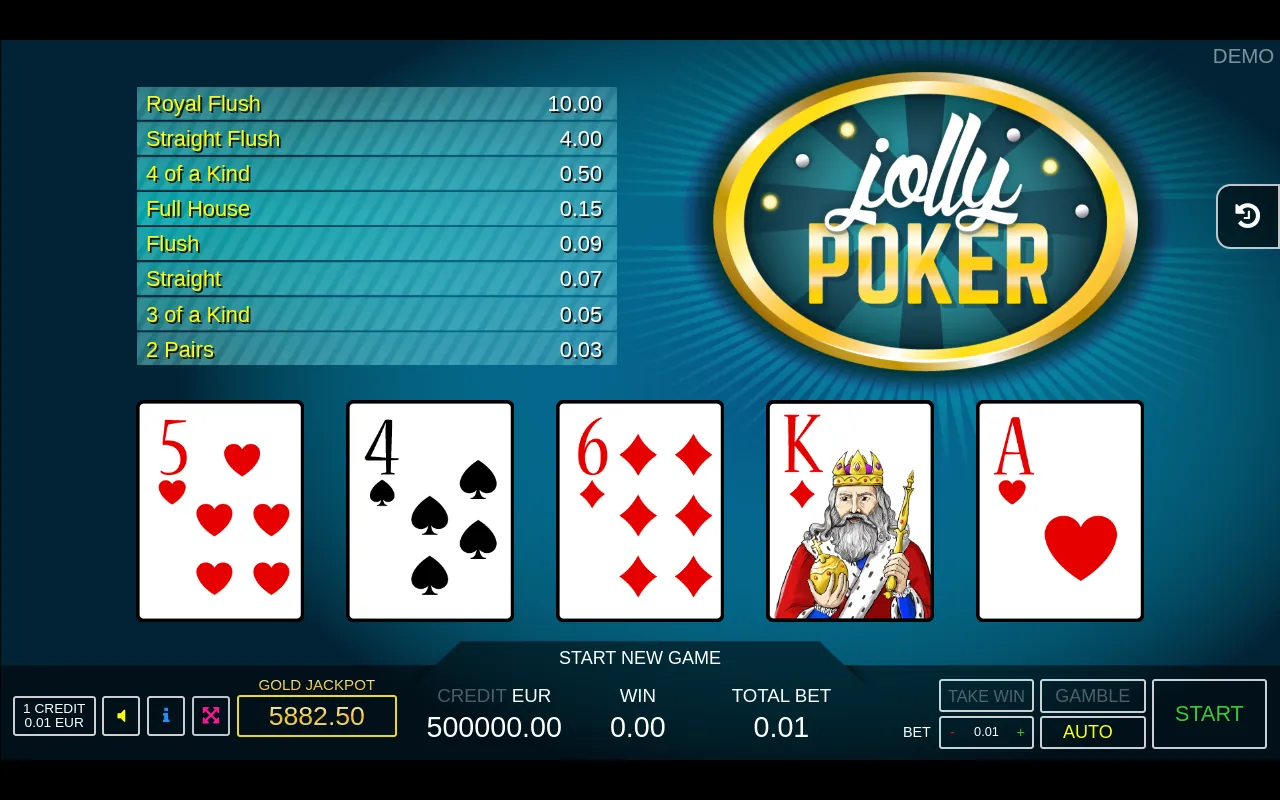
A gold-rimmed medallion turns at the top of the screen, a teal wheel spinning inside it while light rays fan out across deep navy. Jolly Poker strips casino gambling down to a single decision – which five cards to keep – and played well, it’s better value than almost anything with reels on it. The dressing is pure lounge act; the game is one hand of draw poker and nothing else.
What makes it worth a look is the return: 98.40% RTP with an optimal hold strategy, a figure almost no reel slot can touch. It’s a Fazi build, cut from the same cloth as their retro-leaning machines like Clover 27, Coin Bank and Triple Wild Crown.
You get one five-card hand per game, dealt from a trimmed deck, with bets running from 0.01 to 300.00 per hand. Three progressive jackpot counters sit above the cards, ticking upward whether you’re holding or drawing.
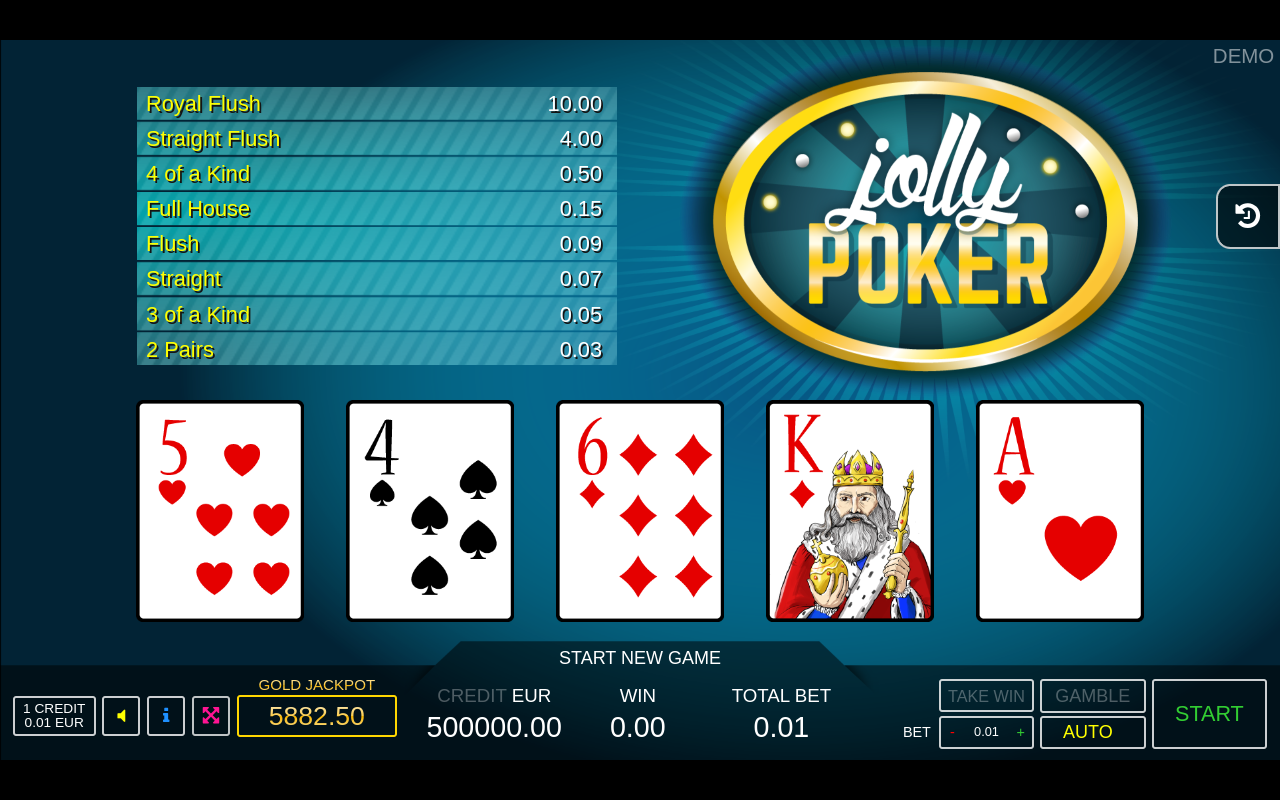
The Deck and the Deal
Each game deals five cards in a single row, and each new game costs one stake. The deck holds 44 cards, running from 4 to Ace: the 2s and 3s are thrown out entirely. That trimmed deck is the one genuinely non-standard thing here, and it reshapes the odds in ways poker players will feel immediately.
Fewer ranks means fewer ways to make the low straights and pairs you’d chase in a full deck, but it also concentrates the value of the hands you can make. With eleven ranks instead of thirteen, drawing to three of a kind improves your chances on every exchange.
Flushes change shape too: four suits of eleven cards each, so a flush draw still has nine outs, but the pool you’re drawing from is smaller.
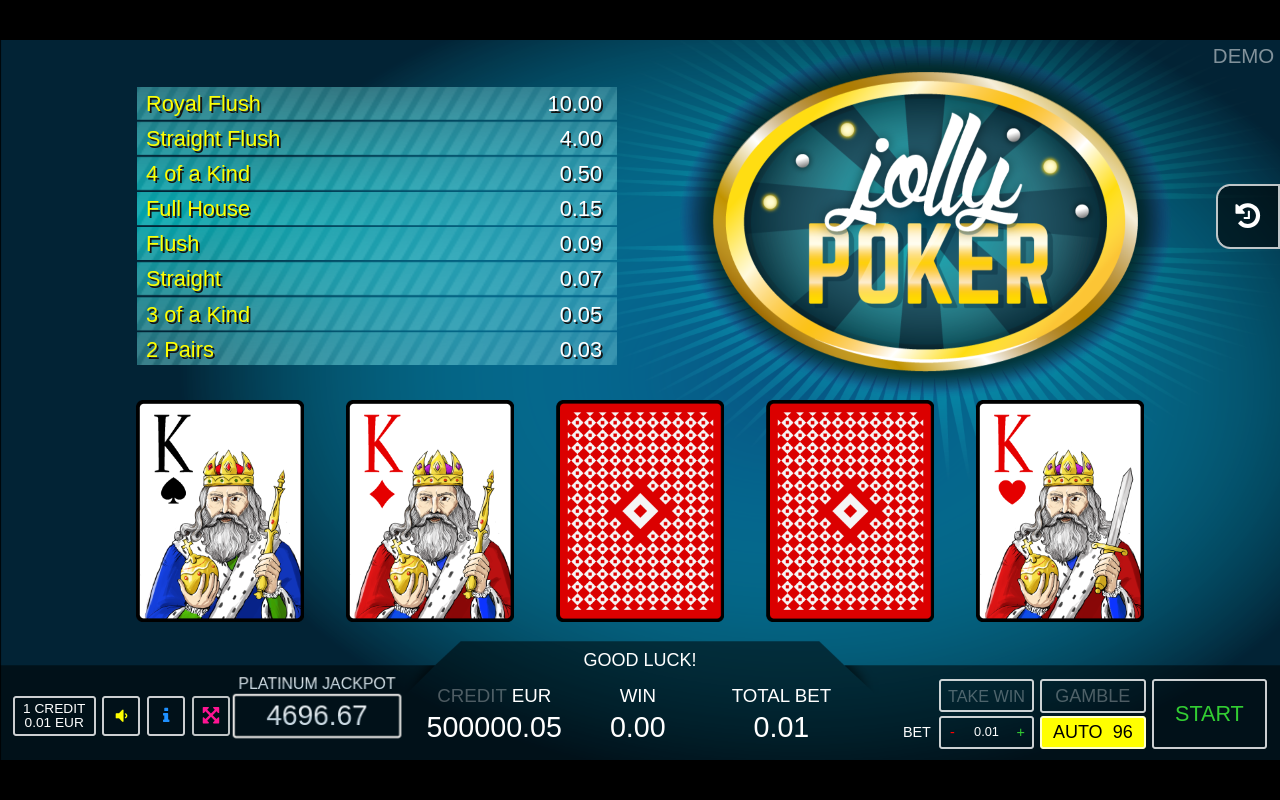
There are no wilds, no scatters and no substitute cards of any kind. What you’re dealt is what you work with, and the only decision in front of you is which cards to hold before the draw.
That decision is the whole game: hold the wrong pair and you’ve thrown away the value of the stake before the second deal even lands. Blocked cards can be unblocked through an exchange, which the game treats as a new game in its own right and charges one stake for. It’s optional, and it’s covered in full below alongside the gamble.
The base deal is otherwise plain video poker: hold what helps, draw the rest, get paid on the final hand.
Hand Rankings and What They Pay
Pays are quoted per hand, as multiples of the total bet:
- Royal Flush – 1000x
- Straight Flush – 400x
- Four of a Kind – 50x
- Full House – 15x
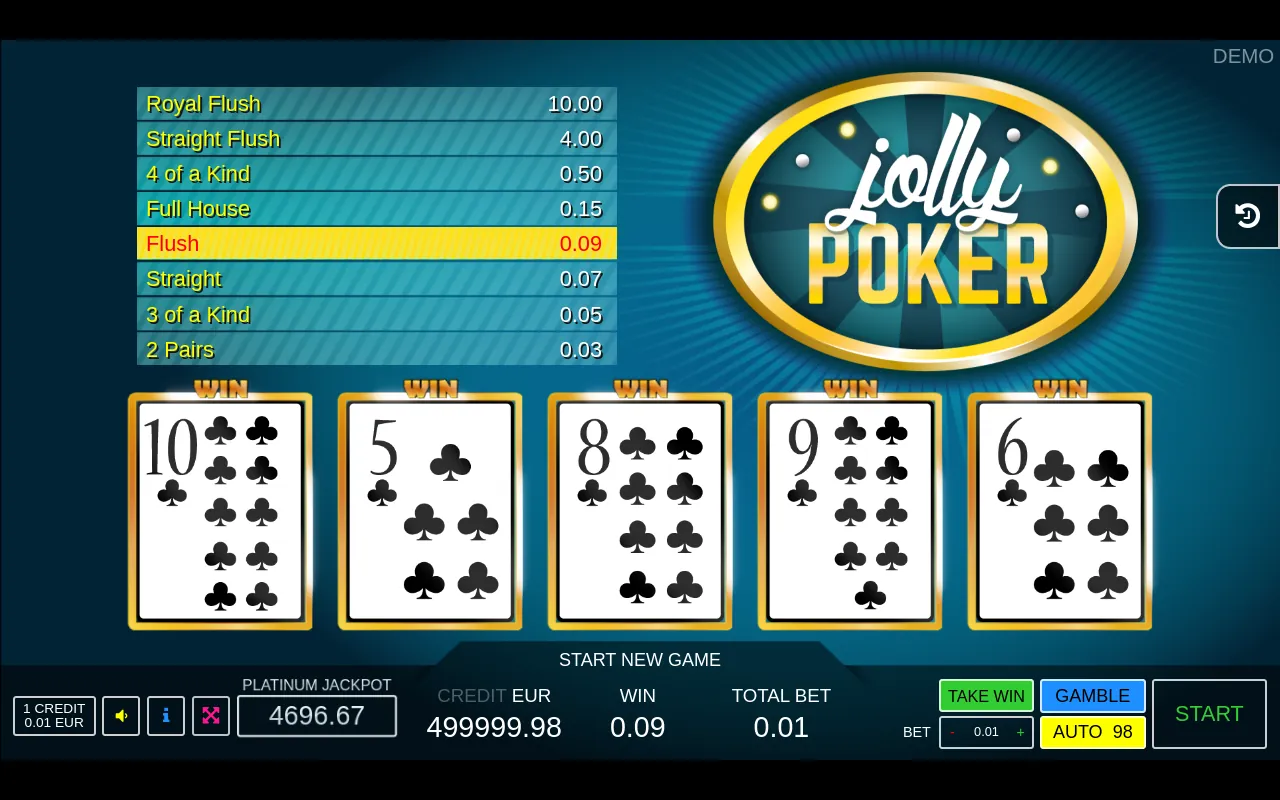
- Flush – 9x
- Straight – 7x
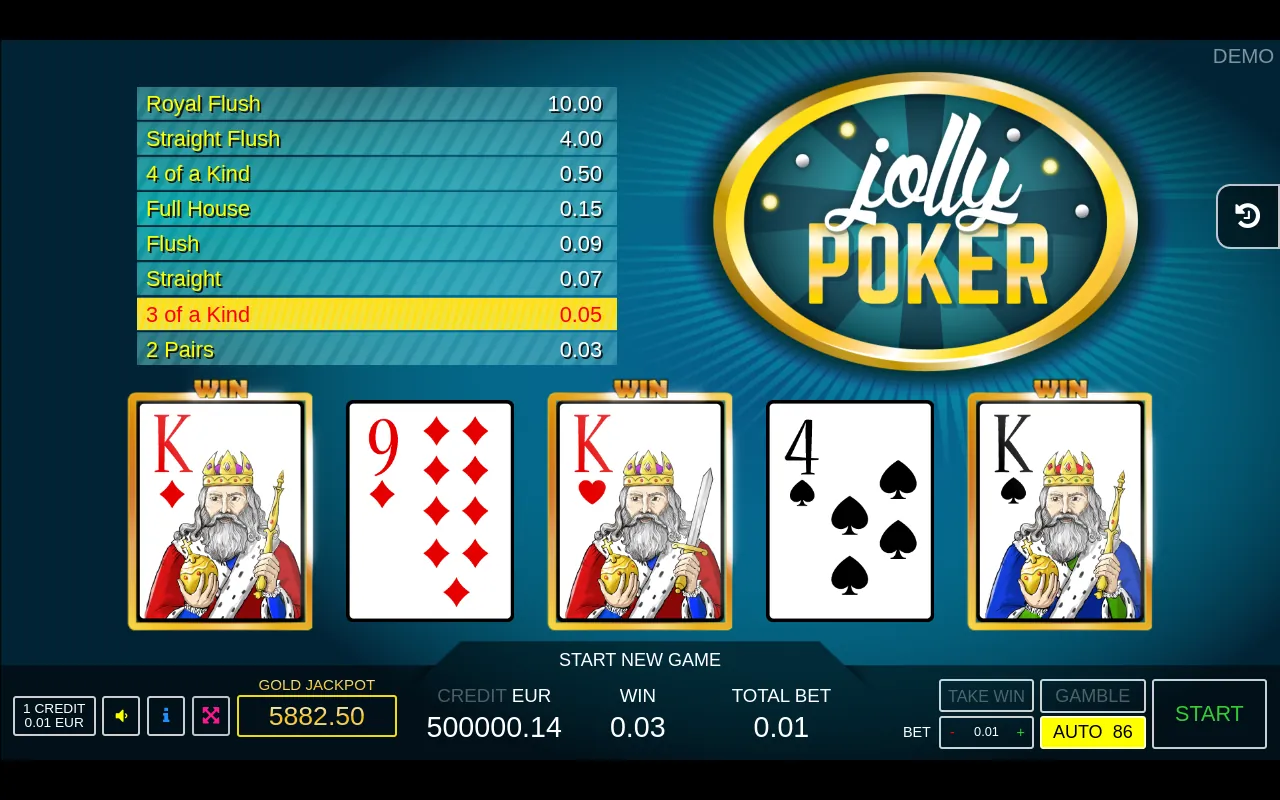
- Three of a Kind – 5x
- Two Pair – 3x
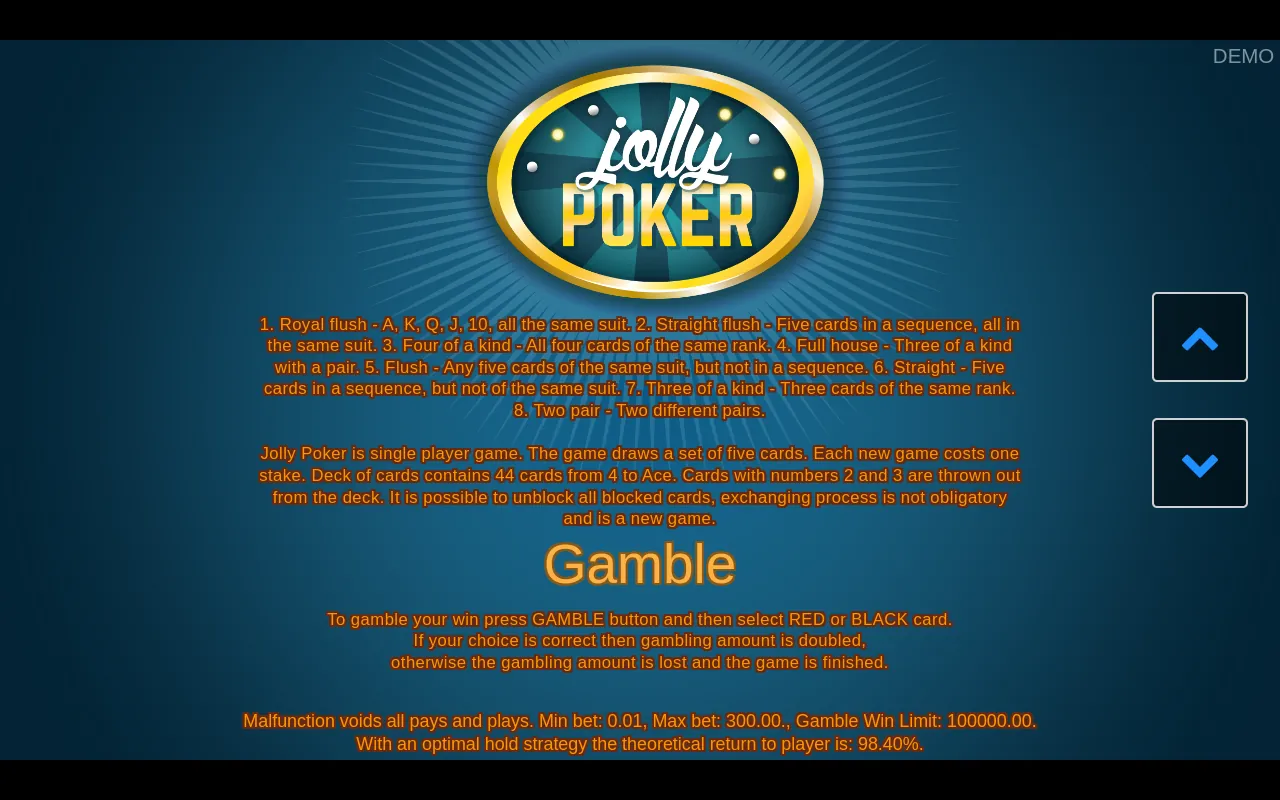
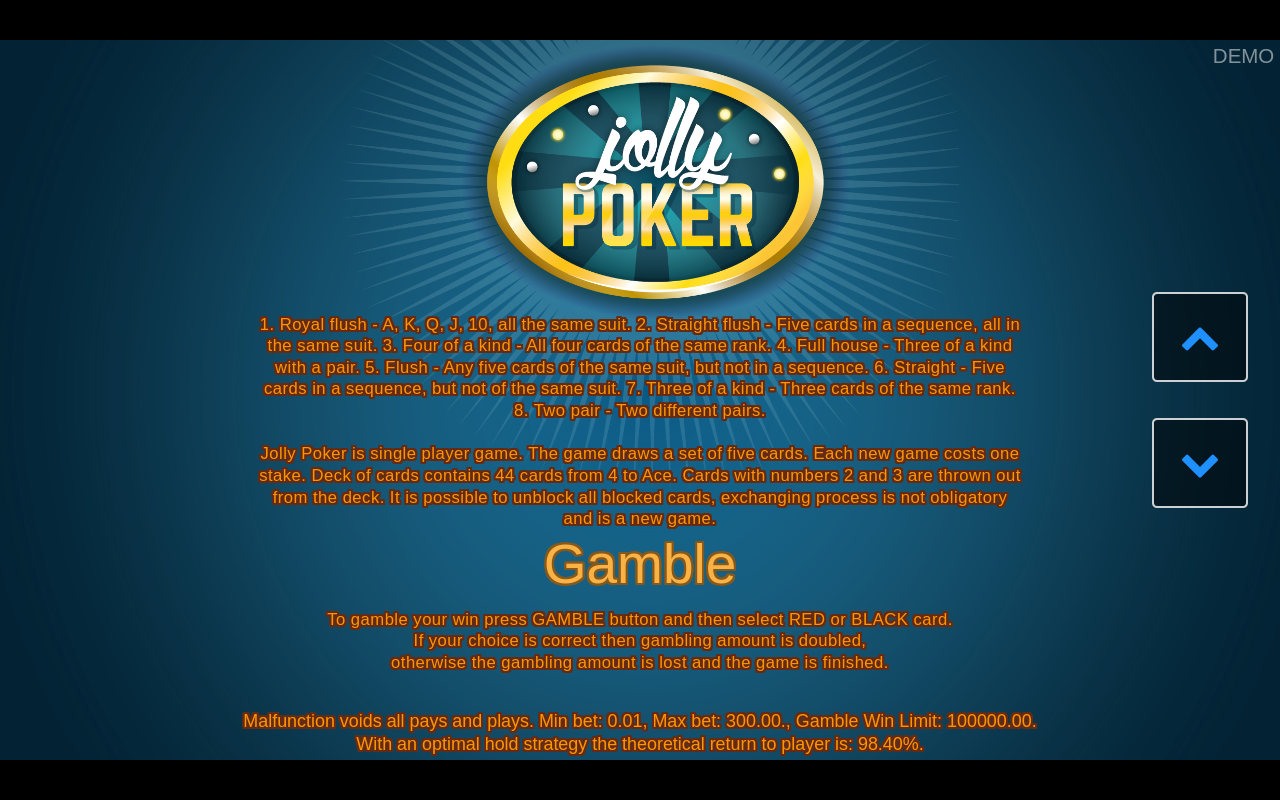
The rankings follow standard poker: a royal is A, K, Q, J, 10 in one suit, a straight flush is five suited cards in sequence, four of a kind is all four cards of one rank, and a full house is three of a kind with a pair. A flush is any five cards of the same suit that aren’t in sequence, and a straight is five in sequence across mixed suits.
The gap between the top two hands is steep, a 1000x royal against a 400x straight flush, and everything below four of a kind falls away fast. At the minimum 0.01 stake the top hand returns 10.00, which tells you how this ladder is built: the money sits at the top, and the lower rungs are there to keep the stake alive between big draws.
Gamble and Card Exchange
The Gamble
After any win you can press GAMBLE and call red or black on the next card. A correct call doubles the gambled amount; a wrong one loses it and ends the game. There’s a gamble win limit of 100000.00, which caps how far a doubling run can climb before the game stops letting you press.
It’s a straight coin-flip style bet with no skill element beyond knowing when to stop, and the limit is the only brake on it. At the top stake of 300.00, a royal paid at 1000x already sits at 300,000.00, well past where the gamble would let you carry it.
For smaller wins, the gamble is where the button lives: double a two-pair payout a few times and it starts to matter.
Card Exchange
Blocked cards can be unblocked by an exchange, and the exchange counts as a new game, meaning it costs another stake. It’s optional, so the choice is yours: pay to free a card or let it sit and play around it. The pricing stops at that one-stake rule, so treat each exchange as a fresh bet on a better hand.
The logic of it is straightforward when a blocked card is the difference between a made hand and a missed one. Paying one stake to complete a flush paying 9x is a good use of a stake; paying one to chase a two-pair improvement at 3x rarely is.
Like everything else in this game, the exchange rewards players who can do that arithmetic at the table.
The Jackpot Counters
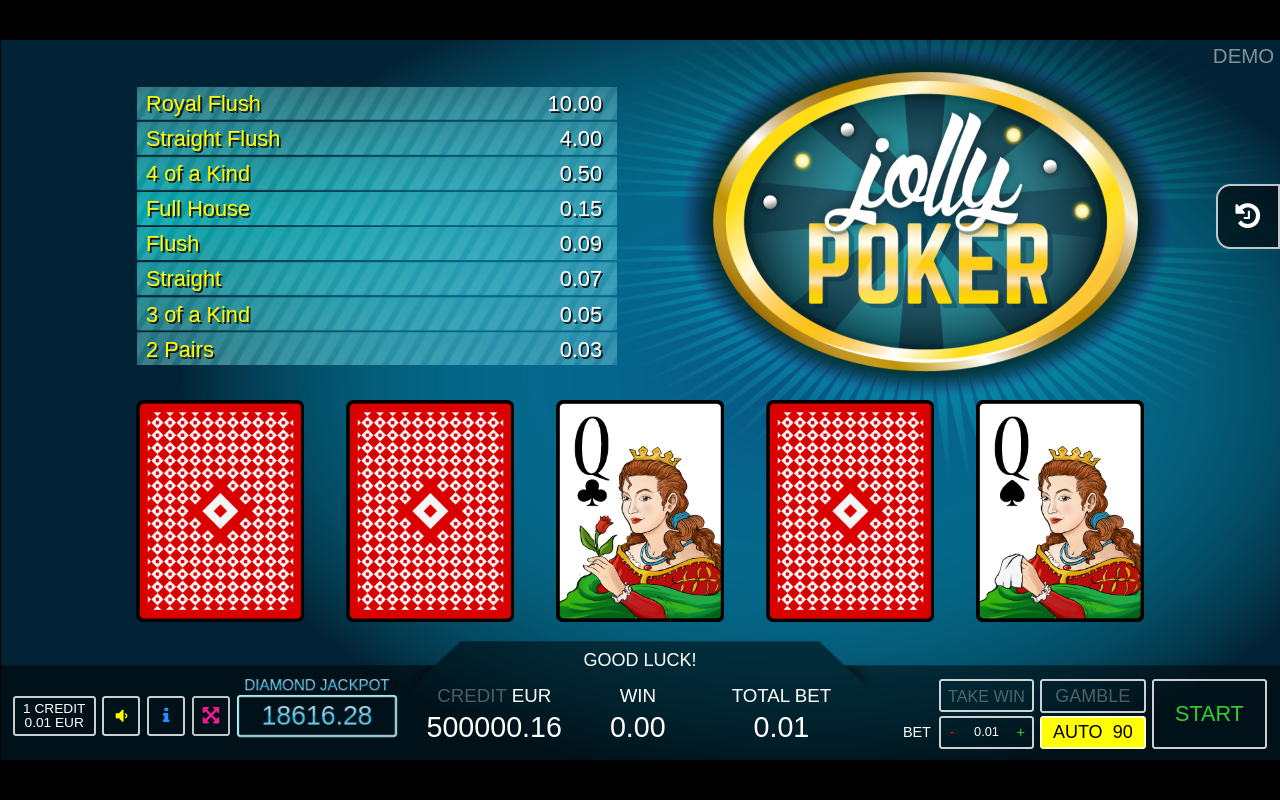
Three progressive counters sit above the cards: Gold, Platinum and Diamond. Counted at the minimum 0.01 stake they read 5882.50, 4696.67 and 18616.28 respectively, and they climb from there. The Diamond sits at the top of the ladder, the Gold at the bottom.
What the game doesn’t publish is the trigger. There’s no stated rule for how a counter pays out, which cards or hands unlock it, or whether it’s tied to the royal at all. They’re a live presence on every frame of play, but an unexplained one.
Treat them as upside you can’t plan around rather than a target to chase.
Our Honest Verdict
Overall Rating: 7.5/10
Sitting at Jolly Poker is like taking the quiet corner of the casino: the medallion glows, the counters tick, and everything comes down to which cards you keep. That’s also the one reason to pick it over any reel game – your decisions genuinely move the money here, and nothing else on the screen does.
The strength is the hold game itself. The hand you choose to keep decides more than any spin ever does, and the gamble button gives even a 3x two pair a second life.
The weakness is everything around the cards. Three jackpot counters climb the screen with no published rule for how they pay, and the exchange charges a stake without ever telling you when that stake is worth spending. For poker players and anyone who likes their gambling slow, cheap and deliberate, this is an easy seat at a gentle table. If you want features firing and things popping off, the lounge act won’t hold you: the medallion’s glow is all the spectacle on offer.
Jolly Poker FAQs
-
What is the RTP of Jolly Poker?
With an optimal hold strategy, the theoretical return to player is 98.40%. -
How many cards are in the Jolly Poker deck?
The deck contains 44 cards running from 4 to Ace. The 2s and 3s are removed entirely, which changes the odds of making each poker hand compared with a standard 52-card deck. -
What is the minimum and maximum bet on Jolly Poker?
Bets run from 0.01 to 300.00 per hand, making it accessible to pennies players and high rollers alike. -
How does the Gamble feature work in Jolly Poker?
After a win, press GAMBLE and pick red or black. Get it right and the gambled amount doubles; get it wrong and it’s lost, ending the game. Doubling runs are capped by a gamble win limit of 100000.00. -
What does the card exchange do in Jolly Poker?
Blocked cards can be unblocked through an exchange. The exchange is optional and counts as a new game, so it costs one stake each time you use it. -
What is the highest-paying hand in Jolly Poker?
The Royal Flush is the top hand, paying 1000x your total bet, followed by the Straight Flush at 400x. -
Does Jolly Poker have wild symbols?
No. Jolly Poker uses standard playing cards with no wilds, scatters or substitute symbols. Every hand is made from the cards you’re dealt and hold. -
Who makes Jolly Poker?
Jolly Poker is made by Fazi, a studio also known for retro-styled titles like Clover 27 and Coin Bank.