













Clover 27 Slot Review
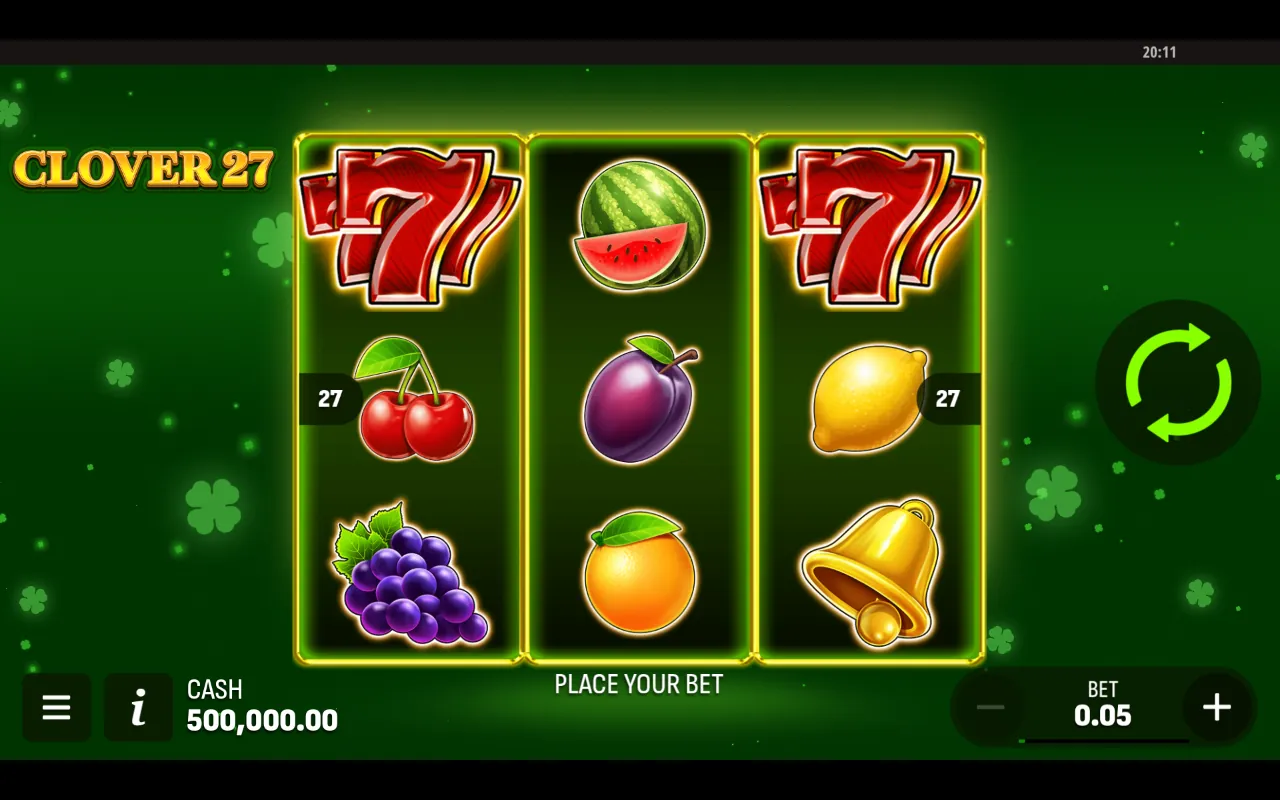
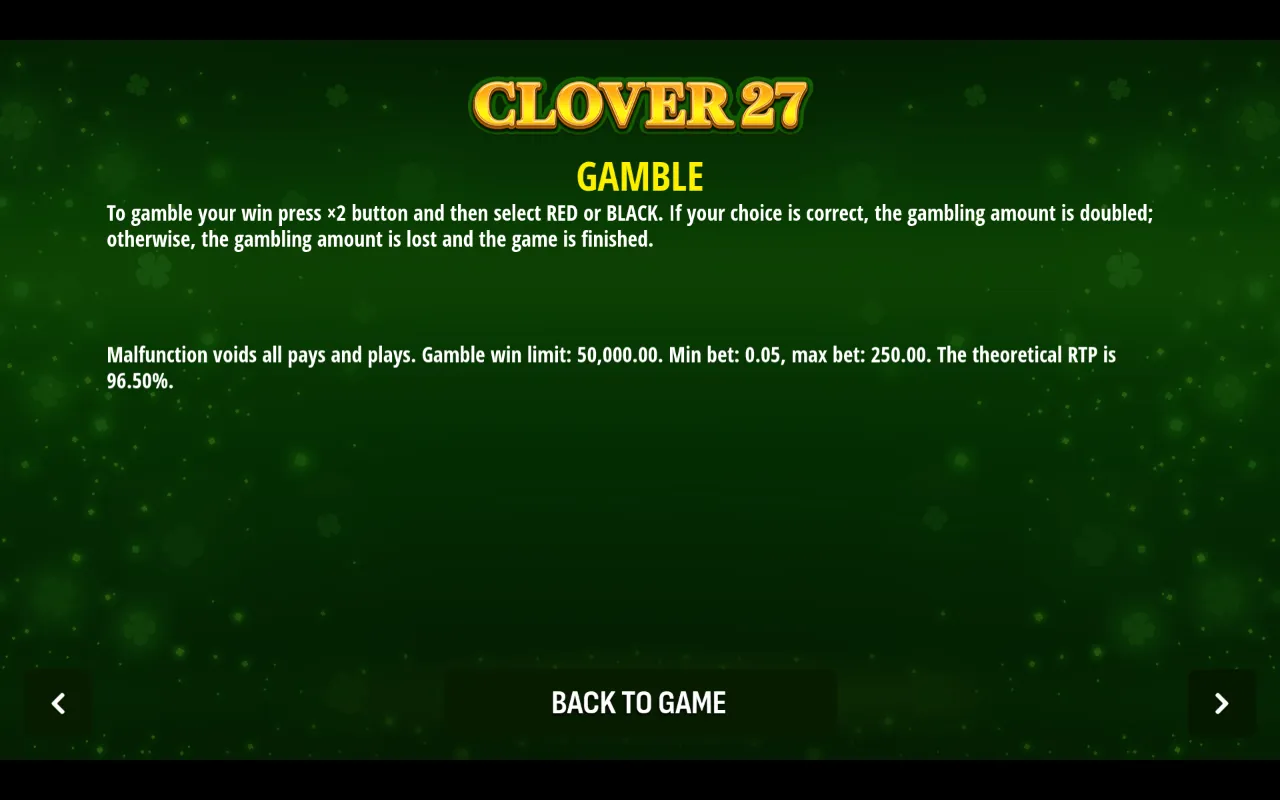
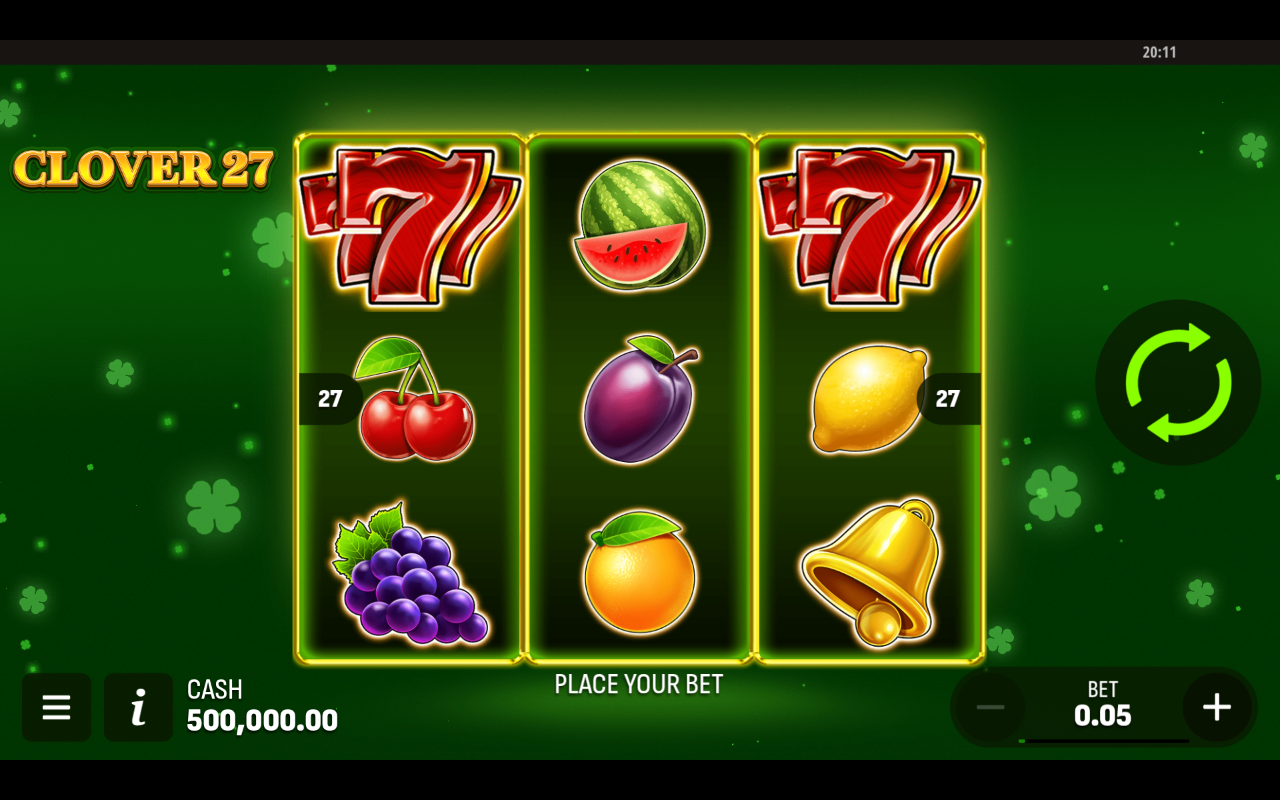
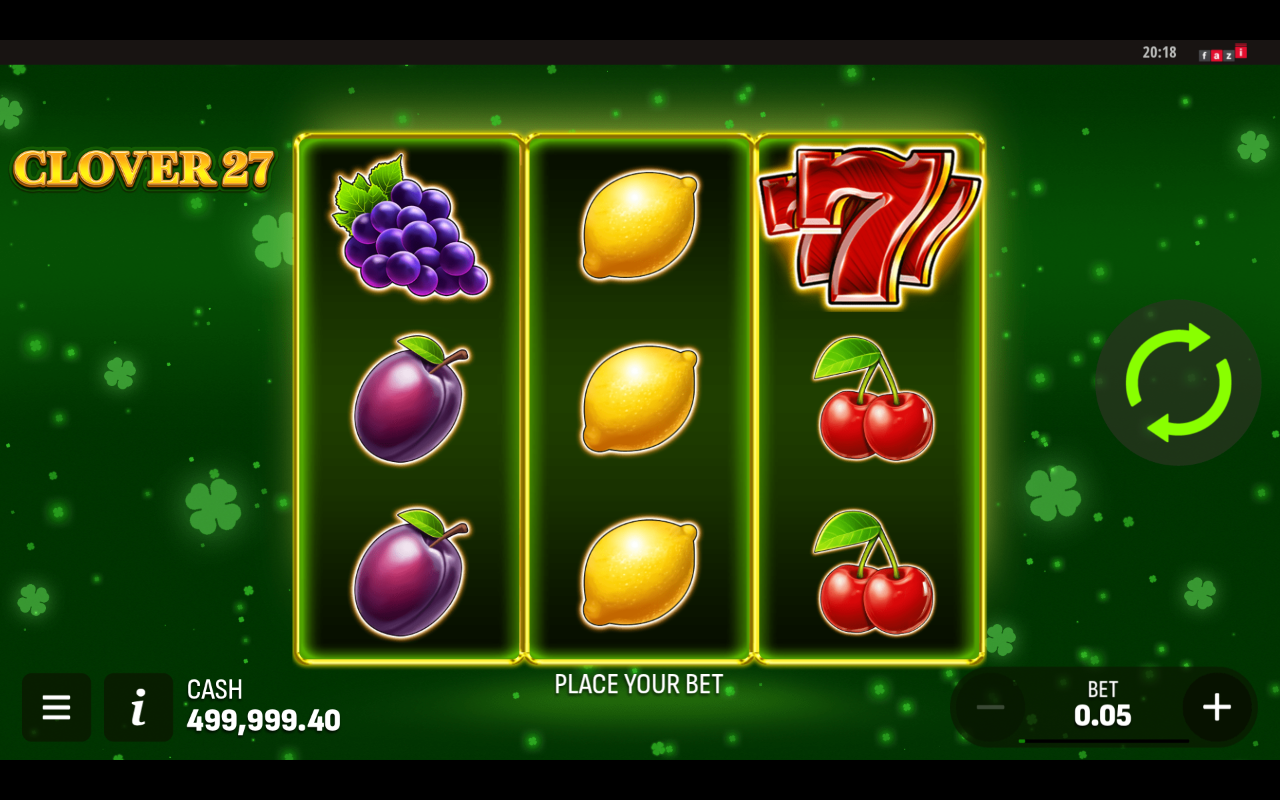
A green field of drifting shamrock silhouettes behind three gold-framed reels, neon edges glowing against the bottle-green: Clover 27 dresses its Irish luck in arcade gloss. The dressing is doing a lot of covering, because underneath it sits one of the leanest feature sets you’ll meet – a single reel-filling wild and a card gamble, and that’s your lot. The clover on the middle reel doesn’t just carry the theme; it carries the entire game.
It’s a FAZI build, sitting alongside Clovers and Diamonds 40 and Triple Wild Crown in a run of compact classics, with Bonus Wild 81 Extralines also in the cabinet. Clover 27 runs a 3×3 grid with 27 ways to win, at 96.50% RTP, with stakes from 0.05 to 250 per spin. No free spins, no scatters, no bonus round beyond a double-or-nothing card gamble. Just fruit, bells, a lucky seven and one very busy clover.
Base Game & Features
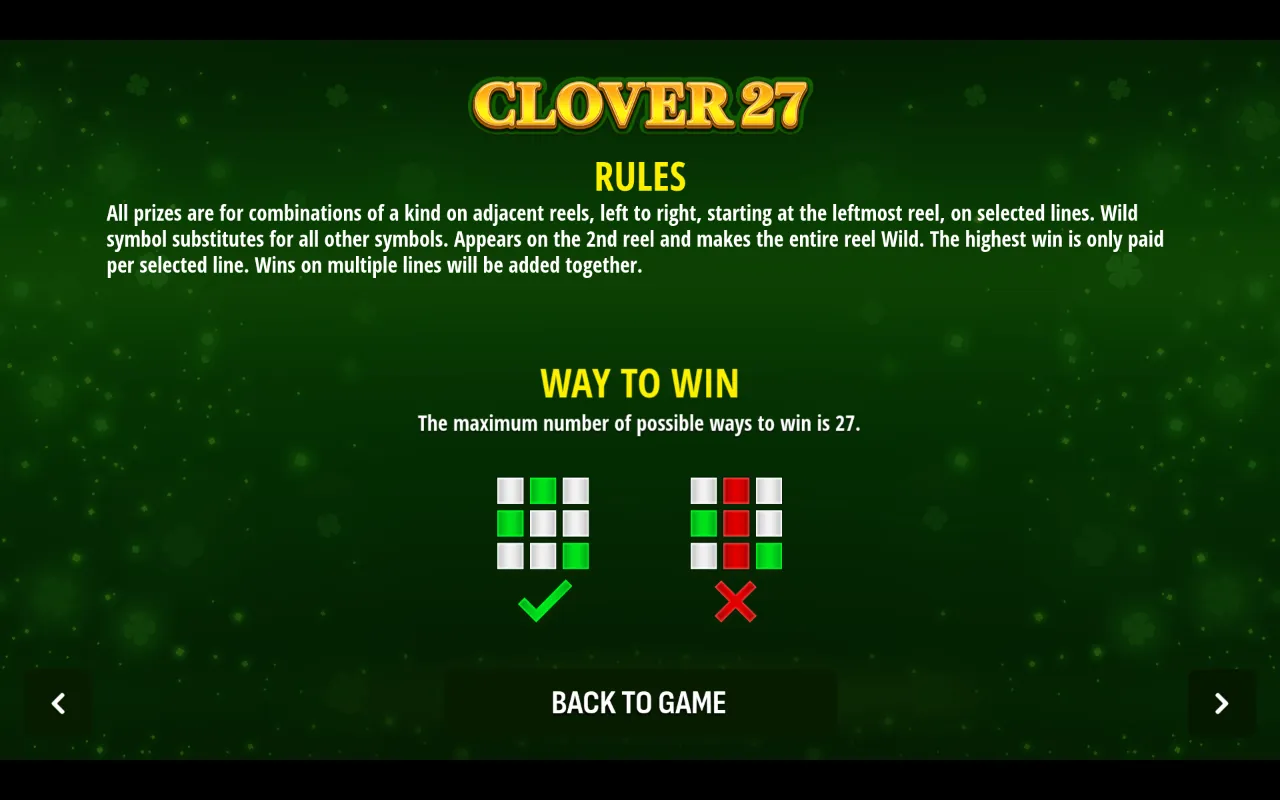
Three reels, three rows, and wins paid for combinations of a kind on adjacent reels from the left. Only nine symbol positions are on screen at a time, so every one of them matters. A three-reel grid leaves nowhere to hide: a symbol either starts a run from the leftmost reel or it doesn’t pay at all. The win logic follows the classic rules:
- All prizes are for combinations of a kind on adjacent reels, left to right, starting at the leftmost reel
- Only the highest win is paid per selected line
- Wins on multiple lines are added together
- The wild substitutes for all other symbols
Those last two rules do most of the quiet work. A spin can land several different three-of-a-kind runs at once, and because the multiple wins are added rather than capped, the middle reel is the only place on the board where a single symbol can touch every one of them. It’s a small grid with a concentrated centre of gravity.
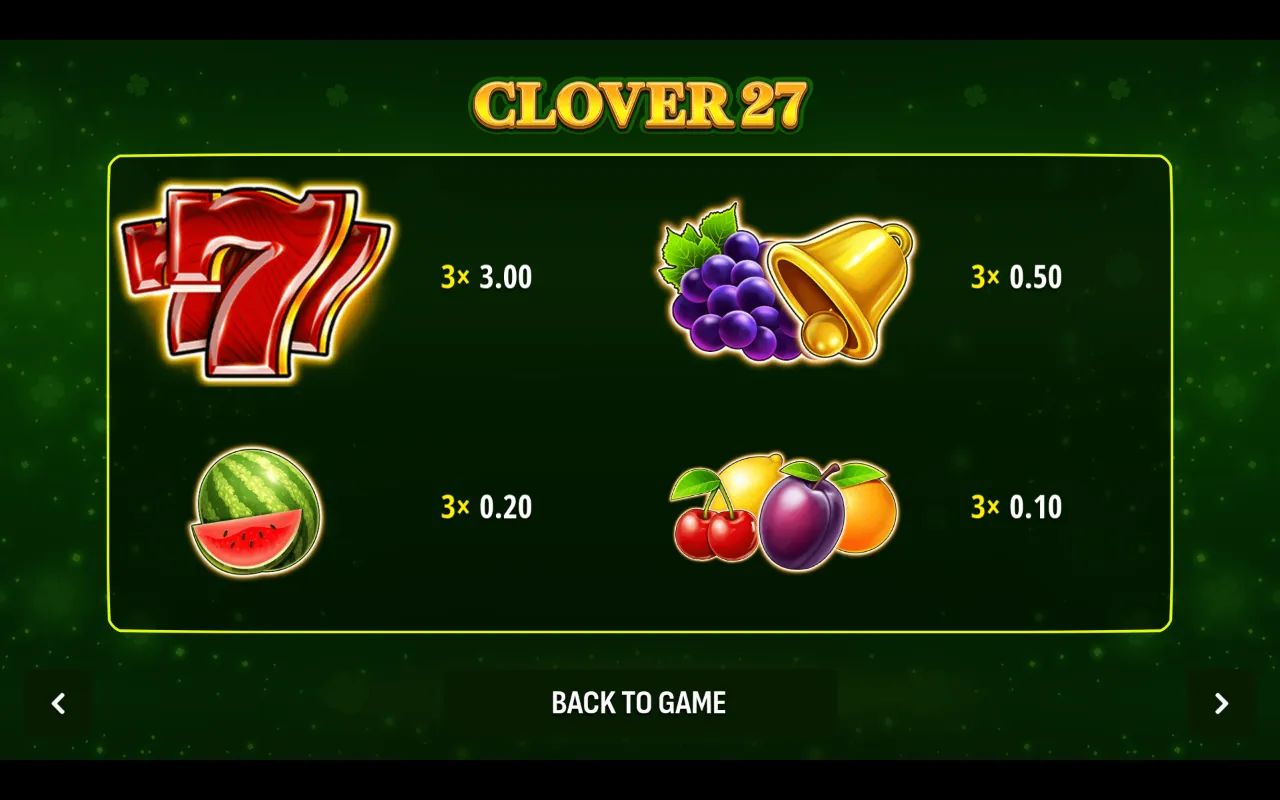
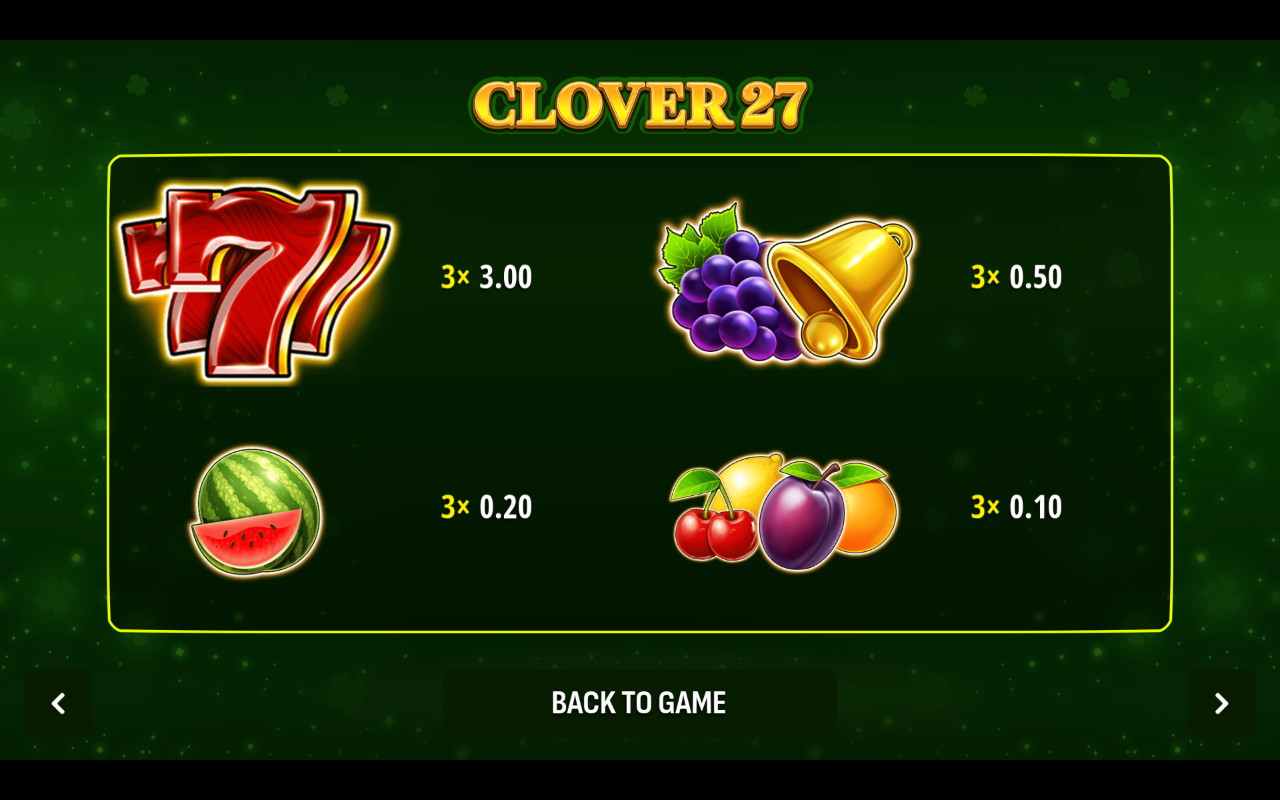
The symbols are the classic fruit-machine set. Sevens, bells and grapes sit at the top of the ladder, with melons, plums, cherries and oranges filling out the rest. It’s a paytable that anyone who has touched a three-reeler will recognise on sight, and the neon-edged retro presentation keeps it glossy rather than dusty.
Here’s what each symbol pays for a three-of-a-kind:
- Seven – 3.00
- Grapes – 0.50
- Bell – 0.50
- Watermelon – 0.20
- Cherry – 0.10
- Plum – 0.10
- Orange – 0.10
Seven symbols, four prices. The bottom rung is shared three ways between cherries, plums and oranges, grapes and bells pay identically at 0.50, and the watermelon sits alone in between at 0.20. That compression is standard for the format, and it means most of the paytable is there to keep the reels moving rather than to pay you.
The seven is the outlier. It pays six times what grapes and bells return and thirty times the bottom tier, so a middle-reel expansion beside a stack of sevens is worth vastly more than the same expansion beside oranges. Where the clover lands decides everything about the size of the win.
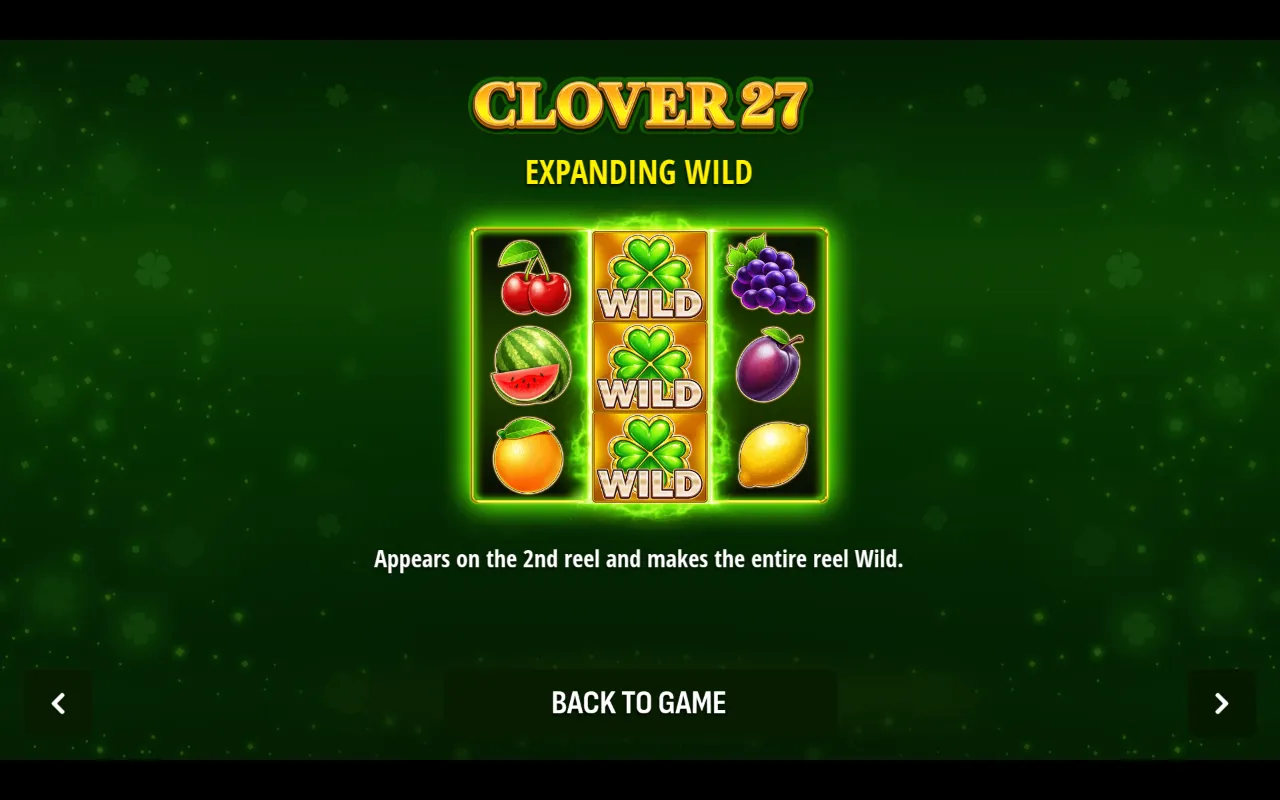
The wild is a green clover that substitutes for all other symbols. It appears only on the second reel, and when it lands it expands to make the entire reel wild.
That second reel is doing all the work. With the first and third reels only three symbols wide, a fully wild middle reel turns every symbol on the flanking reels into the middle of a paying run, so a single expansion can complete several of the 27 ways at once. Because wins on multiple lines are added together, one clover can turn a quiet spin into a sweep across the whole board.
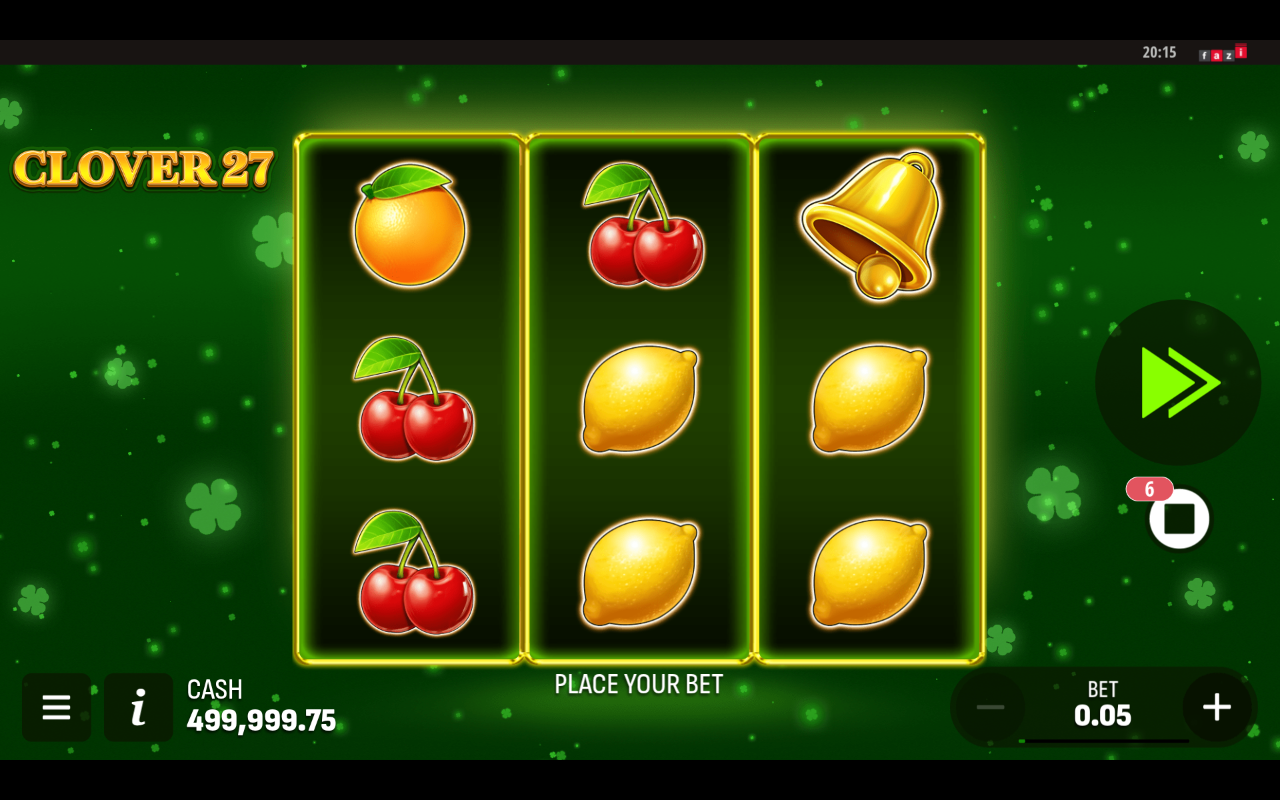
Auto-play is on hand for players who’d rather let the loop run, with a counter tracking the remaining spins in the sequence. Beyond that, the base game offers nothing in the way of modifiers, random features or second-chance mechanics. What you see in the first ten seconds is what you get.
Clover 27 Bonus Features
Expanding Wild
The trigger is simple: a wild symbol appears on the second reel. That’s the whole condition. There’s no collection meter, no charged symbols, no second stage to unlock.
When it lands, the entire second reel becomes wild and substitutes for every other symbol in the game. The best outcomes come when high-value symbols stack up on reels one and three, because the expansion then completes them all simultaneously. A reel of sevens on either side of an expanded wild is the dream scenario, and it’s what the 27 ways are really there for.
The expansion itself pays nothing directly. It’s pure substitution, so its value is entirely borrowed from whatever sits on the reels either side of it. That makes it a mechanic that amplifies rather than creates: a bad board stays bad when the clover lands, and a good one becomes considerably better.
Gamble Feature
Any win can be gambled on a card choice. It’s the traditional red-or-black double-up, and it runs like this:
- Press the x2 button after a win
- Select red or black
- A correct choice doubles the gambling amount
- A wrong choice loses the amount and finishes the game
Each correct choice doubles the amount again, and the sequence keeps going for as long as you keep calling the colour right. One miss ends it and takes the lot, so the feature is all-or-nothing from the first press. There’s no skill element and no partial cash-out once you’ve committed.
The doubling works on the gambling amount rather than the triggering win, so a run of correct calls compounds: the first doubles your win, the second doubles the doubled amount, and so on until you stop or miss. A 50/50 call each time means the expected value never improves, but the compounding is what makes long runs feel worth chasing. The ceiling arrives fast at higher stakes.
The gamble is capped at a win limit of 50,000.00, so the doubling can’t run forever. It’s a fixed amount rather than a multiple of your stake. Anything above it simply isn’t on the table.
Our Honest Verdict
Overall Rating: 6.3/10
Playing Clover 27 is a quick, repetitive pleasure that swings entirely on one symbol. Spin, watch the fruit line up, wait for the clover. Somebody chooses this game precisely because there’s nothing else to track – no meters, no features to arm, just the middle reel and the hope of gold-framed luck.
The strength is the wild. A fully wild middle reel completing several of the 27 ways at once is a proper payoff in a format that rarely offers one, and it’s where every meaningful win here lives. The weakness is everything around it: the loop between expansions is bare, and the gamble is the only thing filling the gap.
It suits players who like their slots honest and unhurried, in short sessions and at modest stakes. Anyone chasing features or a multiplier to aim at will find the field empty long before the clover turns up. For the rest, the shamrocks keep glowing.
Clover 27 FAQs
-
Does Clover 27 have free spins or a scatter symbol?
No. Clover 27 has no free spins feature and no scatter symbol. The Expanding Wild and the red-or-black card gamble are the only features in the game. -
How does the Expanding Wild in Clover 27 work?
The wild is a green clover that appears only on the second reel. When it lands, the entire second reel becomes wild and substitutes for all other symbols, which can complete several of the 27 ways at once. -
How does the gamble feature work in Clover 27?
After any win, press the x2 button and select red or black. A correct choice doubles the gambling amount and you can gamble again; a wrong choice loses it and the game is finished. The gamble is capped at a win limit of 50,000.00. -
What does the wild clover substitute for in Clover 27?
Every paying symbol, with no exceptions – sevens, bells, grapes, melons, cherries, plums and oranges. It stands only on the middle reel, where it fills all three positions at once. -
What is the minimum and maximum bet on Clover 27?
Stakes run from 0.05 to 250.00 per spin. -
When is Clover 27 released?
Clover 27’s release date is 29 September 2026. -
Who makes Clover 27?
Clover 27 is made by FAZI.