









Mahjong 88 Slot Review
Jade-green silk, blossom sprigs trailing in from the edges, a dragon curled in its gold ring beside a scatter of coins: this is mahjong rendered as a slot, lacquer and all. Mahjong 88 is Play’n GO‘s take on the classic Chinese tile game, and its calm table-top look is doing quiet work: underneath sits one of the most accumulative cluster games the studio has built, where a spin’s value depends on everything that came before it rather than on the spin itself.
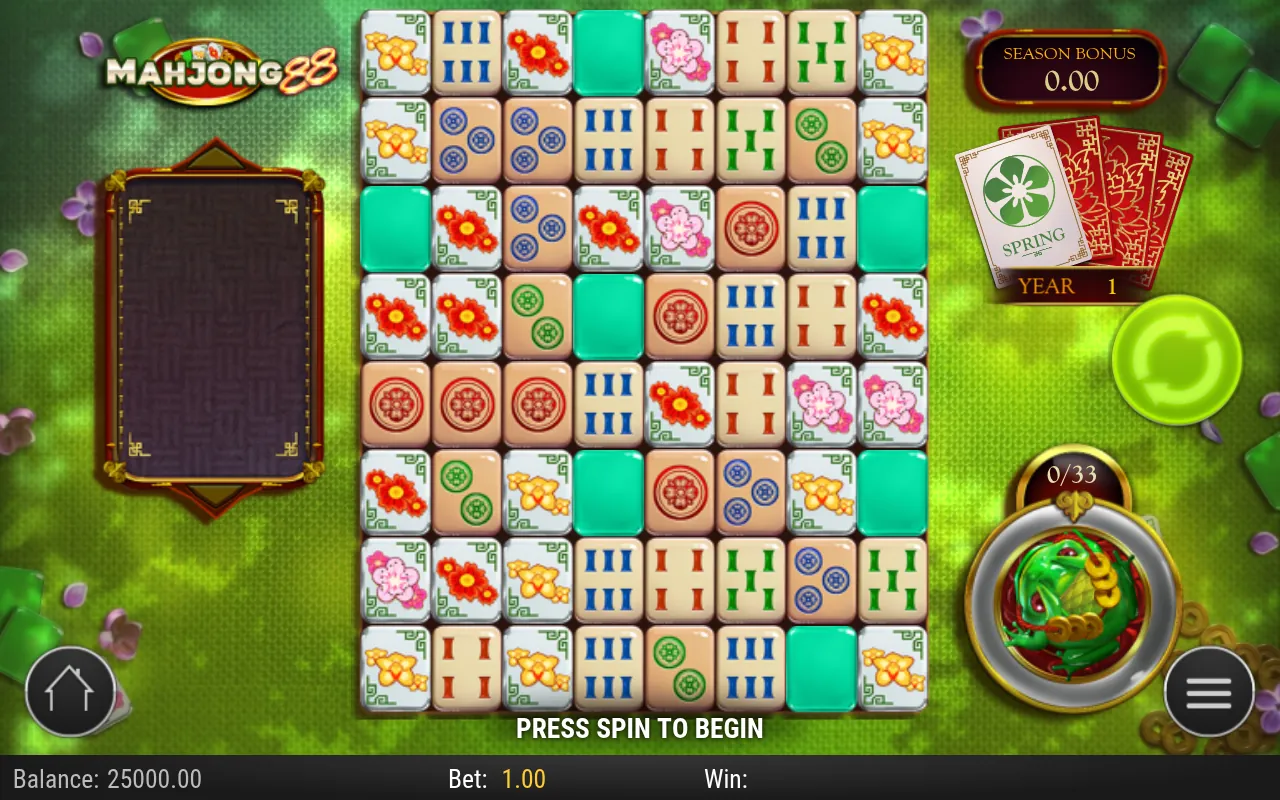
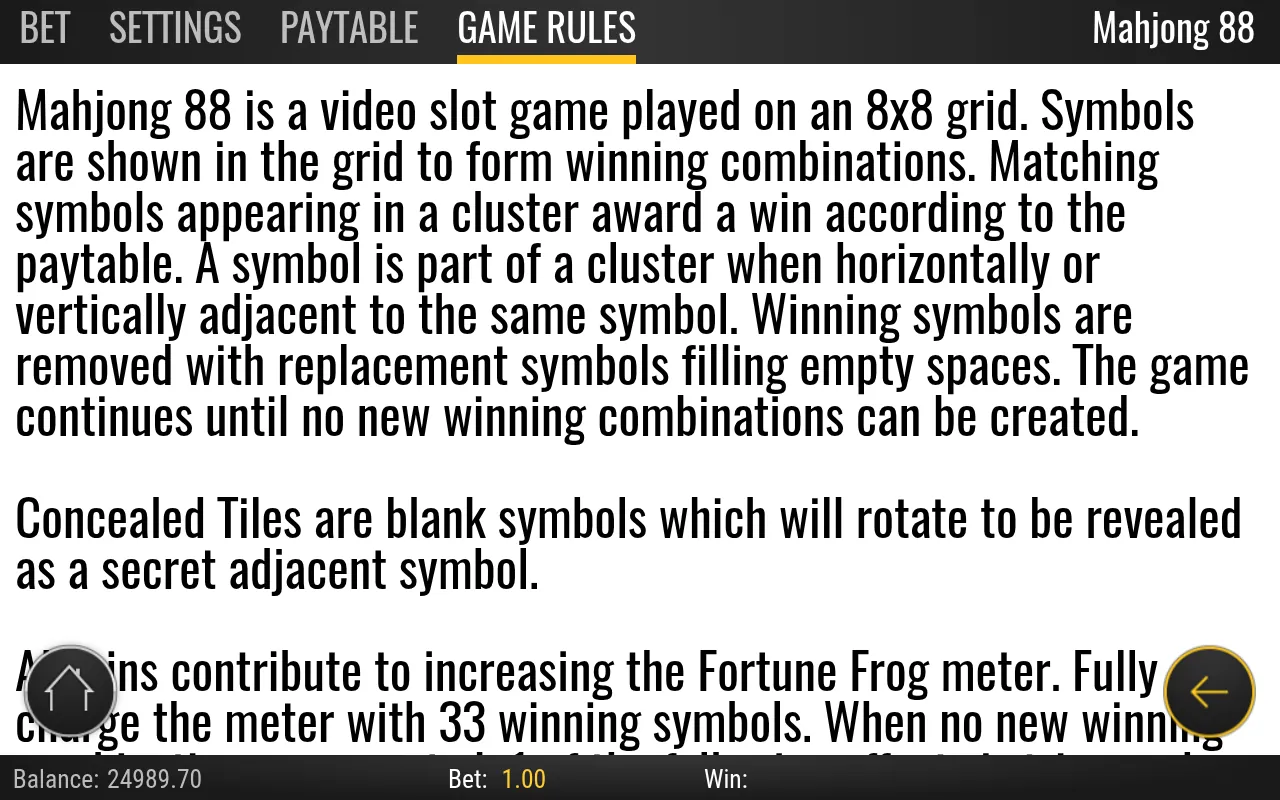
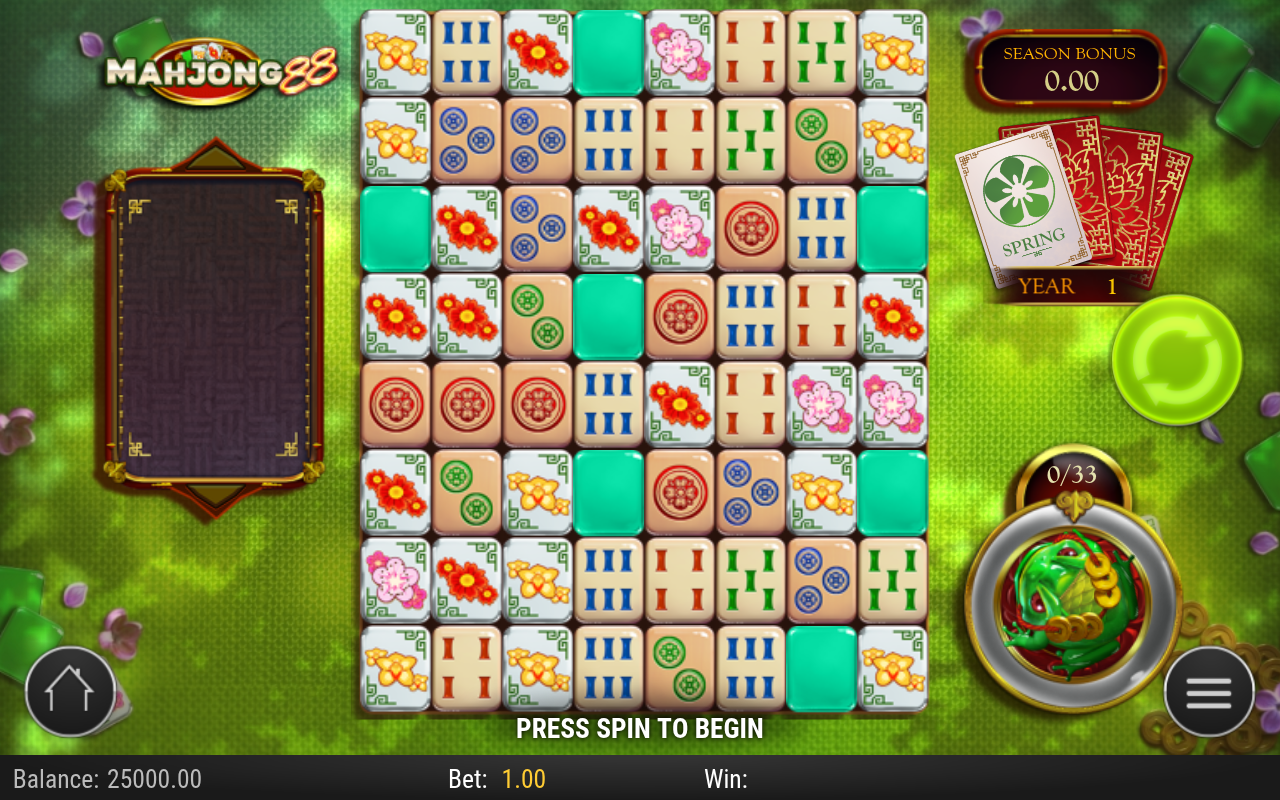
There are no reels here. The game plays on an 8×8 grid of tiles that pays in clusters, wins clearing away and new tiles dropping in until the board runs dry. RTP is 96.62%, volatility is mid to high, and the whole thing cycles through Spring, Summer, Autumn and Winter as it goes. It’s a busier machine than the calm table-top presentation suggests, and it sits in the studio’s cluster-pays family alongside Gemix 2 and Honey Rush, though the seasonal layer is its own idea.
How the 8×8 Grid Pays
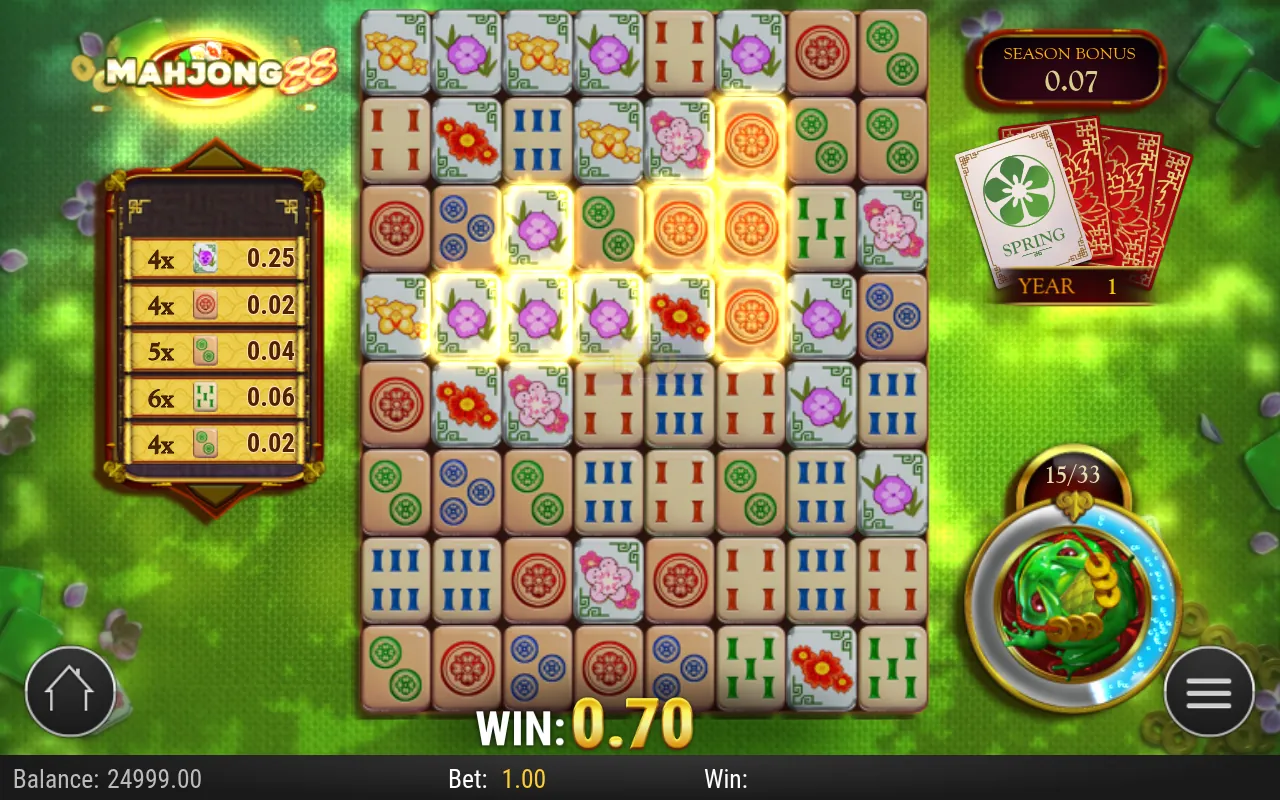
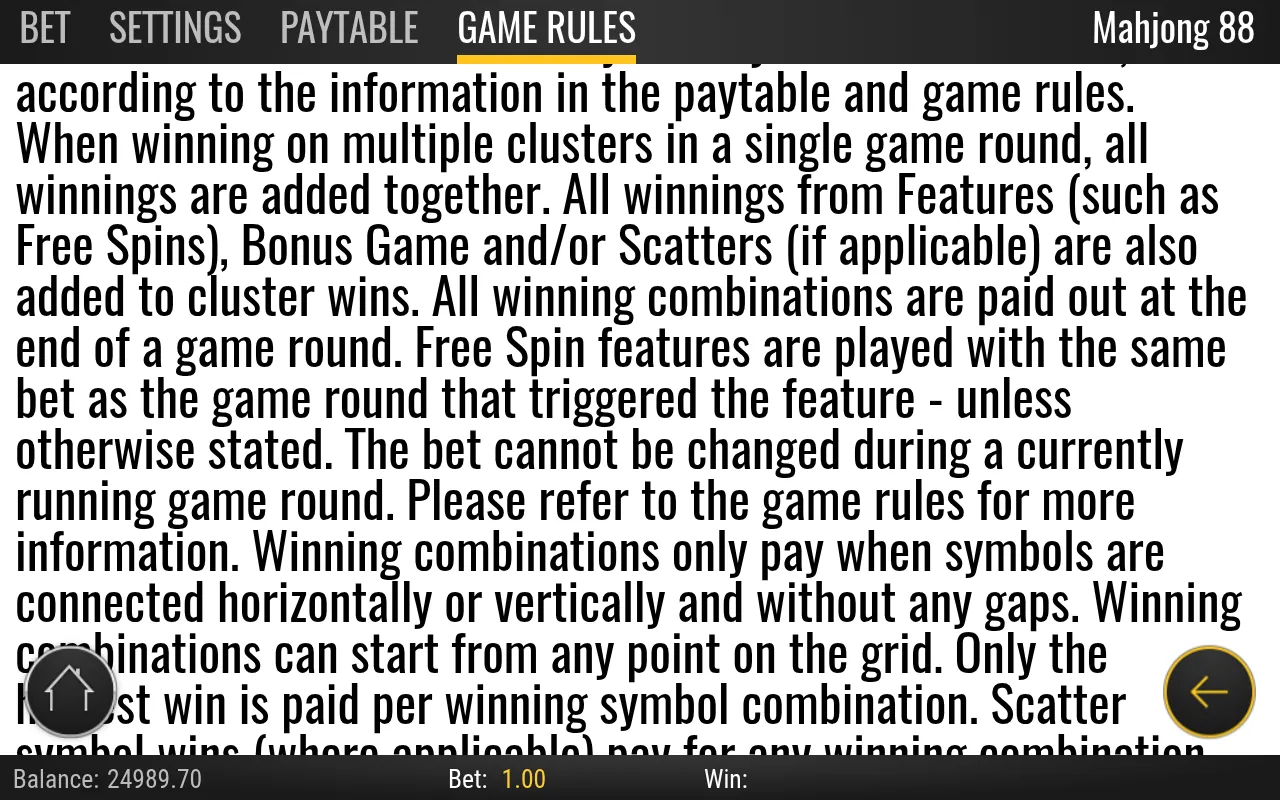
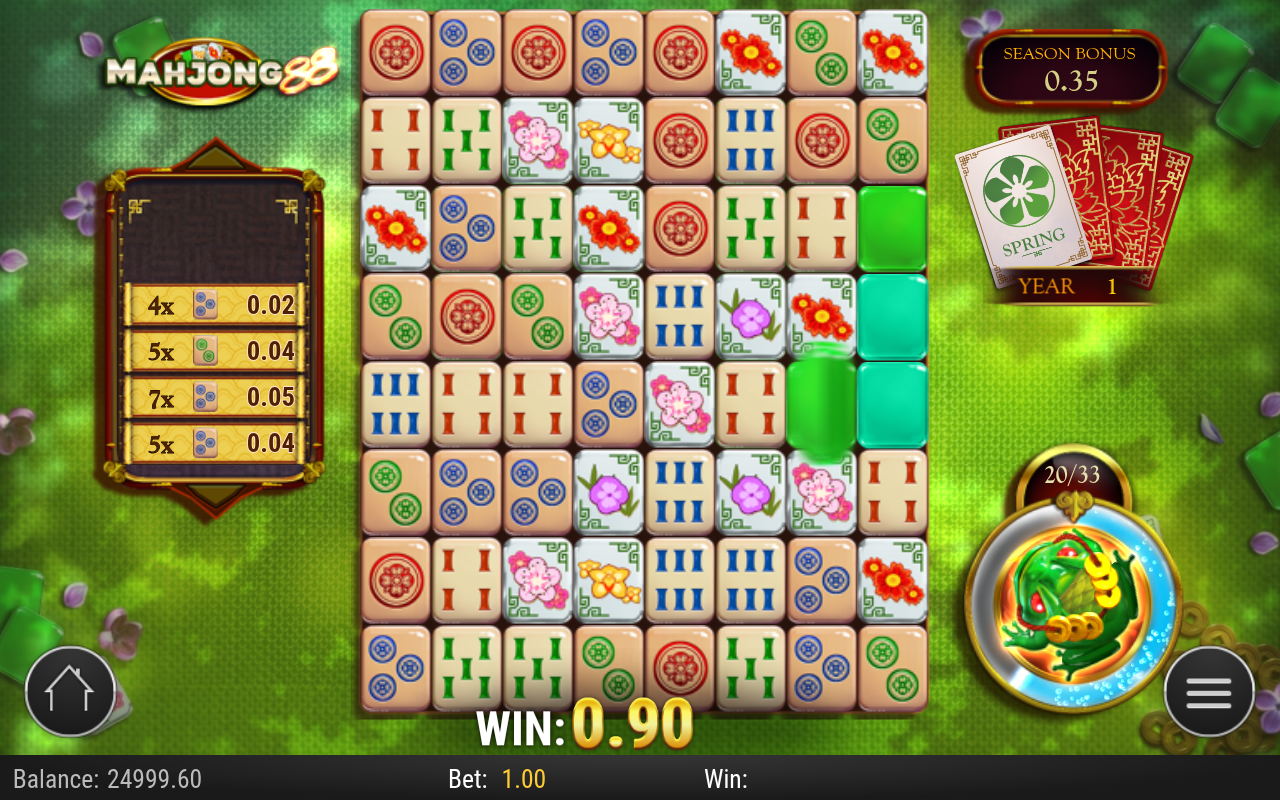
Mahjong 88 doesn’t have paylines. A symbol is part of a win when it sits horizontally or vertically next to a matching symbol, and clusters can start anywhere on the grid.
- Clusters only pay when symbols are connected horizontally or vertically, with no gaps.
- A winning combination can start from any point on the grid.
- Multiple clusters in one round all pay, and their winnings are added together.
- Only the highest win counts for any given symbol combination.
- All winning combinations are paid out at the end of a game round.
When a cluster wins, those tiles are removed and replacement symbols drop into the empty spaces. The round keeps going for as long as new winning combinations keep forming, so a single spin can chain through several waves of wins before it settles. The tiles themselves are drawn from the mahjong set: green, red and blue suits, flower tiles and dragons, all in that glossy jade-and-gold finish.
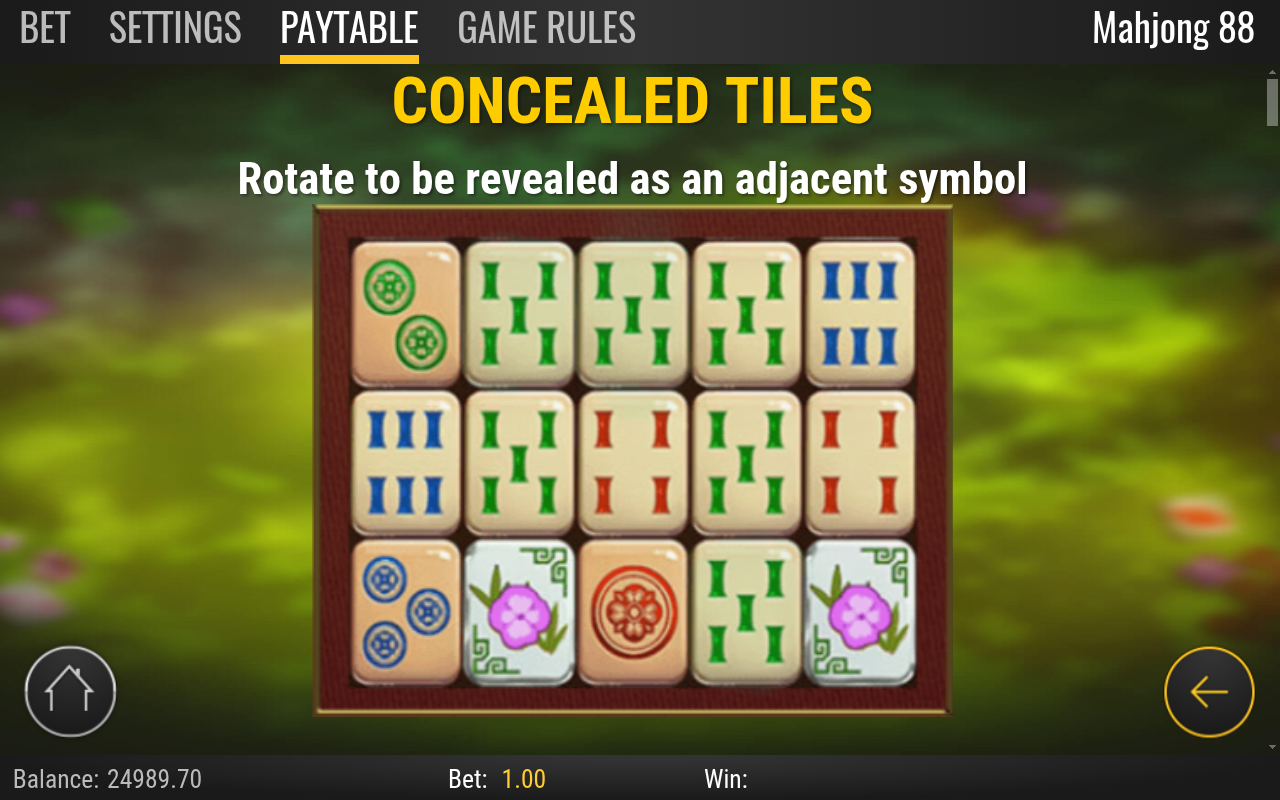
Concealed Tiles
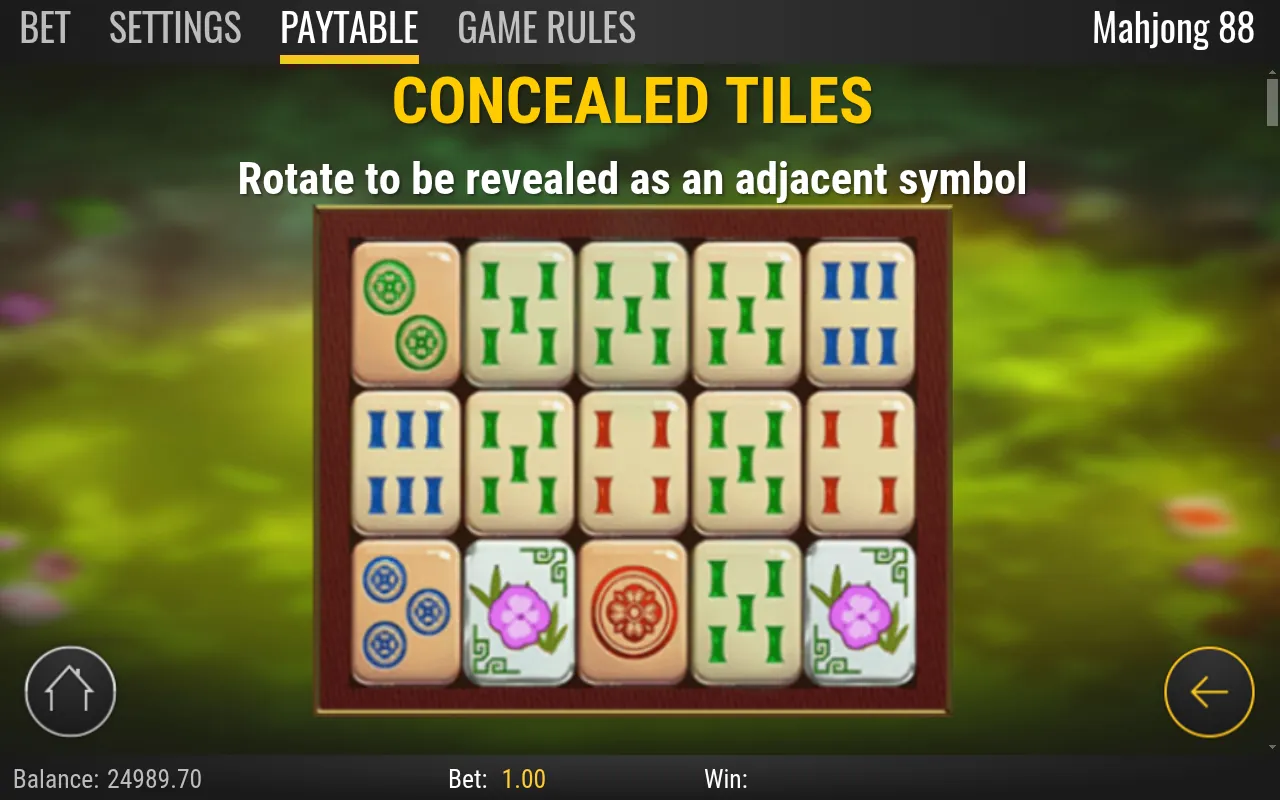
Blank tiles appear on the grid as Concealed Tiles. These rotate to reveal a secret adjacent symbol, which can turn a dead drop into part of a cluster. They’re a small mechanic, but they matter: a concealed tile flipping the right way is often what keeps a chain reaction alive.
The Fortune Frog Meter
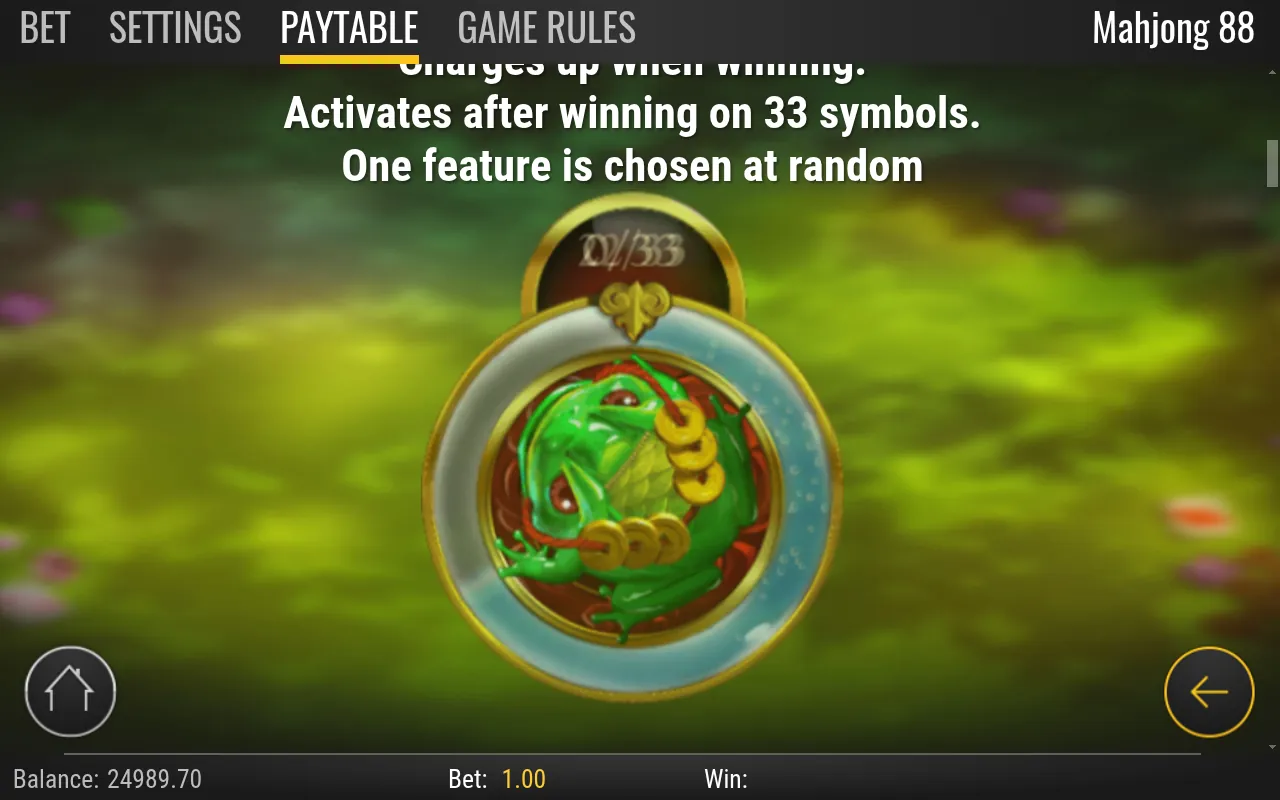
Every winning symbol feeds the Fortune Frog meter. Fill it with 33 winning symbols and the frog wakes up: when the current run of wins ends and no new combinations can be created, one of four effects fires at random to kick the grid back into life.
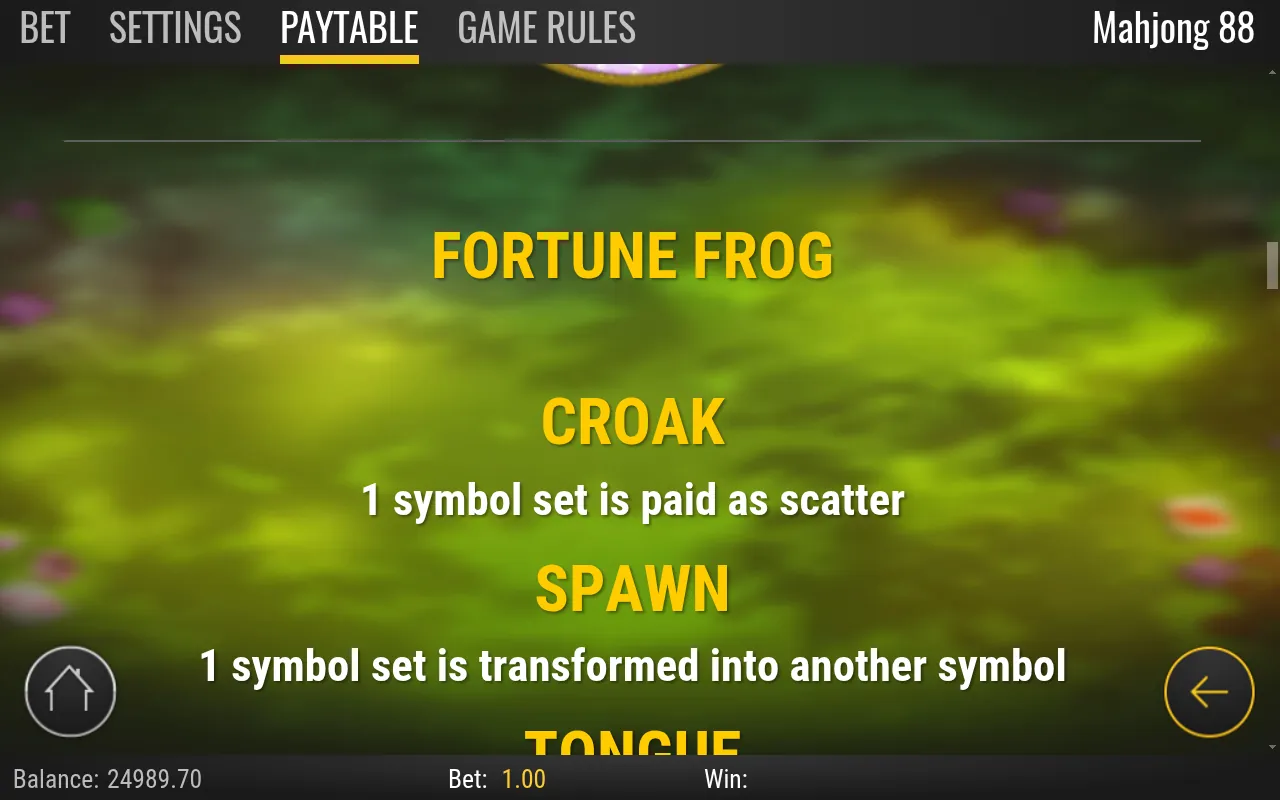
- Croak – one symbol set is chosen and pays scattered, gaps and all.
- Spawn – one symbol set is chosen and transforms into another symbol.
- Tongue – two edges are chosen, and every symbol between them transforms into another symbol.
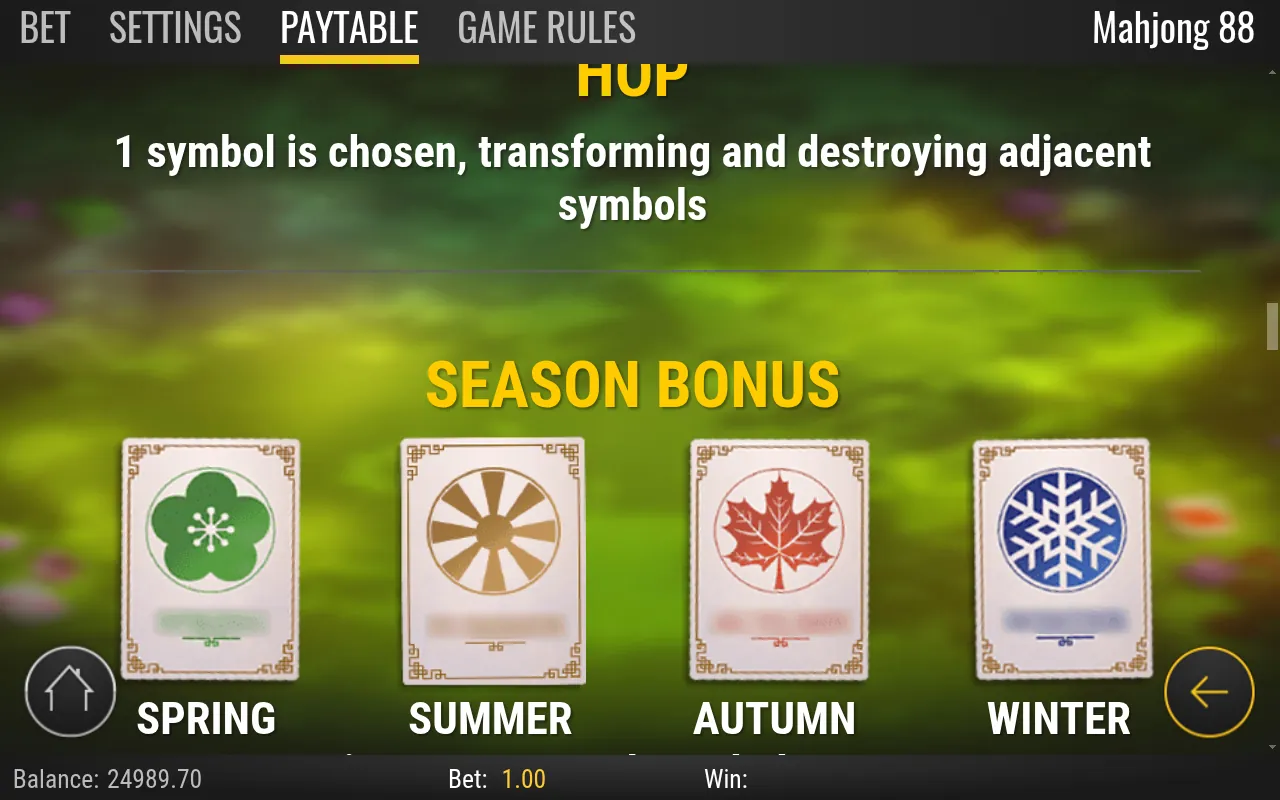
- Hop – one symbol is chosen, transforming and destroying the symbols adjacent to it.
Each effect is built to force new clusters out of a stalled board. Croak is the most generous, since it pays regardless of position, while Hop does the most violence to the grid and can set off the longest chains.
Super Charge: The 5x Multiplier
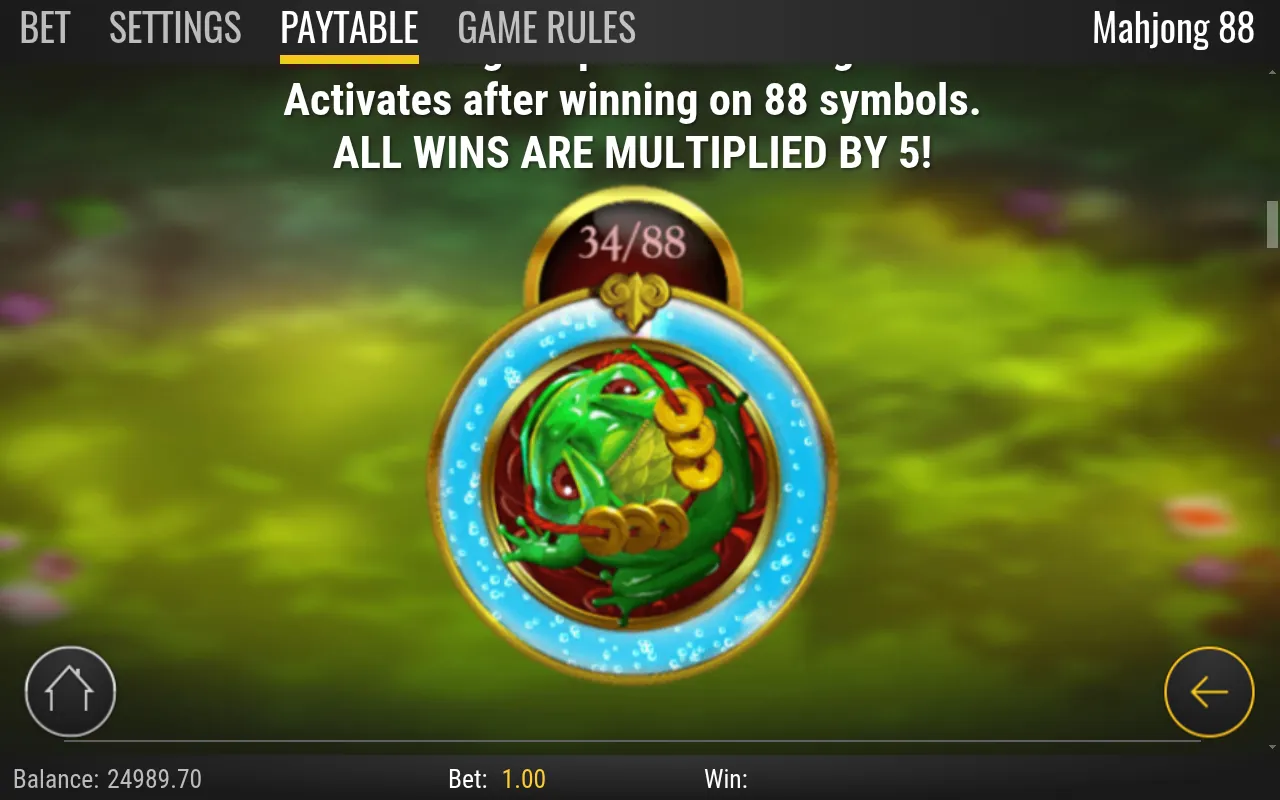
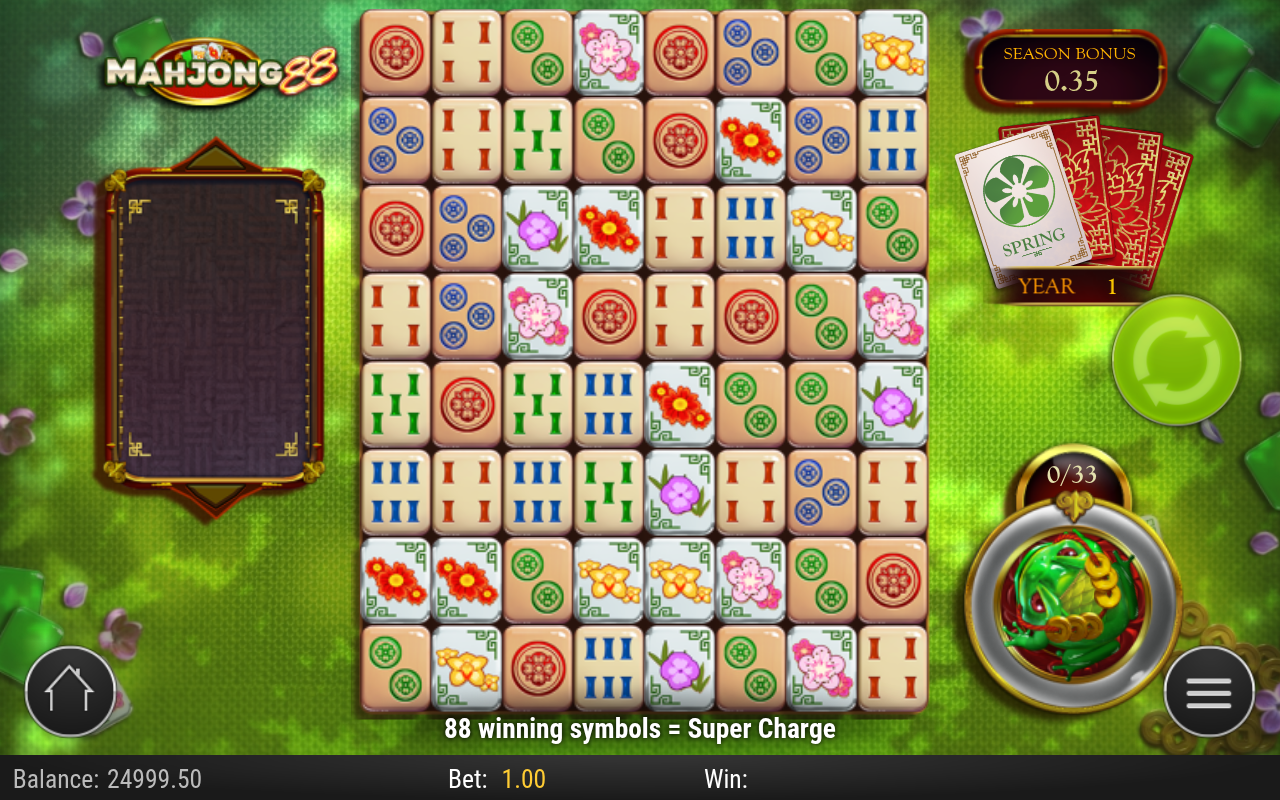
Keep winning past the frog and the meter keeps counting. Reach 88 winning symbols and the game enters Super Charge, where all wins are multiplied by five for the duration of the sequence.
The 88-symbol threshold for Super Charge sits well past the frog’s 33. The payoff is that a Super Charge run with a healthy cluster chain behind it is where the game’s biggest results live.
Seasons, Wilds and the Season Bonus
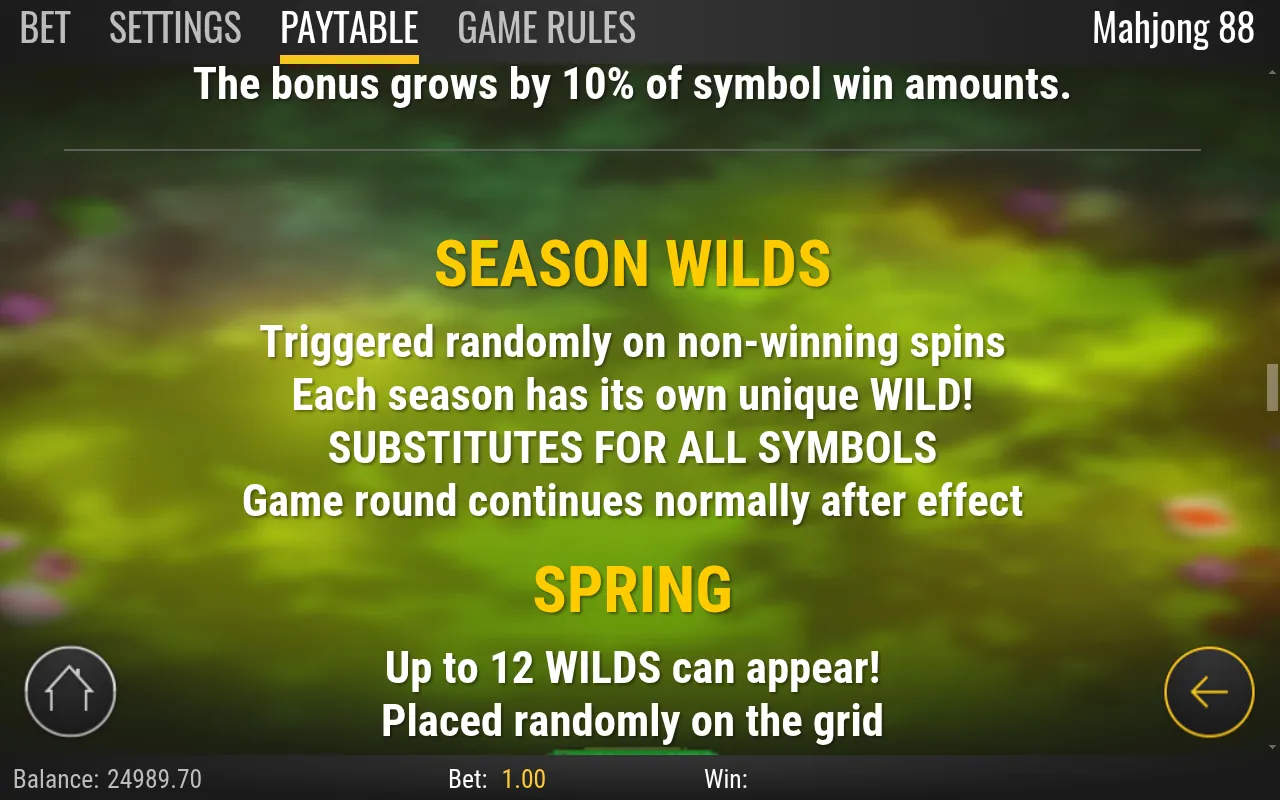
Mahjong 88 moves through Spring, Summer, Autumn and Winter as you play. The season changes at random, and when it does, the accumulated Season Bonus is paid out. That bonus grows by 10% of symbol win amounts, so the longer a season runs and the more you win inside it, the bigger the payout when the wheel turns.
- The season changes randomly, not on a fixed schedule.
- Every win along the way grows the bonus pot by 10% of the symbol win amounts.
- The Season Bonus is paid in full when the season changes.
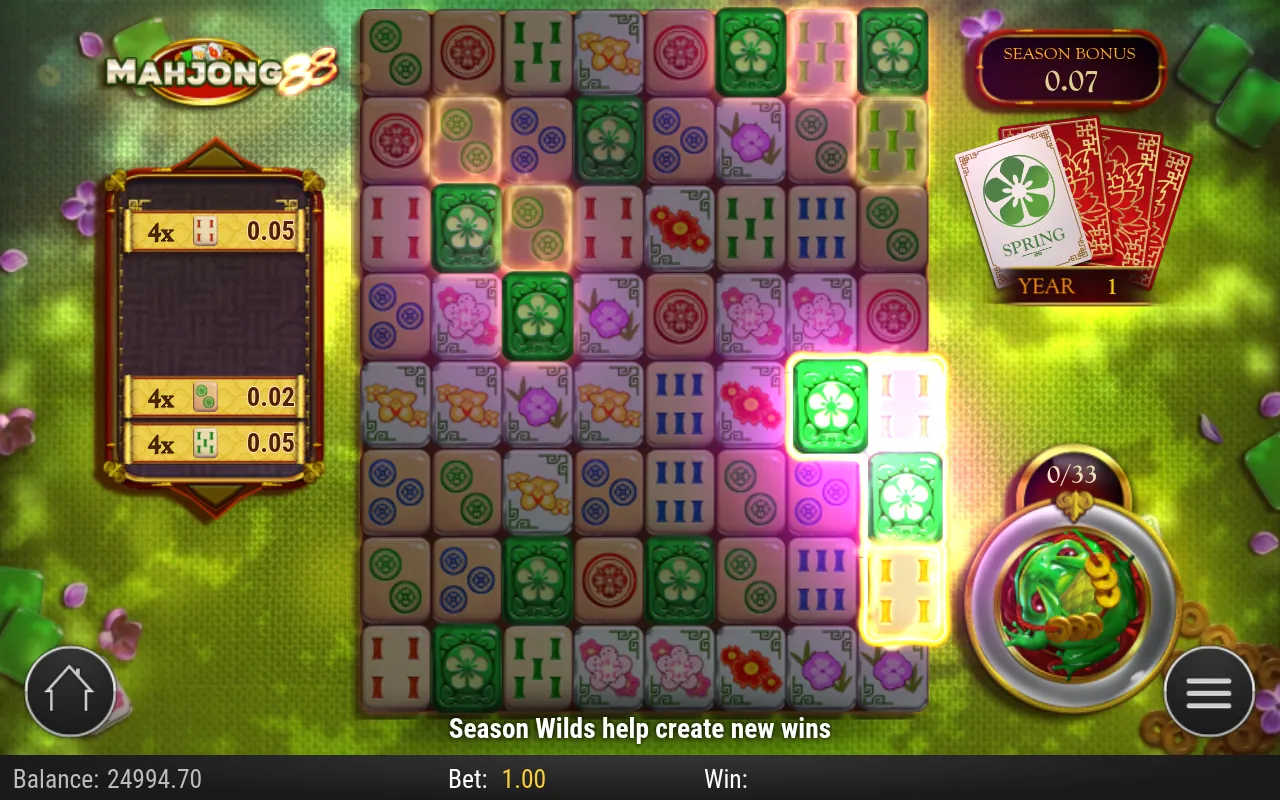
- Each season carries its own unique wild, which substitutes for all symbols.
- Season wilds appear at random on non-winning spins, and the round continues normally afterwards.
- Spring’s wild can be a big one: up to 12 wilds can be placed randomly across the grid in one go.
The seasonal layer is the game’s cleverest trick. It gives every session a rhythm that isn’t just spin-win-repeat, and the pending bonus amount ticking upward adds a quiet second prize to chase while the cluster mechanics do their work.
Win Potential
The maths profile is mid-to-high volatility with that 96.62% RTP, which puts the theoretical return slightly above the common benchmark. What you’re trading on is chain length: most of the value is stacked into the Fortune Frog effects and the 5x Super Charge window rather than the base clusters.
- 33 winning symbols – the Fortune Frog threshold, triggering one random board effect when the wins stop.
- 88 winning symbols – the Super Charge threshold, multiplying all wins by five for the rest of the sequence.
- Season change – pays the accumulated Season Bonus, grown by 10% of every symbol win along the way.
Those three thresholds are the whole ladder. Everything above a base cluster win runs through one of them, and the game’s character comes from the fact that two of the three reward staying power rather than a single lucky spin.
Our Honest Verdict
Overall Rating: 7.8/10
This is a slow game that never admits it. Tiles drift down, clusters pop, and the jade table stays serene while the meters quietly do the deciding: a five-minute session and a fifty-minute one are genuinely different games here. The one reason to pick it is that long memory – the sense that nothing you win is wasted, because every symbol feeds something.
The seasonal pot is the best thing in it. A prize that grows by a tenth of every win and pays on a clock you can’t see gives the game a shape other cluster slots don’t have. The worst thing is that the 5x window asks for 88 symbols, well past the frog’s 33.
The right company for this one is the patient kind, and anyone who wished Reactoonz would slow down will feel at home. If it’s a quick fireworks display you’re after, the table won’t give you one; settle in with the dragon and let the seasons do their work.
Mahjong 88 FAQs
-
How does the Fortune Frog feature work in Mahjong 88?
The Fortune Frog meter fills with every winning symbol and activates once 33 winning symbols have been collected. When no new winning combinations can be created, one of four effects triggers at random: Croak, Spawn, Tongue or Hop. -
What does Super Charge do in Mahjong 88?
Super Charge activates after winning on 88 symbols. While it’s active, all wins are multiplied by five, making it the most powerful state the game can reach. -
What are Concealed Tiles in Mahjong 88?
Concealed Tiles are blank symbols that appear on the grid. They rotate to be revealed as a secret adjacent symbol, which can help form or extend winning clusters. -
How does the Season Bonus work?
Mahjong 88 moves through Spring, Summer, Autumn and Winter, and the season changes at random. The Season Bonus is awarded when the season changes, and it grows by 10% of symbol win amounts along the way. -
What does the Spring wild do in Mahjong 88?
Each season has its own unique wild that substitutes for all symbols, appearing at random on non-winning spins. Spring’s wild can place up to 12 wilds randomly across the grid in one go. -
What is the RTP of Mahjong 88?
The RTP is 96.62%, which sits slightly above the average for online slots. -
Is Mahjong 88 high volatility?
Its volatility is rated mid to high, so wins can be spaced out and the bigger results tend to come from the feature meters rather than the base clusters. -
How many paylines does Mahjong 88 have?
It doesn’t have paylines. Wins are paid in clusters, formed by matching symbols connected horizontally or vertically with no gaps, and clusters can start from any point on the grid.