













Mega Multi Diamonds Slot Review
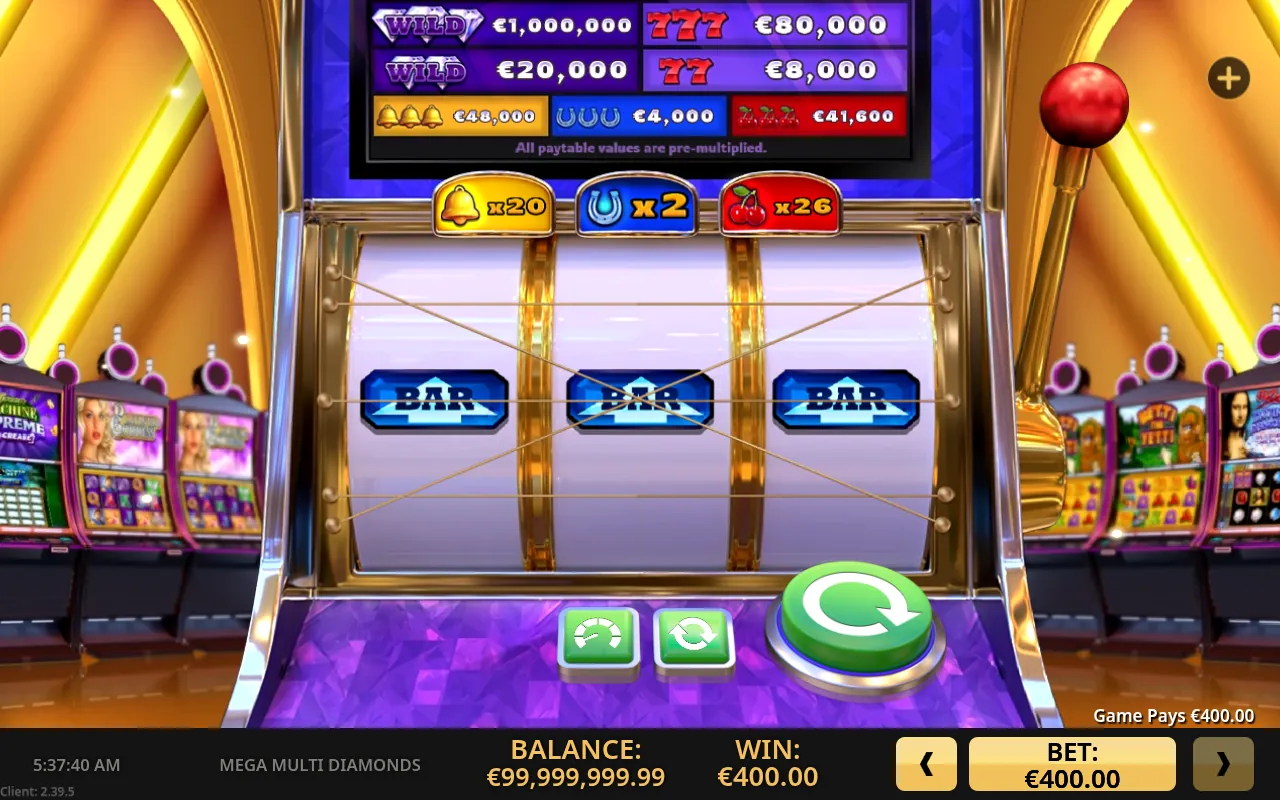
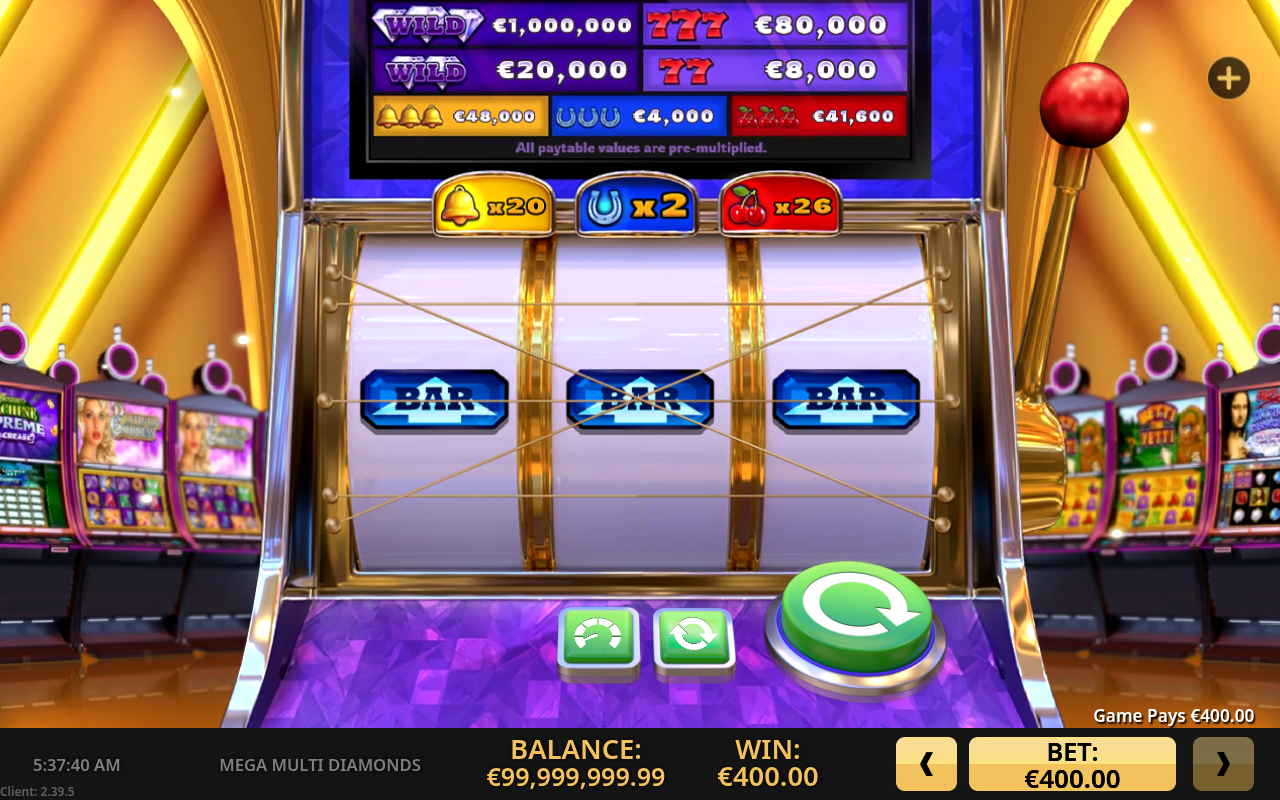
A gold-and-purple cabinet sits under curved neon arches, a red ball perched on its lever, on a casino floor polished until it mirrors the machines back at themselves. Mega Multi Diamonds spends lavishly on the dressing and keeps the furniture to a minimum, and that’s a deliberate bet: that one well-built feature is all a three-reel game needs.
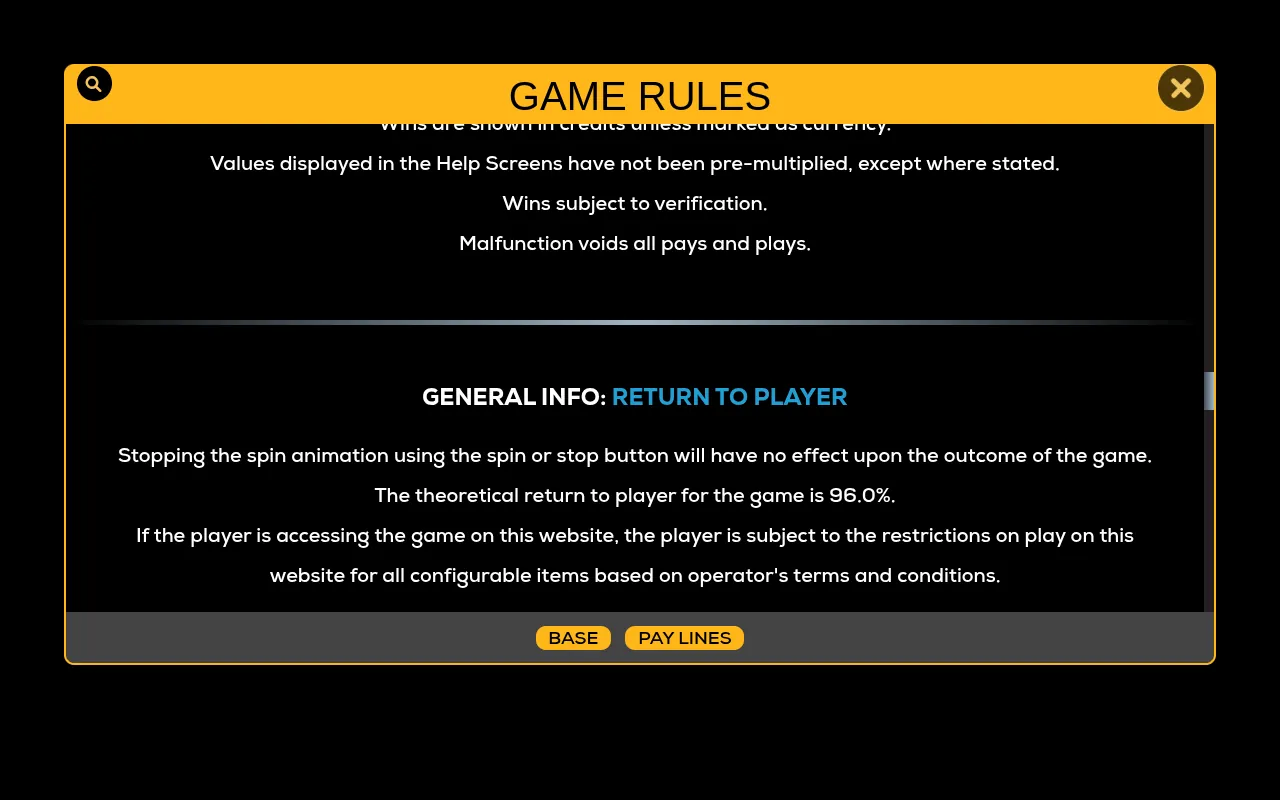
It’s an old-school proposition from High 5 Games: a 3×3 grid, five fixed lines, 96.0% RTP and high volatility, with a 2,500x top symbol carrying the ceiling. The studio’s Da Vinci DeluxeWays and Striking Tiger run far roomier; this one is a single idea, done properly, under the neon.
Three Reels, Five Lines, and a Wild Worth Chasing
Everything happens on a 3×3 grid across five fixed lines. Line wins must appear on played lines, symbols must land on adjacent reels starting from the leftmost, and only the highest win counts on each line. If you’ve played a classic stepper, none of this will surprise you.
Five lines on three reels is a tight board. There aren’t many places a top symbol can do its work, which is partly why the paytable spreads the way it does – the gap between the wild and everything beneath it is what makes the volatility high rather than merely uneven. With all five lines always in play, there’s no choosing your coverage; the bet you set covers the lot.
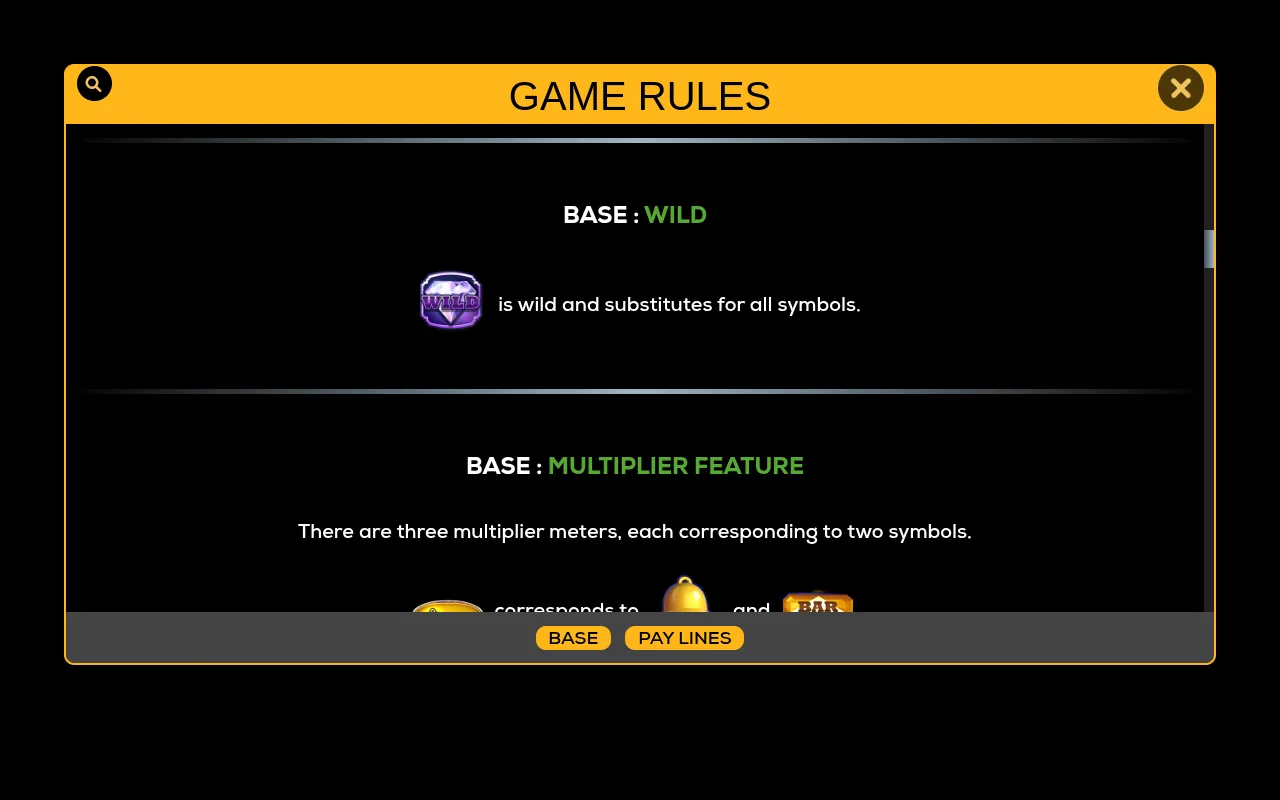
The WILD substitutes for every symbol in the game, and it’s also the richest payer on the reels by a distance. It’s the kind of symbol a three-reel game gets built around.
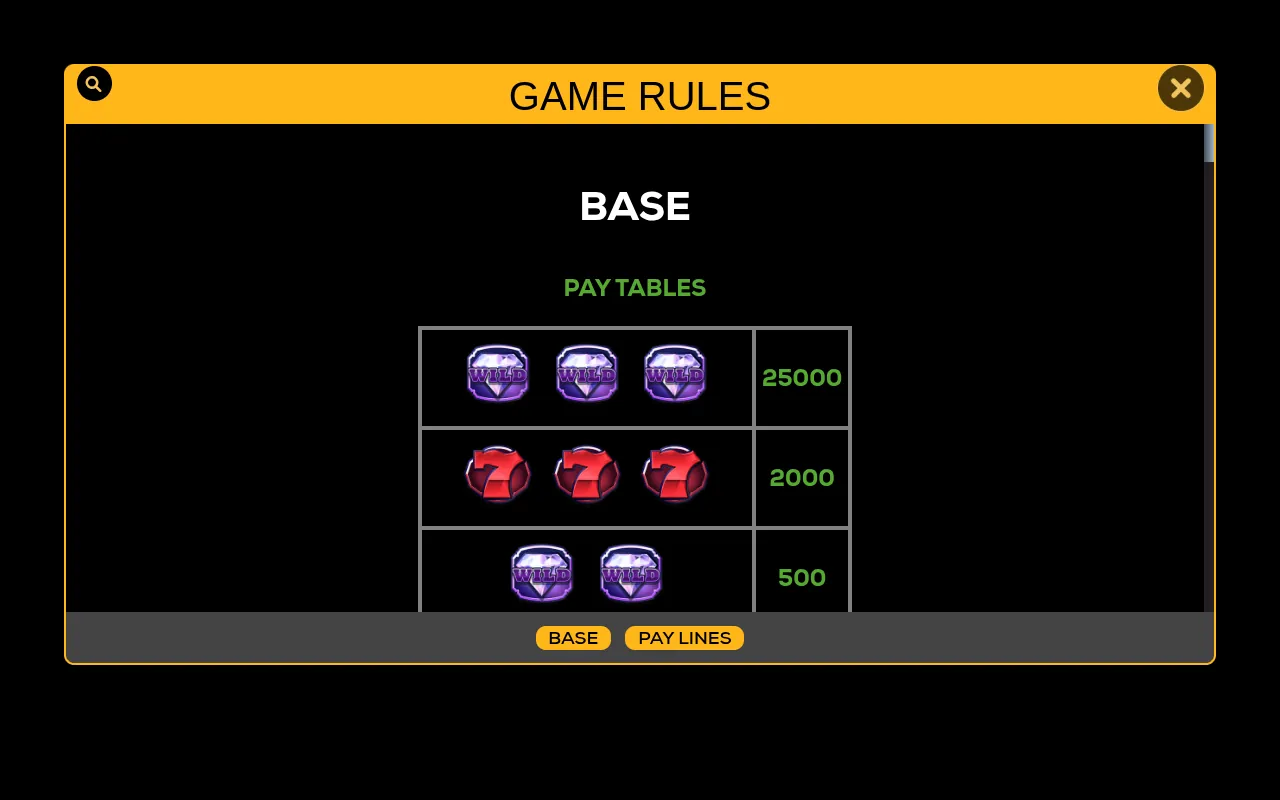
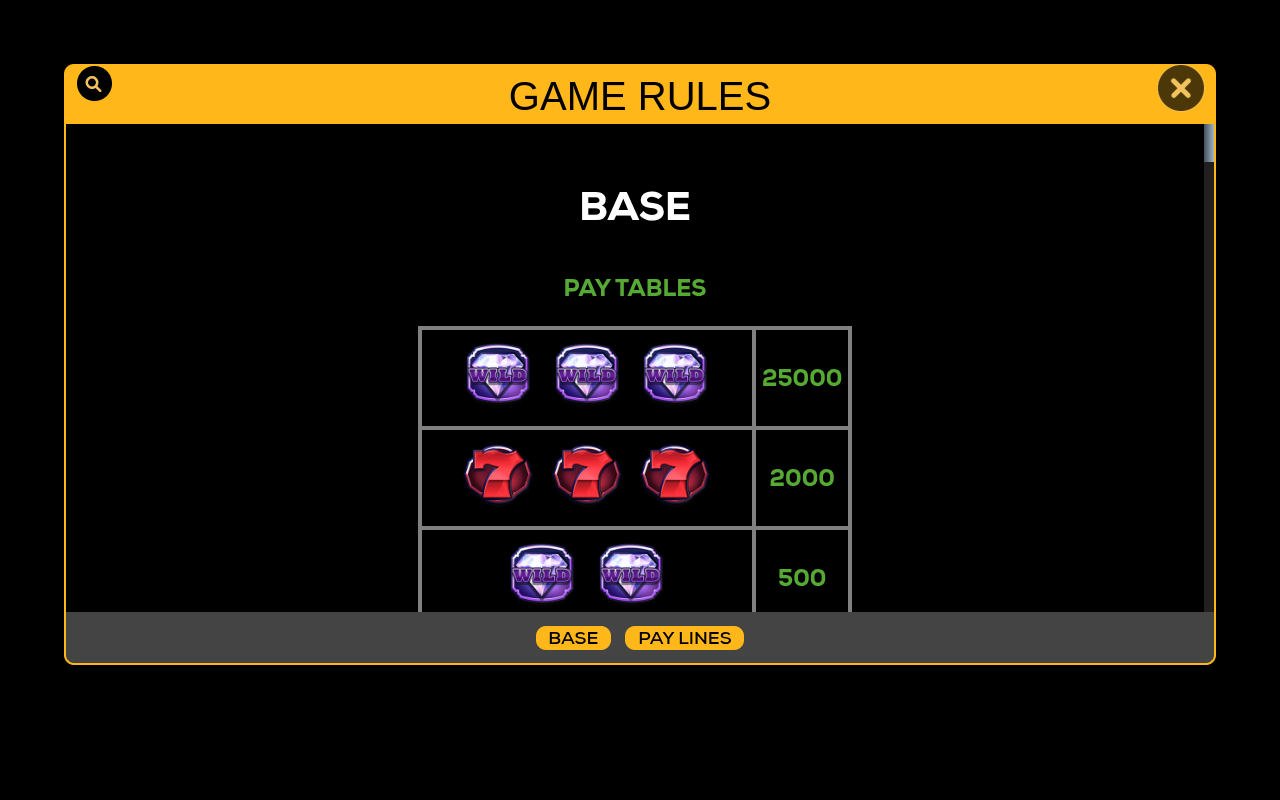
All values below are multiples of the total bet:
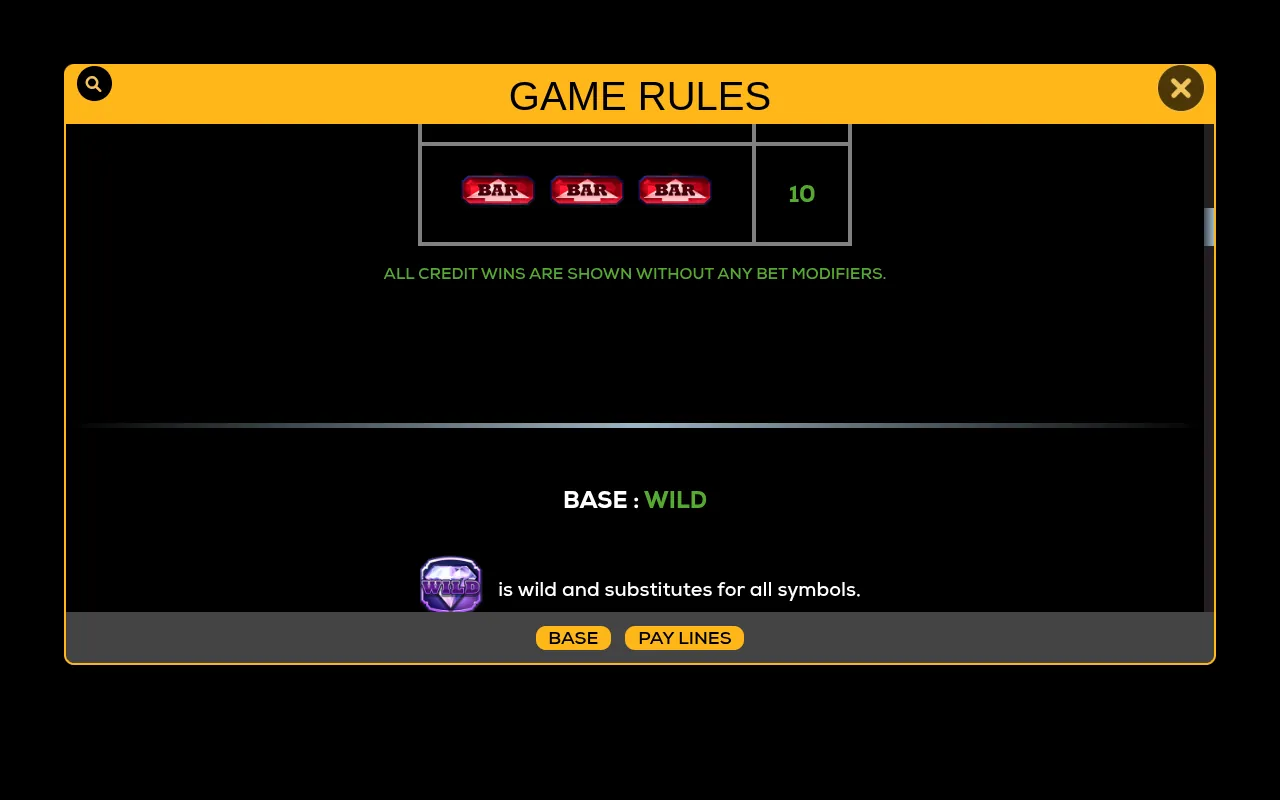
- WILD – 50x for two, 2,500x for three 7 (777/77) – 20x for two, 200x for three Bell – 120x for three Cherry – 104x for three Horseshoe – 10x for three Yellow, blue and red BARs – no line pays of their own; they feed the multiplier meters instead
That 2,500x wild is the number the whole game leans on. Three of them on a line pays more than twelve times the next-best result in the game. Everything else on the board is food for the meters.
Below the wild sits the 7, which is the only paying symbol besides the wild that rewards a two-symbol line. That matters on a 3×3 grid: two 7s from the leftmost reel already return 20x the total bet, which is a real result on a board this small, and it keeps the base game alive even when the third reel won’t cooperate.
Below the 7 sits the fruit-and-luck trio – Bell, Cherry, Horseshoe – whose raw values look modest next to the wild. The Bell’s 120x and the Cherry’s 104x are solid three-reel money, and the Horseshoe’s 10x is pocket change. None of that is the final word, though, because of what the meters do to them.
The Multiplier Meters
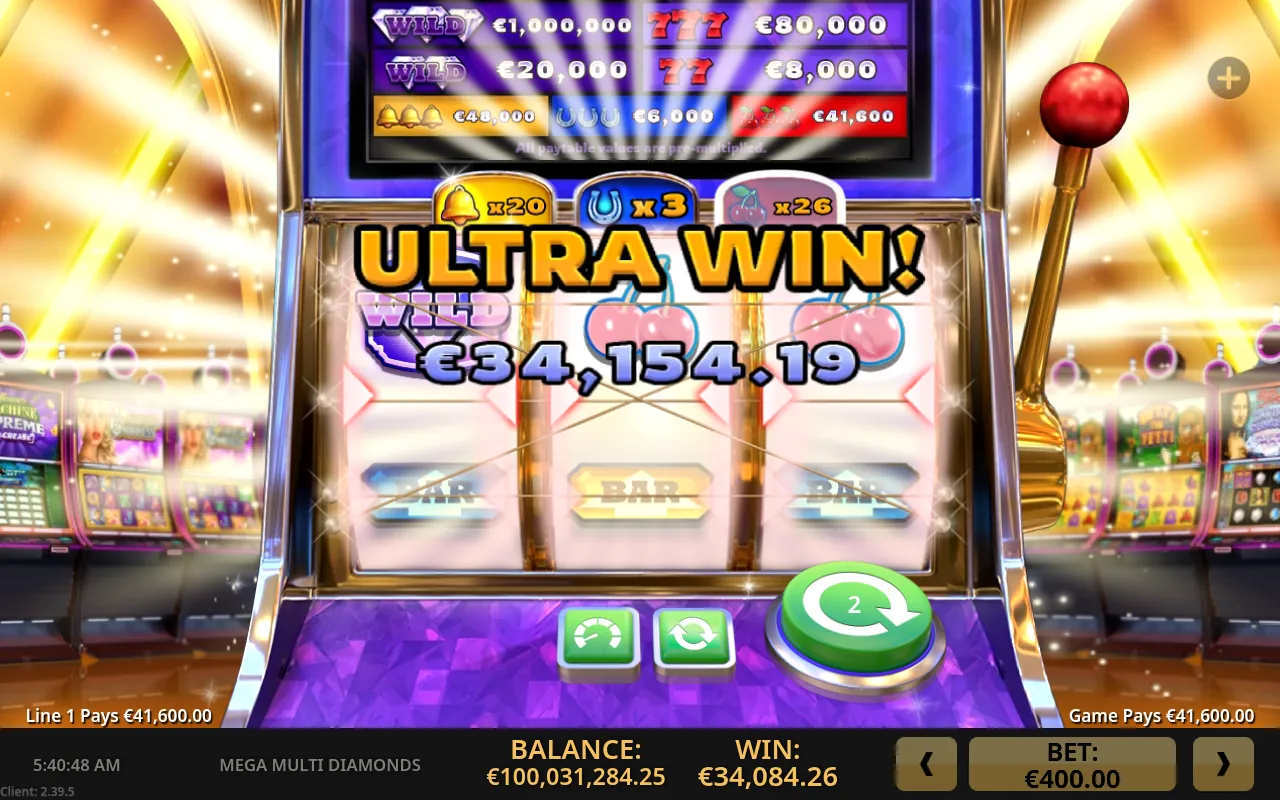
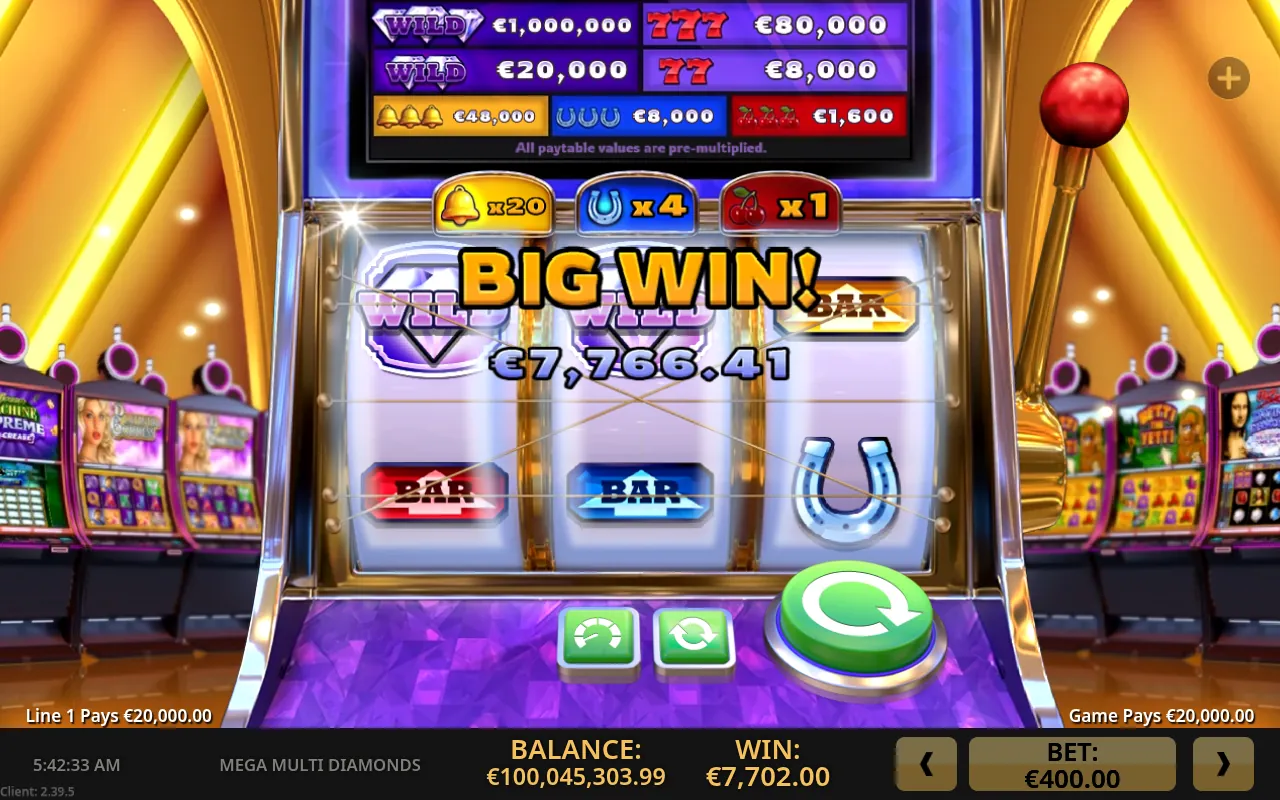
The game’s one feature is its engine. There are three multiplier meters, each tied to a pair of symbols – a BAR that feeds it and a paying symbol it multiplies:
- Yellow meter – fed by the yellow BAR, applies to the Bell (120x for three) Blue meter – fed by the blue BAR, applies to the Horseshoe (10x for three) Red meter – fed by the red BAR, applies to the Cherry (104x for three)
The full cycle of a meter, in the order the game applies it:
- All three meters start at 1x. Each line win with a BAR symbol adds 1x to its matching meter, up to a maximum of 100x. After the increases are applied, every win with a Bell, Horseshoe or Cherry is multiplied by its corresponding meter. Once the wins are paid, any meter that multiplied a winning combination resets to 1x. All feature progress is locked to the total bet it was earned at.
Cash the build in and you start again from the bottom. That reset is the price of the multiplier, and it’s what stops a full meter from being a permanent fixture.
The bet-lock deserves its own line: change your stake and the meters you’ve been feeding don’t travel with you. Progress is tied to the exact total it was earned at, which gives every increment a weight it wouldn’t otherwise carry.
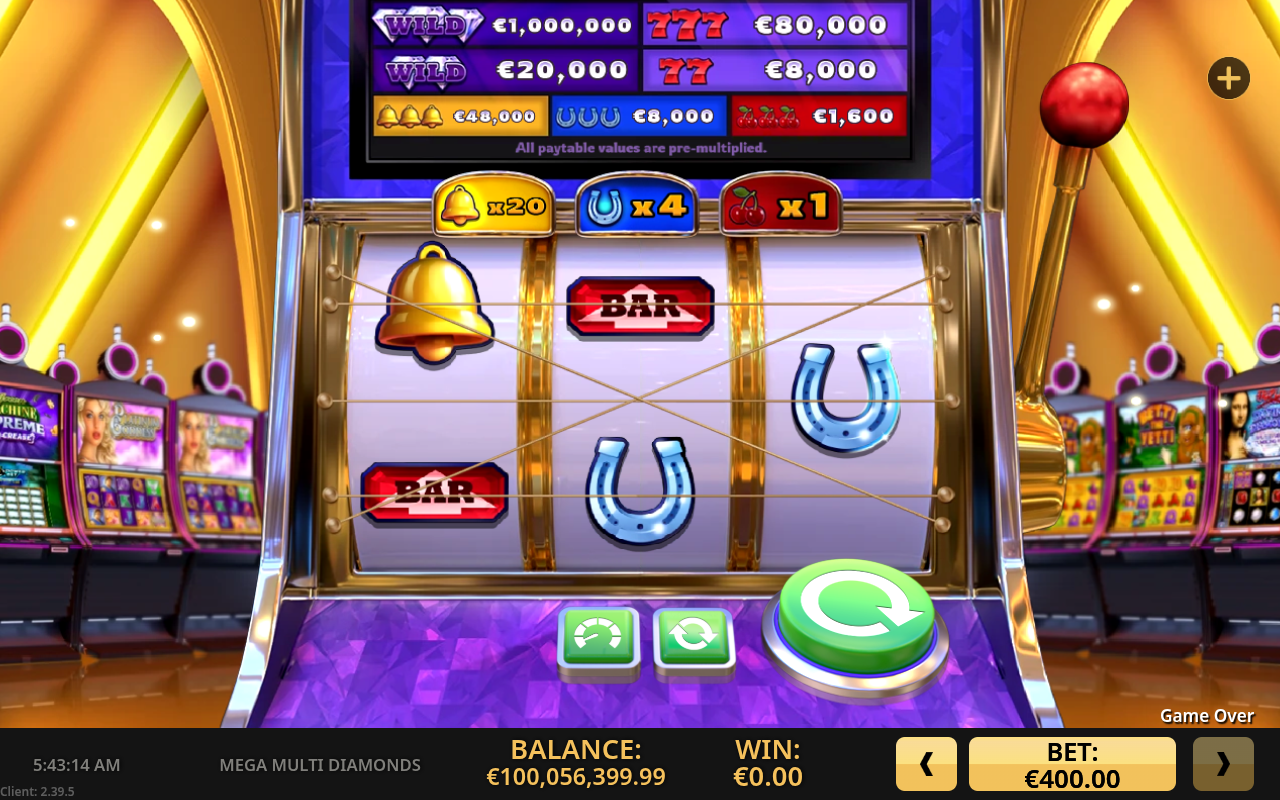
What the meters do, structurally, is make the cheap symbols matter. The Horseshoe pays 10x for three, which is nothing on its own. Sitting behind a meter that’s climbed to 30x or 50x, that same Horseshoe becomes a serious result.
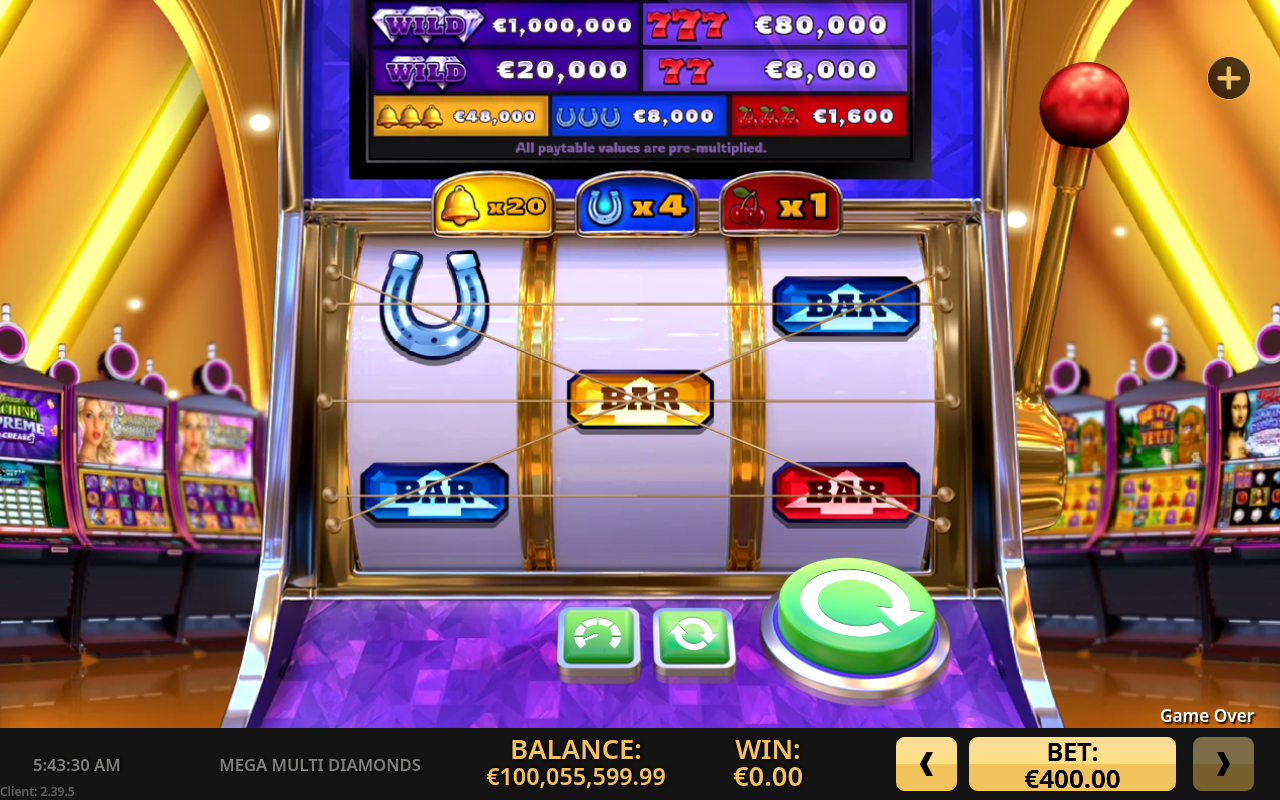
The BAR symbols pay nothing themselves as line combinations; their entire job is feeding the meters. That makes every BAR win a small investment rather than a small payout, and it gives three otherwise blank symbols a reason to exist. It also means a spin can feel productive without returning a coin – a line of blue BARs adds to the blue meter and pays nothing direct, and that’s the design working as intended.
The reset rule is where the tension lives. A meter only survives if its paired symbol doesn’t complete a winning line while it’s high, so a big Bell win on a fat yellow meter is simultaneously the thing you built for and the thing that knocks it down. A Cherry landing after a long red build pays you and clears the board in the same breath.
There’s a quiet hierarchy in which symbols the meters reach. They multiply only the Bell, Horseshoe and Cherry – never the wild, never the 7. The two richest payers in the game stand outside the feature entirely, so the meters exist to lift the middle and bottom of the board rather than to inflate the top. The ceiling on any single line stays the wild’s 2,500x, but stack a full 100x meter behind a top-tier fruit symbol and the arithmetic quickly leaves the raw paytable behind.
Three meters running in parallel also means the feature rarely sits still. A yellow build can be climbing while the red meter has just reset and the blue one idles at 1x, and each BAR that lands moves exactly one of them. Which meter a BAR feeds is fixed by its colour, so there’s no ambiguity about where progress is going.
Our Honest Verdict
Overall Rating: 7.6/10
Sitting at that gold-and-purple cabinet is a patient, watchful kind of session: reels spin, meters climb, and the pull to stay in your seat comes from watching a number edge towards 100x. There’s no bonus round, no free spins, no second screen – the meters are the reason to choose this over any other stepper.
At its best, the feature does something genuinely rare: it makes a 10x Horseshoe feel like a jackpot in waiting. At its worst, it takes its own shine away – the moment a meter pays out, it wipes itself, so every big win arrives with a small loss attached.
This is a game for players who enjoy the climb itself, at one steady stake, with no itch for variety mid-session. Players who want rounds and features stacked on features will find it thin. For the rest, the old three-reel shape doesn’t get much of a second act better than this one.
Mega Multi Diamonds FAQs
-
What is the RTP of Mega Multi Diamonds?
The RTP is 96.0%, which sits right at the industry average. -
Is Mega Multi Diamonds high volatility?
Yes, it’s a high volatility game. Wins can be infrequent, and the biggest results come from the wild and the multiplier meters. -
How do the multiplier meters in Mega Multi Diamonds work?
There are three meters, each tied to a pair of symbols: yellow for Bell and yellow BAR, blue for Horseshoe and blue BAR, and red for Cherry and red BAR. Each line win with a BAR increases its meter by 1x, up to a maximum of 100x. Wins with the paired symbol are then multiplied by that meter’s value. -
Do the multiplier meters reset after a win?
Yes. A meter that contributed to a paid win drops back to 1x, while meters that didn’t contribute keep their value. -
What does the wild symbol pay in Mega Multi Diamonds?
The wild substitutes for all symbols and is the top payer, worth 50x the total bet for two on a line and 2,500x for three. -
Does changing your bet affect the multiplier meters?
No. All feature progress is locked to the total bet it was earned at, so changing your stake means the meters you’ve built don’t carry over. -
Which symbols do the multiplier meters apply to?
Only the Bell, Horseshoe and Cherry. The meters are multiplied onto wins with those three symbols – the wild and the 7 are never affected by them. -
How many paylines does Mega Multi Diamonds have?
It has five fixed paylines across its 3×3 grid, all of which are always in play.